
Stephen Orr's Blog
April 25, 2026
The Skies of Middle Europe
1. This describes the journey from Prague to Krakow on a FlixBus.
2. We begin near the railway station at six am. It’s dark and cold and there are thirty, perhaps a few more, people standing around waiting for the drivers. Buses are my favourite form of travel – cheap, quick, big windows and small toilets. People jostle, load their bags, get on and find a good spot. Coats are left on seats as a deterrent. Back outside the sky is cloudy, grey, filling the void of a rheumatic middle Europe. I can smell diesel. That was always the smell of school excursions.
3. We wait for the drivers to finish their smokes, and we set off. Around a few inner-city blocks, past a suburb of apartments and, within ten minutes, a freeway lined with building supply depots, chicken shops, petrol stations. None of the Old Town here, no Wenceslas Square. No Kafka walking up to the castle to work on a story in shop 22, Golden Lane. Just an icy, blue-veined sky lightening on the edges. Perhaps Prague is all cities, following familiar patterns, unrecognisable later, unless you’ve labelled the photos of factories and train sheds, piles of building rubble and small, stingy houses clinging to the bit of city meets country.
4. Rowen was a traveller. Me, walking along a path beside a dry creek in my white-bread, middle Australian suburb, and there’s Rowen, his bike loaded with packs, sleeping bag, food, clothes, a flag. Rowen, sitting looking across the smooth pebbles at clothes lines and a retirement village carpark. I asked him where he’d been and he said almost everywhere – Darwin, Hervey Bay, Cairns. I asked him how he got here, miles from shops, the city centre. He just smiled and said, I keep riding till I end up somewhere.
5. The first blush of blue, and I savour the unfamiliar country, and sky. Travel is about picking up where you left off, aged twelve or thirteen, at the end of a childhood exploring everything, learning everything, seeing everything for the first time. At some point things stop surprising you. And now, thirty years later, you realise the only way to reclaim this wonder is to travel beyond your small town, your house, your yard, your made-for-television life. Thirty years of study, work, and repetition that came, comes to nothing.
6. Prague. A mess of absinthe shops and pork knuckles, but just as much, the driveway where Heydrich’s son was run over outside the castle, and the bullet-shredded window of the basement of St Cyril and Methodius cathedral where his assassins hid (before the inevitable).
7. The sky is not the one you’ve been seeing for fifty years. It’s new, it belongs to people who spend their lives avoiding the Old Town.
8. A monotony of fields, farms, bridges. Forests that go on and on, as thirty bodies stretch out, yawn, open drinks. And what if, at the end of some dream, I woke up, there! (as it flashes past), behind that plumbing warehouse, in the long grass, inside the locked yard? What if I had to start over? No one I knew? Where would I begin?
9. After a while we stop at a service station. We’re told we have fifteen minutes, and wander inside, buy expensive sandwiches, strong coffee, as the drivers drink soup and eat rolls put aside for them. We wait in a little picnic area, a trellis with plastic vines, hundreds of butts, the same rubbish from the same buses, the same experience, repeated a dozen times a day. I see a patch of blue sky and find it familiar: a tuft of Blair Athol blue, the same kick-the-ball blue we claimed during our fifteen-minute little lunch.
10. I’m not sure why I travel – attempts to escape the routines, the trajectory that drags me through life? Maybe I’m looking for an alternative, more interesting me. Perhaps the undergraduate, teacher, scribbler choices were all wrong, and here, an attempt to discover if there was meant to be somewhere, someone else.
11. I remember, as a kid, trips across the great expanse of Australia. From Adelaide to Melbourne, sweaty legs on vinyl seats, the unremarkable patches of scrub, the heat-seeking sky, the small towns with their silo and area school and an Elders for tractor parts and fertiliser. The on and on, the impossibility of cloud, the radio fading in and out of consciousness. As I try to match the moments, and stand waiting for everyone to get on the bus.
12. The first driver closes the door, and continues. I look back and wonder if they’ve missed anyone. Shouldn’t there be a roll call? Shouldn’t someone check? As again, I wonder. What if I were left at this small service station, deep in the Czech Republic? Could I just say, Well, here I am, another go?
13. Now, the interior lights blur into blue and grey, filling a sky of power lines, high tension electricity that fails to excite us, or anything, as we head into Poland. A geography of one landscape, one sky, revealing small variations after hours of staring, watching, wondering.
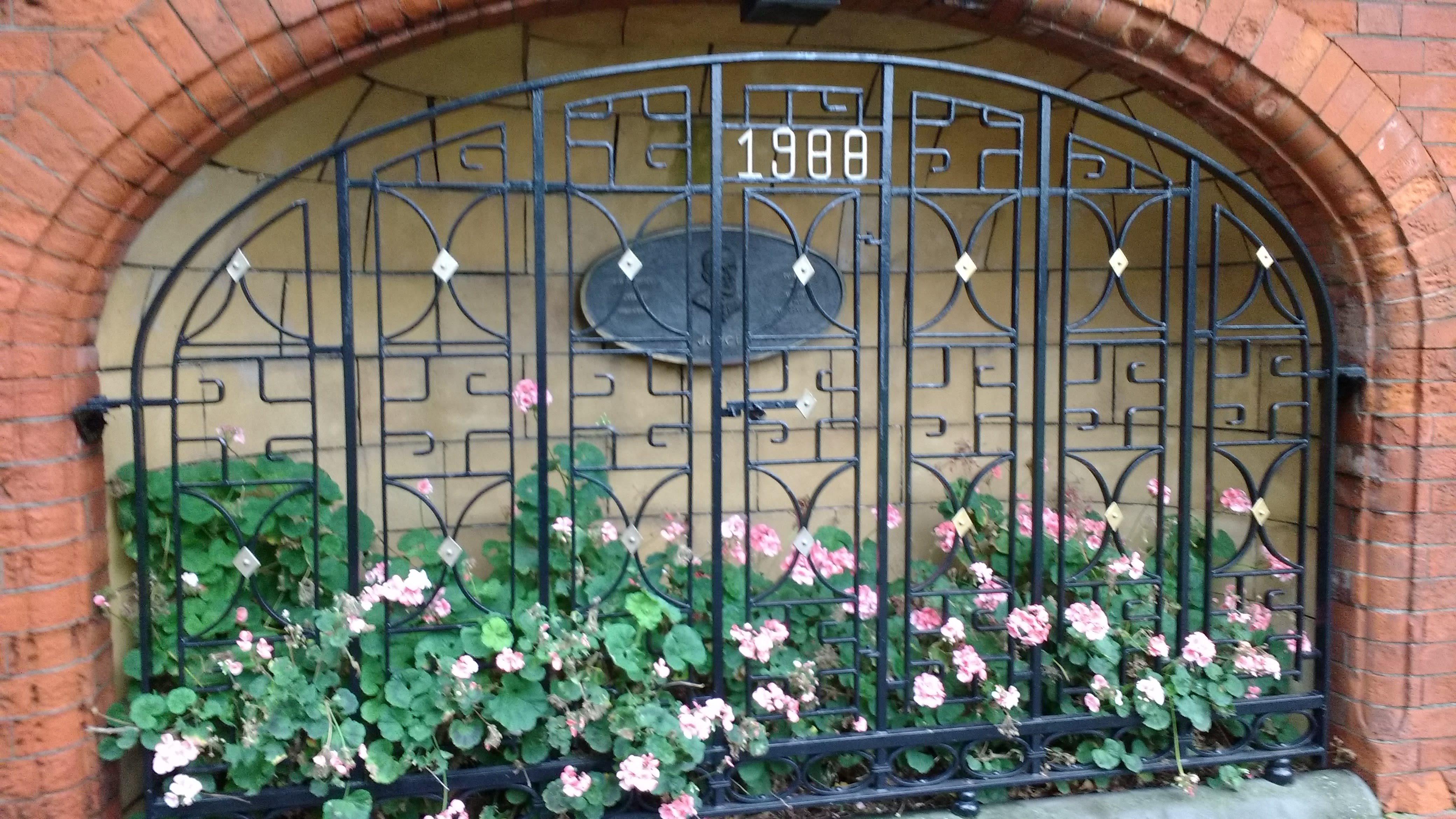
14. I could stop, leave the bus, float in the cold air, cease being in any physical sense. Who’d miss me? My parents? Family? Friends? So? What do I owe, and to whom? Everything is a variation: the seagulls from Semaphore kiosk crowding around Joyce off O’Connell Street; wheatbelt crows in a Frankfurt courtyard, waking everyone at the Monopol; a kid screaming for gum in Smithfield, or Leipzig. And what’s so unique about people? About the grey, homeless Christ kneeling outside Rome’s Termini, picking food off the ground, eating it; the African selling selfie-sticks and phone-chargers outside the Forum; the old man bouncing a soccer ball on his head on the corner of Via Cavour and Giovanni Amendola; nuns consulting their guide book as they peer across Rome from the Coliseum; the man I watch, from my hotel room, standing beside his souvenir stall, waiting for customers who never come.
15. Why do people travel, up the Eiffel Tower, thirty deep in a small room to see the Mona Lisa? Nothing can come of it. It’s unlikely to make you any happier. Thousands of generations of humans never travelled, and so what? Sydney Harbour was nicer without the tour buses, or bridge, or people. The woman with her flag saying, Follow me, quickly! I had one at Auschwitz, pushing into line in front of me, inserting her group, as they apologised on her behalf.
16. The morning stretches, and there are no more stops. The bus rolls on, and I’m stuck in the same position, lost in the sky (and the little bit of land that gives it some context, some meaning). I’m aware that some people don’t go home. They find another country, wife, husband, and stay in London or Oslo, and start again, working for KPMG or Deutsche Bank. Although I don’t think Rowen was one of those.
17. It doesn’t end well for some. The pumps stop working. The soil cracks. But others know they were born in the wrong body, the wrong time, the wrong place. These are people who see every variation in the cloudscape.
18. Travel needs to be ambitious. It can’t be the bus to work, or the plane to the Gold Coast, themes parks, chain hotels. Only if it offers the opportunity to fuck up everything you’ve ever known. Amundsen and Scott, Leichhardt, Crosier and Peng Jiamu, refusing to return home after a busy day at work.
19. Aged twenty-four I backpacked (on Greyhound buses) around America for two months. Twenty-five states. Six or seven travelling companions I picked up and lost along the way. I was, I swear (though how I remember?) willing to find someone, some place, and make that my life. For example, I took a curriculum vitae of my arranging work, determined to visit Universal Music in Los Angeles (though I never went in). I returned home, and for the next thirty years, used this journey as a reminder, a sort of regret.
20. And now there’s a glow from a distant Krakow, and I realise the day has been an arc, one thing leading to another, the bits in between, lost, because I thought it was about the destination. But it was really about the meditation, the thought, the feeling, the intimation of happiness, of contentment, that I’m here, smelling hot chips and body odour, with all these people, on the way to a town I’ve never visited. We have become a silent club, like the dozens of people standing, every evening, outside Termini watching the waves of starlings rise from the pines, fly a few noisy circuits, warp and weft in a small, twilight miracle.
21. And here, a week after I arrive home, cast off the jet-lag, weed the garden, walk along the path where I first met Rowen, I realise travel’s really about remembering who you are, where you’ve come from (songs of the eighties, the scent of eucalyptus, the smell off freshly-turned pine, an old teacher’s cologne, recognised in a Paris back street, the ibis handwash summoning your sister’s cheap cosmetics, as she made up for an ABBA concert), what you have, how you got there. Nothing about change, but the sum of all the parts you’ve, happily or not, accepted.
First published in The Griffith Review


April 15, 2026
The Night Parrots
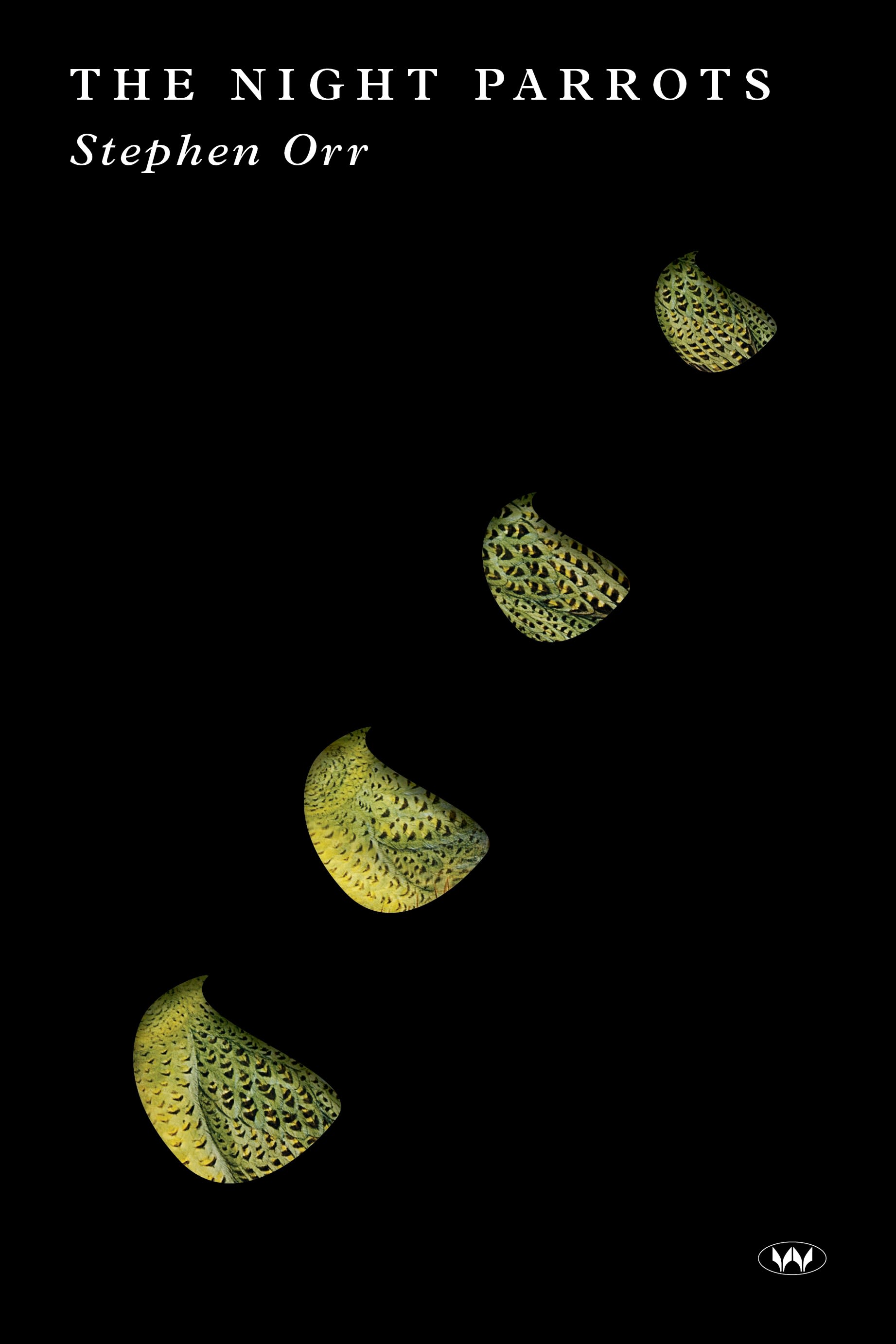
I have a new novel coming out in a few weeks. It’s called The Night Parrots. A night parrot is a small, rare bird that can’t fly very well and hides from the world. It was thought to be extinct for years, but recently a few have been sighted. They persist. Like the protagonists of this book. A Lutheran missionary dying of heart failure, his wife and son and friends trying to get him to a railhead. The story’s about these few days, faith, love, struggle, acceptance.
The following describes their first day, setting off from the mission. The story is based on Pastor Carl Strehlow’s journey (accompanied by his wife Frieda and 14-year-old son Theo) to find medical aid in 1922.
The book’s published by Wakefield Press, and the cover below is by the talented Duncan Blachford.
The previous afternoon, Ludwig, Ted and a bloke called the Greek had gathered a dozen horses from around the waterhole and brought them into the yards. They’d waited until they settled before harnessing them. Watched them graze the winter grass, drink from the trough that me and Oskar kept clean. As the dust settled, and the prospect of the journey was made real. When the horses had quietened, they led them up and down the track for an hour. Oskar and I had sat watching. Oskar had said, ‘It’s gonna be a lot of work, that many horses.’
‘I can help.’
‘You’re no good with horses.’
True. I’d always avoided animals – the muster, the branding, vaccinations, driving them to the railhead. I had a reputation as an indoor kid. Maybe the men had taken pity on me, spared the pastor’s son, or maybe they’d just thought I wasn’t up to it. It’d been a big afternoon. Some of the other men had brought in a bullock, cut its throat, strung it up and butchered it. Me and Oskar again, watching from a safe distance, Oskar saying, ‘Them dogs eat anything.’
‘That one’s drinking the blood.’
Indicating a three-legged terrier. Oskar remembering: ‘Did you ever find your parrot?’
‘No.’
Someone punctured the bowel and a spewy soup drained onto the dry sand, splashing everyone’s feet and legs, bile and blood and half- digested grass, hundreds of flies descending.
‘I can show you the picture,’ I said.
‘You did. But that coulda been any bird.’
‘This bloke they pay especially to find one of each animal, and he stuffs them and sends them to museums. He found a night parrot and killed it and put it in the mail, and it’s in Holland or some place now, which proves it.’
‘What?’
‘Whether you want to believe or not, it’s real. You can go see it.’
I’d shown him one of Father’s pictures of a ringneck. But I’d read about this man and his specimens and the special gun that shot a small slug through the heart. He was a good shot. The best. That’s why they paid so much for holotypes. No mess, no blood, nothing missing. Unlike the bullock: legs removed with an axe, insides falling to the ground, more blood, the knives coming out. The heart hanging loose, the kidneys collected for pie night, the other organs thrown into a tub for the dogs. A few of the men singing, like they were enjoying it. They finished the bullock, took the meat to the smokehouse, salted it, wrapped it in cloth for the journey. Then this morning, the meat was packed into hessian sacks and put into a big ice-box that didn’t have ice. Two iron handles, and a little drain for the blood.
I said to Oskar, ‘If you listen carefully, you can still hear it moaning.’ And he said, ‘Who’s going to cook the meat?’
‘Me.’
‘You can’t cook.’
‘Pauline’s taught me.’
‘She hasn’t. She’s cooked your food while you’ve sat in there on your bum listening to your dad go on about Jesus.’
I just shook my head. ‘Someone’s gotta do it.’
Then a few of the women had milked the cows, strained the cheesy-white slop and poured it into a pail. A few days’ supply, perhaps. Enough to get us to Henbury, floating in a sea of salted butter, fig jam and condensed milk. But all of this was unknown. Hardly anyone went to Horseshoe Bend, except perhaps Jack, on the mail run.
And that’s how it was on this not-hot, not-cold October morning. How it was as me and Oskar walked around, strangely uncomfortable with each other. Maybe we knew, sensed things were about to change. To ward off this un-charm, Oskar said, ‘It’s easy. You get to the train, and what’s it take? Two days and you’re in Adelaide?’
We walked across the compound, Oskar in shorts, me in my best pants (Pauline had laid out my clothes for the journey). Fifty, sixty blacks had already gathered under the ghost gum, beside the lean-to where we stored saddles and harnesses. They were quietly singing, watching Ludwig and Silas, Jamy and Adele and Pauline coming out from the house, loading boxes onto the cart and dray and returning. They were summoning help, I guess – some of the old people who’d travel with us. Ignatz had planned it all the previous evening, sitting around our table, adding up distances and dividing by days, studying a map of the rough country, the places that might have water.
We stopped and watched this growing group. ‘You wanna join them?’ I asked Oskar, but he just continued into the church, and I followed.
We sat at the back. On Sundays, the place was full. Father had wanted to build a new church, a big, better, cooler place, but of course there was no money, and the Board said, ‘It’s in the pipeline’ (or something similar). The pipeline we’d been waiting for since Father arrived to a collection of huts and stone buildings, good intentions and a box of Bibles. Waiting. Oskar said, ‘And what’d happen if . . .?’
‘What?’
‘I mean if . . . you lot wouldn’t stay, would you?’
I hadn’t thought about it but couldn’t imagine what there’d be to stay for. Mother was no missionary. I couldn’t skin a bullock, build a smokehouse, preach, change anyone’s life (let alone my own). ‘I guess not.’
‘They’d send someone else?’ Oskar said.
‘They might. They mightn’t be able to find anyone.’
‘Right.’ Wringing his hands like he did when he was confused. ‘That’d be funny, wouldn’t it, because they come here and tell us all about Jesus, then when we’re listening . . .’
…
The singing was getting louder. ‘I better see if they need help.’
We turned and left, reluctantly. If any place was special, it was here. Special in the hand-hewn floorboards, the wattle and daub walls; in the burn marks the candles left on the walls, and the watercolour stations Isaiah had painted (more about him later). Special in the marble font that confirmed we were alive, and the old table for coffins. Special how everyone had their spot before the big cross, and special how we knew, every time we came in, we were being watched. And I was special, apparently. According to Opa, who must have heard it from Father. Maybe Father had said something to him like, ‘You can hold on to the other children, you can send them to school and church, but I think I’ll take Benno with me. I think, perhaps, he’s special.’
Like I said, never explained. But maybe I was the lucky one, sent into the never-never to make new discoveries. We emerged and saw maybe a hundred people sitting around singing, the women moving rhythmically in the little bit of wind, the kids, even, still and serious and full of purpose. A sight I’ll never forget. Sometimes I imagine my own funeral, and the six or seven people who might come. I wonder what I did wrong, less generously, not as wisely as my father. I still remember all of those people, sixty-six years ago, singing us towards salvation and good health, and I realise this is how people are meant to function. None of this better house or school. What’s any of that matter? How does it explain why God breathed life into us? But I saw it that day. I saw that my father had become part of something bigger (though not the thing he’d expected).
‘Benno!’
Pauline tried to lift a case onto the cart. Oskar and I ran over, climbed up, lifted it, packed it beside the box of books Father had requested. He’d chosen them, as Ignatz had done his sums the previous evening. He’d called out the titles, and Mother, on the porch, had packed them in the Oolong No. 29 box. ‘Oh, and The Odyssey, put that in too.’ He’d been trying to get me to read it for years. Now, with no distractions, he was determined. As he’d been with history, zoology, Greek, Latin – extra studies after class, because although I was a mission boy, soon I’d be sent south to Adelaide, to Immanuel College, for a proper Lutheran education. He didn’t want me lagging behind the other kids. He wanted me to be the marvel, the miracle, the scholar he’d never officially become.
Oskar and I returned to the house. We gathered supplies, dragged them back to the cart and dray and managed to load them. Bread that Adele had been baking all night; various meats; small and big water bags; the tents and lean-to, pegs rattling like small change. As the singing got louder, and Ignatz, shittier, asking me where I’d been all morning, just when I was needed (you’ll have to do better than that, Benno). I didn’t reply. He wasn’t in charge. Father was (or probably, Mother). And anyway, I hadn’t applied to be a missionary’s kid.
I eventually returned to my room and finished packing the clothes Pauline had set out. I checked for a towel, soap, noticed the castor oil Mother put in my hair every Sunday morning (to make it go curly). Like the prime minister was coming to Hermannsburg. I put the oil in my drawer, but Mother came in, saw me, reclaimed it and said, ‘I can’t think what else to take.’
‘I’ve got everything,’ I said, sitting on my bed, listening to the songs.
‘Just don’t get in between him and Ignatz,’ she said.
‘Is he better this morning?’
‘And keep his mind off . . . keep talking to him. That’s your job. Read to him. Goethe, that’ll do it, I’ve packed Faust.’
Father loved Goethe. He took us to Auerbach’s Cellar in Leipzig, bought us a meal and said it was in celebration of our national poet, who came here (here! can you believe it?) to get his ideas.
‘Is he better?’
‘If he gets bad, tell him. He won’t listen to me.’ Sitting, taking my knee and squeezing it (she hadn’t done this in years).
‘But he’s better?’
Shaking her head. ‘It’s a necessary trip, isn’t it, Benno?’
‘Yes.’
‘We must do what we can.’ Checking out the window for Father before giving up, going into her room and packing the last of his things.
April 11, 2026
Being Glenn Gould
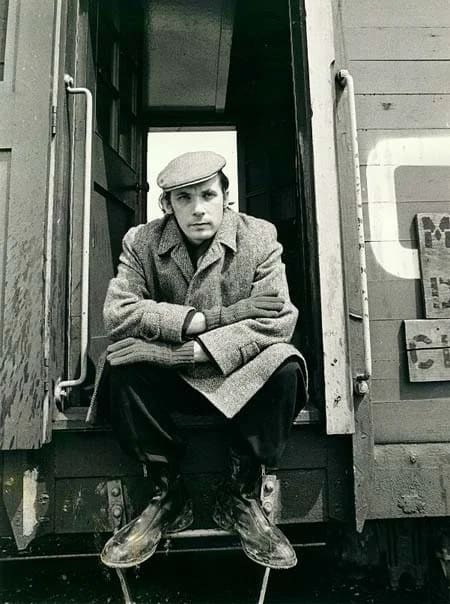
At some point, everyone discovers Gould. Many are led to him, as I was, by Bach. Listening to his 1955 recording of the Goldberg Variations, something strange happens. It’s as though a mathematician has posed an unfathomable problem and here’s someone solving it without, it appears, having to think. It’s hard to believe (for a while at least) that a human is playing the notes. Some sort of machine, surely? But then come the viewings, Gould bent over the piano, sometimes only a few inches from the keys, low enough to pull them down (as he’d been taught by Alberto Guerrero) instead of striking them, intensely focused, humming the melody, as if there was a physical bond between piano and man.
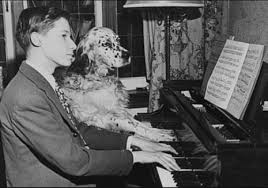
For the uninitiated, Glenn Gould was a Canadian pianist, born in 1932, who impressed from the beginning. As with Rose Grainger, Gould’s mother always intended him to be a great musician, and this extended to playing music for him in the womb. He hadn’t been out long before he showed signs of genius. He had perfect pitch, could read music before words and was accepted into the Royal Conservatory of Music in Toronto at age ten. Two years later, he passed his final exam, graduating with the highest grade of any candidate.
I could explain what comes next, but it’s a matter of record: playing with the Toronto Symphony at 14 (the first movement of Beethoven’s Fourth Piano Concerto), his first solo recital at 15. But, given this, he wasn’t your typical child prodigy (if there is such a thing). He once said the piano is ‘not an instrument for which I have any great love as such …’ Although this box of hammers and strings earned him a reputation as one of the great twentieth century pianists, he once told biographer Otto Friedrich that if he hadn’t been a pianist he would’ve been a writer.
Any journey into the life of Gould soon exposes the contradictions. As with Percy Grainger, meticulously recording his own eccentricities, Gould had a love-hate relationship with the maple box. Although it was the path to wealth and fame it couldn’t hope to contain his interests and ambitions.
And it’s these that interest me.
Today, we expect a lot from professional pianists. They have to play the right notes, understand dynamics, tempi, shading of light and dark; fathom the composer’s intentions, know how to present themselves, avoid saying dumb and controversial things and be extremely nice to their fans, corporate and human. We tolerate a certain amount of eccentricity; we assume you couldn’t be that good without a few cogs coming loose. Indeed, we even like a bit of Helfgott. This stretches from James Rhodes (and his infamous tatts) to Evgeny Kissin (who The Guardian’s Martin Kettle once singled out in his piece: ‘Why are concert pianists so boring?’)
But Gould was never boring. Although he had the technical perfection to match Kissin, he also had a sort of strangeness. An intellect like his could never be contained, or indeed, simply described. The chances are, if he’d lived beyond 50, he would’ve returned to his early passion for composition. He left very little, and mostly unfinished, work. His String Quartet, Opus 1 (composed in his early twenties) shows what might’ve been. It contains traces of Beethoven and Schoenberg, but its vision is clear and remarkable, from its simple, ethereal opening, to its playful fugues (yes, Bach is there, too).
Gould stopped giving concerts early in his career. Later, he was offered a blank cheque to change his mind, but he thought live performance was a ‘force of evil’. With typical eccentricity, he explained his ideas in the ‘Gould Plan for the Abolition of Applause and Demonstrations of All Kinds’. He believed that concert audiences (as much an anachronism as the clothes they wore) turned music into an undignified competition. Certainly not what JS would’ve wanted.
Thankfully for us, he concentrated on recording. Here, the composer was King. He could study the score, select takes, edit, and bring new perspectives to works that had often been over-recorded.
But even this wasn’t enough. In his thirties, he became a musical (and artistic) philosopher. His contempt for performance was matched by his wonder at the possibilities of creation. He believed that art was the ‘gradual, lifelong construction of a state of wonder and serenity.’
For me, this can best be heard in his three radio documentaries. These works allowed his mind to drift away from Bach and Scriabin into less well-mapped territories, both physical and emotional. They matched a worldview that contained Alban Berg and Petula Clark, Scarlatti and jazz. Perhaps it was his belief that music had peaked in the Baroque (‘the piano is a contrapuntal instrument’) and now had less to offer.
1967’s The Idea of North was Gould’s attempt to describe isolation. Although this radio work was about journeys into the Canadian wilderness, it was really a riff on his own aloneness. The hour-long documentary begins with voices, entering separately, fugues made not from little black dots but unidentified people talking about their lives. The constant click-clack of train wheels (he called this an ‘ostinato’) reminds us of our own journeys, real and spiritual. At first, the listener is swamped, but then things settle, and the voices start making sense. A little like a Bach-saturated Gould emerging from his mother’s womb.
This ‘contrapuntal’ radio was ‘as close as an autobiographical statement’ as Gould intended. He knew the truth of a thing is lost when it’s explained. Like music, creation was about the essence. He said, ‘I’ve remained, of necessity, an outsider. And the North has remained for me, a convenient place to dream about …’
He was an outsider. His ‘eccentricity’ needs to be seen in the context of a culture that worships the bankable; the tried-and-true; musicians-as-athletes. Normal, to him, was that ‘incredible tapestry of tundra and taiga which constitutes the Arctic and sub-Arctic of our country.’ He had become, in a sense, more creator than re-creator. As with Grainger, he believed the former had the greater claim on posterity.
The sensible becomes insensible. Did it really matter that he hummed as he played? That he preferred the night, waiting until after sunset to do his shopping? That he always wore coats and gloves? That he hated being touched?
There was always a reason. The old wooden chair he played on had been made for him by his father after a childhood accident left him with spinal damage. Of course, it wasn’t about the chair, it was about his father, and the love that had gone into making it.
Therein lies the mystery of Gould: the need (but impossibility) of love. Relationships were never easy. In 1967, in the midst of North, he became a family man, of sorts. Cornelia Foss, the wife of American composer Lucas Foss, moved to Toronto with her two children to start a new life with him. They lived together for nearly five years before she returned to Lucas. Gould didn’t take it well. Foss noted that within weeks his mental state had declined. She said, ‘My life became more restricted as his paranoia become more evident. He became more difficult and I think this was due to the fact that he was taking more anti-depressants … his personality began to change rapidly.’ In the end, she wasn’t willing to risk her children’s well-being.
Gould returned to his life-within-a-life. In the end, perhaps it was easier to analyze the nature of his and others’ isolation than to wait for love. Soon, he made another radio-phonic experiment titled The Latecomers. It concerned life in isolated districts beyond Newfoundland. Then, in 1977, The Quiet in the Land, an examination of a Mennonite community near Red River, Winnipeg. Together, The Solitude Trilogy is about those who choose to withdraw from the world. In a way, the same thing he’d done when he first sat at a piano.
In The Idea of North one of the anonymous voices says, ‘For those who face it (the journey north) for the first or second or third time, there’s almost a traumatic experience … they feel, Ah, this is going to become impossible. It might not be now, but it’s going to come, and yet they’re able to do little or nothing about it …’
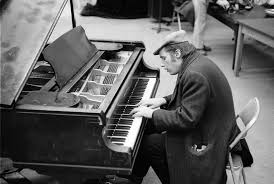
Perhaps this was Gould’s greatest fear: that there was little he could do to stop being Gould. Self-examination didn’t work. His obsession with recording his blood pressure, medications and health problems was another take on his own isolation.
On 27 September 1982 Gould complained of a headache. It was really a stroke. He descended into a coma and a few days later his father, Bert, decided his son’s life support should be switched off. As Gould himself would’ve wanted it; as he headed north, for the last time.
Gould once said: ‘If an artist wants to use his mind for creative work, cutting oneself off from society is a necessary thing.’ As we listen to any of his sixty major recordings, we can hear this focus. In the end, he found his state of ‘wonder and serenity’. He said: ‘Isolation is the one sure way to human happiness.’
March 21, 2026
The Ballad of Ern (Malley)
1. Colloquy with Ern
Time passes. What once puzzled us begins to make sense; what bemused us, inspires; what offended, seems harmless, maybe even beautiful, insightful. Take, for example, a letter written to Adelaide author and editor Max Harris in October 1943
Dear Sir,
When I was going through my brother’s things after his death, I found some poetry he had written. I am no judge of it myself, but a friend who I showed it to thinks it is very good and told me it should be published …
Yours Sincerely
Ethel Malley
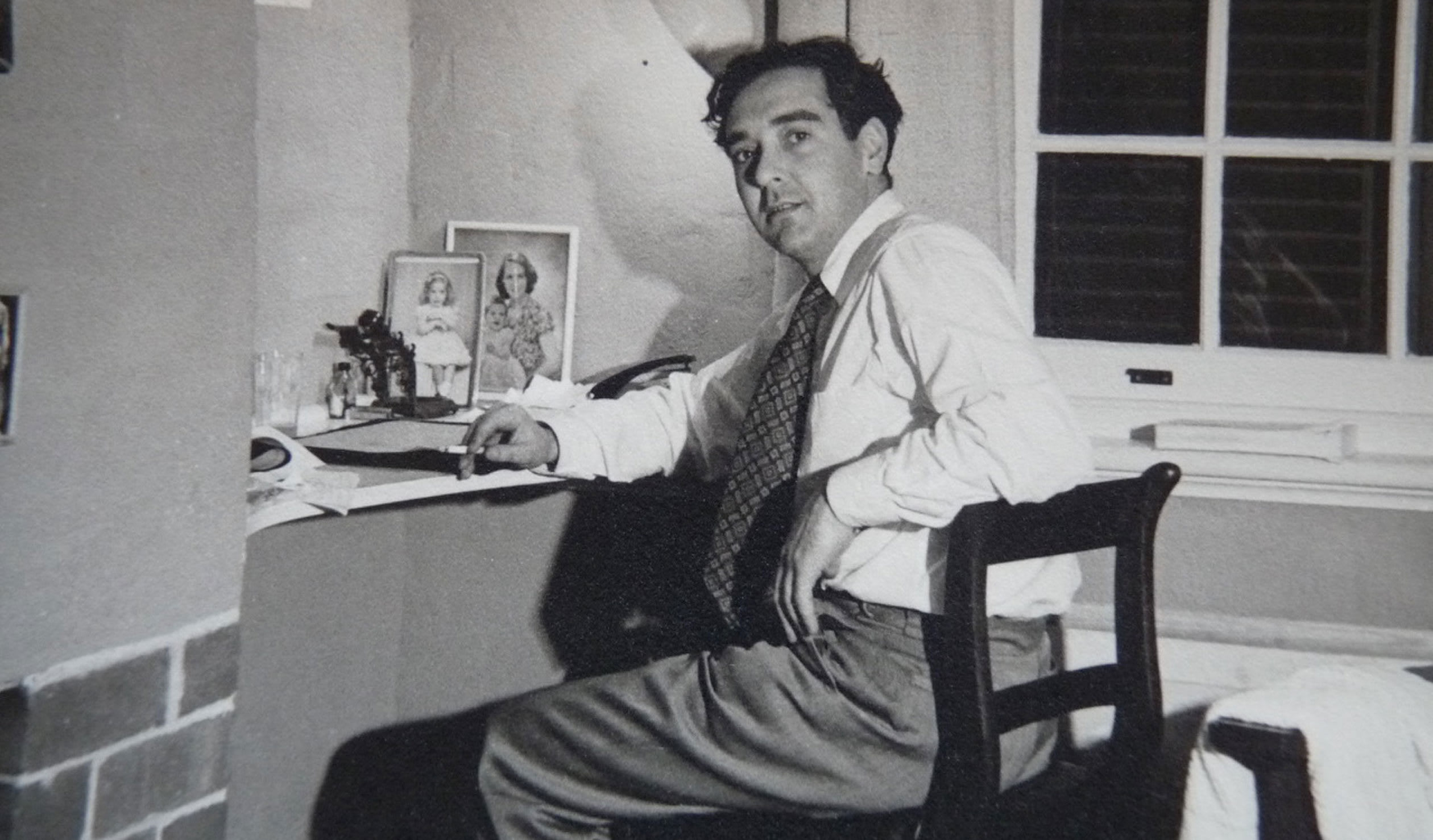
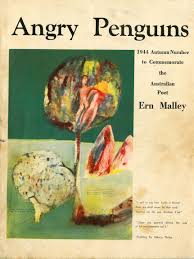
Imagine Ethel, sitting in her parlor at 40 Dalmar Street, Croydon, Sydney, the sun on her arms, the curtain blowing against her cheeks, as she writes to tell Max, editor of a new literary magazine called Angry Penguins, about the discovery of her late, Returned brother’s poems
Now we find, too late
That these distractions were clues
To a transposed version
Of our too rigid state.
(‘Palinode’)
Thing being, the poem’s author(s) thought Max and his magazine represented some sort of too flaccid state, where the old would be made new (or rejected), Keats thrown down the Spanish Steps in favour of Modernism, the face of Australian literary culture reinvented in a flurry of ‘desire beyond these terrestrial commitments’ (‘Documentary Film’). Max loved the poems. He showed them around Adelaide. Not everyone shared his enthusiasm. J.I.M Stewart (Jury Professor of Language and Literature at Adelaide University) told him Ern’s poems were ‘highly derivative’ and ‘rather incomprehensible’. Harris sent the collection to his Penguins co-editor John Reed on 8 November 1943
Here’s a pretty terrific discovery. I was sent the enclosed poems by one Ethel Malley of Croydon NSW, an almost illiterate woman, who said they were found in the papers of her brother who died in June of this year …
A few days earlier (2 November) he’d written to Ethel to explain
Thank you for sending me the MSS of your late brother. I read it through carefully and I was very much impressed with it. I should have no hesitation in publishing the poems you sent me in the January issue of Angry Penguins.
So begins Australia’s greatest literary hoax, made real and eternal, problematic and persistent, in the 1944 ‘Autumn Number to Commemorate the Australian poet Ern Malley’. As we sit here, 80 years later, still reading Ern’s poems, puzzling over them, moved by them, laughing at them and wondering how poor Ern, scribbling in the back room at 40 Dalmar Street, produced these gems just as Eliot, Pound, Crane and William Carlos Williams were producing their best works. A soldier, from Australia? Really? But Harris had no doubts.
… I think these poems, architectural, unified in their language treatment, are among the most outstanding poems I have ever come across … It is unbelievable that a person going away to die could write poetry of this objectivity and power.
(Max Harris, letter to John Reed)
Meanwhile, Ethel wrote back to Max
Certainly you may publish any of them [the poems] you like in your magazine … I never knew that Ern wrote poetry. He was a great reader and he told me he did a lot of study in Melbourne.
All part of a long, complex biography of the late Ern that Ethel supplied, ending with the observation that
… he kept very much to himself. He was always a little strange and moody and I don’t think he had a very happy life, though he didn’t show it.
Apparently not. Ern didn’t show much. Ern, you know, the soldier, the brother, the ex-mechanic, the bookish boy. Didn’t show much at all. But, for me, this is the story I prefer. The imagined, the invented, more satisfying than the real.
2. Culture as a Poem
Slight detour, as per the eightieth anniversary of the Malley affair. Or is it memorial, commiseration, or maybe celebration? I’m not sure, because everyone takes Ern and Ethel a different way. In the same way we take hoaxes in a different way. It all depends, I guess, whether you’re the hoaxer (funny, eh?) or the hoaxed. Maybe it’s all just a laugh? At which point I’d like to introduce Jean Shepherd, fifties American DJ, sitting in his studio in New York at three in the morning babbling to his listeners about … anything, really.
Can you imagine 4,000 years passing, and you’re not even a memory? Think about it, friends. It’s not just a possibility. It’s a certainty.
Like most hoaxers, Shepherd was part-shit-stirrer, part-comedian, -philosopher, -non-conformist. His midnight to five shift suited him perfectly. He ministered to what he called the ‘night people’: the insomniacs, derelicts, creatives. Each of whom shared Shepherd’s password (‘Excelsior!’) and response (‘Seltzer bottle!). Compared to what he called the ‘day people’ – the followers of rules, the conformists, the business types, the list makers (the victims of ‘creeping meatballism’). Shepherd believed ‘night is the time people truly become individuals because all the familiar things are dark and done; all the restrictions on freedom are removed.’
Shepherd hates the way radio stations decide what is or is not a best-seller by asking book shops (run by day people) what titles are selling the most. So he tells his listeners, and together they come up with a scheme whereby thousands of night people will descend on book stores and ask for a non-existent book (they come up with the name I, Libertine). This should screw with the whole book, best-seller, list thing in a major way. Another listener suggests the book might have been written by an expert on eighteenth century erotica: Frederick R. Ewing (no, I didn’t say Ern Malley, did I?). Over the next few weeks, bookshops around the country are flooded with requests for Ewing’s novel. Soon, night people students are writing essays about the ‘book’ and sneaking fake index cards into library catalogues.
The story continues: bookstores plead with publishers for copies of the book, one of whom, Ian Ballantine, traces the hoax back to Shepherd and asks him, Well, why not write the book? They agree, Ballantine convinces science fiction writer and Shepherd fan Theodor Sturgeon (later made famous as Kilgore Trout in Kurt Vonnegut’s Slaughterhouse Five) it’s a great idea, and Sturgeon sets to work. Thirty (apparently) hectic days of writing later, Sturgeon falls asleep on his couch one chapter short of the end and his wife, Marion, finishes the story for him (now, for the Malley fans, think James McAuley and Harold Stewart, apparently writing the Malley poems in a single sitting). Sturgeon (after he wakes) thinks it’s a great laugh (the man, part shit-stirrer-philosopher himself, who said)
We don’t believe anything we don’t want to believe.
(Baby is Three)
The key, surely? What we want to believe. We want to believe in Ethel; we want to believe in Ern; we want to believe in Max, because Max gave us these people, these poems, this myth, this complex, ambiguous, Euro-angsty hoax that has outlived its creators, its victims, its sceptics. Like I, Libertine, launching on 13 September 1956 with Shepherd’s photo doubling for Ewing’s on the back cover. A print run of 130,000 copies. A bestseller! The imagined made real. The erotic adventures of Lance Courtenay making middle-America sit boult-upright, unaware that fantasy is a fake. But what did, or does, it matter? All stories are fake. All made up. From Sir John Mandeville (whom Sir Thomas Browne called ‘the greatest liar of all time’) and his fantastical 1371 travel book, to JG Ballard’s 1968 Why I Want to Fuck Ronald Reagan (landing another bookseller, Bill Butler, with his own obscenity trial). All riffing off human existence and its vagaries, or, as Shepherd explained
The reality of what we really are is often times found in the small snips, way down at the bottom of things.
3. Young Prince of Adelaide
Okay, by now you’ve guessed. There was no Ethel; there was no Ern. But repeat after me: Ethel is real; Ern is real. Always have been, always will be. As real as the ‘tapestry of obscenity’ Shepherd wove, which, he explained, is ‘still hanging over Lake Michigan.’ As it hangs over Adelaide, Dalmar Street, and the Victoria Barracks, where two soldier-poets by the name of Harold Stewart and James McAuley, sat, one day in spring, 1943, and
…set to work improvising Ern Malley, their Primitive Penguin, writing his poems out on an army-issue, ruled quarto pad, tearing each page off as they filled it. They worked rapidly, buoyed by the wickedness of what they were up to …
(Michael Heyward)
They created Ernest Lalor Malley, borrowing everything from Mallarmé and Dürer to a book about tropical hygiene, a dictionary, and plenty of imagination. Stewart later said
We’d think of a line or two each or we’d play with this bit and put a bit in here and take a bit out there.
The soldier-poets were full of boyish glee, naughtiness, hope and thrill that they might get away with it, that Harris might actually believe these poems were the mythical Ern’s; that all this pretentious modernism (‘That rabbit’s foot I carried in my left pocket, Has worn a haemorrhage in the lining …’) might collapse under its own weight. But Max, sitting in Adelaide, was motivated by something else: the need for Australia to move on from bush poetry; to find an alternative to Chris Brennan’s Euro-Classicism; to create something modern, anti-Adelaide, anti-Australia-as-a-talcum-scented tea shop, complete with other people’s culture. In this, Harris was wholly successful. He kick-started what Donald Horne and others magnified in the sixties. But at a great price to himself: he was never the same after the shit hit the fan.
And it did. The revelation of the hoax. Detective Vogelsang summoning Max to court to answer charges of publishing obscene poems. The trial, in which the worst of Methodist Malvern and Moonee Ponds was seen, upheld, celebrated, perhaps. In which our chance to take risks was stunted, euthanised. The tragedy of a hoax that was much more than a hoax, now as much as then, as we, in my opinion, continue celebrating the second-rate, the makers of lists, the day people, those who believe the fake can’t be real, shouldn’t be. But I, for one, believe in Ethel and Ern. I suspect, one day, perhaps in four thousand years when we’re forgotten, these poems will still be read (‘Night-Piece’, alternate version, our new national anthem). Some future day man struggling through the nine hundredth reprinting of the biography of the great Australian poet, Ern Malley.
March 13, 2026
The Heissenbüttel Experiment
‘To get up in the morning, wash and then wait for some unforeseen variety of dread or depression. I would give the whole universe and all of Shakespeare for a grain of ataraxy.’
E.M. Cioran (The Trouble with Being Born)
1.
A few months ago, I stumbled across a copy of Helmut Heissenbüttel’s Texts (1977), a collection of experimental writings drawn from (among others) his Would-Be Novel, Generalization and 3 x 13 More-or-Less Stories. I can hear eyes rolling, but although these sorts of books seem self-serving, I find them interesting, weird, funny and unpredictable. Everything that makes good writing: ‘I am a story/ I am a story about somebody/ Somebody about whom I am a story is the story that I am ...’ I admit, this Dr Suessian stuff isn’t everyone’s cup of tea, but it needn’t be, it just needs to exist. I researched Heissenbüttel, tried to find reviews of his works, checked his profile on Goodreads, noted his three followers (panfletx, Sz, and me) and thought, Maybe we’re the only ones interested in experimental German literature? Which made me wonder whether Heissenbüttel was a failure? Is anyone a failure who bites off more than he or she can chew and ends up choking on it? Was Barbara Cartland (1901-2000), with her 723 books, successful, or a failure? Was Harold Alfred Manhood (1904-1991) a failure because he stopped publishing stories and spent the rest of his life brewing cider in a converted railway carriage? If that’s the case, wouldn’t J. D. Salinger be a failure? And he’s not, is he? Which made me wonder what might constitute a ‘valid’ failure? Dying, for one. Keats, the Brontës, Chekhov, Austen, Pushkin, Marlowe, failures, the lot of them (so who are the writers we wished had died early?). Other excuses? Getting lost at sea, retiring from writing or finding better things to do (Harper Lee, Adolf Hitler), locked away in a gulag or concentration camp (Solzhenitsyn, Elie Wiesel), changing artforms (Juan Rulfo turning to photography), and on it goes. Point being, success is only ever in the eye of the beholder.
So, with the theme of failure firmly planted in my head, I examined a range of writers who (though not necessarily unsuccessful) had had bad endings. I collated quotes, tried to develop a scheme to hold the piece together, printed it all off, made a coffee, sat down, then tore the lot into small pieces (the size always a function of the self-disgust), binned them and watched Netflix. A week passed, two, I thought, Hold on, tomorrow’s recycling day, do I really want the Heissenbüttel Experiment to fail? Out to the bin, through a mountain of milk bottles, TV Snaks, bottles of syrup dripping down my arms. Retrieved my notes, brought them in, sat at my desk and taped them together, opened a Word doc, Ctrl A, justify, 1.5, Times New Roman, page numbers. Named it (though I’ve changed it six times since then) and began writing: ‘A few months ago ...’ (&c.) Rearriving back at this spot and thinking it’s time to jump into the world of originality, premature death and self-loathing.
2.
Helmut Heissenbüttel wasn’t a failure. In fact, he was quite successful, winning (among other things) the 1969 Büchner Prize for his ‘textbooks’. But 1969 was a long time ago, and humans have a habit of forgetting. Ironically, in 1969, Samuel Beckett was at the height of his Nobel Prize fame. What gives us a Beckett but forgets a Heissenbüttel is another topic, but Beckett was no friend of success, either. I don’t think a writer needs to be a failure to be a success, but it helps. Having found success, most good writers do their best to get away from it as quickly as they can (Jean-Paul Sartre, Patrick White).
Scanning my bookshelves recently, I realised most of my favourite authors were failures. The classic failures like Franz Kafka (1883-1924): ‘It would have been so pointless to kill himself that, even if he had wanted to, the pointlessness would have made him unable.’ (The Trial, 1925) Although, a recent reading of Max Brod’s 1937 Kafka biography shows a man mixing depression with the odd, occasional good time. I’m not here to quantify failure, depression, any of it, but it seems tragedy and humour are lumped together for a reason. Estragon and Vladimir are as funny as they are pathetic. The same thing’s there in the works of Arthur Adamov, Jean Genet, Pinter, Grass, Albee. Absurd, all of it. Which is some consolation, isn’t it? Liberation from predictability, from taking things too seriously. Which leads us back to safe, predictable texts (and lives). Is it that we tend to forget how absurd things are? If we’re reduced to a life of Lego-as-living, then what about all we lose, or as Albert Camus (1913-1960) explained: ‘A man devoid of hope and conscious of being so has ceased to belong to the future.’ Conscious of being so. But we’re not, so it doesn’t matter, right?
3.
I’d like to explore writing as an addiction, and a nasty one at that. I’m most interested in depression as the primary cause of this addiction. Depressives constitute the biggest group of literary failures. It hardly matters if someone is born depressed or becomes depressed. Probably a combination of the two, and these are probably inseparable. Classic depressives such as Virginia Woolf succumb to pathologies of introspection. ‘Dearest, I am going mad again. I feel we can’t go through another of those terrible times. And I shan’t recover this time. I begin to hear voices, and I can’t concentrate. So I am doing what it seems the best thing to do.’ This is what I mean by a failure. The fight, the struggle, the words written and fear and love and hope expressed, despite everything. This is why failed writers are, by definition, successful (and vice versa). ‘You have given me the greatest possible happiness. You have been in every way all that anyone could be ...’ (1941 suicide letter) Maybe this is what Camus meant by his (possibly misattributed) quote: ‘The literal meaning of life is whatever you’re doing that prevents you from killing yourself.’ Or Emil Cioran (1911-1995): ‘A book is a suicide postponed.’ (The Trouble With Being Born, 1973) Then there’s Nietzsche (1844-1900), bringing up the rear: ‘The thought of suicide is a great consolation: by means of it one gets through many a dark night.’ Hemingway, too, saying the same thing before he got up early one morning in 1961, took his shotgun downstairs and placed both barrels in his mouth. ‘The world breaks everyone and afterward many are strong at the broken places. But those it will not break, it kills. It kills the very good and the very gentle and the very brave impartially. If you are none of these you can be sure it will kill you too but there will be no special hurry.’ (A Farewell to Arms, 1929) Maybe we shouldn’t confuse fact and fiction, but even the most detached writer bleeds into his or her characters, plots, litters the page with observations and confessions he or she has no ability (or desire) to hide. After all, it if can’t come out on the page, it stays in the head (though it probably stays there anyway). The point of being a writer, and paying the miscellaneous costs.
Similarly, the blogger and critic Mark Fisher, who predicted the slow death of a culture that had nothing new to say, endless reboots of Harry and Hermoine, forever, amen. ‘The depressive experiences himself as walled off from the lifeworld, so that his own frozen inner life – or inner death – overwhelms everything; at the same time, he experiences himself as evacuated, totally denuded, a shell.’ (Ghosts of My Life, 2014) As with David Foster Wallace (1962-2008): ‘The parts of me that used to think I was different or smarter or whatever, almost made me die.’(Infinite Jest, 1996). And what about John Berryman (1914-1972) and Ernest Hemingway (1899-1961), with their histories of depression, suicidal fathers and alcohol abuse (more on this later)? Berryman’s Dream Songs works as a cipher and his anti-hero Henry as an avatar for his attempts to wrestle the past from the present which, in the end, proved too problematic. Berryman jumped from the Washington Avenue Bridge in Minneapolis in January 1972. ‘Tears Henry shed for poor old Hemingway/ Hemingway in despair/ Hemingway at the end,/ the end of Hemingway/ tears in a diningroom in Indiana ...’ (The Dream Songs [235], 1969) The aptly named Art Hitman witnessed the suicide and later said: ‘[Berryman] jumped up on the railing, sat down and quickly leaned forward. He never looked back at all.’ And yet this had all been made clear years earlier. ‘Save us from shotguns & fathers’ suicides/ It all depends on who you’re the father of/ if you want to kill yourself ...’
4.
I’m having trouble reading my notes from these torn pages. But that’s fitting, I suppose. Modern publishing uses BookScan, Goodreads, data and analytics to work out what should and shouldn’t be published. Books edited into smooth, flowing, unproblematic wastes-of-time. Which makes me think of Heissenbüttel: ‘Anti-grammatical, anti-syntactical transformation and reproduction of language are effective principles in twentieth century literature.’ (Texts, 1977) Indeed, the thing it might most be remembered for (Joyce, Pound, Dos Passos siring Richard Brautigan, Jon Fosse and others). Publisher eats publisher, conglomerate, equity firm, and we’re back to the mighty dollar. Twenty years ago, self-publishing (Sylvia Beach-style) promised solutions, but it didn’t work out that way. In the end, a world where everyone’s a writer is just as problematic.
Which brings me to the substance abusers. Again, too many to mention, but Malcolm Lowry (1909-1957) stands out. Lowry could really drink. His biographer, Douglas Day, opens his account of Lowry’s life with a newspaper clipping from the Brighton Argus a week after Lowry’s death, aged 47: ‘SHE BROKE GIN BOTTLE. FOUND HUSBAND DEAD. One evening last week Mrs Margerie Lowry, of White Cottage, Ripe, tried to stop her 47-year-old writer husband, Clarence [Lowry], from starting on the gin. She smashed the bottle on the floor. And he hit her. Afraid, Mrs Lowry fled next door, and did not go back to the cottage until nine o’clock the next morning. When she did she found her husband dead.’ Lowry spent nine years working on Under the Volcano, the story of alcoholic British consul Geoffrey Firmin’s last day and death in the Mexican town of Quauhnahuac. Not a lot happens, but it happens wonderfully. Concluding with Firmin’s executed body thrown into a ditch, a dead dog thrown after him. ‘Nothing is altered and in spite of God’s mercy I am still alone. Though my suffering seems senseless I am still in agony. There is no explanation of my life.’ (Under the Volcano, 1947) Alone. Maybe that’s what the greats want to tell us – that despite everything, we’re alone. In the same category, we find literature’s best known alcoholic, Dylan Thomas (1914-1953), as well as the American author of Let us Now Praise Famous Men, James Agee (1909-1955), trying to make sense of why we’re here in the first place. ‘By some chance, here they are, all on this earth; and who shall ever tell the sorrow of being on this earth, lying, on quilts, on the grass, in a summer evening, among the sounds of the night.’ (Knoxville: Summer of 1915, 1938). Before succumbing to a heart attack in the back of a taxi on the way to a dentist’s appointment.

5.
Suicide seems an inevitable part of many writers’ career trajectories. Often, the manner of death lingers longer than the sum of life. Kierkegaard: ‘I have just now come from a party where I was its life and soul; witticisms streamed from my lips, everyone laughed and admired me, but I went away ... and wanted to shoot myself.’ (1836 journal) Or Sylvia Plath: ‘And if you have no past or future which, after all, is all that the present is made of, why then you may as well dispose of the empty shell ... and commit suicide.’ (The Unabridged Journals of Sylvia Plath, 2000)
But it’s not all depression and grog. The German essayist Walter Benjamin (1892-1940), for example, fleeing the Nazis in 1940, trying to exit France for Spain, unable to obtain a transit visa, returning to his room in the border city of Portbou, writing a letter of explanation and overdosing on morphine. ‘But to start everything anew after a man’s 60th year requires special powers, and my own power has been expended after years of wandering homeless. I thus prefer to end my life at the right time, upright, as a man for whom cultural work has always been his purest happiness and personal freedom ...’ Or similarly, Stefan Zweig (1881-1942), unable to accept the loss of his world of yesterday. Writing, after years of exile, supported by admirers and friends, settling in Brazil: ‘A generation that had gone to school on a horse-drawn streetcar now stood under the open sky in a countryside in which nothing remained unchanged but the clouds, and beneath these clouds, in a field of force of destructive torrents and explosions, was the tiny, fragile, human body.’ (Illuminations: Essays and Reflections, 1955) Before retiring to the privacy of a room in his Petropolis home and committing suicide with his wife, Lottie Altmann.
6.
Bad endings. Here’s Yukio Mishima (1925-1970), Shintoist and ultra-nationalist, author of Confessions of a Mask, and four other revolutionaries, barricading themselves in the Tokyo office of military commander Kanetoshi Mishita. The rebels tie Mishita to his chair, then Mishima, hoping to inspire a coup d’état to restore imperial rule, steps out onto the balcony and addresses the troops. He’s jeered and mocked, gives up, goes back inside and commits ritual suicide (seppuku). Or no ending. Social worker and author Ernst Haffner, author of Blood Brothers (a favourite of Goebbel’s book burnings), summoned by the Nazi writers’ union to explain his depiction of seedy Berlin, thieves, murderers, child prostitutes. ‘But the children, committed to the institutions whose function is to guard them against turpitude, only learn from their comrades how to make money in the easiest way.’ (Blood Brothers, 1932) After this, nothing is heard from him again. Twenty-one year old Arthur Rimbaud forsaking poetry to become an Abyssinian arms dealer, eventually returning to Marseilles in agony, his right leg amputated, dying of bone cancer aged 37. Alone, again, and pragmatic: ‘True life is elsewhere. We are not in the world.’ (A Season in Hell, 1873)
Similarly, Albert Camus: ‘There is but one truly philosophical problem and that is suicide. Judging whether life is or is not worth living amounts to answering the fundamental question of philosophy.’ (The Myth of Sisyphus, 1942) Dying in a car accident in 1960, aged 46. And what about Cistercian monk and literary sage Thomas Merton (1915-1968), electrocuted by a dodgy fan in Thailand in 1968; Hart Crane, jumping overboard (‘Goodbye, everybody!’); George Orwell, succumbing to TB a few years before the antibiotics that might’ve saved his life; Robert Walser in his asylum (‘I’m not here to write. I’m here to be mad’), Flannery O’Connor, Hans Fallada, dozens of others I could talk about, if any were different to another.
Why do writers put themselves through all this? As Michael Cunningham explained: ‘We throw our parties; we abandon our families to live alone in Canada; we struggle to write books that do not change the world, despite our gifts and our unstinting efforts, our most extravagant hopes.’ (The Hours, 1998) In their minds, they’re all Shakespeares, retiring to their personal Stratfords after blessing the world with their words. Each artist sitting on his or her egg, regardless of its chances of hatching. Despite all of this, or maybe because of it, they discover the mysteries that remain hidden to most of us – the shadows of moonlit leaves dancing across a pavement, a dog panting, Exit lights flickering, wood fires taking us back thousands of years to wherever it all began. It only takes one reader, browsing the shelves of one shop, to find the book he or she needs, saving Heissenbüttel and his kind from the mouldering of memory, taking them home and assuring them they’re no longer failures.
December 7, 2025
In Search of Joyce (and others)
Six weeks walking, studying maps, hobbling on my dodgy foot, all to make one discovery. But that can wait.
It starts in Dublin. The James Joyce walking tour. Along North George’s Street, framed by Belvedere College S.J., where Joyce first learned there is ‘no philosophy so abhorrent to the church as a human being.’ Yes, the Jesuits were fearful, but tempered. As I imagine the young man walking to school, settling in his room, waiting for a dose of Homer, already turning Dedalus in the cold morning air. Cold. Dublin is Liffey-chilled, eye-watering and seagull-squawking. The post office, with its bullet holes, ready to celebrate a century of defiance, although the greatest travesty now is the row of tourist buses parked across the street.
More Joyce! Come on, ladies and gentlemen, keep up, please! As we brave few (including the inevitable Americans, telling us how important Joyce was to their Idaho-childhoods) lean into the wind, imagine the great boy, teenager, young man, trawling these streets for material. We avoid Parnell Square (the old Rotunda Hospital where JJ was born) and head down Frederick Street North (with its peeling apartments, cheap hotels and off licence) to Hardwicke Street. The guide points to what was once the Joyce family home at number 29 (now a block of council flats), and we all try to imagine (but for my part can’t) John, Mary, Stanislaus and little Jimmy heading out for the day, perhaps to the nearby St Mary’s Pro-Cathedral (unlikely). And across there, our guide says, indicating a sagging little Victorian walk-up, you can see the building that inspired ‘The Boarding House’ (written in Trieste in 1905). In Joyce’s day, number 4 was a brothel, (as an Indian man and his wife come out with their several children). Joyce probably spent hours watching the goings and comings. Imagining the lodger, Bob Doran, forced into marrying Polly Mooney, the madam’s daughter (as it still goes on to this day).
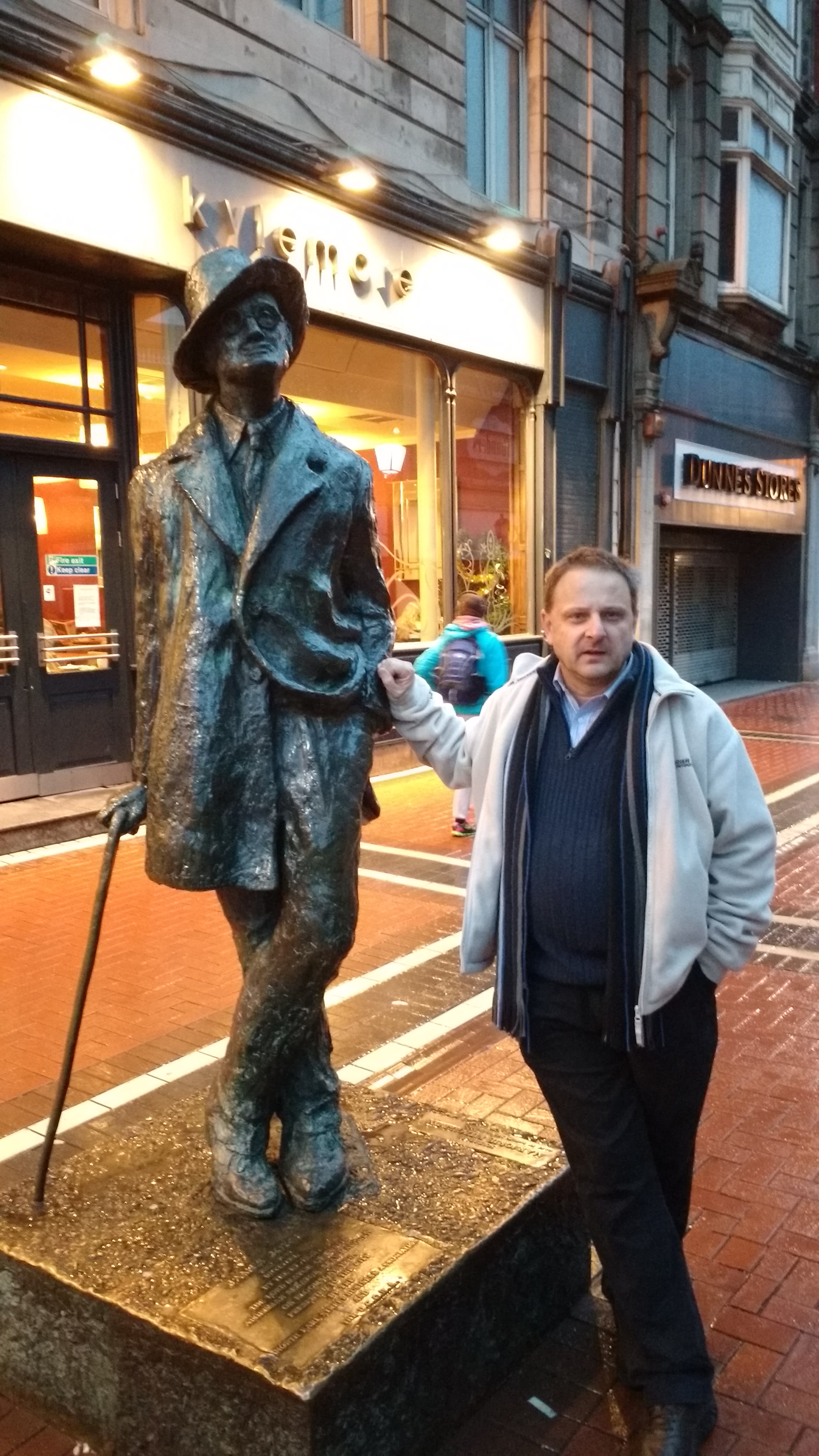
Then a couple of teenagers on a loud, penny-sized motor bike start riding up and down Hardwicke Street, past us, closer and closer, grinning, as I recognise this Irish streak. We few foreigners (clutching our annotated editions) seem strangely out of place with the grog shops and Pakistani delis, flats, everywhere, and a few teenage mums with almost teenage kids. And I think, At last, Joyce’s Dublin!
Which brings me to the discovery. Although this early in the trip, I had no idea what I was seeking. Some Adelaidean Leopold celebrating his Orrday (after so many years of dreaming about it). As the stinking dung heap of a feeling began (destined to pursue me throughout my European odyssey): Am I disappointed? Is this what I expected (what was I expecting?)? I thought Dublin would be so…literary, but there are actual people, in trackies, bum cracks, a Subway, Starbucks. And the feeling: Joyce is long gone. He wasn’t even here when he wrote about the place; he hated it. Said, ‘When I die, Dublin will be written in my heart.’ But this Dublin?
No time for thinking. This way please. As the motorcyclists give up, head towards St George’s Church, and the next group of suckers. We continue, heads down, towards the Liffey. Stop outside the Gresham Hotel. By now, my dodgy foot is failing, and I wonder if I should slip away from the group, find a café, and seek Dublin through my own copy of Dubliners. Is that done? Can you just go? Roy and Shirley (Idaho) are monopolising the guide, so… But I stay, and hear about Gabriel and Gretta Conroy (upstairs, staring down across O’Connell Street Upper), Gretta ignoring Gabriel’s lusty hints, telling him about a long-dead lover who’d gone out in the rain to meet her (‘I think he died for me, she answered’). Gabriel’s interest flags, depressed that his wife (on their big night at the Gresham) still longs for Michael Furey. Then, he senses, we are all still living with the dead, and past. Maybe that’s my problem, attempting to animate a dead writer, falling asleep as cold Dublin loses its eternal friskiness.
The next day I try again. Jonathon Swift. Dean of St Patrick’s Cathedral, a few minutes’ walk from Temple Bar. I’d re-read Gulliver’s Travels. Studied his biography. Got to know him through his pamphlets (‘A Modest Proposal’, in which he explains how ‘a young, healthy child, well nursed, is, at a year old, a most delicious, nourishing and wholesome food; whether stewed, roasted, baked or boiled, and I make no doubt, that it will equally serve in a fricassee…’). Swift is still giving his sermons. Sarcasm, satire. But a love of humanity, and desire to see people at their best. Even now he can still piss people off (especially those who take him literally).
I spend an hour searching for Swift. In the park beside the cathedral where St Patrick used to covert heathens. In the gift shop, the post-Norman toilet (one of the few in Europe where you don’t have to pay-to-piddle), the North aisle and transept, the graves of Swift and his muse, Esther Johnson (Stella), Swift’s death mask, a selection of his writings (liturgical, and funnier) and his pulpit. As I sit and try to hear him. What sort of voice? Was he funny? Was anyone even listening (refer to his sermon, ‘On Sleeping in Church’)? My little voice is still asking, Where is he? Where are the Lilliputians? The flying island and smart horses?
Enough of this nonsense. London will cure it. A brisk walk through Bloomsbury. Like a dinosaur down Holborn Road, Lincoln’s Inn Fields, Chancery Lane, Fleet Street, Gray’s Inn Road, Doughty Street. 48. Enter and leave through the gift shop (as usual). Into Dickens’ hallway, narrow neat, his front room, and he’s sitting there, planning the next instalment of Oliver Twist. Consulting ‘Phiz’ about the illustrations. John Forster’s just arrived, chatting with Kate Dickens, sewing, reading, taking tea, perhaps, in the small room at the back. Up the stairs to the great man’s study. The walls lined with bookcases, the desk, the writing table where Mr Bumble, Bill Sikes, Nicholas Nickleby and a dozen other characters daily came to life. This is more like it. The small of old paper, leather. The ghosts. Although, if you stop and listen, you can hear delivery vans outside, a helicopter, voices from the gift shop. So, where is Dickens? In his bedroom? I check, but there are just more fans, like me, searching for the keys to creativity, although they can’t be found.

And so it continues. Edinburgh. Conan Doyle at medical school (although his birthplace was torn down to make way for a roundabout and public toilet), Robert Louise Stevenson, learning the art of ‘illustrating death’ as he walks from Claxton Hill to Parliament Square, where you ‘strike upon a room…crowded with productions from bygone criminal classes…poisoned organs in a jar, a door with a shot hole through the panel, behind which a man fell dead…’ In Edinburgh, a thousand fireplaces have turned the sandstone black; the closes still musty, Black Death between the stones, in the foundations and daubed walls. Here, it isn’t the writers as much as the place itself. A city of stories. Rowling scribbling in her café, Robbie Burns drinking a kindness cup from the high ground as the pipers pipe and Dr Jekyll prows the streets, still.
On and on. The voice persists, the feeling. That we populate stories with our own meaning, and those who love storytelling the most, surrender to the illusion most completely. I continue to Berlin, but don’t find Brecht at home (or in the small, monastic bedroom where he died). There are clues: the rooms he didn’t share (due to his adulteries) with his wife, Helene Weigel. She was much more comfortable downstairs in her moo-cow kitchen, her glassed-in garden room, although they’re together again, in the Dorotheenstadt cemetery, a few metres walk form their old digs. Similarly, TS Eliot isn’t waiting out front of Faber and Faber, or smoking in Russell Square, contemplating the Heaviside layer. That’s still there, keeping radio waves in the atmosphere, stories in the streets where they were set, bouncing Sam Weller beyond distant horizons. Hooking people like me, who come looking, full of hopes.
As, eventually, the voice fades. You give up. You no longer care about Wilde’s house, or where he might’ve walked in Merrion Square. The stories are in the mind, the words, the pages, the books that remain. You can go all the way to Hamnavoe to find George Brown, but you might as well visit the local library, let the poetry propagate in your own ether. Joyce left Dublin in 1904. He once said, ‘One of the things I could never get accustomed to in my youth was the difference I found between life and literature.’ Perhaps that’s the key. Between the living and dead, real and imagined, the writer and reader.
October 25, 2025
Tallangatta
Before I start writing I hear the story of four boys who have died in the United States, fallen through river ice, cardiac arrest; and a neuroscientist facing his own mortality, two or three days before the cancer he understands so well (at the genetic, the cellular level) carries him off on the Great Adventure; the fear of losing loved ones, daily, hanging over our heads, the realisation time has nothing to do with you – you’re part of it, in it, but it continues despite any understanding, intuition, feelings of love, desire, empathy – sits waiting, and why should you be any different to the forty people who stood in your place before this moment? Once understood, and accepted, everything follows. A cloud seeded with everyone who’s ever lived, falling through time’s long ruin, gathered in some mystical, mythical place full of weeping grass and bluebells. If that’s how we want to imagine it, and why not? The idea that there’s no thought you’ve had that hasn’t been had; no frustration, no contempt, no desire, no shame that had to be hidden in the deepest, safest part of your brainbox. No poem that hasn’t been written, combination of notes making songs sung on cold, windy Burren days thousands of years ago; no insights into others’ behaviour, no overlooked solutions. You, simply, have been thrown into an unwinnable football match, probably because of a lack of players, destined to chase a small, soggy ball.
I think of the piece I thought of writing, describing the small town of Tallangatta. The town that was. On the day I visit, old Tallangatta sits under gigalitres of water, thirty, forty metres down, the main street all sludge, the Soldiers’ Memorial Hall and Free Library, Pink Bros. General Merchants, the billy buttons and club rush, drowned, in the name of 1950s progress. The coffee palace and cordial factory; the lusty, Methodist church and pig sale yard. And what of this place I can’t see, but stand at the end of Martha’s Lane imagining? The water lapping at my feet, inviting me to wade in, explore, some Tourism Victoria Experience sold to city folk, and here I am, disappointed. Think of yesterday, of this town, the four boys, the flooded graveyard, the long-abandoned six o’clock swill at the Victoria Hotel, Jock Cavanagh explaining how, as a boy, he and his mates crawled under the jacked-up weatherboard houses (to be moved a few miles down the road) looking for pennies and pounds and marbles. Spent his summer fishing for redfin in Tallangatta Creek, and now there’s no creek, no town, nothing but the Hume Weir and a body of water the size of seven Sydney Harbours, a safe, dependable supply of irrigation water that came at the cost of a small, Australian town.
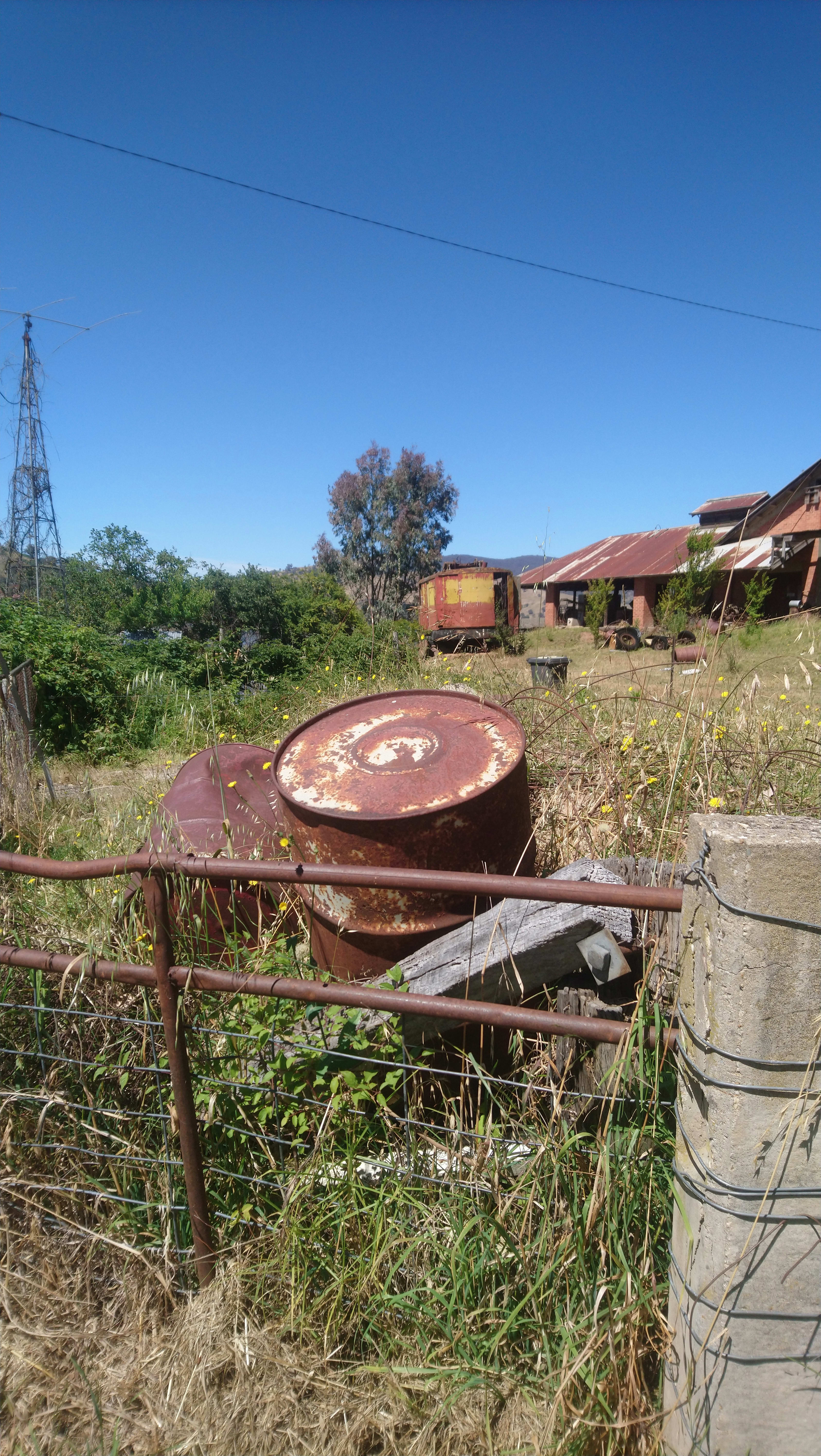
This, then, is the old town, the town of Tallangatta, an Australian Brigadoon that only emerges in drought years. In the form of a few houses left behind at the time of the government relocation (1952-1954) because they’d been built on high ground (the ‘Toorak’ of Tallangatta). The butter factory with its rusted roof, its yard overgrown with river mint and pigface, old machinery and an abandoned car, the memory of milk, churn, butter, bread, Jock at the dinner table and Pappa says dear Lord, thank you for what you’ve given us, but soon their house, minus its outdoor dunny and rows of carrots and tomatoes and its toolshed full of rusted hammers and nails and the spot where Bob emptied the dripping from the roast and the bough-hung swings, floating beside Aunty Noreen’s bleached bones, windows in the school house where kids stared out at clouds (their Pythagorean ghosts marvelling at carp and cod), all jacked up and de-stumped, loaded onto the back of a truck and taken to the ‘new town’ (the old town of Bolga) a few miles away, placed on a numbered site ready to start again.
Post-World War I, the need for reliable irrigation water, the use of the Returned to build the Hume Weir, an engineering feat that, to this day, impresses. Water to the horizon, speed boats and catamarans playing in the silver-tipped waves, then heavy, prolonged rains, the weir gates opening, the bloated Murray flooding. But even then, it was obvious the weir could hold more, promise greater wealth, alluvial plains and beets and lettuces and fat angus and shorthorns to feed the Commonwealth. And already, by the 1930s, a discussion about increasing the weir’s capacity. Problem being, Tallangatta, built in the bottom of a low-lying valley, the annual floods, the winter fogs that lasted until one in the afternoon, this unremarkable town that had started off as a series of cattle runs in the 1830s, an 1854 foundation-stone, the Indigenous name Tallangatta (‘place of many trees’) borrowed from the local Pallanganmiddang and Dhudhuroa people. And from the outset, there were concerns. The usual drought and fires, but mostly the annual floods, so bad the council built a shed to store boats so people could get up and down the main street after heavy rains. The horses were used to getting around girth-deep in the mud. This, everyone agreed, was what came from building in a valley.
I stop beside the highway, look across the flooded valley, read the sign saying this is where Tallangatta used to be. A feat of imagination, although an old bridge still exists, taking the ghosts from nowhere to somewhere – wedding, funerals and wakes for Clarry and Eunice, Bown’s main street Draper, chiffon curtains and a doily for Edna’s phonograph. Once – down deep in this submarine city, this wattle-and-daub Atlantis, a thousand miles from the closest coast – you could visit T.J. Brazill, baker, for a cob loaf, sound the fire alarm if you saw or smelt smoke. Now, just double-glazed visions of the past and the memories we grant it, the names we choose to remember, a glossy, brochure-perfect landscape with bald hills (cleared for firewood, willows for stock in drought years) and sheoaks on the high ground, river reds with their feet in the liminal zone, drinking the murky water in wet years, storing it for the dry, yam daisy and native lilies and an old pre-flood oak surviving beside one of the few houses left in ‘Toorak’ (the wealthy of the Australian regions always built their homes near the hospital on the high ground, anticipating the vagaries of climate, and history).
A road crew in a truck pull up and park in the lookout, search their phones for messages, sit in the cab and eat sandwiches. Meanwhile, the ghosts are busy – the wind working at a chocolate wrapper caught in the wire fence (although the Kit Kat isn’t going anywhere); a warm day, the frustrations and desires of the old townfolk almost audible through the needles of a nearby pine. As I read the usual interpretive panels, fading, just like the memory of whatever happened below these waters seventy years ago. Friday night, the men from H. H. Goodwin filling the pub for six o’ clock swill, their kids waiting outside, lemon squash and bikes made from bits and pieces of older bikes, and older bikes, this churn of life, of love, of routine like it always had been, and would be, amen.
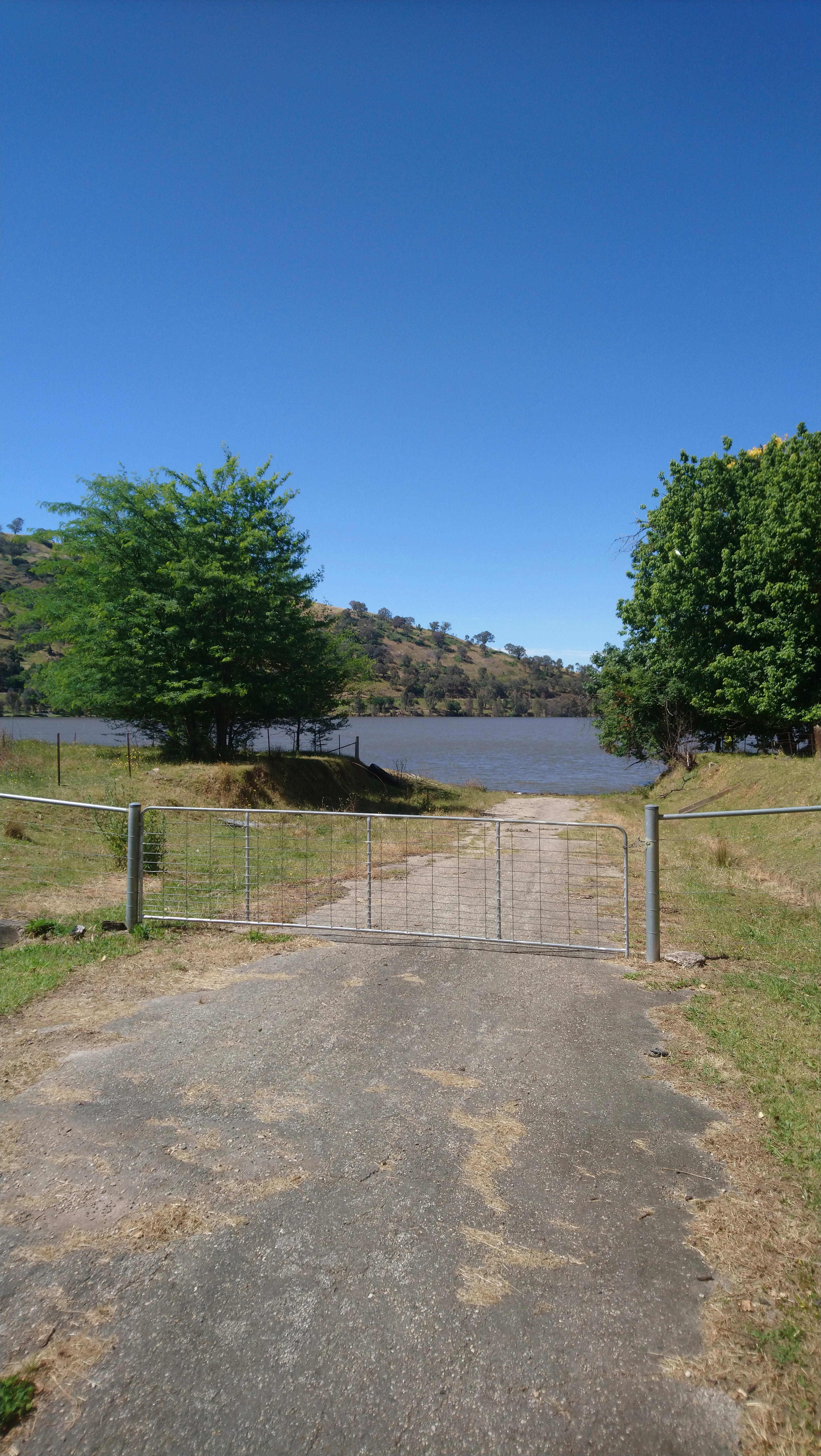
Four boys dead, but only two fell through the ice, and the others went to save them. Like, in numbers, things would be better, like whatever happened in the world that day happened here, whatever thoughts and feelings and pain and horror as they reached for the surface, for the sun, for the voices above them. But our capacity, as a species, for moving on, is enormous. Like the living and the dead have an understanding, and anyone who can hear the old people calling can hear what they’re calling.
After the town was moved – lines on a map, lots drawn, sewers laid, gardens planted, concrete footpaths – there was a sense of unease: that, for all its newness, its water tanks and reliable electricity, this place didn’t add up to what they’d left. Still, these were tough, reliable people, used to hard times, wars, nothing phased them, except perhaps a loss of history and belonging, lives dislocated in much the same way as the local Aboriginal people. Something about roots, lifting a house on the back of a truck and taking it elsewhere, temporary nomads demolishing red-brick pubs and shops and replacing them with neat, asbestos-trimmed laundromats and shire halls. No more fishing or swimming in the river; no more selling mushrooms to the Myrtle Café (‘Three Course Meal a Specialty’). With the end of the old town came the stripping away, the loss of old connections, of shops with a house out back, smoked sausages and pickled onions in clay pots, the day Mary Fraser locked the visiting magistrate in his hotel room; the Oddfellows used for art displays, reading circles, crocheted rugs as a way of dealing with the loss of sons in the Great War.
I couldn’t have come at a worst time: the tail-end of a wet winter dragging its arse into October, November, December. The Hume was up, no signs of old Tallangatta. So I stopped my car short of the submerged town, walked to the water’s edge, and listened. Nothing except a striped skink on a rock, fat exhausts from motorbikes on the highway – steamy days, the walk to town (no one could afford a car), sleep-outs full of stray uncles who spent their days listening to the races. But the new place would be just as good, better. It’d all be done properly – everything surveyed, paid for, and if you didn’t get your first choice, then your second, your third. Of course, the usual claims of favouritism, committees stacked with local businessmen, who got the best shop on the main street? A hundred houses lifted between 1954 and 1956, 37 new homes, birches and elms planted in civic parks to replace swamp paperbarks and tea-tree that’d lined the river for millennia. Dunnarts and bandicoots replaced with Jack Russels and cats, Aboriginal songlines with Leave it to Beaver (fine-tuned in the after-school haze, blue gum skies full of smoke from stubble burns), bent-wing bats with budgerigars, sugar gliders with rats and rabbits and fallow deer introduced by well-meaning Acclimatisation Societies. Change the only certainty. Television ads for labour-saving devices promised a more civilised existence. A machine to dry your clothes. A Holden. A petrol station to ensure you were never stranded.
One day I’ll go back to old Tallangatta. I’ll wait for a long drought. For the waters to recede and the streets to emerge. I’ll walk the main strip; I’ll stop in front of the Victoria Hotel and listen to the voices in the front bar, kids calling for dad to come home, mum wants you, she’s pretty pissed off. Jock will be there, eight years old, and the Grade six kid his mother gave two shillings a week to dinky him to school. A bank, the manager with poppy oil in his hair, who’ll know the name of everyone’s kids. The cinema that started with Fred Astaire and finished with James Dean, the popcorn, the worn carpet along the aisles. I’ll listen to the conversations about the new maths teacher and Harry’s bulging disk and the rumours the government wants to move us all, but they’ll carry me out in a box before that. On a cold morning, the boys running down to the creek, and in they go, and this gyre, this churn, this cycle continuing until the next rains, more water and we’ll wait another thirty years to remember who we were, and are. But we’ll hear the voices calling; listen, and make out what they say, and realise they know our names.
September 25, 2025
Stasi-Day
Berlin works on many levels. Artsy, kinky, sombre, depressing, the excellence of the Berlin Philharmonic and its 1963 modernist hall, a coffee and film at the Sony Center before a stroll in the Tiergarten. A cruise along the Spree, every street corner heavy with history, the Weidendammer Bridge and its role in the last days of the Reich, Museum Island. History, everywhere. A country that wasn’t allowed to get on with life after May 1945. Leading us back to the museum of the German Democratic (by name only) Republic. Here, lives laid bare. A people told to ‘be happy and sing’: a generation of kids taping songs off DR-64, watching Western television (the signals couldn’t be blocked). Pioneer afternoons collecting scrap for the State, or listening to bands such as the Puhdys or Karat. Monday morning assembly under the red flag, a senior student proclaiming, ‘Comrade Principal, the school is assembled!’
Heady days. As long as you kept your mouth shut. And it’s still there, mostly. The fascination with East Germany and Berlin has never been greater. Any visit to the capital can be a learning experience. Before you go, grab a copy of the German Book Prize winner In Times of Fading Light, by Eugen Ruge. Here, in one novel, a plotted history, a re-imagining of the second half (nearly) of the twentieth century in the East. A son’s coming-to-terms with his parents’ ‘glorious’ past. But the fascination extends beyond this. Deutschland 83, The Lives of Others, Goodbye, Lenin! Matt Damon visited in The Bourne Supremacy, although the classic post-war German film is Roberto Rossellini’s 1948 Germany Year Zero, a haunting vision of Berlin in ruins. The dark side of this great city that fascinates so many. Maybe it has something to do with the angst of our own age? The worries about political power, privacy, a population’s acquiescence and willingness to accept uncomfortable orthodoxies.

Mostly, Germans don’t mind discussing the past, although when the Berliner Unterwelten tours began twenty years ago, the society’s critics accused them of glorifying Nazism. I had the pleasure of exploring the Friedrichshain flak tower, a few kilometres north-east of the city. Here, a fortified defence (four 12.8 cm guns) the size of small skyscraper, now half reduced to rubble, where you can put on a hard hat and experience the darkest, coldest, most miserable moments of the lives of other (Berliners) in the dying days of Hitler’s war. Where you can imagine Soviet tanks pounding the walls (barely dented).
Life in the East wasn’t all bad. Free education, a nice flat in a prefabricated WBS 70 tower block, a Diamant bicycle, or a packet of Juwel cigarettes to smoke after school. Plenty to choose from, although whether you could actually buy anything? One story has book dealers gathering once a week to place their orders. Twenty thousand copies, perhaps, of a new Christa Wolf or Stefan Heym book. And of this, the shop might receive twenty copies, ten, or five – just enough for the employees. A planned economy without a plan, and like the best of them, favours for the inner party.
The other hallmark of the East, of course, was the management of public opinion, and dissent.
House 1. Sounds ominous, and it was. This was the first of many buildings owned and operated by the Ministry of State Security (Stasi, or MfS). A fifteen-minute ride on the U5 from Alex. A collection of soulless structures that tried their best to disguise their purpose. That is, watching you. The three pm English language tour, as our guide showed us through the offices of Erich Mielke, the Minister for State Security from 1957 until the GDR collapsed under its own weight (and debt) in 1990 (the fate, I guess, of even the most ruthless dictatorships). Here, the wood veneer lifting in the foyer, the statues of Marx and Lenin a reminder of a dictatorship at its muscle-flexing, life-destroying best. The model of the dozens of ‘houses’, once full of eager servants of the state. Mielke’s suite of rooms: his wood-panelled office looking out across this workers’ paradise, the conference room, with its blue-backed seats and table for discussing politics, people, ideology. A small television for monitoring the media, a bed (he put in long hours, his devotion to Communism beyond question). And in the other ‘houses’, tens of thousands of Stasi agents monitoring people’s privacy – phone calls, letters, administering the 189,000 informants on the books (so many, that the German reunification could only proceed with a general amnesty).
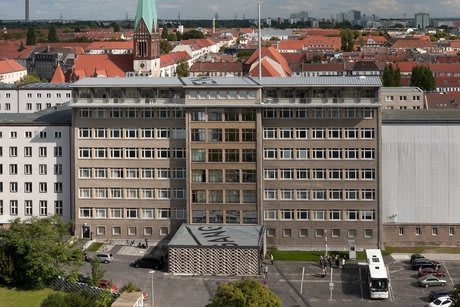
There was a country, but mainly, a party. The Socialist Unity Party (SED) was East Germany. The party’s official hymn explained that ‘The Party, the Party, the Party is always right!’ Enough of this drummed into you from an early age (Hitler had recently done the same thing with the Hitler Jugend) and you might actually believe the lies. After Stalin was put out to pasture in 1956 (his name no longer mentioned), and Walter Ulbricht ‘retired’ by Leonid Brezhnev in 1971, new leader Erich Honecker set the tone. No more I, only We.
The following day, Hohenschӧnhausen, and the Stasi prison (Gedenkstätte). For forty-four years this clutter of buildings (eerily missing from maps) was the unspoken endgame of any dissent in, firstly, the post-war Soviet Occupation Zone (Special Camp Number 3), and later, the GDR. This time a tram trip through east Berlin, mounds of the old city still waiting to be cleared, the same dreary apartment blocks mixed with trendy cafes, parks and galleries. This was where the Stasi (‘the sword and shield of the party’) and its 91,000 fulltime employees dealt with the recalcitrant. Seventeen prisons in all, although this was the biggest. Its original red-brick block still in mint condition, the grounds, sheds, outbuildings that were once home to as many as 4,200 inmates. Overcrowding, disease, dead bodies dumped in old bomb craters.
At the start, there was the ‘U-Boot’, damp, cold subterranean cells with a bed and bucket, lights burning all day and night, sleep deprivation, physical torture, comrades made to stand in the one spot, sometimes in semi-flooded ‘water cells’. Then, at night, taken away for interrogation.
This, I thought, was (and is) the end of free speech. The dilemma Orwell warned us about. If any of your ‘incorrect’ letters were intercepted, if a contrary opinion was expressed in the lunchroom. A few agents planting bugs in your apartment, gathering evidence, then, a week or so later, a knock on the door at three in the morning, downstairs into an innocuous-looking ice cream van, a two- or three-hour drive to disorientate you, allow your fear to simmer. Then, the Gedenkstätte, a small arrivals hall in the efficiently named New Building (1960), bright lights to increase your anxiety, into an office to be ‘processed’, wiped down with a rag in case the dogs ever needed to track you, personal details given up and paperwork completed.
This repeating, night after night, as your interrogator warms to you, offers you cigarettes, tells you not to be alarmed, and you, trusting him, sleep deprived, start talking. He says it’s okay, it’s just you and him, and turns off the tape recorder, but of course there’s another one hidden in the cupboard. He asks why you said such silly things about the Party, because you did, didn’t you? And in the end, you agree to anything. Yes, I did.
The funny thing being, after a day at House 1, and another at the SdF prison, none of this seemed so strange. Like Mielke could’ve been my uncle, and I was here, visiting him at his office. Like the New Building was sort of okay, comfortable, warm. And these interrogators, surely they were decent people, deep down? There were even photos of their Christmas parties, dressed up as the people they arrested. And if all this seemed so normal after a few days, what about weeks, months, years?
When the gates of the Gedenkstätte were thrown open in 1990, hundreds, thousands of stories of broken families, betrayal and misplaced faith in authority emerged. One that struck me was of a son who was given his file and discovered his father had betrayed him to the Stasi. I was left wondering what sort of society Honecker had helped mould. So many East Germans had been motivated by their hate of the Nazis, and their persecution at fascist hands, but it was strange to think they’d just continued the tradition, albeit in a different form. Maybe, I guessed, they didn’t recognise the similarities, or maybe they thought the end would justify the means? Maybe this was the lesson of my visit? How quickly things can change. In our own age of (lack of) privacy, monitored internet and phone calls, closed-circuit television, limits to free speech. Maybe we all need to revisit the past to see (a possible) version of the future. As our own governments replace common sense with taxpayer funded propaganda. Or maybe it’s just the smell of a place? The damp in the walls of the water cells. Or the way voices continue echoing off the polished floors.
September 18, 2025
Blütsbruder
You know the feeling. A book you’ve been wanting to read for ages, you’re halfway through, loving it, dreading the end (not the ending), when you’ll have to leave this better-than-reality world. Like many readers, I have phases. I’m in the middle of a first-half-of-the-twentieth-century author phase, starting with Hans Fallada (starting with Nightmare in Berlin), Alfred Dӧblin’s experimental Berlin Alexanderplatz, progressing through Robert Walser (especially his mysterious microgrammes), Joseph Roth and Stefan Zweig. A group of authors connected by a strange sort of misfortune – a lack of success, mental illness, grog, Hitler and Goebbels, a country in the process of renouncing a thousand (or more) years of culture in favour of autobahns and stadia (sound familiar?). And then I heard about Haffner, and his fortunate, unfortunate, life. The discovery of another gem, lost, rediscovered, sifted from the ashes of Bebel Platz (compare this with Barbara Cartland’s 723 literary turds and you’re left wondering if there’s any karma in the universe). Ernst Haffner’s 1932 Blütsbruder, a novel about a group of outcast youth living in interwar Berlin, petty crime and prostitution, trying almost anything to get by.
The eight boys … spent the whole endless winter’s night on the street. As so many times before: homeless. Always trudging on, always on the go ... Two have parents somewhere in Germany. The odd one perhaps still has a father or mother someplace … From the moment they undertook their first uncertain steps, they were on their own.
A short, taut, no-nonsense book set in the ale-smelling, drum-thumping shadows of the German capital, each of the boys free to roam, but isolated in their patch of city. Ludwig and Willi, trawling the length of Tauentzienstraβe, the bright lights leading towards Kurfürstendamm, as they feel
… they are in a foreign city. What’s Berlin? As far as they were concerned Berlin was Münzstraβe and Schlesischer Bahnhof. It never occurred to them to go to the west of the city.
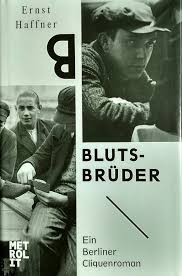
As with Hans Fallada’s Little Man, What Now? (published the same year), Berlin is the star of Blütsbruder. None of the rubble and grim desperation of Rossellini’s Germany, Year Zero (yet), but the decadence of well-to-do Berliners (Haffner called them ‘the amusement mob’) living in a city that had cleaved along the planes of braised ox cheek at the Hotel Adlon, and the seedy back alleys of Mitte. A world that Haffner knew well in his day job as a social worker and journalist. But he wasn’t interested in Isherwood’s Sally Bowles, or Josephine Baker’s moves at the Theater des Westens. His was a glorious darkness, and the result – all short sentences and half-edited paragraphs, the mumblings of these dirty boys and their bad attitudes, the street-talk Haffner adopted as his own – is a sort of historical document more powerful than any newsreel or –paper.
At noon, Willi and Ludwig are woken by the sound of a plangent voice at the door … Gradually it dawns on the boys where they are. In the white sheets of a private hotel. The distinguished gentlemen left after a while, and had each deposited a twenty-mark note … What was left was two, scrawny little men whose wallets allowed them to buy young healthy, if half-starved boys. Details of the night just past swim into the boys’ consciousness. ‘Yuck!’ says Ludwig. ‘Yes, it makes me feel sick. Never again …’
Not a side of Berlin the Nazis, waiting in the wings when Haffner’s novel was first published by Bruno Cassirer, were sure to like.
January 1933. Along comes Hitler, Himmler and the rest of the crew. A few weeks later Bertolt Brecht leaves the country, not to return for another sixteen years. In May the SA start burning books: a clear night outside the University of Berlin, songs and a torchlight parade, then Joseph Goebbels with a few well-chosen words. ‘These flames not only illuminate the end of an old era, they also light up a new.’ Perhaps Haffner was there watching his soon-to-be-banned book burn, or Willi or Ludwig, looking on curiously as ordinary citizens helped storm troopers throw Thomas and Heinrich Mann, Remarque and even HG Wells onto the fire. Maybe the boys got an idea; maybe they joined up, died in France, or came home to continue their seedy lives. Either way, the last thing we know about Ernst Haffner is that he and Cassirer were summoned sometime in the late thirties to appear before the Reichsschrifttumskammer (RSK, a Nazi writers’ union) to explain themselves. I doubt the meeting went well; and wonder what Haffner might’ve said to excuse his entartete kunst (degenerate art). ‘Well, I just wrote it as I saw it, gentlemen.’ Followed by the usual Nazi lines about vӧlkisch art, self-sacrifice and positive images of the Fatherland. Haffner defending himself in the same way Trumbo, Shostakovich and a hundred others had to – unsuccessfully, it seems, as at this point Haffner disappears from the history of Germany, and literature itself.
Blütsbruder is honest, unaffected, unconcerned about whom it offends or entertains. Like Pasolini’s 1955 novel The Street Kids, it accuses the adult world of neglecting, or abandoning, their kids, leaving them to get by in a world many would rather not read about (not unlike the tens of thousands of ‘wolf children’ left orphans in the rubble of 1945). Blütsbruder is an authentic book; its author more of a mystery than any of its characters, plot, themes. So why have so few people read it?
June 14, 2025
Wise Blood
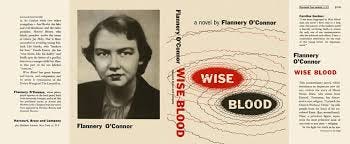
I’ve got eight hundred words to tell you about Flannery O’Connor. It’d take considerably more, but this is only by way of an introduction. O’Connor was Southern, very Southern (listen to a recording). Born in Savannah, Georgia, she lived a sad (but happy) sort of life, succumbing early (aged 39) to lupus. Sad/happy in the same way her work was strange/beautiful, full of horror, but redemption. Maybe because she was Catholic, very Catholic, and wrestled with religious contradictions her whole life. The standard image is of O’Connor on the porch of her country home at Milledgeville, feeding the lyrebirds, clutching her calipers.
Young O’Connor was precocious, bookish, a loner, never a kid to suffer fools. Apparently, she taught her chicken to walk backwards (see the 1932 footage of her as a child trying to convince the world), but we may never know. The strangeness of a strange chicken lingered, manifesting in potato peelers and dwarfs. But for now, I discovered her through her short stories, nearly all masterpieces. Here’s Joy Hopewell, a leg lost in a childhood shooting accident, going on a picnic with the bible salesman Manley Pointer. Alcohol is involved, condoms and Corinthians, before he asks to look at her prosthetic leg. About now I, you or anyone gets this strange feeling, like, Where the hell is this going? Well, you learn with O’Connor, just hang on for the ride. Or what about her best-known story, A Good Man is Hard to Find, wherein a holidaying family roll their car and end up in a ditch. Three men with guns appear, offering help. Grandmother recognises one outlaw called the Misfit, and this seals the family’s fate. But this isn’t just some true crime gore. God, faith and grace are always lingering, the Misfit explaining
I found out the crime don’t matter. You can do one thing or you can do another, kill a man or take a tire off his car, because sooner or later you’re going to forget what it was you done and just be punished for it.
From the stories to the novels. The two, at least, she wrote, forming a new theology, a Deep South biblical tale-tellin’ that drips with regret, confusion, insanity. Like O’Connor needed to invent a way of combining place and time, people and faith, past and present, the death she was staring down every day, and the hope for some sort of eternal life. In the form of Wise Blood, a 1952 novel that transcends time, and lands up on almost every list of books y’all gotta read. John Huston’s 1979 movie is worth a look, but it’s in O’Connor’s sparse, give-nothing-away prose that the full shocking experience lies.
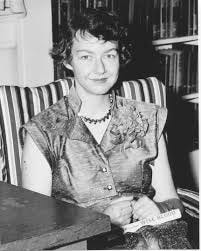
Firstly, we meet Hazel (Haze) Motes. Newly discharged from World War II, he returns to his Tennessee home to find it deserted. He buys a hat and coat and, looking every bit the preacher, catches a train to Taulkinham, where he finds a phone number on a bathroom wall and calls a prostitute named Leora Watts. But Haze is more interested in telling her about his newly discovered theology, or anti-theology, as it turns out, where ‘the blind can’t see, the lame don’t walk, and the dead stay that way.’ Haze begins his mission to establish the Holy Church of Christ Without Christ. He sets about convincing others, but maybe just himself, that everything he’s been taught about God is a lie.
Your conscience is a trick, it doesn’t exist, and if you think it does, then you best get it out in the open, hunt it down and kill it.
Violence is ever-present in O’Connor’s work. It acts in opposition to whatever she understood to be grace. This random, cruel (but slow) twisting of the knife between the ribs. So, Haze meets an eighteen-year-old zookeeper named Enoch Emery who has just been kicked out of home by his abusive father. He tells Haze about the notion of wise blood. The idea that wisdom, the path forward, the answer to the question that’s never been asked, is in certain people’s blood.
Enoch’s brain was divided into two parts. The part in communication with his blood did the figuring but it never said anything in words.
Then comes the potato peeler demonstration, and as Haze and his new disciple watch, a blind preacher named Asa Hawks and his daughter, Sabbath Lily Hawks, disrupt proceedings. Asa, we later find out, (apparently) blinded himself at a revival meeting when he ‘thrust his hands into [a] bucket or wet lime and streaked them down his face.’ Soon, the Hawks’ ministry of two goes head-to-head with the Motes’ anti-ministry and things get stranger. Emery thinks his Christless church would work better with a saint, and breaks into the local museum to steal a mummified dwarf.
In a way, all of this is secondary to the character of O’Connor herself. A plain, homely, unmarried woman who I, and many others, have spent years trying to understand. There are hints: ‘I don’t deserve any credit for turning the other cheek as my tongue is always in it.’ Maybe it’s me, reading too much into this part-fiction, part-spiritual myth? O’Connor was a writer who died too soon, entering her own mysterious world, leaving a handful of brilliant stories and two great novels. Who believed ‘people without hope not only don’t write novels, but what is more to the point, they don’t read them.’
Stephen Orr's Blog

- Stephen Orr's profile
- 32 followers

