S.M. Muse's Blog
October 1, 2024
Desert Mirage- 2024
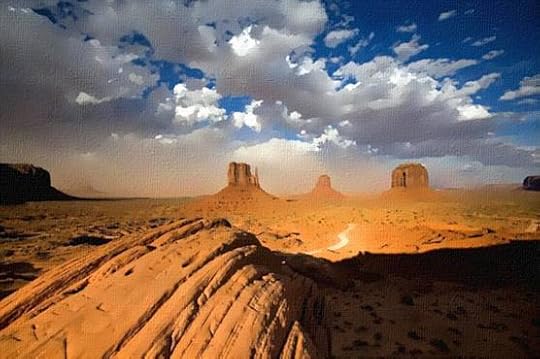
Then he moved on, and I behind him followed.
From The Divine Comedy by Dante Alighieri.
Morning came like a thief, stealing away the shadows and leaving the world bleached and barren. The land that stretched out before me was as alien as it was unforgiving. Blood-red rocks scorched under a relentless sky, their jagged edges softened by millennia of erosion until they were little more than stony remnants of some ancient fury. Joshua trees, twisted and gnarled, stood as the last sentinels to a dying world, their arms outstretched as if pleading for mercy.
But mercy was a thing long forgotten here, in this place where the earth itself seemed to thirst for blood.
I squinted against the glare, scanning the horizon. It had been years since I’d passed through this desolation, but time had done little to change it. If anything, the West had grown even more hostile, the sun more unforgiving, the air more brittle and sharp, like the edge of a knife.
In the distance, mountains rose like the bones of some ancient beast, worn down by eons into rounded stumps of rust and ochre. They weren’t the towering, snow-capped Rockies of my youth, but their presence was no less ominous. These mountains, domed by a cloudless sky, were dying too, slowly baking under a sun that had long forgotten the concept of mercy. Behind me, the horizon stretched out in a long, unbroken line, where earth met the sky in a union of despair. High above, clouds gathered, a ragged assembly of gray and white, their bellies heavy with the promise of rain that would never come, casting long shadows that did nothing to lessen the heat.
For months now, the sky had been full of false promises, teasing the land with the hope of rain that never materialized. It was a cruel joke, a reminder that hope was a fleeting thing, as insubstantial as the clouds themselves.
The filling station was a distant memory now, as distant as the girl I had left behind there. It had been swallowed by the miles, the heat, the endless march of time. Everything that had happened there— the gunfire, the blood, the last sighting of them— had been consumed by the desert. But the memory of the Blackfingers, their ochre-smeared handprints on the sun-bleached wood, was something I couldn’t shake. Those upside-down signs, that final warning— all burned into my mind, as permanent as the scars on my soul.
A glance behind told me the coyote was still there, I could feel her presence like a shadow at my heels. Bone-thin and mangy, her golden coat now dull under the harsh sun, she had been trailing me ever since the filling station. I could imagine her head down, tongue lolling, paws cracking, and bleeding from the unyielding ground, but she didn’t give up. Maybe she understood, better than I did, that sometimes survival was a matter of sheer will.
The coyote was headstrong—too stubborn to die, just like me.
As I walked, memories began to flood back, unbidden and unwelcome.
I thought of my childhood, the banks of the Mississippi, green and lush, the air thick with the scent of water and life. That was a world away now, a place as distant as the stars themselves, unreachable and almost forgotten. Still, I could almost feel the cool touch of the spring rains on my skin, the whisper of a breeze in the tall grass, the gentle caress of a morning dew.
Then, the memories shifted to darker times— to grey stone towers stained with blood, to battlefields soaked in the red of fallen friends. Those were days of war and betrayal, of oaths sworn in blood and broken in secret. Polaris had guided me then, a cold star on the edge of the world, while Mercury, elusive and triumphant, glinted in the night sky, its light too brief, too distant.
And there were other memories, of caves and dark places, where nightmares were born and fears took root, places where light had never touched and where they had always been.
The present came crashing back, dragging me out of the past and into the harsh reality of now. The vow I had made, the promise to hunt them down, every last one of their kind, was all that kept me going. ‘They’ had been hunting me since the beginning of time, long before man walked the earth, before the first light broke the darkness, and long after the final dark had fallen. For years, they had remained hidden, shadows on the edge of dreams, whispers in the night. But now they were real, all too real, and the world was paying the price for its disbelief.
This was my world, the only one I knew, but I had been told there were others—worlds that lay beyond the edges of maps, beyond the sight of ordinary men. In these worlds, the cardinal points had no meaning, distances were illusions, and time was a fickle thing. My father had taught me to navigate these worlds, using a sextant to find the hidden roads, the paths that were older than the earth itself. He had called them the King’s Roads, though others had names for them— fairy paths, ley lines, the Convergence of Stars. With the sextant, I could mark my place among them, even as the world shifted beneath my feet.
Three days before I crossed into Arizona, a raven had given me a gift—a pocket watch, dropped from the sky like some dark omen. The bird had been following me for days, circling high above, perching on fences and telephone poles, cawing out to me with a voice that echoed in the empty places of my mind- ‘Time… time…’. On the third day, the raven had let me approach, its black eyes watching as I reached out. It had dropped the watch into my hand before taking flight, leaving me with a tool, a weapon, and a curse.
I hadn’t questioned my fortune or the meaning behind the gift. I had learned long ago that nothing came without a price. The watch was a means to measure time and distance, to find my way in a world where both were as treacherous as the land itself.
That had been ten days ago.
Now, the pocket watch felt heavy in my hand, its face reflecting the merciless light of the sun. I flipped it open, watching the second hand tick away the moments, each one a reminder of the relentless march toward an end I couldn’t see, but could only feel in my bones.
I trudged onward, the land shifting beneath my boots. The Joshua trees whispered secrets in a language I couldn’t understand, their shadows stretching long across the ground. The mountains loomed closer now, their ancient faces etched with the passage of time. I found my mind drifting back to the girl, to the filling station, and to the coyote that still followed me.
She had been a child, caught in a darkness, not of her making. Her death weighed on me, a stone in my chest, a reminder of what this quest was costing me. Every life I took, every Blackfinger I hunted down, chipped away at what was left of my humanity. But there was no turning back. The vow I had made, the promise to my father, and the memory of those I had lost, drove me forward, even as the land tried to break me.
I glanced back, seeing the coyote as a distant speck against the barren landscape. She was a constant companion now, a silent witness to my journey. Maybe she understood, better than anyone, the nature of the hunt, the relentless pursuit of a goal that seemed just out of reach.
The air grew cooler as I neared the mountains, a welcome relief from the sun’s brutal assault. The shadows lengthened, the day slipping toward night. I needed to find shelter, a place to rest, to gather what strength I had left.
I found a cave at the base of the mountains, hidden behind a tangle of thorny bushes. I pushed through, grateful for the sanctuary. Inside, the air was cool and still, a refuge from the world outside. I set up a small fire, watching the flames as they cast their flickering light on the walls.
As I sat by the fire, my thoughts returned to the raven, to the gift it had given me, and to the meaning behind it. Time was a precious thing in this world, a resource as dangerous as the land itself. The raven had given me a way to measure it, to navigate the paths that lay ahead, and to find my way in a world that was determined to see me lost.
Beyond the grotto, stars appeared, tiny points of light in the vast darkness, a reminder that even in the deepest night, there was still a way forward. Tomorrow, I would continue the hunt. Tomorrow, I would face whatever waited for me. But tonight, I allowed myself a moment of rest, a brief reprieve in a world that had forgotten what peace meant.
I closed my eyes, the crackle of the fire and the steady tick of the pocket watch my only companions. The hunt would go on, but for now, I would sleep. And in my dreams, I would see the faces of those I had lost, and I would know that my quest was not in vain. I would find them. I would bring justice. And maybe, just maybe, I would find a way to make peace with the ghosts of my past.
****
The sun beat down like a hammer, relentless, unforgiving. I stumbled to a halt, the heat pressing down on me until it felt like the very earth was conspiring to break me. My breath came in ragged gasps, and the asphalt beneath my boots soft, like a warning from the devil himself. The temperature had climbed past a hundred and ten, maybe more. The air hung heavy, with no breeze to carry away the stifling heat. I knew if I didn’t find shelter soon, death would claim me, slowly and cruelly.
My vision swam, the world around me a haze of blinding light and suffocating heat. Then, in the distance, a shadow—a promise of reprieve from the sun’s merciless gaze. I veered off the highway, legs wobbling beneath me, and made for that distant shade. Somewhere between the mirage and the heat, I found it: a small grotto, carved into the rocky outcrop like a sanctuary for the damned. I collapsed inside, the cool darkness wrapping around me like a shroud.
Time lost meaning in that place. I lay on the cool stone, teetering on the edge of consciousness, and somewhere in the depths of that delirium, she came to me. An old woman, her face a roadmap of the land’s hardships, craggy and sun-beaten. Her lips were stained deep ochre from peyote, her eyes gleaming with visions only she could see. When she spoke, her voice carried the weight of the desert, dry and ancient.
“They’re comin’ for you, boy,” she rasped, her words echoing through the grotto-like the cackling of some ancient crow. Her voice was a croak, worn by time and suffering. She wore a pelt, brown and lean, like the coyote outside, and her eyes shone with a light that wasn’t entirely human.
“Skinwalker,” I managed to croak out, trying to wave her away with a hand that trembled uncontrollably. “What do you want from me? Why do you haunt me?” The words came out as a whisper, barely audible. In the old tongue, she was yee naaldlooshi, a harbinger of sickness and death.
She didn’t answer. I turned my gaze to the road outside. My lips were cracked, my skin blistered from the sun. I couldn’t tell if what I was seeing was real or just another trick of the heat.
I fumbled for my pack, dragging it closer. The patches and scars sewn into it told stories of travels long past, of roads taken and battles fought. But all I sought now was the canteen, and when I found it, the damn thing was empty. Mocking me.
The old woman’s voice cut through my despair. “Seen it in a dream, I have… you too, I reckon.” Her words were cryptic, delivered with a spit into the dust. I groaned, too weary to care.
The soil inside the grotto was as dry as the bones it housed. I was dying, and I knew it. The old woman shifted, her movements barely more than shadows. The coyote reappeared, its fur glinting golden-red in the fading light.
“Your life I do not seek,” the coyote said, its voice a dry rasp that scraped against my ears. It bit down on my wrist, and I felt the hot trickle of blood. I struggled, weakly, but it held fast.
My hand found the grip of lex talionis, my pistol, but my strength was gone. I couldn’t even raise it. So this is how it ends, I thought, not with a fight, but with a whimper.
“Relax,” the old woman—or was it the coyote?—cackled, a sound like rocks grinding together. “If I wanted you dead, you’d be dead already. I could’ve taken you at the fillin’ station.” I remembered that moment, the coyote watching me before the bullets flew and the world turned red.
The pain in my wrist burned, searing up my arm, and I tried to push the beast away, but it only tightened its grip. “Get away from me,” I gasped, feeling the fire spread through my veins.
“Do you think you can banish me so easily?” she mocked. “We’re bound now, you and I. One blood, one bond, one purpose.” Her words stung, as sharp as the bite that drew blood.
I laughed, a harsh, broken sound. “A dalliance,” I spat. “This is what you offer? I’m dying, you old bitch.”
“And yet, I’m here to offer you life,” she replied, her voice laced with something close to pity.
The pain in my arm and the fire in my veins were all that tethered me to the world, but time slipped again. When I opened my eyes, the coyote was gone, replaced by the old woman. She held an earthen vessel in her hands, the clay pot’s contents thick and pungent. She pressed it to my lips.
“Drink,” she commanded.
I resisted at first, but my body betrayed me. Poison or not, I drank, driven by the thirst that clawed at my insides. The liquid was bitter, and it burned going down, but I swallowed it all.
Memories surged—green fields, rivers running wild, and the scent of rain.
A world I’d lost a long time ago.
I pushed the vessel away, but the old woman only pressed it closer.
“Accept what I offer,” she urged. “Let us be one.”
Skinwalker. The word echoed in my mind. I drew lex talionis, the weight of it heavy in my hand. The line was drawn, and she knew it. She pulled the vessel away, her eyes hard.
“You hide,” she said, setting the pot aside.
“I stay alive,” I replied, my voice a whisper of defiance. “I do not hide.”
“And yet, here you are,” she grinned a feral smile that showed too many teeth.
Her words were true, bitter as they were.
A sound at the grotto’s entrance drew my attention, and I saw a figure there, familiar and ghostly.
“Elijah,” I breathed, confusion clouding my thoughts. But Elijah was dead, long dead. The old woman shook her head, her smile sad.
“That would be somethin’, wouldn’t it,” she said. “He too was shunned, hunted like an animal. Always it’s been this way—speak the truth, and the world’ll hate you for it.”
“Elijah confronted,” I said, knowing why he was dead.
“Aye, but he didn’t hide. He faced his demons, his fears, and in the end, he was victorious.”
I closed my eyes, feeling like I was arguing with my reflection. When I opened them again, Elijah was gone, and the old woman had changed. She was small now, childlike, but her words carried the weight of the world. Whatever she’d given me, it had brought me back from the brink.
“Enough,” she said, her voice final. “Survival’s simple—hunt or be hunted, kill or be killed. It’s that plain.”
“Nothing’s that simple,” I muttered, but she only shrugged.
“This time, maybe it is,” she said.
I managed a smile, though it hurt to do so. “You’re my lhiannan sidhe,” I said, “my angel of doom.”
She laughed, a sound like bones rattling. “I’ve never been called such a thing, but it could be as you say.” Her words gave me strength, and I felt the fire inside me burn brighter.
“You saved me,” I said, holstering my weapon. “But I don’t know if you’re friend or foe.”
“One can be neither,” she replied, patting my leg. “Those that seek you will find you in time. Run ahead of them, prepare. Where earth and sky meet, you’ll find your shelter. Rest now, for you’ll need it.”
I wanted to argue, but she cut me off. “Know this—after tonight, you may seek me, but you’ll not find me.” And with that, she faded into the shadows.
Sleep claimed me then, and in my dreams, I stood in a high place, looking down on the desert, red and green and unforgiving. The sun hung low, dipping toward the horizon, and a figure approached—a boy, pale-haired and ancient-eyed, with a man beside him, twisted like a shepherd crook.
“Why do you seek your doom?” the shadow asked.
“I seek answers,” I replied. “I seek justice.”
The shadow scoffed. “Justice for whom? Until Polaris rides the shoulder of the world, you’ll find no answers here.” The boy and the shadow moved on, leaving me alone with the fading light and the vast, empty desert.
***
When I awoke, dawn had broken, cold and indifferent. The grotto lay silent, empty of the night’s apparitions. The crescent moon still clung to the sky, a ghostly remnant of the night, chased westward by the encroaching sun. Beside me, the earthen vessel lay shattered, remnants of a past I couldn’t quite grasp, and my canteen, inexplicably full, sloshed with water.
I couldn’t make sense of it, not really. The night’s visions were as intangible as smoke, slipping away as I gathered my belongings, checked my weapon, and stepped out into the harsh morning light.
The grotto faded behind me, a distant memory, as I resumed my march down the endless highway, thumbing for a ride that wouldn’t come. The miles stretched out, an unyielding expanse, the sun bearing down with searing intensity, while the wind, that ever-present harbinger of desolation, whispered promises of death in my ear.
After a time, I came across a rusted sign, leaning drunkenly to one side:
Betatakin Cliff Dwelling
The road twisted on, west, then north, then east, the miles blurring one into another. I followed its course, my boots kicking up dust as the land unfolded before me in skeletal desolation.
And then, there it was. The place I’d been led to, as if by the hand of fate itself. The remains of an ancient Navajo village, crumbling under the weight of centuries, its bones laid bare beneath a massive clamshell of rock. The overhang loomed hundreds of feet high, twice as wide, a monument to time’s inexorable passage. The ruins clung to the rock, their clay and daub structures battered by wind and sun, the graffiti of a forgotten century marking them with garish streaks of blue, red, and black.
The ground was littered with the detritus of those who’d come before—crushed beer cans, cigarette butts, shards of broken glass, bits of paper. All of it relics of a time when the living had passed through, leaving their marks as thoughtlessly as animals marking territory. This is where the trail had led me. This place, these ancient ruins, where earth met the sky. The directions were given at the filling station and confirmed by the old woman’s cryptic words.
I had seen the map, etched into the flesh of a dead girl, her back a canvas for some madman’s design, lines and coordinates carved into her like a curse. It had led me here. But to what end?
And why?
As I stood there, surveying the desolate expanse of scrub and stunted brush, the yawning canyons that stretched into oblivion, the thought struck me with grim clarity: what a perfect place for an ambush. And suddenly, it all made sense.
I hurried forward, every sense on high alert, eyes scanning the horizon for any sign that they were already upon me. Perhaps the old woman was a liar, a pawn in their game. In this world, nothing was certain, not even the truth. This was a land of tombs and open graves, where nightmares wore the faces of men, and where skinwalkers and shamans pulled the strings from behind the veil, their ancient rites as old as the earth itself.
I reached the ruins and scouted a position. An hour later, I had found my place among the stones, hands, and knees scraped raw, dirt caking my skin, and sweat turning to mud on my brow like some primitive war paint. They were close—I could feel it in my bones, a predator’s instinct.
Secure behind a crumbling wall of stone, high above the desert floor, I drew my father’s sextant from my pack. I aimed for the crescent moon, and then the sun, both hanging in the sky like distant gods. I calculated my position, noting it in my journal—a journal that still carried the scent of a girl I had once loved, her memory etched into every page. I checked the time, then recalculated, comparing the figure against the ticking hands of my pocket watch.
Fifteen seconds. Somewhere along the way, I had gained a precious fifteen seconds. It wasn’t much, but it was something. Combined with the time I had already accumulated, even accounting for the lost minutes in the grotto, I was left with a full minute thirty to work with.
I had a chance.
An hour later, they arrived.
Of the ten who started this godforsaken journey, only three remained—two men in tattered blue jeans and stained tee shirts, and one woman in a vintage red dress. Dust clung to them like a second skin, their bodies marked with the evidence of their struggle. Cuts, bruises, gouges—silent testimony to the violence they had endured to reach this place. I crouched among the ruins, watching them, hidden within the skeletal remains of some long-forgotten dwelling. It had taken me an hour to find this spot, just right for what needed doing. Taking on one of them was bad enough; all three at once would be suicide.
As I’d expected, they halted as soon as they crested the last hill before the ruins. The woman, a sharp bark of a voice cutting through the silence, called out. The trio huddled together, murmuring in low tones, then split apart. The man with red hair and a face burnt to a blistered crimson by the relentless sun stayed close to the woman. I marked him as Red. The other, with midnight-black hair, broke off to my right, angling to flank me. I named him Raven. Their plan was clear as day. The woman and Red would charge straight ahead, while Raven circled, hoping to catch me from the side.
Damn. I’d hoped they’d come at me as a group. My hand found the grip of Lex Talionis, the cold metal a lifeline as I pressed the barrel to my forehead, the chill biting into my skin. Think, damn it, think.
Back at the gas station, the girl had caught me off guard. Out here, among the ruins and the desert, I needed to turn the tables. I needed to catch them unaware.
A flash of insight struck like a bolt of lightning. I stashed my backpack and took off after Raven, leaving the woman and Red to climb the series of ladders and trails that led up to my position.
I’d faced their kind before—men tough as iron and just as determined. They fought like cornered wolves, but they bled and died like anyone else. Their young girls were the same, fierce and ruthless, ready to gut you from groin to gullet if you blinked. But the women—their mageia—were something else entirely. Dangerous and unpredictable, too damn close to their undead goddess for comfort.
I’d crossed paths with two of these mageia in my time—once in the ruins of New York City, near Central Park, and again outside of Omaha, Nebraska, amidst the tattered remains of a traveling circus. Both fights had been hell, and I’d come out the other side, but not without scars. The only thing in my favor now was that this mageia, the one in the red dress, was young. I just hoped she was young enough.
I kept my head low as I sprinted between two crumbling walls, a sheltered walkway between one level of ruins and the next. I vaulted over rusted trashcans, their sides caved in and contents long scattered, dodged chains, an overturned bench, and two faded “Walk This Way” signs. My breath came in ragged gasps, and I paused for just a moment to collect myself before I took off again.
I rounded a series of low structures, their insides crawling with shadows, when Red appeared out of nowhere. We both froze, caught off guard by each other’s presence.
Red had done well to cover the distance in such a short time.
The woman was nowhere in sight.
His cheeks were hollow, skin gaunt, and blistered from the relentless sun. Like all of them, he was packing ancient iron, stolen from the graves of long-dead gunslingers.
Without a second’s hesitation, Red drew and fired, his motion quick as a rattlesnake strike.
The triple clap of gunfire rolled across the ruins, reverberating off canyon walls, and echoing out into the vast, empty plains.
In hand, ‘Justice’ inked in blue across my knuckles, Lex Talionis still smoked, its barrel wickedly hot, a serpent’s breath in the cool desert air. The weapon had spoken with a finality that left no room for argument. Red lay before me, sprawled across the trail, ruddy streams of blood bubbling from beneath him. His eyes were wide, mouth gaping in a scream that would never sound. He twitched once, a final defiance, but my shot had been true. The bullet had found its mark just beneath his left eye, a tiny black dot that exploded out the back of his skull. The second shot had caught him square in the chest, just below the sternum.
In less than a breath, he moved no more.
I’ll give him this much—he’d gotten off the first shot, the shell so blisteringly close it singed the hair by my ear. But like love, war, and hand grenades, close didn’t count. Not today.
The echoes of thunder still reverberated off the canyon walls when the sound of dislodged gravel reached my ears. I spun, quick as a whip, diving behind the nearest stone—a massive rock, its shape like some ancient beast, worn by centuries of wind and rain. An errant shot careened off its side, scattering dust and debris around me.
Raven had found me.
This was as good as it was going to get. His shot had come dangerously close to calling my bluff, not to mention ending my life.
No time to react. I yanked the pocket watch from my vest, wiping the dust from its yellowed crystal with my thumb. I pressed down on the upper stud—one indent for seconds, two for minutes. I’d never dared press it three times. But now, with sweat stinging my eyes and Lex Talionis in hand, I hit the stud and began the countdown.
Time ceased, at least for everyone but me. In this moment, it became a map, folds within folds, where between one second and the next lay all the time in the world—or my case, one minute and thirty seconds of non-time. My father had taught me how to walk the King’s Roads, how to navigate this barren land of suspended moments.
I scrambled forward, backtracking through the ruins, a cool breeze sweeping past. I aimed to run into the lady in red. If I could get her and Raven together, I might stand a chance of ending this quickly. They say Lady Luck’s a fickle mistress, but I’ve never had any use for her.
Screw luck.
Ten seconds in, I nearly collided with myself, passed myself without a glance at eleven, and ran smack into Raven at eighteen. He was no longer ahead of me but circling, hunting me still. Since I could do nothing while on the King’s Road, I toggled the stud—
Raven knew exactly what had happened. Before I could level Lex and fire, he hammered it from my grip, his hands clamping down on my wrists like iron. We went down in a cloud of loose gravel and dust, knees and elbows striking rock, fists colliding in brutal fury. Sweat poured, and the world rocked with every blow. Blood bloomed across my face, numbing as it spread. My vision blurred, but we kept fighting, kicking, and grappling in the dirt.
A sudden sting made me recoil—Raven had a knife, a wicked thing that left a three-inch gash across my right bicep. It bled like hell but was shallow, more pain than damage. Lex lay in the dirt and rock a good four feet away, might as well have been a hundred miles… Raven would gut me before I could reach it.
He was licking a split upper lip, his left eye swelling shut. Neither of us spoke—what was there to say? It was time to go Darwin. We squared off, circling each other, waiting for an opening, knowing the other would pay dearly for any mistake. I still had time on the pocket watch, but why waste it? The lady in red was out there, and she wouldn’t waste a second.
So it came down to this, man against man, sweat pouring down our faces. I dared not blink, eyes locked on Raven’s. I’d dotted his right eye with a solid punch, and eventually, he’d have to blink. When he did, he’d be mine.
The timing was everything. The first blink, I held back. On the second, we circled, his left hand testing me, sweeping out. The third time he blinked, I struck. Grabbing his knife hand, I twisted with a crack, then drove the blade up under his chin. The knife slid into his throat, slicing through the grime and into his brain, silencing him for good.
I’d like to say it was quick, that one moment he was alive and the next he was gone, but that’d be a lie. We struggled, bloody drool on his lips, eyes flaring, hands clawing. It took everything I had to hold him there, to keep the knife buried deep, to maintain the pressure. Grunting, I twisted the blade forty-five degrees, and the light left his eyes.
Raven arched his back, hands reaching out as if to catch himself from falling into the abyss. I lunged for Lex—and a tattered, scuffed high heel slammed down on my wrist, crushing my fingers and wrenching away my grip.
Towering over me, impossibly tall, the lady in red was a flash and swirl of crimson. A hammering kick to the side of my head brought darkness, a distant place where pain had yet to find me. Then it came, rushing back with all the light and noise of the world.
I lay there, struggling for breath, hand flailing for the gun. But the lady in red had other ideas. Barking a laugh, she picked up Lex and set it atop a shattered wall ten feet away. Her movements were so quick I could barely track them.
“Why’d you do that?” I asked, gathering my feet beneath me. Blood ran freely from the head wound she’d given me. I tasted copper on my lips.
She said nothing, just stared at me, her eyes black pits. In another life, she might have been beautiful—petite, coppery hair, high cheekbones, pouty lips. But now, she was one of them. Nothing in this world could fix what they’d broken.
Lipstick on a pig, and all that.
She reminded me of the girl back at the gas station, the one who’d tried to ambush me. The one I shot in the head. She, too, had been young. She, too, had been taken, changed—broken by them. The only thing that saved me then was that the girl had been too young to fully understand her powers, even with the symbols and words cut into her hand.
They don’t come out of the grave fully trained, thank God.
The lady in red bent down and slipped off her high heels. They clattered against the rock behind her. She meant business.
“Can we talk about this?” I asked, buying time, hoping to draw her away from the pistol.
She answered with a grin that split her face like a wound. Her hands clawed into fists, and the ground beneath her began to crack, the earth peeling back to reveal a darkness that reeked of grave rot and decay. I turned to run. Raven still had his gun; I just needed to get to him.
I didn’t make it three steps before the ground exploded beneath me, hurling me into the air.
I crashed down, choking on dust, fresh agony splitting my hands and knees, eyes blinded by debris. I scrambled towards where she had placed Lex, tripping, slipping over broken rock, a rumble in the distance growing ever louder and closer.
The lady in red was faster. She appeared out of the dust, a snarl twisting her features, and a wickedly curved blade flashing as she swung it at my head. I ducked, kicked out with one knee, and caught her in the side just as her blade hissed over my head. I could hear her cursing even as the dust cleared—amateur. Any seasoned mageia would’ve ended me the second she had my pistol. But inexperience is a bitch.
I saw my chance. The wall where Lex lay still stood. I reached up, even as pain lanced through my leg, something sharp driving deep into the meat of my thigh. I screamed, tumbling forward, hand reaching, reaching for Lex. I could feel her behind me, the blade wet with my blood. Her next swing would be my last.
Time slowed. Her blade became a blur. I saw her bone-white teeth, too many of them, far more than any human should have.
She’d eat me with those teeth.
As she screamed in a guttural tongue, something ancient and terrible, I fell backward, bringing my right hand to bear. I squeezed off three shots as I tumbled.
Thunder cracked, and her body jerked. The first bullet yanked her shoulder high, the second slammed into her chest, and the third snapped her head back like a broken doll. Blood and brain splattered the wall behind her. She crumpled in a heap.
My head hit the wall, the impact exploding behind my eyes, sunbursts of pain, darkness flirting at the edge of my vision. I lay still, the world around me collapsing in waves. Betatakin was falling, the ruin of it all coming down. What she’d started with her power, Mother Nature was finishing.
I forced myself up, leg screaming, blood running down my thigh. The lady in red lay still, facedown in a spreading pool of blood. I struggled to my feet, barely able to move- then she was there, the coyote, in all her dusty red glory, nipping at my boots, willing me to move.
I holstered Lex, stumbling towards my belongings, the coyote driving me forward, snapping and snarling. We cleared the ruins, just as the mountain began to collapse, rocks the size of trucks crashing all around. I was too slow, too crippled, and the world was coming down too fast. Every time I faltered, the coyote was there, pushing me on.
We reached an edge, the world dropping away into a black-blue river far, far below, white caps churning in the darkness. Behind us, the mountain continued to crumble, the air thick with dust and falling rock. I turned to the coyote, her eyes meeting mine, snarling as if she was daring me. “Guess we’re both screwed,” I muttered, scooping her up, fevered and rail-thin. Without another thought, I leaped into the void.
We fell forever, the coyote squirming, claws raking at me, teeth snapping. Then the icy water slapped us, stealing my breath. The world churned, disoriented, everything muffled, the current dragging us under. I fought to hold on, to kick to the surface, but I didn’t know which way was up, everything was dark and cold. My chest burned, screaming for air, for release. I let the coyote go. I had to save myself.
Something struck the back of my head, dragging me down, and my mouth opened in a silent scream as I lost what little air I had left. Panic seized me, everything turning black as I struggled, fought against the pull of the river, the overwhelming cold. My hands clawed out, reaching for something, anything to stop the darkness from closing in.
Then something grabbed my arm, yanking me sideways, pulling me free. I had no fight left in me, no breath to give. The blackness took over.
When I woke, I was facedown on a bed of river rock, black water draining out of me. I turned my head, and there she was, the coyote, licking my face. She looked so bedraggled, so miserable I nearly laughed, but instead, I coughed, choking on river water. “Guess we’re even,” I rasped. Not that it mattered if we ever were.
Later, as the bones of the wild hare the coyote had caught burned in the fire, I leaned back against a twisted tree, watching the river roll by. The same river that had nearly taken us. The coyote lay beside me, licking her paws. We made a good pair, her and me. I saved her life, she saved mine.
The storm was coming; I could feel it in the air, the taste of ozone, the way the clouds built in the distance. We had miles to cover, and not much time to do it. But tonight, we rested.
I stroked the coyote’s fur, letting my mind drift back, beyond the ruins, beyond the gas station, to the cave where this all began. Back when my weapon had been a blade, not a pistol.
Times change.
How far I’d come, the horrors I’d seen, the lives I’d taken. The world was ending, but mine was just beginning. And that was a good thing.
“It’s just you and me now,” I murmured, the coyote growling softly as she pressed closer.
I looked up at the sky, watching the darkness overtake the light, the storm brewing. We needed to move soon. But not tonight.
With the fire crackling, the coyote beside me, and the river rushing by, I drifted off to sleep.


September 3, 2024
The Way Station- 2024
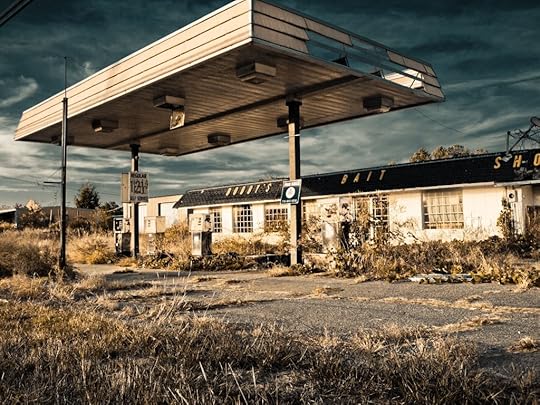
It was clear from the stench and miasma that the animal had been dead for at least a week. Its fur was matted, its abdomen distended, and all four paws pointed towards the heavens. Flies engaged in a riotous feeding frenzy, playing tickle and tease.
Death can be a contagion, so I chose to steer clear of the carcass beside the road. The sun continued to beat down unmercifully, baking the highway and countryside around me. If I didn’t find shelter soon, it would do the same to me. The heat had persisted for as long as I could remember, and today was no different. The air was still, with only whispers, and a cloudless expanse above.
Looking over my left shoulder, twin strips of asphalt bled off into the distance. Before me, it was much the same—blistering, motionless, and barren—which is why I chose the off-ramp in the first place. I needed to find someplace else to be, somewhere different from before.
With the world upon my shoulders and what remained of my belongings on my back, I continued my determined shuffle west, one dusty footstep followed by another. Everything exposed was already blistered and red, my lips peeling, eyes nearly blinded from the glare. And yet, I continued as I always did—determined, driven, haunted.
“No one ever said it was going to be easy. Then again, no one ever said it would be this hot,” I thought, my words as baked and hardened as the asphalt beneath me. “I could always break into a rain dance…” But one look at the heavens above said no—deadpan steel-blue skies with not a cloud in sight. It would take a hell of a lot more than a rain dance to break the current drought; it would take God drowning the world.
Upon reaching the top of the off-ramp, I had a decision to make. I could cross the road before me and return to the highway below, essentially continuing my previous journey into the sun, the direction my shadow seemed to be leaning. Or I could hang a hard right and head towards more of the same low rolling hills I had just traversed. Or I could veer left towards the town of Summersville, population six hundred.
Water running low, judging from the slosh at my left hip, the idea of running into people, if any still lived, haunted me. The last time I was around people, there had been gunfire. Lots of gunfire. “And that’s the last thing I need,” I muttered. “Looks like I’ll be hanging a right after all.”
An hour later, the highway was all but swallowed up by the hills I had just passed through, my shadow escaping as the sun continued its sky-high climb. During my trek, I had stopped once, long enough to take a sip of water, brush the hair from my eyes, and shift the pack on my back. My tee shirt, both weathered and worn, lay thin on the shoulders and continued its pattern of sticking and un-sticking.
Whether blistering hot or chilly as all get out, this part of the country couldn’t quite seem to make up its mind. And the further west I went, the worse this condition became.
I had been born long ago to a good family. My father, though strict, had taught me everything I would need to know about how to survive and become a man. My mother had taught me all the finer things in life, such as what herbs to pick to flavor a soup just right, or how to care for my wounds. She also taught me how to enjoy the simpler things in life—the way shadows seemed to grow long in the fall, or how a particular beam of sunlight could break free from the clouds and highlight a particular patch of ground in the distance. There were other things as well, like how clouds seemed to roll and roil just before a mid-Summer storm.
The silence in the fields momentarily drew my attention elsewhere, away from my memories, until I realized that these fields were the same as all the other fields I had passed through—nondescript and knee-high in grasses and weeds, all rolling green. A single speck trolling a sullen sky caused me to absentmindedly reach for my journal. I had a habit of chronicling my journey, had since the beginning. I often found comfort in the art of sketching what I saw. Nothing grand or all that inspiring, but like my mom, I found joy in the simplest of things. Once I discovered a wildflower, white petal crowning green leaves, struggling against the elements, eking out an existence between the cracks of an asphalt highway. Another time it was a weathered and oddly tilted fence post. The fence itself had long ago vanished, having returned to rust and dust, but in mute testimony, the post remained—another bent and aged squatter wandering the greater plains, much like myself.
According to my latest figures, I had covered almost thirty miles since the morning. Not bad considering that my feet, back, and shoulders ached. It would be a whole lot easier if I were to list what didn’t ache, rather than what did.
The sun was a good three fingers from the horizon when I came across the mile marker, a reflective green and white rectangle approximately twelve inches long and half as wide. The sign itself was attached to a galvanized metal pole and held approximately five feet off the ground by two galvanized bolts. The sign read: Mile 244.
Allowing the pack to slide from my back, I gently lowered it to the ground before opening it. Reaching in, I quickly and carefully retrieved three objects. The first was the most important: my father’s sextant, which I kept in a worn and threadbare black bag. The second object was equally as important but for an entirely different reason—my journal, a chronicler of events. The third and last object was a well-worn and much-thumbed copy of The Farmer’s Almanac dated 1982.
Three-quarters of the way through the journal lay a thin red ribbon. Opening the journal to this point, today’s entry, I hesitantly lifted the ribbon, closed my eyes, and inhaled deeply. The faint scent of lilacs remained and continued to amaze me even after all these years. Lowering the ribbon, I set the opened journal across my knees and removed the sextant from its protective bag. With nary a shadow behind me, I raised the sextant to my eye, sighted in on the Moon—a silvery smudge barely a finger’s width above the horizon—and measured the angle between it and the sun. Locking and rocking the instrument, I made note of the indicated angle in degrees and seconds in the left-hand margin of my journal. I then opened the Farmer’s Almanac and cross-checked the angle I had just measured to the correct table to find the time in Greenwich Mean, before comparing this figure to the intricate watch I wore on my left wrist.
“Still off by more than a minute.” Considering that my watch was constantly being updated by the atomic clocks located deep beneath the U.S. Naval Observatory in Washington, D.C., this seemed an impossibility—one I chose to ignore. My next two measurements, which I also jotted down, indicated my longitude and latitude—my current position in the world: 38°25’2.08″N by 96°33’25.35″W. Finishing, I carefully repacked each item, tightened my straps, and then re-shouldered my backpack before continuing my journey north. There was a place I needed to be, a sanctuary some would call it, others Nirvana. I called it home. And according to my measurements, I still had a long way to go to reach it.
Nightfall would catch me stretched out in a local grotto, eyes heavy, heels kicked up to a velvety black sky full of unknown stars spinning high overhead. And in that darkness, I dreamt.
Of a time when I was yet a child. My father would take me out into the great night and point my face towards the heavens. “Do you see that?” he would ask. I would shake my head no. “See what, Daddy?” With his father’s lips only inches from his ear, “Those seven stars right there.” Following his father’s lead, “That’s the Big Dipper, a very important group of stars, son. So important that they could save your life one day.” “How, Daddy?” How could pinpoints of light possibly save his life? “Do you see how those first three seem to form a handle, while the last four form the dipper portion?” He shook his head. “Let your eyes follow those last two stars, son.” He did. “Now imagine a straight line being drawn across the sky with its beginning, its point of origin, being those two stars.” Sudden realization, like a shade being withdrawn, “I see them, Daddy.” “Good. Following our imaginary line, notice that after only a few degrees, we run into what appears to be a much smaller dipper, one in which the handle seems inverted as if flipped inside out.” “Yes.” “That bright star, the one the Big Dipper points to, that’s Polaris, son, what we call the Northern Star.” His father faces him. “If you are ever lost, my son, if you ever lose your way, just seek out the Northern Star—it will always lead you home.”
This would become a lesson he would never forget.
Morning
Morning broke, bringing with it an alien landscape. In many places, like old bones or relics from a time long past, shale, granite, and limestone thrust themselves up from the earth. The same desolate sky hung high overhead, a vast expanse of emptiness. The sun, already a punishing force, promised another day of blistering heat.
For three more days, I endured this relentless terrain, the heat an ever-present companion. Each day felt like a trial by fire, the landscape offering no respite. It was on the fourth day that I encountered the first real signs of ‘them’ since my run-in at the gas station, all those many miles back.
The Gas Station
Like a mausoleum, it seemed to rise from the rocky soil with sandblasted walls, dusty brown paint, and streaked glass. An abandoned—long-abandoned—filling station, its four walls streaked in shadow and ochre blush. One large garage door was all that remained of three, and it was closed. The remaining bays, minus doors, were nothing more than blotches of darkness glaring out across the highway. Like a dead man dreaming in the noonday sun, the entire structure seemed to be slumbering.
A large plate-glass window remained intact in front, its surface streaked in ripples of gold and blue, rainbows of refracted and reflected light. The front door, currently situated at an odd angle, hung open, its darkness beckoning while at the same time repulsing—a yawning threshold to a much darker interior.
The station’s pumps were long since gone, only the twisted remains of rusted pipe remained, poking up from an oval-shaped concrete island. Overhead, what used to be a canopied awning was now skeletal and torn, its four large posts pointing at odd angles toward the sky. The parking lot around the filling station lay broken and shattered, with tufts of yellowed prairie grass waving in between. The place was a pop-up picture opened to the American countryside in a book about dirt.
Flashback: The Gas Station Forty Years Prior
Entering the station proper, my senses had been immediately overwhelmed by a variety of smells: the deep damp stench of oil, gasoline, and compressed air, and the sharp tickle of fresh rubber mixed with Wrigley’s Doublemint Gum. There was something else as well, something I couldn’t place. Across a grease-smeared and scratched glass counter stood a register, unattended, much like the station itself. Beside the register, a three-tiered rack of Wrigley’s gum, rows of green, blue, and yellow. On the other side of the register lay a stack of ratty-edged maps, a cup of broken and chewed pens and pencils, and one of those four-by-four boards with a nail driven through it. Impaled on the nail was a mishmash of old receipts stacked an inch thick.
The wall across from the counter held a dusty rack of Ever-Ready car batteries, beside it, a dented can overflowing with greasy shop rags. A tattered calendar turned to December 2019 seemed to round things out, hanging limply above the battery rack. Other than an overturned chair behind the counter, and a coat rack holding an umbrella beside the door, there was not much else to catch my eye or hold my attention.
Present Day: Re-Entering the Gas Station
With one hand on the door frame, I cautiously entered the gas station. Instead of oil, gas, and compressed air, my senses were assaulted by the stench of dry rot, disuse, and dirt. Yellowed wallpaper, peeling in strips, lay on the worn linoleum floor, along with mounds of dried grass and weeds. An abandoned bird’s nest of daub and mud adorned three of the corners. A stack of worn and fingered phone books lay haphazardly stacked against the far wall. The glass countertop of yesteryear had been replaced with plywood. There was also no register. Gone were the days of Wrigley’s gum, paper widgets holding business receipts, and a year-old calendar opened to December.
I paused a moment to gather my thoughts.
Sudden thunder as the wall next to me hammered twice; sheetrock lifting outward before exploding in a cloud of white dust. Instantly my hearing was gone, what was initially sharp had become muffled silence. I immediately dropped to the floor, fragments of wall raining down around me. From the darkness beyond the office, three brilliant strobes of light reached towards me in ever-expanding rolls. My world had become one of cordite and gunpowder, smoke, dust, and debris.
Right hand reaching, I felt the steel before I pulled it—Lex Talionis, the Law of Retaliation. In one smooth motion, I brought its comforting weight and steel to bear. The last time I was in this situation had been back in Omaha—three souls lost their lives that day, all by my hand, and all because of ‘them.’ Always, they seemed to be ahead of me, while I remained what felt like three steps behind. At least at the diner, there had been some warning, some notice given. I simply hadn’t wandered in oblivious… not like here and now.
Back then, my entrance into the diner had been preceded by a star, its shape seemingly painted by a child’s hand, chalk white, on the top step below the front entrance. Next to a crescent moon, I’d learned to keep my eyes open. Not this time, though. There had been no star painted outside, no crescent moon above the door, no upside-down ‘For Sale’ signs propped up or hanging in the front window, only ambush and gunfire. They were getting smarter.
Strained silence with after-images of light floating and darting. Outside, a golden-red coyote paused in mid-stride, seemingly caught halfway between this side of the highway and the next. Its head turned towards the station, ears cocked, tail tucked. Between one breath and the next, she was gone, vanishing into the afternoon’s silence and glare. The coyote had been in Omaha as well, only afterward, not before, like some harbinger of doom. That, or death.
Rolling to my right, I moved beyond the counter and into the space between it and the wall, directly in front of the backroom door. I felt it might be my only chance at surprise, and probably what the other party felt to be my only recourse as well. A moment before I acted, my eyes were drawn to my right hand, to the word ‘Justice’ tattooed in blue across the knuckles, and crosshairs blazoned across the first joint of my trigger finger.
I rolled out and brought ‘Retribution’ to bear, while at the same time squeezing off two thunderous rounds, afterimages of light and smoke. I continued to move, bringing myself to the other side of the door frame, out of breath but heartbeat steady. My backpack remained where I dropped it, just outside the front door. Silence reigned. A glance assured me that the coyote was gone. Only then did I notice the sign, a star, finger smeared in white and ochre on the linoleum floor just inside the threshold where baking sunlight met the floor. Beads of sweat broke from my brow and ran down my nose. A fly buzzed around, making itself a nuisance. Errant strands of hair stuck to my face. It was the little things that were irritating in times like these.
In the stillness, there was movement. I leaned to the left in time to catch her under the chin with my pistol as she stepped from the room. A single shot, and a thunderous roar, lifted the top of her skull, showering the ceiling and doorway with brain and splinters of bone. I quickly rolled to the right, sparing myself most of the mess. A single tear of red slowly made its way down my cheek. I waited for what seemed an eternity. Most of the time, they hunted in pairs, lay in groups. Not this time, though.
Afterward, and sometime later, I regained my backpack, holstered Lex Talionis, and stood above her, hands on my hips. For all she had become, she remained a child—they all did, dirt-smeared face, vacant eyes, and dark stringy hair. She was dressed in little more than rags. She’d also lost a shoe in the struggle afterward—the struggle to hold onto life as it slipped through her fingers and bled from her skull. Still clasped in her extended left hand was an ancient iron, an old-time six-shooter, the kind you find in Westerns. Her right hand was clawed and crowned with dirty, broken fingernails, smeared with white and ochre paint, the word ‘Croatoan‘ carved in the center of her palm. Her wrists were chaffed and torn, evidence of her countless bids for freedom. Today she had gained that freedom—just not the freedom she desired.
It was close this time. One day, maybe soon, it will be my time to lose a shoe. But not today.
That Night
With the stars burning bright and a small fire flickering between me and midnight, I wept. Not for today, not even for the girl, though I have wept for such before. No, today I wept for the promise of tomorrow and all the tomorrows to follow. Sometimes I feel like I’m the only thing standing between my old world and the world they wish it to become.
‘Ayin tahat ayin.’ Justice, blind or impartial, retribution will find a way… and I will not rest until I hunt them all down, all the ‘theys,‘ and put an end to this nightmare once and for all.
Until that time, I ride.
August 20, 2024
The Myth of the Morrígan, They, and the Black Fingers
In the beginning, when the world was still young and the fabric of reality was pliable, there existed a realm beyond the understanding of mortals. This was the Veil, a place where the forces of life and death, creation and destruction, intertwined in an eternal dance.
The Morrígan: Keeper of the Veil
The Morrígan, the Great Queen, was the guardian of this Veil. She embodied the cycle of life and death, a shapeshifting deity who could take on the forms of a crow, a raven, a wolf, or a warrior queen. In her triune nature—Badb, Macha, and Nemain—she wielded the power of fate, war, and sovereignty. She was feared and revered, for she could bring both victory and doom with a whisper.
But the Morrígan was not merely a goddess of battle; she was also the protector of the balance between worlds. She ensured that the spirits of the dead passed through the Veil into the Otherworld, and that no force from beyond could tear through the delicate fabric that separated the mortal realm from the horrors that lurked in the shadows.
They: The Primordial Forces
Before time was counted, before the first breath of life was drawn, there were They—the primordial forces, neither god nor demon, but something far older and more terrifying. They were the echoes of the first chaos, beings of pure entropy that existed to unmake what had been made. Unlike the gods, who thrived on worship, or the demons who sought to corrupt, They were indifferent to the suffering or existence of mortals. Their only desire was to return the world to the void from which it had sprung.
The Morrígan knew of Their existence, and she knew that They must be kept at bay, for if They were ever to breach the Veil, all creation would be undone. To guard against this, she wove powerful wards into the fabric of the Veil, using the blood of warriors, the bones of kings, and the tears of widows to bind the barriers tight.
The Black Fingers: Agents of Corruption
But there were those who sought to undo the Morrígan’s work. In the dark corners of the world, in the forgotten places where the light of the sun could not reach, the Black Fingers emerged. These were not mere mortals, but twisted beings—abominations who had once been human but had been corrupted by the whispers of They.
The Black Fingers were the hands of They in the world, agents of corruption who sought to weaken the Veil from within. They would lure the desperate, the grieving, and the vengeful into their fold, promising power, immortality, and vengeance. But these promises were lies, for the Black Fingers had only one purpose: to serve Their will by tearing down the barriers that kept the world safe. Those who joined the Black Fingers underwent a horrific transformation. The flesh and bone of their bodies were gradually replaced with machinery—blackened gears, rusted metal, and twisted wires—turning them into living machines, devoid of humanity. Their faces became mirrors, reflecting only the darkness within and the terror of those who gazed upon them. They were soulless, driven only by the relentless hunger of They.
The Clustorium: The Nexus of Power
The Black Fingers were not content to merely weaken the Veil; they sought to control it. Deep in the heart of the land known as the Clustorium, they built a fortress—a city of iron and steam, where five towering churches stood, each linked by visible ley lines that pulsed with dark energy. These churches were the center of the Black Fingers’ power, each one dedicated to a different aspect of Their will: Decay, Madness, Despair, Betrayal, and Death.
The Morrígan watched from the shadows as the Black Fingers’ influence spread. She knew that the Clustorium was more than just a stronghold; it was a focal point, a place where the Veil was weakest, and where They could be summoned into the world if the proper rituals were performed.
The War of Shadows
And so, a war began—a war fought not with armies, but with shadows and whispers, with assassinations and betrayals. The Morrígan could not fight the Black Fingers openly, for to do so would risk tearing the Veil. Instead, she sent her chosen warriors—those who had proven themselves in battle, those who had touched death and survived—to infiltrate the Clustorium and sabotage the Black Fingers’ plans.
But the Black Fingers were cunning, and Their influence was strong. As the war dragged on, the Morrígan’s warriors began to fall, one by one, either slain in the darkness or seduced by the promises of power. The Clustorium grew stronger, the ley lines brighter, and the Veil thinner.
The Final Confrontation
In the end, it came down to the Morrígan herself. Disguised as one of the Black Fingers, her face hidden behind a mask of mirrors, she infiltrated the Clustorium. In the dead of night, beneath the pale light of a waning moon, she entered the central church—the Church of Death—where the High Priest of the Black Fingers was preparing the final ritual that would tear the Veil and allow They to enter the world.
But the Morrígan was not alone. She had allies—spirits of the dead, warriors who had fought and died in her name, who now rose from their graves to fight once more. As the ritual began, the Morrígan struck, her warriors pouring into the Clustorium like a tide of vengeance.
The battle was fierce, the air thick with the stench of blood and oil. The Black Fingers fought with a mechanical ferocity, their bodies impervious to pain, but the Morrígan’s warriors had something more—a purpose, a soul, a reason to fight. And in the end, it was this that gave them the strength to prevail.
The Morrígan confronted the High Priest at the heart of the Church of Death, and there, beneath the flickering light of the ley lines, they fought. The High Priest was powerful, his body a twisted amalgamation of flesh and metal, but the Morrígan was the embodiment of death itself. With a final, terrible cry, she tore the heart from his chest, crushing it in her hands.
The Aftermath
With the High Priest’s death, the Clustorium began to crumble. The ley lines faltered, the churches collapsed, and the Black Fingers fell, their bodies dissolving into dust as the power of They was severed. The Veil, though weakened, held firm.
But the victory came at a cost. Many of the Morrígan’s warriors had fallen, their spirits returning to the Otherworld, leaving the world of the living behind. The Morrígan herself was wounded, her strength drained by the battle, and she retreated to the shadows, to heal and to watch.
The Clustorium was no more, but the Black Fingers were not entirely vanquished. Some had escaped, fleeing into the darkest corners of the world, where they would continue to serve Their will, biding their time, waiting for the day when they could strike again.
And the Morrígan, the Great Queen, remained vigilant. She knew that the war was far from over, that as long as They existed, the world would never be truly safe. But she also knew that as long as she lived, as long as warriors were willing to fight, the Veil would hold.
For now, the world was safe. But the shadows were always watching, and the Morrígan would be ready when the time came to fight once more.
Thus, the legend of the Morrígan, They, and the Black Fingers passed into history, a tale of darkness and light, of death and rebirth, of the eternal struggle to protect the world from the horrors that lurk beyond the Veil.
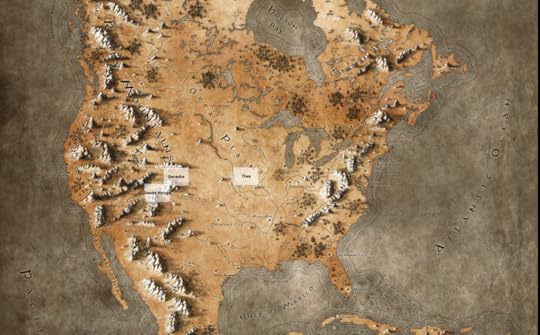
There have been three stories published regarding the world depicted above, they are as follows:
The Way StationDesert MirageDerecho (Black Finger’s- The Story Continues Available on Kindle Vella) Conquistador (Soon to be released)Map of the Age:
June 12, 2024
Children Lost during Freak Snowstorm
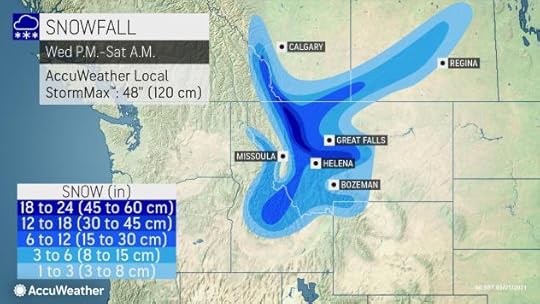
A report was taken on a particular December day in 2017, involving three children who were lost in a freak Montana snowstorm, for nearly twelve hours. Countless volunteers scoured the thirteen-thousand-acre woods surrounding a farm outside of Helena without success or sign- until approximately 3:00 AM the next morning when the children were discovered, much to everyone’s relief, alive. Despite a night of sub-zero temperatures, the children survived with little to no injury and were happily and tearfully reunited with their families.
What the report doesn’t say, is how they were found- what led the volunteers to find the children in the first place- an event that would be classified as a UFFP, or Unexplained Free-Floating Phenomenon.
Simply put, what appeared to be intelligently controlled lights, not of any origin currently known.
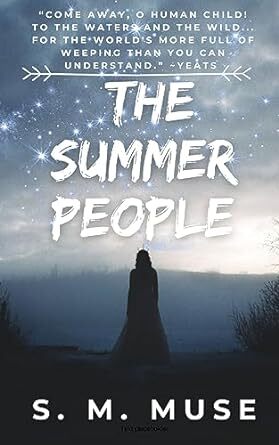
This unbelievable story of rescue, and the events that immediately followed, can now be found- uncut, and unedited, in The Summer People, Volumes 1-4 on Amazon, or the Annotated Hardback Edition available at B&N. These books are also available on Audible. Link below.
Excerpt: The Summer People Book 1
Jake opened his mouth- only to just as quickly shut it. There it was again– that light, a movement, just out of the corner of his eye. Ash immediately grabbed his hand as if she’d just seen it. When he looked directly at the source of the light, though, he saw nothing, only darkness. “What the heck?” he muttered. He was trying to get Eli’s attention when all of a sudden-
“Faerie fire,” breathed Eli.
“What?”
“Ignis fatuus,” the boy went on, staring off into darkness.
January 31, 2024
Fata Morgana 2024
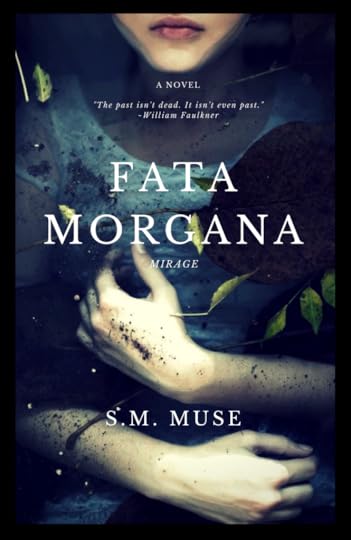
Wow. What a year it has been, what with 2023 fading out and 2024 roaring in. Many changes have occurred, starting with the rerelease of Fata Morgana. Not only has the story been tightened ever so slightly, but its readability has been shored up as well. Let’s start with a new intro, shall we:
In the haunting saga of ‘Fata Morgana,’ two souls, torn apart by time and haunted by shared pasts, find themselves reunited by a chance encounter. Their journey is one of rediscovery, redemption, and the unyielding power of love. As they navigate the shadows of memory and the uncertainties of the future, their bond ignites once more, defying fate itself. From the innocence of childhood dreams to the complexities of first love and the horrors of a serial killer’s grip, Fata Morgana delves into the depths of human emotion and the relentless pursuit of connection.
Stacie’s radiant blond hair and captivating blue eyes are at the heart of my tale. She will be forever etched in my mind as the love of my life, until tragedy strikes and Crowley, a twisted serial killer, shatters our world.
‘Fata Morgana’ is a poignant exploration of love’s enduring legacy, where the smallest moments hold the greatest significance and the bravest hearts find solace amidst life’s trials.
I found this amazing quote by Steven Foster, that I believe sums up what I’m trying to explore in the narrative presented:
You may wonder, ‘How can I leave it all behind if I am just coming back to it? How can I make a new beginning if I simply return to the old?’ The answer lies in the return. You will not come back to the ‘same old thing.’ What you return to has changed because you have changed. Your perceptions will be altered. You will not incorporate into the same body, status, or world you left behind. The river has been flowing while you were gone. Now it does not look like the same river. [ The Book of the Vision Quest ]
~Steven Foster
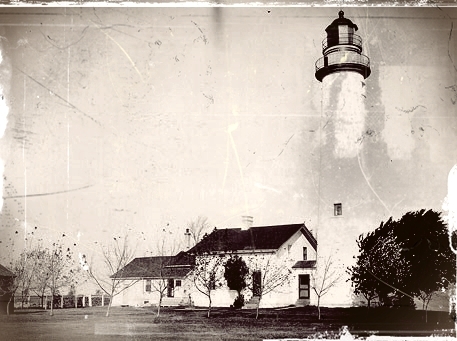
I hope you enjoy this new spin on such an old tale, as much as I have by revisiting it. Tales are meant to be told time and again, revisited, and reexplored, much like your favorite trail, beach, or in this case, an enigmatic lighthouse.
Behind me, in the distance now, the lighthouse, now so full of brilliant light, begins to signal, alerting travelers both near and far that danger lies just beneath the waves, to beware that which lies behind and sometimes ahead, and that there be rocks and reefs there… and yet, with love all things are possible.
With love, all things remain.
S.M. Muse
As always, you can find links to all my books to the right of this page.
March 30, 2023
The Summer People- 2023
With the release of the newly expanded and revised Book Four of the Summer People, you will be introduced to a ‘tribe’ of the Romani, known as the Churi, or People of the Knife. The churi plays an integral part in Jake, and the Twin’s quest to free their parents from the insidious grip of the sibilant, or Serpent People. Trapped behind enemy lines, the trio finds themselves at the enemy’s mercy, until they run across the churi, ‘guerilla-style’ or ‘freedom fighters’. The churi are a matriarchal group of warriors operating deep within the Sibilant Kingdom, struggling to throw off the Serpent Peoples’s yoke of oppression, fear, and slavery.
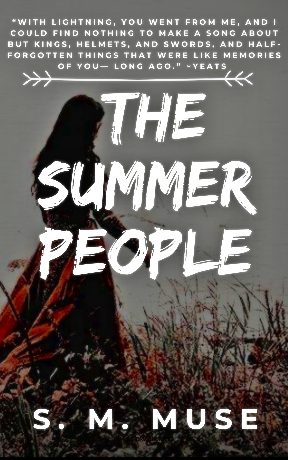
The Summer People- Book Four- An excerpt
“We range these woods seeking the adsincani, what you name the serpent people. We burn their houses, and attack their caravans.”
“So, you’re like guerilla’s then,” Jake exclaimed. Chandra, Mar, and Rogue looked confused. “You stay here and attack the enemy where he lives- behind the lines,” he went on.
Chandra seemed to ponder the question. “I’m not sure what this line is you speak about, but yes. We are the churi[1] or Knife of the People. The same as my mother’s mother, and her mother before her. We fight so that we might gain our freedom.”
Jake turned to Ash and Eli. “So, does that mean they are on our side,” he asked.
“We are on no one’s side,” Mar rasped, “because no one is entirely on our side. We simply are.” Her response brought a sharp glare from Chandra.
“This is all very confusing,” Ash said. She leaned forward. “How many are you?”
“We are many,” Chandra replied proudly. “Though we have no home, preferring leaf and bough as our roof and hall.” She waved with her hand. “The forest is where we belong.”
“Are all the churi, like yourselves,” Eli asked. Seeing Chandra’s brow furrow, “What I mean is…”
“Do we have men in our ranks?” Chandra’s eyes grew dark. “Ever since the disowning and shame, our men have been taken to work the mines. It is always the same. As soon as they reach manhood, they are removed. They become slaves and fodder to those you name the sibilant.” As she named the serpent people, she turned and spit into the fire.
And so, we make our introductions, even though we need none. We simply are. We are the churi. We are the people of leaf and bough, shadow, and shade. We strike from the forest and hide from the noontime sun. To understand our ways, one must know our history, and to know our history, one must walk our paths and ways.~ Chandra
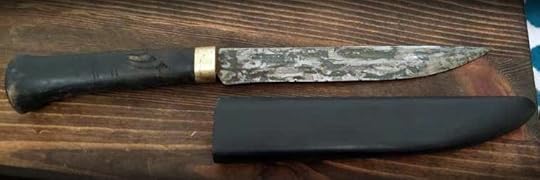
“In times of old, the Romani were warriors and wanderers. I ask, what is a warrior without their churi. A warrior would rather be dead than caught without their churi. Little has changed. Since the disowning and shame, the churi has taken on new meaning. With our sons and men taken, wives, daughters, sisters, and mothers have assumed the churi and its great responsibility. The knives we wield today have been passed down from mother to daughter, aunt to niece, and sister to daughter- Blood speaks to blood.
In times past the churi were considered common. No longer, our blades are sacred, venerated even, inscribed with the blood-rune of each family, their history, and honor.
So, why this reverence for the blade? After all, are we not outcasts, driven forth from our own people? In answer I say, look no further than the Cossacks[2], and their views towards the blade. Among the Cossacks, a small boy is given a blade upon birth, the knife placed beside him in the cradle. The same is done amongst the Romani. For we are churi, the chosen Knife amongst our People. We are warriors, and we stand between the cursed sibilant and history.
Throughout generations, our people have been bladesmiths, makers of churia and blades. Many of our tribes have been armors to Kings, armies, and Courts. Many are the knifemakers in Klingental[3], Solingen[4], Sheffield[5], Albacete[6] and Toledo[7], sacred Romani families whose names bring legion and fear.
As churi, we live and die by the blade, by the skill of our limbs, the quickness of our minds, and the heat of our passions. Our blades and skills are a way of life and remembrance.”
How it begins…
“A chavie[8], would be presented with her very first Churi on her naming ceremony. From that time forward she would wear her namesake around her neck, or at her hip. The churi she wields would have been made for her by an older phen[9] or day[10] or a puri daj[11], passed down as blood heirlooms, and/or remembrances. When older, around three or four, the chavie would be given a larger Churi made for her by a day, and at the age of five or six, she would be taught to ker[12] her own Churi.”- As related to Ashley, daughter to the Queen of the Summer People- regarding the making of churi.
“Amongst the Romani from the British Isles, the knife is often referred to as a “peg knife”. The reason for this name is rather obvious, as it was the knife that women used when “chinning the koshters”, making wooden clothespins. The churi was and is, basically, a utility knife used for just about every cutting task imaginable.”
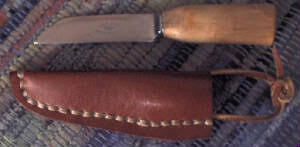
Traditionally the Churi is a recycled knife; made from older knives of the “bone” handle variety.
The most common blade style for a churi, a.k.a. “peg knife”, has always been the sheepsfoot blade.
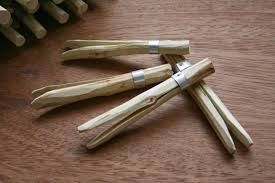
The sheepsfoot blade is extremely versatile, and all cutting chores are done with this churi, from cutting pegs (therefore the name ‘peg knife’), to cutting an apple to skinning a shoshoi (rabbit) or a rukmengro (squirrel), to peeling potatoes, and/or defending the group or oneself against attackers. There are times when the shape of the blade may differ, but this generally only happens if the original shape of the blade from which the churi is fashioned dictates and requires it.
“I made my first Churi from an old knife when I was six years old, relying not so much on tools, but rather using elbow grease, patience, and some acquired skill. The Romani churi, amongst mi fohki at least, would always be made with a sheath to be hung around the neck or, also, with a sheath for carrying on the hip. However, the neck wearing of the churi was and is the most common way. I always wear one small Romani churi day and night. It only ever is taken off when I go for a swim.” ~Chandra
The “raw” material for a churi is usually an old kitchen or table knife, generally with a bone or wooden handle, and with a spike tang. The steel of the blade is either high-grade carbon steel or Firths Stainless. Firths Stainless was the first ever stainless steel, and the finest stainless steel forged.
The first step in making a churi, is to acquire the blade. Carbon steel is always a good choice, and unless you know this, looks gray to black- that which is called “tarnish.” Rust is not an issue either if the rust has not destroyed the spike tang. Firths Stainless steel blades generally have the word “Firths Stainless” stamped on them. The handles of these knives are bone if they are rather old. Sometimes you may even find knives with deer antler handle.

Once you have got the knife (as cheaply as possible) you need to look at the lines of the blade. The shape determines the shape of the final blade. If it is a standard table knife, you then must decide where you wish to make the initial cut to shape the blade into a sheepsfoot, the traditional shape for a Romani Churi. For this, you will have to use a hacksaw or cold chisel to accomplish this. After the initial rough cut, use a fine-cut mil file to achieve the final curves on the top for a proper nice sheepsfoot blade.
Next comes the handle. If you want to put on a new handle, first you must remove the old “bone” handle. If you are blessed enough to have found a churi with an antler handle, I would suggest you do not remove it, but leave it. However, to remove the “bone” handle, the safest way I have found is to first scour a cut into the center of one of the flat sides of the handle with a cutting tool, then split the handle off with an old chisel.
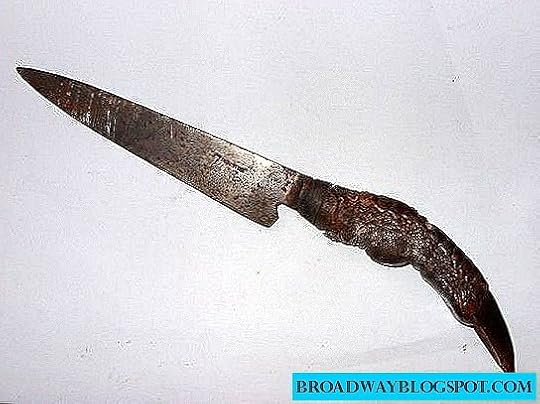
Now that you have shaped the blade into a nice sheepsfoot shape and have taken off the old handle you can start with the new wooden handle. This must be a piece of hardwood. The best woods to use are seasoned and can be either elm, birch, beech, yew, ash, hawthorn, blackthorn, cherry, apple, or other. Do not try using oak, it does not work. Yew wood makes a nice handle, but the easiest wood to make handles with, which I have found anyway, is beech. I use a nice-sized piece of branch that has been seasoned for about six months to a year. Cut a piece of a length that will be right and then with a drill bit that is just a little smaller in diameter than the tang you drill straight down into the center of the wood you have chosen for a handle. Now take an old – and I do stress old – saucepan fill it with water, throw in the piece of wood for the handle and boil this for about 15 minutes. Meanwhile, you take your blade and, point down, clamp it, between protective pieces of wood, into a metal vice. Also, get a hammer ready. Once the handle has boiled enough you take it out of the water with tongs, and holding it with a cloth, carefully put it onto the spike by means of the hole. You then hammer the handle home and do this as straight as possible. Within a minute or so the wood will have cooled and shrunk back and the tag will be held firm. The only tasks to do then are to shape the handle the way you want it to be and then, put an edge on the blade using a file first, then a sharpening stone. Once you have put a razor-sharp edge onto the blade, you will have your very own traditional Romani churi.
All that is left at this point, is to make a nice, tight-fitting sheath for your blade using an old leather belt, bag, or whatever else. Wood makes a nice scabbard as well.
[1] The Romani Churi, the making of which shall be described here in this little article, is the traditional churi (knife) of the Romanichals (Romane Chave). Amongst the Romani from British Isles it is often referred to as “peg knife”.
http://veshengro.tripod.com/id20.html
[2] The Cossacks are a group of predominantly East Slavic-speaking Orthodox Christian people who became known as members of democratic, self-governing, semi-military communities, originating in the Pontic steppe, north of the Black Sea.
[3] Close to Basel’s famous dance of death in the Dominican monastery was another Dominican monastery in Kleinbasel named Klingental after its founder Walter von Klingen. In this secluded nunnery there used to be a copy of the famous dance.
[4] Solingen (German pronunciation: [ˈzoːlɪŋən] is a city in North Rhine-Westphalia, Germany. It is located on the northern edge of the region called Bergisches Land, south of the Ruhr area.
[5] Sheffield is a city in South Yorkshire, England.
[6] Albacete is a city and municipality in the Spanish autonomous community of Castilla–La Mancha, and capital of the province of Albacete
[7] Toledo is an ancient city set on a hill above the plains of Castilla-La Mancha in central Spain. The capital of the region, it’s known for the medieval Arab, Jewish and Christian monuments in its walled old city. It was also the former home of Mannerist painter El Greco. The Moorish Bisagra Gate and the Sol Gate.
[8] young girl- not of age
[9] sister
[10] mother
[11] grandmother
[12] Make and/or forge
January 13, 2023
A History to Pursue- Romani
A series of posts investigating the historical setting for the Romani peoples. The Rom features prominently in my tale, The Summer People. Please excuse the quality of the video. Interesting.
October 10, 2020
Derecho- Part Six- It is Ended!
Exactly two weeks and three days after I was shot, I left the Fancy Lady’s residence and headed into town to recover the boy’s body.
The Fancy Lady refused to accompany me. When I asked her why, she replied, ‘Not this time, not ever. We aos si live long lives. Why would we jeopardize that by tethering ourselves to a mortal?’ She looked at me long, ‘There are other ‘heroes’ then you,” she replied.
Other heroes than me…?
I said nothing, the western sky spilling like blood over the mountains as we watched. Upon reaching the outskirts of town, I turned around-
The aos si was gone.
As before, the streets were empty. There were signs of a storm, a big one from the number of branches down, leaves blown, and debris. Could this be from the night I was shot?
Ten minutes later and the church loomed before me, its spire, topped by a blackened cross, dividing the sun, one side into light, the other into darkness. The day was warm and quiet.
Too quiet!
As the boy indicated, they had boarded up all the buildings doors and windows. Soot had blackened the roof, stained the windows. Red paint had been used to graffiti the front doors.
‘Silverheels… Burn in HELL!
A sign stood next to the street; St. John Cathedral, two services, 7:00 AM Traditional, 10:00 AM Non-Denominational. White letters spelled out below:
Ch Ch
What’s missing?
UR!
Gun drawn, I approached.
The doors at the top of the stairs showed recent passage. There were drops of what appeared to be dried blood, leading across the threshold. Seeing nothing unforetold, I opened the doors.
The darkness beyond reeked of must and blood.
Decay.
A second set of doors revealed more, a darkened sanctuary lit by shafts of brilliant light.
Complete and utter silence-
Stepping into that space, I feel vastness… there is an emptiness here, a feeling of hunger that can never be quenched!
The walls are black with soot, the pews charred.
I catch sight of the front of the church, the lectern, and altar. A large crucifix, suspended from wires, hangs from the ceiling.
The cross is not empty-
A word springs to mind-
Defilement.
Saul has taken the Saviors place, the boys’ hands and feet nailed to the cross. There are signs of violence everywhere, spatters and strings of blood, overturned pews, scattered hymnals.
The sanctuary reeks of slaughter!
I realize then what happened to the town- the same as happened in this place. The townsfolk had been brought here for slaughter, one house, one family, one person at a time-
Taken by day and stolen by night.
Be it by the demon, the Fancy Lady, or by the Master- it did not matter.
In the end, I was too late!
I turn away from the boy’s face. Like the sanctuary his body has been defiled, eyes gouged out, flesh rent.
Blood streaks his cheeks like tears.
I approach the altar. “Damn you,” I mutter, “Damn you all to hell!”
A sound behind me.
I turn-
The demon is as before, its pale, child-like body still covered in blood. “You live.”
The demon seems surprised.
“You should not have killed the child,” I say.
“He was one, among many,” the demon replies, scything its fingers. Watching, it raises one bloodied hand, licks at blood. “Sweet,” it says, then bolts my way.
I get off two shots. Miss both times, thunder echoing.
I drop to one knee as the demon leaps, arms, and scythes outstretched, reaching…
I twist to one side-
The pew next to me explodes into a shower of splinters, as the demon passes overhead, arms and blades flailing.
That was freaking close!
It takes a moment for me to recover, bring lex to bare.
Four shots left.
The demon bounds next to me, wings flopping, hands outstretched and raking.
I block the attack with lex, no longer a pistol, but a wickedly sharp blade. Sparks fly. A terrible screech fills the air.
The scythes miss my face by a hair.
I twist to one side and punch the demon on the right side of ‘its’ head.
The demon rocks back- only to launch once again, mouth wide, exposing needle-like teeth- I am reminded of a cat, ribbed pink pallet, eyes closed, tongue darting.
I punch again, this time in the mouth- only to draw back, hand bloodied and missing skin.
The demon continues to attack, hands slashing, feet raking. Each time I manage to evade- but barely.
I am tiring! My chest and side burn.
The demon goes for my throat, first with her hands, then with her teeth-
I push back, jamming the blade between ‘her’ teeth. My elbow goes numb as we roll across the floor.
I no longer feel pain, everything’s happening quickly. I bring up a knee, try and catch the demon, and push ‘it’ away.
The demon hisses, spit speckling my face.
I manage to catch a breath, bring lex to bear, and fire once- catching the demon squarely between the eyes. My shot lifts the top of ‘its’ head off, showers the pews behind it in a spray of blood as black as midnight.
The demon, black feathers spinning, veers off, only to crumple and lie still at the foot of the altar.
I drop to one knee, panting, struggling to catch my breath. My right side is stained in red.
When I am rested enough, I bring the boy down. His left arm hanging loosely about my shoulders. I wrap the small body in purple cloth and carry him outside, lay him down.
I will bury him later- I have a fat man to kill!
The next thing I know, I find myself outside the saloon, noonday sun beating. How many times must it shine on me before my task is done, history made complete? A scripture comes to mind, one taught to me as a child long ago:
‘for he maketh. his sun to rise on the evil and on the good, and sendeth rain on the just and on the unjust.’
It reminds me that my life was never meant to be fair.
I find my backpack where I left it, next to the doors of the saloon. I sling it across my shoulders and secure the straps. Another thought comes to mind, a way to end all this, ‘Anything that can withstand fire, must be put through the fire, and then it will be clean.’
This place needed to be made clean!
I enter the saloon and see it for what it truly is- a spider’s web, a trap for the unwary.
I take the time to set my own trap…
Afterwards I march upstairs, gun drawn. The aos si waits for me in the darkness at the top of the stairs.
“I pay my debts,” I say. She does not respond.
I head towards the hall.
Little has changed since the last time I was here. The wall has been repaired, reeks of fresh paint. I approach the door- kick it open-
I empty the gun, thunder deafening. Down and feathers fly, wood splinters, smoke fills the air-
A screech and flurry of sound.
I immediately take a knee, pull the ejector, drop the spent cylinder, and ram a second home.
A hand reaches out for me, more claw than flesh. It slashes once, then twice.
Miss.
I stand, empty a second cylinder into the bed.
The bullets bite home, pock-marking the fat man’s flesh.
Blood, the color of night, streaks the wall-
It is not enough. Through the smoke and haze I can see the fat man is not dead-
As the Fancy Lady would say, the Master remains.
I turn and run, even as something immense breaks through the wall behind me, giving chase!
Reaching the landing… the aos si is gone. I take the stairs two at a time, sliding down the last remaining feet of the banister, land on my feet. I’m already reloaded, hands busy.
Instead of firing back towards the stairs, I fire towards the bar, and the containers stacked there-
Plastic jugs of gasoline from the towns filling station. Glass bottles of whiskey. A cacophony of exploding glass- then flame. An immense roar engulfs the staircase and upper landing, a whoosh so loud and strong, the blast literally picks me up, and carries me through the front plate glass window, spilling me into the street.
I struggle to my feet brushing away glass.
The saloon has become an inferno of heat and flame. Amid that flame, something withers and flails, something large and monstrous, something that struggles and tries not to die.
I watch as flames speak, their roar drowning. Wings of black smoke billow into the sky.
The church is next.
I cheer when the spire falls. I’d rather burn this cursed town down, then let anyone else fall into its prey!
The scrawl was right, it was time for the legend of Silverheels to die!
When the church has been rendered to ash, I turned away.
[image error]
I buried Saul on a hilltop, his grave surrounded by yellow flowers. It happened on a day when the wind blew cold and the sun burned hot. I marked his grave’s location on a map, made a quick notation in my journal, and spoke a few words…
‘Ashes to ashes… dust to dust.’
The boy deserved that much.
Sometime between the burying and praying Coyote returned. The beast looked horrible. One side of the animal’s head was bare, covered in dried blood and a wicked looking gash.
Coyote limps over.
I lean against the shovel, wipe dust from my eyes. “Bout damn time,” I mutter.
Coyote doesn’t answer.
I tip my hat back, take a swig of water. The West continues to call, but so does the North.
The North only louder-
Behind me, Fairplay burns, its dark smoke marring the horizon. In front of me, high over the mountains, clouds like gore crows, grow. Saul was right, it was only a matter of time before the next storm, which means it was time for me to go.
“You coming…?”
Coyote growls. She agrees.
“Good, cause we got a long way to go, and a short time to get there.” With that and a final glance towards the town, we move out.
The End.
I hope you enjoyed this tale of ‘Them’. If you would like to see more, then check out the short stories ‘They’ and ‘Desert Mirage’. Both can be found at http://www.smusing.com.
October 9, 2020
Derecho- Part Five- Aftermath
“Easy,” the voice says. A hand touches my face.
Even after, consciousness does not come easy. I struggle to open my eyes. “Where is the boy?”
“Gone,” the voice states.
Someone tugs at my bandages; fresh pain erupts along my side. The sudden sharp bite of tincture.
“Helichrysum,” the voice continues. “Used to staunch the bleeding. Willow bark and peppermint to dull the pain. Frankincense for healing.”
Is it the old woman? Has she returned?
The bitter taste of willow bark. “Where am I?” I cannot see, all is dark around me.
“You are here,” the voice states. A hand touches mine. “Do not struggle, least you reopen your wounds. It is dark in this place, that is why you cannot see.” A moment’s pause, then light appears. The room and darkness reveal their occupants-
It is the Fancy Lady. She stands over me, veil brushing the back of my hand.
Her hands continue to administer. I reach out, grab her wrist.
The Lady gasps.
“Where. Am. I?” I struggle to rise- only to fail and fall. The sheets beneath me are wet, soaked in sweat and blood.
“Again, you are safe,” she says. She frees my grip. “We are no longer with the Master, you are in my room, under my care. No harm shall befall you here.”
“I do not believe you.” Everywhere she touches, my skin crawls. “Get away from me.” I strike out, catching her in the side.
Pain returns-
All goes black!
The next time I wake, I am alone in a room bare of furnishings save the bed. On my left, a window, its shape boarded up. Tattered curtains of yellow and orange flowers dangle from bent curtain rods. On my right, a closed door. The room smells musty, looks dusty. Yellow and brown-stripped wallpaper hang from the walls in strips.
My wrists and ankles have been bound to the four corners of the bed. The pillow beneath me smells of lilac and rose.
I wonder where my belongings are.
I wonder about lex.
Bandages wrap about me, from the armpit down. The wrappings smell of antiseptic, healing oils, and herbs.
I test the bonds- tight, but loose enough not to bind.
I stare overhead. A single bulb stares back at me.
Silence everywhere.
I think back to my dream- to Salisbury Hill, the sword in my hand, and Roland…
I think back on betrayal and my son.
I return to the demon, the one with the fake angel wings and scythes for fingers. Was the boy even alive? What had become of the Fancy Lady? Who was she referring to, when she said, ‘Master?’
A timid knock interrupts. The door opens.
I turn and lay eyes upon ethereal beauty, a young lady dressed in blue jeans and a tee, golden curls wind past her shoulders, she has a slightly upturned nose and elven features.
She reminds me of the Aos Sí[1]–
The aos si were tricksters, predating man. It was the aos si who met the Picts on the shores of Banba[2] , and set the first Kings of Man on their thrones.
The aos si created lex talionis.
The girl closes the door, approaches the bed, fingers interlaced before her. “Are you better,” she asks.
I know the voice, it is the Fancy Lady.
“You,” I begin.
She remains beside me, eyes dancing. I cannot tell if she enjoys my fear or not. The aos si have always been fickle when it comes to man, some would say arrogant.
“I thought your kind dead,” I said.
The smile remains. “The reports of our deaths have been greatly exaggerated,” she replies.
Touché.
She reaches out to brush a lock of hair from my eyes. “You need to heal,” she says.
Fear overwhelms me like a tsunami. Why keep me alive? Why not kill me outright?
Why did the fat man, let me go?
“He does not know,” she said as if reading my mind. “I have hidden you from him.”
“Why?”
“I have my reasons.” A pause. She studies her hands.
“Why did you chose this town, and these people?”
“If not here, then elsewhere,” she says. “They desire blood and fear, you know that.” She tosses a handful of curls over her shoulder, “Besides, the story fits.”
“Story?”
“Silverheels,” she says. “Do you not remember what the boy told you?” I am confused. Sigh of impatience, “If only we had time,” she exclaims, “alas, we do not.” A frown crosses her face, like a cloud darkening the sun. “As before, I need… your help.” The pain of asking, in her arrogance, has cost her something. Something dear.
She speaks, eyes distant-
“You can find meanness in the least of creatures. But when God made man, the devil was at his elbow. A creature that can do anything. Make a machine. And a machine to make the machine. An evil that can run itself a thousand lifetimes, no need to tend it.”
The aos sí were a machine, They certainly were!
I look away. Again, I am being asked for something, something I am loath to admit. From the boy, revenge, from fate, my life, from destiny, my death, and from the aos si, a favor.
I turn back, “Help to do what,” I ask.
***
Two weeks pass, the aos sí hiding me in a small shack just at the edge of town, a mere stone’s throw from where Saul, found me.
In her care, I find my strength. She makes me strong- we, however, do not speak another word.
We are machines.
On the day I can raise my hand without feeling pain I tell her, “I’ll need my gun, and I’ll need the boy!”
“The gun you can have,” she says. “The boy, a different matter.” She then relates to me the boy’s fate.
For long moments I remain quiet. Anger burns. “I want to see him!”
Sadness fills the aos si’s eyes. “That I can do,” she says, “though the way is dangerous. The Master has placed a guard over it. He visits the boy often… and feeds!”
Even in death, he is defiled!
In the end, the aos si agrees, hands me lex. The gun is wrapped in layers of cloth. The aos si, though its creators, areloath to handle it.
Their kind hates iron!
“Doesn’t he know you betray him,” I ask, holstering the pistol?
She hands me my clothes. She has laundered and repaired them. I dress.
“He thinks he owns me,” she continues. “He thinks too highly of himself, and I allow him to do so. We aos si live long lives. There is no need to hurry when it comes to revenge and the inevitable.” She stares at me, blue eyes glaring, “You, are my inevitable!”
Wheels within wheels…
She hands me a handkerchief the color of sky.
“What is this?”
“The only thing that will kill a demon,” the aos si answers.
In my hand, six perfectly silver bullets.
“To kill the Master, you must first kill the demon,” she says.
I open the cylinder, remove the remaining unspent cartridges, pocket the spent brass, and reload with silver.
I needed more. I needed to know about this fat man. How she came to be in his employee. Why this particular place, and for what purpose, exactly. I wanted to ask these things and more- what it would take for me to kill the fat man in the bed above the saloon- instead, I nod and accept the gifts she has given me.
If the fat man truly is one of them, I will not need special shells, I will only need my gun.
[1] The aos sí; older form aes sídhe is the Irish term for a supernatural race in Irish mythology and Scottish mythology, comparable to the fairies or elves. They are said to live underground in fairy mounds, across the western sea, or in an invisible world that coexists with the world of humans. This world is described in the Lebor Gabála Érenn as a parallel universe in which the aos sí walk amongst the living. In the Irish language, aos sí means “people of the mounds” (the mounds are known in Irish as “the sídhe“). In modern Irish the people of the mounds are also called daoine sídhe; in Scottish mythology they are daoine sìth.
[2] In the Tochomlad mac Miledh a hEspain i nErind: no Cath Tailten, it is related that as the Milesians were journeying through Ireland, “they met victorious Banba among her troop of faery magic hosts” on Senna Mountain, the stony mountain of Mes. A footnote identifies this site as Slieve Mish in Chorca Dhuibne, County Kerry.
Part Six Follows…
October 8, 2020
Derecho- Part Four- Something Wicked Comes
A few steps in, and a second whickering of light.
Three more steps, a door.
The third whickering of light revealed the demon at the end of the hall. It slouched in the corner like an aberration, wearing the skin of a prepubescent girl. The demon appeared to be covered in smears of mud. Her hair stringy and greasy, obscuring her face. The demon wore what appeared to be angels’ wings, black feathers strapped across its back, its hands were like scythes.
I leveled lex.
The demon did not move. For some reason, it had allowed the boy to go.
Light danced in the heavens.
I realized it wasn’t mud that covered the demon, it was blood, long trailing smears of blood.
The hallway reeked of slaughter.
“We were wondering when you’d get here,” the demon said, a thousand voices speaking at once.
I almost pulled the trigger, finger quivering, eye twitching. Sweat beaded my upper lip, threatened my brow. I’d seen ‘her’ kind before. Not one of them, but oft times guarding them.
The demon began twitching its ‘fingers’, each scythe grating against the other.
What do you want to bet ‘she’ can move faster than I can shoot? I was about to find out when Saul reentered the hall.
“Hey mister,” he said, “I changed my mind-
“Run,” I screamed, as the demon launched itself after him!
Lightning followed by thunder, thunder, thunder-
My first shot missed entirely, blowing a fist-sized hole in the wall next to where the demon slouched. The next two shots connected, one punching a quarter-sized hole just below the demon’s collarbone, coming out its back and scattering a handful of feathers, the other hitting smack dab in the middle of the ‘girls’ chest- exiting and shattering the window behind it.
Neither shot slowed it down a bit!
Metal glint as the demon passes by- I twist as razor-sharp scythes slice- sudden intense pain in my right side, just below the armpit. I scream, drop lex. Such was the impact, I am shoved through the wall beside me, and into the room beyond, scattering sheetrock, wallpaper, and wood. My head slams into the footboard of a bed-
Darkness!
I come to slowly, sprawled, leg kicked up, head sticky with blood. Lex lies next to me. I’m covered in pieces of sheetrock, plaster, and dust.
Memories return- demon, gunfire…
I look around. I don’t see the demon or the boy.
I fumble for lex, fingers numb- all I do is push it around, unable to get a grip. Intense agony erupts all along my right side. A groan escapes my lips.
“It’s about time you awoke,” a voice says, greasy and guttural.
It comes from behind me.
Grabbing my right side, I attempt to turn myself around and fail. My left leg is hung up in the remains of the wall. I reach for lex, only to see it taken away by a hand in the dark.
The sickening stench of honeysuckle…
They! Even as I think it, the laughter begins again. I kick myself free and turn around-
A series of windows line the wall to my right, what would have been the back of the saloon. There is an enormous bed beside me, its footboard elegantly carved and stained. Red stains one outstretched claw. It is a King’s bed, blood-red sheets, and a duvet heavy with embroidery. Off to my left, stands a series of heavy dressers, equally impressive as the bed, darkly stained and carved.
A sudden light appears as an oil lamp is lit, then another. Golden yellow begins to fill the room, lighting the space.
Pictures hang on the walls, painted scenes of coastlines, black volcanic rock, and the deep blue-green of the Mediterranean. Another painting shows a schooner amidst a sea of glass, its sails limp.
The skies behind the schooner are on fire with the setting sun.
A chair sets close by, red-velvet seat, clawed legs. Next to the chair, a closed door. Next to the door, a pair of heavy black boots, European.
“Where are you,” I ask. Speaking causes, me to cough, once, then twice, each time an endless agony of pain.
“I am here,” the voice says. The bed creaks.
With effort, I struggle to my feet.
Two people are in the room with me. One I take to be the ‘Fancy Lady’, black dress, black veil. The other is an abomination! A man so immense, so obese, my mind cannot comprehend.
I am reminded of an immense, bloated parasite. It is from this individual, this man, that the stench emanates from.
Corruption… disease… waste
The man’s flesh glistens, rolls of fat, hands, little more than sausages. The man turns to face me; he is completely hairless, almost sexless in his immensity. And when ‘he’ speaks, my skin crawls.
I lean heavily against the bed frame, blood trickles down my side.
The fat man holds lex casually like one might handle something trivial. The ‘Fancy Lady’ watchs.
Without warning, the ‘thing’ on the bed turns lex over, points it at me, and pulls the trigger-
Thunder and lightning-
The pain is unlike anything I have ever felt. Like I’ve been kicked in the gut by a mule.
I am grabbed up, spun around, and thrown against the wall, as the bullet tears through my left side. I end up face down, a sunrise of pain blossoming the entire length of my abdomen, blood washing out of me.
“I think you killed me,” I groan.
“That was my intent,” the fat man wheezes.
The world began to narrow down. So, this is it. This is how I die!
I am surprised more than anything. Never in a million years did I ever consider I would be killed by lex…
Nothing…
The battlefield sprawls around me, a rocky hill under a sullen sky, angry. Dark stones stand, pennants wave.
The air reeks of blood and excrement.
This is more than battle- this is war!
Bodies cover every square inch of green, broken, and twisted amidst churned mud.
Gore crow’s circle.
I cannot find Roland.
I no longer have the strength to hold my blade, bloodied, and wet. Its point digs into the blood-soaked earth.
Smoke billows from somewhere behind me. Camboglanna, in all its beauty, burns.
I remove my helmet; let it fall. The man I seek, once a boy, nowhere to be found- but he is here, and he is near!
I can feel it. I can feel him.
Blood calls to blood- stain to sin!
Rage fills me, I rear back and face the sky, “Mordred….!”
Part Five follows…