
Tower Lowe's Blog
February 25, 2025
Fishing in South Florida
 I don't know what it is...the water, the air, the fresh breeze...but West coast of Florida is a dream for fishing. I love scooting in and out of the mangroves of Pine Island or Lemon Bay in my pedal kayak with my line in the water.
Great spots for fishing on Pine Island are off Tropical Point, the South end of the Island (you have to launch from a canal), and Matlacha Park. We catch a few fish, like Sheepshead and Mangrove Snappers, but being on the water on a calm day brings me happiness. I'm purely in the present moment, and family, government, all of it, drifts away to be replaced by the sheer joy of being alive. I give thanks to the Creator for that. Life's problems suddenly come into perspective, and I remember how much I have to be grateful for. Children, family, comforts...I am a lucky being on this earth.
Here's more fishing photos:


Happy Fishing!


March 15, 2021
A Devil in the Dancehall...or no?
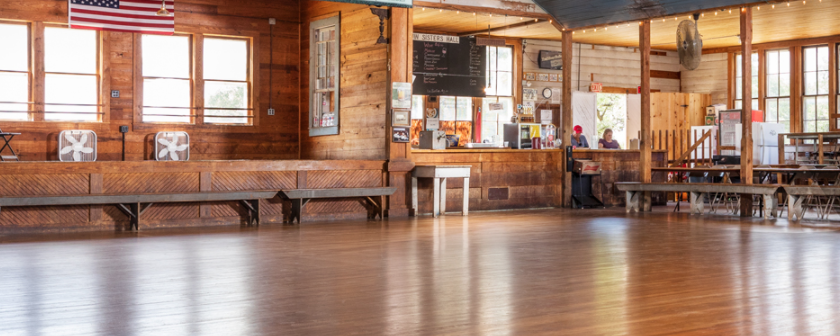
In the late 1980s, when I first moved to New Mexico, there was a dance hall in Pojoaque (a small Pueblo between Santa Fe and Española) for southern swing dancers. My husband and I took lessons and joined the free wheeling crowd swinging about the floor on Saturday nights.
One night, a fellow dancer told me a story about how a community was destroyed by a dance hall.
In early October one year, as the weather got cold, a young man, Octavio, lost his job as a carpenter. He began to drink and stay home. His wife was angry, so he took off on a Saturday night to go to the dance hall -- run by a very handsome newcomer in a black cape. The music was loud and the girls were pretty, but only a few people attended. Octavio scoured the community the next Saturday and convinced several other young men and the daughters of several churchgoers to join him at the dance. Octavio only danced with the girls at first, but as the gathering grew over the month of October, he began to give out a kiss or two. The other dancers saw him and took the same risk.
The community became alarmed at the behavior at these dances, yet the planner scheduled one for Hallow's Eve. Octavio's wife visited the local priest and begged him to go to the dance and send everyone back home to their families, but the priest was stopped at the door by an extremely handsome dancer, bearing eyes of onyx, a black cape and a white smile. He was a smooth talker.
"Nothing is going on here, Señor. We are having good Christian fun. Do not worry."
The priest, smelling sulfur and feeling the heat of a fire, pushed past the well-dressed man, stopped the musicians, and took the stage.
"Young men and women. You are sacred children of God, well-loved by your community, in debt to your families. This planer is not bringing you happiness or joy. Think about it -- he is encouraging sin. The crowd booed loudly, and threw beer bottles at the priest. He was forced to run from the dance hall. The man with the cape and glassy eyes laughed loudly at the fleeing man of God -- a laughter that haunted the priest for many years to come.
And why? Because the next morning, when the sun rose over the fair town, all the revellers at the dance hall had disappeared and were never seen again.
I shivered when my friend told the story. But soon I realized that it might be a retelling of the old story of the Devil at the Dance Hall where the king of Hell makes off with the prettiest girl in town...but then...who says that story isn't true? "They" say it happened, and I certainly can't say it didn't...because things are....mysterious in New Mexico.
December 14, 2020
New Mexico Haunting: Mystery or Mayhem?
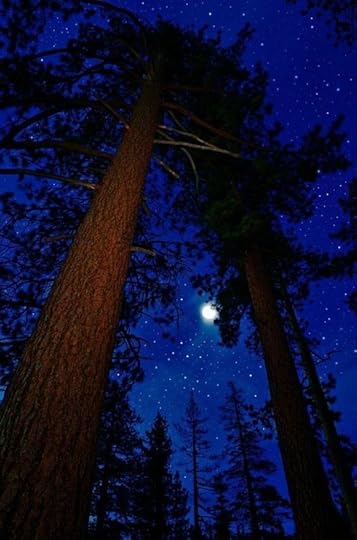
For several years I traveled once a week during the school year to Dulce, New Mexico on the Jicarilla Apache Reservation. As a rule, I stayed in Dulce at the famed Wild Horse Casino and Hotel. In the fall, the not on the front entrance announced, "no bloody boots allowed." In the evening, the lobby was alive with Casino players, but I never dared go in to gamble because a cloud of negative spirits seemed to always be following me in my tasks in that quaint rural town.
One day, I arrived in a snowstorm without a reservation, and the Wild Horse Casino was filled to capacity. I turned my little Honda Civic around and headed outside the reservation to the town of Chama. Dark was falling along with a heavy snowfall, but I did find a hotel accepting guests.
The business consisted of a log cabin style structure with 4 cabins build out back. Only one cabin was available, no rooms. Naturally, with it being so late in the day, I took the open cabin.
"One thing," the young man behind the desk held the old-fashioned key in his hand.
"Okay?" I was in a hurry to relax.
"You don't care if it's haunted."
"What are you talking about?"
The clerk laughed. "Just a joke." He handed me the key.
"One more thing," he said as I was about to exit the door. "Don't worry if a tree falls."
"A tree."
"Loud sound, but it happens all the time."
I frowned, figured the guy was stoned, and sped out of lobby.
Lighting in the back of the building was poor, and the path to the back cabin passed by ponderosa pines whose black branches swayed in the cold breeze. It was eerie, even spooky. I began to wish that I had asked more about the haunting.
However, when I opened the door, the room was cozy, with a small refrigerator, a coffee machine, and a good television with cable TV. I fell easily into a dreamless sleep only to awake several hours later to a thundering crash. TI expected to hear sirens and see the lights of firetrucks out my window.
Instead, a deep silence fell on the forest surrounding my little cabin. No wind blew and no cars passed in the distance. I look at my bedside clock. Three in the morning. Maybe I dreamed the sound. Still, I knew I couldn't sleep without at least checking out the room and glancing out the door to make sure a tree hadn't actually fallen onto the roof of the hotel.
The snow had stopped and the night was dimly lit. A shadow swept by the entrance to my room. The figure wore a long dress with colors that flashed in moonlight.
"Did a tree fall?" I called out.
"They killed my children." A woman's deep voice.
"Pardon me?"
"So I blasted the mountain."
A hyena laugh filled the dark air, and I slammed the door of the cabin, threw the deadbolt, and attached the chain lock. The laugh echoed in the woods outside my door.
Needless to say, I tossed and turned the rest of the night and dragged miserably through work the next day. And, yes, I asked the clerk about the sound.
"Happens all the time."
And that's why I say it's mysterious in New Mexico.
May 12, 2020
The Present Moment of Covid 19 and Writing
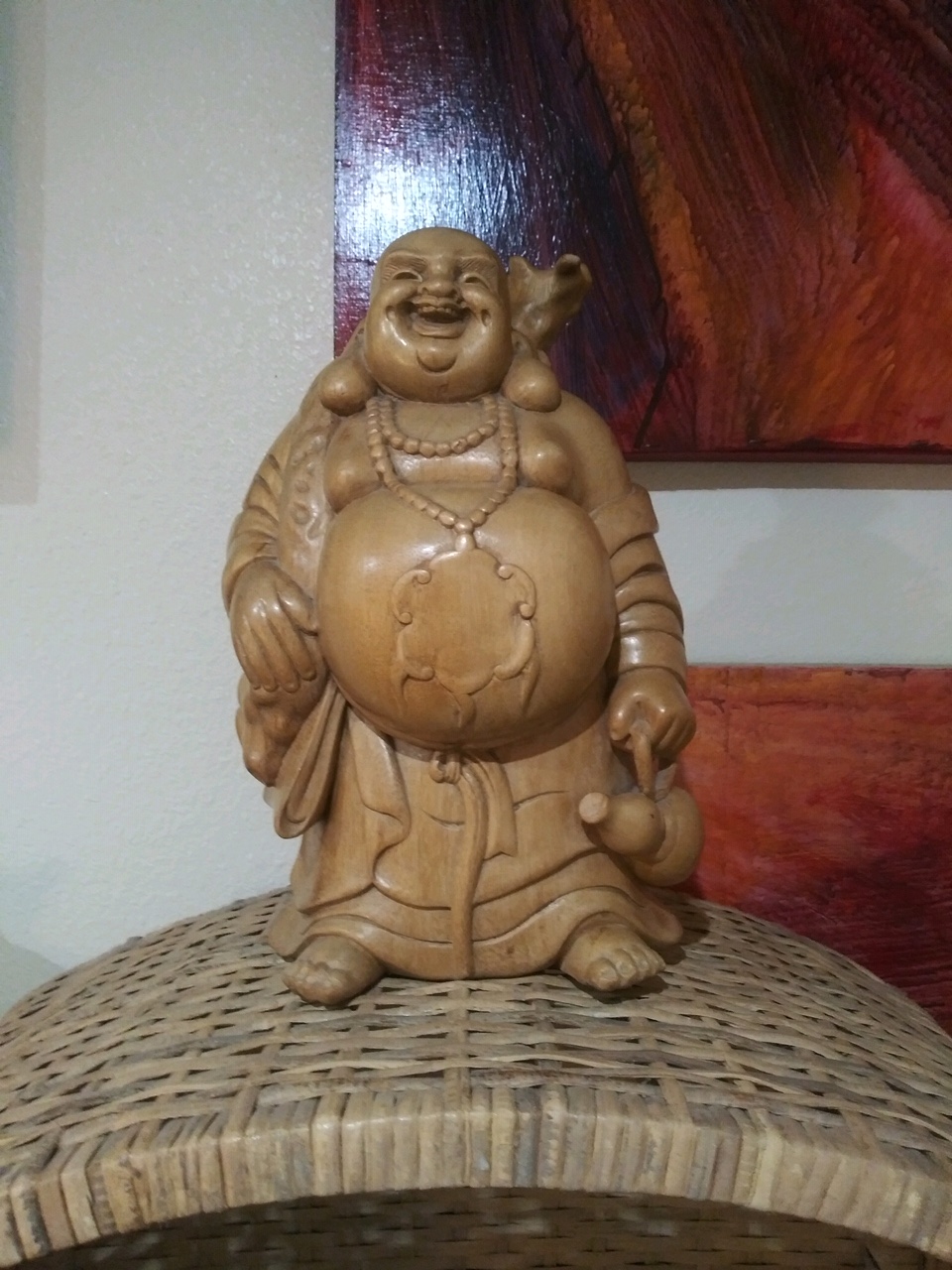 My friend is selling this figure on Craiglist, but I don't know which Buddha it is. Here are my guesses, going on how I feel cooped up by writing a sequel to my latest traditionally published novel and trapped by Covid 19 in an endless loop of Covid 19 data.
Laughing Buddha Laughing at you BuddhaLaughing at us BuddhaLaughing because it is funny BuddhaLaughing because it is not funny, but what else can I do? BuddhaThere's still joy: Laugh BuddhaI'm overdoing the wine BuddhaEat, Drink and be Merry because tomorrow may...BuddhaYou're not a Buddhist, so you shouldn't be guessing BuddhaI'm not a Buddhist, it's true, but I am fond of the writer Thich Nhat Hanh. So using that limited knowledge, I think the Buddha is laughing, in a metaphysical sense, at the idea that we are controlling the events around us, when in fact we are merely observing them as they occur. Focus on the breath, focus on the step, focus on this moment, this dish you are washing, this sentence you are writing, this character...
My next book is halfway completed using this method. I have survived the virus, eaten well, and continue to exercise. Life is good for us today, in this moment. But I do sneak out on the Internet every so often, and I am hounded by crazed control freaks on every side of the issue of viruses, transmission, fear, loathing...you name it. There is very little about this information that suggests we are not in control. In fact, quite the opposite. We are encouraged to imagine we are the very epicenter of control over protective supplies, plans, transmission of invisible particles, vaccines -- it is exhausting and no wonder the Buddha is laughing.
Ohm. My meditation mantra, since, as I mentioned, I am not a Buddhist is as follows:
God is love. Let God heal.
In the present moment.
March 5, 2020
Do Ghosts Exist? Don't Come Back
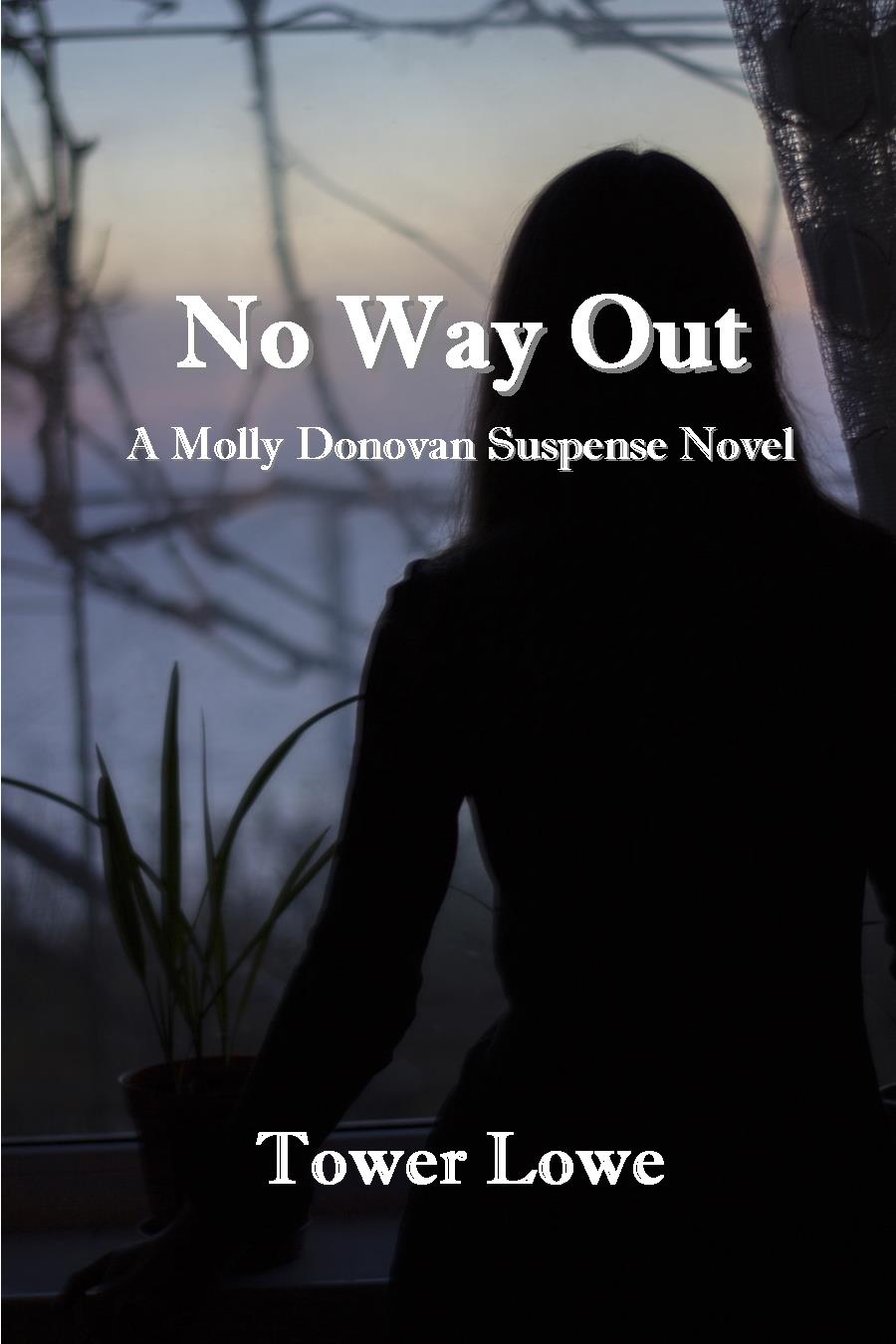 The sequel is Don't Come Back!
Here's what happens. The main man of the novel here's drumming and he feels the presence of his ancestors. At first it's almost a stereotype. He's Navajo, and he has just moved to New Mexico, and he believes he is hearing the voices of his ancestors. Of course, maybe he's simply depressed and searching for his identity. (His mother moved away to Maryland before he was born, and never kept it touch with his family here.)
Then, Molly hears drums -- or is it just the subwoofer in a passing car?
I like to feature spirits in my stories...and themes of loss and abandonment. Are there spirits. I think so. I can't prove it, of course.
I grew up with lots of spirit stories: Miss Rosa rocking in the front hall, translucent figures in white, ghosts of former slaves haunting the lives of their white former owners, stories of spirit hauntings...were they true? I felt certain of it as a child. On the former plantation where I grew up, I noticed a strange phenomenon and still do. When I walked out the door as a child, the world I saw, the trees the grass, the farm buildings, seemed ephemeral, as if they might disappear or be transformed in a moment to another time and place. We had a tool house which had once been the outdoor kitchen, a graveyard where dead children were buried, still grieved all these generations later. Could these mothers still be heard crying, especially when the wind kicked up? I heard them. I often wanted to step through the veil and experience that past. But, of course, I never did. Maybe I thought there really was no veil, maybe I was afraid the veil was a one way travel and I could not return to the present.
Even today, when I walk out the backdoor of the old farm (my brother now lives there), I see a wavering light that threatens to reveal the buildings and plants of my childhood, my grandmother hanging clothes while chickens squawk at her feet. Is my memory of that time correct -- can I go back for fifteen minutes or so simply to check? Or will I then have to relive that past to get to the present
In Don't Come Back, Molly and her FBI helper Ray address the issue of spirits -- what do they find? I don't know yet, but it's still .... mysterious in New Mexico.
Do spi
February 20, 2020
Characters with Disabilities as Part of the Narrative
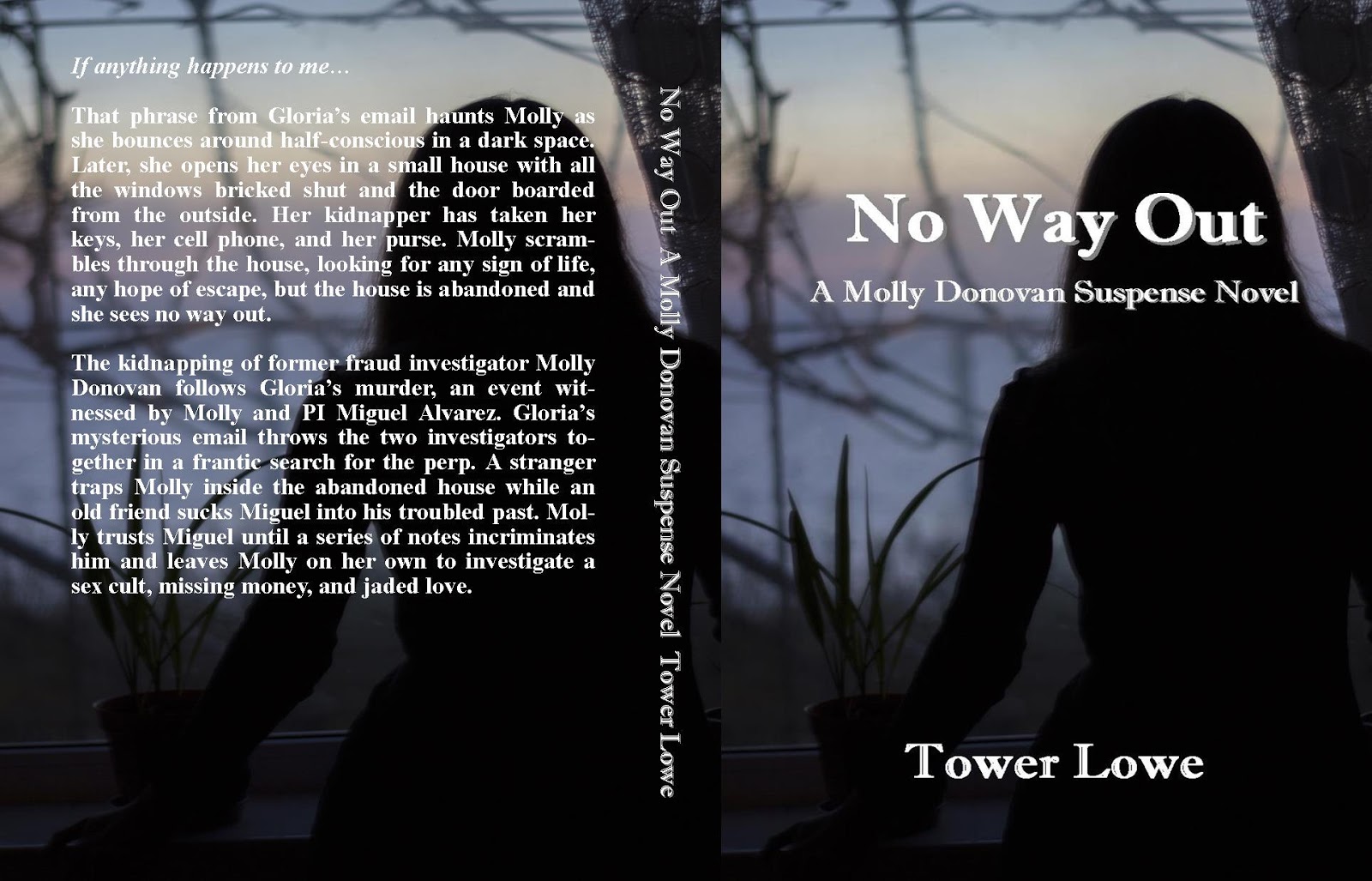 Think about it. How many people in your life live with mental illness (depression, bipolar disorder, schizophrenia) physical impairments, hearing impairments, vision impairments...
I'll bet you don't live a life peopled with only able bodied individuals, and yet, that's the ableist narrative, the cultural story, the stigma people with disabilities face.
I've set out to write mystery and suspense novels that include characters with disabilities who are part of the narrative. In other words, the disabilities are not the main point of the plot, the characters are not evil because of how they appear, and they are not heroes simply because they are alive. Oh yes, and they don't get cured so we can all feel like this is a perfect world with no problems.
Narrative fiction is flooded with able bodied people and stereotypical characters with disabilities.
I am recovering from depression and addiction, and I live a very full life. I worked, I raised a family, a have relationships with partners and friends. I did experience functional limitations to my life at various times, but because my disability was hidden, most people never noticed. So, in a way, I passed as non disabled. But that didn't work until I acknowledged to myself that I was experiencing a functional limitation, and I needed to accept that and not try to pass in my own brain.
I actually remember the place where it happened and how shocked I was to understand it. I didn't accept my own limitations.
I wanted to change fiction -- no literary fiction but popular fiction, romance and mystery fiction, to include characters with disabilities.
No Way Out, my soon to be released suspense novel features Molly Donovan, a hard-charging fraud investigator and her new romantic interest PI Miguel Alvarez. Molly lost the use of her left arm in a rare stroke suffered in high school. She uses brains, brawn and her unaffected arm to . Miguel is a recovering addict, who navigates a maze of old friends and old habits. The two make a connection. A peripheral characters fight the notion that his disability makes him evil.
And Cotton Lee Penn, in the southern mysteries Gone on Sunday and Premonition, fights the same cultural attitudes in the 1970s -- along with the idea that disabled people shouldn't have sex.
Let's change the habit of eliminating half our friends and lovers from our fiction.
Thanks remain as always: mysterious in New Mexico...
February 12, 2020
Cover Reveal Suspense Novel: No Way Out
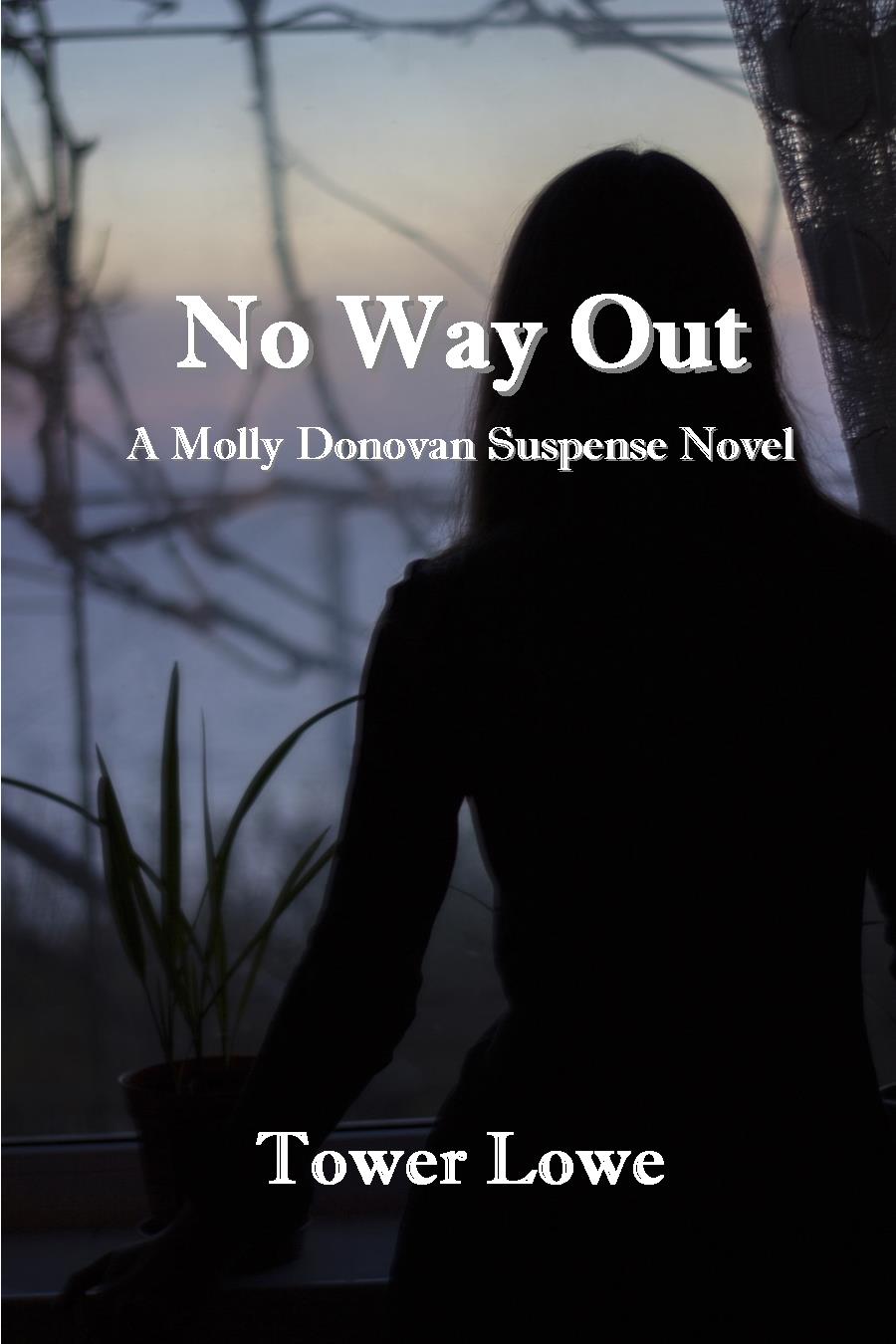 My first traditionally published book (http://www.solsticeempire.com), first cover...so much fun. And so is the book...locked in an Espanola adobe, nearly drowned in Cochiti Lake...what next?
 @page { margin: 0.79in } p { margin-bottom: 0.1in; direction: ltr; color: #00000a; line-height: 120%; text-align: left; orphans: 2; widows: 2 } p.western { font-family: "Liberation Serif", serif; font-size: 12pt; so-language: en-US } p.cjk { font-family: "SimSun"; font-size: 12pt; so-language: zh-CN } p.ctl { font-family: "Lucida Sans"; font-size: 12pt; so-language: hi-IN } a:link { so-language: zxx }
If anything happens to me…
That phrase from Gloria’s email haunts Molly as she bounces around half-conscious in a dark space. Later, she opens her eyes in a small house with all the windows bricked shut and the door boarded from the outside. Her kidnapper has taken her keys, her cell phone, and her purse. Molly scrambles through the house, looking for any sign of life, any hope of escape, but the house is abandoned and she sees no way out.
The kidnapping of former fraud investigator Molly Donovan follows Gloria’s murder, an event witnessed by Molly and PI Miguel Alvarez. Gloria’s mysterious email throws the two investigators together in a frantic search for the perp. A stranger traps Molly inside the abandoned house while an old friend sucks Miguel into his troubled past. Molly trusts Miguel until a series of notes incriminates him and leaves Molly on her own to investigate a sex cult, missing money, and jaded love.
***After so much time, it's great to have the recognition of a traditional publisher. I enjoyed publishing through my small company eiffeltowerpublishers, but I wanted to try writing out in the real world. I started submitting to agents, but those folks are beyond busy. So I tried publishers who accept unagented manuscripts and that crowd is way more friendly. And I think my writing got a fair hearing from the publishers. Plus, of course, the manuscript was accepted by the Summer Solstice imprint of Solstice Publishing.
Editing is next. I hire an editors and beta readers for my independently published works, but now I'm working for someone else. I'll let you know how it goes. Generally, I love editing my works, but we'll see. I'm as vain as the next writer.
And it's still...mysterious in New Mexico.
February 7, 2020
Lightning Bolt Romance is back! (With a little suspense...)

How Did You Meet? by Tower Lowe
Office Delia Gonzales spotted a blue Toyota SUV in the ditch on Acequia Madre. Both passengers doors were wide open. A man about her age squatted by the rear wheel well. Muscles bulged in his thighs as he rose up and aimed a bottomless brown-eyed gaze at her body. Delia meant to be offended, but she got side-tracked by pheromones or the smell of pipe tobacco, she never knew which.
"My name is Ramon." He took too strides in her direction, put his hands on her waist and dented her skin with his fingers. Delia's right hand searched for her gun.
"I'm your cousin," Ramon said. "Don't you remember me?"
"No." Delia touched the cool steel of the police revolver. Ramon was close enough to breathe warm spearmint into her face.
"We played soldiers in the dirt out back of your house. You had a dog named Scruffy."
"I don't know you." Delia felt sweat drip between her breasts. "I never had a dog."
A line grew between his brows. "Then love me anyway, the way I love you."
His lips touched her cold mouth, her hand removed the gun from her holster and Officer Delia was seconds away from firing into Ramon's belly.
"Daddy. What are you doing?" It was a toddler in dark curls and a yellow jumpsuit.
Ramon backed off. Delia kept her gun pointed at him.
"Is that lady going to kill you, Daddy?"
Ramon opened both arms to grab the girl and lifted her into his arms, covering his belly and chest, making it impossible for Delia to fire without hitting the child.
"I want her to be your Mommy," Ramon said.
"Now?" the girl asked.
"No, not now. But in a little while."
Delia put away the gun.
***
No Way Out, a romantic suspense, is under contract to be published soon.
Follow me on Bookbub to get the release date!
January 16, 2020
Physical and mental impairments are part of life...
My romance novel No Way Out (now in submission), features a main character, Molly Donovan, who has a physical impairment -- limited use of her left arm due to a rare stroke that occurred when she was in high school. This inhibits Molly not at all -- in fact she's one tough woman, and her love interest, Miguel, has his hands full keeping up with her.
All my stories feature characters with disabilities, because, from my point of view, fiction contains few characters with physical or mental disabilities -- or hearing and vision impairments. Often, such characters are villains (which I find deeply offensive) or are the object of great amazement because they don't just stay home and watch television.
Really -- it's ridiculous. And this lack of representation exacerbates the cultural attitude towards persons with disabilities. "They" are different -- scary, embarrassing, to be looked away from, kept separate, not acknowledged accept for pit. They are, as we say in New Mexico, pobrecitos.
In the course of my career and my life, I have known many successful persons with mental and physical impairments. In fact, these people taught me that life is about making the most of the choices I do have. Believe it or not, that wasn't clear to me before...I felt sorry for myself because I had passed up certain opportunities or failed at others. My work with people with impairments who were successfully managing families and careers taught me that I simply had to wrong attitude.
And I've never been the same. But, to the books. I have two published series. My very first is the Cinnamon/Burro New Mexico mysteries. The very first story In Dulce, Disturbed, is about a missing boy with autism. One of the detectives is living with schizophrenia.
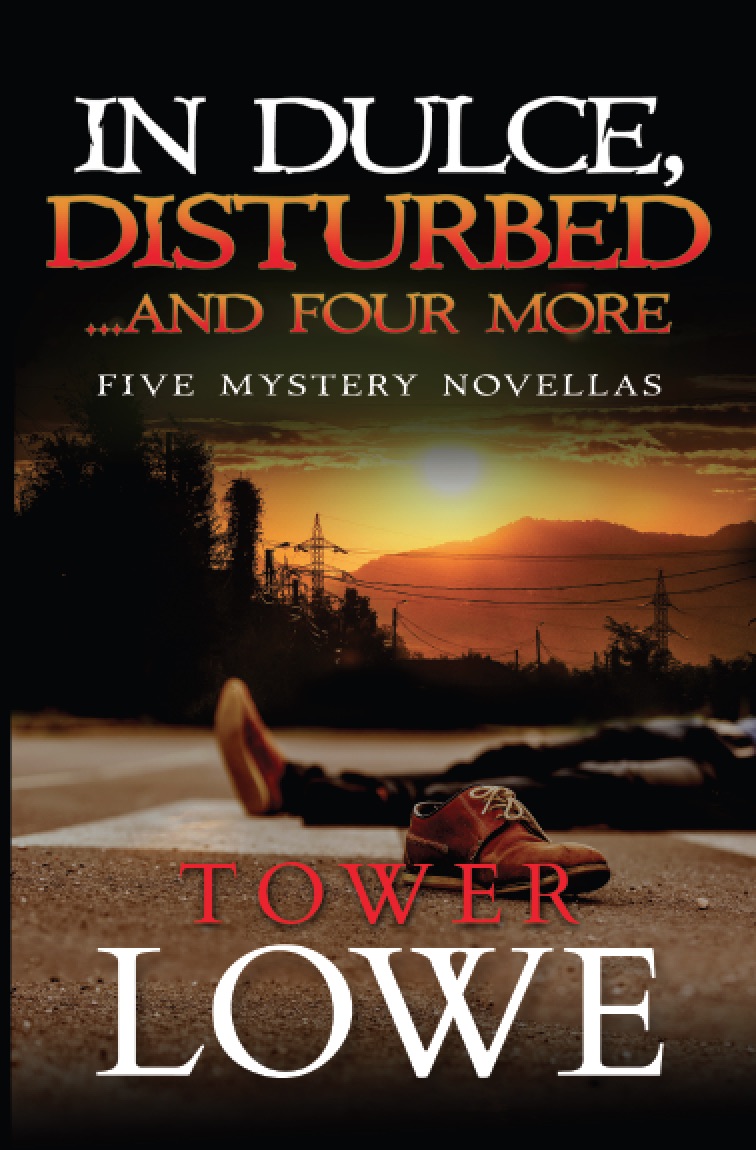
My second series, is part of the Cotton Lee Penn historical mystery series. In this series, Cotton Lee Penn fights the stigma of a polio impairment in the 1970's rural south. Readers tell me that like Cotton Lee because of her grit and honesty, and because she doesn't allow others to define what she can and can't do. I set Cotton Lee in the 1970's to make the prejudices against her working and having a love life believable, but these same prejudices are out among us today.
My latest book, No Way Out, is a romantic suspense, and I'm submitting it now. Am I having trouble getting an agent because of the characters with disabilities. My mind says, no. you need more practice as a writer (I'm six books in, and the last couple I published received very good reviews), are the agents busy (they claim to get 15 queries a day -- and yet they remain open to queries which is insane but not for me to say, I suppose) or because the market doesn't want what I write, or because it's isn't meant to be? These are all possibilities, maybe even the most likely ones.
But with my latest book, a romantic suspense with lots of adventure and a few steamy (but clean) episodes, doesn't seem so far off the mark to me or to my beta readers and editor. (But again, who are we to say. We don't work every day trying to sell books to reluctant publishers.) I can't help but wonder, though, if agents feel (because publishers do) that it is inappropriate to write a romance for a woman like Molly whose arm doesn't fully function. I wonder if agents feel, because publishers do, that it is embarrassing to hear about her disability.
I'll never know, probably. But I'll say one thing right here -- readers don't feel that way. Readers get it that we all are vulnerable to physical or mental impairments. It's a matter of luck and time. And, so far, my readers respond positively to my characters who manage their physical and mental impairments quite well, overcoming the functional limitations of their disabilities, and overcoming the attitudes of others to persevere and wring a good amount of success out of life.
Bravo to them. And bravo to you, my fair readers.
Things remain, as ever, mysterious in New Mexico.
December 16, 2019
Neurodiversity, Mental Illness, and the Fiction Narrative
 What does neurodiverse mean?
According to https://www.disabled-world.com/disability/awareness/neurodiversity/ the word neurodiverse includes an expanding number of conditions that need to be accepted as part of the human condition.
"Today, neurodiversity is broadly defined as an approach to learning and disability that suggests diverse neurological conditions appear as a result of normal variations in the human genome.Neurodiversity advocates promote support systems (such as inclusion-focused services, accommodations, communication and assistive technologies, occupational training, and independent living support) that allow those who are neuro-divergent to live their lives as they are, rather than being coerced or forced to adopt uncritically accepted ideas of normality, or to conform to a clinical ideal.Different people think differently - not just because of differences in culture or life experience, but because their brains are "wired" to work differently."Neurodiversity is not a word about autism alone. It is a word that embraces all neurological uniqueness, all rhythms of neurodevelopment and all the forms by which humans can express themselves and contribute to their world." - newforums.com/use-term-neurodiversity/"
I have worked providing accommodations for many individuals who had a diversity of brain issues, and I have a family member who is neurodiverse. That word hasn't been around that long, and so my family member struggled through numerous oddball labels and definitions -- autism, depression, bipolar, schizo-this or schizo-that -- it got crazy for us and for the family member, because none of these labels had any diagnostic touchstone. In the 90's, I accepted that reality, but in the 2000s, I started to wonder. If there's no evidence, no blood test, no MRI, no x-ray, sonogram, no nothing...then what are we really talking about here? And if the label keeps changing, what does that say about the medical practitioners who are creating and dishing out these labels?
Those are rhetorical questions, because, from my point of view, we are talking about the concept written above -- people are neurodiverse, and there are a variety of ways that neurodiversity reveals itself in humans. The answer to the second question about medical practitioners is that they are not qualified to label individuals with an "illness" when there is no diagnostic proof it exists. The symptoms vary and are vague or pronounced depending on how they affect each individual. As I often say, if doctors diagnosed heart conditions the way they diagnose mental illness or autism, they'd be sued for malpractice.
And as regards mental illness -- with all due respect to practitioners -- psychiatry is 17th century medicine.
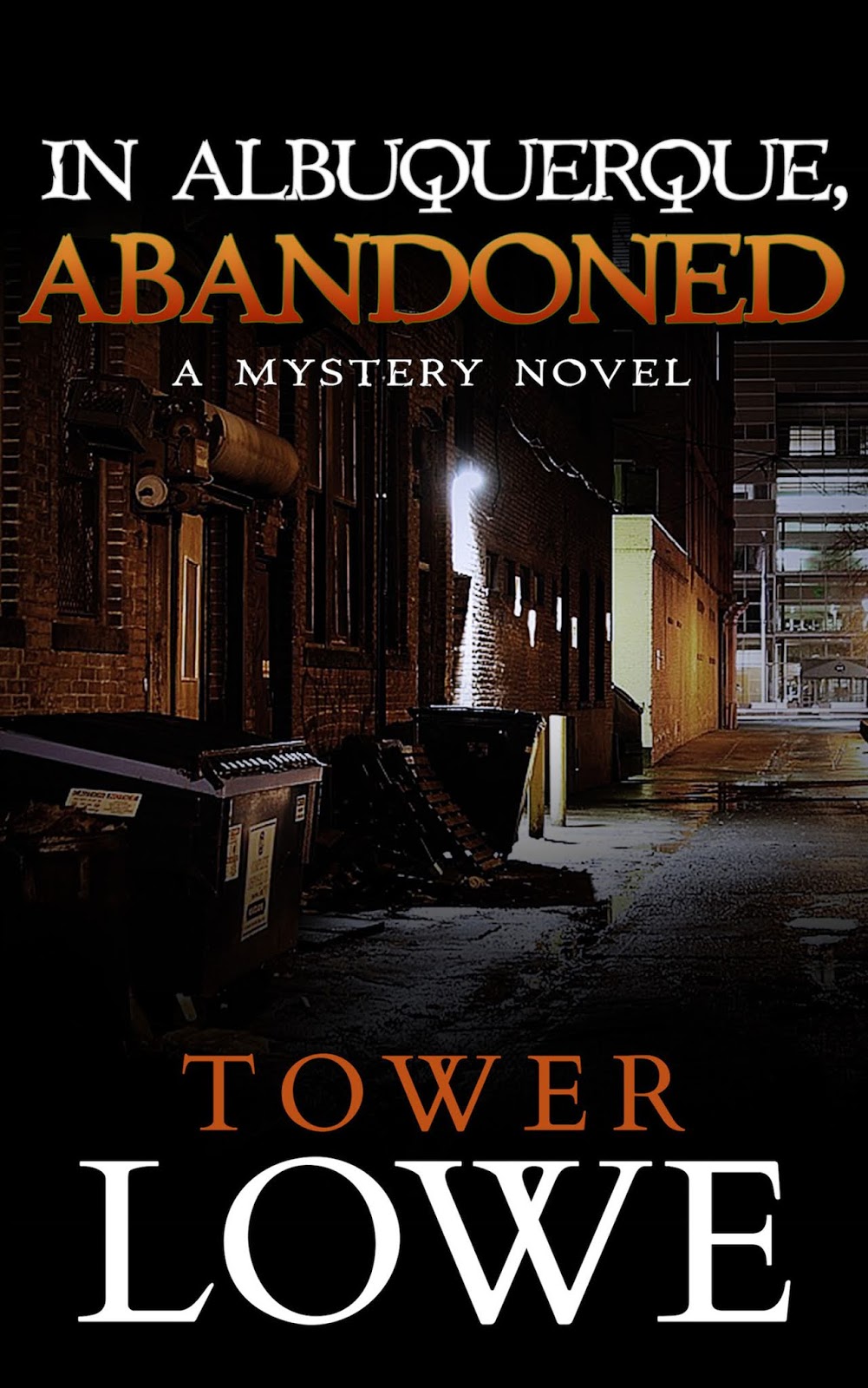
So what's this got to do with the fiction narrative, you ask. I have been dealing with this for a while. My first book with a character with mental illness was In Albuquerque, Abandoned, published in 2016. One of the characters, a suspect, had schizophrenia. The character's challenges, the prejudices against him, the challenges of his family -- these are all examined as the mystery is solved. I communicated with several readers who had family members diagnosed with schizophrenia after the book was published, and I began to think about the situation more seriously.
Then I started another mystery novel about a family detective agency that was started to give the mentally ill family member a place to work, because her personality was different and hard to appreciate. After writing the first few chapters of the book, I stepped back. I didn't like the label, so I took the leap -- I called her undiagnosed, or misdiagnosed. As the story unfolds, her different way of seeing and operating in the world is turned to an advantage. This is when I learned about and embraced the concept of neurodiversity. The character is challenging to her family and to other characters because her behavior is not neuro-conventional, yet her unique method of operating in the uncovers information that the characters who are neuro-conventional don't see.
I created a word there -- neuro-conventional. Maybe you can find another, and the words and labels don't really matter. I guess the way I see it is the way the Burt and Ernie characters saw it in a tape I used to have when the kids were small..."Anybody Can Play." In other words, people need not be eliminated from our life experiences, our work world, our church, or our community because they don't play the same way we do. We can make room for them.
And I am trying to make room for people with disabilities -- diverse individuals -- in my fiction narrative. While I don't--yet--have a physical impairment, I will if I live long enough. I have struggled with mental health issues -- and I only succeeded in managing those issues successfully when I accepted the idea that it's okay to function differently from others.
So...all of this said, we need fiction novels for adults with characters with neurodiversity who are part of the narrative, not the subject of the narrative. We need more adult fiction with characters with disabilities who are part of the narrative, not heroes because they live with the disability or subjects of pity.
Thus, releasing in January 2020 is my mystery novel that includes Spree, who lives with neurodiversity and her family, who lives with her and her neurodiversity with love and with challenge.Silencing Sistine by Tower LoweThe star investigator at The Finders, a missing persons agency, is the multiply diagnosed (neurodiverse) Spree, a Brazilian adoptee, sister to long suffering Jack and daughter to the ever-patient Eva, who started the agency to keep her family together. The team are hired out of Santa Fe, New Mexico to find Sistine, who disappeared from Miami twenty years ago on the arm of a dangerous man. Sistine’s younger sister, Lace, hires the agency when her dying mother accuses Sistine of murdering their father.
@page { margin: 0.79in } p { margin-bottom: 0.1in; direction: ltr; color: #00000a; line-height: 120%; text-align: left; orphans: 2; widows: 2 } p.western { font-family: "Liberation Serif", serif; font-size: 12pt; so-language: en-US } p.cjk { font-family: "SimSun"; font-size: 12pt; so-language: zh-CN } p.ctl { font-family: "Lucida Sans"; font-size: 12pt; so-language: hi-IN } a:link { so-language: zxx } The story quickly moves to Cuba, where The Finders discover that the story of Sistine is a bit more complicated than they first thought. The Cuban government, Cuban families in both countries, and a mysterious stranger back in the United States cloud their efforts to locate the elusive Sistine. Spree’s quirky personality and intuition drive the family towards a resolution, aided by Jack’s sketches and Eva’s knowledge of human psychology.
More on the book and characters with neurodiversity in fiction when the book releases.
Thank you for following all that is mysterious and romantic in New Mexico.


