Nancy Kay's Blog
October 19, 2026
Anal Sacs: Good-For-Nothing Little Troublemakers
True confession. Throughout 35 years of practicing veterinary medicine, anal sacs have always been, and will remain, my least favorite part of a dog’s anatomy. Like the human appendix, they are good-for-nothing little troublemakers.
 Photo by Amie Barron on Unsplash
Speaking for Spot - Dr. Nancy Kay is a reader-supported publication. To receive new posts and support my work, consider becoming a free or paid subscriber.
Dogs come equipped with two anal sacs, located just beneath the skin surface of the anus at the eight o’clock and four o’clock positions. The sacs serve as a reservoir for the fetid-smelling yuck produced by the anal glands. The sacs empty to the skin surface via two small ducts. This normally happens with pressure from a solid bowel movement. It can also happen as a fear or startle response.
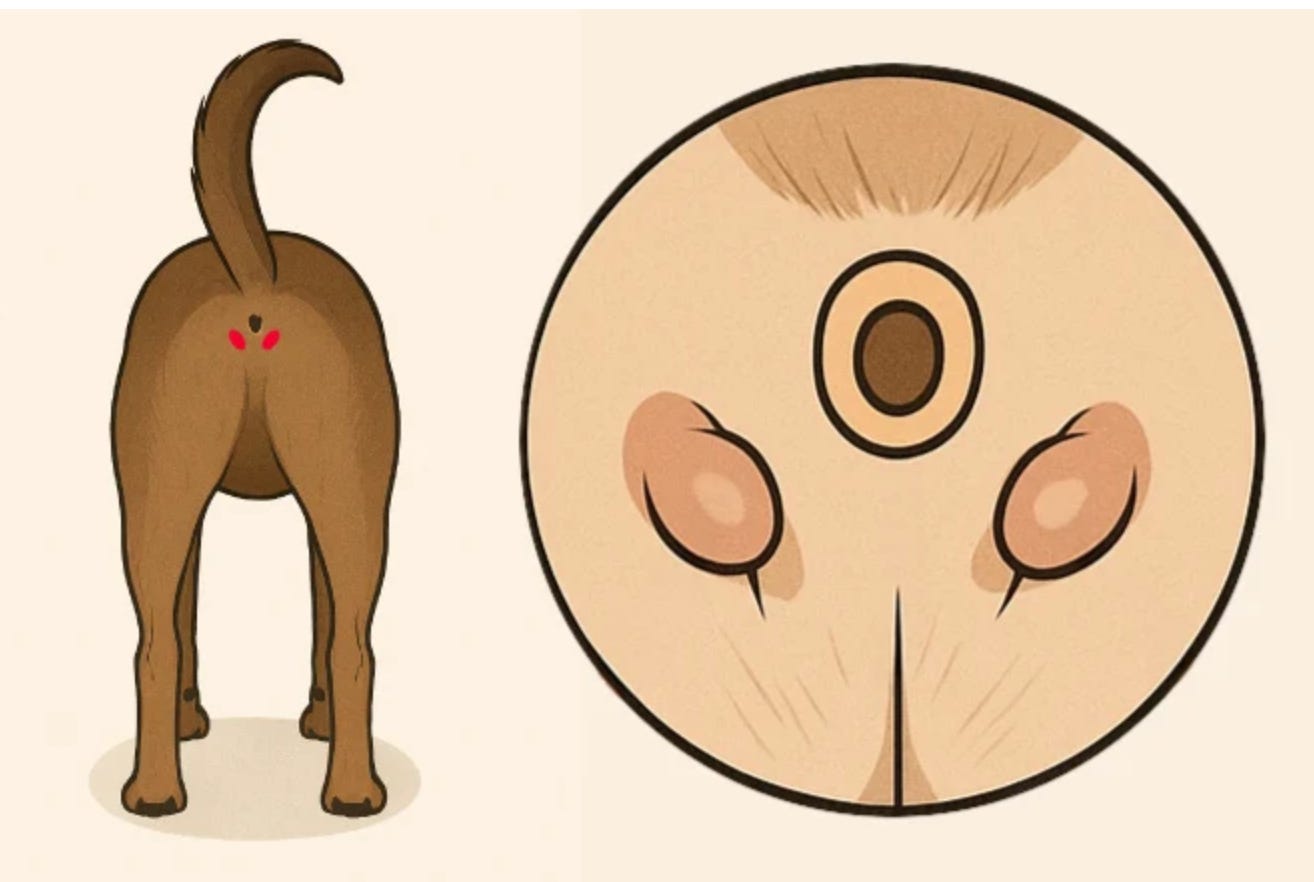 Anal sac disease
The two most common anal sac maladies in dogs are anal sac impaction, in which the yucky stuff can’t be evacuated, and bacterial infection called anal sacculitis. Obesity and skin conditions such as seborrhea and food allergies may be predisposing factors. Anal sac adenocarcinoma, a malignant form of cancer, is relatively uncommon.
Symptoms of anal sac disease include licking at the anus, scooting behavior, swelling around the anus, reluctance to sit, and leakage of anal sac material. You might notice a horrific smell, but don’t know where it’s coming from.
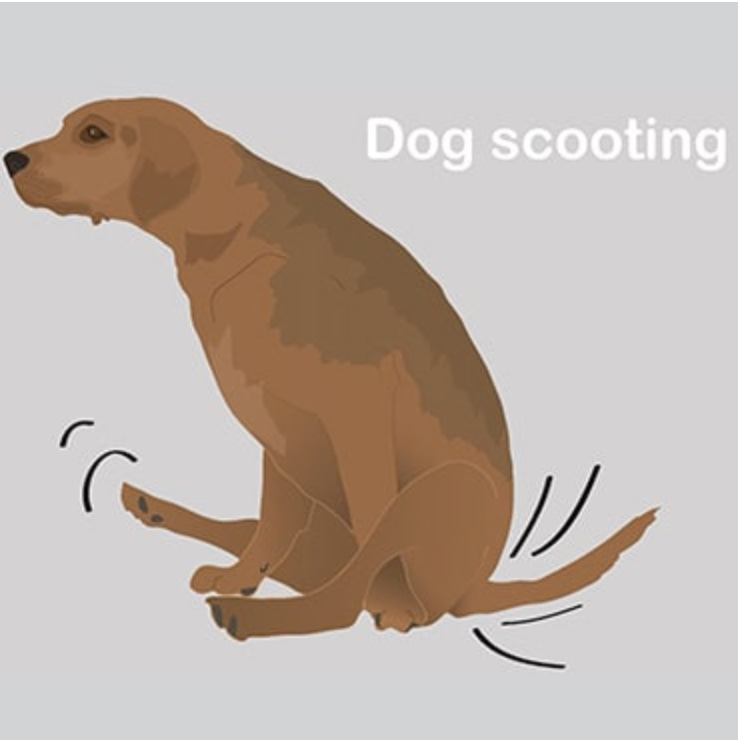 Treatment of anal sac disease
Treatment may include repeated manual expression of the anal sacs, a hypoallergenic food trial, and antibiotics if infection is present. One can also try firming up the dog’s bowel movements by adding fiber to the diet. I encourage you to talk with your veterinarian about these options.
Yes, you can learn to empty your dog’s anal sacs at home, but doing so cleanly, gracefully, and without causing pain is a bit of an art. I’ve coached clients to do many at-home treatments, but emptying anal sacs is something I rarely encourage. Bottom line, it can be a gross, messy, and horribly stinky task.
For dogs who are frequent “repeat offenders,” one can consider surgery to have the anal glands and sacs removed. If you choose this route, be sure to work with a surgeon who has performed this surgery many times in order to avoid the dreaded complication of fecal incontinence.
SkunksUnlike dogs, skunks have voluntary control of their anal sac secretions. With tail held high, they point and spray the stinky stuff to ward off predators. Has a skunk ever viewed your dog as a predator?

Has your dog ever had anal sac disease? What did you do to manage this pain in the butt problem?
If you’ve never had a dog with an anal sac issue, count your blessings and find some wood to knock on! But if you have had one, do tell.
Best wishes to you and your four-legged family members for abundant good health,
Dr. Nancy
DrNancyKay.com
KidsUnitedforAnimalWelfare.org
Speaking for Spot - Dr. Nancy Kay is a reader-supported publication. To receive new posts and support my work, consider becoming a free or paid subscriber.


October 12, 2026
What Tennessee Executioners Could Learn From Veterinarians
No one would argue that veterinarians are the leading experts in the art/skill of humane euthanasia. Veterinarians most commonly use the drug pentobarbital, the same drug that was used in the botched execution of Krista Pike. But there are key differences.
 Photo by Linoleum Creative Collective on Unsplash
Before veterinarians administer the lethal dose of pentobarbital, they give the animal a sedative and/or anesthetic drug. The animal then relaxes, some to the point of appearing unconscious. This eliminates any trembling, fear, and anxiety. Not only is this an act of compassion, it makes accurate placement of an intravenous catheter far more successful.
Speaking for Spot - Dr. Nancy Kay is a reader-supported publication. To receive new posts and support my work, consider becoming a free or paid subscriber.
Complications of the euthanasia procedureWithout a smooth catheterization process, the catheter may miss landing in the vein, and multiple attempts can poke holes in the vein. In such cases, the pentobarbital leaks into the surrounding tissue which causes a painful, burning sensation.
Is this what made Krista Pike ask her executioners if the intense pain she felt in her arm was normal? Is this why she said her arm felt like it was ready to burst? Was this the reason her execution was unsuccessful? Pentobarbital that is injected into the tissue surrounding the vein absorbs far more slowly, and doesn’t pack the expected wallop necessary to cause death.
Back in the day, when I was just a pup, most of us administered the pentobarbital euthanasia solution without preceding sedation or anesthetic. And some of those animals struggled and yelped. Good thing we now know better.
EuthanatosThe word euthanasia comes from the ancient Greek word euthanatos.
Eu means good, well, or pleasant.
Thanatos means death.
A good, gentle, peaceful death is what veterinarians strive for each and every time they euthanize an animal.
Do you agree that Tennessee executioners—and possibly those in other states—have a lot to learn from veterinarians?
Best wishes to you and your four-legged family members for abundant good health,
Dr. Nancy
DrNancyKay.com
KidsUnitedforAnimalWelfare.org
Speaking for Spot - Dr. Nancy Kay is a reader-supported publication. To receive new posts and support my work, consider becoming a free or paid subscriber.
October 6, 2026
Round the Clock Care: A Reasonable Thing to Expect From Your Vet
If your dog has had major surgery or is sick enough to require hospitalization, how will he or she be cared for overnight?
 YIKES!
As much as the thought of this makes me cringe, know that overnight hospitalization is not synonymous with round-the-clock care. It may mean the staff leaves at closing time and returns the following morning.
Speaking for Spot - Dr. Nancy Kay is a reader-supported publication. To receive new posts and support my work, consider becoming a free or paid subscriber.
What if, during that time, your dog:
Pulls off his Elizabethan collar and chews open his surgical incision?
Experiences pain?
Has recurrent vomiting?
Has to poo or pee?
Disconnects his intravenous fluid line?
Unfortunately, many well-intended people don’t think to question the actual specifics of what “overnight care” means.
BE AN INFORMED MEDICAL ADVOCATEPlease know that it is perfectly reasonable for you to expect that your hospitalized dog receive round-the-clock care. It may mean that your veterinarian needs to refer you and your dog to a 24-hour facility. If such a facility doesn’t exist in your neck of the woods, here are some other viable options:
A veterinarian comes into the clinic multiple times during the night to check on hospitalized patients. Some vets prefer to take their patients home with them overnight to help make monitoring and supervision more convenient.
A skilled veterinary nurse (technician) comes into the clinic multiple times during the night to check on the hospitalized patients, and has access to contacting the veterinarian should the need arise.
Your dog spends the night at home with you, but only after you receive thorough monitoring instructions along with a way to reach your vet should questions or concerns arise. As daunting as this may sound, it’s better than leaving your best little buddy completely unsupervised overnight. (Imagine how you’d feel lying in a hospital bed, hooked up to intravenous fluids, and no one checking in on you for twelve long hours!
How would your dog be cared for overnight should the need arise? If you’re not sure, no time like the present to find out.
Best wishes to you and your four-legged family members for abundant good health,
Dr. Nancy
DrNancyKay.com
KidsUnitedforAnimalWelfare.org
Speaking for Spot - Dr. Nancy Kay is a reader-supported publication. To receive new posts and support my work, consider becoming a free or paid subscriber.
September 29, 2026
Odds and Ends
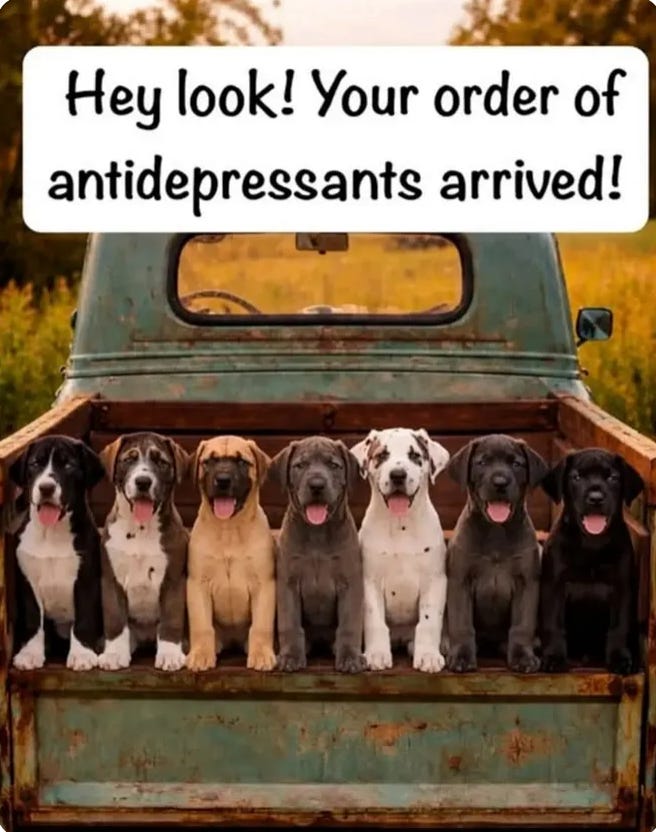
This image so tickled me, I couldn’t resist sharing it with you.
 Dr. Nancy Kay Speaks Out!
During a recent podcast appearance on Pawsgo Pawdcast, the two fabulous hosts and I discussed my soapbox issue, puppy mills. We also talked about factory farming, my novel, , and the importance of educating kids about animal welfare. I’d love for you to listen and let me know what you think.
Speaking for Spot - Dr. Nancy Kay is a reader-supported publication. To receive new posts and support my work, consider becoming a free or paid subscriber.
Please Contact Your LegislatorsCongressmen Nick Langworthy (R-NY) and Mark Pocan (D-WI) recently introduced the Companion Animal Protection Against Cruel Testing (COMPACT) Act. It’s the most comprehensive legislation in history to modernize federally funded biomedical research and end inhumane testing practices on dogs and cats.
Let’s make sure this bipartisan bill gets passed within the House of Representatives before the end of the year by:
Sharing the news on social media and voicing your support.
Contacting your federal representatives right away and asking them to cosponsor the COMPACT Act. Find contact information for your representatives here. Hopefully, the response will be positive, given the recent closure of Ridglan Farms.
Thanks for caring and sharing!
Best wishes to you and your four-legged family members for abundant good health,
Dr. Nancy
DrNancyKay.com
KidsUnitedforAnimalWelfare.org
Speaking for Spot - Dr. Nancy Kay is a reader-supported publication. To receive new posts and support my work, consider becoming a free or paid subscriber.
September 22, 2026
First Bookiversary for A Dog Named 647
September is Puppy Mill Awareness Month and the first “bookiversary” for my novel, . (I borrowed this term from Substack blogger and book author, Cindy Ojczyk.)

Below is my Substack post from one year ago. If you haven’t read A Dog Named 647, I invite you to take a look and let me know what you think. And if you leave a review on and/or, that would be amazing!
Speaking for Spot - Dr. Nancy Kay is a reader-supported publication. To receive new posts and support my work, consider becoming a free or paid subscriber.
September, 2025In honor of National Puppy Mill Awareness Month, I’m sharing this delightful surprise of a review of from Ohio Animal Advocates. Given that this review comes from an animal advocacy organization, it means the world to me. I hope you enjoy it almost as much as I did.
 OAA Book of the Month: A Dog Named 647 by Nancy Kay
September, 2025

Some books break your heart. Others ignite it. Dr. Nancy Kay’s middle-grade novel A Dog Named 647 manages to do both. Inspired by the hidden world of puppy mills, this story follows twelve-year-old Mia, who discovers an emaciated retriever identified only as 647. What begins as one girl’s encounter with a neglected dog quickly unfolds into a journey of courage, friendship, and activism.
Shining a Light on Puppy MillsThrough Mia’s eyes, readers are drawn into the grim reality of commercial breeding facilities — places where dogs are caged, mistreated, and stripped of their identities. Yet the novel isn’t only about cruelty; it’s about resilience. The suspenseful plot, filled with daring choices and tense moments, keeps young readers turning the pages while also teaching them how systemic neglect thrives when left unchallenged.
Friendship at the CoreWhile the dog named 647 is the catalyst for change, Mia’s bond with her best friend Cassie drives the story forward. Their teamwork — from quiet research to bold action — highlights how advocacy often succeeds when rooted in collaboration and trust. The book shows young people that they don’t have to act alone to make a difference.
Lessons Beyond the StoryWhat sets A Dog Named 647 apart is its emphasis on real-world change. Dr. Kay closes the novel with practical ways kids can get involved — from writing letters to leaders to organizing awareness events. The result is part story, part toolkit, and a gentle invitation for readers to turn compassion into action.
Why Read ItFor youth, the novel provides both a gripping narrative and an empowering message: you have the ability to speak up for those without a voice. For adults, it offers insight into how awareness begins at the ground level, often sparked by the passion of young advocates.
At its heart, A Dog Named 647 is a story about empathy — for animals, for friends, and even for people who are caught in broken systems. It reminds us that while one act of kindness might not save the world, it can set change in motion.
Best wishes to you and your four-legged family members for abundant good health,
Dr. Nancy
DrNancyKay.com
KidsUnitedforAnimalWelfare.org
Speaking for Spot - Dr. Nancy Kay is a reader-supported publication. To receive new posts and support my work, consider becoming a free or paid subscriber.
September 14, 2026
Enjoy the Honeymoon
News that your beloved dog has a terminal disease is devastating. Here’s the silver lining: often, relatively simple treatment can provide some good quality time. While diseases such as cancer, heart failure, and kidney damage aren’t curable, they may be very treatable in the short term, from several days to several months. I refer to this period of good quality time as the “honeymoon.”
 Photo by Axel Eres on Unsplash
Here’s an example. Your beloved 10-year-old Maggie is diagnosed with a terminal form of cancer. You learn that an oral medication given at home has the potential to keep the cancer at bay for a while. Your veterinarian can’t predict just how long this honeymoon might last.
Speaking for Spot - Dr. Nancy Kay is a reader-supported publication. To receive new posts and support my work, consider becoming a free or paid subscriber.
You opt to try the medication, which restores Maggie to almost her normal self. But sadness and worry fill your mind, making it difficult for you to enjoy her company. Here’s the good news. Maggie doesn’t know she has cancer. She still enjoys her life and lives in the moment. What a perfect psychological role model. By the way, if Maggie is acting glum, she may be feeding off the way her favorite human is feeling.
Here’s the moral of this story. Don’t forget to enjoy the honeymoon!
Have you ever experienced such a honeymoon with your dog? How did it go?
Best wishes to you and your four-legged family members for abundant good health,
Dr. Nancy
DrNancyKay.com
KidsUnitedforAnimalWelfare.org
Speaking for Spot - Dr. Nancy Kay is a reader-supported publication. To receive new posts and support my work, consider becoming a free or paid subscriber.
September 8, 2026
Vomiting Versus Regurgitation:Why It’s Important to Know the Difference
Boomer, an adorable, two-year-old Jack Russell Terrier, was referred to me for vomiting of three days’ duration. Neither blood tests nor abdominal X-rays had diagnosed the underlying cause.
 Photo by Martin King on Unsplash
Boomer’s family reported that their mischievous little boy raided the garbage the day before the vomiting began. Upon questioning them, I learned Boomer was bringing up clear fluid after drinking and undigested food after eating, and he wasn’t doing any of the usual retching that precedes vomiting. Food and liquid spewed out without warning. Aha, important information! Boomer was likely regurgitating rather than vomiting.
Speaking for Spot - Dr. Nancy Kay is a reader-supported publication. To receive new posts and support my work, consider becoming a free or paid subscriber.
VomitingVomiting occurs when food or liquid is expelled from the stomach or small intestine. It’s preceded by audible retching (no different from when you or I are nauseated and hovering over the toilet). The vomited material may be clear liquid if it originates from the stomach, yellow or green liquid if it originates from the small intestine, and may contain food that appears undigested or partially digested.
RegurgitationRegurgitation differs from vomiting in that the expelled material almost always originates from within the esophagus-—the muscular tube that propels food, water, and saliva from the mouth down into the stomach. The regurgitated material consists of water, saliva, or undigested food. Regurgitation typically takes everyone, including the dog, by surprise. Because the event is sudden, the larynx (the opening to the windpipe) doesn’t have time to close, and regurgitated material is sometimes inhaled into the lungs, resulting in aspiration pneumonia.
Why differentiate?So, why is it important to determine if a dog is regurgitating rather than vomiting? Depending on which situation applies, diagnostic testing differs. And the more wisely diagnostic tests are selected, the quicker the diagnosis. Not only is this a plus for the patient, it’s good for the client’s bank account.
X-rays and ultrasound of the belly cavity are often used to look for the underlying cause of vomiting. Blood testing screens for diseases such as kidney failure, liver disease, and pancreatitis, all of which can cause vomiting.
The esophagus lives within the chest cavity, so X-rays of the chest are the place to start when looking for the cause of regurgitation.
So, what ever happened with Boomer? Given his history, we took chest X-rays. Low and behold, the images revealed a piece of bone lodged within his esophagus. Using an endoscope (a long telescope device) and some fancy foreign body retrievers, I was able to nonsurgically remove the bone from Boomer’s esophagus. I prescribed medication to soothe any inflammation caused by the bone, and counseled his humans on preventing their little rascal from tampering with the garbage! Boomer fully recovered.
If ever you have a “vomiting” dog on your hands, use your powers of observation to differentiate between vomiting and regurgitation. Distinguishing the two will help point your veterinarian in the best diagnostic direction.
Has a veterinarian ever evaluated your dog for vomiting or regurgitation? If so, what was the outcome?
Best wishes to you and your four-legged family members for abundant good health,
Dr. Nancy
DrNancyKay.com
KidsUnitedforAnimalWelfare.org
Speaking for Spot - Dr. Nancy Kay is a reader-supported publication. To receive new posts and support my work, consider becoming a free or paid subscriber.
September 1, 2026
Doctor, Behold Thy Patient as Well as Thy Patient’s Test Results!
As is true for all healthcare professionals, veterinarians sometimes develop tunnel vision. Now and then, we become so focused on the test results that we fail to consider whether they make sense in terms of the animal sitting on our exam table.

Astute vets know they must dig deeper when the patient’s exam says one thing and the laboratory test results say another. Recommendations based solely on test results have the potential to seriously undermine a positive outcome.
Speaking for Spot - Dr. Nancy Kay is a reader-supported publication. To receive new posts and support my work, consider becoming a free or paid subscriber.
Here are two different ways a veterinarian might respond to test results that don’t match the patient:
BarneyDuring his “senior wellness” exam, Barney, a 10-year-old Basset hound, had blood and urine testing. The test results showed advanced stage kidney failure. This news was shocking, as Barney appeared so normal at home and had passed his physical examination with flying colors. The test results simply didn’t fit the patient.
Rather than prescribing treatment for kidney failure, this savvy vet collected a second set of blood and urine samples for re-submission to the lab. Lo and behold, this time the results were all normal. How could this be? There may have been a mix up of blood samples or faulty testing equipment.
Fortunately, a heads up veterinarian who focused on the patient as well as the test results prevented this situation from morphing into a medical comedy of errors.
RascalRascal, a six-year-old mixed breed dog was evaluated for vomiting and profound weight loss. His weight had dropped from 65 pounds to 52 pounds over the course of three months. Blood tests diagnosed liver failure. His thyroid level (part of the blood panel) was lower than normal, suggesting that Rascal was hypothyroid (producing inadequate thyroid hormone). The veterinarian hospitalized Rascal for treatment of his liver disease and started him on a course of thyroid hormone replacement therapy.
Had this veterinarian considered the patient as well as the test results, he would have questioned the accuracy of the hypothyroid diagnosis. Low thyroid hormone levels invariably cause weight gain, not loss. Rascal likely had what we refer to as “sick euthyroid syndrome” in which significant illness causes a false positive diagnosis of hypothyroidism (the dog is not truly hypothyroid, but appears so on paper). Poor Rascal was already much too thin, and the addition of thyroid hormone would only promote more weight loss. In this case, the veterinarian ignored the facts as presented by the patient.
Speaking for SpotAs your pet’s medical advocate, I encourage you to question things that don’t make sense. Has your dog been diagnosed with a disease, yet you haven’t observed any of the typical symptoms? Have X-rays documented an abnormality in your dog’s right hind leg, but you feel certain the problem is in the left?
As the captain of your dog’s health care team, I encourage you to speak up and speak out—as loudly and persistently as necessary to ensure things make sense. For more information on how to do this, I encourage you to pick up a copy of my book, Speaking for Spot: Be the Advocate Your Dog Needs to Live a Happy, Healthy, Longer Life.
Has your dog ever received a diagnosis that didn’t make sense? If so, how did you respond?
Best wishes to you and your four-legged family members for abundant good health,
Dr. Nancy
drnancykay.com
kidsunitedforanimalwelfare.org
Speaking for Spot - Dr. Nancy Kay is a reader-supported publication. To receive new posts and support my work, consider becoming a free or paid subscriber.
August 24, 2026
Training Your Dog With Love + Science
It’s a joy to read what Annie Grossman writes. Her book, How to Train Your Dog With Love + Science and Substack posts provide words of wisdom along with a hefty helping of humor.
With Annie’s permission, here is her recent Substack post discussing Cesar Millan and training methodologies. It’s a lengthy, but extremely worthwhile read.
Speaking for Spot - Dr. Nancy Kay is a reader-supported publication. To receive new posts and support my work, consider becoming a free or paid subscriber.
I Used to Think Cesar Millan Made Sense, TooLast month, one of the top podcasts in the world welcomed a guest who was introduced as the world’s preeminent dog trainer. That trainer was Cesar Millan.
Nineteen years ago, I was working as a reporter but I had the vague idea that maybe I’d like to become a professional dog trainer; I would’ve been excited to listen. Today, all I could do was shake my head at how little things have changed.
Back then, my vocational daydreaming led me to the Bureau of Labor Statistics website, where I discovered that the number of dog trainers in the United States had nearly tripled since 2000. This statistic led me to pitch a reported story to The New York Times about dog training as an increasingly popular Plan B career. This seemed especially interesting to me since it was (and still is) a completely unregulated field. You can become a professional dog trainer by… just telling people you’re a professional dog trainer.
Almost all of the newly minted “professionals” I spoke to cited the television show The Dog Whisperer as their inspiration.
The program, then three years into its run on the National Geographic channel, starred Millan, who announced in the opening credits that he “rehabilitated dogs” using a special dog knowledge he said was born with.
For the story, I had some questions about the types of methods trainers used—a minor part of the piece. So, I emailed the Certification Council for Professional Dog Trainers and asked if it would be fair to say that some trainers favored behavior-modification theories relating to how all animals learn, while others favored a Millan-esque approach that involved channeling the energy of a pack leader. The difference between the two approaches seemed esoteric to me: a trained dog was a trained dog, and how you got there didn’t seem to me like it mattered that much.
The CCPDT’s head wrote back and said my question was like asking whether it would be accurate to say that some people believe the Earth is round while others believe it’s flat.
Was she saying that Cesar Millan was peddling snake oil? He’d just been profiled by Malcolm Gladwell in The New Yorker! He’d been on Oprah!
I forwarded the email to my editor with a note:
“Sounds like some serious insider baseball,” I wrote.
Little did I know that I’d end up spending the next two decades in the dugout.
It’s from that vantage point that I now see so many well-intentioned people making the same dangerous assumptions I made.
It’s easy to assume that dog training is like cooking or interior design: a field with competing philosophies, strong personalities, and no objective answers.
It’s also easy to fall for any charismatic underdog who swoops in and fixes people’s life problems in under thirty minutes, with big life lessons baked in: This is what the reality genre is all about: Change your kitchen cabinetry, change your life!
In this context, Millan made (and still makes) for an irresistible protagonist. A diminutive-but-forceful Mexican mystic giving Malibu dog owners their comeuppance for letting their Maltipoos run the show.
His message: Dogs can be saved if their owners simply fix themselves by projecting “calm, confidence, love and joy.” He reduces both problem and solution to a single word: energy.
What kind of energy? Not the energy that powers the grid… Not caloric energy… Not atomic energy…
It’s the kind that exists because Cesar Millan says it does.
The genius of this word is that it borrows from the language of science without submitting to the rules of science.
The whole charade wouldn’t be possible if more people had an awareness that behavior is not a pseudoscience. There’s been more than a century of experimental science devoted to understanding how animals learn, and decades of development of technologies of teaching methods with results that can be replicated— methods that are used with service animals, zoo animals and even with humans. The best animal trainers and the most successful designers of addictive apps both use methods stemming from work born from BF Skinner’s Harvard lab in the mid-20th century. (Fifty years ago, he was on the cover of Time; today, some of the smartest people I know associate his name only with a character named for him: Principal Skinner on The Simpsons).
The email I deemed “insider baseball” was written to help me shine light on the science behind dog training. But I couldn’t look away from the shadows on the cave walls.
Charlatans Finish FirstIt’s tempting to dismiss all of this as an esoteric disagreement among dog trainers. Dogs love us no matter what, right? And our bond with them is different, so it’d be reductive to liken the way they learn to the way any other animal learns, no?
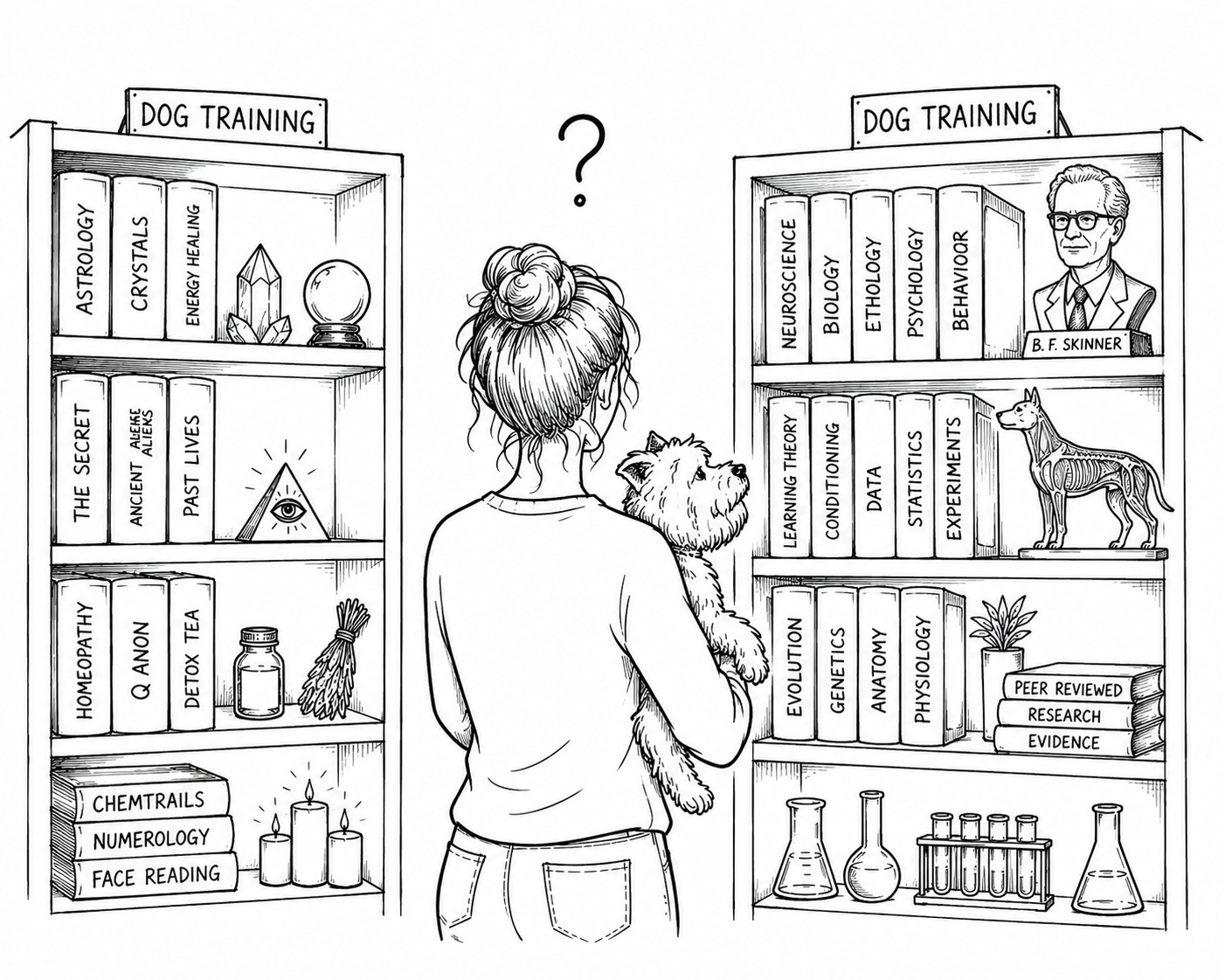
I no longer think so.
The study of animal behavior and the laws of learning are not species-specific. “Dog psychology,” as Millan uses the term, is not a distinct scientific framework. It has resulted in a brand of woo that can end up worsening the very problems it’s meant to solve—fear, aggression, and avoidance among them. This can result in people getting bitten and dogs euthanized. His own dog allegedly mauled a teenager visiting his office in the United States, where there are no laws in place about who can or can’t call themselves a professional dog trainer; trainers using similar techniques have been arrested for using methods that have been deemed animal abuse.
The Real TechniqueToday, I see the dog-training world as divided less by personalities than by ethics.
I am on the side of trying to change canine behavior through methods that are as minimally intrusive as possible: this involves careful observation of body language, environmental management, precise use of positive reinforcement, and an understanding of the laws of learning. Trainers like me usually avoid using negative reinforcement and punishment, and sometimes call themselves “Positive Reinforcement” trainers.
On the other are trainers who might sometimes use positive reinforcement, but also might suggest punishment and negative reinforcement while generally paying little attention to the fallout these methods can produce. These trainers often refer to themselves as “Balanced” trainers, as they see themselves as using a “balance” of punishment and reinforcement-based training methods.
Millan lives in the latter space, but sells it with his own New Age-y self-help verbiage that masks methods which rely heavily on intimidation. This can produce dogs that appear calm because they’ve basically given up on trying to escape a bad situation: it’s referred to in psychology as Learned Helplessness.
There are countless episodes of Millan kicking dogs, hanging them by their leashes, or pinning them to the ground by their necks. He sells his own line of shock collars and choke collars.
But it’s all wrapped in language that sounds almost spiritual.
Suppressing behavior becomes “calm surrender.”
A frightened, shut-down dog becomes a dog in a “good state of mind”—good, apparently, meaning whatever isn’t inconveniencing the human.
When something goes wrong, it’s usually because the person failed to project the right energy.
Reality television rewards simple explanations and dramatic transformations. “Change your energy” is a much better television premise than “systematically reinforce desired behavior while carefully managing antecedents and consequences.”
One sounds like homework.
The other sounds like magic.
And that’s what makes it so persuasive.
Smart People Get Duped, TooI thought about my Times story earlier this month while listening to Andrew Huberman interview Cesar Millan.
Huberman is a Stanford neuroscientist whose enormously popular podcast, Huberman Lab, promises “science-based tools for everyday life.” After introducing Millan, Huberman tells listeners they’re about to learn about dog biology and psychology. Then he begins describing walking his dog and silently sending the dog what he called “approval energy.” He did this just by thinking approving thoughts. The dog looked up at him.
Huberman found this remarkable.
Correlation isn’t causation—but hey, I’m not the one with a PhD.
Millan tells Huberman that dogs should follow what’s in a person’s mind and that one way to make this possible is to literally pray before engaging with your dog. Huberman responds by saying his relationship with his dog improved “an order of magnitude” once he embraced this way of thinking, then extends the idea to human relationships as well.
One man’s interpretation of one dog’s glance becomes a theory of communication.
Two decades ago, I would’ve accepted this unthinkingly.
Now, I felt like he was endorsing a flat-earther to head up NASA.
What Is “Energy”?
Whenever a dog trainer online criticizes Millan, they’re met with comments from his defenders who insist that we just don’t understand energy. My response is usually: It’s true! Please enlighten me.
How is it measured?
Heart rate?
Cortisol?
Infrared goggles?
Those are variables that can be observed and studied.
If you mean invisible vibes, good luck designing that experiment.
Going deep into his oeuvre through the years, I found Millan recommends cultivating the right “energy” by emulating figures like Oprah Winfrey and Cleopatra, and studying method acting and judo. He also suggests just adopting a ramrod posture, as he does at some point in most episodes.
His most telling advice on how to improve your energy comes from his book Cesar’s Way: “Fake it till you make it,” he writes.
Indeed.
Hope…?After listening to the Huberman interview, I sent him a message.
He wrote back almost immediately.
“Ultimately,” he wrote me, “I think we all want what’s best for animals! I certainly do!”
He seemed genuinely curious about how someone could question Millan’s expertise.
He asked what parts of the episode I took issue with.
My knee-jerk reaction was to write “All of it!” But then I hesitated.
I didn’t want to insult him.
I know it’d be too easy to dismiss reason… as I had once done when someone wrote me thoughtfully on the same topic long ago.
___________________________________
Please tell me, what are your feelings about Cesar Millan’s training methods?
Best wishes to you and your four-legged family members for abundant good health,
Dr. Nancy
drnancykay.com
kidsunitedforanimalwelfare.org
Speaking for Spot - Dr. Nancy Kay is a reader-supported publication. To receive new posts and support my work, consider becoming a free or paid subscriber.
August 18, 2026
Growing Pains: Orthopedic Issues in Young Dogs
Maintaining the company of a “Clifford” creates a unique feeling of companionship. Walking beside a giant dog, one feels almost regal. And, not having to bend over to stroke your best buddy’s head is a nice perk.
 Photo by Ben Griffiths on Unsplash
Before you adopt a large or giant breed pup such as a German Shepherd, Great Dane, Wolfhound, or Newfoundland, to name a few, be aware that your youngster’s rapidly growing (lengthening) legs are prone to a few types of orthopedic “growing pains.” Most cases are mild and transient, but others require intervention.
Speaking for Spot - Dr. Nancy Kay is a reader-supported publication. To receive new posts and support my work, consider becoming a free or paid subscriber.
These issues arise during the first 12 to 18 months of life when the bones are lengthening most rapidly. They often affect more than one limb, resulting in a “shifting leg lameness.” The pup favors whichever leg hurts the most on any given day.
Osteochondritis dissecans (OCD)Normal joints develop a smooth layer of cartilage that protects the underlying bone. OCD disrupts this process, and the cartilage fails to develop normally. The unhealthy cartilage develops cracks or flaps, resulting in inflammation within the joint. In some cases, the flap detaches from the cartilage surface and becomes a free floating “joint mouse.” The result is a painful lameness.
Shoulder joints are most commonly affected, but OCD can also occur in elbows, stifles (knees), hips, and hocks (ankles). X-rays diagnose this disease. Some dogs respond to rest, dietary modification (see below), and anti-inflammatory medication. For others, surgery is necessary to remove the “mouse” along with any remaining defective cartilage.
PanosteitisThe thin layer of cells known as the periosteum along the outer surface of the legs’ long bones is packed with pain receptors. Inflammation of this periosteum (panosteitis) causes dogs to react painfully to pressure applied over their long bones (femur, humerus). Panosteitis can also cause a fever and lethargy. X-rays confirm the diagnosis.
Most dogs respond favorably to rest, diet modification (see below), and anti-inflammatory medications. Episodes may last for two to three weeks, or can continue for months at a time.
Hypertrophic osteodystrophy (HOD)Growth plates, the sites from which bones elongate, remain “open” until a dog has fully matured. HOD refers to inflammation within open growth plates. It causes swelling and pain in multiple joints and may be associated with fever and loss of appetite. As with the growth abnormalities mentioned above, X-rays confirm the diagnosis.
Treatment involves rest, dietary modification (see below), and anti-inflammatory medication. Just as with panosteitis, most dogs with HOD improve over time. Damage to the growth plate is rare, resulting in abnormal bone growth and a deformed appearance of the affected legs (angular limb deformity).
The role of nutritionHere are some dietary factors to consider when raising your large puppy.
Excess calories contribute to large and giant breed puppies growing too quickly. They should maintain a lean appearance as they develop.
Excess calcium is of particular concern in rapidly growing large/giant breeds. Too much can disrupt the normal bone remodeling process.
Avoid supplements containing calcium, phosphorus, vitamin D, or other minerals unless specifically prescribed by a veterinarian. Excess amounts can interfere with normal skeletal development.
We used to believe that the high-protein content in puppy food formulations contributed to the development of these bone disorders. Now we mostly emphasize consumption of too many calories.
The role of geneticsThe high occurrence of these developmental disorders in certain breeds and bloodlines suggests that genetics play a role.
Before adopting a large or giant breed pup, ask the breeder about the incidence of OCD, panosteitis, and HOD in their bloodline. Include dam, sire, grandparents, aunts, and uncles. In an ideal world, dogs who have experienced these issues should not be used for breeding.
Slow down!While it’s tempting to “grow” large or giant-breed pups as big as possible and as quick as possible, it’s important to let them achieve their final height naturally and gradually. Pushing the process with overnutrition or over-supplementation does far more harm than good.
Here are dietary recommendations when raising a large or giant breed puppy:
Feed a premium diet that is formulated for large-breed pups. They’re designed to avoid excess calories (although they don’t control how much you put in the bowl) and over-supplementation with calcium, phosphorus, and vitamin D.
Make sure your youngster maintains a lean body weight—no pudgy puppies allowed!
Eliminate vitamin/mineral supplements. A high quality diet provides all the vitamins and minerals needed for normal growth and development.
If feeding a homemade diet, work with a board-certified veterinary nutritionist to ensure the food is balanced for normal bone development.
Have you ever had a pup with one of these disorders? If so, how did you manage it?
Best wishes to you and your four-legged family members for abundant good health,
Dr. Nancy
drnancykay.com
kidsunitedforanimalwelfare.org
Speaking for Spot - Dr. Nancy Kay is a reader-supported publication. To receive new posts and support my work, consider becoming a free or paid subscriber.