Gary Guinn's Blog
November 28, 2020
test post
asdf asd fa sdfa sdfasdf a sdfa f


February 9, 2019
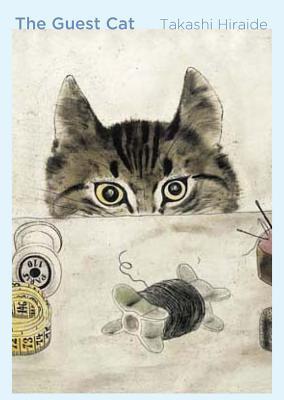
The Guest Cat, by Takashi Hiraide, an Imagist Novel
Takashi Hiraide’s short novel The Guest Cat (136 pages) is difficult to categorize. Hiraide is a well-known Japanese poet, and this little book reads like an Imagist poem. Each of the twenty-nine short chapters is itself an image, or a tableau, that adds a piece to the larger puzzle. The chapters at times seem almost independent of the story. At times, they meander into brief musings on philosophy, art, music, and science. And though none of these musings points the reader directly toward interpretation of the story, they are all weighted with meaning. Hiraide seems to follow Emily Dickinson’s dictum to “tell all the truth, but tell it slant.”
A young couple, both writers, no children, no pets. A neighborhood cat begins to visit, begins to stay, but never really stays. A surprising turn of events changes the lives of the young couple. The plot of the novel could be summarized in just a few sentences, but the layering of images, events, and emotions–as in any good imagist work–creates a rich fabric of possibilities. The Guest Cat is a novel, a poem, about love, about vulnerability. It is about the cost of opening your life to the other.
The post The Guest Cat, by Takashi Hiraide, an Imagist Novel appeared first on Gary Guinn.
January 31, 2019
Margaret Atwood’s Penelopiad Is a Fun Ironic Romp

Penelope Speaks
Margaret Atwood’s short novel The Penelopiad, a retelling of Homer’s The Odyssey from the perspective of Penelope. With the help of the Twelve Maids, the story becomes a delightful romp. Atwood offers a quasi-Greek drama, with the narrative split between Penelope and the Twelve Maids, who serve as a chorus. Penelope’s voice is deeply ironic, which offers the reader a whole new perspective on the hero Odysseus and on Penelope herself as the archetypical faithful wife.
Characters and Irony
Atwood uses not only Homer’s Odyssey but also certain critical issues that surround that work, along with her own questions about Homer’s treatment of Penelope and the Twelve Maids, to mine the ancient material for a wide range of humorous possibilities. The son, Telemachus, is a spoiled brat. The faithful old servant, Eurycleia, is an interfering busybody, referred to as “the trusted cackle-hen.” The chorus of maids enters regularly, performing in a different genre each time—a rope-jumping rhyme, a lament, a popular tune, an idyll, a sea shanty, and so forth. And though Penelope maintains her iconic role as innocent and faithful wife throughout, the truth of her narrative is undercut by her own ironic tone and by various accusations made by the chorus along the way.
A View from Hades
One of the most enjoyable moves Atwood makes is to place Penelope in Hades while she tells the tale. The opening line of the book is “Now that I’m dead, I know everything.” This allows Atwood to make two additional narrative moves that add humorous layering to the tail. In Hades, Penelope meets various other characters from The Odyssey, including Helen, the cause of all Penelope’s troubles, one of the suitors slaughtered by Odysseus, and the Twelve Maids. Additionally, she narrates the story from current time, contemporary with the reader, a fact the reader only gradually becomes aware of, which allows her to make ironic comments about our times, her times, and times in between.
Vintage Atwood
For readers who are familiar with Homer’s Odyssey and who enjoy an ironic and iconoclastic voice, The Penelopiad will be a fun read. It’s quite different from Margaret Atwood’s better known and more serious work, but it’s vintage Atwood nonetheless.
The post Margaret Atwood’s Penelopiad Is a Fun Ironic Romp appeared first on Gary Guinn.
January 30, 2019
Review: The Song of Achilles
I would have given The Song of Achilles 5 stars but for the fact that Miller made certain choices in her fictionalized retelling of The Iliad that didn't work for me. Miller's novel is above all else the story of the passionate love between Achilles and Patroclus, both eros and agape--carnal and pure. The possible sexual relationship between the two heroes is a matter of some critical debate, which means Miller's choice is defendable, especially in view of a Greek culture that was very open to same-sex relationships. However, Miller makes the passion between the two men exclusive of any physical attraction to the opposite sex, which weakens the central trope of The Iliad itself--the Anger of Achilles toward Agamemnon for taking Briseis, the beautiful young woman who was Achilles' war prize. Miller makes Achilles' wounded pride, which was certainly enormous, the only issue that causes him to withdraw from the war and leave the Greek army to be crushed. Homer does make it clear that Achilles' pride is the driving force behind his withdrawal, but Homer's implication is that Achilles grieves the loss of the girl. Miller's Achilles cares nothing for the girl, hardly knows she exists as a person. This move dehumanizes Achilles, and though Miller tries to humanize him through Patroclus, it doesn't work. Achilles, already born of a goddess, becomes less than half human, unsympathetic, unlikable.
One other choice by Miller I struggled with was her characterization of Patroclus as a non-violent, non-warrior. Since he is a secondary character in Homer's work, though a very important one, there is certainly room for Miller to imagine him any way she chooses. As a fighter she makes him inept and bumbling, un-athletic and lacking confidence. She makes him a good medical healer, which is a move I liked and which doesn't require him to be a bad fighter. The problem is that in the Iliad Patroclus is a very good warrior and in fact, wearing Achilles' armor, chases the Trojans back to the city when they start burning the Greek ships. But Miller's characterization of him forces her to pull a kind of Deus ex Machina, having him seem almost possessed by a warrior spirit when he goes out in Achilles' armor. It stretches credulity.
Well, I do recommend the book. Great writing, engaging, at times a page-turner. Because of the issues I cite above, it sometimes reads a bit too much like a modern Romance, but it's a good read nonetheless.
May 19, 2018
Sacrificial Lam, Free or $.99, Get It Now During This Promotion
If you’re looking for a Summer Read, Felony Fiction is doing a promotion through the rest of this month (May). You can get a free e-copy of Sacrificial Lam at their page. Here’s the link: https://www.felonyfiction.com/free-books.html . Just follow the link and get it from the publisher for free.
If you’d rather get it through Amazon, the e-book is on sale there for $.99 through May 25. Here’s the link: https://www.amazon.com/Sacrificial-Lam-Gary-Guinn-ebook/dp/B01MT73VUJ/ .
If you know anyone who might want to get the novel while it’s being promoted, feel free to pass this on. Or just post it anywhere you like.
The post Sacrificial Lam, Free or $.99, Get It Now During This Promotion appeared first on Gary Guinn.
March 20, 2018
Site Beginner–Building a Web Page, a great resource for writers
Hailey Stratton recently made me aware of her website, Site Beginner. She has made available a really thorough and user-friendly process to help you set up your own website. It seems to be geared toward true beginners, giving step-by-step instructions, with good illustrations/examples. The page is titled “How to Make a Website: A Complete Guide for Beginners.” 
If you have been thinking about setting up a personal or professional page, this might be just what you need to be able to do it yourself. You don’t have to be a computer guru to follow these instructions.
The Link:
See the page here, on my Writers Resource Page.
Good luck with your site.
The post Site Beginner–Building a Web Page, a great resource for writers appeared first on Gary Guinn.
December 16, 2017
Book Review: Two Girls Down, by Louisa Luna.
Plot:
Louisa Luna opens her novel Two Girls Down with the kidnapping of two sisters, Kylie and Bailey, ten and eight years old. Their mother has popped into a K-Mart for a few minutes, leaving the girls in the car. When she returns, the girls are gone. Frantic search. Police. Code Adam alert. Nothing. No trace. Enter Alice Vega, wild woman, free-lance missing-person finder, and Cap, ex-cop turned private detective. Vega became an overnight star when she recovered a high-profile child, and has been in demand ever since by people whose loved ones have disappeared. The police are not happy to have her involved in the case.
The grandmother of Kylie and Bailey asks Vega how many of the children she has she has gone after have been successfully found. Vega tells her all of them. One hundred per cent. The caveat, and the terrifying reality that drives the tension in the novel, is that not all were alive when she found them, and a few who were found alive were dead in other ways, scarred beyond repair by the experience. 
When Vega calls on Cap to help her find Kylie and Bailey, the search lures him from his relatively safe and boring work breaking up bad marriages exposing unfaithful spouses. As an ex-cop, he is capable of handling the danger of the job Vega offers him, and the possibility of a little excitement stirs some of the old cop adrenalin.
Writing:
Luna’s writing is strong. When we first meet Vega, she is doing a yoga handstand and thinking about the danger of not knowing what is just beyond your vision. “Her old boss in fugitive recovery, Perry, used to call it Little Bad and Big Bad. Little Bad was the teenager on the front porch with a Phillips screwdriver tucked into his pants. Big Bad was his daddy waiting inside with a loaded .38 and a pissed-off pit bull. There was always a worse thing that you couldn’t see, and it was closer than you thought.” When Cap meets the mother of the lost girls at a bar for an interview, the narrator tells us, “He looked at Jamie’s hands on the bar, lying there like leaves of a dead plant, and did not extend his.”
Characters:
Though the writing style is strong, the strongest element of the novel is the characters. The two leads are interesting and complex. Luna vividly draws the supporting characters—the mother, Cap‘s daughter, the police—who are strong in their own right. Cap‘s daughter, Nell, is, in fact, almost a show-stealer—smart, sassy, loving.
Pace:
The pacing in Two Girls Down is compelling. The build-up is quick, with the kidnapping kicking the conflict into gear immediately, and the intensity develops steadily right up to the powerful ending. I’d compare it to Black-Eyed Susans, by Julia Haeberlin (See my review here). And laced through the action and suspense, Louisa Luna offers the reader the possibility of romance. What more can you ask?
The post Book Review: Two Girls Down, by Louisa Luna. appeared first on Gary Guinn.
November 20, 2017
Guest Post: Daisy Mae and The Blue Danube!
by Daisy Mae
Blue Danube:
One, Two, Three … One, Two, Three … When Johann Strauss composed the Blue Danube – he had no idea how much this would change my life. This piece of music – the most well known Viennese Waltz of all time – and of course the Viennese Waltz itself – would become my lifetime ambition! 
Here’s the thing – I have never been a dancer. But somehow, at 52, I felt the buzzing in my veins, the urge in my feet, and the rhythm in my body.
I phoned my local dance school in trepidation. Was I too old at 52, I asked? Silly question of course – their oldest member is 91!
Any dance to me, is good dance. But it was the Viennese Waltz that always took my imagination. That glitzy, floaty, whirly, twirly, ultimate fantasmagorical, fairy tale dance.
Could I do that?
Would I ever do that?
Who would do it with me?
Inspiration:
As a child I had tap-tapped my heart out in any open space I could find, most often on a deserted railway station platform. Thinking no-one could see me, I would flit up and down off the benches and pirouette beside the Ladies Toilets. Why did I think no one could see me? Only a child could answer that.
Edward was my inspiration to fulfil my Viennese Waltz dream. When we met during my Dating Daisy, internet dating escapades, I found he shared my fascination for dance. His mother had been a ballerina. He was a pianist and a sportsman. He had natural ability, athleticism and musicality. Here I found my Fred Astaire. We had started dance lessons together as soon as we met and were having the time of our lives, dancing everywhere and anywhere as often as we could possibly do so.
My mind was racing faster than my feet. Could we get to Vienna, to a Viennese Ball, to do a real Viennese Waltz in a real Viennese Ballroom? … Yes, we could. And it would be a Christmas present! The best Christmas present I could possible imagine for us both!
I did it – in true Daisy fashion. I bought tickets for the Johann Strauss Valentine’s Ball at the Kursalon Palace on 13th February 2016. It was July when I booked the tickets, and I kept it a secret for a whole 5 months! Yes – I told a few friends at the dance school, but they were sworn to secrecy!
On Christmas Eve we went to bed and I couldn’t sleep. Roughly once an hour, I poked Edward in the ribs and asked what the time was.
“It’s only an hour since you last asked,” he groaned wearily – “Please can we get some sleep! … “
“I can’t sleep,” I whispered – “I’m just so excited to give your present!”
I think it was about 6.30am, when he finally capitulated and turned on the bedside lamp. With childlike enthusiasm I thrust my gift at him. He had to open the card first. I had bought and assembled one of those cards which when you open it up, plays a tune! And Yes, I stuck a picture of a beautiful couple Viennese waltzing onto the front of it. And when you opened it up – you probably guessed this! – Yes it did play the Blue Danube!
Edward was suitably overjoyed – but in typical male fashion after a few hullabaloos – he did go back to sleep! (By the way – I was not fazed by his present for me – which we laughed about afterwards – was a box of soap! He is very generous to me all the time – but not present minded shall we say! – I just think it’s funny!)
Holiday of a Lifetime:
Fast forward to February 2016. This turned out to be a holiday of a lifetime. We flew to Vienna on Austrian Airlines, and were presented on the aircraft with a beautiful breakfast of homemade pastries and champagne, courtesy of our hotel, The Do & Co, a sumptuous hotel situated right in St Stephen’s square, opposite the Cathedral. A limousine escorted us from the airport, something I had not specifically requested and was a fabulous surprise. Our hotel room was exquisite. Having recently been refurbished, the furnishings were lavish and so comfortable.
The breakfasts we had in that hotel were undoubtedly the best I have ever had anywhere in the world. Our personal chef cooked us smoked salmon and scrambled eggs, while we drank freshly squeezed orange and banana juice, and groaned over the mouth watering homemade breads, cinnamon whirls, chocolate brownies and apple Danish pastries. (I’ve no idea how Austria does not have the fattest population in the world!)
Everything about Vienna is still vibrant in my mind. If you have never visited the city I can’t recommend it highly enough. I’m focussing on dance in this article, and we had two, two hour Viennese waltz lessons the two days before the ball, in a Viennese Dance School. BUT, Vienna is famous for coffee shops and delicious Sachertorte – and we certainly fitted in more of these than we should have done!
The night of the Ball we dressed with great care and sophistication. I had chosen a full length gold dress, satin with a taffeta overlay. I curled my long hair, adorned myself with jewels, wore a fur cape with a diamante clasp and my new high heeled gold dance shoes. Edward wore his Black formal Dinner Suit, with a gold cummerbund and bow tie. We were a real life Cinderella and Prince Charming off to the Ball!
The most embarrassing thing I recall was having to walk across the pedestrian precinct in our attire, as there is no vehicular access directly to the hotel for taxis! – So we walked to our taxi, picking our way, myself in my high heels, through crowds of tourists snapping photographs and thronging in the plaza. I felt very self conscious!
The Kursalon Palace lit up the night sky. We walked through the majestic entrance and were greeted with rows of waiters and waitresses with trays of champagne. Many were in traditional Austrian dress and we were invited to take pictures. I spoke to a lady standing next to me, and it turned out she and her husband were English. Soon, a few other English speaking couples had joined us. There was a couple from Ireland, and four young people from Australia. 
Inside the palace there were 3 ball rooms. We were seated in one of these for our meal, which was a beautiful banquet. The dinner was served, the wine flowed, the company was sparkling and we were all eagerly waiting for the dancing to start. Eventually, the orchestra struck up and we all left our seats and crowded round the dance floor. The debutantes danced onto the floor and displayed their routine. It was mesmerising. We clapped and clapped … and then … suddenly … the moment we had been waiting for!
Yes – you got it – One, Two, Three, … One, Two, Three … the Blue Danube!
We ran to the dance floor in high anticipation! This was it! …
BUT… What was this?! … something we had never anticipated! …
… The dance floor was jam packed, and in fact so crowded we were squeezed in like sardines! Viennese Waltz? … We could hardly breathe in and out! … As we soon discovered, there was no way you could do a Viennese Waltz at a Viennese Ball … just because there were just too many Viennese people on the dance floor!! It was a shock realisation!
In truth, as the evening wore on, and people drank too much, got tired and went home, the dance floor thinned out, and yes, we did do some Viennese Waltz! The orchestra also played other dance music too, so were able to dance all our Ballroom and Latin routines – and of course visit the disco upstairs! But it was a sad truth, that we did far more Viennese Waltz in our two dance lessons before the Ball, than we ever did when we were actually there!
Reflections:
Reflections? … I loved it. I want to do it again! That night, I did eventually manage to do enough Viennese Waltz to feel I had lived the dream! The feeling of dressing up and being a princess for a night is such a precious memory. I savour it, and bring it out whenever I feel sad. Memories are something so special, as they can never be erased – these memories will be with me forever. And that’s what Edward calls me now … ‘precious!’
Yes, in my life, Johan Strauss has a lot to answer for!
Daisy Mae x

Dating Daisy … now an Audio Book!
See www.datingdaisy.net. (Ask me any questions about sexual health, menopause or internet dating? – I’m now an Agony Aunt!).
Plus see my Sexual Health blog – Daisy Mae – at The Huffington Post UK (www.huffingtonpost.co.uk/)
Follow Daisy Mae on Facebook, Instagram and Twitter. Copyright © Daisy Mae 18/11/2017
The post Guest Post: Daisy Mae and The Blue Danube! appeared first on Gary Guinn.
November 15, 2017
Review: Julia Haeberlin’s Black-Eyed Susans

“The Susans are a greedy plant, often the first to thrive in scorched, devastated earth.” This line, early in Julia Heaberlin’s novel Black-Eyed Susans, works on more than one level and becomes an underlying motif for the narrative. Tessa Cartwright was raped and left for dead as a teenager among a field of flowering black-eyed Susans. The bones of other long-lost girls surrounded her. In the media coverage of the case, she and the other girls become known as the Black-Eyed Susans. Out of her scorched and devastated life, Tessa has managed to thrive.
Tessa:
The attack itself remains an empty spot scorched in Tessa’s memory. The novel opens years later, when Tessa has a teenage daughter of her own. She is working with an attorney and a forensic scientist to free the man convicted of the crime, who sits on death row awaiting imminent execution. Though she can’t remember the attacker, she has become convinced that her testimony at the trial sent the wrong man to death row. Underlying the race to save the condemned man is the possibility that the real killer is now stalking Tessa.
The Voices:
Two voices tell the story—the first-person voice of the present-day Tessa, and the first-person voice of her earlier self, the young Tessie in the months after the attack. The voices alternate in short chapters of three to five pages, creating a dynamic pace in the complex and gripping narrative. The two narrative voices press against each other, one from the past and one from the present. The tension grinds inevitably toward the final revelation, squeezing out the truth that lurks behind the Black-Eyed Susans.
Supporting Cast:
Tessa’s teenage daughter, the defense lawyer, and the forensic scientist are engaging and well-developed characters and become important pieces in solving the puzzle, as does Tessa’s best friend from childhood, who disappeared years earlier after the trial. And always, the voices of the other Susans in Tessa’s head, the dead girls who encourage, warn, and challenge her.
Conclusion:
Some readers may find the resolution of the mystery a bit contrived, maybe a little far-fetched. I did. But that won’t take away from a really good story told very well. As in the case of the Nordic Noir novel Sun and Shadow, by Ake Edwardson, the flaws do not outweigh the strengths. I don’t hesitate to recommend the book.
The post Review: Julia Haeberlin’s Black-Eyed Susans appeared first on Gary Guinn.
October 5, 2017
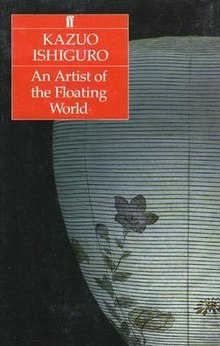
Review: An Artist of the Floating World, by Kazuo Ishiguro
Memory and the heart. Such fragile things on which to build our notion of ourselves. As the old prophet Jeremiah said, “The heart is deceitful above all things . . . Who can understand it?” And memory is surely at least as deceitful as the heart. Both memory and the heart seem to function at the mercy of the transient, ephemeral world of human life. And they are central to the fiction of Japanese writer Kazuo Ishiguro, who just won the 2017 Nobel Prize for Literature. 
An Artist of the Floating World is a beautiful emotional set piece. Following World War II, an aging Japanese artist struggles with his experience of post-war Japan. In time, he regrets his role in the rise of empire that ended in the destruction of the old world.
Comparison: Remains of the Day
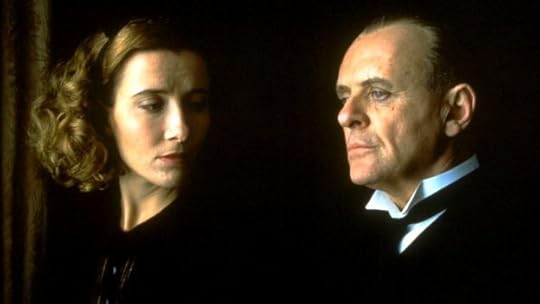
Emma Thompson and Anthony Hopkins in Remains of the Day.
It may be that most people know Kazuo Ishiguro for his novel The Remains of the Day and its film adaptation, with Anthony Hopkins as the butler Stevens and Emma Thompson as Miss Kenton. In fact, there are significant similarities in tone and theme between the two novels. In both cases, the main character looks back on a career in which he devoted his life to a cause that was later shown to be horribly mistaken and in which he turned his back on a path that would have resulted in a different, and probably more fulfilling life. Mr. Stevens, in The Remains of the Day, does not marry Miss Kenton. In An Artist of the Floating World, the artist Masuji Ono turns his back on “fine art.” Fine art focuses on the fleeting beauty of this world. Ono makes his art serve the empire of the “New Japan.”
Both novels come from a perspective not long after the war. The protagonists look back on a time prior to and during the war, blended with their current lives. The tone of both is nostalgic, beautiful. In An Artist of the Floating World, Ishiguro’s use of an unreliable narrator, whose growth in the novel is toward self-realization, is masterful. Numerous times in the narrative, the artist Ono says it is entirely possible that his memory of an event or conversation is not accurate, that things might not have happened exactly as he presents them. These admissions become part of his growth in awareness of self. They are some of the elements that make him sympathetic and human, and very like all of us.
Conclusion: Catharsis
A reader who identifies with Ono, and feels compassion for him, may experience in reading this novel what Aristotle called catharsis in his Poetics, a vicarious purging of guilt and fear, the impetus toward self-understanding. (See Aristotle on Character) Ishiguro seems to be saying that as we grow older, we come to realize how much of our image of ourselves is dependent on feeling and memory, and we come to understand how fickle, how deceitful, those things can be. If we are to live in peace with ourselves, we must see ourselves honestly and forgive ourselves. We have all committed well-intentioned errors in our pasts. Only with honesty and forgiveness can we live with integrity and dignity.
The post Review: An Artist of the Floating World, by Kazuo Ishiguro appeared first on Gary Guinn.