
Marco Guarda's Blog
March 8, 2018
Silver Arrow
.beta1 {margin-top:-560px;line-height:41px;letter-spacing:1.1px;}
.beta2 {margin-top:-514px;}
.beta3 {margin-top:-431px;}
.beta4 {margin-top:-349px;}
.betapro {position:absolute;margin-top:-567px;margin-left:423px;}
.order {margin-top:-305px;margin-left:674px;}
.pre {position:absolute;margin-left:390px;}
#main {margin-top: 0px;}
#container {margin-top: 0px;}
#wrapper {margin-top: 206px;}
#main .widget-area {margin-top: 0px;}
.boxx {padding:3px; border: 1px solid #ff0000;margin-right:-7px;}



ILLEGAL RACES, THE HORRIBLE DEATH OF A CADET, AND THE DISCOVERY OF A MYSTERIOUS SHIP LOST TWENTY-FIVE YEARS BEFORE ARE THE INGREDIENTS OF JIM STREAMER’S SECOND EXCITING SPACE ADVENTURE.
DON’T MISS IT !

When the body of a senior cadet is found in the outer waste disposal area of the Space Academy kitchen, Admiral George Bellamy sends Captain Jorgens-
son to investigate. Notwithstanding her skills, the captain is however un-
able to determine if it was an incident or a murder. Thinking of infiltrating Jim as an undercover agent, Bellamy contacts him,
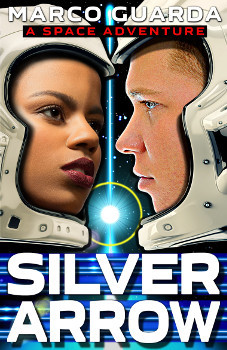
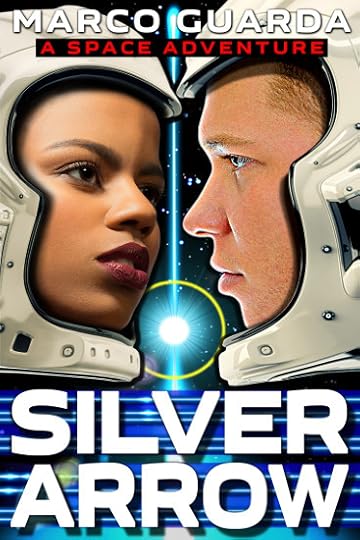
starting him on a new crazy adventure that shall take him to enlist in the Silver Arrow—a legendary and illegal race between cadets to elect the best pilot ever—and to uncover the horrible destiny of a spaceship lost twenty-five years before. The Minnie Maru.
It’s a military space opera of about 225,000 words.
Available from June 26 — Preorder now at 3.99 instead of 4.99 !
KOBO
“Mayday. Mayday.
This is the EFS Minnie Maru speaking,
please respond—we missed the rendezvous with the Neptune Base.
We have just awakened from hibernation—we are lost in space
and we cannot get back. Please respond—we need help.
This is the EFS Minnie Maru speaking…”
SILVER ARROW
(A Space Adventure)
PROLOGUE
Cadet Ruiz
The godforsaken region of space tore up with a vertical slit that shone with a rippling and eerie light; it expanded into a round opening, through which the inside of a fully formed wormhole could be glimpsed. The mouth was large enough to deliver a juggernaut, and yet, only a small and solitary spacecraft was jettisoned.
The stylish design of the Valiant M-27 was a sign of the civilization it came from, but the fighter looked weirdly out of place in the forbidding emptiness surrounding it, as if it were lost, or stranded. With the frantic urgency of a chase, its afterburners ignited at once; the white-hot plumes of its twin engines’ exhausts lit up like blowtorches, pushing the fighter onward—until it was swallowed by darkness.
Senior Cadet Diego Ruiz sat at the pilot’s seat of the Valiant, efficiently checking the instruments on the control panel in front of him. His jet-black crewcut and short sideburns framed a straight nose, a square jaw, and the piercing eyes of a hound. Ruiz looked cocky with the bold confidence of a fourth-year space cadet—he couldn’t be more than twenty, though, and that was a damn young age to already be a pilot.
Clutching the control wheel of the Valiant with his left hand, Ruiz reached out with his right for the navigation screen, tinkering with the map displayed. He enlarged it, revealing—outlined in red—the fighter’s route. Thick as it was with sudden changes of direction, curlicues, and turnarounds, it looked more an intricate obstacle course than a regular flight plan.
On the map, the Valiant was represented by a green dot, traveling at a steady pace along the leg of the journey marked with the roman numeral V, a segment enclosed amidst the blue circles of two wormholes. Beyond the second wormhole, the path returned—after so much wandering—to the satellite of a planet marked with the word EARTH.
Ruiz checked the empty mouth of the wormhole he had just come out from—still visible in the distance, it was rapidly shrinking away—then he turned to glance at the reassuring red bar, filled to the brim, of the engine thrust gauge. Only then did he ease up, looking forward to reaching the journey’s concluding leg, and the well-deserved medal that awaited him—
At once, with an unexpected blare, the alert of ENGINE FAILURE went off on the control panel. Ruiz gasped with dread, but by the time he had set his eyes on the yellow indicator, it had switched off again: he tapped it, but it stayed off. Ruiz shrugged—damn circuits, he thought. Right then, the onboard radio blipped on, and a cheerful voice rang about in the cockpit.
“Hey, Ruiz!” it said. “You did them all in with that maneuver of yours on leg three—where did you learn to fly like that? You nearly gave me a heart attack. Domingo is still scratching his head!”
“For once, he isn’t scratching his ass,” Ruiz commented dryly, almost to himself, as a smug smile appeared on his lips. “That’ll teach that gasbag a little humility. What’s the gap, Garcia?”
“Abysmal!” Garcia said. “Domingo has just started leg four, but the bulk of the cadets is still stuck at Saturn’s rings—you’re ahead of everybody. This year, the Silver Arrow has gotta be yours!”
“I really hope so,” Ruiz said. “How are your readings for the re-entry leg—is the route clear? I’d hate to come out from the last wormhole to run into the Space Navy’s watchdogs.”
“So far,” Garcia said, “the alerts from our satellites are negative, but the heat is still on from last year, so you had better keep your eyes open. Commodore Frey said he’ll put an end to our daredevil business: until now, it’s been hot air—there just is no way that he can catch us, and by the time he gets savvy, we’ll be back in our bunks already! And now let’s cut the cackle—how’s the Valiant doing? It looks like Monkey kept his promise, that drunkard, after all.”
“Yeah,” Ruiz said. “The engines are running as smooth as silk. I got an alert a minute ago, but it went off—I reckon it was a short in the damn circuitry.”
“Well, good luck!” Garcia said. “See you back on the Moon Base for a little celebration—I’m glad I bet on you!” The radio switched off, returning the cockpit to the surreal buzz of the Valiant’s twin engines.
Ruiz licked his lips, anticipating the moment when he would close his fingers around the Silver Arrow and the money prize that came with it. Technically, space cadets were not allowed to fly solo until they got their license, and that would only happen on the day of their graduation from the Space Academy—up to that long-craved-for moment, they would always fly accompanied by their instructors. Although infringing such rule was a surefire way to get expelled from the academy, some junior and senior cadets were just too rowdy and effervescent to wait for the graduation day. If possible, they would have flown whenever they had the opportunity, and certainly wouldn’t have frowned upon racing each other in illegal competitions. The Silver Arrow wasn’t just the golden chance for skilled cadets to earn a prestigious trophy—and some money as well—but, above all, to prove their adroitness to their classmates.
Ruiz considered himself the best pilot of his year. Domingo did have his moments, as Murillo did, but they were both junior cadets, and hadn’t yet mastered all the tricks of the trade required from a flying ace. His high hopes for Parker and Robbins, from his same year—as well as for Zanetti, a third year—had been crushed by Domingo, who had managed to leave them all behind. And yet, not even Domingo possessed Ruiz’s gift: a perfect sense for spatial relations, including a natural feeling for pushing a fighter an inch from its physical limits—that gave Ruiz the edge over any other cadet and made him a born-winner, the ideal racehorse for bettors to put their wages on. Because bettors and bets were the complementary side of the Silver Arrow—one of the reasons for its extreme popularity.
Ruiz came to from his reverie. Even if he was this close from winning the fabled medal, he hadn’t yet cut the finish line, so he had better sober up and focus on bagging the race first.
On the navigation screen, the wormhole at the end of the leg approached at mind-boggling speed; soon, Ruiz would be able to see its gaping mouth with his very eyes—there it was, in fact, its unmistakable blue halo. Ruiz opened his hand, stretching the numb fingers, and then gripped the control wheel with renewed strength, pushing it forward, ready for the return trip to the Moon Base.
The rippling mouth of the wormhole dilated to fill the horizon—a few more seconds, and the Valiant would dive into it. Ruiz smiled to himself, because he was almost there… and then, to his astonishment, the blue inside the wormhole was overcast with a massive shadow. Ruiz frowned. Wondering if it was a trick of the light, he blinked—but when he reopened his eyes, the shadow was still there, larger than before, about to emerge from the wormhole. It took Ruiz a moment too much to realize it was not an interference in the electromagnetic anomaly, but a physical object so big it dwarfed the diminutive Valiant.
“What the hell…” Ruiz said. He needn’t turn to the navigation computer to know what that thing was—in fact, as the object came out from the wormhole, it revealed the telltale white-and-blue livery of a Space Navy cruiser.
The onboard radio crackled.
“This is the EFS Barracuda,” a sharp voice said. “Pull over into the docking bay of this unit for inspection. Repeat—pull over into the docking bay of this unit for inspection. Comply immediately, or you shall be destroyed.”
At a glance, Ruiz saw the bright lights in the Barracuda’s landing strip; he also glimpsed the black muzzles of the gunnery batteries in her bow, aimed at the Valiant. Cursing and forsaking for the moment any attempt of escape, Ruiz slowed down.
“I’m coming in,” he said into the radio. Approaching the Barracuda, he dived under the massive keel of the cruiser, aligning the Valiant to the ship’s landing strip.
Since Ruiz didn’t want to be cannonaded, he was doing exactly what the Space Navy expected from him… his brain, though, was looking hard for a way out of that deadlock. If they caught him red-handed in the middle of an illicit race, flying a fighter he wasn’t even supposed to touch, he could say good-bye to his glorious career in the Space Navy.
Ruiz focused on the still-open wormhole beyond the cruiser. He thought he could yet make it; it was going to be a close call, but he was willing to go for broke—he would’ve done anything to get out of the clutches of the Barracuda. Ruiz pushed a button in his console, lowering the landing gear into position—he also set the throttle lever to flank speed, hearing the twin engines of the Valiant surge to an earsplitting howl. He didn’t engage them yet. He sat back in the pilot’s seat instead, bracing against the explosive acceleration that, in a few moments, was going to knock him off his feet—only then did he ram the control wheel, locking it to its end stop.
The energy harnessed inside the core reactor of the Valiant was unleashed at once with a huge fireball that flung the fighter under the entire length of the Barracuda—and then out to the other side, speeding toward the wormhole.
Ruiz was too busy withstanding the crushing acceleration that blurred and distorted his sight to notice the shells going off wildly around the Valiant in one last attempt to stop it. The wormhole was now closer than ever, the blue of its rippling mouth beckoning to him, while the Barracuda had turned into a dark, rapidly shrinking smear behind him.
Not daring to let go of the control wheel, Ruiz rocketed toward the electromagnetic anomaly, about to slip into it. By the time the Barracuda was going to reverse her course and set into a pursuit, he would be back to the safety of the Moon Base.
The wormhole had filled half the horizon. Ruiz focused on covering the last few clicks as fast as possible, bucking up at the thought that luck was again on his side. Soon, the Silver Arrow was going to be his for the win, making him the best pilot of the year—that would’ve taught the other cadets a hard lesson to reflect on. God, Ruiz thought, how much he was going to enjoy that…
And then, out of nowhere, the ENGINE FAILURE alert went off again—this time, it stayed on. Ruiz barely had the time to read one last message from the onboard computer: LEAKAGE IN HYDROGEN LINE DETECTED IN STARBOARD ENGINE—SHUTTING ENGINE DOWN.
However, before the computer could complete its own directive—the starboard engine of the Valiant blew up!
The Discovery
Ruiz awakened two hours later, feeling sick, with a mighty headache, and absolutely no recollection of what had happened. When eventually it came to him, he was happy to be alive. Somehow, the cockpit had withstood the blast, and was still pressurized despite the odds; half the control panel was fried, though, releasing curls of an acrid, black smoke that rolled heavily about the cockpit; on the subsystem panel, the starboard engine was a black disc. Ruiz checked the radar, wondering what had been of the Barracuda, but the cruiser was gone from the sector—luckily, the wormhole hadn’t moved, albeit it was now very far from where he last remembered seeing it. Coughing and spitting, Ruiz reached out to the onboard radio.
“Garcia?” he said. “Do you copy?”
The radio was dead. Ruiz tinkered with the half undamaged control panel, scrolling through the status menu of the Valiant. Wondering if he could make it to the wormhole on one engine alone, he returned the thrust lever to the first notch. Crossing his fingers, he then grabbed the control wheel—and gave it a tentative nudge.
The Valiant whirred back to life, inching forward. And yet, there was something wrong with the flight attitude: the fighter pulled to the right, with a definite tendency to spin clockwise—it wouldn’t go far like that. Ruiz ran the auto-trim program, but if failed halfway through. He needed to perform a manual alignment of the left engine, but where the devil was he going to find a place to land, out there?
Ruiz groaned in frustration both for losing the race and for being stranded, when the rest of the pilots had probably returned to the Moon Base. Hating to sit on his hands until Garcia—not seeing the Valiant—would send a rescue mission, he lifted his eyes, peering disconsolately at the darkness beyond the cockpit window… when he saw something.
He enlarged the view on his navigation monitor, framing a round shape—an asteroid, perhaps. Ruiz wondered how come he could see it, while the radar detected nothing. The only answer was that even the onboard computer was failing. Oh well, Ruiz thought to himself—land is land—and started the complicate maneuver that would bring him on the heavenly body.
The more Ruiz approached it, the more he estimated it was too big to be a mere asteroid: with a diameter of about six hundred miles, it was, in fact, a planetoid at all effects.
Sharp ridges and deep valleys rolled beneath the Valiant as, with its unsteady gait, it sought a suitable spot for landing. Ruiz found a long canyon plowing, like a scar, the surface of the asteroid—he followed it in meandering twists and turns, locating a gorge wide enough to lower the Valiant into. Ruiz touched down with a soft jolt. Switching off the left engine, he unstrapped himself from his seat and shut his helmet visor; as he punched the pressure button on his spacesuit, it sealed with a hiss.
Looking at the ashen desolation surrounding him, Ruiz opened the canopy and leaped to the ground. What a strange place that was, he reflected. The gravity indicator on his wrist reported a very small fraction of a gee; still, it was way more than he had expected—the majority of the asteroid must be made of iron, he concluded. Ruiz focused on the task awaiting him, dislodging from the side of the cockpit the box containing the emergency tools—he then moved to the back of the fighter.
The bay which had previously lodged the starboard engine was a blackened pit; the explosion had almost torn up the port engine as well, which now hung precariously from just two of its four brackets—no wonder Ruiz had had a hard time at steering the Valiant.
Ruiz switched on the portable arc welder from the emergency kit; with orange sparks that flashed across his visor, he first soldered together the uprooted struts. He then stepped to what was left of the right engine bay. Remembering the alert in the control panel that had signaled a leak, Ruiz located the charred hydrogen line. Using his helmet lights, he inspected the pipe, noticing a few suspicious scratches where it fed into the now-destroyed reactor chamber—he looked them up from close, realizing the metal had been sawed into, although not completely.
At the thought that someone had sabotaged his Valiant, Ruiz felt the blood go to his head—he could call himself lucky if he was still alive. The first thing he would do when he was back to the space junkyard would be to have a few words with Monkey—since he had worked on the Valiant most of the time, he must know something about it.
Livid with anger, Ruiz kicked a pebble—he watched it soar off the ground, flying on and on, disappearing into the pitch-black darkness of the canyon… only then did he register the cleft in the rock face. Curious, Ruiz stepped to it.
The cleft concealed a passage. It connected the canyon the Valiant had just landed in to an adjoining valley Ruiz, in his grazing flyover, hadn’t noticed. Barely seeing where he was going, fifty yards later Ruiz emerged into the next valley.
At first, the ship’s hull didn’t look any different from the surrounding darkness; but then, when Ruiz lifted his head and his helmet lights framed the massive, overhanging shape, he froze—huge as she was, the spaceship must have at least been a cruiser. She looked completely motionless, covered in thick layers of dust that told a great deal of her long permanence in space. From the outdated design of her hull, there was no doubt it came from Earth; and yet, never in his life had Ruiz heard of a lost ship—how old was that thing?
Ruiz advanced under the immense keel, coming out on the other side, looking up. On her bow, visible despite the dust and the discolored paint, the capital letters of the ship’s name could still be made out: MINNIE MARU.
[ … ]
back to top


April 25, 2016
Uncatchable
#access ul .homeb a:hover {background-color: #d80000 !important;}
.homeb {background-color: #d80000 !important;}
#main {margin-top: -159px!important;}
.alfa1 {margin-top:-548px;line-height:41px;}
.alfa2 {margin-top:-325px;font-size:46px;font-weight:bold;}
.alfa4 {margin-top:-270px;}
.alfapro {position:absolute;margin-top:-550px;margin-left:434px;}
.visio {display:inline-block;position:absolute;margin-top:-280px;margin-left:95px;background: url(/wp-content/profile-pics/buttons/arrow.png) 0 0;width: 57px;height: 57px;z-index:200;}
.visio2 {position:absolute;margin-top:-280px;margin-left:230px!important;background: url(/wp-content/profile-pics/buttons/arrowr.png) 0 0;width: 57px;height: 57px;z-index:200;}
.promodo {margin-top:-355px;margin-left:655px;}
.new {position:absolute;margin-left:390px;}
.single #main {margin-top: 0px;}
#container {margin-top: 0px;}
#wrapper {margin-top: 206px;}
#main .widget-area {margin-top: 0px;}

FOLLOW JIM STREAMER IN HIS ADVENTURES AS HE PROVES TO THE WORLd THAT HE CAN FOLLOW IN THE GLORIOUS STEPS OF HIS PILOT FATHER !
ORDER YOUR COPY NOW
OR
Jim is only sixteen, but he’s got a lot going on in his life already. When the news that his pilot father is reported missing in action, and that a war has finally broken out between Terrans and Sar-daks disrupt the quiet hot summer of Derrick Creek, Jim decides it’s time for him to take action. When the adults volunteer to fight for their
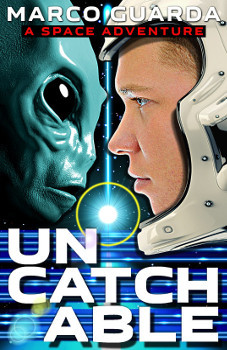
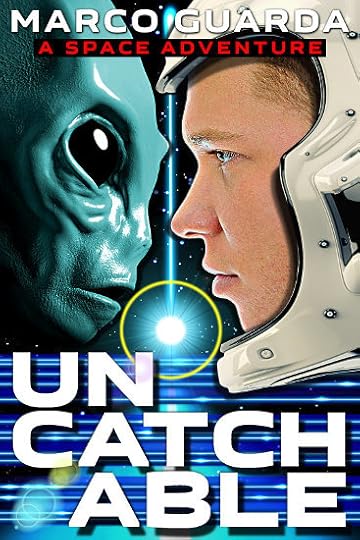
country, Jim comes up with a plan to enlist despite his young age. But that’s only the beginning of his space adventure. Jim doesn’t even imagine the epic journey in store for him, and what a terrible curse a soldier’s duty can be. But he’ll learn along the way. It’s a military space opera of about 150,000 words.
KINDLEIBOOKSNOOKGOOGLE PLAYKOBOSMASHWORDSSCRIBDPAPERBACK
Eh bana tul,
Eh bana sila-ne,
Eh bana kana-ne.
I come in peace,
I come as a friend,
I come as a brother.
Uncatchable: A Space Adventure
PROLOGUE
The Electromagnetic Anomaly
The constant drone of the Virulent Mk-II had been ringing in Captain Streamer’s ears for almost twenty-four hours. He hated the soothing effect that noise had on his nervous system and fought against the torpor to stay awake; drowsiness was a sneaky enemy for a pilot—yielding to it could mean his undoing. He took a sip of water from the canteen next to his seat and drew a deep breath. This would chase away the ever-lingering spell of sleep for a little more.
Again, Captain Streamer stared at the black emptiness of space, trying to make out the electromagnetic anomaly he’d been sent to find, but he saw nothing—just billions of stars with nothing in between. That region of space was a long way from Earth, the longest a human had ever traveled; the Virulent Mk-II set a new record with every click it made. Even if Captain Streamer was used to long missions, this was the first time he had pushed himself so far from any support ship. If there was a mechanical breakdown, he would be on his own. If there was a failure in the life-support module, he would die out there. It was that simple. He could count on his decennial experience as a pilot of the Terran Fleet, on a nit-picky preparation of the mission, and on his trusted comrades. As for the rest… well, he was in God’s hands.
Captain Streamer looked out his cockpit at the three silvery dots moving along with him—his squadron followed in tight formation.
To his right was Lieutenant Dieter Halvorson, a hulking Danish bloke with blond hair and the finest brain in the whole fleet. Other than being an excellent pilot, he was the appointed avionics and communications expert for the mission. He’d cut his teeth upgrading the software on the old Fennec A-71 to make it compliant with the new standards of the latest ships of the fleet, and he knew how to deal with computer tantrums.
To the captain’s left was Sub-lieutenant Thomas Morris. A Galway Irishman, he was brawny, surly, and quick-tempered. You wouldn’t want to be anywhere nearby him in a bar, because trouble would follow him. But on a fighter? Well, that was a different thing. Morris knew most weapon systems by heart and could rig or defuse a bomb in thirty seconds. That made him a valuable member of the mission.
Lieutenant Benjamin Daniels brought up the rear. Born a Kentucky farmer, he’d spent the better part of his youth sticking his nose in the night air, at the stars he loved, when he realized he wanted to build spaceships’ engines instead of tilling soil. A nuclear engineer and a pilot, he had enlisted in the space program, moving from project to project until he’d landed a job to design and test the engine system for the Virulent Mk-II.
Halvorson, Morris, and Daniels were the best pilots Captain Streamer knew. He had handpicked them for the mission, and they had accepted gladly.
The radio crackled. “The more I look out there,” Morris said, “the less I see. My scopes are dead. I wonder if Fleet Command gave us the right coordinates, after all.”
“I feel your frustration, Morris,” Halvorson’s cavernous voice said. “The eggheads back home should know better than to trust hearsay. This thing we’re supposed to find, this anomaly, is too good to be true—it’s impossible it exists. If it did, we could kiss these jalopies good-bye.”
“Jalopies? You’d better watch your mouth, Morris,” Captain Streamer said. “It doesn’t go down too well with Daniels when someone badmouths his baby.”
“Well, his baby is making my ass square…”
“If only Fleet Command gave us more details,” Halvorson said. “This need-to-know basis is plain bullshit to me.”
“What is it we’re supposed to see?” Daniels asked.
“I wish to God I knew,” Captain Streamer said. “Just keep your eyes open. If it’s as big as they say, we won’t miss it.”
The existence of a massive electromagnetic anomaly in that remote region of space was a guess of the military intelligence, based on the data mined in the last twenty years from the remains of the alien battleship Kematian left at Congara. The intelligence believed the aliens had access to a vast network of electromagnetic anomalies which allowed them to travel from one point of the galaxy to the other within minutes. If such a network existed, the benefit of securing it would’ve been enormous. But nobody had found it yet. The speculations may be wrong, and this could be a wild-goose chase. If the squadron didn’t find anything in the next six hours, their orders were to return to the Summer Harvest.
Captain Streamer stifled a yawn, when the long-range radar in front of him beeped frantically.
“I’ve got a reading,” Halvorson radioed in.
“Me too,” Morris said, alert.
“Is it our anomaly?” Daniels asked.
Captain Streamer double-checked his radar. “I don’t think so. It’s exceptionally small to be an electromagnetic anomaly, and it’s damn fast—I’ve got a readout of SL-4 here.”
“Hey, that’s twice as fast as we are!” Daniels cried.
“It doesn’t look like an anomaly to me,” Halvorson said.
“Then what is it?” Morris asked.
“Visual contact in ten seconds,” Daniels said.
Captain Streamer kept his eyes glued on the red dot tearing through the radar display, headed toward them—and was overcome with the sudden realization of impending danger. “Everybody split!” he shouted.
He reached out for the Virulent Mk-II’s control wheel and pushed hard, at the same time pulling the thrust handle all the way back. The fighter jerked to life. The dull noise of its hydrogen engines climbed to an earsplitting howl inside the cockpit as they overpowered. On the radar, the four silvery dots fanned out, away from the incoming object, which changed its course accordingly, moving in on the fighter farther behind. “It’s on you, Daniels!” Captain Streamer said.
“I can’t shake it off! I can’t—”
In Streamer’s windshield, Daniel’s fighter went off with a small flare. “Daniels? Daniels!” Streamer called, but nobody answered him. He saw the familiar dot that had been the lieutenant’s fighter disappear from the radar. At the same time, the red dot made a wide loop.
“He’s ready for another pass!” Halvorson said. “Let’s turn around and arm our torpedoes!”
“He’s too fast for torpedoes!” Morris said.
A great calm descended on Captain Streamer as he focused on his enemy. He felt like being swept twenty years back in time, when he’d first received his baptism of fire—at Congara. “Use your plasma guns,” he said. “Let’s force him into a corridor. Set your torpedoes to blast off at one click, around and at the end of the corridor!”
“Aye, Captain!” Morris said.
“Switching over to plasma guns!” Halvorson said.
Captain Streamer pulled the control wheel toward him until the Virulent Mk-II headed back and then rolled to the side, facing the unknown enemy. “Here he comes,” he said. “Open fire!”
The three pilots pelted the point where the enemy was with rounds, unable to see it with their eyes, using their radar for guidance—the plasma lit up in a spiraling tunnel, trapping for a moment something darker than the darkness surrounding it.
“Torpedoes away!” Captain Streamer shouted.
The torpedoes shot out from the Terran fighters, traced a feeble wake of gold, and then exploded in a firework of engulfing fire at the end of the plasma tunnel.
Captain Streamer’s computer magnified the explosion on his monitor, trying to locate the mysterious object within, when the black ship flung itself past the flaming barrier—an ominous mass, unscathed, shiny as polished obsidian. “Morris!” Streamer said. “He’s coming for you!”
Never before had the three pilots dealt with so fast an enemy. Morris kept shooting, but the obsidian ship evaded easily. It passed so close to the sub-lieutenant’s fighter it almost collided with it, then speared it with one bright shot—the Terran fighter went up in a ball of fire. The black ship inverted its course once again, this time making for Halvorson.
“Dive, Halvorson! Dive-dive-dive!” Captain Streamer shouted. He joined Halvorson at targeting the enemy ship, and they depleted their ammo on it, but the black ship emerged from the blast untouched. It shot a deadly dart at Halvorson—his fighter blew up.
Feeling the cold sweat trickle down his forehead, Captain Streamer pushed the control wheel all the way forward, trying to crash into the enemy—they sped into each other, but the black ship rocked just enough to move out of his way. It fired back, catching the left wing of the Virulent Mk-II, shredding it to pieces.
The fighter spun out of control, disappearing in the endless stretch of darkness.
The control panel in front of him blaring with hull-breach and failure alarms, Captain Streamer fought with the control wheel to level the Virulent Mk-II, but there was nothing he could do. He checked the long-range radar for hints on the whereabouts of the enemy ship, but it was gone—its pilot knew that the Terran fighter was done for. Streamer heard the hiss of the oxygen draining through the fissured hull. His eyes blurring, he took one last glance at the radar… and was amazed at seeing something on it. Something small and steady, smaller than a planet—a moon, maybe. Feeling his strength desert him, he nudged the control wheel toward it.
The computer performed a spectrographic analysis of the celestial body and rattled off a stream of data: even if the moon was a desert, it was surrounded by a thin atmosphere that made it suitable for life. The irony, Captain Streamer thought. What was the chance of finding a habitable moon in that godforsaken region of space—one in a billion? Well, he had found it. The irony was that despite his unbelievable luck, he would crash on it.
He steered the Virulent Mk-II past the outer layers of the moon—they went by in a blur, exposing the hot and quickly approaching surface. Seeing the rises and the dips sweep past the fighter’s hull, Captain Streamer pulled the control wheel to himself, squeezing the last ounce of thrust from the wheezing engines in a final nose-up. As he skipped over the dunes and rolled along them, his helmet slamming like a punch ball, a dreadful thought came over him—that he would never again see his beloved wife and his adolescent son. Not this time. Not this far.
Only a few hours had passed from the impact.
Captain Streamer opened his eyes to a blinding brightness and to absolute silence. His aching body lay in the sand, some yards away from the totaled Virulent Mk-II. He propped himself on his arm, and discovered that he couldn’t move his legs. He removed his helmet and threw it away, feeling half of his face swell and bleed from a deep gash. He was happy and sad at the same time; happy to be still alive, and sad because he would soon die. He closed his eyes under the scorching sun, waiting for Death to ease him from pain.
Half an hour later he was still alive, hanging to life by a thread. He opened only one eye; the other was a lump of blood and flesh. He wondered if Death had lost its way, when he saw the stranger. He came closer and loomed over him. Every inch of his body was covered—even his face was concealed inside a hood.
If that was Death, it didn’t look very intimidating, Captain Streamer thought, when a revolting gurgle interrupted him. He looked to his left to see a squat and black salamander, five feet tall and twenty feet long, including its ridged tail. Her red tongue flicked in and out her mouth, sensing him like a snake would. Captain Streamer grimaced. “I’m raving already…”
The stranger glanced with suspicion at the smoldering heap of metal that had been the Virulent Mk-II, but ultimately decided that whatever the threat it had posed it was now gone. The stranger climbed from his ride. Keeping his face shielded from the heat of the sun, he drew closer to the man fallen from the sky. He prodded his stick at the captain’s ripped spacesuit, then spoke in a raspy and cackling voice. “Ka kud karrak, einee? Ka kud?” he said.
Captain Streamer jerked upright. He lunged for the cloak wrapped around the stranger and bared his face. The captain studied the black, wide eyes of the alien, happy to see he was real. He wasn’t Death, he wasn’t a ghost, and this wasn’t a dream, after all. “Water…” he croaked.
The bluish alien stood looking at him. He shook his head and shrugged, incapable of understanding. “Wattar? Eh anbar nee, einee.”
“I need water…” the captain said.
“Eh anbar nee, einee—wattar,” the alien repeated.
Captain Streamer rolled his eyes and grumbled. “Man, I really hope the delegation is doing better than this…” he said. In the last sparkle of consciousness, depleted of energies, he eased his head on the sand and fainted.
[ … ]
back to top
Free Story Podcast!
The first part of the free audiostory podcast of Spider’s Eyes Inc. is available at the Thrills and Mystery website!
http://thrillsandmystery.weebly.com/podcast/tm-podcast-episode-3×18-spiders-eyes-pt-1-marco-guarda

A huge thank you to Dave for making this possible!
Enjoy!
M.
July 31, 2015
Uncatchable

Jim is only sixteen, but he’s got a lot going on in his life already. When the news that his pilot father is reported missing in action, and that a war has finally broken out between Terrans and Sar-daks disrupt the quiet hot summer of Derrick Creek, Jim decides it’s time for him to take action. When the adults volunteer to fight for their
#AnythingPopup_BoxContainer3 {width:400px;height:600px;background:#FFFFFF;border:1px solid #4D4D4D;padding:0;position:fixed;z-index:99999;cursor:default;-moz-border-radius: 10px;-webkit-border-radius: 10px;-khtml-border-radius: 10px;border-radius: 10px; display:none;} #AnythingPopup_BoxContainerHeader3 {height:30px;background:#4D4D4D;border-top-right-radius:10px;-moz-border-radius-topright:10px;-webkit-border-top-right-radius:10px;-khtml-border-top-right-radius: 10px;border-top-left-radius:10px;-moz-border-radius-topleft:10px;-webkit-border-top-left-radius:10px;-khtml-border-top-left-radius: 10px;} #AnythingPopup_BoxContainerHeader3 a {color:#FFFFFF;font-family:Verdana,Arial;font-size:10pt;font-weight:bold;} #AnythingPopup_BoxTitle3 {float:left; margin:5px;color:#FFFFFF;font-family:Verdana,Arial;font-size:12pt;font-weight:bold;} #AnythingPopup_BoxClose3 {float:right;width:50px;margin:5px;} #AnythingPopup_BoxContainerBody3 {margin:15px;overflow:auto;height:540px;} #AnythingPopup_BoxContainerFooter3 {position: fixed;top:0;left:0;bottom:0;right:0;background:#000000;opacity: .3;-moz-opacity: .3;filter: alpha(opacity=30);border:1px solid #4D4D4D;z-index:999;display:none;}
 3Close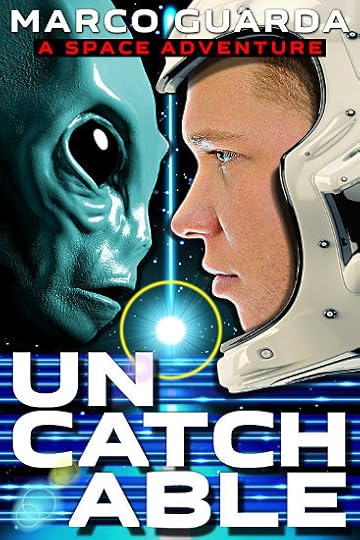
country, Jim comes up with a plan to enlist despite his young age. But that’s only the beginning of his space adventure. Jim doesn’t even imagine the epic journey in store for him, and what a terrible curse a soldier’s duty can be. But he’ll learn along the way. It’s a military space opera of about 140,000 words.
Uncatchable will be available to the public on December 17th.Take advantage of the reduced price, and preorder your copy nowat your preferred vendor! (see below)
GOOGLE PLAY
Imprendibile

Jim ha solo sedici anni, ma nella sua vita stanno già accadendo un sacco di cose. Quando le notizie che suo padre pilota risulta disperso, e che la guerra è infine scoppiata tra terrestri e Sar-dak scuotono la tranquilla estate di Derrick Creek, Jim decide che per lui è giunta l’ora di agire. Quando gli adulti si offrono volontari per
#AnythingPopup_BoxContainer4 {width:400px;height:600px;background:#FFFFFF;border:1px solid #4D4D4D;padding:0;position:fixed;z-index:99999;cursor:default;-moz-border-radius: 10px;-webkit-border-radius: 10px;-khtml-border-radius: 10px;border-radius: 10px; display:none;} #AnythingPopup_BoxContainerHeader4 {height:30px;background:#4D4D4D;border-top-right-radius:10px;-moz-border-radius-topright:10px;-webkit-border-top-right-radius:10px;-khtml-border-top-right-radius: 10px;border-top-left-radius:10px;-moz-border-radius-topleft:10px;-webkit-border-top-left-radius:10px;-khtml-border-top-left-radius: 10px;} #AnythingPopup_BoxContainerHeader4 a {color:#FFFFFF;font-family:Verdana,Arial;font-size:10pt;font-weight:bold;} #AnythingPopup_BoxTitle4 {float:left; margin:5px;color:#FFFFFF;font-family:Verdana,Arial;font-size:12pt;font-weight:bold;} #AnythingPopup_BoxClose4 {float:right;width:50px;margin:5px;} #AnythingPopup_BoxContainerBody4 {margin:15px;overflow:auto;height:540px;} #AnythingPopup_BoxContainerFooter4 {position: fixed;top:0;left:0;bottom:0;right:0;background:#000000;opacity: .3;-moz-opacity: .3;filter: alpha(opacity=30);border:1px solid #4D4D4D;z-index:999;display:none;}
 4Close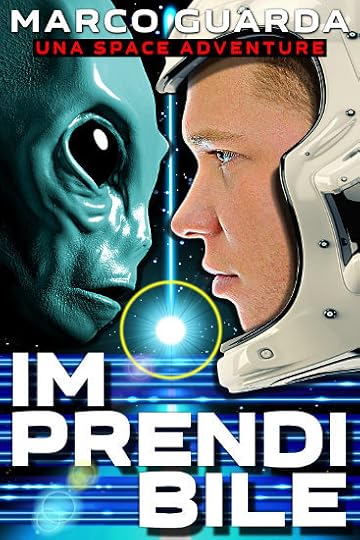
combattere per la patria, Jim escogita un piano per arruolarsi nonostante la sua giovane età. Questo è solo l’inizio della sua avventura spaziale. Jim neanche immagina l’epico viaggio in serbo per lui, e in quale maledizione il dovere di un soldato può trasformarsi. Ma imparerà lungo la strada. E’ una space opera militare di circa 140.000 parole.
Imprendible sarà disponibile al pubblico il 17 Dicembre.Approfitta del prezzo ridotto, e preordina la tua copia orapresso il tuo rivenditore preferito! (vedi sotto)
GOOGLE PLAY
February 27, 2015
In Memoriam
“A life is like a garden. Perfect moments can be had,but not preserved, except in memory.”
Live long and prosper.
Leonard Nimoy
September 22, 2014
Collected SCI-FI STORIES – Pack 2
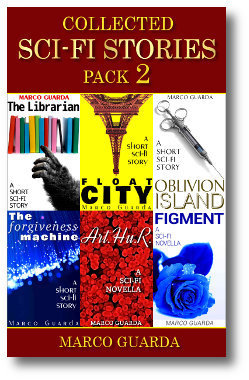
Collected Sci-Fi Stories – Pack 2 contains the following previously released science fiction novelettes and novellas in e-book format:
07. The Librarian. Five smart schoolchildren inquire on the weird behavior of their new librarian. On the night they set out to investigate, they discover a fantastic world they would never have imagined.
08. Float City. An acrophobic police lieutenant tasked with thickening security for the Christmas rush on New Paris, a satellite orbiting Earth, faces a series of increasingly dangerous incidents which threaten to destroy it along with eighty thousand unaware vacationers.
09. Oblivion Island. Felix Morrow’s memorable vacation has just started, but as the days go by and most inopportune setbacks delay his wife and daughter’s arrival, he begins to suspect something is not quite right.
10. The Forgiveness Machine. A greedy businessman haunted on his deathbed by the thought of the many people he’s ruined in his life, seeks a late forgiveness. He turns to his inventor son, who develops and casts an oneiric network all over the country in a collective dream.
11. Art.Hu.R. An artificial person appointed with the task of maintaining a spaceship on her millenary journey to a far away planet has to fight against impossible odds to get the half a million unaware passengers aboard safe and sound to their destination.
12. Figment. A police lieutenant resorts to a telepathic individual to find the murderer among four suspects, but when her mind is attacked by a virus and he begins to recall things happened to others, he realizes there is much more at stake than meets the eye.
This collection is about 119,000 words.
Raccolta di STORIE SCI-FI – Pack 2

Raccolta di Storie Sci-Fi – Pack 2 contiene le seguenti novelette e novelle di fantascienza precedentemente pubblicate, in formato e-book:
07. Il Bibliotecario. Cinque scolari svegli si interrogano sullo strano comportamento del loro nuovo bibliotecario. La notte che essi escono ad indagare, scoprono un mondo fantastico che non avrebbero mai immaginato.
08. Float City. Un acrofobico tenente di polizia incaricato di aumentare la sicurezza per la ressa natalizia a Nuova Parigi, un satellite che orbita attorno alla Terra, affronta una serie di incidenti sempre più pericolosi che minacciano di distruggerlo con ottantamila ignari turisti.
09. L’Isola dell’Oblio. La memorabile vacanza di Felix Morrow è appena iniziata, ma mentre i giorni passano e inopportuni imprevisti ritardano l’arrivo di sua moglie e di sua figlia, egli inizia a sospettare che qualcosa non funzioni.
010. La Macchina del Perdono. Un avido uomo d’affari tormentato in punto di morte dal pensiero delle tante persone che ha rovinato nel corso della sua vita, cerca un tardivo perdono. Si rivolge al figlio inventore, che sviluppa e getta una rete onirica su tutta la nazione, creando un sogno collettivo.
011. Art.Hu.R. Una persona artificiale incaricata di tenere in ordine un’astronave nel suo viaggio millenario verso un pianeta lontano deve lottare contro situazioni impossibili per portare il mezzo milione di ignari passeggeri a bordo sani e salvi alla loro destinazione.
012. Figmento. Un tenente di polizia ricorre ad una telepate per scoprire l’assassino tra quattro sospettati, ma quando la mente di lei è attaccata da un virus e lui inizia a ricordare cose accadute ad altri, si rende conto che in gioco c’è molto più di quanto non sembri.
E’ una collezione di circa 118.000 parole.
September 21, 2014
Figmento

della sposa e Rainer inizia a ricordare cose non sue, egli capisce che in gioco c’è molto più di quanto non sembri, e raddoppia i suoi sforzi per trovare ed assicurare il criminale alla giustizia.E’ una novella di circa 34.000 parole.
Figmento
Inermi Teseo smarriti nel labirinto del nostro cervello,
cerchiamo il filo d’Arianna, ma non ve n’è alcuno.
I
Il vuoto tra il tavolino ed il soffitto della sala volante pullulava di ciarpame a gravità zero: qualche foglio di acetato opaco, un blocco elettronico ed uno stilo, e una copia dellaGazzetta Lunare. Giravano in una spirale al rallentatore, l’uno intorno all’altro, in una danza muta.
La Gazzetta dispiegò le sue pagine, mostrando un riquadro pubblicitario dove, accanto al volto raggiante di un anziano, fiorivano delle Myosotis sylvatica blu. Il volantino diceva:
Non confonderti più! Se la tua memoria è come un groviera, è la volta buona di provare Non Ti Scordar Di Me! Ripristina la tua memoria in un semplice passaggio! Backup incrementali e ripristini sono ora disponibili per i cittadini anziani. Non Ti Scordar Di Me! Fai un consulto gratuito a casa tua! Chiamaci ora al 5336-687-5336!
La Gazzetta riprese peso a poco a poco. Si posò con grazia ai piedi di un divanetto bianco immacolato dove era sdraiato un uomo, allacciato ad esso, che dormiva.
Gli altoparlanti della sala mobile emisero un ding, e la gentile voce femminile del computer parlò.
“L’atterraggio è previsto tra quindici minuti.”
La voce ripeté l’annuncio, ma erano parole sprecate con l’uomo che dormiva, che continuò semplicemente a sognare.
Spinta dai suoi razzi divampanti, la sala semovente filava attraverso lo spazio, passando accanto ai mille puntini delle proprietà private orbitanti intorno alla Terra. La sua meta non era una dei molti miliardi di stelle che popolavano la vasta distesa dell’oltre, ma un globo assai più vicino e familiare—la Luna.
Nel suo lento ingrandirsi, il satellite terrestre scoprì, in mezzo alla superficie deserta e scavata, il profilo di un’installazione ramificata. Non era un’infrastruttura mineraria, ma degli sfarzosi alloggi residenziali che comprendevano giardini verdeggianti pieni d’alberi, bacini, prati curati e aiole disposte ad arabesco tra cui dei sentieri serpeggiavano ameni. Tutto era protetto da cupole di vetro a tenuta stagna—risaltava dalla polvere grigia come un sofisticato gioiello d’avorio incastonato di smeraldi.
La rigogliosa meraviglia ammiccava dagli oblò della sala semovente, ma non c’era nessuno a guardarla. Il solo uomo al suo interno si era infine svegliato, ma era più interessato ad esaminare i fogli di acetato nelle sue mani che contemplare la bellezza in fondo al vuoto vertiginoso dello spazio.
L’uomo possedeva occhi indagatori, un naso dritto, ed una mascella vagamente angolare che gli conferiva autorità. Indossava scarpe pulite e un abito che calzava come un guanto; una creazione sartoriale fin troppo perfetta e funzionale per essere altro che un’uniforme realizzata con maestria.
L’uomo lanciò un’occhiata verso l’orologio sul muro della sala e sospirò, domandandosi per quanto tempo ancora dovesse sopportare la tortura di viaggiare nel vuoto. La risposta alla domanda non formulata arrivò immediatamente quando, con uno scossone, i razzi invertirono la spinta, rallentando la sala nella discesa verso la piattaforma di atterraggio assegnatale.
La porta della camera di decontaminazione si aprì, e ne emerse l’uomo in giacca e cravatta. Si ritrovò in un corridoio asettico. Orientandosi, mosse i propri passi verso un banco dietro il quale era seduto un impiegato apatico. Senza dire manco una parola, offrì a questi la sua carta d’identità. L’impiegato controllò i documenti, ed indirizzò il nuovo arrivato lungo il corridoio.
“Tenente Evandro Philippe Rainer,” scandì in modo chiaro la responsabile Dahlie, venendo ad incontrarlo.
Comunque, la pesante matrona non gli strinse la mano; le tenne unite alla fluente vestaglia color perla che ricopriva il suo corpo. Diede al tenente di polizia un’occhiata dall’alto in basso, nascondendo a fatica il fastidio ed il disprezzo per tutte le cose mondane.
“Siamo sempre desiderose di aiutare il dipartimento di polizia, ogni qualvolta abbia bisogno di noi,” mentì.
“E’ pronta la sposa?”
La responsabile Dahlie sospirò con condiscendenza.
“Sì, nostra sorella è pronta. Mi domandavo, però, se lei non preferisse una delle nostre sorelle più esperte. Vede, questa è la prima volta per Sandra. Lei ha poca dimestichezza col mondo esterno, e—”
“Sandra andrà benissimo, grazie.”
La responsabile Dahlie gemette pesantemente.
“Molto bene. Dopotutto, anche lei deve pure iniziare da qualche parte… Prima che l’affidi nelle sue mani, mi lasci ricordarle alcune cose: tutte le sorelle nate nella zenanasono speciali; non le introduciamo agli estranei finché non diventano adulte—raggiunta quell’età, esse sono in grado di arrangiarsi e di difendersi da sole. Ad ogni modo, il loro primo viaggio sulla Terra può essere snervante. Devo chiederle di non lasciarla mai in una stanza con più di tre persone alla volta, oltre a voi due. Le porti rispetto; la sua mente è uno strumento molto prezioso e sensibile, e come tale dev’essere trattato.”
“Staremo via solo un paio d’ore—prometto che non le accadrà nulla di strano. La porterò indietro così alla svelta che le parrà che non se ne sia mai andata.”
Dahlie serrò le labbra come una madre in pensiero per la propria figlia. Si voltò e guardò oltre il vetro che la separava dalla sala d’attesa contigua. Rainer sbirciò nella stessa direzione… e fu accecato dall’improvviso bagliore del sole nascente. Si riparò sugli occhi, stupito dalla possente esplosione di gloria celeste. Solo quando l’alone si dissolse egli poté vedere—la sposa.
Come se fosse nata dalla luce, il suo intero corpo era lucido d’oro. Il suo vestito rituale era semplice—delle strisce di tessuto bianco le scendevano dalle spalle, si univano ai fianchi, e ancora si aprivano, nascondendo appena il ventre piatto e le gambe tornite, mostrando le sue caviglie e i suoi piedi calzati di sandali. Era stato quel vestito succinto e rivelatore che aveva dato alle aberrazioni mentali della Luna il soprannome di spose. Tuttavia, al contrario delle spose vere, i partner ideali per le spose lunari non erano gli sposi, ma gli scaltri criminali.
“Il detective Roy Vagrant è deceduto la mattina di domenica scorsa, alle 06:00. Qualcuno gli ha sparato. Sfortunatamente, per quanto a lungo abbiamo cercato, non siamo riusciti a trovare nessun indizio riguardo l’assassino.”
Rainer e la sposa erano ritornati entrambi nella sala semovente, ed erano allacciati ai loro divanetti. Un vago ronzio si trasmise attraverso gli strati isolanti del pavimento, segno che la sala si stava muovendo ancora una volta. La sposa era accomodata sul suo divanetto, incurante che i suoi veli svolazzassero intorno a lei nell’assenza di gravità. Teneva le caviglie ben tornite unite insieme, mostrando il laccio d’oro che le legava. Completava la sua figura in maniera talmente squisita che a nessuno sarebbe mai venuto in mente che un siffatto ornamento fosse infatti una catena vera. Rainer spostò gli occhi dalla superba manifattura della catena alle caviglie della sposa, alle sue ginocchia, alle sue gambe, i suoi fianchi e i suoi seni, su su fino al collo—al suo volto luminoso. Rainer trovò dei profondi occhi color nocciola, venati di rame, che lo fissavano intenti a loro volta.
Rainer provò una vaga sensazione di disagio, ma la ignorò di proposito. Non c’era bisogno di essere timido con una sposa. Anche se la legge le proibiva di entrare nelle menti che non fossero quelle dei sospetti e dei criminali a lei sottoposti, quando una sposa era fuori dalla zenana, non c’era alcun modo di sapere dove avrebbe vagato la sua mente. Come gli suggerivano i limitati poteri della sua intuizione—poteri sopra la media, stando al distintivo di tenente che portava, ma infimi in confronto con quelli della sposa—lei era già completamente conscia di lui; delle sue speranze, delle sue paure, e pure delle sue bramosie. Negare il fatto o resistergli sarebbe stato stupido. Poteva fare meglio di così; poteva fingere che nulla di ciò stesse accadendo, e la sposa avrebbe graziosamente fatto lo stesso.
Rainer si schiarì la voce e tornò a rovistare tra i fogli di acetato che aveva in mano. Ne passò avanti uno che ritraeva un uomo robusto, sui sessanta, con la mascella squadrata. La sposa lo afferrò e lo esaminò.
“L’unica telecamera nello studio di casa di Vagrant ha ripreso continuativamente da quando è entrato, alle 5:30, a quando è morto, mezz’ora più tardi. E poi fino al lunedì dopo, quando lo ha trovato la sua domestica. Purtroppo, nemmeno il grandangolo della telecamera è riuscito ad inquadrare l’omicida.”
Rainer passò alla sposa un secondo foglio d’acetato. Essa dette un colpetto a uno degli angoli, riproducendo un video senz’audio.
Mostrava un ufficio comprato d’occasione, arredato con una scrivania, una libreria, un orologio sopra un caminetto, e delle rose blu in vaso. Un uomo, Vagrant, chiaramente, era seduto sulla sua sedia, che lavorava a certi documenti. All’improvviso, egli alzò la testa, come se qualcun altro fosse entrato nella stanza. Vagrant si alzò in piedi… ma non sembrò sorpreso di vedere il suo assassino—che lo conoscesse già? Vagrant si avvicinò al visitatore fuori inquadratura… quando esplose una forte luce, che colpì Vagrant giusto in mezzo al petto, facendolo stramazzare a terra, dove giacque immobile.
Il foglio di acetato riprodusse il fermo immagine del deceduto per un minuto o giù di lì, finché la sposa non ne sfiorò l’angolo per accelerare il video: la luce solare che entrava dalla finestra dietro la scrivania si dissolse presto nella sera, e poi nella notte. L’alba scacciò la notte in un circolo, e la luce solare bagnò l’ufficio una volta ancora. Fu esattamente allora che la domestica di Vagrant entrò. Sconvolta nel vedere il suo datore di lavoro per terra, s’inginocchiò e lo scosse, in cerca di un segno che egli fosse vivo, ma si rese conto dal suo corpo gelido che egli era morto da tempo.
Il foglio di acetato ridiventò opaco.
“Né l’investigazione, né la squadra scientifica sono riusciti a fornire prove sufficienti ad identificare oltre ogni ragionevole dubbio l’omicida. Nonostante questo, abbiamo radunato quattro possibili sospetti; te li farò vedere tra poco—sono certo che l’assassino si trovi tra di loro. Dimmi soltanto chi è, e il tuo lavoro sulla Terra sarà terminato.”
La sposa fissò Rainer, poi tornò a guardare il video senza dire una parola.
L’auto di servizio di Rainer accostò al marciapiedi. Non era l’edifico imponente della stazione di polizia di Blue Haven quello che si ergeva davanti a lui e alla sua ospite, ma una distesa amena d’erba, alberi, fontane, e un canale serpeggiante.
“Il parco cittadino non è il giardino della zenana, ma spero che lo apprezzerai lo stesso,” disse Rainer.
Lui e la sposa fissarono il parco, che proprio in quel momento era preso d’assalto dagli impiegati e dagli studenti fuori per la pausa del pranzo o delle lezioni. Anche molte famiglie sfruttavano la pausa di mezzodì per ritrovarsi; cosicché, mentre gli adulti mangiavano, chiacchieravano, e si rilassavano, i loro figli correvano intorno e giocavano un poco.
Rainer si appoggiò al cruscotto dell’auto, e si perse per un po’ nella bellezza semplice della scena.
“Facciamo un giro,” disse alla sposa.
“Credevo che la responsabile Dahlie avesse stabilito che io non dovessi vedere più di tre persone per volta.”
Era una semplice constatazione più che un appunto, poiché pure la sposa pareva essere allietata dalla vista.
“Questa non è una visita turistica di Blue Haven, ed io non sono la tua guida. Voglio che tu testi e calibri le tue scansioni su persone comuni prima di incontrare i sospettati. Siccome questo è il tuo primo viaggio sulla Terra, non voglio che tu commetta errori—confondere emozioni forti con i fatti; scambiare il desiderio non infrequente di ammazzare qualcuno col farlo davvero. Facciamo due passi. Mentre camminiamo, scansiona più gente che puoi. Questo ti darà una buona idea di come funzioni il cervello della gente in questa città.”
Scesero dall’auto. Rainer fece il giro fino al cofano posteriore, poi l’aprì e prese un maglioncino piegato. Lo diede a Sandra.
“E’ meglio che la gente non sappia chi sei davvero. Per di più, anche se questa passeggiata è una pratica comune, è pur sempre illegale.”
Sandra spiegò il maglione e se lo infilò… quando percepì un leggerissimo odore; un buon odore—quello di un profumo. Un sentore delicato di fiori che lei non aveva in precedenza avvertito su Rainer—quel capo non apparteneva a lui, ma ad una donna.
Sandra si guardò i piedi legati.
“Hai ragione,” disse Rainer.
Estrasse di tasca una piccola chiave, si chinò e tolse la catena da torno le caviglie della sposa. La consegnò a lei, e lei se la drappeggiò svelta attorno al polso in un elegante bracciale.
“Possiamo andare, ora?” insistette lui.
Rainer e Sandra si incamminarono lungo i sentieri di ghiaia, incontrando più passanti che poterono. Ogni volta, la sposa socchiudeva gli occhi, faceva un respiro profondo, e dava una sbirciata alle differenti menti.
“Come sta andando?”
“Mi sono addestrata una vita a distinguere i ricordi delle emozioni dai ricordi dei fatti. Questa camminata, per quanto piacevole, è completamente inutile.”
Rainer ignorò Sandra.
“Guarda, il carretto di Frank. Quelli di Frank sono i migliori sorbetti del mondo. Non perdiamoceli!”
Sandra alzò le sopracciglia e roteò gli occhi, ma non ebbe cuore di resistere al tenente mentre la prendeva per mano e la trascinava verso il carretto.
Rainer fece un cenno di saluto a Frank, un vecchio con la faccia coriacea abbronzata e ricoperta di rughe. Pareva un vecchio marinaio nella sua bagnarola—un poco lo era, mentre stava in piedi al timone del suo carretto. Egli sorrise nel vedere Rainer, e poi, sorpreso, si chinò davanti alla donna che era in sua compagnia.
“E chi sarebbe questo fiore, Rainer?”
“E’ Sandra. E’ soltanto una collega.”
“Beh, forse è ora che cambi lavoro pure io.”
Fece l’occhiolino alla sposa, e lei sorrise di rimando.
“Come va?” Frank chiese a Rainer.
“Come al solito, vecchio mio. Come al solito.”
“Beh, che cosa prendete?”
“Fragola,” disse Rainer, e poi si voltò verso Sandra. “E tu che cosa scegli?”
La sposa non disse nulla.
“Coraggio, è la prima volta che scendi sulla Terra, dopotutto, no? Lasciati andare—rilassati. Offro io.”
Frank attese pazientemente con la paletta in mano.
“E va bene. Prendo… limone e—liquirizia,” disse lei.
Raggiante, Rainer pagò, afferrò i due gelati, e passò a Sandra il suo.
“Ti auguro una buona giornata,” disse a Frank.
“Anche a voi, ragazzi. Anche a voi.”
Rainer e Sandra se ne andarono e ripresero la loro camminata, godendosi le loro leccornie poco per volta.
“Avrei dovuto dire pesca, vero?” disse Sandra.
Si fermò, e Rainer la guardò senza capire.
“Io non sono la tua Christine, tenente Rainer; non sono qui per rammentarti la tua compianta moglie. Mi trovo qui per consegnare un criminale alla giustizia.”
Ancora una volta, le parole di Sandra suonarono più come una mera affermazione che un aspro rimprovero.
Rainer annuì e sospirò.
“Naturalmente. Sarà meglio andare, allora.”
Quattro specchi unidirezionali erano appesi lungo un corridoio buio che dava su quattro stanze anguste, ognuna contenente un tavolo e una sedia. Rainer e la sposa, non visti, si avviarono verso la prima finestra. Oltre essa, una donna in piedi si fregava nervosamente le mani. I suoi capelli erano in disordine, e aveva delle grandi occhiaie nere sotto gli occhi, segno che qualcosa la tormentava. Che fosse rimorso? Pena? Colpa, forse? Solo la sposa poteva dirlo.
“La domestica al servizio di Vagrant, Margo Price, di cinquantadue anni. Ha lavorato alle sue dipendenze per quasi dieci anni; potrebbe avere avuto un qualche rancore verso Vagrant. Le abbiamo testato la retina in cerca di lesioni provocate dalle radiazioni di un’arma laser, ma il risultato è stato negativo—il laser avrebbe potuto essere schermato, o forse aveva addosso degli occhiali da sole. Beh, è tutta tua.”
La sposa socchiuse gli occhi, e si concentrò per un momento sulla domestica, espandendo i suoi sensi. Poi alzò lo sguardo una volta ancora.
“Chi è il prossimo?” chiese.
Rainer aggrottò la fronte, meravigliato dall’insolita velocità con cui la sposa aveva ottenuto il suo primo responso. Le fece strada verso lo specchio successivo.
Nella seconda stanza era seduto un uomo, curvo su di sé, che imprecava tra i denti, e che allo stesso tempo lanciava occasionali occhiate storte allo specchio.
“Jeremy Maddens, sessant’anni. E’ capo contabile all’agenzia delle entrate di Blue Haven. Ha ingaggiato Roy Vagrant per fare chiarezza sul presunto suicidio di sua figlia. Circa un mese fa, Joan Maddens è stata trovata morta nel suo appartamento di Bright Oaks. Il medico legale ha stabilito che è deceduta per overdose di Excedril, una droga altamente performante che ha recentemente invaso il mercato. Jeremy Maddens ha scatenato un putiferio contro la polizia, accusandoci di non fare niente contro i venditori e i fornitori di droga che infestano Blue Haven, e di coprire i pezzi grossi della città che hanno risucchiato la sua Joan in una fatale spirale di vizio. Ma la polizia ha archiviato il caso come suicidio, ed è finita lì. Ecco perché Maddens si è rivolto a Vagrant; sperando che lui avrebbe trovato un responsabile per la morte della figlia, e che lo avrebbe consegnato alla giustizia. Forse non è rimasto contento del lavoro di Vagrant, è uscito di senno, e lo ha ucciso. Dimmelo tu.”
Rainer si fece da parte per permettere alla sposa di scansionare Maddens, cosa che lei fece. Comunque, stavolta, impiegò più tempo. Rainer capì che gli istinti omicidi di Maddens dovevano essere eccezionalmente forti—che Sandra avesse già individuato l’uomo che stavano cercando?
Quando la sposa alzò la testa, Rainer non le chiese cosa avesse appena visto nella mente di Maddens, ma si diresse al terzo specchio unidirezionale. Nella stanza adiacente, un uomo ben vestito sedeva composto, con le dita intrecciate, che li guardava. O stava fissando il suo riflesso nello specchio, oppure stava tentando di bucarlo con lo sguardo per vederci oltre.
“Maynard Alders, un ricco avvocato di sessant’anni. Secondo le molte voci che sono riuscito a raccogliere, è un drogato. Si suppone sia stato lui ad introdurre Joan nel facoltoso ambiente di Blue Haven, compresi i suoi vizi. Joan iniziò a farsi di droghe sempre più pesanti, e non è mai più stata in grado di riprendersi. Nonostante i tentativi di suo padre di tirarla fuori da quel mondo perverso, non è riuscito a salvarla—lei voleva sempre tornare nella sua fatale gabbia dorata. Quando alla fine ne morì, Maddens giurò che avrebbe messo alla berlina tutti coloro che avevano avuto a che fare con la sua scomparsa. Alders era uno di loro. Forse Vagrant stava per dire al mondo che razza di verme fosse l’avvocato. Forse non ne ha avuto la possibilità. Forse Alders lo ha preceduto e ha ucciso Vagrant prima che lo facesse.”
La sposa guardò nello specchio, poi chiuse gli occhi e lesse tutto quello che c’era da sapere su Alders e sulle sue brame. Quando li riaprì, il suo volto aveva perduto parte del suo colore, e Rainer seppe che orribile lavoro dovesse essere quello di una sposa.
“Sandra? Stai bene? Vuoi fare una pausa?”
La sposa scosse la testa. “Sto bene.”
Rainer la indirizzò verso l’ultimo specchio, dentro il quale era stravaccato un giovane insulso ed arrogante. Il naso spaccato di recente e un sogghigno da buffone rovinavano le sue fattezze altrimenti attraenti. Vestiva un abito eccezionalmente bello e costoso, ma aveva un disperato bisogno di essere pulito e stirato. Il babbeo appoggiava al tavolo le scarpe fatte a mano e aspettava senza fare nulla, mordendosi le unghie luride.
[ ... ]
back to top
September 20, 2014
Figment



In Figment, Police Lieutenant Evander Rainer, at a loss for clues on a murder case, resorts to a bride, a telepathic individual who will scan four major suspects to unravel the tangle for him. Alas, as a virus attacks the mind of the

bride, and Rainer begins to recall things which aren’t his own, he realizes there is much more at stake than meets the eye, and redoubles his efforts to find and deliver the criminal to justice.It’s a novella of about 34,000 words.
Figment
Helpless Theseus lost in the maze of our brain,
we seek Ariadne’s thread, but there is none.
I
The emptiness between the table and the ceiling of the flying lounge fluttered with zero-gravity jetsam: a few opaque acetate sheets, an electronic pad and a stylus, and a copy of the Moon Herald. They spiraled in slow motion around each other in a silent dance.
The Herald unfolded its pages, revealing a publicity box from where blue Myosotis arvensis bloomed, next to the beaming face of an old man. The ad read:
Don’t be confused anymore! If your memory is like Swiss cheese, it’s time to try Forget-Me-Not! Restore your memory in one easy step! Incremental backups and restores are now available for senior citizens. Forget-Me-Not! Get a free consultation at home! Call us now at 5336-687-5336!
The Herald gradually regained its weight. It softly perched at the foot of a spotless white couch where a man lay, strapped to it, taking a nap.
The speakers of the moving lounge dinged, and a gentle female computer voice spoke.
“We’re scheduled for landing in fifteen minutes.”
The voice repeated the announcement, but it was lost on the dozing man, who just kept dreaming.
Pushed by its blazing rockets, the flying lounge sped across space, passing by thousands of blinking dots of the orbiting private demesnes scattered around Earth. Its destination wasn’t one of the many billions of stars populating the desolate vastness of the beyond, but a far closer and familiar globe—the Moon.
In its slow magnification, Earth’s satellite revealed, amidst its barren and hollowed surface, the outline of a branched-out installation. It wasn’t a mining facility, but plush residential quarters which included verdant gardens rife with trees, basins, manicured lawns and flowerbeds arranged in curlicues among which paths pleasantly unwound. Everything was sheltered under airtight glass domes—it stood out from the gray dust like an elaborate jewel of ivory inlaid with emerald.
The thriving marvel beckoned from the portholes of the flying lounge, but nobody was there to look at it. The one man inside it had awakened at last, but he was more interested in examining the acetate sheets in his hands than contemplating the beauty at the end of the vertiginous chasm of space.
The man featured inquiring eyes, a straight nose, and a slightly angular jaw that gave him authority. He wore clean shoes and a suit that fitted him like a glove; a sartorial creation way too perfect and functional to be but a masterfully crafted uniform.
The man glanced at the clock on the lounge wall and sighed, wondering how much longer he would’ve had to endure the torture of vacuum-traveling. The answer to the unvoiced question came immediately as, with a jolt, the rockets reversed their thrust, slowing down the lounge in its descent toward the landing platform assigned to it.
The door to the decontaminating chamber opened, and the man in the suit emerged from it. He found himself in an aseptic corridor. Orienting himself, he directed his steps toward a desk behind which a torpid clerk sat. Without saying one word, he presented the latter with his identification. The clerk inspected the documents, and motioned the newcomer further down the corridor.
“Lieutenant Evander Philippe Rainer,” Responsible Dahlie articulated, stepping forth to meet him.
However, the heavy, matronly woman didn’t shake hands with him; she kept them close to the overflowing pearl robe that covered her body. She gave the police lieutenant a narrow once-over, barely concealing her dislike and contempt for all earthly matters.
“We’re always eager to help the Police Department, whenever it needs us,” she lied.
“Is the bride ready?”
Responsible Dahlie tutted condescendingly.
“Yes, our sister is ready. I was wondering, though, if you rather prefer one of our more experienced sisters. You see, this is the first time for Sandra. She has little familiarity with the outside world, and—”
“Sandra will do nicely, thank you.”
Responsible Dahlie groaned heavily.
“Very well. After all, she too has to start somewhere, sooner or later… Before I entrust her in your hands, let me remind you a few things: all sisters in the zenana are special; we don’t introduce them to strangers, not until they are of age—by that time, they can look and fend for themselves. All the same, their first journey to Terra can be overwhelming. I must ask you to never let her in a room with more than three peoples at a time, other than you two. Be considerate about her; her mind is a very sensitive and precious instrument, and as such it must be treated.”
“We’ll be away only a few hours—I promise nothing weird is going to happen to her. I’ll bring her back so quickly you’ll think she’d never left.”
Dahlie pursed her lips like a mother worried for her child. She turned and glanced past the glass separating her from a contiguous waiting room. Rainer peered in the same direction… and was blinded by the sudden flare of the rising sun. He shielded his eyes in marvel at the mighty explosion of celestial glory. Only when the halo receded could he glimpse—the bride.
As if she had been born to the light, her entire body glistened with gold. Her ritual dress was simple—white stripes of cloth dropped from her shoulders, joined at her waist, and again parted, barely concealing her flat belly and her shapely legs, revealing her ankles and her sandaled feet. It was that flimsy, skimpy dress which earned the mind-freaks on the Moon the nickname ofbrides. However, unlike real brides, the ideal party for lunar brides weren’t grooms, but cunning criminals.
“Detective Roy Vagrant died last Sunday morning at 6:00 AM. Someone shot him. Unfortunately, as extensively as we have searched, we couldn’t find any clue about the murderer.”
Both Rainer and the bride were back to the moving lounge, strapped to their couches. The slightest thrum transmitted through the insulating layers of the floor, a sign that the lounge was moving again. The bride had made herself comfortable on her couch, heedless of her veils floating about alluringly in the zero-gravity. She kept her well-chiseled ankles together, revealing the golden string which bound them. It complemented her figure in such an exquisite way one would never think the peculiar ornament was, in fact, a real chain. Rainer shifted his eyes from the superb handicraft of the chain to the ankles of the bride, to her knees, her legs, her waist and her breasts, up up to her neck—to her bright face. Rainer met deep, hazel eyes tinged with copper, which stared back at him intently.
Rainer felt a vague twinge of embarrassment, but he deliberately ignored it. There was no point of being coy with a bride. Even if she was legally forbidden from reading but the criminals and the suspects exposed to her, when a bride was out of the zenana, there was no real way of knowing where her mind would ramble. As far as the limited powers of his intuition suggested him—above-the-average powers, standing to the lieutenant badge he carried, but trivial compared to the bride’s—she already was totally conscious about him; about his hopes, his fears, and his cravings, too. Denying the fact or resisting it would be stupid. He could do better than that; he could pretend nothing of that was happening, and the bride would graciously do the same.
Rainer cleared his throat and went back to rifling through the acetate sheets in his hands. He passed on one which portrayed a burly, square-jawed man in his sixties. The bride reached out and studied it.
“The one camera in Vagrant’s home office recorded continuously from when he entered, at 5:30 AM, to when he died, half an hour later. And then until the next Monday, when his maid found him. Alas, even the camera’s wide angle couldn’t frame the murderer.”
Rainer handed the bride a second acetate sheet. She tapped one of its corners to play a soundless video.
It showed a bargain office furnished with a desk, a bookcase, a clock on a mantelpiece, and blue roses in a vase. A man, clearly Vagrant, sat in his chair, working at some documents. Suddenly, he lifted his head, as if someone else entered the room. Vagrant stood… but he didn’t look surprised at seeing his murderer—did he know him already? Vagrant approached the off-frame visitor… when an intense light flashed, hitting Vagrant square in the chest, causing him to keel over on the floor, where he lay motionless.
The sheet of acetate played the idle image of the deceased for a minute or so, until the bride stroked its corner to fast-forward the video: the sunlight coming in from a window behind the desk faded rapidly into the evening, and then into the night. Dawn chased away the night in a circle, and the sunlight bathed the office once again. It was exactly then when Vagrant’s maid came in. Shocked at seeing her employer on the floor, she knelt, shaking him for a sign that he was alive, understanding from his cold body that he was long dead.
The acetate sheet became opaque again.
“Neither the investigation, nor the team of forensics could provide enough evidence to identify beyond any reasonable doubt the murderer. Still, we have tracked down four possible suspects; I’ll present them to you shortly—I’m sure the killer is one of them. Just tell me who he is, and your job on Earth will be over.”
The bride stared at Rainer, then went back looking at the video without saying a word.
Rainer’s service car pulled to the curb. It wasn’t the tall building of Blue Haven’s police station which rose in front of him and his guest, but a pleasant stretch of grass, trees, paths, basins, and a meandering canal.
“The city park is not the zenana gardens, but I hope you will appreciate it all the same,” Rainer said.
He and the bride stared at the park, which was just then being stormed by workers and students either out for lunch or lesson break. A lot of families would take advantage of the midday pause to reunite, too; so while adults ate, chattered, and relaxed, their children would momentarily run about and play a little.
Rainer leaned onto the car dashboard, and was lost for a moment in the plain beauty of the scene.
“Let’s take a walk,” he told the bride.
“I thought Responsible Dahlie stated that I mustn’t see more than three people at once.”
It was an assessment rather than a remark, for even the bride seemed to be soothed by the sight.
“This isn’t a sightseeing tour of Blue Haven, and I’m not your guide. I want you to test and calibrate your reads on common people before you meet the suspects. Since this is your first journey to Earth, I don’t want you to make mistakes—mixing up strong emotions and facts; taking the not uncommon desire to kill someone for the real thing. Let’s have a walk. As we proceed, read as many people as you can. This will give you a nice idea of how real people’s brain work in this town.”
They got out of the car. Rainer moved around to the rear hood, then opened it to retrieve a folded sweater. He gave it to Sandra.
“People better don’t know who you really are. Also, even if this walk is standard practice, it’s still illegal.”
Sandra unfolded the sweater and put it on… when she registered the faintest smell; a nice smell—that of perfume. A delicate scent of flowers she hadn’t picked up before on Rainer—that cloth didn’t belong to him, but to a woman.
Sandra looked at her bound feet.
“Right you are,” Rainer said.
He removed a tiny key from his pocket, kneeled and undid the chain around the bride’s ankles. He handed it over to her, and she deftly draped it around her wrist in a fashionable bracelet.
“Can we go, now?” he insisted.
Rainer and Sandra walked down the graveled paths, meeting as many pedestrians as they could. Each time, the bride would close her eyes, take a deep breath, and get a glimpse of the different minds.
“How’s it going?”
“I trained for ages to tell memories about emotions from memories about facts. This promenade, however pleasurable, is perfectly pointless.”
Rainer ignored Sandra.
“Look, Frank’s cart. Frank’s are the best sherbets in the world. Let’s don’t miss them!”
Sandra lifted her eyebrows and rolled her eyes, but she didn’t have the heart to resist the lieutenant as he took her hand and pulled her along toward the cart.
Rainer nodded at Frank, an old man with a leathery, tanned face covered in wrinkles. He looked like an old salt in his tub—he was a bit, standing at the helm of his pushcart. He smiled at seeing Rainer, then bowed in surprise at the woman in his company.
“And who would this flower be, Rainer?”
“She’s Sandra. She’s just a coworker.”
“Well, maybe it’s time I get another job, too.”
He winked at the bride, and she smiled back.
“How’s it going?” Frank asked Rainer.
“Same old, old man. Same old.”
“Well, what will you have?”
“Raspberry,” Rainer said, then he turned to Sandra. “What about you?”
The bride didn’t say anything.
“C’mon, it’s your first time on Earth, after all, huh? Let go of yourself—take it easy. It’s on the house.”
Frank waited patiently with his scoop in his hand.
“Oh, well. I’ll have… lemon and—licorice,” she said.
Beaming, Rainer paid, snatched the two ice creams, and gave Sandra hers.
“Have a nice day,” he told Frank.
“You too, guys. You too.”
Rainer and Sandra left, resuming their promenade, enjoying their treats a little at a time.
“I should’ve said peach, huh?” Sandra said.
She stopped, and Rainer glanced at her, oblivious.
“I’m not your Christine, Lieutenant Rainer; I’m not here to remind you of your bemoaned wife. I’m here to deliver a criminal to the justice…”
Once again, the words of the bride sounded more like a plain assessment than a cutting remark.
Rainer nodded his head and exhaled.
“Of course. We better go, then.”
Four one-way mirrors hung along a dark corridor, giving onto four tight rooms, each containing a table and a chair. Rainer and the bride, unseen, moved to the first window. Beyond it, a woman stood, nervously rubbing her hands. Her hair was unkempt, and she had big, black purses under her eyes, a sign that something tormented her. Was it remorse? Pain? Guilt, maybe? Only thebride would tell.
“Vagrant’s maid, Margo Price, fifty-two. She’s been working at his dependencies for about ten years now; she could’ve held some grudge against Vagrant. We have tested her retina for laser-gun radiation damage, but we got a negative—the laser might be shielded, or maybe she wore sunglasses. Well, she’s all yours.”
The bride closed her eyes, and focused on the maid for a moment, expanding her senses. Then she looked up again.
“Who’s next?” she asked.
Rainer frowned, impressed by the unusual speed at which the bride had obtained her first response. He made way to the next mirror.
In the second room a man broodingly sat, curled on himself, spewing curses under his breath, and shooting occasional side glances at the mirror.
“Jeremy Maddens, sixty. He’s a chief accountant at the revenue service agency of Blue Haven. He hired Roy Vagrant to look into his daughter’s alleged suicide. About a month ago, Joan Maddens was found dead in her apartment at Bright Oaks. The medical examiner ascertained that she died from an overdose of Excedril, a highly performing drug that hit the market of late. Jeremy Maddens stirred a controversy with the police, accusing us of doing nothing against the pushers and the suppliers that infest Blue Haven, and of covering up the big shots of the city that sucked his Joan into a deadly spiral of vice. But the police archived the case as suicide, and that was it. That’s why Maddens turned to Vagrant; in the hope that he would find who was responsible for his daughter’s death, and deliver him to justice. Maybe he wasn’t happy with Vagrant’s job, he flipped out, and he killed him. You tell me.”
Rainer stepped aside for the bride to scan Maddens, which she did. This time, however, it took her longer. Rainer realized that Maddens’s murderous instincts must be exceptionally strong—did Sandra find the man they were looking for already?
When the bride looked up, Rainer didn’t ask her what she’d just seen in Maddens’s mind, but moved to the third one-way mirror. In the adjacent room, a well-dressed man sat composed, with his fingers woven together, looking at them. He was either contemplating his reflection in the mirror, or trying to pierce the glass and see through it.
“Maynard Alders, a rich lawyer of sixty. According to a lot of rumors I’ve been able to pick up, he’s a drug-addict. Allegedly, it was him who first introduced Joan to the plush environment of Blue Haven, including its vices. Joan started doing heavier and heavier drugs, until she was never able to recover again anymore. Despite her father’s attempts at pulling her out from that perverse world, he couldn’t save her—she always wanted to go back to her deadly golden cage. When she eventually died from it, Maddens swore to himself he would have exposed all those who had to do with her demise. Alders was one of those. Maybe Vagrant was about to tell the world what depraved vermin Alders was. Maybe he didn’t have the chance. Maybe Alders reached out first and killed Vagrant before he did.”
The bride glanced into the mirror, then closed her eyes, reading all about Alders and his lust. When she opened them again, her face had lost part of its color, and Rainer knew what a horrible job a bride’s must be.
“Sandra? Are you fine? Do you need a break?”
The bride shook her head. “I’m fine.”
Rainer motioned her to the last mirror, inside which an unsavory, arrogant young man slumped. A freshly broken nose and a jester sneer marred his otherwise comely features. He donned an exceptionally beautiful and expensive suit, but it was badly in need of cleaning and pressing. The fool propped his handmade shoes on the table, idly in wait, nibbling at his filthy nails.
[ ... ]
back to top

