James Bow's Blog
November 19, 2025
How I Would Attempt to Reason with the Happy Hive Mind (Pluribus Fan Fiction)
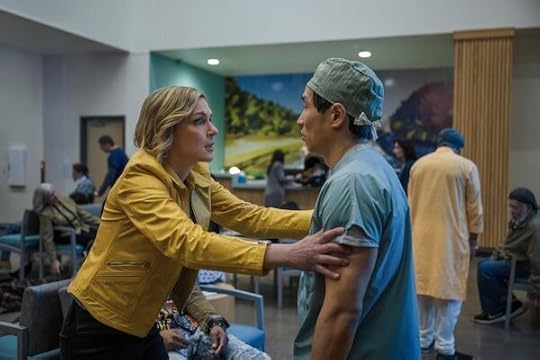
Because I would attempt to reason with it. Unlike most of the big bads we typically see in the genre, this one seems most amenable to being reasoned with.
The image above, by Anna Kooris, is courtesy Apple TV+ via a Globe and Mail review.
Spoilers for Pluribus, obviously. Let's say I was called to Carol's meeting as one of the few people immune to the virus. Give me a bit of artistic license as I also incorporate knowledge given elsewhere in the first three episodes.
=+=+=
So, Zosia, I'll address you since you're speaking on behalf of all (waves hand around at the world) this, and you have come up with no better collective name for yourselves than "us".��
I'm not as hostile as Carol is. I haven't had the shock that she's had, and I can see how a human hive mind would be an interesting new opportunity for the human race.
But I have questions.
I want to say that I appreciate you trying to be understanding of and accommodating to our horror in the face of what's just happened. I do appreciate that you are trying to be nice, as creepy though that is, especially when you speak in unison like grade two students welcoming a guest to the classroom. I have to admit that, in many ways, the world is better now, than what it was. There is no more war. You seem to be working towards eliminating poverty. There's no more disinformation. No conspiracy theorists. There is no more crime. There is no more killing. That seems to be one of your biological imperatives you speak of: you have a deep abiding aversion to killing. As someone who doesn't want to be killed, I appreciate that.
Though, I have to ask, the meat you've served us at this meal: it's not going to be around for much longer, is it? What you've made us comes entirely from the refrigerated supply left behind back before all (waves hand around at the world, again) this. The slaughterhouses are closed, aren't they? The pigs and beef cattle are being allowed to spend the rest of their lives roaming, aren't they? Will there be eggs in our future, though? You don't have to kill the chickens to get those. Dairy? Five-year-old cheddar? Will our coffees have cream? Certainly, there should be honey, since beekeepers do their best to keep their hives alive and healthy. So, it's not going to be an entirely a vegan world, is it? I'll do my best to live without bacon.
I do appreciate that you seem to want to protect and preserve the sum total of all human knowledge. But, speaking to you, as much as you try to speak from Zosia's experience, or from Helen's memory, or from the loved ones of all of us you've brought here, there are times when there are people speaking to us, and there are times when I know the words come from the virus.
You don't want to kill, at all? Commendable. But that's not humans talking. You have in your collective consciousness humans who hunted for sport. I viscerally disagree with them, but I'd be interested in hearing what they're saying in your head, right now. You want us to be happy, and will move heaven and Earth to make us happy, but happy doing what? What is our purpose now? Carol Sturka is never going to publish another book again. The moment a new manuscript gets to her publisher, the entire human race will have read it. Laxmi's son is not going to have to go to school anymore -- no kids do -- because the sum total of all human knowledge is now in their heads.
Are there concerts going on in the world right now? Is there stand-up? Or were they all cancelled? Not that any warning was needed or refunds offered -- everybody already knew, and money means nothing, anymore. And if there are concerts in the future, once we're all part of the happy hive mind, how will we choose who sings, and who listens?
And then there is the fact that, as much as you wanted and still want to help us, and as happy as the people around us seem to be, you still trampled over the consent of well over seven billion people.
You speak of biological imperatives. That's clearly the virus talking, spelling out all creatures' instinctual desires to do everything they can to live and grow. What are the other imperatives? Tell me: is the human race right now setting aside some of its resources and time building a massive communications array to beam out the RNA sequence for other planets to find? That would seem to be a natural progression of your biological imperative to exist and grow. Or is that array going to point back to that star 600 light-years away, telling them, "We got your message. We're here. Come, let us join the galactic consciousness!"
Note, I'm not automatically opposed to joining a galactic consciousness. That's one way to achieve immortality and get through the Great Filter.
Unless you are that great filter.
You're working on figuring out why we're immune to your psychic glue, and once you find a way for us to join you, you will make us join you, whether we agree to or not, because you want us to be happy, and having us join you is the way you think we can be happiest of all. You spoke of your biological imperative to Carol, using the metaphor of seeing someone drowning and throwing them a life preserver. You wouldn't stop to think, you said, you'd just do it.
I respect that. I respect that you want to help. But because you never stopped to think when you saw us drowning, you never thought that we might have gills.
You have the sum total of all human knowledge and living memory inside you, right now, and you want us to be happy. If that's the case, use that knowledge and memory to try to think outside your biological imperatives about what I've told you. When that happens, what do you think we should do?
=+=+=


November 18, 2025
From Many Pluribus, episodes 1-3, reviewed.
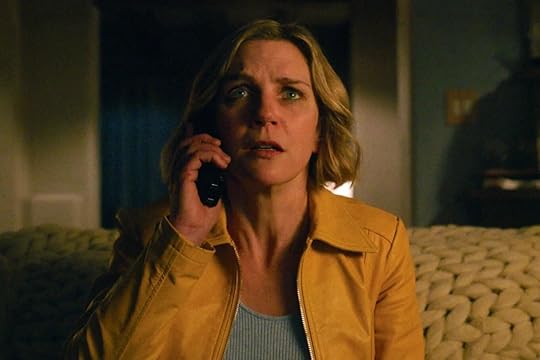 Image courtesy Apple TV+
Apple TV seems to be providing some of the more highly original, thought provoking, and thoroughly creepy science fiction television out there today. The first season of Severance blew my mind. And, while Murderbot wasn't deeply creepy, the adaptation still knocked it out of the park, in my opinion. And then we come to Pluribus, the latest series from Breaking Bad and Better Caul Saul creator Vince Gilligan, which turns a whole lot of dystopian apocalyptic tropes on their head, and makes us think deeply about what it means to be an individual, and human.
Spoilers obviously follow, so if you don't want to be spoiled, refrain from reading after the break. And, honestly, this show hits better, the less you know of it, going into the first episode. So, if you haven't seen it, go see it, then come back to this review.
=+=+=
All right, you were warned.
The story starts under a night sky, as a clock counts down from just under 440 days. Post-doctoral students and interns at a SETI-like communications array detect a signal from space. While not as exuberant a first contact scene as in Contact, the young scientists believably can barely contain their increasing glee as the authenticity of the signal from 600 light years away is confirmed, the intelligence behind it undoubtable. And the signal carries an unusual pattern. It seems to be split into four parts, each emitting in a different pattern. What is this quatenary pattern? Some encryption code? Or something a lot more basic?
Upon realizing that the signal is actually a DNA sequence, the governments of the world, showing unfortunately natural human curiosity, start producing this DNA to see what it can do. At first, it appears to do bupkis to the assortment of animals they try it on. But when an apparently-dead subject rat two workers try to dispose of (thankfully while wearing biohazard gear) wakes up and bites one, the plague has found a host intelligent enough to get started on its plan.
While this has a bit of the feel of a zombie plague, these "zombies" move with a choreography that is truly creepy to behold. Moving as though they know what every single one of them is thinking, they set about preparing to infect all of humanity. And the countdown clock counts down. Still another few weeks to go.
The first episode of Pluribus is a slow burn. We break off from the building invasion/plague to follow cynical best-selling romance author Carol Sturka as she finishes off her book tour alongside her agent/lover Helen. Why should we care about this woman? As a non-best-selling author, I found myself somewhat unsympathetic to her complaints about the fame she's received from art she sees as, at best, formulaic. But, stay tuned; actress Rhea Seehorn puts on a masterful performance, especially when the poop hits the fan and the whole human race, everywhere, including her partner Helen, goes into seizure.
Pluribus is billed as a dark comedy and you see it as Carol, panicked almost out of her mind, still improvises wonderfully to get her partner onto a makeshift stretcher, into the back of a borrowed pick-up truck (after shoving the seizing driver into the passenger seat) and driving to the nearest hospital, where she finds everybody there -- patients, doctors, nurses, everyone -- affected. She still does the best she can, trying to tend to Helen, and giving her CPR after the woman comes out of the seizure, smiles beatifically at her, and dies.
At this time, everybody else wakes up, and before you can say 'Zombie Apocalypse', writer Vince Gilligan flips the script. The "Zombies" don't try to eat Carol. A doctor tries to kiss her, but backs off when Carol adamantly rejects him. They seem far more interested in taking Helen's body away and cleaning up the damage around them than they are in Carol. When Carol yells at them to back off and demands to know what they want, the whole crowd replies, in unison, "We just wanna help, Carol."
That is an utterly chilling moment. That is the last thing you'd expect the Zombies to say, and it reveals so much. These people are now operating as a single entity. They have taken over completely. And, most of all, they know Carol's name.
Weirder still, the people obey Carol's orders. When a creepy neighbour child is told to go away and leave her alone after pointing out to Carol at her doorstep where the spare key is, every single neighbour on Carol's street piles into their cars and and goes away, leaving Carol alone.
Carol, having rushed home with Helen, driving past mobs of infected people fighting to put the fires out, rather than to stop them, gets to her TV set and tries to get news from the rest of the world. To her delight, C-SPAN is still running, but tuning in, she sees an unfamiliar man in a suit standing behind the presidential podium, smiling at the camera, while the ticker crawl reads, "No pressure. We know you've got questions. Carol, when you're ready you can reach us at this number."
The highest surviving member of the former American chain of command, who happened to have a suit on, fills Carol in on the details. Humanity is now a hive mind. It's all just the human race, they assure her. They know her because they have the memories of the people who know Carol, including Helen, who they swear was happy to join the collective, even as she died. They assure Carol that her mind is her own. They just want her to be happy, as they are happy. They promise to try and not do anything that would hurt her or frighten her. But as she is now one of only twelve humans who has proven immune to the hive mind virus, they're doing what they can to remove that obstacle and welcome Carol into their living embrace.
"I thought you said my mind was my own," Carol replies, showing great feistiness even while surely being near, if not past, her breaking point.
Be sure to get close for the C-SPAN conversation. The words on the lower-third of Carol's screen are truly a delight to behold.
Pluribus, at least the first three episodes I've seen, is wonderfully acted, fantastically directed, and amazingly written. Vince Gilligan and his partners have put together a scenario that viewers can engage with on many levels. You can follow along with and sympathize with Carol's visceral anger over what has happened, and her drive to bring things back to the way things were, as unrealistic though that may be. And in terms of what she's facing, Vince has crafted an infinitely creepy and alien adversary that's disturbingly easy to like, both for its humanity, and inhumanity. The concept of a human hive-mind raises tons of questions that gets your brain rolling, in much the way the concept at the heart of Severence does. How does this work? What is humanity's new purpose? What the heck is going to happen next?
One of my elevator pitch lines for The Curator of Forgotten Things is "what if the robots took over, but they were nice about it." I feel the same vibe here. This is the coziest of cozy apocalypses, and yet it's more frightening than your typical alien or monster thrash. The antagonist that just wants to help is rare, and probably difficult to write well, but when done well, as done here, it's as scary as it is strangely compelling. Helping in this regard is actress Karolina Wydra as Zosia, who acts as a spokesperson for the hive mind, and is developing an excellent chemistry with Rhea Seehorn's Carol.
Pluribus is running for nine episodes this season, and reports on the original deal suggest that two seasons have been commissioned. It's still early to fully assess this series, but I'm on board. And I highly recommend that everybody else get aboard.
We need to see this. Together. All in one.
November 6, 2025
(Fiction Special) Big Fish, Little Fish(Also, come celebrate with us at Bakka-Phoenix tomorrow!)
I'll be attending the Bakka-Phoenix launch of Stephen Kotowych's Year's Best Canadian Fantasy & Science Fiction, taking place at Bakka-Phoenix books at 84 Harbord Street in Toronto tomorrow (Saturday, November 8) at 3 p.m. There will be readings from some of the authors, snacks, and an opportunity to buy books and have them signed. I'm looking forward to bringing my copy over and having other authors sign it. Either way, it sounds like a great event, and I look forward to seeing everyone there.
Stephen has collected some great stories, and you would all do well to buy this collection. You could do it at Bakka-Phoenix, or order it through your local independent bookstore.
I'm proud and honoured to have one of my stories from Tales from the Silence, "After the Apocalypse in Moosonee" included in this collection, and I hope you enjoy it. To help celebrate, I'd like to make one of my other stories from Tales from the Silence available for free. "Big Fish, Little Fish" is sort of a sequel, or at least a continuation of "After the Apocalypse in Moosonee", as we follow one of the characters (Drew McMurtry, who blew his opportunity for peaceful contact with the residents of Moosonee) to Toronto as it's rebuilding from societal collapse.
This is the third time I've used Toronto as a setting for my stories. The first was The Young City which was mostly set in 1884, then there's The Night Girl, which is almost present day. "Big Fish, Little Fish" takes place in the mid-to-late 22nd century, and I had a lot of fun weaving hints of intervening history into the descriptions of post-apocalyptic future Toronto trying to be "Toronto the Good". The story also recalls some of my times visiting my father's office as he worked in the government office blocks around Queen's Park, which is now the seat of the "Toronto District Government".
You can see this story in print or as an eBook along with all the other fine stores of Tales from the Silence by ordering the book from your local independent bookstore, or directly from Shadowpaw Press. Either way, please enjoy this tale.
(The enclosed photograph is entitled Toronto After a Rain Storm and was taken by Andreas Duess. The picture is taken from Wikimedia Commons in accordance with Andreas' Creative Commons License)
=+=+=
Big Fish, Little Fish, by James Bow

Moosonee, James Bay Shore, November 30, 2177
When McMurtry returned to Moosonee, he found it empty.
He jumped off the train onto the platform. Soldiers followed, rifles drawn, sweeping the Meeting Hall and the Main Street before a party headed toward the community centre, but he could tell what their report would be. All the stores were closed. The coffee shop had a sign on its window saying, "Thank you for your patronage." Above the sound of soldiers' shouts and footfalls, he heard only the gulls above the estuary and the rustle of distant dry leaves.
He tightened the collar of his cloak. The first flakes of snow fell around him.
A sergeant ran up from the train station. He saluted. "Mr. McMurtry? Telegram, Senior."
McMurtry took the slip of paper, unfolded it, read it, and folded it again. He sighed.
"Senior?" said the soldier.
"It's okay," McMurtry replied. He headed for the train. "I have to go and make a report."
#
McMurtry sat in silence as his train headed south. He stared out at verdant forests, rutted roads, and ruined towns rebuilding into villages. The further he went, the better repaired the buildings were and the more activity around the stations.
What did I do wrong? he thought. Why did they run away from me?
He thought back to the explosion, the chasm opening up in the trestle, the young woman standing at the other end, rifle in hand, a distant figure of defiance.
And he saw that woman again at Washago Station, just before Lake Simcoe.
He caught it out of the corner of his eye, the figure, her arms by her sides, rifle in hand, the dark, whole-body stare. He blinked and peered out his window at the people on the platform. But he couldn't see the woman now. The train lurched and started forward. McMurtry settled back in his seat and stared ahead.
#
"What did you say to them?"
McMurtry stood before Minister Dinsdale, hands clasped in front of him. "Nothing that I shouldn't have, Minister."
Dinsdale peered at McMurtry over his glasses. "You must have said something that alarmed them. That alerted them."
The crowd-control guns were probably what alerted them. I said we shouldn't bring them, but you overruled me. He swallowed these words. "I said I was with the government and that we were here to help."
Dinsdale grunted. "Well, we have the port lands, at least. That's not nothing. We'll start shipping supplies and personnel ahead of the winter. We'll have a functioning and defendable port by the spring. But if we spooked the locals, we don't know what they're saying to other locals. We don't know what reception we'll get in Attawapiskat or up the Ungava. The Greenlanders could take advantage of this dissension."
Not Greenlanders, Kalaallit Nunat, McMurtry thought, but he kept his head down and said nothing.
Dinsdale tapped at his tablet a moment, then looked up. "What are you still doing here?"
"Um��.��.��." McMurtry swallowed. "I just wanted to know, Minister��.��.��. I was grateful to be sent into the field. I just��.��.��. When will my next assignment be?"
Dinsdale frowned. "We'll tell you. In the meantime, go to your desk. I'm sure there's paperwork to do."
McMurtry stepped back, fidgeting. "Yes, Minister." He turned away.
"McMurtry?"
He turned, hope rising.
"See your office manager. We've reassigned the desks."
McMurtry nodded and left.
#
"This way, Senior." A young woman holding a clipboard led McMurtry, holding a box of personal effects, between rows of crates, battered chairs, and sheets on ropes, separating desks. At least the light was natural, from windows propped open with sticks, though the air remained musty. McMurtry shuddered. This place will be an oven come summer.
The Whitney Block had been built almost two hundred fifty years before beside Queen's Park, the seat of the old Ontario government that now held Toronto's District Council. Its upper floors had spent most of their life abandoned, unable to be modernized, before being pressed into service as one of the few structurally sound office buildings left in the city. McMurtry stepped around electricians taping wires to the walls and ceiling while the woman led him past others setting up and personalizing their desks.
"We've just opened this floor," the woman continued. "Cleaned out a lot of pigeon droppings, I'm told. Sent them to the farms in Niagara."
"Ah." He dodged a worker hurrying from his desk, report tablets under his arm. He looked at the woman, at her close-cropped dark hair, red lips, and bright blue eyes. "Um��.��.��. Listen, what's your name?"
"Nelissa, Senior." She gave him a bright smile. "Nelissa Stronach, general administrative assistant. I just came aboard."
"Ah." McMurtry smiled back. "Well��.��.��. welcome aboard, Nelissa. I'm Drew McMurtry." He wasn't sure of his current title. "You can call me Drew."
She nodded. "Certainly, Senior." They'd reached the last desk in the row. She gestured at it. "This, I believe, is yours." She stood, hands clasped in front of her, waiting.
McMurtry stared at his box of possessions, then at her. He set the box down. "Um��.��.��. thank you."
She nodded and left.
McMurtry sat at his desk. A young man strode up, dumped a pile of folders in his inbox, and stalked off.
McMurtry looked around a moment, at the room that took up most of the floor, at his office colleagues. He fished inside his box of possessions and pulled out his new nameplate. Apparently, he was a Deputy Adviser, Accounts Administration, whatever that meant.
He thought back to Moosonee. Where had the residents all gone? That girl��.��.��. Baker told me that she'd had an ocular implant that needed replacing. What happened to her? Did she get help? Did she lose the eye?
What could I have done differently?
I could have done something.
Couldn't I?
His gaze fell on the wall beside him. A framed picture was mounted on it, showing a line of fish swimming in the ocean. Well, the smallest, on the left, was swimming. The one behind it had its mouth open to eat it. The one behind the second also had its jaws wide, as did the last one, the biggest of all.
Beneath the picture, in white serif capital letters against a black border, was the word "CONTINUITY." He wondered if it was supposed to be inspirational.
A silly thing. McMurtry stood up. I should be able to find a decent replacement. He grabbed the picture, only to have his fingers slip off. He gripped the frame again, but it refused to move. He couldn't even get his finger behind it. He stepped back, staring at the picture.
The picture let itself be stared at.
Around him, the office buzzed with hushed conversations and the scrabble of pencils.
McMurtry returned to his desk, grabbed the first folder from his tray--Form I-121989, Authorizing the intake of produce from newly acquired lands in the Grey-Bruce District--picked up a pencil, put his head down, and began to work.
#
Form W-583145: Authorization to transfer 10,000 pounds of non-perishable food into the ration pool for distribution among the population.
Form T-68223: Authorization to commit forty tractors and related support equipment to the farms of Haliburton and to coordinate their use by local farmers.
Report C-618: On normalizing relations with the Dominion of Montreal; benefits and points of contention.
#
December 15, 2178
It may not have been a corner office--though McMurtry had never aspired to one--but at least he could see the See-En Tower through the nearest window. The broken spire rose over the city as it had done for two centuries. Some downtown towers remained abandoned, south windows blown in, north windows blown out, their upper floors useless until elevators could be rebuilt, and there was plenty of rebuilding still to be done. This hadn't stopped people from taking up residence in the lower floors. McMurtry wasn't sure if they should do that, but it wasn't his problem, nor his department.
On the sidewalks of Queen's Park Circle, men and women strode to work, cloaks flapping behind them. McMurtry smiled to see them, then frowned as he saw one woman not walking. She stood, people flowing around her, and as McMurtry watched, she looked up.
He couldn't see her face, but he felt their gaze connect. In her silhouette, he thought of the woman standing on the other side of the broken bridge a year ago.
"Catch!" Nelissa shouted.
He looked up as a roll of red-and-green streamer sailed at his head. "Wha--hey!" He batted it out of the air, then caught it. "What was that for?"
"It's time to redecorate your desk, Senior," Nelissa called. "Don't be a fuddy-duddy! You don't want us decorating your desk for you."
"You really don't," said Brian from somewhere beneath a mass of tinsel. Beside him, Agatha pulled tape from its dispenser like a sword from its sheath.
McMurtry sighed. "Fine! Toss me the blue streamer." He caught the bundle Nelissa tossed him. He looked out his window again, but whoever had been standing below, if they had been there, had gone.
The door to the Minister's office opened. Dinsdale poked his head out. "McMurtry? With me, please."
Everybody in the office gave McMurtry a look of sympathy and support, combined with a shrapnel-avoiding half-step back.
"I'm sure it's fine," he muttered. He handed the streamers back to Nelissa. "Keep decorating." He walked to Dinsdale's office.
He closed the door behind him. Dinsdale stood beside his desk, flipping through McMurtry's report. "Good work on the Montrealer report. A lot of valuable insights here. It will be put to good use in the District Governor's office."
McMurtry quietly let out the breath he was holding. "Thank you, Minister."
Dinsdale set down the report and looked directly at McMurtry. "I thought you'd appreciate knowing this: we've repaired the Coast Road up James Bay. Our people have occupied Attawapiskat."
McMurtry blinked. "Minister?" he said at last.
"Port Moosonee is secure," Dinsdale replied. "Our shipments start in earnest this spring, and I expect we'll have our first contact with ports in Siberia this summer. Happy Holly-mass."
"Oh." McMurtry caught a smell of salt air and heard the sound of gulls and the rustle of barren trees.
"I thought you'd be pleased that our James Bay initiative was a success." Dinsdale gave McMurtry a stern look. "In spite of whatever caused our initial misunderstanding last year."
"Yes, Minister."
Dinsdale picked up a tablet and began sorting through the notes. McMurtry turned to go.
He hesitated at Dinsdale's door. "Minister��.��.��.? Were there people in Attawapiskat when we got there?"
Dinsdale looked up. "Hmm?" He glanced at his tablet. "Apparently. This time, they chose not to run."
McMurtry stayed with his hand on the doorknob. "Was there��.��.��. resistance?"
Dinsdale shrugged and set the tablet aside. "Nothing we couldn't handle."
McMurtry opened his mouth to say something but stopped.
"Don't worry about them," said Dinsdale. "They're under our protection, now. They should be grateful." He gave McMurtry a cool smile. "Go back to the party. I hear the Secret Santa's about to start."
Outside, Nasser, sitting at the desk closest to Dinsdale's door, looked up. "Bad news?"
McMurtry jerked back to the present. "What? Oh! Uh��.��.��. no. Not bad news. Good news��.��.��. I guess."
He walked through the Holly-mass preparations to his desk. He thought about looking out the window but decided not to in case the silhouette was there. As he reached his chair, he found himself staring at the motivational picture. "Wait." It was as he'd seen it, every working day of his life this past year, but with a difference. The line of fish with jaws open to eat each other remained, but the smallest fish wasn't there anymore. "Where did the little fish go?" he muttered.
"What little fish?"
He jumped as Nelissa stepped beside him. Before he could think of anything different to say, he blurted, "In the picture?"
"What picture?"
McMurtry's mouth hung open.
But Nelissa gave him a smile and shoved a foil-wrapped box in his hands. "Happy Holly-mass."
He blinked at her. "Isn't it supposed to be a Secret Santa?"
She patted his arm and gave him a chaste kiss on his cheek. "I think we have enough secrets, don't you?" She turned away. "Come on. We don't want to miss out on the cocoa."
He gave the picture one more look before he followed her.
#
Form M-81834: An authorization to send crowd-control equipment and military personnel vehicles to the James Bay shores.
Form M-82337: An authorization to send additional ammunition, fuel, and military rations to the James Bay shores.
Report C-723: The benefits and drawbacks of opening trade with the California-Cascade Federation.
#
McMurtry hesitated after he filed the report in his outbox. He pulled some of the forms from before and looked them over. Behind him, the city disappeared in snow.
We were supposed to help. Why do I feel like we're not helping?
And, from some deeper part of his brain: What did the little fish do to anybody?
What can I do about this? I should do something about this. But what can I do?
What did Sergeant Baker tell me?
He opened his file drawer, sorted through requisition forms, and pulled one free. He grabbed a pencil from its holder.
Form W-338219: Authorization for the transfer of medical supplies, including implants, to the James Bay shores.
#
July 21, 2183
"Oh!" Nelissa covered her face. "This is so embarrassing!"
McMurtry let out a short laugh. "And yet, you agreed to it."
"My patriotic duty," Nelissa shot back. She covered her face in her hands again. "Still embarrassing!"
"It'll be fine," said Brian. There were murmurs of agreement from the rest of the office staff.
Nasser cleared their throat. "It will be fine��.��.��. Senior."
Brian flushed. "Oh, right. Sorry. I'll remember next time." He paused, then added, "Senior."
Nelissa glanced at McMurtry. That's also embarrassing, she mouthed.
He smiled and shrugged.
They stood at the windows, looking down from the Whitney Block at the restored Hepburn Block, an eight-storey-tall glass-and-concrete box. Just forty years younger than this building and so much more work to be done, McMurtry thought. They built things quickly in the 1960s and built things to last in the 1920s.
Across part of the face of the Hepburn Block, tarps came off, sliding to the ground. Behind them, against a blue background with a red maple leaf in the top corner, was a stylized image of Nelissa, cloak billowing, facing the future with determination. Level with her feet in block letters half a storey tall were the words "FORWARD TOGETHER."
Beside him, Nelissa's face was as red as the maple leaf, but as her colleagues clapped and cheered, she smiled.
"The first of a dozen across the government buildings of this city," said Brian. "Senior, you promise you'll remember us when you're off being rich and famous?"
She huffed. "I'm still working here, you know." She gestured out the window. "That's a side job for public morale." She glared and pointed at one of her guffawing colleagues. "Shut up, you!" Then she laughed and went on. "I'm still just a Deputy Adviser, like Drew here. That's what I'll stay for now."
Somewhere in the crowd, McMurtry thought he heard someone mutter, "Not for as long as Drew's been Deputy Adviser, surely."
"Shush," said someone else.
Drew ignored them.
At the next desk, Nathan picked up his tablet. He frowned. "Hey, do you folks think we should be worried about this Federation business?"
McMurtry looked over. "Which one?"
Nathan looked confused. "You mean, 'which business'?"
"No, I mean which Federation," McMurtry replied. "There are five."
"Five?"
"Yeah." Nelissa counted them off on her fingers. "The Federation of Oceana and Micronesia, the Federation of African Nations, the European Federation--which is really getting up everybody's nose in the Arctic--, la Federation des las Americas, and the California-Cascade Federation."
"So," Brian drawled, "FOAM, FAM, EFF, FAS and, er��.��.��. KIFF?"
"It's not really our business," said McMurtry. "We're the Ministry of Northern Affairs, remember? Unless it's the Europeans messing around in the Arctic, the rest are just someone else's department."
"You sure?" Nathan held up his tablet. "It looks like the FAS and the Californians are about to get into it. They've had a naval encounter off the tip of the Baja."
"Which is on the other side of this continent," said McMurtry. "Diagonally."
Nelissa sighed. "Still, you'd think we'd have learned to work together better with everything that's happened since the Manhattan Sea Wall."
In the Minister's office, they heard Dinsdale say, "Thank you, District Governor. I'll check."
Everyone headed for their desks to look busy. Dinsdale emerged, looking preoccupied, and headed for Nasser's desk, whispering to them. Nasser nodded and pulled some folders from their inbox. McMurtry found himself standing by the window with Nelissa. He saw her glance at her eight-storey-tall likeness and smile.
"Congratulations," he said and held out a hand. "On this and the promotion."
She clasped his hand and smiled at him warmly. "Thanks, Drew."
The moment stretched, the two staring at each other. Nelissa raised an eyebrow. McMurtry opened his mouth to form a question about coffee and a place to drink it. If only he could figure out the words.
Behind them, Dinsdale straightened up. "Thank you, Nasser."
McMurtry stepped back. Nelissa's smile turned sad. "We should get back to work," she said.
"Work." He coughed. "Yeah. Uh--" But she was already heading for her desk.
Dinsdale beamed at her as he approached. "There's our face of hope!" Nelissa blushed anew.
McMurtry tucked his head, grabbed a folder from his inbox, and got back to work.
#
Report C-768: The challenges of trading with the European Federation; best approaches for access.
Report C-850: Reforming the United Nations of Earth, Assessment of Possible Initiatives.
Report C-903: The potential threat of the Kalaallit Nation on Toronto and Montreal interests. Is a reassessment in order?
#
September 14, 2188
Nelissa tapped her fingers on McMurtry's desk. He leaned back, frowning at the metal band on her ring finger. Well, he thought. You had your chance.
"What are we looking at?" Nelissa asked.
He snapped back to attention. Beside Nelissa, Minister Dinsdale zoomed the tablet in on a photograph. He sucked his teeth. "I think McMurtry's assessment is accurate. This is Lake Champlain, and these appear to be a massing of amphibious forces. We know Montreal doesn't have this amount of equipment. Besides, these are facing north."
"So, the Free State of Boston," said McMurtry. "And the numbers suggest they're planning an attack."
Dinsdale darkened the tablet. "A fair assessment, McMurtry."
"Why did this end up in my inbox?" Nelissa asked. "And where could Boston have got so much equipment or soldiers?"
"I can only speculate on the first question," Dinsdale replied. "This wouldn't be the first piece of misaddressed mail this or any government has seen. As for the soldiers and equipment��.��.��." He lowered his voice. "We've been monitoring military buildup along the Atlantic coast, likely supported by the Federation."
"Which one," Nelissa began automatically. "There are five--"
"Four, actually," Dinsdale cut in.
"Four?" McMurtry echoed.
"La Federation des las Americas and the California-Cascade Federation announced a merger yesterday," Dinsdale replied. "By mutual agreement, or so they claim. Troops moved across the Colorado River a couple of hours later."
McMurtry and Nelissa straightened up.
"It may be three shortly," Dinsdale continued. "Reports suggest the Europeans and the Africans may be close to an agreement, and this one might actually be an agreement." He slipped the tablet into a folder. "Good work, you two. I'll get this to the people responsible." He turned away.
"Minister!" McMurtry jumped to his feet, then froze as Dinsdale turned back, eyebrows raised. McMurtry stammered but continued, "What are we going to do about this? Aren't we going to warn the Montrealers?"
Dinsdale pursed his lips. "They probably already know. If not, well, worse for them."
Nelissa gasped. "Shouldn't we do something?"
"Not our department," Dinsdale replied. "Ministry of Northern Affairs, remember? Others in this government are already paying attention, and they may be saying that it does us no good to tie ourselves up in a war the Dominion of Montreal will likely lose." A smile flickered on his lips. "And it's not without its silver lining. This may be a good opportunity to bolster our Arctic defences without interference from the Ungava Peninsula." He raised the folder in a salute. "Thank you again, you two. Keep up the good work."
He walked away, leaving Nelissa and McMurtry staring. They looked at each other, Nelissa's expression a plea. In the end, McMurtry could only shrug.
Nelissa turned away with a huff of disappointment.
McMurtry watched her go, shame rising. He pushed himself out of his seat. But before he could follow, something caught him out of the corner of his eye, and he found himself staring at the CONTINUITY inspirational picture on the wall.
The line of fish eating fish wasn't a line anymore. Instead, the fish formed a circle, chasing each other, jaws wide.
He ran a finger over the top of the frame. It came away grey with dust.
He looked closer at the picture. He could see the texture of the paper behind the glass.
And reflected in the glass��.��.��.
For a moment, he stared into the reflection of the woman at the bridge. She was right beside his desk, glaring. But when he turned around, the space was empty. The office ticked along like Tuesday.
He glanced once more at the picture, wiped the dust from his finger, then grabbed his cloak and headed for the stairs. He needed to walk.
#
Report C-1577, The obligations and benefits of military cooperation with the Free State of Boston.
Report C-1855, Military assessment of the activities of Appalachian piracy on Lake Eerie.
Report C-1900, Military assessment of the cessation of acts of Appalachian piracy on Lake Eerie.
Report C-2072, An assessment of the state of the Appalachian government, given the attacks on its southern borders.
#
March 7, 2190
McMurtry hummed as he hopped over the slush at the curb. The sun warmed his face, though the wind chilled his back. He nodded good morning to familiar strangers in the street. He nodded to the eight-storey image of Nelissa on the Hepburn Block. It had been a good weekend: just himself at home curled up with a good book.
He grabbed the morning order of coffee from the espresso stand in the lobby and hurried up the steps. He stepped into the office and staggered back from the volley of raised voices.
"Listen to yourselves," Nelissa shouted. "You make it sound like they're pontooning across Lake Eerie right now! The Appalachians haven't signalled surrender!"
McMurtry's brow furrowed. "What's going--"
"The Appalachians haven't signalled a thing for a whole day now," said Brian, grim. "Not since--who are they, again? The Federales or the Californians?"
"I don't know!" Nathan moaned. "They've changed their name again! I think they're calling themselves the Federation of Earth Nations." He waved his arms. "Whatever! They're playing this world like a godsdamn game of Risk!"
McMurtry set the coffee down and raised his hands. "What are you--"
"Whoever these people are, they're grouping together and moving in," said Brian. "The rumours I've heard suggest they've got ten thousand troops garrisoned in the ruins of Cleveland, ready to roll."
"They wouldn't!" Nelissa gasped. "They wouldn't dare!"
"Okay, enough!" McMurtry yelled. In the silence that followed, he continued more quietly. "First thing's first: where's Minister Dinsdale?"
"Across the street," said Nasser from their desk. They nodded out the window at Queen's Park. "Meeting with the District Governor."
"That's good," said McMurtry. "Because if he was here, he might have a few choice words about us panicking about--" He frowned. "What are we panicking about?"
"Haven't you seen the news?" Agnes handed over a tablet. "The Appalachian government went silent thirty-six hours ago."
McMurtry flipped through the news headlines.
UNKNOWN INCIDENT AT MISSISSIPPI-OHIO CONFLUENCE.
FEDERATION INVOLVEMENT FROM TEXARKANA BASES?
NO ANSWERS FROM GOVERNMENT OFFICIALS!
McMurtry checked the site address. "These are private media, not official government reports." He handed the tablet back. "If something was on its way, we'd know. You're panicking over a lack of information, over rumours. We need facts."
"Drew's right," said Nelissa. "I'm sure the Minister is being briefed on this right now. We'll ask him when he gets back."
"Um��.��.��. everybody?" Nassar stood, staring out their window at Queen's Park. They beckoned everyone over. "Something's happening at the legislature."
Vehicles were lined up in front of the legislature building. People were running out of the building in them. As soon as each one was full, it peeled off, screeching as it turned a corner, heading north.
"That--" Brian began. But his drawl died in his throat. There was no joke to make of this. No assurance, either.
McMurtry drew a deep breath. "I'm sure that there's a reasonable explanation--"
The stairwell door creaked open. Everybody turned. Minister Dinsdale walked in, hands in his pockets, eyes on the carpet, shoulders slouched. Questions died on everyone's lips. Everyone stared as Dinsdale shuffled past them to his office door.
At his door, he hesitated, then turned and gave them all a tight smile. "I'm proud of you all."
Everybody stared as if they were under a spell.
He nodded. "Now, go home, all of you. Right now. That's the safest place to be."
He stepped back and shut the door.
"What?" The spell broke. They started forward, but Nelissa shouted, "Wait!" They looked at her, and as they did, they became aware of a new sound rising: a rumble to the south. Everybody stepped to the windows and looked out at the city.
People stood on the sidewalks below, staring south. The few vehicles on the street had stopped, people getting out to stare as the rumble rose. It was a clatter, with a whine of motors and gears, backed by a steadily rising buzz.
"Are those tank treads?" Brian whispered.
"No, they're plane engines," said Nelissa.
The answer came to McMurtry. "They're both."
Specks appeared in the southern sky, behind the See-En Tower and the renewing skyscrapers, growing bigger, flattening out to wings with propellers.
Then, triangular specks rushed in above the propeller planes. They burst past in the sky above with a roar.
Everybody staggered back. Brian knocked into McMurtry. He caught his foot on a desk leg and fell to the floor, knocking his head on the edge. Around him, everybody shouted.
"We got to get out of here!"
"Wait!" That was Nelissa.
"They're going to start bombing!"
"We can't stay here!"
"Run!"
McMurtry blinked through the pain in his temple, then rolled to one side to avoid the stampede. "Wait," he gasped. "Nelissa!" He blinked tears. "Everybody!"
The door slammed. The voices faded. The rumble and roar of tank treads and planes did not. McMurtry rolled onto his hands and knees, used the desk to haul himself up, and touched his forehead. It stung, but no blood came away on his fingers. That was a good sign, wasn't it?
He looked around at the empty office, made messy by everybody's hasty departure. For a moment, he didn't know what to do. Then he looked out at the south window again, at the propeller planes. Those are bombers.
He turned for the exit.
And found himself staring at the woman from the rail bridge, standing between him and the exit. She had an eyepatch where her implant had been and a rifle in her hand.
McMurtry blinked at the pain in his head. He struggled to focus. The woman spoke with grim calm. "You pushed us aside. Then you stood aside as your neighbours got overrun. Now, it's just you." She folded her arms. "You are going to learn what it's like to be overrun. You are going to understand what it's like to have no one in your corner. You are going to know how it feels when there's no one to help you now."
McMurtry took a shuddering breath. "Please--"
She stepped aside, clearing the way to the stairwell door. "Run!"
Terror took him, and he ran, clattering down the stairs, staggering at the bottom landing, crashing through the door into reception. The lobby was empty, but it vibrated with the rumble of approaching war machines. He shoved through the revolving door into the front courtyard.
The traffic was gone. The people were gone, fled to their nearest hiding spaces. Only the determined stare of Nelissa on the eight-story face of the Hepburn Block greeted him. The sounds of tank treads pressed closer, and he ran, past government buildings, broken subway entrances, repairing hospitals. At the ancient memorial, The Surrender of Saint Gumby, he staggered to a stop, seeing the woman from the bridge standing at its base, arms folded, head tilted, unpatched eyebrow raised. Then the line of armoured vehicles swung into view at the south end of University Avenue.
He ran again. ��The slam of his footfalls echoed off glass and concrete. Every street had emptied, every store closed. Every house had its shutters drawn. He ran past more building-sized images of Nelissa looking calm and carrying on. He heard no gunfire, no explosions, but still, the rumble-clank of tank treads continued. The buzz of propellers became background. The roar of jets punctured his fog of pain and fear and made him run faster. He tripped on streetcar tracks and rolled, swinging back to his feet to run again, barely breaking step.
On the face of an apartment block, Nelissa blew him a kiss.
Finally, he reached his own street, ran to his own house, dashed up his own walkway. He fumbled with the keys at the front door and staggered inside. The sounds of invasion continued. He locked and bolted the door, dragged a bookshelf in front of it, then backed away, down the hallway, down the stairs to his basement.
The sounds followed him into the musty darkness. He looked for something to hide under. In the end, he could only press himself into a corner, hugging his knees to his chest, wishing his friends were here to help. Wishing for Nelissa. Plane propellers and jet engines continued to roar, tank treads to rumble. He put his hands on his ears, buried his face in his knees. Please go away! Just make it go away!
Please!
#
McMurtry could not remember sleeping, but one moment, he blinked, and there was light filtering in through the small windows near the ceiling, and it was silent.
He lifted his head, then stood up unsteadily. No roar. No rumble. For a moment, he wondered if he was deaf, but he heard the scuff of his shoe against the concrete floor and, as he listened harder, the faint sounds of birdsong outside.
He let out his breath and leaned his forehead against a wall.
Knock! Knock! Knock! Knock!
He stumbled back, his heart pounding.
The knocking came again. He looked up at the ceiling. It came a third time as he climbed the stairs and a fourth time as he shouldered the bookcase aside and opened the front door.
A soldier stepped back, wearing camo gear and a rifle slung over his shoulder. His armband didn't show Toronto's colours, but a green flag with a gold four-pointed star McMurtry hadn't seen before. A second soldier stood two steps to the first soldier's left. A man with a clipboard stood between them, clean-shaven and wearing a hat, grey pants, and a long, beige cloak.
The man looked up from his clipboard. "Mr. McMurtry?"
McMurtry tried to stare past the man and the soldiers up and down the street. The houses still stood, as did the trees. None of his neighbours were outside. No vehicles rolled. But he did see pairs of soldiers walking up walkways and people with clipboards walking between them.
The man in front of him cleared his throat. "Mr. Drew McMurtry?"
McMurtry jerked to attention. He nodded.
"Mr. Drew McMurtry, Deputy Adviser, Accounts Administration at the Ministry of Northern Affairs in the Whitney Block?"
McMurtry nodded again.
The man flipped the pages of his clipboard, circled something, then nodded. "That's still standing." He looked up at McMurtry again. "Report to your desk for an all-staff meeting, nine o'clock tomorrow."
He nodded at McMurtry, then turned on his heel. The soldiers followed the man down the walkway, then up the street to the next house.
#
Soldiers swept the streets as McMurtry left for work. Guns slung over shoulders, they pushed brooms and carried garbage bags, corralling what remained of the litter. The soldiers didn't look at McMurtry, and McMurtry didn't look at them. None of the people who were suddenly back on the streets, heading to work, looked at the soldiers. They hurried along, their heads down, and so did he.
On the face of the Hepburn Block, soldiers were repainting the inspirational art piece, changing the blue background to green and painting over the maple leaf with the four-pointed star. They seemed to be painting a band on Nelissa's arm.
McMurtry hesitated at the revolving door but entered anyway. He shared a look with Ms. Stacey at reception, but neither said a word. He went upstairs.
He entered his floor and let out a breath of relief to see all his colleagues at their desks. "Thank--" he began, then stopped. Nelissa was jerking her head, gesturing to his seat. The Minister's office door was closed.
That's when he noticed the soldiers standing in the corners of the room. McMurtry took his seat. Silence stretched. The air felt as oppressive as summer.
Finally, the Minister's door jerked open, and a young man stepped out, holding a clipboard. At first, McMurtry thought it was the same man who was at his door the day before, but this man's hair was a little longer and darker, and his clothes were more ornate.
The man beamed at them. "Good morning! I'm delighted to see you've all turned up. I realize these past few hours have been stressful for you all, but that's in the past now. I'm your new supervisor. You may call me Mr. Scranton."
Scranton stepped to the middle of the floor and turned slowly, addressing everyone. "I want to assure you all that, while I may be new to this job, nothing is going to change about your work. Your hours will remain the same, your pay will remain the same, and your duties will remain the same. I expect nothing from you that you haven't already provided in the past. I know you all do exemplary, important work. Where would our governments be without the knowledge and institutional memory of the workers at their desks? We believe in the future, and we believe in moving toward that future. I'm delighted to have you all with me as we embark on that journey."
He nodded at everyone, his smile as bright as the dawn. "I'd like to say that I have an open-door policy. My door may be closed right now, but you're always welcome to knock. As your supervisor, think of me as a resource to help you be the best you can be at your job. So, ask me anything! Anything at all!"
"Where is Minister Dinsdale?" said McMurtry.
Around him, his colleagues tensed, but McMurtry stayed where he was, hands clasped on his desk. Scranton stared at him.
Then Scranton looked down and flipped through his clipboard. He ran a finger down a page, nodded, and then looked up. "That's irrelevant. Any other questions?"
Silence reigned.
"Good!" Scranton beamed. "So, before we return to work, I'd like to invite all of you to come to the meeting room to learn and take the oath of allegiance to the Federation of Earth Nations. This is entirely voluntary. Those who wish to take the oath, please stand up now."
For a moment, no one moved. Everyone glanced at each other, at Scranton, at the soldiers in the corners, at the soldiers' guns. Brian stood up.
He was followed by Agatha, who was followed by Nathan, and then by Nasser. McMurtry felt himself rise to his feet, though he wasn't sure if his brain had given the order. Soon, everyone in the office was standing.
Everyone except Nelissa.
She sat in her chair, back straight, hands clasped across her lap, staring straight ahead.
Behind her, McMurtry saw the woman from the bridge glaring at him.
Brian shifted as if to sit back down, but a soldier reached up and touched the butt of his gun. Brian halted, then slowly stood straight again.
Scranton nodded. "Fair enough. Everybody, let's go."
Scranton led the way. A soldier followed, nudging people forward. McMurtry stood, staring at Nelissa. She looked up at him, her eyes wide, her cheeks pale. For a moment, McMurtry could only stare back.
Then, a soldier was beside McMurtry. "Senior," the young man said, his voice low.
Nelissa's lips tightened. She focused ahead. Beside McMurtry, the soldier waited.
McMurtry looked down. He turned away. He followed the others to the meeting room, feeling the glare of the woman from the bridge on his back. The door closed behind him.
Scranton stood beside a whiteboard at the front of the room. On it, the Federation of Earth Nations's pledge of allegiance was written out in full.
"Everyone��.��.��." Scranton faced the whiteboard. "Place your right hand over your heart and recite the words before you as we say--"
Voices filled the room. "I, hereby accepting citizenship of the Federation of Earth Nations, voluntarily and consciously swear an oath to observe the Constitution and laws of the Federation of Earth Nations, the rights and freedoms of its citizens; to fulfill the duties of a Federation citizen for the benefit of the state and society; to protect the integrity of the Federation of Earth Nations; to be faithful to its leadership, and to respect its cultures, its history, and traditions."
#
Nelissa was not at her desk when they returned. McMurtry filed in with the others, silent.
At his desk, he stared a moment out his window. They were almost done repainting the eight-storey-tall poster to have a green background. They'd kept Nelissa's face, placed a Federation armband on her, and even kept the "FORWARD TOGETHER" message at her feet. Vehicles drifted along the streets below. People walked carefully. Soldiers swept litter from the sidewalks.
He turned away and found himself staring at the inspirational picture of CONTINUITY.
The line of fish was gone. It was just one fish, now facing the viewer, its mouth open wide.
McMurtry sat down. He pulled a folder from his inbox and grabbed a pencil.
He looked once at Nelissa's empty desk.
Then he put his head down and got back to work.
=+=+=
October 27, 2025
Thank You, Can*Con!
 My Great Circle Tour went well. I filmed enough footage for four videos that will appear on Transit Toronto's new channel, and I added about 5,000 words to the newest draft of The Cloud Riders. I saw a lot of fall foliage, drank a lot of good coffee, ate smoked meat at Schwartz's in Montreal and generally recharged my batteries.
A big part of recharging my batteries was attending this year's Can*Con in Ottawa. This longstanding landmark convention for science fiction and fantasy fans and writers was once again a joy to attend. It always feels good to immerse yourself in the community, meeting old friends, and finding new ones (such as the Toronto SFF Writers group!).
And I saw a TARDIS! You know it's a good day when you see a TARDIS (after some serious shenanigans first, of course).
As always, the Can*Con organizing committee did a great job making the best use of their space and creating a welcoming and safe environment for all attendees. My only complaint was that the new hotel, out near Kanata, was a little bit inaccessible by transit for someone whose hotel was located in downtown Kitchener. But what little frustration I had was ameleorated by filming footage of Ottawa's express bus routes, and its western LRT extension now under construction.
While at Can*Con, i was privileged to attend the launch party for Stephen Kotowych's Year's Best Canadian Fantasy and Science Fiction (Volume 3), where my Tales from the Silence story "After the Apocalypse in Moosonee" placed amongst illustrious company. I signed copies, and I had my copy signed by many authors, there were snacks, and a good time was had by all. Thanks again to Stephen Kotowych for putting together this annual celebration of Canadian Science Fiction and Fantasy, and thank you for selecting my story to be a part of it. In celebration, I'll be releasing the follow-up story in Tales from the Silence, "Big Fish, Little Fish", shortly on this blog.
So, all in all, an excellent time that inspired me to tackle (or re-tackle) a number of projects, all of which conspired to keep me away from this blog more than I would have liked, but you'll be seeing the fruits of these labours fairly soon. Stay tuned.
October 16, 2025
A Sudbury Thursday Morning

(With apologies to the immortal Stompin' Tom Conners)
Sudbury is a town in transition. Sudbury is a town with a past.
I spent the night at a hotel in the suburb of New Sudbury, close to the Ontario Northland bus terminal I'll be leaving from this afternoon. It's bordered by stroads and chain stores and restaurants and would be utterly faceless were it not for the topology. Rugged stones jut out everywhere. Some stores are atop hills staring down at least three storeys down on the roads below. Walking here will certainly give you your cardio. But buses operate every fifteen minutes, and are reasonably crowded. I catch a ride downtown, arriving before eight, just as things are waking up.
You can tell that Sudbury is coming back from tough times. Carved out of the Canadian Shield by miners and melters, the mines have dried up and many of the old industries have moved away. The downtown is eeriely quiet at points. I look for an establishment called the Wallflower Cafe, hoping for breakfast, and find it stashed away at the back of a medical building containing a LifeLabs clinic that's just opening up. I'm the first person to sit and order. The waitress, who is also clearly the proprietor, or the wife of the proprietor, is friendly. The decor is pleasant, the food is just what one needs for a breakfast (including baked beans that are seasoned in an unusual but still tasty way). I do notice a cross among the decor, and the Inspirational Quote of the Day handwritten on the blackboard is simply "John 3:16". I'm wished "a blessed day" as I tip and depart, and I wish it back to her. An interesting place staffed by interesting people.
I spend time at Sudbury's downtown VIA station, which is different from the Sudbury Junction station I arrived at on the Canadian yesterday, clear out at the far edge of the city. The Canadian used to stop downtown, however, back before the 1991 cutbacks by VIA when the train was daily and used CP tracks to get from Toronto to Vancouver. Now, a small but very dedicated train ferries passengers through the wilderness northwest of here to the sleepy town of White River. I took this train back in 2021, so I watch as it takes on a handful of passengers and departs.
Sudbury is still a major junction between our two national railroads, however, and freight trains whip through here from Eastern and Western Canada. It is also strikingly beautiful. From the rugged terrain to the trees showing off the fall colours, the city is a great place to just sit and take it all in. I'm currently sitting in the Books and Beans coffee shop, watching a CPKC switcher in the downtown rail yard across the street putting together a train. If ever there was a perfect place for me, this would be it. The fact that I hear French spoken between customers and the proprietor is an added bonus.
I feel that Sudbury is coming back. It has a lot to offer, especially from its natural vistas now that its polluting industries have faded. But I hope, if it does come back, it doesn't lose that rugged nature; that rowdy edge. There's a reason Stompin' Tom Connors wrote "Sudbury Saturday Night." Like the land it sits upon, that nature should always remain within its spirit.

October 15, 2025
Another Great Circle
(If you'd like this post delivered to your e-mail, consider joining my Patreon, here)
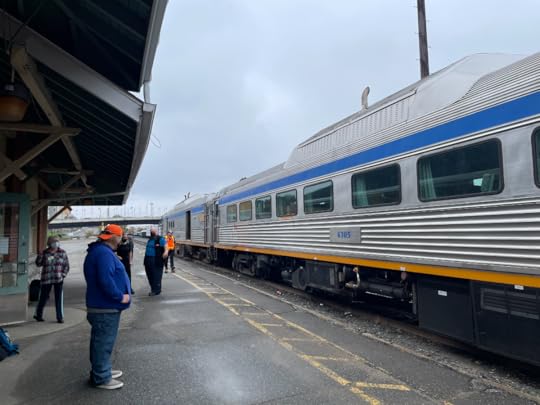
I'm embarking on a train-related writing retreat, heading out today, and returning home on Monday. Like another trip, back in 2018, I'm going in a bit of a circle: VIA's Canadian (in coach) from Toronto to Sudbury Junction, Ontario Northland bus from Sudbury to Ottawa, two days in Ottawa to attend Can*Con, and then VIA Rail from Ottawa to Montreal. On my final day, I board VIA again, to ride from Montreal back to Kitchener. Except for the stretch between Kitchener and Toronto, there will be no doubling back (or, at least, no substantial doubling back) over roads or tracks I've taken before on the trip.
Back in 2018, I did a perfect circle, riding VIA Rail from Kitchener to Montreal, Amtrak's Adirondack from Montreal to New York, then the Crescent through West Virginia and Kentucky to Chicago, then Amtrak to Detroit, the Tunnel Bus to Windsor, and VIA Rail back to Kitchener, via London. It's become harder to accomplish this trip in the years since, as the Tunnel Bus is no more (but may be replaced by a private venture), and where there used to be two trains linking London to Kitchener, now there's only one. No late evening arrival from the west for me.
Why a circle trip? Maybe it's a means of packing in more value: more new scenery per mile travelled. Or maybe it's just the challenge. Another challenge is to make this trip on ground-based public transit only. No private cars. No airplanes. No ubers. Except I did take Waterloo Taxi to get to my early GO Train from Kitchener.
I could talk about how rushed and inhuman plane travel can be, compared to the leisure and restfulness offered by the train, but really, I've said that my transit trips are like long walks with assistance, and so there's value to me in keeping my feet to the ground.
See you in Sudbury tonight, then in Ottawa and Can*Con this weekend.
October 2, 2025
Promotional Considerations and Thank Yous
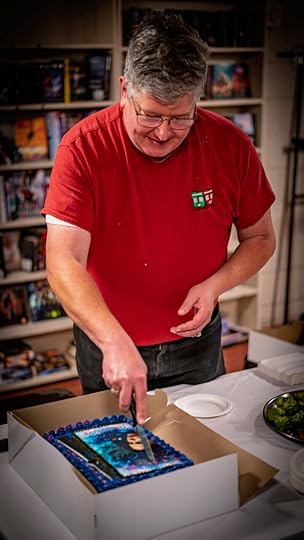 Photo by Damian Baranowski.
I've been away longer than I intended from this blog, and I remember back in the days of blogging when "longer than I intended" was about two or three days. In the years since, this blog has gone silent for months. But I was away longer than I intended and I felt increasingly bad about that. So perhaps that's a hopeful sign for the health of this blog.
We talked a bit about blogging over at Benjamin Gorman's Tilting at Windmills podcast (formerly Writers Not Writing). We talked about how social media has slurped up a lot of our audience, and uses the algorithm to keep them locked in, but that blogs can still be important as something that stands permanently (as permanently as electrons can be) without the social media algorithms shushing things in the echo chamber. In these days as polarization increases, it's important to keep saying what it is you stand for. In my case, it's that all people should have access to healthcare. They should all have enough to be able to eat and put a roof over their heads. They should have a chance at a good education, and they should be allowed to live as they are, regardless of race, gender, pronouns, or neurodiversity. Severe income inequality would appear to thwart all of this, so we must end severe income inequality.
Anyway, thanks to Benjamin and Chrys for having me back to their podcast! As always, we had a great and thought-provoking conversation. You can see the whole episode here.
Similarly, thanks to Alex Lewczuk from Southside Broadcasting in the UK for having myself and my Shadowpaw Press editor Ed Willett for a discussion of our recently released fantasy novels (in my case, re-released) as well as the process of publishing. This was my third time on Alex's podcast and as always, he was welcoming and enthusiastic. I hope I can be back again so we can share our thoughts about classic Doctor Who.
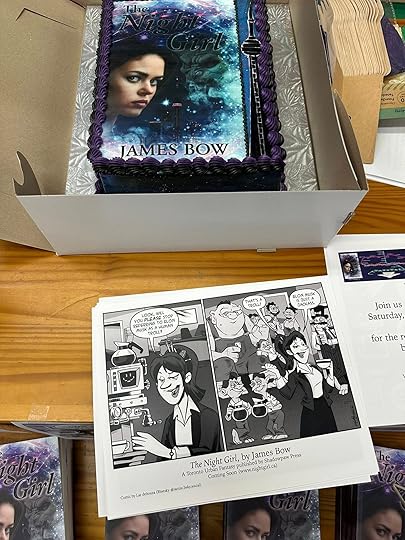
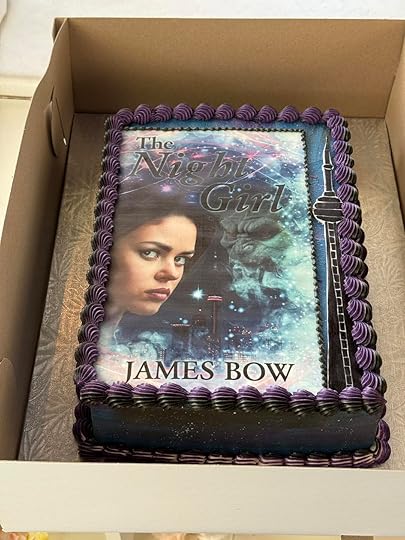
Finally, I would like to thank the good folks at Bakka-Phoenix who hosted an evening mingle for The Night Girl on Thursday, September 18. Sorry it took so long to properly thank you. As always, Canada's premiere science-fiction and fantasy bookstore was wonderfully supportive and accommodating, and it was a joy to talk to everyone who came out and share another wonderful cake from The Cake Box. Special thanks to Victor from my planning class, who shocked me by turning up. I think it must have been eleven years since we last met, and that's assuming he came out to the reunion evening. If not, then it was thirty years. But we still got back to talking just like old times.
I'd also like to thank my friend Damian Baranowski, who was on hand with his camera to shoot some great photos. He's been a tireless supporter of The Night Girl, and has even put together some wonderful reels, which you should view. The first one is the opening of the conversation about what The Night Girl is, and the second one talks about my interesting choice for the fictional mayor of Toronto in the story.
Looking ahead, I have further podcasts to attend, and I'll be at Can*Con to help Stephen Kotowych celebrate the launch the 2025 edition of his Year's Best Canadian Fantasy and Science Fiction. I am super chuffed that my Tales from the Silence short story "After the Apocalypse in Moosonee" was chosen to be among those honoured. I'm also looking forward to being in Ottawa, as if anybody needs an excuse to visit this fair city.
After that, winter is coming. The leaves are already changing, and while I appreciate the colours and the cooler temperatures (especially once the first frost puts away the wasps and the ragweed), I'm feeling the loss of light more acutely than in the past. It's been a difficult year finding joy with all that's gone on around us in the world and at home, but I am blessed to have been able to find that joy with my family and with my friends, and with the work that I do. Thanks to all for the good days we've had so far this year, and here's to good days tomorrow.
September 12, 2025
Growing up in Toronto (Thank You, Toronto Mike!)
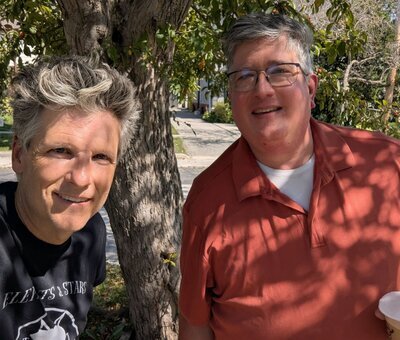 I came into the city today to take part in Toronto Mike's podcast. I'd like to thank him for making me feel comfortable and welcome as our conversation went out live to the Internet. He's clearly an old hand at this, as I was guesting on his podcast's 1,761st episode, but he treated me fantastically well, making me feel like a celebrity. He took the time to research my background and came up with new, interesting and nicely challenging questions that got me to speak about the heart of my writing, as well as my influences, including my mother.
And it was also the perfect venue to talk about The Night Girl. As you can see from Toronto Mike's studio, this is a man who loves Toronto and grew up in the thick of things in the eighties and nineties. We shared memories about the Blue Jays' first World Series win, my love of Doctor Who, and the gigantic tonal shift TV Ontario took every Thursday at 7 p.m. as we switched out from The Polka Dot Door to Tom Baker's opening credits. These days were exactly the sort of thing that was at the back of my mind when I wrote The Night Girl, and it was wonderful to share time with a kindred spirit.
Seriously, check out the episode, and check out his podcast. Many interesting epsiodes with fascinating guests await.
One thing Mike and I discussed was the golden age of blogging, before social media sucked our audiences away with their addictive algorithms. We talked about how some of the great things about the early days of our current Internet are already lost, and apropos of that, I'll draw your attention to changes happening on the Transit Toronto YouTube Channel.
Basically, we're moving, opening up a completely new channel to eventually house our current video library and all new videos. This is not something we particularly want to do, and it comes with the cost of complete demonetization (at least, until we bring over enough subscribers and gather enough views to monetize the new channel). Unfortunately, thanks to decisions made at the dawn of YouTube, we have no choice.
Because the account was built around 2010 on an e-mail that no longer exists, that sat on a domain that is no longer under our control, the current YouTube Channel can ONLY be controlled by my Gmail address. If any of the over half-dozen individuals who currently now help out making videos for the channel want to post, I'd have to give them access to my Gmail account. If something were to happen to me to cause me to lose access to the Gmail account, the YouTube Channel would effectively be locked up.
Can we appeal to YouTube to fix this? No, because I'm not officially the site's owner, I'm just the guy the site's owner appointed as the manager. And since the site owner is no longer reachable (because of the e-mail issues described before), I can't do anything to add partners or participants to the channel, and YouTube simply won't accept my e-mails as proof that they need to do something to fix the problem.
It's hilarious the amount of frustrating bureaucracy you can encounter outside of a government setting.
So, we start over, completely from scratch, and hope that we have enough subscribers willing to make the migration to get us on our feet again. Oh, well. It sucks, but this move ensures the ultimate longevity of Transit Toronto's online video library.
If you want to help, please go to the new Transit Toronto channel and like, share and (most importantly) subscribe. You can also consider becoming a paid supporter of our Patreon account. Either way, enjoy the classic old videos we'll be porting to the new site in the weeks to come, as well as the new videos we'll continue to produce..
September 11, 2025
Is the Ending of The Night Girl too Optimistic?
 The image of the left is a section of a photograph of the No Kings Protest in front of Los Angeles City Hall, snapped by the Wikipedia user ItalianAce. It is used in accordance with their Creative Commons License.
This post is also available for free on my Patreon page. If you'd like my latest posts to be delivered into your inbox, please sign up and help me build my community of readers.
When I was finishing the final draft of The Night Girl, the story was supposed to be set in 2018. Although the year is never mentioned, the dates correspond with 2018. Or 2029, as it turns out.
For the years that I wrote The Night Girl (2003-2016), the story was supposed to be far enough in the near future to feel contemporary, but slightly ahead of its time. Subway lines were finally going to open in Toronto, and there was a new (but somewhat familiar) mayor. Torontonians were going about their business as much as they were when I was writing the story.
Publishing takes longer than people think, but thanks to Kisa Whipkey and REUTS Publications, The Night Girl came out in October 2019, not too far into the near future for the story to clash with reality. (And thanks again to Ed Willett and Shadowpaw Press for giving the story a new lease on life in 2025)
Then 2020 happened.
While the reviews for The Night Girl have been favourable, some have criticized the resolution. One noted, "[it's] too good to be true. With the events of 2020, I admit that I lost a lot of hope in the human race, so I tended to side with the fairies on this one. In the real world, [this story] would have ended in rivers of blood." Others questioned the use of Toronto's homeless statistics as a plot device, with James Davis Nicoll noting that, if 20,000 goblins and trolls were enough to seriously bend the veil in a city with a population of three million, "any fey folk population larger than one percent of the human population is going to wreak havoc on the veil."
When writing The Night Girl and ending the story with the faeries, goblins and trolls coming out from behind the veil and allowing themselves to be seen by the human race, I tried my best to hint that the human reaction was mixed. While the worst of us would act as we'd expect them to, the best of us would open our arms, accept our new neighbours for who they are, and welcome them into society.
Tent encampments for the homeless were already a feature of North American cities by the time my novel came out. Since then, the situation has only gotten worse. We've seen the politicization of the pandemic, the celebration of ignorance and the rise of malicious disinformation. Then there's the ongoing plague of Trump and his fellow travellers, some of whom revel in cruelty, denounce empathy as sin, and wish death on the people I love for being queer.
With all this, I can see how some may see my resolution of The Night Girl as hopelessly optimistic. It's true that I'm an optimist, often a hopeless one, but my children genuinely dread the future, and I can't say "things will be all right" without sounding trite or condescending.
But does that change the need for people like the faeries, goblins and trolls to step out from behind the veil and demand respect for their existence, and for the angels among us to welcome them? I don't think so. Instead, the events of 2025 only demonstrate their courage in doing so. The question now becomes, how do we react?
A few weeks ago, millions of Americans took to the streets, from Los Angeles to New York and in over 2000 centres in between. They came out in some of the reddest of red states of America to stand up for the rule of law, to stand up against authoritarianism, and to demand respect for the human rights of all people. Yes, this is only the beginning of the struggle, but it shows that the best angels of our nature are still with us and within us.
There is a lot of work to do to fight back the fascists and win an optimistic world for our future. But it starts with standing up and, more importantly, never sitting down again.
And who knows? Maybe The Night Girl is set in 2029 after all.
August 30, 2025
Thank You Words Worth! Thank You Waterloo!
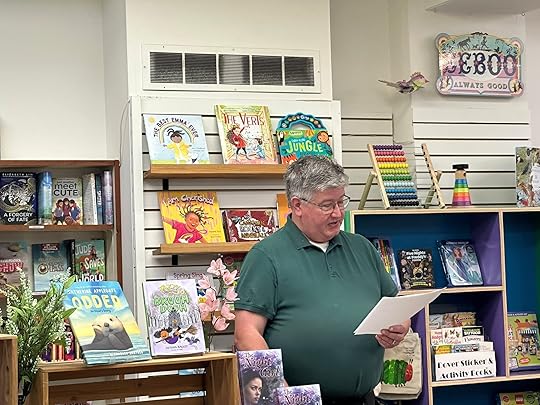
I had a great time (re)launching The Night Girl at Words Worth Books today. This bookstore has been a tireless champion of local writers and is truly a boon to the community. For today's celebration, they gave me a table with an excellent display of my books, while I brought in a very nice cake from the Cake Box in Kitchener. I gave my reading, cut the cake, and stayed on for a while to engage other customers. It's amazing how the presence of free cake makes that easier.
A lot of people complimented the book on its cover (thanks Bibliofic!), and the reading went over very well. Thanks to Ed Willett at Shadowpaw for taking this book on, giving it Canadian spelling and a new lease on life, thanks to Words Worth Books for making me feel welcome and giving my launch a great boost, and thanks to everybody who came out and shared time with me.
Next up is Toronto. Look for me at Bakka-Phoenix Books at 6 p.m. on Thursday, September 18, and I'll be bringing more cake!