Anthony Addis's Blog
March 25, 2026
6 Things I researched this week for my wip
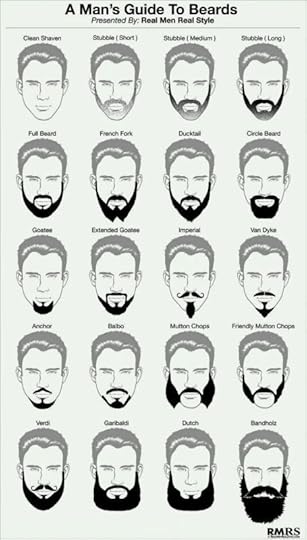
Did you ever wonder what someone might make of the research you do for a Work in Progress? I’m currently writing The Killing Kind, the third book in my Angel of the South series. Each book is set mainly in South London. It’s a gritty, noir crime series with lots of humour. Here are six things I researched for Book 3 this week, with abbreviated answers:
In Heathrow, which terminal do Emirates flights from Dubai arrive in? (Terminal 2.)What sort of venue might a billionaire hire for his 50th birthday party in the UK? (A private island, the V&A Museum or a stately home.)When going cold turkey from Class A drugs, how common are hallucinations? What form might they take? (Depends on the type of drugs – and often terrifyingly vivid.)How long does a collar tattoo take? (Up to three 6 hour sessions.)Popular types of beards. (See illustration. The one I went for was the Garibaldi.)Which predatory animals are native to Turkmenistan? (Grey wolves, cobras, red pandas, among others.)FURTHER READING
No Way To Live, Angel of the South Book 1
How No Way To Live got its name
Blog Post: How Angel of the South was born
The post 6 Things I researched this week for my wip appeared first on anthonyaddis.co.uk.


March 14, 2026
Lessons MY FICTIONAL Author Taught Me About WRITING
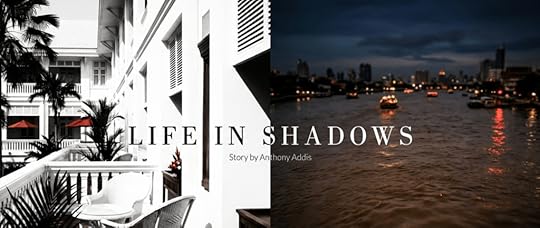
My short story Life in Shadows is an exploration of writing and writers, and how both can be damaged. While writing it, I learnt a few craft and life skills along the way.
ReloCation v ProcrastinationEvery writer knows the fantasy: relocate somewhere atmospheric, sip whiskey sour or gina and tonic on a balcony and begin The Great Work.
In my short story Life in Shadows, Michael Hayes is living that fantasy. Or so he thinks.
But instead of writing the “Universal Novel” he moved to Bankok to create, he files pieces for niche magazines and small newspapers. He calls it honing his craft. Research. Preparation. But really he knows it’s all just “freelance fluff.”
Changing cities, routines, or time zones feels productive and looks like commitment. But sometimes it’s just procrastination with better scenery. A new climate won’t fix an old fear.
Indie Author Take-out:
Relocation and endless preparation can disguise avoidance. At some point, you have to stop preparing and start writing the book.
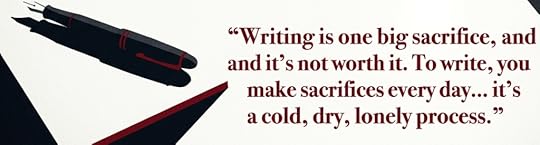
Michael meets the reclusive literary legend Charles Shaw, who offers a warning most writers don’t want to hear.
Writing, Shaw says, is a cold process. You observe rather than participate. Over time, that distance can bleed the humanity out of your work.
Shaw treated life purely as research material, and something hardened. His prose became stiff, technical and airless.
Writers pride themselves on being observers. But if you never put yourself on the line—never love badly, fail publicly, or risk embarrassment—you’ll only ever describe life from the outside.
Indie Author Take-out:
Don’t confuse detachment with depth. Live fully. Then write from experience, not just analysis.
Through Francesca, a woman Michael meets on the veranda of the Oriental, we see the real issue. Michael isn’t blocked because he lacks talent. He’s blocked because he’s afraid of commitment. After all, he’s avoided emotional commitment all his life; now he’s avoiding it on the page.
He fooled himself he was running to Bangkok to start writing, but really he was running from his fear of commitment – to relationships and his writing. Bangkok is simply a more exotic hiding place.
Indie Author Take-out:
If you struggle to finish drafts, look beyond productivity hacks. Creative paralysis is often fear of exposure. Write through it.
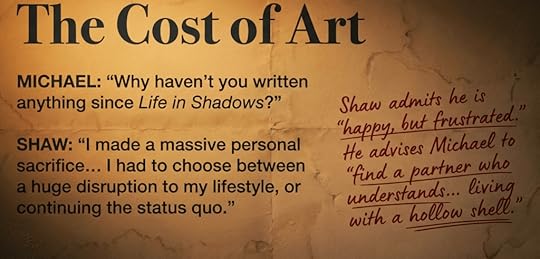
At one point, Shaw confesses something.
He once wrote a monumental 900-page masterpiece. The cost was a huge personal sacrifice.
By choosing his work over his family, he hollowed himself out. Now he writes daily out of habit, but shreds every page because his writing feels lifeless.
It’s a sharp rebuttal to the romantic myth that great art demands total sacrifice. We’re told obsession is noble and suffering is proof of seriousness.
But what if the price is too high?
“Writing isn’t important enough to sacrifice life for,” Shaw admits.
Indie Author Take-out:
Protect your relationships. No book is worth burning down your life. A healthy writer produces stronger work than a hollow one.
The enduring lesson of Life in Shadows is that great writing doesn’t come from isolation alone. It comes from participation and connection.
If you pour all your intensity into the page and starve your real life, your work may eventually feel empty anyway.
The paradox is this: the more fully you live, the richer your fiction becomes – but as Gabe Shaw discovers in my other novella about writing, the more you live, the less time you have to write.
So here’s the question every author eventually faces:
Which would you choose: writing the “Universal Novel” to public acclaim, or a life of human connection?
FURTHER READING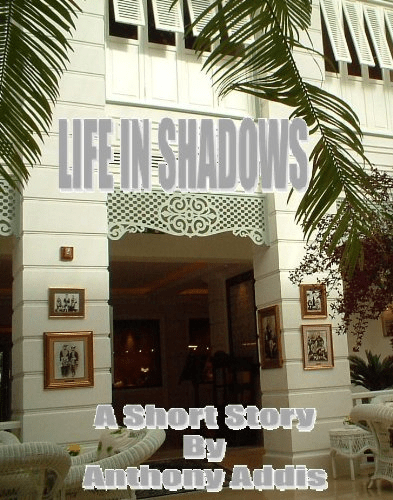
Life in Shadows is available on Amazon and Kindle Unlimited.
Change of Lifestyle is available on Amazon and Kindle Unlimited
5 Lessons for Indie Authors from Ian Fleming’s Bond Books
Travel Fiction: An Accidental Genre?
Writing Lessons for Indie Authors from writing a Novella.
The post Lessons MY FICTIONAL Author Taught Me About WRITING appeared first on anthonyaddis.co.uk.
March 1, 2026
StARTING A NEW WIP…TO PLAN OR NOT TO PLAN.
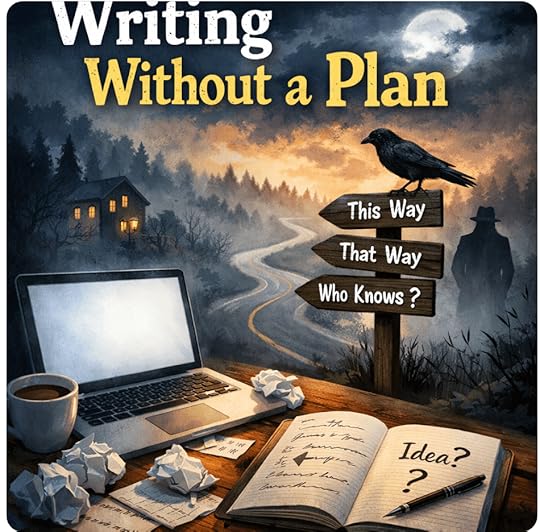 Writing without a plan
I managed to type 14,300 words of The Killing Kind, my new WIP this week.
14,300 words. It’s a height I haven’t scaled since lockdown, and I think I’ve reached it partly because I’ve been writing without a plan.
To Plan or not to plan?I’m a teacher, so I’d been planning to start writing The Killing Kind during the February half-term. I wanted to prepare and plan the novel with carefully marked character arcs, chapter by chapter relationship notes and a separate threads document ensuring everything gets tied up by the end. But life got in the way in the preceding weeks, so all those plans went out of the window. In the end, the on the first day of the holiday, I wrote a brief summary of Part 1 (of 3) and then started writing.
Not having to follow a rigidly structured plan possibly made my writing flow more easily. The threads, the character arcs and the relationships will have to sort themselves out in future edits. Two of the main characters are well on their way, and the antagonist is a nasty piece of work. I’m quite proud of him!
There are arguments for and against the process I’m following.
Third Book ThreadsThis is the third book in my Angel of the South series, so there are threads from previous novels, and continuing character arcs, histories and relationships, that I need to ensure remain consistant. Having the time to prepare the ground would have been better to ensure I avoid inconsistancies.
On the other hand, I know Billie, the main character pretty well by now. She often catches me by surprise in the things she says and does, but I’m comfortable writing about her, and I trust the twists and turns she introduces to the route.
But it is scary, because all writers have gone down the route of starting to write without proper preparation, and then found themselves running dry. It’s happened to me on several occasions, and it’s why I still have several unfinished manuscripts nagging at my conscience.
Magical Mystery tourStill, improvising is exciting. With only a loose plan to work off for the first part, I’m bound to surprise myself a few times, which means the reader won’t be able to see what’s coming either.
FURTHER READING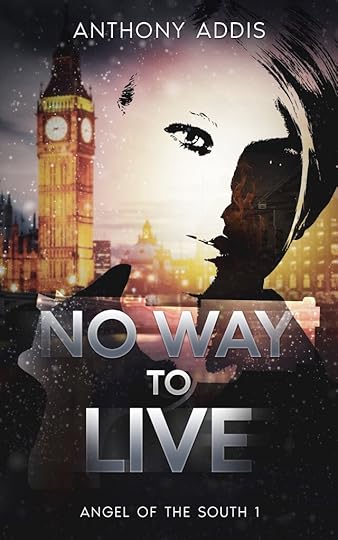
Read No Way To Live, the first book in my Angel of the Suuth series
Five lesson’s for Indie Authors from Fleming’s Bond Books
Why stories need intertextuality
The post StARTING A NEW WIP…TO PLAN OR NOT TO PLAN. appeared first on anthonyaddis.co.uk.
February 27, 2026
FLYING AWAY FOR A WORK-LIFE BALANCE: Why UK Teachers are quitting
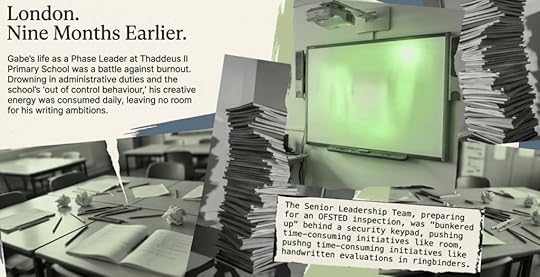
In Change of Lifestyle, Gabe Shaw, a gifted teacher quits teaching in his inner city school and leaves the country. Joe, Gabe’s university friend, takes one look at the British school system and leaves to teach in Jakarta. A supply teacher called Michelle writes damning articles for an educational website about ‘teaching on the frontline of education.’
Modern teaching in the UK is depicted as carrying a specific, heavy weight, a slow-acting drain on the spirit. Compliance and exhaustion replace creativity. Gifted educators like Gabe are either leaving the country or the profession to find their voices.
Why is the system driving them away?
The Paradox of “Trauma-Informed” DisciplineIn Change of Lifestyle, the fictionalised Thaddeus II Primary Academy works within a warped version of empathy that prioritises the “trauma of the perpetrators” over their victims. When a student attacks someone, the school’s behaviour policy doesn’t offer justice; it offers orange squash, football stickers and a soft chair.
In a display of powerlessness, the Assistant Head apologises to a student who attacks another child because his victim dared to shout at him. This atmosphere of “trauma-informed” care renders educators defenseless against abuse.
At one point, a child attacks Michelle, stabs Gabe with pen and beats another child so badly she has to go home. The school’s Head Teacher response?
“He’s going through a difficult time. I have to take the trauma of the child into account.”
The Brutal MathS of “Work-Life Balance”
In Thaddeus II, the concept of “work-life balance” is hollow. Consider Lisa, another teacher in the school. She’s in her twenties. Each morning, her alarm wakes her at 5:00 AM.
Her day consists of a ten-hour shift and a grueling two and a half-hour commute. By the time she collapses into her bed at 9:00 PM, she has a mere two and a half hours of leisure time. Lisa and Gabe dated for a while, but the relationship fizzled out due to mutual stress and exhaustion.
In Change of Lifestyle, the school answers this work-life imbalance with messages on heart-shaped Post-it notes and links to mindfulness websites. Although well-intended, these gestures are are meaningless against the demands of the job.
The Performance of Compliance: Ofsted Fear and Paperwork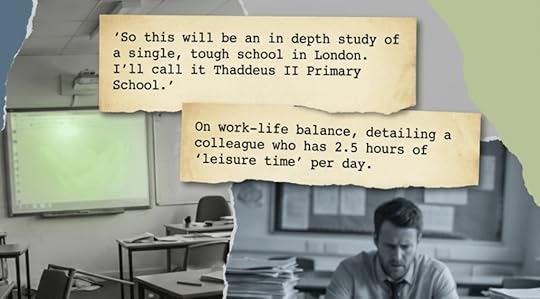
Inside the “Ofsted Window,” innovation at Thaddeus II Primary Academy is traded for compliance. OFSTED fuels a palpable fear that forces teachers into meaningless rituals. Educators are browbeaten into keeping ringbinders of handwritten lesson evaluations—an archaic requirement intended to indicate “reflection” for inspectors.
The education system mandates a rigid, knowledge-based curriculum that feels absurdly outdated in the age of Google and ChatGPT. It is education as surveillance, not growth.
“In Thaddeus II Primary School, OFSTED is a palpable, threatening reality that is weaponised to browbeat staff and push through time-consuming initiatives.”
A Forward-Looking Reflection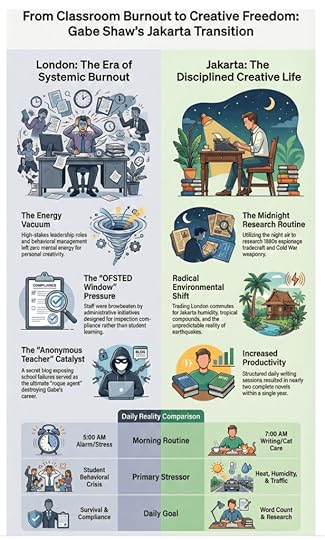
The UK system operates as a failing machine. For educators like Gabe, Jakarta offers more than a change of scenery; it offers a “Change of Lifestyle” where “work-life balance becomes life-work balance.”
Michelle’s articles gave Gabe his voice back by documenting the reality the system tried to hide. If we continue to lead by the “trauma” of the few at the cost of the many, how long before the UK’s best educators are all leaving the profession or flying off to teach overseas?
FURTHER READING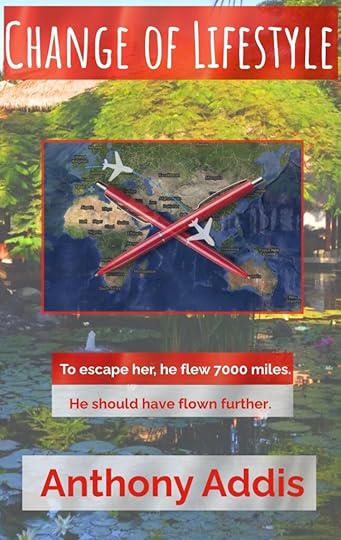
Change of Lifestyle is available on Amazon and Kindle Unlimited
How teacher burnout inspired Change of Lifestyle
Ancient Egypt v iPads: a class trip to the Sakkara Step Pyramid
The post FLYING AWAY FOR A WORK-LIFE BALANCE: Why UK Teachers are quitting appeared first on anthonyaddis.co.uk.
February 24, 2026
Using a Cat as a Narrative Anchor in Literary Fiction
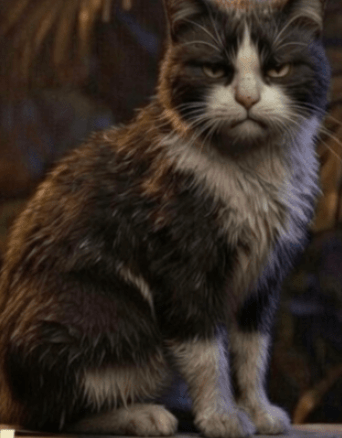 The Feline Sentinel – How a cat serves as a narrative anchor
In my novella Change of Lifestyle, Gabe Shaw flees London for a structured exile in Jakarta. He intends to kick start the writing career he has long wanted. In exchange for staying rent free in a friend’s empty apartment, Gabe looks after Marshall Law, a streetcat with a mean attitude and the Indonesian genetic defect of a stunted, gnarled tail.
Marshall Law stops Gabe’s new lifestyle from becoming too one-dimensional. He offers Gabe the companionship and chaos that prevents his new writing routine from becoming overly sterile and formulaic.

The stump-tailed Enforcer of Routine
In a city of “bluff and double bluff,” Marshall Law is the “living alarm clock” anchoring Gabe’s writing. Every morning, this tom cat “bullies” Gabe into action. For a writer adrift in isolation, this unsentimental, structured annoyance is vital:
“…the cat was a pain and an encumbrance, but he was Gabe’s pain and encumbrance.”
The Michelle Test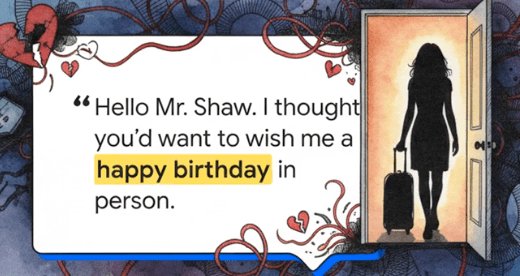
Marshall serves as a biological security filter. Usually aloof, the cat “never” lets anyone pick him up—until Michelle arrives. She’s the reason Gabe fled London in the first place, and now she’s tracked Gabe down. A journalist reporting on “frontline teaching,” she dated Gabe while secretly writing about his workplace
Marshall’s submission to Michelle is an omen, suggesting if he even he trusts her, maybe Gabe should too.
Jakarta’s VanguardEven Marshall’s gnarled tail symbolizes the setting’s untamable quirks. The apartment is in a residential compound that is slowly decaying, filling with cockroach corpses and rats. Nicknmed “The Beast” by children who live in the compound, Marshall reflects the jungle trying to reclaim the city. He regularly delivers “rat-presents” to Gabe. Local reptiles “probably run for cover” at his approach.
During an earthquake, Gabe jokingly thinks that Marshall caused the disaster, highlighting the cat as the only chaos Gabe truly allows into his life – until Michelle turns up:
“Deciding it was every man/cat for himself, Gabe hurried outside.“
The Ultimate Rogue AgentIn a story that parallels the plot of a Cold War spy novel, Marshall Law acts as the trusted confidante, offering the only honest relationship Gabe has left amidst Michelle’s “hand grenade” arrival. In a narrative of betrayal, is the only trustworthy bond the one shared between Gabe and a stubby-tailed cat?
Further reading
Change of Lifestyle is available on Amazon and Kindle Unlimited
Why I included a cat with a genetic defect in my novella
What’s wrong with Indonesian cats’ tails?
What do the Isle of Man and Indonesia have in common?
The post Using a Cat as a Narrative Anchor in Literary Fiction appeared first on anthonyaddis.co.uk.
February 22, 2026
The Malloreon vs the Belgariad: Does David Eddings’ Sequel Series Hold Up?
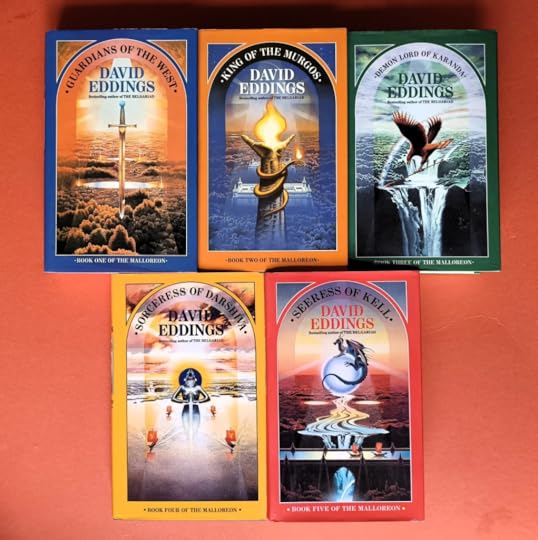
After the five-book Belgariad, David Eddings returned to the same world and characters with another five book epic – The Malloreon. Last year, I reread The Belgariad. This year, I turned to The Malloreon to see how it holds up. Which series wins in the battle of The Malloreon vs The Belgariad?
A Fantasy Soap OperaThe first book, Guardians of the West, is a slow burn. At times, it reminded me of a fantasy version of a soap opera. Polgara and Durnik adopt a child and move into a new home and Garion and Ce’Nedra struggling through marriage difficulties. Eventually, they have a child.
Eddings handles all these domesticities with typical skill. His easy style of writing and sense of humour carries the reader through over 200 pages to the main meat of the novel: in Riva, Garion’s trusted right hand man Brand is murdered, prompting a threat to the Western alliance.
Shortly after, Garion and Ce’Nedra’s son Geran is kidnapped. The only way to get him back? A quest, of course, with diverse companions – one of whom, it is foretold, will die before the quest’s completion.
Reading Guardians of the West in the late 80s, I was out of my seat with dread, worrying one of my favourite characters would die and having to wait an agonising length of time for each of the next books in the series to be published. It’s a cheap trick, but highly effective.
The rest of the series continues with a typical blend of banter, sorcery and action. This time, Barak, Mandorallen and Hettar aren’t permitted to accompany Garion, so he has to take on the brunt of the action set pieces. For those who remember the scullion from Pawn of Prophecy, he’s remarkably good at it.
PLUSESThere are some good moments in The Malloreon. The introduction of Urgit, King of the Murgos, and the development of Zakath, Emperor of Mallorea, refresh the series and put an end to the good guys’ unpleasantly wistful dreaming of committing genocide against all Angaraks. Taking the series out of the Western nations and into the lands of the Angaraks allows Eddings to expand and enrich his world.
The constant bickering between Beldin and Belgarath is always entertaining and frequently very amusing. I particularly liked this exchange, which is not quoted verbatim:
Beldin: “There’s some deserters over there.”
Belgarath: Deserters from which side?”
Beldin: “Doesn’t really matter, does it? Once a man deserts, he foregoes any previous allegiances.”
Belgarath: “Sometimes you’re so clever you make me sick.”
Luckily, Garion was allowed to bring Silk – the Guide – along on the quest. The Malloreon would be much poorer without his coinniving business instincts and wisecracks.
In the fourth book, Sorceress of Darshiva, there is a lovely moment when Garion insists on bringing a wolf and her cub along with the company. Eddings often excelled when writing those quietly emotional moments.
The fifth book completes the saga very satisfyingly. It also helps to explain Eddings’ decision to begin Book One from Errand’s point of view.
minusesAcross the series, the plot is repetitive. The characters even allude to that fact, saying it’s a natural consequence of the prophecy coming to an end.
I enjoyed the prologues in The Belgariad, but in the Malloreon, but found them unnecessary, as they repeated information already delivered by characters in previous books.
The attitudes to women are still outdated. Velvet, Praga, Cyradis are all depicted as living to entrap their men. Polgara and Ce’Nedra go all giddy at the thought of hot baths. All of these women are portrayed as strong, clever and capable and yet they often feel more more two dimensional than the men. Most of the men, that is. The mute Toth is never really developed beyond the fact that he likes fishing.
The Belgariad v the Malloreon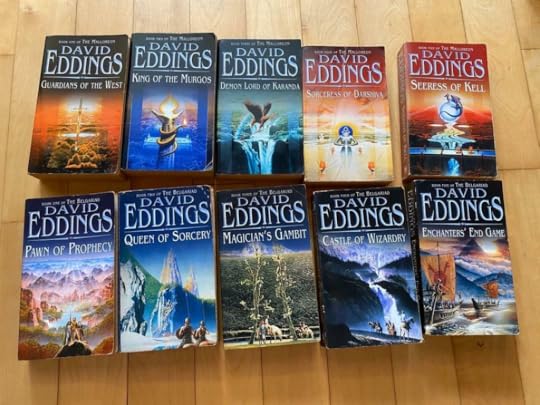
So, back to the original questions. Does The Malloreon hold up nowadays, and is it as good as The Belgariad?
The answers are yes and no. The Belgariad is better, but The Malloreon still gives you a chance to spend time with some great characters and provides several genuinely laugh out loud moments.
Eddings’ pasTAs with the Belgariad, to enjoy the Malloreon, readers have to decide whether they can separate the art from the artist.
Ten years before his first fantasy book was published, David Eddings and his wife Leigh were each imprisoned for physical and emotional abuse of their two adopted children. Abuse that included locking them in cages in their basement. It’s an ugly, despicable crime, and very hard to defend, particularly considering the nature of the Belgariad and Malloreon, which see first Garion and then Errand adopted as small children.
If it helps, Eddings bequeathed over $30 million to two charities. It doesn’t negate the crime, but perhaps it affects his legacy.
further readingRereading the Belgariad: the Good, the Bad and the Ugly
The post The Malloreon vs the Belgariad: Does David Eddings’ Sequel Series Hold Up? appeared first on anthonyaddis.co.uk.
February 19, 2026
The Art of the Double Bluff: Why Stories Needs Intertextuality
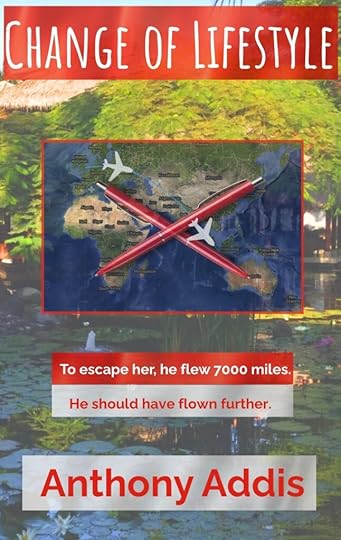
In novels, characters don’t exist in a vacuum. They watch movies, they listen to music, and they read. When a story references other works, my Media Studies daughter tells me it’s called intertextuality. In my novella, Change of Lifestyle, intertextuality drives the plot.
If you are looking at using pop culture allusions in fiction, here is how I layered different “texts” to turn a simple 20,000 word story into a narrative with depth.
Change of LifestyleIn Change of Lifestyle, Gabe Shaw is a burnt out London teacher who suffers a very public betrayal. His girlfriend has been using him as her source in a series of “despatches” for an online education site. Humiliated and heartbroken, he quits his job and moves to Jakarta to kick start the writing career he’s dreamed of for years. The story explores various elements of intertextuality to drive plot and character.
Journalism vs. Romance: The Disclosure Dispatches
Change of Lifestyle’s most significant “text within a text” is Michelle’s series of investigative articles, Educational Dispatches from the Frontline of Teaching.
While the main narrative feels like a blossoming romance, these dispatches provide a gritty “social realism” contrast. Excerpts from Michelle’s dispatches show what it is like in “the trenches of frontline education.” They reveal Michelle’s double life: while Gabe thinks he’s on a date, Michelle is “prepping a source.”
By referring to Gabe as “Mr. Jones” – which in itself is the title of his favourite song – in her articles, Michelle creates a fictionalised version of him that eventually forces the real Gabe to confront his burnout and flee to Jakarta.
Espionage as a Metaphor for Life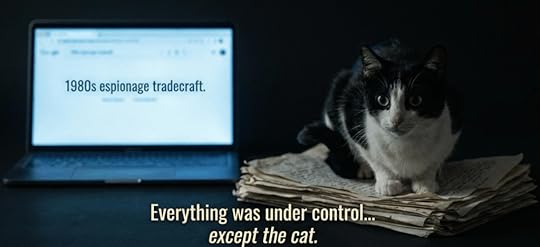
Gabe views his world through the lens of John le Carré and Graham Greene, authors in genre he aspires to write in. After fleeing London, he uses terms like “asset,” “handler,” and “tradecraft” to navigate his relationship with Michelle.
This intertextuality reaches a peak when Gabe stops reading spy novels and starts living them. He treats his relocation as a “rogue agent” operation, even leaking his location through a friend to test Michelle’s loyalty, a move straight out of a Cold War thriller.
TURNING Reality into Art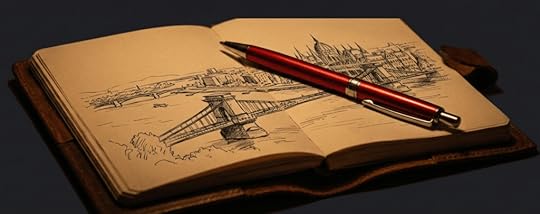
How does a writer turn a boring afternoon into a compelling scene? The novella explores this through Gabe’s notebook. He observes an awkward breakup in a Budapest cafe and transforms the participants into a British spy and “Szusan,” a Hungarian asset.
By including the “original” version of this event as a bonus story at the end of the book, readers learn how Gabe turned the mundane reality into art. It shows how Gabe uses fiction to escape his “dull, teacherly exterior” (Michelle’s words).
Favourites Tennis: Cultural ShorthandFinally, there is “Favourites Tennis”—a game where characters swap cultural favourites like Casablanca, Our Man in Havana, and Bridget Jones.
These aren’t just names; they are shorthand for identity. When Gabe chooses Casablanca and Our Man in Havana, he’s establishing his identity as a “cynical romantic” who appreciates the “funny and wise.”
true identitiesUsing intertextuality in Change of Lifestyle allowed me to reinforce the theme of “bluff and double bluff.” By layering journalism, spy tropes, and fictional drafts, Change of Lifestyle suggests that our lives are a series of edited narratives. The real challenge—for Gabe, Michelle, and the reader—is finding the “uncensored” truth hidden between the lines.
further readingPop Culture Allusions in Fiction
How Teacher Burnout Inspired Change of Lifestyle
10 Reasons to read Change of Lifestyle
Ondel-Ondel: Guardians of Jakarta
WHAT DO THE ISLE OF MAN AND INDONESIA HAVE IN COMMON?
links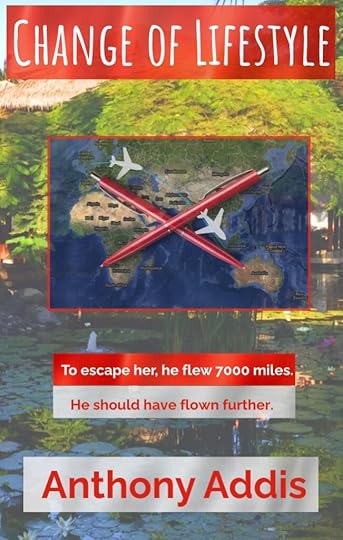
Jehrico Writers: What is intertextuality?
From Page to Plate: Metafiction and Intertextuality
The post The Art of the Double Bluff: Why Stories Needs Intertextuality appeared first on anthonyaddis.co.uk.
February 16, 2026
Why I includeD a cat with a genetic defect in my novella

In my novella Change of Lifestyle, a stressed London teacher suffers a personal and public betrayal and moves to Jakarta. He is promptly adopted by an Indonesian cat called Marshall Law.
Like many Indonesian cats, Marshall’s tail is “twisted, gnarled and stubby.” It’s a genetic defect, similar to the one Manx cats have. Because of geographical issues (ie – islands), it’s hard to weaken the strain. But why did I include a cat at all?
Personal Experience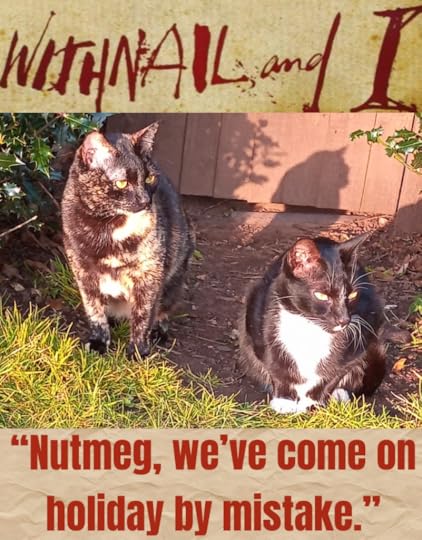
My family lived in Jakarta between 2016 and 2020. While there, we adopted two tiny kittens: Nutmeg, named after the Indonesian spice, and Bertie, named after a famous Indonesian fitness instructor (full name Bertie Tolaso). Both of them have slight kinks in their tails near the end, but nothing like other Indonesian cats, some of whom have tails like clubs, others have almost nothing, like Manx cats.
Nutmeg is quiet and calm, but as Richard Osman might say, Bertie has main character energy. He’s demanding, opinionated and entitled. All this from a cat we found when he was far too young to be away from his mother, sitting in the middle of the road! When we brought him back to England, the kids who live on our street quickly labelled him “Beastie” because of the way he terrorises other cats. Marshall Law is very much a homage to Bertie.
helping gabe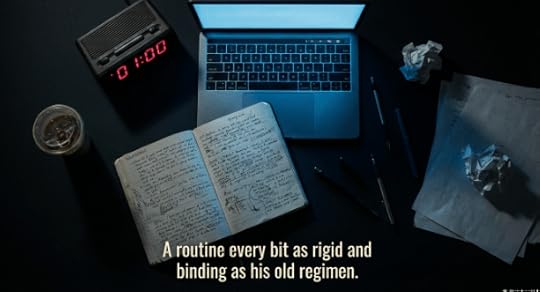
Marshall stops Gabe from becoming too isolated during his self-imposed exile. Looking after the cat gives him a purpose other than writing and keeps him grounded. Also, Marshall provides good comic relief.
gabe, michelle and Marshall
Marshall serves almost as a mediator between the two main characters in the difficult first moments of their reunion. The fact he allows Michelle to pick him up, tells Gabe that if nothing else, Marshall trusts her.
Marshall and the rogue agentGabe’s dream is to become a writer of a cold war series of espionage novels. To parallel that dream, Change of Lifestyle is unveiled in a series of espionage tropes. One way or another, coded messages, spies and rogue agents all make appearances. Marshall is the device used to get a message from one character to another.
Change of lifestyle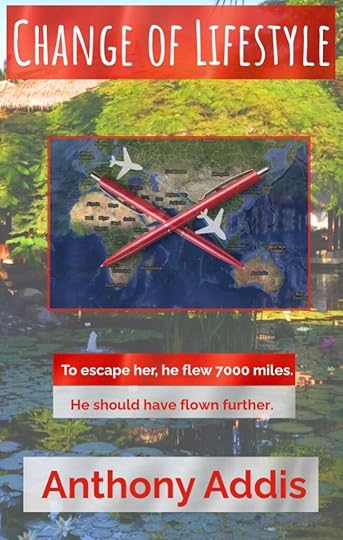 Change of Lifestyle is available on Amazon and Kindle Unlimitedfurther reading
What’s wrong with Indonesian cats’ tails?
Ondel-ondel: Guardians of Jakarta
What do the Isle of Man and Indonesia have in common?
How teacher burnout inspired Change of Lifestyle
The post Why I includeD a cat with a genetic defect in my novella appeared first on anthonyaddis.co.uk.
February 15, 2026
Pop culture allusions in fiction
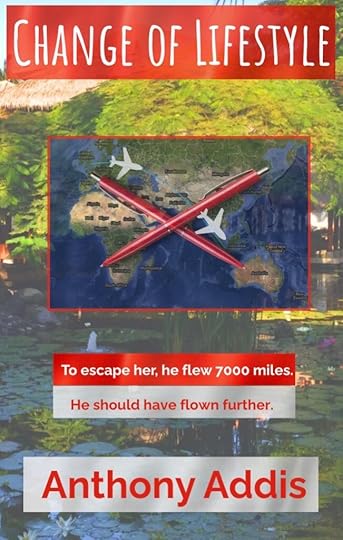 pop culture allusions
My novella Change of Lifestyle contains a lot of pop culture allusions to films, musics and books. My daughter, a Media Studes graduate, refers to them as intertextuality: references to pop culture that help shape characters and story. Here’s why I included them.
Favourites Tennis
During their first date, supply teacher Michelle suggests a game of Favourites Tennis, a game she (well, I) probably invented. The main rule is ‘No repeats or hesitation.’ Michelle starts with a question, Gabe answers with a justification, then Michelle replies. Then Gabe asks a question, and so on. During the next two minutes, they bounce their favourite songs, books, films, cities and even cafes at each other.
The game is used to explore the differences and similarities between the characters, developing a sense of character synchronisation. When Gabe discovers Michelle has read his favourite book, he briefly wonders if Michelle might just be his perfect soulmate. So far, the date seems all very rom-commy. But then Gabe says his favourite song is Mr. Jones by Counting Crows. A teaser from earlier in the story starts to make sense, because we know from an earlier scene that:
‘The author of the series of articles that had inspired him to change his lifestyle so dramatically had been thoughtful enough to change the names of everyone she wrote about. Gabe had been Mr. Jones.’
The Lesson Evaluation Rebellion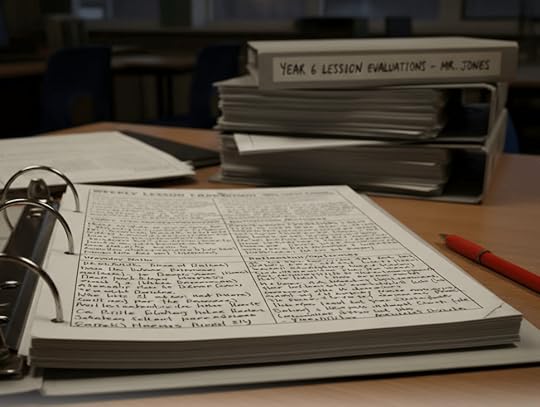
In his old life, Gabe worked in an inner city primary school where admin and beaurocracy ruled. Because of the management’s determination to tick every box before an impending OFSTED inspection, teachers had to write ‘meaningless lesson evaluations,’ a chore normally reserved for student teachers. In silent rebellion, Gabe always included song titles in each evaluation, choosing a band or singers catalogue to work with each week. Muse’s Supermassive Black Hole makes an appearence, as does an Oasis title.
Gabe’s literary allusions here are used to further accentuate the meaningless of the evaluations. No one ever knows about his tiny rebellion because no one ever reads his evaluations.
Limited Space in a novellaChange of Lifestyle is a 21,000 wod novella. Although the characters are always key to any story I write, there is less time for character development. Referring to the characters’ cultural likes and dislikes is a good, shorthand way of introducing them to the reader.
It Must Be Love…… by Madness provides the final literary allusion, because Michelle following Gave over 7,000 miles must be an act of love, surely. Or is it? More importantly, it’s a Madness track. It had to be included, and It Must Be Love made a lot more sense than Baggy Trousers.
links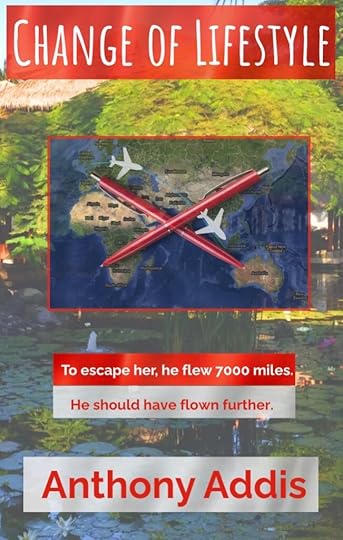
Read Change of Lifestyle
Good Story Company: Pop Culture References
Book Riot: In Defence of Pop Culture References
further readingHow Teacher Burnout Inspired Change of Lifestyle
10 Reasons to read Change of Lifestyle
Ondel-Ondel: Guardians of Jakarta
WHAT DO THE ISLE OF MAN AND INDONESIA HAVE IN COMMON?
The post Pop culture allusions in fiction appeared first on anthonyaddis.co.uk.
February 10, 2026
Rereading the belgariad: the good, the bad and the ugly truth
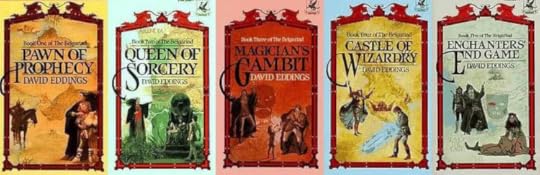
The Belgariad is one of my favourite fantasy series ever, and very probably my favourite one. But it does have problems. Here’s the good, the bad and the ugly of David Edding’s coming of age fantasy saga.
THE GOODTHE CHARACTERS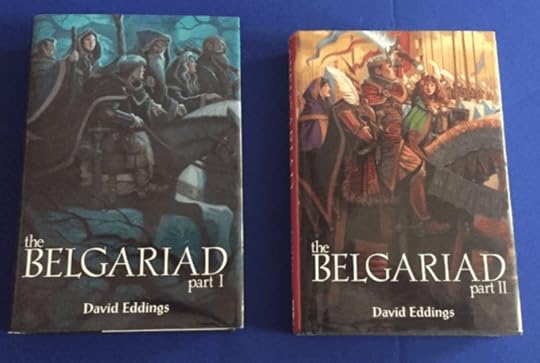
Some people say the characters are one-dimensional – and to some extent they are. Most of them wouldn’t look out of place in a D&D roll call. But growing up, I felt like they were my friends. From Belgarath’s wisdom and irascibility to Silk’s constant stream of smart-ass remarks to Barak and Mandorallen’s grandeliquoence, they are great fun to be around. Even Ce’Nedra, with her spoilt, short temper, is redeemed by the way she is forced to come to terms with her feelings for Garion. David Eddings ensured he created characters to care about, and enjoy spending time with.
THE SETTING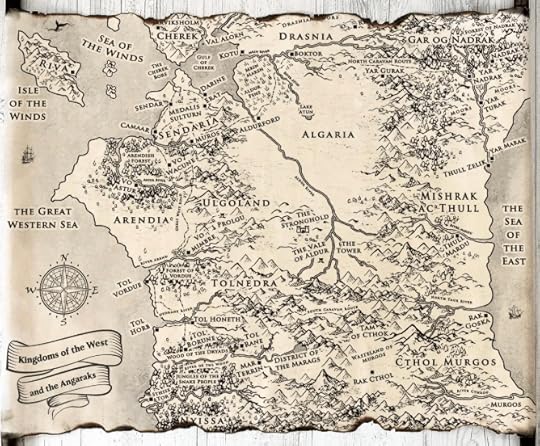
The world is well-realised, with believable distances and geography. The history and theology is particularly well done, starting with the world’s creation and continuing through the schism between the gods and the assassination of the Rivan king. Right from the start, we as readers are well aware of the significance of the silvery birth mark on Garion’s palm, even if Garion himself is not.
THE COMING OF AGE STORY
At first, Garion struggles to come to terms with (first) the fact that he is a sorcerer. Like any teenager who is terribly against ‘having’ to do something, he rails and argues. About halfway through the series, there is a quietly profound moment, when he comes to accept his power and at the same point starts thinking about his grandfather as Belgarath, and not Mister Wolf anymore. It’s a beautiful, understated piece of writing.
Garion has a lot more to handle, from his ultimate destiny to his terrifying duty – and also his arranged marriage. Eddings handles them all skillfully and with great care. In a later Malloreon book, the dedication is to Lester Del Ray, his editor/publisher, to whom he writes something along the lines of ‘Between the two of us, we didn’t raise a bad boy’, meaning Garion. More about that later.
HumourThe banter between characters is often genuinely funny, with Silk in particular being a constant source of amusement. But there’s many other hilarious moments, including Barak’s fantastic retelling/reinvention of Garion’s fight for Maisie’s honour in Pawn of Prophecy, the moment when Garion tries to move the rock in the Vale in Magician’s Gambit and Silk’s reaction to his description on the wanted posters in Nadrak.
THE BADSexismThe Belgariad is very much of its time. The female characters tend to fall into the overused tropes of women in fantasy stories of the late Seventies and early Eighties. Often, Polgara, one of the most powerful sorcerers (male or female) in Eddings’ world, is relegated to the role of camp cook. In some ways, it’s like Enid Blyton’s Famous Five, when Anne often took care of the cooking and cleaning. It even extends to the gods, all of whom are male. Even the ancient Greeks had goddesses!
Racial StereotypingEddings created a complicated and vibrant world full of many different cultures and countries. Unfortunately, he took the lazy option by stereotyping them into national characteristics. As examples: Drasnians are sneaky spies, Tolnedrans are money-grabbing capitalists, and Sendarians are practical. And as for the countries in the East? Well, let’s just say the protaganists talk openly and wistfully about wiping them out – in other words, genocide.
Following a well-trodden path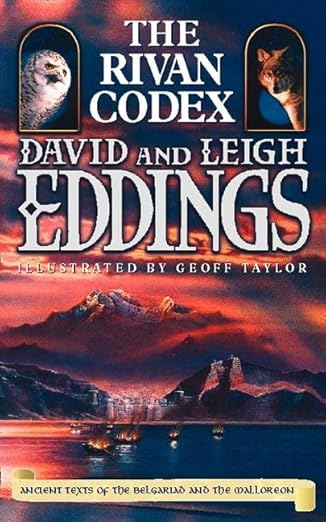
Eddings spoke openly about being inspired by the Lord of the Rings. His companion volume The Rivan Codex gives a ‘write by numbers’ style approach to writing a heroic fantasy epic, listing the various character archetypes to include. The Belgariad’s plot follows two very familiar tropes – the Chosen One and the Prophecy. That said, the very adventures he creates for his characters, and the sheer level of humour among them, ensures that although he stands on Tolkien’s shoulders, he does so with verve.
The UglyAs mentioned earlier, David Eddings wrote a really charming coming of age story. His writing showed real understanding of his characters. To some extent, Garions’s adolescence helped me through my own.
Yet ten years before his writing career began, along with his wife, Leigh, David Eddings was convicted of eleven counts of child abuse against their two adopted children. These included locking them in cages in their basement and clear evidence of beating them. They were both sentenced to one year in prison.
In light of that fact, reading and enjoying the Belgariad (and all Eddings’ other books) becomes a conscious act of separating the art from the artist. The Belgariad is a really lovely, charming series…but that knowledge does taint the reading experience. Rereading the books, at times I almost wondered if in some strange way Eddings was trying to atone for his crimes. It certainly makes you think about that dedication to his editor in a new light.
Should you reread them?Personally, I enjoyed revisiting the books. They’re funny, quietly profound and exciting, sometimes scary and yet also cosy, all at the same time. But like I said, had to consciously separate the art from the artist.
David Eddings’ legacy is further muddied by the fact that he bequeathed over $30 million to two charities, one of them for research into childhood asthma. This benevelance does not negate his crime, but it does complicate opinions about him.
LINKSThe post Rereading the belgariad: the good, the bad and the ugly truth appeared first on anthonyaddis.co.uk.