Brad Chase's Blog
October 2, 2023
Comedy in the courtroom

Comedy in the courtroom, I am told, is unusual. But when I was a witness in the 1999 Microsoft anti-trust case there was one exchange I had with David Boies, the lawyer representing the government, that had everyone laughing uproariously.
For context, Boies asked the judge to rule that Microsoft witnesses could not speak to their lawyers about the substance of the case while we were on the stand. The judge agreed. When our lawyers objected because such as rule was not in place when they cross-examined the government witnesses, the judge’s response was “you didn’t ask.”
So, in the afternoon of my first day on the stand, Boies decided to check and see if we were following the rules (we were):
BOIES: WHILE WE'RE QUEUING UP TO TAPE, MR. CHASE, DID YOU HAVE ANY CONVERSATIONS WITH ANYONE DURING THE BREAK?
ME: MY WIFE.
BOIES: ANYONE ELSE?
ME: BILL NEUKOM SAID, "GOOD LUCK." DAVE HEINER WHO IS GOING ON VACATION, SAID "GOOD LUCK. HAVE A GOOD TIME." HE'S GOING ON VACATION. AND I MAY HAVE HAD A WORD OR TWO WITH SOMEBODY ELSE.
(Note that Bill Neukom led the Microsoft legal group and Dave Heiner was an anti-trust expert on our legal team.)
BOIES: DID YOU HAVE ANY DISCUSSIONS ABOUT THE TESTIMONY WITH ANYBODY?
THE JUDGE: OTHER THAN "GOOD LUCK"?
ME: MY WIFE SAID I'M DOING FINE.
THE JUDGE: ALL RIGHT.
The court burst into laughter. I did not mean my response as a joke, it is what had happened, but I guess that my wife’s comment and the judge’s response contrasted with the dirt Boies was seeking was funny to the courtroom. Boies realized that he had lost momentum with the crowd and quickly and cleverly responded:
BOIES. THAT'S WHAT MY WIFE ALWAYS TELLS ME, TOO.
Boies’ sexual innuendo was apparent to the audience, and they laughed again. I am not sure what possessed me, but I then responded with a joke of my own that had the spectators roaring:
ME: I'M NOT GOING TO TOUCH THAT ONE.
After the laughter died down and Boies did not have a response to my last comment, he returned to asking me serious questions about the case. And, as I recall, I refrained from making any more jokes.
More on my testimony in a Fortune article here.
My 2020 thoughts on the Google anti-trust case here.


November 9, 2020
Thoughts on the DOJ vs Google
In 1999, as a senior Microsoft executive, I was a witness in the United States v. Microsoft: Anti-Trust Trial. I was more nervous testifying in that trial than I have ever been in my life. I was not sleeping well. The news cameras—CNN, Fox, MSNBC--followed me nearly everywhere. While sitting in the courtroom waiting for my turn in the hotseat, I watched two disparate, seemingly unrelated scenes: the judge falling asleep during the trial, and my colleagues getting grilled on the stand. When my turn as a witness came, the judge managed to stay awake, and, despite my exhaustion, my testimony seemed to go over well. A Fortune story said the attorney the DOJ used, David Boies, seemed "flustered" when cross-examining me. Not that it mattered since Microsoft lost the case. A friend of mine called me after my testimony and said, “Brad, I have good news and bad news. The good news is that you just scored three touchdowns. The bad news is that your team is losing 56-21.”
My suppressed and depressed memories of that trial have resurfaced because of the recent announcement that the DOJ is suing Google. What lessons could be drawn from the Microsoft trial of over two decades ago that are still relevant today? There are more than you might think.
Looking back at the issues at the core of that “tying” case, Microsoft using its “monopoly” with Windows to gain an advantage with its browser, Internet Explorer, seems bizarre, almost quaint now. An operating system without a browser? Inconceivable! Just imagine if Windows, the Mac OS, Android, iOS etc didn’t include their own browsers. .The Chromebook is basically just a browser wrapped in hardware. Sure, Microsoft was trying to compete, and Windows was an advantage, but not an insurmountable one since any user could download a browser. Microsoft always said its Windows advantage would be challenged by technology changes and that turned out to be truer than Microsoft could even imagine. Now

Windows is just one of many operating systems people use. Smartphones, just smaller powerful computers, are around 5x the shipments of traditional PCs. Even Microsoft is focusing more on its cloud platform than Windows.
I expected the DOJ would treat the Google case like the Microsoft one. Google, with 90% market share, should not be able to tie search deals to other Google products or favor its own products in its search results. After all, none of those products are fundamental to search like an internet browser is to an operating system. Similarly, Google should not be able to do exclusive bundles with phone manufacturers to only provide Google search or prevent handset makers from selling Android “forks” (their own iterations of the Android phone operating system) because if they do Google will deny them access to Google apps and the Play Store. Finally, though it does not relate to tying, I expected Congress would, and I think they should, seriously consider a law to prevent Google (and others) from collecting personal data unless the user explicitly opts IN every six months.

It turns out though that the DOJ/Google case is not primarily about tying search to other products, it is about distribution. Quoting from the complaint, Google pays “billions of dollars each year and “has entered into exclusionary agreements, including tying arrangements, and engaged in anticompetitive conduct to lock up distribution channels and block rivals.” The complaint continues, “Google’s exclusionary agreements cover just under 60 percent of all general search queries. Nearly half the remaining queries are funneled through Google owned-and operated properties (e.g., Google’s browser, Chrome). Between its exclusionary contracts and owned-and-operated properties, Google effectively owns or controls search distribution channels accounting for roughly 80 percent of the general search queries in the United States. Largely as a result of Google’s exclusionary agreements and anticompetitive conduct, Google in recent years has accounted for nearly 90 percent of all general-search-engine queries in the United States, and almost 95 percent of queries on mobile devices.”
Google of course will rightly claim that users can choose to use other search engines. They can download them from the App Store or Play Store, or just use a web browser to go to the website for one of Google’s competitors. On the iPhone, the default Safari search engine can be changed, though few users do so.
It is instructive to explore what will happen if the DOJ is successful going after distribution rather than focusing on tying. What if all phones sold in the US, whether iPhone or Android based phones, had no default search engine and gave users a choice? My bet is that Google’s mobile market share would change very little, if at all. To take this hypothetical a bit further, what if the default was Bing or Duck Duck Go? I suspect that Google’s share would change a bit more in that case--but again, most users would end up switching on their own to Google. While some users are satisfied with Duck Duck Go, which provides built in privacy protection, I tried using it for over a month as my default search and I constantly had to do a second search with Bing or Google to find a better result. Bing is my current default search engine and from my experience close to the quality level of Google, but the fundamental problem is that no one has built a search engine superior to Google. A core part of the reason for Google’s leadership is that Google’s dominant market share means Google has access to significantly more personal data to use to provide better search results for users and better targeted advertising for advertisers. The nature of the internet is that sometimes size matters and helps companies build better products for users. It is unfortunate, but it is a reality. Amazon is another example of that. Amazon, as an aside, is an interesting search competitor for Google as shoppers sometimes just go to Amazon to search for things they want to buy.
Barring huge missteps from Google, it is extremely hard to decouple Google’s success from its further success. To displace Google from search leadership will require a fundamental dramatic new technology or sea change in how users search (and when that happens watch for Google to try and buy that new technology the way Facebook bought Instagram and WhatsApp). Even if the DOJ wins the part of the case on Google’s mobile agreements, I don’t think much will change.
In the end though, I am willing to bet that technology and user changes, not any action by the DOJ, will be the driving force to shift the search market just like it changed Windows and the personal computer. It may not come fast enough for most people, but it will come.
This blog post was also published on Medium.
September 17, 2020
The gambler: A business leader must put strategy first
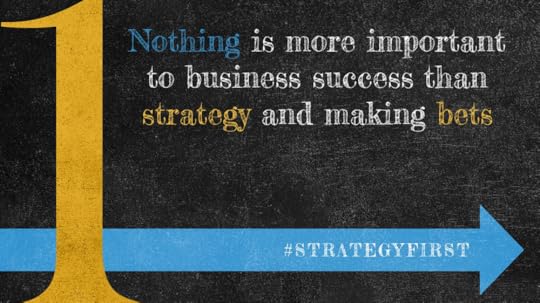
Do poker and business leadership have anything in common? At first flush, erm, I mean blush, they do not. Poker players must play the cards they are dealt. They bet, they fold, and they bluff based on their cards and the cards of their competition.
Business leaders, on the other hand, have the benefit of assembling their own hands. Building your hand, your strategy, your plan to compete, is the leader’s bet. Often, leaders thoughtfully forge their strategy. Sometimes it comes from trial and error, and sometimes leaders build a successful hand with dumb luck, but a winning strategy is required for a leader to win in business.
You can be charismatic, you can know your competition, you can have good judgment, you can hire the best people, and so on and so forth, but strategy always comes first.
All of the world’s most influential companies made headwinds off of a big strategic bet. Originally, Microsoft’s big bet was on the personal computer itself. Steve Jobs turned Apple around when he made a bet on digital devices and consumer entertainment. Marie Kondo bet people care about cleanliness and less clutter. Costco bet on the concept of a membership warehouse.
Big or small, profit or nonprofit, companies you know and companies you have never heard of, no matter where you are in the world or what industry you’re in, it all comes down to building a winning hand by making the right fundamental bet. If you make the right bet, you still must do many other things right to be successful. And that includes the other critical components of great leadership. But if you make the wrong bet, it doesn’t matter what else you do: Your business will fail, and you will fail as a leader.

It is hard and challenging. As a leader, it is impossible to know for certain if your hand is a winning hand or if someone else has something better. But there is a model to help you think about what bet to place, what hand to assemble. I call it the Strategy First model. It is a twist on Einstein’s famous E=mc2 equation: Strategy = E∗mc2. (sorry my blogging software does not support exponents/superscript)
E∗mc2 represents the three key components of strategy. The "c" stands for customer value. Sometimes, when used in the vernacular, value means price; in my model, customer value is much broader. It is the worth or the usefulness of something; that is, the perceived benefits in comparison to what you paid. In most strategies, the value you provide your customer is most important, which is why it is squared.
The second component, "m," is market potential -- how much profit can be made in your business. Last is execution, or "E" -- how you run your business every day. Some people try to argue that execution is not strategic, but if strategy is your plan to compete, then execution must be central to strategy. The right bet won’t win you the hand if you don’t execute on those bets.
Just like winning in poker depends on your hand relative to the other players, core to the Strategy First model is that the effectiveness of your strategy depends not on the quality of your strategy independently, but on the quality of your strategy relative to your competition’s strategy.
Leaders can assemble and reassemble their hand as conditions and competition change. Twitter started as the side project of a podcast publishing platform before concluding it had to reinvent itself. Starbucks was struggling in 2008 before Howard Schultz returned as CEO and reset the strategy to return the company to its coffeehouse experience roots.
[image error]In Kenny Rogers’ iconic song, the Gambler exclaims: "For a taste of your whiskey I'll give you some advice. ... If you're gonna play the game, boy. You gotta learn to play it right.” To play it right as a business leader means putting strategy first, assembling a winning hand and making the right bets because, unlike poker, you aren’t stuck with the hand you are dealt.
I’ll take a bottle of that whiskey now...
August 3, 2020
Stay thirsty, my friends
In 2006, sales of imported beer began to dip as craft beer became more and more popular in the United States. Dos Equis, owned by Amsterdam-based brewer Heineken, was one of the imported beers that saw declining sales, especially when pitted against its similar tasting competitors: Coors, Budweiser, and Miller Lite. Knowing it had to do something drastic to differentiate itself, Dos Equis upped its advertising game and launched a new ad campaign— commercials that featured an older bearded, debonair gentleman, dubbed "the most interesting main in the world," who found himself in outrageous situations like surfing a killer whale, slamming a revolving door, and finding the Fountain of Youth, but not taking a drink because he “wasn’t thirsty.” Every ad included the tagline, “I don’t always drink beer, but when I do, I prefer Dos Equis,” with the sign-off, “Stay thirsty, my friends.”
The “The Most Interesting Man in the World” campaign was remarkable because it took a polar opposite approach than that of every other beer brand. While Budweiser was making ads directed toward young guys who like to party, Dos Equis opted to feature a Hemingway-esque worldly figure that consumers could aspire to be.
Evident through seemingly endless Halloween costumes, memes, and skits on Saturday Night Live, the clever ads and witty one-liners created a cult-like obsession with The Man:
“His blood smells like cologne.”
“Once a rattlesnake bit him, after five days of excruciating pain, the snake finally died.”
“He can speak Russian . . . in French.”
“He gave his father ‘the talk.’ ”
“If he were to punch you in the face, you would have to fight off a strong urge to thank him.”
“Mosquitoes refuse to bite him purely out of respect.”
“He lives vicariously through himself.”
"He bowls overhand."
During the first two years of the campaign, Dos Equis sales rose more than 22 percent, while imported beer sales on the whole dropped 11 percent. During the campaign’s nine-year run, sales tripled.
As I talk about in
Strategy First, my friends.
https://youtu.be/4zD6jKvqTO8
July 17, 2020
#stophatepolitics

The recent Black Lives Matter protests resulting from the tragic murder of George Floyd are the
Businesses have joined the cause too. Corporations are condemning racism, enacting anti-racism personnel policies, donating to racial justice advocacy groups (nearly half a billion dollars so far), promising to support black enterprises, committing to hiring more people of color (including in leadership), and more. The
These are the first steps of an anti-racist business movement. The next step is for all public companies to make all their direct and indirect political donations public and to agree not to donate to racist politicians.
This is crucial because city, county, state, and national legislation has an outsized impact on racial justice. Criminal justice, police reform, voting rights, and zoning laws are just a few of the countless examples where politicians decide the racist or anti-racist policies of our land.
On a national level, the NAACP
If a candidate cannot obtain at least a “B” grade, they should not receive any corporate political donations. Call it #StopHatePolitics. The overall concept, to advocate that companies only allocate political spending to politicians earning at least a “B” grade, could be extended to state and major city and county legislators.
If they are interested some of the organizations driving
Insisting on full disclosure and accountability policies for corporate political spending must be a tenet of #StopHatePolitics. “
Corporate transparency of political donations has been gaining momentum over the last few years. According to the
Many public companies will oppose a #StopHatePolitics campaign. They wouldn’t want their political spending constrained by lawmakers earning a “B” grade. They will also argue the need to donate money to a broad range of politicians to help gain support for legislation important to their business. While that may be true in some cases, it is far past time for companies to take a stand if we are going to make more progress on racial justice.
All of us as citizens must stand united against racial injustice and fittingly, corporations must too, be citizens united in this just cause.
This blog post was published as an article on
June 16, 2020
You and your company can advance Racial Justice
The protests sweeping our country since the George Floyd murder potently and painfully reinforce a reality that has been collectively denied throughout our history. A growing number of Americans, across every demographic, are now internalizing that Black Lives Matter and that we suffer from systemic racism both within our police departments and more broadly in our country.
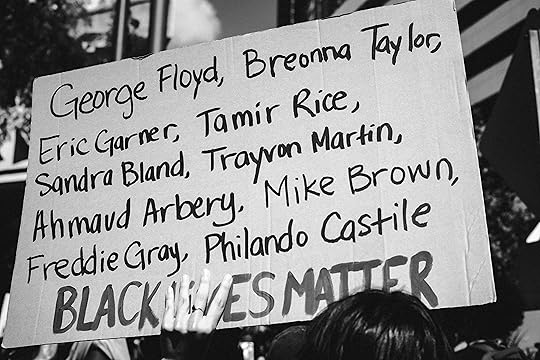
Business people at all levels can help make a profound difference reducing racism. Change requires executives, board members, and investors to step-up and use their leadership positions to make a difference. Bank of America has committed $1B over four years to help communities across the country address economic and racial inequality. Employees too can advocate within their companies.
So, what should your business be doing to combat racism in all its forms?
Mark Kramer’s recent article in the Harvard Business Review is a great start. Kramer highlights
1. Anti-racism personnel policies and racial-equity training.
2. Pay equity.
3. Giving employees a voice.
4. Supporting full participation in democracy.
a. Make Election Day a paid holiday. Register employees to vote at work.
5. Lobbying for good.
a. Committing at least 50% of your lobbying expenditures to drafting and supporting bills that would improve conditions for communities of color by increasing access to quality education and training, rebuilding infrastructure, protecting consumers, ending racial oppression, rebuilding the safety net, increasing voting rights, achieving criminal justice reform, and making police more accountable. And if your business model relies on immigrants who live, work, and pay taxes in the United States, then stand up for their rights and support a path to citizenship.
6. Paying a living wage.
7. Paid parental and sick leave.
8. Full health care coverage for all employees and support national health care.
9. An employee emergency relief fund or low-cost loan program.
10. Democratize employment applications.
I’d like to add six more:
2. Making all political donations transparent and easily viewable on your website.
4. Rejecting people or organizations that condone racism.
5. Reforming
6. Investing in education.
Hiring more Black leaders
As the

Making all political donations transparent and easily viewable on your website
Not giving money to candidates that get less than a “B” grade from the NAACP
On a national level, the NAACP
If your company does not disclose its contributions, you can get some political and PAC donation information today from websites like
Rejecting people or organizations that condone racism
When it comes to political speech in business, hypocrisy abounds. For example, the same ViacomCBS that aired 8 minutes and 46 seconds of breathing with the words, "I can't breathe" to remember George Floyd on many of its networks (MTV, Comedy Central, VH1 and others) is currently giving Bill O’Reilly a platform on its Pluto TV brand. O’Reilly has spread racist statements about African Americans in the past and was forced to resign from Fox after it was revealed the network paid $13 million to settle numerous sexual harassment lawsuits against him. Interestingly, The Los Angeles Times is reporting that
Another related example is companies can choose to stop running ads on shows that promote or tolerate racism. Just the other day the New York Times reported that Fox News host Tucker Carlson is
In 2019, the New York Times reported that the National Bureau of Economic Research found that black mortgage borrowers were charged higher interest rates than white borrowers and were denied mortgages that would have been approved for white applicants.
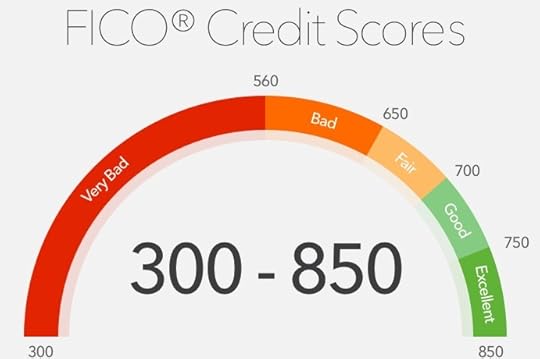
That may partly stem from our racist credit system. Credit scores can be the decisive factor behind whether someone gets a job, apartment, or access to an affordable home or business loan—and they are not race neutral. A 2017
A similar story can be told about insurance. In
While mortgage loans, credit and insurance are just a few examples, similar patterns exist in many other industries.
Investing in education
What kids are taught and how they are treated will affect their viewpoints and biases about others. In a
The saga continues in K-12 and beyond. In 2016, the Department of Education concluded that
Excessive suspensions for black students are part of the "school-to-prison pipeline," a disturbing national trend wherein children are funneled out of public schools and into the juvenile and criminal justice systems. According to the

High school graduation rates are also higher for white students.
Research from Stanford University concluded that
To advance racial justice, education needs an equal playing field and that includes issues intricately linked to education success such as nutrition, access to Wi-Fi and computers and so on. Businesses must contribute not only because it is a moral imperative but also because businesses need better educated students. Schools are the pipeline. Some companies have already invested in education and some entrepreneurs have started their own nonprofits to expand access and improve education quality.
Specifically, to ensure the commitment is material, I propose that at least 25% of your company’s philanthropy budget go to reducing racism and improving education for communities of color.
When it comes to commitments companies should make to advance racial justice, the fight will never be truly over. But these sixteen suggestions, Kramer’s 10 plus my 6, are a first step in the right direction. Some might argue that some of these ideas will dampen profits. That is a bunch of malarkey. These commitments are not only the right thing to do, they will help companies and our economy grow in the long run.
So, the question becomes, will you sit on the sidelines, or get in the game and drive your business to help make some or all these commitments?
June 8, 2020
Dear Class of 2020
Dear Class of 2020,
Like so many others, I salute your accomplishments. Congrats.

It’s unfortunate that your senior year of college ended on a horrible note. You have mucked through uninspired online classes, lost the ability to physically be with some of your family and friends, and face the worst job market in at least 100 years. This was not the way it was supposed to go.
It would be easy to despair. While the times ahead will certainly be tough, I believe there is light at the end of this long tunnel. Though it was many decades ago, I once found myself in a similar situation to those of you that can’t get a job. This letter is to you. It is about what I learned – hopefully, it will help you endure, persevere and get your career off to a strong start.
In 1982, I graduated from Cal Berkeley at the top of my class with an undergraduate business degree. My resume was filled with numerous academic awards, as well as valuable work and leadership experiences.
But, despite all that, for 6 months, I couldn’t get a job.
Lasting from the summer of 1981 until almost the end of 1982, the United States suffered a major recession. While it wasn’t nearly as bad as our current situation, it was dire. At the time, with an unemployment rate at nearly 11%, the 1981-82 recession was the worst economic downturn in the United States since the Great Depression (it was later eclipsed by the 2007-09 recession).
Not being able to get a job was devastating on an emotional level. But it taught me valuable lessons. Hopefully, those lessons, combined with my decades of experience as a businessperson and senior executive, will allow me to impart wisdom that will help you through this crisis. I have five tenants for you to remember as you continue to search for a job:
1. Believe
2. Bet
3. Prepare
4. Connect
5. Persist
Believe
It is hard to be patient during a job search. Anxiety sets in early, and it can be easy to doubt yourself as rejection letters mount and prospective employers don’t even have the courtesy to respond. When it happened to me, it weighed on my psyche and crushed my confidence. Perhaps the most important tip I can give you is to keep believing in yourself and your capabilities, even in the bleakest of times. Your abilities and potential have not changed, despite the pandemic. While it is natural to feel some despondency, don’t let it shake your belief in yourself. Get help and support from family, friends, or professionals if you need it. Self-doubt and depression will show through in your interviews and reduce the tenacity of your preparation.
Bet
In my book

Your career is the same. Think of your career as a long-term bet. As you progress throughout your career, you should plan to gain the skills and experience to help you reach your destination. To make the right bet it is critical to be self-aware. What do you like? What gets you excited? Are there particular challenges that seem fun to you? Are there companies you admire and want to work for? Is there a cause you feel committed to? Where do you excel, and where do you struggle?
Having some sense of what you are about is important to targeting the right companies or industries during your job hunt. For example, maybe your job goal is to gain some skills that will help you succeed at a long-term passion. Don’t know what your passion is yet? That’s okay. An additional approach is to consider the industry or job type you wish to bet on, and what might best align with your interests and experience. In the early days, personal computers were mainly used by hobbyists, but my bet was that the personal computer would grow into the mainstream. That led me to leave my sales job and go back to school to earn my MBA, so that I could more easily pursue high tech jobs. Borrowing the words of the great hockey player Wayne Gretzky, I tried to “skate to where the puck is going, not where it has been.” That proved to be a fortuitous bet as I ended up at a top choice -- Microsoft.
Because of Covid, it is hard to know where the puck is going. In addition, the job types you were considering six months ago might require some rethinking. As I discussed in another blog post, some bets are clear. Every company is undergoing a digital transformation, and digital skills will undoubtedly help you throughout your career. Some trends are likely: more telemedicine, online learning, more “eating in to eat out” (i.e. more sales of pick-up, delivery and prepared foods). More everyday living going digital: from games to happy hours to workouts to entertainment. Sadly, COVID-19 will cause more income inequality and poverty, but fortunately, a likely rebound in the importance of science.
I expect less globalization, more automation, less business and personal travel, smaller offices, changed office environments, more work at home, and more video meetings and conferences. That is just a short list, but it gets to this key point. As you embark on your job search, think about the trends and industries you want to bet on in this time of Covid.
Prepare
The legendary basketball coach John Wooden is credited with the famous quote “failure to prepare is preparing to fail.” Once you make your bet, do your research to understand the industries, key people, key companies, and trends related to the companies you are interviewing with. Use the resources at your disposal such as your school’s job center, friends, and alumni who work in the field or at a company you are interested in, training courses, and the web to educate yourself so you can talk the talk when applying and interviewing for jobs. The same resources can help you learn new skills you might need. For example, before I went back to get my MBA, I took a programming class at night because I knew I would be targeting the PC industry for a future job and I thought some additional programming knowledge would be helpful.
Perhaps the biggest part of preparation is figuring out the story you want to tell about yourself. In her memoir, Becoming, Michelle Obama says “your story is what you have, what you will always have. It is something to own.” You are selling yourself to potential employers. What makes you, you? What makes you unique? Why should they hire you? What do you have to offer to help, especially during these unusual times? What are the examples you have from your life, college, and business experience to support your story?
Once you have a story to tell a potential employer, it needs to have a tangible connection to your resume, LinkedIn profile, and emails you send. Of course, it also needs to be clearly articulated in your interviews.

Speaking of interviews, make sure you practice with friends and family members. Know how you will answer key questions that always, or are likely, to be asked. Answer questions truthfully and succinctly and support your answers with an example or two. If you are asked if you have a skill or experience that you don’t have, then answer honestly but add an example that shows how you have effectively picked up a new skill in another situation. Avoid allowing your interview prep to turn you into a robot. Employers hear endless canned stories and answers; ensuring your story is genuine will help you stand out.
Connect
Building connections is key to the job hunt. If you aren’t active on social networks, it might be time to start. Consider posting articles or starting a blog to expand your reach and let others know more about you. Set up as many informational interviews as you can with friends, family, alumni, social media connections and so on. Informational interviews are primarily about gathering information and gaining insights about a company and an industry. Don’t ask for a job, ask for advice. If someone can help you with your job hunt, they will generally let you know.
At the end of every meeting, if you haven’t already gotten some names of others you should talk to, then ask the person you are meeting with if they can recommend two or three people you should meet with. Within a couple of days make sure and send a thank you note or email. Periodically, keep everyone in your network up to date on your progress (send personal emails, not group ones). If someone gave you a key piece of advice or connection, let them know that you followed up:
“Hey Dan, yesterday I met with Lisa as you recommended. It was a great meeting and she gave me some great advice. Thanks for the referral. I’ll keep you posted how the job hunt is going.”
Not only is this kind of follow-up common courtesy, it will help people feel vested in your job search.
Sometimes, if a meeting goes really well, you feel a good connection with the person you are meeting with, and they are enthusiastic about helping, than ask the person you are meeting with if they can be a career mentor for you and keep giving you advice and help, even after you get your job.
As your network grows you will learn, and opportunities will emerge.
Persist
Looking for a job is a full-time job. All the research, preparation, informational meetings, connecting, and follow-up is extremely time consuming and emotionally draining. You will get tons of rejections and nonresponses. If you felt like the company or recruiter you were working with was transparent with you, I recommend politely asking for feedback on why you didn’t get the job so you can learn and improve. Like much of life, the job process is all relative. You may have done a great job in the interview process, but someone else came across as a slightly better fit. Keep at it. If you are excited about an opportunity and think you could really succeed, you can keep pushing even after the prospective employer says no. You can ask them if you can check back in in a month or let them know if you have some new data that can change their mind.
Don’t be afraid to take a solid job that is not your dream job. I wanted to go into marketing out of college but ended up taking a sales position. The sales job gave me experience and insight that was valuable during my career.
The tough times ahead will also require scrappiness and creativity. For example, you could consider taking unpaid internships, asking to shadow people who work in a field that is interesting to you, taking volunteer jobs to learn and gain experience, taking online classes or even going back to graduate school. If you think grad school might be in your future, consider taking grad school admission tests, such as the GRE or GMAT, now, while you have the time,. The scores are generally usable for around 5 years.
As you navigate this nightmare, I hope these tips provide aid. The process will be demanding. Hang in there, look after yourself and most of all, good luck!
May 7, 2020
Adapting to the COVID Tsunami (part II)
(If you haven't read
Strategically, every business needs to think longer term about how they adapt for this new world. As we open up the economy again, we will see second and third waves of COVID-19, more riptides and/or tsunamis tearing through the country. Though there are no guarantees, a vaccine will likely take at least 18 to 24 months to be developed and implemented.
For business, this means a material strategy change to retool for a world where people practice social distancing, work at home a lot more, stay at home more and are dramatically less likely to congregate with groups of people.

Every business leader and their teams are going to have to make bets on where they see the world going and the implications for their business.
Some bets are clear. Hopefully, your digital transformation started before the pandemic, but either way, the internet needs to be central to your strategy now. Many trends are likely: more telemedicine, online learning, more “eating in to eat out” (i.e. more sales of pick-up, delivery and prepared foods). More everyday living going digital: from games to happy hours to workouts to entertainment.
Sadly, COVID-19 will cause more income inequality and poverty, but fortunately a likely rebound in the importance of science. I expect less globalization, more automation, less business and personal travel, smaller offices, changed office environments, more work at home, and more video meetings and conferences. Democracy reform, with mail-in voting and a push toward more universal healthcare, will become even more pressing topics.
While strategy suggestions to specific businesses are impossible in this blog post, I can still provide broader long-term advice. Envision and deliberately choose where you want your company to go, so the COVID Tsunami doesn’t drown you in a ferocious sea of change.
As I discuss in
If you are leading a large organization, make sure not to let the layers and bureaucracy get in the way of getting the right people together quickly. The first step of the review is a self-assessment—no sugar coating allowed. Honestly review
the key questions that underlie your strategy. What is your fundamental bet?

How well are you executing in the key areas across the business? What is the market potential for the business and customers you are targeting? And finally, what is the value you believe you are providing your customers? Then, do the same assessment for your key competitors and do the comparison.
You can download a copy of my Strategy First Worksheet on
If you do this exercise with your leadership team, say at a strategy offsite, first have each person fill out the worksheet independently. After, bring everyone together and discuss differences in your answers. It’s quite common for there to be major differences in every category, including the fundamental bet(s) and what the strategy of the company actually is. You’ll find this process quite enlightening. It should go without saying, but the leadership team and everyone at your company ought to be in sync when it comes to the company’s strategy.
Once you have consensus on the current strategy, the next step is to go through a similar exercise for where you think the business is going given the COVID Tsunami. How will customer value, market potential, and execution change? What bet do you want to make on where business is going? Where are your competitors going to go? How do you provide a differentiated compelling value to your customers as you adjust your strategy, your plan to compete, with new or modified bets?
The outcome of this exercise should be a revised strategy, your new bets. Once you have accomplished a revised strategy (and every company should rework their strategy as a result of this pandemic), you can focus on execution and driving the strategy through your team. I have a chapter on execution in my upcoming book,
Given the dramatic pace of change during the COVID Tsunami, your strategy team should meet frequently to revise and rework the strategy as the world keeps changing and you learn more.
Be scrappy and creative in the short term. Do what you can to stabilize and revamp the business. Then, rework your strategy and make your updated bets for this new crazy world we are living in.
Hopefully, in the not too distant future, the COVID Tsunami will dissipate and we will have calmer waters to navigate. Until then, keep calm, keep safe and keep your strategy first.
Adapting to the COVID Tsunami (Part I)
In a previous post, over a month ago, I discussed the need for our federal government to forge a
In my upcoming book,

Unfortunately, the COVID-19 pandemic is more than just a tide. These are no small waves. COVID-19 is a tsunami, that will destroy countless businesses outright.

When it comes to the COVID Tsunami, many businesses will find adapting to be extraordinarily difficult, while others will find it outright impossible. Still, we must forge on, and for those who have a chance to adapt, this post will provide pertinent strategy recommendations.
I will break this post into two parts. Part I is about now and the short term. Part II will cover longer-term strategy.
As I discuss in my book, luck impacts strategy success. For a fortunate set of companies, such as Domino’s, Pizza Hut, Amazon, DocuSign, Netflix, DoorDash, Peleton, Zoom and others, the pandemic actually helps their business. Products like Microsoft Teams, or baking flour, or webcams are selling like hotcakes. But these are the fortunate few. For most, COVID-19 is simply very unlucky, bringing a catastrophic crushing of revenue and profits. As everyone knows, restaurants, brick and mortar retail, entertainment, sports, travel, and countless other businesses are scrambling with few, if any, options.
And even if your business has some options to keep going, life is complicated by stay at home orders, supply chain disruptions, the high costs of keeping employees hired and healthy, other high overhead costs, and poor national leadership.
But I do have some recommendations that will help some businesses in the short term.
The first question to ask during the pandemic is the most obvious one. What can your business do in the short term to still provide customer value relative to the competition? My gym is now offering workout classes on-line. Companies of all sizes are moving their business to the web, adjusting business models, focusing on different products, offering new services and so on to adjust to the changing needs of their customers. If you are one of the major sporting leagues, you are exploring alternatives like games with no fans or limited fans, adjusting schedules and more, so at least you can play games soon and earn TV revenue.
Another tactic is to try and shift or add new customers to bolster market potential. For example, you may be a local bookstore, but you can sell books anywhere online and have probably strengthened your online selling capabilities because of the pandemic. You can think about a mailing list to acquire, advertising to run, or a marketing plan to broaden your target customers. My wife and I live extremely close to Seattle. While we loved to go into the city, we almost never went into Seattle for take-out because of heavy traffic. Now, with traffic reduced, we can pop in the city in just over 10 minutes. We are a new set of customers for Seattle restaurants offering take out. During the last month or so, I have been pitched by many new businesses and nonprofits via video conferences as they reach out to new potential customers or donors.
The short-term response is about being scrappy and creative to keep business going. It’s also about being ready to restart as soon as the economy starts to open up. Clearly this is another reason why you see businesses reducing costs and investing in digital where they can. If you achieve that, then you have a chance to stay afloat in the COVID Tsunami. But to be ready as the economy opens up also means knowing where you want to go. Read
May 6, 2020
Treating an infected book launch
Like every other industry, the publishing industry is being upended. Earlier this week, New York Times reporter Alexandra Alter wrote about how
My first book, Strategy First, is caught in the middle of this maelstrom. I faced some tough strategic questions. How does the crisis affect the book content? Release date? Print quantity? Marketing?
Unfortunately for me, the book content was completed just before the crisis began.
I do have a whole chapter titled “Adapting to the Tides,” which highlights the importance of considering changes in the external environment when forging your strategy.
But, since it did not exist when I wrote the chapter, I did not specifically mention the novel coronavirus (Covid-19), and the stories I tell in that section are about how climate change has impacted business strategy. Can I really have a strategy book released on June 16th without mentioning Covid-19? Is it even wise to release the book on June 16th in the first place? Business talks, one way I promote the book, have been postponed until some unknown future date. Brick and mortar bookstores are closed and business books sales, depending on the subcategory, are currently down 10% to 35%.
The flip side is that delaying the book comes with a new set of challenges. Business book content ages and is less relevant over time. Releasing Strategy First in the fall also meant the book would face the headwinds of the election, the many other delayed books coming out a once, the unpredictability of the economy at that point, and the material costs to try and add Covid-19 business strategy content to the book. Plus, the lessons of the Covid-19 crisis are still being learned. I could talk about and provide insight and tips about dealing with the crisis, but the supporting stories are still in their early chapters.
Ultimately, with all this in mind, I have decided to keep the original release date of June 16th.
Working with my publisher, we managed to add a few sentences to the book that the Covid-19 pandemic started just as the book was going to press and referring readers to my website:
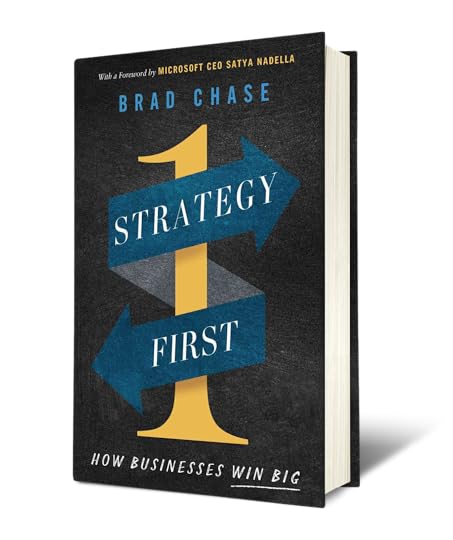
Also, just to be safe, even though it increases my print costs per book 6%, I decided to cut my first printing run by just over 15%. I can always print more books if Strategy First does well. In addition, if book sales are strong, I will update Strategy First in the future with a new edition.
I already had planned to focus my marketing efforts online, so I don’t have to make any material changes to that strategy.
Did I make the right bet by referring readers to my website for Covid-19 information and leaving my book launch on June 16th? I welcome your feedback and commentary.