Starhawk's Blog
September 27, 2026
Why Protecting Dark Skies Benefits Both Wildlife and People
Dark sky conservation reduces light pollution, protects wildlife from disrupted behaviour, and gives communities clearer views of the night sky. And when you aim a floodlight down instead of sideways, you’ll change what feeds, breeds, and finds its way home after dark.
Yet most of us grew up under a permanent orange glow of electric light. That constant glow can make light pollution seem normal, even as it spreads beyond urban areas. At Starhawks Blog, we track that spread because artificial light reaching farmland and coastal areas can disrupt wildlife far beyond city limits.
This guide covers:
How light pollution affects people and wildlifeHow dark sky areas protect natural darknessHow you can help reduce light pollutionLook up tonight and see how many stars you can spot.
Light Pollution: Why Natural Darkness Is Disappearing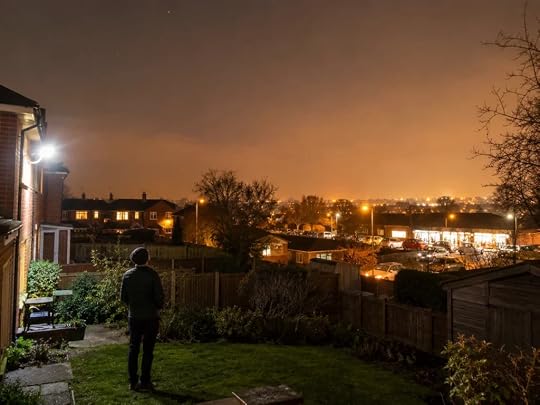
Most people have no idea how much artificial lighting drowns out the stars above their own backyard. This light pollution builds from thousands of small sources, including floodlights, shopfronts, street poles and security globes.
According to a global atlas of night sky brightness published in Science Advances, more than 80% of the world’s population lives under light-polluted skies.
Three effects show up first due to the pollution, and each one lands on a different part of the living world.
How Artificial Lighting Confuses Migrating Birds and InsectsMigrating birds read the stars the way sailors once did. Artificial light can draw them away from their usual routes, increasing the risk of collisions and exhaustion. Insects fall into the same trap, circling a single globe until they drop.
The effects can then spread to plant life. Moths pollinate many night-flowering plants, so fewer active moths can mean fewer opportunities for those plants to reproduce (a job nobody notices until it stops).
Wetlands can be particularly sensitive to this disruption. A poorly directed floodlight can alter insect activity around breeding and feeding areas throughout the night.
Why Human Health Suffers Under a Bright Night SkyHuman health suffers under a bright night sky because your body clock reads darkness as the signal to release melatonin. That hormone settles you into sleep at roughly the same hour each night.
However, artificial light at night can interfere with this natural process. Light entering your bedroom may delay melatonin release, which makes it harder to fall asleep at your usual time.
You may think blackout curtains help, but they only treat the symptom while the sky outside stays washed out (curtains cannot fix the street). These effects on sleep make human health another reason to reduce light pollution, alongside protecting wildlife.
The Growing Glow Over Australian Cities and CoastlinesIf you look closer to home, Australia still holds some of the largest stretches of natural darkness on the planet. For example, the glow over Sydney, Perth and the Gold Coast keeps creeping outward.
Coastal development pushes it further. Beachfront lighting reaches far beyond the shoreline and confuses turtle hatchlings, which draws them inland instead of towards the sea.
From our own stargazing trips outside Adelaide, we have found that escaping the city glow often means travelling well beyond the outer suburbs. Even after several hours on the road, the difference only becomes obvious once artificial light fades and the Milky Way becomes clearly visible overhead.
Why Does Dark Sky Conservation Protect Local Wildlife?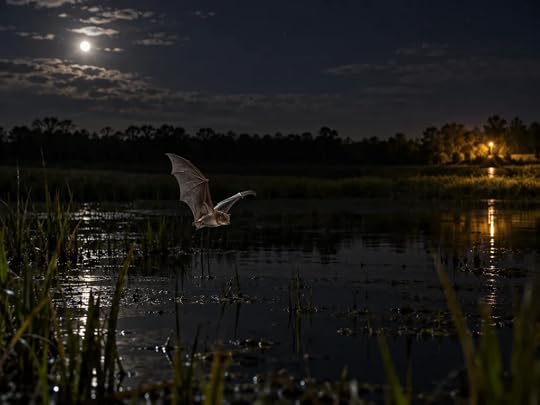
Dark sky conservation protects wildlife by cutting the glare that disrupts feeding, migration, and breeding. Naturally, nocturnal animals evolved under starlight. Even a small lift in brightness changes where they hunt and how far they travel.
For instance, Microbats avoid lit corridors entirely, which cuts them off from feeding grounds they have used for generations. Possums and gliders also treat a lit gap between trees as a wall they will not cross. Such fragmentation shrinks usable habitat without removing a single tree.
Bright nights skew predator-prey interactions, too, since owls hunt with ease while their prey stays hidden and hungry.
Artificial light further disrupts breeding behaviour. Frogs, for example, may call less frequently around illuminated ponds, which reduces opportunities to attract mates during breeding season.
Honestly, a single poorly shielded light near a wetland can therefore affect several nighttime behaviours in the surrounding habitat. Councils can reduce this disturbance by using shielded fixtures and warmer lighting that limits unnecessary light reaching wildlife areas.
Astronomy Escapes: Dark Sky Reserves and National ParksDark sky reserves and parks protect areas where artificial light is carefully controlled, which gives visitors clearer views of stars and other night-sky features. These protections usually involve lighting standards that limit unnecessary glare and preserve natural darkness.
For stargazing in Australia and nearby New Zealand, three protected areas are particularly notable:
River Murray Reserve: South Australia’s reserve earned its title in 2019 and covers more than 3,200 square kilometres of river country.Warrumbungle, New South Wales: Warrumbungle became Australia’s first protected park of its kind in 2016. And it sits beside Siding Spring Observatory, the country’s largest optical telescope site.Aoraki Mackenzie, New Zealand: Across the Tasman, 4,300 square kilometres of high country sit under lighting practices that Tekapo residents adopted back in 1981.These dark sky reserves offer excellent viewing conditions without requiring you to travel deep into remote areas. Just don’t forget to pack a jumper, even in January, as clear nights can get surprisingly cold.
Sky Protections and Lighting Policies: What They ProtectDark sky protections vary according to the type of place being protected and the lighting standards it follows. Some classifications cover remote natural areas, while others apply to parks, surrounding regions, or entire communities.
The table below sorts the four main titles by what each one asks of a community.
TitleWhat it protectsTypical settingDark Sky ReserveA dark core plus a lit buffer zoneLarge rural regionsDark Sky ParkPublic land with strict lighting rulesNational park or state reserveDark Sky SanctuaryThe most remote and fragile sitesOutback, far from any townDark Sky CommunityA whole town’s lighting policyShires and small councilsQuick Tip: Check which title a place holds before you visit. A Dark Sky Sanctuary protects remote areas with very little artificial light, while a Dark Sky Community focuses on reducing light pollution across a populated area.
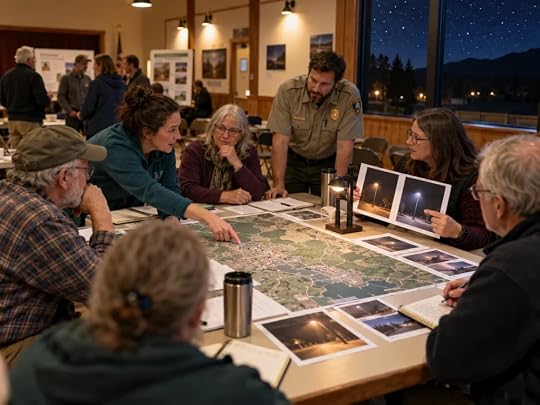 You Can Help With Protecting the Night Sky
Darker nights usually give wildlife their habits back. They also hand you a sky worth standing outside for. And the fix costs very little, since shielded warm globes and motion sensors do most of the work.
You can start reducing unnecessary light around your home and neighbourhood with two simple steps:
Adjust your porch lightRaise street lighting with your councilReal dark sky preservation is a long game, and environmentally responsible outdoor lighting is how ordinary streets join in.
Starhawks Blog shares stargazing guides and news for readers across Australia. Ready to see the stars properly? Get in touch with us, and we will point you to the nearest reserve.
The post Why Protecting Dark Skies Benefits Both Wildlife and People appeared first on Star Hawks Blog.


August 20, 2026
Planning an Astrophotography Trip Around Weather and Light Conditions
Planning an astrophotography trip sounds simple until you’re two hours into a drive and the sky clouds over. Along with clear weather, a great night shoot depends on your location, equipment, camera settings, and preparation. And those need sorting before you leave home.
Here at Star Hawks, we’ve broken the whole planning process down into four parts:
Reading the conditions that can ruin your shootTiming the Milky Way correctlyFinding a genuinely dark locationSetting your camera up the right waySo if you’ve ever driven out under a seemingly perfect sky and come home with no photos worth keeping, let’s fix that.
What Can Ruin an Astrophotography Night Before It Starts?Bad weather, poor timing, and light pollution are the three common issues that ruin a night shoot before it even starts. To make it worse, most of them don’t even show up on a standard weather app.
Here are six things that make a wasted trip:
Cloud Cover and Humidity: Thin cloud layers scatter starlight so badly that extended exposures come out hazy and flat. This means a “mostly clear” forecast isn’t always reliable.Wind Speed Above 20km/h: Vibration of the wind travels straight through your tripod during a long exposure. And the final shot ends up blurred beyond recovery.A Bright or Rising Moon: A full moon sits at an apparent magnitude of –12.7 . That’s enough light to wash out the galactic core and lift sky brightness across the whole frame.Poor Air Clarity: Dust, smoke, and haze reduce the contrast your camera captures. In fact, a hazy night can have a greater impact on image detail than mild light pollution.Light Pollution Creep: Ambient light from city lights bleeds into wide-angle shots. That orange glow along the horizon is harder to remove in editing. It can reduce contrast, shift colours, and hide faint details in the night sky.Wrong Season for Your Target: The Milky Way core sits below the horizon during certain Australian months. Meaning, photographers may arrive at a dark location when the brightest part of the galaxy isn’t visible in the sky.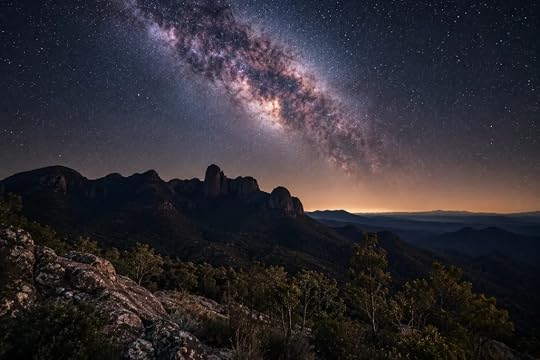
That said, none of these are hard to check in advance. Only ten minutes using weather, cloud cover, and stargazing apps the night before can rule out poor nights before they waste your time and petrol.
How Do You Know When the Milky Way Will Show Up?Southern hemisphere photographers can see the Milky Way core between February and October, peaking around June and July. The thing nobody tells you is that the season alone doesn’t guarantee a good shot. Moon phase, app planning, and your location all play just as big a role.
This is what you need to line up before you pick a date.
Australia’s Best Months for Milky Way PhotographyAs we were discussing, the galactic core is visible from around February to October, but April to August gives darker skies and better evening timing for most photographers. Basically, autumn and early winter are well-suited for a full night shoot. You can hit the ground running the moment the season opens.
In terms of locations, Warrumbungle National Park in NSW is Australia’s first and only International Dark Sky Park. It’s one of the best spots to visit during peak Milky Way season for truly dark sky conditions.
How Moon Phase Affects Your Shooting WindowOur recommendation from plenty of nights out under Australian skies: shoot within three to four days either side of a new moon for the darkest possible skies. Even a slim crescent can affect your long exposures.
So if a rising full moon falls in your planned window, consider shifting your date by a few nights to capture bright stars without the washed-out sky.
Using Apps to Time Your Shot PreciselyThe PhotoPills app shows a live Milky Way planner with galactic core position, rise time, and azimuth (the direction the Milky Way appears in the sky) for any date. Besides that, Clear Outside and Astrospheric give hourly cloud cover forecasts built for night sky photography.
You can also use Stellarium to preview the exact direction the Milky Way core will sit above your foreground. That way you can plan your capture before you leave home.
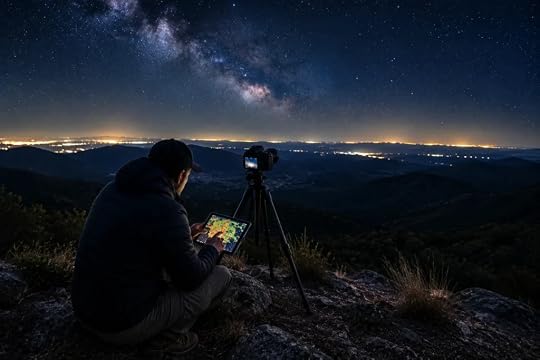 Where Should You Set Up Your Camera?
The Bortle scale rates sky darkness from 1–9, and Class Four or lower is the recommended starting point for Milky Way photography. In this case, light pollution maps let you find dark zones before committing to a long drive. Not to mention, elevation, open horizons, and sealed road access all affect both image quality and personal safety at night.
Use this table to size up any location before you shoot:
FactorWhat to Look ForWhy It’s ImportantBortle Scale RatingClass 4 or lowerMilky Way visible with good detailDistance from CityVaries; verify on light pollution mapsCity size determines how far you need to goElevationHigher is betterLess atmospheric distortion and scattered lightHorizon ClearanceOpen 180° viewCaptures the full Milky Way arcRoad Access at NightSealed or firm gravelSafety when driving to remote locations in the darkUnfortunately enough, most photographers obsess over camera settings but put very little thought into where they set up. A Class Four dark sky with an open foreground and a clean horizon will let you shoot clearer images than more advanced techniques ever will.
Bottom Line: City lights more than 50km behind you and a wide frame of sky overhead create better conditions for night sky photography. A stable surface to shoot from is the final factor that helps separate a great capture from a forgettable one.
Astrophotography Tips: What to Check Before Every ShootCheck moon phase, cloud cover percentage, wind speed, and Bortle rating together before deciding to head out. This is where we see most people go wrong: they check one or two of these and assume the rest will sort itself out.
Additionally, lock these few things in before you leave the house.
Camera Settings for Dark Sky PhotographyStart with aperture at f/2.8 or wider, ISO between 1600 and 3200, and shutter speed around 15 to 25 seconds. For shooting long exposures without star trails, the 500 rule is your starting point. Divide 500 by your focal length on a full-frame camera (or by your crop factor multiplied by your focal length on a crop sensor camera).
Here’s the 500 Rule Formula:
500 ÷ focal length = maximum exposure time (seconds)
On a crop sensor camera with a 1.5x crop factor, the formula would be:
500 ÷ (focal length × crop factor) = maximum exposure time (seconds)
Along with all these settings, set white balance manually between 3800K and 4800K (your camera won’t figure this one out on its own). Don’t forget to shoot raw images, so you’ve got full control over the final image in post.
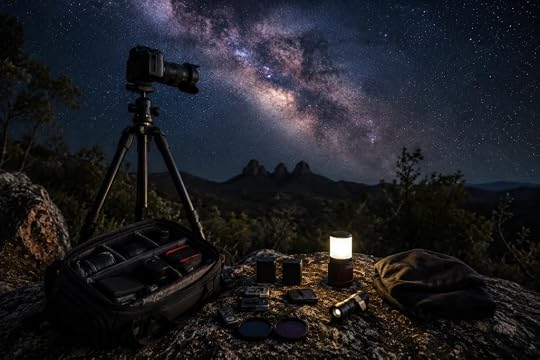 Basic Equipment to Pack Before You Leave
A sturdy tripod is non-negotiable for night sky photography, and any vibration during a long exposure in low light will ruin the photo outright. Plus, bring at least two fully charged batteries, because cold Australian nights drain them quickly (two batteries sounds like overkill until the first one dies at midnight).
Quick Tip: A red headtorch preserves your night vision by using wavelengths that don’t disrupt your eyes’ dark adaptation. This way you can adjust your camera settings without starting the whole process over.
Happy Shooting: Your Night Sky Photography ChecklistPlanning an astrophotography trip ultimately comes down to weather, dark sky location, camera settings, and a solid night-before routine. Get those lined up, and you’ve already done the hard part before you leave the driveway.
And better safe than sorry:
Download offline star mapsConfirm your GPS coordinatesTape the focus ring so it doesn’t shift in the darkRemember to check the forecast one more time on your app the morning of the shoot rather than the night before, so last-minute changes don’t catch you off guard.
The stars aren’t going anywhere, so take your time and plan it properly. If you’d like to keep reading, we’ve got plenty more night sky photography guides on Star Hawks to help you with your astrophotography. Visit our website for more tips.
The post Planning an Astrophotography Trip Around Weather and Light Conditions appeared first on Star Hawks Blog.
August 9, 2026
How Moon Phases Change Night Photography Opportunities
Moon phases change your night photography opportunities by shifting how much light hits the sky on any given night. Each phase controls star visibility and the kind of landscape shot you can pull off. So picking the wrong night leaves you with a wasted trip and a full memory card of unusable photos.
Most beginners blame their gear or their location when a shoot doesn’t work out. But the real culprit is almost always the moon phase they picked. Here at Star Hawks, we’ve seen this catch out even the most prepared photographers. And in this guide, we’ll walk you through:
How each moon phase affects your camera settingsWhich phases work best for different shotsHow moonrise timing can change your night photography plansIf you’re ready to improve your shooting with a more informed approach, let’s begin.
What Do Moon Phases Actually Mean for Photographers?The moon cycles through eight phases over 29.5 days, and each one changes how much light hits Earth. This directly controls what night photography is possible on any given night. More lunar light means fewer visible stars and a brighter sky overall. And less lunar light allows your camera to pick up much more detail in the night sky.
The thing nobody tells you is how much each phase varies in brightness. For instance, a full moon reflects sunlight so strongly that it overpowers everything around it. A new moon, on the other hand, produces no reflected light at all. This gives you the darkest conditions of the entire month.
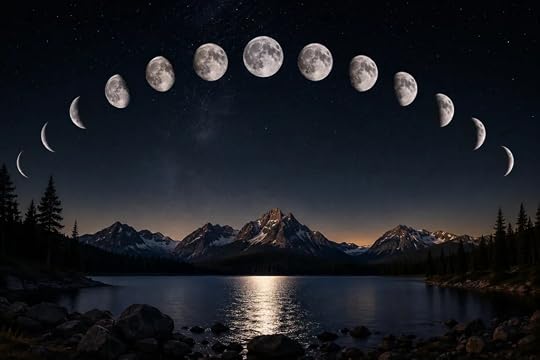 Which Phase Opens the Best Night Sky Opportunities?
Honestly, every phase gives you something worth photographing. You just need to know which phase suits which kind of shot, and the whole lunar cycle starts working in your favour. Here’s a general idea.
New Moon: Darkest Skies for Milky Way ShotsAs we mentioned earlier, the new moon gives you the darkest possible sky and makes it the best phase for capturing the Milky Way core and faint star fields. When photographing the wider Milky Way arc, the same dark conditions help reveal the full structure of the galaxy across your frame.
With zero lunar light competing, your camera’s sensor picks up detail that other phases simply can’t deliver. You also aren’t locked into just the one night. About four to five nights either side of the new moon deliver equally excellent conditions (and those extra nights are worth circling on your calendar).
After spending countless nights under Australian skies, we’ve learned that if you plan around this full window, you can come home with better results than those chasing a single date.
Full Moon: Natural Light for Landscape PhotographyA full moon lights the entire landscape evenly, which makes it the strongest phase for moonlit landscape photography. It rises at sunset and sets at sunrise, so you’ve got a full night of natural illumination to work with. Rivers, open fields, and ridgelines all catch that light in ways that can make an ordinary landscape photo become something worth framing.
That said, the bright light can wash out stars, which makes deep sky shots difficult during this phase. Even so, star trails still work under a full moon. However, darker phases produce sharper trails with less sky wash in the final image.
Either way, the illuminated moon itself becomes the subject here, and that’s a rewarding kind of photography to try.
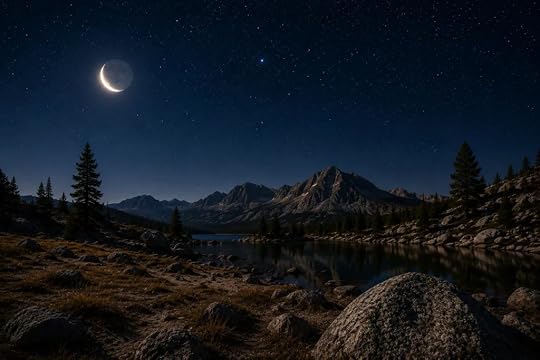 Crescent and Quarter Moons: The In-Between Advantage
A crescent moon adds soft foreground light without overpowering the stars above. That gives you a beautiful night sky and a visible landscape in the same frame. We often see beginners skip these nights entirely. But that’s exactly why shots from these phases can look different from everyone else’s.
A half moon or gibbous moon setting before midnight also opens a dark sky window in the second half of the night. These phases suit anyone who wants both a lit foreground and star visibility without having to choose between the two.
How Do Camera Settings Change Across Lunar Phases?Camera settings change across lunar phases because the moon’s brightness and position affect exposure, shutter speed, ISO, and focus choices. The camera settings that work brilliantly under a new moon will completely wash out your final shot under a full one.
This table will help you get started:
Moon PhaseISOShutter SpeedApertureBest Shot TypeNew Moon3200–640015–25 secf/1.8–f/2.8Milky Way, star fields, deep skyCrescent Moon400–8001/60–1/125 secf/2.8–f/5.6Crescent detail, stars + lit foregroundQuarter Moon400–8001/60–1/125 secf/5.6–f/8Half-lit lunar surface, landscapeFull Moon100–2001/100–1/250 secf/8–f/11Lunar surface detail, moonlit landscapeBrighter phases need a faster shutter speed and a low ISO because the moon’s light is already radiant. A full moon, for instance, shoots fine in manual mode at f/11, ISO 100, and 1/100 sec. That’s the Looney 11 Rule, and it’s a reliable starting point for lunar surface detail.
Under a new moon, though, your camera’s sensor needs all the help it can get. So you’d flip to a high ISO between 3200 and 6400. Pair that with long exposures of 15 to 25 seconds and a wide aperture to pull in enough light.
White balance is worth setting manually too, at around 3800 to 4200K. That way, your final photograph stays consistent across multiple shots (yes, even a small ISO change here makes a visible difference in your shot).
Quick Tip: Check your LCD screen after the first few frames, and adjust from there rather than fixing everything in post-processing. Taking multiple shots at slightly different settings gives you options when you get home and review your images for image quality.
Gears That Make Moon Photography Easier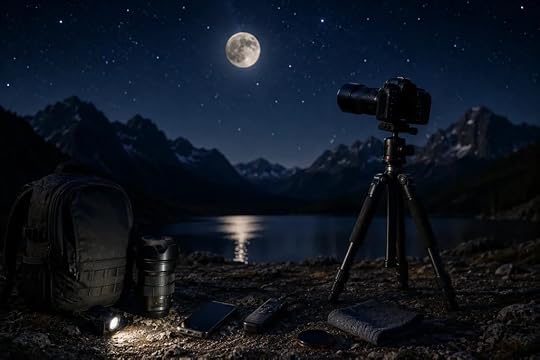
You don’t need an expensive kit to shoot the nighttime sky well. But some pieces of gear will save you from the most common mistakes beginners make on their first night out. These things will improve your astrophotography across basic techniques and more advanced ones alike:
Remote Shutter Release: Camera shake is a major reason night sky photos come out blurry, but a remote shutter release cuts that risk completely. A wired or wireless release is a good option here, and a two-second timer delay on your camera is a solid free alternative.Wide-Angle Lens: A wide angle of 14-24mm with an aperture of f/2.8 or wider lets your camera pull in the full Milky Way arc and surrounding landscape in one frame. Full frame camera bodies are especially great with this focal length for cleaner image quality at high ISO.Telephoto Lens: Mirrorless cameras with a good telephoto lens give you a sharp, detailed final image without the extra bulk. Plus, longer focal lengths of 200mm or more fill the frame with the moon’s surface and crater detail in a way that wide-angle lenses simply can’t.Sturdy Tripod: Any exposure more than one second needs a sturdy tripod underneath it. Even the steadiest hands introduce enough movement to ruin an otherwise well-exposed shot.A Moon Phase Planning App: Apps like PhotoPills use augmented reality to show you exactly where the moon rises before you arrive at your best location. You can also check moonrise times, lunar phases, and Milky Way positioning all from one place. It makes planning night sky photos far less guesswork.A crop sensor camera works just as well for moon photography as any full frame setup, so don’t let gear hold you back. Get your memory card formatted, a focus ring set to infinity, and your settings dialled in before the light fades.
Pick Your Phase and Get Out There TonightEvery moon phase gives you a good reason to head out with your camera. The trick is matching what the sky offers that night to what you actually want to capture.
A quick recap before your next shoot:
Every phase offers a unique photography opportunityPair your lunar calendar with moonrise timesPreparation beats perfect conditions every timeNow that you’ve got the plan, the only thing left is getting out there. And if you’re looking for more ways to sharpen your skills under the Australian night sky, browse through our other articles here on Star Hawks. There’s plenty more to explore and shoot.
The post How Moon Phases Change Night Photography Opportunities appeared first on Star Hawks Blog.
March 1, 2026
How Light Pollution Changes What We See in the Night Sky
Light pollution changes what we see in the night sky by blocking starlight before it reaches our eyes. The problem starts when cities pump artificial light upward into the atmosphere, where it scatters and creates a bright haze overhead. This washes out dim galaxies, nebulae, and even the Milky Way from view.
Light pollution astronomy studies this growing problem. And frankly, most of us don’t even realise how much we’re missing. Where you might see thousands of stars from truly dark locations, most Australian suburbs now reveal only 50.
So what can you do about it? This guide explains why cities block celestial objects, what you can still observe from urban areas, and where to find dark skies across Australia. Look up tonight.
How Light Pollution Affects Night Sky Visibility
Light pollution affects night sky visibility by creating a glowing barrier between you and the stars overhead. Artificial light from streets, buildings, and outdoor areas scatters through Earth’s atmosphere (and yes, we’ve watched entire constellations vanish as new developments go up).
When this light bounces off air molecules, it produces sky glow that overpowers faint starlight. As a result, fewer stars are visible to your eyes. Here’s what you’re missing.
The Bortle Scale Shows What You’re MissingThe Bortle Scale measures darkness from 1 (pristine dark skies) to 9 (inner city light pollution). So, Class 1 skies reveal over 5,000 stars, while Class 9 shows barely 50. What does that mean exactly? Well, you’re seeing less than 1% of what’s truly up there.
Our observers found that most Australian capitals sit at Class 7-8, blocking the Milky Way entirely from view.
Why Bright Cities Block Faint Celestial ObjectsSky glow overpowers faint starlight from distant galaxies and nebulae completely. In fact, city lights pump out light that’s 100 times brighter than the Milky Way’s natural glow.
Our tests from suburban Brisbane showed Jupiter’s moons clearly through 10×50 binoculars, even with nearby streetlights on. But fainter deep-sky objects like the Andromeda Galaxy disappeared under the same conditions.
Once you understand these effects, the next question stands: what does light pollution cost us other than missing stars?
Light Pollution Astronomy: Beyond Just Missing StarsLight pollution disrupts wildlife, throws off human health, and damages ecosystems in ways most people overlook. Studies show 99% of Europeans and Americans now live under light-polluted skies. Let’s discuss the issue in detail:
Nocturnal Species Lose Their Way: Animals depend on dark conditions for hunting and moving through the wild. Artificial light throws off these behaviours completely. What’s worse, sea turtle hatchlings end up heading toward streetlights instead of the ocean (we’re talking millions of birds crashing into lit buildings during migration).Insects Drop from Exhaustion: Moths circle outdoor lighting until they collapse, disrupting pollination patterns other species rely on. When outdoor light levels eliminate the natural day-night cycle , wildlife populations decline fast across entire regions.Your Sleep Takes a Hit: Believe it or not, your sleep problems might trace back to that streetlight outside your window. Bright nights suppress melatonin. It’s the hormone your body uses to regulate sleep and circadian rhythms.The Long-Term Health Cost: Humans evolved under naturally dark skies for millennia, so artificial light at night throws off biological processes that still need darkness. This disruption affects sleep quality, metabolism, and mood regulation in ways that accumulate over the years.Protecting dark skies helps wildlife, human health, and stargazers alike, which makes finding genuinely dark locations even more important now.
Finding Dark Skies: Where to Escape the Glow
Most Australians live within a two-hour drive of Bortle Class 3-4 dark skies where the Milky Way appears clearly overhead. You’ll find these spots in remote areas away from city lights, at certified dark sky parks, or even in rural locations between major urban centres.
Here’s how to locate them.
How Dark Sky Maps WorkFree tools like Light Pollution Map show darkness levels across Australia using colour-coded zones. For example, dark blue and grey areas indicate Bortle Class 3-4 skies, which means you’ll see the Milky Way clearly stretching overhead.
The great thing about these tools is that they update in real time based on satellite data. So you can plan trips around current conditions and avoid cloudy nights.
Australia’s Certified International Dark Sky PlacesWarrumbungle National Park earned certification as Australia’s first International Dark Sky Park from DarkSky International. These protected sites enforce dark sky-friendly legislation that limits outdoor lighting and preserves natural darkness (seriously, the difference hits you the moment you arrive).
River Murray Dark Sky Reserve takes this protection even further, spanning three states and offering some of the continent’s clearest views of celestial objects overhead.
What Makes Any Location Good for StargazingLook for spots away from street lights with clear, unobstructed views toward the horizon in all directions. Elevation helps too. Higher locations reduce atmospheric interference, which improves clarity when you’re viewing faint galaxies and nebulae through telescopes.
Before heading out, we recommend checking weather forecasts and bringing red-filtered torches to preserve your night vision in the dark.
Once you’ve found your dark sky site, you’ll want to know what to look for overhead.
What Urban Stargazers Can Still See and Do
Urban stargazers can still observe planets, the Moon, bright stars, and constellations even under Bortle Class 8 conditions. Though light pollution blocks faint deep-sky objects, the brightest celestial targets shine through city skyglow without any trouble.
Let’s look at what shines through and how you can see it better.
Venus and Jupiter: These two planets shine brightly enough to cut through heavy light pollution. Basically, this exact characteristic makes them perfect first targets. Venus appears near sunrise or sunset as the brightest object besides the Moon. Meanwhile, Jupiter follows close behind as a steady golden point that never twinkles.The Moon Reveals Incredible Detail: Lunar craters and mountain ranges appear clearly through binoculars from urban balconies. We’ve spent countless nights observing from inner-city balconies, and Saturn’s rings still appear through a basic telescope at Bortle 8. This proves you don’t need perfect darkness for planetary viewing.Bright Constellations: Orion, Crux, and Scorpius remain visible from suburbs throughout the year. Their bright stars form patterns you can trace even with moderate street lights nearby, which makes them ideal starting points for learning the night sky.Simple Steps Improve Urban Views: Let your eyes adapt 20-30 minutes in darkness first, then shield yourself from direct street lights using buildings or trees as barriers. You can seek out apps like Stellarium . They help identify overhead planets and track when they reach peak brightness for viewing.These techniques help you observe from urban areas, but the view doesn’t compare to what genuinely dark skies offer. Now let’s see what you’ve been missing all along.
The Stars Are Still There, Waiting for YouLight pollution washes out thousands of stars across Australian cities each night. The problem grows as urban areas expand, but solutions exist. Visit dark sky sites, learn what remains visible from your location, and advocate for better outdoor lighting practices.
This guide showed you how artificial light scatters through Earth’s atmosphere to create sky glow, then walked you through the Bortle Scale. You also discovered where certified dark sky parks sit across Australia and which celestial objects shine through city lights.
Step outside tonight and reconnect with the stars overhead. Our team at the Star Hawks Blog takes you through every practical tip you need to observe the night sky from anywhere in Australia. The universe is waiting.
The post How Light Pollution Changes What We See in the Night Sky appeared first on Star Hawks Blog.
February 18, 2026
Getting Started With Stargazing Using Simple Equipment
You’ve probably looked up at the night sky and wondered what you’re actually seeing. I did too, for a long time. And like most people, I assumed getting into astronomy meant I would need some expensive telescopes and learn complicated star charts.
Fortunately, it doesn’t. After years of stargazing from backyards, national parks, and coastal spots across Australia, I’ve learned that getting started is much easier than it seems.
This guide shares beginner stargazing tips that’ll help you enjoy the night sky with gear you probably already own. By the end, you’ll know how to find darker skies, recognise constellations and bright planets, and figure out if a telescope is even worth it.
A Beginner’s Guide To Your First Night Under The Stars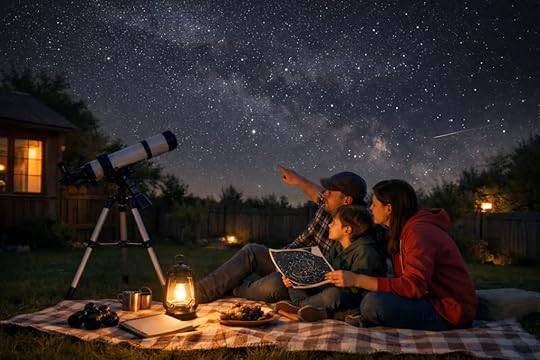
Stargazing is one of the easiest hobbies to start because you already have everything you need. Your eyes, a clear night, and a bit of patience are enough to begin exploring the night sky. Frankly, most amateur astronomers didn’t start with a telescope or fancy binoculars; they simply stepped outside and gazed upward.
The one thing that makes a real difference early on is giving your eyes time to adjust to the darkness. I learned this the hard way on my first few nights out, but about half an hour in the dark lets your night vision fully kick in.
Once that happens, fainter stars and constellations start appearing that you couldn’t see before.
From there, you can focus on spotting patterns and shapes across the sky. You don’t need to memorise anything yet, just observe and let your eyes wander. Over time, recognising bright stars and familiar constellations will become second nature.
Now, let’s look at where to actually go for darker skies.
Finding A Dark Sky Away From Light Pollution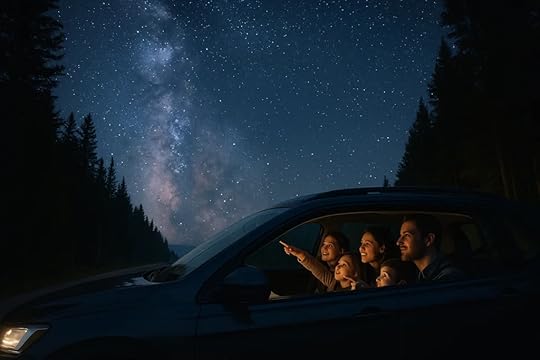
The darker your surroundings, the more stars you’ll see, and finding a good spot is simpler than you think. Even a short trip outside a major city can reveal hundreds of stars that light pollution normally hides.
Here are a few ways to find the best dark sky locations near you.
Why City Lights Wash Out The StarsCity lights create a glow that drowns out fainter stars and deep sky objects. This is called light pollution, and it affects most urban areas across the southern hemisphere and the northern hemisphere alike. Even a 30-minute drive away from bright light sources can improve your view dramatically (and yes, even a short drive makes a noticeable difference).
Remember, the goal is to find a dark location where the night sky isn’t competing with streetlights and buildings.
Free Apps To Find Dark SpotsFinding a dark sky used to take a lot of guesswork, but now some tools do the work for you. Free apps like Stellarium show you exactly what’s visible overhead in real time.
You can also check the Bortle scale rating for your area, which measures how dark or light-polluted your sky is.
Best Locations For Stargazing In AustraliaNational parks, rural farmland, and coastal areas typically offer the darkest skies for stargazing. In Australia, spots like the Warrumbungle National Park and parts of outback Queensland are popular among amateur astronomers for good reason.
These locations sit far from any major city, which gives you clear views of the Milky Way, planets, and even faint galaxies on a clear night.
Spotting The Milky Way, Southern Cross and Meteor ShowersEver wondered what those bright patterns in the sky actually are, or when to catch a shooting star? The night sky is full of celestial objects you can spot with the naked eye, and timing plays a big role in what’s visible.
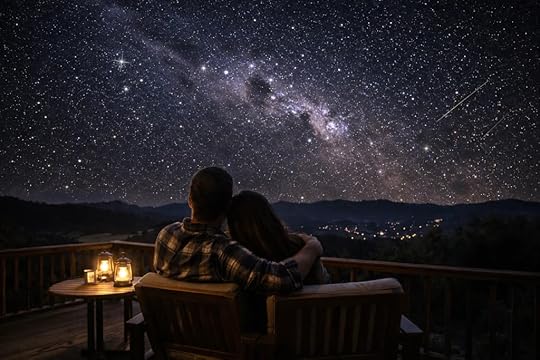
Here’s a quick guide to some of the best targets for beginner stargazers.
Celestial Object Best Time To View Visibility Southern Cross Year-round Always visible in Australia Milky Way Winter months (June–August) Darkest skies, no moon Meteor Showers Varies by shower Check annual peak datesThere are a few things you can look for when you head outside.
Firstly, the Southern Cross is one of the most recognisable constellations in the southern hemisphere, and it’s visible every night of the year from Australia. This star cluster points toward the South Celestial Pole, which makes it a handy anchor for finding your bearings. Many amateur astronomers use it as a starting point for locating other constellations nearby.
Next, the Milky Way stretches across the sky like a hazy, glowing band. The first time I saw it stretch across a cold winter sky in Queensland, I couldn’t look away. On a dark night, you can spot star clusters, bright stars, and even distant galaxies within it.
And lastly, meteor showers like the Geminids and Eta Aquariids happen throughout the year. You’ll get the best views after midnight on a clear night, and you don’t need binoculars or a telescope, just patience.
Speaking of which, let’s talk a bit about equipment.
Do You Need A Telescope To Start?No, you don’t need a telescope to start stargazing. And as we’ve already mentioned, plenty of amateur astronomers spend years enjoying the night sky with nothing more than their eyes or a good pair of binoculars. That said, the right equipment can open up a whole new universe of things to see.
Now, Binoculars are a great first step for beginners. A 7×50 or 10×50 pair lets you observe the moon’s craters, bright planets like Jupiter and Saturn, and even the Pleiades star cluster. They’re lightweight, affordable, and easy to use, which makes them perfect for casual nights under the stars.
Also, believe it or not, a first telescope doesn’t need to cost a fortune. A basic refractor or reflector under $200 can show you the rings of Saturn, the moons of Jupiter, and dozens of deep sky objects. Different telescopes serve different purposes, so it helps to know what you want to observe before buying.
Goto telescopes take things further by automatically locating celestial objects for you. While this sounds convenient, learning to find things manually builds stronger astronomy skills (that’s a skill worth building early on). Which is why many stargazers recommend starting with a simple new telescope and upgrading later.
Now that you know the basics, let’s cover a few tips to make your sessions even better.
Beginner Stargazing Tips For Full Moon NightsA few simple habits can turn casual glances at the sky into a lifelong hobby you’ll never tire of. And timing your stargazing around the moon’s phases is one of the easiest ways to improve what you see.
Full Moon Viewing: At its core, this comes down to one thing. Bright moonlight washes out fainter stars and deep sky objects, so full moon nights work best for observing lunar craters and surface details with binoculars or a telescope.New Moon Planning: The new moon phase offers the darkest skies, which is perfect for spotting the Milky Way, galaxies, and faint star clusters. Many amateur astronomers plan their best sessions around these nights.Keeping a Journal: Writing down what you observe helps you track progress and notice patterns over time (you’d be surprised how satisfying this becomes). Recording the date, moon phase, and constellations or planets you spotted makes each night more rewarding.These small habits turn casual stargazing into something you’ll enjoy for years.
The Night Sky Is Waiting For YouGetting started with stargazing doesn’t require expensive equipment or years of study. A clear night, a dark sky, and a bit of curiosity are all you need to begin exploring the universe above you.
The stars have been there every night of your life, waiting to be noticed. Tonight might be the perfect time to step outside and see what you’ve been missing. So grab a pair of binoculars or simply look up with your naked eye. Either way, the night sky has something to show you.
Once you start, you’ll wonder why you didn’t begin sooner. For more tips and guides on astronomy and outdoor living, explore Star Hawks Blog.
The post Getting Started With Stargazing Using Simple Equipment appeared first on Star Hawks Blog.
February 9, 2026
Planning a Stargazing Night in the Australian Outdoors
Ever stared up on a clear night and thought, “I wish I knew what I was looking at”? Well, you’re not alone. Most Aussies never even try stargazing because it seems too complicated with all the telescopes, strange constellation names, and confusing apps.
Little did they know that your eyes alone can spot thousands of stars, several planets, and even our home galaxy stretching overhead. In fact, it’s possible to see around 9,096 stars with the naked eye from a dark location. But most city dwellers see fewer than a dozen stars because of light pollution.
This guide walks you through picking the right night based on moon phases and weather. You’ll also learn about finding locations with minimal light pollution across Australia and packing the essentials for your stargazing trip.
Let’s get you watching the southern sky from your first dark site.
What Makes a Perfect Stargazing Night in Australia?A perfect stargazing night needs three things: dark skies away from city lights, a moonless night, and clear weather conditions. Get these right, and you’ll see thousands more stars than you ever thought possible.
Here’s how you can find unforgettable views while stargazing.
Finding True Darkness Away From City LightsLight pollution from cities washes out faint stars completely. You need at least 50 kilometres of distance to get proper darkness where the Milky Way becomes visible.
Generally, national parks and rural areas provide the darkest conditions. In that true darkness, you’ll spot the Milky Way, along with individual star clouds and dark dust lanes running through it.
Note that your eyes need 20 to 30 minutes in complete darkness to reach maximum sensitivity. Also, don’t check your phone during this time because even a quick glance resets the whole process.
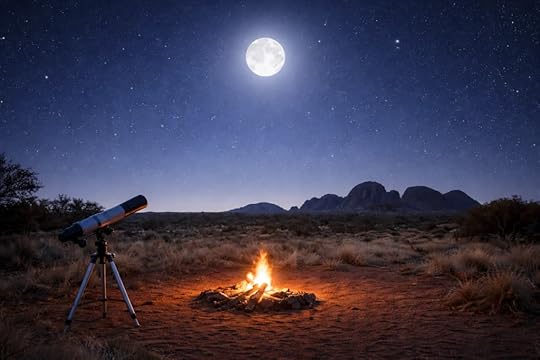 Moon Phases Change What You’ll See With the Naked Eye
A full moon brightens the sky so much that it hides most stars and constellations. The moon acts like a natural streetlight that fades out everything except the brightest objects. In contrast, new moon nights or the week before and after give you the darkest skies for spotting the Milky Way.
Speaking from our stargazing experience during a new moon week, we could count over 2,000 stars with our naked eyes at Warrumbungle National Park. But the same location during a full moon revealed only about 300 stars.
Reading Weather Patterns for Clear Night SkiesCloud cover ruins stargazing completely. So check forecasts for zero cloud coverage several hours before heading out.
Winter months in Australia typically offer clearer skies and less humidity than summer. Especially, June through August provides the most reliable clear nights across southern Australia. The cold air holds less moisture, which creates sharper views and more visible stars.
Note: Coastal areas often get marine layer clouds at night, while inland locations stay clearer year-round.
Stargazing Gear: Everything You Need For Your TripBeginners think stargazing requires a telescope to see anything worthwhile up there. But the truth is, most stargazers spend their first year using nothing but their naked eyes and maybe a pair of binoculars.
Below is a list of everything you’ll truly need as a beginner stargazer:
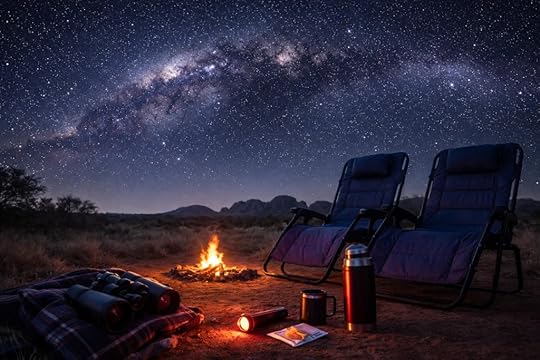
Naked Eye Viewing: On average, we can see around 3,000 stars on a clear night without any equipment. That’s more than enough to spot constellations, planets, and the Milky Way stretching overhead.Binoculars (7×50 or 10×50): A decent pair reveals Jupiter’s four largest moons lined up like tiny pearls beside the planet. The moon’s craters with sharp detail will show you the impact zones from billions of years ago. Star Chart Apps: SkyView Lite and Stellarium work offline and use your phone’s gyroscope to show what’s above you right now. You can point your phone at any star, and it identifies the object instantly if you download the star data before leaving.Red Flashlight: Unlike white light that resets your eyes completely, red light preserves your night vision while reading maps. That way, you won’t lose 30 minutes of adjustment every time you need to check something.Reclining Chairs or Blankets: Looking straight up for hours can cause serious neck strain. On the other hand, lying flat or using a reclining chair lets you watch meteors and track satellites comfortably across the sky.As for telescopes, skip them until you’ve tried naked eye stargazing first (save yourself a few hundred dollars for now). Rather, start with your eyes and add gear only when you know what you want to see better. The universe doesn’t care how much you spend.
 Best Places for Stargazing in Australia
Did you know that over 80% of the world’s population lives under light-polluted skies? Which means most Australians have never experienced a truly dark night. However, the good news is that Australia has some of the world’s darkest skies, and you don’t need to travel far to find them.
Here are some stargazing places that make overseas visitors jealous of us.
Warrumbungle National Park: Australia’s First Dark Sky ParkWarrumbungle National Park earned official Dark Sky Park status. Which means it has exceptionally low light pollution and protected darkness. This certification doesn’t come easy because the park has to prove near-zero artificial light interference.
The park sits in central New South Wales and offers designated stargazing spots with clear horizon views in all directions. Its viewing platforms face away from nearby towns and give you unobstructed 360-degree access to the sky.
Along with that, Siding Spring Observatory nearby has been studying the southern sky here since the 1960s (and for good reason).
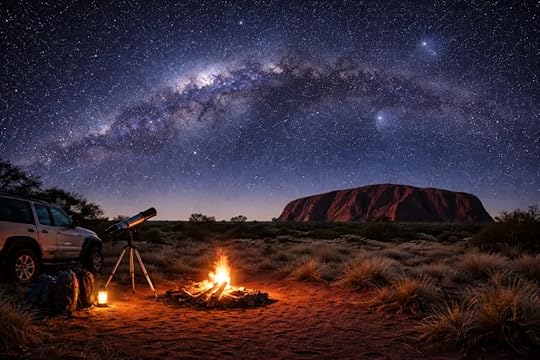
Remote Outback Spots to See the Milky WayThe Red Centre around Uluru provides pitch-black skies where you can see the Magellanic Clouds (small galaxies that look like faint smudges floating beside the Milky Way) with your naked eyes.
During our autumn trip to the Flinders Ranges in South Australia, stars appeared at different depths, with layers you never see from cities. This area combines stunning daytime landscapes with incredibly dark nights for double the adventure.
Apart from these, western Queensland’s outback towns have zero nearby light sources that reveal stars invisible from anywhere coastal.
 National Parks Within Driving Distance
Blue Mountains National Park sits just90 minutes from Sydney and offers reasonable darkness at elevated lookout points. The elevation helps you rise above some of Sydney’s light domes.
Grampians National Park in Victoria also provides dark sky camping spots away from Melbourne’s glow. The Pinnacle lookout in the Grampians blocks light from nearby Halls Gap, and creates a dark pocket for stargazing. On weeknight visits, you’ll often have the spot entirely to yourself. You can call it a night whenever you’re ready and drive back to town in 20 minutes.
Another great spot is Tasmania’s Cradle Mountain. The extra southern position reveals constellations and celestial objects that never rise above the horizon in mainland Australia.
Your Stargazing Night ChecklistFor your stargazing trip, you need to pack with Australian nights in mind, which can drop to near-freezing even after warm days in many regions. The temperature difference between sunset and midnight catches most beginners off guard. Especially, desert regions can hit even 2°C after midnight.
Take a look at this checklist to get an idea about stargazing essentials:
Layered clothing (thermals, fleece, and a windproof jacket) Thick blankets or a sleeping bag Hot drinks in a thermos Hand warmersSweet and salty snacksReclining chairs or foam matsOffline maps and star chartsBasic first aid kit (bandages, pain relievers, and any personal medications)Note: Always let someone know your location and expected return time before you leave. The universe rewards those who come prepared.
Start Your First Stargazing Adventure TonightPlanning a successful stargazing night depends on picking dark locations, checking moon phases, and packing for cold weather. When you get these things sorted, you’re already ahead of most beginners who show up unprepared.
And the best part is you can start tonight without spending money on fancy gear or taking astronomy courses. You can just grab a blanket, hit the road away from the city lights, and be amazed at what’s been waiting overhead this whole time.
If you need more guides on observing Australia’s night sky, check out the resources at Star Hawks Blog. You’ll find practical tips, seasonal highlights, and beginner-friendly advice to help you get started.
The post Planning a Stargazing Night in the Australian Outdoors appeared first on Star Hawks Blog.
January 28, 2026
Why Astrophotography Is as Much Patience as Skill
Astrophotography requires patience because capturing clear images of distant objects means long waits, repeated adjustments, and working around unpredictable conditions. In fact, each frame needs 15 to 30 seconds of exposure time just to gather enough light from the night sky.
When each attempt takes this long, there’s no room for the spray-and-pray approach that works during the day. This slower pace of star photography often throws many people off.
In this article, we’ll walk through the main reasons the astrophotography journey demands patience over speed. You’ll also learn about the gears you’ll need as a beginner, and how you can plan your photography session for the best results.
Let’s find out everything you need to know before heading out for night sky photography.
What Makes Astrophotography Different from Regular Photography?Astrophotography requires longer exposure times, manual camera settings, and darker locations than daytime photography ever demands from you. For example, your autofocus stops working, exposure meters give useless readings, and what looks bright to your eyes shows up completely black on your screen.
Here’s why this happens and what you need to change during deep sky photography.
Dark Sky Locations are More Important Than Expensive Gear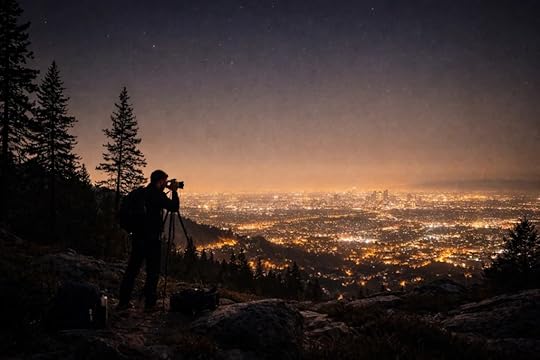
Research found that night skies are getting 9.6% brighter every year, which means dark sky locations become more valuable with each passing year. It’s because light pollution from cities washes out faint stars and makes photographing deep sky objects nearly impossible to see.
In fact, 80% of Americans can no longer see the Milky Way due to light pollution from cities and suburbs. Even a small town’s glow can brighten the night sky enough to hide everything except the brightest few dozen stars.
In reality, your entry-level DSLR camera performs better in a truly dark location than expensive gear does near streetlights. The best camera can’t fix a bright sky, but proper darkness makes even basic equipment produce stunning results.
Exposure Time Forces You to Wait and WatchEach frame of astrophotography takes 20 seconds minimum, so you can’t just snap away and move on quickly. You’ll have to spend more time reviewing and adjusting than shooting.
Reviewing images on your camera screen teaches you what worked versus what you imagined would work. Say, that bright star you thought would add interest is creating lens flare across half your frame. This is the learning process nobody warns you about, and those hours of trial and error build your skills better than any tutorial ever could.
The Best Camera Settings Need Hours of PracticeSwitching from daytime photography to stars takes a relearning of how your camera works. Everything that adapts automatically with a single press of a button now needs your constant attention and adjustment.
These are the general settings that work for astrophotography:
Manual Mode: Firstly, change the auto mode to manual. This mode gives you full control over every setting because your camera’s auto modes completely fail in darkness. If you let the camera decide anything, you’ll get either pure black frames or wildly overexposed shots.Shutter Speed: Keeping the shutter speed between 15 and 30 seconds captures enough starlight without creating trails. You can’t go longer because Earth keeps spinning, which makes stars streak across your frame after about 30 seconds with most lenses.ISO Settings: Somewhere between 1600 and 3200 grabs faint details without drowning your star photos in grain. If you go lower, your exposure time needs to stretch beyond what’s practical. But go higher, and noise ruins the image quality you worked so hard to capture.Aperture: Wide aperture at f/2.8 or f/4 is standard because you need every bit of light your lens can gather. However, stopping down to f/8 as you would in daylight just makes everything disappear into darkness.Mastering these camera settings takes practice to balance properly. So be mentally prepared for trial, error, and learning how your gear responds to the night sky.
Basic Equipment: The Camera and Lens You’ll Need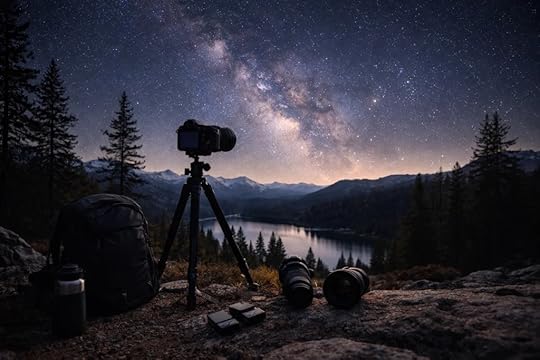
For starting night sky photography, you don’t need thousands of dollars in gear to capture stunning night sky shots. Most beginners think they need a telescope and a fancy tracking mount before they can even start. But some of the most impressive starry landscape photos you’ve seen online were shot with basic equipment.
The gear list below covers everything you need when you’re learning:
A DSLR camera or mirrorless camera (a crop sensor camera works fine for learning)Lenses with f/2.8 or wider apertures A sturdy tripodRemote Shutter Release (to stop you from bumping the camera)Wide-angle lenses between 14mm and 24mm Crop factor on APS-C sensors (to crop a 24mm lens into roughly 36mm ) Spare BatteriesOnce you’ve got these basics sorted, you’re ready to head out and start shooting. The gear is less important than knowing how to use it well. And that understanding only develops by getting outside, experimenting, and mindfully observing mistakes.
Common Frustrations And Astrophotography TipsBelieve it or not, astrophotography trips up nearly everyone because the problems don’t show up on your camera’s tiny screen in the dark. You’ll think everything looks sharp until you get home and open the files on your computer. However, these frustrations teach you more than any YouTube tutorial ever could.
Let’s walk through the two most common challenges beginners face.
Setting Focal Length Without Autofocus HelpAutofocus hunts endlessly in darkness and rarely finds sharp focus. It’s because your camera’s AF system needs contrast and defined edges to lock onto something. And stars don’t have either of those things. Setting your lens to infinity doesn’t guarantee sharp images either, because most lenses focus slightly past infinity.
Pro Tip: Magnify a bright star, then slowly turn the focus ring until the star shrinks to its smallest possible point. That’s your focal point. Then take test shots at different focus positions and zoom in to 100% on your screen to compare them.
Learning Which Bright Stars Throw Off Your CompositionSirius and Vega create lens flares that ruin parts of your frame if positioned poorly. Based on our shooting sessions, placing these bright stars near the edge of your composition spreads light artefacts across your deep sky objects awkwardly.
A bright star near your frame’s corner acts like a spotlight you didn’t ask for. It bleeds light across the sensor and washes out fainter details you’re trying to photograph. Moving that star just slightly inward or out of frame completely fixes the problem.
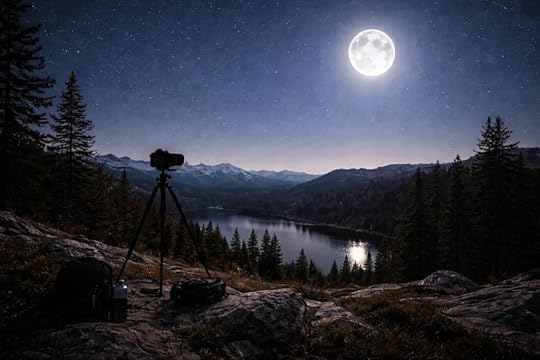 Planning Around Full Moon and Deep Sky
We’ve seen most beginners pick a clear night and head out without checking the moon phase or weather forecast. Then they wonder why their night sky images look washed out or why clouds rolled in an hour after setup. However, the moon and weather control your success more than any camera setting ever will.
Here’s what you need to track before each session.
Full Moon Impact: The full moon brightens the sky so much that faint nebulae and galaxies disappear completely from view. Because of that, the night sky resembles twilight and washes out everything fainter than Jupiter.New Moon Advantage: New moon phases give you the darkest skies for capturing deep sky targets successfully each month. This is when the Milky Way looks vibrant, and night sky photography provides the results you’re after.Weather Apps: Cloud patterns can totally demolish your plans, but watching forecasts gives you better odds. Weather apps can also help you track cloud cover days in advance, so you don’t waste petrol driving out to a dark sky site. Winter Clarity: Winter months offer clearer skies in many regions, though you’ll freeze while waiting for those 20-second exposures. But what we’ve noticed over multiple outings is that cold air holds less moisture, which means sharper stars.Summer Humidity: Summer brings the Milky Way core into view, but also adds humidity that softens star sharpness frustratingly. After shooting through multiple summers, we’ve learned that deep sky objects look hazier even on technically clear nights.When you plan your sessions around these factors, it separates frustrating nights from productive ones. So check the moon phase first, then the weather, and finally commit to going out or staying home.
Start Your Astrophotography Journey This WeekendStar photography combines technical camera settings knowledge with the patience to wait for perfect conditions under dark skies. The learning curve might feel steep at first, but every session teaches you something new about timing, composition, and working with limited light.
We suggest starting with basic equipment during a new moon phase, then reviewing your shots to improve each session gradually. It’s best to focus on one skill at a time rather than trying to master everything in your first night sky outing.
For more astrophotography tips and location guides across Australia, visit Star Hawks Blog. You’ll find practical advice from actual shooting experience, and the best gear recommendations for your skywatching journey.
The post Why Astrophotography Is as Much Patience as Skill appeared first on Star Hawks Blog.
December 12, 2025
Building a Backyard Observatory on a Budget
Welcome to our guide on building a backyard observatory on a budget.
A backyard observatory is a permanent shelter that protects your telescope and lets you start observing in minutes rather than hauling equipment outside each night. It’s similar to those fancy white domes at professional observatories, just scaled down for your backyard.
Without a dedicated setup, you’d need to carry your telescope in and out every time you want to stargaze can quickly become tiring. With a backyard observatory in place, you can just walk outside, open the roof, and be ready to explore the night sky.
In this article, we’ll show you how to build one on a tight budget and which materials you need. You’ll also learn the three main observatory types and realistic budget ranges to expect.
Let’s start with the basics.
What Types of Backyard Observatories Can You Build?You can build three main types of observatories: roll-off roof sheds, clamshell designs, and rotating domes. Each one suits different budgets and skill levels. And among these, the roll-off roof is the most popular choice for backyard astronomy enthusiasts.
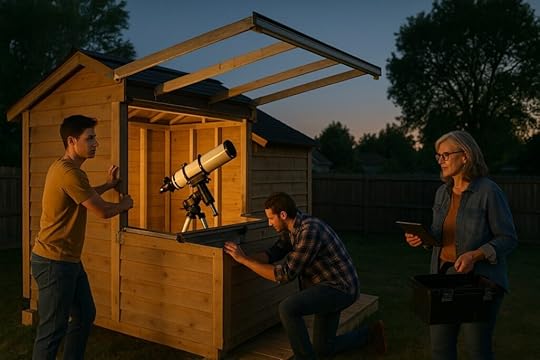
Take a look at each one to find your best match.
Roll-off Roof ObservatoryThe design is straightforward. Picture a shed where the roof sits on wheels or rails and slides backward, so your telescope gets an unobstructed view of the night sky.
This design is the cheapest option for beginners with basic tools and limited construction knowledge. You don’t need fancy carpentry skills or power tools to build one. In fact, most people finish theirs in a weekend using lumber from the hardware store.
Now, when you’re done observing, simply slide the roof back, and your equipment stays protected from weather and critters.
Clamshell or Flip-top DesignIf you’re short on space, consider the clamshell design. The setup includes two roof panels that hinge open like a clamshell to expose the telescope underneath. This design works great for small backyards where ground-level space is tight.
Even better, the roof panels are built using lightweight materials like corrugated plastic over a wooden frame. This material choice keeps costs low and makes the setup simple enough for one person to handle. Plus, some builders finish these DIY projects in just three days using salvaged materials.
Dome ObservatoryA round dome rotates with a slit opening that follows your telescope mount across the sky. It’s the same design you see at professional observatories.
Beyond looks, domes offer the best wind protection, so you can observe indoors during cold weather or when conditions get rough. Also, the rotating design blocks stray light from streetlights better than other types.
The downside? Domes are more expensive and complex to build. But they look top-notch and handle strong winds better than roll-off or clamshell designs.
How Much Does a Backyard Observatory Cost?A backyard observatory can cost anywhere from $200 to $3,000, depending on your design and materials. Believe it or not, some backyard astronomy enthusiasts have built working setups using just hardware store bargains and salvaged lumber. So you don’t need a huge budget to start observing the night sky from home.
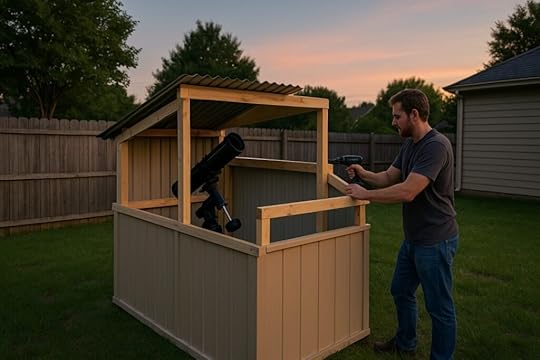
Here are three budget-friendly approaches.
Ultra-budget Build Under $500Use salvaged materials like pallets and leftover lumber to keep costs minimal. Even with salvaging, you’ll spend most on corrugated roofing, recycled wood, and basic hardware.
To be specific, your shopping list includes roof panels, 2×4 studs, garage door wheels, and simple track materials. And you can grab everything in one hardware store run and fit it all in a pickup truck.
This ultra-budget approach works well for testing a permanent telescope setup before you commit to spending more money.
Mid-range Prefab Conversion $800-1500The easiest mid-range option is converting a 6×6 or 8×8 plastic garden shed into a roll-off roof observatory. These sheds eliminate wood rot issues and need less maintenance over time in the rain and weather.
For the roof mechanism, however, a DIY rail system using garage door wheels and U-channel track creates smooth roof operation. In terms of longevity, the plastic construction handles moisture better than wood and won’t warp or crack.
Premium DIY Build $2000-3000At this price point, you’re building for the long haul. A custom wooden structure gives you full control over size and features. Since you’re building from scratch, use pressure-treated lumber and quality hardware throughout for a build that lasts decades. After that, the main detail to sort out is the foundation.
The big expense here is the concrete pier foundation isolated from the main building floor. This isolation prevents vibrations when you walk around the interior during long observation sessions.
That way, you can match the layout to your mount and add automation features whenever it makes sense.
What Materials Do You Need for a Budget Observatory?You need three main categories of materials: foundation and pier materials, structure and walls, and roof with weatherproofing. Out of all three, the foundation carries the highest expense but provides stability.

We’ll break it down category by category.
Foundation and Pier MaterialsConcrete bags and rebar create the isolated telescope pier at ground level. You’ll pour this separately from the main building to prevent vibrations.
As for the observatory walls, cinder blocks or pressure-treated posts set in gravel form your building base. These materials keep the floor elevated above ground moisture.
Once the pier cures, steel pipes secure your telescope mount to the concrete pier. In turn, this setup prevents movement issues during long observation sessions.
Structure and WallsPressure-treated 2×4 studs frame your walls to handle extreme conditions, unlike regular lumber that rots quickly in outdoor weather.
Building on that base, cover the frame with OSB or plywood sheets for rigid wall support and room structure. Then apply dark paint to reduce interior lighting reflections when observing the night sky.
Roof and WeatherproofingCorrugated plastic or metal roofing panels are lightweight and handle wind well. So before buying them, check your local weather conditions, especially if your area gets strong winds or heavy rain.
Your roof also needs hardware to slide back and forth, which means garage door wheels and U-channel track for smooth roll-off functionality. Plus, silicone sealant and weatherstripping keep rain and critters out for good.
With these basics covered, your observatory stays dry and functional year-round.
Is Building a Backyard Observatory Worth It?Setting up your telescope every night gets old fast. That’s why most amateur astronomers give up on regular observing because the hassle outweighs the excitement. A backyard observatory solves that problem by keeping your gear ready and protected year-round.
We’ve covered three observatory types, a budget ranging from $200 to $3,000, and the essential materials you need. You’ve also seen how roll-off roofs offer simplicity, clamshells save space, and domes provide premium protection. Now choose based on your budget and backyard size.
Ready to start your build? Check out more stargazing tips and astrophotography guides on Star Hawks Blog. Your night sky adventures are waiting.
The post Building a Backyard Observatory on a Budget appeared first on Star Hawks Blog.
November 28, 2025
The Connection Between Outdoor Living and Mindful Observation
When was the last time you stepped outside and felt the moment instead of thinking about your to-do list? If you’re like most people, it’s probably been a while.
The truth is, most of us spend our days rushing between tasks, barely noticing the world around us. But here’s something interesting: spending just a few minutes practising mindfulness outdoors can change your mental state.
This isn’t just feel-good advice. After years of photographing the night sky across Brisbane and studying astrophysics, I’ve learned that nature has this incredible way of pulling you back to the present.
In this article, we’ll explore how outdoor living connects with mindful observation, why it works so well for stress relief, and simple ways to start tonight.
I know you’re here because something about this topic resonates with you. So, let’s discover what happens when you slow down under the stars.
What Is Mindfulness Outdoors?Mindfulness outdoors is the practice of being fully present in natural settings while observing your surroundings without judgment. But what does that look like in practice?
Think of it like this: you’re sitting in a park, and instead of scrolling through your phone or planning dinner, you’re actually there. You notice the wind brushing your skin, hear birds chatting in the trees, and feel the ground beneath you. It combines awareness of your breath, body sensations, and all those natural elements happening around you right now.
Research from Brown University shows outdoor mindfulness reduces stress hormones more effectively than indoor meditation or traditional relaxation techniques. The reason this works so well is that nature doesn’t ask anything from you. It just lets you be present, and that’s where the real benefits kick in.
Why Does Spending Time Outdoors Boost Your Mental Health?
Spending time outdoors improves mental health by lowering stress hormones, boosting mood, and creating space for your mind to reset naturally. Believe it or not, science backs this up in surprising ways.
In this section, I’ll walk you through what researchers have discovered about nature and your well-being.
New Research on Nature and WellbeingNew research shows that 20 minutes in nature lowers cortisol levels significantly, improving mood and reducing anxiety symptoms. Japanese studies on forest bathing demonstrate how outdoor exposure strengthens immune function and promotes better sleep quality.
What makes this even more interesting is that Australian research confirms green spaces near homes correlate with lower depression rates. You don’t need to spend an arm and a leg on fancy equipment to experience these benefits.
The Physical Benefits You Didn’t ExpectOutdoor mindfulness improves balance, flexibility, and core strength through gentle movements like walking or stretching. Here’s how:
Better Sleep: Natural sunlight regulates circadian rhythms, helping you fall asleep faster and wake feeling more refreshed.Improved Focus: When you combine a simple walk in nature with focused breathing, you improve focus while getting exercise.Energy Boost: Fresh air increases oxygen intake, boosting energy levels and improving concentration throughout your day.How It Calms Your Nervous SystemNatural environments activate your parasympathetic nervous system, triggering relaxation responses that counteract daily stress. So that instant sense of calm you feel in nature is real.
Also, unpredictable outdoor sounds create varied stimuli that keep your mind engaged without overwhelming your senses. Grounding techniques outdoors, like feeling grass or soil, provide an immediate physical connection that settles racing thoughts and brings you back to peace.
These are the mental and physical perks. Now, let’s see what you can actually do outside to tap into all this.
Mindfulness Activities That Work Best OutdoorsSo what’s the real deal with outdoor mindfulness activities? These are simple practices you can start today in the great outdoors, no special training required.
Walking Meditation: Walking meditation lets you focus on each footstep. You notice how your weight shifts and muscles engage naturally. It might not be everyone’s cup of tea at first, but give it a go.Sensory Observation: The process involves identifying five things you see, four you hear, three you touch, and two you smell. This exercise pulls your awareness into the present moment instantly.Breathing Exercises: Pair your breath with natural rhythms like waves or wind to create deeper awareness of your body. When you sync your breath with nature, your stress melts away, and your mind stops racing.Night Watching: Stargazing combines visual focus with patience, training your mind to slow down and observe without rushing. You’re catching sight of objects millions of kilometres away while your thoughts settle.Garden Work: The practice of working with soil connects you to the natural world in ways that feel surprisingly meditative. It’s because mindful gardening engages touch, smell, and sight while completing satisfying tasks that ground you in present moments.Night Sky Observation: A Gateway to Mindfulness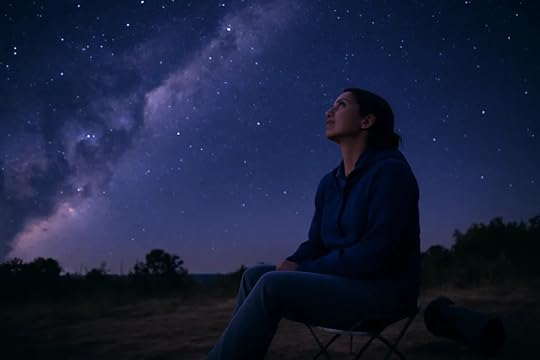
The best thing about stargazing is that it naturally forces your mind to slow down and focus. And that’s where things get interesting.
The night sky naturally slows your thinking because celestial objects move slowly, which encourages patient observation and reflection. When you watch the stars, you’re present in the moment, letting wonder take over.
What’s more, astronomy requires you to sit still in darkness and eliminate visual distractions. The practice pulls you away from screens, notifications, and endless to-do lists.
Through countless nights observing meteor showers and tracking constellations across Brisbane’s skies, I’ve learned that space rocks and planetary movements give unpredictable moments. They teach acceptance of natural timing and rhythms you can’t control.
How Does Astronomy Connect to Mindful Living?Astronomy connects to mindful living by teaching patience, perspective, and present-moment awareness through observing celestial rhythms and patterns. Once you start paying attention to what’s happening above you, life on Earth feels different.
Here’s how it works in practice.
Stargazing as Active MeditationTracking constellations keeps your mind focused on one task (pretty similar to following your breath during meditation). The vastness of space naturally puts daily problems in perspective, reducing anxiety about minor concerns.
When you realise you’re looking at stars that might not even exist anymore, your work deadline suddenly feels less world-ending.
In my experience, learning star patterns builds patience as the skill develops gradually through consistent practice over months. This sense of slow progress mirrors the concept of mindful living perfectly.
The Rhythm of Celestial EventsMoon phases create natural checkpoints for reflection, offering monthly cycles that mirror personal growth patterns. As seasons shift, the changing constellations teach acceptance of natural transitions, helping you embrace change in daily life.
The reason this matters is that the planets move through the sky on their own schedule, reminding you that some things unfold in their own time.
Quick Tip: Resources like Telescope Magazine can help you track upcoming meteor showers and planetary alignments, so you never miss these moments.
Setting Up Your Outdoor Space for Mindful MomentsNow that you understand the connection between astronomy and mindfulness, let’s look at creating your own observation spot.
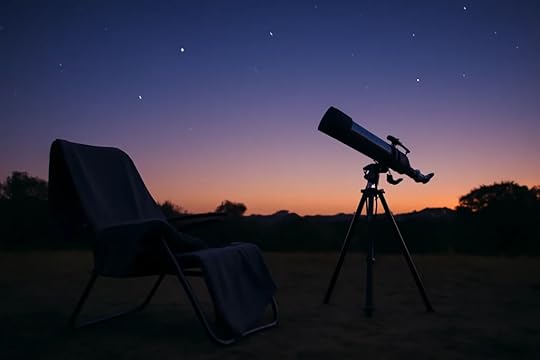
Start by choosing a spot with minimal light pollution where you can see stars clearly on most nights. Dark skies reveal more stars, sharper constellations, and faint objects like nebulae that the bright city glow simply washes out. If you live in a bright city, even finding a park twenty minutes away helps.
Once you’ve found your spot, add comfortable seating like a reclining chair or blanket that supports extended observation without physical discomfort. You’ll want to stay out there longer than you think, so comfort matters.
Mindfulness Tip: Keep distractions away by leaving phones inside or using aeroplane mode to prevent interruptions during practice (notifications kill mindfulness faster than anything else).
While a basic telescope helps you see more detail, your eyes alone can spot plenty of stars and planets. The atmosphere looks clearest on cool, dry nights when humidity doesn’t blur your view.
Creating the right space sets you up for consistent practice under the night sky.
Common Barriers and How to Overcome ThemDoes the weather or city lights keep stopping you from getting outside at night? I know it’s frustrating when you’re ready to stargaze, but conditions won’t cooperate.
However, you can work around most of these obstacles with simple adjustments. Follow these strategies to keep your outdoor mindfulness practice consistent:
Weather Changes: Check forecasts and have backup indoor activities for extremely cold nights. If rain’s coming, shift your session to the next clear evening instead of skipping it entirely.Light Pollution: Since your eyes need darkness to adjust and see fainter stars in the sky, try driving just a few minutes to a nearby park. This simple change reveals sky objects your backyard view can’t show you.Time Pressure: While life gets busy, try dedicating ten minutes once a week to start. You don’t need hours here and there. Consistency beats duration.The benefits of reduced stress and improved mindfulness are worth pushing through these initial barriers. And who knows, you might become that neighbour everyone envies for having the calmest evenings.
Make Tonight Your First StepMindfulness in the outdoors doesn’t require fancy gear or perfect conditions. The connection between spending time in nature and mental health is real, research-backed, and available to anyone willing to step outside. Your mind needs these moments under the night sky more than you realise.
I’ve explored how outdoor living connects with mindful observation, why it boosts mental health, specific activities you can try, and how astronomy deepens the practice. I’ve also covered setting up your space and overcoming common barriers that might hold you back.
Don’t wait for the perfect moment to discover this for yourself.
Head outside tonight, find a comfortable spot under the sky, and let the stars guide you into a calmer, more mindful life. The natural world is waiting, and your practice starts now.
Explore more ways to connect with the night sky and outdoor mindfulness on Star Hawks Blog.
The post The Connection Between Outdoor Living and Mindful Observation appeared first on Star Hawks Blog.
November 19, 2025
Stargazing Made Simple: Beginner’s Guide for 2026 Night Watchers
Ever looked up at the night sky and thought, “I wish I knew what I was looking at”?
Trust us, you’re not alone on this. Most people who want to try stargazing never start because it seems too complicated. With telescopes, star charts, constellations with weird names, where do you even begin without making a fool of yourself?
Fortunately for you, stargazing in 2026 is surprisingly easy now. And this guide covers everything beginners actually need to know about stargazing. You’ll find out:
What you’ll see in 2026 Which free tools help the most How to prepare for your first night under the starsSo, let’s read it all to prepare, and then explore the universe!
Stargazing 2026 Brings Incredible SightsYou’d be overjoyed to know that 2026 is actually one of the best years for stargazing in over a decade! The year is full of major celestial events visible across the northern hemisphere and the southern hemisphere
We’re talking about a total solar eclipse, meteor showers during perfect moon conditions, and planets at their brightest positions. So if you’ve been waiting for the right time to start watching the night sky, this is your star sign!
Let’s look at the highlights that you wouldn’t want to miss.
Total Solar Eclipse on August 12On August 12, daylight will fade to darkness, and the moon will completely cover the sun for a few unforgettable minutes. This eclipse path runs through Iceland, Greenland, and northern Spain. Here’s the key information in short:
Date: August 12, 2026Visible From: Iceland, Greenland, parts of SpainNext chance: 22 July 2028 from AustraliaYou’ll need eclipse glasses to watch this event safely. Remember to never look directly at the sun without proper eye protection. But during totality, when the moon completely covers the sun, you can remove your glasses briefly and see the corona.
Pro tip: Book early if you plan to travel because hotels in Iceland are already filling up. Flights and tour packages for eclipse viewing always sell out months in advance. So plan your trip as early as possible.
The Perseids Meteor Shower in AugustThis year’s Perseids will be spectacular thanks to a new moon. That means there’ll be no glare and the skies will be extra dark. You can expect up to 60 shooting stars an hour, that’s roughly one every minute. Take a look at the timetable:
Peak dates: August 12-13Best time: 2 AM – 4 AMWhere to watch: Any dark spot away from city lightsPro tip: Find any dark spot away from city lights and prepare a blanket. It’s best to lie back and give your eyes at least 20 minutes to adjust. And then enjoy the show from a front-row seat to some of the sky’s most dazzling moments.
Stargazing in the Night Sky Without GearLet us tell you something that most beginners get wrong: they think stargazing requires a telescope.
Your eyes are already powerful enough to see thousands of stars, several planets, and even parts of our galaxy. So you won’t need any gear, any fancy setup, or any learning curve. You can literally step outside tonight and start watching the stars.
Let us tell you about what’s up there.
Constellations You Can Find EasilyThe patterns of some constellations have guided travellers, storytellers, and dreamers for centuries. So you don’t need a chart or an app to get started, just a clear sky and a bit of curiosity.
To spot them in the sky, you can look for these:
Big Dipper: The Big Dipper is your starting point. It stays visible year-round in the northern hemisphere and appears as seven bright stars shaped like a pot with a handle. The two stars at the front of the “pot” point directly to Polaris, the North Star. Orion: In winter, look for Orion. That’s the three bright stars that line up perfectly to form his belt, which you definitely can’t miss. Orion sits right on the celestial equator, so people in both hemispheres can see it.Milky Way: You’ll only spot the Milky Way from truly dark locations away from city lights. It stretches across the sky like a hazy, cloudy band. That’s our home galaxy, seen from inside looking out.These constellations are like landmarks in the sky. Once you recognise a few, the night will start to feel like you’ve unlocked a secret map above you.
 Planets That Look Like Bright Stars
Unlike stars, planets don’t twinkle as brightly. But once you know about them, they’re surprisingly easy to find, even from a city balcony.
Try spotting these bright wanderers next time you’re outside:
Venus: Venus is the brightest “star” in the evening or morning sky. It’s so bright that people sometimes mistake it for an airplane or a UFO.Jupiter: Jupiter comes in second in terms of brightness. It has a steady, golden light that doesn’t twinkle like stars do.Saturn: Saturn has a soft glow near the horizon after sunset. It won’t twinkle like nearby stars do. That steady light gives it away every time.Mars: Mars has a distinctive reddish tint. Even from cities with lots of light pollution, you can pick it out.Mercury: Mercury is a bit harder to find because it stays close to the sun. You can look for it low on the horizon just after sunset or right before sunrise. But be quick because you’ve only got a small window to catch it.So now that you know these, step outside, look up, and see how much of the universe you can find with your own eyes.
Best Apps for Stargazing 2026Remember when people used to carry thick star charts and struggle to read them with dim red flashlights? Well, those days are over.
Now your phone has a lot of free apps that can identify every star, planet, and constellation above you in seconds. And most of these apps work offline, so you don’t need cell service at remote dark sites.
We’re here with the two types of apps you actually need.
Stellarium for Real-Time Sky MapsStellarium is like having a planetarium in your pocket. You just have to hold up your phone, and it instantly matches the stars above you. You can see constellations, planets, and even satellites move in real time as you tilt or turn your screen.
And the offline mode is handy when you download the star database before heading out. You’ll still get millions of stars and celestial objects even without the internet. Plus, the free version displays stars, planets, and even details about the altitude and brightness of celestial objects.
ISS Tracking Apps for Satellite SpottingThe ISS Detector tells you exactly when the International Space Station will pass overhead. You’ll get a notification about 30 minutes before it appears, and the app guides you on where to
Now, when it shows up, it will look like a bright, fast-moving star gliding silently across the sky. The best times to watch satellites are just before sunrise or right after sunset when sunlight can catch the station’s surface.
 Find Your Perfect Dark Sky Spot
Light pollution is the greatest enemy of stargazing. Why? It’s because city lights wash out faint stars, blur the Milky Way, and make meteor showers harder to see.
But the good news is you don’t have to drive hours into the wilderness to find decent skies. Since most people actually live within 30-60 minutes of a spot dark enough for solid stargazing, you just need to know where to look.
And that’s where light pollution maps come in.
What is the Light Pollution Map?Light Pollution Map is a free website that shows you exactly how dark (or bright) the skies are near you. There’s also Dark Site Finder with similar functions. They use colour codes to indicate different levels of pollution. For example,
Dark Blue/Black: Amazing stargazingYellow/Orange/White: Too much lightThese maps use something called the Bortle scale. It rates sky brightness from 1 (pitch black, pristine) to 9 (city centre, terrible). So you have to aim for Bortle 4 or lower for good views.
Many certified Dark Sky parks achieve Bortle 1-3 zones. So these locations often have the blackest skies for seeing deep space objects like galaxies and nebulae. Along with these, state parks work too, and they’re often closer to home than you’d think.
See the Solar System up Close With BinocularsIt may sound unexpected, but binoculars usually work better than a telescope when you’re starting out.
Sure, telescopes sound exciting, but they’re pricey, bulky, and take patience to master. You’ll need to align them, track moving objects, and deal with lots of advanced adjustments. So it’s a bit much when you’re still getting used to the night sky.
But for binoculars? You can just pick them up and start your stargazing right away. These are some of the things you can see with binoculars:
You can see Jupiter’s four biggest moonsYou can even spot Saturn’s rings as tiny “ears.”The Moon’s craters look crisp enough and full of texture.Pro tip: When you’re buying a binocular, a solid beginner pair is 10×50 binoculars (10x magnification, 50mm lenses for brightness). They’re light, affordable ($50–150), and you can also throw them in a backpack, use them for hiking during the day.
Stargazing 2026: The Year You Finally Look UpYou don’t need perfect skies or fancy gear to begin stargazing. Just step outside tonight, find a few constellations, and maybe open an app like Stellarium. And you’ll be surprised how much more you can see when the city lights fade away.
All you need to do is start. The Perseids and August 2026’s solar eclipse will happen whether you’re ready or not. And the planets are shining tonight, waiting for someone to notice.
So grab a blanket, step outside, and look up. The universe has been putting on this show forever, and it’s about time you caught it live.
The post Stargazing Made Simple: Beginner’s Guide for 2026 Night Watchers appeared first on Star Hawks Blog.