Max Carmichael's Blog
February 23, 2026
Last Hike
Last week I drove to Tucson to get a second opinion on the shoulder pain that’s been waking me up throughout the night for the past two years, and to resume the physical therapy I started there in December.
The second opinion will require a minimum of two follow-up visits. And the result of this first visit is that my shoulder hurts more than ever, because the drive itself is hard on the shoulder, and physical therapy has always made the pain worse.
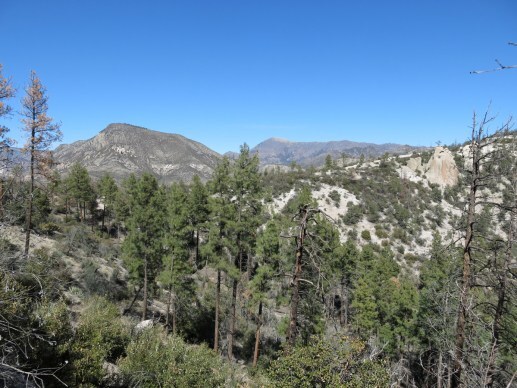
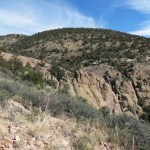
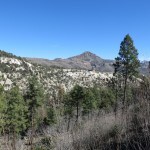
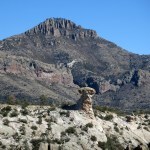
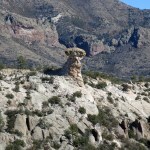
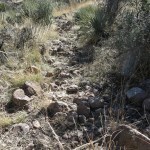
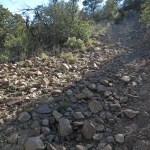
The past two Sunday hikes have also re-triggered the chronic inflammation in my left foot. With the shoulder in the foreground, I tried to ignore the foot pain. Today – in denial yet again – I decided to do a rocky hike that’s always been hard on the feet. It starts out easy enough, heading up a long valley toward the foot of the mountains, but then it climbs a set of rocky switchbacks to a saddle, where you enter another watershed hidden from the outside and traverse the back of the ridge toward a big canyon. I’d avoided this hike for almost three years, so my memory was rusty and I just focused on the positives: that view of the interior, and the pine park which would be today’s destination.
As usual this winter, the sky was mostly clear and the high in town was forecast to reach the upper 50s. Snow still lingers above 9,000, even on some south slopes of our high mountains, but today I would mostly keep below 7,000 feet.
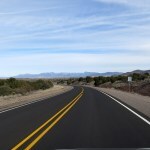
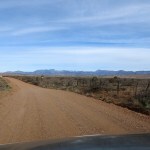
You have to ford the big creek to reach the trailhead, and it was flowing pretty strong from snowmelt in the interior, almost reaching the undercarriage of my recently lifted Sidekick.
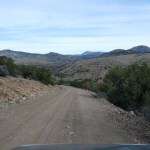
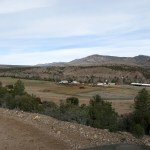
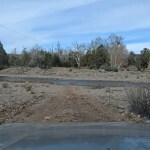
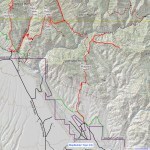
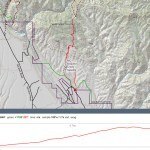
The first half of the trail, up the long valley, is completely different from the trail shown on every available map. This turned out to be important because it made my hike a mile-and-a-half longer than expected.
There were two other vehicles at the trailhead, which is remote and unpopular: a big pickup carrying an ATV, and a Subaru station wagon from Utah. I was impressed the Subaru had made it across the creek.
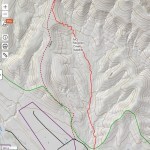
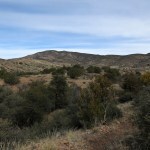
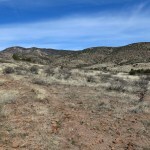
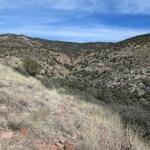
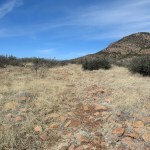
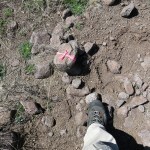
At the head of the valley you pass over a scenic rock dam and begin the first set of switchbacks, which seems endless. My foot seemed to be doing okay here. The switchbacks were decorated with frequent pink ribbons, which I assumed had been left recently by the Backcountry Horsemen, who have the permit for trail work. Their horses had left plenty of shit on the trail, probably from last fall, but I couldn’t figure out what the ribbons were for – they seemed completely random. As far as I’m concerned the trail needs no more work than they’d already done years ago, but the equestrians love to cut trees, cacti, agave, yuccas and nolinas way back from the trail. I even found spots where they’d hacked manzanita as much as eight feet off-trail.
The wire gate across the saddle was closed, but the ground inside it was all dug up by cattle – something I couldn’t remember ever finding here.
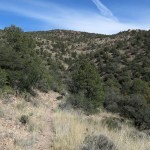
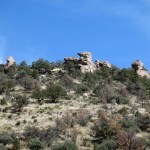
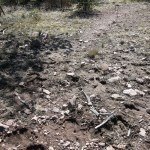
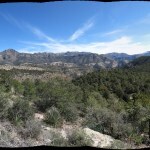
The traverse to the pine park also seems endless, and the farther I went, the more the trail was dug up by cattle. This east-facing slope holds a lot of moisture, so every time the trail cut back into a drainage, it got really muddy. I was frankly getting pissed.
Nearing the pine park, which is a level plateau, I came upon a guy with an off-leash dog – a violation of forest regs. I started bitching to him about the cattle, and he said he’d seen a “whole bunch” up on the plateau, around a pond that was holding water now. I assumed by a “whole bunch” he meant at least 8-12, and was even more surprised. I wondered if these cattle had drifted over through a gate left open by ignorant hikers, then become trapped over here behind the fence.
The stranger was carrying field glasses and a tripod and said he’d camped there overnight, scouting for deer pending a return in the fall to hunt. He said he’d only seen a couple does, and I said I couldn’t remember seeing deer on this side of the big canyon.
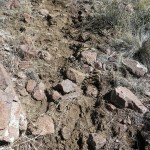
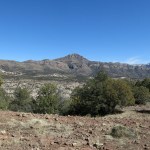
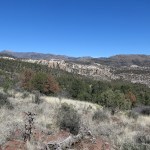
The pond is at the far upper end of the forested plateau, so I fortunately never even saw the cattle. I love this spot, and stretched out on a bed of pine needles for a brief rest in the sun.
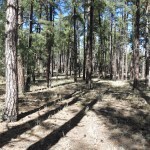
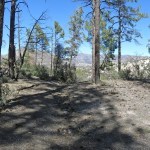
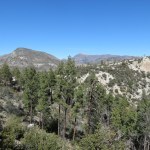
But I was frankly feeling kinda sick – unusually fatigued, sporadically dizzy, mildly nauseous. Dreading the return hike, I cut my rest short and unfolded the trekking poles to hopefully reduce the impact on my sore foot.
But by the time I reached the saddle between the interior and exterior of the mountains, not only was my foot hurting, but I realized the trekking poles are hard on my shoulder. So I downed the first pain pill of the day.
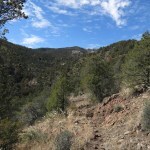
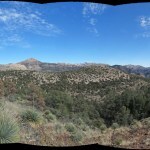
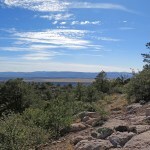
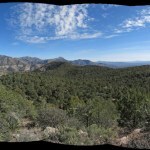
Those endless switchbacks are so much harder on the way down! By the time I reached the little plateau below the rock dam, facing another two miles with the sun setting, I couldn’t believe the punishment I’d gotten myself into.
At that point, the only things I had to look forward to were the landscape colors highlighted by the setting sun, and the large covey of quail that’s always flushed from the grassy slope I traverse nearing the low point of the valley.
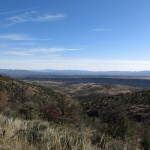
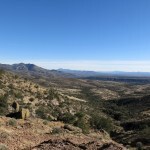
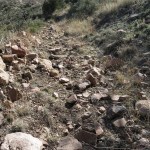
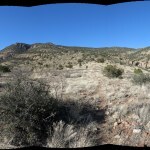
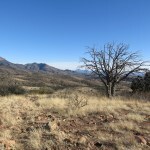
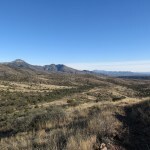
It’s a pretty drive out at sunset, but nothing could compensate for the pain that kept me awake most of the night, and the depression of realizing I’m simply going to have to give up hiking. It will take months to overcome that foot pain – maybe even a trip to the podiatrist in the Bay Area, and more ultrasound treatment. And that’s not even the priority – the shoulder comes first, and that will take months by itself. I always knew I’d have to give up hiking at some point, but I never believed it would come this early. I just have to be grateful for the sedentary passions that remain – music, art, and writing.


February 15, 2026
Falling Forest
This Sunday’s hike needed to be nearby, and there are only three hikes near town that offer significant distance and elevation gain. All of them are forested, and only one has a distinctive destination – a peak – so that’s the one I planned to do. But it shares trailheads with a long ridge hike with better views, so at the last minute I set off on the ridge hike instead.
The full hike is over six miles one-way, ending at a “lake” at the west end of the ridge, which is really just a large stock pond. The first mile or so sees regular traffic, but despite being close to town, it hasn’t been regularly maintained, and blowdown and overgrowth have made this trail nearly impassable at times. Sometimes in the past I’ve been the first hiker in months or even years to go halfway, let alone reach the lake.
One attraction of this trail is that it mostly traverses the steep north slope, with views north over our vast wilderness. And in 2020, a wildfire killed much of that forest, improving the views. The last time I hiked all the way to the lake was three months after the fire, when I found an expensive pistol that someone had left under a pine on the shore.
Today, with my sore left foot, I was only hoping to reach the plateau at the halfway point – the high point of the ridge at a little over 8,600 feet – for an out-and-back distance of seven or eight miles. The sky was partly cloudy and the high in town was forecast in the mid-50s.
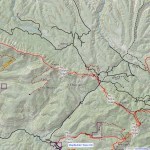
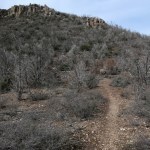
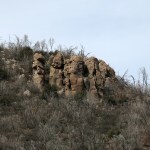
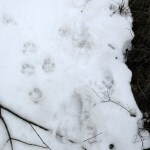
I was prepared for snow and should’ve expected it on that steep north slope, but I’d really hoped for an easier hike than last Sunday. When I did reach the first snow after the initial climb to ridge top, it was only a couple inches deep and had been tracked by a small woman and her huge dog since our last storm, a few days ago.
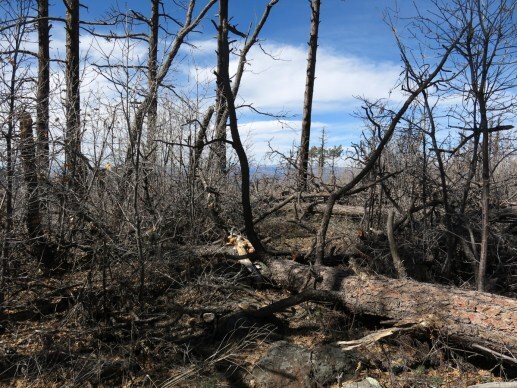
The next complication I should’ve anticipated was the deadfall. This long after the fire, dead trees of all sizes were constantly falling across the trail, many with their branches intact.
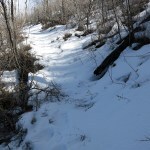
A hundred yards in, where the snow got deeper, the woman and the dog had turned back. Past there, the deeper snow, laid down in January, had been tracked by one bigger hiker, then their tracks had been smoothed by last week’s additional snowfall. Since much of the trail is in perpetual shade, the surface was packed and walkable in the morning, but I knew that on my return in the afternoon much of it would’ve melted and be trickier.
So even before reaching the first stretch of snow, I stopped to strap on my gaiters and assemble my trekking poles. The poles helped with the snow but were a handicap climbing past the deadfall.
As the ridgetop rises and falls, the trail occasionally crests in a saddle, and each saddle was swept by a cold wind from the southwest that dropped the effective temperature into the teens. I wore wool gloves at all times.
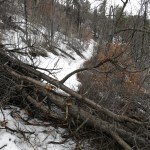
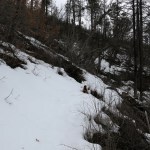
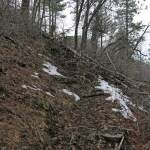
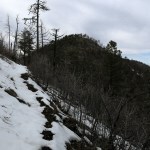
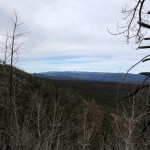
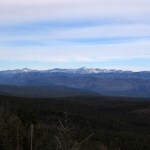
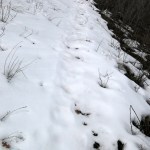
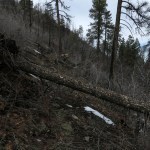
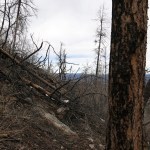
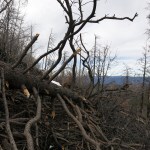
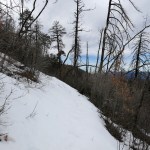
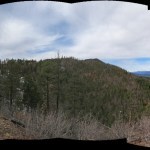
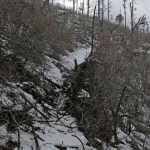
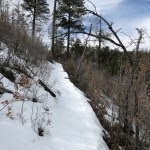
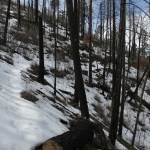
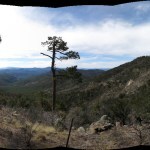
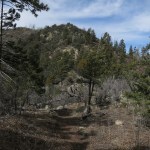
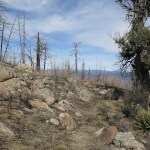
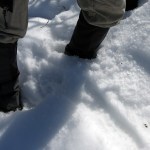
The north slope traverse zigzags continually out and back, and finally after about two-and-a-half miles I rounded the last shoulder before the steep grade to the high plateau. Here, the snow was up to 14 inches deep, and I could see that the hiker who’d laid tracks before last week’s storm had also been using trekking poles.
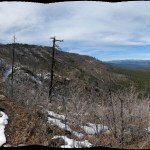
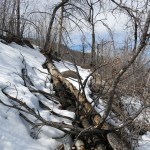
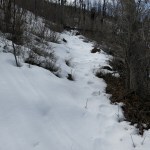
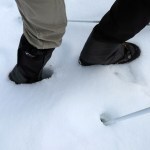
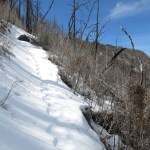
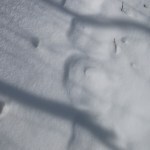
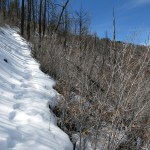
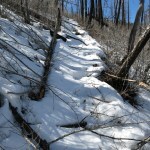
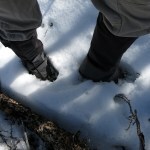
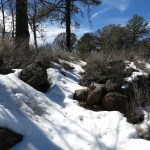
As expected, the plateau, with its parklike ponderosa pine forest, is exposed enough to be snow-free by now. But it’s also windy enough to get constant blowdown. Despite a little annual overgrowth that obscured the already faint tread in many places, I remembered it well and was able to reach the west end, where the trail drops precipitously toward the next saddle.
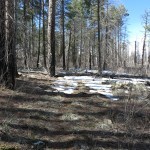
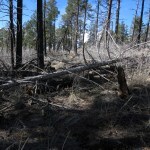
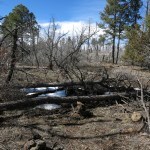
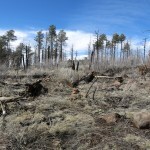
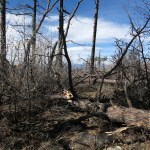
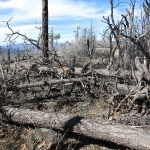
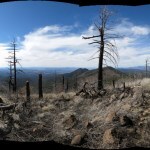
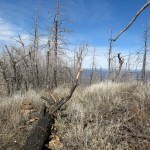
I was aiming for a tiny saddle just below the plateau that has a nice view west. By the time I reached that view, I’d climbed over, under, through, or around 50 fallen trees in 2-1/2 miles – nothing compared to the 500 per mile on the crest trail of our high mountains. But worth considering for those planning to hike forested mountains in this new fire regime!
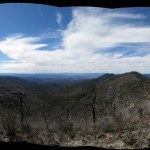
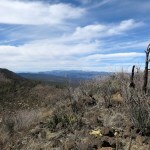
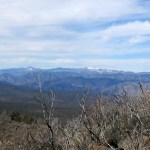
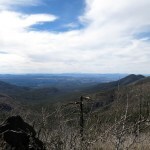
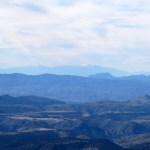
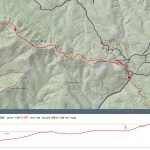
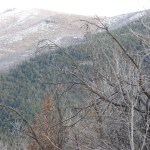
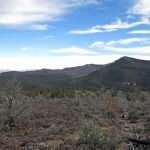
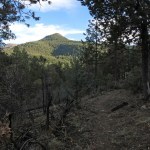
Sure enough, much of the snow on the north slope had melted by my afternoon return, so that although it was easier going downhill, it was almost as slow as the morning’s ascent. The sun did come out, enhancing the view and the contrast of drought-killed vs intact pines in the forest below.
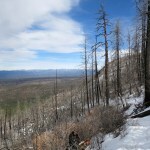
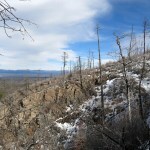
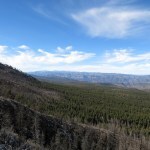
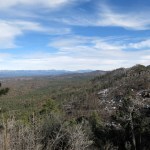
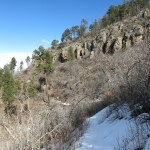
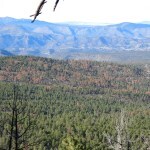
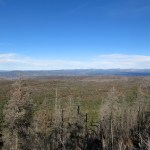
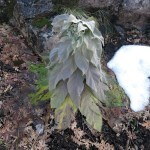
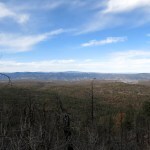
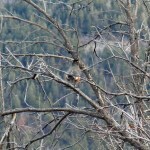
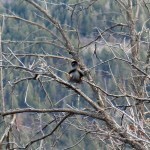
Past the final snow patch, rounding the last shoulder at the east end of the ridge, I came upon a male spotted towhee in a little trailside tree, doing his mating display of wing flapping and tail spreading. And I got my last view of the high range to the east.
It ended up taking me 7 hours to go 8 miles, and my foot was hurting even more than last Sunday. I wondered if I would need another 18 months of twice-daily ultrasound treatments like in 2017 and 2018….
February 9, 2026
Tracking Bigfoot
My new physical therapist, trying to treat my right knee, gave me a new exercise that instead, triggered pain in my left foot. The left foot condition was diagnosed 9 years ago by my San Francisco foot doctor, a national authority on biomechanics, and the nonsurgical treatment required 18 months of twice daily ultrasound. Since then, I’ve been able to control two or three minor flareups with something called contrast bathing, which is even more inconvenient than the ultrasound.
So for the past two weeks, I’ve been doing both the twice daily contrast bathing for the left foot, and three times daily icing on my right inner ankle bone. But on Sunday morning, getting dressed for another hike, I discovered that as soon as I put my boot on, the ankle bone hurts just as much as before.
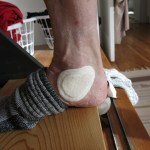
I spent another half hour experimenting with padding. Finally, in desperation, I tried attaching one of the “beveled” metatarsal pads I use for the left foot, just below the ankle bone. And miraculously, that worked – apparently it’s the lower edge of the ankle bone that’s suddenly become a pressure point, and the pad holds the boot lining away and absorbs most of the pressure.
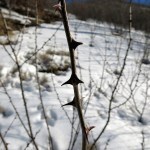
Today’s hike would be one that’s been on my list for months – just the right distance and elevation gain. I’ve been avoiding it because the drive is dangerous, the habitat is almost exclusively burn scar, and the last time I tried it I gave up because it was overgrown with thorny locust.
But that was years ago, and I figured by now, it would’ve either been cleared or seen enough traffic to beat back the thorns.
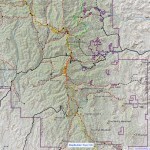
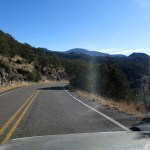
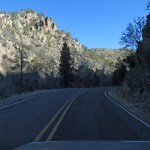
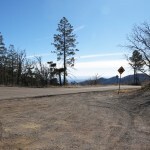
The sky was mostly clear, and the high in town was forecast to reach the mid-60s. So despite the high elevation – this hike climbs a peak, from 8,200 to 9,700 feet – I expected most of the snow we’d had weeks ago to be melted by now, especially in the exposed ground of a burn scar. I carried my gaiters and trekking poles but didn’t expect much trouble.
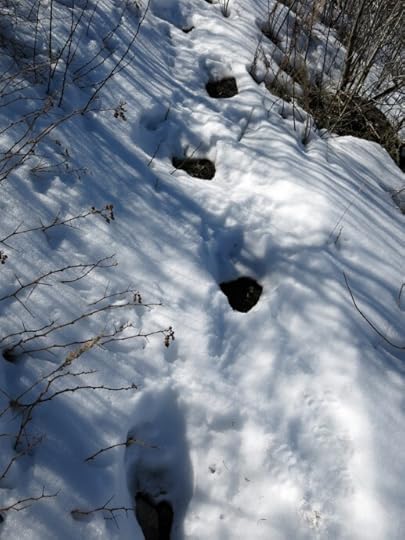
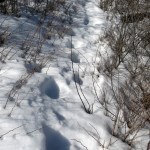
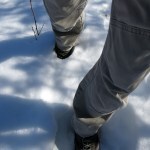
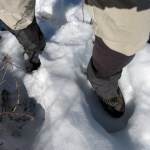
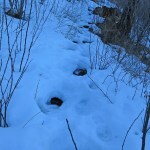
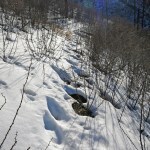
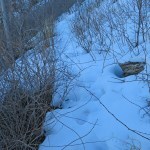
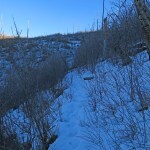
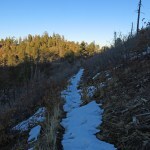
Sadly, I was wrong. Like many trails in the Southwest, this is routed mostly on north and east slopes to reduce solar heating, and most of the trail was snow-covered, up to 16 inches deep. And making it much worse, someone or something had walked the trail shortly after the last big storm, punching deep holes at intervals longer than my own footsteps. And adding insult to that injury, the snow had then melted and frozen repeatedly. Each step I took would either land on rigid snow, or snow that would compress a few inches, or snow that would collapse a foot or more, and there was no way to anticipate without taking the step. In the process, my foot might sink directly down, or slide forwards, backwards, or sideways, and sometimes end up tilted, throwing me further off balance.
For the first few hundred yards the snow was only a few inches deep and packed by a confusion of tracks, but after that, it was only Bigfoot, with a stride length of a meter – more than a yard. What human can stride like that in deep snow? The only animal out here that approaches that stride is a bull elk, with from two to three feet between tracks – and this was longer than that. What are the chances that an elk would stick to a man-made trail, back and forth across the crest, for three miles? And I saw no elk droppings all day.
I immediately thought about giving up on this hike, but as usual, figured I would just try it and see how far I got. The trail begins in the high pass on the crest of the north-south range, and proceeds for more than a mile in long traverses up a bleak northwest-facing canyon on the west side.
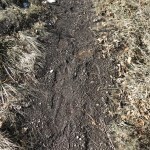
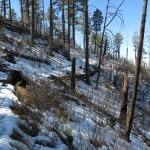
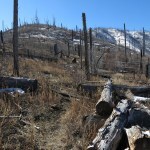
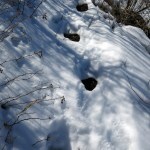
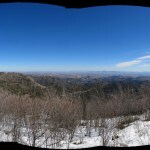
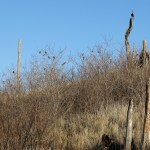
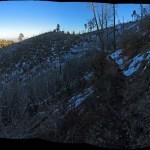
When I reached the crossover to the shadier east side of the crest, the patches of snow became deeper, and I strapped on the gaiters and broke out the trekking poles, hoping they would improve my balance as I lurched across the sometimes frozen, sometimes soft snow between deep holes punched by Bigfoot. The view from the east side – across rocky foothills and the Rio Grande Valley to 12,000 foot Sierra Blanca Peak over a hundred miles away in the Sacramento Mountains – would be spectacular except for the skeletons of pines and firs killed by the 2013 wildfire.
Two-thirds of a mile farther, I reached a saddle which reminded me of previous hikes on this, the southern extension of the crest trail. I’ve hiked over 17 miles of the northern crest, but since the 2013 fire, this southern part has only been cleared for the three miles to the saddle below the peak. Back in 2020, I tried bushwhacking farther south, but only made it a little over a mile, where the old trail disappeared under an obstacle course of blowdown and deadfall.
On that 2020 hike, I encountered four bull elk with huge racks and a group of six mule deer bucks, likewise with nice horns. Then, while bushwhacking to what I thought was the peak, I was caught in a hailstorm with lightning striking all around me. Finally, at this very saddle, I discovered a lost dog, abandoned by its owner, a dog so depressed that even after I offered it food and water and tried to lead it by a nylon strap I carry in my pack, it refused to leave the saddle and I had to leave it behind, presumably to be eaten by a mountain lion.
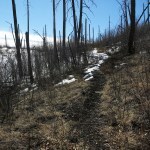
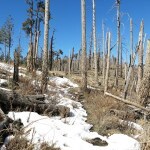
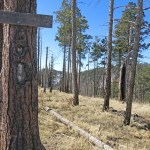
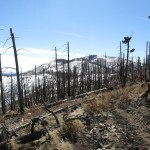
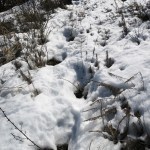
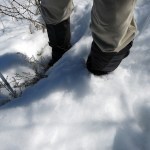
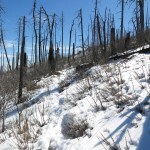
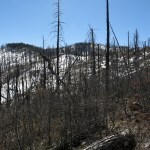
At the next saddle, the trail crosses to the west side and passes through remnants of intact forest. Even there, patches of snow with holes punched by Bigfoot kept slowing me down. But now, I could glimpse the peak looming hundreds of feet above, so I was no longer likely to give up.
At a saddle just below the peak, the trail crosses to the east side again, but here, Bigfoot continued straight up the steep slope. I’d done that before, there was no way I was going to try it in snow that was now over a foot deep. So I followed what I thought was the trail, beckoned by the tracks of a lone deer. I was halfway across the traverse to the next saddle when I realized the deer had led me off the actual trail, and I would now have to pick my way through deadfall to the back side of the peak, where the slope is gentler.
I finally found myself above the little saddle on the south side of the peak, where I normally start my bushwhack upwards. Although the south slope is gentler, it was burned in the fire and is becoming crisscrossed with more and more deadfall every year as giant pine and fir snags continue to topple.
I started to make my way across it, but every glance upward was more discouraging. I finally stopped and decided to give up on the peak – at least for a few minutes. But how could the masochist in me turn back when my goal was so close?
The horizontal distance is only a few hundred yards. But climbing over or around those huge fallen logs seems to take forever – and just when you think you’re approaching the peak, it turns out only to be an outlying shoulder or false peak.
When I finally saw a bald mound above me, I felt like something was wrong. The peak I’d climbed several times in the past was surrounded by a dead forest of standing snags that blocked its view, whereas this peak was completely clear all around.
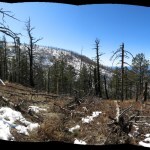
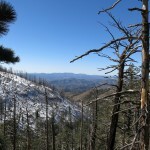
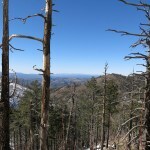
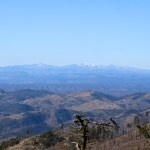
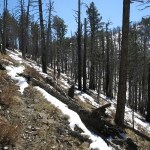
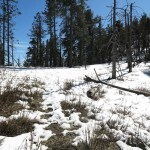
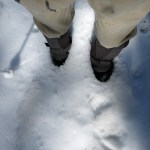
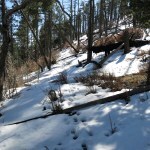
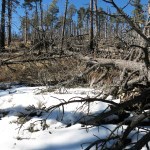
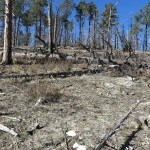
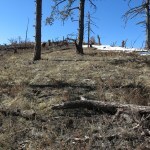
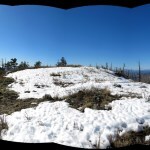
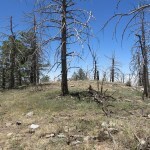
I finally realized that what I thought was the peak in the past, was only a false peak a hundred yards east. How could I have made such a mistake, over and over? Anyway, it was nice to have my labors rewarded with a view.
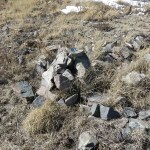
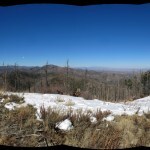
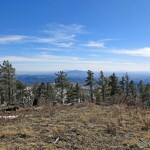
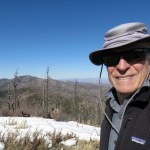
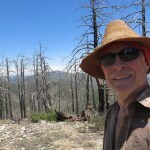
Of course, going the distance meant I’d have to repeat that struggle with snow postholed by Bigfoot on the way down. I kept using the trekking poles, although it was a toss-up whether they helped or hindered, because they had the same problem as my boots – either hitting rigid snow, or sinking part or all the way. And when they sank all the way into the snow, they often snagged and yanked me further off balance. And they constantly got caught in the thorny locust that leaned over most parts of the trail.
My right knee, that had set my hiking back for two years, was finally doing well. And the right ankle that had been so excruciating during recent weeks, was now merely uncomfortable. But as if to compensate, the left foot was getting worse and was now becoming my limiting factor. Contrast bathing had not reduced the inflammation enough – would I have to repeat the ultrasound and give up hiking for another 18 months? Might as well just put me out of my misery.
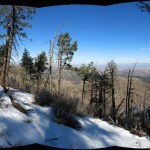
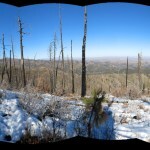
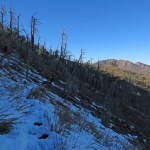
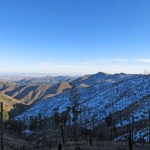
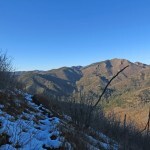
When I reached the last crossover from east to west, the sun was rapidly setting and it was clear this seven-mile hike would end up taking me a full seven hours, due to the uneven snow. This is one of the worst hikes I could’ve picked at this point in my “recovery”. But as usual, the late-afternoon sun and colors on the landscape were beautiful, and a couple of pain pills helped salvage my attitude.
February 4, 2026
Airport Poems
Waiting in the airport
Outside security
Just waiting
So sad
Lights, colors, shapes
Stillness in front, movement behind
Parallel lines vanishing in perspective
Waiting
So many years
So many airports
Alone
Waiting alone
Thinking of nothing
Thinking of you
Thinking of them
Waiting in airports
Waiting in between
Waiting
Time goes by
Time
So sad
1/11/26Waiting in the airport
Hours of my life, draining away
Gone forever, why?
Buried in this passageway
False suns overhead
While somewhere
Outside
Sun striding on heaven, oblivious
Strangers hurry, strangers stop
Wheels turning, inside wheels
Air rushing, rushing out
Loud voices from machines
Soft murmurs from strangers
Life’s broken music
Caught in transit
While I wait, buried here
Life’s hours drain away
Lost now, lost forever
Every hour, getting older
I walked through glass
And steel
In buildings so vast
We could not feel
Walls or ceiling
Only a diffuse light falling
Everywhere and nowhere
Crowds milling in noisy bright caverns
Moving stairways, sudden turns
Moving, moving, no place to rest
They used to call them arcades
Glancing past, the walls
Like big screen movies of a living world
Impossible outside
The sun, mountains, towers, wires
Great works these
Ordered by a distant voice
Erected by legions
From trains converging across the desert
Marshaling the gray-haired merchant
The housekeeper in her burka
Boy rapper, skateboard in arm
Workers of the nation
Breeders of the future
I walked with them
Through tunnels of glass and steel
So vast inside they seemed a world
Built only to convey
To channel passage
Forever, endless
As outside, the fires burned
Trees died
Winds blew, ashes spread
Night fell, long rains
Floods rising, snow falling, silence
We walked, we glimpsed it like a movie
Through the distant glass and steel
Night or day, we could not stop
Our lives a journey
Like rats in a maze
February 2, 2026
Scaling Back
The hosting service for this blog tracks visits, and during the past two weeks, I’ve suddenly been bombarded by visits from Hong Kong and Singapore. Apparently this consists of bots scanning my content for personal data that can be harvested for criminal purposes. I assume this will fade away as they fail to find anything useful. Reminds me of when my dad died and his estate went through probate. The court shared my personal data with criminals who harassed me for up to a year by phone and mail, including a syndicate in China who sent me what appeared to be a legal document by express mail with signature requested.
I do try to omit personal data, but I’ve been liberal with personal feelings lately, so the idea of criminals greedily delving into that is pretty creepy. Let me know if you think I’m a fool and should just shut this thing down completely.
After last week’s excruciating hike, I was finally able to scale back my ambitions for this Sunday. From 9 miles and 3,000 vertical feet before, I was hoping to cover only 7 miles and 1,500 vertical feet. After a week in sneakers, I was hoping the inflammation on my ankle had subsided – I certainly couldn’t feel anything.
At least, I didn’t feel anything until I put my boots on. Then the pain came back just as bad as last Sunday. So my hike started with an hour of searching for some kind of padding – at home, then all over town, because the nearest drug store was closed due to staff shortages.
Armed with a couple of pads, I drove north to the trailhead.
The sky was clear and the expected high in town was in the high 50s. Arriving late at the trailhead, I started trying out my purchases. None of them did anything to reduce the pain. I finally dug a cotton handkerchief/bandanna out of my pack – I carry three, they come in handy for all sorts of hiking issues – folded it into a pad a little over a quarter inch in thickness, and stuck it in my boot. Over that, I laced the boot skipping the hooks nearest my ankle. It didn’t stop the pain but it helped enough to get me going.
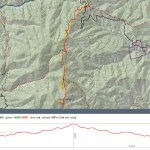
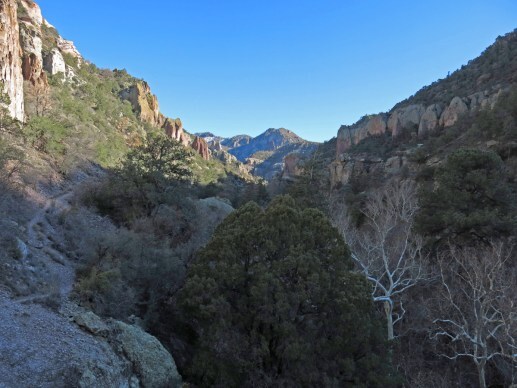
This is a shortcut into the biggest canyon through our tallest mountains. It starts by climbing over a ridge then cuts back into a deep side canyon. Traversing from the ridge into the side canyon I spotted an older couple approaching from below. They stepped off to let me past. The man, in front, scowled at me, but his partner smiled as I asked, “How’s it going?”
The man clearly wanted to keep going, but the woman engaged me in a conversation, about my plans and where I was coming from. It turned out they live in the remote river valley, ten minutes away, but visit town often – as all country folks do. We talked about healthcare and elder care, and how the shortage of resources around here are more than compensated for by the quality of life.
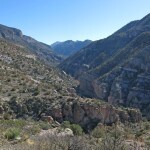
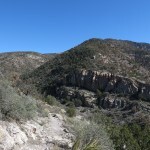
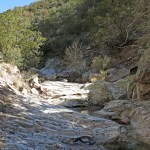
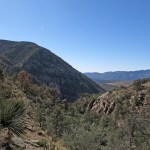
Despite my determination to scale back the difficulty of my hikes, this rocky trail has a lot of steep ups and downs. I began using the trekking poles to take some load off the ankle. But after descending into the side canyon, climbing out, and climbing up and down past several dramatic rock formations high above the roaring creek, my ankle had once again reached 8 on the pain scale. I stopped at a flat boulder in the sun, figuring I’d gone less than two miles, but simply couldn’t go any farther. I ate lunch, took a couple pain pills, and waited for my GPS device to send a waypoint to a satellite.
But after resting a while, I figured I might as well make another try at padding and relacing my boot. This reduced the pain to a 6, and I soon reached the switchbacks that descend about 300 vertical feet to the narrow canyon bottom.
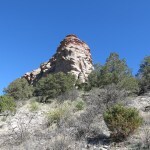
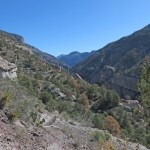
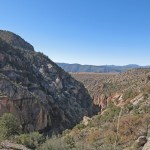
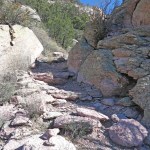
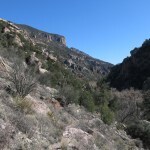
Of course, once I reached the cold shade of the canyon bottom, the pain pills took effect, and I was in denial that the trail upcanyon continues to climb steeply around massive boulders and cliffs. So I kept going, as the pain began increasing again despite the pills.
I was surprised by swarms of gnats – I ended up having to wear my headnet all day.
Finally, I reached my planned destination, the junction where a trail up a side canyon crosses the creek. There’s a fallen log where I could sit in the sun and listen to the creek tumbling over the rocks. Crossing the creek would soak my boots and add to my misery, so I rested there for another half hour, and began yet another experiment with my ankle.
This involved wrapping the existing bandanna pad with the Ace bandage I keep in my first aid kit, and trying yet another lacing technique, bypassing all but the top hooks of the boot.
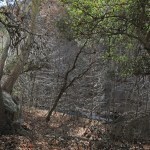
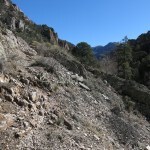
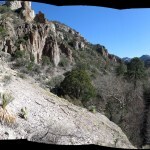
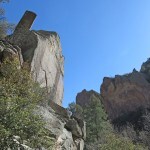
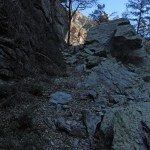
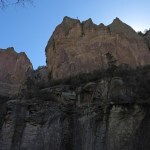
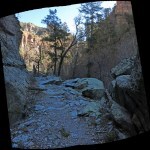
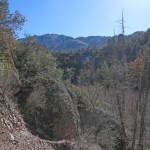
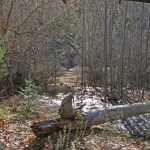
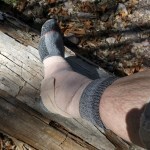
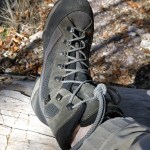
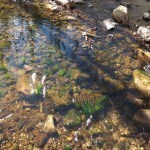
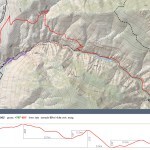
The new lacing significantly reduced the pain, and the pills continued to help too, so that by the time I reached the top of the switchbacks the pain was down to about a 4.
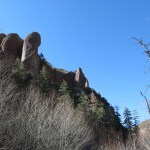
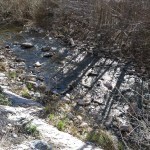
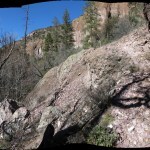
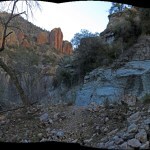
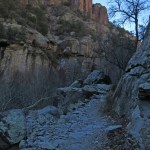
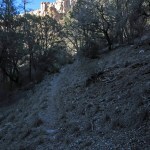
From the top of the switchbacks, with my mind off the pain in my ankle, I could better enjoy the late sunlight on the rock formations all around me, and the balmy weather – I’d hiked in my shirtsleeves all day.
I was finally so relaxed that it wasn’t until I’d gone a half hour past the top of the switchbacks that I realized my ankle pain was completely gone! What had changed? I still didn’t know whether this was soft tissue inflammation or nerve pain, and there was no way to tell whether it had been eliminated by my treatment back at the creek, by the pain pills, or by natural loosening of the boot as I hiked.
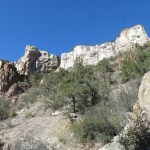
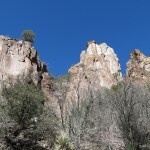
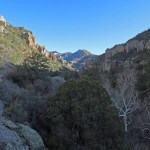
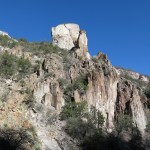
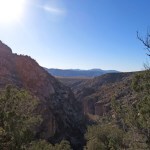
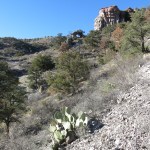
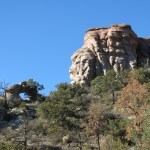
Whatever made the pain go away, it sure made it easier to cross that side canyon, and the final ridge before descending to the mesa.
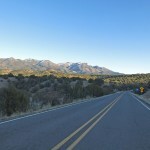
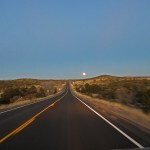
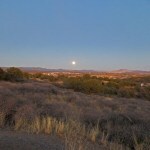
This is a trail I always think of first when I need something short, with less elevation gain, because it’s the most scenic short trail in our region. The beauty of that mesa is hard to convey in a photo – especially because the naked eye picks out the reflections of stock ponds far in the distance below.
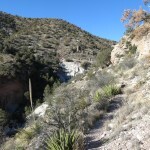
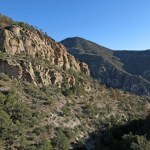
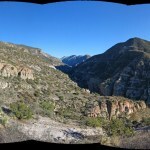
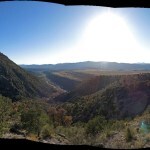
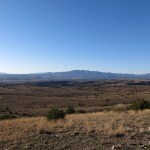
However, as soon as I got in the driver’s seat and started working the pedals, my ankle pain came right back. So bizarre, and so frustrating. Now I face weeks of icing both this and my inflamed left foot, which still hasn’t calmed down.
January 29, 2026
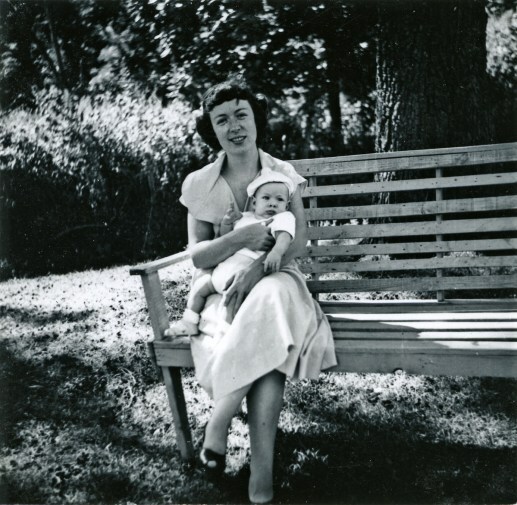
Letters to My Mother, Part 5: What Are We to Do?
Previous: I Tried to Help
Life and Death in Long-Term Care
Beliefs, Plans, and DenialOur FamilyPapaw, my dad’s father
Died quickly, in hospital
Of heart failure
Mamaw, his wife, widowed and living alone
Began hallucinating
Her son flew back and tricked her into a nursing home
Said they were going to the doctor
Aides grabbed her from the car
She died miserable, among strangers
My grandpa, your daddy
Died suddenly at home
Of a massive heart attack
Your mother, my grandma
Voluntarily entered a nursing home
Thrived there, singing, comforting
Cheering the other residents
You never made plans for the end of your life
Refused to talk about it
Said you would never leave your home
Would rely on home help when the time came
I believed you irresponsible, living in denial
Until I realized that in the culture of our ancestors
Traditions in family and community
Provided for the end of life
In our society, you were at one end of the spectrum
Some of my friends are at the other
Always worried about the future
They devote time and energy to planning for their end
One friend worries about dementia
Worked to create legal provisions for assisted suicide
If he begins to lose his mind
But as we found
Mental illness can defy science
Losing your mind
You could still think and remember
You were afraid to die
And you fought for your life, even while unconscious
What would the law say about that?
Is it really possible to plan for losing your mind?
Other friends prepare for the end of life
By buying long-term care insurance
Implicitly planning to spend their final days in facilities
Like the ones that failed us
Some voluntarily move into “retirement communities”
When they get tired of maintaining their homes
Long before they actually need home care
They like the idea of having care
Available onsite when they need it
With visions of daily golf or bridge
They don’t mind being sequestered among other old people
Isolated from community, families, and youth

Having spent two years
Seeking and working with the kind of care
Many people expect to be available
I believe we’re all in denial
With healthcare and elder care commodities
In our statist, capitalist, bureaucratic society
The kind of care many expect simply doesn’t exist
And often, we are forced into situations
We never could have planned for
Hospitalized with a sudden, unexpected crisis
Suddenly ending up in permanent long-term care
As someone whose quality of life
Depends on hiking and making music, art, and stories
I want my life to end
When I can no longer do those things
I want my life to end
Before I become dependent on the care of others
The rural Irish lived in homes
That included apartments for their elders
When the elders were too old to tend the farm
They moved out of the main house
And became advisors to the young
Traditional societies around the world
Facing limited resources
Condoned suicide by elders
Who could no longer care for themselves
Stories of grandparents jumping or thrown off cliffs
Abandoned on ice floes
Trudging off alone in winter
In our colonial culture
Suicide is such a deep and strong taboo
Science is discouraged from studying these practices
And with our deep puritanical bias
We outlaw voluntary drug overdoses
When friends ask
I tell them when the time comes
I’ll just walk out into the wilderness
But what if it’s too late
And I can no longer get there on my own?
Your primary care doctor retired
Just before your final crisis began
Her office made no attempt
To find you a replacement
Our loved ones’ decline often begins in a crisis
Where they end up in the ER
The emergency department of a hospital
The goal of the ER is to rush a diagnosis,
Treatment, and discharge
Frequently, they’re wrong
A loved one must be onsite
To ensure you’re adequately examined
Safely discharged to a place with adequate care
Receiving timely follow-up with a physician
If a patient is in danger of dying
Staff will ask
Do you want us to save you?
This is called Full Code
Involving CPR, intubation, defibrillation
Breaking ribs, puncturing lungs
Risking severe disabilities
If the patient is hard of hearing or confused
By strangers and an unfamiliar environment
They will typically agree
This decision is impossible for family to change
Doctors agree it’s wrong, but that’s the system
If the patient is unable to make a decision
The nurse on hand calls and wakes up next of kin
In the middle of the night, demanding an immediate decision

When your condition is critical
But you need more than a few hours
Of testing and treatment
They admit you to Med Surg
It’s a catch-all unit
Where your case is supervised by a hospitalist
Coordinating a team of specialists
But not all hospitals have all the relevant specialties
And in our colonial society’s reductive paradigm
Specialists have no interest in
Or knowledge of other specialties
They regularly claim authority
And make false conclusions, even let patients die
Based on ignorance
And a narrow perspective
If the issue is behavioral or mental
A hospital psychiatric unit should be the last resort
These units are designed like prisons
To restrain and prevent violent behavior
Because you had no PCP during your crisis
When you were discharged from hospital
There was no follow-up
No confirmation that diagnosis was correct
No confirmation that treatment was successful
Some people will assume that our problems
Resulted from limited and substandard healthcare
In our hometowns
The capital of a notorious red state, and a remote rural town
Many people assume the best healthcare can be found
In affluent enclaves in New York, Boston, the Bay Area, Los Angeles
Minneapolis or Phoenix, with their Mayo Clinics
But the real picture is much more complicated
Yes, I had to fly to Seattle for specialized hip surgery
And to San Francisco for nonsurgical foot treatment
I could afford that, even in my low-income bracket
So there was no need to live in those places
Critical patients in small towns are always referred to cities
For specialist treatment not available locally
But you had an excellent heart surgeon in your Midwestern city
And our small-town psychiatrist was likewise exceptional
With few exceptions, our homes and our parents’ homes
Are not designed to be accessible
And most could not be adapted for parents with mobility issues
Parents who need outside caregivers
Requiring their own space and facilities in the home
Our ancestors cared for their parents at home
The architecture and skills handed down by tradition
I yearned to restore that tradition
But dreaded the need when I saw it coming
Our society fails to train us to be caregivers
Like everything else, caregiving is commodified
With low pay, high burnout and turnover
Home care agencies abound in every community
But unless you can prove low income and assets
Qualifying for Medicaid
Private pay is your only option
$30-40 per hour
Nearing the end, when you needed 24/7 monitoring
I was promised that home care was an option
We agreed on 8 hours per day
With me taking care of you during the remaining 16 hours
But at the last minute
Discovered caregivers are unavailable overnight
On weekends or holidays
So when could I sleep, or take a break?
Depending on our degree of independence and need for care
Our colonial, statist, capitalist, bureaucratic society
Offers a spectrum of facilities
As service commodities we can purchase or qualify for
Depending on our financial status
These facilities are most often designed
To offer a continuum of care
In which we can progress from more independence
To more care, as we decline
And most are owned or franchised
By national or regional corporations
Those who actually prefer to age among their peers
Sequestered from the rest of society
Can move to a facility with private homes, duplexes
Or apartments where “seniors” can live
As independently as they please
These are called retirement communities,
Senior living, independent living, etc.
Both my parents experienced health crises
After which they were discharged to a short-term rehab facility
Intended to prepare them to return home
Rehab is basically a skilled nursing facility
A short-term nursing home, part of the continuum of care
So that when a patient fails rehab, they can move directly
Into long-term care
And short-term rehab is covered by Medicare
Assisted living refers to an apartment complex
Where residents can live independently
With onsite access to as much care as they may need
Assisted living facilities may stand alone
Or may be part of a continuum of care
For qualified low-income residents,
Room and board are covered by Medicaid
In the facilities I reviewed
Private pay can range from $3,000 to $9,000 per month
Large corporate facilities at the low end
Small privately-owned facilities at the high end
Memory care refers to long-term residential care
Primarily for those diagnosed with dementia
But as your case showed, they may accept
Anyone struggling with behavioral issues
These are secure units
Typically requiring a keypad code for entry

They may be designed more as homes
Or more as skilled nursing facilities
In any case, memory care facilities may stand alone
Or may be a unit within a larger continuing care facility
Again, Medicaid pays for room and board
And private pay ranges from $10,000 monthly
Those who need help with medications
And activities of daily life (ADLs) in general
Such as dressing, toileting, hygiene, and feeding
Typically end up in long-term care
A skilled nursing facility
Traditionally known as a nursing home
With rooms like in a hospital
Shared or private
For those unqualified for Medicaid
Private pay ranges from $10,000 per month
The larger urban facilities we encountered
Encompassed all types in one building:
Short-term rehab, assisted living apartments,
Memory care and long-term skilled nursing units
 Finding a FacilityImage Versus Reality
National magazines with retired subscribers
Have always been full of ads
For supposedly elite elder care facilities
Mostly in the East
My Stanford alumni magazine has glossy full-page ads
For “senior living communities” in affluent enclaves
Like Carmel Valley
But the places with big advertising budgets
Are the places that are not good enough
To survive on word-of-mouth
That’s the way advertising works
And even if we got our parents into one of those places
We wouldn’t be able to visit them regularly
Some believe that more money
Will get you better care
That’s how we’re indoctrinated
In a capitalist economy
But that’s not what I found
The best places I found are the smallest and hardest to get into
They may or may not be the most expensive
But because they’re small
The elite homes
Soon become confining, claustrophic
I suspect the really rich
Are able to offer incentives and accommodations
For paid, live-in caregivers at home
I’ve driven past, and been referred to
Huge facilities with hundreds of apartments or rooms
Landscaped grounds, vegetable gardens
Bistros, pools, theaters
I would never place a loved one there
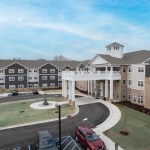
The best places I found in Indianapolis and Tucson
Were private homes staffed by the owners
And small, locally-owned facilities
Designed around family-centric models
But all those had waiting lists
And because you weren’t able to plan ahead
Our needs were urgent
We had to settle for places with immediate openings
In your metro area of Indianapolis
With a population of nearly a million
An online search returns about 20 elder care homes
The search for Carmel, the affluent northern suburb
Returns an additional 15
There will be lower numbers for suburbs
To east, west, and south
Hence, for a big city
Dozens of options within weekly driving distance
But due to uneven property values
Typically located far from our homes and workplaces
Most of these follow the “continuing care” model
With units for rehab, assisted living, memory care
And long-term skilled nursing
Like most – maybe all large cities
Indianapolis has placement agents for elder care
An agency I worked with has “scouts” for each part of the city
But they only provide placement at large corporate chains
Tucson, with the same population as Indianapolis
Has an agent that will identify and show you
Options to meet your specific needs
At a broad range of facilities
From corporate chains to private homes
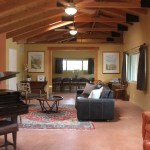
Overwhelmed by choices
And the unreliability of online ratings
I followed personal recommendations
From people I trusted
But was disappointed anyway
All the management I dealt with
At every facility
Showed two faces
Friendly and caring at first
Then, if family takes a close interest in their loved one’s care
Management reacts to suggestions defensively
Reacts to issues offensively
Blames resident or family
Before considering their own responsibility
They all exhibited a top-down culture
In which management behavior
Was imitated by staff
Dishonesty, manipulation, and retaliation were common
Management always spoke with authority
Of residents’ conditions and mood
When they never spent time alone with residents
Never engaged residents in substantive conversations
They get away with all this
Because it’s a seller’s market
They have waiting lists
Can reject you and move on
Again and again, I’ve heard from friends
About what a wonderful home they found
For their parent
And over and over, in care facilities
I’ve met residents who are lonely and bitter
Because their loved ones abandoned them there
And seldom if ever visit
I did meet a few – less than ten percent
Who say they’re content
In my grandparents’ generation
If elders went into a care facility
Their children and grandchildren
Lived only a few blocks away
Visited after work or school
In our highly mobile society
Where families are dispersed across continents
Sometimes across oceans
Children are used to going months
Without seeing their parents
Most care facilities are designed to replace the family
Encourage residents to trust staff
Attempt to foster community among residents
Why do families accept that?
Because most families have no room for elders
They have careers, children of their own
Or want to enjoy their retirement
Visit their loved ones only at their convenience
In our blind worship of progress
We’ve abandoned native traditions
Elders no longer accumulate stories and wisdom
That could help us and keep them engaged
Different facilities have different policies
Some allow visits 24/7
Some provide meals for visitors
A few may even have overnight accommodations
Many facilities, designed for staff convenience
Create barriers against both visits and outings
Long walks from parking
Long interior hallways
A series of locked doors or gates
Some requiring staff to open
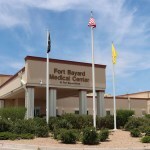
Others, like your final home
Only allow visits during limited hours
Don’t allow family to share meals
Facilities are typically designed and managed
For staff convenience first
Resident comfort second
At the time in your life
When you’re least resilient, least adaptable
These facilities force you into a schedule
For their own convenience
Confusing you, making you feel helpless
The hearts of these facilities are the nurse’s stations
And the dining rooms
Once you’re identified as a fall risk
Fearing liability, institutions will confine you to bed
Limit your mobility to a wheelchair
May even confine you to the nurse’s station
Sleeping all day, slumped in your wheelchair
The hearing impaired
Can’t communicate adequately with staff
So their health conditions
Are never fully known or treated
And they’re frustrated in group activities and events
Many facilities advertise chef-cooked meals
Made from healthy, fresh, even local ingredients
But even at the highest-rated facilities
This is often merely marketing hype
The only way to tell is to visit at mealtime
Day in and day out
Who can do that?
Even the best facilities lack the ability
To offer personalized food
On a personalized schedule
Dysphagia (difficulty swallowing)
And aspiration (accidentally inhaling while drinking or eating)
Are common among elders
We can easily train ourselves
To eat and drink safely
But with the liability of choking
Institutions force residents onto a pureed diet
Where, unable to recognize their food
They lose weight and weaken
You literally starved to death
Because your home could not give you
What you liked, when you needed it
Many homes have no way
For residents to call for help
Even with call buttons
With 8-12 residents per aide
It can take up to 45 minutes
For a resident to get help
Lying in a soiled bed
If you yell, staff get angry
Or make fun of you
Good staff are hard to find
With high burnout and turnover
Some are good at what they do, and care
Many of them are studying, for higher pay
And will move on soon
Most are just burnt out, collecting a paycheck
What they call activities and entertainment
Are designed for the lowest common denominator
Bingo, juvenile cliches, celebrities
Insecure, embarrassing volunteers
I always found wonderful people
Both staff and volunteers
Who deserve endless praise for showing up
Giving their heart, soul, and time
But they were in the minority
When you are admitted to hospice
You fall under the care of a doctor you will never see
Their primary function to prescribe medications
At the request of a nurse
Who visits you weekly
Under Medicare rules
You’re ineligible for most therapies, treatments
Or visits to doctors
You can still get them on a private pay basis
For us, the result was that I became your doctor
I saw you the most, spent the most time with you
Since I was the only one you trusted
I had the most accurate experience of your symptoms
I studied and requested your medications
If I hadn’t been available
Symptoms would’ve been missed
Your care would’ve suffered
Our big-city hospice provider was wonderful
Professional help available 24/7
On call nurse within 30 minutes
Social worker helped find resources, completed paperwork
Small-town hospice had limited staff
Completely lacking some functions
No help in a crisis
Their social worker a disaster
We loved your hospice nurses
And some of your hospice aides
Who came to bathe you two or three times a week
Provide personal care as needed
Hospice promises to provide comfort at the end of life
I discovered that was a lie
Not even morphine could relieve your suffering
In the final days
The colonial tradition brought by our English founders
And still observed in conservative families
Is to preserve the body by chemical embalming
Hold an open casket funeral for viewing by the community
Followed by underground burial officiated by a pastor
With the goal of protecting the physical body
From returning to its natural elements
Indigenous societies worldwide
Implemented a variety of practices
Ranging from burial to abandonment and cremation
Our bodies came from the earth
Evolving and rebuilding constantly
From the resources we ingest
Ultimately originating in nature
Clouds, rocks, rivers, soils, plants, animals
Burial and cremation, while practical in some habitats
Deny nature the resources she gifted us
This is recognized today in colonial society
By a tiny minority in the natural burial movement
You asked for cremation
I planned to honor your wishes
But when the time came I was unprepared
Had no idea what would happen
I had to choose a funeral home
The funeral director came, I had to leave
They took your body away
Put you in cold storage, as found
I had to get permission from the state
To have you cremated
I waited all week
Wanting to be with you
I vaguely knew that in our ancestral tradition
Family and others from the church
Washed, dressed, and casketed the body for burial
I had no idea what would happen to your body
Wanted to be a part of that
But had never been trained
It turned out that you would just be conveyed from storage
Into the chamber, for incineration
By strangers
Burning and cooling would take hours
I thought of waiting outside
But it’s a big building
There would be nothing to see
In the end, I received your ashes
In a plastic bag
Inside a plastic box
An institution is only as good as its people
What happens to the people
When society itself is dysfunctional
And its institutions are failing?
The villains of your story
The corrupt police and prosecutor
Your troubled second husband and his insecure daughter
The arrogant, ignorant doctors and facility managers
The cruel and thoughtless aides
They all hurt us
In some cases terribly
In some cases repeatedly, over time
But we understood them, you and I
None of them is all bad
Like you said, most of them were two-faced
Sometimes kind, sometimes cruel
Insecure, damaged people
Taking out their own fears on the weak, the helpless
Their jobs some of the most difficult
Shouldn’t be jobs in the first place
Should be traditional roles in a healthy community
Not careers in an economy
Our statist, capitalist model
For elder care as a commodity
The result of what we believe
To be generations of “progress”
Works no better than our other institutions
The only healthy way to care for elders
Is within healthy families
Within healthy communities
Which our society fails to create or cultivate
Which our “progress” actively destroys
Via technologies of mobility and long-distance communication
What we are left with is institutional care
Subsidized by the state at generally low standards
Or purchased by us at from $36,000 to $144,000 per year
Depending on the level of care we need
A decade ago
I fought your husband’s estate
For a settlement that would keep you secure
But there was no way I could predict
Your ultimate needs
During your last year
When you were nearing the highest level of care
Not knowing how long you would last
I worried about running out of money
I assumed that if you had a prognosis of a few weeks
And if I could find home help
We could afford to keep you at home
But in the end, home help was only available
During regular business hours
Leaving me on duty overnight and all weekend
I assumed that if you had a prognosis of a few years
We could afford to keep you in a care facility
But science can’t provide a prognosis that accurate
I believe that as families
The closest we can come
To a healthy traditional model for aging and dying
Is to provide lodgings for our elders in our homes
And when they need care, to enlist family
And community, providing care in the home
But since technology disperses our families
And capitalism leaves us burnt out
And isolated, on a fixed income
When our elders need care
This model is only available
To the very wealthy
Based on our experience
The second best model is emerging
In large metro areas
Families who convert their homes
Into private elder care facilities
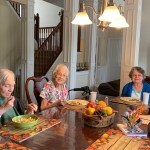
With typically 4 to 6 bedrooms
These facilities are in great demand
And typically have long waiting lists
Sometimes years
Hence they’re not options we can rely on
Because who can plan
When their elders will need help?
Science could not explain or treat your suffering
Drugs could not relieve it
Care homes could not provide loving care
Hospice could not comfort you at the end
Society does not allow our bodies to return to nature
What are we do to?
January 26, 2026
Winter Wonderland
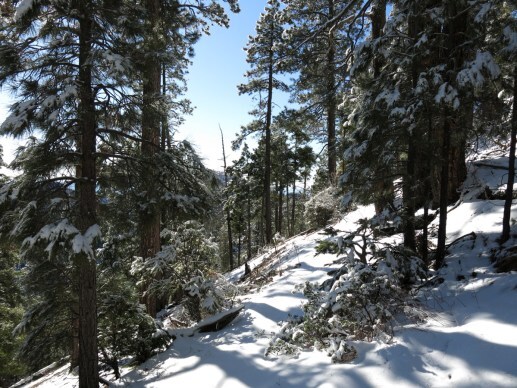
I’d spent September through November rebuilding my hiking capacity. By December I felt like I was on a path to recovery, but life spun out of my control. I went from 8-9 hikes per month, to only 5 hikes in the past two months.
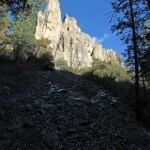
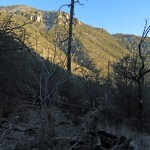
Still, my brain was stuck in recovery mode, so even with 2-3 weeks of down time between them, every hike had to be more challenging than the last, leaving me in lots of unnecessary pain. Before this latest hike, I even wrote a big note to myself: Take it Easy! But we’d had a two-day storm, and in the end, the only hike that appealed to me was one that would get me up into some snow. It was an old favorite hike I’ve done many times, and this would be the first time since my knee injury that I would try to reach the first milestone – a spring just below the 9,500 foot crest.
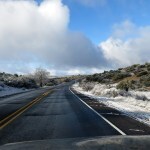
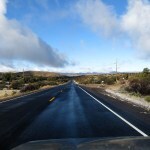
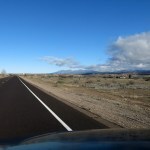
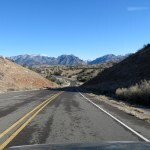
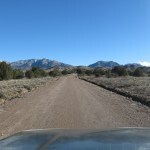
Under clear skies, the air temperature in the shade was in the 20s as I began the traverse into the canyon. In a sunny spot where the dirt of the trail had melted, I came upon the bootprints of a lone hiker – probably a man – who had gone out and back yesterday.
Expecting snow, I was wearing my winter boots for the first time in almost two years, and after entering the wilderness area in the first half mile, the stiff boots had triggered a pressure point on the inside of my right ankle, and it felt like someone was driving a nail into the joint.
Three options: (1) dose myself with pain meds, which I hate to do this early in the day, (2) stop, take off my boot, roll back my socks and thermal bottoms, dig the adhesive-backed felt out of my backpack and cut a piece to fit around the hurt area, or (3) keep going and hope it would get better. (Actually, a 4th option would be alternate lacing, but I’m not thinking too well these days.)
I chose option 3, and instead of it getting better, I just decided to put up with it, every step hurting equally for the next 4-1/2 miles.
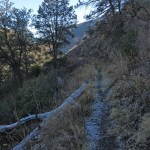
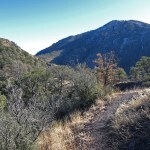
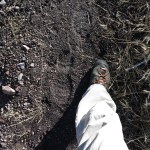
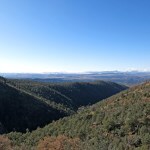
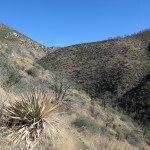
It’s about a mile to the canyon bottom. From there, the trail up the creek bank is easy for another mile, but after that, the grade up the canyon increases steadily for another mile, to the base of switchbacks that climb to the crest.
And I discovered that, probably because I’d had so many inactive intervals between hikes recently, I’d lost much of my cardio conditioning. Any grade at all – even less than 5 percent – immediately left me out of breath. The farthest I could go without stopping was about 100 feet. How could I possibly make it up those increasingly steep switchbacks?
One thing that kept me motivated was the gaps in the forest opened up by drought-induced tree mortality, providing better views of the rock formations on the slopes above. And at one point I got a glimpse of snow-laden trees on the crest. They were two thousand feet above me – at this rate, and in this much pain, how would I ever make it?
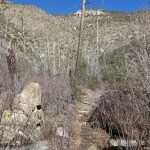
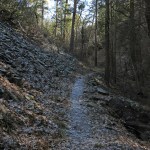
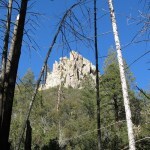
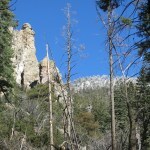
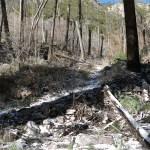
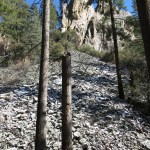
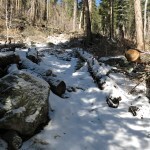
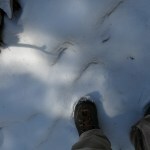
I couldn’t remember ever having to stop so often, but every time, after long minutes of regaining my breath, I continued for another 50-100 feet. I expected deeper snow in shady spots ahead, and my pant legs were already getting soaked from creek crossings, so in the first bare spot I pulled out and strapped on my gaiters.
In shady spots where the snow was deepest, I found the other hiker’s deep tracks overlaid with an inch or so of overnight snow. I knew if I could make it past the lower steep part of the switchbacks, I would have a much easier time on the long stretches traversing the upper slopes of this side canyon. Holding that thought, I finally reached the overlook, on an outlying shoulder at 8,400 feet. This is always an inspiring moment, because you actually look down on the mountain that was looming above you while you were ascending the canyon bottom.
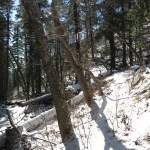
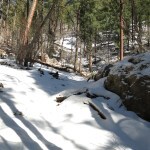
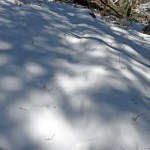
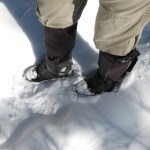
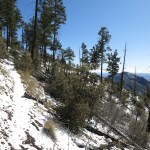
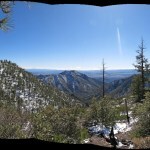
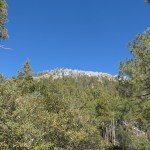
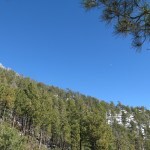
I’d made it most of the way to the crest – but the steepest climb was still ahead of me. As before, I just doggedly continued in very short stages. The steep part faces west and was mostly snow-free. And I eventually made it, to the higher shoulder with a little rock outcrop which is where I stopped the first time I hiked this trail, seven years ago.
Past that outcrop, the trail turns back into shade and gets steeper – hence it held snow, mostly about 4 inches deep. I hadn’t planned to go any farther. But the sight of untracked snow ahead – the other hiker had stopped either at the overlook below, or here at the little outcrop – tantalized me. I believed I had plenty of time, and it’s only another quarter mile to the spring.
What I’d forgotten is that this stretch of the trail crosses two deep gullies on a steep, shady slope where snow drifts two or three times as deep. The first drift completely obliterated the trail. If I lost my balance or slipped crossing that drift, I would slide 60 feet down a 45 degree slope before hitting a log.
But I’d brought trekking poles, and I figured I would just cross the drift a step at a time, taking short steps and kicking a foothold in the drift before the next step. With that, and the poles for balance, it took me about fifteen minutes to traverse 50 feet – but it worked.
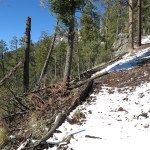
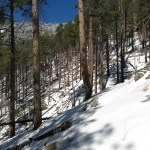
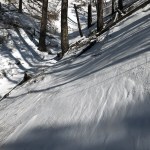
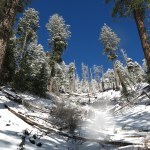
Despite the constant ankle pain, the safe crossing and a view of snow-frosted trees above elevated my mood. I was going to make it to the spring after all! I would definitely dose myself with pain meds here, and hopefully have less pain on the descent.
What a magical place! There’s a small ledge below the spring where someone had apparently built a cabin a hundred or more years ago – hauling tools and supplies on muleback, cutting native timber. Now all that’s left is the spring and the ledge. I’ve drunk from this spring many times – delicious – but there’s no trail and the slope is too steep to climb in snow. So I just dosed and started back down, trying to keep as much weight off my ankle as possible with the trekking poles.
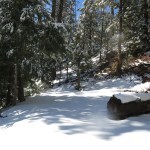
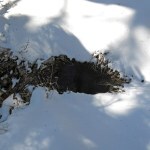
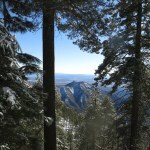
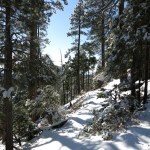
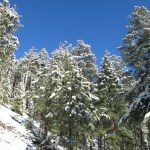
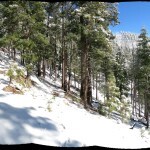
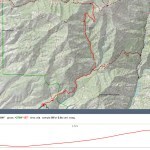
On the way up, the pain in my ankle had distracted me from discomfort in my left foot, where I have chronic inflammation that was triggered a few weeks ago. I clearly hadn’t recovered, because on the way down I found myself shifting weight to the outside of that foot. And with weight shifted to the outside of both feet, I soon had sharp pain in the outside of both knees. Of course my right shoulder was in constant pain from the long-standing rotator cuff tear, so the 4-1/2 mile descent was an increasing ordeal.
I reached the bottom of the switchbacks, where it was getting very dark. And halfway from there to the trail junction, I suddenly developed cramps in the inside of both thighs. I literally screamed and fell over on the ground, jerking around in excruciating pain, and couldn’t find a position that relieved the cramps. That nightmare went on for about ten minutes.
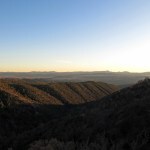
After the cramps faded away, the ankle and knee pain became bearable! I made it up the final climb out of the canyon just as the sun was setting behind the range in the west. Sitting in the vehicle, I actually felt free of pain for the first time all day. It had taken me 8 hours to go 9 miles out-and-back.
But at home, the minute I tried carrying my gear up the stairs to my back porch, all that knee and ankle pain came back, worse than ever. Even my shoulder was screaming. So I took another dose of meds, and spent the night waking over and over, never able to find a comfortable position. When will I ever learn?
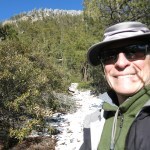
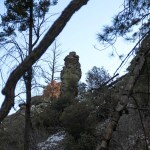
January 5, 2026
Climbing Fast
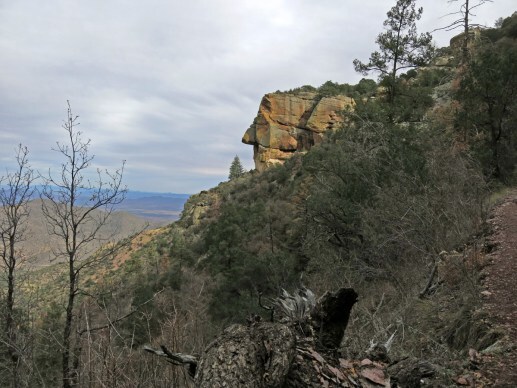
After last Sunday’s breakthrough – hiking to a peak with a spectacular view, after months of frustrating “recovery” hikes – I was hoping for more of the same. But most spectacular hikes on my list either involve too much distance and elevation, or too much bushwhacking. I finally decided to drive over to Arizona yet again, for a peak hike that, when I’m in top condition, would only take a half day. At this stage in my recovery it would advance me a notch, to nearly ten miles out-and-back and over 3,000 accumulated vertical feet.
The day was forecast to be cloudy but with mild temps. However, for the third day in a row – after getting both flu and COVID shots four days ago – I woke up with a migraine and a body that ached from head to feet. Side effects are not supposed to last that long, but it was Sunday and I was not going to miss my hike.
This is the most popular trail in the most popular part of the range, so despite the winter season and gloomy skies, I wasn’t surprised to find three vehicles at the trailhead. A quarter of a mile up I passed a retired-looking couple returning – most people are only in shape for the first mile or so.
I was making good time – clearly recovering my cardio capacity. I’d hoped endorphins would reduce my pain, but by the time I’d gone about 3/4 of a mile I knew I would need pain meds. I’d gotten a late start, and it was also time for a snack. And stopping to dig in my pack, I discovered that I’d failed to bring any food.
This has never happened before! I use a list to pack for a hike. Everything I need is at hand, in its regular place. But I’ve gotten in the bad habit of packing first and checking my list afterwards. And at home this morning, with the splitting headache making me dizzy and confused, I’d just glanced at the food part and assumed it was already packed.
A foundation of my healthy lifestyle is to eat for activity, in a weekly cycle timed with my hikes and workouts. I avoid eating more than I’ll need, but before, during, and after strenuous activity, I always eat and drink what my body needs to recover and build muscle, but no more. There on the mountainside, my whole body hurting, I knew if I turned back to get food at the country store, I wouldn’t be able to complete the hike. I also knew I must be carrying a little fat, somewhere, that my body could turn into energy to finish this damn hike.
So in the title above, “climbing” is an adjective, and “fast” is a noun.
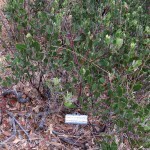
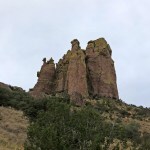
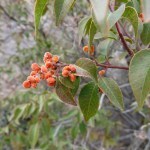
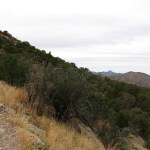
As soon as I resumed hiking in this familiar high desert habitat, I began seeing it in the way I’d been trained long ago – as a natural cupboard, potentially full of provisions. What was here that I could eat? It’s January, one of the worst months for plant food. There would be lots of pinyon pine up above, but the cones would’ve opened months ago, any remaining nuts shriveled and dried. I found one trapped inside a cone but almost cracked a tooth on it, it was so hard.
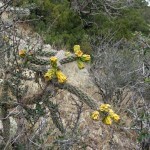
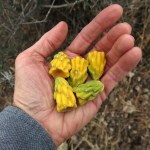
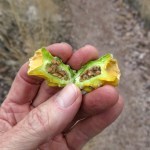
I immediately thought of cactus fruit. There were lots of prickly pear, but the only remaining fruit were all shriveled up. I’d never heard of anyone eating the yellow fruit of the cane cholla, and there were few here, but I finally came upon one and checked it out. Most of the remaining fruit were unripe, but looking closely at a few yellow ones, it appeared there were no glochids, so I pulled them off and cut them open.
Glochids are tiny, almost invisible hairlike spines that surround the areoles of cacti, where the hard spines emerge. The fruit can be free of spines, but the dozens of tiny glochids will still work their way into your skin and torment you for days, so cactus fruit are normally handled with some kind of tool. My desperation, and the darkness of the day, lulled me into complacency.
After cutting the fruit in half and scraping out the rock-hard seeds, I turned the fruit inside out and scraped at the pulp with my teeth. Even in the greener fruit it was sweet, but there was precious little of it.
I dumped the rest in my shirt pocket and resumed hiking. And now my fingers began burning – glochids after all!
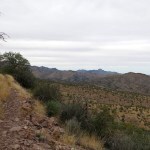
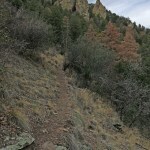
The first 2-1/2 miles climbs 1,200 vertical feet to a shoulder on the north slope, where the trail turns back almost due south into a deep cove. At the top, colorful cliffs and rock formations span both sides of a steep drainage forested with ponderosa pines and Douglas-firs. The trail switchbacks and traverses toward and through the rocks, then out onto the opposite slope. The complicated stretch through those rocks is the most interesting part of the hike.
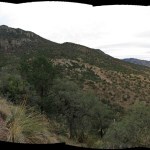
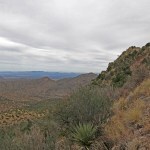
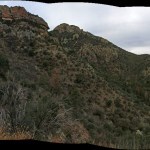
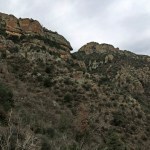
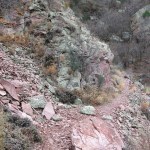
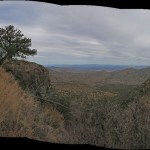
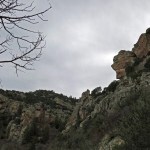
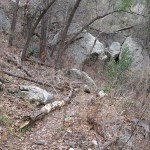
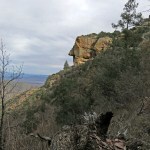
Emerging onto the opposite slope on a steep stretch of trail, I spotted a leashed dog ahead, and looked for a place to step off and let the owner by. It was a twenty-something couple – they both smiled and thanked me. Past there, it’s a long traverse across a steep slope with dramatic rock formations looming above, eventually entering a patch of fir forest that was particularly dark today.
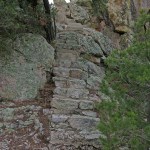
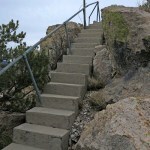
Approaching the west side of the peak, the trail finally switches back eastward behind huge ramparts of stone, where ten switchbacks of nearly equal length lead you up past the rocks toward the crest. After the long slog on the switchbacks it’s always a surprise to find yourself facing only a short, easy walk to the saddle.
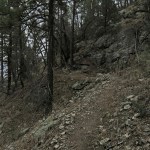
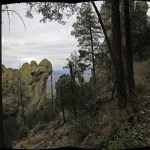
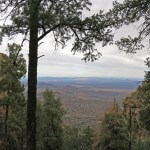
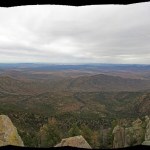
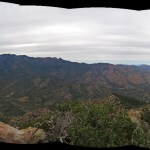
The true peak is a short distance east, but the old fire lookout has the view – if you can handle the precarious, vertiginous concrete steps. The lookout itself burned decades ago – all that’s left now is the concrete foundation.
I’ve been up here in all seasons – there would normally be snow now – and never tire of it.
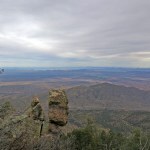
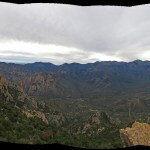
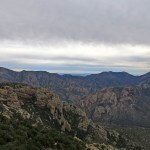
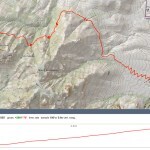
The only thing I’d brought with any nutritional value was a packet of electrolyte supplement, containing sugar. I’d consumed that hours ago, but didn’t feel hungry. But I did expect my body to start complaining on the way down. As per last week, I dug out the trekking poles to make it easier on my injured knee. And I finally figured out how to use them – which is basically not to push down on them at all, just dangle and tap – until you reach a rocky or steep point where they can help with balance.
Generating less heat on the way down, I pulled my sweater on, and the extra pressure drove the glochids on the fruit in my pocket into my chest, so I transferred them to my pack, and eventually tossed them away. But by then, the damage was done, and I wouldn’t be able to remove them from my chest until I got home.
Much worse, the chronic inflammation in the ball of my left foot had been triggered in the past week – by a new exercise the physical therapist had given me – and this more challenging hike was bringing it out. So I had three thousand feet to descend with two bad legs, slowing me down and forcing me to rely more on the poles, which in turn put more strain on my injured shoulder. I’d had to take more pain pills in the past three days than ever before.
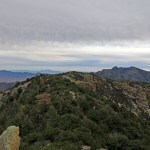
This also highlights another failure of our healthcare system – a hard one to understand, an impossible one to solve. Individualist and competitive social behavior lead to a capitalist economy and the nation-state, imperialism produces reductive science, and the result is healthcare institutions that compete against each other and specialist practitioners that are ignorant outside their fields. So with multiple injuries and health conditions, I’m treated at many different facilities by many different providers, none of whom have access to all my information, and none of whom have time, when they see me, to figure out whether their treatments will have negative consequences.
In the end, the only thing I can always depend on is pain pills – opioids, the “evil” that misguided, Puritanical crusaders keep making it harder and harder for us to get. So I ended my hike a starving wreck, with the pain mercifully shifted into the background for a few hours.
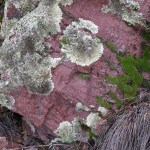
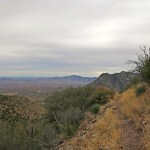
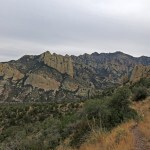
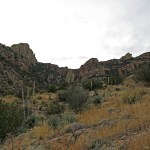
December 29, 2025
Mountains of Mexico
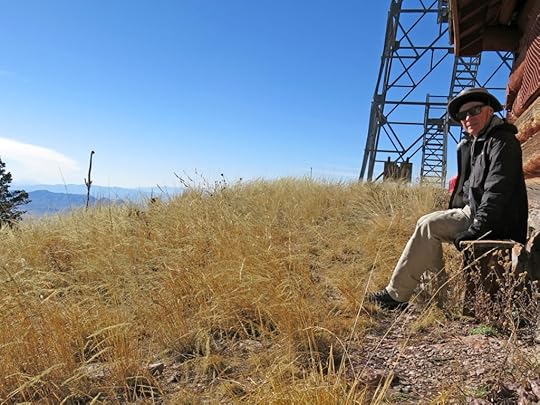
Returning from a trip to Arizona offered me another opportunity to hike the west side of the range of canyons, normally too far for a day trip. The east side is world-famous, but the west side is known only to natives, accessed via long, lonely highways across a vast, flat agricultural valley.
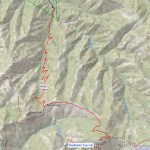
The map shows a forest road entering the mountains halfway down the north-south trending range, accessing half a dozen trailheads and a couple of primitive campgrounds. Google Maps claimed it would take me only an hour and ten minutes to reach the end of that road from the town on the Interstate where I was staying – the same driving distance as most of my hikes near home.
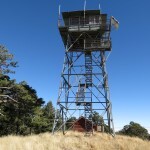
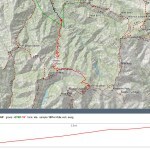
The trail at the end of the road starts at 6,600 feet and climbs south up a canyon to a saddle at 8,500 feet. From there, a second trail runs east along a ridge, then climbs to a 9,400 foot peak – the southwesternmost peak on the crest of the range – topped with a fire lookout. I’d tried to reach that peak once, from the east side, but the road to the trailhead was so slow that after seven miles of hiking, I ran out of time, only a half mile short.
Whereas that east-side route was almost 16 miles out and back, this would only be 8. It would still be a challenge – at almost 2,800 vertical feet, it would be the most elevation gain I’d attempted since before my knee injury in May 2024.
Beset by trauma after trauma, I’ve been increasingly worried about my mental health. Today, after a healthy breakfast and a cup of fresh-ground coffee, I stopped for gas before leaving town. I left the pump running and ducked inside for a bottle of water. At checkout, the teenage girl, her eyes wide, asked urgently “Are you okay, sir?” Unaware of any problem, I gave her a puzzled look. “You seem really out of breath!” she cried. Still puzzled and convinced I was breathing normally, I paid, went outside, got in, started up, and drove off. Hearing a bashing sound behind me, I stopped. A glance in the rearview – it was only then I realized I’d forgotten to finish at the pump.
This has literally never happened to me before. I got out, picked up the hose handle and returned it to the pump – but couldn’t find my gas cap, which I’d left, as usual, sitting on the rim of the truck bed. Getting down on my knees to look under the truck is really hard with an injured knee and shoulder, so I got in, started up, and moved the truck another ten feet forward. Still no gas cap anywhere, so I painfully lowered myself to look under the bed and around the rear wheels.
Still no gas cap. I actually spent another five minutes looking – until I finally spotted it, twenty feet ahead of the vehicle, out near the street. I was numb with shock. If I hadn’t been in a tiny, remote rural town, with no passersby to witness my astounding dysfunction, I probably would’ve given up and returned to the motel.
Fortunately, I expected an easy drive ahead. The big north-south valley intrigues me. It’s far from the nearest city. And although the highway that runs down it from the Interstate is paved, it leads only to a small, obscure town on the Mexican border, with no significant tourist attractions along the way. Ranging from about 4,000 feet elevation in the south to nearly 5,000 at the north edge, it’s over a hundred miles long and thirty miles wide. It’s dotted with huge but widely-separated agribusinesses – tomato greenhouses, dairy feedlots, beef cattle ranches – and a surprising number of unincorporated residential settlements. Surprising because they’re generally lost amidst the flat vastness.
Seeing much more of it on this trip, it reminded me of California’s great Central Valley – a rural feudal enclave, but in this case, even more remote from urban seats of power and wealth. The big agribusinesses enrich the few by exploiting the many, who live in dilapidated shacks and trailers. And in between, you’re surprised by the occasional remote, isolated mansion. At the north end there are even a few wineries, patronized mainly by RV-driving retirees, and retirees in trailer parks make up the rest of the demographic.
Nearing the turnoff east toward the mountains, I found myself approaching cool-looking volcanic hills, isolated in the middle of the valley, that had been hidden from the north by the curvature of the earth. Then I passed an official highway sign saying “Earth Fissures Possible Ahead”. What the fuck does that mean?
Around the turnoff stood the mostly ruined remains of unidentifiable commercial buildings – a motel? Auto shop? Restaurant? Strip mall? And on the side road, what appeared to be a country school with a tiny, historic-looking library – but no town.
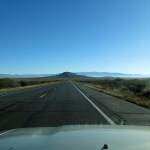
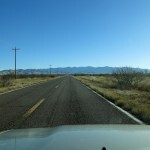
Finally, the paved road ended, the gravel forest road began, and I entered the foothills. Topped by rimrock, grassy slopes golden in the morning sun, all very welcoming. I came to a sign: “Do Not Enter When Flooded”, and after yesterday’s rain, the road was flooded from edge to edge. It looked to be a foot deep in the middle, and my pickup has low ground clearance, but after that long drive I was not about to give up. I backed up, built up some speed, crossed at the very edge and raised spray higher than my truck.
Entering the forest, the road became rockier and steeper. I passed a couple of pickups, saw a compact Japanese sedan, RVs, and city SUVs parked in the campgrounds, wondering what they’d make of the flooded road. But it was quiet here on the west side, and felt very, very remote.
Parking at the end of the road, in a deep dark canyon, I was alone, and I guessed the temperature was in the 30s when I got out, pulled on my storm shell, thermal cap, and gloves, and shouldered my pack. I hadn’t brought my fleece jacket for these temps, but hoped the hike would keep me warm.
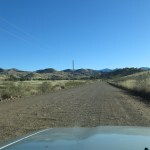
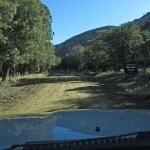
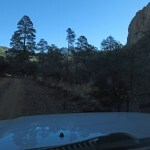
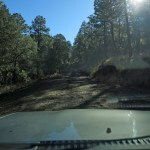
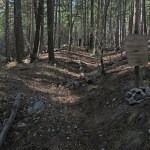
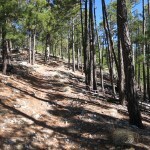
The comprehensive, detailed online guide for this range says the trail was recently cleared of deadfall, and the forest had mostly survived the 2011 wildfire, so I was looking forward to easy walking conditions for a change. But a glance at the topo map hadn’t prepared me for this climb up a steep, narrow canyon in morning shade. Much of the trail surface was pine needles on packed dirt, but it was really dark, and really cold!
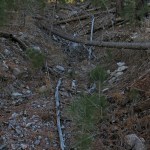
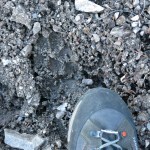
I immediately encountered what appeared to be recent horseshit, and beyond the first half mile, the well-built trail had been chewed up badly, when wet and muddy, by mysterious hooved animals. I did find tracks of javelina, deer, and bobcat, but the damaging tracks were much bigger, punching deep holes into the trail, and with few exceptions, unshod. There was lots of recent equine scat, and about halfway up, I found logs which had been cut within the past month or two. But I’d never heard of a trail crew in these mountains using horses or mules, and if they had, why weren’t they wearing shoes? I puzzled over the mystery all the way up and all the way down, and I didn’t find a single human track all day.
Despite the steep climb, I was cold all the way up, and again, about halfway up, the dirt was frozen solid. The temperature in this shade was actually in the 20s – I definitely hadn’t dressed for this!
Finally I could feel myself approaching the saddle, where I expected sunlight, and hopefully warmth.
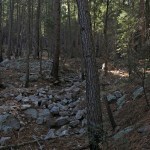
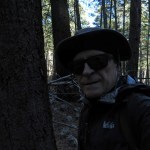
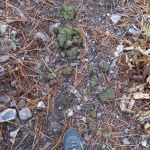
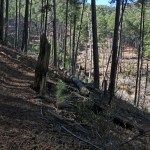
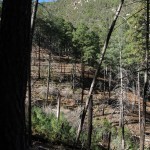
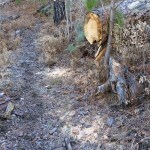
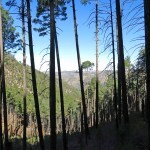
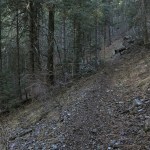
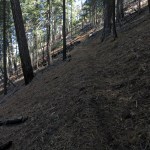
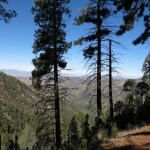
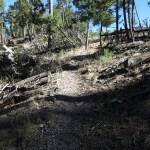
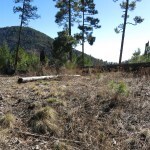
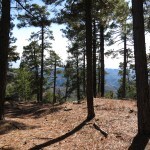
At the saddle, I found myself overlooking a deep, narrow canyon with steep, densely forested slopes – a rare and refreshing sight in our new wildfire regime. The head of this south-draining canyon curves east and is completely hidden from outside. Just under a mile to my southeast rose the peak, and with the naked eye, I could just barely discern the lookout tower peeking above the forest.
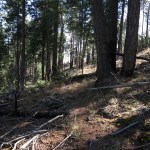
To my relief, the trail stuck to the south side of the ridge so I was mostly in sun, and it was a beautiful forest – until I reached a small burn scar on the north slope of the peak. The trail here hadn’t been cleared recently – I stepped over about a dozen logs on the way – a piece of cake compared to the hundreds blocking many of my wilderness hikes.
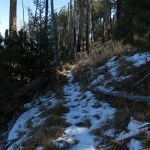
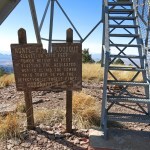
Approaching the saddle below the peak, I encountered patches of snow from yesterday’s storm, frozen to a hard crust. In that saddle, with view blocked by forest, I met the end of the crest trail, and from there, found an informal, unmaintained trail to the top.
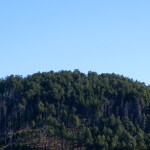
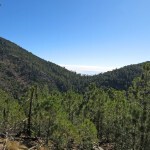
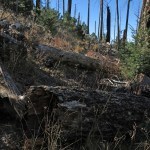
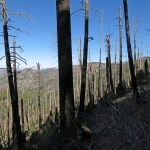
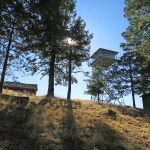
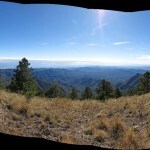
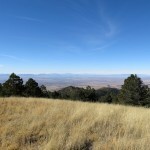
This felt like the first hike since my knee injury that had an actual, dramatic destination. And the view, to the south toward Mexico, was glorious! Mexican mountain ranges, one behind the other, fading into blue haze, with the rugged southern ridges of this range fanning out in high contrast, far below.
I spent a half hour up there, the sun warming me to my core, and I sure didn’t want to leave!

Likewise, when I reached the saddle above the first canyon, I sure didn’t want to drop back into that frozen shade!
I’d brought the trekking poles, and following my new physical therapist’s guidance, I used them all the way down. But I’m not liking them any better, and I found myself stumbling more often with them, than I usually do without them.
My boots are new, having seen only a couple dozen short hikes during the past year, and they were causing sharp pain in both ankles. And by the time I was halfway down, both my knees were in pain, because the ankle pain was changing my gait. So I finally downed a couple pain pills, which would take effect on the drive out.
On this freezing Sunday night, I was surprised to find four vehicles at the remote trailhead turnaround where I’d parked. They were all from a single party, a small group standing around a huge campfire with flames roaring at least a dozen feet tall. They’d walked down to the bank of the creek, fifty feet below the road. I didn’t see tents – was this just some kind of late forest party?
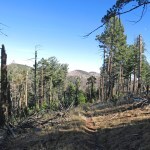
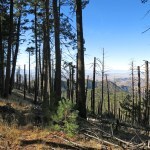
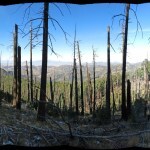
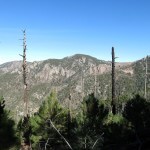
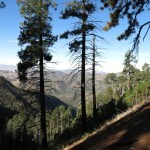
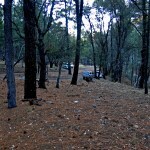
On the road out, I passed four more groups camping – hard-core in these conditions, in this remote, dark canyon, on a weeknight.
And on the long drive up the big valley at sunset, the pain pills worked their magic. If the past year had been the worst ordeal of my life, this was the most rewarding hike I’d done since my knee injury. Maybe I have a future, after all.
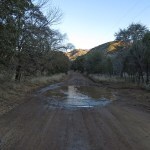
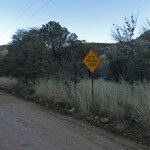
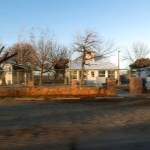
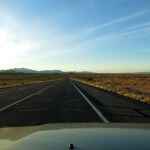
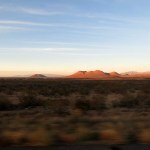
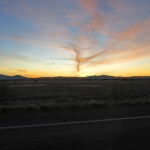
December 27, 2025
Letters to My Mother, Part 4: I Tried to Help
Previous: Losing Your Struggle
More Than a LossWhen a loved one dies
Slowly, in front of us
It’s not a loss
Like losing our keys or wallet
It’s our flesh and blood
Dying in front of our eyes!
It’s a trauma we suffer through
Over a period of time
A weight that adds to our load
Works on us over time
I haven’t lost you
You’re always with me
In my heart
I’m not looking to find you
Like I would a lost wallet
Or a set of keys
So I don’t want to hear
I’m sorry for your loss
People used to say
At least now she’s at peace
But you never found peace
And now you’re dead
All of my artist friends had conflicted relationships with their parents
Resented, even hated one or both of them
Like me
All of them ended up living far away from their families
But unlike me
Few of them participated in their parents’ end of life care
Few of them were present during the death of either parent
You and I frustrated and angered each other at times
But we were more like siblings, even twins
Than mother and son
Raising me, you gave me many of my lifelong passions
Much of what makes me who I am
The joy of music, the arts, literature
The curiosity, wonder and delight in nature
From the beginning, you set an example
Of how to live
Eating healthy, staying fit
And after I moved away
And we pursed our separate lives
We wrote, called, visited often
Shared almost everything
The loves, the suffering
Triumphs, catastrophes
Knew each other’s friends, lovers
You followed my work
Remained a tough critic
Kept me honest
So it was easier, in the end
For me to see you as a person
Not just a parent
For years, I’d been living mainly for you
Choosing my hikes for you, taking pictures for you
Writing Dispatches for you
Now, I didn’t want to keep living
But others kept demanding work from me
Information, paperwork, signatures
I wondered, when the work is done
Who will I live for?
I’d had to give up all the routines that kept me healthy and fit
No longer knew who I was doing them for
I supposed at some point I would start doing creative work again
But couldn’t imagine starting
I’d always felt at home
In the vast, unpopulated desert basins of the Southwest
But now that I had no one to come back and share my journeys with
They just made me feel alone
The size of this world overwhelmed me
And in it there was no one who cared if I lived, died
Or disappeared forever
It was a ruthless world
No place for a man alone
 Old and Unprepared
You wouldn’t talk about dying
Never made plans for your care
And when you needed it
I was old, declining myself
Before our ancestors left the farm
Before careers and cities
Where caring became a commodity
To buy and sell
Our elders aged at home with family
But we had long given up tradition
In favor of bureaucracy and the consumer markets
And when I needed to become a caregiver
Alone, with no partner, no sibling
No child to share the load
I had none of the skills
But one thing we’d never given up
Was the obligation, the duty to family
So it wasn’t just my love, our special relationship
That drove me to help
Because I also helped my brother, your injured younger son
Who had never been close
In fact, I’d always dreaded the day
Thought, I can’t do that, I’ll never do that
But when it came
I just dropped everything
And started helping
I’ve always been a seeker
Looking for experience, knowledge, and wisdom
In dark and dangerous places
And lo and behold, nearing the end of my own life
I discovered that helping others
Feeding them, changing their diapers, cleaning up accidents
Is essential to being human
If only I’d learned that
Before I became too old and feeble
To do it well!
As you were dying
In that home where we had been made to feel unwelcome
There was a shift change
The hostile and indifferent aides arrived
I stayed out of their way
But they didn’t check you for sores
Treated you like an object
And when they turned you
They hurt your shoulder
You moaned
I mentioned your crippled shoulder
Asked them to be careful
Thanked them as they left
Shortly Ernestine, the manager who had blamed me for your illness
Tried for months to separate us
Called and told me I would have to leave
My presence was making her staff uncomfortable
She said,
If you wanted to be with her when she died
You should’ve kept her at home
And back at home
Less than an hour later
I got the call
You had lost your struggle
Without my hand
Without my voice
Alone at the end
I lost the only chance I would ever have
Your Suffering, My Helplessness & GuiltI’m good at many things
Used to being able to solve problems
Your suffering broke my heart
So tiny, so afraid, so helpless
Desperate to help you, I could not
I hounded aides, nurses, doctors
In rare moments when I could reflect on your life
I felt I was punishing you
Torturing you instead of caring for you
By leaving you in their hands
To fall alone, injure yourself, cry for help
It will haunt me forever
That I couldn’t stay and care for you
But worse than any of this
Was watching you, hearing you, feeling you die
Unlike anyone I’d ever heard of
Crying for your parents, your grandfather
Drowning, struggling to the end
Long-term, this was the hardest on me
More and more helpless, surrounded by strangers
Trusting only me, who could only make short visits
When I arrived, you overwhelmed me with demands
And when I needed to leave
You tried different ways to make me stay, and got better at it
I always ended up late, out of time
Unable to do things I needed to keep myself healthy and fit
I got angry, I scolded you and left abruptly
Left you with strangers you didn’t trust
Hating myself
At the homes I found for you
Management lied to us
Tried to manipulate us
Abused us verbally
Blamed me for causing your illness
I learned the names of the staff
Always arrived with a smile
Thanked them for their help
Asked about their health, their families
They kept trying to separate us
Prevent me from visiting you
Despite welcoming the families of others
You said, No one else can do things as well as you
That’s why they’re angry at you
During the past fifteen months
I went from spending up to ten hours every day
With you in hospitals
To visiting for only two hours, twice a week
I felt I should be with you all the time
But you were so needy, so demanding
I fell into depression after each visit
Took me a day to recover
And as your end drew near
I was burnt out, spending less time with you
Just when I should’ve spent more
For decades, I’d developed a healthy, self-reliant lifestyle
But flying back and forth to care for you
I lost most of this
Eating at restaurants, sleeping erratically
But where and when I could, I tried
Joined a gym near your house
Bought ergonomic furniture
For your bedroom upstairs
That became my office and music studio
I’d injured my knee a few months before this started
My shoulder, with a rotator cuff tear
Was waking me up at night
Over the next year
Both injuries went untreated, got worse
I exercised when I could, but steadily
I lost weight – muscle mass – and strength
As I hiked less, my stress increased
And I lost cardio capacity
Helping you required constant heavy lifting
In awkward positions, hurting back and shoulder
Stress increased sensitivity to pain
Headaches several times a week
And as my pain increased
My intake of pain meds increased
Their effectiveness decreasing
But I couldn’t have done it without them
Before your demon came
Summer before last
Leading the ceremony for Katie
My long-lost partner that you loved
I rediscovered songwriting
After years of crises, traumas, interruptions
I always thought I needed an extended period
Without distractions, like weeks
But after I began caring for you
I found I could write, arrange, record tracks
In a half-day or evening, in between
Caring for my family
I brought my travel guitar to Indianapolis
Bought a mini-keyboard
It was slow getting started
But with practice, I found myself
Thinking about my work in a parallel track
Behind whatever I was doing in the foreground
That made it go faster
So far, in the past year
I’ve written more new songs
Than in any year since 1980
I rediscovered nearly 200 unused lyrics in my files
And have set many of those to music already
As I lost the ability to hike
That creative breakthrough is what kept me motivated
Became my reason to live
I brought my guitar on visits
Sang and played my new songs for you
You became my best audience
What you and I went through
Is precious
Needs to become part of my work, my art
This will take time
You haunt my house now
I have your things, the things you loved
That brought you comfort or surprise
They retain your spirit
All I want is to leave
I don’t know where I am
Or where I’m going
I want to fill my house with your things
I’ve started a shrine
But I can’t look at them, they make me cry

I assume that at some point
I will resume the routines that kept me healthy and fit before
But I can’t do that now
I have to understand what happened
You remain inside me
And all around me
You’ll always be the most important person in my life
I’m not trying to move on
Not trying to forget or get past what happened
Hospice, and a local acquaintance who calls herself a death doula
Offered to help me with grieving
But I don’t accept that word “grieving”
It doesn’t describe what you and I went through together
And who I am in the aftermath
As a seeker
I sought the pain, I needed to experience it
The last thing I want to do is get past it
My doctor offered an antidepressant
But as an artist, I need to feel the pain
So my work remains honest
Sooner or later, what I experienced
Will come out in my work
That’s the kind of art I do
That’s what I mean by art
Next: What Are We To Do?