
Joshua Silverman's Blog
April 22, 2017
The Night Circus by Erin Morgenstern
[image error]Summary: The circus arrives without warning. No announcements precede it. It is simply there, when yesterday it was not. Within the black-and-white striped canvas tents is an utterly unique experience full of breathtaking amazements. It is called Le Cirque des Rêves, and it is only open at night.
But behind the scenes, a fierce competition is underway: a duel between two young magicians, Celia and Marco, who have been trained since childhood expressly for this purpose by their mercurial instructors. Unbeknownst to them both, this is a game in which only one can be left standing. Despite the high stakes, Celia and Marco soon tumble headfirst into love, setting off a domino effect of dangerous consequences, and leaving the lives of everyone, from the performers to the patrons, hanging in the balance.
Paperback: 516 pages
Publisher: Anchor Books; 1st edition (July 3, 2012)
Language: English
ISBN-10: 0307744434
ISBN-13: 978-0307744432
Review:
The Night Circus is a book of fairytale magic and mystery, and manages to capture a romantic ambience that only Victorian era novels seem to be able to conjure. Morgenstern achieves the sweeping romance through three methods:
1) the tried and true love triangle. In this case, it is between the fortune-teller Isobel and the illusionist Celia Bowen who both share a love for Marco;
2) the elaborate and ornate costuming, the flair for the dramatic and dapper nature of those in the 1800s of elite society. Ball gown dresses (which Morgenstern clearly loves to describe in intimate detail), bowler hats, and cuff-link shirts galore. Part of the wonder of this book is in costuming and I couldn’t help but think that it would make for a great movie.
3) the feats of magic.
The primary focus of this book is on the duel, or competition between two magicians, Ceila Bowen and Marco. Together they were groomed by their masters specifically for the competition. They are but pawns in a wheel and they know it. They are told they are competing, but never told the rules of the game. This lack of knowledge helps them to bond throughout the course of the book.
Though, I think “duel” is an inappropriate word for how the competition actually plays out throughout the novel. The word duel in my mind evokes something of a standoff- the quintessential gunslingers, two swordsman circling each other, boxers in a ring. In a word, a momentary, fleeting battle. Although the word duel by a strict definition has no time limits, I understand that this is a particularity of my own, but because of it, I was left feeling a bit wanting. The competition between Ceila and Marco takes place over 10 years as the two prepare and employ elaborate magical exhibitions which they are judged by. A year or two may go by between magical “salvos”, if you will, and in this case, cheapens the thriller nature of competition in my view.
But, that same timespan allows Morgenstern an opportunity to grow and nurture the relationship/love triangle between Isobel, Ceila, and Marcos. And still, in that way, I was disappointed. The characters don’t really “know” each other in any real aspect, but rather, because they are in the same line of work, have so much admiration for each other’s abilities, they become entranced by each other. Who is Celia and what are her hobbies, her hopes, her dreams? Nobody really knows. Not the reader, not Marcos. All we know is she wants out of the competition which her father bound her to when she was six years old.
There are other aspects to the story, minor characters who influence the course of events. One of which (Bailey) I found completely superfluous to the story, and a third Tsukiko, who intervenes in the third act.
Overall, I give this book about three stars. The writing was good, the Victorian era setting of a circus superb (if reminding me of Ray Bradbury’s Something Wicked This Way Comes), the feats of magic were innovative and spectacular, but there were parts (and characters) that were unnecessary and should have been cut out, and I didn’t think Celia’s character was quite as developed as she could have been.



April 20, 2017
What I’ve Learned: 3 Ways to Invest in Your Writing Career
I haven’t been very good at blogging lately. Pardon me, that’s the biggest understatement I could’ve made since I haven’t blogged in about three years. Probably by now, no one reads this, which is fine at this point in time.
Having taken 2014-2015 off from writing, I came back strong in 2016 with renewed vigor and purpose. What was the change? I decided to start investing in my writing career. With that said, here are three areas which I’ve invested in my career to take me to the next level. What is the next level you ask? Well, since doing these things, I’ve been hired to ghostwrite two full length novels, which is an entirely new experience on its own and worthy of a book in and of itself.
Investment #1: Attend Conferences
Conferences are a great place to network. Workshops offer a host of different subjects within the writing community. I’ve been to screenwriting workshops and conferences, huge, annual novel writing pitch-fests, and small, low-key events at libraries. All of these avenues offered me incalculable rewards. Not just in education, but in networking possibilities.
During one conference, I met a consultant, a professional coach, who reviewed my work and provided me a detailed analysis of the positives and shortcomings of my writing. I’d never been so overjoyed at being thoroughly skewered because it gave me perspectives I’d not considered before.
Investment #2: Take Classes

Classes? you ask.
Yes, classes and no, they don’t have to be with a college. I went online and found James Patterson’s Writing Masterclass. It was $99 and covered eight weeks of material, with homework (including reading one of Patterson’s books, which, of course, you have to buy – good rub there).
Before I’d laugh some of that stuff off because it may have been, well, too generalized for me and I was a specific writer (or rather, more honestly, I thought I was better than the other attendees taking the class and didn’t need it). However, after much debate and eating a few slices of humble pie, I decided to splurge on Mr. Patterson and threw my credit card down for $99 (plus the book, which I bought used on Amazon for $0.10). This was by far one of the best investments I’d ever made.
Why?
Because James Patterson took you through his exact step-by-step process of how he writes books, including, how he creates outlines. I’d never been much of an “outline” writer, but had been progressing towards that style because of all the time (and words) wasted in extraneous plot I’d removed during editing that didn’t serve the purpose of the story. After working through his process, I found it satisfying and ultimately, through about a year of tweaking, came up with a process of going from log-line, to summary, to full-fledged outline that rooted out all tangents of the story and covered plot holes before I even wrote one word of manuscript.
Investment #3: Want to be the Best? Study the best!
Stephen King said, “If you don’t have time to read, you don’t have the time to write.”
I read a variety of genres so that my writing and style is diverse and well rounded. I love biographies to study the lives of interesting people who’ve shaped the world. I consume thrillers to find out what keeps a reader on the edge of their seat. Stephen King is a master at suspense and world building, providing you with so much information (and so succinctly too) the reader intimately knows his characters.
Lee Child is one of my favorite writers because his plots are relatively simple and straight forward and his writing style matches that, yet for all its simplicity, Child is a thoroughly enjoyable writer. His books taught me that even though I write fantasy, I shouldn’t have to rely on magic and mysticism or complex plots with ninety-three characters to write a great story. The story speaks for itself. But had I never ventured beyond fantasy, because many writers refuse to read outside their genre, I would have missed out on an opportunity to learn how to craft a heart-pounding story that doesn’t need cheap thrills to entertain.


Gardens of Ampheia (2013)
[image error]Thea is the daughter of a farmer. She is content until she makes a terrible mistake, one that not only endangers her life but exposes her origins. Trained in war, Thea fights through blood and fire, war and peace, to discover the truth. She will face a desperate struggle which will remake the known world of Potara, influencing the next 6,000 years.
AVAILABLE NOW!
US Books:


The Murder of Tutankhamen by Bob Brier
[image error]Summary:
Tutankhamen conjurs all the fascination that people have with Egypt. Ironically very little is known about the boy king.He was born in one of the most traumatictimes in Egypts 3000 year history. The nations religion was changed to montheism, as was the nations capital city. Leading egypotologist Bob Brier brings to life the dramatic story of Tutankhamen , the ” boy king ” who died mysteriously at the very young age of twenty.
Paperback: 288 pages
Publisher: Phoenix (an Imprint of The Orion Publishing Group Ltd ) (April 1, 1999)
Language: English
ISBN-10: 0753806754
ISBN-13: 978-0753806753
Review:
Bob Brier’s The Murder of Tutankhamen reads more like a mystery than a history book. Though, to be fair, a good 80% of it is a giant history lesson. Given that I’m a closet history fanatic and take supreme delight in what most would consider boring names and dates, I didn’t mind that one bit.
He begins with an autopsy of the 3,000 year old mummy, and notes that the body is still in the sarcophagus today, so when visitors tour King Tut’s tomb at the Valley of the Kings in Egypt, most don’t know that the actual body is still inside. Although Brier is an Egyptologist (and one which specializes in mummies), he relies heavily on other doctors examining X-Rays of the body.
As I stated, a majority of this book is history, as Brier says that we must investigate the circumstances of ancient Egypt surrounding Tutankhamen’s ascension to the position of Pharaoh at nine years old. Much of which focuses on Tutankhamen’s ancestors and the eighteenth dynasty of Egypt.
Egypt’s 18th Dynasty was filled with intrigue, and had led Egypt to ruin and back to grandeur. Tut’s father displaced their religion, nearly disbanded their army, and let Egypt’s finances and prestige dwindle so when he mysteriously died, the young nine year old Tutankhamen had to rely on viziers (Ancient Egypt’s version of politicians) to help him run the country. Namely, General Horemheb for the army and Vizier Aye for the priesthood.
Together, Brier targets these two for the alleged murder of King Tut (as well as a host of others in the royal family), so that they could control Egypt. Indeed, Brier paints a vivid picture and cites a combination of sources such as wall paintings, ancient communications between Tutankhamen’s widowed wife and the Hittites, and ancient jewelry unearthed to make his case.
However, 3,000 years is a long time to wait to discover a killer, and the only real evidence Brier has is the X-Ray, which everyone agrees concludes that King Tut was hit in the back of the head. Brier acknowledges that the X-Ray doesn’t mean someone struck him in the back of the head, Tut could have fallen and therefore, most of this work is circumstantial and must be taken with a grain of salt. The “evidence” Brier uses could be just confirmation bias, as even he admits towards the end that many Egyptology scholars of some renown do not agree with his conclusions (whether about the murder itself or the whodunit aspect).
On the whole, for those who enjoy history, it is a solid read and well written in a prose that isn’t too dense for the non academic. Plus, murder in a royal family is always a crowd-pleaser.


Book 2: The Soul of the World (2013)
[image error]The ancient powers lost to Potara have returned. The Brotherhood of the Black Rose rises to bring Thoth into disorder. And, while the Brotherhood reclaims their power, chaos reigns among the survivors. Six individuals have emerged from the aftermath struggling for control over their lives and a divided land. Kem and Shirin, who abolished the five thousand year reign of the Amun Priests, rule from the golden throne of the Oracle’s Chair in the Hall of the Nine. Dio and Axios struggle to piece together a resistance worthy to challenge the ancient magic which resides in the Great Temple of Amun, and Leoros and Atlantia try to remain true to their hearts and their cause despite tragedy.
But when the Book of Breathings is discovered, the path to immortality is revealed. Leoros and Kem race to capture the Soul of the World unaware of the challenges awaiting them. This time, the gods themselves will intervene.
In a tale where boys become men and girls become women, where treachery and deception are around every corner, and where primeval mysticism finds its way back from the grave, victory is reserved for neither the good nor the evil, but the powerful.
AVAILABLE NOW!
U.S. Books:


Book 1: The Emerald Tablet (2012)
[image error]Leoros doesn’t have many friends. As the son of a scientist and archeologist, he is constantly on the move. When his parents discover the mythic Emerald Tablet in an ancient city buried beneath Egypt’s desert sands, his world is suddenly turned upside down. He decodes the ancient text which leads him to a distant world.
On that world, a slave girl begins a journey towards a destiny she cannot imagine. But when an ancient foe rises from the ashes, they will be brought together by forces that neither understands.
Leoros, who dreams of being like the heroes in the comic books, must fight to unlock the secrets of the universe to save a people he never knew existed.
Atlantia, whose bloody visions wake her in the night, senses the darkness coming.
Together, they will face an enemy with the power of dark energy, lose a mentor to the assassin’s blade, and be betrayed by someone they trust. Their fight for the future is just beginning, and before it is over, a final sacrifice must be made. When the darkness comes, will they stand and fight or will they join it?
AVAILABLE NOW!
U.S. Books:


April 19, 2017
Zero to One: Notes on Startups, or How to Build the Future by Peter Thiel
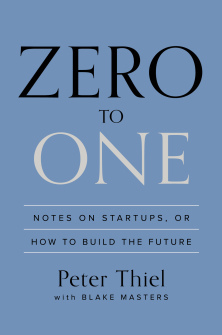 Summary: The great secret of our time is that there are still uncharted frontiers to explore and new inventions to create. In Zero to One, legendary entrepreneur and investor Peter Thiel shows how we can find singular ways to create those new things.
Thiel begins with the contrarian premise that we live in an age of technological stagnation, even if we’re too distracted by shiny mobile devices to notice. Information technology has improved rapidly, but there is no reason why progress should be limited to computers or Silicon Valley. Progress can be achieved in any industry or area of business. It comes from the most important skill that every leader must master: learning to think for yourself.
Doing what someone else already knows how to do takes the world from 1 to n, adding more of something familiar. But when you do something new, you go from 0 to 1. The next Bill Gates will not build an operating system. The next Larry Page or Sergey Brin won’t make a search engine. Tomorrow’s champions will not win by competing ruthlessly in today’s marketplace. They will escape competition altogether, because their businesses will be unique.
Zero to One presents at once an optimistic view of the future of progress in America and a new way of thinking about innovation: it starts by learning to ask the questions that lead you to find value in unexpected places.
Hardcover: 224 pages
Publisher: Crown Business; 1 edition (September 16, 2014)
Language: English
ISBN-10: 0804139296
ISBN-13: 978-0804139298
Review:
Zero to One is more philosophical rather than a step-by-step guide on navigating the complex world of start-up companies. And one would think that would be a disappointment, after all, creating a company from scratch is full of hurdles and land-mines founders aren’t always aware of. However, Zero to One‘s philosophy is spot on, and worth anyone’s time who’s serious about launching a company.
Some of the advice is tough to hear (or swallow) if you’re exploring this world. And if you’re a new, budding entrepreneur, I have no doubt that some of Thiel’s wisdom will dash your hopes. But, like anything, criticism is best if it forces you to grow and adapt, and Thiel’s advice should do just that. Whether it’s his position on competition vs. monopolies, or the fact that he believes that your product has to be a minimum of 10x better than the current competition if you are to take a significant enough foothold for your new business idea to prosper, Thiel offers his insight in a succinct, easily readable, practical way.
Thiel proposes you ask yourself seven questions as a business owner (or future business owner). These seven questions will gauge how well you’ll succeed, or fail. He believes the most successful companies answer all seven, but even five is very good.
1. Can you create breakthrough technology instead of incremental improvements?
2. Is now the right time to start your particular business?
3. Are you starting with a big share of a small market?
4. Do you have the right team?
5. Do you have a way to not just create but deliver your product?
6. Will your market position be defensible 10 and 20 years into the future?
7. Have you identified a unique opportunity that others don’t see?
Overall this book is a quick read (coming in at just shy of 200 pages) and can be tackled in a few hours. But that’s not to belittle it’s importance. I’ve read a lot of business books which focus on the “how-tos” of business, which, obviously, is of importance. Rather than focus on the micro vision of a company, Thiel takes a step back and forces entrepreneurs to look at the company as a whole.


The Winter People by Jennifer McMahon
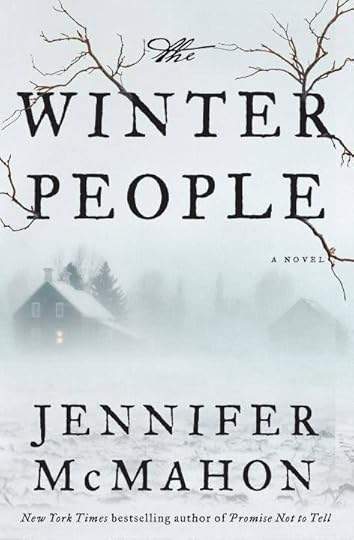 Summary:
West Hall, Vermont, has always been a town of strange disappearances and old legends. The most mysterious is that of Sara Harrison Shea, who, in 1908, was found dead in the field behind her house just months after the tragic death of her daughter.
Now, in present day, nineteen-year-old Ruthie lives in Sara’s farmhouse with her mother, Alice, and her younger sister. Alice has always insisted that they live off the grid, a decision that has weighty consequences when Ruthie wakes up one morning to find that Alice has vanished. In her search for clues, she is startled to find a copy of Sara Harrison Shea’s diary hidden beneath the floorboards of her mother’s bedroom. As Ruthie gets sucked into the historical mystery, she discovers that she’s not the only person looking for someone that they’ve lost. But she may be the only one who can stop history from repeating itself.
The Details:
Mass Market Paperback: 480 pages
Publisher: Anchor (August 30, 2016)
Language: English
ISBN-10: 1101973757
ISBN-13: 978-1101973752
Review:
The Winter People takes a stab at the classic tale of resurrection and does it well.
The story is told from three points of view.
Sara Shea, via excerpts from her “found” diary in 1908.
Ruthie (present day, teenager).
Katherine (present day, widowed wife).
We start with the past, reading an excerpt from the diary of Sara Shea in 1908 where she is discussing the concept of “sleepers” (dead people who’ve returned to walk the earth) with her aunt. Sara’s aunt promises to give Sara the secrets to raising the dead, but warns that it is powerful magic.
In the present, Ruthie, who inhabits a creepy old house a few miles outside of the main town, wakes up to find her mother missing, the latest in a string of odd events that has paralyzed the town with fear. Instead of going to the police like a rational person, Ruthie opts to just wait it out and look for clues around the house as to where her mother might have gone off to. In her search, she stumbles upon the diary of Sara Shea, which launches her on an investigation as to how her mother’s disappearance is tied to Sara’s story in 1908.
The final main character is Katherine, who moves to the sleepy small village outside Vermont after discovering the last purchase on her recently deceased husband’s credit card was located in this town. Given that he’d lied about where he was going on the day of his death, Katherine sets it upon herself to discover what her husband was up to. Oddly, he also had been hiding a copy of the diary of Sara Shea.
McMahan does a fine job of weaving enough intrigue and mystery throughout the book to keep the pace going well, dangling a carrot here and there at the end of chapters to spur me to flip the page. As a reader, I found myself always wondering what was going to happen next, and the appearances of the dead (the “sleepers”) were different enough to set it apart from typical ghost stories, and had some genuine creepy moments.
I was slightly disappointed in Katherine’s aspect and how she tied into the story, as I thought it may have been more of an afterthought of the author. Her piece didn’t fit in nice and neat the same way Ruthie and her mother’s connection to Sara’s events 100 years prior did, and that left me a bit disheartened. It could have been a fine book without Katherine’s involvement at all as I thought her character’s journey/story didn’t have any impact on the final outcome. So it was superfluous in my opinion.
However, that doesn’t diminish the story at all. There’s something about a creepy old farm house, in the dead of winter, and a ghost that’s compelling. A hallmark of good horror.


‘Salem’s Lot by Stephen King
[image error]Plot Summary:
Ben Mears has returned to Jerusalem’s Lot in the hopes that living in an old mansion, long the subject of town lore, will help him cast out his own devils and provide inspiration for his new book. But when two young boys venture into the woods and only one comes out alive, Mears begins to realize that there may be something sinister at work and that his hometown is under siege by forces of darkness far beyond his control.
Mass Market Paperback: 672 pages
Publisher: Anchor; Reprint edition (December 27, 2011)
Language: English
ISBN-10: 0307743675
ISBN-13: 978-0307743671
Review:
I’ve read quite a few Stephen King novels because he is considered one of the finest writers of American literature and, being a struggling author, I hope to glean any information I can from the marrow of Mr. King’s words. When I first read King (started with The Running Man), I admit, I wasn’t a huge fan. But perhaps that was because Running Man wasn’t a horror book, and not King’s finest genre. So I picked up Pet Sematary a few years later and was hooked.
Salem’s Lot is not near as campy as Pet Sematary was, but it delivers a lot of suspense and fears. King is truly a master at the slow burn. He introduces our protagonist, Ben Mears (another author character for King), early on, and he’s a likable guy, dating the local town “it” girl, Susan. Mears is writing a book on the creepy old Marsten House on top of the hill, a house that has haunted him ever since he was a child and swears he saw a ghost of old Mr. Marsten.
Slowly, new characters are introduced: Eva, an older lady who runs a sort of 1975 bed & breakfast boarding house which Ben takes a room in; Matt, a teacher at the local junior high school who becomes quick buddies with Ben; the Glick family, who’s sons disappear on us and prompt the town into an uproar; the small-town constable, Parkins Gillespie, who’s suspicious of newcomer Ben Mears, and even more suspicious of the fact that people started disappearing when Mr. Mears moved into town, about the same time as another set of strangers took up residence at the old house on top of the hill, and a feisty boy by the name of Mark. It wouldn’t be a supernatural thriller without a priest, and King gives us the alcoholic, but still useful in his own way, Father Callahan.
The best thing about this book (as with all King books) is that the characters, even minor ones, are vivid and fleshed out, and that they each come with their own back-stories. They feel real.
Since this book is old, it shouldn’t be too much of a surprise that it’s about vampires, however, without giving anything away, this isn’t a Twilight or Vampire Diaries kind of book. This is good old fashioned vampires are soulless monsters and need to be hunted down and destroyed. I rather like King’s homage to Bram Stoker’s Dracula sprinkled throughout the pages, and the powers he bestows upon his creatures of the night.
There are no shimmering men in this one, just a small town vampire fight where a rag-tag group of strangers decide to band together to fight the vampirism plaguing their town. ‘Salem’s Lot offers plenty of thrills that kept me up way past my bedtime.


