
Dalton Thomas's Blog
October 12, 2014


August 19, 2014
Some Family Updates and Announcements
When I began writing “Unto Death” in New Zealand a few years ago, I approached Brian Kim (who leads the Antioch Center for Training and Sending) about writing the foreword. Since then our friendship with he and his wife has deepened. Anna and I love Brian and Grace.
Over the years as our paths crossed in the nations, Brian and I would always say to each other, “We should work together somehow!” and then we would go our separate ways. It appears that this was the Lord’s idea all along.
When we landed in Kansas City in January (where we spent six months), Brian and Grace explained how they were praying about relocating their growing base of operations from Kansas City to Colorado Springs in a partnership with a number of ministries who are aggressively laboring to advance the Gospel in the most unengaged regions of the earth. They ended up deciding the timing was right and began the transition (you can read more about it here). Around that time, considering our shared burdens and deep friendship, they asked if we and our FAI team would consider the possibility of relocating with them to Colorado for a season in a longterm partnership.
After talking, praying, and ruminating on the input from our many moms and dads, Anna and I felt a deep sense of divine providence in all of it.
This December we will be joining the ACTS global leadership team and assuming the role of regional director for the Muslim world. You can read more about it over at the ACTS page here. Our plan at this stage is to spend a year in Colorado Springs deepening our relationship with the ACTS family and serving the establishment of the missions base there. In late 2015 we will shift back overseas to direct operations in the Middle East/North Africa.
Our involvement with ACTS will affect the shape and trajectory of FAI and our film production companies in a number of ways; ways that we’re quite excited about; ways that will both stream-line and broaden Great Commission activity in regions desperately in need of it. We will share details about that in future days.
For those of you who have invested into our family through encouragement, prayer, friendship, financial support and love, THANK YOU. It has meant the world to us.
Until next time, may the Lord bless you, keep you, and shine His face upon you.
Dalton, Anna, Isaiah, Elisha and Jedidiah

August 5, 2014
The Rising Tide of Christian Anti-Judaism and the Theology of N. T. Wright
Last night I scrolled through my Twitter feed to catch up on world events. I read about the cease-fire between Israel and Hamas/Al Qasaam Brigade that was shortly to go into effect, the growing chorus of condemnation of Israel’s alleged war crimes, and an article about the mounting anti-Semitism in France. I marveled at our access to events and ideas in this social media age. It was then that my eyes fell on a phrase in a tweet from a Christian leader that sent chills down my spine.

Beginning with a quote from renowned New Testament scholar N. T. Wright about Jesus “fulfilling Israel’s vocation,” Zahnd declares emphatically that, “Israel died.” Pause and think about it. Not as a stand-alone proposition, but as a Christian one. “In Messiah Israel died.” A Jesus follower took to social media to exalt the idea that the cross was as much about the termination of Judaism as it was the salvation of the world. He followed up the chilling statement by saying that, “This lies at the heart of Paul’s theology” (attempting to assure us of its centrality in the Good News).
As the nations of the earth are reeling to and fro with anti-Judaic rage, I found Zahnd’s statement poorly timed, incredibly depressing, grievously offensive, and profoundly unbiblical. The reason I bring it up however, is not because of how rare or provocative it is but, because of how common and widely accepted it is. Zahnd’s statements represents a growing pop-cultural trend within the Body of Christ today that suggests many of the world’s greatest injustices (chief among them, the Israeli occupation of Palestine) could be decisively dealt with by pulling the pins out of the long held Biblical theology of future grace for national Israel.
The recent incursion in Gaza has stirred the hearts of many Christians who embrace various expressions of anti-Judaism to take to social media to protest theological belief in a future for national Israel. They criticize those who hold to future grace calling them “heretics” (Carl Medearis) and “Christian jihadis” who have “repudiated Jesus, repudiated the Bible, and are an abomination” (Stephen Sizer). They assure us that they aren’t anti-Semites. Some of them are telling the truth. However, this brings little consolation given the historical fact that the theological soil of anti-Judaism has consistently produced formidable anti-Semitism that has shed much Jewish blood.
Whenever I engage with individuals who share Zahnd’s glad-hearted belief that Jesus came not only to redeem the fallen sons of Adam but to displace the covenantal son’s of Abraham, the name N. T. Wright is more often than not brought into the discussion (in fact, below Zahnd’s tweet, someone responded saying, “Bishop Wright says ‘Amen.’”). Without question, Wright is the premier theological voice promoting the new Replacement Theology of our generation. So instead of sifting through the claims of street level anti-Judaism, I think it is important that we go straight to the ivory tower. Given that Wright has been possibly the chief catalyst for the resurgence of this theological persuasion in our day, his prolific work deserves out time. Moreover, a river never rises higher than its source. Wright offers us the clearest and most sophisticated presentation of the idea that when Jesus came, “Israel died.”
*****
 N. T. Wright is one of the most notable New Testament theologians of our time. I am grateful for the valuable contributions he has made to the development of theological thought in our generation through his prolific scholarship. The purpose of this article however, is to explore and challenge some of his core beliefs related to Second Temple Judaism (for which he is most known) and its influence on contemporary expressions of Displacement Theology.
My aim here is to demonstrate three things: (1) that Wright’s theology is consistent with the long history of Divestment/Displacement/Replacement Theology that predates his scholarship; (2) that this theological system is rooted in anti-Judaic hermeneutics of abrogation and redefinition; and (3) that it ought to be universally rejected in favor of a more Biblical alternative which can be observed in both Testaments.
I. THE BASICS OF WRIGHT’S DIVESTMENT THEOLOGY
While N. T. Wright’s views on Second Temple Judaism have been deemed novel (“the new perspective on Paul”), when it comes to the identity and destiny of the Jewish people, he stands in solidarity with a long succession of Christians who embrace what I call Divestment Theology. Some use the terms “replacement theology” or “supercessionism” to describe this view. So as to distance themselves from the overt anti-Semitism of blatant anti-Semitism of so many before them, Wright and others understandably prefer the word “fulfillment.” In an attempt to circumvent dealing with this long-standing argument over semantics that has the potential to distract us from the heart of the matter, I choose to use the term Divestment Theology and encourage others do the same. When all of the definitions are boiled down to their essence, we are dealing with a basic argument over the issue of the divestment. Adopting this term may help advance the discussion into new and necessary areas of consideration.
Mirriam Webster defines “divestment” in these terms:
to deprive or dispossess especially of property, authority, or title
to undress or strip especially of clothing, ornament, or equipment
to rid or free
to take away from a person
With these terms fresh in your mind, let’s read some Wright’s most distilled statements on his theology of Israel—both the people and the Land. Let’s begin with his understanding of the Land:
He [Jesus] had not come to rehabilitate the symbol of the holy land, but to subsume it within a different fulfillment of the kingdom, which would embrace the whole creation. …Jesus spent his whole ministry redefining what the kingdom meant. He refused to give up the symbolic language of the kingdom, but filled it with such new content that, as we have seen, he powerfully subverted Jewish expectations.[1]
Wright argues that the Land that was promised over and over again as an everlasting provision of the everlasting covenant to the everlasting nation has been emptied of its original substance and “filled” with another; something “new”. That which was promised to Abraham was never intended to be conceived the way it was declared but rather, as a “symbol” that has been “redefined.” This “redefinition” is so radical that thousands of years of “Jewish expectation” of the fulfillment of God’s immutable word and purposes have been “powerfully subverted.”
At the heart of his belief is the idea that the long-established national hope of the Jewish people has been abrogated and “redefined” so as to constitute a “different fulfillment.” What kind of fulfillment? A fulfillment whereby the “whole creation” is included on the one hand and Israel is divested of their national destiny and hope on the other (to their shame?).
He argues that Jesus proclaimed that the Land promised to Israel was in actuality a temporary object lesson with no abiding value beyond its fleeting historical purpose (like a now empty, shattered and discarded shell). Why does this matter? By asserting that Jesus “powerfully subverted [which means “to ruin or undermine”] Jewish expectations” he is saying that Jesus powerfully subverted Jewish identity and destiny. He is divesting (depriving, dispossessing, stripping) Israel of their established identity and doctrinally dismantling abiding provisional elements of what was unequivocally declared to be an everlasting covenant.
Thus says the Lord,?who gives the sun for light by day?and the fixed order of the moon and the stars for light by night,?who stirs up the sea so that its waves roar—?the Lord of hosts is his name:?“If this fixed order departs?from before me, declares the Lord, ?then shall the offspring of Israel cease?from being a nation before me forever.” (Jeremiah 31:35-36)
When it comes to the issue of the Land that was intrinsic to the everlasting covenant made to Abraham, Wright believes in abrogation and redefinition. What about the Jewish people? If their “expectation” related to their national and territorial destiny has been “subverted” and reconstructed into something “new”, what about them as a people?
Through the Messiah and the preaching which heralds him, Israel is transformed from being an ethnic people into a worldwide family.[2]
Ignoring the fact that the Old Testament, from Genesis to Malachi, spoke of the covenant people of God as an international family, he believes that the promises made to Israel as a distinct, peculiar, and elect national people group have been abrogated, annulled, and modified. The problem here is not in what he affirms. We share in Wright’s celebration of the worldwide implications of the redemptive work of Christ Jesus irrespective to ethnicity or nationality (which, again, has always been a central theme in the Old Testament). The problem is in what he ignores and denies: God’s fidelity to His Word. The following paragraph from his book The New Testament and the People of God will help illustrate.
Those who now belonged to Jesus’ people were not identical with ethnic Israel, since Israel’s history had reached its intended fulfillment; they claimed to be the continuation of Israel in a new situation, able to draw on Israel-images to express their self-identity, able to read Israel’s Scriptures (through the lens of Messiah and spirit) and apply them to their own life. They were thrust out by that claim, and that reading, to fulfill Israel’s vocation on behalf of the world.[3]
By stating, “Israel’s history had reached its intended fulfillment,” Wright is arguing that there will be absolutely no future vindication of any of the outstanding covenantal promises made to national Israel. All of those promises have been redefined and now are to ascribed to the new Israel who has made the old redundant. The multitudes of promises and prophecies have been emptied of their original meaning and filled with new and very different ones.
He grounds his argument in the idea that the early Church “claimed to be the continuation of Israel in a new situation.” A “new situation” calls for a “new Israel;” one that will actually “fulfill” the old “Israel’s vocation” of being a light unto the world and a blessing to all nations. The message to the Jewish people then is that they have the right to join themselves to this new situation by embracing the new definitions of the new covenant comprised of new elements and the obligation to repent of their long held expectations that were (strangely) communicated to them in an everlasting oath. This is the heart of the matter. The Jewish people need to understand (implies Wright) that their vocation has been taken from them (because of their failure) and given to another in accordance with a new prophetic-historic program (which I might point out bears striking resemblances to the underpinning ideological basis of Dispensational theology).
In his book Climax of the Covenant he makes one of the clearest statements about the divestment of Israel’s identify and destiny of his whole career as a scholar.
[Paul] has systematically transferred the privileges and attributes of ‘Israel’ to the Messiah and His [new] people [the Church]. It is therefore greatly preferable to take…“Israel” as a typically Pauline polemical redefinition…[4]
Note the terms “systematic transfer” and “polemic redefinition.” The Jewish hope that was provoked and fostered for centuries through a rich history of prophetic utterance pertaining to Israel’s “everlasting”[5] national destiny[6] and irrevocable, inalienable gifts and callings[7] have been altogether “subverted,” undone, and revised for the “new Jesus people.” God’s promises to Abraham, Isaac, and Jacob (that were affirmed by the prophets and apostles) have been completely overhauled to the extent that they now take on a completely new meaning. If “privileges and attributes” have been “systematically transferred” to one it goes without saying that those privileges and attributes have been transferred from another. This is displacement. This is replacement. This is divestment. To “transfer” is to dispossess. Articulate Divestment Theologians Gary DeMar and Peter Leithart echo Wright with added vitriol saying,
…in destroying Israel, Christ transferred the blessings of the kingdom from Israel to a new people, the Church.[8]
In this view, God’s election of Israel as a nation was as transient as the “added” Mosaic Law (Gal. 3:17) that has now been made “obsolete” (Heb. 8:13) by the death and resurrection of Jesus. He believes that while Jews are welcome to join the new covenant family (the Church, “the new Israel”), the promises that were made to Abraham and his descendants have been revised, redefined, abrogated, and modified. He argues that as far as God is concerned, there is no such thing as “national Israel” and never will be. In effect, Israel’s national destiny died with Christ.
II. THE HERMENEUTICS OF WRIGHT’S DIVESTMENT THEOLOGY
Wright’s ideas are logical conclusions that have been drawn because of his overarching interpretive method—his hermeneutics. His approach to Biblical interpretation is the root that feeds the rotten fruit of his Divestment Theology. While there is a vast volume of work we could draw from to examine his hermeneutics we will consider just one paragraph. It is sufficient to demonstrate the heart of the matter. In my judgment, to understand Wright’s view of exile is to understand how he reaches the conclusions that he does. It also serves as a signpost pointing us back to the road of truth from which he and so many have veered. Speaking of Second Temple Judaism in which Jesus lived,
Most Jews of this period, it seems, would have answered the question ‘where are we?’ in language which reduced to its simplest form, meant, we are still in exile. They believed that, in all the senses which mattered, Israel’s exile was still in progress. Although she had come back from Babylon, the glorious message of the prophets remained unfulfilled, Israel still remained in thrall to foreigners; worse Israel’s god had not returned to Zion.[9]
Much of what Wright says here is emphatically correct. Sadly though, those truths are rendered useless and misleading in light of that which is emphatically wrong. Pitre explains,
Wright is absolutely right to suggest that any first-century Jew would have believed that “Israel’s exile was still in progress.” Moreover, he is absolutely right to suggest that the hope for return from “exile,” reiterated throughout the Old Testament, would constitute a central hope of Jewish eschatology. Perhaps most significantly, he is also right when he claims that “the glorious message of the prophets remained unfulfilled.” However, he is fundamentally wrong in his understanding of “the exile” itself. For while no first-century Jew living in the Land would have considered themselves to still be in exile, every first-century Jew would have known that the ten tribes of the northern kingdom were still in exile.
Pitre explains how Wright’s focus on Babylonian exile is illegitimate at best and misleading at worst. The issue that Wright consistently overlooks and fails to address in all his writing on exile is the fact the ten northern tribes of Israel who were scattered because of the Assyrian invasion (that preceded Babylon’s by over a century) never returned. Why is this so important? Because the incredible volume of prophetic decrees related to Israel’s national identity and destiny always included a restoration of not only the two southern tribes who were scattered by Babylon but also the ten northern tribes who were scattered by Assyria. As Pitre says, “Wright has the right insight but the wrong exile.” He explains:
…the glorious message of the prophets was never merely for Judah’s release from political domination and return of YHWH to the Temple—as important as these may be. The glorious message of the prophets consistently envisioned the restoration of all twelve tribes of Israel in a final return from exile under the headship of a Messianic king, shepherd, or prince. In other words, the glorious message of the prophets of necessity awaited the end of Assyrian exile…of the ten tribes which had been scattered…never to be gathered again.
Of the multitudes of passages we could cite to build a case for a future ingathering of all twelve tribes, I will cite two; one from the Old Testament and one from the New.
The word of the LORD came to me: “Son of man, take a stick and write on it, ‘For Judah, and the people of Israel associated with him’; then take another stick and write on it, ‘For Joseph (the stick of Ephraim) and all the house of Israel associated with him.’ And join them one to another into one stick, that they may become one in your hand. And when your people say to you, ‘Will you not tell us what you mean by these?’ say to them, Thus says the Lord GOD: Behold, I am about to take the stick of Joseph (that is in the hand of Ephraim) and the tribes of Israel associated with him. And I will join with it the stick of Judah, and make them one stick, that they may be one in my hand. When the sticks on which you write are in your hand before their eyes, then say to them, Thus says the Lord GOD: Behold, I will take the people of Israel from the nations among which they have gone, and will gather them from all around, and bring them to their own land. And I will make them one nation in the land, on the mountains of Israel. And one king shall be king over them all, and they shall be no longer two nations, and no longer divided into two kingdoms. They shall not defile themselves anymore with their idols and their detestable things, or with any of their transgressions. But I will save them from all the backslidings in which they have sinned, and will cleanse them; and they shall be my people, and I will be their God.
“My servant David shall be king over them, and they shall all have one shepherd. They shall walk in my rules and be careful to obey my statutes. They shall dwell in the land that I gave to my servant Jacob, where your fathers lived. They and their children and their children’s children shall dwell there forever, and David my servant shall be their prince forever. I will make a covenant of peace with them. It shall be an everlasting covenant with them. And I will set them in their land and multiply them, and will set my sanctuary in their midst forevermore. My dwelling place shall be with them, and I will be their God, and they shall be my people. Then the nations will know that I am the LORD who sanctifies Israel, when my sanctuary is in their midst forevermore.” (Ezekiel 37:15-28 ESV)
In stark contrast to Wright’s theological narrative, the blessing of all nations does not mean the Divestment of the Jewish people—just the opposite. According to Ezekiel, God’s zeal to bless the nations is proportional to His zeal to restore the Jewish people. It is not one of the other but both/and. While that is a valuable point, the relevant part of Ezekiel’s prophecy to our subject is the prophet’s emphasis on the tribal restoration of Israel within a national and territorial identity and destiny. God promises to reunite and regather Israel and Judah to the Land for a great work of grace and sanctification that will have global implications (cf. Romans 11:11-32). This matters because this prophetic narrative renders Wright’s exilic theology hollow. Return from Babylon is not the point in question. The reunification of the twelve tribes and the restoration to the Land is central to the Biblical theology of Israel. Pitre summarizes:
Wright has mistakenly abandoned the primary significance of the link between the “exile” and the prophetic hope for the crucial ingathering of all twelve tribes to Zion in a New Exodus. He thereby misses the monumental import of the fact that the greater part of Israel—the ten northern tribes—was still in literal geographical exile. Moreover, in so doing, he also misses that it was this literal, geographical exile that had its own spiritual and covenantal significance: namely, that the scattered tribes of Israel were still suffering under the greatest of the Deuteronomic curses: the curse of exile (Deut. 28:58-68). When these points are taken into account, there is no longer any need to reinterpret “exile” away from expulsion from the land, for even on the level of Israelite history, most of Israel had not in fact returned to the land—despite the many promises of Isaiah, Jeremiah, Ezekiel and others, that the God of Israel would do just that. And this was a fact of great eschatological as well as historical significance.[10]
Instead of allowing the text to speak for itself, Wright forces a new definition of exile and of return to the extent that it actually excludes expulsion from the land! The very thing that makes exile exile, Wright dismisses and reinterprets to fit the system of Divestment saying that
…exile refers to a period of history with certain characteristics, not a geographical situation…exile in the sense that I am using it is, of course, a metaphor (since its meaning transcends geographical exile, the normal literal reference).[11]
What was intended to be understood at face value, according to Wright, is to be emptied of its plain meaning and filled with a new metaphorical one that in effect alters the entirety of the Biblical narrative concerning the identity and destiny of the Jewish people on the basis of covenant.
His logic rests on three basic ideas: (1) The definition of exile has been altered to exclude expulsion. (2) The definition of return has been altered to exclude territorial restoration. (3) The definition of Israel has been altered to exclude the twelve northern tribes scattered by Assyria.
One of the reasons why Wright (along with the wider body of Divestment Theologians) fails to ever address this vast body of prophetic literature regarding the tribal restoration (Deut. 30:3-4; Neh. 1:9; Hos. 1:1; 11:11; Is. 11:11-16; 14:1-2; 27:2-13; 43:4-6; 49:5-6; 66:18-21; Jer. 3:11, 18; 16:14-16; 23:5-8; 31:7-14; 32:37; Ez. 11:17; 20:1-44; 34:11-16; 36:24; 37:11-14, 15-28; 47:13, 21-23; 48:1-29, 30-35; Zech. 2:10; 8:13; Amos 9:11-15; etc.) is that it exposes the lengths to which one must go to redefine the basic prophetic elements of these monumental passages. Wright is essentially emptying every prophetic promise made to Israel of its original meaning and filling it with a new one. I assume he wants to downplay this as much as he can, as it is no different in essence than the rabid replacement theology held by open anti-Semites of old.
Another reason for the omission is surely due to the fact that, in his mind, this is an exclusively Old Testament idea that the New Testament has “polemically redefined.” One wonders then how such a renowned scholar of the Gospel of Matthew missed Jesus’ incredible statement about the territorial and tribal restoration of Israel upon His return.
Truly, I say to you, in the new world, when the Son of Man will sit on his glorious throne, you who have followed me will also sit on twelve thrones, judging the twelve tribes of Israel. (Matthew 19:28 ESV)
King Jesus of the New Testament seemed to believe in a future national and territorial hope for the twelve tribes of Israel as forecast by the prophets of Old. Why wouldn’t Wright? Simple: (1) His theology of exile is based on the erroneous focus on Babylonian exile of the two southern tribes and the wholesale failure to mention the ongoing exile of the other ten tribes scattered by Assyria. (2) His theology of exile is predicated on the belief that all of the “unfulfilled promises” of return need to be reinterpreted, redefined, and revised in accordance with a “new” plan that “subverts” the old Jewish hope that came to fuel prophetic (and apostolic) eschatology. (3) His theology of exile assumes that Jesus viewed the provisions contained within the “everlasting covenant” as fleeting and transient like the Mosaic blood sacrifices that were commanded centuries later. By conflating the “everlasting [Abrahamic] covenant” with the “old [Mosaic] covenant” he is able to render the former as obsolete as the latter. Divestment Theologians believe that
[In the New Testament] the land, like the law, particular and provisional, [have] become irrelevant.[12]
In this method of interpretation they are grouping the priesthood, sacrifices, and rituals introduced to Israel through the Covenant made with Moses and the Land promised to Abraham together. Thus they argue that Jesus’ ministry effectively made both categories (the physical, priestly sacrificial system and the Land itself) obsolete, without present or future significance. The Land and the blood sacrifices are entwined, and thus (according to this logic) Jesus’ blood has abolished the need for either. The suggestion then is that both Covenants—the Abrahamic Covenant and the Mosaic Covenant—have been abandoned (what they call “redefined” or “fulfilled”) by God. Addressing this faulty perspective, Barry Horner refutes saying:
The land was not promised to Abraham as a passing shadow, as something merely provisional. There is no such statement in the Bible. Rather, unlike the structure of the Mosaic economy, the land is perpetuated as a vital element of the new covenant (Jer. 31:27-40; Eze. 11:14-21; 36:22-37:23). In other words, it is important to understand that the Abrahamic Covenant finds its fulfillment in the new covenant, notwithstanding the intervening, temporal Mosaic covenant. The Abrahamic covenant promised the land, and the intervening Mosaic covenant involved temporal association with the land, yet the new covenant declares consummate fulfillment of that promise to Abraham with its specific references to the land, and not some extrapolated, abstract universalism. In particular, the new covenant describes Israel’s return to the land from dispersion as ‘the land that I gave to your forefathers’ (Jer. 31:38-40; Eze. 11:17; 36:24, 28).
So in terms of roots, the Old Testament as a whole always originally identifies the land with the Abrahamic covenant, but never the subsequent Mosaic covenant. Certainly the Mosaic covenant draws on the blessings of the Abrahamic covenant (Exod. 3:6-8, 15-17; 13:5; 33:1-3; Lev. 20:24; Num. 13:27), but the Mosaic covenant can never nullify that which was inaugurated with unilateral finality 430 years earlier (Galatians 3:17). While the New Testament frequently describes the Mosaic old covenant as being comprised of shadows and types, this terminology is never directly applied to the promise character of the Abrahamic covenant, despite its sign of circumcision (Col. 2:16-17; Heb. 8:3-6, 10:1). Circumcision was the sign of the covenant that God made with Abraham, but the land was never regarded as a sign of the covenant; rather, it was intrinsic to that covenant, and this is a most vital distinction to keep in mind (Gen. 12:1, 7). This is the reason the land is distinguished from Mosaic typology – it is an abiding reality in itself.[13]
This is the dividing line between two theological schools of thought: one distinguishes between the “everlasting covenant” and the “old covenant” and the other conflates the two into one passing reality that now bears no prophetic significance. This abrogative approach to the Old Testament is the wellspring of all Divestment Theology throughout all of Church history. It is the foundation of the hermeneutics of Wright’s worldview.
III. WHY WE SHOULD REJECT DIVESTMENT THEOLOGY
Wright stands in solidarity with scores of anti-Judaic Christians who were grievously on the wrong side of history and the Lord’s heart when it came to the issue of Israel’s identity and destiny. He promotes the same basic Replacement Theology of displacement and divestment that has plagued the Church (and repelled the Jewish people) since the beginning (albeit a more tender expression than that of his often anti-Semitic theological forefathers who held the same core beliefs). Albertus Pieters captures the spirit of anti-Judaism is the following tragic statement.
God willed that after the institution of the New Covenant there should no longer be any Jewish people in the world—yet here they are! That is a fact—a very sad fact, brought about by their wicked rebellion against God.[14]
Wright’s teaching on the subject is much milder than that of Augustine, John Chrysostom, Martin Luther, or Pieters (men who lamented the existence of the Jewish people calling for their expulsion and deportation). We can and ought to be grateful about that. But we should also challenge it on the basis that it is of the same stock and built on the same foundational ideas. Such thinking is fed from the same ideological root system and ought to be treated by academics and lay Christians alike as one of the many expressions of the same destructive anti-Judaic Divestment Theology that has heaped shame on the Church of Jesus and kept the Jewish people at a distance for two thousand years.
Like N. T. Wright, J. C. Ryle was an Anglican Bishop in England over a century ago. In the mid-1800’s he wrangled with the same Divestment Theology that Wright now promotes. He and others like Charles Spurgeon, Horatius Bonar, and Robert Murray M’Cheyne took a united stand against it by writing and speaking about the faithfulness of God and the integrity of His Word. In 1858 he wrote the following.
What I protest against is, the habit of allegorizing plain sayings of the Word of God concerning the future history of the nation Israel, and explaining away the fulness of their contents in order to accommodate them to the Gentile Church. I believe the habit to be unwarranted by anything in Scripture, and to draw after it a long train of evil consequences.[15]
That long train of evil consequences culminated in the gas chambers of Auschwitz and Treblinka. One would think that theological anti-Judaism would have vanished after the Holocaust. Sadly that is not the case. The doctrinal worldview of men like N. T. Wright and those who share his abrogative hermeneutics of divestment and displacement are evidence that it still bears considerable influence on the Church of Jesus. I do not believe Wright is anti-Semitic. I do however believe that different men who held the same beliefs about the Jewish people were. And that alone is enough reason to treat his theology with caution and discernment. The theological anti-Judaism that riddled the European Church during Hitler’s reign didn’t necessarily produce the Final Solution—but it did however set a generation of Christians up to cower in the face of it in shameful silence and indifference.
Given the unprecedented mounting expression of anti-Semitism in the nations of the earth today, and the growing hostility within the Church towards all things Judaic, we need to seriously and humbly assess our foundations.
Today’s Christian theological anti-Judaism will undoubtedly be tomorrow’s Christian anti-Semitism. Sadly, many are ahead of their time.
*********************************************************************
[1] Jesus and the Victory of God (London: SPCK: 1996), 446, 471. 17.
[2] The Climax of the Covenant (Edinburgh: T&T Clark, 1991), 240. 18.
[3] The New Testament and the People of God (London: SPCK, 1992), 457–58.
[4] The Climax of the Covenant (Minneapolis: Fortress Press October 1, 1993), 25.
[5] Genesis 17:7-8
[6] Jeremiah 31:31-36
[7] Romans 11:28-29
[8] Gary DeMar and Peter Leithart, The Reduction of Christianity (Dominion Press, 1988), 213.
[9] The New Testament and the People of God, pg 268-269; also reiterated in Jesus and the Victory of God, pg. 126-127, 203-204.
[10] Jesus, the Tribulation, and the End of Exile, pg. 39.
[11] From In Grateful Dialogue, pg. 259.
[12] W. D. Davies, The Gospel and the Land, 1st ed. (Berkley, California: University of California Press, October 1974), 179.
[13] Horner, Future Israel, chap. 9.
[14] Albertus Pieters, The Seed of Abraham (Michigan: Eerdmans, 1950), 123.
[15]J. C. Ryle, Are You Ready For The End Of Time? (Fearn, Scotland: Christian Focus, 2001), 107-108.
The New Anti-Semitism // Art Katz
An excerpt from a message by the late Art Katz:
“We all know that anti-Semitism is increasing in remarkable leaps and bounds. The Jews call it the new anti-Semitism. What makes it new, ironically, is that there is a reviving of the allusions to Jews requiring Gentile children’s blood in order to mix in with their matzo and other ceremonial things. This is an unbelievable, medieval, old wives’ tale being resurrected. What makes the anti-Semitism new is that it is no longer confined to the gutter elements of society, but finds expression at university level, trade union movements, peace groups, and even ecological, green groups. These are all in agreement that Israel is the enemy of mankind. It is new both in who are the proponents of it and the great numbers that are voicing it.
The spread of this new anti-Semitism is like a blight covering the earth. Nations and groups who have normally been sympathetic to Israel are becoming openly hostile, bitter and defiant. They are speaking in ways we would not have thought possible five or ten years ago. It shows how radically the whole social climate can be changed. As students of recent modern history, we should not be shocked. We know what came over the land of the great giants of Western liberal civilization-Germany. That nation went down like the proverbial house of cards with the advent of the phenomenon of Nazism. In other words, the world’s mood and disposition can change overnight. I am beginning to sense that it is in the process of that change.
Therefore, we need to brace ourselves, as it were, and expect to find expression of anti-Semitism in places that would seem unlikely. Take, for example, the episode of Mel Gibson (the producer of the film The Passion of Christ) being stopped for speeding/drinking in California. He accosted the cop and asked him if he were a Jew, and, in fact, he was. Gibson is quoted as saying to him that the Jews are responsible for all the wars in the world. Gibson then went on to be publicly humiliated over his outburst. He was not expressing something new; anti-Semitisim was always latent in his soul. It only found expression through the release of alcohol. More and more we should be expecting such outbursts, and people will soon find that they are no longer embarrassed to hear anti-Semitic remarks being made. It will become more frequent in conversation. At university levels, at places in society where we would have thought they were beyond any propensity toward anti-Semitism, it is becoming prevalent. In other words, the atmosphere is being set for the soon-coming ‘Time of Jacob’s Trouble.’”
July 22, 2014
Is the Modern Return of Jews to Israel a Fulfillment of Prophecy? Why the Popular Views Need to Be Challenged
Below is the entirety of chapter 9 of my book “The Controversy of Zion and the Time of Jacob’s Trouble” entitled, “The Difference between the Recent Return and the Future Return.”
Click here to download the whole book FOR FREE until July 25.

“Hear the word of the Lord, O nations, and declare it in the coastlands far away; say, ‘He who scattered Israel will gather him, and will keep him as a shepherd keeps his flock.’ For the Lord has ransomed Jacob and has redeemed him from hands too strong for him. They shall come and sing aloud on the height of Zion, and they shall be radiant over the goodness of the Lord…” Jeremiah 31:10-12
“We cannot help looking for the restoration of the scattered Israelites to the Land which God has given to them by a Covenant…we also look for the time when they shall believe in the Messiah whom they have rejected, and shall rejoice in Jesus of Nazareth, whom today they despise.”[1] Charles Haddon Spurgeon (1887)
One of the principle burdens upon which this book rests is the idea that the modern re-established State of Israel did not and does not constitute the great and glorious final regathering and restoration of the Nation of Israel that prophets such as Jeremiah, Zechariah, Isaiah, and Ezekiel described. Essentially, the current State is something like a preliminary design.
Many Scriptures show that the Gentiles that are left among the nations after the “time of Jacob’s trouble” will
“volunteer every mode of transport to assist the Jews in a massive exodus back to the Land (Isa. 49:22; 60:9: 66:20). This second exodus (Isa. 11:11-13, 14-16; 27:13) is to be distinguished from an earlier return in unbelief in preparation for the crucible of the final tribulation (Jer. 30:3-7; Ezek. 22:19-22; 38:8; Zeph. 2:1-2). This final return begins only after the Antichrist has been destroyed at the Day of the Lord. All of the scriptures depicting the final and complete return (Ezek. 39:29) assume the presence of the new heart and Spirit. Then will be brought to pass the saying that is written:”[2]
“Thus saith the Lord of hosts; In those days it shall come to pass, that ten men shall take hold out of all languages of the nations, even shall take hold of the skirt of him that is a Jew, saying, ‘We will go with you: for we have heard that God is with you.’” (Zechariah 8:23)
However, it seems to many Christians the re-establishment of the State of Israel is the fulfillment of prophecies of “the restoration of the Kingdom of Israel,”[3] suggesting that now, having been “planted in the Land,” the Jews will “never again be uprooted.”[4] Advocates of this view quote verses like the one below as proof that God has indeed totally fulfilled His promise to restore the Jewish people to their ancient homeland:
“I will cause the cities to be inhabited, and the waste places will be rebuilt. And the desolate Land will be cultivated instead of being a desolation in the sight of everyone who passed by. And they will say, ‘This desolate Land has become like the garden of Eden; and the waste, desolate, and ruined cities are fortified and inhabited.’” (Ezekiel 36:33-35)
Such arguments often include passages like Jeremiah 30-31, Isaiah 60-66, Ezekiel 36-37, and other promises to national Israel (like “though I scattered you, I will gather you…” and “He will gather the dispersed from the four corners of the earth”) as stand-alone signs of God’s now-completed promises. Due to the fact that they see the Jewish return to the Land in the twentieth century as the fulfillment of the prophecies of restoration, they believe the return has marked the beginning of a permanent tenure in the Land. While they see the State as vulnerable, they believe it is ultimately inviolable and secure from future expulsion. Though this hope is attractive, it has no sufficient grounds for belief in the texts themselves.
THE DIFFERENCE BETWEEN HISTORY AND PROPHECY: 3 TEXTS
The view that the modern State fulfills the prophecies about a final regathering to the Land has glaring weaknesses. The most conspicuous of them is the fact that the prophetic descriptions of the return and the actual historical events are so radically different. Consider these three famous prophecies about the final regathering and compare them to the historical record:
1. Isaiah 35:1-10
“The wilderness and the dry land shall be glad; the desert shall rejoice and blossom like the crocus; it shall blossom abundantly and rejoice with joy and singing. The glory of Lebanon shall be given to it, the majesty of Carmel and Sharon. They shall see the glory of the Lord, the majesty of our God. Strengthen the weak hands, and make firm the feeble knees. Say to those who have an anxious heart, ‘Be strong; fear not! Behold, your God will come with vengeance, with the recompense of God. He will come and save you.’ Then the eyes of the blind shall be opened, and the ears of the deaf unstopped; then shall the lame man leap like a deer, and the tongue of the mute sing for joy. For waters break forth in the wilderness, and streams in the desert; the burning sand shall become a pool, and the thirsty ground springs of water; in the haunt of jackals, where they lie down, the grass shall become reeds and rushes. And a highway shall be there, and it shall be called the Way of Holiness; the unclean shall not pass over it. It shall belong to those who walk on the way; even if they are fools, they shall not go astray. No lion shall be there, nor shall any ravenous beast come up on it; they shall not be found there, but the redeemed shall walk there. And the ransomed of the Lord shall return and come to Zion with singing; everlasting joy shall be upon their heads; they shall obtain gladness and joy, and sorrow and sighing shall flee away.”
There are five dimensions of the prophecy most notable for our purposes:
1) Isaiah connects the return to the land in verse 10 to the revealing of the “glory” and “majesty” of God in verse 2 who has come in “vengeance” in verse 4 to “save” His people from foreign oppressors and enemies. In other words, the return to the Land would be accompanied by an acknowledgment not only of the Lord’s deliverance but of “His glory and majesty.” There was no such revealing between 1948 and the present and no such acknowledgment. The secular State has yet to nationally adore God’s glory and majesty.
2) Isaiah declares that those who return to the Land do so with “singing” and “everlasting joy upon their heads.” He says that they shall “obtain gladness and joy” and that “sorrow and sighing will flee away.” To claim this as a description of the Jews who have returned to the Land is to ignore the facts. As soon as the UN declared Israel’s Statehood, the Arab world declared war. Those who returned did so with the knowledge that they were returning to fight and defend themselves. They returned with considerable relief in light of the unthinkable suffering of the Holocaust—but not with everlasting joy. To this day, over sixty years later, their sorrow has yet to flee away. In fact, here in the nation of New Zealand where I live, I often meet Jews who immigrated to Israel after 1948 who have since fled in search of refuge due to the instability and volatility of the State. Hope drew them to the Land and fear drove them from it. This isn’t exactly what we read in Isaiah 35.
3) Isaiah describes the “ransomed” ones who return with “everlasting joy” upon their heads as “holy.” He describes what he calls “the Way of Holiness” in verse 8 whereby the Jewish refugees scattered among the nations make their way back to Zion (Jerusalem) as those who have been saved, redeemed, ransomed, regenerated, and who now rejoice. “The unclean” shall not tread upon this highway—only the holy. Through Isaiah, the Lord spoke that those who return to the Land in the final regathering return as ransomed and regenerate refugees who find joyful solace in a settled and secure Nation without the threat of violence. These verses show that the political restoration to the land in 1948 is altogether distinct from the spiritual restoration to the Lord, which Isaiah envisaged. Herein lies the central underlying message of Isaiah 35: The final political restoration is synonymous with the final spiritual restoration, and the two cannot be separated prophetically. They are two sides of one proverbial coin.
4) Isaiah describes the physical Land of Israel as being supernaturally prosperous in verses 1 and 7 as those who return are described as being supernaturally healed in verses 5 through 6. Clearly this is yet to be. Though the agricultural success of the modern State is often cited as evidence of the fulfillment of these prophecies, Isaiah spoke of such an order of restoration and glorification that any modern success fails to satisfy the details and implications of the text.
5) Isaiah says that the scattered captives will “come to Zion with singing.” Zion refers to the city of Jerusalem. Though the State was established in 1948, it wasn’t until 1967 that the Jews took possession of Jerusalem. The return to the Land described in Isaiah 35 is a return to the city of Jerusalem, not a return to a secular political State.
2. Isaiah 66:8-14:
“‘Who has heard such a thing? Who has seen such things? Shall a Land be born in one day? Shall a Nation be brought forth in one moment? For as soon as Zion was in labor she brought forth her children. Shall I bring to the point of birth and not cause to bring forth?’ says the Lord; ‘shall I, who cause to bring forth, shut the womb?’ says your God. ‘Rejoice with Jerusalem, and be glad for her, all you who love her; rejoice with her in joy, all you who mourn over her; that you may nurse and be satisfied from her consoling breast; that you may drink deeply with delight from her glorious abundance.’ For thus says the Lord: ‘Behold, I will extend peace to her like a river, and the glory of the nations like an overflowing stream; and you shall nurse, you shall be carried upon her hip, and bounced upon her knees. As one whom his mother comforts, so I will comfort you; you shall be comforted in Jerusalem. You shall see, and your heart shall rejoice; your bones shall flourish like the grass; and the hand of the Lord shall be known to his servants, and he shall show his indignation against his enemies.’”
Many believe that Israel’s declaration of political independence at four p.m. on Friday, May 14, 1948, “fulfilled Isaiah’s prophecy of a nation being born in a day” and is an “unmistakable milestone on the prophetic timetable.”[5] While the establishment of the modern State is indeed prophetically monumental, it is not the fulfillment of the birth of the Nation described in Isaiah 66:8. The reason is a matter of context.
Here are three concrete facts concerning this text:
1) Isaiah calls those who have mourned over Jerusalem to rejoice with Jerusalem on the “one day” the “Nation” is “born” because of “her glorious abundance.” Considering that it wasn’t until June of 1967 that the politically-independent State took possession of the city of Jerusalem for the first time, it’s difficult to believe the birth of the State in 1948 is to be understood as the birth of the Nation in Isaiah 66:8. Isaiah connects the birth of the Nation to the call for those who mourn for Jerusalem to rejoice with Jerusalem. Rejoicing with Jerusalem presupposes Jerusalem rejoicing herself. Jewish residents of the modern State weren’t able to rejoice in Jerusalem until nearly two decades after the declaration of its independence. Even then, their ability to rejoice has been overshadowed by the mounting Palestinian dilemma that is currently reaching new heights.
2) In verse 12 we read that the Lord will “extend peace like a river” and “glory like an overflowing stream” to the city of Jerusalem on the day the Nation is “born.” Jerusalem has been engaged in constant conflict since the Jews took possession of it and is consistently the epicenter of international controversy. Peace and glory do not describe the city at present. This is why we “pray for the peace of Jerusalem.”[6]
3) In verse 14 Isaiah explains that the Lord will “show His indignation against His enemies” on that same day that the Nation is “born.” The “indignation” of the Lord against His “enemies” is an eschatological reality not yet come to fruition.
Contextually, the birth of the Nation in a day results in: (1) the immediate joy of Jerusalem, (2) the extending of divine peace and glory to Jerusalem, and (3) the display of God’s indignation against His enemies who come against Jerusalem. The modern State fails to meet this three-fold description. Therefore, we conclude the birth of the State and the birth of the Nation are distinct events in the mind of the Lord.
3. Amos 9:9-15
“For behold, I will command, and sift the house of Israel among all the nations as one sifts with a sieve, but no pebble shall fall to the earth. All the sinners of my people shall die by the sword, who say, ‘Disaster shall not overtake or meet us.’ ‘In that day I will raise up the tabernacle of David that is fallen and repair its breaches, and raise up its ruins and rebuild it as in the days of old, that they may possess the remnant of Edom and all the nations who are called by my name,’ declares the Lord who does this. ‘Behold, the days are coming,’ declares the Lord, ‘when the plowman shall overtake the reaper and the treader of grapes him who sows the seed; the mountains shall drip sweet wine, and all the hills shall flow with it. I will restore the fortunes of my people Israel, and they shall rebuild the ruined cities and inhabit them; they shall plant vineyards and drink their wine, and they shall make gardens and eat their fruit. I will plant them on their Land, and they shall never again be uprooted out of the Land that I have given them,’ says the Lord your God.”
Many believe that the “sifting” began in AD 70 and terminated with the reestablishment of the State in 1948. They argue that the devastation and scattering of verses 9 through 10 have been fulfilled in history past and that the restoration and rebuilding of verses 11through14 is progressively being fulfilled since the birth of the State. As a result they claim verse 15 as proof that Jews in the Land will never again suffer expulsion and exile and that the State will be protected. There are serious exegetical problems with this view. None of the descriptions of the restored Nation match the modern State which raises the question of whether or not this promise of “restoration” and return is speaking of the modern return or if we’re to look for a yet future return far more comprehensive and ultimate than this present one.
With the use of the phrase “in that day,” Amos connects the “sifting” of Israel among “all the nations” in verse 9 and the “sinners of His people” who will “die by the sword” in verse 10 to four events: the restoration of “the tabernacle of David” in verse 11, the restoration of the “fortunes” of Israel, the “rebuilding” of the “ruined cities,” and the permanent “inhabiting” of the Land in verse 14. The raising up of the tabernacle of David refers to the establishment of the order of day and night worship and prayer in the city of Jerusalem that serves as the theocratic and governmental power-base of the restored Nation. In Isaiah 56 the prophet referred to this governmental center as “the house of prayer for all nations.” Zechariah 6 declares that Jesus will rule the nations from it as priest in the sanctuary and as king on His throne. Day and night worship and prayer and theocratic rule have yet to be established in Jerusalem.
Furthermore, the “plowman overtaking the reaper” and the “treader” and the “sower” in verse 14 speak of such miraculous and supernatural prosperity and blessing that it’s inappropriate to compare it to post-1948 Israel. This verse predicts a post-advent Millennial blessing of the Land we have yet to observe. Lastly, in verse 15 the Lord says, “He will plant them in the Land” and “they shall never be uprooted out of the Land that He has given them;” emphasizing the word “never.” Christian Zionists often use this verse to argue that the modern State is essentially invincible—vulnerable to opposition and attack, but not enemy domination and expulsion. The doctrine is called “the inviolability of Zion.” But a host of prophetic passages declare in shocking detail that Zion will be severely violated and, in the words of the Angel Gabriel, “shattered”[7] before the return of the Lord.
A FUTURE SCATTERING AND REGATHERING
Given these three passages, I submit that the recent return to the Land makes possible the “sifting” and violence of Amos 9:9-10, as well as the final and ultimate regathering and restoration of Amos 9:11-14. An abundance of biblical evidence lends itself to the idea that Israel will suffer great and unprecedented affliction once returned to the Land, even to the point of the expulsion of much of its population and the military domination of the State.[8] If these prophecies of a future “time of Jacob’s trouble” within the Land refer to a crisis that will befall the modern State somewhere in the future, then we’re forced to anticipate yet another regathering distinct from that of the twentieth century, a regathering of epic proportions in the wake of Israel’s darkest hour.
The future return to the Land is distinct from that of the recent history in two primary ways: The first distinction is that in the future return none are left behind.[9] The second marker for the future return will be that every living Jew is “born again”[10] and brought into the Covenant to receive the Land permanently.[11] Neither outcome was the fruit of the return that officially began in 1948.
Again, Reggie Kelly’s voice lends us tremendous aid. He has noted that
“[a number of]remarkable passages show that the judgments of the last tribulation break forth on a people that have only recently returned to the Land (Jeremiah 30:3-7; Ezekiel 22:17-22; 38:8; Zephaniah 2:1-2; Joel 3:1-2). The language suggests that the holy places have been only lately recovered into Jewish possession when the City is suddenly invaded and ‘trodden down’ by the Gentiles (Isaiah 63:18; 64:10-11; Daniel 8:13; 11:23 with Isaiah 28:15-18; also Luke 21:24 with Revelation 11:2).”[12]
That spoken-of invasion is yet future. The recent regathering of the twentieth century makes this very invasion possible; imminent even.
THE FINAL GATHERING OF “THE BANISHED ONES” WHO WERE “DRIVEN” INTO THE NATIONS—ISAIAH 11 AND 27
There are many passages in the book of Isaiah that urge us to anticipate a future gathering of the Jewish people to their Land (to such an extent that I have reserved an entire subsequent chapter to examine Isaiah’s prophecies of the final suffering and salvation of the Jewish people). I want to draw your attention now to two that emphasize particularly the unequaled scope of the post-tribulation return: Isaiah 11:11-16 and Isaiah 27:12-13.
“In that day the Lord will extend his hand yet a second time to recover the remnant that remains of his people, from Assyria, from Egypt, from Pathros, from Cush, from Elam, from Shinar, from Hamath, and from the coastlands of the sea. He will raise a signal for the nations and will assemble the banished of Israel, and gather the dispersed of Judah from the four corners of the earth….They shall swoop down on the shoulder of the Philistines in the west, and together they shall plunder the people of the east. They shall put out their hand against Edom and Moab, and the Ammonites shall obey them. And the Lord will utterly destroy the tongue of the Sea of Egypt, and will wave his hand over the River with his scorching breath, and strike it into seven channels, and he will lead people across in sandals. And there will be a highway from Assyria for the remnant that remains of his people, as there was for Israel when they came up from the land of Egypt.” (Isaiah 11:11-16)
We will return to this incredible passage to focus on the critically important phrase “a second time” in a later chapter. For now, I want to point out the nature and scope of the regathering and return to the Land described in verses 12 through 16. Notice these key eschatological phrases:
“assemble the banished ones of Israel”
“gather the dispersed from the four corners of the earth”
“they [the Jews] shall plunder the people of the east”
“[Gentiles] shall obey them”
“the Lord will utterly destroy the tongue of the Sea of Egypt”
“He will lead people across [the Sea] in sandals”
“there will be a highway from Assyria”
“the remnant that remains of His people”
These statements clearly show the horrific nature of the final scattering as well as the epic quality of the final regathering that follows. Four of the statements address specifically the extent and scope of the scattering. The remaining phrases speak of the glory and intensity of the regathering. The assembling of the “banished ones” who were “dispersed” extends so globally that they return from the “four corners of the earth.” The crisis that banished them is of such gruesome impact that only a “remnant” of the Jewish people will “remain.” Significantly, this remnant is not found in the Land of Israel but in places like “Egypt,” “Shinar,” and “Assyria”—all of which are currently Arab and Islamic nations! “Shinar” is modern-day Iraq and at the time Isaiah was written, “Assyria” encompassed the nation now known as Iran. The implications of this prophecy are staggering. In 1948 there were approximately 120,000 Jews living Iraq.[13] As of 2004 there are fewer than one hundred[14] with an estimate of seven or eight in the city of Baghdad.[15] Why has the Jewish population so dramatically diminished in Iraq? In short, because of Iraq’s extreme anti-Semitism that was galvanized by the establishment of the State of Israel.[16] This begs the question, “Why would Jews then seek refuge in Iraq, as suggested in this passage?” The answer is simple: because the anti-Semitic violence in Israel will eclipse the anti-Semitic threats in nations like Iraq. To say it another way, Jerusalem will be the eye of the dreadful storm.
The “remnant” that survives “Jacob’s trouble” and “remains” in the surrounding Arab and Islamic nations in the wake of it will be gathered back to the Land of Israel in a series of dramatic, glorious, and supernatural events. In addition to “plundering” the “people” to the “east” (Jordan, Iraq, Iran, etc.) in an unbelievable and miraculous turning of the tides, the Lord Himself will escort the captives back to Zion, having dried up the Sea as He did when He led them out of Egypt (in their great Exodus). In that day the Lord will establish a highway of sorts upon which Jewish refugees abiding in Iran during the tribulation will journey back to the Promised Land. This is not the description of the recent return to the Land in the previous century.
In Isaiah 27:12-13 we read another astonishing prophecy about the “banished ones” who will take refuge in Egypt and Assyria during the “time of Jacob’s trouble.”
“In that day from the river Euphrates to the Brook of Egypt the Lord will thresh out the grain, and you will be gleaned one by one, O people of Israel. And in that day a great trumpet will be blown, and those who were lost in the land of Assyria and those who were driven out to the land of Egypt will come and worship the Lord on the holy mountain at Jerusalem.” (Isaiah 27:12-13)
Here we read that the final regathering of the Jewish people will be like the threshing and gleaning of grain. A “great trumpet will be blown” signaling to the survivors of the tribulation that the storm has passed and the time of restoration has come. As seen also in Isaiah 11, this passage depicts that from Egypt to the Euphrates River (which runs through modern day Iraq) Jewish refugees will be “gleaned” and gathered.
As in Isaiah 11, Egypt and Assyria are prophesied to be the nations in which Jews in flight will take refuge in the final crisis which, again, suggests the overwhelming intensity of that crisis. Two of the most historically hostile and anti-Semitic regions on the earth become the place of hiding in the generation of the Age-ending tribulation. This is staggering in its prophetic implications with regards to the unequaled brutality of the Antichrist’s scourge of the Holy Land.
These verses include two important phrases that aren’t found in Isaiah 11: “those who were lost in the land of Assyria” and “those who were driven out to the land of Egypt.” The fact that the survivors are “lost” at the time of their deliverance speaks of their desperate attempt at survival. They will be found wandering the wilderness at the time of the end like hunted and homeless criminals. Additionally and most importantly, those who will be “lost” in those days will be those who will have been “driven out” of the Land of Israel in which they were residing when the trouble began “forty-two months”[17] earlier with the “abomination of desolation.”[18]
CONCLUSION
When the unparalleled scope and magnitude of the final scattering and the incomparable glory and finality of the final regathering are rightly understood, we view the recent return to the Land as probationary and preliminary in nature as we anticipate with great longing and fervent desire the epic regathering to come. It will be the final regathering when “those who were lost in the land of Assyria and those who were driven out to the land of Egypt will come and worship the Lord on the holy mountain at Jerusalem.”[19]
Click here to download the whole book FOR FREE until July 25.
*********************************************
[1]The C.H. Spurgeon Collection, Metropolitan Tabernacle Pulpit, X, 1864, no.582: 533, 536-537.
[2]Reggie Kelly, “Apocalyptic Evangelism,”Mystery of Israel (website), accessed February 2011,http://the.mysteryofisrael.org/2011/0....
[3] Acts 1:6
[4] Amos 9:14-15
[5] John Hagee, In Defense of Israel: the Bible’s Mandate for Supporting the Jewish State, rev. ed. (Lake Mary, FL: Frontline, A Strange Company, 2007), 11.
[6] Psalm 122:6
[7] Daniel 12:7
[8] Daniel 11:41-45 describes the “Beautiful Land” being overrun by the Antichrist as he establishes his governmental center and military headquarters there until the “appointed end.”
[9] Deuteronomy 30:4; Isaiah 11:11-16; 27:12-13; 43:6-7; Ezekiel 39:28; Amos 9:9; Zechariah 10:8-9
[10] John 3:3, 5; compare with Isaiah 66:8, Zechariah 3:9, and Jeremiah 31:31-34.
[11] Isaiah 4:3; 54:13; 59:21; 60:21; 66:8; Jeremiah 31:33-34; Ezekiel 39:22; Romans 11:25-27
[12] Reggie Kelly, “The Approaching Time of Jacob’s Trouble,”Mystery of Israel (website), accessed October 2010,http://the.mysteryofisrael.org/.
[13] Lipika Pelham, Israelis from Iraq Remember Babylon, BBC, May 7, 2007, accessed April 2011, http://news.bbc.co.uk/2/hi/middle_eas....
[14] David Van Biema, “The Last Jews of Baghdad,” TIME Magazine, July 27, 2007, accessed April 2011, http://www.time.com/time/world/articl....
[15] Stephen Farrell, Baghdad Jews Have Become a Fearful Few, New York Times, June 1, 2008, accessed April 2011, http://www.nytimes.com/2008/06/01/wor....
[16] Ibid.
[17] Revelation 11:2; compare with Revelation 13:5 and Daniel 12:11-13.
[18] Matthew 24:15; Daniel 8:13-14; 9:26-27; 11:31; 2 Thessalonians 2:1-7
[19] Isaiah 27:12-13
Poured Out
Lyrics and chords are beneath the video
C G Em D
As I sit here at your feet poured out like fragrant oil
Would you meet me, would you stay here for a while
I want to be like David, after your heart
I want to be like Mary, choosing the good part
Let your waves and your billows, wash over me
Washing, crashing
(written by Anna Lifsey, copyright 2014)
Fire in His Eyes
The lyrics and chords are below the video
C
With fire in His eyes and hair like wool,
C
And a voice like a torrent of water so full
C
Out of His mouth comes a double edged sword
Em D
He’s coming in glory and coming to make war
C D
Maranatha come Lord Jesus, return to us
C D
I believe heaven will open up
C D
The Son of Man He will come for us
C D
At the end of the age we will behold the King
Em D
Coming on the clouds in all His glory
(written by Dalton Thomas, copyright 2014)
July 20, 2014
My Book About Israel is Free on Amazon for 5 Days
3 years ago I wrote a book about the mounting controversy surrounding the people and the Land of Israel. It’s called, “The Controversy of Zion and the Time of Jacob’s Trouble: The Final Suffering and Salvation of the Jewish People.”
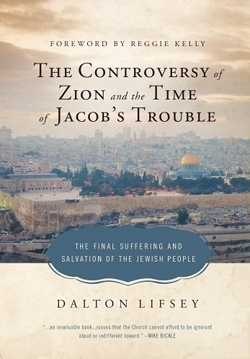 My intention was to provide a biblical alternative to the all-too popular errors of Replacement/Covenant/Divestment Theology on the one hand and Dispensational theology on the other. Being a missionary at heart, I wrote it with the hope that it would provoke bold and calculated Great Commission efforts to both ‘Isaac and Ishmael’ in the tumultuous season of history preceding the return of the Lord.
In the introduction I wrote that,
The message contained within this book will bear greater relevance and value as “the time of Jacob’s trouble” draws near. As “the controversy of Zion” continues to escalate in the coming years, my prayer is that this book would instruct, edify, and inform many.
The most recent conflict between Israel and Hamas/Islamic Jihad has stirred global rage and protest. Over the last few days tens of thousands took to the streets in Seoul, London, Edinburgh, Paris, Amman, Cairo, Istanbul, Seattle, Chicago, Kashmir, NYC, Rome and dozens of other cities to express solidarity with the Palestinians (though they knowingly or unknowingly are effectively just championing the demented genocidal agenda of Hamas/Al Qassam Brigade/Islamic Jihad). Many of the demonstrations were overtly anti-Semitic with Jew-hating slogans common during the Nazi genocide being chanted again on the streets of Frankfurt, Berlin and Paris.
As synagogues were stoned and vandilized and Jewish civilians beaten in city centers, Western and Eastern government leaders condemned the Israelis for (in the words of Turkish Prime Minister), “surpassing the barbarism of Hitler.” ‘Christian’ propagandists like Stephen Sizer took the opportunity to condemn not Hamas/Islamic Jihad for their indiscriminate civilian missile onslaught, but Israel-loving Jesus followers for being “Christian jihadis” (how mind-numbingly ironic and morally insane). Meanwhile throughout the Islamic world, public calls for the ethnic cleansing of Palestine have rung forth from mosques, Youtube channels and Twitter accounts (with trending hashtags like #KillJews and #HitlerWasRight). It’s as if the European sentiment, “We loathe Jewish presence in Europe” has morphed into “We loathe Jewish presence in the Middle East” (which for anyone paying attention actually means, “We loathe Jewish presence everywhere). The alleged lines between anti-Zionism and anti-Semitism are fading fast. Some deny it (yearning for respectability) and others boast in it (brazen in their bigotry).
In and out of the church lines are being drawn in the shifting sands of man-centered theology and politics related to the Jewish people and the nature of their return to Haaretz Israel over the last century and a half. Feeling increasingly aware of the urgency of these turbulent days, I asked Maskilim Publishing if we could make the book free on Amazon Kindle and they said yes (because they’re awesome).
You will be able to download the book for free from July 21-25. Click here to head over to Amazon.
Below I am including the whole introduction to the book to, well, introduce you to the book. Have a read and pass this link on. We hope to get it into as many hands as possible over the next 5 days.
*********
This book is centered around the relationship between ethnic Israel and biblical eschatology.[1] For at the heart of biblical eschatology is what Isaiah referred to as “the controversy of Zion”[2] and what Jeremiah termed “the time of Jacob’s trouble.”[3]
The “controversy of Zion” refers to the historical continuum of spiritual and natural conflict over the city of Jerusalem; the past, present and future Land of Israel; and the Jewish people whose ancient history and prophetic destiny are inextricably connected.
The “time of Jacob’s trouble” refers to the Age-ending suffering of the Jewish people and the glorious restoration that follows. It is this time of “trouble” that lays the ancient contention and controversy to rest through the “restoration of the Kingdom to Israel”[4] and the decisive once-and-for-all “judgment of the nations” who take part in the “final”[5] assault on the people and the Land of Israel.
These subjects lack no scriptural precedent. In fact, I’d go so far as to echo Charles Haddon Spurgeon, the great “Prince of Preachers,” when he said, “I think we do not attach sufficient importance to the restoration of the Jews. We do not think of it enough. But certainly, if there is anything promised in the Bible it is this.”[6]
THE AIM OF THIS BOOK
The aim of this book is to encourage Bible saturated thinking, biblically inspired feeling, and biblically responsive living at the end of the Age in relationship to this issue of Israel.
Between the prominence of Israel in biblical prophecy, the contemporary Israeli-Palestinian conflict, mounting anti-Semitism in the nations, increasing anti-Judaism in the Church, and the ever-evolving socio-political landscape in the Middle East, I believe there are more than enough reasons to legitimize an honest study of what Scripture has to say about “Jacob”[7] and their “final” [8] “affliction.”[9]
THE UNPRECEDENTED INTENSITY OF JACOB’S TROUBLE
The impact of “the time of Jacob’s trouble” on the Jewish people will be far more horrific than any of us can imagine. When it was shown to the Hebrew prophets they were burdened in anguish. Jeremiah was disturbed and appalled.[10] Habakkuk trembled and quivered.[11] Ezekiel mourned and grieved. Daniel was sick for days.[12]
According to Scripture “the time of Jacob’s trouble” will eclipse every other historical epoch of Jewish suffering in intensity—even the Holocaust of Nazi Germany.[13]
In his book, Hitler and the Holocaust, Robert S. Wistrich writes:
“Thinking about the Holocaust is like staring into an abyss and hoping it will not stare back. It is the ultimate extreme case, a black hole of history that not only challenges our facile assumptions about modernity and progress but questions our very sense of what it means to be human.”[14]
Historically speaking, Wistrich is correct: the Holocaust of Nazi Germany is the “ultimate extreme case.” But as far as the future is concerned, it is but a precursor of what is to come.
If the systematic annihilation of over six million Jews is “like staring into an abyss and hoping it will not stare back,” to what shall we liken the consideration of the future crisis? The prophet Zechariah was shown that “two-thirds”[15] of the global Jewish population[16]alive in the generation of “Jacob’s trouble” will not survive.
THE FUTURE INVASION OF THE STATE AND THE FLIGHT OF THE JEWISH PEOPLE
As these brutal events unfold in the future, they will have severe implications for the recently established Nation-State.[17] When the military invasions[18] begin, the State—as we know it today—will be dominated by foreign armies and much of the population within will either escape voluntarily[19] or be “driven out”[20] against its will.
Zechariah 14:1-3 makes clear that though a remnant of besieged Jews will remain in the city of Jerusalem throughout the conflict, only half the city will remain intact (if we can even call it that) as the Nation is overun by invading forces.[21] Isaiah was told that if the Nation were likened to a tree, only a “stump” would “remain” in the wake of the trouble. Then, without the use of metaphor, the Lord told him that only “a tenth will remain.”[22]
With that said, we Gentiles need to understand that “Jacob’s trouble” isn’t just Jacob’s problem.[23]
The escape and expulsion of the Jews[24] from their crippled and war-torn State will dramatically impact the Church among the nations. In the coming days when the violence begins, potentially millions of Jews will take to “flight”[25] “among the nations,”[26] seeking refuge from their “tormentors.”[27] They will need to be received and served by those who have anticipated their arrival. Much like Corrie ten Boom and her family who secretly housed and protected Jews during the Nazi Holocaust, so also will the Church in the “great tribulation” be called upon to serve disoriented, panic-stricken, and traumatized Jews who will then be the object of international scorn—even from nations in which they have, up to now, enjoyed a measure of safety.
It will be required of us to sacrificially identify with the “least of [Jesus’] brethren” who in that day will be “hungry, thirsty, estranged, naked, sick, and imprisoned” in the extremity of their final “trouble.” This is the inner-most meaning of the parable of the sheep and the goats in Matthew 25:31-46 and the reason Jesus chose to end the Olivet Discourse in Matthew 24-25 this way. The issue of how we treat the Jews in our midst as they are “sifted among the nations”[28] in the “great tribulation”[29] really matters to the Lord.
PREPARING FOR WHAT IS TO COME
The hour in which we live is urgent. With substantial Jewish presence on Jewish soil in a politically independent Jewish Nation-State for the first time[30] since the generation of the apostles, and with the religious and political landscape of the Middle East rapidly evolving, we must discern the times.[31]
Much like the generation of Europeans on the back side of World War I that watched the rise of Hitler and the formation of the Third Reich, I believe we’re living in a transitional moment of human history. But the difference between the crisis of the Second World War and the future “time of Jacob’s trouble” will be three-fold:
First, the crisis to come will have its inception in the Land of Israel,[32] not in a foreign nation.
Second, the Church of the Last Days will—by the grace of God—stand faithful and obedient to the Lord in that[33] which the vast majority of the Church in Germany did not.[34]
Third, the crisis will culminate in the salvation of “all Israel”[35] when the Jewish people will be “delivered,”[36] “saved,”[37] “gathered,”[38] “redeemed,”[39] “healed,”[40] “awakened,”[41] “cleansed,”[42] and “brought into the bond of the Covenant”[43] after “looking upon Him whom they have pierced”[44] with deep sorrow and love.
AN OVERVIEW OF THE BOOK
The book has been divided into three parts: (1) The Foundations, (2) The Prophecies, and (3) The Land.[45]
Part One: The Foundations
In Part One we will look at the theological foundations of God’s purposes with Israel at the end of the Age. These chapters serve as a general overview of “the controversy of Zion” and the future “time of Jacob’s trouble.” They include brief surveys of the differing opinions within the Church with regards to the Jewish people and the Land of Israel. Here you will find an introduction to the eschatological suffering and salvation of the Jewish people.
Part Two: The Prophecies
In Part Two we will look at prophecies from the Old and New Testament concerning the Age-ending devastation and restoration of Israel. In this section I have dealt with the question of the biblical and prophetic significance of the recently established Nation-State, the unequaled severity of the future “shattering of the Jewish people,”[46] the subsequent “restoration of the Kingdom to Israel,”[47] and the nature of the Church’s role during “the time of Jacob’s trouble.” These chapters are almost entirely exegetical.[48] Here you will find expositions of various prophecies concerning the final regathering and restoration of Israel at the conclusion of “the time of Jacob’s trouble.” The heart of the book is Part Two. It contains the longest and most important chapters.
Part Three: The Land
In Part Three we will focus on the question of Jewish right to the Land of Israel, particularly in regards to the contemporary controversy surrounding the political legitimacy of the State of Israel. Part Three sheds light on the theological complexities bound up in the dilemma of “the Land.” The “controversy of Zion” has three dimensions: historical roots, an eschatological conclusion, and a present-day manifestation. As we approach that eschatological consummation, it is imperative that we rightly discern its bearing on this present hour. As the “controversy of Zion” becomes increasingly hostile, discernment will be invaluable to the saints.
THE PRESSING RELEVANCE OF THIS MESSAGE
The message contained within this book will bear greater relevance and value as “the time of Jacob’s trouble” draws near. As “the controversy of Zion” continues to escalate in the coming years, my prayer is that this book would instruct, edify, and inform many.
[1] “Eschatology” simply means “the study of the end-times.”
[2] Isaiah 34:8; Psalm 2; Zechariah 12:1-2; 14:1-9
[3] Jeremiah 30:7
[4] Acts 1:6
[5] Ezekiel 35:5-6; Zechariah 12:1-2; 14:1-3; Joel 3:1-21
[6]The C.H. Spurgeon Collection, Metropolitan Tabernacle Pulpit, I, no. 28, 1855 (Albany, Oregon: Ages Software, 1998), 382.
[7] The name of the patriarch from which the Jewish people trace their lineage. Israel as a national identity is often referred to as “Jacob” in Scripture. See Jeremiah 30:7.
[8] Ezekiel 35:5-6
[9] See Jeremiah 30-31; Zechariah 12-14.
[10] Jeremiah 30:5-7
[11] Habakkuk 3:16
[12] Daniel 7:28; 8:27
[13] Matthew 24:21-22, Jeremiah 30:7, and Daniel 12:1-2 all declare that nothing before or after this trouble will exceed it in intensity.
[14] Robert S. Wistrich, Hitler and the Holocaust (New York; Modern Library, August 5, 2003), Kindle e-book, Introduction.
[15] Zechariah 13:8-9
[16] Zechariah 13:8-9; a passage we will return to in subsequent chapters.
[17] The State of Israel was established in 1948.
[18] Matthew 24:15-17; Daniel 9:27; 11:31-44; Joel 3:2-16; Zechariah 12:1-2; 14:1-3; Ezekiel 38:1-12; etc.
[19] Jesus commanded the population in Jerusalem to escape when the final invasions begin. See Matthew 24:15-22.
[20] Isaiah 11:11-16 and 27:12-13 speak of the “banished ones” who will be “driven out” of the Land of Israel into nations like Egypt, Iran, and Iraq.
[21] See also Daniel 11:31-36; Revelation 11:1-2; Luke 21:20-24; Matthew 24:15-22.
[22] See Isaiah 6:10-13.
[23] Reggie Kelly often uses this phrase to counter the Gentile assumption that we will be exempt from this hour of Jewish suffering.
[24] Sometimes we read of voluntary Jewish escape (as in Matthew 24:15-7), and other times we read of involuntary expulsion whereby the Jews are “driven out” and “banished” from the land (as in Isaiah 11:11-16 and 27:12-13).
[25] Matthew 24:15-17
[26] This expulsion was called, “sifting through all nations,” in Amos 9:9-10.
[27] Isaiah 51:23
[28] Amos 9:9-10
[29] Though this may seem like a novel reading of the parable, the context is decisive. The time of tribulation in Matthew 24:21-22 will result in the expulsion of the Jews from the Land in Matthew 24:15-20. How we respond to them when this unfolds is important.
[30] As of 1948 and 1967; see chapter 7.
[31] Matthew 16:1-4; Amos 3:7
[32] Matthew 24:14-22; Zechariah 12:1-2; 13:8-9; 14:1-3; Joel 3:2-21
[33] The Book of Revelation portrays the Church of Jesus as “prepared” (19:7), praying (22:17), prophetic (10:1-11), and persevering (14) during the greatest crisis in human history.
[34] The majority of the church of Germany was seduced by doctrines of demons and abandoned the Pauline mantra that “the gospel…is the power of God for salvation to everyone who believes, to the Jew first…” (Romans 1:16). People like Dietrich Bonhoeffer and Corrie ten Boom were the rare exceptions in the apostasy of the German church in the time of the Holocaust.
[35] Romans 11:25-26; Jeremiah 30:7; Daniel 12:1-4; Isaiah 4:3-6
[36] Daniel 12:1-3
[37] Jeremiah 30:7; Romans 11:25-26
[38] Jeremiah 31:8-9
[39] Isaiah 52:3
[40] Hosea 6:1-2
[41] Isaiah 52:1-2
[42] Zechariah 13:1-2
[43] Ezekiel 20:37; Isaiah 4:3-6
[44] Zechariah 12:10
[45] Certain passages and propositions are cited and asserted numerous times throughout the book. This was partly intentional (to adequately emphasize and exposit them) and partly unavoidable (to do justice to particular themes and ideas).
[46] Daniel 12:7
[47] Acts 1:6-8
[48] “Exegetical” means “expository.” It refers to the explanation or critical interpretation of a text.
July 16, 2014
All I Owe
All I Owe (written by Robert Murray M’Cheyne) from Dalton Thomas on Vimeo.
One of my favorite hymns of all time, written by Scottish preacher and theologian, Robert Murray M’Cheyne (1813-1843).
Filmed on a Blackmagic Cinema Camera with a Sigma 18-35mm f.1.8. Graded in Resolve 11.
*********
When this passing world is done,
When has sunk yon glaring sun,
When we stand with Christ in glory,
Looking o’er life’s finished story,
Then, Lord, shall I fully know—
Not till then—how much I owe.
When I hear the wicked call,
On the rocks and hills to fall,
When I see them start and shrink
On the fiery deluge brink,
Then, Lord, shall I fully know—
Not till then—how much I owe.
When I stand before the throne,
Dressed in beauty not my own,
When I see Thee as Thou art,
Love Thee with unsinning heart,
Then Lord, shall I fully know—
Not till then—how much I owe.
When the praise of Heav’n I hear,
Loud as thunders to the ear,
Loud as many waters’ noise,
Sweet as harp’s melodious voice,
Then, Lord, shall I fully know—
Not till then—how much I owe.
Even on earth, as through a glass
Darkly, let Thy glory pass,
Make forgiveness feel so sweet,
Make Thy Spirit’s help so meet,
Even on earth, Lord, make me know
Something of how much I owe.
Chosen not for good in me,
Wakened up from wrath to flee,
Hidden in the Savior’s side,
By the Spirit sanctified,
Teach me, Lord, on earth to show,
By my love, how much I owe.
Oft I walk beneath the cloud,
Dark, as midnight’s gloomy shroud;
But, when fear is at the height,
Jesus comes, and all is light;
Blessed Jesus! bid me show
Doubting saints how much I owe.
When in flowery paths I tread,
Oft by sin I’m captive led;
Oft I fall—but still arise—
The Spirit comes—the tempter flies;
Blessed Spirit! bid me show
Weary sinners all I owe.
Oft the nights of sorrow reign—
Weeping, sickness, sighing, pain;
But a night Thine anger burns—
Morning comes and joy returns;
God of comforts! bid me show
To Thy poor, how much I owe.
Mercy
Mercy from Dalton Thomas on Vimeo.
MERCY (copyright Dalton Thomas)
C F
Who is like You O Lord
Pardoning Iniquity
Who is like You O Lord
Casting our sins into the sea
I have a great High Priest
Who knows how I get weak
Who loves to show me mercy
in my time of need
You love to forgive
You delight in mercy
For my shame You give me romance
For my dirge You give me the wedding dance
For my rags You give me riches
For my scars You give me kisses
For my filth You give me treasure
For my pain You give me pleasure
For me You give me You
For me You give me You
*********************
Filmed on a Blackmagic Cinema Camera and a Canon 5D mark ii
Dalton Thomas's Blog

- Dalton Thomas's profile
- 14 followers

