
Liliana Corobca's Blog
March 27, 2025
Tandem – Author with Translator – Translator with Author
COROBCA Liliana
Research project: Translating Liliana Corobca’s „Kinderland” from Romanian into Azerbaijani (2024/ 2025)
Kinderland (novel, Cartea Românească, 2013, Polirom, 2015) is concerned with the problem of contemporary migration, viewed from a new angle: that of children left at home, with parents working abroad. At the age of twelve, Cristina, the main character of the book, is forced to become the “mother” of the two younger brothers. Through the eyes of the girl, we discover the universe of a contemporary Moldovan/Romanian village, populated mostly by children and old people. Although the book refers to a phenomenon specific to the ex-Soviet space, which exists also in Azerbaijan, Kinderland is better known in the Western European space, being translated into German, Italian, Slovenian, Serbian, English, Dutch (forthcoming), but not into any of the languages of the former USSR. Kinderland, translated into Azerbaijani, would be the first contemporary Romanian and Moldovan novel proposed to Azerbaijani readers after the fall of communism.
Research Programs:
Tandem – Author with Translator – Translator with Author
(Author, in association with Jale ISMAYIL, Translator)
BSL Black Sea Link


EBRD Literature Prize 2025 shortlist
 Ten books in English translation by writers from seven countries where the Bank invests, chosen by independent jury Croatia, Czechia, Hungary, Moldova, Poland, Türkiye and Ukraine represented Finalists announced next month and winner on 24 June at public awards ceremony
 The European Bank for Reconstruction and Development (EBRD) is delighted to announce the short list for this year’s EBRD Literature Prize.
The selected works in alphabetical order (by author) are:
Sons, Daughters by Ivana Bodrožić, translated from the Croatian by Ellen Elias-Bursać and published by Seven Stories Press UK
The Ukraine by Artem Chapeye, translated from the Ukrainian by Zenia Tompkins and published by Seven Stories Press UK
Too Great a Sky by Liliana Corobca, translated from the Romanian by Monica Cure and published by Seven Stories Press UK
Engagement by Ҫiler İlhan, translated from the Turkish by Kenneth Dakan and published by Istros Books
My Women by Yuliia Iliukha, translated from the Ukrainian by Hanna Leliv and published by 128 LIT
Celebration by Damir Karakaš, translated from the Croatian by Ellen Elias-Bursać and published by Selkies House Limited
Herscht 07769 by László Krasznahorkai, translated from the Hungarian by Ottilie Mulzet and published by New Directions Publishing
Forgottenness by Tanja Maljartschuk, translated from the Ukrainian by Zenia Tompkins and published by Bullaun Press in Ireland and by Liveright, an imprint of W.W. Norton & Company, in the United States
Life After Kafka by Magdaléna Platzová, translated from the Czech by Alex Zucker and published by Bellevue Literary Press
The Empusium by Olga Tokarczuk, translated from the Polish by Antonia Lloyd-Jones and published by Fitzcarraldo Editions
The 10 books in English translation are by writers from seven of the countries where the EBRD invests – Croatia, Czechia, Hungary, Moldova, Poland, Türkiye and Ukraine. They were chosen by an independent panel of judges: writer, critic and cultural journalist Maya Jaggi (chair); writer and editor Selma Dabbagh; translator and Associate Professor in Ukrainian and East European Culture at University College London, Uilleam Blacker; and writer and foreign correspondent for BBC News, Fergal Keane.
Dr Jaggi said: “I am struck by how the sometimes-troubled regions the prize covers – including countries in fraught transition and even open conflict – are producing some of the most exciting, innovative and boundary-pushing fiction anywhere in the world. Women’s voices emerged strongly. Our short list ranges from haunting poetic vignettes of ‘flash fiction’ written in present-day Ukraine, to gothic fairytale horrors, blood feuds and a propulsive, 400-page novel in a single sentence tracing the rise of the far right in the heart of Europe. That many of the stories are partially based on real people or events reveals how writers are grappling with the role and responsibilities of fiction in a ‘post-truth’ age.”
May 18, 2024
The European Literature Night
From tales of migration to reflections on belonging and alienation. Through their work, ten European authors will explore the many sides of ‘Writers as Travellers’, this year’s theme of The European Literature Night. What is the meaning of movement and borders for writers, whether they travel across countries or explore their own cultural landscapes?
How are exile and alienation from one’s own country reflected in literature? By looking at writers as travellers, we seek to uncover nuanced diasporic narratives in European literature, fostering understanding and empathy for the myriad of human experiences that bind us together.
The European Literature Night 2024 brings together authors from across the continent who will explore this year’s theme: ‘Writers as travellers’. Through the lens of literature, we dive into the complexities of borders, belonging, and otherness within a European context.
Previous editions of the European Literature night at De Balie were held in 2021, 2022 and 2023.
About the speakersMiguel Bonnefoy is a French-Venezualean author. He was born in 1986 to a Venezuelan mother (who has been Cultural Attaché to the Embassy of Venezuela in Paris) and a Chilean father. Miguel Bonnefoy writes in the language of his studies: French. In his novel Heritage, inspired by his family history, Miguel Bonnefoy tells the story of exile in Latin America, at the crossroad of cultures. Heritage has been translated into Dutch as Erfgoed (De Bezige Bij, 2021) with the support of the Programme Nouvelles Voix by Institut français NL.
Josef Pánek is a Czech writer and scientist specializing in computational molecular genetics. He pursued his studies in Prague, lived and worked in Norway and Australia, and has extensively travelled. Currently residing in Czechia, he wrote the novel “Láska v době globálních klimatických změn” (Love in the Time of Global Climate Change, 2017), for which he was awarded the Czech literary award Magnesia Litera in 2018. The novel has been translated into Dutch, French, German, Polish, Italian, Croatian, Serbian and Romanian.
Loranne Vella is a Brussels-based Maltese writer, translator and performer. Her most recent work is the novel Marta Marta, which won the 2023 National Book Prize. An extract from Marta Marta, translated into English by Kat Storace, has been selected for publication in The White Review Translation Issue in April 2024. Vella is co-founder and co-editor of the online Maltese literary journal Aphroconfuso.
Mira Feticu was born in Romania, where she studied Romanian and French literature. In 2005 she moved to the Netherlands for love, and subsequently she also fell in love with the Dutch language. She wrote multiple novels in Dutch. In 2021 she wrote Liefdesverklaring aan de Nederlandse taal, in which she declared her love for the Dutch language.
Liliana Corobca was born in the Republic of Moldova and is a writer and researcher of Communist Censorship and Romanian Exile in Romania. She is a graduate of the Faculty of Letters of the State University of Moldova, doctor in philology at the University of Bucharest. She currently lives and works in Bucharest. Among the nine novels she wrote, the most translated and awarded is “Kinderland”, the story of three children from a post-Soviet village, whose parents work abroad.
Juan Gómez Barcena is a Spanish writer. With his first book of stories, Los que duermen (2012), he won the Tormenta Award for Best New Author. In 2014 he published El cielo de Lima, a novel which has been translated into English, French, Italian, German, Portuguese, Dutch and Greek. The monumental Lo demás es aire (2023), won the Ciutat de Barcelona Prize for Literature and Vanity Fair Prize for best novel, consolidated him as one of the most relevant authors in Spanish literature.
Kateryna Babkina is a Ukrainian author and playwright. She’s the author of novels, short stories and children’s books. She has been translated into eleven languages and her plays have been staged in different countries. A short movie based on one of her stories was screened at Cannes Film Festival. After Russia attacked Ukraine in 2022, she has been living in London.
Dr. Elio Baldi is assistant professor of Italian Studies and Literature at the University of Amsterdam. He studied History and Italian Literature and Culture at the University of Amsterdam, and got his PhD at the University of Warwick. He is specialized in the work and reception of Italo Calvino. Tonight, he will speak about travel in the work of Calvino.
Katja Riemann is one of Germany’s best-known actresses, who moves with a fine sense between commercial cinema and arthouse, as well as being at home in theatre and the world of music. Besides that, she is a UNICEF ambassador and received the Order of Merit of the Federal Republic of Germany in 2010 and the Bad Iburg Courage Award in 2016 for her commitment. In 2020, she published her non-fiction book about humanitarian work ‘Jeder hat. Niemand darf. Projektreisen.’ Her latest book ‘Zeit der Zäune. Orte der Flucht.‘ tells of places of refuge to which Katja Riemann travelled. Where are these places and how do people live in the interim?
European Literature Night 2024
January 27, 2024
JURNAL CULTURAL, 19 IANUARIE 2024,
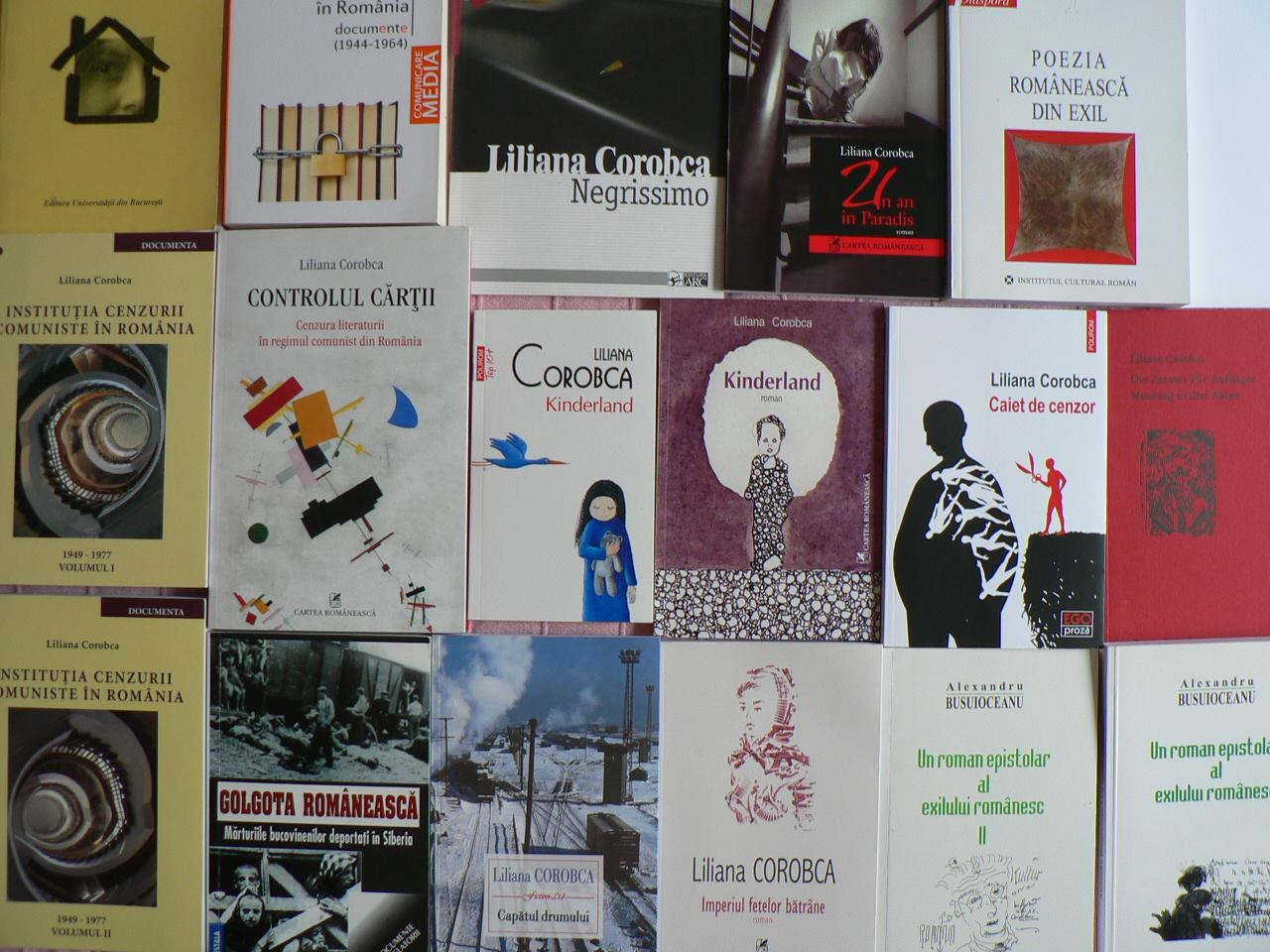
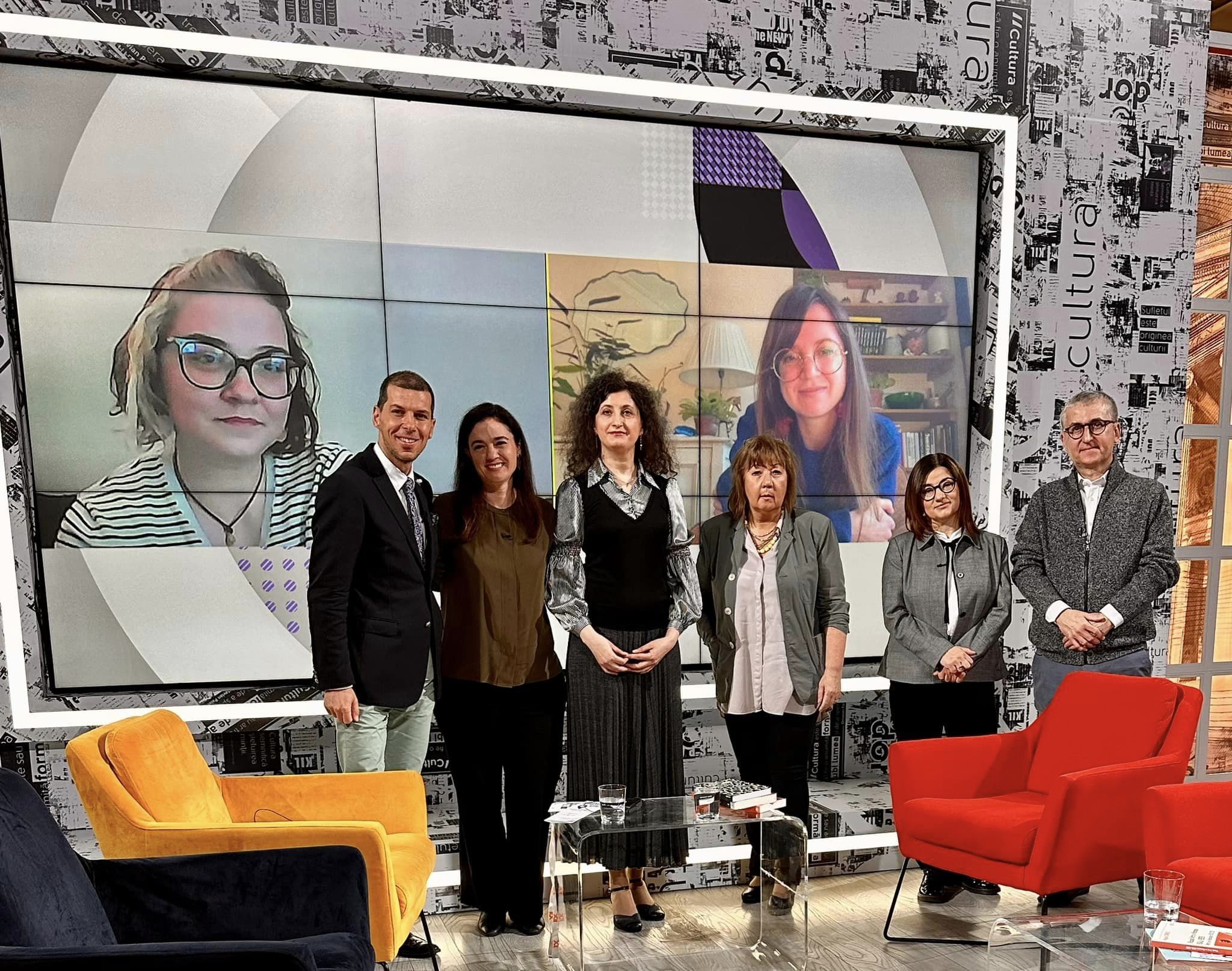
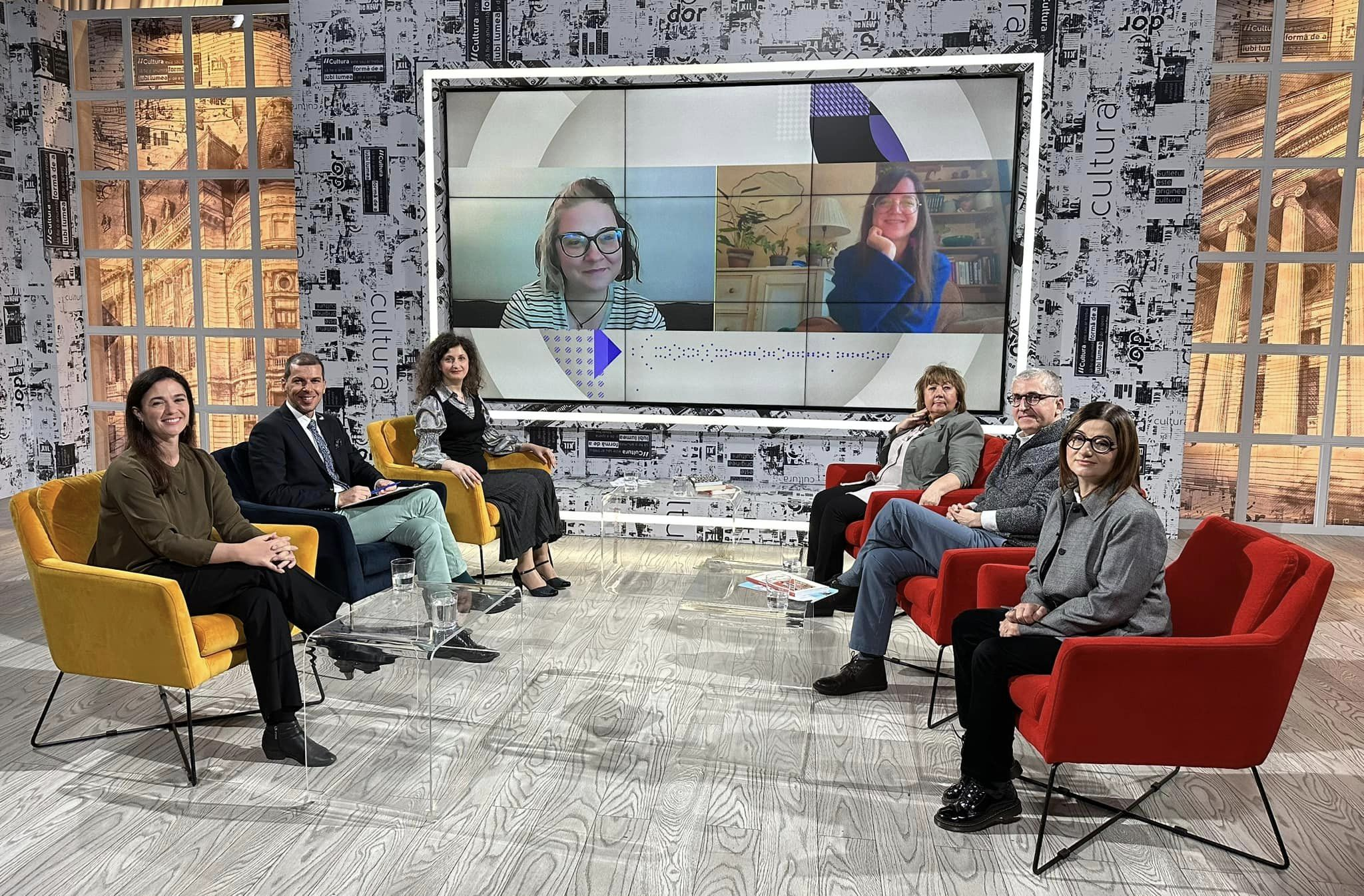
Debut la emisiunea „Jurnal cultural” de la TVR Cultural. Mulțumesc mult pentru invitație și pentru prezentarea generoasă. Am atins în treacăt tema „Eminescu și cenzura” (dar ce multe erau încă de spus!), mă pregătisem și pentru niște explicații ale receptării ușor diferite de către basarabeni a lui Mihai Eminescu. Iar despre celebra „Doina”, care a fost cap de acuzație pentru Ioan Diaconu („Arestat la 31 octombrie 1959 de Securitatea Cluj, pentru că a recitat poezia Doina de Mihai Eminescu. Condamnat pentru naţionalism antimaghiar şi uneltire contra ordinii sociale” – citat din „Controlul cărții”, cenzura represivă și din Cicerone Ioniţoiu, Victimele terorii comuniste…), până la muscalii despre care vorbesc în emisiune, trebuia amintit primul vers, cu aluzii la teritorii „tabu” ce nu mai aparțin(eau) României: „De la Nistru pân’la Tisa”…


 A fost o săptămână plină de evenimente dedicate celebrării culturii naționale ṣi vom vedea o parte dintre ele în următoarele 50 de minute. Vom vorbi cu scriitoarea Liliana Corobca despre frumusețea limbii române ṣi cu artista Miruna Ionescu, despre Bucureṣtiul de altă dată. Îl vom cunoaște pe tenorul Daniel Magdal ṣi vom afla ce se întâmplă la New York, unde are loc unul dintre cele mai importante concursuri de pian din lume. #Jurnalcultural
 Moderator: Iuliana Marciuc
Producător: Aimee D`Albon
Scriitorul care nu poate fi controlat poate fi ignorat, pe fundalul anonim al abundenței

Scriitoare și cercetătoare, în cărțile Lilianei Corobca, comunismul și postcomunismul sunt materia primă. Pentru Liliana Corobca, recuperarea istorică pare să fie miza scriitorului.
Istoria și interpretarea istorică recurgând la ficțiune sau non-ficțiune într-un spațiu precum cel româneasc în care interesul cititorului și al editurilor sunt în registre diferite.
În primii ani după 1989, recuperarea istorică ocupa mare parte a spațiului editorial/public. Există un soi de sensibilitate exacerbată legată de recuperarea istorică, fie că vorbim despre politica editurilor, fie că vorbim despre receptarea în spațiul public.
Zonele sensibile ale discursului public, spațiul de manevră al scriitorilor, editurilor, cititorilor, nu converg de cele mai multe ori. Editurile preferă spațiul sigur al unor teme nepolemice, fără să răscolească în sertarul de restanțe cultural-istorice.
Din acest punct de vedere, s-ar putea spune că, deși, pe scena culturală internațională, polemica, temele grele, recuperarea istorică sunt oxigen, cartea/scriitorul/editurile luându-și în serios rolul și menirea, în România, nu există o politică coerentă, de unde și interesul scăzut al cititorului pentru carte.
Declarații principale din cadrul interviului:
Opusul „abundenței” nu este lipsa, ci controlul. Când scriitorul nu poate fi controlat, el poate fi ignorat, opera lui poate trece neobservată, pe fundalul anonim al abundenței. Deși e criză editorială profundă, deși cititorii sunt tot mai puțini, suntem încurajați, prin noi colecții, concursuri de debut etc. să scriem și să publicăm cât mai mult.Orice carte de o mediocritate strigătoare la cer poate fi promovată ca o adevărată capodoperă, că e democrație și șansele sunt egale. Cine strigă mai tare acela e auzit, iar această politică, odată pornită, cu greu mai poate fi stăpânită azi. Plâng chiar și cei care au inițiat-o că nu mai sunt auziți/ascultați (cine sapă groapă altuia…).Cred că multe din problemele de tot felul pe care le avem azi vin din excesiva condiționare și supraveghere, promovarea obedienților și descurajarea vocilor curajoase, lucide și critice. Pericolul e că devenim o masă inertă, supusă și manipulabilă. Pericol pentru noi, nu pentru putere. Doar că mediocritatea cu ceva imaginație e plină de surprize, așa că nu ne vom plictisi, în orice caz.Definiția scriitorului este foarte generoasă și, da, cred că orice individ care scrie despre fluturi sau sex, cu geniu, este un scriitor. Altceva e când doar aceștia sunt cei promovați și premiați. Infantilizarea scriitorilor (și a altor categorii) este un demers condamnabil, însă. Instrumentalizarea scriitorilor care s-a practicat în comunism și se practică și azi e alt demers condamnabil.În istoriografia noastră și în literatura de specialitate a fost preluată părerea lui Virgil Ierunca despre Makarenko, deși acesta n-a avut dreptate. În România, singurul care a deschis o carte de A. Makarenko a fost Mircea Stănescu, care a scris și un studiu dedicat pedagogului, în 2010, iar anul trecut a mai apărut un studiu la temă, dar în limba engleză, scris de Arleen Ionescu.Ambele studii prezintă interes, dar, la un anumit punct, mă disociez de acești doi autori, de unul, pentru că trunchiază opera lui Makarenko și vede numai crime peste tot, de altul (alta), pentru că nu vede nicio asemănare între metodele lui Makarenko și fenomenul Pitești. Formula pe care am adoptat-o (procesul, adică) nu mi-a permis ambiguizări sau relativizări.
Am studiat zeci de documente, Makarenko e ucrainean, dar revendicat și de ruși, cu o uluitoare biografie, demnă de roman polițist, am studiat și cărțile martorilor de la Pitești etc. Am vrut să fac dreptatea care mie nu mi s-a făcut și primul întâlnit în cale a fost acest nedreptățit pedagog. Romanul e scris înainte de război (în ianuarie 2022 lucram la scena finală), când nu existau atâtea susceptibilități față de ruși sau ucraineni. A stat prin redacțiile editurilor, iată, mai mult de un an.
Liliana Corobca: Scriitorul care nu poate fi controlat poate fi ignorat, pe fundalul anonim al abundenței – INTERVIU
Körperland Landkörper
Anna Rottensteiner, Cécile Wajsbrot, Liliana Corobca und Stefano Zangrando besprechen die Pandemie entlang von Texten, die in einem gesellschaftlichen Krisenmoment – im Lockdown – entstanden sind. Welche Methoden der Auf- und Bearbeitung von Gegenwart bietet die Literatur? Ein post-pandemisches Gespräch.
Wie hat sich die Pandemie auf unsere Körper, auf die Wahrnehmung von Körper, Körperlichkeit, auf Versehrung und Unversehrtheit ausgewirkt? Wie beschreiben wir unser Empfinden, wenn wir mittendrin „im Geschehen“ sind? Wie viel Gegenwart lässt sich „bewältigen“ und welche Strategien bietet die Literatur dabei den Lesenden an?
In und aus der globalen Krise der Covid19-Pandemie heraus entstand die Publikation Körperland Landkörper. Entlang von vier literarischen Erkundungen der Autor*innen Anna Rottensteiner, Stefano Zangrando, Cécile Wajsbrot, Liliana Corobca und ihren Übersetzer*innen entwickelte sich ein literarischer Gedankenaustausch. Das entstandene Gespräch umspielt die Texte wie ein Gewebe und ist somit integraler Bestandteil der Publikation.
Anlässlich der Präsentation werden die Prozesse und Erkenntnisse dieses internationalen Literaturdialogs von den Autor*innen vorgestellt und besprochen. Im Zentrum des Gesprächs stehen die jeweiligen „Poetiken der Umschreibung“ bzw. Fragen nach den Methoden der literarischen Auf- und Bearbeitung dessen, was einer/einem gerade geschieht. Denn wie wandelt sich das formgebende Bestreben, die Rolle von Autor*innen, Dokumentarist*innen und Übersetzer*innen, wenn sich die unmittelbaren Parameter des Zusammenlebens verändern? Was bedeutet dabei „Zeit“ und was „temporär” in einer Literatur der Gegenwärtigkeit?
Das Projekt, initiiert von Anna Rottensteiner und koordiniert von Barbara Siller wurde von der Sektion für internationale Kulturbeziehungen des Österreichischen Außenministeriums gefördert. Die Publikation mit dem Titel: Körperland – Landkörper, ein internationaler Literaturdialog in Zeiten der Pandemie, hg, von Anna Rottensteiner, ist 2023 bei University Press Innsbruck erschienen.
Der Abend ist Teil der Reihe ÜberLeben.
Das Gesprächsformat ÜberLeben stellt den forschenden Prozess in das Zentrum seiner Begegnungen. Es kommen Gesprächspartner*innen diverser Lebensbereiche zusammen, um gemeinsam und entlang von literarischen Texten, Narrative zu aktuellen und akuten Fragestellungen zu befragen, zu generieren und die daraus entstehenden Erkenntnisse zu teilen.
Weitere Termine: 31.01.: ZeLTsalon:e 3.
Moderation: Doris Eibl
Zu den Autor*innen:
Liliana Corobca, geboren 1975 in Saseni-Calarasi/Moldawien, ist Literaturwissenschaftlerin und Schriftstellerin und lebt in Bukarest. Sie hat mehrere Bücher über die Zensur der Literatur im kommunistischen Rumänien veröffentlicht. In deutscher Übersetzung ist 2010 Ein Jahr im Paradies (Edition Merz / Solitude) und 2015 Der erste Horizont meines Lebens (übersetzt von Ernest Wichner, Zsolnay Verlag) erschienen. Der Roman wurde 2022 auch ins Italienische und Englische übersetzt.
Anna Rottensteiner, geboren 1962 in Bozen, lebt in Innsbruck, wo sie bis 2022 das Literaturhaus am Inn leitete. Neben zahlreichen literaturwissenschaftlichen und literaturkritischen Arbeiten insbesondere zur Literatur Tirols und Südtirols ist sie als Herausgeberin und Übersetzerin tätig. 2013 erschien ihr Roman Lithops. Lebende Steine, 2016 der Roman Nur ein Wimpernschlag (beide edition laurin). Beide Romane wurden in Italien in der Übersetzung von Carla Festi publiziert. 2023 hielt sie gemeinsam mit Stefano Zangrando die Poetry Lecture Cork zum Thema Zeiterleben Zeitgeschehen. Für ihr aktuelles Romanprojekt Herkunft der Mütter erhielt sie 2023 ein Arbeitsstipendium des Landes Tirol.
Cécile Wajsbrot, geboren 1954, lebt als Romanautorin, Essayistin und Übersetzerin aus dem Englischen und Deutschen in Paris und Berlin. Sie schreibt auch Hörspiele, die in Frankreich sowie in Deutschland gesendet werden. 2007 war sie Gast des Berliner Künstlerprogramms des DAAD. 2014 erhielt sie den Eugen-Helmlé-Übersetzerpreis, 2016 den Prix de l`Académie de Berlin. Sie ist seit 2021 für drei Jahre zur Vize-Sektionsleiterin der Akademie der Künste (Berlin) der Akademie der Künste in Berlin gewählt und Mitglied der Deutschen Akademie für Sprache und Dichtung.
Stefano Zangrando, 1973 in Bozen geboren, 2006 Mitbegründer des Internationalen Seminars zur Romankunst an der Universität Trient, 2008 Stipendiat der Junge Akademie der Berliner Akademie der Künste, 2009 Nachwuchspreis des Deutsch-Italienischen Übersetzerpreises, 2015-2020 Co-Präsident der Südtiroler Autor*innen Vereinigung, 2018 Schreibstipendium des Deutschen Kulturamtes der Autonomen Provinz Bozen. Übersetzer deutschsprachiger Literatur (Ingo Schulze, Kurt Lanthaler u. a.), Publizist und Rezensent für mehrere Zeitungen und Zeitschriften, Autor u. a. von Kleiner Bruder. Das Schicksal, die Lieben und die Seiten des Peter B., aus dem Deutschen übersetzt von Michaela Heissenberger, Eulenspiegel Verlag, Berlin 2020. Er lebt und arbeitet in Rovereto (Trentino).
Über YouTube lässt sich die Veranstaltung live verfolgen:
about:blankKlicke hier, um Marketing-Cookies zu akzeptieren und diesen Inhalt zu aktivieren
Teilen:Körperland Landkörper
Von Herkunft, Erinnerung und dem nackten Überleben
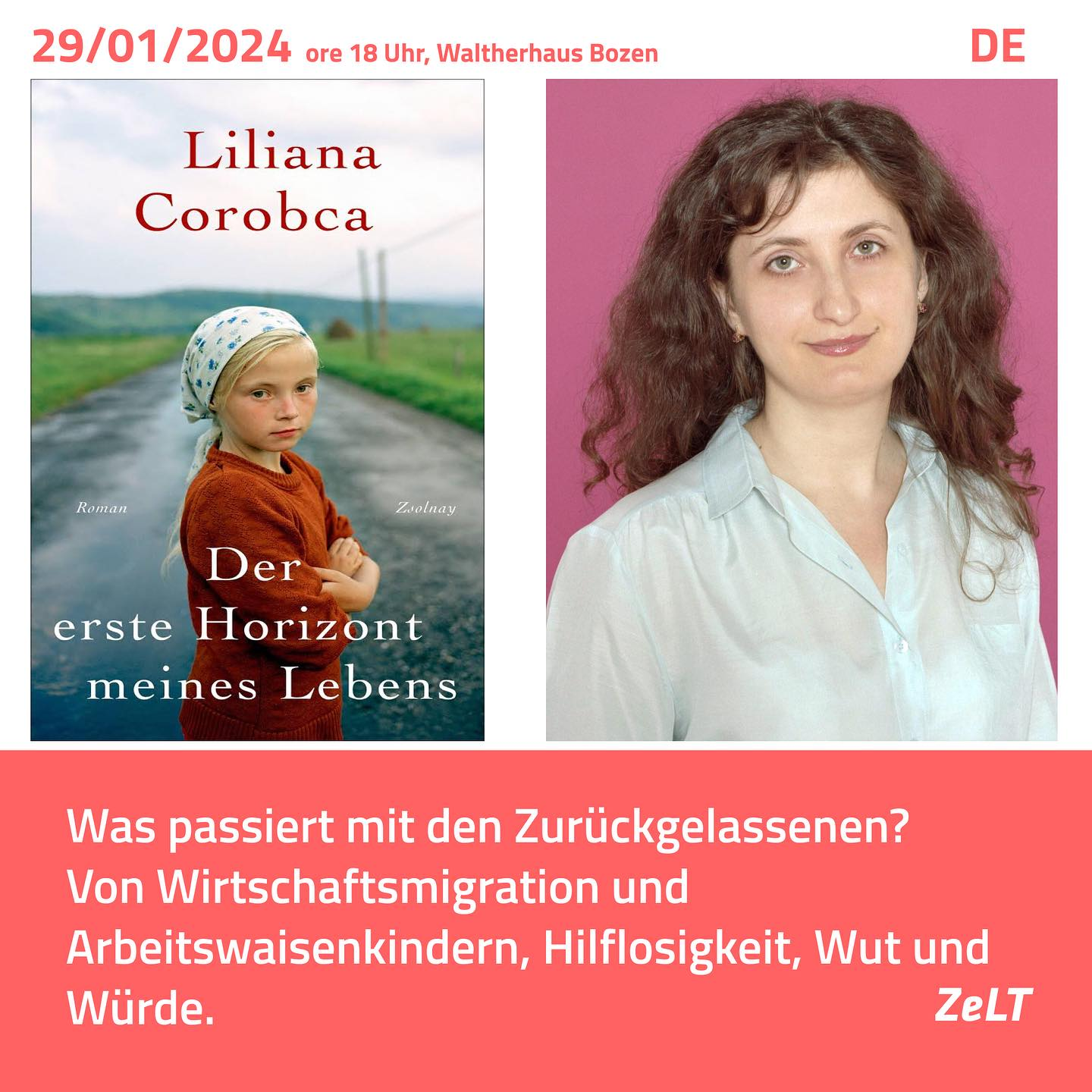

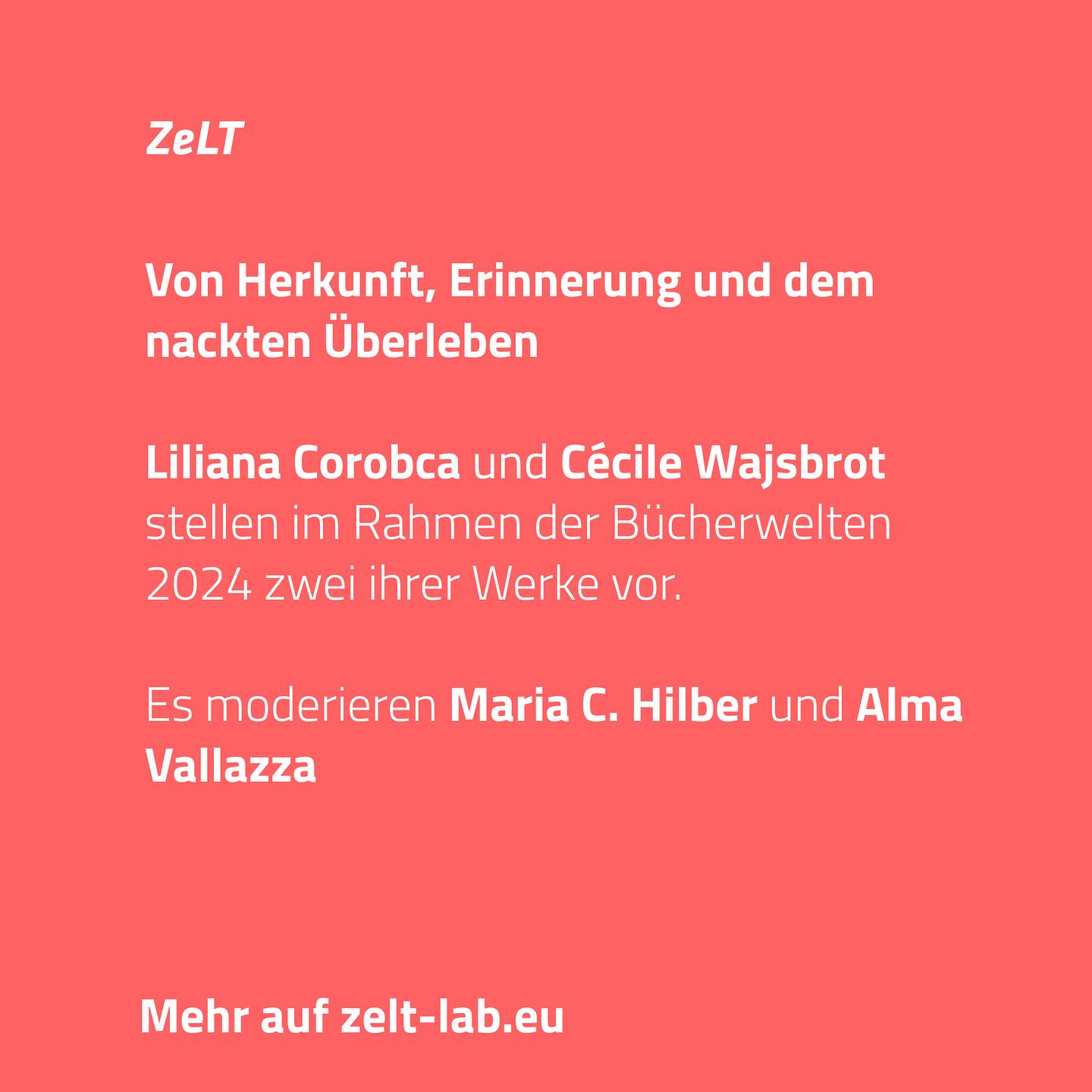 Von Herkunft, Erinnerung und dem nackten Überleben
Liliana Corobca und Cécile Wajsbrot
Datum: 29.01.2024
Uhrzeit: 18:00
Ort: Waltherhaus, Schlernstraße 1, Bozen
Sprache: deutsch
Von Herkunft, Erinnerung und dem nackten Überleben
June 13, 2023

May 17, 2023
Liliana Corobca's Blog
- Liliana Corobca's profile
- 45 followers

