Victoria Groce's Blog
October 21, 2026
You Can See Everything...But Can You Know Everything?
Note: This essay includes mild spoilers for the film You Can See Everything. I’m generally going to be speaking in broad strokes and I won’t be spoiling anything that might be considered a twist/surprising or anything along those lines, but if you want to avoid any discussion about the movie before you see it you should turn back now.
I see very few films, but the reviews of You Can See Everything were so rhapsodic, and the trailer seemed so bonkers and compelling, that I spent last Friday night at the movies. Overall I loved it: the first hour felt like a pretty standard docufilm in a lot of ways, the second hour recontextualizes it into a fairly bonkers docufilm, and the third hour brings it into something genuinely unique.
You don’t—and shouldn’t—read me for film criticism. There are much smarter people doing that on Substack. What I want to talk about instead is what You Can See Everything illustrates about learning and memory.
I don’t think it’s spoiling much to say that one of the driving forces behind the movie has to do with truth in all its forms. One of those forces I’d characterize as a philosophical question: what is the nature of truth itself? Specifically, I view one of the questions Nathan Fielder grapples with at one point as a variation of the Gettier problem: the dilemma of whether justified true belief constitutes knowledge, a problem which Gettier himself answers with a “not always” in the article linked here. Fielder’s conundrum is a little different; in places he’s questioning whether someone could be considered to be honest if they’re making a statement that is shaky on truth value but justified and genuinely believed.
Another theme that runs through is some really cool stuff about how our memories morph and change over time. It’s something we all experience without necessarily recognizing it happening. Fielder and Oppenheim have given us a few pretty stark examples. We hear people say adamantly that conversations that we the viewers had seen earlier in the movie “never happened.” Are they lying? Did they just forget?
And at one point we see Nathan Fielder trying to reconstruct a conversation he couldn’t film. He’d typed up what he remembered in a script and then, while reading, realized that the person he’d been talking to probably wouldn’t have said what he’d written. Without a record he’s got to go on a combination of what “feels” right in his brain along with how what he’d written down compares to his memory of previous interactions with the person in question. Which is an extremely sophisticated piece of social learning when you think about it: as we get to know people, we build some sort of shadow version of them in our heads. I’ve seen self-help books that recommend, when faced with a difficult decision, imagining a conversation with someone you consider wise or insightful and mulling on the advice you get there.
This function of the brain—the ability to take some information that is known for sure and come up with plausible-but-wrong explanations to fill in gaps—is known as confabulation. Kathryn Schultz’s excellent book Being Wrong talks quite a bit about this:
Some of us have voluble and inventive inner writers, some of us are meticulous inner fact-checkers, and a lucky few have both. Most of us, however, are noticeably better at generating theories than at registering our own ignorance. [William] Hirstein says that once he began studying confabulation, he started seeing sub-clinical versions of it everywhere he looked, in the form of neurologically normal people ‘who seem unable to say the words, ‘I don’t know,’ and will quickly produce some sort of plausible-sounding response to whatever they are asked.’ Such people, he says, ‘have a sort of mildly confabulatory personality.’
I don’t know that I would describe what we see of Elizabeth Holmes in this movie as constitutionally confabulatory. But that whole “why would I deceive you?” conversation and the whole “I’ve never in my life told a lie” thing…a version of confabulation could be somewhat of an explanation? I think one reason this movie has struck a chord with so many people is that it’s so hard to pinpoint what’s going on there.
We confabulate in mundane ways all the time and it makes sense that we would: living in the world is not a perfect-information game. We often have to fill in gaps in order to make the best decision we can, and in addition to filling in gaps we also forget things through natural processes like decay. (In addition to confabulation, we also have the ability to perform what’s called assimilation, to take in new information about schemas—think “things we already know a lot about.” Our schemas also change over time with new information, in part through systems consolidation.)
For intentional learning and studying, though, confabulation isn’t always what we want to happen. We don’t want to turn off the critical thinking abilities that prompt us to confabulate, but at the same time we don’t want to think we know things we don’t actually have a handle on!
I’m someone who’s very capable of being confidently wrong (this has happened to me so many times in quiz competitions it’s not funny—I’ve always been an aggressive player in everything I’ve played, going back to elementary school academic bowl) so I don’t know how valuable my opinion is here, but my strategy is and has always been to embrace the possibility of being an idiot. Being aware you might always be wrong, being undefensive about being corrected, and seeking out opportunities to get feedback and be told you’re wrong are all valuable in the learning process. At least one person in You Can See Everything could benefit from that skill (and if you’ve seen it, you know that person is not Nathan Fielder and it’s not Elizabeth Holmes).
In the tech world this is sometimes summarized as strong opinions, loosely held. I agree with a lot of what’s said here, about it being somewhat puzzling to advocate for positions when you’re not entirely sure what you know and what you don’t, but I also accept that I’ve not only never worked in a startup, I would be a hilariously bad fit for one. That said: the basic point of “always be willing to change your mind when faced with new information that challenges what you think you know” is a great one, and one that can help you learn all kinds of things you care about.
Thanks for reading Know It All with Victoria Groce! If you enjoyed it, please share it with someone else who might be interested—it really helps me out!


October 14, 2026
Offline: The Science of Inattention and Learning
Unless you are lucky enough to live completely off-grid (in which case, please let me know how you got ahold of this essay), you’ve seen hand-wringing about our Attention Economy and how avidly companies like Meta and Bytedance are working to capture your attention for as long as possible. Books like Tim Wu’s The Attention Merchants, Chris Hayes’s The Siren’s Call, and Vauhini Vara’s Searches explore the lengths companies go to and the techniques they use to keep you focused on snackable content for as long as possible.
The more I read about the science of memory and learning, though, the more I wonder whether the most damaging side effect here isn’t so much what social media and our phones are doing for our capacity for attention (although that certainly matters!). It’s what they’re doing to our capacity for inattention.
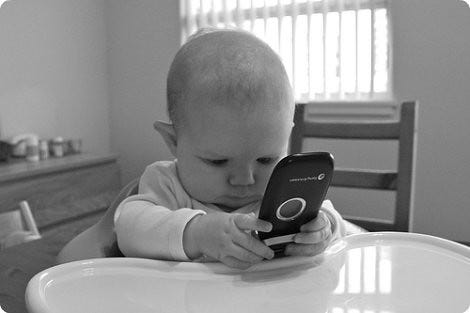 "cell phone baby" by SparkCBC is licensed under CC BY-SA 2.0.In Defense of Inattention
Inattention gets a bad rap that I would argue is sometimes undeserved. Probably we’ve all had the experience of a parent exasperatedly asking us whether we listened to a word they say, or a teacher scolding us for staring out the window when we should have been listening to a lecture or doing an assignment. And as we get older we’re likely to have at least one job (maybe a whole career!) where downtime is censured, questioned, even formally punished. We tend to feel guilty about being drifty or flighty. In some cases an inability to control our natural tendency for inattention rises to the level of a disorder or disability: the inattentive subtype of ADHD can make it difficult to maintain family life or relationships, keep a job or do well in school, or make progress on things that are genuinely meaningful to you. I’m not trying to make light of the very real problems distraction can cause in our lives.
But I cannot emphasize enough that phrase “natural tendency for inattention”. People underestimate precisely how universal mind-wandering and other non-directed mental activity (mostly focusing on our social world, our past, and our plans for the future) is. This type of brain activity has been termed the default mode by researchers and is seen in brain scans virtually anytime our minds aren’t directly occupied with another activity. It’s part of why it’s so hard to meditate. A lot of beginner meditation texts refer to this type of mental activity as “monkey mind” because our thoughts jump from place to place without anything pointing them in one direction at the other.
It’s hard to pinpoint precisely how much time people spend in this default space because one of the hallmarks of mind-wandering and default mode thinking is that we often don’t recognize when it starts to happen. But estimates I’ve seen in prior research indicate that we naturally spend as much as one-third to one-half of our waking time in some variety of offline, inattentive state.
Which feels wild…but these states can be incredibly transient. It’s not like we tend to mind-wander for three or four hours at a stretch. Our minds wander while we’re focused on things that are cognitively demanding, possibly because our executive function just gets exhausted. Our minds wander while we’re bored, or while we’re half-focused on tasks that are pleasant but easy for us, or in the middle of conversations, or while we’re going from place to place. Sometimes these mind-wandering episodes last just a matter of seconds before something jolts us back into an attentive state. And over the course of a day, those seconds add up to hours. I believe strongly we shouldn’t guilt ourselves over things that are simply a matter of the way we’re built.
Our Brains Need Time OfflineIn the context of learning science, “offline” time doesn’t mean “not on the internet”. What it means, rather, is time when the brain isn’t paying attention or taking in inputs.
One reason this is so important has to do with the way we make memories. In order for what we see, hear, taste, etc., to be converted into durable memories, the hippocampus first converts the data it takes from sense organs into forms the rest of the brain can use. Some portion of those memories are moved into longer-term storage. In between encoding and storage, memories are transformed in ways that make them somewhat resistant to change: a process known as consolidation. Consolidation involves both very quick changes to neurons as well as adaptations that can take place over long periods of time—as long as years in humans—as we recontextualize the things we know in the setting of other things we’re learning.
The piece of this puzzle that’s relevant to the point I’m making here is that consolidation happens during offline states. The most notable offline state, of course, is sleep, and a lot of what we learn seems to absolutely require sleep to consolidate and be stored. (This, incidentally, is why you should never ever pull an all-nighter to study. You won’t remember what you spent all night trying to learn because sleep isn’t optional for durable learning.)
But more recent research points to those short bursts of mind-wandering time as incredibly important for consolidation in and of themselves. (Erin Wamsley, the author of the linked review, does some super-cool research on rest and memory in her lab at Furman.)
What Does Your Brain Make of Social Media?Logically, at least some memory consolidation must occur during states of wakefulness. Without consolidation during waking hours, by the end of the day no one would be able to remember the events of the morning. Behavioural studies confirm this intuition: the passage of time is sufficient to stabilize both declarative and procedural memory over the course of a day, even in the absence of sleep.
Research over the last decade has pretty consistently indicated that people who have problematic and addictive patterns of social media use tend to suffer from memory issues affecting everyday life*: forgetting that you’ve told someone the same story before, remembering where you put something.
Why, precisely, this should be true is not a settled question. It’s entirely possible—likely, even—that this will turn out to be a multifactorial issue. But attention modulation is one strong possibility. Scrolling through long streams of content on sites like TikTok and Instagram gives our brain a level of stimulation and cognitive load that can be overwhelming, and for which our brains really aren’t well-adapted. These behaviors have the potential to alter our attention spans and also discourage us from healthy levels of rest and inattention that our brains need to make and process memories.
I’ve come to the conclusion, for myself at least, that there’s no downside in terms of memory hygiene for putting guardrails on the types of social media use that seem to be most pernicious. I use ScreenZen to block attention-sapping apps from my phone for most of the day (this is not a paid recommendation or anything; there are all sorts of similar apps). Then again, I’m not a person who feels any real affection for social media, so I recognize that’s a pretty easy “sacrifice” for me to make! But my guess is, if people really grappled with the idea that they could be sacrificing their memories at the altar of the doomscroll, more folks would find ways to at least cut back.
* See, e.g., Reed, Phil. “Impact of Social Media Use on Executive Function.” Computers in Human Behavior 141 (Apr 2023): 11. https://doi.org/10.1016/j.chb.2022.10....
If you enjoyed this post, please share it with someone else who could use a little moment of mind-wandering today :).
October 7, 2026
Can Language Apps Make You Fluent?
Duolingo has over 50 million active users every month. They’re easily the most popular language-learning app but by no means the only one: Babbel, Speak, Lingvist, Pimsleur, Busuu, Memrise, HelloTalk, iTalki, the list goes on and on. I’ve used a few myself: I do use Duolingo—it’s fun!—and I’ve also messed around with Lingvist and Clozemaster in the past. My husband uses Babbel to practice German.
I’m confident I’m learning something when I Feed the Owl, but I’m skeptical about the idea that any app by itself—any conceivable app, really, not just any of the apps that are currently on the market—can bring a novice language learner to fluency in a second language. To explain why I say that, let’s take a look at what’s happening in our brains when we work with language and some of the research on what works and doesn’t work for second language acquisition.
Thanks for reading Know It All with Victoria Groce! Subscribe for free to receive new posts and support my work.
 What Do We Mean When We Say “Fluent”?
During the mid-twentieth century, linguist Robert Lado created an influential English language instruction course under the auspices of the University of Michigan, built around four main competencies: listening, speaking, reading, and writing. Those four competencies are at the heart of all kinds of language proficiency tests, and it’s possible—normal, even—for language learners to have different levels of capability at all of them. I consider myself a pretty fluent reader of French—I can grab French novels from the library and read them for pleasure, I treated myself to a year of French Vogue when I signed the deal to write Know It All, and I’ll occasionally just change the language on various video games to French because I feel like it. Mais je parle comme une vache. Pire: une vache americaine.
That’s also true for our first languages, as it happens. Young children generally learn to speak and listen for comprehension before they can read and write. People with hearing or verbal processing difficulties may be able to handle written materials with aplomb but struggle with receptive and productive oral language.
Overarching cultural knowledge interacts with these four main competencies. Understanding idioms, unspoken expectations, levels of formality, registers, tone, etc.: they’re vital to getting by in a language setting and grasping the full meaning of what you’re hearing/reading. I see why this is not normally considered an entirely separate skill, but at the same time it’s not just a “nice to have” if you’re trying to master another language.
A lot of definitions for fluency exist. Mine would be something like “being able to function at a near-native-speaker level in every language skill one might choose to use.” When we say, without qualifiers, that someone is “fluent in a second language,” we generally mean that the person can deftly use all four of these language competencies, modulo any disabilities that might make one of those competencies irrelevant. Someone who physically can’t speak but can read, write, and listen with native-like skill is fluent. They can receive messages; they can communicate; that’s what matters.
This Is Your Brain on LanguageThose four main language competencies encompass a huge variety of subskills, including but by no means limited to:
· Recognizing which language something you hear is in
· Parsing individual words from a stream of speech, and picking them out from background noise
· Knowing which word orders are normal, which are uncommon but could be used for literary or rhetorical effect, and which would be confusing or flat-out wrong
· Pronunciation
· Tonality, which is semantic (determines meaning) in some languages like Mandarin and Vietnamese, and is also important for stressing particular pieces of information or conveying emotional register in some other languages
· Recognizing visual symbols as letters and parsing them into words
· Understanding which combinations of words might be perceived as polite, rude, inappropriate, etc.
· Coordinating gesture with language in a way that facilitates your message or helps you understand what other people are trying to communicate
Given how complex these tasks are, how universal spoken language is among humans, and how early in life these functions begin coming online, it should come as no surprise that multiple areas of the brain have dedicated circuitry for language learning (you can read a great overview here if you’d like to learn more about the specifics). The point I want to convey with all this is that the complexity of language learning as a skill—the fact that it encompasses a variety of semantic (information knowledge) and procedural (ability to do things) skills that are centered among lots of parts of the brain—means it shouldn’t be surprising that language learning works a little differently from learning, say, microeconomics.
One of the biggest ways is that, empirically, spacing effects in learning work a little differently with language than they do with other types of semantic knowledge. When learning most kinds of factual information, you’ll benefit from spacing out your exposures to the material until just before you’re about to forget it, and then challenging yourself in some way to retrieve it from your memory. This makes that retrieval difficult-but-doable and more or less “resets” the time till you forget it…which you’ll do more slowly after repeated retrievals.
There’s evidence that some language-learning tasks can benefit from this sort of spaced retrieval: characters in writing systems that are new to you (like Japanese kanji), possibly vocabulary, possibly pronunciation practice in some settings. But immersion programs are generally more effective overall for learning a language quickly. Programs that have you encounter words several times during the course of a day with other tasks interleaved in between have also been shown to enable lexical integration (the ability to take a new word you’re learning and use it with other words and grammar you already know) even without sleep, which is necessary to consolidate a lot of other kinds of knowledge.
Why Apps Can’t Do It AllIn part because different language skills are centered in different parts of the brain, you can’t assume that getting great at one aspect of language use will automatically transfer into skill with the others. Being able to translate Proust is no guarantee that you can straighten out a mixup in French at an airline ticket counter or vice versa. No app I’m aware of attempts to build language skills past CEFR level B2, and the prospect of going further than that seems pretty overwhelming to me.
In order for a language app to bring you to fluency, it would need to enable all those complex functions we talked about in naturalistic settings. It’s not enough for the app to give you practice in parsing a stream of the language you’re learning (like Duolingo does in their “podcast” lessons): you’d need to be able to do it in a setting where other conversations or distractions are going on around you.
It would need to teach you enough vocabulary for you to get by in a huge variety of professional and social situations. (Compare the rough amount of vocabulary you can learn through a Duolingo course to the rough amount of vocabulary you’d need to hit CEFR level C2—and the most well-developed Duolingo courses have about as much vocabulary as any app I’ve looked into). It would need to teach you enough grammar, and help you internalize that grammar, to work in business settings, hobby settings, cookouts, doctor’s offices, while reading books.
Apps like iTalki are built around natural conversations with native speakers, but don’t (and cannot) guarantee you’ll pick up all the vocabulary you need to learn for fluency, nor the grammar to parse complex written material. No amount of everyday French conversations will teach you the passé simple you’d need to read older books since it’s more or less deprecated from everyday language.
And no app can provide immersion unless you never leave the world of the app.
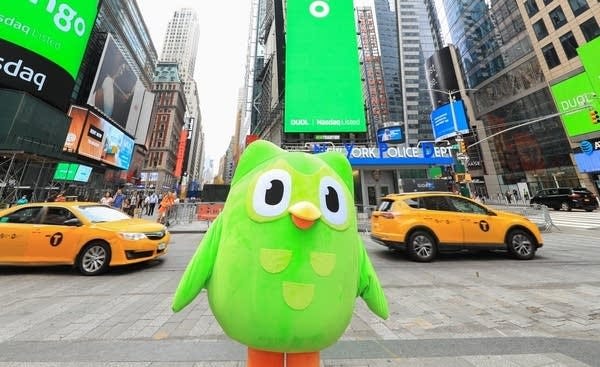 “Come learn with me, forever…and ever…and ever”
I don’t think this makes language apps useless. But understanding their limitations is valuable to achieving whatever goals you have with a language. If that goal is fluency, combining a couple apps with different strengths can help solidify some basic skills and practice common phrases and vocabulary. To that, you can add written materials of all kinds, moving from longer-form literature at around your current level of fluency to more and more complex books, plus less formal language like magazines and newspapers and places like Reddit. Talk and listen to your language as much as you can: language classes if you have access to them (great for solidifying grammar and conversation practice targeted to your current level!), apps where you chat with native speakers, meetups and conversation groups, podcasts, TV or movies, video games. As with most bodies of knowledge, the more you use it, the more you build it.
If you enjoyed this article: there’s more on language learning in my upcoming book!
Thanks for reading Know It All with Victoria Groce! Subscribe for free to receive new posts and support my work.
September 30, 2026
Why do Jeopardy! Contestants Buzz on Things They Don’t Know?
Okay, the title is a little bit of clickbait: there’s more than one reason Jeopardy! contestants buzz in on things they don’t know. Sometimes we’re way behind and need to sink a bunch of half-court shots to catch up. Sometimes we genuinely think we do know the answer and we’re wrong about that. Sometimes we haven’t parsed the clue correctly. But there’s another reason that illustrates a brain phenomenon that anyone trying to learn things can benefit from understanding.
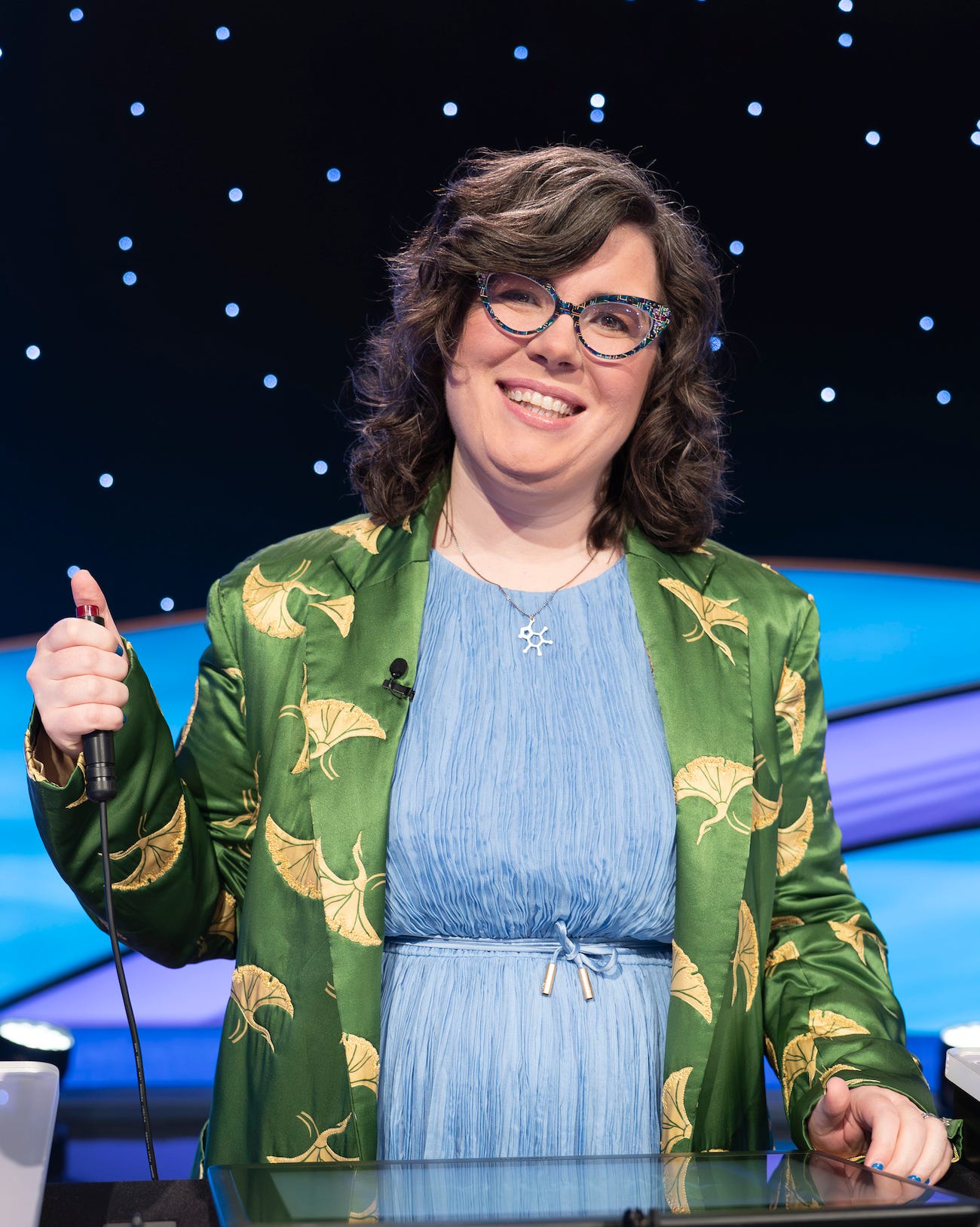
So when IBM built Watson to compete at Jeopardy! in the early 2010s, they used a mechanism for confidence assessment that is similar to some hypotheses about how our own brains assess whether we do or don’t know something:
Watson’s algorithms would sort through all its information as each clue was presented. Based on that information, Watson would gather three potential answers and calculate, in terms of a percentage, how confident it was in that answer. The answer with the top percentage would be the one that Watson gave, but only if that answer crossed Watson’s “buzz threshold”. Watson would take into account its own score, the scores of the opposing players, how far ahead or behind the opponents it was, the number of remaining clues on the board, the value of those clues, whether or not a Daily Double was on the board, and from all that information, calculate the percentage of confidence it would require to ring in on the next clue. That confidence level was the buzz threshold. If Watson’s top answer didn’t cross that line, Watson didn’t ring in.
In certain ways, our brains might work similarly. It’s been hypothesized (and there is evidence to believe) that when we need to generate an answer for something, we have dedicated functions to discern whether an answer we come up with is likely enough to be correct that we should go with it, or whether we should keep searching our brains because we can probably come up with a better one, or whether we just don’t have a good answer at hand.
But there’s a way in which our brains seem to work a little differently, and it’s this: we appear to have separate systems for familiarity, novelty, and recollection. Something within our brain signals “this is a thing I’ve seen before,” something else within our brain signals “this is an exciting new thing I should pay attention to,” and a third system signals, “I know what this thing is, and it’s _______.”** Executive functions within the brain can then collate these signals to tell us “oh, this looks somewhat familiar but I don’t quite remember what it’s called” or “this doesn’t resemble anything I can remember at all.”
If you’ve listened to Jeopardy! postgame chats or read interviews with long-running champions, you’ll have heard some folks mention that they sometimes buzz in before they’ve recollected the response, because they believe they can solve the clue before time runs out. And this hints at why Jeopardy! contestants buzz without knowing the response (and sometimes get burned for it!): the brain’s ability to say “this is familiar to me, the answer is somewhere in my head” works more quickly than the ability to actually recollect that information.
So what’s the takeaway if you’re trying to learn something?
The rest of this article is for subscribers only. Know It All is a free newsletter—subscribe to keep up with all the latest about how to use your brain more efficiently!
September 23, 2026
Are New York’s Children Being Left Behind?
“The complex reality of the technologies that real companies leverage to get ahead emphasizes the absurdity of the now common idea that exposure to simplistic, consumer-facing products—especially in schools—somehow prepares people to succeed in a high-tech economy. Giving students iPads or allowing them to film homework assignments on YouTube prepares them for a high-tech economy about as much as playing with Hot Wheels would prepare them to thrive as auto mechanics.”
—Cal Newport, Deep Work
Thanks for reading Know It All with Victoria Groce! Subscribe for free to receive new posts and support my work.
A thought experiment: Assume AI’s biggest boosters are right about absolutely everything. Assume the economic and environmental issues that people cite are overblown and soluble. Assume the AI never has any interest in killing us all. Assume that AI is more like e-mail than blockchain: something transformational for virtually everyone whose work doesn’t primarily involve doing things with their hands.
In a hypothetical future where all these assumptions hold, does it therefore follow that K–12 students must be taught how to use AI tools or else they’ll be left behind? It’s an argument I’ve seen made many places since Zohran Mamdani announced a moratorium on AI use in New York’s public school classrooms.
A lot of this gets into the purpose of schooling, which is a controversy that long predates AI. I read most of John Holt’s and John Taylor Gatto’s works when my daughter was young, and while we didn’t choose to homeschool/unschool, I was keenly aware twenty years ago that the “why” of school as an educational tool had been a debate for generations. If anything, this argument is even more in flux given increased ideological polarization in society.
Fundamentally I come down on the side of the Cal Newport quote above: school is not work! Your bosses, your partners, your clients, your readers don’t necessarily care whether you’re learning so long as you’re satisfying whatever social contract you have with them: doing your work and meeting your obligations. And conversely, your teachers don’t necessarily care if you’re making beautiful art or pushing the boundaries of science in the classroom. The goal instead—or at least one major goal—is proximal development: taking you from where you are to a place of greater mastery, just outside your grasp but close enough that you can get there with a little help or guidance.
It’s certainly true that, given limits on time and everyone’s energy, schools have less incentive to teach skills society finds systematically less useful. Handwriting classes, for example, have moved out of and into fashion as more of our lives are conducted online. Fewer people memorize poetry. It’s possible that in this hypothetical future we’re imagining, where AI is ubiquitous in almost every area of human life, educators and curriculum designers will deem some skills that have historically been central to schooling obsolete (the “art” of the five-paragraph essay is one I’ve seen mentioned several places as superfluous in an AI-ified world) and choose to use their time on other things.
But it doesn’t follow that those nebulous “other things” must (or should) incorporate AI, particularly in the younger years. If the primary goal becomes maximizing brain development, for example, time in nature and handwork might be emphasized. Social-emotional learning, conflict resolution, learning to listen to long narratives and follow them. The sorts of things that AI can’t help with but that have huge effects on neural connectivity, executive function, and emotional regulation: cognitive skills that benefit anyone regardless of what work or schooling they end up pursuing.
Which leads neatly into a second point: Is it reasonable to assume that students who spend little or no time using any particular technology can’t “catch up” if they’re exposed to it later in their education? Certainly adults master proprietary technologies quickly for their jobs on a regular basis, and children whose families don’t use tablets or phones in early childhood don’t appear to be disadvantaged when they start school.
Rankings that look at different countries based on how well their children perform on standardized assessments have plenty of issues, but setting those issues aside, students don’t cluster neatly on such rankings based on when their countries start compulsory schooling. It’s at least possible that waiting longer to introduce these technologies means they’ll be handled by more mature brains that can catch up quickly to peers who have been using them since earlier in childhood.
In order to make the case that more and earlier use of AI technology in the classroom will eventually lead to more confident and competent use of AI in higher education or the “real world,” you’d need case-control or randomized controlled trial studies that appear not to have done yet (which makes tons of sense, given how quickly LLMs and GenAI have grown in popularity; these studies take time to plan, time to fund, and time to get through ethical approval).
We’ll have some natural experiments to look at over the next few years, given how differently schools and districts have chosen to approach the AI issue. If I had to wager actual money, though: even in the rosiest possible AI figure, New York’s children aren’t going to be left behind in any meaningful way by banning AI from K–8 classrooms.
Thanks for reading Know It All with Victoria Groce! Subscribe for free to receive new posts and support my work.
September 16, 2026
On (Not) Practicing
I’ve been upfront about the fact that I actively study for Jeopardy! and other quiz competitions. At no point have I pretended that I could have just wandered onstage unprepared and answered questions on everything from marine biology to world history to recent horror films through osmosing knowledge randomly or something along those lines.
And yet:
Thanks for reading Know It All with Victoria Groce! Subscribe for free to receive new posts and support my work.
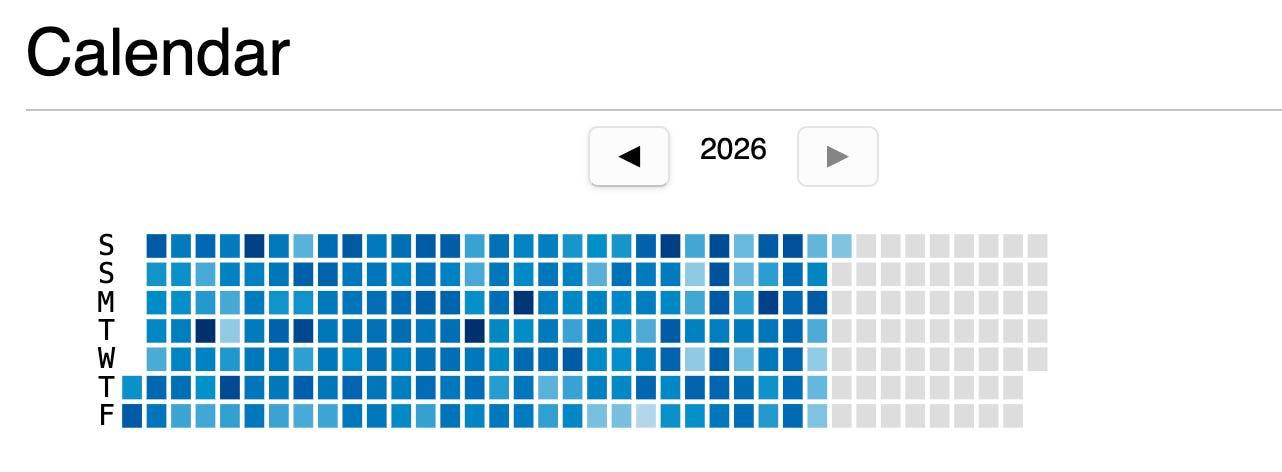
These are my practice stats in Anki, the app I use for trivia studying (and that I used back when I was a post-baccalaureate student taking biology classes a decade out of undergrad). Blue represents days I practiced. Light blue represents a relatively light day; deep saturated navy means hours of work. That light gray? That means I didn’t study at all. It’s been over eight weeks since I formally studied. That final blue day was July 18, the day the finals of Season 4 of Jeopardy! Masters taped.
Truth be told, I miss it! But for months leading up to Masters I sensed I was overworking and heading for burnout. In addition to Jeopardy! preparation I was researching and writing Know It All, and both of those endeavors hovered around normal full-time hours for about a year. It wasn’t sustainable and I knew it, but I kept myself going with the lure of a “sweater sabbatical”: absolutely no studying until I knit two full sweaters.
(The original plan had me finishing up my entire backlog of the New York Review of Books as well but I’ve abandoned that goal; I’ve made up some ground, but I get through maybe 1.5 issues before the new issue arrives in my mailbox. It’s good to have unreasonable aspirations, right?)
As a process nerd I’m dying to see what effects the “sweater sabbatical” will have on my brain because this is, in certain ways and as best as I can tell, uncharted territory in learning research.
Most of the research about what happens when people take breaks from training for things pertain to athletes. In general, when people take extended breaks from physical training, they decondition (lose some strength and power) but are able to return to their pre-sabbatical level of performance quickly—more quickly than they were able to originally build their muscle mass. This is one of two phenomena that are referred to as muscle memory (the other one, in case you were curious, is the way that our bodies can do certain well-rehearsed tasks expertly even if it’s been awhile since we did them). A case study by a physiologist/triathlete indicates that cardiovascular health and fitness might work similarly for runners and endurance athletes.
We have little or no information about the effect of similar extended breaks in adults who do what you might call mental training. There’s been a fair amount of research on what is often termed the “summer slide”—the fact that children returning to school after summer vacations tend to lose ground in reading and math skills compared to where they were at the end of the previous school year. School closures during the early days of the COVID-19 pandemic provided a similar “natural experiment” and also indicated that time away from formal education can erode skills.
It’s unclear to me how much this can be generalized to adults, however. We can certainly expect to forget some things when we haven’t reinforced them for awhile. This is a fundamental tenet of memory research known as the “forgetting curve”: a predictable erosion of a certain percentage of what we’ve learned over time. I suspect, though, that there are some fundamental differences between kids in school and adult learners.
I’ve taken a couple extended breaks from studying over the decades I’ve been doing learning projects. My experience is generally that the things I was learning most recently before the break will be shaky or forgotten when I go back to them, which makes sense: part of the reason I study the way I do is to move information into long-term memory, which means the things I know the most securely are, in many cases, the things I learned furthest back in time.
Regardless: I view learning holistically, and in that sense I am absolutely certain a long break is a smart idea. Even if I forget all sorts of things, I can already tell that a couple months replacing Anki with knitting has turned down the stress. Which is what I’d hoped for going in!
Thanks for reading Know It All with Victoria Groce! Subscribe for free to receive new posts and support my work.
September 10, 2026
Five Things To Know Before You Try Out for Jeopardy!
Five Things to Know Before You Try Out for Jeopardy!
People ask me all the time for advice about trying out for Jeopardy! and doing well on the show once you get on. Here’s some of what I counsel people to think about from before the tryout all the way to tape day.
This post is for subscribers only. My newsletter is totally free and includes tips about Jeopardy!, learning, and how your brain works, so if you’re interested, subscribe and refresh!
Thanks for reading Know It All with Victoria Groce! Subscribe for free to receive new posts and support my work.