
Jonathon Fletcher's Blog: Captain's Blog - Posts Tagged "books"
The Captain's Blog: Blog Hop. My Writing Process
Today on the Captain's Blog I am participating in a blog hop. I was tagged by Jenny Burnley @JennyBurnley1. Her blog is here:
http://www.jennyburnley.co.uk/bloghop
I then tagged Michael Cairns @cairnswrites. His tagged blog is here:
http://cairnswrites.com/category/auth...
I was asked to answer four questions about my writing. So here goes...
1: What am I working on?
I usually like to work on a couple of things at once, that way I don't get bored with one project. So currently I'm editing Unity Book One and polishing up the cover. I'm also putting the finishing touches to a slightly extended edition of Josiah Trenchard 2: Morgenstern. This will bring the word length in line with parts 1, 3 and 4. I don't know why it ended up being shorter, it just did. Anyway, the re-write will cure that. Plus I've started working out the plot for JT 5: Arkhangelsk, but more of that later...
2: How does my work differ from others in my genre?
That's hard to answer. I guess I try to be original? That's very hard to do when writing science fiction. It's very easy to fall back onto stereotypes. So for example, when I created the Space Navy, I decided to base it upon the British Royal Navy, rather than the American version or the Marines. I spent a lot of time researching how the RN rank structure works, what life aboard a submarine is like. It's these little details that make or break a story for me. Inevitably some militaria from other services around the world creeps into my work, but that's inevitable. Military experts would probably pick holes in my books. But the point is that I've tried to be different.
The other way my work is different is that I've tried to include as many different races, creeds, colours and even regional personalities as possible. For example, a couple of my characters are Geordies (from the North East of the UK). There are so many different regions in the UK, different accents and cultural differences, it seems wrong not to delve deeply into them. Traditionally, the British military would recruit from all over the UK. There would even be specialist regiments, Scottish, Welsh, Northumbrian. So why not have the same thing in science fiction? A friend of mine often refers to my work as "Geordies in Space", which is a direct reference to the Muppets "Pigs in Space". It's a little glib, but it does exemplify what my books are about. Apart from Dave Lister in Red Dwarf, I can't think of any other famous Scousers in space? Can you? I can't think of any Geordies in popular science fiction and Geordie La Forge doesn't count!
3: Why do I write what I do?
I was always creative, even from being a child when I would make models out of cereal packets and draw. I did Art and Design right through school and into University. Then I had a ten year career working in the Animation industry as a prop and set maker and finally Art Director on Bob the Builder. Then through a series of events that I won't go into here, I became a gardener. Gardening is a great job, if a little wet at times. I did it for many years without any problems and then gradually I became aware of a hole in my life. I didn't do anything artistic any more. I didn't paint, draw, make models or write. I felt I was missing something important.
I had some stories left over from my university days that I had developed into TV scripts when I was working on Bob the Builder. I desperately needed an artistic outlet. I had been thinking about trying to write them as novels, so I wrote a book called "Unity" and then looked into publishing the traditional way, which is hard. Then a friend suggested self publishing on Amazon and here I am.
The point is that I needed to do something artistic like I need to breathe. I love to write and I build models for the covers and Photoshop them. Even if I never make much money in the self publishing game I will still create the books. I do this because I have to, because I need to. It completes me. I love what I do and I think that shines through in my work.
4: How does my writing process work?
I have a huge story arc / time line for my science fiction universe printed onto several sheets of A4 paper and stuck to the back of my wardrobe doors. This covers major events and gives an overview of the whole series plot. This is broken down into two streams which follow the two book series that I am currently working on, Unity and Josiah Trenchard. I have an idea for a third and possibly fourth which would take place within the same story arc.
Each book then takes place within a set time within that arc and will revolve around key events. The next thing I do is come up with a basic theme for that particular book, for example, zombies, Frankenstein's monster or a space battle. My next Josiah Trenchard book is primarily a huge space battle and I have taken my inspiration from a doomed World War Two merchant convoy that was trying to take supplies to Russia. Through a series of blunders, most of the convoy's protection fled and left the merchants to the mercy of the German fleet. Only a few merchant ships made it into safe harbour and that was mainly due to one very brave Captain. This story seemed to fit my gallant Captain Trenchard perfectly. The next book will also be Trenchard's "Wrath of Kahn". He will meet and battle an old adversary to the death!
The next thing I do is rough the book's story out using post-it notes on a wall. This makes it easy to move things around until I'm happy with the flow of the narrative. Next I begin to write. I like to keep the chapters short, around 3,000 words which equates to roughly six pages in Word. I write every morning before I go out gardening as I'm fresher then. You have to write every day and treat it like any other job, it's no good just writing when you feel like it, you'll get nothing written. Each morning I edit what I did the day before and then write something new.
Eventually I will have a rough draft. I return to the start and begin to edit. Then I edit all over again. Once I'm happy with the rough draft, I read the book to my wife, editing as I go. She comments on plot, characters and anything that doesn't seem to be right. She reads a great deal and has no truck with anything that a character "wouldn't do" or is too convenient. After she's heard my books read, we argue about the plot points and then I invariably go and do what she told me to anyway, after I've thought about it. She's usually right, but don't tell her that! After I've edited all her suggestions, which sometimes can mean a drastic re-write, I leave the book alone for a few weeks and work on something else.
The final stage is for her to read the book back to me, like listening to an audio book. This is important, I don't look at the screen, it's too distracting. I simply lie back and let the story flow by. I'm listening for how the dialogue sounds, does the action work? I can really tune the characters properly this way. Meanwhile my wife is proof reading as she goes, checking spelling, punctuation and grammar. Once that's done, the book is ready to publish.
Well, that my blog hop done. I hope you check out Jenny's and Michael's who I've tagged. There's lots of great independent authors out there. Go ahead and try a few!
Honour, strength and unity.
Jon.
http://www.jennyburnley.co.uk/bloghop
I then tagged Michael Cairns @cairnswrites. His tagged blog is here:
http://cairnswrites.com/category/auth...
I was asked to answer four questions about my writing. So here goes...
1: What am I working on?
I usually like to work on a couple of things at once, that way I don't get bored with one project. So currently I'm editing Unity Book One and polishing up the cover. I'm also putting the finishing touches to a slightly extended edition of Josiah Trenchard 2: Morgenstern. This will bring the word length in line with parts 1, 3 and 4. I don't know why it ended up being shorter, it just did. Anyway, the re-write will cure that. Plus I've started working out the plot for JT 5: Arkhangelsk, but more of that later...
2: How does my work differ from others in my genre?
That's hard to answer. I guess I try to be original? That's very hard to do when writing science fiction. It's very easy to fall back onto stereotypes. So for example, when I created the Space Navy, I decided to base it upon the British Royal Navy, rather than the American version or the Marines. I spent a lot of time researching how the RN rank structure works, what life aboard a submarine is like. It's these little details that make or break a story for me. Inevitably some militaria from other services around the world creeps into my work, but that's inevitable. Military experts would probably pick holes in my books. But the point is that I've tried to be different.
The other way my work is different is that I've tried to include as many different races, creeds, colours and even regional personalities as possible. For example, a couple of my characters are Geordies (from the North East of the UK). There are so many different regions in the UK, different accents and cultural differences, it seems wrong not to delve deeply into them. Traditionally, the British military would recruit from all over the UK. There would even be specialist regiments, Scottish, Welsh, Northumbrian. So why not have the same thing in science fiction? A friend of mine often refers to my work as "Geordies in Space", which is a direct reference to the Muppets "Pigs in Space". It's a little glib, but it does exemplify what my books are about. Apart from Dave Lister in Red Dwarf, I can't think of any other famous Scousers in space? Can you? I can't think of any Geordies in popular science fiction and Geordie La Forge doesn't count!
3: Why do I write what I do?
I was always creative, even from being a child when I would make models out of cereal packets and draw. I did Art and Design right through school and into University. Then I had a ten year career working in the Animation industry as a prop and set maker and finally Art Director on Bob the Builder. Then through a series of events that I won't go into here, I became a gardener. Gardening is a great job, if a little wet at times. I did it for many years without any problems and then gradually I became aware of a hole in my life. I didn't do anything artistic any more. I didn't paint, draw, make models or write. I felt I was missing something important.
I had some stories left over from my university days that I had developed into TV scripts when I was working on Bob the Builder. I desperately needed an artistic outlet. I had been thinking about trying to write them as novels, so I wrote a book called "Unity" and then looked into publishing the traditional way, which is hard. Then a friend suggested self publishing on Amazon and here I am.
The point is that I needed to do something artistic like I need to breathe. I love to write and I build models for the covers and Photoshop them. Even if I never make much money in the self publishing game I will still create the books. I do this because I have to, because I need to. It completes me. I love what I do and I think that shines through in my work.
4: How does my writing process work?
I have a huge story arc / time line for my science fiction universe printed onto several sheets of A4 paper and stuck to the back of my wardrobe doors. This covers major events and gives an overview of the whole series plot. This is broken down into two streams which follow the two book series that I am currently working on, Unity and Josiah Trenchard. I have an idea for a third and possibly fourth which would take place within the same story arc.
Each book then takes place within a set time within that arc and will revolve around key events. The next thing I do is come up with a basic theme for that particular book, for example, zombies, Frankenstein's monster or a space battle. My next Josiah Trenchard book is primarily a huge space battle and I have taken my inspiration from a doomed World War Two merchant convoy that was trying to take supplies to Russia. Through a series of blunders, most of the convoy's protection fled and left the merchants to the mercy of the German fleet. Only a few merchant ships made it into safe harbour and that was mainly due to one very brave Captain. This story seemed to fit my gallant Captain Trenchard perfectly. The next book will also be Trenchard's "Wrath of Kahn". He will meet and battle an old adversary to the death!
The next thing I do is rough the book's story out using post-it notes on a wall. This makes it easy to move things around until I'm happy with the flow of the narrative. Next I begin to write. I like to keep the chapters short, around 3,000 words which equates to roughly six pages in Word. I write every morning before I go out gardening as I'm fresher then. You have to write every day and treat it like any other job, it's no good just writing when you feel like it, you'll get nothing written. Each morning I edit what I did the day before and then write something new.
Eventually I will have a rough draft. I return to the start and begin to edit. Then I edit all over again. Once I'm happy with the rough draft, I read the book to my wife, editing as I go. She comments on plot, characters and anything that doesn't seem to be right. She reads a great deal and has no truck with anything that a character "wouldn't do" or is too convenient. After she's heard my books read, we argue about the plot points and then I invariably go and do what she told me to anyway, after I've thought about it. She's usually right, but don't tell her that! After I've edited all her suggestions, which sometimes can mean a drastic re-write, I leave the book alone for a few weeks and work on something else.
The final stage is for her to read the book back to me, like listening to an audio book. This is important, I don't look at the screen, it's too distracting. I simply lie back and let the story flow by. I'm listening for how the dialogue sounds, does the action work? I can really tune the characters properly this way. Meanwhile my wife is proof reading as she goes, checking spelling, punctuation and grammar. Once that's done, the book is ready to publish.
Well, that my blog hop done. I hope you check out Jenny's and Michael's who I've tagged. There's lots of great independent authors out there. Go ahead and try a few!
Honour, strength and unity.
Jon.


The Captain's Blog welcomes Michael Cairns...
Today the Captain's Blog welcomes author Michael Cairns...
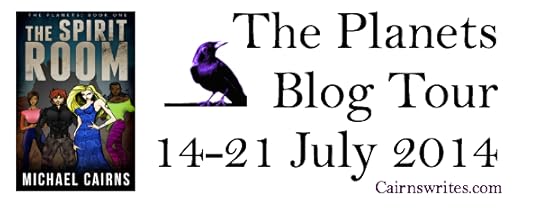
Here is a little about him:
Michael Cairns was born at a young age and could write even before he could play the drums, but that was long ago, in the glory days – when he actually had hair. He loves pineapple, playing gigs and outwitting his young daughter (the scores are about level but she’s getting smarter every day). Michael is currently working hard on writing, getting enough sleep and keeping his hair. The first is going well, the other two…not so much.
...and here is a little about his latest book.
The story is called 13 Roses and can be described as a character study/zombie apocalypse/spiritual fantasy…thing.
The flower seller sets up his stall on Embankment every day. Every day, he will serve only one customer. That person will be on the edge. Maybe they have to make a decision they dread, maybe their world is falling down around them and they are faced with a choice. Or maybe they need to change and don’t realise it. Whatever it may be, the flower seller is there, nudging them in one direction or another and giving them more than a nudge when the need arises. But who is the flower seller and why is he giving these people roses? And where do the zombies come in? All will be revealed…
Jon: so why the obsession with pineapple?
Michael: Pineapple just has it right. It's the right amount of crunch to sweetness ratio. It's also normally pretty good in terms of being ripe. I'd put nectarines in there but getting ones that are ripe can be tough. Mangos get an honourable mention but they're a sod to peel.
Jon: Do you play in a band? What's it called and what sort of music do you play?
Michael: I play in a few bands. I make money playing at corporate functions and weddings, banging out all the classic pop songs you can think of (and some you'd probably rather not)
My main gig is playing with a fabulous soul singer called Alexia Coley. She's releasing her first album (featuring me on drums) through Jalapeno records later in the year. If you like your soul funky, passionate and occasionally dirty, you can find her here: http://alexiacoley.com/
Jon: Interesting blurb. Care to tell us a little about the flower seller (without spoilers)?
Michael: Talking about the flower seller without giving too much away is tricky. He has a very difficult job and it's one he's been forced into following a release from his previous role. Despite this he takes every subject he has very seriously and strives to bring them back from whatever brink they're on. His boss is something of a harsh taskmaster but there's more going on in their relationship than simple line-managing. To be honest, the story is taking place live on the blog, so if you want to know more, the best is to check it out on the blog. Part one is here: http://cairnswrites.com/13-roses-part...
Jon: What is it about zombies that does it for you?
Michael: Good question. I first got into zombies through Day of the Dead, the classic Romero movie. It was only after I'd watched it a few times and done my research I discovered Dawn of the Dead was the real classic. But I loved the bleakness of Day along with the sheer excess of people being torn apart and eaten alive! I enjoy the way zombie films never finish with a nice clean everything's okay ending. I also love that feeling of having to survive without any real sense of hope. Cheery stuff! I love that at the heart of them, zombie movies are about ordinary people dealing with extraordinary circumstances. But the extraordinary bits are almost always secondary to the people and their personal journeys. Zombie movies can be wonderful metaphors or you can just enjoy them for the blood and guts.
Jon: What's the worst gig you've ever played and the best?
Michael: My worst gig's a tough one. There's almost always something to take away from them. I have, however, done a few gigs in run-down pubs to one man and his dog, neither of whom were interested in the music. They're rarely fun. I've had too many best gigs to choose from. Most recently I had a terrific weekend, playing in Amsterdam on the Saturday night and flying home to play the Scala in Kings Cross on the Sunday. Both gigs were great fun with great audiences and even better, the drum kits were set up before I got there :)
Jon: If you had to compare your work to another author, who would it be?
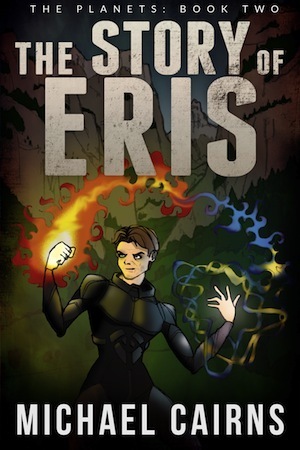
I hate to compare to anyone because it always feels arrogant. I can happily talk about my influences and the people I feel I would like to emulate. The Planets series has been described as a comic in book form, so in terms of comic writers, I love Brian Michael Bendis, Neil Gaiman, Warren Ellis, Terry Moore and Bill Willingham, among others. In books, I love all kinds, but my strong fantasy influences include Raymond E Feist, David Gemmell, David Eddings, The Wildcards series authors (best superhero series ever), Melanie Rawn and Terry Pratchett. I got a lot of my love of adventure from movies like Indiana Jones and Star Wars, and some TV shows like Buffy and Angel. It was those shows that made me want to do a serial fiction blog and I'd love to have the A Game of War series adapted for TV.
Jon: How did you become a writer in the first place?
Michael: I wrote a bit in school and had one of my stories published in the school yearbook. I then wrote nothing for ten years save some outstandingly horrible poetry in my student days. About four years ago I went on one of my wife's retreats to help with the washing up. Fortunately, the chef we hired was somewhat efficient and I found myself with a spare afternoon. With no idea of what I was going to write, I opened my laptop and typed the first sentence of my first book. By the end of the weekend I had ten thousand words down and a whole world in my head. I spent the next two months finishing the first one. I started the second, my daughter was born, and sixteen months later it was finished. I must confess, I didn't really consider myself a proper writer until the beginning of 2013. My new year's resolution was to write every day, which I have done ever since.
Jon: Everyone's writing process is different. How do you plan out a story?
Michael: This is a fun one. The most honest answer is that I don't. The most exciting thing in the world, except a lifetimes supply of chocolate, is a blank page. So I normally begin with a sentence that sounds good. What I have noticed is that it's normally something a character is thinking or saying. I have yet to begin with...'the tower was black.' So, my sentence becomes a paragraph and that becomes a scene. By the end of that first scene, I'll have a pretty good idea about the character. As I write the next few scenes, I get more of an idea of what their lives are about and what the challenge is they are facing, as well as introducing others. It comes bit by bit from then on. I'll try to search for the ending as I write, but more often than not, the big things happen literally as I'm typing. My second book, which is released this week, has a massive happening near the end. It came to me as I wrote it, but looking back, I discovered I'd set it up perfectly. So maybe stuff is happening unconsciously or maybe I'm just lucky, I'm not sure yet.
Jon: What methods do you find successful for promoting your books?
Michael: We've tried a few different things, but haven't yet managed to track the success to any particular avenue. This week we are doing our first paid promotion on some of the bigger book promo sites, so we'll have to see how they go. We released the first book in my sci-fi series, A Game of War, for free and got good initial uptake on that. I tend to get good comments through facebook. My blog has some regular readers (I post fiction there twice a week and podcast fiction once a week) but again, tracking whether they become buyers is difficult.
Jon: Is there anything else that you want people to know?
Your readers can download a free copy of Childhood Dreams from my blog by signing up to the newsletter. They will also receive updates, early opportunities to get my books and free short stories.
Also, of course, thanks so much for having me :)
Jon: Thanks for being on the Captain's Blog. It's been a real pleasure interviewing you Michael.
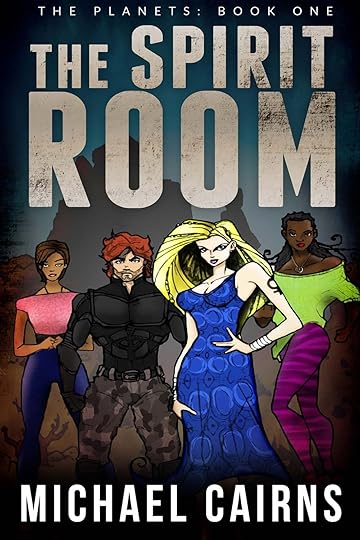
Here is a little about him:
Michael Cairns was born at a young age and could write even before he could play the drums, but that was long ago, in the glory days – when he actually had hair. He loves pineapple, playing gigs and outwitting his young daughter (the scores are about level but she’s getting smarter every day). Michael is currently working hard on writing, getting enough sleep and keeping his hair. The first is going well, the other two…not so much.
...and here is a little about his latest book.
The story is called 13 Roses and can be described as a character study/zombie apocalypse/spiritual fantasy…thing.
The flower seller sets up his stall on Embankment every day. Every day, he will serve only one customer. That person will be on the edge. Maybe they have to make a decision they dread, maybe their world is falling down around them and they are faced with a choice. Or maybe they need to change and don’t realise it. Whatever it may be, the flower seller is there, nudging them in one direction or another and giving them more than a nudge when the need arises. But who is the flower seller and why is he giving these people roses? And where do the zombies come in? All will be revealed…
Jon: so why the obsession with pineapple?
Michael: Pineapple just has it right. It's the right amount of crunch to sweetness ratio. It's also normally pretty good in terms of being ripe. I'd put nectarines in there but getting ones that are ripe can be tough. Mangos get an honourable mention but they're a sod to peel.
Jon: Do you play in a band? What's it called and what sort of music do you play?
Michael: I play in a few bands. I make money playing at corporate functions and weddings, banging out all the classic pop songs you can think of (and some you'd probably rather not)
My main gig is playing with a fabulous soul singer called Alexia Coley. She's releasing her first album (featuring me on drums) through Jalapeno records later in the year. If you like your soul funky, passionate and occasionally dirty, you can find her here: http://alexiacoley.com/
Jon: Interesting blurb. Care to tell us a little about the flower seller (without spoilers)?
Michael: Talking about the flower seller without giving too much away is tricky. He has a very difficult job and it's one he's been forced into following a release from his previous role. Despite this he takes every subject he has very seriously and strives to bring them back from whatever brink they're on. His boss is something of a harsh taskmaster but there's more going on in their relationship than simple line-managing. To be honest, the story is taking place live on the blog, so if you want to know more, the best is to check it out on the blog. Part one is here: http://cairnswrites.com/13-roses-part...
Jon: What is it about zombies that does it for you?
Michael: Good question. I first got into zombies through Day of the Dead, the classic Romero movie. It was only after I'd watched it a few times and done my research I discovered Dawn of the Dead was the real classic. But I loved the bleakness of Day along with the sheer excess of people being torn apart and eaten alive! I enjoy the way zombie films never finish with a nice clean everything's okay ending. I also love that feeling of having to survive without any real sense of hope. Cheery stuff! I love that at the heart of them, zombie movies are about ordinary people dealing with extraordinary circumstances. But the extraordinary bits are almost always secondary to the people and their personal journeys. Zombie movies can be wonderful metaphors or you can just enjoy them for the blood and guts.
Jon: What's the worst gig you've ever played and the best?
Michael: My worst gig's a tough one. There's almost always something to take away from them. I have, however, done a few gigs in run-down pubs to one man and his dog, neither of whom were interested in the music. They're rarely fun. I've had too many best gigs to choose from. Most recently I had a terrific weekend, playing in Amsterdam on the Saturday night and flying home to play the Scala in Kings Cross on the Sunday. Both gigs were great fun with great audiences and even better, the drum kits were set up before I got there :)
Jon: If you had to compare your work to another author, who would it be?
I hate to compare to anyone because it always feels arrogant. I can happily talk about my influences and the people I feel I would like to emulate. The Planets series has been described as a comic in book form, so in terms of comic writers, I love Brian Michael Bendis, Neil Gaiman, Warren Ellis, Terry Moore and Bill Willingham, among others. In books, I love all kinds, but my strong fantasy influences include Raymond E Feist, David Gemmell, David Eddings, The Wildcards series authors (best superhero series ever), Melanie Rawn and Terry Pratchett. I got a lot of my love of adventure from movies like Indiana Jones and Star Wars, and some TV shows like Buffy and Angel. It was those shows that made me want to do a serial fiction blog and I'd love to have the A Game of War series adapted for TV.
Jon: How did you become a writer in the first place?
Michael: I wrote a bit in school and had one of my stories published in the school yearbook. I then wrote nothing for ten years save some outstandingly horrible poetry in my student days. About four years ago I went on one of my wife's retreats to help with the washing up. Fortunately, the chef we hired was somewhat efficient and I found myself with a spare afternoon. With no idea of what I was going to write, I opened my laptop and typed the first sentence of my first book. By the end of the weekend I had ten thousand words down and a whole world in my head. I spent the next two months finishing the first one. I started the second, my daughter was born, and sixteen months later it was finished. I must confess, I didn't really consider myself a proper writer until the beginning of 2013. My new year's resolution was to write every day, which I have done ever since.
Jon: Everyone's writing process is different. How do you plan out a story?
Michael: This is a fun one. The most honest answer is that I don't. The most exciting thing in the world, except a lifetimes supply of chocolate, is a blank page. So I normally begin with a sentence that sounds good. What I have noticed is that it's normally something a character is thinking or saying. I have yet to begin with...'the tower was black.' So, my sentence becomes a paragraph and that becomes a scene. By the end of that first scene, I'll have a pretty good idea about the character. As I write the next few scenes, I get more of an idea of what their lives are about and what the challenge is they are facing, as well as introducing others. It comes bit by bit from then on. I'll try to search for the ending as I write, but more often than not, the big things happen literally as I'm typing. My second book, which is released this week, has a massive happening near the end. It came to me as I wrote it, but looking back, I discovered I'd set it up perfectly. So maybe stuff is happening unconsciously or maybe I'm just lucky, I'm not sure yet.
Jon: What methods do you find successful for promoting your books?
Michael: We've tried a few different things, but haven't yet managed to track the success to any particular avenue. This week we are doing our first paid promotion on some of the bigger book promo sites, so we'll have to see how they go. We released the first book in my sci-fi series, A Game of War, for free and got good initial uptake on that. I tend to get good comments through facebook. My blog has some regular readers (I post fiction there twice a week and podcast fiction once a week) but again, tracking whether they become buyers is difficult.
Jon: Is there anything else that you want people to know?
Your readers can download a free copy of Childhood Dreams from my blog by signing up to the newsletter. They will also receive updates, early opportunities to get my books and free short stories.
Also, of course, thanks so much for having me :)
Jon: Thanks for being on the Captain's Blog. It's been a real pleasure interviewing you Michael.
Captain's Blog

Random thoughts from a science fiction author...
- Jonathon Fletcher's profile
- 95 followers

