
Jonathon Fletcher's Blog: Captain's Blog - Posts Tagged "science-fiction"
The Captain's Blog: Blog Hop. My Writing Process
Today on the Captain's Blog I am participating in a blog hop. I was tagged by Jenny Burnley @JennyBurnley1. Her blog is here:
http://www.jennyburnley.co.uk/bloghop
I then tagged Michael Cairns @cairnswrites. His tagged blog is here:
http://cairnswrites.com/category/auth...
I was asked to answer four questions about my writing. So here goes...
1: What am I working on?
I usually like to work on a couple of things at once, that way I don't get bored with one project. So currently I'm editing Unity Book One and polishing up the cover. I'm also putting the finishing touches to a slightly extended edition of Josiah Trenchard 2: Morgenstern. This will bring the word length in line with parts 1, 3 and 4. I don't know why it ended up being shorter, it just did. Anyway, the re-write will cure that. Plus I've started working out the plot for JT 5: Arkhangelsk, but more of that later...
2: How does my work differ from others in my genre?
That's hard to answer. I guess I try to be original? That's very hard to do when writing science fiction. It's very easy to fall back onto stereotypes. So for example, when I created the Space Navy, I decided to base it upon the British Royal Navy, rather than the American version or the Marines. I spent a lot of time researching how the RN rank structure works, what life aboard a submarine is like. It's these little details that make or break a story for me. Inevitably some militaria from other services around the world creeps into my work, but that's inevitable. Military experts would probably pick holes in my books. But the point is that I've tried to be different.
The other way my work is different is that I've tried to include as many different races, creeds, colours and even regional personalities as possible. For example, a couple of my characters are Geordies (from the North East of the UK). There are so many different regions in the UK, different accents and cultural differences, it seems wrong not to delve deeply into them. Traditionally, the British military would recruit from all over the UK. There would even be specialist regiments, Scottish, Welsh, Northumbrian. So why not have the same thing in science fiction? A friend of mine often refers to my work as "Geordies in Space", which is a direct reference to the Muppets "Pigs in Space". It's a little glib, but it does exemplify what my books are about. Apart from Dave Lister in Red Dwarf, I can't think of any other famous Scousers in space? Can you? I can't think of any Geordies in popular science fiction and Geordie La Forge doesn't count!
3: Why do I write what I do?
I was always creative, even from being a child when I would make models out of cereal packets and draw. I did Art and Design right through school and into University. Then I had a ten year career working in the Animation industry as a prop and set maker and finally Art Director on Bob the Builder. Then through a series of events that I won't go into here, I became a gardener. Gardening is a great job, if a little wet at times. I did it for many years without any problems and then gradually I became aware of a hole in my life. I didn't do anything artistic any more. I didn't paint, draw, make models or write. I felt I was missing something important.
I had some stories left over from my university days that I had developed into TV scripts when I was working on Bob the Builder. I desperately needed an artistic outlet. I had been thinking about trying to write them as novels, so I wrote a book called "Unity" and then looked into publishing the traditional way, which is hard. Then a friend suggested self publishing on Amazon and here I am.
The point is that I needed to do something artistic like I need to breathe. I love to write and I build models for the covers and Photoshop them. Even if I never make much money in the self publishing game I will still create the books. I do this because I have to, because I need to. It completes me. I love what I do and I think that shines through in my work.
4: How does my writing process work?
I have a huge story arc / time line for my science fiction universe printed onto several sheets of A4 paper and stuck to the back of my wardrobe doors. This covers major events and gives an overview of the whole series plot. This is broken down into two streams which follow the two book series that I am currently working on, Unity and Josiah Trenchard. I have an idea for a third and possibly fourth which would take place within the same story arc.
Each book then takes place within a set time within that arc and will revolve around key events. The next thing I do is come up with a basic theme for that particular book, for example, zombies, Frankenstein's monster or a space battle. My next Josiah Trenchard book is primarily a huge space battle and I have taken my inspiration from a doomed World War Two merchant convoy that was trying to take supplies to Russia. Through a series of blunders, most of the convoy's protection fled and left the merchants to the mercy of the German fleet. Only a few merchant ships made it into safe harbour and that was mainly due to one very brave Captain. This story seemed to fit my gallant Captain Trenchard perfectly. The next book will also be Trenchard's "Wrath of Kahn". He will meet and battle an old adversary to the death!
The next thing I do is rough the book's story out using post-it notes on a wall. This makes it easy to move things around until I'm happy with the flow of the narrative. Next I begin to write. I like to keep the chapters short, around 3,000 words which equates to roughly six pages in Word. I write every morning before I go out gardening as I'm fresher then. You have to write every day and treat it like any other job, it's no good just writing when you feel like it, you'll get nothing written. Each morning I edit what I did the day before and then write something new.
Eventually I will have a rough draft. I return to the start and begin to edit. Then I edit all over again. Once I'm happy with the rough draft, I read the book to my wife, editing as I go. She comments on plot, characters and anything that doesn't seem to be right. She reads a great deal and has no truck with anything that a character "wouldn't do" or is too convenient. After she's heard my books read, we argue about the plot points and then I invariably go and do what she told me to anyway, after I've thought about it. She's usually right, but don't tell her that! After I've edited all her suggestions, which sometimes can mean a drastic re-write, I leave the book alone for a few weeks and work on something else.
The final stage is for her to read the book back to me, like listening to an audio book. This is important, I don't look at the screen, it's too distracting. I simply lie back and let the story flow by. I'm listening for how the dialogue sounds, does the action work? I can really tune the characters properly this way. Meanwhile my wife is proof reading as she goes, checking spelling, punctuation and grammar. Once that's done, the book is ready to publish.
Well, that my blog hop done. I hope you check out Jenny's and Michael's who I've tagged. There's lots of great independent authors out there. Go ahead and try a few!
Honour, strength and unity.
Jon.
http://www.jennyburnley.co.uk/bloghop
I then tagged Michael Cairns @cairnswrites. His tagged blog is here:
http://cairnswrites.com/category/auth...
I was asked to answer four questions about my writing. So here goes...
1: What am I working on?
I usually like to work on a couple of things at once, that way I don't get bored with one project. So currently I'm editing Unity Book One and polishing up the cover. I'm also putting the finishing touches to a slightly extended edition of Josiah Trenchard 2: Morgenstern. This will bring the word length in line with parts 1, 3 and 4. I don't know why it ended up being shorter, it just did. Anyway, the re-write will cure that. Plus I've started working out the plot for JT 5: Arkhangelsk, but more of that later...
2: How does my work differ from others in my genre?
That's hard to answer. I guess I try to be original? That's very hard to do when writing science fiction. It's very easy to fall back onto stereotypes. So for example, when I created the Space Navy, I decided to base it upon the British Royal Navy, rather than the American version or the Marines. I spent a lot of time researching how the RN rank structure works, what life aboard a submarine is like. It's these little details that make or break a story for me. Inevitably some militaria from other services around the world creeps into my work, but that's inevitable. Military experts would probably pick holes in my books. But the point is that I've tried to be different.
The other way my work is different is that I've tried to include as many different races, creeds, colours and even regional personalities as possible. For example, a couple of my characters are Geordies (from the North East of the UK). There are so many different regions in the UK, different accents and cultural differences, it seems wrong not to delve deeply into them. Traditionally, the British military would recruit from all over the UK. There would even be specialist regiments, Scottish, Welsh, Northumbrian. So why not have the same thing in science fiction? A friend of mine often refers to my work as "Geordies in Space", which is a direct reference to the Muppets "Pigs in Space". It's a little glib, but it does exemplify what my books are about. Apart from Dave Lister in Red Dwarf, I can't think of any other famous Scousers in space? Can you? I can't think of any Geordies in popular science fiction and Geordie La Forge doesn't count!
3: Why do I write what I do?
I was always creative, even from being a child when I would make models out of cereal packets and draw. I did Art and Design right through school and into University. Then I had a ten year career working in the Animation industry as a prop and set maker and finally Art Director on Bob the Builder. Then through a series of events that I won't go into here, I became a gardener. Gardening is a great job, if a little wet at times. I did it for many years without any problems and then gradually I became aware of a hole in my life. I didn't do anything artistic any more. I didn't paint, draw, make models or write. I felt I was missing something important.
I had some stories left over from my university days that I had developed into TV scripts when I was working on Bob the Builder. I desperately needed an artistic outlet. I had been thinking about trying to write them as novels, so I wrote a book called "Unity" and then looked into publishing the traditional way, which is hard. Then a friend suggested self publishing on Amazon and here I am.
The point is that I needed to do something artistic like I need to breathe. I love to write and I build models for the covers and Photoshop them. Even if I never make much money in the self publishing game I will still create the books. I do this because I have to, because I need to. It completes me. I love what I do and I think that shines through in my work.
4: How does my writing process work?
I have a huge story arc / time line for my science fiction universe printed onto several sheets of A4 paper and stuck to the back of my wardrobe doors. This covers major events and gives an overview of the whole series plot. This is broken down into two streams which follow the two book series that I am currently working on, Unity and Josiah Trenchard. I have an idea for a third and possibly fourth which would take place within the same story arc.
Each book then takes place within a set time within that arc and will revolve around key events. The next thing I do is come up with a basic theme for that particular book, for example, zombies, Frankenstein's monster or a space battle. My next Josiah Trenchard book is primarily a huge space battle and I have taken my inspiration from a doomed World War Two merchant convoy that was trying to take supplies to Russia. Through a series of blunders, most of the convoy's protection fled and left the merchants to the mercy of the German fleet. Only a few merchant ships made it into safe harbour and that was mainly due to one very brave Captain. This story seemed to fit my gallant Captain Trenchard perfectly. The next book will also be Trenchard's "Wrath of Kahn". He will meet and battle an old adversary to the death!
The next thing I do is rough the book's story out using post-it notes on a wall. This makes it easy to move things around until I'm happy with the flow of the narrative. Next I begin to write. I like to keep the chapters short, around 3,000 words which equates to roughly six pages in Word. I write every morning before I go out gardening as I'm fresher then. You have to write every day and treat it like any other job, it's no good just writing when you feel like it, you'll get nothing written. Each morning I edit what I did the day before and then write something new.
Eventually I will have a rough draft. I return to the start and begin to edit. Then I edit all over again. Once I'm happy with the rough draft, I read the book to my wife, editing as I go. She comments on plot, characters and anything that doesn't seem to be right. She reads a great deal and has no truck with anything that a character "wouldn't do" or is too convenient. After she's heard my books read, we argue about the plot points and then I invariably go and do what she told me to anyway, after I've thought about it. She's usually right, but don't tell her that! After I've edited all her suggestions, which sometimes can mean a drastic re-write, I leave the book alone for a few weeks and work on something else.
The final stage is for her to read the book back to me, like listening to an audio book. This is important, I don't look at the screen, it's too distracting. I simply lie back and let the story flow by. I'm listening for how the dialogue sounds, does the action work? I can really tune the characters properly this way. Meanwhile my wife is proof reading as she goes, checking spelling, punctuation and grammar. Once that's done, the book is ready to publish.
Well, that my blog hop done. I hope you check out Jenny's and Michael's who I've tagged. There's lots of great independent authors out there. Go ahead and try a few!
Honour, strength and unity.
Jon.


Free sample: prologue from Warrior of the Space Navy
image: 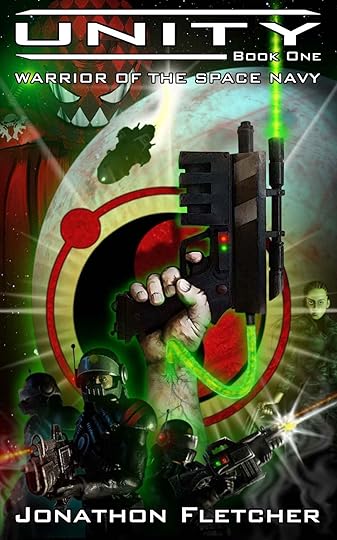
Unity Book One
Warrior of the Space Navy
Prologue
“A Clear Message”
Deep within the asteroid belt that lies in orbit between Mars and Jupiter a desperate struggle had begun. A huge cargo hauler was engaged in a deathly dance through the void. Sitting on its back was an ugly black lump of a ship, a mongrel that was constructed out of the salvaged parts of the unfortunate space vessels that it had defeated and torn apart. The black ship had the unmistakable markings of the Martian pirates painted across her prow, a helmeted skull and crossed rifles. Just underneath the grisly image, painted in blood red, was the name of the vessel; the S.S. Satanskin.
The Satanskin was clinging onto the back of the cargo hauler using claw-like docking clamps that bit fiercely into the metal hull of its prey like a lion’s claws biting into the back of a gazelle. Docking tubes protruded from the underbelly of the black beast to meet deep wounds that had been cut into the skin of the crippled cargo hauler. Through each tube a steady stream of heavily armoured pirates now marched. Each pirate wore an armoured E.V.A. spacesuit and carried a deadly weapon. Every pirate had a fearsome design boldly painted across the visor of their suit, a skull, a demon, a snarling tiger shark or other bestial images intended to intimidate and terrify their victims. They poured into the cargo hauler like an army of ants, intent on stripping the ship clean and killing every living soul on board.
Inside the bridge of the cargo vessel the Captain stood firm with his officers beside him. He knew that he was about to die. Pirates didn’t take prisoners. They left no-one alive who could identify them. The men and women around him were shaking with terror. They held their puny looking pistols in sweating hands and stared fixedly at the hatch to the bridge as if they expected the devil himself to burst through on wings of fire. As it turned out, they were not far wrong.
With a shower of sparks the metal hatch fell inwards and landed on the deck with a clang that reverberated throughout the ship like the mournful toll of a funeral bell. Two of the officers began to fire their pistols at the incoming hoard and were instantly mown down by automatic rifle fire. The remaining crew immediately dropped their weapons and raised their hands in terror, falling to their knees as the armoured pirates surrounded them.
The Captain was a proud man, never one to cower. He stood tall with his hands clasped firmly behind his back, awaiting the death that he knew was coming for him with as much bravado as he could muster. Death came through the hatch in the shape of a huge man who was wearing an E.V.A. spacesuit that was painted with vivid black and red diamond patterns. When the Captain saw the suited figure even his stiff upper lip began to tremble.
‘Harlequin!’ he hissed through teeth that were clenched tightly in an attempt to stop them chattering.
‘I see that my reputation precedes me?’ said the helmeted figure as he came to a halt directly in front of the defiant Captain.
Harlequin’s voice sounded metallic, electronic and weirdly distorted as it came through the communication system of the Extra Vehicular Activity spacesuit. The towering figure stared calmly down at the Captain. He was a clear foot taller than the Captain. In his gloved hands he carried a coil of hemp rope which he continually twisted and pulled.
‘It precedes you like a bad smell!’ hissed the Captain as hatred burned in his eyes. ‘You’re surrounded by the foul stench of death and decay. You will burn for an eternity in the fires of hell for the crimes that you have committed!’
Harlequin began to chuckle, a sound that seemed detached from the death and destruction that surrounded him. The Captain couldn’t tear his eyes away from the rope that Harlequin continually wrought in his hands.
‘I don’t believe in hell Sir,’ said Harlequin, ‘at least not in the sense of an afterlife. There is hell enough before death for men like you and me. I give you a choice brave Captain, one choice for you and your gallant crew. Live or die. Join my crew; pledge your allegiance to me and my ship and you will live. Refuse and you die, here and now.’
There was absolute silence. Then the Captain snarled, ‘I’ll never join filthy, murderous scum like you.’
A moment passed and then a young man to the Captain’s left stepped forwards and spoke in a quavering voice. ‘I’ll join you,’ he said hoarsely.
‘Good lad!’ said Harlequin and then motioned to two of his men.
As they led the young man away back towards the Satanskin, he averted his eyes from the accusatory stare of the Captain. Then Harlequin rounded on the Captain and the remains of his crew.
‘Anyone else?’
Nobody moved or spoke.
‘Fine,’ said Harlequin and pointed with his gloved hand to the crew standing either side of the Captain.
Immediately the automatic rifles of the surrounding pirates mowed down the remaining bridge crew. A hail of bullets and chilling screams surrounded the Captain. After a second he was the only one left standing amidst a pile of twitching corpses.
Harlequin eyeballed the man through his painted visor. The Captain was still standing resolutely on the spot with his hands clasped firmly behind his back. Blood now spattered his face from his fallen crewmembers, but the man had not even flinched.
‘My, you are a tough son of a bitch!’ goaded Harlequin. ‘You should have joined us. I could have used a stalwart man like you. Now it’s going to be worse for you mate.’
The Captain finally began to shake, his resolve crumbled, anger and fear taking control. ‘Go to hell! Get it over with. Just kill me you bastard!’
‘Oh I will kill you, to be sure, but it won’t be quick,’ said Harlequin darkly. ‘I have a message to deliver.’
Then Harlequin turned to his men. ‘String him up!’ he ordered.
Several of the other pirates quickly took the rope from Harlequin’s hands and used it to tie the Captain to an overhead girder. The quaking man was hung by his outstretched arms in a crucifixion position and then hauled up until his feet were hanging a clear foot above the deck. Harlequin walked towards the Captain and looked up into his face. By now the man was utterly terrified.
‘What are you going to do?’ the Captain asked in the quiet voice of a broken man.
‘I told you,’ said Harlequin. ‘I’m going to send a message.’
Harlequin turned to a pirate who was standing next to him and nodded. The man brought a small holographic camera up, focussed it on Harlequin and the Captain and began to record. Harlequin bowed dramatically to the camera and then straightened up.
‘This message is for the Admirals of the United Worlds Space Navy’s High Command and President Smith’s government. It is from my new allies in the Insurgent organisation. They are very unhappy with how you have treated their people on the outer worlds. Your heavy-handed approach is uncalled for, barbaric and brutal. So as an object lesson they have asked me to make an example.’
Harlequin moved aside slightly to let the camera see the strung up Captain more clearly.
‘This cargo hauler was on its way to your naval base on Cairn carrying supplies. Nothing vital I’ll admit, but you will be on short rations for a while. More to the point is that this ship was under your employ. It was subcontracted to the Space Navy. Cairn is from where you launch your attacks. Cairn is your safe haven. Therefore it is Cairn that will suffer! In retaliation for your attacks and subjugation of the free people, we make this promise. We will attack any civilian ship that attempts to bring supplies to the naval base on Cairn. I repeat, all supply ships that attempt to reach Cairn will be destroyed and their crews slaughtered. Cairn will be cut off and your enlisted troops will slowly starve!’
Harlequin stepped closer towards the Captain.
‘…and just so you believe that our resolve is firm…’
Harlequin turned towards the Captain. He slowly drew a knife from a sheath on his belt and held it up so that it glinted in the light. Harlequin leaned in closely towards the Captain and whispered softly.
‘I’m sorry mate, but this is going to hurt you more than it hurts me.’
Then Harlequin began to cut.
With every slice, with every deft cleave, the Captain’s blood-curdling screams could be heard echoing throughout the entirety of the doomed vessel. When he had finished Harlequin turned towards the camera, still holding the bloody knife. Blood covered his visor and dripped down his spacesuit to pool on the deck. Behind Harlequin what remained of the Captain swung to and fro like meat on a hook in a butcher’s window.
‘That ends today’s object lesson. You can be sure that there will be others. Farewell and adieu.’
Unity Book One: Warrior of the Space Navy, is available now from Amazon...
http://www.amazon.co.uk/Warrior-Space...
http://www.amazon.com/Warrior-Space-N...
Unity Book One
Warrior of the Space Navy
Prologue
“A Clear Message”
Deep within the asteroid belt that lies in orbit between Mars and Jupiter a desperate struggle had begun. A huge cargo hauler was engaged in a deathly dance through the void. Sitting on its back was an ugly black lump of a ship, a mongrel that was constructed out of the salvaged parts of the unfortunate space vessels that it had defeated and torn apart. The black ship had the unmistakable markings of the Martian pirates painted across her prow, a helmeted skull and crossed rifles. Just underneath the grisly image, painted in blood red, was the name of the vessel; the S.S. Satanskin.
The Satanskin was clinging onto the back of the cargo hauler using claw-like docking clamps that bit fiercely into the metal hull of its prey like a lion’s claws biting into the back of a gazelle. Docking tubes protruded from the underbelly of the black beast to meet deep wounds that had been cut into the skin of the crippled cargo hauler. Through each tube a steady stream of heavily armoured pirates now marched. Each pirate wore an armoured E.V.A. spacesuit and carried a deadly weapon. Every pirate had a fearsome design boldly painted across the visor of their suit, a skull, a demon, a snarling tiger shark or other bestial images intended to intimidate and terrify their victims. They poured into the cargo hauler like an army of ants, intent on stripping the ship clean and killing every living soul on board.
Inside the bridge of the cargo vessel the Captain stood firm with his officers beside him. He knew that he was about to die. Pirates didn’t take prisoners. They left no-one alive who could identify them. The men and women around him were shaking with terror. They held their puny looking pistols in sweating hands and stared fixedly at the hatch to the bridge as if they expected the devil himself to burst through on wings of fire. As it turned out, they were not far wrong.
With a shower of sparks the metal hatch fell inwards and landed on the deck with a clang that reverberated throughout the ship like the mournful toll of a funeral bell. Two of the officers began to fire their pistols at the incoming hoard and were instantly mown down by automatic rifle fire. The remaining crew immediately dropped their weapons and raised their hands in terror, falling to their knees as the armoured pirates surrounded them.
The Captain was a proud man, never one to cower. He stood tall with his hands clasped firmly behind his back, awaiting the death that he knew was coming for him with as much bravado as he could muster. Death came through the hatch in the shape of a huge man who was wearing an E.V.A. spacesuit that was painted with vivid black and red diamond patterns. When the Captain saw the suited figure even his stiff upper lip began to tremble.
‘Harlequin!’ he hissed through teeth that were clenched tightly in an attempt to stop them chattering.
‘I see that my reputation precedes me?’ said the helmeted figure as he came to a halt directly in front of the defiant Captain.
Harlequin’s voice sounded metallic, electronic and weirdly distorted as it came through the communication system of the Extra Vehicular Activity spacesuit. The towering figure stared calmly down at the Captain. He was a clear foot taller than the Captain. In his gloved hands he carried a coil of hemp rope which he continually twisted and pulled.
‘It precedes you like a bad smell!’ hissed the Captain as hatred burned in his eyes. ‘You’re surrounded by the foul stench of death and decay. You will burn for an eternity in the fires of hell for the crimes that you have committed!’
Harlequin began to chuckle, a sound that seemed detached from the death and destruction that surrounded him. The Captain couldn’t tear his eyes away from the rope that Harlequin continually wrought in his hands.
‘I don’t believe in hell Sir,’ said Harlequin, ‘at least not in the sense of an afterlife. There is hell enough before death for men like you and me. I give you a choice brave Captain, one choice for you and your gallant crew. Live or die. Join my crew; pledge your allegiance to me and my ship and you will live. Refuse and you die, here and now.’
There was absolute silence. Then the Captain snarled, ‘I’ll never join filthy, murderous scum like you.’
A moment passed and then a young man to the Captain’s left stepped forwards and spoke in a quavering voice. ‘I’ll join you,’ he said hoarsely.
‘Good lad!’ said Harlequin and then motioned to two of his men.
As they led the young man away back towards the Satanskin, he averted his eyes from the accusatory stare of the Captain. Then Harlequin rounded on the Captain and the remains of his crew.
‘Anyone else?’
Nobody moved or spoke.
‘Fine,’ said Harlequin and pointed with his gloved hand to the crew standing either side of the Captain.
Immediately the automatic rifles of the surrounding pirates mowed down the remaining bridge crew. A hail of bullets and chilling screams surrounded the Captain. After a second he was the only one left standing amidst a pile of twitching corpses.
Harlequin eyeballed the man through his painted visor. The Captain was still standing resolutely on the spot with his hands clasped firmly behind his back. Blood now spattered his face from his fallen crewmembers, but the man had not even flinched.
‘My, you are a tough son of a bitch!’ goaded Harlequin. ‘You should have joined us. I could have used a stalwart man like you. Now it’s going to be worse for you mate.’
The Captain finally began to shake, his resolve crumbled, anger and fear taking control. ‘Go to hell! Get it over with. Just kill me you bastard!’
‘Oh I will kill you, to be sure, but it won’t be quick,’ said Harlequin darkly. ‘I have a message to deliver.’
Then Harlequin turned to his men. ‘String him up!’ he ordered.
Several of the other pirates quickly took the rope from Harlequin’s hands and used it to tie the Captain to an overhead girder. The quaking man was hung by his outstretched arms in a crucifixion position and then hauled up until his feet were hanging a clear foot above the deck. Harlequin walked towards the Captain and looked up into his face. By now the man was utterly terrified.
‘What are you going to do?’ the Captain asked in the quiet voice of a broken man.
‘I told you,’ said Harlequin. ‘I’m going to send a message.’
Harlequin turned to a pirate who was standing next to him and nodded. The man brought a small holographic camera up, focussed it on Harlequin and the Captain and began to record. Harlequin bowed dramatically to the camera and then straightened up.
‘This message is for the Admirals of the United Worlds Space Navy’s High Command and President Smith’s government. It is from my new allies in the Insurgent organisation. They are very unhappy with how you have treated their people on the outer worlds. Your heavy-handed approach is uncalled for, barbaric and brutal. So as an object lesson they have asked me to make an example.’
Harlequin moved aside slightly to let the camera see the strung up Captain more clearly.
‘This cargo hauler was on its way to your naval base on Cairn carrying supplies. Nothing vital I’ll admit, but you will be on short rations for a while. More to the point is that this ship was under your employ. It was subcontracted to the Space Navy. Cairn is from where you launch your attacks. Cairn is your safe haven. Therefore it is Cairn that will suffer! In retaliation for your attacks and subjugation of the free people, we make this promise. We will attack any civilian ship that attempts to bring supplies to the naval base on Cairn. I repeat, all supply ships that attempt to reach Cairn will be destroyed and their crews slaughtered. Cairn will be cut off and your enlisted troops will slowly starve!’
Harlequin stepped closer towards the Captain.
‘…and just so you believe that our resolve is firm…’
Harlequin turned towards the Captain. He slowly drew a knife from a sheath on his belt and held it up so that it glinted in the light. Harlequin leaned in closely towards the Captain and whispered softly.
‘I’m sorry mate, but this is going to hurt you more than it hurts me.’
Then Harlequin began to cut.
With every slice, with every deft cleave, the Captain’s blood-curdling screams could be heard echoing throughout the entirety of the doomed vessel. When he had finished Harlequin turned towards the camera, still holding the bloody knife. Blood covered his visor and dripped down his spacesuit to pool on the deck. Behind Harlequin what remained of the Captain swung to and fro like meat on a hook in a butcher’s window.
‘That ends today’s object lesson. You can be sure that there will be others. Farewell and adieu.’
Unity Book One: Warrior of the Space Navy, is available now from Amazon...
http://www.amazon.co.uk/Warrior-Space...
http://www.amazon.com/Warrior-Space-N...
Rolling in the Deep; My review for "The Kraken Wakes" by John Wyndham.
“If it had only been something we could fight - ! But just to be drowned and starved and forced into destroying one another to live – and by things nobody has ever seen, living in the one place we can’t reach!”
This quote from Phyllis Watson, one of the main protagonists of “The Kraken Wakes” pretty well sums up the whole book. Phyllis and Mike are journalists who work for the E.B.C. (rivals to the B.B.C.). When strange events begin on Earth, the two journalists are tasked with reporting what is happening back to the masses in the United Kingdom and around the world. This is their story.
It begins harmlessly enough; a few strange glowing lights fall through the sky and plunge into the oceans of the Earth, but then events become terrifyingly sinister. I won’t go into the details of what happens for fear of spoilers. What I will say is that this is the best imagining of an alien invasion that I have read since “The War of the Worlds” or John Wyndham’s other classic book, “The Day of the Triffids”.
The writing style is a little formal, even old fashioned by today’s standards, but if you can get past that then the story simply sucks you down into the murky “depths” that are slowly being colonised by creatures that we can’t even see as they live at depths where the pressure would crush even our strongest submersibles. From the moment that an exploratory deep sea diving bell disappears with the loss of two sailors the puzzling events that have so far been dismissed as “harmless” take a sinister and deadly turn. The scene where “sea tanks” crawl out of the depths to prey on the unfortunate inhabitants of a coastal village still haunts my imagination.
The book is not only entertaining but is cleverly and intelligently thought through and has many of the elements of cataclysmic, worldwide apocalypse that wouldn’t seem out of place in a contemporary big budget movie. In fact I can’t imagine why no one has bought the rights to this story as it would put such mind numbing popcorn fodder as “The Day After Tomorrow” to shame.
As with his other books, The Kraken Wakes has a dismal feel to it. The main characters become gradually worried, depressed, terrified and eventually completely disconsolate. This book scared me more than “Jaws”, mainly because the creatures below are never seen or described. The imagination conjures up more terrifying creatures than computer special effects ever could. Tentacles, beaks and gelatinous amorphous forms roll in the deep as huge saucer-like eyes regard mankind with incomprehensible malevolence. One piece of advice I would give you; don’t even think of reading this book while you are on a cruise…
This quote from Phyllis Watson, one of the main protagonists of “The Kraken Wakes” pretty well sums up the whole book. Phyllis and Mike are journalists who work for the E.B.C. (rivals to the B.B.C.). When strange events begin on Earth, the two journalists are tasked with reporting what is happening back to the masses in the United Kingdom and around the world. This is their story.
It begins harmlessly enough; a few strange glowing lights fall through the sky and plunge into the oceans of the Earth, but then events become terrifyingly sinister. I won’t go into the details of what happens for fear of spoilers. What I will say is that this is the best imagining of an alien invasion that I have read since “The War of the Worlds” or John Wyndham’s other classic book, “The Day of the Triffids”.
The writing style is a little formal, even old fashioned by today’s standards, but if you can get past that then the story simply sucks you down into the murky “depths” that are slowly being colonised by creatures that we can’t even see as they live at depths where the pressure would crush even our strongest submersibles. From the moment that an exploratory deep sea diving bell disappears with the loss of two sailors the puzzling events that have so far been dismissed as “harmless” take a sinister and deadly turn. The scene where “sea tanks” crawl out of the depths to prey on the unfortunate inhabitants of a coastal village still haunts my imagination.
The book is not only entertaining but is cleverly and intelligently thought through and has many of the elements of cataclysmic, worldwide apocalypse that wouldn’t seem out of place in a contemporary big budget movie. In fact I can’t imagine why no one has bought the rights to this story as it would put such mind numbing popcorn fodder as “The Day After Tomorrow” to shame.
As with his other books, The Kraken Wakes has a dismal feel to it. The main characters become gradually worried, depressed, terrified and eventually completely disconsolate. This book scared me more than “Jaws”, mainly because the creatures below are never seen or described. The imagination conjures up more terrifying creatures than computer special effects ever could. Tentacles, beaks and gelatinous amorphous forms roll in the deep as huge saucer-like eyes regard mankind with incomprehensible malevolence. One piece of advice I would give you; don’t even think of reading this book while you are on a cruise…
The work in progress (WIP) blog tour...
I was nominated to take place in this blog tour by the magnificent Scarlett Flame, author of fabulously debauched fantasy erotica. She's a good Twitter friend @ScarlettFlame2 and you can find her WIP blog here...
http://t.co/elrJPvuFw2
My latest work in progress is the next episode in the Josiah Trenchard space navy series. It's called "Arkhangelsk". The name is Russian for "Arch Angel" and is a port that was the destination for Arctic supply convoys during World War II.
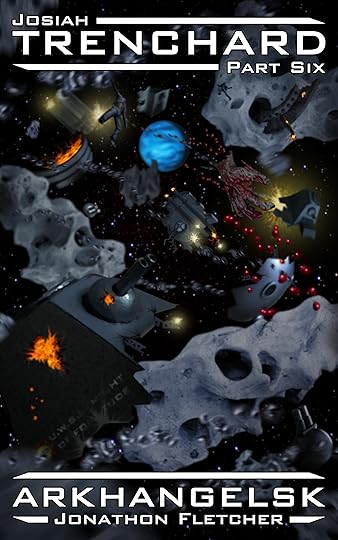
Rather than this blog being simply an advert for the book, I thought that I would write about my inspiration for this story. Each of my books deals with an adventure of the infamous "Fixer", Captain Trenchard and has a central storyline based on a single mission that he is sent on. That story is then wrapped around with a bigger story arc which weaves through the whole series. For Arkhangelsk I had the story arc worked out but no mission for the crew of the Might of Fortitude.
Struggling for ideas, I chanced upon a documentary on TV that was presented by the almost as infamous Jeremy Clarkson. The tale that he told of one particular doomed WWII Arctic convoy seemed to be a plot straight out of one of my books and so I decided to borrow several key events from the real life story to use as the basis for my novel. I won't go into the details here (spoilers) but if you are interested there is the documentary on Arctic Convoy PQ-17, presented by Jeremy Clarkson on YouTube:
https://www.youtube.com/watch?v=MxFvo...
...and a detailed Wikipedia entry:
http://en.wikipedia.org/wiki/Convoy_P...
It is quite a story, all the more remarkable for the fact that it actually happened...
What inspired me and what I want to talk about here is bravery; not the comic book bravery that you would see in any Hollywood feature film, but the kind that is born out of necessity. In July 1942 the U.K. was preparing for invasion by the Nazi's from France. The Russians were fighting the Germans but were short of tanks and other military supplies. In order to keep the pressure on the German forces and hopefully stall the invasion, Winston Churchill agreed to send military supplies to Russia to aid their fight, this despite the fact that the Merchant Navy ships were desperately needed to bring food into the besieged British isles. Somebody had to brave the deadly Arctic waters, U-boats, torpedo bombers and the mighty German surface fleet.
After a series of mishaps, bad decisions and poor intelligence, the Merchant ships in convoy PQ-17 were abandoned to their fate in the ice by the heavily armed Royal Navy escort ships that had been protecting them. Left unprotected many were destroyed, easy prey for U-boats and German bombers. If any of the Merchant ships were to survive then someone had to take charge.
Step forwards RNVR T/Lt Leo Gradwell, commander of the HMS Ayrshire. He realised the desperate plight of the convoy. Many of the other Captains wanted to run and take their chances alone. Gradwell convinced a group of ships to stay together. The Ayrshire being little more than a cargo boat with no armaments, he defended those ships with what he had to hand, arranging tanks on the deck to act as turrets against incoming enemy aircraft and packing the nose of the Ayrshire with explosives with the intent to ram and destroy enemy ships.
With only a sextant and the "Times World Geographic Pocket Book" to aid him; after a series of close calls, Gradwell brought his small convoy of four ships home to port at Arkhangelsk. Without his bravery and leadership those vessels would have surely been destroyed. He received the Distinguished Service Cross for his bravery. Convoy PQ-17 lost twenty four of its thirty five Merchant ships to the icy depths of those Arctic waters. It was not until December 2012 that most of the brave survivors were honoured with their own medal, the Arctic Star military decoration, many posthumously.
True bravery comes from having to get the job done, no matter what you face. It is finding the fortitude to not turn away, even when times are darkest. It is reaching into yourself and finding the strength to carry on, even if that means you may die. The characters in my books are a pale imitation of the men who took their ships to Russia. I enjoyed writing my story, but always at the back of my mind were the sailors who lived it and the many who drowned in the freezing water. We owe them a great debt. I cannot say it any better than the words from "Ode of Remembrance" by Laurence Binyon...
"They went with songs to the battle, they were young.
Straight of limb, true of eye, steady and aglow.
They were staunch to the end against odds uncounted,
They fell with their faces to the foe.
They shall grow not old, as we that are left grow old:
Age shall not weary them, nor the years condemn.
At the going down of the sun and in the morning,
We will remember them.
They mingle not with their laughing comrades again;
They sit no more at familiar tables of home;
They have no lot in our labour of the day-time;
They sleep beyond England's foam."
Josiah Trenchard part six, Arkhangelsk will be published sometime in early summer, (hopefully June). The book is dedicated to the memory of those sailors lost at sea.
If you would like to be nominated for a WIP blog and keep the tour going, please get in touch.
My first nominee is author Line Norgaard Fallesen
- Facebook:
https://www.facebook.com/pages/Author...”
- Goodreads:
https://www.goodreads.com/author/show...
- Twitter:
https://twitter.com/Noangel_86
- Tsü:
http://tsu.co/LineFNielsen
Thank you.
http://www.amazon.co.uk/Jonathon-Flet...
http://www.amazon.com/Jonathon-Fletch...
http://t.co/elrJPvuFw2
My latest work in progress is the next episode in the Josiah Trenchard space navy series. It's called "Arkhangelsk". The name is Russian for "Arch Angel" and is a port that was the destination for Arctic supply convoys during World War II.
Rather than this blog being simply an advert for the book, I thought that I would write about my inspiration for this story. Each of my books deals with an adventure of the infamous "Fixer", Captain Trenchard and has a central storyline based on a single mission that he is sent on. That story is then wrapped around with a bigger story arc which weaves through the whole series. For Arkhangelsk I had the story arc worked out but no mission for the crew of the Might of Fortitude.
Struggling for ideas, I chanced upon a documentary on TV that was presented by the almost as infamous Jeremy Clarkson. The tale that he told of one particular doomed WWII Arctic convoy seemed to be a plot straight out of one of my books and so I decided to borrow several key events from the real life story to use as the basis for my novel. I won't go into the details here (spoilers) but if you are interested there is the documentary on Arctic Convoy PQ-17, presented by Jeremy Clarkson on YouTube:
https://www.youtube.com/watch?v=MxFvo...
...and a detailed Wikipedia entry:
http://en.wikipedia.org/wiki/Convoy_P...
It is quite a story, all the more remarkable for the fact that it actually happened...
What inspired me and what I want to talk about here is bravery; not the comic book bravery that you would see in any Hollywood feature film, but the kind that is born out of necessity. In July 1942 the U.K. was preparing for invasion by the Nazi's from France. The Russians were fighting the Germans but were short of tanks and other military supplies. In order to keep the pressure on the German forces and hopefully stall the invasion, Winston Churchill agreed to send military supplies to Russia to aid their fight, this despite the fact that the Merchant Navy ships were desperately needed to bring food into the besieged British isles. Somebody had to brave the deadly Arctic waters, U-boats, torpedo bombers and the mighty German surface fleet.
After a series of mishaps, bad decisions and poor intelligence, the Merchant ships in convoy PQ-17 were abandoned to their fate in the ice by the heavily armed Royal Navy escort ships that had been protecting them. Left unprotected many were destroyed, easy prey for U-boats and German bombers. If any of the Merchant ships were to survive then someone had to take charge.
Step forwards RNVR T/Lt Leo Gradwell, commander of the HMS Ayrshire. He realised the desperate plight of the convoy. Many of the other Captains wanted to run and take their chances alone. Gradwell convinced a group of ships to stay together. The Ayrshire being little more than a cargo boat with no armaments, he defended those ships with what he had to hand, arranging tanks on the deck to act as turrets against incoming enemy aircraft and packing the nose of the Ayrshire with explosives with the intent to ram and destroy enemy ships.
With only a sextant and the "Times World Geographic Pocket Book" to aid him; after a series of close calls, Gradwell brought his small convoy of four ships home to port at Arkhangelsk. Without his bravery and leadership those vessels would have surely been destroyed. He received the Distinguished Service Cross for his bravery. Convoy PQ-17 lost twenty four of its thirty five Merchant ships to the icy depths of those Arctic waters. It was not until December 2012 that most of the brave survivors were honoured with their own medal, the Arctic Star military decoration, many posthumously.
True bravery comes from having to get the job done, no matter what you face. It is finding the fortitude to not turn away, even when times are darkest. It is reaching into yourself and finding the strength to carry on, even if that means you may die. The characters in my books are a pale imitation of the men who took their ships to Russia. I enjoyed writing my story, but always at the back of my mind were the sailors who lived it and the many who drowned in the freezing water. We owe them a great debt. I cannot say it any better than the words from "Ode of Remembrance" by Laurence Binyon...
"They went with songs to the battle, they were young.
Straight of limb, true of eye, steady and aglow.
They were staunch to the end against odds uncounted,
They fell with their faces to the foe.
They shall grow not old, as we that are left grow old:
Age shall not weary them, nor the years condemn.
At the going down of the sun and in the morning,
We will remember them.
They mingle not with their laughing comrades again;
They sit no more at familiar tables of home;
They have no lot in our labour of the day-time;
They sleep beyond England's foam."
Josiah Trenchard part six, Arkhangelsk will be published sometime in early summer, (hopefully June). The book is dedicated to the memory of those sailors lost at sea.
If you would like to be nominated for a WIP blog and keep the tour going, please get in touch.
My first nominee is author Line Norgaard Fallesen
- Facebook:
https://www.facebook.com/pages/Author...”
- Goodreads:
https://www.goodreads.com/author/show...
- Twitter:
https://twitter.com/Noangel_86
- Tsü:
http://tsu.co/LineFNielsen
Thank you.
http://www.amazon.co.uk/Jonathon-Flet...
http://www.amazon.com/Jonathon-Fletch...
Captain's Blog

Random thoughts from a science fiction author...
- Jonathon Fletcher's profile
- 95 followers

