Brian C. Jones's Blog
December 6, 2025
Come With Us To Italy!
Friends,
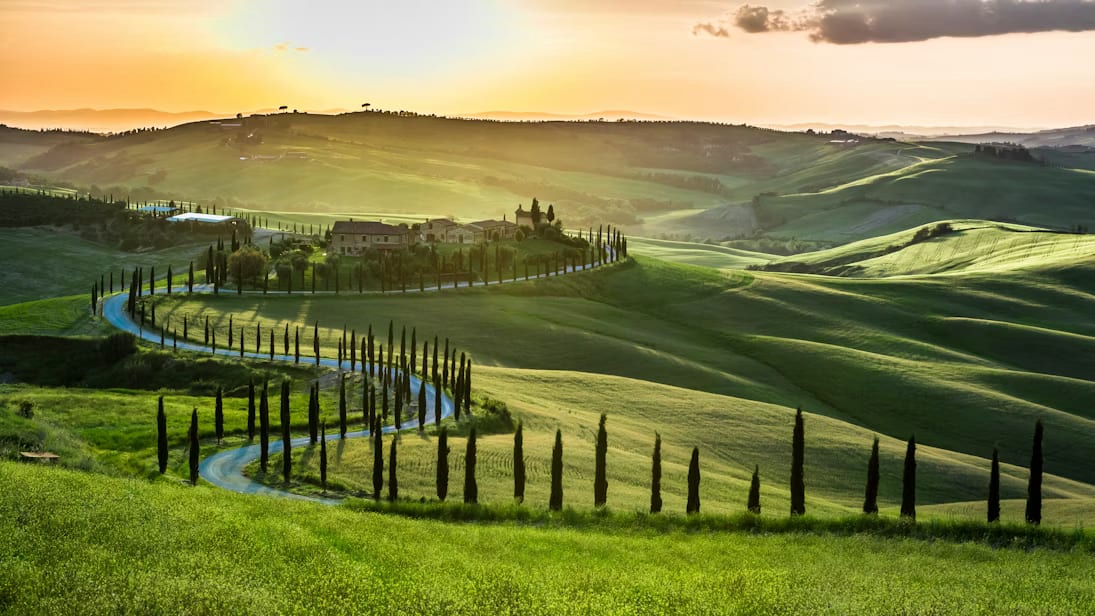
My wife Lisa and I want to invite those of you who follow my newsletter to join us for an unforgettable 11-day journey through Italy—a trip that blends breathtaking beauty with the story of the early church.
Together, we’ll see some of the most iconic landmarks on earth. The Bible and your faith will come alive as we walk in the steps of the Apostles Peter and Paul, experiencing the very places where early Christians were persecuted for their faith. Along the way we’ll share meals and have an incredible experience together.
 The Mamertine Prison where Paul and Peter awaited execution.
Trip Highlights Include:
Rome: Colosseum, Roman Forum, Trevi Fountain, Spanish Steps, Pantheon, Vatican Museums, Sistine Chapel, St. Peter’s Basilica, Catacombs, and the Appian Way
Amalfi Coast & Sorrento: stunning coastal views, charming towns, and Mediterranean culture
Pompeii: walk the remarkably preserved ruins buried by Mt. Vesuvius in AD 79
Venice: St. Mark’s Basilica, Doge’s Palace, the Grand Canal, Rialto Bridge, and gondola-lined waterways
Pisa: marvel at the world-famous Leaning Tower
Florence: Duomo, Baptistry Doors, Michelangelo’s David, the Uffizi Gallery, and Renaissance piazzas
Guided tours and time to explore on your own!
This isn’t just a vacation—it’s a once-in-a-lifetime adventure to experience Italy’s beauty, discover the history of the early church, and watch the Bible come alive before your eyes.
 The streets of Pompeii destroyed by the Mount Vesuvius eruption (79 ad).
Trip Details:
Dates: April 20–30, 2026
Departure: Newark (EWR)
Tour Provider: Nawas Travel
Space is limited, and we’d love for you to come with us.
For more details, to secure your spot, and ask questions, register HERE.
We can’t wait to experience this journey of beauty, history, and friendship with you!
Brian & Lisa Jones


August 5, 2025
What If Christianity Needs to Be Reintroduced… to Christians?

If your life were a movie, and people had been watching everything up to this point...
What would the audience be shouting at the screen, begging you to do next?
What’s so apparent to everyone watching, that you’re completely missing?
“Leave him!”
“Quit the job!”
“Stop doing _____!”
“Start doing ______!”
What do you think?
What’s the one thing you're avoiding—the thing any reasonable person would say you should act on right now?
As Richard Feynman once said,
“The first principle is that you must not fool yourself—and you are the easiest person to fool.”
When I asked myself that question last week, I didn’t expect the answer that came.
In my last two articles, I shared that the focus of my next book would be that of helping Christians overcome exhaustion.
But the more I sat with that question—“What would the audience be screaming at the screen, telling you to do next?”—the more I realized something sobering:
I need to spend whatever time I have left doing what I do best and what people need most:
Writing about Jesus.
Exposing how American consumerism has infiltrated even faithful, Bible-teaching churches.
And showing how, in those churches, the version of “Jesus” being taught—and the life being prescribed—stands in direct contrast to the Jesus of the New Testament.
Which means:
The last thing Christians need from me right now is a book to help them feel less stressed while continuing to live a compromised, consumer-Christian lifestyle.
As Søren Kierkegaard so bluntly put it:
“Official Christianity is not the Christianity of the New Testament.
Established Christianity is about as far away from God as one can possibly get.
If anything is to be done, one must try to introduce Christianity into Christendom.
What we have before us is not Christianity, but a prodigious illusion—and the people are not pagans, but live in the blissful conceit that they are Christians.
So if in this situation Christianity is to be introduced, first of all the illusion must be disposed of.
But since this vain conceit, this illusion, is to the effect that they are Christians, it looks indeed as if introducing Christianity were taking Christianity away from men.
Nevertheless, this is the first thing to do—the illusion must go.”
And I believe that’s the work I’ve been called to do now.
Not to comfort the crowd.
Not to maintain the illusion.
But to disrupt it—lovingly, boldly, faithfully.
To reintroduce Jesus… to people who already think they know Him.
That may not be popular, but it will be faithful.
And for me, that’s the only kind of writing that’s worth doing anymore.
Brian
Thanks for reading Bible Insights For Making Life Work! Subscribe for free to receive new posts and support my work.
July 29, 2025
Even the Best Christians Can’t Keep Going

Most people I know wake up exhausted.
The alarm goes off and they feel no more rested than when they turned off the light.
A friend with three young kids says she carries a constant weight on her chest.
Another wakes up at 4:30 a.m. to exercise before his phone blows up at 6 a.m.
A pastor told me he sometimes just sits in his car, dreading going into the office to face another day of pressure, conflict, and expectations.
All of them say the same thing:
“I’m barely holding it together.”
It seems whoever I talk to, wherever they live, whatever stage of life they’re in, it’s the same story.
Everyone’s overwhelmed.
Everyone’s stressed.
Everyone I meet echoes Wendell Berry:
“I lack the peace of simple things. I am never wholly in place.”
Honestly, this wouldn’t concern me—if it were just the world being the world. I could chalk it up to cultural norms we have to endure.
But the people I’m talking about are Christians.
They’re committed members of a church.
They love Jesus. They lead small groups. They serve. They give.
They’re the kind of people you want discipling you.
I’ve shared their stories because they’re the best Christians I know.
And they’re still exhausted.
That’s a serious problem.
Jesus Isn’t Rushed—So Why Are We?When Dallas Willard was asked to describe Jesus in one word, he said, relaxed.
Jesus carried the weight of the world. He lived under constant threat. He was surrounded by suffering.
But He was never in a hurry.
Never rushed.
Fully present.
Right here.
Right now.
That’s confusing because the kingdom Jesus brought into this world is one where people enter into it and become like Him.
If you join the Marines, you learn to fight.
If you join the golf team, you learn to hit a driver.
If you become a disciple of Jesus, you learn how to live from him.
So why are we always in a hurry?
It’s a confusing disconnect.
Remember Jesus’ first words?
“Repent, for the kingdom of heaven has come near.” - Matthew 4:17
Repentance means making a choice to leave behind old patterns to become like Jesus.
Not hope to become some day.
Not gradually resemble when I have time to sort things out and plan better.
Repentance means immediate and decisive change—now.
We know God isn’t the one driving us to exhaustion.
As Henry Blackaby once wrote:
“Unlike people, God never piles on more than someone can handle… God never burns people out.”
So, if God isn’t pushing us past the brink…
If Jesus offers freedom from burnout…
What’s to blame?
How can even the very best Christians and pastors I know feel numb with hurry?
The Enemy Doesn’t Have to Destroy—Just Distract
In the Parable of the Sower in Mark 4, Jesus compares many believers to seeds that are planted in soil, sprouting with life and promise.
But then something happens.
“…the worries of this life, the deceitfulness of wealth, and the desires for other things come in and choke the word, making it unfruitful.” — Mark 4:19
Thorny vines can “choke” the life of Jesus out of a person, he says.
It’s an alarming word.
The Greek verb for “choke”—sympnigō (pronounced: soom-PNEE-go) συμπνίγω—is used nowhere else in the New Testament except in this parable.
But outside the Bible, the overtones of the word are unsettling.
Polybius, the 2nd century BC historian, described how a narrow mountain pass “choked” an army—compressing thousands of men into tight lines, stripping them of movement, making it easier to be killed by an opposing army.
Galen, the 2nd century AD physician, used the same word to describe a crushed windpipe—a suffocating force that closes off the airway.
It’s not a gentle image.
Jesus said many people who begin following him end up getting choked out.
But by what?
Jesus lays out four causes:
“The worries of this life…”
Not rebellion. Not unbelief. Just mental clutter. Survival-mode thinking that drowns out God’s voice.
“The deceitfulness of wealth…”
Not greed. Just slow lifestyle creep. More stuff → more responsibility → more pressure → less joy.
“The pleasures of life…” (from Luke’s version)
Not evil things. Just overused things. Food. Streaming. Scrolling. Even rest can become numbing.
“The desires for other things…”
Dreams. Promotions. Approval. None of it evil. But once it becomes ultimate, it becomes a choking vine.
Sound familiar?
Of course they do.
Here’s the part we don’t like to admit.Jesus isn’t describing non-believers.
He’s describing us.
Faithful.
Churchgoing.
Bible-reading.
Ministry-leading.
Us.
We’re the ones being choked.
Not because we’ve rejected God.
Not because we’ve stopped believing.
Not because we don’t love Jesus.
Not because we don’t read our Bibles or pray.
But because we refuse to repent.
Overcommitment.
High cortisol levels.
Lack of boundaries.
Inability to say no—to our kids, our spouses, and ourselves.
These aren’t lifestyle issues.
They are discipleship issues.
In the parable in Mark 4, Jesus said there will be some believers who decisively repent and change.
These people will produce a crop…
“…thirty, some sixty, some a hundred times what was sown.” – Mark 4:20
Don’t you want to be that disciple?
One who becomes significantly more effective by doing less?
Who actually enjoys life?
Impacts people deeply?
Is a genuinely joyful person to be around?
Who hears the words, “Well done, good and faithful servant?”
Man, I know I do.
That’s why I’m writing a book on the joy of genuinely following Jesus in a world that’s too much, too fast, too shallow, and too connected.
I’d love to invite you into the process.
Through this newsletter, I’ll be sharing raw, unedited thoughts as they come—ideas I’m praying will shape something honest, practical, and rooted in Jesus.
Since I’m called to help people not just learn the Bible, but follow Jesus more earnestly, here’s how you can help me:
First, share your perspective. I’d love to hear your thoughts and questions—on Instagram, Facebook, or in the comments of the articles themselves.
Second, please pray for me.
The enemy is using exhaustion, mental health struggles, and relational pain to squeeze the life out of Christians. I want to point people to a solution that actually works.
Thanks for walking with me.
—Brian
Quick Update:
Tomorrow Lisa and I will celebrate our 37th anniversary so I thought I’d share a few pictures…
First, here we are on our honeymoon on a fishing excursion:
 Lisa pulls in a huge fish while I’m rocking the very short shorts
Next, here we are 20 minutes after catching the fish when I learned that Lisa gets motion sickness easily and does not like fishing excursions:
 We have not been on another fishing boat in 37 years
Finally, it’s been 37 delightful, fun, difficult, magical years of choosing each other.

Thanks for reading Bible Insights For Making Life Work! Subscribe for free to receive new posts and support my work.
July 23, 2025
The Majesty of Simple Things

When a Greek ya-ya offers you food at a village farmers’ market, you dare not say “No thank you.”
That only emboldens them.
“I’m sorry, I already ate” isn’t a good enough excuse either.
Nor is saying “I’m allergic to gluten” in your broken American-Greeklish attempt to communicate gratitude while explaining why you can’t eat pastries.
The best approach, I learned, as you walk through the market, is to simply smile, say “kalimera!” (good morning), and gratefully take whatever a ya-ya hands you.
Grandmothers in Greece are affectionately called ya-yas (pronounced yah-YAH), and they are the centers of Greek life.
They are the huggers. The kissers. The connectors. The matchmakers. The gardeners. The laughers. The pray-ers. And the stay-ers.
And on this trip, they were out in full force.
A Trip Of Another KindUnlike other research trips I’ve taken or tours I’ve led to biblical locations in Egypt, Turkey, Israel, or Greece, this trip was different.
I didn’t travel to a tiny village in northern Greece simply to study archaeological ruins.
I went in search of an experience.
To experience a word, to be more precise.
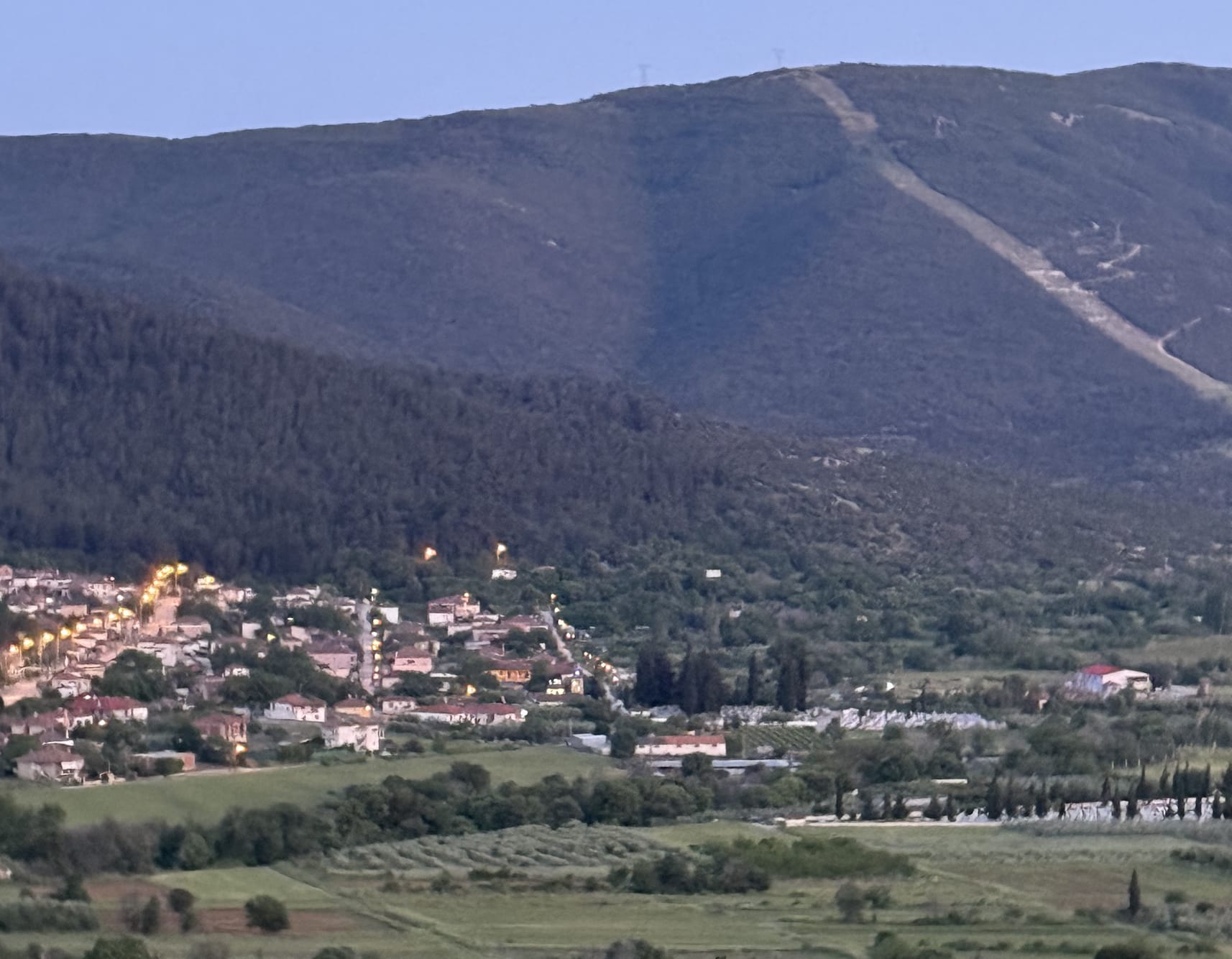
I’m writing a book to help hurried people like you and me overcome overwhelm. So I wanted to dig into a command the Apostle Paul gave 2,000 years ago to Christians in a church he started in the ancient city of Thessalonica.
“…make it your ambition to lead a quiet life…” — 1 Thessalonians 4:11
“Quiet life” comes from the Greek word ἡσυχία (hesychía), pronounced heh-see-HEE-ah, and it speaks to one of the internal changes that helps hurried people like you and me overcome overwhelm.
For years, I glossed over this verse, assuming Paul was telling them to stop talking so much — “The Christians in Thessalonica must have been SO chatty!”
But Paul didn’t use the Greek word for silence — σιγή (sigē) — as in Revelation 8:1:
“There was silence [sigē] in heaven…”
That’s because Paul wasn’t talking about “quiet” in terms of the absence of words. He was helping his readers envision a quality of life to be experienced.
Translating this word into English poses a challenge because there’s no direct English equivalent.
The best I can do is have you picture the English words “quiet,” “rural,” “thoughtful,” “rooted,” “peaceful,” and “reflective” having a baby — that’s what hesychía (heh-see-HEE-ah) means.
The opposite of hesychía would be our words: loud, busy, hurried, and shallow.
Since big cities are loud and crowded, Paul’s readers would have immediately associated hesychía with the peaceful quality of life usually found in rural villages.
For instance, the poet Horace wrote often about:
“…the woods, and the little farm that gives me back myself again…” — Epistles 1.14
And Pliny the Younger, who hated the busyness of Rome, often wrote about retreating to his home on Italy’s coast where:
“…I live undisturbed by rumor, and free from the anxious solicitudes of hope or fear, conversing only with myself and my books. True and genuine life! Pleasing and honorable repose! Snatch then, my friend, as I have, the first occasion of leaving the noisy town with all its very empty pursuits!” — Epistles 1.9
I live in the country and can attest to its evocative tranquility, but Paul wasn’t telling the Christians in the large city of Thessalonica to move to the country.
More on that in a bit.
The People’s MarketAfter a few days of walking through farms, talking with strangers, and eating in tavernas, I spent Wednesday morning wandering the streets of the local farmers market.

It’s hard to put into words what I experienced, but it was most surely the external embodiment of the “quiet life” Paul envisioned for the believers in Greece.
Outside of church, nothing brings the community together quite like the laiki agora—the local market where life hums and neighbors connect.
It was here that, in the words of poet Yves Bonnefoy, the people of this village “moved with the majesty of simple things.”
Everything was fresh.
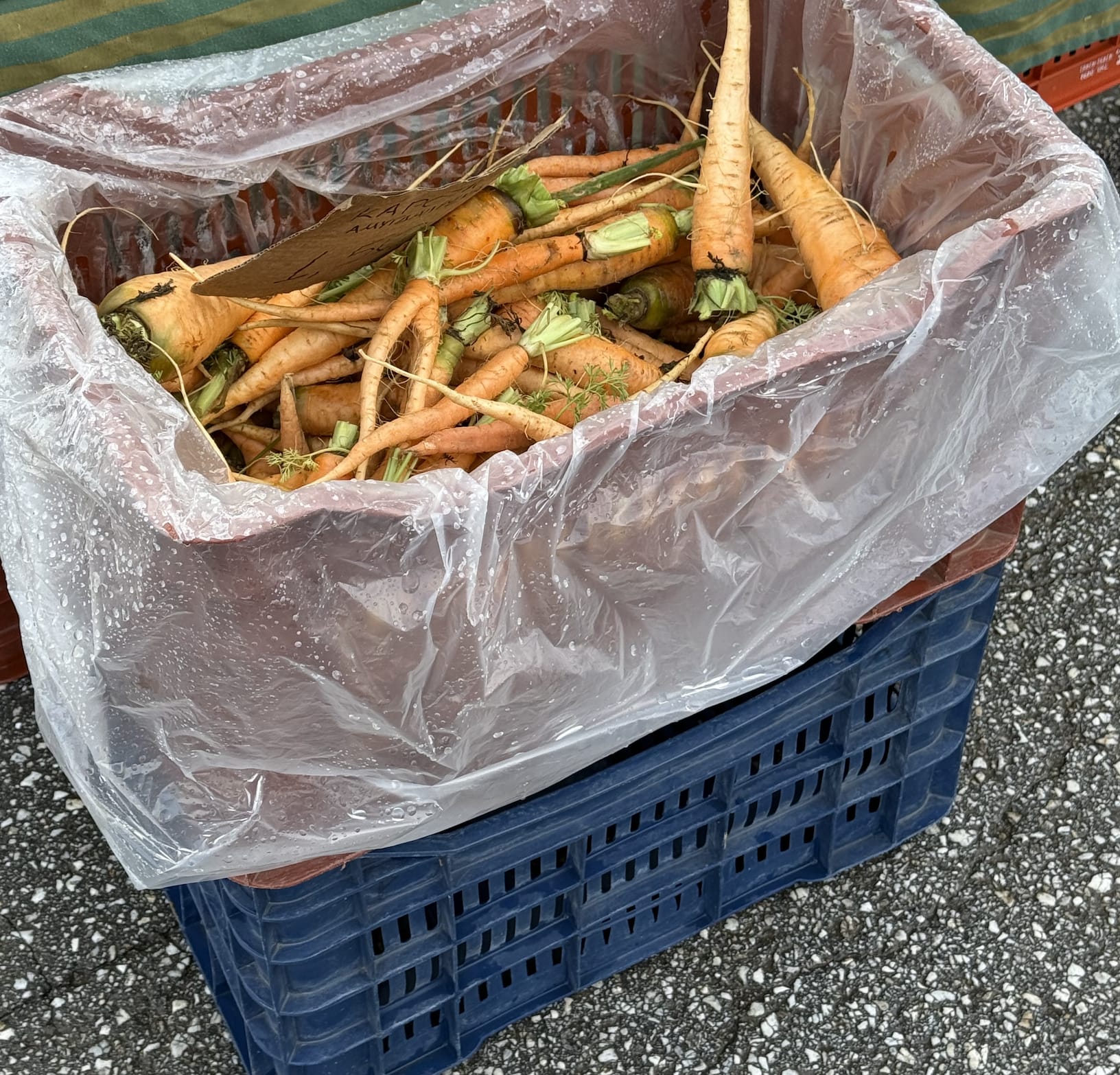
Fresh dirt on the carrots that had just been pulled from the ground…
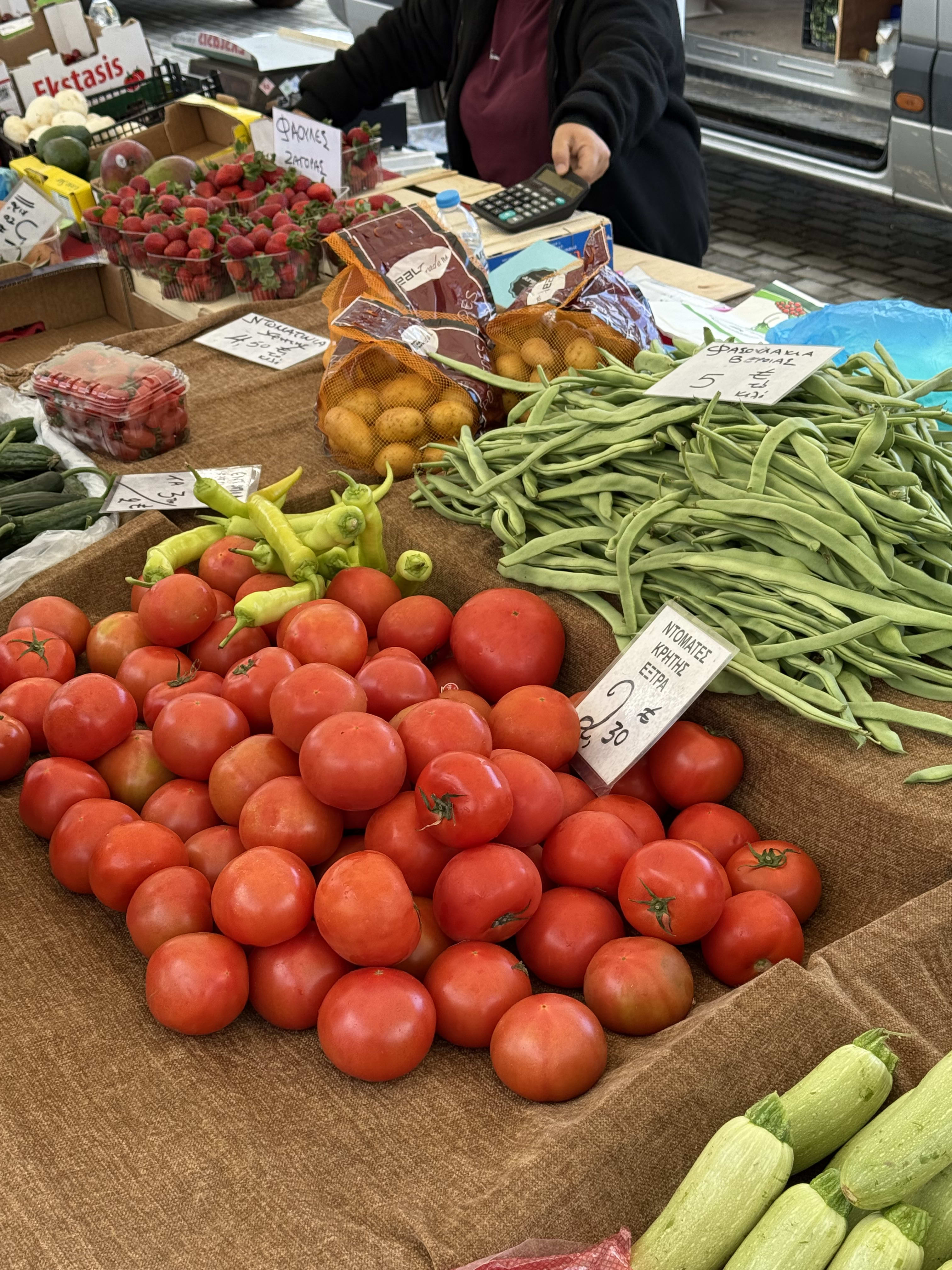
Tables of fresh tomatoes, zucchini, onions, and strawberries, sold with handwritten prices scribbled on note cards…
Eggplants being hand-washed and toweled dry as I walked by…
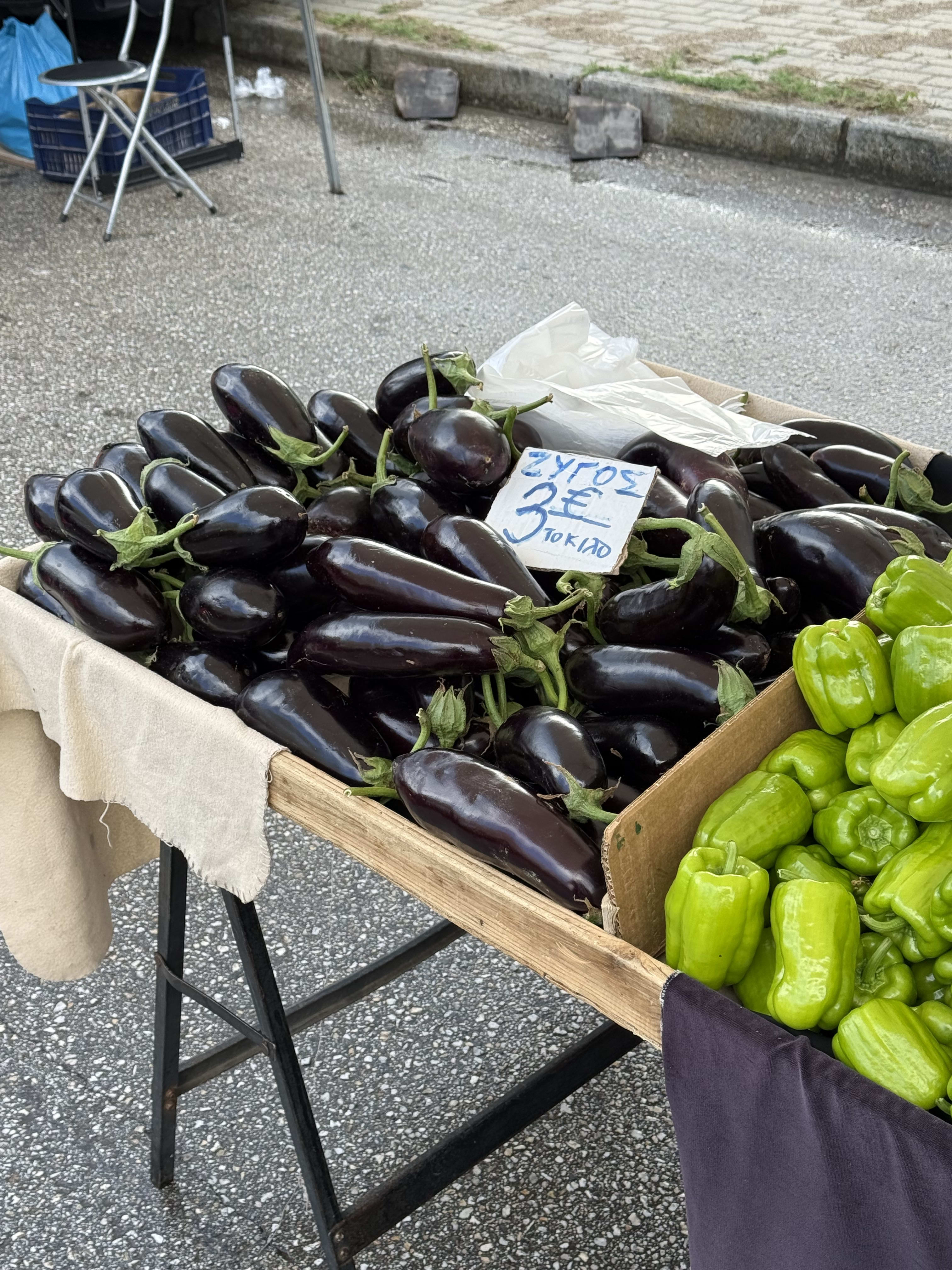
At one table I bought cashews and strawberries, and true to form, the ya-ya selling them tried to put a few more items in my bag without charging me.
I tried to decline, but to no avail.
People poured onto the street pulling suitcases to carry their week’s produce.
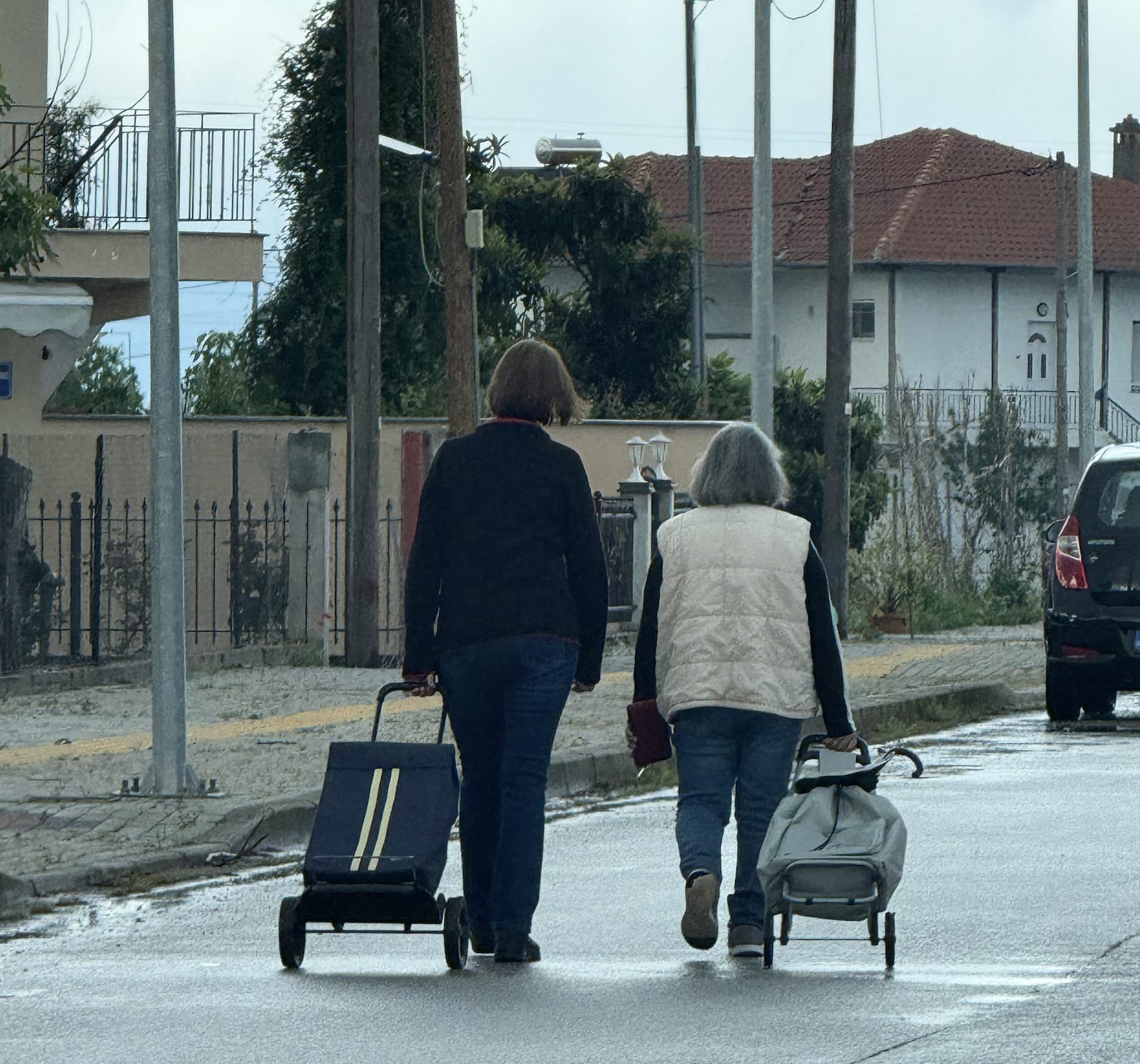
The sounds of roosters crowing punctuated the conversations and embraces between neighbors.
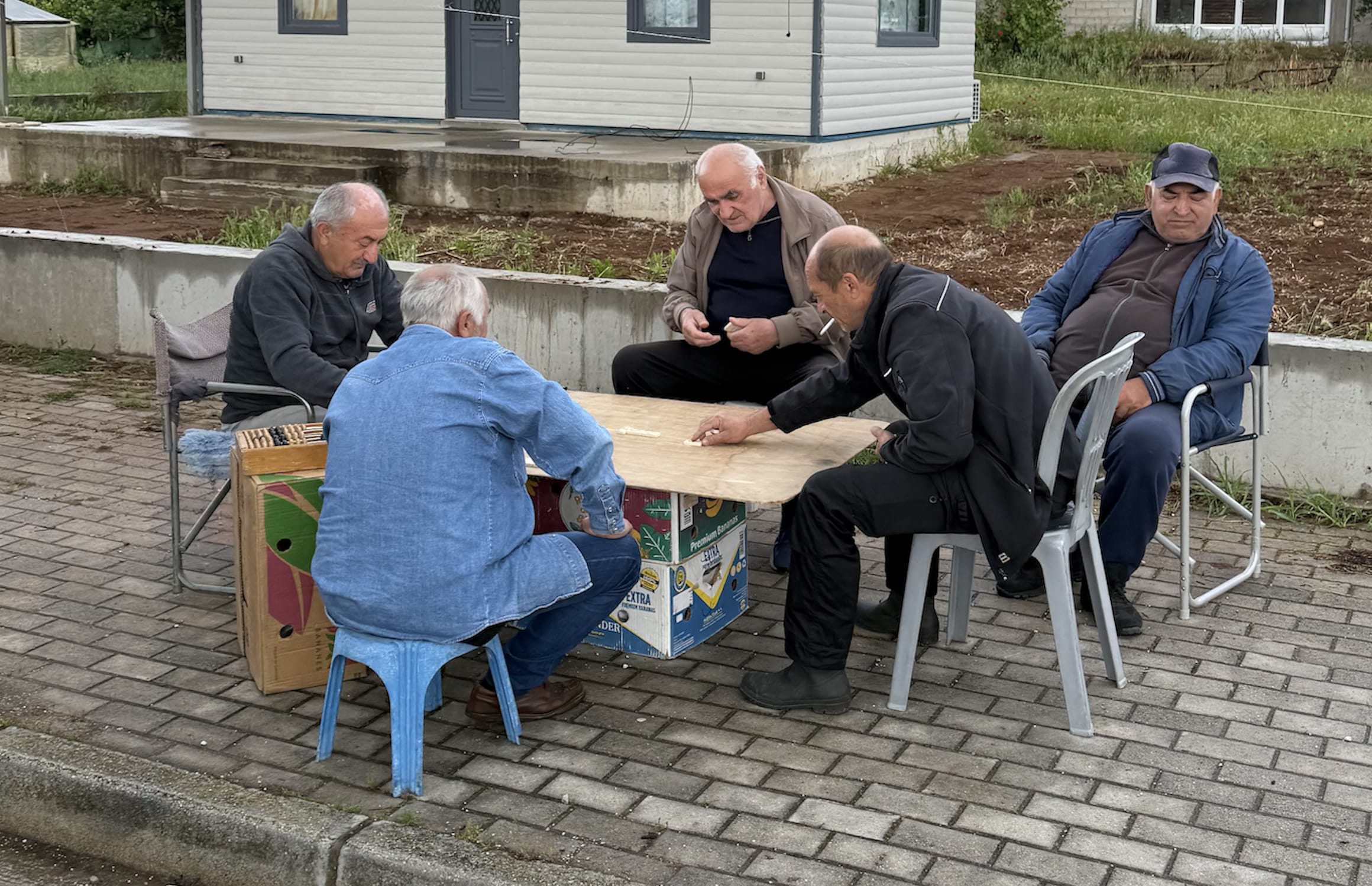
A group of old men invited me to join an impromptu backgammon game.
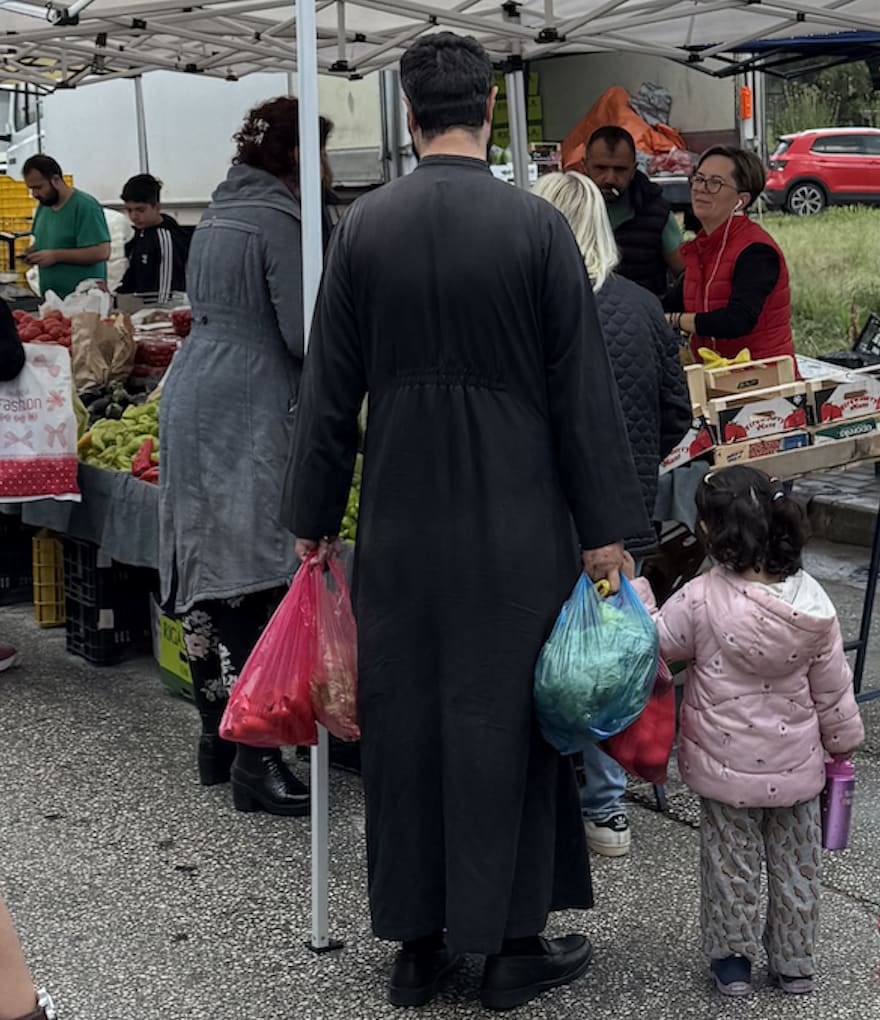
An Orthodox priest walked through the market with his two-year-old daughter as they shopped for that night’s meal.
I got the feeling that this has been going on for two thousand years in this village.
As I walked, I scribbled in my journal:
They savor the food
They savor each other
They savor the company
They savor the walk
They savor the simple pleasures of life
I wanted what these people had.
I think we all do.
The Real WorldTwo days later, on my drive back to the airport, I re-entered the traffic of the city — the pinging of my cell phone, cars honking, and exhaust fumes.
I felt my chest tighten.
My jaw clenched.
As a truck pulled in front of me and the driver shook his fist at me for going too slow, I couldn’t help but notice the stark contrast between where I was now and where I had been.
“The ‘real’ world,” wrote Dallas Willard, “has little room for a God of sparrows and children.”
This was quite evident.
We are told that when we leave the city and enter a village like that — rooted in nature and focused on real relationships — at least seven measurable things happen to our bodies:
Cortisol levels drop (stress decreases)
Heart rate slows (your body moves into rest-and-digest mode)
Blood pressure lowers (relaxation deepens)
Muscle tension decreases (your body physically relaxes)
Immune system activity improves (boost in natural killer cells)
Mood lifts (less anxiety, more positive emotions)
Attention restores (your mind resets and focus improves)
What they don’t say is that these things quickly reverse when you go back into the stressful situations you left.
Which brings me back to Paul’s command:
“…make it your ambition to lead a quiet life…” — 1 Thessalonians 4:11
Paul’s challenge to his readers—and to us—wasn’t to leave the city and move to a village in order to experience the grounded, quiet, rooted calm of hesychía (heh-see-HEE-ah).
It was to internalize that calm, reflective, slow way of being—the kind that naturally flows from village life—and embody it wherever we are.
In boardrooms. On buses. In classrooms. And in carpools packed with seven rowdy 10-year-olds on the way to a soccer game.
Sure, living in a tranquil place can make cultivating a hesychía-shaped life easier—and for some, it’s preferred. But you can live a slow, earthy, communal, embodied, and reflective life in a 300-square-foot apartment on the corner of 5th and 42nd in Manhattan, too.
That’s because hesychía is an interior posture that inevitably works its way outward. You could take these villagers—who had mastered Paul’s command—and drop them in the middle of the city, and they’d create a village wherever they landed.
The challenge for us isn’t to escape the noise of the world, but to learn how to walk through it differently.
Because hesychía isn’t a retreat—it’s a resistance.
A refusal to be shaped by the hurry, noise, and superficiality that surround us.
It’s a deliberate decision to become unhurried and attentive—not someday, when life calms down, but today.
Right here.
That, to me, is moving with the majesty of simple things: we don’t need a new address—just a slower, simpler, more embodied way to inhabit the life we already live.
—Brian
Would you like a version with Scripture woven in more explicitly, or are you aiming for a more narrative tone here?
Ask ChatGPT
Where do you go — or what do you do — to slow down and experience the quiet life of hesychía? I’d love to hear about it in the comments.
Thanks for reading Bible Insights For Making Life Work! Subscribe for free to receive new posts and support my work.
July 15, 2025
Skipping Church For Youth Sports: What Kids Learn

Let’s first just get this out of the way: your kid is not playing in the pros.
Not in the NFL. Not on the LPGA. Not for the Yankees, not for Real Madrid. Not in the Olympics. Not even for the Fort Wayne Mad Ants.
Now that we’ve cleared that up, let’s talk about something far more urgent: what happens to your child’s life when you teach them—week after week—that church is optional, but a soccer tournament or dance competition or baseball game isn’t.
Because here’s the thing:
You’re discipling your kids whether you mean to or not.
Every Sunday is a fork in the road. And each time your kid sees you choose a tournament over worship with God’s people, the field over the fellowship, the scoreboard over the Scriptures—they learn.
They learn church is expendable.
They learn faith fits around the margins.
They learn that when life gets full, church and Jesus are the first things to go.
And before you know it, they’re grown. And church isn’t just what gets bumped for a soccer game—it’s what gets bumped for sleeping in, brunch, or nothing at all.
And you’ll look back and wonder what happened.
“We Just Had a Conflict This Weekend…”
That’s what we tell ourselves.
We didn’t skip church because we don’t love Jesus. We just had a conflict. We’ll go back next Sunday…after the season… after the tournament… after the next “can’t miss” event.
Let’s be honest.
This isn’t a scheduling issue. It’s a “Who is my LORD?” issue.
You’re not just missing church. You’re offering your presence on a different altar.
Jesus said in Luke 14:26 that unless we’re willing to “hate” (i.e., put second) even our family ties for His sake, we’re not worthy of Him. He wasn’t being poetic. He was being prophetic.
He was warning us: if we don't re-order our loves, they will re-order us.
And right now, sports are doing just that to Christian families.
Sports—wonderful in moderation—have become the enemy’s most effective tool for sabotaging your kids’ future.
Martyrdom vs. Match DayFor centuries, the greatest threat to Christian commitment was martyrdom.
Today?
It’s a 10 a.m. Sunday kickoff.
We used to gather in secret, risking imprisonment to worship Jesus. Now we skip church for an away game.
We’re not just sending our kids to the field. We’re sending a message:
Jesus is important—but not that important.
And if He’s not Lord of our schedule, He’s not really Lord at all.
Parents You're Making Disciples—Just Not of Jesus
You’re not raising an athlete. You’re raising a soul.
And one day, that soul will suffer.
The team will let them down. The coach will cut them. The scholarship won’t come. Or worse—they’ll succeed and still feel empty.
And they’ll ask: What’s missing?
Because…
You taught them to compete—but not how to commit to worship when it’s hard.
You taught them to show up—but not to be still before God.
You gave them lessons in commitment—but not to Christ.
And here’s the thing: you’ll have done it with the best intentions. But that won’t undo the damage.
Jesus said, “Seek first the kingdom of God.”
Not: “Seek it when the season ends.”
Not: “Seek it if gymnastics doesn’t conflict.”
First.
You Can’t Rewind ThisYou can get your kid more playing time. You can’t get them another childhood.
You can buy them private coaching. You can’t buy back the years they didn’t learn to hear God’s voice.
You can fund club sports. You can’t pay off the debt of a spiritually starved soul.
As a pastor, I’ve seen this play out for years. The kids who grow into grounded, faith-filled adults usually come from families who made one thing clear:
Worship was non-negotiable.
Not because they were perfect.
But because they drew a line.
“This is who we are. We’re Jesus people. And Jesus people gather. Even when we’re tired. Even when it’s inconvenient.”
What Story Will Your Kid Tell?Fast forward 30 years.
Your son or daughter is telling their kids what you were like.
What do you want him to say?
“My dad and mom never missed a game. We traveled every weekend for tournaments…”
Or—
“My dad and mom loved Jesus more than anything. We were involved in sports, but we never missed church. That’s who we were. And I’m so thankful for the example they set. They didn’t allow a 14 year window of youth sports to negatively impact the next 65 years of my life!”
You don’t get both stories.
You either build your family around faith and let everything else adjust—or build it around sports and try to squeeze in God where you can.
One leads to discipleship. The other to drift.
What I’m Asking You to DoI’m not asking you to hate sports. I love sports. I believe sports are really good for kids.
I’m asking you to stop discipling your kids into thinking Jesus is optional.
Make church the first thing you schedule around—not the last. Bring them to church in their uniforms so afterwards you can go straight to the game. Carpool to get everyone where they need to go.
But if push comes to shove…if forced to make the decision…
Say no to the game. Say yes to the gathering.
And then watch what happens.
Watch your kids learn to love Jesus fiercely.
Watch them say no to burnout, to people-pleasing, to idolatry.
Watch them become bold, resilient, grounded disciples.
Because they’re not going pro.
But they are becoming something.
The only question is: what?
Thanks for reading Bible Insights For Making Life Work! Subscribe for free to receive new posts and support my work.
July 1, 2025
Soul Rest Doesn’t Come from Self-Care
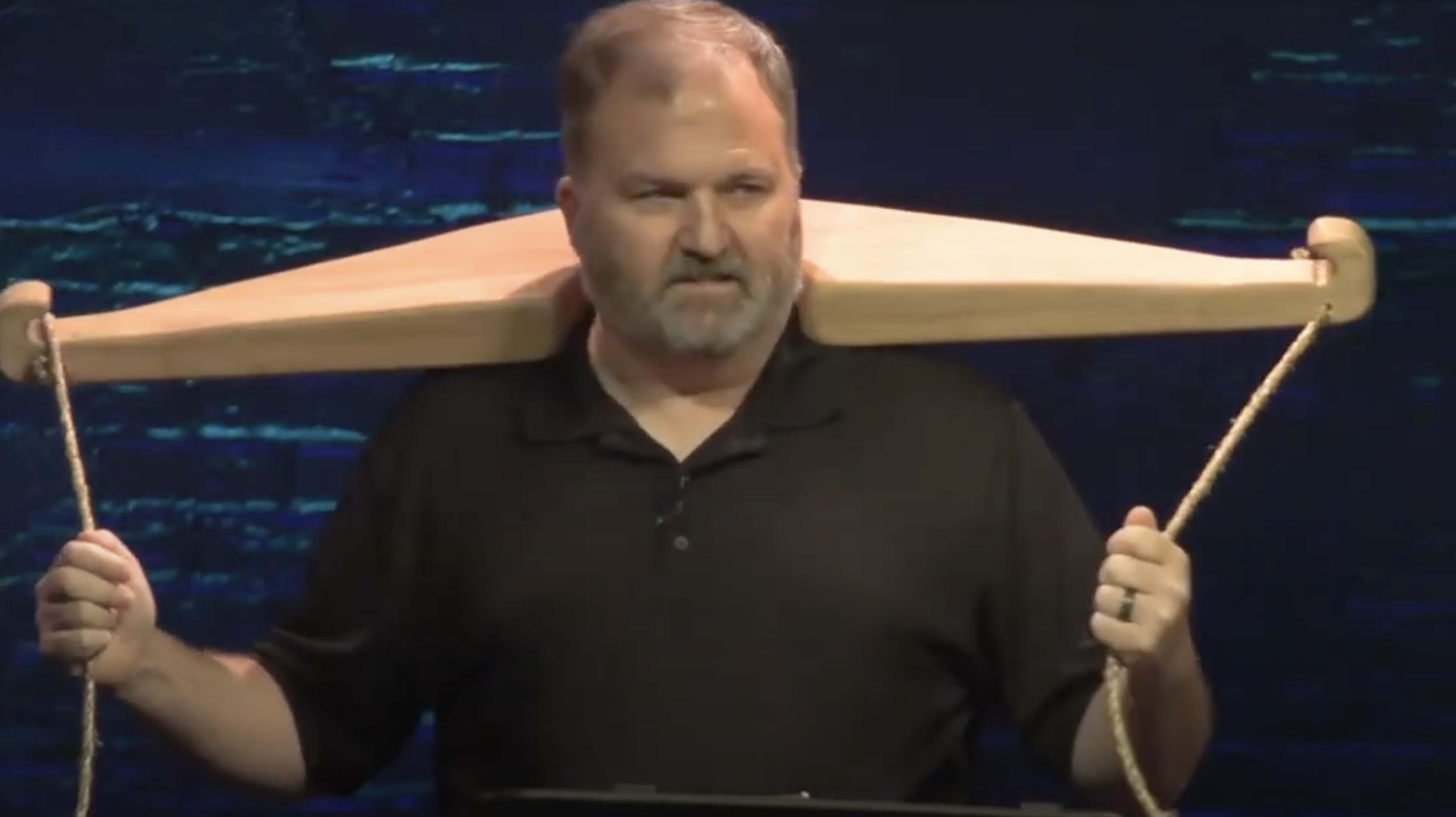
Have you ever been in a yoga class?
After three back surgeries, my doctor said, "You should start yoga."
"Can you imagine me in yoga pants?" I shot back.
"Seriously, just try it," he said. "The stretching will do you a lot of good."
So I found the least “woo-woo” yoga studio I could.
The next morning, I walked into a packed room and took the last spot in the very front.
Lights dimmed. Music started. A barefoot woman entered, sat cross-legged, closed her eyes, and whispered:
Sacred Travelers, we begin by awakening Apana vayu—the downward-moving wind—to ground ourselves into the earth through Muladhara, our root chakra.
Then she cupped her hands to her heart and added,
Let us invite the unchanging watcher within to cleanse us...
And I thought—I'm out.
The Most Misinterpreted Verse
I think the most misinterpreted verse in the Bible is:
Come to me, all you who are weary and burdened, and I will give you rest. (Matthew 11:28)
On the surface it sounds like Jesus is offering a divine nap.
Stressed? Come to Jesus.
Overwhelmed? Come to Jesus.
Exhausted? Come to Jesus.
And that’s what many Christians are taught that this verse means – as if it’s an invitation to practice mindfulness from a yoga teacher, minus all the chakras.
Here’s the problem.
Jesus wasn’t addressing the exhaustion that comes from modern life in Matthew 11:28.
He was addressing something much more sinister.
Reading The Verse In Context
“Come to me, all you who are weary and burdened, and I will give you rest” falls at the end of an 11-verse passage (Matthew 11:20–30).
Which means - to understand the verse you have to understand what preceded it.
Jesus begins this section of scripture by denouncing three cities where he had done most of his miracles:
Woe to you, Chorazin! Woe to you, Bethsaida! ...Woe to you, Capernaum! (vv. 21–23)
Why?
Because they refused to follow Jesus.
They witnessed his miracles. Heard his teaching. But in the end said, “Hard pass.”
Which wasn’t just a rejection of Jesus.
It was a statement: “We’re sticking with the teachings of the rabbis.”
The rabbis in Jesus’ day had taken the entire Old Testament and distilled it down into 613 commands to obey.
Seems logical, right?
But it’s what they did next that angered Jesus.
They created thousands of additional laws to ensure people didn’t break the original 613 commands.
Commands to keep from breaking the commands.
Jesus called these extra laws "the tradition of the elders" (Mark 7:5).
Example of Additional Rabbinic Laws
Here’s an example.
Here’s a command God gave about how to observe the Sabbath (a sacred day of rest and worship from sundown Friday to sundown Saturday):
God’s command: “You shall not work on the Sabbath” (Exodus 20:8-10)
Now, here’s an additional law the rabbis created to ensure you wouldn’t mistakenly work on that sacred day:
The rabbis’ additional command: “You shall not carry anything heavier than a dried fig on the Sabbath” (Mishnah Shabbat 7:2)
Instead of just trusting people to interpret what “Don’t work on the Sabbath” meant for themselves, the rabbis created additional laws to interpret and explain the original laws.
Eventually they created so many additional laws that by the second century the rabbis had created over 4,000 additional rules to obey simply to keep from breaking the original 613 commands.
Can you imagine keeping track of and trying to obey thousands of laws?
“Rest” Means Rest From Legalism, Not Exhaustion
When Jesus said, "Come to me, all you who are weary and burdened," he wasn't inviting burned-out professionals to unwind.
He was offering rest from legalism.
The Pharisees turned God's law into an oppressive spiritual grind.
Jesus came to set people free from it.
To underscore what he meant, notice what Jesus said immediately following his teaching about rest:
Come to me, all you who are weary and burdened and I will give you rest. Take my yoke upon you and learn from me... For my yoke is easy and my burden is light. (Matthew 11:28–30)
A yoke was a wooden crosspiece laid across the shoulders with ropes hanging down on each side to attach to buckets (see picture above).
A yoke enabled someone to carry much more weight than they normally could.
Jesus used the imagery of this common tool found in any home in first-century Galilee to metaphorically describe a person’s beliefs that guide their life.
That fact is, according to Jesus, everyone wears a yoke—even atheists.
According to Jesus, a “yoke” is a belief system used to make life work.
All Yokes Made By Humans Become Oppressive Burdens
Any yoke a human being creates will eventually hurt more than it helps:
The yoke of legalism from the rabbis
The yoke of performance from American hustle culture
The yoke of anti-supernatural beliefs about the way the world works
Anything and everything can become a yoke people use to guide their lives.
Rest assured—if a person created the “yoke” you’re wearing, it’s going to eventually beat you down.
Jesus offered a different yoke.
One revealed to him by the Father.
Not manmade. Not soul-killing.
But still a yoke.
Jesus offered his hearers the opportunity to discard the oppressive “yoke” of the rabbis (their additional rules) and put on his “yoke” (a new set of teachings directly from the Father).
The Paradox of Obedience
Here’s what Christians must understand.
Jesus didn’t promise “rest” in the way the world understands it.
Here’s what culture teaches vs. what Jesus teaches:
1. Rest as Escape2. Rest as ComfortThe world says: “Get away and unplug.”
Jesus says: “Take my yoke and learn from me.”
His rest isn’t escapism—it’s engagement with Him.
3. Rest as Self-CareThe world defines rest as feeling tranquil, detached, stress-free.
Jesus offers a yoke—a tool of labor—yet calls it easy.
His rest brings peace through obedience, not indulgence.
4. Rest as Laziness or IdlenessThe world says: “Treat yourself. Prioritize you.”
Jesus says: “Deny yourself. Follow me.”
True rest flows not from self-prioritization, but surrender.
The world promotes rest as doing nothing.
Jesus offers rest while we walk and work under His guidance.
His rest is active—rooted in rhythm, not sloth.
The fact is taking Jesus’ yoke upon yourself often brings persecution, sacrifice, and death.
Remember: yokes were used to add more weight to your shoulders, not remove the weight off your shoulders.
The irony, however, is that obedience, even in suffering, also brings a deep sense of soul rest.
Why?
Because the most exhausting life we can live as a disciple of Jesus is one marked by disobeying Jesus’ teachings —and then living burdened by the weight of the consequences of our sinful actions.
How can we expect to find rest for our soul while slandering a coworker?
Or nursing hidden bitterness?
Or refusing to forgive someone?
Jesus isn’t offering rest through positive vibes.
In Matthew 11:28 Jesus offers deep soul rest through obedience.
True Rest
The point I want you to take away is this:
Freedom from exhaustion, overwhelm, hurry, and overcommitment does not come from baptizing the best mindfulness advice psychologists, yoga teachers, or even spiritual formation thought leaders have to offer and then adding a Bible verse underneath that advice to make it sound like something Jesus taught.
Does Jesus want you to lower your cortisol levels and live a healthy and intentional life?
Of course he does.
But we must always remember that rest is a byproduct of obedience — not a state of mind we can generate through mindfulness techniques or solely through spiritual discipline practices that promise to quell a life of hurry sickness.
The kind of rest Jesus offers our souls comes through denying ourselves, taking up our crosses, and following him.
This means if we are living within the perfect will of God, our souls can be deeply at rest while we are being carried away to be martyred for our faith.
Like Jesus.
Friends, thank you so much for the kind reception to the restart of my newsletter!
If you are finding the articles useful, please forward them to a friend or share them on social media.
With much love,
Brian
June 24, 2025
I Thought I Was Dying—But It Was Anxiety

When having your very first panic attack, I highly suggest that you do not do what I did and jump out of your plane seat mid-flight and scream,
“I’M GOING TO DIE!”
…and run down the center aisle toward the cockpit waving your arms.
This may surprise you, but the Transportation and Security Administration frowns on this type of behavior.
So do Federal Air Marshals, any former high school wrestlers who’ve dreamed of one day stopping a terrorist attack, and all moms of small children sitting near you with heavy diaper bags.
I was returning home from a conference, and while sitting in the back of a plane, landing gear descending, my entire body was seized by the crushing weight of what I knew was a heart attack.
It was not.
That was my first, but it certainly wouldn’t be my last panic attack—and it definitely wasn’t the first time I realized I struggled with something a lot of people around me didn’t.
I’m someone who struggles with anxiety.
It goes back as far as I can remember.
That Thing Crushing Your ChestIn Matthew 13, at the height of Jesus’ popularity—when crowds of people followed him wherever he went—Jesus sat down by the shore of the Sea of Galilee and told them a story.
“A farmer went out to sow seed into a field.”
To help picture what Jesus was referring to, here is a photo I took of a farmer’s field just outside Nazareth, Jesus’ hometown:
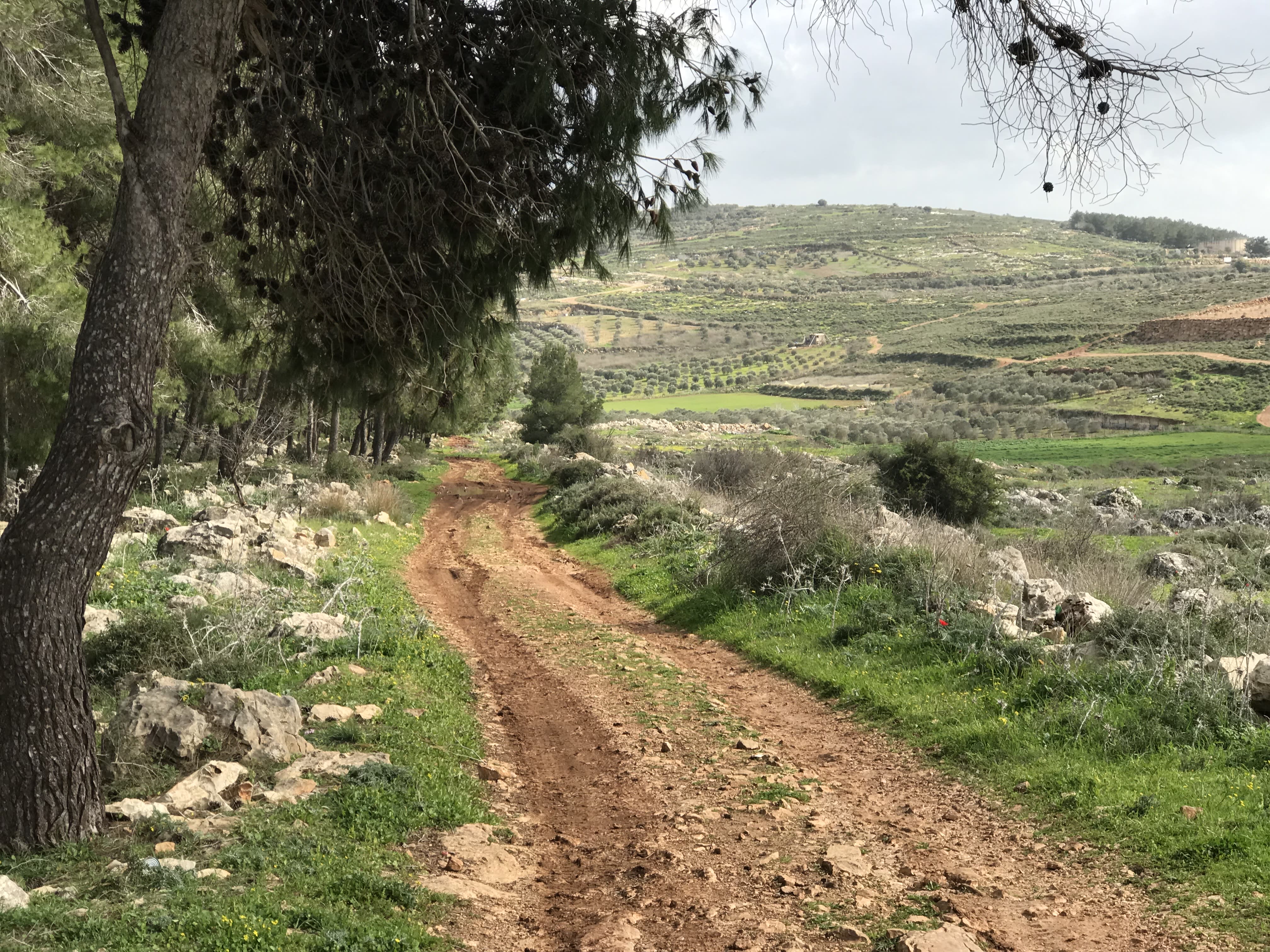
The early church historian Hegesippus tells us that the family of Jesus owned around 40 acres of farmland, so this would’ve been very close to where Jesus and his family farmed.
No doubt Jesus had sown seed on his family’s property many times.
As intended, most of the time the majority of seed would fall on good soil, and the plant would grow, symbolizing the faithful disciple who multiplies themselves many times over.
But occasionally some of the seed would fall on soil with thorny vines.
If you struggle with anxiety, that seed among the thorns refers to you and me.
Why?
Because Jesus said,
“…the worries of this life…choke the word, making it unfruitful.” (Matthew 13:22).
We - like the thorny soil - have God’s word come into our hearts - but like a thorny vine squeezing the life out of us, anxiety comes in and makes us unfruitful.
We don’t die.
We still exist—but just barely.
Choked.What a dark, visceral word Jesus used.
The Greek word translated choked is sympnigō (συμπνίγω) (pronounced: soom-PNEE-go).
sym = "with" or "together"
pnigō = "to choke" or "to strangle"
sympnigō = “to choke together” or “to suffocate.”
In Greek medicine, it described a dying patient gasping for air.
In military contexts, it described how a stampede felt when soldiers pressed enemies against a wall.
It’s the same word used in Luke 8:42, when we’re told the crowds almost crushed Jesus.
Choked.
Is there a more poignant word to describe what it feels like when anxiety attacks?
You try to breathe, but something invisible has wrapped itself around your chest.
You want to trust, but the thorns keep whispering worst-case scenarios.
You want to move forward in faith, but you feel pinned to the ground—immobilized, suffocating, stuck.
Thanks for reading Bible Insights For Making Life Work! Subscribe for free to receive new posts and support my work.
What Should Disciples of Jesus Do?1. Get Treated By a DoctorSome Christians will tell you that you shouldn’t get medicine, that you can and should treat your anxiety with prayer and trusting Jesus.
They say that because they don’t know what they’re talking about.
Your brain is part of your body.
And nobody is telling you to stop taking your insulin for Type-1 diabetes, are they?
Of course not.
Go to a medical doctor and get medical treatment.
Now if you choose to take medicine for anxiety—like I do—you’ll quickly find out that all medicine does is take you down to the baseline where everyone else lives.
You’ll still get anxious feelings.
But instead of waking up with your heart racing at 75 out of 100 on the “I’m going to die anxiousness meter” - you’ll start the day like your non-anxious friends.
But you’ll still get anxious—just like everyone else.
Hence, my second point…
2. Live Like JesusDon’t just believe the things Jesus taught.
Read through the Gospels and take note of how Jesus actually lived and put those behaviors into practice.
I’ve been doing this for a decade, and the more successful I am living the way Jesus lived, the more I feel like Jesus felt.
Look at how Jesus lived:
He walked everywhere – Matt. 4:18; Luke 24:15
He slept well – Mark 4:38; Luke 8:23
He ate real food – Matt. 9:10; Luke 24:43
He rested – Mark 6:31
He withdrew to quiet places – Luke 5:16
He had close friends – Matt. 17:1; Mark 5:37
He attended parties – Luke 5:29; John 2:1
He served others – John 13:5
He spent time with outcasts – Matt. 9:10–13; Luke 19:1–10
He spent time near water – Matt. 4:18; John 21
He climbed mountains – Matt. 14:23; Luke 6:12
He spent nights outside – Luke 21:37; John 18:2
He reflected in nature – Matt. 6:26–30; Luke 12:24
He prayed early and often – Mark 1:35; Luke 5:16
He fasted – Matt. 4:2
He memorized Scripture – Matt. 4:4,7,10
He regularly went to worship – Luke 4:16
He kept a weekly Sabbath – Luke 4:31
The one thing I didn’t include?
Dying on a cross.
There’s a good reason for that.
A recent study—either from Harvard or Finland, I forget which—concluded that crucifixion significantly increases one’s anxiety levels.
So unless you’re Jesus, maybe skip that part.
But do everything else.
Slow down. Touch the earth. Get off your phone. Step outside. Serve someone. Pray in the dark before anyone wakes up. Sit in silence. Have a party with friends. Walk somewhere. Rest like your life depends on it.
Because it does.
Live like Jesus lived—and just watch what happens to your anxiety.
Until next time, friend.
Brian
Thanks for reading Bible Insights For Making Life Work! Subscribe for free to receive new posts and support my work.
June 17, 2025
Doubt Wasn’t My Problem – Control Was
Somewhere along the way, my skepticism stopped sounding like questions—and started sounding like control.

Lately I’ve been reading through the Psalms each morning.
I sat frozen yesterday when my eyes came across this verse:
In his pride, the wicked man
does not seek him;
in all his thoughts,
there is no room for God.
— Psalm 10:4
Let’s be honest: skeptics usually have good reasons for being skeptical about following Jesus.
Most of the time, they didn’t wake up one day and decide to doubt God for fun.
They carry spiritual questions like a pocketful of rocks—heavy, familiar, sometimes sharp. And those rocks have names: betrayal, hypocrisy, philosophy, science, confusion, unanswered questions, unanswered prayer, silence.
But here's what I've noticed—especially in men:
Skeptics don’t stop being skeptics after they follow Jesus.
They just weaponize their skepticism toward other targets: Politics. Institutions. Experts. The church. Church leaders. Their friends. Their wives.
Since skepticism isn’t just a natural response to truth claims, but a mindset—one people choose—Christians who were skeptics before Jesus often remain skeptics about everything after becoming his disciple.
But here’s the twist no one talks about: They almost never question why they’re skeptics in the first place.
I know, because I used to be that guy.
I was a skeptic before Jesus and I remained a skeptic after following Jesus—just not about God.
And honestly, I was doing fine...
Until I started seeing the fallout of my skepticism—not in my soul, but in my kids.
Pointing out logical inconsistencies in every conversation.
Excessive use of sarcasm.
Distrusting anyone’s motives.
Skeptics are just hard people to be around.
And my natural way of being affected my kids in ways I didn’t realize.
I can live with hurting myself.
I’ve even made peace, in dark moments, with hurting my wife.
But the thought of hurting my kids?
Once I realized it was happening? That cracked me wide open.
There’s something about holding a newborn—tiny, trusting, utterly defenseless—that makes it impossible to keep lying to yourself.
One day, I picked up G.K. Chesterton’s Orthodoxy, and this line grabbed me by the throat:
“The madman is not the man who has lost his reason.
The madman is the man who has lost everything except his reason.”
That was me.
Suspicious of everything.
Reasonable to a fault.
Logical to the point of loneliness.
So I started digging.
Books.
Therapy.
Retreats.
Mentors.
Quiet mornings and long, messy talks with my wife, drlisajones.com
And what I discovered is this:
For me, logic was never the problem—before or after following Jesus.
Logic was the moat.
Pride was the wall.
And inside the fortress?
A grown man in armor, guarding a wounded boy’s heart who had made a vow:
No one’s getting in close enough to hurt me again.
That’s what skepticism had become for me:
Not a search for truth—but a survival tactic.
A way to stay in control.
A way to keep God at arm’s length as a non-believer…
and keeping people at arm’s length after my baptism.
I didn’t doubt God because I was proud.
I stayed proud so I wouldn’t have to doubt me.
A note about my new newsletter:Maybe you’re not pushing God away because you doubt Him.
Maybe you’re just tired of trusting anyone — even yourself.
But what if surrender isn’t the risk?
What if pride is?
Dear Friends,
I’ve restarted my weekly newsletter, and you’ll find it’s being sent from Substack – a fantastic newsletter tool for writers to connect with readers and friends.
If you received this, fantastic!
If you don’t want to continue, I understand, times change, as do people.
For those who stay my hope is to offer a midweek pause for you to think and reflect.
And since it’s been a minute since we’ve connected, here are a few changes that have happened in my life:
First, we’re going to be grandparents! Two of our daughters are due in October!
Second, we are the proud owners of 13 chickens! We live in the Unami Forest outside Philadelphia and are slowly building what we call Meadow Brook Farm(ish).
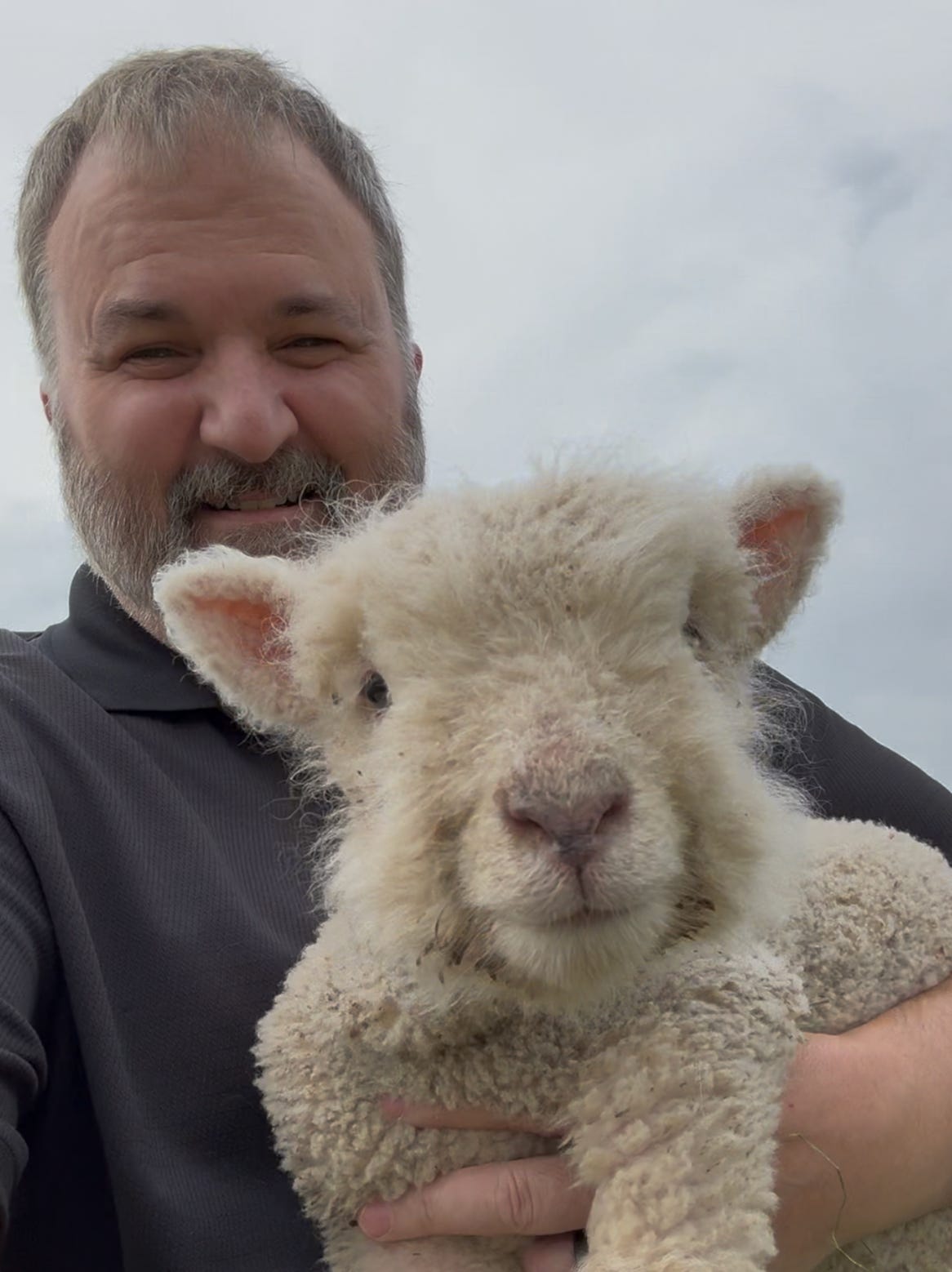

Third, God willing, if I can get our fence up this summer, we hope to add 3 Old English Southdown Babydoll Sheep and Nigerian Dwarf goats next Spring. I’ve been trying to make this happen but something has stood in the way…

Fourth, for the past few years I’ve been derailed by three major surgeries: a back fusion and fusions of both SI joints (thank you football). Since 2020, thesse three surgeries have taken the wind out of my sails, but I’m so much better, I’m training and and ready to get my farm-ish going. (I can hear my daughters looking at this picture and saying, “Dad, ew, no. Not that pic.”)
Fifth, our red golden retriever Meadow is five years old now and is still super snuggly and loves chasing squirrels, groundhogs, rabbits, foxes and deer on our property.

Sixth, Lisa and I will celebrate our 37th anniversary this July. FYI, this is us riding a gondola in Colorado to mountain bike 3 miles down a mountain. (the equipment makes me look super jacked thank you very much)
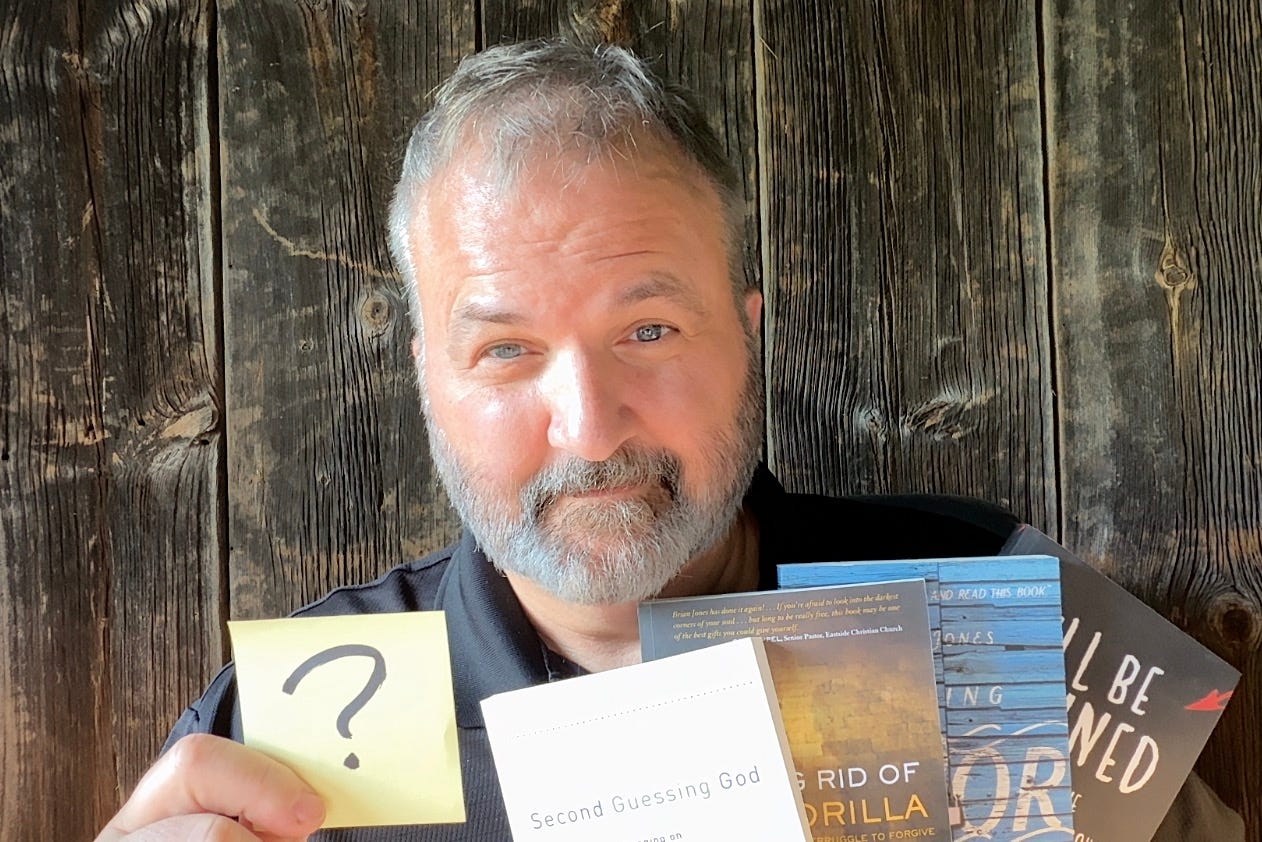
Seventh, I’ve started writing my next book, which I’ll share updates about on occasion. Should be ready early 2026.
Finally, on October 5th, we’ll celebrate the 25th anniversary of Christ’s Church of the Valley in suburban Philadelphia. For a quarter of a century, it has been our joy and honor to plant and serve this incredible church family. In that time, over 2,800 people have come to faith in Jesus and grown as his disciples. Together, this community has planted churches around the world, built centers to fight human trafficking, and rescued thousands of children from poverty in Kenya and Haiti—all because ordinary people chose to live extraordinary lives for the sake of making more and better disciples of Jesus.
Until next week, friend.
Brian