The Majesty of Simple Things

When a Greek ya-ya offers you food at a village farmers’ market, you dare not say “No thank you.”
That only emboldens them.
“I’m sorry, I already ate” isn’t a good enough excuse either.
Nor is saying “I’m allergic to gluten” in your broken American-Greeklish attempt to communicate gratitude while explaining why you can’t eat pastries.
The best approach, I learned, as you walk through the market, is to simply smile, say “kalimera!” (good morning), and gratefully take whatever a ya-ya hands you.
Grandmothers in Greece are affectionately called ya-yas (pronounced yah-YAH), and they are the centers of Greek life.
They are the huggers. The kissers. The connectors. The matchmakers. The gardeners. The laughers. The pray-ers. And the stay-ers.
And on this trip, they were out in full force.
A Trip Of Another KindUnlike other research trips I’ve taken or tours I’ve led to biblical locations in Egypt, Turkey, Israel, or Greece, this trip was different.
I didn’t travel to a tiny village in northern Greece simply to study archaeological ruins.
I went in search of an experience.
To experience a word, to be more precise.
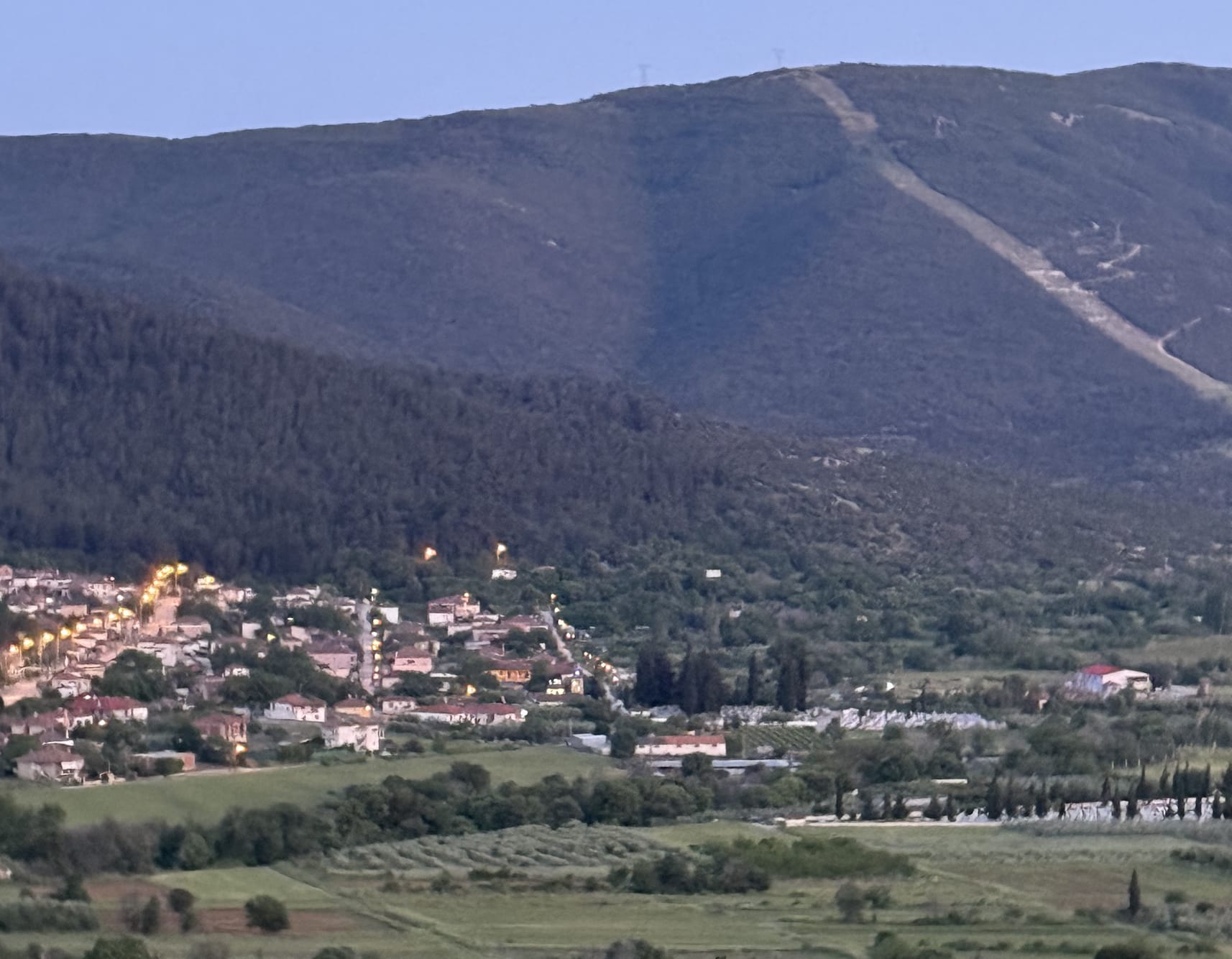
I’m writing a book to help hurried people like you and me overcome overwhelm. So I wanted to dig into a command the Apostle Paul gave 2,000 years ago to Christians in a church he started in the ancient city of Thessalonica.
“…make it your ambition to lead a quiet life…” — 1 Thessalonians 4:11
“Quiet life” comes from the Greek word ἡσυχία (hesychía), pronounced heh-see-HEE-ah, and it speaks to one of the internal changes that helps hurried people like you and me overcome overwhelm.
For years, I glossed over this verse, assuming Paul was telling them to stop talking so much — “The Christians in Thessalonica must have been SO chatty!”
But Paul didn’t use the Greek word for silence — σιγή (sigē) — as in Revelation 8:1:
“There was silence [sigē] in heaven…”
That’s because Paul wasn’t talking about “quiet” in terms of the absence of words. He was helping his readers envision a quality of life to be experienced.
Translating this word into English poses a challenge because there’s no direct English equivalent.
The best I can do is have you picture the English words “quiet,” “rural,” “thoughtful,” “rooted,” “peaceful,” and “reflective” having a baby — that’s what hesychía (heh-see-HEE-ah) means.
The opposite of hesychía would be our words: loud, busy, hurried, and shallow.
Since big cities are loud and crowded, Paul’s readers would have immediately associated hesychía with the peaceful quality of life usually found in rural villages.
For instance, the poet Horace wrote often about:
“…the woods, and the little farm that gives me back myself again…” — Epistles 1.14
And Pliny the Younger, who hated the busyness of Rome, often wrote about retreating to his home on Italy’s coast where:
“…I live undisturbed by rumor, and free from the anxious solicitudes of hope or fear, conversing only with myself and my books. True and genuine life! Pleasing and honorable repose! Snatch then, my friend, as I have, the first occasion of leaving the noisy town with all its very empty pursuits!” — Epistles 1.9
I live in the country and can attest to its evocative tranquility, but Paul wasn’t telling the Christians in the large city of Thessalonica to move to the country.
More on that in a bit.
The People’s MarketAfter a few days of walking through farms, talking with strangers, and eating in tavernas, I spent Wednesday morning wandering the streets of the local farmers market.
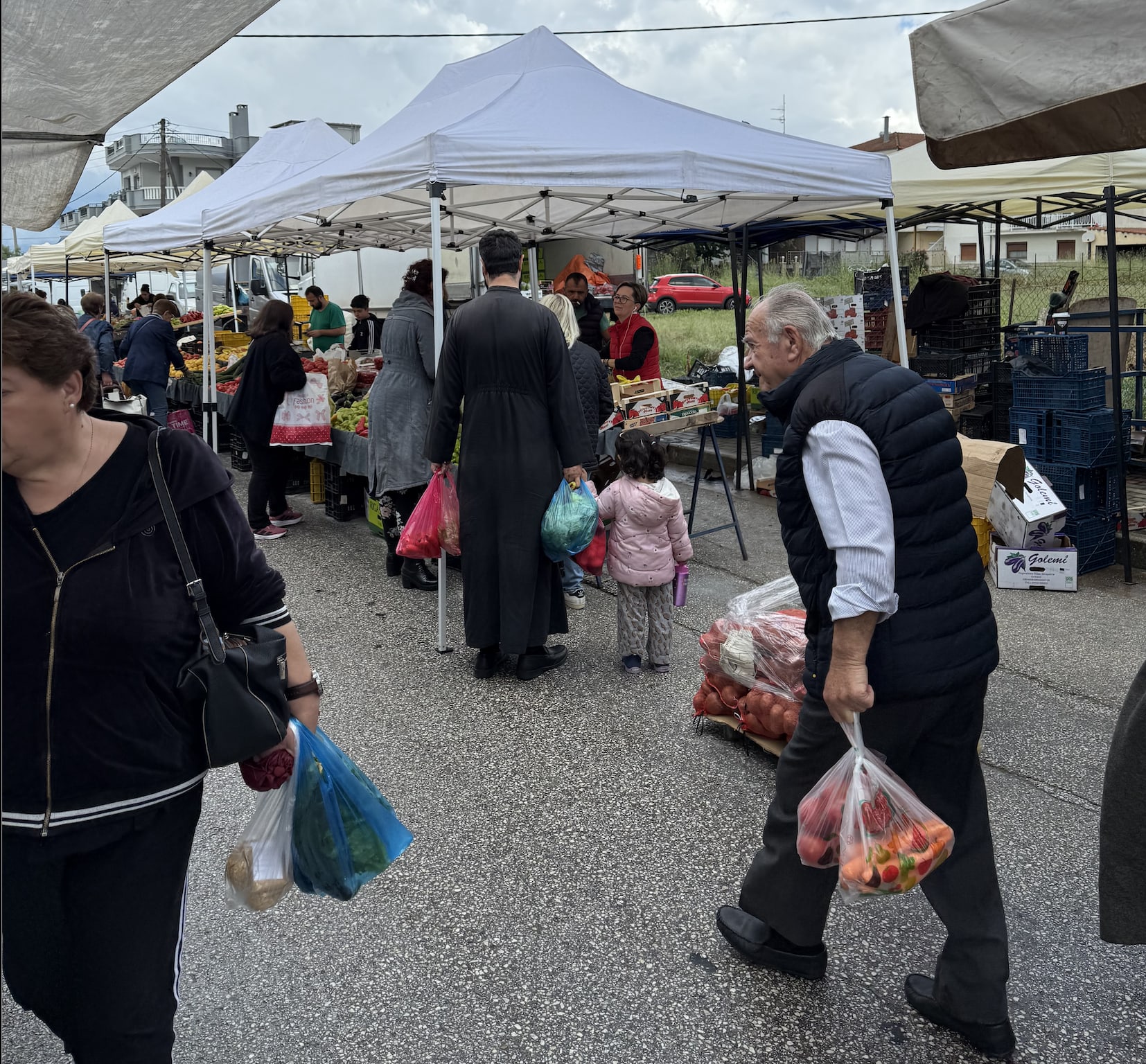
It’s hard to put into words what I experienced, but it was most surely the external embodiment of the “quiet life” Paul envisioned for the believers in Greece.
Outside of church, nothing brings the community together quite like the laiki agora—the local market where life hums and neighbors connect.
It was here that, in the words of poet Yves Bonnefoy, the people of this village “moved with the majesty of simple things.”
Everything was fresh.
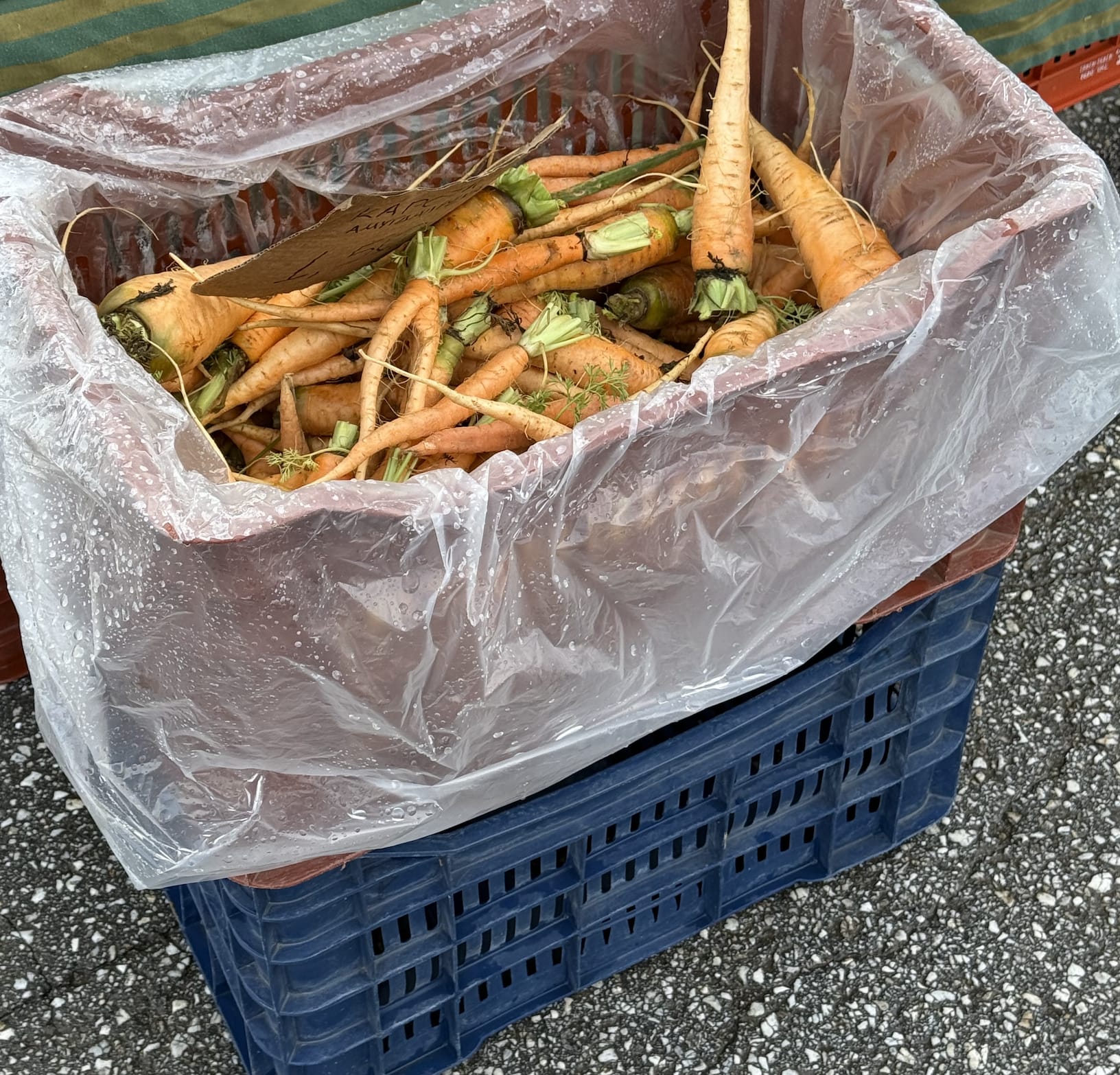
Fresh dirt on the carrots that had just been pulled from the ground…
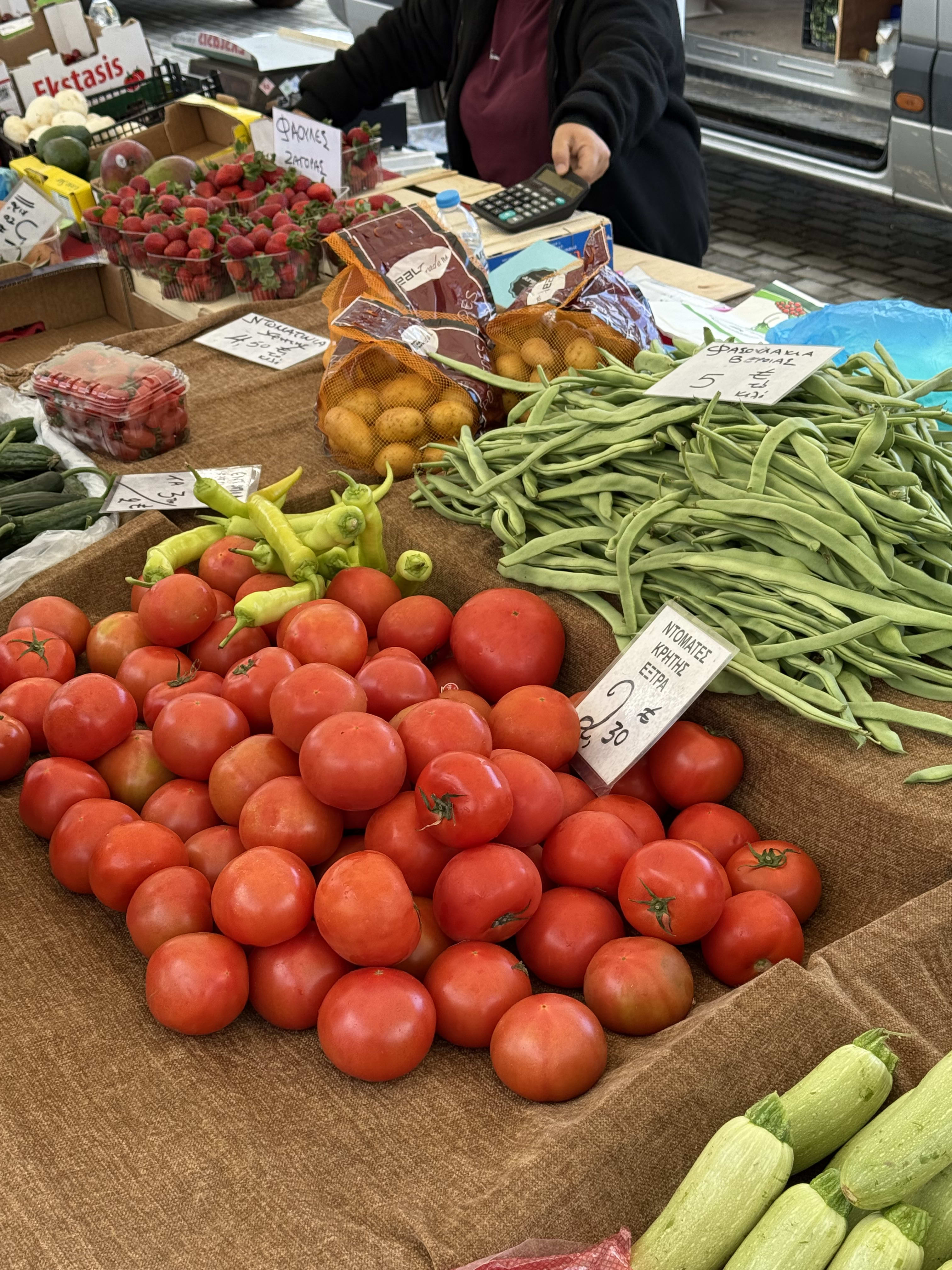
Tables of fresh tomatoes, zucchini, onions, and strawberries, sold with handwritten prices scribbled on note cards…
Eggplants being hand-washed and toweled dry as I walked by…
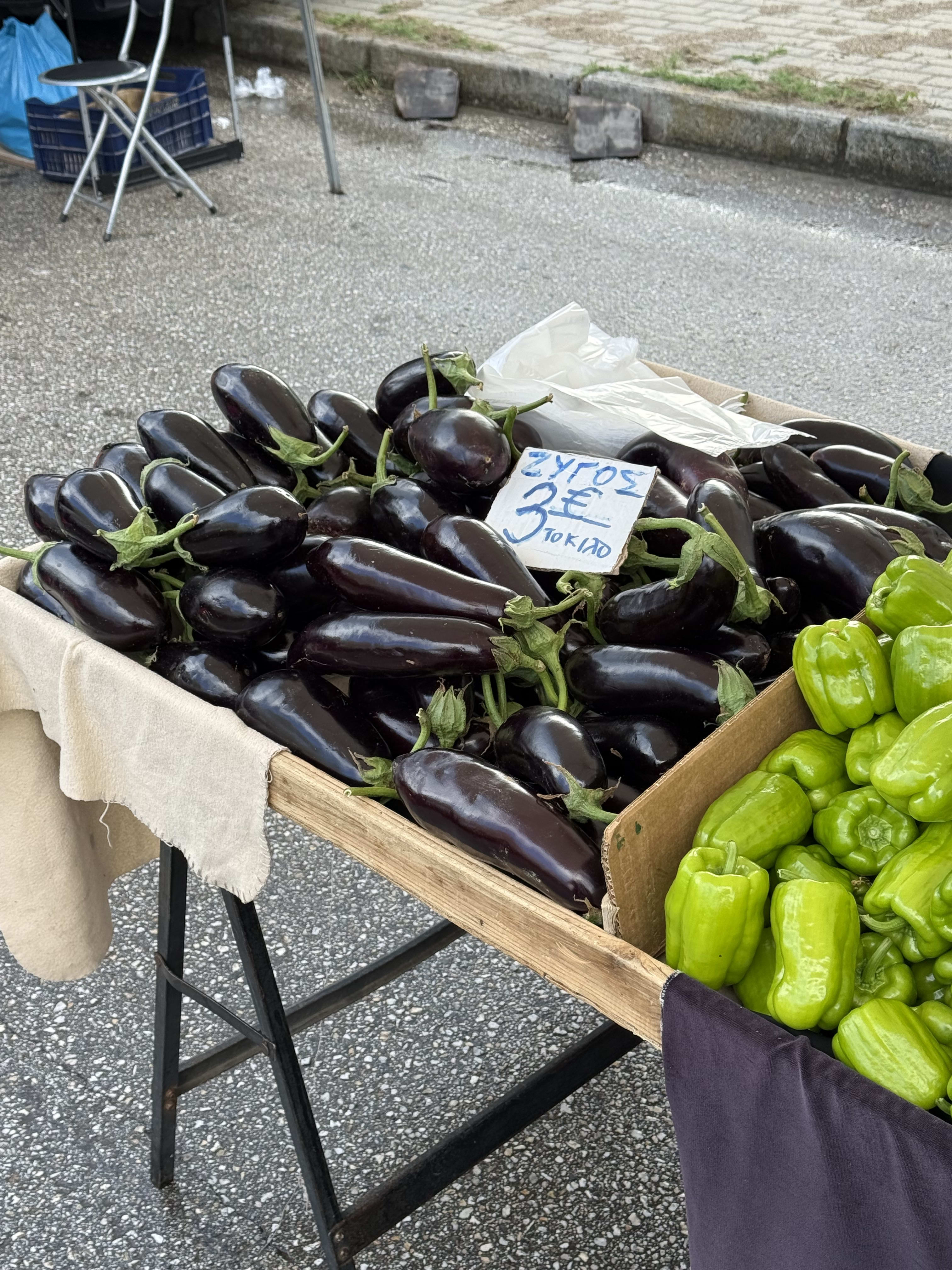
At one table I bought cashews and strawberries, and true to form, the ya-ya selling them tried to put a few more items in my bag without charging me.
I tried to decline, but to no avail.
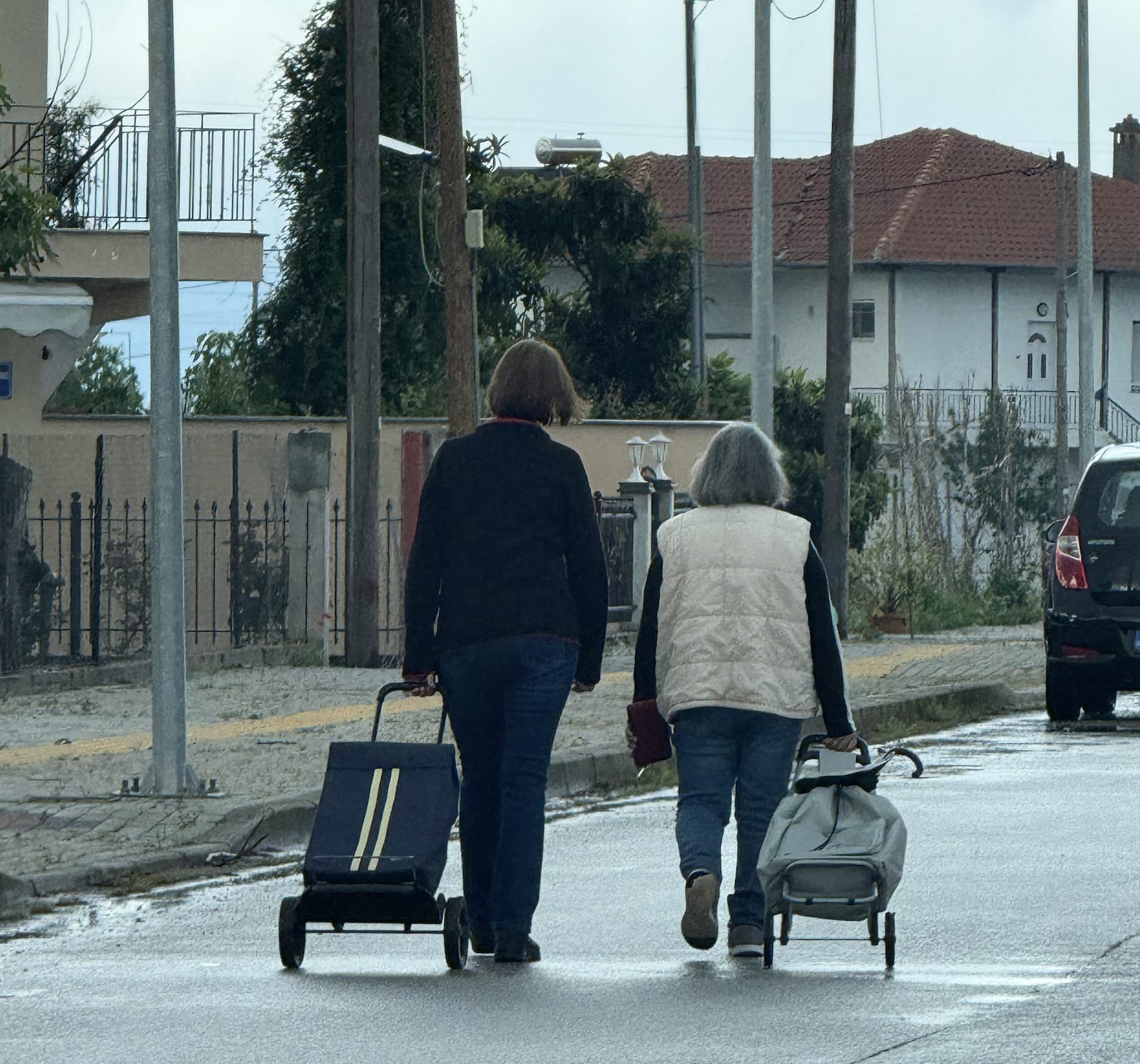
People poured onto the street pulling suitcases to carry their week’s produce.
The sounds of roosters crowing punctuated the conversations and embraces between neighbors.
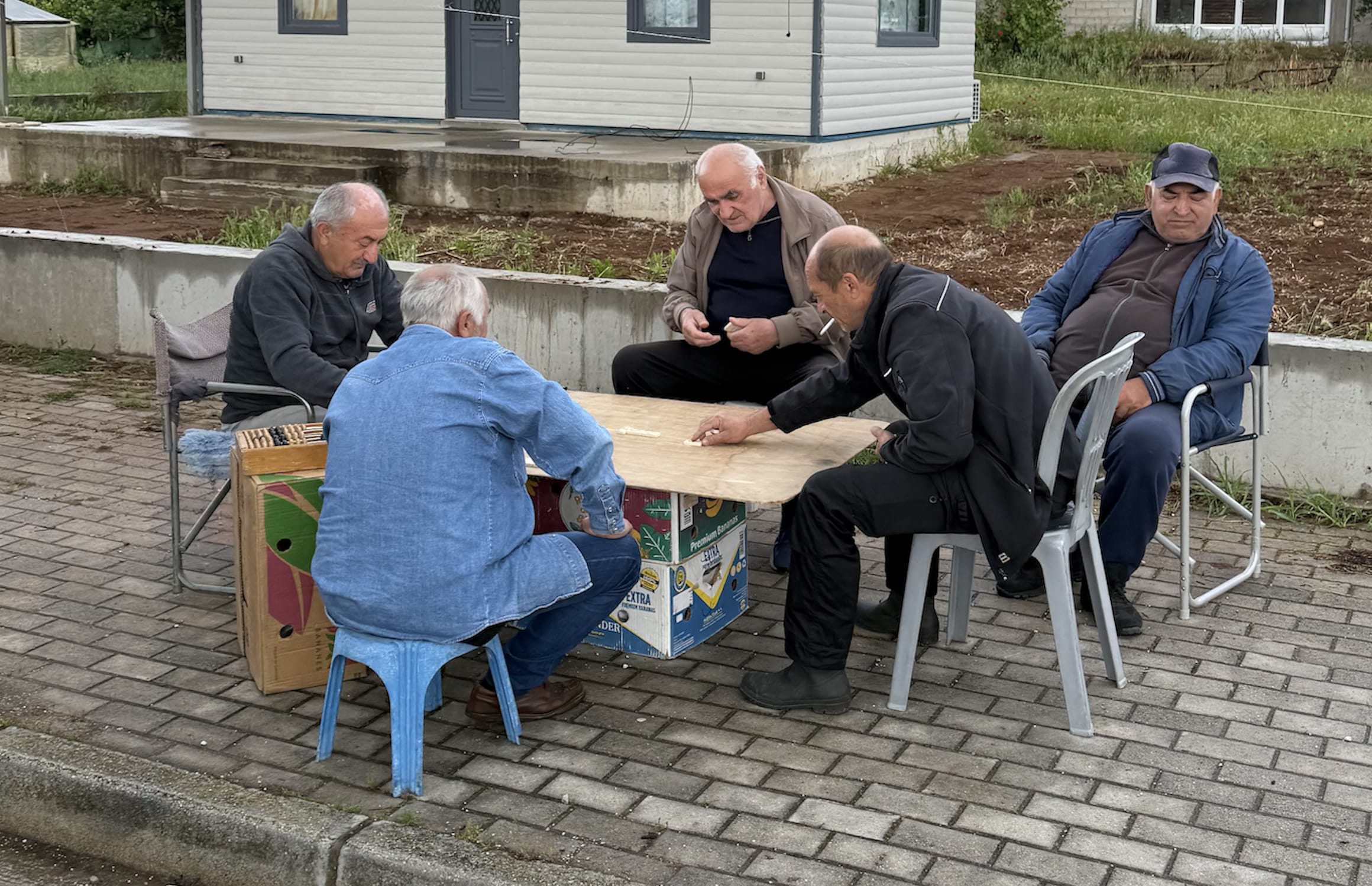
A group of old men invited me to join an impromptu backgammon game.
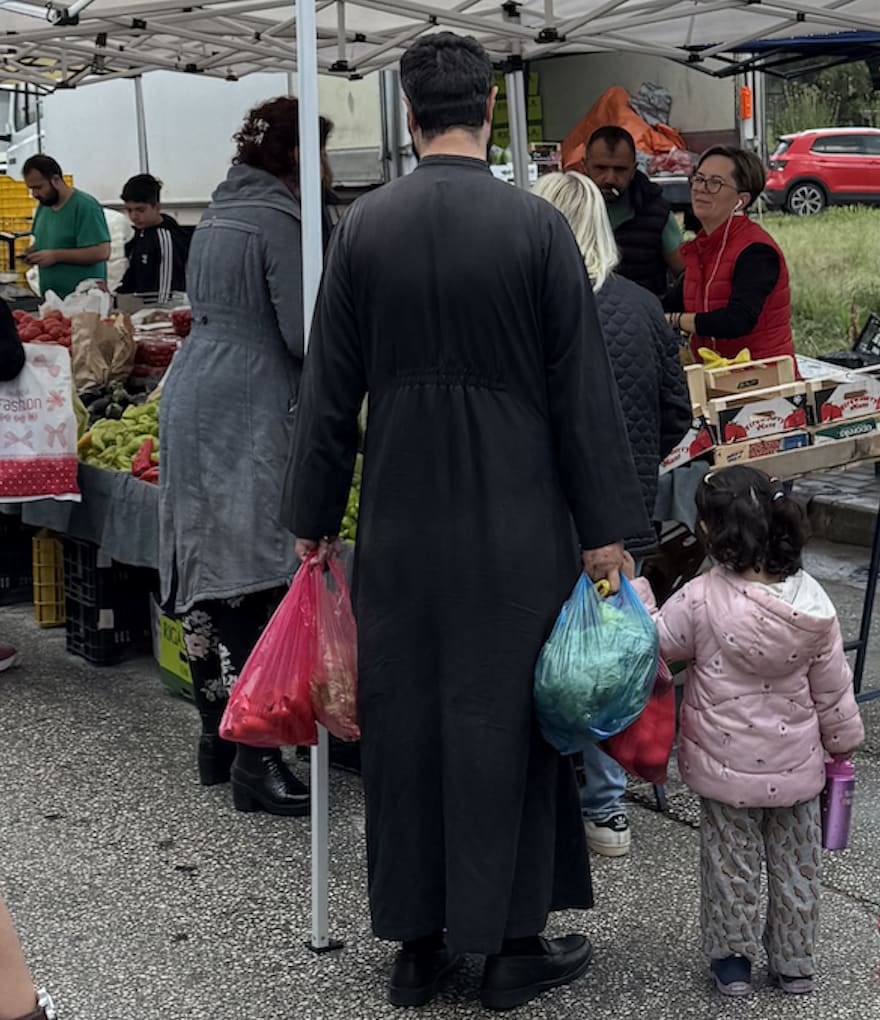
An Orthodox priest walked through the market with his two-year-old daughter as they shopped for that night’s meal.
I got the feeling that this has been going on for two thousand years in this village.
As I walked, I scribbled in my journal:
They savor the food
They savor each other
They savor the company
They savor the walk
They savor the simple pleasures of life
I wanted what these people had.
I think we all do.
The Real WorldTwo days later, on my drive back to the airport, I re-entered the traffic of the city — the pinging of my cell phone, cars honking, and exhaust fumes.
I felt my chest tighten.
My jaw clenched.
As a truck pulled in front of me and the driver shook his fist at me for going too slow, I couldn’t help but notice the stark contrast between where I was now and where I had been.
“The ‘real’ world,” wrote Dallas Willard, “has little room for a God of sparrows and children.”
This was quite evident.
We are told that when we leave the city and enter a village like that — rooted in nature and focused on real relationships — at least seven measurable things happen to our bodies:
Cortisol levels drop (stress decreases)
Heart rate slows (your body moves into rest-and-digest mode)
Blood pressure lowers (relaxation deepens)
Muscle tension decreases (your body physically relaxes)
Immune system activity improves (boost in natural killer cells)
Mood lifts (less anxiety, more positive emotions)
Attention restores (your mind resets and focus improves)
What they don’t say is that these things quickly reverse when you go back into the stressful situations you left.
Which brings me back to Paul’s command:
“…make it your ambition to lead a quiet life…” — 1 Thessalonians 4:11
Paul’s challenge to his readers—and to us—wasn’t to leave the city and move to a village in order to experience the grounded, quiet, rooted calm of hesychía (heh-see-HEE-ah).
It was to internalize that calm, reflective, slow way of being—the kind that naturally flows from village life—and embody it wherever we are.
In boardrooms. On buses. In classrooms. And in carpools packed with seven rowdy 10-year-olds on the way to a soccer game.
Sure, living in a tranquil place can make cultivating a hesychía-shaped life easier—and for some, it’s preferred. But you can live a slow, earthy, communal, embodied, and reflective life in a 300-square-foot apartment on the corner of 5th and 42nd in Manhattan, too.
That’s because hesychía is an interior posture that inevitably works its way outward. You could take these villagers—who had mastered Paul’s command—and drop them in the middle of the city, and they’d create a village wherever they landed.
The challenge for us isn’t to escape the noise of the world, but to learn how to walk through it differently.
Because hesychía isn’t a retreat—it’s a resistance.
A refusal to be shaped by the hurry, noise, and superficiality that surround us.
It’s a deliberate decision to become unhurried and attentive—not someday, when life calms down, but today.
Right here.
That, to me, is moving with the majesty of simple things: we don’t need a new address—just a slower, simpler, more embodied way to inhabit the life we already live.
—Brian
Would you like a version with Scripture woven in more explicitly, or are you aiming for a more narrative tone here?
Ask ChatGPT
Where do you go — or what do you do — to slow down and experience the quiet life of hesychía? I’d love to hear about it in the comments.
Thanks for reading Bible Insights For Making Life Work! Subscribe for free to receive new posts and support my work.