
Discover new books on Goodreads
See if your friends have read any of Margaret C. Murray's books
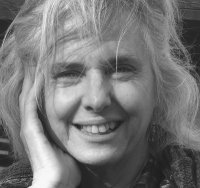
Margaret C. Murray’s Followers (4)


89 books
|
364 friends

1,182 books
|
56 friends

120 books
|
5,349 friends

503 books
|
74 friends

1,740 books
|
92 friends

476 books
|
204 friends

1,651 books
|
4,989 friends

13 books
|
193 friends
More friends…
Margaret C. Murray
Goodreads Author
Born
January 21
Member Since
February 2011
URL
https://www.goodreads.com/goodreadscommargaretcmurray
To ask
Margaret C. Murray
questions,
please sign up.


NEW! Deer Crossing, a novel by Margaret C. Murray
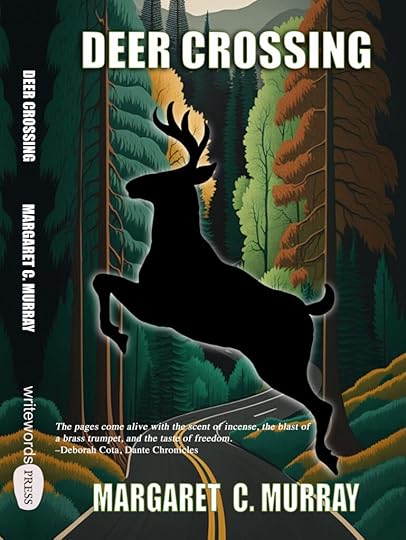
Deer Crossing by Margaret C. Murray tells the story of cousins growing up in very conventional Catholic Pittsburgh of the ’50s.
When Johnny, an aspiring pianist composer, flees to the San Francisco revolution, he calls Carla after him. While her cousin embraces
homosexuality, Carla, not ready for the sexual revolution, struggles through the Summer of Love.
How easy it is to drif



Margaret’s Recent Updates
|
Margaret C. Murray
wrote a new blog post
|
|

“In my utopia, human solidarity would be seen not as a fact to be recognised by clearing away "prejudice" or burrowing down to previously hidden depths but, rather, as a goal to be achieved. It is to be achieved not by inquiry but by imagination, the imaginative ability to see strange people as fellow sufferers. Solidarity is not discovered by reflection but created. It is created by increasing our sensitivity to the particular details of the pain and humiliation of other, unfamiliar sorts of people. Such increased sensitivity makes it more difficult to marginalise people different from ourselves by thinking, "They do not feel as 'we' would," or "There must always be suffering, so why not let 'them' suffer?"
This process of coming to see other human beings as "one of us" rather than as "them" is a matter of detailed description of what unfamiliar people are like and of redescription of what we ourselves are like. This is a task not for theory but for genres such as ethnography, the journalist's report, the comic book, the docudrama, and, especially, the novel. Fiction like that of Dickens, Olive Schreiner, or Richard Wright give us the details about kinds of suffering being endured by people to whom we had previously not attended. Fiction like that of Choderlos de Laclos, Henry James, or Nabokov gives us the details about what sorts of cruelty we ourselves are capable of, and thereby lets us redescribe ourselves. That is why the novel, the movie, and the TV program have, gradually but steadily, replaced the sermon and the treatise as the principal vehicles of moral change and progress.”
― Contingency, Irony, and Solidarity
This process of coming to see other human beings as "one of us" rather than as "them" is a matter of detailed description of what unfamiliar people are like and of redescription of what we ourselves are like. This is a task not for theory but for genres such as ethnography, the journalist's report, the comic book, the docudrama, and, especially, the novel. Fiction like that of Dickens, Olive Schreiner, or Richard Wright give us the details about kinds of suffering being endured by people to whom we had previously not attended. Fiction like that of Choderlos de Laclos, Henry James, or Nabokov gives us the details about what sorts of cruelty we ourselves are capable of, and thereby lets us redescribe ourselves. That is why the novel, the movie, and the TV program have, gradually but steadily, replaced the sermon and the treatise as the principal vehicles of moral change and progress.”
― Contingency, Irony, and Solidarity
 Authors Anonymous
— 174 members
— last activity Nov 17, 2020 06:50PM
Authors Anonymous
— 174 members
— last activity Nov 17, 2020 06:50PM
Writing is hard and often lonely work. Even if you're lucky enough to have a 'supporter', they may not be a writer themselves and understand the creat ...more
 Shelf Unbound Magazine's Indie Readers
— 18 members
— last activity Feb 10, 2011 06:18AM
Shelf Unbound Magazine's Indie Readers
— 18 members
— last activity Feb 10, 2011 06:18AM
Shelf Unbound indie literary magazine shares our favorite indie reads and wants to know yours. Check out our Goodreads shelf, and check us out at www. ...more
 The Doctor's Office for Authors
— 23 members
— last activity May 26, 2015 04:38PM
The Doctor's Office for Authors
— 23 members
— last activity May 26, 2015 04:38PM
I'll show you mine, if you show me yours. Let's exchange books we've written and agree to write reviews and post them on at least this site. Let's als ...more