Lee Allen's Blog
April 4, 2026
C.G.C. Cook's The Moors Murderers - Review
 The Moors Murderers: The Full Story of Ian Brady and Myra Hindley by Chris Cook
My rating: 5 of 5 stars
A chilling profile of the infamous Moors Murderers and their horrific crimes.
Between 1963 and 1965, Ian Brady and Myra Hindley murdered five children. In October 1965, they were arrested for the murder of Edward Evans, this just the first step in an investigation that would uncover the appalling truth about two of the most depraved serial murderers in British criminal history.
C.G.C. Cook presents the first of two volumes studying the case, a thorough and captivating account of these heinous crimes, including background on each of the victims, the key witnesses, and Brady and Hindley themselves, beginning with their childhoods and how their paths crossed, delving into the circumstances that led to this fateful folie à deux.
After they meet at work, Hindley quickly becomes obsessive in her desire for the studious and antisocial Brady. He, meanwhile, is somewhat aloof, his focus on his ambitions to lead a life of crime and his fascination with Nazism. As Hindley succeeds in her quest for Brady’s attention, thus begins a dangerous relationship fuelled by sadistic fantasy and a growing desire to make those fantasies a reality.
Delicately and respectfully, Cook pieces together the narrative of events, describing how the couple meticulously planned and executed the abductions of Pauline Reade, John Kilbride, Keith Bennett, and Lesley Ann Downey – how sexual assault and torture culminated in their murders, and their remains were buried on Saddleworth Moor. We also explore several near misses that would have assuredly become further abductions and murders, and Brady’s attempts to recruit Hindley's brother-in-law David Smith, a fatal error that ultimately led to Smith reporting them to police after they involved him in the murder of Edward Evans.
The ensuing police investigation linked Brady and Hindley to the missing children, the widespread search of the moorland leading to the recovery two of their victims' remains – that of Lesley Ann Downey and John Kilbride. Cook examines the dossier of evidence: including interview transcripts; witness statements; expert analyses and reports; photographs and letters; and the crucial tape recordings that would prove Hindley’s shared participation in the murder of Lesley Ann Downey; concluding the narrative with their committal in December 1965.
Unflinching and heart-rending, with careful attention to detail, ‘The Moors Murderers: The Full Story of Ian Brady and Myra Hindley’ is a powerful and compelling study of this series of shocking crimes, committed by a couple whose evil left an indelible wound on so many lives and a legacy that will forever haunt us.
The second volume, ‘Convicting the Moors Murderers’, goes on to tell the story of the subsequent trial, the later reinvestigation and searches for the remains of Pauline Reade and Keith Bennett, and Brady and Hindley’s lives in prison until their deaths.
View all my reviews
Follow me on Instagram
Follow me on Threads
Follow me on Facebook


March 27, 2026
Lynda La Plante's The Scene of the Crime - Review
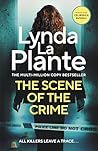 The Scene of the Crime by Lynda La Plante
My rating: 5 of 5 stars
An engrossing forensic science thriller.
CSI Jessica Russell is appointed to lead a new elite team of forensic investigators, its remit to assist in major crime investigations.
The team are soon assigned their first case: a break-in and serious assault at a barrister's home, her husband left severely injured and fighting for his life in hospital.
Facing doubts and resistance from police colleagues, witnesses and suspects, Jessica is determined to prove the new initiative a success and follow the science to the truth.
'The Scene of the Crime' is the first in a new crime thriller series by Lynda La Plante, introducing Crime Scene Investigator Jessica Russell, who is successfully appointed Team Leader of the newly created Murder and Serious Crime Analysis unit (MSCAN), under the Metropolitan Police's Homicide and Major Crime Command; an initiative designed to take responsibility for all forensic investigative work relating to a major inquiry and ensure the best expertise is assigned to investigations across the city. In an enthralling and immersive novel, multi-layered and character-focused, we follow the fascinating processes of forensic science as part of a riveting case.
Jessica is a fabulous character and I found her both relatable and endearing. Fierce, focused and determined, she is highly skilled and intensely knowledgeable, while her empathy can be both a blessing and a curse. As we get to know her, we delve into her personal life and professional backstory – witnessing her close relationship with her brother, David, and learning their tragic family history, including the recent loss of their mother, as well as referencing Jessica’s worries about David’s mental health issues and substance abuse; how she suffered an assault and continues to suffer trauma in its wake, manifesting in her own obsessive, compulsive tendencies; the case also taking a personal turn as ghosts from her past return to haunt her. There is a great dynamic between the members of the MSCAN team, while them getting to know their police colleagues proves somewhat more challenging, some of them supportive, others less so. Amongst meeting new characters, we are treated to a cameo from Anna Travis, now working for the FBI, whom we last saw in ‘Wrongful Death’, when she was preparing to depart for the US.
Impeccably researched and rich in detail, covering a broad spectrum of forensic investigation, including crime scene analysis, DNA profiling, trace evidence examination, and extending to digital forensics and psychological behavioural analysis, La Plante has woven a captivating narrative, deep-rooted in her passion for forensics. Having long been fascinated with forensic science, which has been a key component in all her police procedural series, on page and screen, she became the first layperson to be awarded an honorary fellowship to the Forensic Science Society, and has been presenting her 'Listening to the Dead' podcast since 2020, exploring some of her research in speaking with forensic scientists. This series now puts a crime scene investigator and forensic scientist at the centre, the science propelling the suspense, navigating twists and revelations as more evidence is uncovered, the stakes climbing, Jessica under pressure to ensure MSCAN succeeds.
Another of La Plante’s signature strengths has been to place female characters as the lead in traditionally male-dominated environments, and this series is a worthy successor to her previous work. It’s particularly interesting to see the evolution of this culture within the police service, witnessing what has changed and what hasn’t, when comparing and contrasting these elements in the ‘Tennison’ prequel series (1970s and 80s) leading into ‘Prime Suspect’ (1990s), the later Anna Travis series (2000s-10s), and now the Jessica Russell series (2020s). Alongside the ‘Trial and Retribution’ and Jack Warr series, we also witness the evolution of police procedure and forensic science through the decades in a stellar library of crime fiction.
A riveting, compelling thriller, ‘The Scene of the Crime’ is a gripping introduction to Jessica and the team; I’m already excited for the next book in the series, which promises to be another intense investigation.
View all my reviews
Follow me on Instagram
Follow me on Threads
Follow me on Facebook
March 6, 2026
Sophie Hannah's The Last Death of the Year - Review
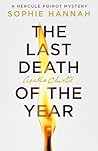 The Last Death of the Year by Sophie Hannah
My rating: 4 of 5 stars
The inimitable Hercule Poirot returns to solve another complex case.
New Year's Eve, 1932. Hercule Poirot and Edward Catchpool arrive at the House of Perpetual Welcome on the Greek island of Lamperos for the New Year celebrations.
Catchpool soon suspects that his friend has invited him on this holiday under false pretences, detecting sinister undercurrents amid the frivolities and benign veneer of the retreat.
A game of resolutions takes a malicious turn with the threat of murder, promising to bring death to end the year and begin the next.
'The Last Death of the Year' is the sixth novel in Sophie Hannah's continuation of Agatha Christie's Poirot series. Another riveting mystery; gifting us a picturesque setting, hiding beneath its beauty a dark complexity, as we journey to a remote island in the Aegean Sea, the fictional Lamperos brought vividly to life with golden sands, rugged coastline, and glittering waters, the spiritual retreat perched precariously on the cliffside, with its strange architectural design a warren of unease. A perfect blend of escapism and nostalgia, intricate plotting with riffs of moral philosophy, featuring a cast of eccentric characters, this is a thrilling puzzle for Poirot to unravel in order to bring a murderer to justice.
The narrative hinges on the riddle of a New Year’s resolution parlour game – threatening the murder of one of the residents, at once the last and first death of the year. Poirot insists this riddle cannot be taken at face value and the obvious conclusion of a midnight crime be drawn, although the other guests and residents believe he is seeking to read into someone’s dramatic flair too literally – and that, ultimately, this is simply an ill-conceived prank. They wait anxiously for death to strike and, just when they believe it may be safe, a murderer attacks with bloodthirsty ferocity. As Poirot and Catchpool investigate in the crime’s aftermath, the case takes further unexpected turns, and other residents may also be at risk.
Taking place a year after the previous novel, 'Hercule Poirot's Silent Night', this story is lighter in tone than the duo’s previous case, with dashes of humour sprinkled throughout, Poirot and Catchpool entirely baffled by the behaviour of some of the house’s residents. Poirot, as always, is a joy to spend time with, Hannah paying careful attention to detail in displaying his idiosyncrasies and, above all, the brilliance of his little grey cells. Catchpool feels somewhat at a crossroads in this adventure, questioning his life in London. As much as being forgotten cases of Poirot's, unchronicled in the past, this series is also Catchpool's story (Hannah's own creation for her Poirot novels). On the back foot from the beginning - as Poirot has kept from him the real reason for their visit to Lamperos - Catchpool is at his most confuddled and preoccupied of the entire series, and we wonder what decisions he may make regarding his own future.
At the centre of the novel is the cult-like community of the House of Perpetual Welcome, presenting as a peaceful commune, their ideology in practice proving to be far more complex than in principle. In both extension and extremity of the teaching of many world religions, they propose forgiveness should be given unconditionally, regardless of the nature of the sin – and in the absence of penance and redemption, even the knowledge of its substance. Noble in principle, and with its psychological and spiritual benefits for the forgiver, it’s nonetheless a flawed and potentially perilous path; one Poirot cannot embrace, with his passionate morality and faith in the justice system, underpinned by his Catholicism. It’s certainly an interesting concept to explore, particularly in the context of crime fiction and the wider canon of Christie’s work and our knowledge of significant cases to come in Poirot’s future. Against much resistance from members of the group, Poirot pieces together the truth, the novel concluding with Poirot’s trademark flare for drama and revelation with the gathering together of the suspects and witnesses.
An entertaining and intriguing festive mystery, ‘The Last Death of the Year’ takes us back into the interwar years and the golden age of crime fiction, allowing us to revisit a timeless character for what may always be just one more time, in a continuation of Christie’s legacy.
View all my reviews
Follow me on Instagram
Follow me on Threads
Follow me on Facebook
December 30, 2025
The Witching Hour - Review
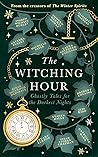 The Witching Hour: Ghostly Tales for the Darkest Nights by Bridget Collins
My rating: 5 of 5 stars
A bewitching collection of haunting Gothic tales.
‘The Witching Hour’ is an anthology of ghost and gothic horror stories, featuring thirteen tales from thirteen authors across the genres of horror, thriller, mystery and gothic fiction, all standalone short stories and following in the footsteps of previous collections ‘The Haunting Season’ and ‘The Winter Spirits’.
In the darkness of the night, supernatural powers are at their height, the veil between the material world and the preternatural and otherworldly, between the living and the dead, at its thinnest and most porous, particularly during the fabled witching hour. This collection takes us on journeys across the globe, back into the past, and into hearts and minds, each tale excavating secrets of the soul, swirling in mystery and suspense.
I adored every story of this incredible selection, each a captivating, immersive delicacy to be savoured. Overflowing with beautiful, atmospheric storytelling, conjured through delicious prose, rich description and taut plotting, invoking vivid imagery and chilling revelations, we explore a plethora of supernatural phenomena, including witchcraft, divination, curses, hauntings and visitations; blending folklore and history, crimes and misdemeanours, spiritualism and spirituality, with themes of human relationships, abuse, trauma, guilt, vengeance, expedition, medicine, religion, and, of course, life and death.
If I had to choose amongst the stories, although doubtless this list would look a little different on each reading, special mentions would be:
“The Second Witness” by Laura Shepherd-Robinson – for its clever narration and superb twist;
“23 Bridge Street” by Stacey Halls – for its slow-burning unravelling and heartfelt emotion;
“A Midnight Visitor” by Susan Stokes-Chapman – for its noirish suspense and inevitable tragedy;
“An Artful Curse” by Jess Kidd – for its historical, rural setting and execution of the craft;
“An Age of Evil” by Stuart Turton – for its epistolary style dossier of evidence and expert layering;
“The Terror By Night” by Bridget Collins – for its traditional setting and style.
Gorgeously written and curated, ‘The Witching Hour’ is a stunning collection of gripping, evocative tales, perfect for autumn and winter nights, in the Victorian tradition of a ghost story for Christmas.
View all my reviews
Follow me on Instagram
Follow me on Facebook
Follow me on Threads
December 23, 2025
Alexandra Benedict's The Christmas Cracker Killer - Review
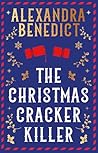 The Christmas Cracker Killer by Alexandra Benedict
My rating: 5 of 5 stars
A fiendish Yuletide game of murder.
A group of guests journeys to a remote Scottish island to spend Christmas at the exclusive pre-opening of a grand new hotel.
But amongst those gathered, a killer stalks, awaiting their moment to strike. Guests and staff are ensnared in a sinister scheme, calling upon the ghosts of their Christmases past.
Following the Christmas Eve reading of a ghost story, a guest is found dead in their chair. But they will be only the first, unless all present play the killer’s deadly game.
‘The Christmas Cracker Killer’ is a festive mystery thriller by Alexandra Benedict, the second novel featuring puzzle crafter Edie O’Sullivan, following ‘The Christmas Jigsaw Murders’ plus her appearance in short story “The Midnight Mass Murderer”, which featured in the ‘Death Comes at Christmas’ collection. An intricately plotted, tightly woven mystery in the tradition of cosy crime, with the dark, serated edge of a slasher; a psychological thriller glossed up in merriment for the Christmas season, set on an isolated island of the Scottish Hebrides, it’s both whodunit and whydunit with emotional character arcs and a killer with their own unique take on crossing people off the naughty-and-nice list.
Edie is a brilliant character, and I was very excited to learn she was making a return for a second novel. Since the events of the first, she has developed an affection for Christmas, if perhaps still holding a sliver of mistrust for the season. Edie may be softer, happier and more healed than in her first appearance, but she remains a bristling character, at times caustic and sarcastic, but her steely exterior hides an intelligent mind and abundant heart. It’s somewhat a rarity for an octogenarian to be a lead character, even in the realms of crime fiction where there have been notable stars. For her to be in a romantic relationship is rarer still, for that relationship to be with another woman even more so. Her relationship with Riga is a joy, often touching and poignant, leading to some of the novel’s most emotional moments.
Edie’s adopted son, police detective Sean, is also on the island with them, his husband Liam and their adopted children due to join them on Christmas morning. Lead guest character is hotel manager Mara, her doomed venture triggering a lot of unhealed wounds of her own, while we also gain insights into the killer’s scheme through intermittent monologues that allow us to be only slightly ahead of everyone else. Stranded by the worsening weather and the killer preventing them access to the mainland and summoning help, the guests and staff are isolated and afraid, a murderer in their midst. Edie and Sean are determined to identify them before more fall victim.
Benedict has crafted another cleverly-plotted mystery, fast-paced with sleight-of-hand twists, deft smatterings of clues, many laugh-out-loud moments juxtaposed with deeply moving ones, riddles and rhymes galore hinging on folkloric Christmas visitors, superbly stitched together and finished off with a tartan bow, as the killer implores each of them to confess their sins. As with many of the best and classic cosy mysteries, darkness lurks beneath the surface, with evil and tragedy at play, themes of past trauma and its enduring legacy playing a significant part, particularly in relation to the care of children, or the adverse neglect and abuse, against the tapestry of the season’s festive, haunted heart. This killer may be on a mission for retribution in a twisted morality game – but is this justice or vengeance?
Thrilling and captivating, ‘The Christmas Cracker Killer’ is a deliciously dark mystery for Christmastime. I very much hope this won’t be the last we see of Edie and the gang.
View all my reviews
Follow me on Instagram
Follow me on Facebook
Follow me on Threads
December 20, 2025
A Case of the Claws - Review
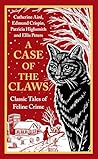 A Case of the Claws: Classic Tales of Feline Crime by Catherine Aird
My rating: 4 of 5 stars
A charming collection of festive morsels of suspense featuring our feline friends.
‘A Case of the Claws’ is a short story collection of Christmas mysteries in the tradition of cosy crime fiction, collecting four stories by four leading crime writers, each an entertaining, well-written tale with a shared theme – the narrative is led by our clawed feline familiars, demonstrating their unique brand of crime-fighting.
In “The Trinity Cat”, Ellis Peters recounts how a vagabond, somewhat adopted by Holy Trinity Church and neighbours, leads police straight to a murderer’s door when one of his benefactors is brutally murdered; Patricia Highsmith follows with “Ming’s Biggest Prey” – a battle of wills between Ming and his mistress’ cruel boyfriend who is intent on his demise; “Touch Not the Cat” by Catherine Aird tells how a cat’s futile attempts to save his human parent’s life nevertheless provides crucial forensic value; and, finally, Edmund Crispin’s “The Hunchback Cat” presents a fireside locked room mystery with a flourish of feline psychology.
A delightful selection of short, razor-sharp tales, ‘A Case of the Claws’ is an entertaining treat for the festive season, celebrating our favourite furry companions, and perfect for enjoying during a wintry afternoon or evening.
View all my reviews
Follow me on Instagram
Follow me on Facebook
Follow me on Threads
December 17, 2025
D.M. Austin's A Christmas Murder of Crows - Review
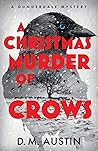 A Christmas Murder of Crows: A Dunderdale Mystery by D.M. Austin
My rating: 4 of 5 stars
A midwinter murder mystery.
Sir Henry de Trouville of Crowthwaite Castle hosts the annual Christmas reunion of his nearest family.
Beneath the bright lights and merriment, turmoil brews within this clan, rife with secrets, betrayals and personal agendas.
Then murder tears a tragic wound through the festivities, a curse centuries past ready to be fulfilled anew.
'A Christmas Murder of Crows' is the debut novel by D.M. Austin, an historical crime mystery, set in 1923. Featuring Detective Inspector Gilbert Dunderdale, summoned from Manchester City Police to investigate two deaths at Crowthwaite Castle, nestled in rural Cumbria, this is a classic detective story in the style and time period of Golden Age crime, infused with Gothic undertones, the setting brought vividly to life – the secluded castle manor house in the midst of the snow-drenched wilderness.
Austin weaves an intricate mystery, commencing with the gathering of the de Trouville family and introduction to each character, these the last in line of this dynasty of English aristocracy, with servants and locals from the village in tow, and the retelling of a tale of family history and local folklore, infused with dark symbolism, pagan ritual and blood sacrifice. Tensions already froth beneath the surface, boiling over as we come into the early hours of Christmas morning. The first death is that of an unexpected victim, but then a second brutal murder rocks an already stricken household shortly before the police arrive.
DI Dunderdale is called up from Manchester to investigate by the Chief Constable, the local team inexperienced with conducting murder investigations. With the assistance of local Sergeant Collins, Dunderdale interviews each witness, piecing together the clues and the evidence in the hunt for a killer. Each adult member of the family and their guests is a suspect, motivated by greed, passions, and family politics; Dunderdale’s investigation uncovering deceit and malice, satisfyingly concluding with the classic mystery’s motif of the detective’s summing up of the crime and exposing the murderer; all the while, the crows hovering like an omen.
Swirling with atmosphere and suspense, ‘A Christmas Murder of Crows’ is a thrilling festive mystery, promising to be the first in a series of Dunderdale mysteries.
View all my reviews
Follow me on Instagram
Follow me on Facebook
Follow me on Threads
December 12, 2025
Violent Advents - Review
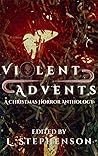 Violent Advents: A Christmas Horror Anthology by L. Stephenson
My rating: 4 of 5 stars
A blood-splattered Christmas cornucopia.
'Violent Advents' is an anthology of festive horror short stories, edited by L. Stephenson and featuring twenty-six tales, each by a different indie horror author, designed as a creepy Advent calendar for each day of December through to Boxing Day. We indulge in a selection of possessed toys and ornaments, haunted trees, ghosts, slashers, demons, spectres from beyond the grave, witches, zombies, creepy crawlies and folkloric creatures, as we count down to Christmas. From deep insightful tales to completely off the wall lunacy, this collection boasts a range that will appeal to all tastes across the horror spectrum.
Highlighting favourites amongst the twenty-six proved a difficult task, as there was much to enjoy in this anthology! Nevertheless, my personal special mentions are:
“And I Would've Gotten Away With it Too” by A.D. Jones – an old-school, brutal stalk and slash at a Christmas tree farm;
“Biodiversity” by Mallory Cywinski – the spectre of abuse looms over a family reunion in this haunting story;
“Emuki” by Scott McGregor – a creepy, atmospheric chiller making Christmas Eve visitations nightmarish;
“What You Had” by Kev Harrison – a gripping tale of guilt and vengeance reaching from beyond the grave;
“Right Where You Need to Be” by Loki DeWitt – a mystery of folklore and belonging harking back to yesteryear;
“Nan” by Hayden Robinson – an emotional story of grief and the power of memory;
“Kw'arma I'th a Bw'itch” by Ross Jeffrey – a sublime revenge thriller that captivates in every syllable.
Overall, this is a fabulous Yuletide treat for anyone who enjoys their festive fun with dashes of terror and more than generous splashes of blood. Brimming with gore, thrills, and violence, the anthology covers multiple sub-genres, amongst them splatter, slasher, supernatural horror, natural horror, and dark fantasy, from the darkly comical to the richly atmospheric.
Plus, as an angelic finish atop this fiendish Christmas evergreen, all profits from sales of the anthology go towards the British Heart Foundation and the American Heart Foundation, perfect charitable causes for the season of giving, commemorating those who are sadly no longer with us, and looking towards a brighter future.
Thrilling and entertaining, ‘Violent Advents’ is an indulgent treat for horror and Christmas fans alike, a festive feast of work from the pens of indie authors, showcasing their talent and diversity all for a worthy cause.
Follow me on Instagram
View all my reviews
Follow me on Facebook
Follow me on Threads
December 4, 2025
Stephen King's You Like It Darker - Review
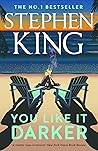 You Like it Darker by Stephen King
My rating: 4 of 5 stars
A thrilling collection of tales from the master of horror.
'You Like It Darker' is a horror thriller collection by Stephen King, featuring a novella, three novelettes, and eight short stories, plus a bonus short story, bringing the total to thirteen, for the paperback edition. Collected from shorts written for miscellaneous publications and new stories for the collection, including King delving into his own archive and returning to a story that remained unfinished for decades, we are treated to tales of serial killers, psychic phenomena, extraterrestrials and mad scientists, ghosts and creatures natural and unnatural. Featuring a variety of characters and visiting different locations and time periods, including revisiting the locale of Castle Rock more than once and including a sequel to one of his most-loved works, King explores horrors both extraordinary and everyday, those that may be supernatural in origin and others disturbingly human.
The four longer stories were amongst my personal favourites:
“Two Talented Bastids”
⭐⭐⭐⭐
The opening memoir ponders the question of how an artist finds inspiration, whether it is innate talent or if this gift is gifted by an external force, as the narrator looks back on the lives and careers of his father and his father’s friend, who both excelled in their artistic fields as a writer and painter respectively. A thought-provoking, retrospective tale.
“Danny Coughlin’s Bad Dream”
⭐⭐⭐⭐⭐
The novella of the collection revisits another of King’s signature tropes of psychic powers, as the eponymous Danny Coughlin dreams of the location of a murder victim’s body and then finds himself the lead suspect for her murder. Hounded by the detectives investigating the case, Danny’s life crumbles in a chilling story of obsession and injustice.
“Rattlesnakes”
⭐⭐⭐⭐
In a sequel to ‘Cujo’, many years after those horrific and tragic events, Vic Trenton is staying at Rattlesnake Key, having needed an escape from his everyday life. A sprawling narrative of death and grief, hauntings and persecution, this is tragic, moving and deliciously creepy. Duma Key, now largely underwater, also features, within view of Rattlesnake Key, adding to the nostalgia of this long-awaited emotional sequel to one of King’s early works of terror.
“The Answer Man”
⭐⭐⭐⭐⭐
In the poignant, thought-provoking final novelette of the collection, Phil Parker looks back on his past and the three times he encountered the mysterious Answer Man at crucial junctures in the tapestry of his life, pondering decisions and memories. A tale of immense pain and incredible joy, and everything in between, this is a beautifully written tale and one that will stay with you afterwards.
Additional favourites amongst the short stories were:
“The Fifth Step” – a chance meeting, a confession and a perfect twist;
“The Turbulence Expert” – a secretive profession of sacrifice and mortal peril;
“The Dreamers” – an experiment in parapsychological research that turns deadly.
Overall, ‘You Like It Darker’ is a superb selection of stories, a mix of bite-sized chillers and introspective, character-driven tales, some dark and philosophical, others rife with black humour. Often looking back on a life lived, exploring themes of aging and family, the long reaches of loss and grief, the burdens of regret and guilt, the scars of trauma and tragedy, characters are haunted by events of the past as much as they may be by present circumstances or entities that lurk in the shadows. A compendium of twisted morsels of mystery, suspense and drama, some fast-paced, others slow burns, we delve into concepts of morality, fate and life itself in an immersive and captivating collection.
Follow me on Instagram
View all my reviews
Follow me on Facebook
Follow me on Threads
December 1, 2025
Oscar Wilde's The Picture of Dorian Gray - Review
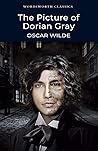 The Picture of Dorian Gray by Oscar Wilde
My rating: 5 of 5 stars
A provocative Gothic classic of horror, dark fantasy and philosophical fiction.
Dorian’s Gray’s portrait, painted and gifted by a friend, hangs in pride of place in his home. But a chance wish he made as it was painted is about to come true.
For his portrait hides a remarkable secret – it will age on his behalf and carry the weight of his life of sin, while he will retain his youthful beauty.
But as the years pass, Dorian will learn the harshest of truths – moral justice is inescapable, and the day will come when the marks of sin upon his soul will entrap him, just as his vices have his entire life.
'The Picture of Dorian Gray' is a gothic horror novel by Oscar Wilde, first published in 1890 as a novella featured in 'Lippincott's Monthly Magazine', and later as a novel with additional chapters. Exquisitely written and its plot finely crafted, the narrative carries us into the hearts and minds of man, darkened by sin, exploring the concept of beauty and how deeply art and the human soul are intertwined.
We first meet Dorian through the gaze of Lord Henry Wotton, who visits his friend, the artist Basil Hallward, to find him working on the portrait of his new muse, the aristocratic Dorian Gray. Dorian becomes seduced by Lord Henry’s philosophy of life, his belief that life should be lived in the worship of physical beauty and that the pursuit of pleasure and attainment of all one may desire is the purpose of existence, not to be sullied by moral principles.
We witness Dorian’s descent into debauchery and sin, his selfish lifestyle of hedonism and materialism warping him into a narcissistic and superficial man. Upon his abandonment of a young woman whom he claims to love and who loves him dearly, he first witnesses the change upon his countenance in his portrait, and learns to fear it. But as his cruelty leads to his lover’s suicide, the corruption of his soul may be impossible to repent, and, as time goes by, he comes to revel in the strange power his portrait beholds, as much as he cannot lay eyes upon it. As his life of moral decay continues, Gray's continued degradation ultimately escalates to murder.
The gothic horror elements are gorgeous, Wilde's prose conjuring vivid images and a dark and brooding madness, delving into a life of selfish self-indulgence, of vanity and the victory of ego, indulging in pleasures of the flesh and vices of the body and mind. Laced with homoeroticism, decadence and desire, the novel explores the duality of human nature through the eponymous picture, the impact of art on life and life on art; the portrait of Dorian Gray a metaphor for human life, art and culture. Building to the intense climatic chapters, Dorian's sins return to haunt him as an avenger from his past pursues him, while his own conscience and the burden on his soul may prove to be his final tragic undoing.
A Faustian pact is the coal at the centre of the novel’s premise; though the Devil may not appear, it nonetheless would seem he responded to a wish uttered by Gray upon posing for his beauty to be captured in oils and made immortal on canvas, his desire for eternal youth at the price of his soul. We delve into the nature of beauty and its objectification, perfectly illustrated through the portrait - imagine if one's sins were worn upon one's face, if true character could be seen with the eyes. While, as the novel describes, certain choices will ultimately present themselves physically, much of what makes someone who they are and, crucially, their moral fortitude and their empathy for their fellow human beings, is hidden beneath the skin, residing within the heart and mind: the substance of one's soul is not writ upon their body.
Wilde paints a portrait of contemporary British society, of the class system and its prejudices, of the sexism entwined within it, a rich social commentary without necessarily drawing any judgements. There are suggestions that a man's relationships with women are purely functional or for the sake of 'lower' pleasures, and that intellectual and artistic pleasures are to be found only with fellow men. There is much philosophising on the novel's themes and ideas, particularly through the character of Lord Henry, whose views are coloured by his position in society and his opinion of women, and his core belief that one's happiness and pursuit of their own desires is equated to goodness, as this is when mind, body and soul are truly in harmony – the notion of morality is simply to deny oneself the pleasures of the body and the intellect.
The novel's most sympathetic character, Basil, the artist of the infernal masterpiece, is a deeply moral man, his fate tragic and brutal. It shouldn't perhaps go un-noted that he is probably the only authentically homosexual character in the novel, as well as being the most empathetic and truly artistic amongst the cast. Though subtle, if any judgement is made within the text, it is perhaps that avarice and pride will ultimately come to haunt those who indulge in them, the novel’s dark finale surely serving as parable that sin’s shadows are inescapable and the suffering you inflict outwards upon the world will surely turn on its perpetrator and cannibalise itself.
This was Wilde's only novel amongst his published works. Scandalous and controversial, it was deemed a deeply immoral work on publication, its exploration of morality and its cautionary messages apparently too subtle to be recognised. It was later used as evidence in his trials for homosexuality and gross indecency, which resulted in his conviction (sexual activity between men wouldn't be decriminalised in England and Wales until 1967). The irony of an artist's work believed to be so reflective of an artist's life as to be considered legal evidence cannot have escaped Wilde, whose novel’s centrepiece of the portrait depicted art as both reflection and imitation of life, possessing otherworldly power – the two turning in eternal dance; how much does art imitate and reflect life, and how much does life imitate and reflect art?
Wilde notes in his preface, perhaps in response to his critics:
“All art is at once surface and symbol. Those who go beneath the surface do so at their peril. Those who read the symbol do so at their peril. It is the spectator, and not life, that art really mirrors.”
Which, of course, is something of which we all are guilty. Art is often beautiful. And there is danger in that beauty. Which in itself is beautiful. It holds up a mirror to our lives – it can reflect either what is true, or what we wish to be true. It can both comfort and disturb, and that’s exactly as it should be.
The novel has been adapted for stage and screen multiple times, with its first silent film adaptation in 1910 in the Danish 'Dorian Gray's Portræt’. More silent films followed throughout the decade. A highly acclaimed US film adaptation was released in 1945; bearing the novel's title, it focused on the supernatural horror elements. An Italian, German and British co-production '(The Sins of/The Secret of) Dorian Gray' was released in 1970, its focus on the novel's eroticism. Multiple television movie and mini-series adaptations were also produced in the 1960s, 70s and 80s. The character and novel saw a resurgence of adaptations in the early 2000s, culminating in the British film 'Dorian Gray' in 2009.
A timeless masterpiece of English literature, ‘The Picture of Dorian Gray’ is a thought-provoking, entrancing tale of philosophical horror.
Follow me on Instagram
View all my reviews
Follow me on Facebook
Follow me on Threads