Oscar Wilde's The Picture of Dorian Gray - Review
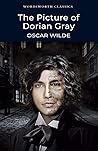 The Picture of Dorian Gray by Oscar Wilde
My rating: 5 of 5 stars
A provocative Gothic classic of horror, dark fantasy and philosophical fiction.
Dorian’s Gray’s portrait, painted and gifted by a friend, hangs in pride of place in his home. But a chance wish he made as it was painted is about to come true.
For his portrait hides a remarkable secret – it will age on his behalf and carry the weight of his life of sin, while he will retain his youthful beauty.
But as the years pass, Dorian will learn the harshest of truths – moral justice is inescapable, and the day will come when the marks of sin upon his soul will entrap him, just as his vices have his entire life.
'The Picture of Dorian Gray' is a gothic horror novel by Oscar Wilde, first published in 1890 as a novella featured in 'Lippincott's Monthly Magazine', and later as a novel with additional chapters. Exquisitely written and its plot finely crafted, the narrative carries us into the hearts and minds of man, darkened by sin, exploring the concept of beauty and how deeply art and the human soul are intertwined.
We first meet Dorian through the gaze of Lord Henry Wotton, who visits his friend, the artist Basil Hallward, to find him working on the portrait of his new muse, the aristocratic Dorian Gray. Dorian becomes seduced by Lord Henry’s philosophy of life, his belief that life should be lived in the worship of physical beauty and that the pursuit of pleasure and attainment of all one may desire is the purpose of existence, not to be sullied by moral principles.
We witness Dorian’s descent into debauchery and sin, his selfish lifestyle of hedonism and materialism warping him into a narcissistic and superficial man. Upon his abandonment of a young woman whom he claims to love and who loves him dearly, he first witnesses the change upon his countenance in his portrait, and learns to fear it. But as his cruelty leads to his lover’s suicide, the corruption of his soul may be impossible to repent, and, as time goes by, he comes to revel in the strange power his portrait beholds, as much as he cannot lay eyes upon it. As his life of moral decay continues, Gray's continued degradation ultimately escalates to murder.
The gothic horror elements are gorgeous, Wilde's prose conjuring vivid images and a dark and brooding madness, delving into a life of selfish self-indulgence, of vanity and the victory of ego, indulging in pleasures of the flesh and vices of the body and mind. Laced with homoeroticism, decadence and desire, the novel explores the duality of human nature through the eponymous picture, the impact of art on life and life on art; the portrait of Dorian Gray a metaphor for human life, art and culture. Building to the intense climatic chapters, Dorian's sins return to haunt him as an avenger from his past pursues him, while his own conscience and the burden on his soul may prove to be his final tragic undoing.
A Faustian pact is the coal at the centre of the novel’s premise; though the Devil may not appear, it nonetheless would seem he responded to a wish uttered by Gray upon posing for his beauty to be captured in oils and made immortal on canvas, his desire for eternal youth at the price of his soul. We delve into the nature of beauty and its objectification, perfectly illustrated through the portrait - imagine if one's sins were worn upon one's face, if true character could be seen with the eyes. While, as the novel describes, certain choices will ultimately present themselves physically, much of what makes someone who they are and, crucially, their moral fortitude and their empathy for their fellow human beings, is hidden beneath the skin, residing within the heart and mind: the substance of one's soul is not writ upon their body.
Wilde paints a portrait of contemporary British society, of the class system and its prejudices, of the sexism entwined within it, a rich social commentary without necessarily drawing any judgements. There are suggestions that a man's relationships with women are purely functional or for the sake of 'lower' pleasures, and that intellectual and artistic pleasures are to be found only with fellow men. There is much philosophising on the novel's themes and ideas, particularly through the character of Lord Henry, whose views are coloured by his position in society and his opinion of women, and his core belief that one's happiness and pursuit of their own desires is equated to goodness, as this is when mind, body and soul are truly in harmony – the notion of morality is simply to deny oneself the pleasures of the body and the intellect.
The novel's most sympathetic character, Basil, the artist of the infernal masterpiece, is a deeply moral man, his fate tragic and brutal. It shouldn't perhaps go un-noted that he is probably the only authentically homosexual character in the novel, as well as being the most empathetic and truly artistic amongst the cast. Though subtle, if any judgement is made within the text, it is perhaps that avarice and pride will ultimately come to haunt those who indulge in them, the novel’s dark finale surely serving as parable that sin’s shadows are inescapable and the suffering you inflict outwards upon the world will surely turn on its perpetrator and cannibalise itself.
This was Wilde's only novel amongst his published works. Scandalous and controversial, it was deemed a deeply immoral work on publication, its exploration of morality and its cautionary messages apparently too subtle to be recognised. It was later used as evidence in his trials for homosexuality and gross indecency, which resulted in his conviction (sexual activity between men wouldn't be decriminalised in England and Wales until 1967). The irony of an artist's work believed to be so reflective of an artist's life as to be considered legal evidence cannot have escaped Wilde, whose novel’s centrepiece of the portrait depicted art as both reflection and imitation of life, possessing otherworldly power – the two turning in eternal dance; how much does art imitate and reflect life, and how much does life imitate and reflect art?
Wilde notes in his preface, perhaps in response to his critics:
“All art is at once surface and symbol. Those who go beneath the surface do so at their peril. Those who read the symbol do so at their peril. It is the spectator, and not life, that art really mirrors.”
Which, of course, is something of which we all are guilty. Art is often beautiful. And there is danger in that beauty. Which in itself is beautiful. It holds up a mirror to our lives – it can reflect either what is true, or what we wish to be true. It can both comfort and disturb, and that’s exactly as it should be.
The novel has been adapted for stage and screen multiple times, with its first silent film adaptation in 1910 in the Danish 'Dorian Gray's Portræt’. More silent films followed throughout the decade. A highly acclaimed US film adaptation was released in 1945; bearing the novel's title, it focused on the supernatural horror elements. An Italian, German and British co-production '(The Sins of/The Secret of) Dorian Gray' was released in 1970, its focus on the novel's eroticism. Multiple television movie and mini-series adaptations were also produced in the 1960s, 70s and 80s. The character and novel saw a resurgence of adaptations in the early 2000s, culminating in the British film 'Dorian Gray' in 2009.
A timeless masterpiece of English literature, ‘The Picture of Dorian Gray’ is a thought-provoking, entrancing tale of philosophical horror.
Follow me on Instagram
View all my reviews
Follow me on Facebook
Follow me on Threads


No comments have been added yet.