Roseanne Cheng's Blog
December 8, 2017
Favorite Books of 2017
Well, 2017. You were full of allllll kinds of surprises. At the very beginning of the year, I made a promise to myself that I would write a book and read A LOT. I did both. More on the book I wrote later, but I have read fifty books to date, and it’s still the beginning of December. Here are some of my favorites:
Fiction that blew me away:

It’s hard to love My Absolute Darling, by Gabriel Tallent. It’s quite possibly the most disturbing book I’ve ever read. But the prose was undeniably amazing.

The first chapter of Eleanor Oliphant is Completely Fine, by Gail Honeyman, reads like Bridget Jones’ Diary. And then it quickly, beautifully transforms into an absolutely heartbreaking book about love, friendship, and overcoming abuse. This book truly touched me, and I can’t recommend it highly enough.

I simply don’t have the words to express how phenomenal Homegoing, by Yaa Gyasi, is. Like the previous two, the subject matter in this is hard to love. But the stunning way in which the stories in this book are told is just breathtaking. (Hyperbole, much? I can’t help it. This book was that good.)

I wanted to not like A Man Called Ove, by Fredrik Backman. I tend to be that way whenever a book gets a lot of buzz. But this book was tender and beautiful and had me crying multiple times on a plane ride. I loved it.
Non-Fiction that Got me Thinking:

I, along with (more than) half the country am really struggling with the current state of things. Someone recommended Hillbilly Elegy, by J.D. Vance, to me in January, before it got all the buzz it got throughout the year. I thought it was carefully crafted, very relatable, and shed some light on some serious darkness.

You guys, We Were Eight Years in Power, by Ta-Nehisi Coates, is absolutely required reading for every single human American. And that is all there is to it.

I had the pleasure of working with Bill Lunn on his book, Heart of a Ranger, as well as getting to know Ben Kopp’s mother through the book launch process. As my husband can attest– this book had me staying up way past my bedtime, sobbing tears of sadness and joy. It’s truly a beautiful tribute and a great glimpse into the life (and death) of an American soldier.

I can’t tell you how many times I’ve recommended Born a Crime, by Trevor Noah, but when I do I always stress that the book must be listened to on audio. His reading in his (dreamy) South African accent is wonderful, and the way he tells his story is flawless.

I debated putting this book here, for obvious reasons. Despite all that has happened with Al Franken in the last 48 hours, I have to say that his book, Giant of the Senate, (again, on audio), was an absolute pleasure to read this year. He broke my heart, don’t get me wrong. But his book was great. Did I mention he also broke my heart?

I want to gift Bad Feminist, by Roxane Gay, to every woman I know. But they have to be over the age of 35 OR they have to have much of their girlhood defined by Sweet Valley High, 90210, and ubiquity of reality television. Funny, witty, and thought-provoking.
There were others. I really enjoyed What Happened, by Hillary Clinton, however I think she is such a polarizing figure that if you have any sort of feelings about her, good or bad, this book will only make those feelings stronger. I thought Everything, Everything, by Nicola Yoon, was enjoyable YA, and of course I loved The Hate U Give, by Angie Thomas. Reza Azlan’s God, A Human History, was fantastic (though not as good as Zealot), and Amy Schumer’s The Girl With the Lower Back Tattoo was surprisingly thoughtful and definitely hilarious.
So, my fellow book nerds, what were your favorite books of 2017?


August 1, 2017
Creative Writing Resources for Kids
Last month I taught my summer creative writing workshop, and let me tell you that this group of kids is THE MOST:

Each and every one of them was kind, caring, considerate, happy to listen and take feedback… I didn’t want the session to end.
After these workshops, I’m always asked by parents what resources I recommend for young creative writers. Here are a few I like, but keep in mind that there are only two resources I really, truly recommend. I’ll save those for the end of the post.
Lakeshore Learning makes these fantastic blank notebooks for creating books. I have found these to be incredible for young kids– they are the perfect size and durability, and allow for complete creativity.

826 Valencia is one of my favorite organizations in the country. If you don’t know them, get to know them and find your local version of it (The Mid Continent Oceanographic Institute is the Minnesota version). They have a whole slew of creative writing resources available for purchase on their website, and the one I love for my young writers workshop is 642 Things to Write About.

DK’s Write Your Own Book is a great tool for teachers. I really like the format of the book– it’s large, hardcover, full color, and easily laid out for lesson planning. You can purchase it on Amazon, but I found mine at my local Barnes and Noble.

Your local writing organizations and libraries are a great places to take kids to meet authors, ask questions, and make real-world connections to a career in writing. Plan a family outing for when an author comes to speak, read their book together before you go, and make a list of questions you’d like to ask the author during the event. I STILL do this as an adult, and it’s always a learning experience for me.
I know there are apps kids can use. Edutopia came out with a list here, though I can’t speak to any of them. Call me old fashioned, but I really can’t stand the idea of having kids use an app for creative writing. They really, truly only need two things:
Paper
Pen or pencil
Young, old , novice or veteran, there is nothing more you need than a pen and paper. Give your child some space and time, let them write, make mistakes, and start again. It’s really the only way to get through any creative project, and the sooner they embrace the process, the sooner they can be ready for the writing journey.
May 23, 2017
A Teachable Book: The Hate U Give
If you are anywhere close to the YA world recently, you’ve heard of The Hate U Give, by Angie Thomas. “It’s about Black Lives Matter”, is the way that people usually talk about it in passing. I just finished listening to the audio recording of this, and let me tell you: it lives up to the hype. 
The premise is so important and relevant. A young black girl witnesses the shooting of her friend by a police officer. There is nothing in this story that is any more or less dramatic than what has been covered on the news several times over the last few years.
I think when authors fictionalize such a sensitive subject as police brutality and Black Lives Matter, they run the risk of being overly preachy or one-sided. Not with this book. The author very smartly creates a main character who is very involved in both “sides” of the issue, one who is going through the highs and lows (mostly lows) with the reader. She creates empathy in small and large moments, and plenty of places for debate and discussion. She also made it sweet and endearing in many parts, not the least of which being the throw-backs to old school hip hop music. That was a wonderful way to draw in an older audience (like me!).
I know kids across the country are reading this book in droves, but I don’t know that it’s being “taught” in the traditional sense of the word. If I were to bring this book into my classroom, I would love to have students create a culminating assignment that is solutions-based. How do we bridge cultural differences in our urban communities? How do we co-exist peacefully with law enforcement and anyone who doesn’t think/believe the way we do? What are some ways we can really “hear” each other’s experiences and build empathy from them?
I can’t think of a more important time for this book to come out. I hope it wins a ton of awards and makes it into the hands of young readers in every part of the country.
April 20, 2017
Teaching on the Other Side of Parenthood
When I was pregnant with Anna and still teaching, a colleague told me that after I became a mother I would become a different teacher. That I would be more empathetic; that I would understand more all the ways my job mattered (and didn’t matter). I never got a chance to fully understand if he was right, since my teaching jobs now are very different than every day in a public school. But now that I’m on the other side of the coin, with a child now almost finished with Kindergarten, I get what he was saying. Here are a few things I’ve learned about school, now that I’m a parent:
1. My words really, really matter
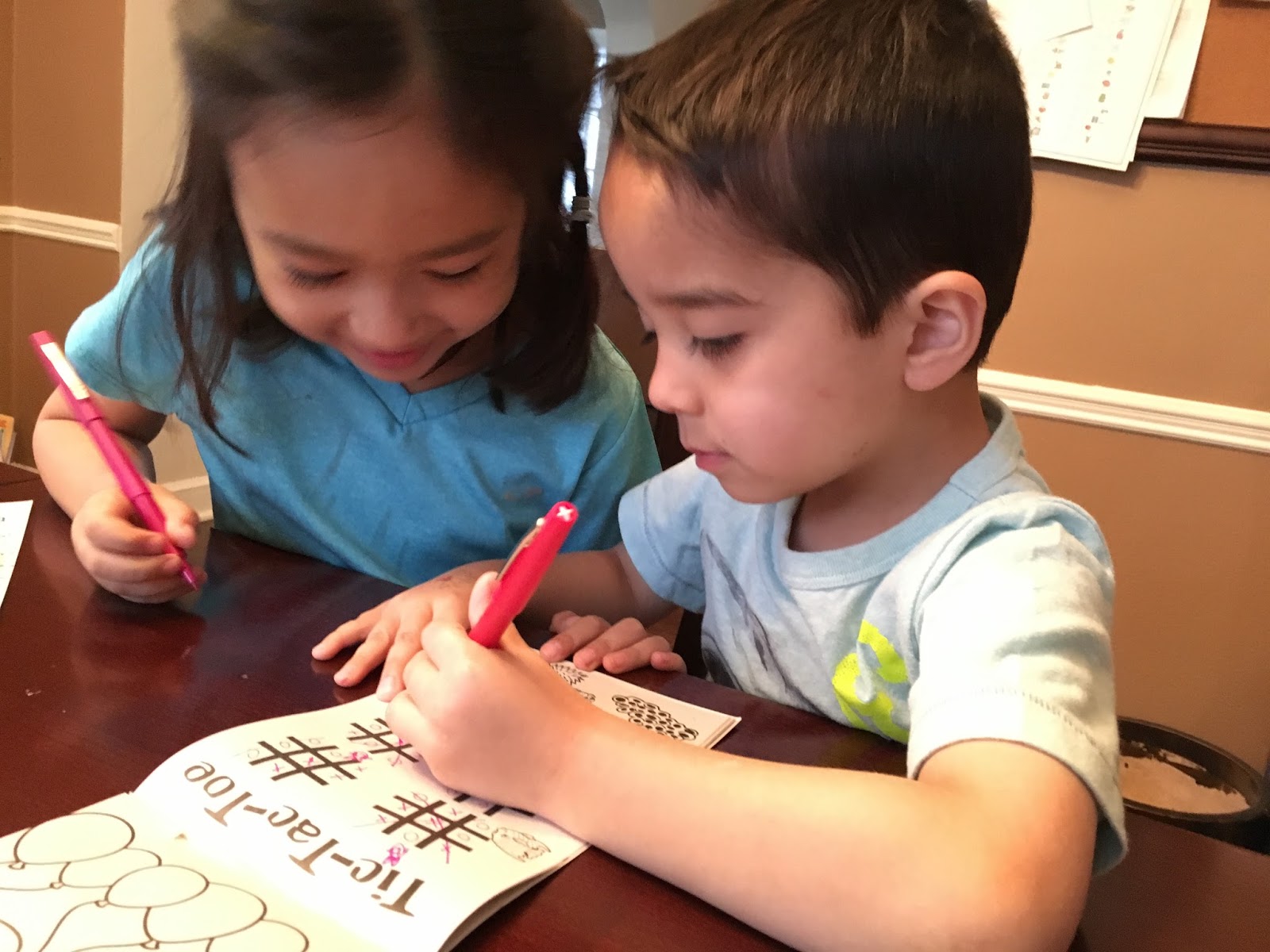
Anna loves school. Loves. Aaron loves school so much that he cries most Friday, Saturday and Sunday mornings because he can’t go to school. I credit great schools and teachers for that, but I got to thinking the other day about how many times I dealt with kids who had huge chips on their shoulders about school. Teachers were always out to get them. The system was always ‘stupid’ or rigged. In my years teaching, I always blamed that way of thinking on being a jaded teenager. It never occurred to me that those were sentiments they were probably hearing at home, too. So even though I’m totally in support of asking questions about methodology and rationale, at home it’s really important that my kids hear that I think their teachers are worth listening to and learning from.
2. Teachers don’t get paid enough
I mean, who doesn’t know that? But I know it so much more now, now that I’m part of supporting a family and trying to figure out budgets and college and savings plans. So many teachers are parents, too. We can’t possibly think it’s okay to keep them juuuuust above the poverty line, when their jobs are so important. We can’t possibly put the demands we do on teachers and not compensate them for it. And yet we do.
3. It’s a little, teeny tiny bit okay to miss school sometimes
I was a strict teacher in several ways, and one of those ways was with attendance. If school is in session, you go. Unless you’re sick, someone is dead, or some other major calamity is going on, you get to school. I had very little patience for kids who were constantly off to long weekends to hunt or play a sport, and I had ZERO patience for the parents who sent me emails from the car telling me their kid was missing the next couple days to hang with grandma so could I please send some work.
I’m getting angry just thinking about it.
But now, on the other side, I am more understanding of this. Don’t get me wrong- Disney is not an excuse to miss a week of school. And no, your family trip up north isn’t equal to the learning you get in your classroom environment. But family time is so scarce for some families (mine included), and sometimes there are some things that can be carefully calculated to be an okay-ish reason to skip school.
As long as you tell the teacher FAR in advance.
And don’t email from the car.
And don’t act surprised when your kid comes back to school and is behind- that is what happens when you miss school.
4. Why didn’t I ask for help??
I often tell the story of the time I was photocopying the play Antigone for my sophomores because I didn’t have enough copies for my class. Not only is that illegal, but it went against everything I stood for as a writer and reader. But what was I supposed to do? I needed the books and didn’t have them.
It never occurred to me to send out an SOS call. I could have asked the PTO, I could have emailed the parents in my class, I could have put out a desperate plea on Facebook. I don’t think it was pride that kept me from those things– it was this weird sense that I was on my own island and that no one was supporting me.
But now, on the other side, I would welcome an email like that from my child’s teacher. In fact, I just sent an email asking her if there’s anything I can re-stock for her room for next year as an end-of-year gift. The parent community is there to help, and I should have asked for it when I needed it.
5. And speaking of community…
We are in this together. Principals often say things like that, how ‘we are a community’ and ‘we are a team’, but I can’t say I ever truly felt that when I was teaching. I often felt like I was just trying to keep my head above water as the waves of work and expectation crashed over me. But we are a community, and those aren’t just words to appease parents and board members. We are all working toward the same objective of lifelong learners. It would be awesome and transformative if we acted like it.
April 8, 2017
Book Review: The Truth About Goodbye
Disclaimer: I know and love Russell Ricard, but I promise to be as unbiased as possible in my review of his debut novel, The Truth About Goodbye!

One thing I know for sure about English majors and teachers is that they have strong opinions about books. More specifically, they have strong opinions about what makes a book “good” or “diverse” or “educational”. For me, I believe strongly that we do a disservice to books when we stringently categorize them. For example, is a book diverse because it’s written by a person of color, or is it diverse because of content, regardless of the color of the author? Separating books by genre is important, sure, but it is also limiting.
I thought about this a lot while reading The Truth About Goodbye. This story is, above anything else, a love story. A story about a man who loses his husband tragically and has to deal with the aftermath. Filled with wonderful, witty characters and hilarious dialogue, the author does a really great job of taking what could be a sentimental story and making it into something entertaining and powerful. Through Sebastian’s grief, we go on a journey with him in the year after he loses his husband– the ups, the downs, the figuring out the future by coming to terms with the past.
What I loved about this book was its quiet tenderness. Sebastian’s relationship with his friend Chloe complicated and yet the author writes their dialogue in an endearing way. When Sebastian begins to see things, namely his husband’s ghost, it is not overly dramatic. Through those moments we feel Sebastian’s grief, and maybe relate it to our own loss.
This is where The Truth About Goodbye shines for me. It is not “just” an LGBT novel simply because it has a main character who is gay. But it is also more than “just” a love story– it’s a story of hope and encouragement. I loved that you could easily switch the sexuality of the main character and still have the same touching story and sentiment. Books become very powerful when, even if the reader can’t identify with the main character in some ways, they realize that the overarching feelings of love, loss, and redemption are the same.
The Truth About Goodbye can be purchased here!
March 6, 2017
Four Reasons Why Teachers Love Teaching
This guest post was thoughtfully written by Erica Francis at Readyjob, who collected thoughts from teachers about why they love to teach. It was great to be included in her roundup!

(Photo by Wokandapix)
By and large, today’s educators are underpaid and under appreciated. It’s no wonder, then, that the number of young people choosing teaching for their career is the lowest it has been in decades.
At ReadyJob, we know that few jobs are as life-changing, demanding, or important as teaching. We also know that now more than ever we need great educators teaching in our schools each day. That’s why we wanted to hear from educators themselves about why and how they accept the challenges that come with their jobs day in and day out. In a recent survey, we asked a group of educators what they find most rewarding about their profession. The full roundup post can be found here and below are a few highlights showing why teachers love what they do:
Teachers help their students tap into their potential. Teachers play a vital role in shaping how their students see themselves. Teachers show students they can succeed even when they think they can’t. Think back to your own childhood, chances are you can name a few moments when you were struggling with a concept and a teacher encouraged you, helped you, and eventually led you down the path to understanding.
It’s a rewarding experience for students, but as Roseanne Cheng of TeachableLit.com notes it pays off for teachers as well. “Getting to know young people and helping them see the potential within themselves,” says Cheng. “There is no price tag for that feeling!”
Teachers influence their students’ futures. These days we often hear that teachers must teach to an end-of-year test. And while that is sometimes the case, it doesn’t eliminate a teacher’s ability to shape their students’ futures in a more long-term way. After all, you never know when a lesson might inspire a student to take a certain career path, pursue college, or concentrate on a certain area of study. For Doc Meek of DocMeek.com, the big impact teachers have on students’ lives is very rewarding. He notes that “the potential of helping students thrive long-term” is one his favorite aspects of teaching.
Teachers learn from their students. Students go to school to learn, but they’re not the only ones getting an education. Many teachers feel they learn just as much from their students as their students learn from them.
“If you feel passionate about teaching, this profession will bring you many rewards,” says Luis Porras Wadley of KeepSmilingEnglish.com. “Teaching is one of the professions in which the human aspect becomes most important. You get to know many interesting people, whether it be kids, teenagers or adults, and each of them will provide you with memories and experiences which you will never forget.”
Teachers help their students build character. Teachers are responsible for making sure their students are proficient in a given subject or subjects. But while teaching everything from why volcanoes erupt to what symbolism Mark Twain uses in The Adventures of Huckleberry Finn, teachers show their students what it means to be a good person, to be someone with strong character, to care about others and have heart. These are, of course, invaluable lessons that no child ever forgets. Mike Stutman of InspireMyKids.com notes that it’s a big reason why he loves teaching. He teaches because he loves “making an impact on a child as a whole person – on their character – in addition to the impact on them as a student.”
Teaching is tough. There’s no doubt about it. But there are also many rewarding aspects of teaching. If you’re considering education as a profession, the factors listed above are great reasons to take up the calling.
January 20, 2017
Five Ways to Support Your Local Public Schools
The recent confirmation hearings for the new president’s pick for Education Secretary has a whole lot of people concerned, and for good reason(s). One of the things I find myself going back to over and over again lately is the importance of supporting our local community. Facebook memes are fun, and rants to your friends about what could/should be done in education and otherwise are fine, but these do absolutely nothing to make the positive change in public schools I think the majority of us would like to see.

Photo via Pixabay by Fudowakira0
Here are a few ways you can help support your local school, especially during times of crisis and uncertainty:
Donate. This means different things for different people. Donate your time, donate your money, donate your expertise. Donate what you have to give, and trust me, you have something to give. If you don’t know how to donate whatever gifts you have to give, call the principal and see what they suggest. No one is going to send you a personal email asking you to donate that class set of Julius Caesar found in your grandma’s basement. Seek out the opportunity and make it happen.
Stop vilifying your teachers, administrators, and board members. I have to rant a little bit here. I find it maddening when people assume the worst about their public schools. The vast– and I mean VAST– majority of the people in your child’s school building are working for less money than they could probably be making somewhere else, are under inordinate amounts of stress, and are working 10+ hour days, managing families of their own. If you have a problem, question, concern, request– just talk to the person directly and see what can be done to fix it. It really is that simple. (Not terrible advice for real life.)
Suggest solutions. Public education is fraught with issues, and no one will pretend otherwise. I’ve worked and lived in an array of districts, all of which had their own, unique problems. If you identify those problems and think there is some sort of obvious solution, then find the right person and let them know. If it doesn’t get fixed, move it up the chain. As a taxpaying citizen, it is your right and obligation to do so. Again, a rant on Facebook about great it would be to have (insert cool program here) does nothing. Figuring out how to make it happen and getting that information to the right person does.
Accept what cannot be changed. Testing is a part of school, for better, for worse. In my opinion, the testing model of the IB Programme is the gold standard in education, and it would be lovely if someone up the chain in government would look into it and make that happen across the board here. As it is, testing in public schools leaves much to be desired, and a whole lot of people will agree with that. But in education, just as in any large entity, change is difficult and takes a lot of time. Since testing is probably not going anywhere anytime soon (especially now), use the opportunity to teach your kids about the importance of doing their best, even when the grade “doesn’t matter” or if the test is “stupid”. Such is life– sometimes we have to do things we don’t want to do.
Advocate. This is so important, and I can’t stress it enough. Advocate for your child, if they need it. Advocate for your teachers, if they need it. Your relationship with your public schools is not a boss/subordinate one. You are working together. Your teachers can’t succeed without your help at home, just like you can’t succeed without the support of your teachers.
We’re in this together.
December 27, 2016
Favorite Books of 2016
2016 was a tough year in many ways, but (for me) it was a great year for books. I read 39 according to Goodreads, and here are my top favorites:
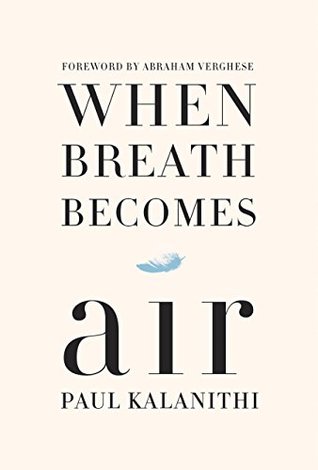
I can’t begin to describe how much I loved this book. I’ve gifted it twice, and will continue to. I sobbed, I smiled, I reflected on all the ways we don’t appreciate the beauty and fragility of life. A billion stars.

As a lifelong Catholic, this book rocked my world. Literally. I have a totally new understanding of the gospels and the interpretation of the New Testament. Fascinating on every level.
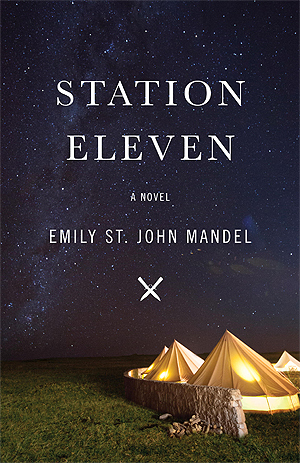
Dystopia is not my genre, but this book got so many rave reviews that I couldn’t pass it up. Clever and insightful and very well done. I loved the writing style– just beautiful.
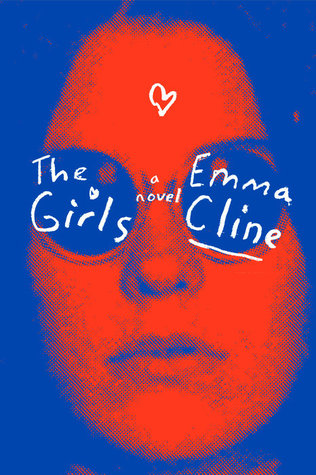
Usually when a book gets as much hype as The Girls does, I find myself disappointed. This book was just beyond fantastic for me, from the phenomenal writing to the really nuanced story that was just enough historical and just enough fiction. I loved it.
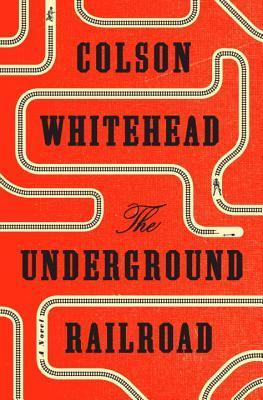
This book is not for the faint of heart. It is crushing, and deeply difficult to read. But in a year of being obsessed with the musical Hamilton, and with all the complexities of that time and the very troubled history of our nation, this book is beyond important and was a real eye-opener for me.

Base on the feedback from Goodreads, I get the sense that there are two types of people: those who find compassion for the parents/perpetrators of violence, and those who don’t. There is very little wiggle room with A Mother’s Reckoning— she puts it all out there. What she knew, what she didn’t know, what she wished she knew about her son and the Columbine tragedy. As a mother and an educator, this book will stay with me for a long time.
On my Christmas wishlist was the complete set of Harry Potter– and I got it! I have lots of reading to do, and will get started right after Grief is a Thing with Feathers, which is haunting and beautiful, too. I’ll be recommending it to all the poets in my life!
November 29, 2016
A Teachable Book: Green Card Youth Voices
Teachers are constantly– CONSTANTLY– on the lookout for how to teach inclusion, empathy, and tolerance in the classroom. THIS BOOK IS IT!

Green Card Youth Voices is just one of the books put out by Green Card Voices, a seriously incredible non-profit out of the Twin Cities. The work they do is beyond important, and this book is the youth version of a serious of stories chronicling the people who immigrate here. I cannot recommend it highly enough!
The stories stand on their own, but in case a teacher is looking for activities to go along with the book, there is a teachers guide available on their website. Amazing.
And if that isn’t enough, they have a moveable display that is making its way around Minnesota to help start conversations about inclusion and celebrating diversity.
Forget a box of chocolates for Christmas: Buy a copy for your school here!
October 14, 2016
Indie Books, Indie Gifts!
Who wants a gift card to Barnes and Noble when you can buy these awesome books, signed, directly from the seller?
For the job-seeker, business owner, networking professional:
Fearless Follow-Up, by Soma Datta

You can purchase the book here and use the discount code 8FJN2RG7 to get $3 off the book!
For the YA lover and part time political junkie:
’89 Walls, by Katie Pierson

Purchase the book on Katie’s website, and she’ll sign and ship for free!