S.R. Crawford's Blog
November 14, 2025
Dark academia / dark fantasy song vibes – Novel November
This is just a fun list of songs that sound great to me for the vibes I’m seeking for my dark academia fantasy novels (3 now!) or the titles of the songs sound like would be perfect for dark academia.
There are MANY dark academia playlists already made on Spotify by better musical folks than myself! But these are mostly song titles that are giving dark academia vibes for me and my stories.
 What makes a good dark academia vibes song?Lyrics are poetic in natureLyrics sound like obsession or fixation on something Classical, instrumental or delicate for studying to Starts calm and then crescendoes into something maybe a bit manic Dark themes in the song lyrics: death, murder, hate, lust, sins, revenge, competition Themes of toxic friendship or love Giving great gay vibes but it’s obsessive and a bit twisted Make you feel like walking by candlelight down echoic stone hallways My Dark Academia fantasy playlist
This playlist includes songs that are relevant to my stories and get me thinking about my characters and their personalities or their storylines. I will keep adding to this over time and please feel free to have a listen and follow it!
WARNING: Explicit content and language in these. They are dark, after all, and I write adult fantasy.
Artists, songs, and albums that sound dark academia to meFlorence and the Machine’s new album, Everybody Scream:One of the GreatsWitch DancePerfume and Milk (love the title too!)The Old ReligionDrink DeepYou Can Have It All (my fave of the album)“Dug a hole in the garden / And buried a scream” – what a line!!
https://open.spotify.com/embed/album/0z7l9VEJyFMv8p8wffRDaF?utm_source=generator
Notable titles of Florence’s songs:Between Two LungsMy Boy Builds CoffinsHurricane DrunkGhostsSeven DevilsRemain NamelessBedroom HymnsStrangeness and CharmMermaidsHeaven is HereJenny of Goldstones (Game of Thrones)Big GodNew favourite artist Earth to Eve songsThreat Level Orange (love!)No Kings (love!)I Lost My MindNo Friends Left in L.A.Boy’s My Bitch (love!)Atheist in TheorySugar Rush I SurrenderArcane tv show songsPaint the Town BlueTo Ashes and BloodHeavy Is The CrownHellfireCocktail MolotovRebel HeartCome PlayBlood Sweat and TearsPlaygroundMisfit ToysDynasties and DystopiaWhat Could Have BeenTaylor Swift song titlesThe Fate of OpheliaVigilante ShitFather FigureRuin the Friendship (definitely classic dark academia trope!)Illicit AffairsMad WomanEpiphanyMy Tears RicochetThis Is Me TryingCardiganEnd GameI Did Something BadLook What You Made Me DoThis Is Why We Can’t Have Nice ThingsGetaway CarDancing with Our Hands TiedBillie Eilish song titlesBury a Friend (very dark academia)My Strange AddictionBirds of a FeatherYou Should See Me in a CrownBad GuyAll the Good Girls Go to HellWish You Were GayBittersuiteOxytocinEverybody DiesHalley’s CometTherefore I AmMale FantasyWhat Was I Made ForHostage& BurnHozierArsonist’s LullabyeTake Me To ChurchFrom EdenWould That IEmpire NowWildflower and BarleyEat Your YoungDamage Gets DoneAll Things EndSon of Nyx Butchered TongueUnknown/NthDinner and DiatribesAngel of Small Death and The Codeine Scene SedatedForeigner’s God“I’ve been sipping bleach and washing whites with red wine”
Ellie Goulding songsFigure 8My BloodHalcyonDead in the WaterAtlantisBurnUnder ControlHearts Without ChainsTessellateRitualMidas Touch“Don’t you ever / tame your demon / but keep ‘em on a leash”
“Breathe your smoke into my lungs”
Let me know in the comments if you have any other recommendations!
Sincerely,
S. xx


November 7, 2025
Why I Write Dark Academia Fantasy – Novel November series
On Instagram and YouTube, every day I have been uploading something related to writing, reading and the aesthetic of dark academia fantasy because that’s the genre I’m writing in this Novel November! But I thought I’d share what exactly this means and why I am now technically writing my third dark academia fantasy novel (it’s dual pov and one is set on a campus for some dark goings-on!).
What is dark academia in literature?There are many definitions for this aesthetic and now the literary genre. I am going to give my definition and the definition I’ve found that best suits what I think it is and enjoy about the genre/style.
My nutshell definition: dark academia books feature an academic/campus setting (often elite or exclusive), dark themes, obsession, criticism of something (often academia itself), a toxic friendship group, secrets, maybe a murder.
Another definition / the origins of the genre: “Originating in works such as Peter Weir’s 1989 film Dead Poets Society and Donna Tartt’s 1992 novel The Secret History, the genre still lacks a hard and fast definition. However, it can be classified as a more melancholic offshoot of the campus novel, with elements of mystery and thriller narratives and even the Gothic…
“Typically, an academic institution, e.g. a prestigious university, serves as the setting for one or several crimes or tragedies, the perpetrators, motives and consequences of which are usually revealed as the plot unfolds. These events will often be a result of the characters’ studies, academic research or university rituals. Many dark academia novels thus imply a connection between crime and an individual’s misled academic ambition.”
The aesthetic is this:
Ink stained handsBlazers and loafers Smoking cigarettes Messy writing in the margins of broken spine books Classic literature, mythic, philosophy, history, theatre A society, toxic group, or misfitsBlack coffee and red wineQuoting Plath, Poe, and DystoyevskyElitism, Oxford-esque, privilege MadnessDark academia book recommendationsList of dark academia books that I’ve read:
Babel by R F KuangKatabasis by R F KuangBunny by Mona AwodThe Secret History by Donna TarttA Study in Drowning by Ava ReidThe Atlas Six by Olivia BlakeIn My Dreams I Hold A Knife by Ashley WinsteadVita Nostra by Dyachenko Jonathan Strange and Mr Norrell by Susanna ClarkeThe Will of the Many by James IslingtonIf We Were Villains by M. L. RioNinth House by Leigh BardugoThe Historian by Elizabeth Kostova (DNF)The Maidens by Alex MichaelidesThese Violent Delights by Micah NemereverList of dark academia books that I own but haven’t read yet:
Girl Dinner by Olivie Blake (currently reading)An Academy for Liars by Alexis HendersonThe Centre by Ayesha Manazir SiddiqiSociety of Lies by Lauren Ling BrownAnatomy: A Love Story by Dana SchwartsStarling House by Alix E HarrowThe Mary Shelley Club by Goldy MoldavskyCatherine House by Elizabeth ThomasWhere Sleeping Girls Lie by Faridah Abike-IyimideAn Education in Malice by S. T. GibsonA Deadly Education by Naomi NovikA Study in Charlotte by Brittany CavalleroThe Lessons by Naomi AldermanThe Truants by Kate WeinbergI Have Some Questions For You by Rebecca MakkaiBrideshead Revisited by Evelyn WaughList of dark academia books on the top of my to-buy list:
We Love You, Bunny by Mona Awod (sequel to Bunny)Welcome to Dorley Hall by Alyson Greaves The Bewitching by Silvia Moreno-GarciaThese Dreaming Spires and In These Hallowed Halls (dark academia anthologies)Blood Over Bright Haven by M. L. Wang Why I’m drawn to it at this point in my writing career
 I think I love the genre because I’ve always wanted to write novels set in a school. I used to keep coming up with middle grade / children’s fantasy novels set in a school. Clearly a HP fan! But those books didn’t go anywhere really. I finished the drafts but they lacked something. I was always drawn to the darker elements of stories.
I found dark academia when watching The Book Leo’s YouTube channel where she dissects the genre and I think I was drawn to it from there. I read Bunny and loved it, but didn’t know I was reading what would later be branded as a dark academia novel. From Leonie’s recommendation, I then read the OG Dark Academia novel which is The Secret History. As much as I enjoyed it, I think I would have gotten more out of the novel if I read it now compared to 5 years ago where some of the references were lost on me.
From there, it kind of snowballed! I collected more and more dark academia books over the last 2 years maybe. I started this year reading the dark academia novel that interested me most but intimidated me: Babel. And my god, I loved it. I thought, “this is what I want to achieve one day”. A clever, educational, informative, critical fantasy work. But then I realised that wasn’t me.
I was more fantasy than academic.
And so, through reading that and then the others that followed, I found a sort of middle ground where my work belonged. I love dark academia because it offers a unique way of writing that feels natural to me. Only in reading these books was I able to give myself permission to indulge in a character, a world, and a theme like I do now.
So, why is this now my genre and likely to be my traditional publishing debut?
Firstly, I get to be academic! I love creating characters who are intellectuals. Who compare and compete intellectually. Who pride themselves on their knowledge and have fragile egos because of it. In my second dark academia novel, I also made use of footnotes! I can’t even describe how much joy this brought me! It adds a whole other layer and depth to the world building to be able to use footnotes. My characters wrote essays and quoted people that I made up! But I got to make it sound like they were real and I hope my future readers will believe it all to be real when they’re reading it.
Secondly, it’s naturally reflective in tone. I’m a reflective writer by default. I like metaphors and playing with language and taking my time in a character’s head. This lends well to the dark academia genre. It’s a character-focused genre that spends time on a character’s mental development over any large plot points. It’s about morality and choices and emotional wounds and depth of thought. That’s what I love!
Thirdly, I love higher education. I always wanted to go to university and found it very hard when that didn’t end up being the path for me. I completed my degree online in the end and I now work for a university which offers blended learning (online and campus) too. I think this is all to say that higher education has always been a big part of my life, my identity and my interests. Education is beautiful and fascinating and important. I love that I get to explore the opportunities and pitfalls of education and access to education in my novels. The impact that it has on a person, especially someone who feels they need it so desperately.
Lastly, I get to talk about deeper social issues and darker themes. The dark in dark academia stems from the dark themes in the novels. This could be murder or obsession, twisted secrets or unstable minds. This blur in morality allows writers to play with the taboo and explore hard topics from unique perspectives. It allows room for nuance and discussion and play with difficult issues, without being preachy, stating “this is bad” outright, or glorifying it. It’s a perfect balance for hard topics, in my opinion, and often results in unanswered questions. It’s an exploration, not a destination. A psychological ride!
If you’re interested, I am documenting my journey this Novel November as I write another dark academia (ish) fantasy, and edit my two other drafts. Follow me on Instagram and my Yoga For Writers YouTube to see more dark academia, books and writing content!
Sincerely,
S. xx
October 28, 2025
Personal Curriculum: Educational Podcasts and Audiobooks for Learning on the Go!
I wanted to share with you my sources of education for busy living. A lot of us don’t have the time or energy, or perhaps the resources or confidence, to crack open an educational book or attend a course. However, luckily, education is more accessible than ever and we are fortunate enough to be able to take advantage of that for the betterment of ourselves and our society. There’s no excuse! As Louisa Munich says, “democracy needs informed citizens” and this is true and important for everything else in life too.
Here are the podcasts and audiobooks I’ve listened to that I feel are very informative and accessible to anyone. Check out my last post on educational books for more.
 Podcasts
 I don’t listen to all of these all of the time, but they are podcasts I’ve subscribed to at one point or another and enjoyed/found informative.
Gary’s Economics with Gary Stevenson
Bold Politics with Green Party Leader Zack Polanski and guests
No Stupid Questions with Freakonomics Radio
On Purpose with Jay Shetty and guests
The Daily Stoic with Ryan Holiday
A Really Good Cry with Radhi Devulkia and guests
Mayim Bialik’s Breakdown (Amy from The Big Bang Theory tv show)
5 Good News Stories: Happiness and Fun
The Rest is History with Tom Holland (not Spider-Man!) and Dominic Sandbrook
What’s Left? podcast with Jovan and Freddie
AudiobooksHere I am only listing books that I have read or started already, and I’ll do another post on my recommendations based on other audiobooks I own or have access to from my library that I feel are educational and may be worth a listen.
The Anthropocene Reviewed by John Green – on everything it means to be human
On Tyranny: Twenty Lessons from the Twentieth Century by Timothy Snyder – tyranny, fascism, censorship, propaganda
Natives: Race and Class in the Ruins of Empire by Akala – race, politics, British history
Mouth Full of Blood by Toni Morrison – on race, fascism, tyranny, politics, humanity, corruption
Just Sayin’ by Malorie Blackman – memoir that gives an emotional firsthand account of racism and sexism in the UK
I Thought It Was Just Me, Atlas of the Heart and The Power of Vulnerability by Brene Brown – education on emotions, trauma, empathy, leadership, parenting, self-compassion, personal development, shame, emotional intelligence…
Educated by Tara Westover – memoir on mormonism and education, trauma and freedom
What Happened to You? Conversations on Trauma, Resilience and Healing by Oprah Winfrey and Bruce Perry – as it says in the title, on trauma and it’s affects
Notes on a Nervous Planet by Matt Haig – anxiety, depression, and our modern world on mental health
Chavs: The Demonisation of the Working Class by Owen Jones – poverty cycles, inequality, and classism
Personality Isn’t Permanent by Benjamin Hardy – identity, personality, self expression, self talk, self development
Braiding Sweetgrass: Indigenous Wisdom, Scientific Knowledge and Teachings of Plants by Robin Kimmerer – on nature, humanity, symbiotic relationship with the earth
How Not to Die: Discovering Foods Scientifically Proven to Prevent and Reverse Diseases by Michael Greger and Gene Stone – on the healing and preventative powers of food (but to be clear, I do not endorse food > medicine, always be careful)
Can Everyone Please Calm Down? A Guide to 20th Century Sexuality by Mae Martin – on sexual identity, gender identity, and self expression
Untamed by Glennon Doyle – identity, trauma, belonging, sexuality, freedom of self, healing
Motherhood by Sheila Heti – on the decision to be a mother
I’m Glad My Mom Died by Jennette Mc Curdy – trauma, fame, growing up, mother-daughter relationships, addiction, eating disorders
Tiny Beautiful Things by Cheryl Strayed – letters from many people in different moments of vulnerability
Sapiens: A Brief History of Humankind by Yuval Noah Harari – as the title suggests
Factfulness: Ten Reasons We’re Wrong About The World and Why It’s Better Than You Think by Hans Rosling and co. – statistical analysis of our world at a glance
The Path Made Clear and The Wisdom of Sundays by Oprah Winfrey – spiritual, personal, emotional journey support
Fahrenheit 451 by Ray Bradbury – fiction but important for our times of rising fascism
Animal Farm and 1984 by George Orwell – same reason as above
Remember, education is a lifelong journey. Never stop educating yourself and ensure you read more books outside your comfort zone/area of expertise. Listening to your educational source material is a great, accessible way to stay educated during a busy life. There’s no excuse! You don’t need to buy anything (I don’t endorse Amazon, by the way, it’s just easiest to link to that site). Check out your libraries for free audiobooks too!
Happy learning!
Sincerely,
S. xx
October 26, 2025
Essay on Gender Part 3.5: Summary and Final Thoughts
Read parts 1, 2, and 3 for the depth and evidence backing my ideas.
What drew me to writing this very long, link-heavy essay on gender identity when I am just a cisgendered woman in a heterosexual, heteronormative relationship? I am an ally, but more than that, I am sick of ignorant conversations by cisgender people who seem obsessed with talking about trans and non-binary people like it’s a joke or a stupid new trend. I wanted to share evidence of nuance across time and cultures around gender. That it’s not new, “woke”, leftist propaganda or Gen Z stupidity. It’s always been here. And it deserves love and openness and intelligence!
 Final thoughts / snapshot views
Full disclosure: I have worked on and edited these gender essay posts for over a week and a half. Why? Because once you dive down the rabbit hole, you can’t escape. There’s so many perspectives and information out there on this incredibly nuanced, complicated, and layered topic. My posts and their links barely scratch the surface.
This in itself teaches me that our society may have a strange, unhealthy obsession with defining gender, gender norms, labels, categorisation, and identity binaries. So much so, it divides us, causes us to harm our fellow humans, and cancel celebrities (even though they are just flawed human beings like the rest of us and not gods!).
Gender is without a doubt a social construct. It just is. People think social construct means “made up” but it means it’s a fluid, an ever-changing idea; almost an energy, an entity. It’s an agreed norm that varies across time, languages, cultures and lands. Gender 100% is fluid biologically speaking, culturally speaking, temporally, and philosophically or spiritually speaking.
I strongly, strongly believe in gender fluidity and the lack of strict binaries.
Biological sex on the other hand is, well, biological. And don’t forget that sexuality and sexual identity is different to one’s biological sex. Meaning, having a penis doesn’t make one masculine. Having a vagina doesn’t make one feminine. There are no strict binaries unless we as a society and a specific culture agree upon them as our norm. And who you want to sleep with doesn’t matter at all to what’s in your trousers.
I truly believe that if we held more traditional, atavistic views on gender, like those believed in so many other cultures around the world pre-colonisation, then our issues and difficulties with varying gender identity/ gender expression would not exist. Many children would feel more comfortable knowing there aren’t strict binaries at all. Where they could be seen and celebrated no matter what. Maybe there would be no need for trans individuals at all, I don’t know. In an imagined world where gender wasn’t a be-all end-all, maybe we’d all be much freer.
I do not believe that educating children on transgender people and their need for rights makes them trans! In fact, I think that’s quite a naive belief. Education is important; it’s powerful; it’s a privilege. We all need to be educated on the myriad people and expressions of self that exist in our world. The moment we neglect to educate our children is the moment we let them down and stop protecting them. The dangerous rise of censorship and banning books is wrong. We need to trust our children to be able to engage with a variety of texts and information, without blindly deciding to do things without thought! If you think your child will become trans just by learning what it means, then maybe you already see signs of them questioning their gender/sex assigned to them at birth. If so, be compassionate. Hear them out. Don’t hide this option from them. If not, education will never “corrupt” them! There is no trans agenda! No one is trying to convert children to some gender-changing army!
Sorry for that bit of satire there at the end, but I hope that makes my stance clear. I learned something by researching for this post. I hope you did too.
Education and compassion > judgement and fear mongering.
Additionally, I will say that I don’t agree with the idea that we need to agree with every single thing trans or non-binary folks want. Activism shouldn’t be about excluding allies simply because they have other ideas. For example, I don’t know how we fairly tackle the sports issue, but I still agree with a trans woman’s right to identify as a woman, live as a woman, and be safe in our world. I understand their desire to simply slip right in and integrate into society as a woman and that’s it, but I do see some spaces where that conversation may be a little tougher (especially trans women who are in the beginning of their transition and still may have high levels of testosterone, for example). This does not mean they deserve hate or demonisation and to be seen as a threat just because we struggle to understand. In fact, it’s evidenced that more trans people are threatened and physically or verbally harmed by cis people than the other way around.
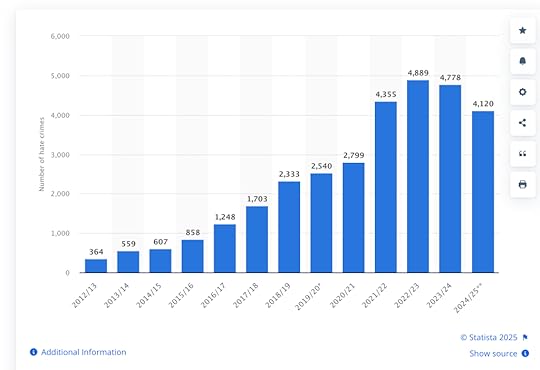
*Find more statistics at Statista
Furthermore, just because there is evidence of trans individuals committing sexual or violent crimes, that does not mean that all trans individuals are sexual deviants or violent. Or that they transition simply to commit sexual crimes. Are all white people rapists because some commit rape? No. Are all cis-men rapists because of the large number of male rapists in prison? No. So why would be attach the same logic to this group of people?
Language matters. I hate that people use the words, “I don’t believe in transgender people. I don’t believe in non-binary”, that’s illogical language, in my opinion! You can’t say you don’t believe in something right in front of you! Be honest and use the right language:
You may not understand.
You may lack education on these groups.
You may lack experience with these groups.
You may dislike the groups because they threaten your norm.
Use the right language. And confront what your language might mean on a deeper level.
A trans woman commented on one of my posts on Medium saying that the idea of “meeting in the middle” has undertones of excusing poor behaviour and hateful language. I’m glad she said that and I agree. When discussing topics of which I am an ally and not directly affected, I always bring it back to racism and racial injustice. I wouldn’t say to a racist that it’s okay for them to think I’m less than, but let’s “meet in the middle” and just get along civilly! I’d never say it’s okay to think people of colour are less than as long as you’re not overt about it. I wouldn’t say it’s okay to “want black people to be treated fairly and be safe in our country” but that they can’t have their own publishing houses or star in movies more than white people.
Basically, when I liken it to my personal experiences, I understand on a deeper level why there is little wiggle room for allyship and inclusion.
Lastly, again, you may call me an idealist or a dreamer, but in an ideal world, we would all just be kind when having these conversations. We would sit back and listen to one another as we speak with compassion and honesty and fairness. That we say, “how can I make you feel safe in this life?” and mean it. Because I think a lot of us want to protect our idea of perfect and right and normal so much that we get angry, we stop listening, and we talk with hate and ignorance without even realising it.
That’s why empathy, education and ethics should come first, second, and always.
If you or someone you know has strong (public too) feelings about gender binaries and sex, I urge you to listen to every video I’ve shared, read every article, every book and podcast before you decide. If you’re still not convinced about gender fluidity, I think you’re stuck in a fixed mindset which isn’t healthy at all. Anyone fixed on, and having public, hateful ideas about trans and non-binary people, I urge you to question why. Why really? What are you being falsely conditioned into believing? Who is telling you these stories and what might they gain from you believing it?
And to you haters: What makes you the gender police? Why do you get to decide who a person should be and how? It’s as silly as race ideology, that there’s a right or wrong way to be black! Think, damn it, think!
And breathe!
LGBTQ+ people are safe with me. Please continue to educate me. I don’t know much, but I know you’re all human like me and life is hard enough as it is without us making it unnecessarily harder on one another.
**If you or anyone you know is struggling with the issues discussed in this post, reach out for help here:
https://transactual.org.uk/wellbeing/
https://www.bsmhft.nhs.uk/about-us/news/lgbtq-mental-health-support-information/
Sincerely,
S. xx
Essay on Gender Part Three: Empathy and Education
Read parts one and two before reading this one, if you haven’t already.
Again, WARNING: this post is not for anyone who may be triggered by difficult conversations around gender identity.
The point of my three part essay on gender was to combat hate and provide a more nuanced view on gender for those who still feel they need to impose binaries and labels on other people. This last part is for me to share real world stories of trans, non-binary and LGTBQ+ folx, to educate those who haven’t taken the time to listen to their voices. I also try to offer a balance of honouring those who have detransitioned and their thoughts, alongside views and concerns of cisgendered people that may need addressing. I will then end with my final thoughts on gender identity.
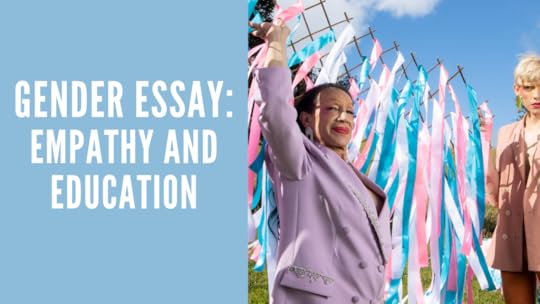 Do you know what it feels like?
I believe that a lot of transphobia and confusion about non-binary individuals is due to ignorance. People simply don’t know what it’s like. So here I am sharing what it’s like for some…
Since writing my transphobia makes no sense post, I have had some feedback from trans people and I wanted to share with you what one amazing commenter said about trans men and their place in society. So here is there comment which I think we all need to read:
“There are some good points here but a huge, fundamental flaw in that you believe people have no problem with trans men — this is woefully misguided. One of the best sleights of hand the anti-trans lobby are performing is the systematic invisibilisation and erasure of trans men. That isn’t because we’re accepted. When we’re talked about, it’s usually in highly derogatory, misogynistic terms (“vapid victims”, “silly little girls who don’t know their own minds”, “easily led by friends and TikTok trends”). In the same way that trans women are hypervisibilised to create the fear necessary to remove cultural freedoms from everyone (especially gay rights), trans men are erased and invisibilised so bodily autonomy rights can be removed (especially from cis women, e.g. abortion, contraception, etc). Making a big fuss about trans women creates an extremely helpful smokescreen to removing rights from 50% of the population, which they are doing primarily through trans men. The Cass Review particularly focused on a narrative of “confused little girls” (often “with autism”), desperate to escape patriarchy, misled by doctors, joining in with fashion & their friends, devastatingly losing precious breasts and wombs — this is why! What we, as the trans community, SHOULD be doing is visibilising ALL those that the anti-trans lobby seeks to invisibilise. And yet I see, again and again, consent from members of our own community to erasing trans men further. I agree with your points about a perceived crisis in masculinity, including the sense that “real men” are being lost, but if you think for one minute that trans men tick that box for ‘them’, I’ve got a bridge to sell you. In short, please educate yourself better about trans men.”
Further watches if you’re interested:
https://youtu.be/YXUOxuKo2t0?si=zfY_i8p7YCv8F7MZ
https://youtu.be/THSVB6xSayI?si=c1SR8eYZlP9icQSF
https://youtu.be/AITRzvm0Xtg?si=JwGyH8WLUmmfdMaq
The importance of empathy above all else if you are cisgenderAny of us cisgendered people need to take a step back, be empathetic to, and aware of the following:
Male sex, female sex, intersex versus gender identityNon-binary individuals and agendered individuals Transgender individuals Pronouns as a growing topic of discussionSocial constructs across cultures informing gender normsAssumptionsHow they feel on the inside matters more than how you think they should feelHair, clothing, makeup, interests as form of expression not biologySome videos to watch on transphobia:
https://youtu.be/60B-NChtNiA?si=Ihg8i9MfyTYZb7gd
https://youtu.be/5RfARAuKdHM?si=wRe6rWbRvFe25g-V
https://youtu.be/yCxqdhZkxCo?si=kvWalqk_SbdVaLqw
What transgender individuals think about gender politicsI think it’s relatively easy to just let people express themselves in a way that they feel comfortable. I would hate for anyone to not feel comfortable in my presence. However, gender identity is critical for some people. It’s easy to not worry about gender – and perhaps have a narrow view, like I do, that we should just remove the labels that got us into this mess altogether – when it doesn’t affect you directly. For some, the terms they use, the way they dress, the rights and freedoms they are given are a daily worry and chore.
Let’s here some of these stories…
Detransititioners’ stories:Chloe Cole detransitioning case and plea is aiming to protect trans children from a “poor medical system”. I agree with her to an extent. That she needed therapy and love and compassion at a time when she was most vulnerable. That she shouldn’t have been pushed to transition so young or be told that “becoming a boy would solve all her problems”. However, I don’t think we should take her plea (and that of many others like her) as a reason to neglect very real issues around gender identity in young people.
Could the answer be to protect children by supporting them through puberty, allowing a change in pronouns and dress only, and providing them with therapy until they are older? Sit beside them as a compassionate adult as they do research. Maybe speak to others like them with gender dysphoria?
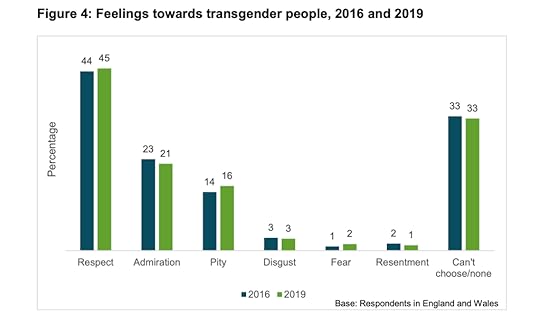
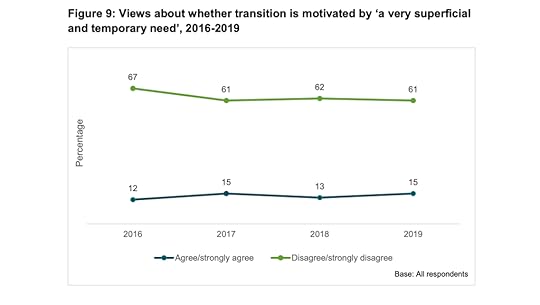
Concerns of some cisgendered people / policy makersThat transgender children are just afraid of puberty and their changing bodyThat transgender people should use certain public toiletsFear of violence at women’s refuges (escaped domestic violence etc.)Trans athletes having an unfair advantageAgainst nature/GodDefinitions of transphobia and transmisiaEducating children on trans people will make them transEquality and Human Rights found that: “Relatively few [interviewed on their thoughts of trans people] said they felt ‘disgust’ (3%), ‘fear’ (2%) or ‘resentment’ (1%)…Positive feelings were lowest among respondents in West Midlands [in England]…”
“Women were also more likely than men to feel admiration (26% and 17%). Men were more likely to say that they felt pity (18%) or disgust (5%), compared with women (14% and 1% respectively)“
 Public toilets and women’s refuges
“Most women (66%) said they would be very or quite comfortable with this while 17% said they would be very or quite uncomfortable. A lower proportion of men (58%) said they would be very or quite comfortable with a transgender man using men’s public toilets, and 18% of men said they would feel very or quite uncomfortable.”
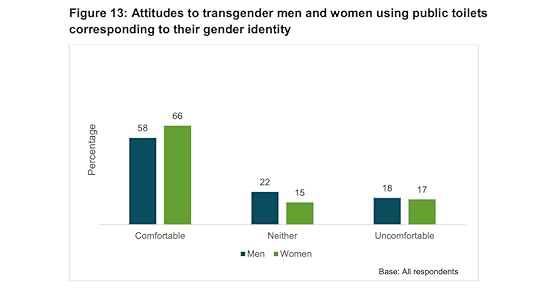
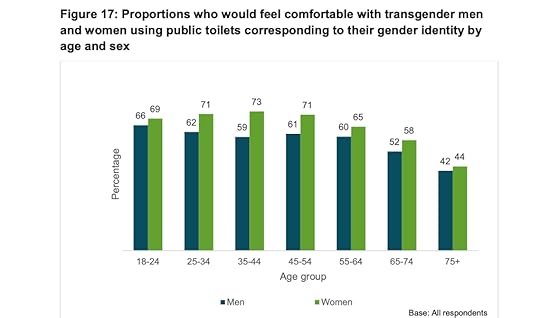
“More than two in five women (43%) who described themselves as a little prejudiced or very prejudiced against transgender people said they were uncomfortable with transgender women using women’s toilets, compared to 13% of those who said they were not prejudiced towards transgender people at all.“
“Women were slightly more likely to say they would feel uncomfortable about a transgender woman using a women’s refuge (22%), than a women’s public toilet (17%).”
Further reading:
https://yougov.co.uk/society/articles/43194-where-does-british-public-stand-transgender-rights-1
https://compass.onlinelibrary.wiley.com/doi/10.1111/soc4.70088
In sports:I am going to admit that I am not sure how trans athletes ethically fit into mainstream sport. I believe and agree with trans athletes who state that biological and genetic variations exist in all of us. One biological woman may be small and naturally less muscular than another, but both would be legally allowed to compete against one another. Men are, mostly, more muscular or stronger than women, but there are also variations in men! My sister is stronger than the males in my family, that’s almost for certain! I, myself, have always been naturally very fast and strong/muscular. You could argue that I have a genetic advantage over other girls and women who have to work twice as hard as me to get to the same level.
Censorship and Children’s Education
Genetics vary in all of us by nature…so what’s actually “fair” here?
We do ourselves, and the next generation, a disservice by policing what can and can’t be accessed. Education needs to be wide-ranging, in-depth, and accessible for all. I do not believe in censorship. I do not believe we are protecting children by taking away their right to learn about trans and non-binary experiences.
I studied a Children’s Literature module for my degree and we touched on the topic of censorship. We read the young adult book Junk by Melvin Burgess, which was highly controversial at its time of publication for the exposure to drug abuse, sexual exploitation and sexual themes. However, Burgess and other critics highlighted that these things happen in the real world, so what’s wrong with writing about it? Children need to be given the space and tools to explore the texts they are exposed to safely, by adults supporting them with any questions or concerns they have, not deciding for them what they can and can’t read.
On IntersectionalityA lot of feminists don’t stand beside transwomen. Why? A lot of feminisms don’t march alongside black women. Why? This is called a lack of intersectionality.
Definition of intersectionality: “The term also refers more broadly to an intellectualframework for understanding how various aspects of individual identity—including race, gender, social class, and sexuality—interact to create unique experiences of privilege or oppression.“
If you are fighting for the rights of one but not the other, you are missing out on the whole. You are not making a fair world for women as a feminist if you are not making it fair and just for ALL women, even those outside your identity/group.
Similarly, you are not protecting all men but isolating, vilifying or rejecting gay men or transmen or feminine men or fluid men.
View this post on InstagramPronouns, “72 Genders?” and Identity in SocietyA post shared by Odilakachi Hezekiah-Onwukwe (@professor.odi)
(Also available in podcast form here)
The absurd rhetoric that children are being taught “72 genders” is not factual. However, there are some resources out there listing many gender identities. There is contention about gender politics and gender being taught in schools. It seems there could be variations depending on boroughs and districts, but lately there has been changes to legislation on gender education. It suggests that schools “should not teach as fact that all people have a gender identity,” it also states that “schools should avoid using cartoons or diagrams that “oversimplify”, that could be interpreted as being aimed at younger children, or that perpetuate stereotypes or encourage pupils to question their gender.”
I have mixed feelings about this. I believe in education. I believe in transparency and inclusion and freedom of information etc. I don’t think we should “encourage” questioning of gender identity, but we should teach children that gender is a social construct at an age when they are likely to understand this. We could teach how other cultures view gender, like my part two post. My point is, we don’t need to talk in definitives, right? In absolutes and extremes and polarised ideas. We can teach them what’s out there, without forcing any child (or teen or anyone) to join a movement or something (which some people seem to think; that the left are using propaganda and extreme wokeism to indoctrinate children into some trans agenda and the erasure of masculinity…I strongly disagree).
It has also been said that “Schools already work hard to ensure that teaching is age-appropriate and this approach gives them the vital flexibility to respond to their own community and the needs of pupils in their schools,” which I agree with.
Consent is important. We can’t teach children without their parent/carers’ consent, but parents should be careful of policing what their children are exposed to too much. It will only lead to ignorance which is a dangerous society to live in. We need to protect children and teens who already identify outside the binaries or their biological sex. Poor education can mean these individuals are bullied by the other children simply because they don’t understand.
And we need to realise that we live in a modern, technological world where children are exposed to a plethora of information and sources online everyday. If we don’t provide them with education and sources that are legitimate and verified, then they are vulnerable to exposure to misinformation or disinformation that will do them more harm.
Pronouns may not mean anything to you, as a cisgendered individual, but it’s important for others. I wouldn’t assume a black person I met was Nigerian, for example, so I shouldn’t assume someone’s gender either. Just because you see something and may have an assumption, it’s key to be careful of stereotypes, bias, labelling, schemas, our own culture and past experiences to make a guess. Just ask!
Further reading:
https://pronouns.org/what-and-why and https://pronouns.org/how
https://www.lgbtqnation.com/2022/08/incomplete-list-gender-pronouns/
https://www.imdb.com/list/ls088717577/ – trans or non-binary actors
https://nonbinary.wiki/wiki/Notable_nonbinary_people
https://www.cosmopolitan.com/uk/love-sex/relationships/g39437356/non-binary-celebrities/
Gender issues I’m considering(Without a definitive answer personally, for we should be careful of extremes and being too sure of anything! It’s good to consider things with education behind you and change your mind often as you learn more).
How do we support potential trans children? Change pronouns without irreversible and damaging physical changes?Allow them space to consider their options and how they feel in their skin?Opportunities to consider more serious steps only after puberty?How do trans female athletes compete in sport fairly for all?How do we ensure trans people and cisgender people feel safe in the same bathrooms or changing rooms?Should it be free on the NHS to have surgeries for transitioning?Who has an authority over decisions on gender identity when it is mainly cisgendered individuals in positions of power in our government?Who are we harming more: those affected by gender politics personally, or an imagined future generation that we are brainwashing into gender woke politics? (okay, this last one is a no-brainer to me!)It’s okay to question what’s best for our society. It’s how we grow and change. We have come a long way in supporting all expressions of gender identity by asking questions, allowing space for firsthand answers, and showing compassion.
Book recommendations on gender identity and gender in generalEmpathy above all else in discussing these issues is all I really ask from my readers
(These are based on my interests / findings long before this post. I am not endorsing these books as I have not read the majority. They are my life-long “Gender Politics TBR”, as it were!)
For masculinity, raising young boys into men, and the masculinity issues of today:Letters to Our Sons – research and support for young boys
Dad La Soul – support network for dads to beat social isolation
Avoidance, Drugs, Heartbreak and Dogs by Jordan Stephens (book on masculinity and neurodivergence)
Clown World: Four Years Inside Andrew Tate’s Manosphere by Matt Shea and Jamie Tahsin (book on masculinity and the reality of Andrew Tate)
Shy by Max Porter (the book the film Steve with Cillain Murphy is based on)
Rejection by Tony Tulathimutte (short story collection tackling real issues and not just masculinity but touches on that)
Feminism, gender identity, gender politics, transgender issues and other essays: Tomorrow Sex Will Be Good Again: Women and Desire in the Age of Consent by Katherine Angel The Selected Works of Audre Lorde The Gender Games by Juno DawsonThis Book is Gay by Juno Dawson The Second Sex by Simone de Beauvoir Home Girls: A Black Feminist Anthology by Barbara Smith White Femininity: Race, Gender and Power by Katerina Deliovsky We Are Not Born Submissive: How Patriarchy Shapes Women’s Lives by Manon Garcia Before We Were Trans: A New History of Gender by Kit HeyamThe Transgender Issue: An Argument for Justice by Shon FayeTrans: Exploring Gender Identity and Gender Dysphoria by Dr Az Hakeem Transmogrify!: 14 Fantastical Tales of Trans Magic by G. Haron Davis Female Fear Factory by Pumla Dineo Gqola Enemy Feminisms: TERFs, Policewomen, and Girlbosses Against Liberation by Sophie LewisThe Source of Self-Regard: Selected Essays, Speeches and Meditations by Toni Morrison Fugitive Feminism by Akwugo Emejulu Bone Black: Memories of Girlhood by Bell Hooks Men Who Hate Women: The Extremism Nobody is Talking About by Laura Bates Know My Name by Chanel Miller (trigger warning for sexual assault)Let me know in the comments if you’ve read any of these or have others to recommend.
Lifting trans and non-binary voicesHere are some people I have come across myself who are either trans or non-binary themselves, or live outside the heteronormative limits of society, or are allies and advocates:
https://www.youtube.com/@PhilosophyTube – philosophy made entertaining
https://www.youtube.com/@WillowTalksBooks – booktuber I really enjoy
https://youtube.com/@_samanthalux?si=j56CO55hvOfUcImV – a new channel to me but I loved her perspective on the Emma Watson and J. K. Rowling conflict
Final thoughts and summary in the next post here.
Sincerely,
S. xx
Essay on Gender Part Two: Exploring Gender Identity From Many Perspectives
I’m going to try my hardest to share facts (with sources) not just opinions. WARNING: this post is not for anyone who may be triggered by difficult conversations around gender identity.
I wanted to write a post about masculinity as I know men are worried right now and are attacking women, homosexuals, and trans people for ruining masculinity and causing a crisis amongst young men. However, I didn’t think I was the right person to write about this. And so, I chose to talk about my gender identity and thoughts on gender in general. I did however touch on Masculinity a bit more directly as an issue in this blog post, if you scroll down to the Masculinity Issue heading. There’s no point repeating myself and there’s some resources on masculinity in that post.
Here we go…
 Gender ideals across history
Many cultures across centuries have believed in and celebrated more than one gender, recognised in Hindu scriptures for example dating back 2000 years, so this isn’t anything new. It’s not a modern, “woke”, far-left idea at all. It’s an old, traditional, sacred belief across the world (more on this later). The distinction between “sex” and “gender” became established in the 20th century. Colonisation and Christianity seem to have had the greatest effect on gender binaries in other cultures, which once celebrated and recognised more than two (source 1). 20 countries across the world legally recognised a third gender:
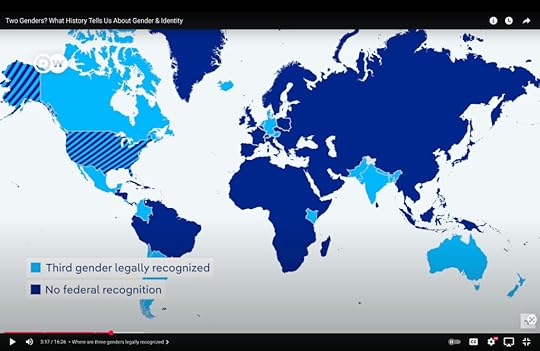
In 2013, Bangladesh recognised the hija as a third gender. In 2014, India did the same. But difficulties – hate, violence, and colonial ideas – still pursue in these countries. In Albania, there is the Burrenshas who traditionally were women who took on the roles of men to change their social status, but this norm has disappeared as gender norms have changed overtime.
Some historians and scholars note that gender politics and recognition of women’s history is complicated because it was understudied and under-published for so long. Restrictions of freedoms for women in the West may have led to a poor understanding of gender as a whole now.(2)
QUOTED FROM National Library of Medicine study: The concept of a “third gender” or an identity that cannot be placed within the generally accepted “male” or “female” identifiers is not new. From the earliest records, figures such as the Greek God Hermaphroditus (Grimal, Kershaw, & Maxwell-Hyslop, 1990) and the Sumerian Gala Priests of ancient Mesopotamian cities (Suter, 2008) have represented individuals who are not easily identified as “male” or “female.”
Philosophers and some early Christian leaders actively promoted androgyny as the original and ideal state for a human (Cobb, 1993)
In pre-Columbus America, there are historical reports of many tribes holding the belief that there were, in fact, four genders – “male,” “masculine,” “feminine,” and “female,”
The advent of Christianity saw many cultures adhere to strict binary “male” and “female” roles imposed upon them by the religion. However, fashion has often had periods when androgyny is en vogue, such as the 1920s, 1960s, and the current day (Townson, 2016).(3)
“Anthropologists have long documented cultures around the world that acknowledge more than two genders. There are examples going back 3,000 years to the Iron Age, and even further back to the Copper Age.
Fa’afafine are people who identify themselves as a third-gender in Samoa, American Samoa and the Samoan diaspora. A recognized gender identity/gender role since at least the early 20th century in Samoan society.
Even in the heart of Catholic Italy, in Naples, there is a centuries-old phenomenon of femminielli, those assigned male at birth who dress and behave as women. They are respected figures and traditionally believed to bring good luck; a cultural tradition that may date back to pagan rituals of crossdressing, or eunuch priests.”(4)
Sources and further reading:
(1) https://www.clasp.org/blog/the-intersection-of-colonialism-and-trans-oppression/
(2) https://www.history.ox.ac.uk/growth-gender-and-womens-history
(3) https://pmc.ncbi.nlm.nih.gov/articles/PMC6830980/
(4) https://link.ucop.edu/2019/10/14/exploring-the-history-of-gender-expression/ (also works for my next point on cultures)
https://www.lgbthistoryuk.org/wiki/Timeline_of_UK_Transgender_History (interesting timeline, though I can’t speak to how factual)
Gender ideals across continents and culturesThere are cultures/communities around the world where it is normal to not think about gender as strict binaries. These are called the Hijra in Hindu culture; the Calalai, Calabai, and Bissu in South Sulawesi in Indonesia; Muxe in Mexico; Sekrata indigenous to Madagascar; Two-Spirit in Native American/Indigenous cultures; and Bakla in the Philippines. In fact, for some of these cultures, it’s colonial rule which led to a criticism and disrespect towards these people who were once revered members of their society. Colonial rule has caused shame to breed in these communities where they once loved and held these people sacred.
“Hijras often leave home to join groups that educate new initiates in spirituality. Hijras assume a religious role in Hindu culture, celebrating rituals like weddings and births. Many believe hijras possess the power to bless or curse others.”(1)
“Calalai refers to people who have female sexual characteristics but present in traditionally masculine ways, often cutting their hair short and dressing in men’s fashions. Calabai are people who have male sexual characteristics but occupy a role like that traditionally occupied by women. Bissu, another gender, embodies the totality of masculinity and femininity. Bugis people believe that bissu surpasses other genders, encapsulating a spiritual role.”
“Muxe are those who typically have male sexual characteristics but embrace a feminine identity. The muxe identity is embedded within the culture of the Indigenous Zapotec people, who live mainly in the southern Mexican state of Oaxaca. Though Zapotec culture respects muxepeople, muxes still endure certain restrictions: they are usually prohibited from living with their intimate partners or leaving their family homes.”
“Sekrata people have male sexual characteristics, but after displaying behavior viewed as feminine during childhood, they are raised as girls by their families. As adults, they inhabit a unique niche: they do not occupy traditionally male roles, like soldiering; instead, they undertake other responsibilities, like performing in ceremonies. The sekrata are widely accepted within Sakalava society. They are viewed as both sacred and protected by supernatural powers.”
“Two-Spirit are people who are believed to embody both a male spirit and a female spirit…seen as being uniquely able to see life from both male and female perspectives and to bridge the differences between them.”
“Bakla refers to people who possess male sexual characteristics but identify with femininity and often express their gender through feminine dress and behavior. Historically, bakla were considered to encompass aspects of both masculinity and femininity, and they often served as leaders of their communities.” (1)
There is also the “third gender” or “sacred gender” in India. These people are respected and seem to hold the power to bless or curse. That in Indian mythology and scripture, gender has always been fluid, and there are “20-28 genders”.
There’s the “brother-boy” of Australian aborigine peoples, someone born with female characteristics but has a masculine spirit. Then “sister-girls” who are people born with male characteristics but has a female spirit.
This is not even to mention that expressions of femininity and masculinity simply vary across cultures by nature anyway, never mind there being more than two genders. Some cultures involve women wearing headscarves, and this is a part of their womanhood. Some cultures involve women doing more work than women. Even in the animal kingdom, for example, lionesses are the ones who go out to hunt and provide for the family, not the males. What about the traditional kilt in Scottish culture? This is a sort of skirt, which is usually viewed as feminine, yet it’s a strong symbol of masculinity and traditional Scottish heritage for them.
Similarly, names! I work for a university processing applications from students overseas, so I come across all sorts of unfamiliar names. Some of these names seem “feminine” to me, only for me to discover that they are male. This is only because in my country, the norm isn’t for masculine names to sound like that. But that’s me thinking and judging from a preconceived assumption, a conditioned mind from experiences of my own societal norms. Not anything that’s wrong about the person’s name, which could be completely normal in their country!
Context, culture, and place matters, it seems, to what we view as the norm. Doesn’t this, in itself, prove gender fluidity and the concept of gender (and masculine and feminine) being a social and cultural construct?
Sources and further reading:
(1) https://www.britannica.com/list/6-cultures-that-recognize-more-than-two-genders
https://www.authorsden.com/categories/article_top.asp?catid=62&id=46603
https://nonbinary.wiki/wiki/Gender-variant_identities_worldwide
https://juliaschwabtherapy.com/blog/cultures-with-multiple-genders/
Gender ideals as a weapon of controlI am a feminine woman, yet I burp and fart and swear and pick my nose and please myself and boast and get muddy knees and write crude stuff sometimes. For centuries, femininity seemed to be about restriction. Keeping women small; well-behaved. If you didn’t adhere to these rules, you weren’t ladylike. You weren’t feminine.
This is a patriarchal means of suppression and control. Why else would being a “good girl” be about suppressing very natural tendencies. There seemed to be this obsession with keeping boys and girls very separate. Being a boy is this list of things and being a girl is this other list, and don’t you dare cross the boundaries!
This is what fairy tales were for; they are cautionary tales and a guide for children on how not to behave. They are closely linked to Christianity, too. As previously mentioned, European colonialisation of other continents led to the growing shame around third or more genders. Western ideals were forced on non-western countries, to a devastating effect.
View this post on InstagramA post shared by Luke Bateman (@lukebateman_)
View this post on InstagramGender warsA post shared by Jeff Guenther, LPC (@therapyjeff)
I’d also like to touch on feminism.
A lot of women think it’s against feminism and the progress of womanhood to be a sex worker, for example, or sell your body in any way (e.g. Only Fans or sexier social media accounts). Sex sells, that’s a fact, and is that even our fault? Is it okay to take advantage of something that was once used against us? Is it a reclamation or a step backwards into patriarchy? Do some women believe in the patriarchy as the natural order of things? Should we criticise them for thinking this way?
Then there’s the rise of the trend “Trad Wife” which I had to do some research on to fully understand without assumption. It is for women or men? Does it help women progress or go backwards? Does it further divide women?
What about muscle mommies? Book girlies? Hot girl summers? Divine feminine? There are trendy words for all expressions of femininity now, and are we here for it, or only creating further labels and categories for us to fight each other over? It used to be about the Tom Boy! Androgynous dress of girls. I used to think I would get married in a white tracksuit! Now there are hundreds of subcategories of what it means to be female and a war seems to be breaking out between us who identify as female.
Further reading on feminism:
https://www.womenshistory.org/exhibits/feminism-first-wave-0
https://www.humanrightscareers.com/issues/second-wave-feminism-history-main-ideas-impact/
https://www.britannica.com/event/womens-movement
Gender ideals in philosophy and religionThis post is getting quite long so I’ll try to hurry on a bit!
You can’t have a conversation about patriarchy and control without mentioning religion, sadly. I will mostly speak about Christianity, the religion I’m most familiar with. Many people quote the Bible and religious texts as a weapon against LGBTQ+ rights and freedoms. However, as with any text, the Bible is open to interpretation. The individual reading it will come to their own conclusions. Let’s bear that in mind when thinking our God told us one thing or another definitively.
More in this post here from a Christian themselves: https://www.christianity.org.uk/article/gender-identity
Yin and yang, in Chinese philosophy, teaches us that there are feminine and masculine energies within us all.
That Yang/masculine means:
SunLightMotion / ActivityHotHard / FirmFireAnd Yin/Feminine means:
MoonDarkRestStillnessSoftColdWaterThese may seem like binaries but whoever has seen the symbol knows that they exist within and around one another. They are not separate, they work symbiotically. This is also taught in yoga philosophy. That we each have both energies which can be in and out of balance, dominant and non-dominant within us throughout our lives, dictating how we behave and perform.
Gender and sex in biological termsAs stated briefly above, masculine and feminine energies aren’t necessarily opposites. And this is a biological fact too. We all have both oestrogen and testosterone levels in our bodies. People simply have more of one or the other.
PCOS is a condition affecting woman which means they have higher levels of testosterone. Are these women therefore less feminine? Should they change gender? Is something not woman enough about them? No, no, and no.
As a society, we seem to equate testosterone and a penis with masculinity; and oestrogen and a vagina with femininity.
Masculine = man, male, penis, testosterone
Feminine = woman, female, vagina, ovaries, womb, oestrogen
But I’m not so sure. I know women who are very masculine in their characteristics but identify with being a woman. Love their womanhood. May wear traditional clothing for femininity. Does having a masculine nature stop them from being feminine? From being a woman? Does having a vagina mean they can never open up to their masculinity?
Let’s be more biological here.
Higher Testosterone levels can mean:
Increase in facial hair and thickness of hair in generalHigher levels of movement Increase in strength and muscle sizeIncrease in sex drive Mood swingsBone growthDeeper voice in puberty“Men and women need the proper amount of testosterone to develop and function normally. However, the optimal amount of testosterone is far from clear.” Source: https://www.health.harvard.edu/staying-healthy/testosterone–what-it-does-and-doesnt-do
Higher levels of oestrogen can lead to:
Increase in oxytocinIncrease in emotional turbulence / Mood swingsOvulationSex driveHormonal cycles of a person who menstruates can look like this:
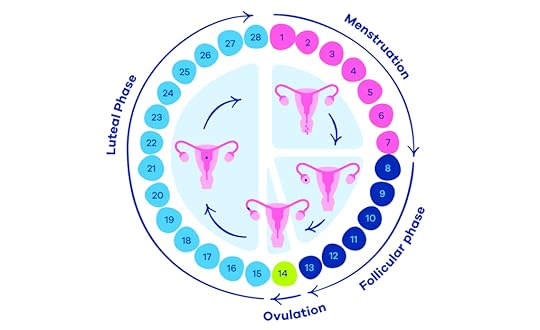
This website also goes into great detail on our cycles’ affect on our behaviour and mood. Note the highs and lows of stress levels, movement, action-seeking, emotional lows, isolation versus social interaction, anxiety, increase in strength. All this within one person. Varying levels of testosterone and oestrogen throughout our cycle. Masculine and feminine energy seen here in our natural state.
Another thing people forget is a natural occurrence is intersex people / hermaphroditism. People born with both physical sex organs. Should they have to pick? They are naturally born biologically both male and female…so where do they belong in our binaries?
A lesson in linguistics?Read the last part of this Gender essay here in part three: empathy and education.
Sincerely,
S. xx
Essay on Gender Part One: My Femininity
I am going to write quite a vulnerable post here. Opening up about my own thoughts and feelings about being a woman and why I struggle with gender binaries in society. This post is not for anyone who may be triggered by difficult conversations around gender identity.
 Part One: My Femininity
I am a cisgender female. As I’m writing this, I ask myself, what makes me feel feminine?
Pretty dress or skirtA nice blouseMy hair pinned back in a pretty clip, showing my nice earrings A great pair of boots Cute, cozy hobbies and aesthetic like reading, writing, candles, yoga, blankets, fluffy socksWhen my curves are accentuated When my body is admired by my husbandBut this seems a list of things that make me feel beautiful, no? Is that what femininity is? Beauty? Aesthetics? Sex appeal? Male gaze? Being cute and dainty?
Am I brainwashed by the patriarchy or is it actually my own idea?
I sometimes dress in a way that I know will make me look attractive to men. Tighter clothing, accentuating my curves, or something low cut, or that shows off my legs. Is it anti-feminist to do this? Is it immoral? Is it a double-standard because we can’t ask to be seen as sexually appealing while also berating men for objectifying and sexually leering at our bodies? Can we not feel sexy, in a patriarchal way perhaps, as well as fight for the rights of women’s safety?
And really, this isn’t femininity. It’s an expression of femininity. Yes, there is a difference. But we’ll get into that in parts two and three.
VaginaIt’s hard to have a vagina sometimes. The issues that come with having one. The brutality of the phallus and penetration as a concept…it does get to me sometimes. The literal and figurative power of the penis versus the vagina. Something that penetrates (the penis) and something that is penetrated (the vagina). It’s a power struggle. It’s a powerful image. One that may have caused our world’s views of men and women.
No wonder we are seen as the weaker sex.
And yet, the penis is much, much weaker than the vagina is! By a long shot!
Many times have I wished that I wasn’t a woman. Things just feel simpler for men. I know they have their own struggles, of course, but I have wished it, I admit.
To walk into a room and have a presence right awayTo not fear walking the streets aloneTo be considered a more natural leader To not fear rape as much as we doTo not have to bleed every month To not have crazy hormone cycles and constantly be blamed for it like it’s your fault To not have to bear the burden of childbearing and giving birth and being the default dominant parentMotherhoodI have something I call “the motherhood problem”. Where I feel damned if I do and damned if I don’t. Where I don’t feel myself pulled one way or the other. I just know I doubt my own strength for motherhood. The way it breaks a woman, when I am already rather chipped and stained to say the least. People talk about motherhood and child-rearing like it’s so natural. But it can’t be for everyone, right? And I envy the fact that it’s more socially acceptable for men to not want kids than it is for women.
I feel like I won’t be a fully realised woman unless I have a child. And many woman think that you’re better if you give birth naturally, too. Or if you get help with child care, you’re not a good enough mother. There seems to be this hierarchy and it’s very rude and confronting to be honest. Why should I feel less for not having children, or choosing to have and raise them my own way?
I really don’t know that I could cope with the trials of motherhood, and does that make me weak? Less of a woman? Never be called a strong woman?
WeaknessAny sign of weakness, emotion, vulnerability, opening up and shedding a tear is seen as feminine. It’s a word weaponised by some men against other men. “Don’t act like a girl” they say when a man shares his feelings or cries. Why? Why is showing emotion synonymous with being female and why is this a negative for men? For decades, the worst thing you could call a man was a “girl” (and variations of this such as bitch, chick, pussy) or “gay”. And gayness is seen as feminine too. To be a gay man is to be more feminine. To be weak. Again, more on this in part two.
But I’ve learned over the years that my weakness has led to my strength. Struggling with my mental health and being the “sensitive” one in my family – even though they all are, they just are quick to anger and cursing and rage whereas I’m quick to tears – made me strong. It made me able to hold the pain of other others = empathy. It made me able to speak openly and honestly about difficult things, thus making others feel comfortable to do the same. It’s made every new battle that little bit easier to deal with.
As my grandad told me, god only gives this hardest battles to his toughest soldiers.
I must be quite tough.
Women have been branded the “gentler sex” but our softness is our strength. It takes immense strength to stay calm, to express our feelings (vulnerability is strength), to nurture, care when caring is hard, and hold space for others. We have to be strong when bearing children, our bodies going through a metamorphosis to make space for another being inside of us. Tearing our bodies apart to bear that child unto the world. And then supporting that child throughout their lifetime.
And our strength isn’t just in motherhood, for I am not a mother and may never be. I see our strength in enduring menstruation every month and rigorous hormonal cycles we are barely taught to understand, but must bear alone. Taking contraceptives that will alter our brain chemistry and hormones to the point of poor mental health, yet no one bats an eyelid and they continue to push this on young women. We bear the poor knowledge and advancement of medicine to deal with our natural, everyday struggles. A society mostly run by men who have no idea how we live.
WomenIt upsets me that there is so much discourse between women. We have fought for our rights over decades only to tear each other apart now. A lack of intersectionality and plea for the rights of ALL women, means we are letting each other down.
I am a feminine woman. I like some traditional ideas of women, like cooking and cleaning. I’m a very kind and naturally nurturing person. I don’t know if I want children though, which some people believe is my natural instinct. I like to do yoga but I also like sprinting, punching things and weight lifting. I’ve always been naturally strong and fast. I have a muscular built without much effort. I sometimes hate my vagina, but I like my breasts. I like jewellery. I like dresses and skirts but mostly wear jeans and leggings with jumpers. I like my hair pinned up. I like dancing and singing. I also like video games. I did GCSE PE and got an A*, being a very sporty girl and one of a low number of girls in my PE class. I like education. I like deep conversations. I think myself a philosopher sometimes!
I like being right and I’m overly competitive. My uncle used to say that I was too aggressive and violent to ever attract a man. I am attracted to men and women, but find the female form more naturally beautiful. I like every genre of film except romances and musicals. I’m a huge nerd. I cry all the time, and would sooner cry at an animal dying than a human.
I am a woman. And I have never thought that my expression of my womanhood or femininity was ever what another woman should be.
I’ve hated the way I walk, that my body isn’t very curvy, my hair doesn’t swish. I have broad shoulders and a stocky build. But I’m not less of a woman because of those small things.
I do not feel my femininity is in jeopardy if a woman exists differently to me. If they were born with the sex of a man and then realises they are truly a woman. If they have a vagina but don’t call themselves a woman. If they enjoy and adore motherhood, or don’t. Desire to be a “lady boss” or to stay at home with the kids. Whether they are a muscle mommy or a yogi. It matters not.
There is no brand of femininity that I fear, other than women hating other women, and a lack of intersectionality in fighting for women’s rights.
I believe that masculine energy and feminine energy are therefore not mutually exclusive. They’re not opposing forces. Not polarised forces. We each have both.
Read Part Two on Exploring Gender Identity here.
Sincerely,
S. xx
October 21, 2025
Personal Curriculum: How to Be an Informed Citizen
Here I wanted to share with you my personal curriculum, if you will, by sharing with you all the books I own that are educational, informative, or important for our betterment as citizens. I believe that in order to make good decisions for ourselves, our families, and our country, we need to keep up our personal education throughout our lives.
These books are either audiobooks (mostly, as this is the simplest way for me to educate myself), ebooks or physical. They are also one’s available at my local library that I have added to my online reading list through the Borrow Box app. I recommend you do the same – libraries are free education!
I will list them by category to help you find what you may need to educate yourself, too.
(Sorry, there’s just too many for me to link to them! Instead, I recommend you save this post to keep returning to. Treat this list and any other as lifelong learning, not a quick to do list right now! Education is for life.)
Also check out my other posts on accessible books (which some have links!).
 Politics and Philosophy
Mouth Full of Blood by Toni Morrison – just started at time of writing this and the opening chapters alone had my jaw on the ground! Must read/listen for everyone
The War on the West by Douglas Murray
Utopia for Realists by Rutger Bregman
Why Politics Fails by Ben Ansell
We Were Eight Years in Power by Ta-Nehisi Coates – on Barack Obama’s presidency and black people being in power
Poverty Safari: Understanding the Anger of Britain’s Underclass by Darren McGarvey
Beyond Good and Evil by Friedrich Nietzsche
Cultures Across the GlobeWandering Stars and There There by Tommy Orange – Native American culture across generations
This Land is Our Land: An Immigrant’s Manifesto by Suketu Mehta
We Are Displaced and I am Malala by Malala Yousafzai
Pachinko by Min Jin Lee – on Japanese and Korean history, culture, and clashes I believe
The Ungrateful Refugee by Dina Nayeri – refugee memoir
Racism and Racial IdentityThe Black Curriculum Curriculum (Migration, Legacies, Places) by various authors
Notes of a Native Son by James Balwin – classic and always relevant
How to Argue with a Racist by Adam Rutherford
Black and British by David Olusoga
Brit(ish) by Afua Hirsch
How to Be An Antiracist by Ibram X Kendi
Biased by Dr Jennifer Eberhardt
White Fragility by Robin DiAngelo
Caste by Isabel Wilkerson
Homecoming by Colin Grant
Black British Lives Matter by Lenny Henry
What Are You Doing Here? by Floella Benjamin
Afropean by Johnny Pitts
Young, Gifted and Black by Jamia Wilson
Between the World and Me by Ta-Nehisi Coates
I‘m Still Here: Black Dignity in a World Made for Whiteness by Austin Channing Brown
Little Leaders: Bold Women in Black History by Vashti Harrison
MemoirsPoor by Katriona O’Sullivan – poverty and class
Lowborn: Growing Up, Getting Away and Returning to Britain’s Poorest Towns by Kerry Hudson
Spare by Prince Harry
Long Walk to Freedom by Nelson Mandela
Twin Ambitions – My Autobiography by More Farah
Without Warning and Only Sometimes by Kit De Wall
Just Sayin’ by Malorie Blackman
Rising to the Surface by Lenny Henry
Coming to England by Floella Benjamin – Windrush generation
Learning to Think by Tracy King – class, poverty, education, family
This is Going to Hurt by Adam Kay – doctor’s perspective on healthcare
When Breath Becomes Air by Paul Kalanithi
Gender, Feminism, Sexuality and IdentityHood Feminism by Mikki Kendall
Wordslut by Amanda Mortell – feminist, linguistics, politics, patriarchy, history
The Book of Pride by Mason Funk
The Gender Games by Juno Dawson
Invisible Women: Exposing Data Bias in a World Designed for Men by Caroline Criado Perez
Gay Britannia by various authors
The Gendered Brain by Gina Rippon
Climate Crisis and NatureGathering Moss by Robin Wall Kimmerer
Half Arse Human by Leena Norms (again) – she also has a YouTube channel with videos on the climate crisis
This Is Vegan Propaganda by Ed Winters
How to Catch a Mole by Marc Hamer
The Man Who Planted Trees by Jean Giono
Rootbound: Rewinding a Life by Alice Vincent
The Uninhabitable Earth by David Wallace-Wells
No One is Too Small to Make a Difference by Greta Thunberg
We Are The Weather by Jonathan Safran Foer
Our House is On Fire by Beata Ernman, Greta Thunberg, and co.
A Life on Our Planet: My Witness Statement and a Vision for the Future by Sir David Attenborough
HealthHow Superfoods Work by Julia Nordgren
Gut by Giulia Enders
How Not to Die by Michael Gregor
Ultra-Processed People by Chris van Tulleken
When Breath Becomes Air by Paul Kalanithi
The Body by Bill Bryson
Burnout by Emily Nagasaki and Amelia Nagoski
Maps of Our Spectacular Bodies by Maddie Mortimer
First, We Make the Beast Beautiful by Sarah Wilson – on anxiety
Exhausted by Anna Katharina Schaffner
Sleep by Lisa Varadi
The Body Keeps Score by Bessel van Der Kolk
Breath: The Science of a Lost Art by James Nestor
HistoryWho Owns England? by Guy Shrubsole
Timelines in Black History by DK books
A Short History of Nearly Everything by Bill Bryson
The Boundless Sea by David Abulafia – on land, trade and cultures across the sea
10 Mistakes That Made History by Paul Coulter
Inglorious Empire by Shashi Tharoor – British empire
Hidden Figures by Margot Lee Shetterly – black female mathematicians
Black in Time by Alison Hammond – black history
The Odyssey and The Iliad by Homer – mythology and philosophy, Greek classics
Dystopian Lit or Futurism or ScienceBrave New World by Aldous Huxley
1984 by George Orwell
21 Lessons for the 21st Century by Yuvul Noah Harari
Brief Answers to the Big Questions by Stephen Hawking
Homo Deus by Yuval Noah Harari
Money / EconomicsRich Dad Poor Dad by Robert T Kiyosaki
The Trading Game by Gary Stevenson
Neurodiversity and DisabilityStrong Female Character by Fern Brady
Different, Not Less by Chloe Hayden
Owning It: Our Disabled Childhoods (in our own words) by Sophie Kamlish
Personal DevelopmentHalf Arse Human by Leena Norms
Conflicted by Ian Leslie
Breaking the Habit of Being Yourself by Joe Dispenza
The Next Conversation: Argue Less, Talk More by Jefferson Fisher
The School of Life by The School of Life
Four Thousand Weeks by Oliver Burkeman
Essentialism: The Disciplined Pursuit of Less by Greg McKeown
The Dopamine Brain by Anastasia Hronis
The Year of Living Danishly: Uncovering the Secrets of the World’s Happiest Country by Helen Russell
Why We Sleep: The New Science of Sleep and Dreams by Matthew Walker
Humanology: A Scientist’s Guide to Our Amazing Existence by Luke O’Neill
ParentingThe Book You Wish Your Parents Had Read (and Your Children Will Be Glad That You Did) by Philippa Perry
Mindful New Mum by Caroline Boyd
My Black Motherhood by Sandra Igwe
The Panic Years by Nell Frizzell – on deciding whether to become a mother
Like a Mother: A Feminist Journey Through the Science and Culture of Pregnancy by Angela Garbes
LinguisticsThe Last Word by Ben Macintyre
Literature with an educational messageShuggie Bain by Douglas Stuart – poverty
Demon Copperhead and Flight Behaviour by Barbara Kingsolver – class and poverty
1984 by George Orwell – need to reread now I’m older and wiser…
Prophet Song by Paul Lynch – social issues and political issues
The Motherless Land by Nikki May – race, culture and belonging
Homegoing by Yaa Gyasi – slave trade across continents and generations
Love Marriage by Monica Ali
Girl Woman Other by Bernadine Evaristo
Kindred by Octavia E Butler
The Color Purple by Alice Walker – classic, race, power, belonging
The Vanishing Half by Brit Bennett – white-passing, race, family
All The Light We Cannot See by Anthony Doerr – WW1/1914 war novel
Memoirs of a Geisha by Arthur Golden – classic
12 Years a Slave by Solomon Northup
Crime and Punishment by Fyodor Dostoevsky – classic Russian literature
Colson Whitehead books
Percival Everett books
That’s all for now!
Education is a lifelong journey, not some end destination. A conversation with ideas between peoples, across time and space.
I thank these wonderful writers for sharing their knowledge with me, and I am here merely to share it with you, too.
*Psst! Pass it on…*
Sincerely,
S. xx
October 19, 2025
On Allyship + Book Recommendations for Empathy: Personal Curriculum series
For those who don’t know, I identify as a cisgender woman, third generation immigrant background (my grandparents came over from Jamaica and Ireland), bisexual, biracial (white and black Caribbean), atypical brain (I feel I am neurodiverse but I am not diagnosed with a difference; I take medication to stabilise my mental health though), and I am married to a cisgender man so I am straight-passing.
Therefore, when I speak about LGBTQ+ rights and immigration and refugees and gender norms etc., I am talking as an ally more than someone with direct, firsthand, personal experience.
Excerpt from my journal entry this morning:
I will always remember what a family member said to me when I was young, that I am “too defensive and that I always defend people who don’t need it, which causes conflict”. In this stage of my life, I take this as a compliment. He was describing allyship.
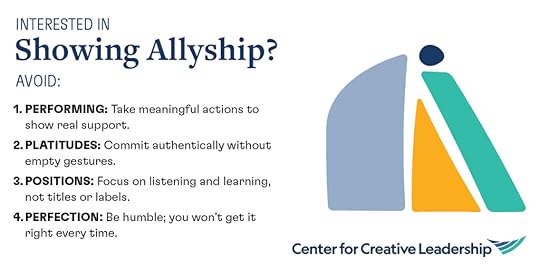 Image taken from Centre for Creative Leadership
 He also said that I am not the morality police. As in, I am not that one true voice of what’s good and ethically/morally right. He is right. I am not. Except, honestly, sometimes I do think I am. And this is a flaw, yes, but also something I like about myself (when done fairly!). That I search for the right and just and fair thing, always.
I had the Peacekeeper role in my family for so long. Perhaps this is part of the reason why I feel the need to combat injustice, stand up for the little guy, and find moral equity now. What is the root of all this? I think simply that it is a need for peace for fear of the opposite. Calamity, inequality, and division are a breeding ground for violence, pain and chaos. It makes complete sense that I would fear that.
I want fairness for all. I want everyone to feel safe because I know firsthand that not feeling safe and secure in who you are hurts deeply. It’s depressing and makes you want to end it all, just to escape that feeling. I can only imagine the anguish of feeling hate overtly from the society and community you live in. How that would chip away at you until there’s nothing left.
And that is cruel. Fact.
We can have our different beliefs culturally and socially (on gender norms and sexuality etc.) but it is never, EVER, okay to make someone (or a group) feel they can’t live their lives. To be that person chipping away at them until there’s nothing left.
Instead, drop the chisel, reach out a hand, lend an ear and a shoulder, and borrow their shoes for a moment.
Is that too much to ask?
Why am I writing this? Why say anything? Because I want to be the reason someone stays: in this country, or in this life. Not the reason someone goes…
 Part Two: Book Recommendations for Empathy and Understanding
Here are some book recommendations based on marginalised groups and communities to better educate and disrupt our biases. To bring us together with empathy and compassion. This is a means of “walking in their shoes“, as I urge us all to do.
A few disclaimers / explanations:
I hate categorising their books by race or gender or religion or sexuality etc. I just felt I needed to, to help you diversify your reading. Authors are more than just their labels. Their books can be (and are!) incredible all on their own, without being worthy only because they are different from the mainstream. But diverse books are a statement. Representation and own voices matter.
Secondly, I, of course, don’t know the races, religions or sexuality of most of the authors I read! Unless I’ve heard about them from someone recommending their work based on their identity / group. I’ve not researched these things for this post. I am only sharing ones that I already knew, and if I’m wrong on any, I do, of course, apologise.
Thirdly, authors don’t need to write about their struggles in society as part of their identity / group. Black authors don’t need to write about slavery and racism. LGBTQ+ authors don’t need to write about coming out and homophobia or transphobia etc. Instead, reading their books is a message, a symbol of support, and puts money in the pockets of people outside the dominant social group of the West. Simple as that.
Lastly, to ensure the integrity and authenticity of this post, I will only recommend books that I have personally read, but I will link to a booktuber who talk about books from these communities at the end. And please don’t be overwhelmed by the list! Just go slow. Make a point of reading one or two books outside your comfort zone before the end of the year. And then add some to your list for next year. You don’t need to become a diverse reader overnight!
(I don’t endorse buying from Amazon, but sadly, it’s the easiest place to link to. Buy secondhand and support independent bookstores if you can! Or source from your library, please!)
Books by black authorsHere’s a post I’ve done previously on black authors and another on books recs for black authors as there’s no point in recommending the same books over and over again!
Some new additions to the lists above:
Glory and by NoViolet Bulawayo (satire, history, Zimbabwean culture)
Real Life, by Brandon Taylor (dark academia, LGBTQ+, racism)
Blonde Roots by Bernardine Evaristo (alternative world/history)
Queenie by Candice Carty-Williams (realism, London)
A Blade So Black by L L McKinney (fantasy)
Books by Asian authors (big continent, big difference in ethnicity, let’s try cover all bases)Fiction:
(A lot of my recs here are Japanese books/authors because I love Japan and always wanted to go so I’ve read a lot of their literature)
Any R F Kuang book won’t lead you wrong! But for an education as well as entertainment, try Babel (I’ve seen some criticism online that Kuang is taking over as “THE diverse author” to read, but I love her work and I strongly recommend you read them as well as lesser-known Asian authors!)
Convenience Store Woman, by Sayaka Murata
The Book Eaters, by Sunyi Dean
Before the Coffee Gets Cold, by Toshizaku Kawaguchi
The Last Children of Tokyo, by Yoko Tawada
How Do You Live, by Genzaburo Yoshino
Lonely Castle in the Mirror, by Mizuki Tsujimura
The Travelling Cat Chronicles by Hiro Arikawa
She Is A Haunting, Trang Thang Tran
Black Water Sister, by Zen Cho
The Reading List, by Sara Nisha Adams
The Downstairs Girl, by Stacey Lee
The Life of Pi, by Yann Martel
The Very Secret Society of Irregular Witches by Sangu Mandanna
An Ember in the Ashes by Sabaa Tahir
Five non-fiction :
Crying in H Mart, by Michelle Zauner
This Is What I Talk About When I Talk About Running, by Haurki Murakami
Books by Latinx authorsThe Brief Wondrous Life of Oscar Wao by Junot Diaz
The Dangers of Smoking in Bed, by Mariana Enriquez
Books by Native American or Australasian authorsFiction:
Greta and Valdin, by Rebecca K Reilly
Boy Swallows Universe, by Trent Dalton
Non-fiction:
Braiding Sweetgrass, by Robin Wall Kimmerer
Books by Jewish authorsNotes on an Execution, by Danya Kukafka
Tomorrow and Tomorrow and Tomorrow, by Gabrielle Zevin (all time favourite book)
Non-Fiction:
Books by LGBTQ+ authors or about LGBTQ+ charactersFiction:
The Seven Husbands of Evelyn Hugo and Atmosphere by Taylor Jenkins-Reid
Bury Our Bones in the Midnight Soil, by V E Schwab
Our Wives Under the Sea, by Julia Armfield
They Both Die At The End series and History is All You Left Me, by Adam Silvera
Legends and Lattes, by Travis Baldree
Aristotle and Dante Discover the Secrets of the Universe, by Benjamin Alire Saenz (also Latinx author and characters)
The House by the Cerulean Sea, by TJ Klune
Five non-fiction:
This Book Is Gay, by Juno Dawson (also on trans experiences / explanation)
Can Everyone Please Calm Down: A Guide to 21st Century Sexuality by Mae Martin
Books by trans authors or about trans charactersFiction:
Detransition Baby by Torrey Peters
Books by disabled and neurodivergent authors or about disabled charactersFiction:
The Curious Incident of the Dog in the Nighttime, by Mark Haddon
A Mango Shaped Space, by Wendy Moss
Non-Fiction:
It’s Not What It Looks Like, by Molly Burke
Different Not Less by Chloe Hayden (own it, haven’t yet read)
Strong Female Character by Fern Brady (own it, haven’t yet read)
Books about disadvantaged people and povertyFiction:
Non-Fiction:
Poverty Safari by Darren McGarvey (husband has read not me)
Chavs: The Demonisation of the Working Class by Owen Jones (I’m partway through)
I’m so glad I wrote out this list as it shows where my own reading needs to diversify for next year! Let’s do it! Let’s read and elevate all voices. Representation and own voice authors / narratives matter in publishing and the entertainment industry. We the public need to show these industries that we want more diversity, inclusion and representation.
Reading is activism. Reading is allyship. Reading can change the world.
Go follow Starry Steph on YouTube as she has a brilliant eye for diverse books!
Lastly, an interesting looking Netflix documentary that should definitely help with empathy, education and inclusion! You Can’t Ask That! on Netflix
Sincerely,
S. xx
October 13, 2025
We Won the Privilege Lottery! But We Don’t Want to Share?
We rule the world. We have everything. We’re safe. Yay!
When we are honest with ourselves, this is the narrative of a lot of people in our society. This is what pushes their hate and exclusion. Before we get into that though, let’s define what I mean by the “privilege lottery“.
 Country lottery
 Congratulations, you were born in the UK or USA or some safe, rich European country! Lucky you. How nice! Free healthcare (or advanced healthcare at least), plenty of jobs, a global superpower, education beyond our wildest dreams, and the heart of entertainment across the world.
You did absolutely nothing, you were just lucky to be born here instead of there.
Language lotteryCongratulations, you were born in an English-speaking country! A language that has colonised the world. The global Lingua Franca (a language that is adopted as a common language between speakers whose native languages are different). You have the privilege of making non-English speakers speak your language instead of you having to speak theirs. You can go anywhere in the world and you are likely to find someone who speaks your language. What a dream! How easy for you!
Dominant social group lotteryCongratulations, you were born white, in the body that feels right for you (biological sex and Western gender norms align for you), you’re able-bodied, straight, and perhaps even a man! Lucky you, everyone around the world assumes you have more power than them. They see you as either wealthy or a threat. You are the global image of authority and power. You have more power in any room than any other outside your social group. How euphoric that must be! To have so much control. To see the world part to make space for you, always.
Definition of privilege and why you should careI’m being hyperbole and satirical but this is true. People in the UK are now thinking enough is enough, get rid of the immigrants/foreigners, stop helping all the refugees who seek help, stop sending our money abroad, stop giving aid, stop giving welfare to those in need, and stop allowing everybody to be whoever they want to be, instead make them be “normal” and stop them having a voice.
This is a privileged thing to say and think. Fact.
People scoff at the word privilege. They think that means wealth. It doesn’t. If you are wealthy, then yes, you have more privileges than those who aren’t, but that’s not what it means.
Definition of privilege “a special right, advantage, or immunity granted or available only to a particular person or group.”
Therefore, this applies to what I’ve been saying. We have the privilege of not worrying about certain social and political issues because they don’t directly impact us. Simple.
Alongside our privilege is now a rhetoric of “taking back what is ours“. That we don’t want to lose resources to help those people or groups in need because we think what is ours by birthright (convenience, luck, whatever) should remain ours.
It’s a scarcity mindset. A fear of there not being enough resources for everyone. When this isn’t true. Or it doesn’t have to be. It’s not us versus them. That if people access our welfare system then there’s nothing left for us. If this were true, it would be a fault with our government, the system, not with people who need the help.
And I keep saying lottery but this isn’t even a good comparison because at least people who win the lottery had to play the game! They actively make a choice that leads to their winnings. We didn’t! We were just lucky. We just happened to be born in the right place and in the right body to suit the powers that rule our society.
Yippee for us!
Imagine if you didn’t have the right to love and live with whoever you choose.
Imagine your name wasn’t something simple like Emily Brown or John Smith, and so when you apply for jobs or housing, people turn you away.
Imagine you were born into poverty or war or without access to education or healthcare like free vaccines or fresh food and the like.
You would seek help, right? You would protest against a government that stripped you of these rights, wouldn’t you?
So just because you won the lottery, doesn’t mean you should neglect to share your privileges (which are really human rights).
A Brief History Lesson on the Origin of Our PrivilegeYou might be thinking, though not in so many words, that it’s not our country’s duty to help people in need from other countries. That we can’t afford to do so because there’s not enough room or resources (though this has been disproven, see the link above). I hear you. What you’re saying is, we have the luxury of being safe and having access to education, modern healthcare and wealth here in the UK, and we don’t want to share it.
But where did our wealth and our privilege come from? Why are we safe and rich and dominant?
It came from the British Empire colonising and devastating other nations. Other nations which NATURALLY won the country lottery before we went and stole from them. We stole all their “winnings”, all their wealth:
Their goldTheir diamondsTheir oilTheir ancient artefacts Their history Their language Their culture Their labour (slavery) Their livesBy nature, by God, whatever you want to call it, we the British did not win any lottery. We stole the winnings of other countries. And now we don’t want to give it back.
View this post on InstagramA post shared by Naveen Jaspal (@whatnaveats)
What if these countries and these people decided to “take back what is ours” just like we are saying? We stole from them hundreds of years ago. What if they came to take back what is theirs by birthright? Would that be okay in your eyes? Is that fair? Yet we go around saying we need to make Britain British again, get rid of the people stealing our culture, and take back what is ours.
But what is actually ours? What is ours by nature? What was our natural gift? I don’t even know anymore…
You may say that we won, fair and square. We were stronger. Mightier. We were a great force. And if we want to be heartless, then yes, sure, this is objectively true. But there’s further nuance and repercussions to this “fair” victory.
Without the tyranny, genocide, and cleansing of cultures by the British and other European powers, the West would not be the wealthiest countries. We would lean on other countries to survive. And we still kind of do! We need trade from other countries. We needed immigrants to help rebuild after the World Wars. We needed immigrants to fight for our country in said wars. We need immigrant to pay taxes and elevate our economy and take jobs that sadly a lot of British people won’t do for the same wages.
During Covid, doctors and nurses on the frontline saving British lives were many people of colour and migrants from other countries. And sadly, they were disproportionately impacted by Covid, too. If they weren’t here at that time, a lot of British lives wouldn’t have been spared.
What I’m saying is, we want migrants when it’s convenient to us. When it helps us. But when they need help, we turn our backs. The British Empire went out to destroy and control other countries, yet we are now surprised they have come to us for wealth and a better life? When the British reached out with propaganda welcoming people from the Caribbean to come and live in the gold streets of the UK, we now strip them of citizenship and tell them they are not British after spending 60-70 years here building our economy and building a life.
It is cruel, selfish, and downright hypocritical.
We already won. We won! By unjust means, we continued to keep winning after the downfall of the British Empire and the rise of the commonwealth. We fixed the odds, and won the lottery.
Now stop fighting those who need our help. Our problems aren’t in direct correlation with these people’s presence or granting them access to basic human rights. We already stripped them of it. Let them live. Let them thrive. Help them after decades (perhaps centuries) of struggle caused by us (and other powers).
Look to your government. Look to the wealthy and the greedy corporations benefiting from our in-fighting.
Some links for our further education because education should always come before taking a firm stance on anything:
Crash Course Geography on ColonialismCrash Course World History on ImperialismCrash Course on European ExpansionCrash Course on DecolonisationThank you for reading.
Sincerely,
S. xx