
Matt Rees's Blog - Posts Tagged "detective-fiction"
New York Times Book Review: THE FOURTH ASSASSIN 'engrossing,' 'New Yorkers will be startled'
 New Yorkers tend to have a "seen it all" attitude to life. It's not surprising, given the madhouse that is the Big Apple. But I've officially done something that'll shock even the most hardnosed New Yorker. In The New York Times Book Review's crime fiction roundup by Marilyn Stasio, my new novel THE FOURTH ASSASSIN is called "engrossing." It's also described as a book that will make New Yorkers see their city in a different way. Here's the review:
"New Yorkers are bound to be startled by the views of their city advanced by Matt Beynon Rees in THE FOURTH ASSASSIN (Soho). In his new mystery featuring Omar Yussef, a Palestinian who teaches history at a school for girls in Bethlehem, Rees, a former Jerusalem bureau chief for Time magazine, brings his series’s hero to New York for a conference at the United Nations. But first, Yussef visits “Little Palestine,” in the Bay Ridge section of Brooklyn, where his youngest son lives — and stumbles onto the headless corpse of one of his son’s roommates. Over the course of an engrossing investigation conducted by a Palestinian-born New York detective, Yussef is educated in the harsh views of Arabs in some quarters of the city and exposed to the simmering anger of young Arabs like his son. Even more distressing, he sees how his Middle Eastern brethren have brought to America the same animosities that made them bad neighbors back home."


'Exotic' crime fiction makes unpalatable places bearable
 “Exotic” crime fiction has taken off in the last decade. People want to read about detectives in far-off places, even if they don’t want to wade through learned histories of those distant lands.
Many of the biggest selling novels of the last decade have been “exotic crime.” You’ll find a detective novel set almost everywhere in the world, from the “Number One Ladies Detective Agency” in Botswana through Camilleri’s Sicily to dour old Henning Mankell in the gloomy south of Sweden.
The success of my co-bloggers at International Crime Authors – with their detectives plying their trade in Thailand, Laos, and Turkey, alongside my Palestinian sleuth Omar Yussef – is also proof that this taste for international crime is more than just a publishing fad. The novels aren’t just Los Angeles gumshoe stuff transported to colder or poorer climes.
Here’s what I think is behind it:
Read a history book or a book of contemporary politics. Often you’ll find a list of the enormous numbers of people destroyed around the world by war and famine and neglect. You won’t get any sense that the world…makes sense. Crime fiction doesn’t purport to save the planet, but it does demonstrate that one man – the detective – can confront a mafia, an international espionage organization, a government and come out with at least a sliver of justice.
And justice is one of the few ideas which can still inspire.
Readers also prefer crime fiction about distant countries over so-called “literary” fiction about such places.
That’s because crime fiction gives you the reality of a society and also, by definition, its worst elements — the killers, the lowlifes — but it also gives you a sense that a resolution is possible. (See above.)
Literary fiction, by contrast, often simply describes the degradation of distant lands. If you read Rohinton Mistry’s “A Fine Balance,” for example, you probably thought it was a great “literary” book, but you also might’ve ended up feeling as abused as his downtrodden Indian characters without the slightest sense of uplift.
Crime fiction doesn’t leave you that way.
Now, that’s also true of the Los Angeles gumshoe. But the international element gives us something else to wonder about in these new novels. Not just because the scene is alien. Rather, it’s because we all trust to some extent that bad guys in Los Angeles will go to jail — or become Hollywood producers. We have faith in the system. So a detective has some measure of backing from the system, and consequently novelists have to push credibility to its limits in order to make him look like he’s taking a risk, to make him look brave.
International crime, when it’s set in the Developing World in particular, can’t be based on that same trust in the just workings of the system. The lack of law and order in Palestine, as I observed it as a journalist covering the Palestinian intifada, was one of the prime reasons I had for casting my novels as crime novels. It was clear the reality wasn’t a romance novel. Gangsters and crooked cops in the West Bank suggested the more vibrant days of the US crime novel back in the time of Chandler and Hammett, when it was much harder to argue that a city or mayor or police chief wouldn’t be in the pocket of the bad guys.
When a detective goes up against such odds in international crime fiction, it’s truly inspiring.
For books that start with a murder, that’s not what you’d expect, but it’s the reason for the success of this new exotic avenue of the crime genre.
Love and the crime novel
 The crime novel tradition seems to have little connection to love. Maybe sometimes love in a perverse sense is the spur to the murder at the heart of most crime novels – the spurned husband killing his wife, for example. But usually the detective is a loveless loner, pining without much hope like the great Marlowe for his true love to come along.
As I write more novels, I’ve noticed that love is at the heart of crime fiction. At least, mine, anyway.
Leonard Cohen sings that “love’s the only engine of survival.” It’s a good way to look at the crime novel. Rather than being a race to unravel the murder puzzle and nab the killer, I view the crime novel as the detective’s journey toward understanding about himself. And understanding, in my experience, comes only with the unfolding of love. You can finger the killer and take away the danger he poses, but unless your detective learns about love, emotionally he won’t survive the trauma of his closeness to death.
It may seem that I ought to have figured this out before now – I’m close to completion of the manuscript of my sixth novel, after all. But society hides the centrality of love behind strictures of finance and duty and work, and the format of the crime novel often plays the same role. So it’s only now, 400,000 words down the line, that it’s clear to me.
I started out thinking of crime novels as marked by plot – a murder, an investigation, a discovery of the bad guy – alongside a deeper emotional characterization of the hero and as many of the other characters as I could manage.
Then as my novels went on, the importance of relationships between the characters started to grow more sigificant in the way I conceputalized them. I realized that it was these relationship which gave the novel structure and meaning, rather than the Three Act concept (dilemma, discovery, resolution) of most writing texts. The Three Acts were the superstructure, if you like, but no more.
Read the rest of this post on my blog The Man of Twists and Turns.<\a>
Long gestation and the crime novel
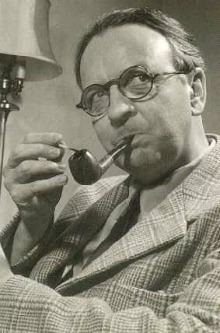 Crime novelists generally write a novel a year. It’s what publishers want. Some big writers—and I mean, 25 million books sold—have told me their publishers and agents complain that if they don’t produce a book a year their readers will forget them.
In the case of such writers, some of those 25 million may have degenerative diseases and others may be plain stupid, but in all likelihood about 24 million of them will remember a writer whose book they read, let’s say, two years ago.
Nonetheless the expectation remains that a book a year will be forthcoming. So do all crime writers have one good idea a year? Or do ideas take longer to gestate? And if they do, where does that leave the writer who needs to get words on paper right now.
In the case of my latest novel MOZART’S LAST ARIA (out now in the UK, but not until November in the US), it was eight years between the initial idea and publication. A most un-crime-fiction-like timescale.
It began with a trip I took with my wife into the Salzkammergut, to find peace among the mountains and lakes at a time when we were living through the Palestinian intifada in Jerusalem. There we stumbled across the remote house where Mozart’s sister Nannerl had lived and a fascination with her was born.
It was nurtured through future visits to Vienna, to Prague (where Mozart’s operas are still performed in the Estates Theater, scene of his “Don Giovanni” premier), dinners with Maestro Zubin Mehta at which we discussed our mutual admiration for the great composer (though it shan’t surprise you to learn that his understanding of the music is on a somewhat, ahem, more elevated level than mine…)
Read the rest of this post on my blog The Man of Twists and Turns.
Re-reading Ray
 I happened to read a few crappy books in a row of late. So I did what I always do when I can’t afford for the next book I get into to disappoint: I re-read a Raymond Chandler.
I picked “The Long Goodbye” off the shelf, because it’s my favorite. From the very first page, where Marlowe finds Terry Lennox falling drunk out of a Rolls Royce Silver Wraith in front of a club called The Dancers, I find myself hooked once again: “The girl gave him a look which ought to have stuck at least four inches out of his back. It didn’t bother him enough to give him the shakes.”
Chandler is, for me, the greatest of writers. Taken with Hammett, I’d say he did everything for American literature that people always assume Hemingway did: made things simple, direct, tough and stark. But unlike Hemingway (and like Hammett), he had the gruff sense of humor of a man who didn’t quite buy into the system (he wasn’t a Communist like Hammett, but he’d lived in England and been in the Canadian airforce, which made him less than conventional). That’s why he wrote crime novels, I think. It’s an outsider’s genre, the writing venue of a man or woman who sees through things and yet remains positive enough to bother putting pen to paper.
Chandler, like Marlowe, seems to have “felt as out of place as a cocktail
onion on a banana split.” Frequently, so have I, when I’ve been among the
corporate or the gilded of this world –– and I have spent many an
uncomfortable day, month or year in those scurrilous circles. That, in
fact, may be why I’m a writer. Certainly it helps me cope with the weird
status a writer holds today, threatened and undervalued, and yet cherished
(though not always enough for someone to buy your book and pay for your
kids to go to college.)
Ray understood all that. In his essays he writes about how banal commercial
British cosy mysteries “really get me down.” In his interviews, he
complained that “you starve to death for ten years before your publisher
realizes you’re any good.”
Yes, Ray’s my man.
More posts by Matt Rees. More about Matt's books.
Best First Paragraphs in Crime Fiction: Part 1
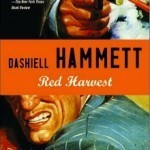 If you have a lot of time to waste, you never judge a book by its cover. But don’t try telling me you don’t judge it by its first paragraph.
What makes a great first paragraph? And which are the greatest? We all have favorites, some of which have become clichéd –– as happens to anything, whether it’s the best of times or the worst of times, or if you grew up in a family that was unhappy in its own way. See what I mean?
In general it’s hard to beat Hemingway’s opening to “The Sun Also Rises” for laying out the narrator’s character, as well as the character being described: “Robert Cohn was once middleweight boxing champion of Princeton. Do not think that I am very much impressed with that as a boxing title, but it meant a lot to Cohn.”
But what about crime fiction? Over the next few weeks, I’m going to look at some of the best first lines and paragraphs in the genre. Next week, we’ll do a little Chandler (how did you guess?) and then we’ll be on to Simenon, who was a nasty enough man to write perfectly bitter downbeat prose from the very start of his books.
Let’s begin, though, with the man who in many ways beats them all: Dashiell Hammett.
I bet you think I’m going to talk about “The Maltese Falcon,” which in the first paragraph describes Sam Spade as looking “rather pleasantly like a blond Satan.”
But I’m not.
No, we’re going to have a quick gander at the opening of “Red Harvest,” Hammett’s first novel, in which his Continental Op heads to a corrupt small town. It starts this way:
I first heard Personville called Poisonville by a red-haired mucker named Hickey Dewey in the Big Ship in Butte. He also called his shirt a shoit. I didn’t think anything of what he had done to the city’s name. Later I heard men who could manage their r’s give it the same pronunciation. I still didn’t see anything in it but the meaningless sort of humor that used to make richardsnary the thieves’ word for dictionary. A few years later I went to Personville and learned better.
For the rest of this post, read The Man of Twists and Turns.
Crime Fiction's Best First Paragraphs: 3
 Georges Simenon wrote “L’Affaire Saint Fiacre” (“Maigret Goes Home”) in 1932. It’s one of the first of the 103 novels involved Inspector Jules Maigret. You can tell from books like this that the writer was a bit of a bastard. And we ought to be grateful for that.
The opening of “Saint Fiacre” (I’m going to look at the opening, rather than the opening paragraph, because the paragraphs are short, staccato) is laden with the strangeness of waking up in an unaccustomed place, and most of all the dismal return to a place whence one has fled. Here it is:
A timid scratching at the door; the sound of an object being put on the floor; a furtive voice:
“It’s half past five. The first bell for Mass has just been rung…”
Maigret raised himself on his elbows, making the mattress creak, and while he was looking in astonishment at the skylight cut in the sloping roof, the voice went on:
“Are you taking communion?”
All this is a re-creation of the small village atmosphere Maigret believed he had left behind him when he went to Paris as a young man to become a police officer. It’s a very meaningful atmosphere for me. For a couple of decades now, I’ve lived around the world as a journalist and writer. It’s been 22 years since I quit the backwater where I grew up. If I’d been a happy kid, I’d probably never have left. So whenever I go back for a visit, I become quiet, silenced by a bitter nostalgia and regret. Maybe that’s why I love this somber, atmospheric early episode featuring “le Commissaire” going back to his childhood village.
Maigret appeared in so many movies and television adaptations–for Saint-Fiacre alone there are a 1959 French-language movie with Jean Gabin and two British TV versions–that it’s easy to think of him with the familiarity we often ascribe to endlessly reproduced old-timers like Miss Marple. But Simenon had a lot more in common with his great U.S. crime-writing contemporaries. In Saint-Fiacre, he makes the lugubrious Raymond Chandler look like a breezy teenager skipping down a sunny small-town street in her bobby socks. Imagine that.
Simenon’s first editor wrote to him: “Your books aren’t real police novels. They aren’t scientific. They don’t play by the rules. There’s no love story in them. There’re no sympathetic characters. You won’t have a thousand readers.” Well, 550 million copies printed shows what that guy knew about potential sales. But he was right about the way the Belgian writer’s books worked. No real good guys and nothing–certainly not love–untainted by the grasping desire to escape a society of dying traditions and internal immigration.
The Saint-Fiacre Affair begins, then, with Maigret waking up in the inn of the village of Saint-Fiacre. At first he doesn’t recognize where he is. As it dawns upon him, he’s flooded with a heavy sense of darkness. He has returned to the village where he grew up to investigate a crime which is about to happen. (His office in the Paris police headquarters received a note saying that “A crime will be committed at the Saint-Fiacre Church during the first mass of the days of the dead.”)
Read the rest of this post on my blog The Man of Twists and Turns.
Why did Marlowe go into the bar?
 Mrs. Rees has given me two lovely kids. She has enjoyed the presence of my parents. She even visited Wales with me. But I was never quite sure of her. Because she had only read one Raymond Chandler novel.
In an effort to make our marriage complete, I suggested this week she augment her reading of “The Big Sleep” by going through the remainder of Big Ray’s oeuvre. I tossed “Farewell, My Lovely” at her and she got going.
As I did so, I was just finishing a draft of my next novel. Part of writing, let us be frank, is anticipating what editors will say about it when it’s done. I decided to look at Chandler’s work in the light of the comments I get from agents and editors about my manuscripts – and from readers about the finished book. I wonder how he’d have responded?
For example, “Farewell, My Lovely” begins, as you may recall, with Marlowe outside a bar, watching a very large fellow. The large man enters and tosses another man out of the door. Then Marlowe says: “I walked along to the double doors [of the bar] and stood in front of them. They were motionless now. It wasn’t any of my business. So I pushed them open and looked in.”
There’s no way a contemporary editor or agent would go for that. “What?” they’d say. “Marlowe has no stake here. He needs to have a compelling reason to go through those doors.”
Of course, the reason Marlowe goes through those doors isn’t that Chandler didn’t do plots (as some allege.) It’s that Marlowe is somewhat comically interested in random things around him. He isn’t looking for trouble, but he’s attracted to places where he might encounter it – out of curiosity. He’s an anthropologist of low-life.
Now an anthropologist might work as a “series character” in today’s fiction. But he’d have to be a real anthropologist. Everyone has to have a reason for what they do. Their family must be at risk. Someone must want to kill them. Their identity has been mistaken and they must clear their names. You know what I mean.
No character is allowed to be interested in what’s happening around them and nothing more.
Partially that’s the result of the James Patterson-ization of the thriller/crime genre. Every chapter must have the clock ticking down to the dread event our hero has to prevent.
But it’s also because we’ve grown accustomed to being able to nail everything down in life in general. If you don’t know the answer to a question, look it up on the web and instantly you’ll have someone else’s answer, right or wrong.
A New York Times article this morning noted that Americans increasingly are employing two or even three computer screens on one desk to hold all the different web windows they want to have open before them. One poor monkey-minded lady (it’s a yoga/meditation reference, before you get offended, and it refers to the inability to focus on one thing) told the Times that when her third screen malfunctioned, she felt like she was missing out on the news (because she keeps news feeds on that screen.) Sounds like information-overload, rather than so-called “multi-tasking”? As for the proliferation of data before her on her desk: “I can handle it,” she said. Like any other addict.
But the best example of the changes in our society and the way they’re reflected in our fiction is this: in “The Big Sleep,” one of the characters is fished out of the sea, having been driven off a pier in a car. Chandler was later asked who killed that character. He replied, “I never figured that out.”
Try telling that to an editor or an agent or a reader today. It’d be a badge of incompetence.
But Chandler didn’t need to know. Neither do we.
There should be ambiguity and lacunae in our knowledge. We should learn only what we can focus on. That means looking at a single computer screen and not worrying about missing information as it zips meaninglessly across the web. It also means allowing our plots to maintain a focus on what’s important, and leaving the occasional loose end untied.
Why did Marlowe go into the bar?
Mrs. Rees has given me two lovely kids. She has enjoyed the presence of my parents. She even visited Wales with me. But I was never quite sure of her. Because she had only read one Raymond Chandler novel.In an effort to make our marriage complete, I suggested this week she augment her reading of “The Big Sleep” by going through the remainder of Big Ray’s oeuvre. I tossed “Farewell, My Lovely” at her and she got going.
As I did so, I was just finishing a draft of my next novel. Part of writing, let us be frank, is anticipating what editors will say about it when it’s done. I decided to look at Chandler’s work in the light of the comments I get from agents and editors about my manuscripts – and from readers about the finished book. I wonder how he’d have responded?
For example, “Farewell, My Lovely” begins, as you may recall, with Marlowe outside a bar, watching a very large fellow. The large man enters and tosses another man out of the door. Then Marlowe says: “I walked along to the double doors [of the bar] and stood in front of them. They were motionless now. It wasn’t any of my business. So I pushed them open and looked in.”
There’s no way a contemporary editor or agent would go for that. “What?” they’d say. “Marlowe has no stake here. He needs to have a compelling reason to go through those doors.”
Of course, the reason Marlowe goes through those doors isn’t that Chandler didn’t do plots (as some allege.) It’s that Marlowe is somewhat comically interested in random things around him. He isn’t looking for trouble, but he’s attracted to places where he might encounter it – out of curiosity. He’s an anthropologist of low-life.
Now an anthropologist might work as a “series character” in today’s fiction. But he’d have to be a real anthropologist. Everyone has to have a reason for what they do. Their family must be at risk. Someone must want to kill them. Their identity has been mistaken and they must clear their names. You know what I mean.
No character is allowed to be interested in what’s happening around them and nothing more.
Partially that’s the result of the James Patterson-ization of the thriller/crime genre. Every chapter must have the clock ticking down to the dread event our hero has to prevent.
But it’s also because we’ve grown accustomed to being able to nail everything down in life in general. If you don’t know the answer to a question, look it up on the web and instantly you’ll have someone else’s answer, right or wrong.
A New York Times article this morning noted that Americans increasingly are employing two or even three computer screens on one desk to hold all the different web windows they want to have open before them. One poor monkey-minded lady (it’s a yoga/meditation reference, before you get offended, and it refers to the inability to focus on one thing) told the Times that when her third screen malfunctioned, she felt like she was missing out on the news (because she keeps news feeds on that screen.) Sounds like information-overload, rather than so-called “multi-tasking”? As for the proliferation of data before her on her desk: “I can handle it,” she said. Like any other addict.
But the best example of the changes in our society and the way they’re reflected in our fiction is this: in “The Big Sleep,” one of the characters is fished out of the sea, having been driven off a pier in a car. Chandler was later asked who killed that character. He replied, “I never figured that out.”
Try telling that to an editor or an agent or a reader today. It’d be a badge of incompetence.
But Chandler didn’t need to know. Neither do we.
There should be ambiguity and lacunae in our knowledge. We should learn only what we can focus on. That means looking at a single computer screen and not worrying about missing information as it zips meaninglessly across the web. It also means allowing our plots to maintain a focus on what’s important, and leaving the occasional loose end untied.
Podcast: A Grave in Gaza
I talk about the real events in Gaza that are the basis for my second Palestinian crime novel A GRAVE IN GAZA (UK title: THE SALADIN MURDERS.) Over a decade reporting on Gaza, I accumulated stories that few other reporters noticed. In this novel, Palestinian sleuth Omar Yussef faces the corruption of senior Palestinian security officials, the kidnapping of colleagues, and the smuggling of missiles under the Egyptian border into Gaza. Each of the characters is based on a real Palestinian I've known. I also read from the opening chapter.
Download the Podcast: (Download the MP3)
Subscribe via iTunes
Download the Podcast: (Download the MP3)
Subscribe via iTunes


