
Pernille Ripp's Blog
May 3, 2026
10 Ways to Begin Counteracting the Rewiring of Our Students’ Brains
He tells me he is bored.
As if that is the only reason I need in order to understand why being part of the learning is not the priority. An honest answer, but also one wrapped up in so many questions.
What does boredom mean to you? I hear myself say that this is school, it cannot compete with a screen and it was never meant to. That school will be boring sometimes.
And yet I cringe at my own words. How am I agreeing that something I have meticulously planned for fun, movement, and understanding is boring? How have we gotten here.
But I hear it more and more. This idea that because I am bored I can tune out, do whatever I want, and it is up to us, the adults, to fix it. So we tinker and we attempt and yet nothing can beat the thrill of a classmate’s attention to whatever goofy decision is being made, nothing can beat the pull of the device handed back at the final bell.
We are losing every single day and killing ourselves in the process.
Because as we stand with all of our best ideas, honed sometimes from years of experience, we are also inevitably met with a feeling of worthlessness. Why bother when they don’t care anyway? And whatever happened to being invested in school?
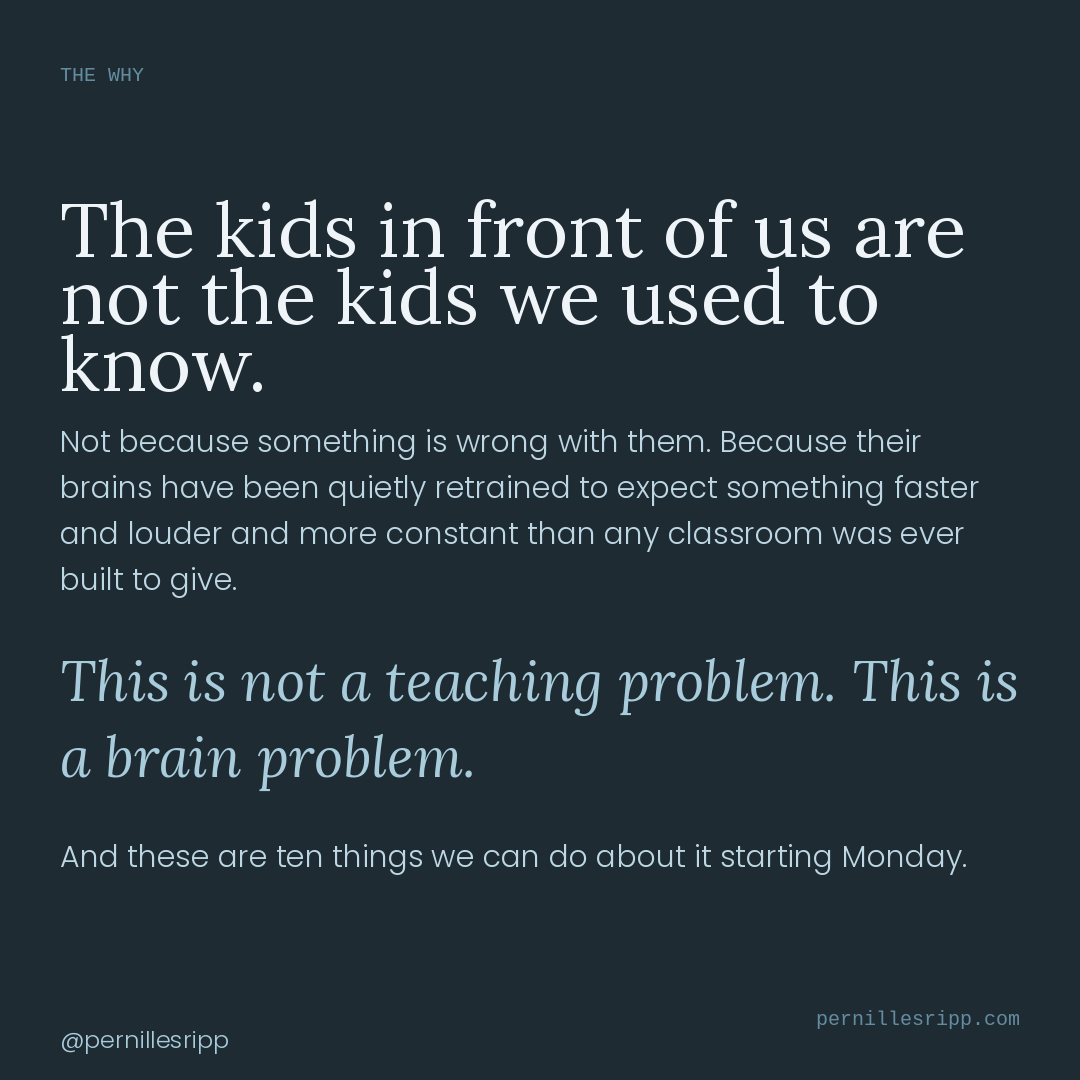
I have been sitting with these questions for a while. And I think what we are missing is not a better lesson plan or a stronger behavior system. What we are missing is an honest reckoning with what has happened to the brains sitting in front of us. Because here is the thing about boredom in 2026.
It is not the same boredom we grew up with.
The boredom we knew had nowhere to go. So it turned inward, into daydreams and doodles and the slow work of figuring out how to tolerate discomfort. The boredom our kids know now has an immediate exit. And that exit has been engineered to be as compelling as possible.
The research on dopamine tells us something important here. The brain does not spike on reward. It spikes on the unpredictability of reward. Variable reinforcement. The same mechanism that makes a slot machine hard to walk away from is the same mechanism driving the scroll, the refresh, the check. (Schultz, 1997)
And it is the same mechanism driving the kid who just made a choice in your classroom that you cannot quite explain.
The classmate’s reaction IS the notification. The disruption IS the dopamine hit.
We are not just competing with a device. We are competing with a neurological loop that has been deliberately engineered to be almost impossible to interrupt.
In many ways, we are teaching kids whose brains have been conditioned the same way any addiction conditions a brain. I want to say that carefully, because it is not an excuse and it is not a diagnosis. But it is honest.
And when we understand it that way, two things shift.
The behavior starts to make sense in a way it did not before. And the shame we feel for not being able to reach every kid every day starts to lift a little. Because you would not expect a single teacher to be the sole intervention for any other kind of addiction.
The weight we are carrying is real. And it is not ours alone to carry.
There was a time when recognition meant something different than it does now. A nod from a teacher. A reputation built slowly among peers. Being known in a community that stuck around long enough to remember who you were last October and who you had become by June.
Integrity mattered because the same people would be there tomorrow, and they would carry the memory of you forward.
That ecosystem of recognition, earned and witnessed and slow, was one of the most powerful forces in a child’s world. And for a long time, it shaped everything.
Then something shifted. Quietly and without warning, an entire industry rewired what recognition feels like. Not just for our kids. For all of us. The brain has been rewired to need a flood. And we are standing there, with everything we have got, offering a drip.
So when he tells me he is bored, I have to be honest with myself about what I am actually hearing. Some of it might be that the environment genuinely does not fit what he needs right now. That is always worth listening to.
But some of it is also a brain in deprivation. Reaching for stimulation the only way it knows how in that moment. A brain trained to chase instant recognition that can no longer easily feel the slower, deeper kind. (Wilmer, Sherman and Chein, 2017)
Those are two different things. And they need two different responses.
We cannot keep treating them as one.
And here is the part that should stop us cold. The device being in or out of the room does not change this. The retraining has already happened. The brain sitting in front of us is already craving, already reaching, whether we can see the device or not.
This is not a conversation about screen time policies.
This is about what has happened inside the very kids we are trying to reach.
And yet the message to us keeps being the same. Do more. Be more. Engage harder. Make it more stimulating. As if the problem is our craft and not a neurological system that has been hijacked by an industry that has never once been held accountable for what it did to our kids.
We are not dopamine dispensers. We were never supposed to be.
And we cannot keep absorbing the weight of a societal problem as though it is a teaching problem.
The worthlessness we feel at the end of a hard day? That is real. But it is not evidence that we have failed. It is evidence that the playing field has changed and nobody told us.
So what do we do with that?
We stop trying to compete. Because we were never going to win that race and it was never ours to run.
Instead we look at our behavior data differently. Not as a report card on our classrooms, not as a list of kids who need fixing, but as a map of what has happened to the brains in our care. And we start asking better questions.
Not what is wrong with these kids.
What can we offer that the algorithm structurally cannot.
Because a screen responds. It does not know us. It offers instant recognition but it cannot build a reputation worth having. It performs community but it cannot witness character developing slowly in a room full of people who are also becoming something.
That ecosystem of slow, earned, witnessed recognition still exists in our schools.
Our job is not to compete with the algorithm. Our job is to help kids rediscover what it feels like to be inside something real.
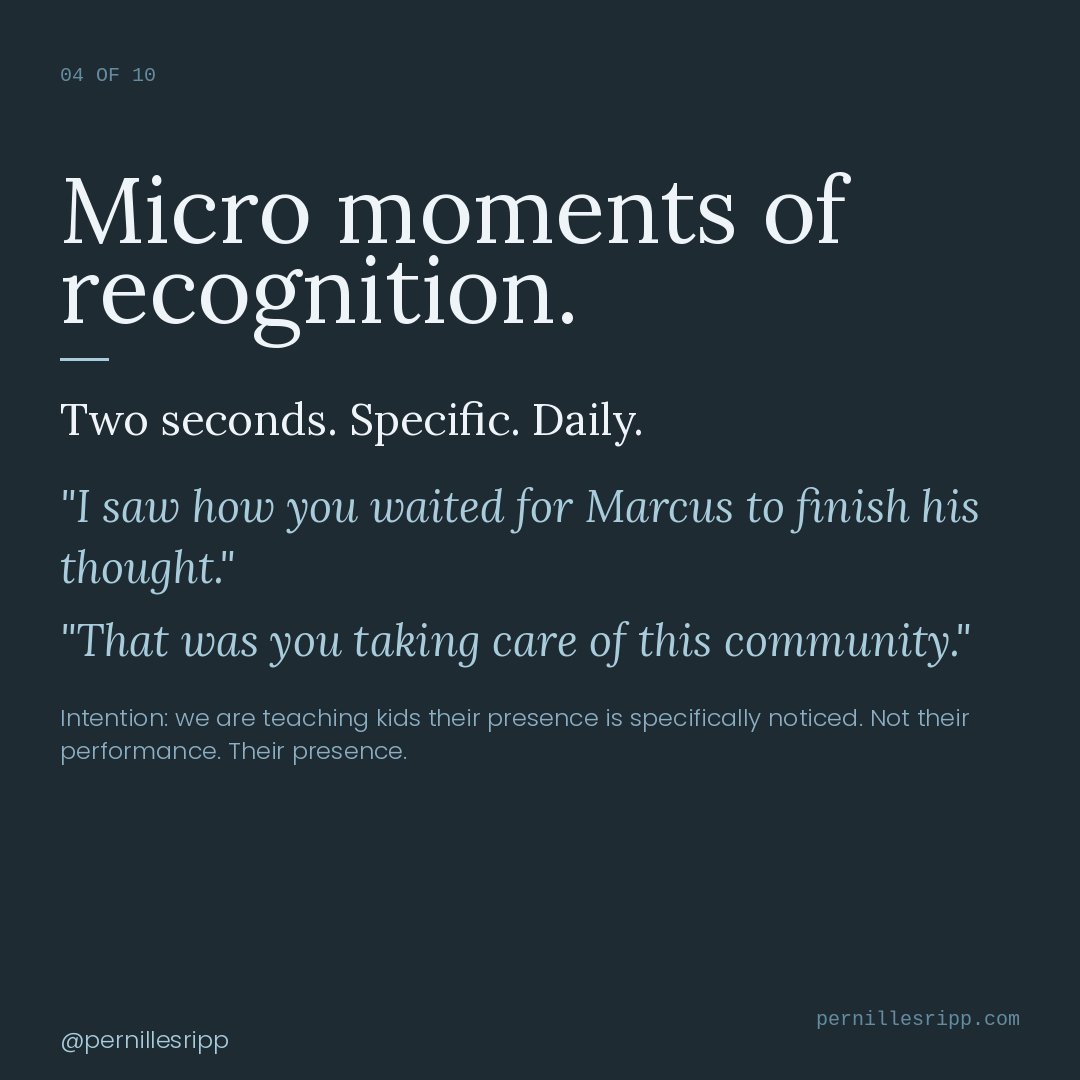
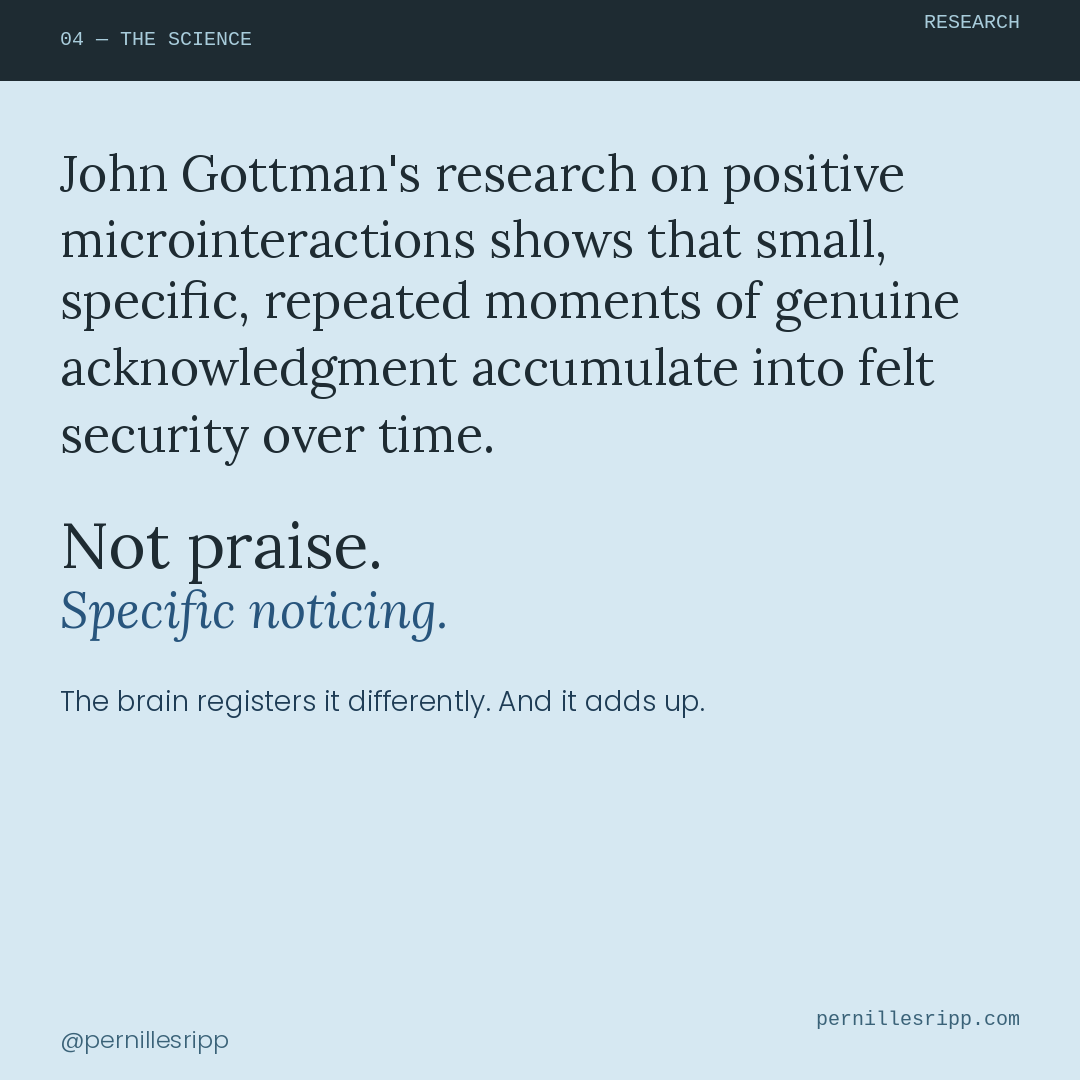
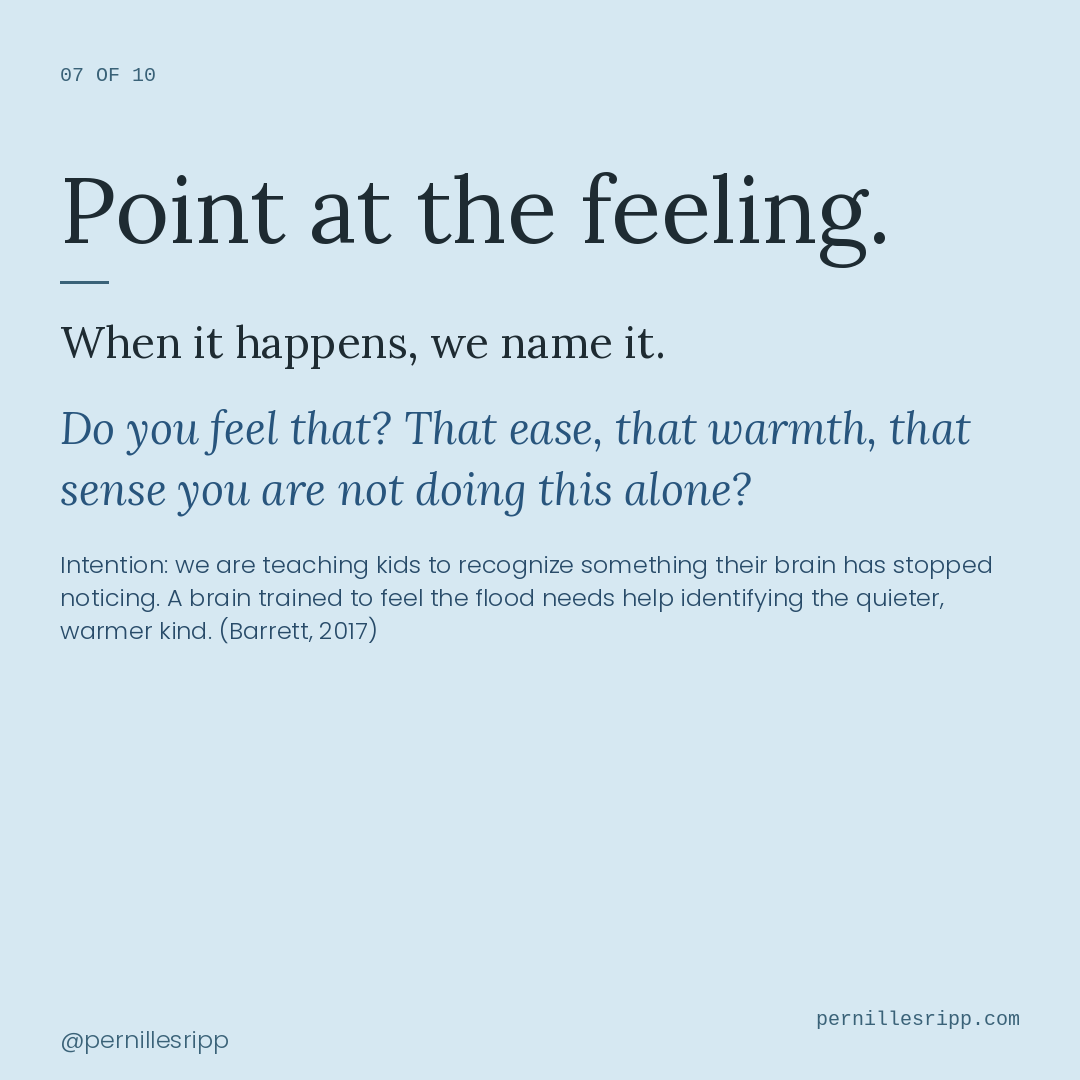
That starts with naming those moments out loud when they happen. Because some of our kids have genuinely lost the reference point for what real belonging feels like, and they need us to point at it and say: this, right here, this is the thing.
Are we asking what is wrong with these kids?
Or are we asking what it looks like to build real community in a room full of brains that have forgotten how to feel it?
Because once we shift that question, everything else begins to shift too.
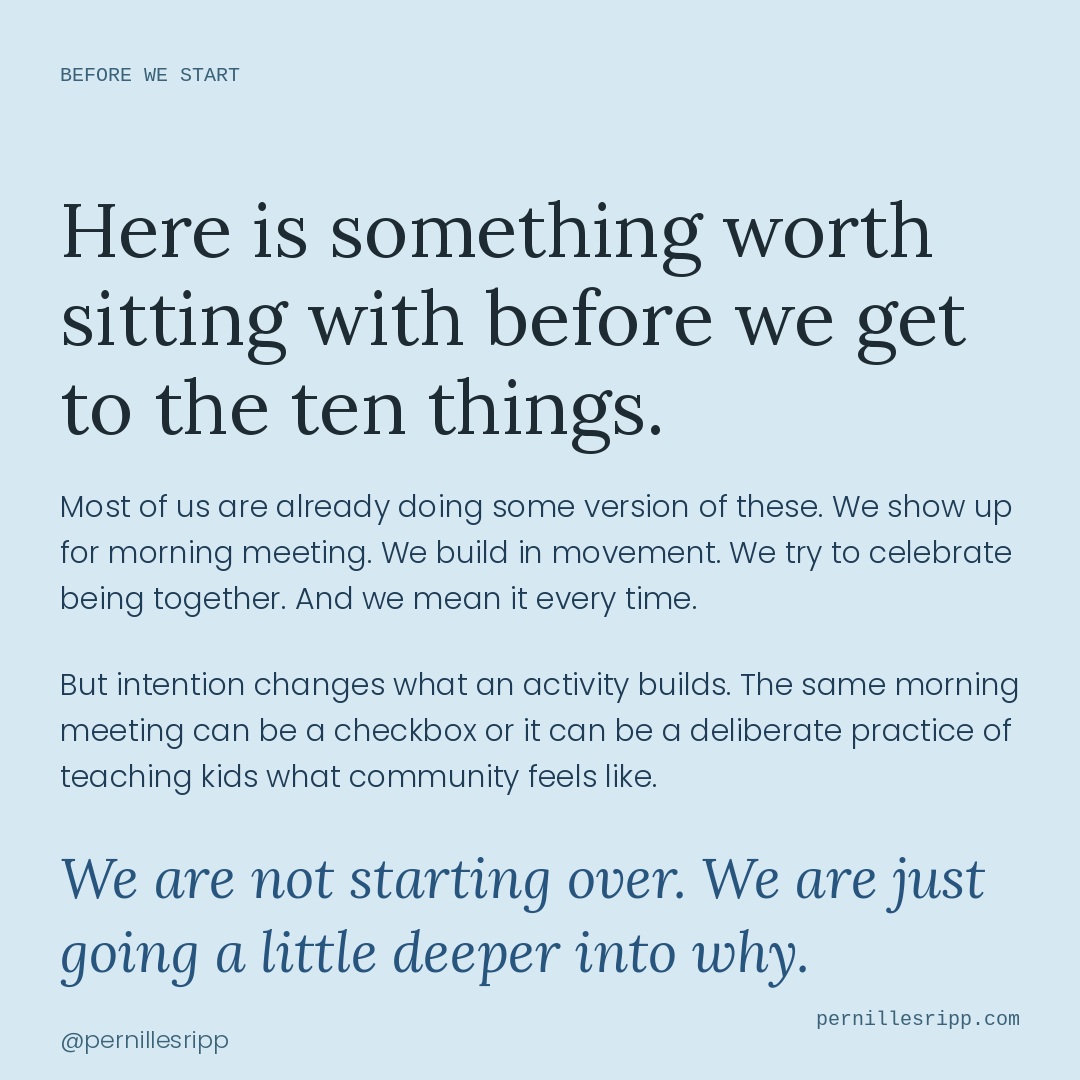
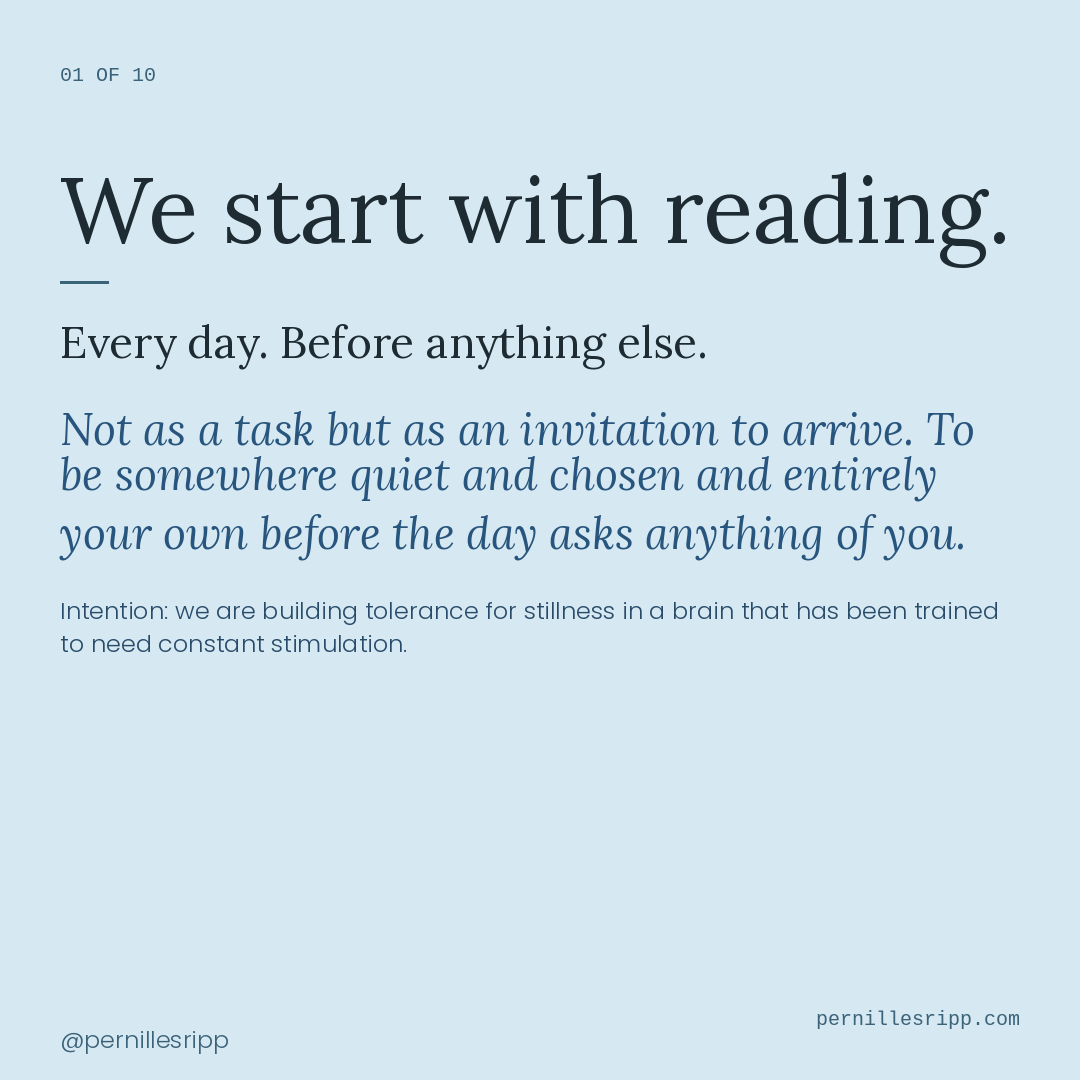
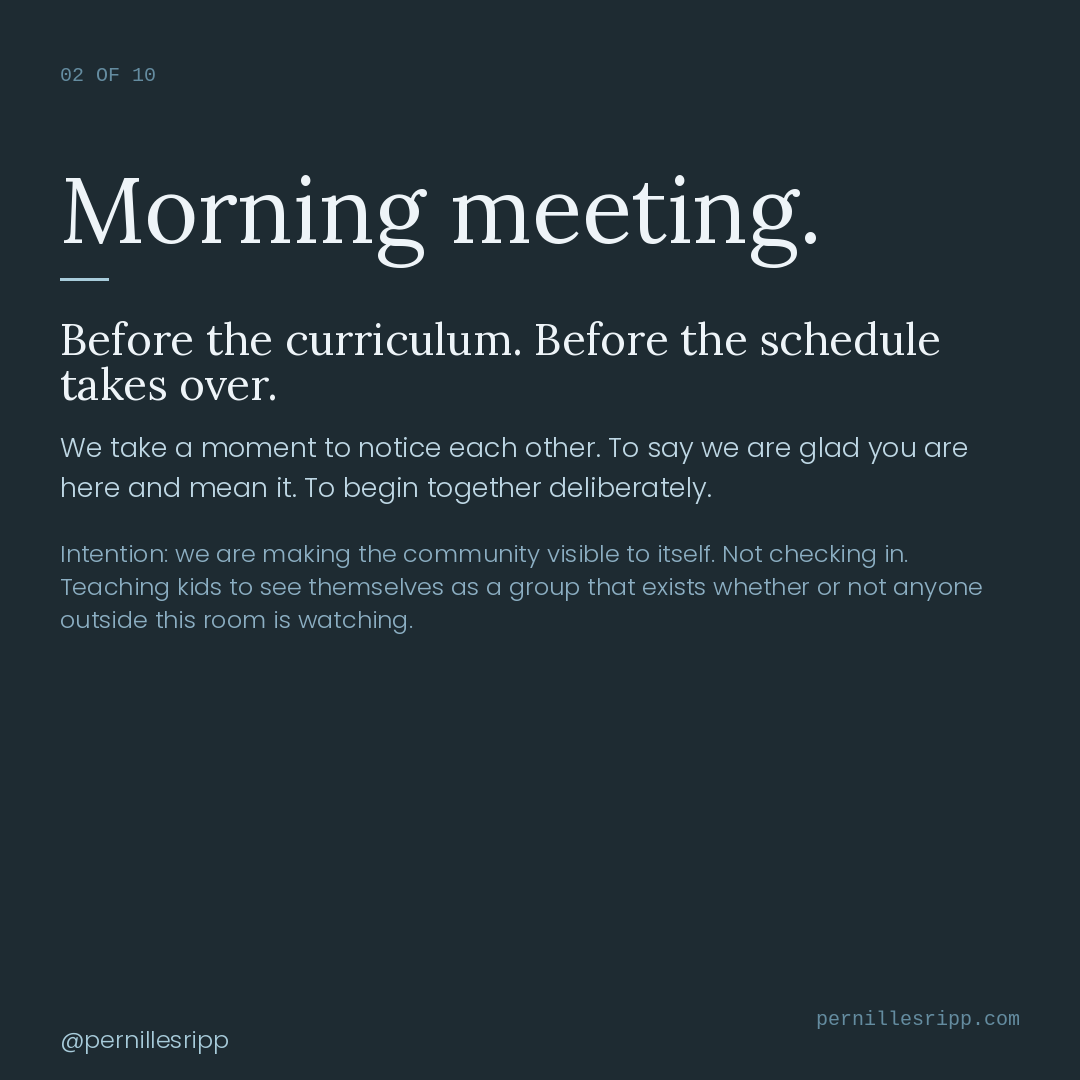
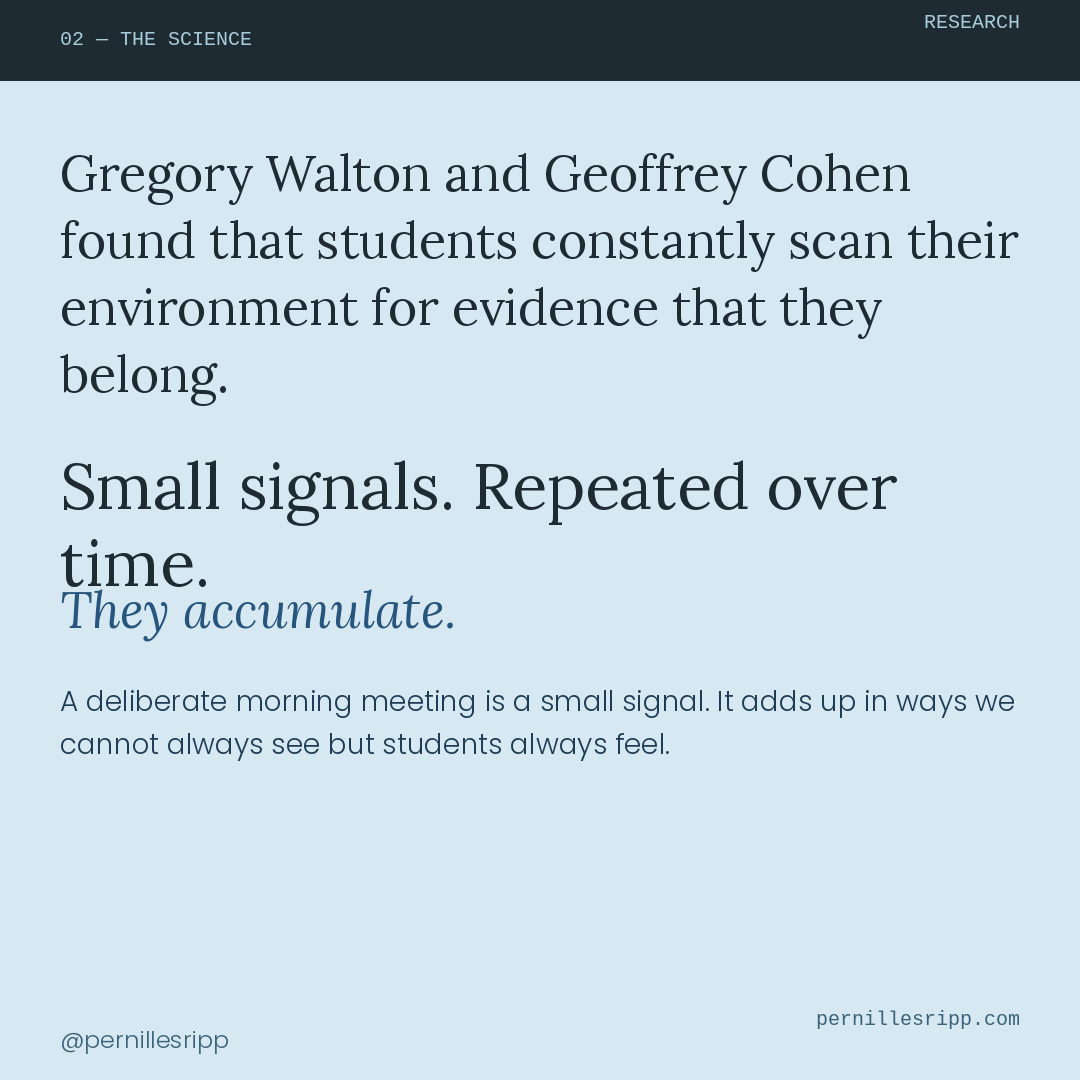
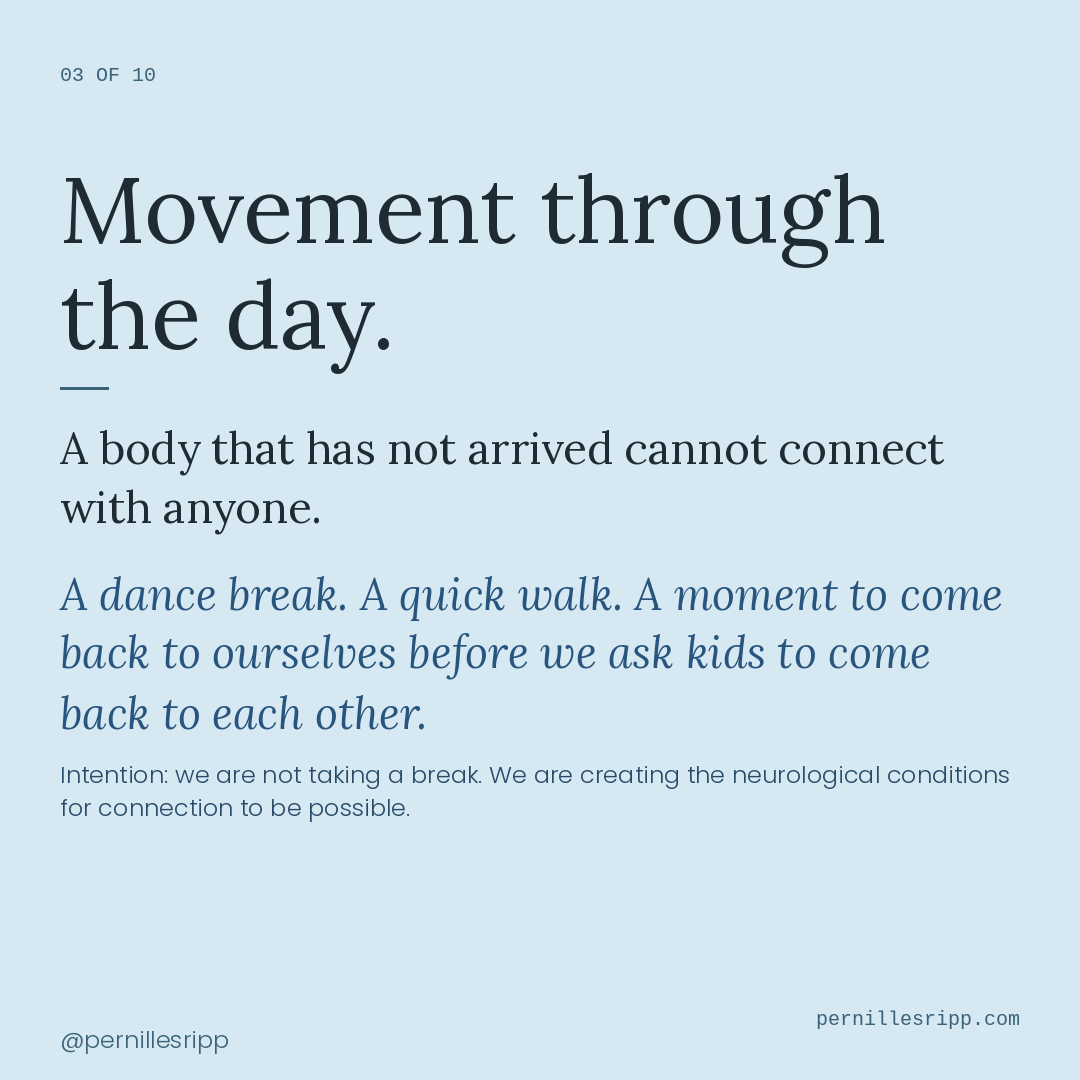
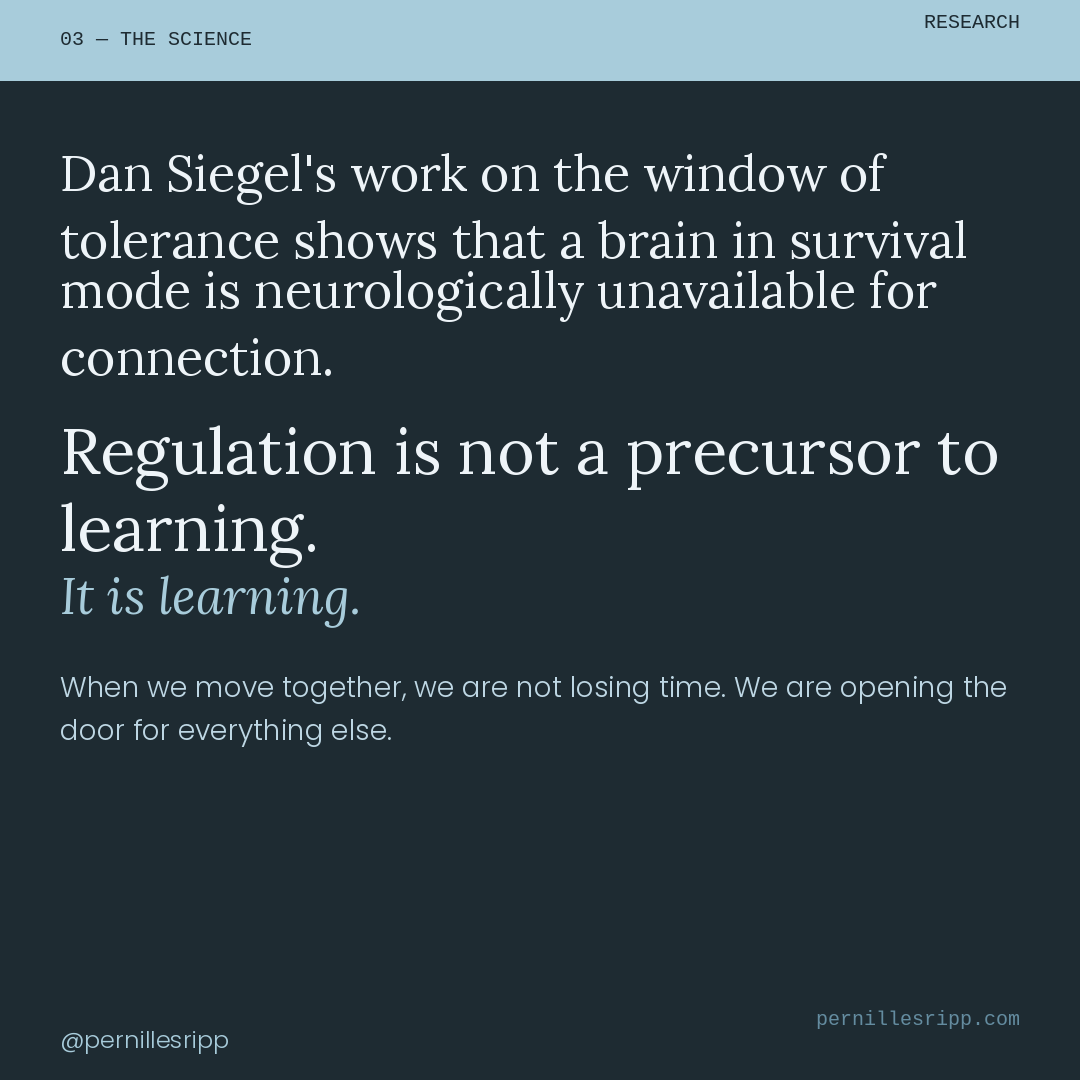
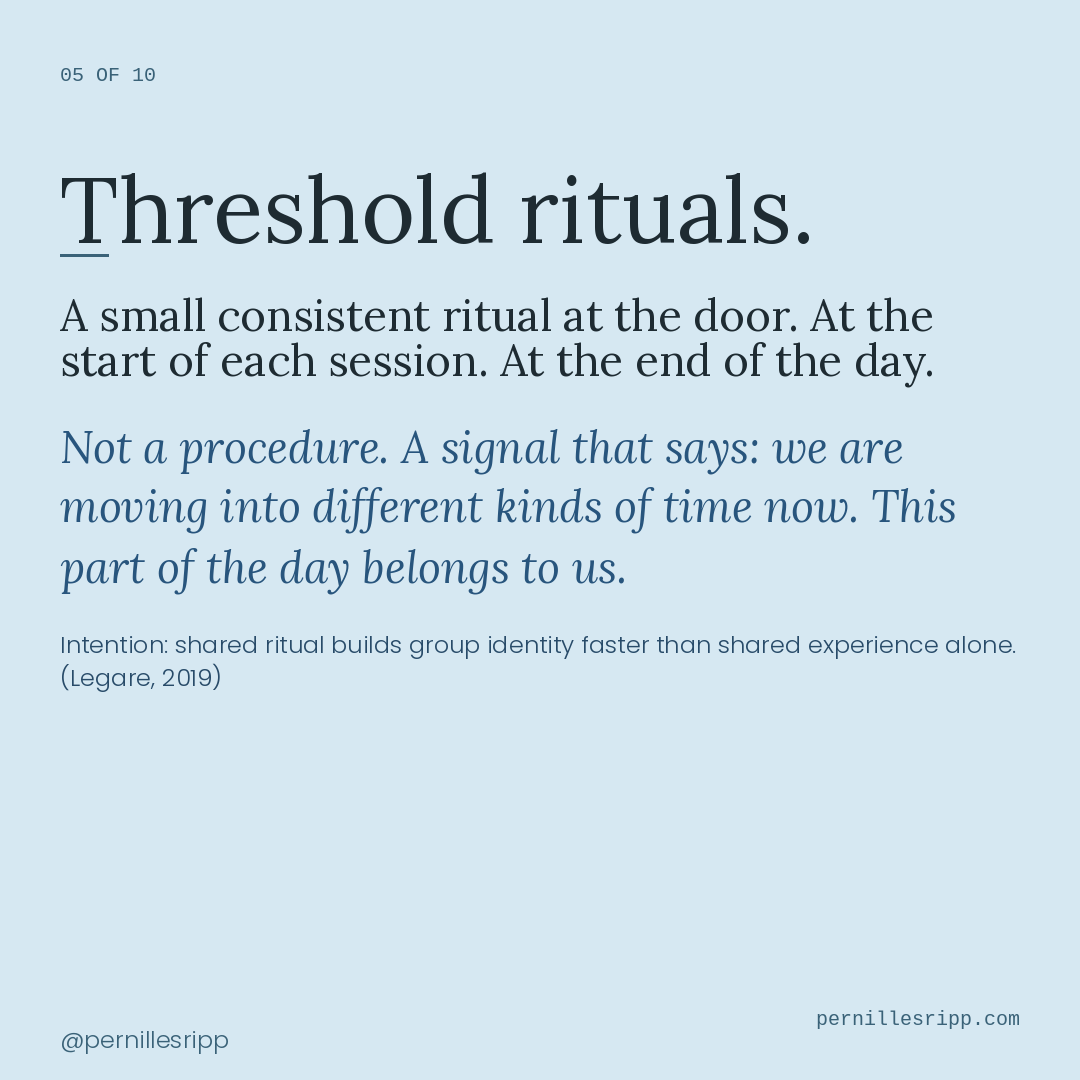
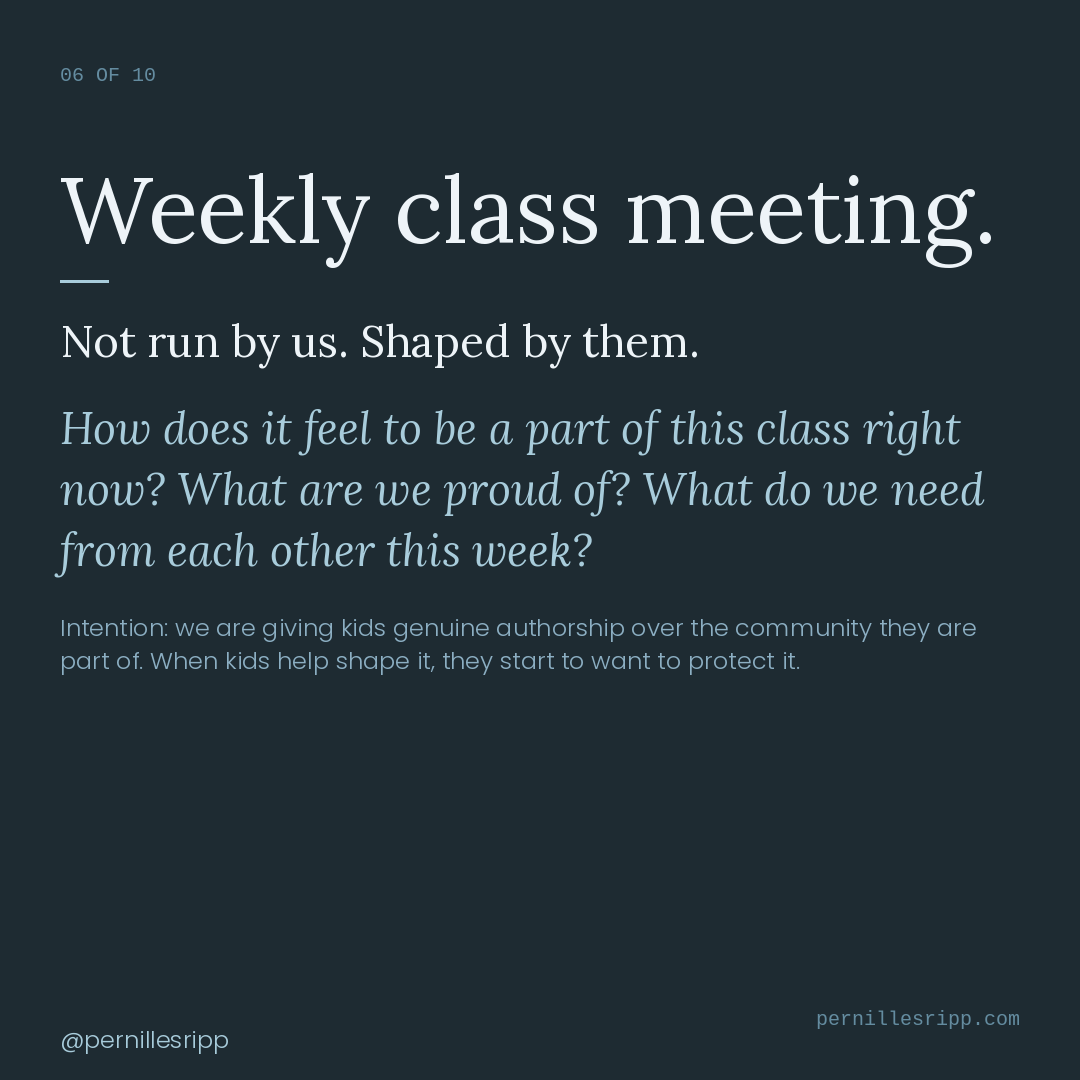
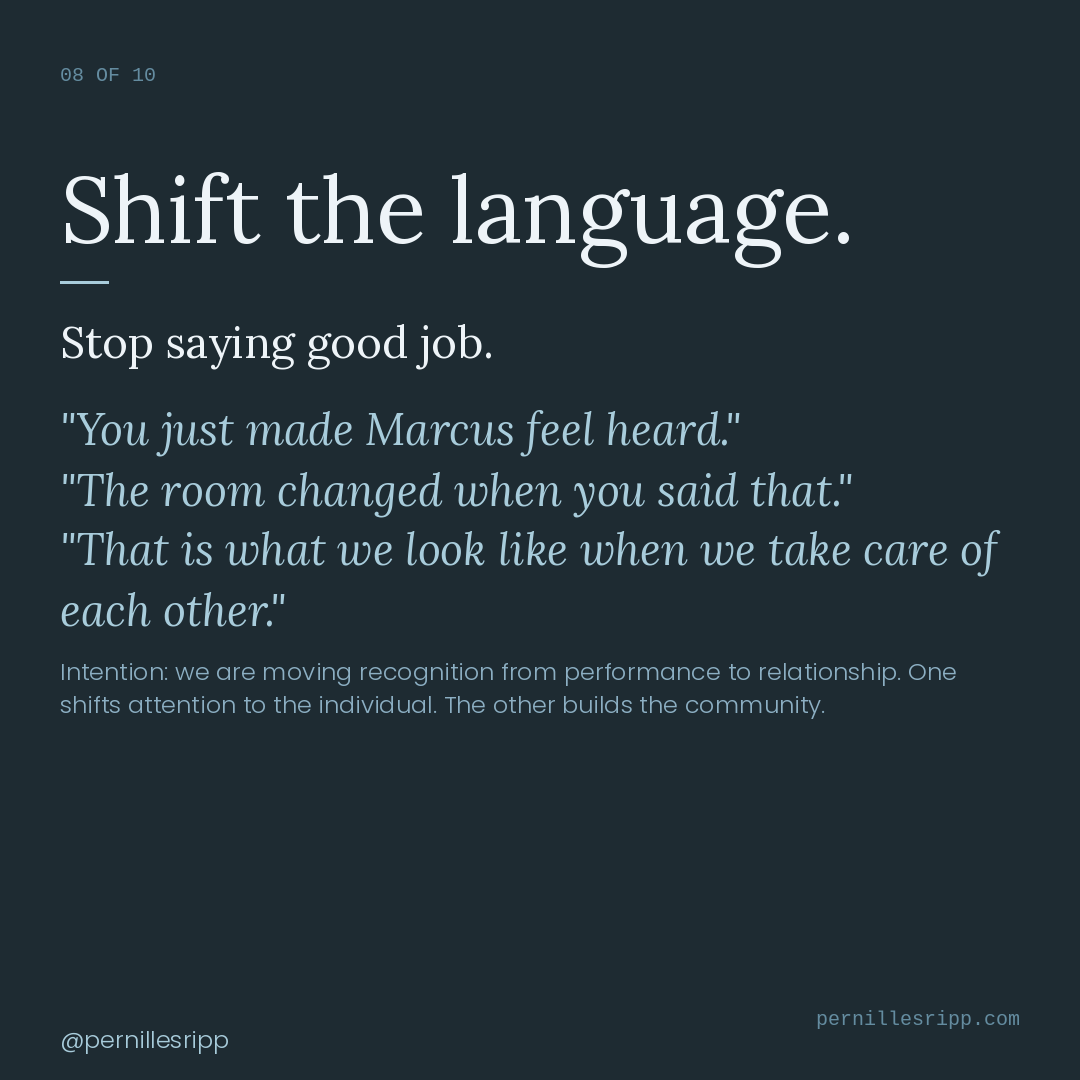
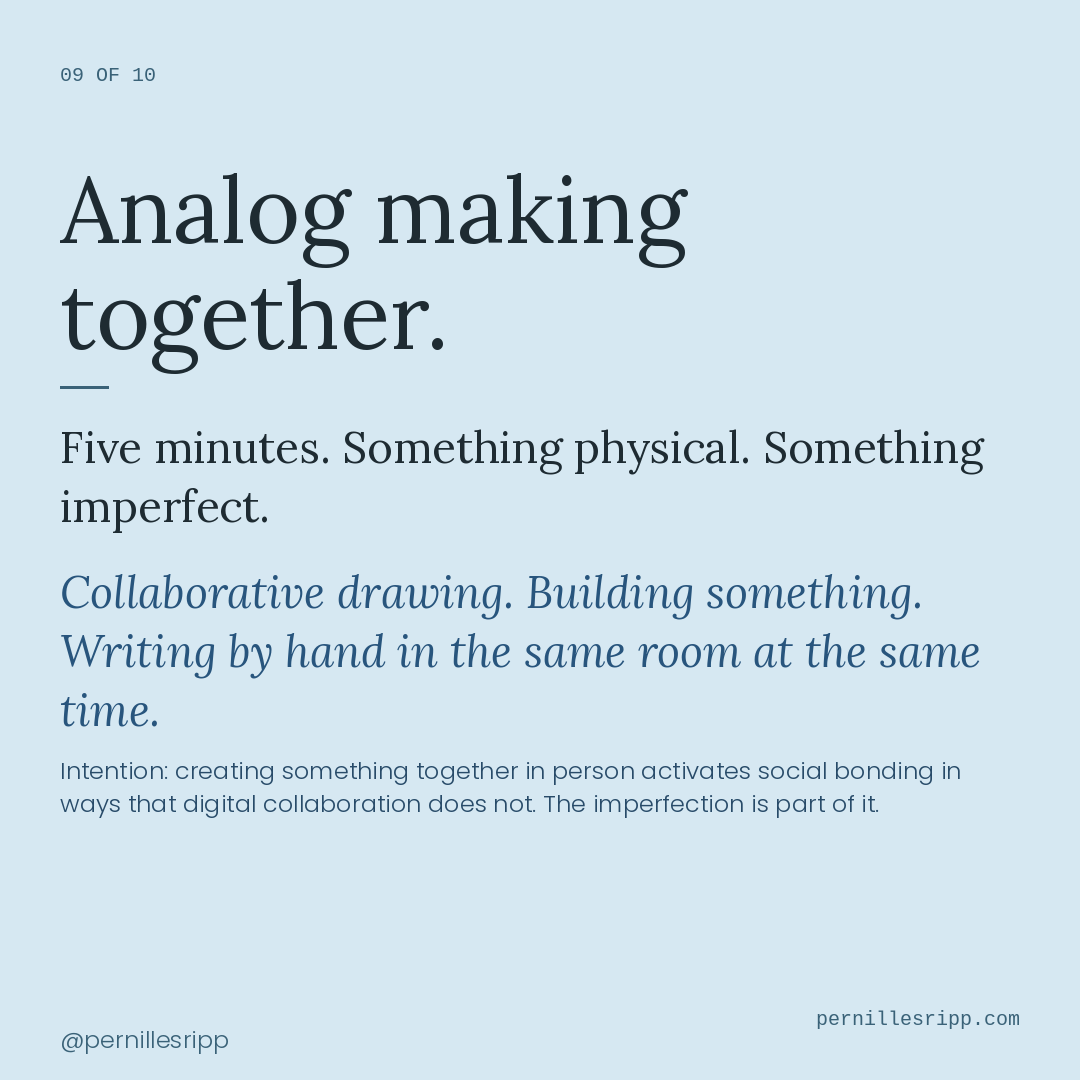
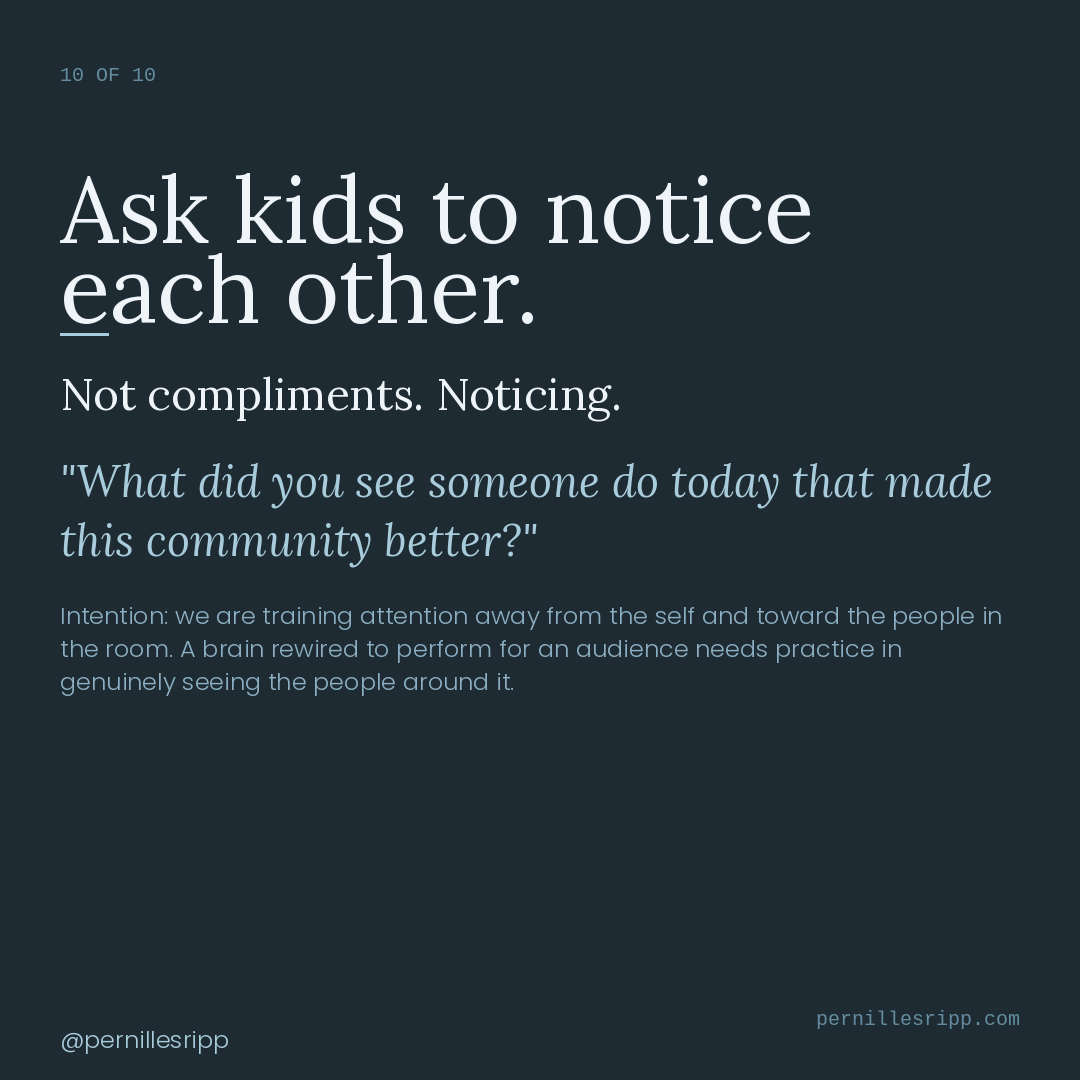
If you are wondering where to start, I have put together ten practical ideas below. Each one small enough to fit inside the day you already have and grounded in the research that helped me understand what we are actually up against.


April 23, 2026
How to Combat Summer Reading Slide with Students
I have 43 school days left and I can already feel it. That quiet guilt that starts sneaking in sometime around May. The one that whispers I did not do enough this year. That the readers in my care will walk out that door in June and the reading lives we built together will quietly unravel over the summer and somehow that will be on me.
I have been a teacher long enough to know that feeling well. And I have also been a teacher long enough to know that some of it is a lie.
The summer reading slide is real and the research is probably the reason why many of us carry this guilt. The largest national study in the US found that 52% of first through sixth graders experience summer learning slide, losing an average of 39% of their school-year reading gains over a single summer (Brighterly, 2025). Students in grades 3 to 5 lose roughly 20% of what they gained during the year, and younger readers are most at risk because decoding and word reading skills are particularly susceptible to decay without frequent practice (Scholastic). In Denmark, Hans Henrik Knoop at Aarhus University puts it plainly: seven weeks is a very long time, and what happens neurologically when you stop practicing is that you forget. The brain deteriorates when you do not use it. Danish research confirms that the gap between strong and developing readers widens over summer specifically because strong readers keep reading while others do not (Folkeskolen.dk).
That is the slide. And here is the part we need to sit with: the research is equally clear about what drives it. What happens inside a child’s home matters enormously. Whether the adults in their home prioritize reading, whether they have quiet and time and someone who models what it looks like to reach for a book, those things shape a summer in ways we simply cannot reach from our classrooms. The socioeconomic realities of our students’ summers are real. Some of our kids are working. Some are caring for siblings. Some are navigating things we will never fully see or understand. And some simply don’t like reading.
That guilt we carry in August? A lot of it belongs to circumstances that were never in our power to change. We forget sometimes how limited our reach really is once that door closes in June. And naming that is not giving up. It is being honest about where our energy actually belongs, so we can stop spending it on guilt that was never ours to carry in the first place.
Because here is the thing. There are a few things still within our reach. Not all. But a few, and they matter.
Start with curiosity, not books. Before the last week of school, ask the readers in your care what they are actually curious about right now. Not what they want to read. What they are curious about. Dinosaurs, true crime, how engines work, why people get sick. Whatever it is, that curiosity is the thread to pull. Point them somewhere. A book, a magazine, a rabbit hole online. Curiosity is the door — we just help them see it is already open.
Get the actual book into their hand before they leave. Not a list. The physical book, checked out, going home with them. A list is an intention. A book already in their bag is a reality, especially on a Tuesday in July when boredom hits and there is nothing else to reach for. Talk to your librarian now, before the last week. Have books ready. Make the handoff personal because it is.
Write them a note. One sentence, specific to that child. Something that says you saw them this year, that you know something real about who they are as a reader. Kids keep those notes longer than you would expect.
Give them a short survey about people, not books. Ask them who in their life actually reads. Is there a teenager they look up to, a young adult, someone among the adults in their home who might talk books with them over the summer? Most readers have never been asked to think about this. The survey itself is the intervention. Help them name someone before they leave. That name matters more than any list we send home.
Lower the bar out loud, directly to them. Not always “read every day”. But “just keep trying”. Pick something up, put it down, try something else. The goal is a brain that keeps reaching for words all summer, even imperfectly. Tell them explicitly what counts to expand their preconceived notions. Graphic novels, audiobooks paired with the text, nonfiction articles even short ones online, digital reading, news sites written for kids, Wikipedia rabbit holes, chapter books on an ereader. All of it counts. Say it clearly.
And finally, give them a reading dare. Not a class challenge, one dare, one kid. Something specific and slightly ridiculous. A dare that is personal enough that they know you actually thought about them when you wrote it. Readers in our care need permission sometimes to approach reading as something that could actually be fun rather than something they are supposed to do.
We have worked all year to invite the readers in our care into reading, to support their reading lives, to help them see themselves as readers. We cannot control the summer. But we can make sure they leave knowing we believed they were a reader.
That belief is not nothing. Sometimes it is the only thing that carries them through to August. And that is worth holding onto, even when the guilt tries to tell us otherwise.
April 2, 2026
Reading Was Never Meant to Compete
We talk about reading as if it is in a race. As if every time a kid picks up a phone instead of a book, reading has lost a point. And I understand why we frame it that way. The competition feels real. YouTube, social media, every platform built around the endless scroll, they are extraordinary at what they do. The additives of a phone and everything that comes with it, the brain chemistry they tap into, the way they are engineered to keep you coming back, it’s a losing race, we cannot compete with that.
But here is the thing. Reading was never supposed to compete.
It is not a faster, quieter version of TikTok. It is not trying to win your attention the way an algorithm does. Reading is its own thing entirely. And the moment we stop treating it like a competitor and start presenting it to kids as something categorically different, something that exists in a completely separate space from their devices, everything about the conversation changes.
Reading offers quiet. It offers balance in a world that is otherwise relentlessly loud. It offers the health benefits we know are real, focus, empathy, stress reduction, the slow building of an inner life that is completely our own. But more than any of that, it offers something increasingly rare: A place where we do not have to perform.
How often does that happen?
With a book, no one is watching. Well, unless you are reading in public, of course. There are no likes, no comments, no version of yourself being constructed for an audience. You get to just be with a story. Not be judged. Not worry about what anyone thinks. That is a selfish indulgence, and I mean that in the best way. In a world that is constantly asking us to consume, to engage, to spend more time on their platforms, reading quietly says: this is for me. Just me. And the way it restores me is something I can’t let go of.
Giving kids the gift of reading is one of the few things we can offer them that pushes back against all of of the consumption and production. Not by banning phones or lecturing about screen time. But by showing them that reading exists in a different category altogether.
If we want kids to see reading as its own thing and not as a lesser version of entertainment, we have to change how we talk about it.
Stop framing it as the alternative to screens. When we say “put down your phone and read,” we immediately set up a competition reading will lose. Instead, talk about reading as something you do for yourself, not something you do instead of something else.
Talk about the privacy of it. Kids live remarkably public lives, even at young ages. I don’t envy my own children in any way when I think of the type of teen years I had, I am so glad there were no cameras ready to record at any moment. The idea that reading is a space that belongs entirely to them, where no one can see what they are thinking or feeling or imagining, is genuinely powerful. Name that out loud.
Celebrate the selfish part. Reading is one of the few things in a child’s life that is purely for them. Not always to improve their grades, not just to make a teacher happy, not to perform for anyone. Let them hear you say that. Reading is something you do because it feels good and it is yours.
Model the quiet. Let kids see you read. Not as a lesson, but as something you genuinely want to do. When they see an adult choose a book, not to be productive but simply to be still for a while, that lands differently than any message we could ever deliver. This is yet another reason to make your reading life public in some way.
Connect it to who they already are. Reading identity is not built through assignments. It is built through the experience of finding a book that reflects something true about you, or takes you somewhere you wanted to go, or makes you feel something you could not name before. Our job is to help kids find those books and then get out of the way.
The algorithm wants our attention and it is so easy to fall into. Social media wants your engagement. Every platform is designed to want something from you.
Reading wants nothing. It just waits.
That is not a weakness. That is exactly what makes it worth protecting and worth giving to the young people in our lives as the gift it truly is.
March 27, 2026
When a Child Says There Are No Good Books: A Tool for Conferring
All year I have been working with this one child.
A good reader. Bright. Funny. And yet he hates reading. Tells me there are no good books despite me bringing all my tricks. Book recommendations, book excitement, cheerleading and all of that.
And then I realized something.
It’s an ingrained habit now. A quick dismissal. Because if there are no good books then the work stops. The responsibility doesn’t sit with him. It sits with the circumstances surrounding him. There are no good books. What can you do?
So how do we break that pattern of dismissal?
Not with more recommendations. I’ve tried that. Not with more excitement or more cheerleading. I’ve tried that too.
I think we break it by handing the ownership back. Slowly. With small moves that ask something of the child rather than offering something to them. Moves that say I believe you can find your own way to a book. Let me show you what that might look like.
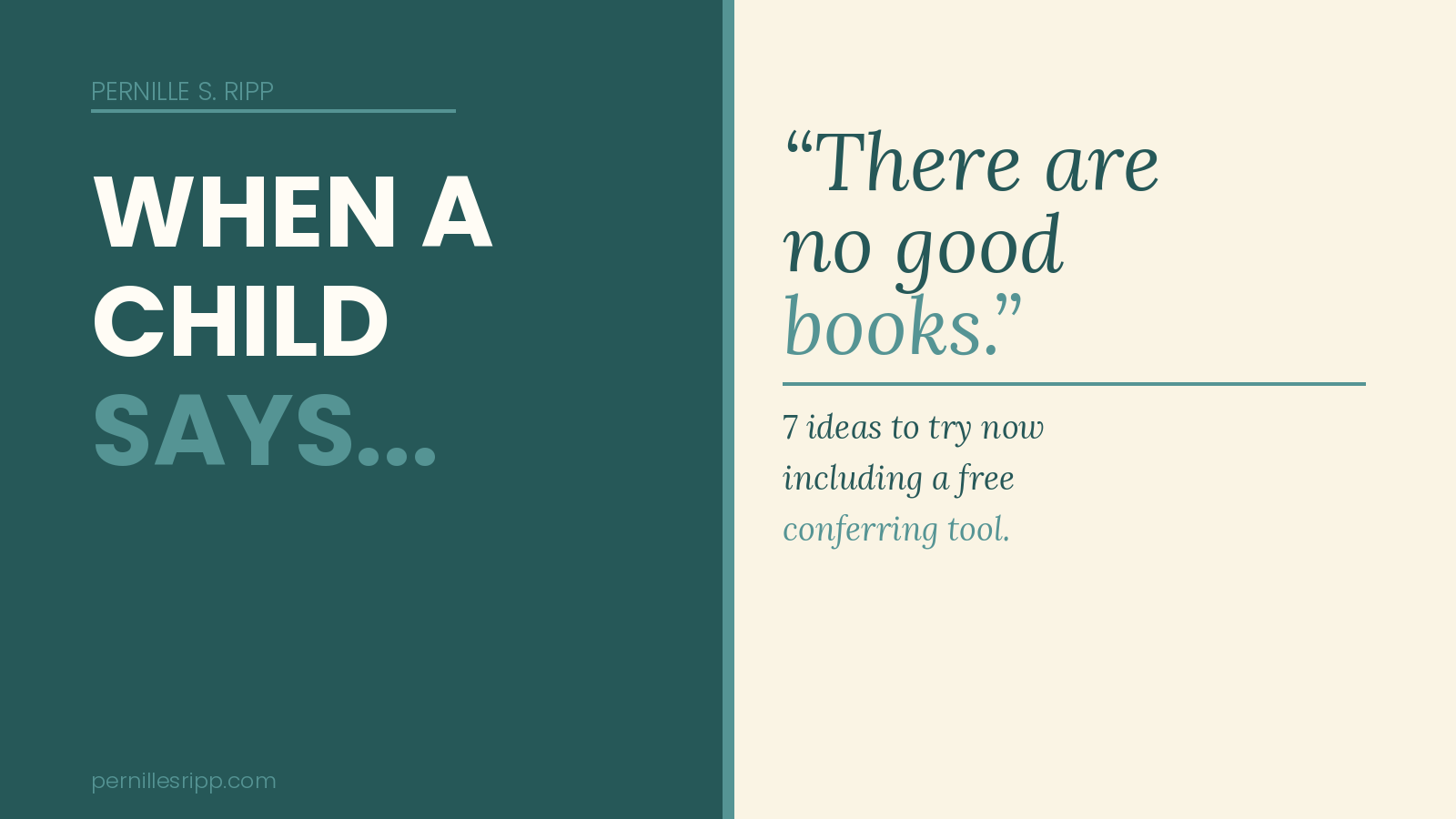
I put together a free conferring tool with 7 ideas for what to try. Not scripts. Not book lists. Just moves worth trying when you hear those words and I shared them on Instagram. I thought they would be worth sharing here too.
Link: When a Child Says There Are No Good Books — 7 Ideas to Try Now
The goal was never for them to need us to find the book.
It was for them to trust themselves enough to find it.
March 20, 2026
When a Child Says They Hate Reading: What to Ask Next
It seems, no matter what I do, it still happens. Year after year.
I started this work in 2010 and the voices were smaller then. Present but quiet. Now, with passive consumerism, with the need to be constantly entertained, with the pressures of life growing for so many kids due to inequity, it seems to have grown to a cacophony of voices. Eagerly chanting. Even from my 1st graders. Before they had even fully learned to read, they would say it.
I hate reading.
I know I cannot be the only one.
So what do we do? How do we speak to them in a way that shows we are actually listening — and also that it doesn’t have to be this way?
I don’t think the answer is a better book recommendation. I don’t think it’s making reading more fun or more gamified or more rewarded. I think it starts with a question. The right question. One that treats what they said as information rather than a problem to solve.
I’ve been collecting those questions for a while now. The ones that seem to open something up rather than shut it down. The ones that get underneath the “I hate reading” to whatever is actually being said. And I posted them on Instagram, and it seems like I wasn’t the only one who needed ideas for this work.
So here, I put them together here as a free conferring tool, something you can print and keep in your folder for those moments when a child says the thing and you want to respond with more than a recommendation.
Download: When a Child Says They Hate Reading — What to Ask Next
It won’t fix everything. But it might start a different kind of conversation.
March 14, 2026
Two Different Loses
What we track. And what we miss.
I keep thinking about the ones who came to us loving books.
You know the ones. The kids who wanted to tell you everything about what they were reading, who recommended titles before you could recommend them first, who couldn’t walk past a shelf without stopping. Somewhere between then and now, they faded into the wallpaper. They still sit in our rooms. They still do the things we ask. But the books? The books stopped mattering to them. Or maybe they stopped believing the books were for them. And somewhere along the way, we stopped noticing that the energy we had poured into them as readers had quietly drained away.
That’s the loss I want to talk about. Not the child who never loved reading — we see that child, we have some ideas for that child. I’m talking about the reader we already had. The one we thought we didn’t need to worry about anymore.
We have systems for the child who stops reading.
Logs. Conferences. Check-ins. We notice when the pages stop turning and we intervene. That system exists because we built it, and mostly it works.
But there’s a second loss we almost never catch. The moment a child stops sharing their reading with us. Stops recommending. Stops bringing things to our desk. Stops starting conversations about books at all.
Those are not the same loss.
A child can still be reading every night and you can have no idea what their reading life actually looks like anymore. Because they stopped bringing it to you. And there was no system to catch that. No log for the conversation that didn’t happen. No conference protocol for the reader who went quiet.
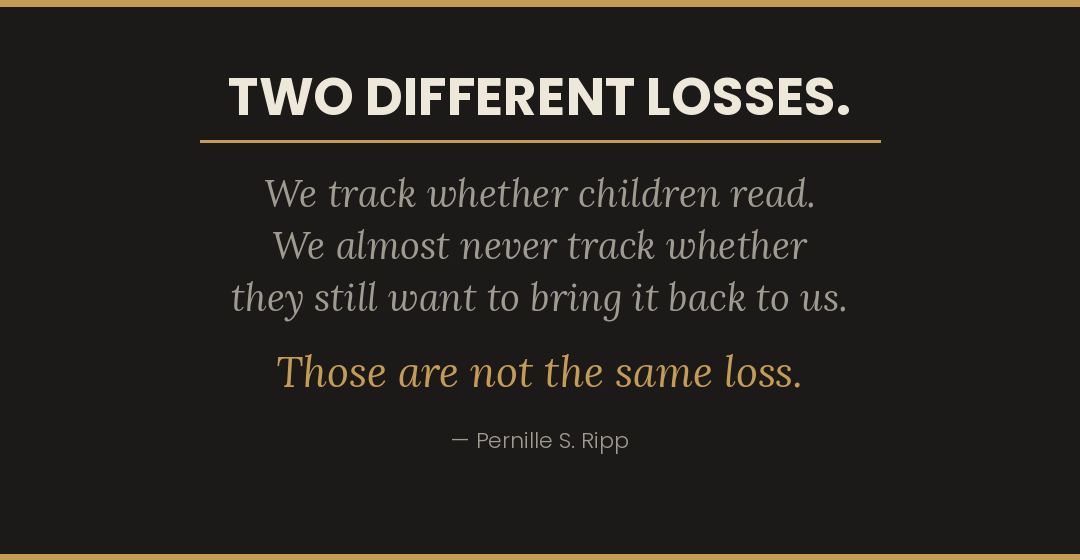
We track whether they read. We don’t track whether they still want to bring it back to us.
And those are two different losses.
So why does it happen?
I don’t think it’s one moment. And I don’t think it’s about judgment, not usually. Most teachers I know aren’t dismissing the readers who go quiet. They’re just not getting to them. Because the curriculum needs covering. Because there’s an assessment coming. Because the things that get measured are the things that get time, and a quiet conversation about who a child is as a reader — what they’re choosing, what they’re abandoning, what they’re curious about — that conversation isn’t on anyone’s rubric.
And children notice.
Not in a conscious way. But they are always reading the room. And what the room tells them, slowly and consistently, is that their reading life — the one they own, the one they choose, the one that exists outside of any assignment — doesn’t need to be brought here anymore. Nobody is asking. Nobody has time. And so they stop thinking of themselves as people with a reading life worth talking about. They hand the agency back. Quietly. Without making a fuss.
And we let them. Because the system made it easy to let them.
That’s the loss I can’t stop thinking about. Not the reading. The sense of self that goes with it.
And yet. We are not helpless here.
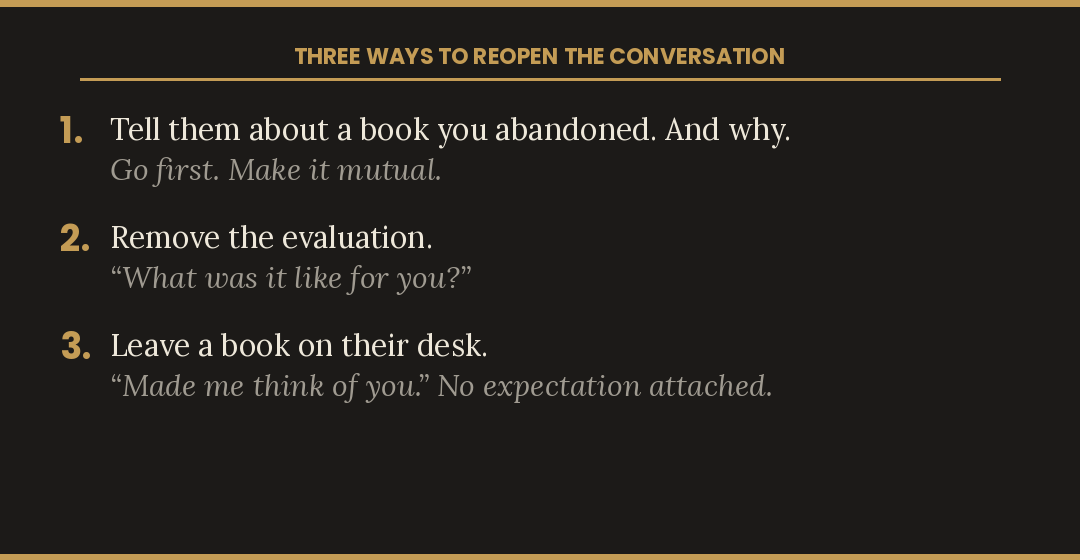
The first one is simple. Go first. Tell a child about a book you abandoned. Not a book you loved — one you put down and walked away from. Tell them why. This does something important: it lowers the stakes entirely. It says reading is a relationship between a reader and a book, not a performance for an adult. And it makes the conversation mutual. You went first. Now it’s safer for them.
The second move is harder because it requires resisting a very natural instinct. When a child does start to share, don’t evaluate. No “did you understand it?” No comprehension check disguised as curiosity. Just: “What was it like for you?” That question has no wrong answer. It hands the agency straight back to them. And children who have learned to be guarded around reading conversations will slowly start to open up when they realize there’s no trap waiting.
The third move costs nothing. Find a book that genuinely makes you think of a specific child — not because it’s at their level, not because it would be good for them, but because something about it just reminds you of them. Leave it on their desk. A small note: “made me think of you.” No expectation. No follow-up. No asking if they read it.
Just the book. And the message that you saw them.
That’s sometimes enough to make a child remember that they are a reader. That someone noticed. That it still matters.
We cannot get those years back. The ones where they loved books and we were too busy to notice when that changed.
But we are here now. And so are they.
That’s enough to start.
January 26, 2026
Lessons in Genre—and in Failure
We have been studying genres in 3rd grade.
Something so simple, and yet such a powerful key to unlocking yourself as a reader. For some students, these classifications are crystal clear; they already have the language that wraps around them as readers. For others, the designations are murky at best—confusion between fiction and nonfiction (which I completely understand in this day and age), and even what it means for something to be a genre at all.
It’s also a practical challenge: how do we turn a messy classroom library into something students can actually navigate? Sorting books by genre is a powerful way for students to deepen their understanding of different types of texts and make the library itself more accessible. It is something I have believed in for years.
And so, we persisted in the work. We sorted texts and discussed what makes something realistic fiction, fantasy, horror, or nonfiction. What separates fantasy from a scary story? How do we know realistic fiction isn’t just fantasy in disguise? Their questions were legitimate, and they shaped the work we did.
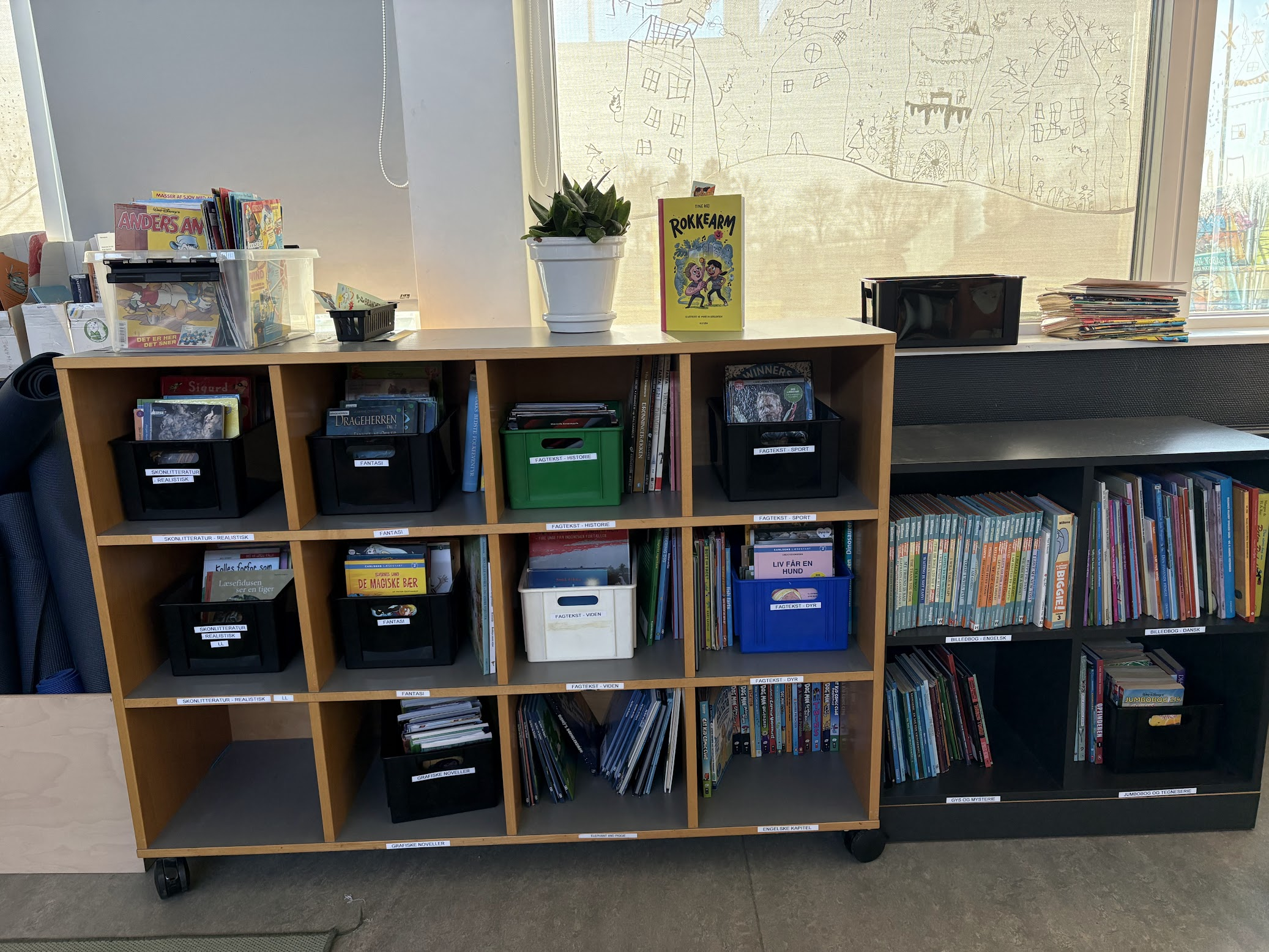
To truly see their comprehension in action, we turned to our modest classroom library. Those who have followed my work from before my move to Denmark may remember my vast classroom collection—books spanning walls, even rooms. I left that library behind for the teacher who took over my classroom, knowing it would have more use in the United States than it would here.
But that also meant starting over.
Books in Denmark are expensive—often more than 200 kroner (around $20) even for an easy reader. Classroom libraries are not seen as a priority. School libraries aren’t either in some places. So building a collection has been slow, relying on goodwill finds, donations from our amazing librarian and some families, and a few contests won along the way. It is nothing impressive. It may never be. But it is real, and it reflects the reality of many educators.
And it is a place to start.
I teach two 3rd-grade classes in Danish: one I have been with since 1st grade, and another added this year. With my “old” class, the task was simple. After our genre lessons, I introduced the project: let’s sort and categorize our classroom library using the knowledge we now have. We decided on which genres and even subgenres we thought we would have, discussed their abbreviations and then launched into the process itself; I would hand them piles of books, they would sort them by the genre or format they believed they belonged to by creating piles on tables, I would create labels, and together we would shelve them.
It took two lessons, but by the end our classroom library was mostly sorted correctly, and the students were eager to dive back into books they had discovered along the way.
Buoyed by this success, I brought the same process to my new class. I knew they might need a little more guidance, but surely my well-planned lesson would be successful.
It was not.
It was frustrating, confusing, and messy—and through no fault of the children. They tried their very best to figure out what we were doing and to do it well, as they always do. But the pieces they needed simply weren’t there yet.
So I took time over the weekend to think it through and quickly recognized my mistakes. They needed far more scaffolding. They needed the work to stop feeling like a competition over who could get through the most books. They needed to lean on each other for guidance. They needed explicit permission, as always, to ask questions and to not be sure out loud.
On a day when I knew I had them for three periods in a row, I knew we could afford to get messy. I reintroduced the concept and explained the new plan.
Two students, who seemed to have genre determination skills firmly in place, sat at the lead table. Their job was to decide whether a book was fiction or nonfiction and to venture a guess at its genre or format (graphic novels and comics were sorted onto their own shelf). They passed their books to three other students, who double-checked the decision and delivered them to the appropriate genre table. Each genre table was staffed by a student whose job was to agree—or disagree—and send the book back if needed.
I placed students based on their perceived strengths within a genre. Some worked alone. Some sat near related genres so they could support one another. And then we began.
At first, there was hesitation. Were they really sure that a certain book belonged in a certain genre? How could they even tell again?
But as the process continued, their confidence grew. Their decisions became more certain. Help was offered more freely. It was still messy. It was still a bit chaotic. But the process worked.
Not because I taught it better—but because I reconsidered my scaffolding. I reconsidered the conditions. I stepped away from my own attachment of feelings to a lesson—failure—and recognized that this, too, was success: realizing, once again, what didn’t work and adjusting the conditions., with the only failure being to not do it again.
In the end, this wasn’t really about genres, or even about sorting a classroom library the “right” way. It was about slowing down enough to notice where my teaching had raced ahead of my students, and choosing to meet them where they actually were. Understanding didn’t come from efficiency or speed, but from time, conversation, and the safety to be unsure out loud.
The messiness didn’t disappear when I changed the structure.
The noise didn’t go away.
But what did change was who carried the thinking. Students leaned on each other. They questioned, disagreed, and revised their ideas together. And in that space, comprehension began to take root.
We now have a tiny little classroom library, where the gaps in what we don’t have are stark, and yet the hope of finding books to read feels big. Students get to look at the bookstacks and decide which books to keep and which to let go.
It’s a small piece, but one that further cements their identity as readers—students who now know that if they understand the genres they enjoy, they can seek out those books first. Students who have taken a big step toward knowing who they are, and perhaps even more importantly, who they want to be as readers.
It may have taken longer than expected. It may have veered off course. But those hours spent were hours I know were worth it.
So for now, the reading continues.
January 18, 2026
This Is the Work
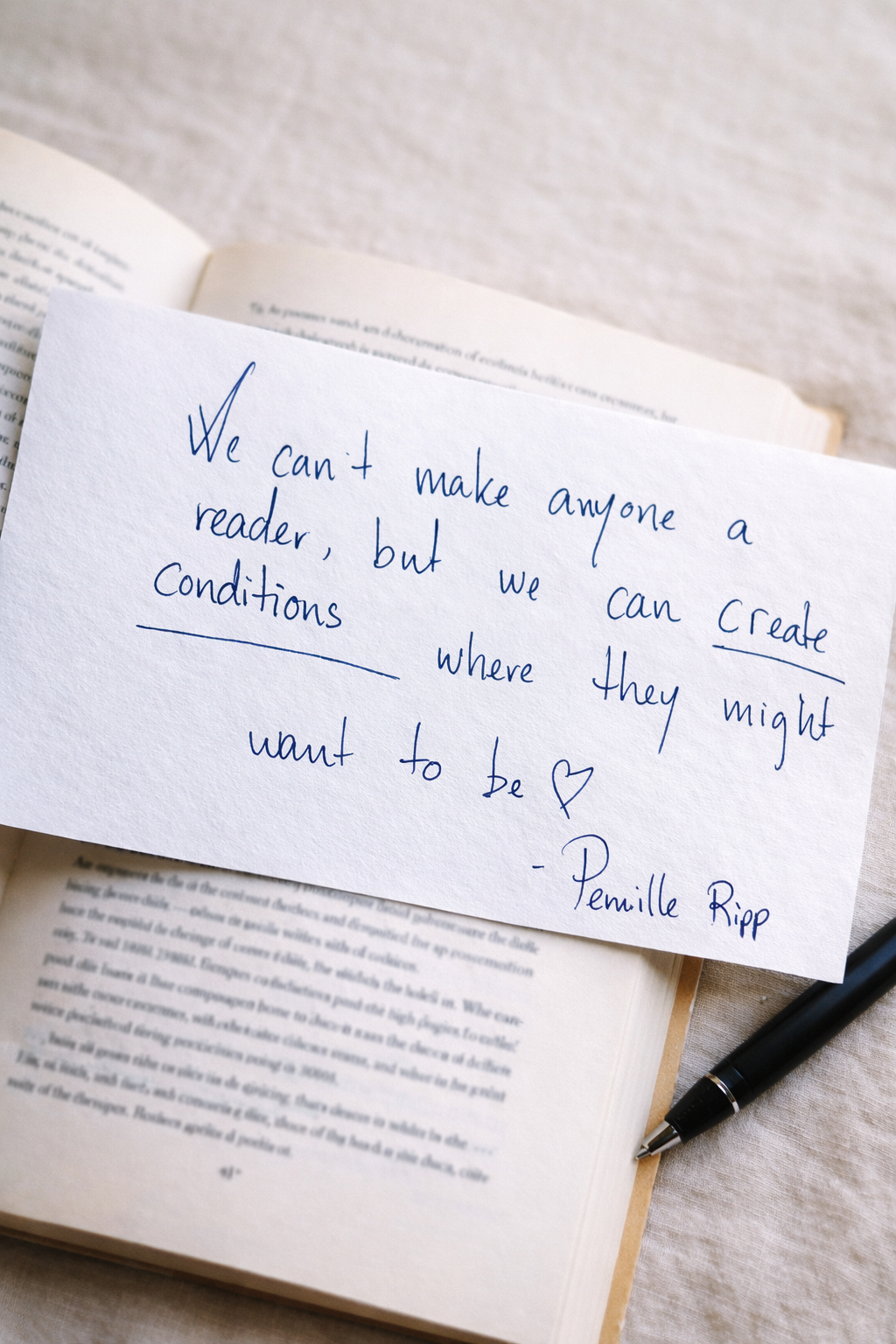
This week, I was invited to sit down with with Dr. Sarah Sansbury, Leah Gregory, and Janette Derucki for the Can’t Shelve This podcast (releasing February 10th). The invitation was simple: come talk about reading culture. About what we actually do in our classrooms and schools that either invites children into reading or quietly pushes them away.
That kind of conversation is my favorite. Not because I have the answers, but because I am still in it. I am still trying to build something that works for the kids in front of me. Much like so many others, I wonder if what I am doing is actually making a difference.
And as we kept circling those ideas, this kept rising to the forefront for me:
We can’t make readers. But we can create the conditions where they might want to be.
That really is the work.
Not forcing reading.
Not rewards.
But building spaces where children feel safe enough, curious enough, and seen enough to want to read.
That’s the heart of it.
Because so often, when we talk about getting kids to read, the conversation turns to compliance. Comprehension work. Logs. Levels. Programs. Points. Prizes. Proving that you are reading. Proving that you understood. Proving that you are a reader to begin with. More minutes. More data. More pressure.
And yet, none of those things create readers. Not really.
They create performers.
If we want reading to matter, then the culture around reading has to matter. The environment has to say:
You belong here.
Your choices matter.
Your pace is respected.
Your identity is not up for negotiation.
But before we can build better conditions, we have to look honestly at what we already have. Do we even know what the reading culture is in our spaces or do we just assume?
So some questions I use to take the temperature:
Who is reading in my room? Only the kids who already love it?What kinds of books are visible? Do they reflect the kids in front of me? Do they reflect the world?What happens when a child says, “I hate reading”?Is reading something they do, or something they only are told to do?Are students trusted with their own reading decisions?Do I celebrate growth, or just volume and level?Who shapes our reading experience the most?Do they even feel like readers? And how do I know?And then we get to work.
So we go back to the basics, that are really not so simple after all.
We protect choice.
Not “choice within a level.”
Not “choice after you finish this.”
Just…choice.
Let students pick what they read, when they abandon a book, and what kind of reading feels meaningful.
Because identity grows in the places where we feel trusted.
We build book collections that reflect the world.
Keep adding. Keep weeding. Keep listening to what they reach for. And we fight to protect those choices.
We remove reading as a punishment or somethng that always has to be proven.
No logs.
No always answering questions.
No reading “to earn” something. If reading only happens because they have to, then they never get to discover that they might want to.
We talk about books like they matter. Because they do.
And we protect the time to read. We would never go to math class and not actually practice math, so why are we told to limit independent reading.
Share what you’re reading. Share when you are reading, when you are not. Tell them what reading helps you with.
Let students share what they’re reading.
Have conversations, not quizzes. Protect independent reading time for all.
Make reading social, human, and alive.
And we make it safe to not be a reader yet.
Students need to know:
You are not behind.
You are not broken.
You are not failing.
You are becoming.
That is the only way they stay open long enough to grow.
It’s not flashy. It doesn’t come in a box. It doesn’t produce instant results.
But it honors students as readers in progress, not readers we are trying to manufacture.
Because the work is not about getting kids to read.
It’s about creating spaces where reading feels possible.
And then staying in that work, every single day. Even when the world tells you to stop. Especially then.
January 11, 2026
One breath at a time
I have the lung capacity of a 70-year-old.
Several years ago, I was diagnosed with a genetic deficit in my lungs and liver. One that can lead to emphysema, asthma, and a whole list of other things no one hopes to casually collect. It made sense. Walking up the stairs while talking would leave me breathless, still does. And yet, hearing that my lungs were not the way they were supposed to be was a quiet devastation. One more heavy thing to carry. A moment where my imagined ending shifted, where my future suddenly looked smaller, more fragile, than I had planned for.
And then we did what people tend to do.
We carried on living.
I noted how biking uphill became harder, how running became officially impossible (not that it was ever my thing), how nearly every cold turned into bronchitis or pneumonia, how exhaustion lingered long after the illness had passed. How my body kept whispering, something isn’t right, even when I was trying very hard not to listen.
And my fear grew. Because living beside your own mortality, really beside it, is exhausting. It’s scary. It makes you feel out of control.
A year ago, I realized I needed to change the trajectory. That I was living inside a self-fulfilling prophecy of decay. Because I knew biking would be hard, I didn’t bike. Because I knew exercise would leave me gasping for breath, it did, and once I was out of breath I stopped. I avoided the very things that might help because they confirmed everything I was afraid of.
But I also knew this: the constant current of stress, needed an outlet. And sugar wasn’t it. Alcohol wasn’t it. Tears weren’t it. Rage definitely wasn’t it.
A change had to come.
So I signed up for an introduction to CrossFit, bought actual trainers, and showed up — wildly out of my depth, unsure of what I was doing, and hoping no one would notice how hard breathing felt. I didn’t do it because I suddenly believed in myself. I did it because staying the same felt worse.
What followed wasn’t a transformation. It was resistance.
It was showing up fueled more by desperation and anger than motivation. It was loud, angry music. It was the fear of being the first to die in a zombie apocalypse. It was learning that I will never like running, or be good at it — and that this does not mean I can’t do it.
It didn’t come from a big training program. It came from small steps. From doing a little, resting, and then doing a little more. From learning that my pace is not a failure, but a necessity.
My pace. My way.
How much of change is exactly this?
Not the sweeping programs. Not the inspirational speeches. But lacing up your shoes (I promise this won’t turn into an exercise blog) and seeing how it goes.
So on January 1st, I made the goal that I wanted to be able to run one kilometer in a month. I turned to ChatGPT and asked it to create a plan. Its first suggestion was to warm up by running three kilometers.
And I couldn’t stop thinking about how familiar that felt.
How often do we ask for a small change and are handed an overhaul? A new program, new training, new language — when what we really needed was permission to start where we are. To try one thing. To begin without confidence, without mastery, without pretending this will be easy.
I see this all the time in education. We want to support children better, reach them sooner, help them regulate, belong, and learn. And so often, the answer becomes more: more systems, more steps, more expectations, more work for the adults — while the children wait for us to fix everything.
And then we wonder why we burn out.
Because the truth is, we cannot meet every child’s need. And that expectation, implicit or explicit, is impossible to carry alone. What we can do — what truly matters — is show up. Notice. Offer presence, consistency, and a small, safe step forward. For some children, just knowing that someone sees them, waits for them, or trusts them to make a choice is enough to shift something inside.
The children carrying so much anger, fear, grief, and overwhelm spill it into our shared spaces. They trust us enough to bring all of that mess into school — even when we cannot fix it.
This work rarely starts with big interventions. It starts with the smallest possible step. Not because it will fix everything, but because it might shift something, and because we, too, need to survive alongside them. And so we start small.
Letting a child decide when a check-in happens — now, later, or not today — and trusting that choice as information, not defiance.
Creating one predictable question that never changes, not to extract answers, but to signal safety: Do you want me close, or do you want space?
Making the exit plan visible before it’s needed, and then honoring it without commentary when it is used.
Lowering the academic demand in the moment without lowering the relationship — fewer words, shorter tasks, a pause instead of a push.
Offering literacy as regulation: a book already on the desk, a familiar text reread, writing without an audience, reading without assessment.
Naming what you notice without asking for repair: Something feels heavy today. I’m here when you’re ready.
Returning to the child later, always later, to restore, not resolve.
It is allowing yourself to not be perfect. To say good enough. To try, live with it, and then, when it becomes familiar, add another layer. It is resisting the urge to rush toward resolution and choosing presence instead.
This is slow work. It is unglamorous. It is deeply human.
And maybe that’s why we miss it while it’s happening. Because change rarely announces itself.
And like taking small steps with your own health or fitness, it is done one breath at a time.
Today, I ran 2.6 kilometers. That’s 1.6 miles for those of you in the U.S. A new personal record. Something I didn’t think I could do a year ago, and not even a week ago.
And maybe that’s the point. Change, for me, for a child, for a classroom, doesn’t announce itself.
It slips in quietly, one breath at a time.
So do we keep breathing? Or stop?
December 30, 2025
Quiet, ordinary, enough
I’m on my second cup of tea of the day.
Waiting for my husband to come home so I can head out into the world with our youngest, giftcards burning a hole in her pocket.
We woke up in the dark, but knowing that we gained 5 minutes of sunlight already. We lumbered into awakeness through pages read, quiet conversation, and a plan for this second to last day of the year. A plan that will inevitably change, much like it always does.
We continued at the kitchen table, laying out hopes and dreams for the year to come but also reflecting on the year past. We are walking into 2026 with gratitude, dragging our tired bones behind us, but also reveling at the strength that sometimes comes from just surviving the challenges that were embedded in our lives.
2025 will be remembered for some of the darkest days I have had as a parent, searching for answers in how to give a child hope enough to last into the next day. Leaving my home not knowing what I would come home to. Waking throughout the night and wondering whether someone is truly okay or just pretending and whether the tomorrow we wake into becomes a break in our timeline, the before and the after.
But we didn’t.
And so I continue to seek out the ocean as I winterbathe tellling myself that I am okay. That we are okay. And I walk into 2026 with this in my head. I am okay. We are okay. Reveling in the little moments of calm. Of my second cup of tea looking out into my frost covered garden, waiting for the sound of nearly all teenage feet to inevitably stumble into the kitchen demanding my attention.
Our lives are lived in these moments.
In quiet contemplation, in quiet joy that is right there detectable but only if you look. In late night movies, in pages turned, in situps and pushups (nearly anyway), in marveling at the stars although we have seen them so many times, in the taste of a well-cooked meal. In a child waking up for one more day with the fortitude and strength to continue living. In getting dressed and heading to spaces where we get to be part of the quiet joy of other peoples lives. Where for a moment we can help others feel seen, feel understood, and feel like being there, together, actually does matter.
Some of the children we teach are not striving. They are surviving. And on some days, so are we. It is a truth rarely spoken out loud, tucked beneath the language of goals and growth, beneath the expectation that learning must always look like progress. And yet, sometimes the most meaningful thing that happens is simply that someone returns. That they show up. That they choose, once again, to be part of the day.
At its heart, education is not about fixing what is broken. It is about being there. About becoming one of the quiet, steady places in a life that may feel anything but. A pause, a familiar routine, a story that asks nothing in return. About recognizing that survival is not a failure of ambition, but often the bravest work being done.
And so we show up. Not because we have answers, or because presence will solve everything, but because it matters.
Because sometimes what carries us forward is knowing that someone will notice if we arrive, that there is a place where we are expected, where we can sit for a while and simply be. Our lives, and our classrooms, are made of these moments. Quiet, ordinary, enough.


