
Elaine Everest's Blog: Elaine Everest
May 8, 2024
MY JOURNEY TO PAY MY RESPECTS
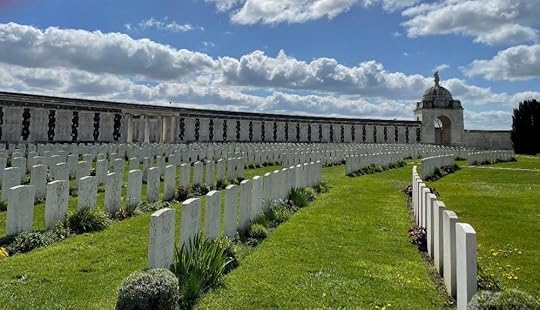
When I wrote The Woolworths Girls I wanted one of my main characters, Betty Billington, to have ‘a past’. For most women her age in 1938 they had lost the chance to marry and have a family due to the great loss of men during World War One. In my mind it was the perfect chance to use the memory of my great uncle Charles Sears of A Coy. 12th Btn. Rifle Brigade who perished at Ypres 17th August 1917. He was my grandfather’s older brother amongst many sisters. Aged thirty-one, he hadn’t married or had children so to bring him alive in The Woolworths Girls was the perfect opportunity to keep his name alive. However, with my maiden name being Sears, and wondering if my extended family would approve of using his name, I decided to very slightly change his surname. At the time my grandfather was born the census and other official documents often misspelt Sears and it was shown as Sayers. I used Sayers.
I’ve done extensive research in my family tree and spoken often to Bexley Archives who now cover the area of Erith in Kent where Gt Uncle Charles lived. Apart from a very short obituary listing there was nothing to tell he had lived. His name is on the cenotaph in front of St Augustine Church, Slades Green (Slades was changed to Slade in the 1950s). There is also a memorial at The Manor House, Crayford which bears his name. No photograph, even though many lads had their photograph taken before heading off to war. Perhaps it had been passed to one of his sisters after his parents George and Jane passed away. Perhaps it was never taken, who knows? If you are related George and Jayne Sears/Sayers can you check with your family? I know I’m not alone in longing to own a copy. I imagine him looking like my dad as a resemblance runs through the family, but that is wishful thinking.
Throughout the past years, I’ve been fortunate to write more books in the Woolworths series and eventually it was suggested I wrote the back story to Betty Billington’s life. That meant bringing Charles Sears, or Charlie Sayers as he had become, to life. A daunting task. I thoroughly enjoyed writing The Woolworths Girls Promise and hope you enjoyed reading this story. Again, it made me wish to visit The Commonwealth War Graves at Ypres, in Belgium and see his name engraved on the memorial wall at Tyne Cot.
Recently I had my chance to visit Ypres and pay my respects when along with my husband we took a river cruise from Amsterdam stopping off at Bruges, Ghent, Arnhem, and a visit to see the beautiful tulip displays at Keukenhof. As if to prolong my hope of visiting Tyne Cot it was to be the third stop on our coach tour that day – and we were held up by a national cycle race with roads closed – would we ever get there?
Our first stop was at Hill ’62, Sanctuary Wood where we not only paid our respects at a cemetery but viewed what remained of WW1 trenches alongside a small museum. Colonel Piers Storie-Pugh who had given a talk about this period in history the day before was there to answer all our questions. If you ever get the chance to hear Col. Piers give a talk, please do make the effort to attend as you will not be disappointed.
Next, we visited Hill 60, where we could walk around a small hill that changed hands seven times during the war. We were told the remains of soldiers from many nations still lay beneath the earth where they had died in the trenches. This is the only hill, albeit man made, in the area and was relentlessly fought over. On a day that the sun shone overhead, and birds sang in the trees it must have been so different from those war years.
Finally, we headed to Tyne Cot after another run in with those cyclists. We had just fifteen minutes before we had to head back to our ship. Would I find the panel with C Sears engraved upon it; there were so many… There had been a short shower of rain but as we entered the cemetery the sun came out. I had the details of the panel and started to walk, my husband was ahead of me, and I called out to him not to show me the panel as I wanted to find it by myself; I hadn’t realised until that point how important it was to me to ‘meet’ my Gt Uncle rather than be introduced to him – daft eh?
At last, there it was a short engraving, as C. Sears isn’t as long as many other names, but as the panel dried in the bright sunshine, I could not have been prouder of my relative who lay down his life for his country. There may not be a grave to visit, but to have one’s name here in such a memorable place is an honour and I know his family are very proud.
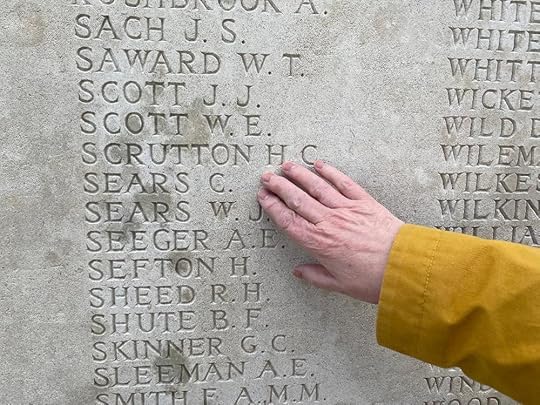
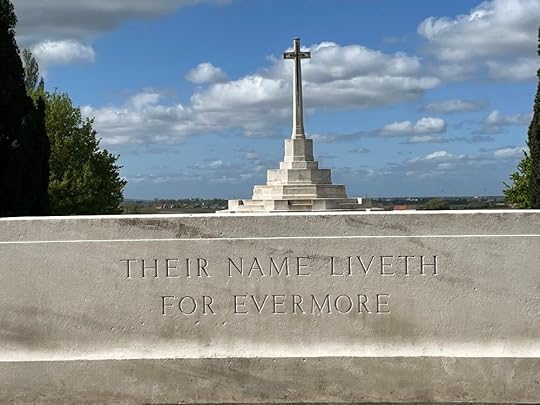
I will return (not on a river tour - that’s another story) to get to know the area more and to look for the field where he fell.
RIP Great Uncle Charles
Son of George and Jane Sears, 45a, Arthur Street, Erith, Kent
Crane Engine Stoker
Who died aged 31, 17th August 1917.
If I should die, think only this of me:
That there's some corner of a foreign field
That is for ever England. There shall be
In that rich earth a richer dust concealed;
A dust whom England bore, shaped, made aware,
Gave, once, her flowers to love, her ways to roam,
A body of England's, breathing English air,
Washed by the rivers, blest by suns of home.
And think, this heart, all evil shed away,
A pulse in the eternal mind, no less
Gives somewhere back the thoughts by England given;
Her sights and sounds; dreams happy as her day;
And laughter, learnt of friends; and gentleness,
In hearts at peace, under an English heaven.
Rupert Brooke
 Why not sign up for my newsletter to receive my blog posts via email?
 Sign up with your email address to receive news and updates.
Email Address Sign Up Thank you!

October 4, 2023
OFF TO THE PICTURES!
You may have noticed that characters in my Woolworths novels enjoy a visit to the cinema, or ‘the pictures’ as they were known locally.
For the girls from the Erith branch of Woolworths their local cinema was The Odeon set midway between the store in Pier Road and Alexandra Road where we first met Ruby Caselton who lived at number thirteen. In fact, within a few pages of that first book, Ruby had been invited to go to the pictures with Sarah, Maisie, and Freda to see a re-run of a musical staring Jessie Matthews. Ruby did a fair imitation of the beautiful star, kicking her legs high while singing over my shoulder goes one care… as she entertained the girls as they enjoyed their meal after work.
Now, at this point I will have to explain to younger readers that way back in time we were able to purchase a ticket and enter the cinema at any time watching the ‘B’ movies and the main film along with advertisements for as long as we wished. We were not kicked out after watching one film as is the practise these days. We could walk in halfway through a film and stay to watch the beginning afterwards…
The Odeon cinema was just a stroll from Ruby’s house, which was also my home in Erith from 1972. Along with my husband we were regular visitors to that cinema. Opposite was The Prince of Wales public house (at one time referred to as a hotel) and across the road from the cinema was the chip shop frequented by many of my characters. You can see how my life blurs into that of the girls from Woolworths!

Pier Road, Erith 1953
Something else of interest is that films would not just appear in cinemas upon release and then goes to video, DVD, and television. In fact, even in the 1960s we would occasionally see a film on television for the first time at Christmas; it was a big deal often being shown after the Queen’s speech. Films would re appear in cinemas many years after first being released.
My memory of this was going to Erith Odeon to see Gone with the Wind with my now husband in 1969. It was a very long film and by the time we’d walked home it was way after my curfew time – Mum was very strict with what time I got home as it seems ‘things’ happened to girls who stayed out late… I was sixteen and not allowed out for one week after that!
Everyone dressed up to go to the theatre and the cinemas, unlike today and eating throughout the films was frowned upon. Going to the cinema was a special event and people made the most of it; they may even have had a bag of chips to eat on the way home. Freda first received news of an incident in the war whilst eating chips wrapped in newspaper. She relayed the exciting news to her friends but was unable to tell them how the incident ended as unfortunately, that page of the newspaper was missing – someone else had that part of the news wrapped around their chips!
Favourite filmsWhat would our Woolworths girls have seen?
The Lady with the Lamp starring Anna Neagle was a favourite as was Genevieve with the handsome Kenneth More.
Of course, everyone visited the pictures to see A Queen is Crowned so they could relive that exciting day in June 1953 on the big screen.
Ruby was a fan of the Old Mother Riley films and refused to believe that Mother Riley was played by a male actor named Arthur Lucan which made her family laugh.
Freda’s favourite film was A Matter of Life and Death starring David Niven as she was invited to attend the Royal Film Performance in 1946 and met David Niven. More of that story in The Butlins Girls.
Wouldn’t it be lovely to visit the Erith Odeon one more time and enjoy those old films? However, we do have the Talking Pictures channel on television to compensate although it not quite the same as a drink in the Prince of Wales before watching something on the big screen followed by a bag of piping hot chips to eat on the way home.

Prince of Wales
Why not sign up for my newsletter to receive my blog posts via email?Sign up with your email address to receive news and updates.
Email Address Sign Up Thank you!September 24, 2023
CHATTING WITH GLENDA YOUNG
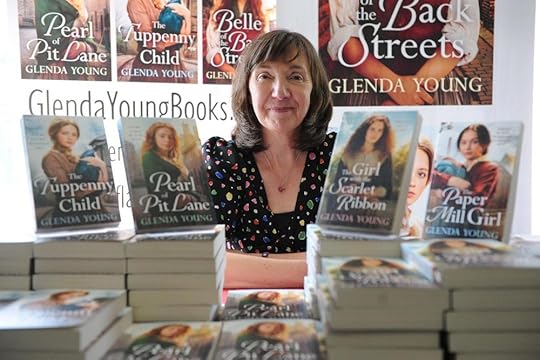
I’m thrilled to have saga and cosy crime author Glenda Young visit my blog today. I do hope you enjoy the interview.
Welcome, Glenda. Can you tell my readers something about your journey to writing your books?
I’ve always loved writing, ever since I was a child and I have always written. However, growing up in a working-class village on a council estate, there were no opportunities to become a writer. I may as well have told my parents I wanted to be an astronaut! I’m a huge fan of TV soap opera Coronation Street and that’s were my writing life began. I studied Journalism at Sunderland University as a (very) mature student in my mid-30s and was invited into the press office at Coronation Street to work there as part of my degree. I was running a fan website by then, and ITV knew me. I’ve since written and updated official TV tie-in books and the official website for the show, but I always wanted to create my own fiction with my own strong women as heroines.
I started writing short stories for women’s magazines and then The People’s Friend magazine, the world’s longest-running women’s magazine, asked me to write their first ever weekly soap opera, Riverside. I’ve been writing Riverside since 2016 and absolutely love it as it’s so much fun! It’s now available as an audio drama and the cast are all ex-soap stars! After the success of Riverside, I was taken on by a leading literary agent in London, wrote my debut novel Belle of the Back Streets set at the end of WW1 and we had three publishers fighting over it. It still feels like a dream that this happened. I chose Headline as my publisher and have been with them ever since.
We are fortunate to share the same literary agent. How important do you feel it is for an author to have the right representation?
It’s imperative. Not only do good agents (and we have the best!) manage our complicated publishing contracts they negotiate with publishers on our behalf and offer robust advice too. I feel very fortunate to have such a wonderful agent who I know is working hard for me as one of her authors.
Readers may not be aware you not only write historical sagas but also crime novels. Can you tell us more about this please?
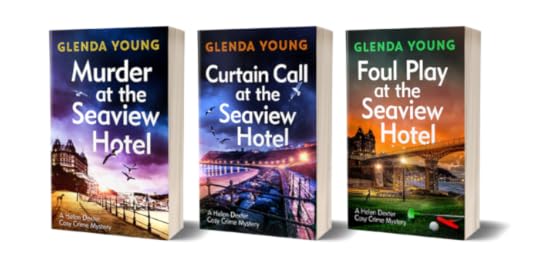
During lockdown I couldn’t leave the house to research my historical sagas. While there is a huge amount of information online, I could access, I’m the sort of the writer who needs to touch stone walls, walk gravel paths, and smell coal-smoke in the air. It all helps my research and informs the story, plot, and characters. As I couldn’t do any of that in lockdown, I decided to write a crime novel instead and set in my happy place of Scarborough. It was a way of leaving the house, travelling somewhere I love, without leaving the sofa. I didn’t want to write gory crime or police procedurals, so I chose cosy crime where the amateur sleuth is always one step ahead of the police. She’s called Helen Dexter and is a hotel landlady, recently widowed with a rescue greyhound called Suki, a formidable Yorkshire woman called Jean who does the cooking, and single mum Sally who’s the hotel cleaner. Headline asked for a series of the books and I’m very proud and honoured to say that they were shortlisted for Best New Crime Series in the Dead Good Reader Awards 2022 with Richard Osman and Val McDermid at Harrogate crime festival.
Your sagas have a very special setting that you know well. How did this come about?
My sagas are set in the northeast ex-coalmining and farming village of Ryhope where I grew up. It’s the perfect setting for drama, a village where gossip is currency, where everyone knows what other people are up to. It meant that I had to research my own history and heritage, which has turned out to be the most enjoyable part of the process.
Can you tell us something about your typical writing day?
When I’m writing I’m up early four days a week to write 2,000 words each day. I write until late morning, have lunch then go for a walk or a bike ride along the beach to clear my head. In the afternoon I deal with emails and admin.
What do you enjoy most about being an author?
Meeting my readers. I can’t express how much I love this and how important it is to receive feedback directly from people who love my books so much.
Which books can we expect from you next?
I’m currently working on a trilogy of sagas called The Toffee Factory Girls. They’re inspired by Horner’s toffee factory in the County Durham market town of Chester-le-Street. However, that factory no longer exists and so I’ve been researching toffee making during WW1 in the Mackintosh archives at the University of York. The research has been AM-AZ-ING! The first Toffee Factory Girls book is published by Headline in ebook and hardback and audiobook in February 2024 and in paperback in May 2024.
Glenda Young, Biography
'Glenda Young brings a new freshness to the genre'
– My Weekly magazine
'Amazing novels'
– Sharon Marshall, ITV This Morning presenter
'Such a good writer. She's fantastic!'
– Woman's Hour BBC Radio 4
Glenda Young’s sagas are set in a northeast mining village of Ryhope in 1919 and her cosy crimes are set in modern-day Scarborough.
The cosy crime series was shortlisted with Val McDermid and Richard Osman in the Dead Good Readers Awards for Best New Crime Series.
Glenda is published by Headline. She has also written TV tie-in books for ITV’s Coronation Street and is an award-winning short story writer.
She was one of six finalists in the coveted Clement & Le Frenais comedy award.
Glenda also has a unique claim to fame, she's the writer of Riverside, a weekly soap opera published in The People's Friend magazine since 2016.
Glenda is a finalist in the Wear Businesswomen Awards 2023 in the category of Inspiring Others.
You can visit Glenda’s website here, read her blog here, and follow her on Twitter / X, Facebook, Instagram and buy her books here.July 22, 2023
LOOK BACK WITH A SMILE ON YOUR FACE
Anyone reading my books will know I have a fondness for the past and particularly the area where I was born and grew up. However, for anyone visiting North-West Kent (known as South-East London these days) for the first time, they may just wonder what all the fuss is about. Like so many areas in the UK the places we know, and love have changed beyond recognition. What made me think of this today? A newspaper article about the rise in crime in Belvedere, a place where part of Celebrations for the Woolworths Girls is set. My childhood memories of that town are much different as my mother was born there in 1940 and I grew up listening to her stories of the war years and her family. What has happened to our country?
I’ve mentioned before how Erith, where the branch of Woolworths in Pier Road was the place where our girls worked has changed beyond recognition. Not only was the original beautiful town flattened by a wrecking ball back in the 1960s but ripped apart again around ten years ago. There is nothing recognisable in the town from the days of my childhood and my early married life – that is apart from Alexandra Road where Ruby lived at number thirteen, just as I and my husband did from 1972 to 1992. But is it? Recently the property came up for sale on a well-known property website, so I looked at the images -wouldn’t you? I know the latest owners did a good job with several extensions but gone was everything I recognised about the lovely house was missing. It broke my heart – I shouldn’t have looked! I have visited Erith several times since moving away and to be honest it is just like every other town in outer London, Erith has lost its identity. Fortunately, the Thames is still there meandering towards the coast, although not as busy as it used to be, where we can while away the time thinking of times past as we gaze across the water towards Essex.
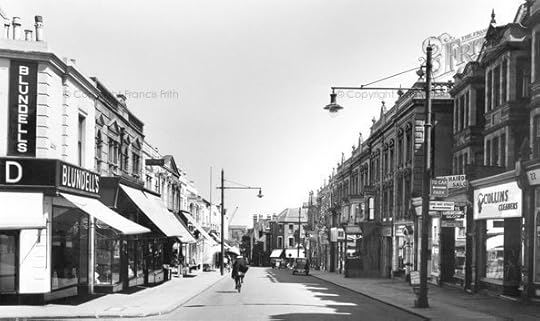
Pier Road, Erith 1953
However, if you think this blog post is all doom and gloom I will end on a happy note – the true locals with their roots in Erith and Belvedere have not changed; scratch the surface and there they are with their memories and love for the area. They don’t see the urban decay they see in their mind’s eye a vibrant area that survived two wars and kept on smiling - and this is what I like to portray in my stories set in the area. Celebrations for the Woolworths Girls will be in libraries from the end of August as well as on sale with Amazon and Waterstones. If you prefer a paperback, eBook, or audiobook they will be available from 12th October.
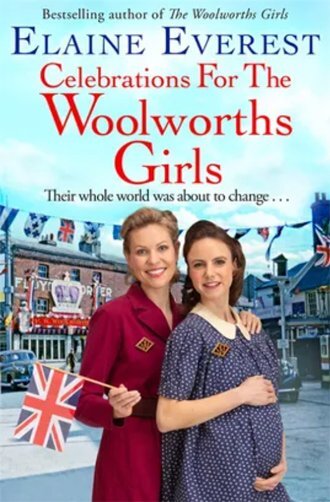
What that song? Don’t look back in anger. Instead look back with fondness and as Betty Billington would say, pin a smile on your face.
Pre order your copy of Celebrations for the Woolworths Girls now>
Why not sign up for my newsletter to receive my blog posts via email?
Sign up with your email address to receive news and updates.
Email Address Sign Up Thank you!September 12, 2022
Q&A WITH KATE THOMPSON
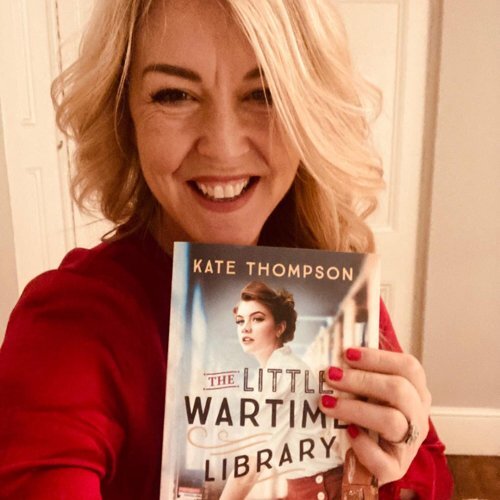
Readers who follow saga authors on Facebook cannot have missed the wonderful posts by author, Kate Thompson where she writes about libraries, librarians, and readers. This is to celebrate publication of The Little Wartime Library; however, the research is so meticulous, and the writing so interesting could there possibly be more than first meets the eye…?
Let’s enjoy Kate’s informative answers to my questions and find out more.
Welcome, Kate and congratulations on your latest book, The Little Wartime Library. I’ve been fascinated by the articles posted to your Facebook page about librarians and library memories. Can you tell us why you decided to write these historical pieces?
Firstly, thank you so much for having me. It’s always such a treat to appear on your blog, Elaine.
As always, with my fiction, it’s inspired by a true story or real events. The Underground library at Bethnal Green struck me as magical and surprising, full of intrigue and jeopardy, the perfect setting for a novel.
Contrary to popular belief, during the Second World War, not all shelterers slept in an amorphous huddle on a dirty Underground platform.
Bethnal Green’s secret Underground wartime library offers up a remarkable story that reveals how, even in the darkest of times, working-class East Enders had access to books, entertainment and culture.
On 7 September, 1940, a bomb had crashed through the roof of Bethnal Green Central library. In a split second, what had been an orderly and well-equipped library became a scene of destruction. For borough librarian George F. Vale and his deputy, Stanley Snaith, the underground village that had developed at Bethnal Green station was the perfect opportunity to set up a makeshift library and provide the local community with access to free books once more. “The opportunity of founding a Tube shelter library was too good to miss,” librarian Stanley wrote in an article in Library Review in the spring of 1942. “It is, perhaps, the least pretentious branch library yet built. Fifteen feet square, it is mere sentry box of a place. We could have done with more room but the powers that be did not see eye to eye with us.”
The library, which had a captive audience during a raid when the doors to the shelter were locked, was open from 5.30 - 8pm every evening and loaned out 4,000 volumes that survived from the bombed out library above. Romance sat alongside literary classics, children’s books, poetry and plays. Treasure Island, Secret Garden and many other classics, including Enid Blyton, nourished young minds and helped children to escape the nightmares above.
“Libraries in converted shops, in village halls, in mobile vans, are common enough. But libraries in Tube shelters are something new under the sun,” Stanley wrote with pride.
Can you imagine growing up in a Tube station, your childhood unfolding next to the tracks, all your rites of passage taking place in the booking hall or along the tunnels?
Patsy Crawley, 84, from Essex doesn’t have to. The first six years of her life were spent mostly down Bethnal Green Tube shelter. “It sounds funny now, but back then it was just normal. I knew no other life,” she laughs. “My mum Ginnie volunteered at the Tube shelter cafe. She was such a lovely, smiley lady, always bustling round a million miles an hour in her apron. When she was working, I’d knock about with my six male cousins. We had such fun running up and down the tunnels like little tube rats. We used to dare each other to go in the room of horrors as we called the ventilation shoot. It was strictly forbidden but being adventurous kids, we climbed up. All the kids used their imaginations, playing hopscotch, skipping, IT and kiss chase up the tunnels.
“During the war, the facilities were amazing down the Tube; it had everything you needed. There was even a mobile hairdresser, who used to come down the tunnels doing people’s hair out in rags before bed so they woke up with nice curly hair. Terrific!
“When war was over, I missed life underground, and even now when I go to Bethnal Green and see the Tube sign, I feel a warmth spread over my chest. To others, it’s a transport network; to me, it was my home.”
That little wartime library lingers long in the memory and in many cases, triggered a lifelong love of reading.
I have a memory, from when I was three years of age when my mum took me to our local library to choose a book. What is your earliest memory of visiting a library?
Aah I’m so pleased you asked this. I invite you to think of your childhood library without a nostalgic smile, it’s impossible isn’t it!
As a child, in the 1970s and ’80s, I loved visiting my local library. Coming from a noisy household, I embraced the feeling of solitude and order. As soon as I caught the intoxicating scent of old paper and polish and heard that satisfying thunk of the librarian’s stamp, I relaxed. It was no red brick, or arts and crafts architectural beauty, more of a concrete civic centre box, with scratchy grey carpets and spider plants behind the desk, but that didn’t matter. It was a destination and I can still vividly remember the feeling of calm and freedom that came over me as I walked through the door. It was my haven.
First came the ritual of choosing the book, then I’d take it to the furthest end of the library, rather like a dog scurries off with a juicy bone, sit on a small green plastic chair and fall into a book, while my mum stood at the counter and gossiped (in a theatrical whisper) with smiley Jacky the librarian, who always let her off the late fines. I vividly remember thinking as a small child, how interesting, so rules can be broken!
What did your childhood library look, feel and smell like? Bet you can remember!
Like most, when it came to Enid Blyton I virtually read the print off the page. Malory Towers gave me the keys to a boarding school experience I’d never have. Black Beauty the opportunity to own the horse I so desperately wanted, The Secret Garden the delicious possibility of finding undiscovered doors.
It unlocked my imagination in a way that always made me feel safe. Without weekly trips to my local library, I’m fairly certain I wouldn’t be a writer today and I’m forever grateful to my mum for taking me.
You have written many interesting accounts of libraries during the war years. Has there been one that surprised you, or perhaps triggered an idea for another novel?
Funnily enough, I loved hearing about The Peckham Bag Wash Library, as described to me by Ida Brown. The Bag Wash library was an unofficial and free little library set up in a launderette in South London in the post-war years. I love the potential to escape into a world beyond the mundanity and domestic drudgery of life.
‘You could donate and borrow all free of charge,’ Ida told me. ‘Everyone was so honest and considerate in returning the books so that others could enjoy them too. The Little Bagwash Library triggered a love of reading that has lasted all my life.’
A library doesn’t have to be grand or substantial to make a difference. Just as the little wartime library triggered a lifelong love of reading to so many East Enders, so too did a shelf of battered paperbacks in a London bag wash to Ida Brown. The point is that the best libraries change and transform lives, introducing us to books that make us view the world differently.
As a full-time writer can you share how you plan your writing day, especially during school holidays!
Ha good question, that suggests a level of planning and organisation on my part. I’m typing this now as my children eat dinner and are otherwise occupied. In truth, not a lot of work gets done in the summer holidays. I’m acutely aware how short childhood is so don’t want to spend most of it working, so it’s really a case of juggling.
In term time, I’m much more disciplined. Once the boys are packed off to school, I’ve walked my two rescue Lurchers, Ted and Sapphie, then it’s bum on seat and just stay there until I’ve done a decent chunk of writing.
There’s no point waiting for ‘inspiration’ or ‘magic’. Writing is hard graft and I do feel you have to show up every day and commit to the book, until that wonderful moment where your characters start to feel real and alive.
I spotted that you like to give talks about your books. Can you give a couple of tips to newly published authors who may be contemplating stepping out of their comfort zone to speak to readers?
Oh lord, I wish I did feel comfortable and confident, but the honest truth is, I’m terrified every time I do it. Being centre stage is not a place where I am naturally at ease so I do make sure I am fully prepared and have thought through exactly what I want to say. That and plenty of Rescue Remedy helps! The biggest draw, and the thing that keeps me going and makes me step outside that comfort zone, is talking to readers afterwards. Connecting with your readers, listening to their stories and hearing why your books resonate is a joy, it’s the chief reason why writers write I think, so we can connect to people. I had an email from a lovely expat in Australia last week who told me how much she loved the Wartime Library as it took her back to, and reminded her of, her childhood library in England and all the books she used to read as a kid, like Enid Blyton. The book made her feel happy and took her out of herself. You can’t ask for more than that.
What can we expect next from author, Kate Thompson?
Good question. After I’d written a number of books set in the East End, I wrote a non-fiction book based on the lives of all the real women I had interviewed as research for my books. That was called The Stepney Doorstep Society. I am now thinking about something similar as a way of using all the amazing stories I have heard from all the librarians I have interviewed. A library is a microcosm of society and all life flows through its doors. I have heard some eyewatering tales. It strikes me that a librarian is a front line worker, in the way that a social worker is. Library Stories could be a way of sharing all those incredible little tales. Watch this space.
Where can we purchase a copy of The Little Wartime Library?
From September 1st at Tesco, Amazon, Waterstones and of course, for free from your local library. The book will also be available from mid-October at Sainsbury’s.
 The Little Wartime Library
London, 1944.
Clara Button is no ordinary librarian. While the world remains at war, in East London Clara has created the country's only underground library, built over the tracks in the disused Bethnal Green tube station. Down here a secret community thrives: with thousands of bunk beds, a nursery, a café and a theatre offering shelter, solace and escape from the bombs that fall above.
Along with her glamorous best friend and library assistant Ruby Munroe, Clara ensures the library is the beating heart of life underground. But as the war drags on, the women's determination to remain strong in the face of adversity is tested to the limits when it seems it may come at the price of keeping those closest to them alive.
Based on true events, The Little Wartime Library is a gripping and heart-wrenching page-turner that remembers one of the greatest resistance stories of the war.
August 28, 2022
MY LOVE AFFAIR WITH DOGS
This article was first published in Woman’s Weekly earlier this year.
I featured a wartime dog boarding kennel in The Patchwork Girls, which was a joy as I could spend all day writing about dogs – fiction and real – and did so at one time when the canine world was my specialism when I was a freelance journalist.
I was once accused on a national radio station of being a ‘dotty old dog lady’. My crime was to have written in a newspaper article that I never wanted children and loved my dogs. Of course, the presenter took that to mean I was leaving my fortune (haha) to my dogs. Nothing could have been further from the truth. Deciding to be child free, and my husband agrees, has nothing to do with owning pets. Dogs are not child substitutes. However, I have enjoyed their company and since marrying way back in 1972 my husband and I have been involved in many canine clubs and charities. Our preferred breeds are Old English Sheepdogs and Polish Lowland Sheepdogs and within these breeds we are part of an international community of people who love dogs.
I have wonderful memories of dogs I’ve owned; each one has been special in their own way. Our first was Sabastian purchased for one pound whilst we were on our honeymoon in 1972. Half Labrador and half Collie he’s still talked about with fondness by our friends. Our first Old English Sheepdog, Holly who shared my Christmas birthday was our first ‘show dog’ and one who started that long and absorbing hobby and lifestyle. Then there was Ziggy (daughter of Holly) who escaped a house fire with us that saw us lose our home. My only thought was for our dog at the time. She kept us sane during the many months it took to rebuild the house.

When I look back over the time I’ve spent in the world of dogs and some of the lovely people we’ve met and tips I’ve picked up along the way such as ‘when preparing for a judging appointment and choosing an outfit for the occasion make sure to touch your toes a few times in front of a mirror to make sure nothing is on show that shouldn’t be’. That advice has put me in good stead over the years and not just in dog showing. ‘Smile and the world smiles with you’ is good advice either when judging or exhibiting or in everyday life, and of course we are always told we take the best dog home with us regardless of the placing that day – that is very true!
Training classes with our dogs has been fun and to this day I cannot recall the name of the people attending. They are ‘Dylan’s mum’ and ‘Fido’s dad’.
Fun days and fun dog shows are also memorable. My husband walked off with a major prize when he won ‘the person who looks most like their dog’ – it was the grey beard that did it! We prized that win as much as wins at major dog shows, but above all I prize the wonderful friendships we’ve made along the way. The world of dogs is an amazing place.
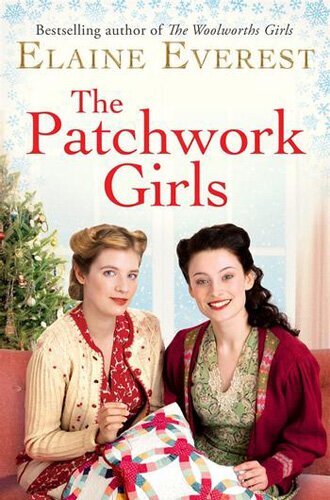 Order The Patchwork Girls here> Why not sign up for my newsletter to receive my blog posts via email?
 Sign up with your email address to receive news and updates.
Email Address Sign Up Thank you!August 14, 2022
WE'RE ALL GOING ON A SUMMER HOLIDAY
I recently chatted to a lovely group of readers at The Exchange in Erith, only fifty yards from where The Woolworths Girls books are set. In fact, The Exchange was once the library used by Ruby and her family and called The Carnegie Building. We had quite a lively chat about ‘the good old days’ and amongst the conversation the subject of holidays popped up. So many of my memories were the same as my readers, so I thought it was worth writing about.
Born Christmas 1953, I’m classed as a ‘baby boomer.’ My parents were children at the beginning of WW2. Dad wasn’t called up for national service until after the end of the war, not many years before he married Mum on February 28th, 1953. Their honeymoon, and first ever holiday together, was to Ventnor on the Isle of Wight. Arriving late I could be classed as a honeymoon baby. Thank goodness my parents weren’t the Beckhams, or you’d be calling me ‘Ventnor Everest!’
Our first family holiday was when I was around four years of age and my sister a toddler. It was a caravan in Seasalter with my memory being of a boy in the next caravan telling me he only had potatoes for lunch and Mum telling me to not quiz the lad. Mum had made we two girls matching kilts knitted jumpers to match. We had berets with the ‘bobble’ being a penny covered with the same tartan fabric. I was told off for trying to remove the penny. My final memory was of helping Dad to dig up cockles and listening to them as they were boiled on the small cooker top. I was told the noise was them ‘singing…’ Gullible even then!

After that our holidays were spent in boarding houses first in Ramsgate and later, on the Isle of Wight. In Ramsgate I discovered a second-hand book shop and spent many happy hours on the beach with my nose in a copy of Little Women. That started my addiction to purchasing books which continues to this day. Sadly, Little Women perished in a house fire in 1988. Both Ramsgate and nearby Margate are close to my heart when I recall family trips. So much so, that it was a work of love when writing The Teashop Girls to have my Nippies working in the two Lyon’s teashops in those seaside towns.
Dad didn’t drive so our journeys to our holiday destinations were either by Margot’s Coaches from Crayford or by train. Mum would send on the largest suitcase by rail, and we were tasked with pushing it in my baby brother’s pushchair up to Slade Green station. If we were lucky, we’d see our Uncle Cyril working in the signal box and he would wave to us and come down for a quick chat.
Trips to the Isle of Wight were such an adventure as the journey was unknown to us, and at the end of the adventure was the ferry – so exciting for a child. On one such trip the weather was rough and we stood waiting for the choppy waves to ease off as the ferry rose and fell and we were unable to embark. It is funny what we remember. There was no feeling of sickness as we often experienced on coach journeys. In fact, the only time I’ve been ill of a boat was when I took a day trip as an adult on the Scillonian to the Scilly Isles.
Thank you, Mum!I know we were very lucky to have a two-week holiday each year. This could only be achieved as Mum took on a part time job four hours an evening in a local electro plating factory. Dad would care for us three children and on the evening my sister and I went to Brownies in Arthur Street he would watch us walk part of the way up Slade Green Road and Mum would pop out of the factory to see us safely on the second part of the journey. On the way home we would go into the factory and during her tea break Mum walked us to the end of our road. The whole area was much safer in those days I hasten to add.
Mum carefully squirreled away her savings and paid extra money on our council house rent each week, in order to have ‘free’ weeks in mid-summer. Mum controlled the purse strings at home, just as many women did, and that is why we had a good childhood. Also like many women she was a good seamstress and knitter, and we never went short of clothing. Like many families clothes were passed down so gaberdine raincoats, school uniforms, wellington boots and plimsoles were passed down between cousins, as were Brownie and Girl Guide outfits. Nothing was ever wasted; no doubt this came from the war years when women had to make do and mend. I have memories of helping to unravel a knitted garment and watching Mum steam the yarn over a boiling kettle ready to be used again for a new knitting project. Like many women of my age, I was taught to sew, not only at school but also at home. It was second nature to buy a paper pattern, then visit Dartford Co-op, or the market for fabric. On one occasion while in the Girl Guides, I achieved a fifteen-mile hike then returned home to cut out and sew a bell-bottom Summer trouser suit (in psychedelic colours) then wear it to dance all evening at the local football club – I feel tired just thinking about it! No wonder I enjoyed writing The Patchwork Girls so much as it meant revisiting my passion for sewing.
 Holiday Camps
When my brother was no longer in a pushchair Mum decided we would go to a holiday camp. Not for her the large and busy Butlins. She much preferred the look of Warner’s Holiday Camps. Perhaps it was because of the link between her fairground owning family and Sir Billy Butlin, alas she never told me and since she died at an early age some questions remain unanswered. After Christmas each year we would be allowed to look at the glossy Warner’s brochure and help choose our destination. Those first years were split between two camps on Hayling Island. After that we went back to the Isle of Wight until the summer before Mum passed away when we went to a Warner’s close to Great Yarmouth.

Our fortnight was packed, not only entering every sporting competition available, but also joining in with talent competitions and dancing each evening in the ballroom while my younger siblings were members of the Warner’s Wagtails. Such happy memories. As I reached my teens mum was convinced that I should consider, when old enough, to join the entertainment staff and be a ‘Warner’s Green Coat.’ On one hand she wanted me to work in an office and have the respectable job she was never able to have because of her upbringing, and on the other hand she was pushing this shy child to do more with her life. Sadly, it never happened and no doubt I’d have ended up a chalet maid like Peggy in Hi Di Hi! Every time I see a white-pleated skirt I remember those happy holidays. So many of my holiday camp memories were useful when writing The Butlins Girls.
SwitzerlandMum’s dream was that one day I would go abroad once I was at ‘the big school’ and at the age of fourteen that dream became a reality. I excitedly took home the form and sat down with Mum to plan how we could afford such a trip. It was eight two pounds and that was a lot of money back then. I was too young to have a Saturday job – this was before my days with Woolworths! Instead, I took on odd jobs such as collecting window cleaning money for our next-door neighbour’s son who had started up in his own business. Along with my sister I cleaned two of our uncles’ cars each Sunday morning. I also put away half of my pocket money each week. The school had a payment plan whereby parents could pay a little money each month to the teacher in charge of the trip. I would proudly hand over the money knowing I was helping as much as possible to contribute to this special treat. Come August I was seen off on the coach by Mum and urged to enjoy every moment and to tell her all about it upon my return. That holiday was glorious, and I fell in love with the beautiful country vowing to return one day. Well, dear reader it took FIFTY years!
 Dogs
DogsMarried with a mortgage at the age of eighteen, and my husband running his own television and video repair business, money was tight for a few years, so we only went camping with friends. By then we had our dogs, with showing and breeding taking over most of our spare time. Yes, we went away when we could, putting some in kennels and taking several with us, but this was in the UK and our first thoughts were always for the dogs. I took a few trips to the continent to watch dog shows, but all in all we enjoyed holidays in the UK and would have continued to do so until my sixty-fifth birthday approached. My husband asked what special present I would like. As quick as a flash I showed him an article I’d saved from a magazine. ‘I’d like to return to Switzerland, but I want to go by train!’ Thus, our new hobby of train travel started and off we went to Grindelwald with Great Rail Journeys. It was such a success we decided to go again the next year. Henry, our only dog by then, had enjoyed his stay in boarding kennels so I was not worried about him pining for us. In fact, he never gave a backward turn when we dropped him off!
The FutureWe decided that if we could afford to do so we would return once more to Switzerland and quickly made our booking. Of course, no one accounted for Covid rearing its ugly head and our second trip was moved again and again as the world fought this monster and we stayed safe at home. Whilst waiting for that special trip to become available I started to see if we could plan a journey by train alone. There was a folder on my computer titled ‘Two go to Switzerland’ – it would be an oldies gap year, even thought it was only two weeks! I became an expert on the right trains, the special offers, and how to live as cheaply as possible in possibly the most expensive country in the world. I joined a Facebook group for travellers from around the world who were planning Swiss holidays. We shared photographs, tips, and the best rail passes – most tourists use trains rather than cars.
As Covid restrictions started to lift we decided to ‘go for it’ and I gradually booked the boarding kennel, hotel on the banks of Lake Thun, Eurostar tickets, our route across France, and our Swiss Travel Passes. Believe me it is a lot easier to book with a travel company – but not quite as much fun.

I had a folder full of information for our detailed itinerary with links to every place we wished to visit. I even upgraded to a junior suite in the hotel and told them why – yes, upon arrival we found our rooms decorated in celebration of our impending anniversary! I was a wonderful trip, and something I’d like to plan again, possibly in another country. I would recommend it to anyone.

Of course, whilst planning this trip our earlier booking with Great Rail Journeys became available. We used the excuse of it being our ‘golden wedding year’ to also visit Grindelwald for a second time. I still feel rather guilty about it, but what the heck; we have many birthdays and occasions to celebrate, and who knows what’s around the corner…?
Enjoy your holidays whether they be camping with friends, or cruising around the world. Create happy memories to look back on with a smile on your face. xx
Why not sign up for my newsletter and hear more about my books?Sign up with your email address to receive news and updates.
Email Address Sign Up Thank you! subscribe to future blog postsAugust 3, 2022
SHARING MEMORIES WITH AUTHOR JEAN FULLERTON

I can’t tell you how thrilled I am to be chatting on my blog to my good friend, Jean Fullerton.
I can’t recall how long we’ve known each other but have both said time and time again we are like twins, being of similar age and having similar views. I read Jean’s book, A Child of the East End in one sitting with dawn breaking as I read the final page. ‘I did that! I wore that!’ I kept muttering as I smiled at some stories and felt weepy at others. It is a glorious book that people of any age should read to learn more about past times and of the wonderful saga author, Jean Fullerton.
Jean answered a few of my questions. I do hope you enjoy reading them:
Mentioning no numbers, we are both of a similar age, and although we were brought up on opposite sides of the river Thames, we lived very similar lives. I wondered what made you decide to write this book?
Firstly, thank you for inviting me to your blog, Elaine, and I wrote A Child of the East End because I wished I’d asked my granny more. Family stories and memories are often lost before the next generation realises their importance. As I have the Fullerton family folklore and stories dating back to before the start of the last century, I felt it my duty to pass them on to the next generation. Another reason is I use contemporary diaries of those who served on the home front during WW2 as the bedrock of my research. Although they didn’t think they did anything more than thousands of others they lived through extraordinary times and so have the post-war generation.
Can you see yourself setting a saga in the 1970s?
Yes, in the 60s and 70s as it was such an interesting time of both social and political change and I’m hoping to do just that in the not-too-distant future.
If you could go back to when you were fourteen, what would you advise the young Jean Fullerton?
Enjoy being young and a size 12.
We all know how busy you are as Chair of the Romantic Novelists’ Association (RNA) and have not long spent a busy weekend at the RNA conference. Can you tell us how you plan your writing life around your committee work?
Well, I have to confess it’s been a bit of a struggle keeping both the writing and RNA balls in the air this year, but I seem to have managed by being very strict with myself timewise. I work on RNA stuff in the morning, then write after lunch. Now the conference is out of the way and except for emergencies, I’m taking the whole summer off to finish my current work ready to send to my agent at the end of August. Going forward we have new Board members who have the skills necessary to build on the foundation we have in place, so I don’t expect next year to be quite as full-on.
I’ve seen on Facebook how you adore your grandchildren. How do you think they will feel when they read your autobiography? Come to that what about your husband and your children’s thought on this book?
Five of my eight grandchildren are in junior school so too young to read it yet, but I’d be very happy if the three teenage ones did. My three daughters have a copy and I’m sure they’d be surprised at a few things but there’s nothing in the book that I haven’t already told them or would have told them had the subject come up.
The one area they might find eye opening for them is my parents’ difficult marriage and mental health problems because although they know, I deal with it in much more detail in the book.

As the book finishes, just after your marriage to Kelvin, do you plan to write a second edition? You have led such an interesting life it would be a joy to read.
Thank you, Elaine, actually a couple of people have asked me the same. I hadn’t but I suppose living through the Thatcher years as a young mother with three children then undertaking my nurse training in one of the last cohorts of the traditionally hospital-based training might be interesting. In addition, my husband who is now a priest in the Church of England, will be retiring in a few years so I have toyed with the idea of writing about parish life called Confessions of a Vicar’s Wife.
Would you advise readers to write their memoirs, even if it is not for publication?
I certainly would. Jewellery and money tell you nothing about the person who wore it or saved it, but your family stories do and are just as important anything else you pass on to your children and grandchildren. And for posterity if Nellie Last hadn’t kept a diary and Jennifer Worth hadn’t written about her time and a midwife in East London how poorer the world of social history would be.
What comes next for author, Jean Fullerton?
Well at the moment I’m just about to write the final couple of chapters on the first book in my next WW2 series, which features a very different family living in East London during WW2. I can’t say much more now because it’s all still very much under wraps, but it will be in the shops in May 2023.
Thank you again, Jean for agreeing to be interviewed for my blog. Your book was a complete joy to read, and I wish you every success with it xx
You can visit Jean’s website here, and follow her on Twitter, Facebook, Instagram and Amazon. subscribe to future blog postsMay 11, 2022
SETTING MY STORIES IN THE RIGHT PLACE
This is a blog post for readers as well as writers. As I am always telling my students, ‘setting is everything in a novel,’ so let me explain more…
As a reader what tempts me to read a book by a new author? To be honest, it is often the genre as I love to read historical and crime novels. Sometimes it is the blurb on the back cover, or under the title on an online selling site that catches my eye, However, mainly it is the setting. Perhaps that is why my Woolworths novels have been so successful as readers are drawn to the store that holds such fond memories for them. My Teashop series is set on the Kent coast and who doesn’t love a seaside story set during WW2?

However, for me the place must be real and hold some significance in my life – even the Erith Woolworths store was real, as were the two Lyon’s teashops in Ramsgate and Margate. As for Butlins – I’ll say no more!
Of course, once I’ve enjoyed a book by a new author I will return again and again. A friend recently introduced me to the The Crossing Places by Elly Griffiths when it was chosen for my students’ reading group. Three weeks later I’m reading book four in the series – don’t you just love it when you are able to binge read fifteen books in a series? My husband is doing the same with Jeffrey Archer’s Clifton Chronicles. What grabbed my attention with The Crossing Places was the setting. The windswept Norfolk marshes is such a dramatic place and adds such atmosphere to the stories, and of course I’ve visited the area, so it resonated with me. Saga authors such as Jean Fullerton, Lizzie Lane, and Kate Thompson pull me right into their stories as I know the settings, and the research behind their books is impeccable.
I don’t like books with made up settings – there, I said it! Perhaps that is why I’m not a fan of fantasy novels. I need to know that the place where a story is set is real and I’m able to visit, or more importantly I have visited. It may be that the story is set before I was born, but then I have the joy of learning about the history of the area I know and love.
I’ve written before about why I chose the Erith branch of Woolworths as the setting for The Woolworths Girls. This book was a standalone story, but my lovely readers took it so much to heart that I wrote another, and another … I always set my books in Kent, my ‘girls’ may move away but they always return to Kent. Being born at The Hainault maternity home in Erith, at a time it was still truly Kent, I grew up knowing the area and hearing stories from way back. When I needed somewhere for Sarah Caselton to work when she moved in with her nan, Ruby in 1938 I simply took a walk in my mind until I came to that well known store in Pier Road. Having been a Woolworths Saturday Girl, I knew it would be the perfect place to set my story.
With my Teashop Girls books, I wanted to write about the Lyons’ Nippies during WW2 – and they had to live in Kent. I soon found two teashops that had existed in Ramsgate and Margate and was delighted as I had fond memories of the area from childhood holidays with my parents.
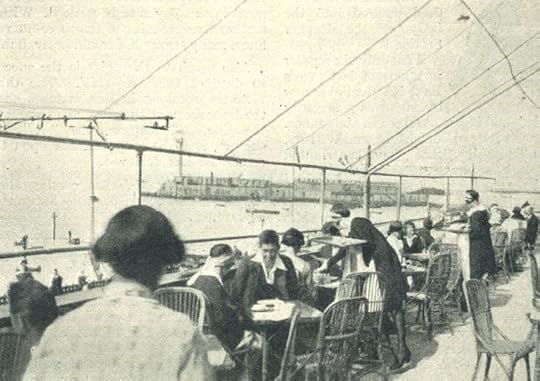
As I write this blog post I am just finishing The Woolworths Girl’s Promise, which is set at the end of WW1. This story is about the early life of the much-loved Betty Billington, who we all know ends up working at the Erith branch of Woolworths. Of course, she needed to have worked in a branch of Woolworths that existed from 1918. I could have made up a branch, that would have been so easy and saved so much research time, but I knew I would be letting down my readers who want to know my books are true historical novels rather than a work of fiction. To begin with I wanted the store to be close to Erith and Crayford would have been ideal However, that branch did not open until much later. Next, I looked at Bexleyheath, but the store opened in 1930, and besides that Betty was injured at the store when an oil bomb exploded in The Woolworths Girls – would she not have mentioned she’d worked there years before if the store had been around at that time?
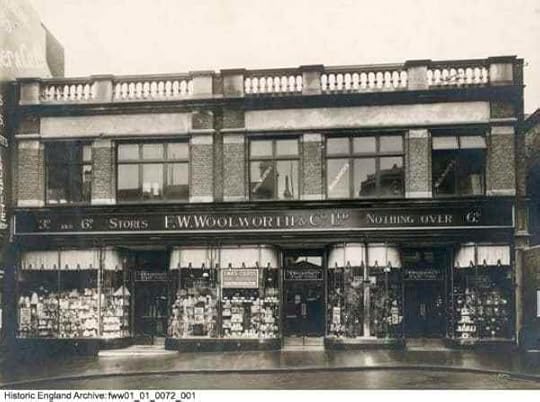
I researched for weeks on end trying to find a store that existed in the right time and place - and was in Kent. I couldn’t help but laugh when I found the ideal Woolworths store – it was in Ramsgate! The building is still there to this day, but sadly no longer a Woolworths store.
Why are you attracted to certain books – is it the setting?
 The Woolworths Saturday Girls is available in all supermarkets, bookshops and online. Order your copy now> Why not sign up for my newsletter and hear more about my books?
 Sign up with your email address to receive news and updates.
Email Address Sign Up Thank you! subscribe to future blog postsMarch 27, 2022
ELAINE EVEREST – WOOLWORTHS SATURDAY GIRL!
Yes, like so many other women I was once a Woolworths Saturday girl. Little did I know that way back in 1969 at the age of 15 and three months this part-time job would retain a place in my memory that would help as I wrote the Woolworths girls series.
I attended Slade Green secondary modern school, and like my fellow classmates I was keen to have a Saturday job and be able to earn my own money while still studying for exams. I earned money doing odd jobs such as cleaning my uncles’ cars, washing up at the local community centre after bingo games, and collecting money for a neighbour’s window cleaning round. This was also at a time when I was active with Girl Guides, as well as ballroom dancing lessons - something I had to give up when I applied for and was hired as a Saturday girl at the nearby Dartford branch.

I recall writing to the branch asking if there was a vacancy for a Saturday position, enclosing a stamped addressed envelope. When a reply arrived from the staff supervisor it was a rather nervous young girl who attended the interview. I recall completing a test paper where my skills in arithmetic put me in good stead. I was to earn £1 for the day with thruppence being deducted for my national insurance contribution. My dad, who was very knowledgeable about tax and payroll after his time doing national service in the early 1950s in the pay corps had explained to me about deductions and what would happen to those three pennies taken from my pay. In a way it was this interest that led to me attending college to study accounting and business machines just as Clemmie Billington does in The Woolworths Saturday Girls.
I recall that first day of work and how nervous I was. I felt rather grown-up having to catch the train from Slade Green station to Dartford and walking through the town to the large Woolworths store. There was a basement area in the store, and this was where I was to work. Wearing my sludgy green coloured overall, very similar in design to the uniform worn by Sarah Castleton when she started work at the Erith branch in 1938 although mine was nylon not half as smart. There was a notepad and pencil attached to the waistband by a piece of string. In those days the tills did not add up purchases, instead we would note down items and add them up before asking the customer for the full amount. The customer would give us the money which was placed on a ledge in front of the till and remained there until the sale have been completed and change counted into the person’s hand. The money then went into the till and the drawer closed. However, when given a note I had to hold it above my head and call out “ten shillings” or “one pound” to catch the attention of one of the supervisors. I lived in fear of having to do this being so shy.
The counters in those days were still the same as the wartime shop fittings. Wooden high counters with glass edgings, floors were also wooden. Being in the basement level I don’t recall there being any windows for natural light. My section sold toilet rolls, plastic bowls, and kitchen utensils along one section of a wall and without a counter. At times I felt I was shut away from the world outside.
My working day was governed by loud bells; bells to announce the store opening, morning tea breaks, lunchtime, afternoon tea breaks, and finally home time. We had to remain at our counters until the last customer left the store before the supervisor nodded that we were allowed to go upstairs to collect our coats and pay packet for that day’s work. Tea and lunch breaks were divided into three sessions. I prayed I would not have first tea break and dinner - I enjoyed third lunch break because then there would be a shorter afternoon broken up by a final tea break.
Although several of my classmates worked at the store, we didn’t always meet for lunch being on different counters and schedules. When we found ourselves on the same break, we would eat our subsidised lunch quickly and get out of the store for a little while, often visiting a nearby boutique to look at the latest fashions. It was there that I put by a brown tweed maxi coat and popped in each week after work to pay a few shillings off until it was mine. Although I was a keen dressmaker, like many girls of my age, I recall this being the first garment I chose and purchased for myself. I felt so grown-up.
Getting back to my basement workstation it was always made clear to us that we were not allowed to chat to each other so when not busy we had to tidy and dust the products. I had to use a feather duster kept on a shelf under the till to dust the orange plastic bowls and buckets as well as stacks of toilet rolls. Most of the toilet rolls were the hard paper variety that as a child I used for tracing paper – I can still recall that smell! I laugh about it now but back then it was such a boring task. The customers were pleasant; I don’t remember any nasty customers; if there had been I’d no doubt have cried! I was mostly worried about not doing my job properly and being told off by a supervisor who to me seemed to be very important people.
Occasionally in the school holidays we were asked if we would like to work the week; this consisted of five full days and a half day on the Wednesday for which I earned £5 and 10 shillings before deductions. This money was diligently saved in my post office savings book. My mother taught me well not to fritter away my money. Of course, I never worked these full weeks on the toilet roll section. On one occasion I found myself on the vegetable counter which wasn’t pleasant on cold winter days – muddy potatoes being a particularly horrid memory. Of course, leading up to Christmas there was the joy of working on the Christmas counter. I can still remember the smell of the tinsel that was draped above our heads and recall the pretty calendars that people would purchase as gifts; that was a happy time.

My mum was always interested in what was being sold in the store. At that time in the late 1960s nylon bedding and clothing was very popular even though it caused a lot of static! After many discussions Mum decided to purchased nylon sheets for home and visited to make her purchases, although I was not allowed to sell these to her; we were never allowed to serve our family and friends.
When the bell rang at half past five and we were allowed to leave our workstations I would meet up with friends we’d head to the station stopping to again gaze in the window of the boutique and then visiting Challenger and Hicks, the local record store. We’d listen to music, perhaps purchase a 45rpm record - usually Motown, although I enjoyed listening to reggae music. The shop was popular as it sold a wide range of the relatively new sound from the West Indies.
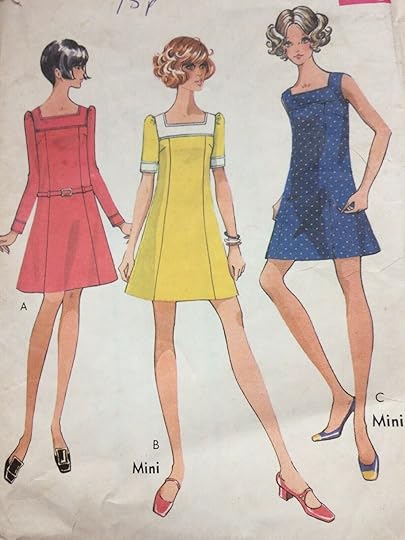
Hurrying to the station, stopping first to purchase a bag of hot chips we would laugh and joke as we travelled that one stop back to Slade Green. Even after a long day working at Woolies, we still had enough energy to get dressed up in the latest fashions and go out for the evening.
Happy memories that seem so long ago now.
The Woolworths Saturday Girls is available in all supermarkets, bookshops and online. Order your copy now> Why not sign up for my newsletter and hear more about my books? Sign up with your email address to receive news and updates.
Email Address Sign Up Thank you! subscribe to future blog postsElaine Everest

- Elaine Everest's profile
- 190 followers

