David Dye's Blog
November 24, 2025
Prioritize Peers: The Habit That Turns Good Colleagues into True Teammates
Prioritizing peers is the habit that took me (Karin) longer to learn than any of the other habits we teach.
In fact, when people ask about my career regrets, not recognizing the importance of deep trust with co-workers, sooner, always tops the list.
Why so hard?
I wanted to win.
And in the stack-ranked world I was living in as a Verizon executive, winning meant performing better than the other _____ insert other team I was asked to “crush” here (e.g., co-workers, regions, channels).
The messaging was clear. Success meant being at the top of the stack rank, an engaged and motivated team, and a happy boss. Bonus points for winning a fancy award and the vacation that went with it.
Peers were not the priority. Who had time for that?
Until I met Dan.
DanIt was my first day in my contact director role supporting our enterprise (read: big, important business customers), and we had a huge outage —an entire bank’s ATM network was down.
Dan, knowing I didn’t have a clue what to do, called and said, “Just keep me on the phone with you until this is fixed. I’ll lead you through every step of the way.”
I said, “You don’t have time for that!”
Dan said, “You need help. I’ve got you.”
I’m sure Dan had a long list of to-dos that day that would have helped his team, his customers, and his progress on the stack rank. But he dropped everything and prioritized my problem as if it were his own.
Dan understood the competition isn’t in the stack rank.
The competition is a bad customer experience.
That kindness and maturity changed my perspective entirely. I realized that supporting my boss and my team was a good start, but not enough for a successful and fulfilling career.
As it turns out, Dan helped EVERYONE and EVERYONE helped Dan (and whoever Dan needed them to help). Dan was winning– and not just on the scorecard.
Today, my competitors are not other CEOs running training companies; they are my peers– and I’m happy to say we work to help one another in big and little ways every day– and our clients, teams, and organizations are stronger as a result.
What It Means to Practice the Prioritize Peers Habit (Click on the Image For Quick Video Tips)
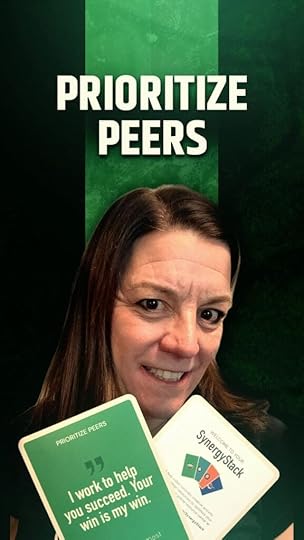
This video provides practical reasons that prioritizing peers is so important, and gives you a team experiment to strengthen the priortize peers habit on your team.
When you practice Prioritize Peers, you look beyond your lane.
You stay aware of what others are carrying. And you ask—not “Is this my job?” but “Is this where I can add value?”
You show up—especially when it’s inconvenient.You don’t wait until someone’s overwhelmed to offer help.You check in before they drop the ball.Why Prioritize Peers Builds Trust, Speed, and ResilienceWhen you consistently support your peers, it transforms the way work gets done.
Practicing Prioritize Peers helps you:
Build deep, earned trust—not just surface-level friendliness
Prevent small issues from turning into burnout or bottlenecks
Create team loyalty that survives pressure
Improve visibility across silos and functions
Model collaboration that raises the bar for everyone
The teams that win the most?
Are usually the ones where people want each other to win.
It starts with paying attention—and offering support.
1. Use this powerful phrase.
“How can I be most helpful?”
Simple. Direct. Respectful of their context. It opens the door without overstepping.
2. Ask before they’re in crisis.
Check in proactively. Helping early is more powerful (and less stressful) than saving the day late.
3. Go beyond the obvious.
Sometimes the most helpful thing isn’t doing the work—it’s giving feedback, clearing the path, or offering visibility.
4. Say it out loud when someone helped you.
“Thanks—what you did really helped me deliver on time.” That kind of recognition encourages more peer support.
5. Reciprocate—but not transactionally.
Make generosity the default—not the reward.
“I see you’re juggling a lot—want to talk through anything?”
“Would it help if I reviewed this with fresh eyes?”
“If I can take something off your plate, let me know.”
“What’s the best way for me to support you this week?”
“I’ve got capacity—anything I can jump in on?”
Three Mini-Personal ExperimentsHere are some experiments to try to strengthen the “prioritize peers” habit.
 1. Weekly Win Boost
Each week, identify a peer’s accomplishment and publicly celebrate it (e.g. chat shoutout, email kudos, meeting mention). Explain how their success supports the team’s mission.
2. Tuesday “Who Needs Help?” Check-In
Every Tuesday, reach out to one peer and ask: “Is there anything I can take off your plate this week?” Keep offers small, specific, and sustainable.
3. Peer Playback Loop
For 4 weeks, after collaborating with a peer, follow up with: “What worked well in how we partnered? Anything I could do differently next time?” This strengthens mutual accountability and continuous improvement.
See Also: How to Build a Network of Peer Relationships
Prioritize peers is one of the connection habits in our SynergyStack® Team Development System, and easy to use teambuilding tool to accelerate performance, reduce stress and work better together.

The post Prioritize Peers: The Habit That Turns Good Colleagues into True Teammates appeared first on Let's Grow Leaders.


The Overlooked Signal That Makes a Business Mentor Invest in You
You didn’t build your career alone, and you won’t get where you’re going without help either. Your business mentor is often the unsung hero of growth, offering perspective when you’re stuck, courage when you’re scared, and insight when you’re blind to your own brilliance.
But there’s one secret ingredient most rising leaders overlook: gratitude. Not the generic “Thanks for everything!” kind. We’re talking about sincere, specific, and strategic gratitude that sets you apart as someone worth mentoring again, builds your relationship, and attracts other mentors.
Let’s unpack why mentors matter so much, and how a thoughtful, strategic “thank you” can transform your trajectory.
The Single Most Important Thing You Can Do for Your Business MentorMentors speed up your growth because they’ve been where you’re going. They’ve already faced the conflict, the setbacks, the late-night self-doubt. And when you have the courage to ask for guidance, they give you their most valuable asset: their earned experience.
Despite all that value, it might surprise you how often we see mentees take their mentors for granted or act as if the mentor owes them time or wisdom. But mentors don’t owe you anything. When they invest in you, it’s a gift. And one of the most effective ways to nurture that relationship is to show how you’ve used their advice.
Tell your mentor how you’ve used their advice.
When you circle back and say, “Here’s what I tried after our conversation,” it tells your mentor that you listened. That you respect their wisdom. That kind of follow-through builds trust, credibility, and rapport.
And you’ll set yourself apart from others because very few people ever go back and tell their mentor, “Here’s how I used your advice.”
But don’t stop there…
What Makes Gratitude Meaningful (And What Doesn’t)
The thank-yous that matter most aren’t the prettiest, but the most personal. Anyone can say, “I really appreciate your time.” What sets you apart is showing how their time changed you.
Let’s break down the four elements of meaningful gratitude:
Use the advice—You took the next step because they gave you a map.Share how you used it—Tell them what you tried. Even if it didn’t go perfectly.Tailor the thank-you to them—Don’t default to gift cards. Listen and learn what lights them up.Reflect the results—If you get results immediately, share them. But you may need to go back to your mentor a month or two later and describe what happened for you: a promotion, a hard conversation that finally happened, a mindset shift. Taking time a few months later to let them know what happened will distinguish you as a world-class mentee.How to Tailor Gratitude for Your Business MentorMaybe your mentor is a craft beer aficionado—so you ship them a limited release from their favorite brewery. Maybe they mentioned their love for jazz—so you send them a vinyl of a live Coltrane recording. Or maybe they simply love handwritten notes—so you write one that brings tears (or at least a smile) to their day. Personalizing your thank you tells your business mentor that you see them as a human being, not just a source of useful information.
This is more than good manners. It’s how you build connection capital. And in your leadership journey, that capital pays compound interest.
How ‘Thank You’ Creates More OpportunityWhen you share how you used a mentor’s guidance, it validates their investment. It says, “You made a difference.” And guess what? People who feel that way are more likely to continue supporting you.
You also build momentum because your personal, specific gratitude gives them a story they can tell to others about your character. “She doesn’t just ask for advice—she applies it.” That becomes your reputation and opens doors. Gratitude turns good mentoring into great mentoring by making it a two-way relationship, not a one-sided transaction.
How to Stand Out as Someone Worth Mentoring AgainIf you want mentors to keep showing up, start here:
Close the loop—Always follow up. Even if you’re still in the messy middle of using their advice.Be specific—“That one sentence you said: ‘Where there is chaos, seize control’ has been on my wall ever since.”Make it personal—It’s not about a grand gesture. It’s about seeing them and making it relevant.Give back—Offer help. Connect them to someone. Send an article they’d love. Even better, mentor someone else and tell them you did it in their honor.Giving back is how you complete the cycle. Because one day, you’ll be the business mentor giving the advice—and the best mentors are those who remember what it meant to be on the receiving end.
Start Today: Who’s in Your “Gratitude Queue”?Grab a pen and list three people who invested in you this year. What did they teach you? How did you use it? What changed as a result?
Now take 15 minutes and do something that reflects that story back to them. A thank-you note. A meaningful message. A beer that says, “You matter.”
Because gratitude isn’t just kind, it’s not just manners, and it doesn’t just make you feel good (it is, and does, all those things). Gratitude is also strategic. And it might be the most under-used superpower in your career.
You Might Also Like:True Gratitude: More Than Pleasantries or RecognitionMentoring Activities: Powerful Ways to Make Mentoring More MeaningfulHow do I find the perfect mentor? (Video)How to Network at a Conference (Even If You Hate Small Talk)Want to drive innovation, solve problems faster, and build high-performing teams? We can help with calibrated leadership development programs and keynotes.

The post The Overlooked Signal That Makes a Business Mentor Invest in You appeared first on Let's Grow Leaders.
November 21, 2025
How to Stop a Hidden Cancer Eating Away at Your Team’s Productivity
Episode 330: What’s the hidden habit that silently sabotages your team’s productivity—and are you accidentally feeding it?
If you’ve ever sensed tension in the room, watched projects slow down for no clear reason, or noticed morale slipping even though no one is talking about the real issue, this episode will feel uncomfortably familiar. You’ll discover how conflict avoidance—what the host calls “Diaper Genie syndrome”—quietly derails the team’s productivity and holds you back from the influence, clarity, and results you’re striving for.
Understand exactly how conflict avoidance erodes trust, clarity, and your team’s productivity—and learn the early signs so you can stop it before it compounds.
Get practical phrases and simple conversation openers that help you address tension directly and respectfully.
Walk away with four small weekly experiments that make it easier to break the habit of avoidance and lead with more confidence and impact.
Play the episode now to learn the mindset shifts and everyday techniques that can immediately boost your team’s productivity and your influence as a leader.
Understanding Diaper Genie Syndrome and Its Impact on the Team’s Productivity00:00 — A Hidden Threat to Workplace Health.
David introduces the “cancer” that quietly drains morale and undermines the team’s productivity. He explains why this topic matters to any leader who wants stronger results.
00:49 — What Diaper Genie Syndrome Really Is.
He describes how conflict gets wrapped up and avoided, creating a buildup of unresolved issues that eventually impacts your team’s overall effectiveness.
01:57 — The Many Faces of Avoidance.
This section highlights everyday avoidance behaviors—like sugarcoating, vague phrasing, and emotional procrastination—that slowly erode team performance.
03:26 — Why Untouched Conflict Gets Worse.
David explains how avoiding issues fester, leading to resentment, broken trust, and stalled decisions that hold back collective output.
04:19 — The Workplace Fallout of Avoidance.
You’ll hear how bypassed conversations lead to gossip, triangulation, and disengagement, slowing collaboration and diminishing efficiency.
05:00 — Recognizing Avoidance When Managing Up.
David shows how unspoken concerns with your boss hurt influence, visibility, and your ability to contribute to better organizational performance.
05:48 — Avoidance With Direct Reports.
He breaks down how delaying necessary feedback prevents people from growing and weakens the team’s overall performance standards.
06:48 — Avoidance Between Peers.
This segment explores how private frustrations and public agreements undermine trust, undermine authentic collaboration, and reduce collective effectiveness.
08:22 — How to Address Avoidance Productively.
David shares practical language leaders can use to bring clarity and honesty into conversations—without being confrontational.
09:54 — Four Experiments to Break the Cycle.
He offers small weekly practices that make it easier to speak up, clarify expectations, and strengthen the team’s ability to move forward with focus.

The post How to Stop a Hidden Cancer Eating Away at Your Team’s Productivity appeared first on Let's Grow Leaders.
November 17, 2025
Create Ownership: The Habit That Turns Talk Into Commitment
You’ve been in the meeting. The meeting seems productive, but what’s missing is ownership.
Great discussion. Aligned in theory. Everyone nods.
But two days later?
No one’s sure exactly who owns what.
And someone says, “Wait—was I supposed to do that?”
That’s why you practice the Create Ownership habit.
Because alignment isn’t enough.
You need clarity, commitment, and a clear next move.
And that often starts with:
“Who will do what by when—and how will we know?”
Note: This habit aligns well with the Ignite Action habit and Scheduling the Finish
What It Means to Practice the Create Ownership Habit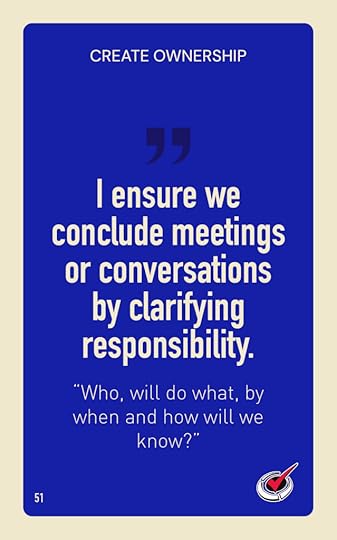
Click on the image to learn more about the SynergyStack Team Development System
When you practice Create Ownership, you make sure that good intentions become clear responsibilities.
This habit doesn’t mean micromanaging.
It means making decisions that stick.
When ownership is clear, work moves.
People know what’s theirs.
No one’s duplicating effort.
There’s accountability without chasing.
And it becomes easy to spot what’s off—early.
Practicing Create Ownership helps you:
Turn aligned ideas into concrete actions
Clarify who’s doing what—before confusion sets in
Build trust through consistency and follow-through
Keep momentum going between meetings
Avoid frustration, duplication, and silent delays
It’s the habit that transforms conversations into progress.
How to Make Create Ownership a Real HabitThis isn’t about being controlling.
It’s about being clear.
1. Use your phrase.
“Who will do what by when—and how will we know?”
Ask it before the conversation ends. Every time.
2. Write it down.
Don’t leave ownership in the air. Document it, share it, and reference it next time.
3. Clarify the “how will we know.”
It’s not done until it’s visible. Is there a handoff? An update? A signal?
4. Model accountability.
Own your own next steps out loud. Show what good looks like.
5. Don’t assume silence means agreement.
Ask directly: “Is this clear? Is this realistic?”
____(Insert name here) can you please capture this in writing so we don’t lose it?”
“Just to confirm: you’re owning this piece by Friday, right?”
______ (insert name here) what will success look like on this by next week?”
“Let’s summarize what we landed and who is doing what before we wrap.”
Three Personal Experiments to Build the Create Ownership Habit1. The Final 5-Minute Rule
For your next five meetings, reserve the last five minutes to ask:
“What decisions did we make, and who owns what?”
Don’t skip it. Watch how much clarity it adds.
2. The Ownership Recap
Send a quick follow-up after each meeting listing:
Owner
Task
Deadline
Then ask: “Is anything missing?” Build the habit of confirming, not assuming.
3. The Signal Check
For one week, ask this at the end of every commitment:
“How will I know this is done?”
Make visible ownership part of the culture—not just the calendar.
When you practice Create Ownership, things don’t just sound aligned—they actually move.
People don’t wonder what’s next.
They own it.
And they deliver.
“Who will do what by when—and how will we know?”
The post Create Ownership: The Habit That Turns Talk Into Commitment appeared first on Let's Grow Leaders.
November 16, 2025
Why Managers Avoid Real Feedback at Performance Review Time—and What to Do Instead
—name them with clarity, curiosity, and care.
It’s performance review season. You’ve coached, supported, and planned throughout the year.
And yet, here you are again.
The same pattern continues to appear.
Now you’re staring at their performance review thinking:
Do I really want to bring this up again?
Should I leave it out and focus on the good stuff?
Maybe Q1 will be different…
That right there?
That’s the “Diaper Genie” moment.
It could be tempting to wrap the feedback in the Genie — twist the lid, seal the discomfort, and deliver a performance review that smells… fine on the surface.
But the stink?
It’s still there.
And it’s getting stronger.
Note: If you struggle with having performance feedback conversations, start here to learn our INSPIRE method (quick video).
Why It’s Tempting to Disguise Feedback at Performance Review TimeYou tell yourself:
It’s not that bad.
They’re trying.
I don’t want to demotivate them.
I already gave the feedback—why say it again?
It’s the holidays.
Or you don’t want to face their face.
The disappointment. The defensiveness. Or, the tension that comes with naming something—again.
So instead of reinforcing the message, you…
Soften it.
Bury it.
Or, replace clarity with “professional” phrasing that means absolutely nothing.
And just like that, you’ve twisted the lid and resealed the stink.
What to Do InsteadIf the behavior is still happening, it’s not time to give up.
It’s time to deepen the conversation.
That’s where the A.R.T. Method of Advanced Accountability comes in. It doesn’t replace your previous approach—it builds on it. You’re still leading with:
Connection (This is a relationship, not a write-up.)
Curiosity (Don’t assume you know the “why.”)
Commitment (Name what happens next—together.)
Here’s how A.R.T. works:
A = Action → You gave feedback on the behavior.
R = Repetition → The pattern’s showing up again.
T = Trust → They made a commitment and didn’t follow through.
Ask yourself:
Are you at R or T?
Because what you say next depends on where you are.
This isn’t about a single moment—it’s about a pattern that didn’t shift.
What to say:“I want to circle back to something we’ve discussed. I’m noticing the pattern’s still there, and I’d like to understand what’s getting in the way.”
Then offer clear, recent examples. Neutral. Specific. No drama.
“It showed up in the sprint review, again during the client prep meeting, and once more in the October launch debrief.”
Then: get curious.
“How are you seeing this? What’s making this harder to shift?”
And finally: recommit.
“What would meaningful progress look like by the end of Q1? What do you need from me to support that?”
You’re not repeating the feedback—you’re reinforcing expectations.
And you’re doing it with belief in their ability to step up.
If You’re at Trust: Talk About the Broken CommitmentThey said they’d change.
They didn’t.
Now it’s about follow-through—and your ability to trust what they say.
But don’t switch to judgment.
Stay anchored in connection and concern.
“We’ve had this conversation before, and you made a commitment to shift. But I haven’t seen that happen.”
Then make it real:
“That puts us in a hard spot. Not just because of the issue itself, but because it impacts how much I can trust your follow-through.”
“I want to be someone you can count on—and I want to count on you, too. That’s how we work well together. Right now, that trust needs repair.”
Then reopen the door:
“What do you think is getting in the way? What do you need to move forward—and how can we get back into alignment?”
This is a Trust conversation.
You’re giving them a chance to recommit—or to recognize that something needs to shift more fundamentally.
You might feel like you’re protecting the relationship.
But here’s what’s happening:
The issue continues, unaddressed
The employee gets mixed signals
Your credibility weakens
Other team members notice—and disengage
You set yourself up for another round of Genie temptation next quarter
And just like that, one review becomes a long, slow decline in standards.
If the behavior is still happening, and you’ve already addressed it, this is not the time to twist the lid and reseal the feedback.
This is the moment to:
Reconnect
Get curious
And reset the commitment—clearly and directly
Because the longer you wrap it, the worse it smells.
And your team?
They deserve better than that.
What if it’s your boss giving you diaper genie feedback? See How to Respond to Frusrating or Lazy Performance Appraisal Feedback
If you’re looking to solve problems faster and build high-performing teams. We can help. Contact us to learn more about our leadership development programs and keynotes.
The post Why Managers Avoid Real Feedback at Performance Review Time—and What to Do Instead appeared first on Let's Grow Leaders.
November 14, 2025
How to Network at a Conference (Even If You Hate Small Talk)
So… you’re faced with the task of networking at a professional conference.
Which means you’re probably wondering how to glide into a room of strangers and start meaningful conversations without breaking into a flop sweat or pretending to be very, very interested in the buffet table.
Same.
I’m out here living my dream (seriously- I can’t believe I get to grow human centered-leaders for my day job). Which ALSO includes zigzagging across time zones, dodging travel delays like it’s an Olympic sport, and walking into ballrooms full of fabulous, fascinating people… most of whom I do not know.
I find this part hard.
I’m way more comfortable on stage with a mic and a mission than starting conversations from scratch.
But here’s the thing—I’ve learned a few techniques that work (and don’t require pretending you’re someone you’re not). So if this whole networking thing feels a bit awkward, pull up a hotel lobby chair, friend. Let’s talk.
How to Get Better at Meaningful Conversations at a Networking Event (With Video)

Instead of fixating on what you’re supposed to say about yourself, flip the script. Make the conversation about ideas. Ask about what they’re working on, what they’re fired up about, or what challenge they’re wrestling with. People love to talk about their passions—and you’ll shine more when you’re talking about what matters to you too.
2. Come with curiosity. Leave with connections.Approach others like you’re there to learn, not pitch or perform. Show up interested and interesting. Lead with questions, not a monologue about your resume.
Start the convo with this gem:GOATs (Greatest of All Time) Powerful Phrases of Conference Conversation“What’s something exciting you’re working on right now?”
Here are a few Powerful Phrases to keep things flowing, adapted from our latest book.
Connection:
“Tell me more…” (Honestly, these three words are magic. Try them.)
Clarity:
“What would a successful outcome do for you?”
(This shows a deep interest in the idea they are sharing and what what motivates them.)
Curiosity:
“How does this look from your perspective?”
(This question invites them to share their unique take on what they’re working on and why it matters)
Commitment:
“How can I be most helpful to you?”
(Bonus: they’ll usually ask the same back.)
Networking isn’t a one-way street. As much as you ask great questions, people will toss them back your way. So think ahead: What’s your exciting project? What do you care about? How can you be helpful?
If you’re not sure, that’s okay too. A little reflection goes a long way.
Your cheat code for confident networkingLead with curiosity, not credentials.
Talk about ideas, not agendas
Keep a few powerful phrases in your back pocket.
And remember: most people feel just as awkward as you.
So that’s one way I make conference networking easier… Now it’s your turn…
What would YOU add to the mix?
Note: If you’re looking to make networking easier for your next conference or company offsite, I’d love to share ideas about how I can bring unique and meaningful interaction as your keynote speaker.
The post How to Network at a Conference (Even If You Hate Small Talk) appeared first on Let's Grow Leaders.
4 Leadership Skills to Help Your Team Make Better Decisions
Episode 329: Do your team’s decisions ever feel stuck in endless meetings—or worse, made too quickly without the right input?
If you’ve ever wondered how to help your team make better decisions faster without sacrificing buy-in or clarity, this episode is for you. David Dye breaks down the simple decision-making skills that separate chaotic leadership from confident, empowered teams. You can finally move projects forward with less friction and more trust.
You’ll discover:
How to engage your team in the right way—so decisions get made efficiently and everyone knows their role.What to say (and not say) when you need to cascade a decision your team didn’t love—without losing credibility.The easiest way to clarify ownership and prevent the dreaded “meeting after the meeting.”Hit play now to learn how to make better decisions, lead with clarity, and empower your team to take confident action that sticks.
How to Make Better Decisions Without Losing Your Team’s Trust00:00 – The Challenge of Decision-Making.
David Dye opens the episode with tools to help leaders make better decisions faster, empower their teams, and stay effective even when outcomes don’t go as planned.
01:00 – Why Decision-Making Goes Wrong.
Too many organizations waste time with unclear ownership, too many opinions, and endless “meetings after the meeting.” David sets up the three disciplines to fix this.
02:00 – Clarify the Type of Decision.
Learn how separating “where we’re going” from “how we’ll get there” prevents confusion and helps teams focus on meaningful progress.
03:35 – Keep Conversations Focused.
When team members reopen settled debates, David shows how leaders can “call a timeout” and steer discussions back to the current goal or plan.
04:31 – Invite the Right People.
The second decision-making skill: involve only the people who add value. Too many voices slow progress; too few miss key information.
06:05 – The Cost of Excluding Key Voices.
A story about a COO who left out a middle manager—and how including her next time cut project time in half. Smart inclusion helps teams make better decisions more efficiently.
06:53 – Clarify Who Owns the Decision.
Before the discussion begins, define whether the choice will be made by vote, consensus, or a single person. Clear ownership builds trust and prevents frustration.
08:37 – The Power of Transparency.
David explains how letting people know how a decision will be made prevents resentment and ensures everyone contributes the right kind of input.
11:08 – Cascading Unpopular Decisions.
When your team disagrees with a final call, learn how to communicate the “why” with empathy and clarity—so your credibility and influence stay intact.
13:40 – The Payoff of Decision Discipline.
By applying these three disciplines—clarify type, invite wisely, and define ownership—you’ll make better decisions, move faster, and strengthen your team’s confidence in the process.
The post 4 Leadership Skills to Help Your Team Make Better Decisions appeared first on Let's Grow Leaders.
November 10, 2025
The Meeting After the Meeting: Where Genies Go to Gossip
You know the moment. The meeting after the meeting.
The Zoom ends. The chairs squeak. People start to stand.
And then… it begins.
“Can you believe what he said?”
“That’s never going to work, right?”
“Did you notice how she totally dodged the question again?”
Welcome to the meeting after the meeting—where unresolved conflict doesn’t disappear. It just changes venues.
This is where Diaper Genies go to gossip.
All the stuff that wasn’t said in the meeting—the tension, the wanna-be eye rolls, the dissenting ideas—gets tightly wrapped in polite silence and saved for later.
And while it feels cathartic in the moment, it’s a trap (and often the result of an unspoken pact). Here’s why.
What’s Really Happening in the Meeting After the MeetingNOTE: If this is your first exposure to our “Diaper Genie syndrome,” you’ll want to take a moment to click on the link and become grounded in this important concept– it includes a video.
When we avoid naming conflict in the room, it doesn’t vanish.
It leaks sideways—in backchannels, DMs, texts, and private Slack chats.
This is triangulation in action.
Instead of person A speaking directly to person B, they vent to person C.
Person C now becomes a carrier of tension they didn’t sign up for.
Meanwhile, the real issue—the one that stinks—is still sealed in the Genie.
The Cost of the Genie Gossip LoopTriangulation feels like connection, but it creates distortion.

Avoiding the real conversation leads to:
Eroded trust (colleagues become suspicious or exhausted)
Decision sabotage (people nod in the room but undermine later)
Missed innovation (the best dissent never makes it to the table)
Psychological drag (you replay what you should have said)
One person’s silence becomes everyone’s stress.
So How Do You Break the Cycle?You don’t need a dramatic confrontation.
You just need courage, timing, and language that opens—not escalates—the conversation.
Here’s how to shift from side-talk to real talk:
1. Pause the GenieBefore you chime in on post-meeting chatter, ask yourself:
“Why didn’t we say this in the meeting?”
“What’s preventing us from having this conversation with the right person?”
“Is this helping solve the problem—or just spreading it?”
This moment of pause can keep you from becoming part of the wrap-and-hide cycle.
2. Choose Direct Over DiagonalUse a Connection GOAT phrase to open the conversation directly:
“I care about this project and I’m confident we can find a solution we all support.”
If someone vents to you about another person, try this instead of joining in:
“That sounds important—have you had a chance to bring that up with them?”
You’re not shutting them down—you’re nudging the conversation toward its rightful destination.
3. Surface What’s UnsaidIf you notice something went unspoken in the meeting, say so:
“I noticed we didn’t really address X in the room. Is that something we need to revisit?”
“Are there concerns that didn’t make it into the discussion?”
You’re not being disruptive. You’re opening the lid before the situation gets sealed in plastic.
BONUS: Preventing the “Diaper Genie Syndrome” in the First PlaceIf you lead meetings, design them to minimize the need for any “after the meeting” cleanup:
Invite dissent explicitly:
“What’s a concern we haven’t voiced yet?”
Normalize second thoughts:
“If something hits you later, bring it back—we can always revisit.”
Recap clearly:
“Let’s confirm what we’re all agreeing to before we close.”
Clear commitments reduce confusion, assumptions, and the quiet buildup of frustration.
The Meeting After the Meeting feels safe.
It’s where you can say what you really think.
But if we keep dumping our conflict into the Genie of gossip, we’re just wrapping dysfunction in plastic.
It still stinks.
If you want to build a high-trust team, one that works through challenges instead of dancing around them, bring the conversation back into the room.
Start with curiosity.
Lead with clarity.
And when something smells off?
Don’t wrap it. Address it.
See Also: Got Workplace Gossip: Powerful Phrases to Stop Workplace Gossip Before It Spreads
Are You Getting On the Wrong Boats? A Quick Guide to Smarter Meetings
The post The Meeting After the Meeting: Where Genies Go to Gossip appeared first on Let's Grow Leaders.
November 7, 2025
What to Do When the Culture at Work Is Shifting—How to Stay True to You
You’re doing good work, when suddenly the vibe changes. The culture at work is shifting fast. And not in a good way.
It’s subtle at first. That manager who used to speak up in meetings now stays suspiciously quiet. The team that used to push for excellence is now pushing deadlines… out the window. Or decisions are made that feel the opposite of human-centered. You start hearing things like, “Well, that’s just how it works around here now,” or “Pick your battles.”
You’re left wondering: Have we all collectively lowered the bar while I wasn’t looking?
And now you’re feeling pressure—spoken or not—to compromise what you believe is right. Just a little. Just this once. Just enough to “fit in.”
Let’s talk about what to do when the culture starts slipping, and you don’t want to go down the slide with it.
How to Stay True to Yourself When the Culture at Work is Shifting (An Asking for a Friend Video)

You cannot hold the line on culture at work if you don’t know where the line is.
So before you try to be the voice of reason in a meeting or the lone brave soul saying, “Actually, that’s not OK”—pause.
Ask yourself:
What are the top 3 values that guide how I work?
What kind of behavior crosses the line for me?
What decisions would keep me up at night if I went along with them?
Don’t just think them. Write. Them. Down.
They’re your compass. Because in shaky culture, clarity is power.
2. Pay Attention to the Micro-MomentsWorkplace culture doesn’t collapse overnight. It’s death by a thousand eye-rolls. A dozen “just this once” exceptions. A handful of “Let’s not rock the boat.”
The real danger isn’t the big ethical blowout—it’s the tiny choices we tell ourselves don’t matter.
You do have power here. Ask yourself:
In this moment, what’s the most values-aligned way I can show up?
Sometimes that means saying something. Sometimes it means not laughing along. Sometimes it means raising a tiny red flag when everyone else is busy looking the other way.
Click here for FREE Sample Chapters
Don’t underestimate micro-moves. They shape culture just as much as mission statements.
3. Don’t Just Vent. Make a Case.If you feel something’s off, don’t start with “this feels weird” and expect action.
Instead, try these powerful phrases:
“I’ve noticed X is happening.”
“Here’s why I think that’s a risk to our team / trust / performance.”
“Here’s my recommendation for how we handle this differently.”
The more grounded you are, the harder it is for your feedback to be brushed off as “overreacting.”
4. Know There Might Be Consequences—But So Is SilenceStanding up in a culture that’s sliding is not a popularity move.
Sometimes people will sideline you. Sometimes they’ll tell you to “just let it go (more in the video above)” You might even get that look in the meeting—the one that says, “Can you just not right now?”
So yes—raising your voice might shake things up. But staying silent? That erodes you.
You don’t have to be a culture crusader or the office moral compass. But you do have a responsibility to yourself not to check your values at the door just to survive the day.
So, when things start shifting:
Get clear on who you are.
Show up intentionally in the micro-moments.
Be specific if you speak up.
Accept that discomfort is part of the deal—and still worth it.
Because the real question isn’t “What will they think if I speak up?”
It’s “What will I think of myself if I don’t?”
If you’re looking for more practical tips for dealing with challenging situations at work, check out our book Powerful Phrases for Dealing with Workplace Conflict.
The post What to Do When the Culture at Work Is Shifting—How to Stay True to You appeared first on Let's Grow Leaders.
Stop Making These 4 Communication Mistakes If You Want Influence with Your CEO
Episode 328: Ever walked out of a meeting with your CEO, wondering if you just tanked your credibility instead of strengthening it? If you ever feel your conversations with senior leaders don’t land quite right—or worse, stall your projects instead of moving them forward—you’re not alone. This episode dives into the subtle communication mistakes that quietly kill your influence and shows you how to turn every CEO interaction into an opportunity to showcase your strategic value and leadership presence.
Here’s what you’ll take away from this episode:
How to shift from reporting activity to communicating impact that earns executive trust.
Simple language strategies that keep your CEO engaged and aligned with your priorities.
Proven phrases that help you bring clarity, confidence, and focus to every high-stakes conversation.
Press play now to learn how to master CEO conversations and walk into your next one with confidence, clarity, and influence.
Common Communication Mistakes That Kill Your Influence[01:00] – Why CEO Conversations Matter More Than You Think.
David explains that one-on-ones with your CEO are among the most high-leverage conversations you’ll ever have. Done well, they move strategy forward—done poorly, they create friction and stall progress.
[02:00] – Mistake #1: Looking for a Pat on the Back.
Instead of listing everything you’ve worked on, focus on strategic results. CEOs don’t want activity reports—they want clarity on what matters most and how your work ties to business outcomes.
[03:12] – Mistake #2: Speaking in Jargon.
Using team-level acronyms or technical shorthand forces your CEO to decode your message. Keep your language simple and connect your points to the broader business impact.
[04:19] – Mistake #3: Treating the CEO Like a Counselor.
Don’t bring problems without perspective. CEOs expect you to show awareness of risks and options—bring context and a potential path forward before asking for input.
[06:36] – Mistake #4: Thinking Out Loud.
Unfiltered, half-formed ideas can cause confusion and unnecessary work. CEOs expect you to have a considered point of view, not brainstorm in real time.
[08:08] – Do’s and Don’ts for Strategic Conversations.
Start with the headline, not the backstory. Be prepared for ROI, risk, and timing questions—and when you don’t know something, pair “I don’t know” with a plan and timeline to find out.
[09:55] – Balancing Friendliness and Professionalism.
Even if you have a warm relationship with your CEO, begin every discussion with business clarity before easing into casual conversation. That’s how you model true executive presence.
[11:13] – Phrases That Build Credibility.
Learn powerful openers like “Here’s the core issue I think you need visibility on” or “From a strategic perspective, here’s how this ties to our top priorities.” These show confidence and focus.
[12:53] – Anticipate Their Questions Before They Ask.
Proactively address what your CEO is likely to ask—ROI, next steps, or strategic direction. This approach communicates preparation, respect, and leadership maturity.
[13:33] – The Real Secret: Think Higher, Say Less.
Influential leaders don’t talk more—they think at a higher level. Concise, strategic communication earns trust, saves time, and makes every CEO interaction count.
The post Stop Making These 4 Communication Mistakes If You Want Influence with Your CEO appeared first on Let's Grow Leaders.