
Dan Rhodes's Blog
February 14, 2025
Showbiz Silver Jubilee

That’s right, people – I’ve been on the front line of the entertainment industry for a full quarter of a century. Twenty-five years ago today my first book, Anthropology, was published in Italy. I was out of the trap and on my way. It’s been a psychedelic blizzard ever since, with highs, lows and in betweens. Longstanding readers will know that the lows have been piling up for the last few years – I’m passing this momentous milestone with my first eight books out of circulation in my homeland thanks to *checks notes* accounting irregularities at the publishing house. [I won’t return to that unfortunate business in detail today, but if you’re after an update, it’s as raw as ever – the case is not closed, and I’m still as angry about those people as Rupert Grint is about having to pay his fair share of income tax.]
It’s been over four years since Sour Grapes came out, but I’ve not been idle. I had the idea of marking this anniversary with an annotated compendium of my three story collections, and got started on it in the middle of 2022 with the aim of getting it ready for this year. To my amazement, I made it. Get a load of this:

[Since you ask, Tunnel of Love is a nod to the Fun Boy Three single that I bought from Woolworth’s in Tiverton in 1983.] Frustratingly, though, we’ve hit a snag. A publisher came on board last year, telling me they were up for putting it out in 2025. Months went by with no further news, and when their silence started to become ominous I chased them up, at which point they told me they’d decided that the book was too long and they couldn’t afford the paper. Oh.
Maybe this is the full story – times are really tough for small presses – or maybe they also had cold feet about the content of the book. I don’t know, and I’m not going to press them; I would rather move on with a minimum of hard feelings. The problem may stem from the notes in the omnibus amounting to a kind of memoir in which I tell stories about the stories, as well as going into the books’ publication histories. It is, I hope, a light and enjoyable read, but anecdotes about my dealings with publishers were inescapable if I was to do this properly, and the picture it paints of some of the characters in and around the book trade is not wholly flattering. I know from experience that the biz is pathologically inward-looking and wretchedly cautious (often to the point of coming across as a shower of snivelling cowards), so finding a home for this book was always going to be a struggle. I can’t see a big house touching it with a barge pole, so its only hope is to be taken on by a pugilistic independent publisher. If you happen to be a pugilistic independent publisher who digs what I do and can afford the paper, feel free to get in touch.
If no pugilistic publisher is forthcoming I’ll have to weigh up my options. I’m hoping it won’t become a Great Lost Book. Even if you already have the story collections there’s a ton of new material in there (60,000+ words), so it counts as the 11th instalment of the Dan Rhodes franchise and will consequently be an essential purchase for everybody, if and when it does finally appear. I would have preferred this update to have trumpeted a release date, but what can you do? I don’t know how all this is going to unfold, but I’ll keep you posted on any major developments. In the meantime, stay optimistic and save up your pocket money just in case…
Thanks for tuning in.


November 6, 2023
Skopje Calling

In news that will come as a shattering blow to my enemies, I’m still in the game. For starters, Sour Grapes has just come out in paperback. I expect you’ve already read it, but if not you’re running out of excuses: buy it from your favourite bookshop today. [And I don’t know exactly how these things work, but I would like to think that international shipping costs will be slightly less terrifying now it’s smaller. Who knows?]
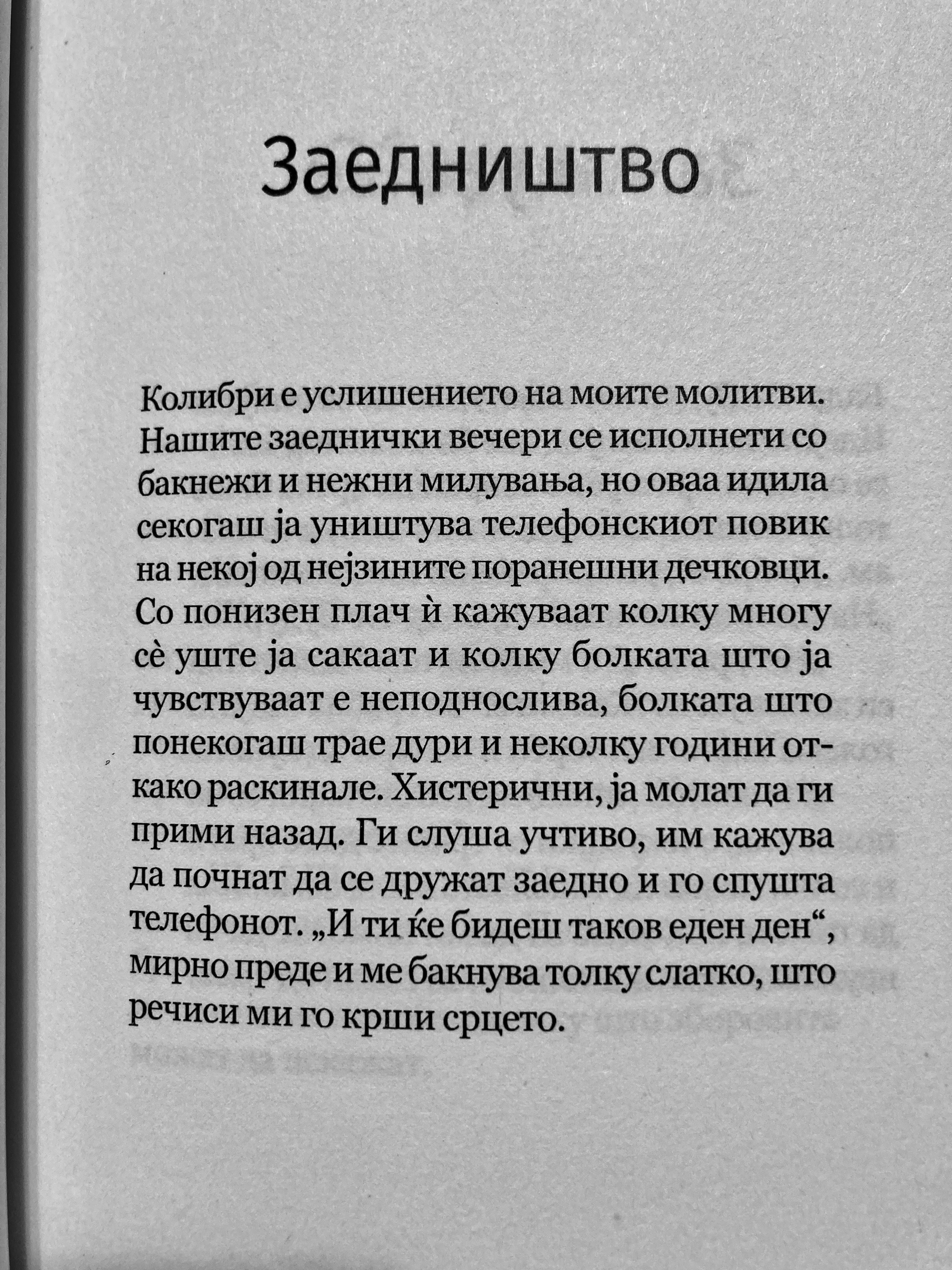
And what’s the green one on the right? Give yourself a prize if you identified it as being the North Macedonian edition of Anthropology. Needless to say I’m very chuffed about this – it’s my first time ever in Macedonian, and the first time I’ve sorted out a foreign deal by myself. It’s published by Antolog Books, and they’ve been a dream to work with. I would love to give the translator a shout-out, but to be honest I can’t work out what they’re called. I’ll get back to you on that. That’s the thing about translations. I always pass my details on to the translator – sometimes you never hear a word from them, and sometimes you get a good amount of back-and-forth. My Finnish translator even turned up on my doorstep with a bundle of Moomins memorabilia. Nice.
Whenever a new edition of Anthropology comes in, I amuse myself by trying to work out which story is which. This is definitely one of the trickier translations…
In other news… there isn’t much. I’m struggling to find the time to write, what with work and other things, so my plan to get a book out in 2025 is looking less and less likely. But you never know.
I should probably leave it there, while I’m still relatively upbeat. If I stay here any longer the wheels will come off.
Happy reading.
April 14, 2023
Anniversary Frenzy

When you’ve been in showbiz as long as I have, landmark anniversaries come around thick and fast. Put up some bunting, pour yourself a beaker of pop, then buckle up and read on. To begin with, we’re celebrating the 20th anniversary of my first novel, Timoleon Vieta Come Home. I wrote this one between 1997 and 2002, and it came out in early 2003. I found it very hard, which is why it took so long. The first people who were supposed to publish it passionately disliked it – they said it would ‘not stand up to critical scrutiny’, and refused to put it out unless I made some really lame-arsed changes. I wasn’t having that, and after a long and ugly scrap I managed to wriggle out of their grip and shop it around the biz.
A few years earlier I’d bought a small and superbly produced hardback edition of Fup by Jim Dodge, and thought my Anthropology stories would sit nicely in a similar volume. In 1998, when I felt the time had come to send them out, its publisher – Canongate Books – had been top of my list. They never got back to me though, and were consequently added to my blacklist, but after I read the brilliant John Fante books that they published I forgave them, so when Timoleon Vieta was free again, I approached them for a second time. I liked the idea of being published alongside John Fante, and the great Sylvia Smith’s Misadventures. I’d also read Laura Hird’s Born Free, and Be Wise, Be Otherwise by Kevin MacNeil, and wanted in. When they told me they liked it, and offered £4000, I jumped at it.
The London publishing scene was stuffy and square, but Canongate Books was different. They were based in Edinburgh for a start, they played music in the office, and the people who worked there were, mainly, a groovy bunch; I have fond memories of getting shitfaced with them in The City Café after work. While London had been dominated by posh people who worked in publishing because that’s what posh people do, this lot gave the impression of having blown in off the street because they loved books and wanted to get involved. It was a relief to get away from the Sloan Ranger side of things – while that wasn’t entirely absent here, this office was mainly the preserve of balls-out Scots, and as a hapless Englishman I had to squint my ears to keep up. These were my new colleagues, and I was happy again.
They did a great job on the production, taking one of the Vien Thuc paintings I’d included and slapping it on the front of a good-looking brown paperback with flaps. The very first ones had a kind of texture to them. Superb. And then it came out. Its awesome publicist helped get it some great coverage, it sold well, it won prizes, and it picked up some cracking reviews, including a belter from Michiko Kakutani in the New York Times – all of which made my former publisher look stupid. Mission Accomplished. It was translated all over the place, and I hit the road more or less non-stop for a year and a half.
It was a hard book to talk about, though. I’m always uncomfortable answering questions about my writing; this is partly because I’m a bit thick and can never think of a clever answer, but also because I’m old-fashioned enough to value plot, and don’t want to risk giving anything away. Perhaps more than any of my other books, this one has an ending that really defines it, and I struggled to talk about it because without touching on how it ends, I’m not really talking about the book at all. [I still get grief about the ending from lucky people who haven’t understood it.] And yet I ploughed on, mainly because I got to go on some amazing trips to places I had never been to before. I toured America with DBC Pierre, and England & Scotland with Jim Dodge; DBC & I were the warm-up act for the Flaming Lips in the Hague; another night I found myself singing Foreigner’s I Want To Know What Love Is while Brian Eno fed me helium to help me hit the high notes. They were good times, and inevitably they fizzled out.
[I was going to write a bit here about how the wheels came off shortly afterwards, how after they’d had an inexplicable hit the trustafarian who ran the show decided they should be more ‘professional’, and people I’d really enjoyed working with kept vanishing, while sleek execs were headhunted from the big houses in London, and the whole scene became less Scottish. You’d visit and it would be deathly quiet, with no music and everyone with their heads down in case they were given the chop for talking in class. They also spent a fortune changing their excellent logo to something that looks like it belongs on a 1980s revision guide. I decided to leave all this out, though – I’ll focus on the positives instead, and besides, breaking the publishing omertà is a lonely and thankless business, and right now I can’t be bothered with it. I was also going to make mention of how the royalties for the dog book stopped coming in around this time – all those shiny new execs, but somehow they couldn’t keep their accounts in order – but I’ve gone on about this in extraordinary detail before, and won’t bother you with that story again. I worked with loads of excellent people during those later years, but the spirit had gone. The squares had taken over.]
It’s out of print now, and will probably remain that way. It puts me too much in mind of the bad times, and is dead last on my list of novels I would like to revive. I can’t remember much about it, but I do remember how it ends. No matter how many people give me grief about it, I’ve always known that ending was the right way to go. Oddly, the 1980s boarding school casualties in charge of the company were exactly the kind of people I was railing against. I wonder what was going through their minds as they read it, and decided to publish it… I suppose they would have been cheering-on the baddie as he commits his atrocity. The reader’s not meant to be on his side, but they must have found a kindred spirit in him as he causes devastation in other people’s lives, then carries on without a backward glance – just as Jeff Bezos roots for Lex Luther when he reads his Superman comics. It takes all sorts, unfortunately.
It had a good life – it starred in Knocked Up, and Cate le Bon wrote a song about it. And I never did find out how to pronounce Timoleon Vieta.
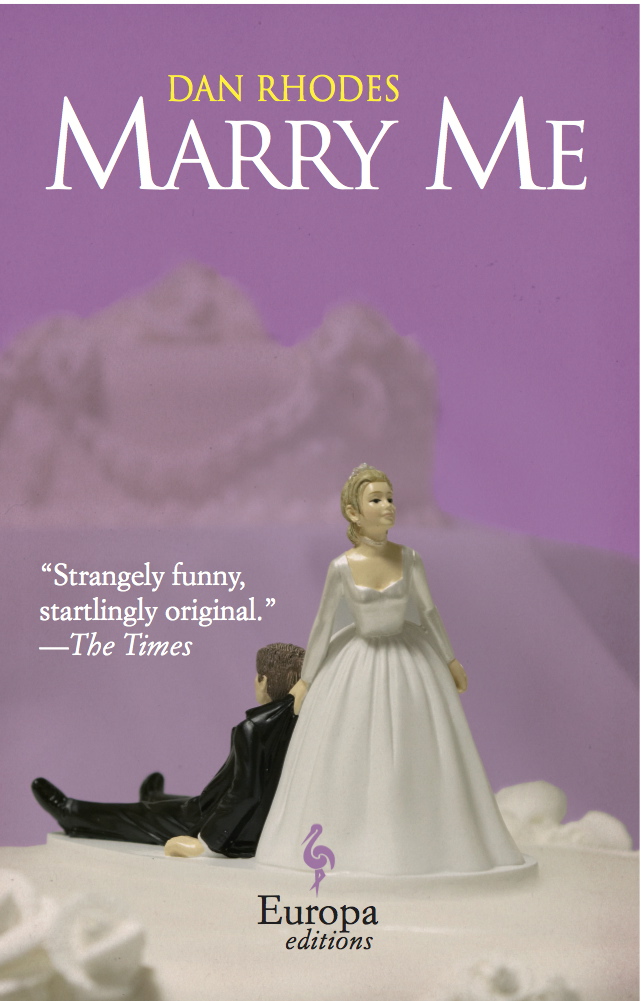
The other anniversary is for my poor, neglected Marry Me, which is now ten years old. I love this book. Hardly anybody has read it, and that’s humanity’s loss. It was my sort-of-follow-up to Anthropology, and if you forced me to choose, I would say it’s the better book. We launched it at Clapham Grand, on a bill with Tim Key, Aidan Moffatt and a pre-inflatable-suit Sam Smith. When the American edition came out it had the most amazing review any book has ever had – an epic in the Washington Post. They loved it, and wouldn’t stop going on about how much they loved it. Sadly, though, it was launched as a Valentine’s Day title, and because nobody reads Valentine’s-themed books, let alone reviews of Valentine’s-themed books, it went unnoticed and had no impact on sales. Gutting.
Now it’s time for some commerce:
You should finally buy a copy of Marry Me. Just click here to do so in a way that makes me a couple of quid. When it arrives you’ll see that I’ve hand-corrected the typo in the bio.
You can buy the dog book as well, if you’re so inclined. The remaining copies live here.
And when I did the long piece about This is Life they sold out pretty quickly, but I found another box of them in the cellar so they are back in stock now.
And they’ve revived the hardback-for-a-fiver offer on Sour Grapes. Let’s face it, if you don’t take them up on this, there’s not a great deal of hope for you as a human being.
Commerce over.
Don’t worry, I think this is the only time you’ll be hearing from me this year. I’ll be back at some point though, with more of the usual. Hopefully I’ll have new stuff to report. I’m trying to get something together for 2025 – my Showbiz Silver Jubilee – but it’s hard to find the time. I just don’t know.
Happy anniversary.
DR
December 1, 2022
Cheap Grapes

Look at them. Don’t you wish you had one? Even if you do have one, see how good they look piled up. It’s been out for over a year now, and in spite of my enemies’ best efforts it’s ticked over surprisingly well. This comeback was all a bit of a leap into the unknown, and I wasn’t sure anybody would remember me so it’s a relief to know that there are still some people out there with incredibly good taste: people like you. Business-wise I tried out something new too – a profit-sharing deal offered by Eye & Lightning Books, where you don’t get an advance but if the book shifts you get a much better royalty rate than a normal publisher would offer. It was all very experimental, but so far it’s worked – I’ve had my first cheque for it. [It’s almost enough to make you wonder why authors put up with the crumbs-under-the-table model that’s offered by most of the rest of the biz…] Call me a breadhead, but I like getting paid; not least because it helps to fund my debilitating addiction to Japanese detective novels, but also because it’s a palpable signal that there are still people out there who dig my trip, and after a pulverising few years that was a much needed morale boost. Big thanks to everyone who’s bought a copy, and who’s helped us get word out that it exists – you’re a true patron of the arts. And if you haven’t bought it yet, read on…
We still have a pallet of hardbacks to shift, to make way for a paperback edition which will hopefully be out at some point next year. Here’s where you come in: instead of sending them off to the mincer like a normal publisher would, we’re banging them out at a fiver a pop. Even with postage added it’ll be the same price as your average paperback. And if you’re overseas, even with international postage it’ll make it a slightly less intolerable price than it was before. This offer runs through December, and it’s while-stocks-last, so grab ’em while you can. It’s a superb illustrated edition that would be a credit to anyone’s bookshelf. If you bought it at full price, please don’t be aggrieved – some of the money will have gone towards my new dehumidifier and/or the latest Keigo Higashino novel, so you’ve secured your place in heaven. All you have to do is click here, and before you know it this glorious object will be yours to keep. Why not get two – one to read, and one for best? If you spend over £15 at their shop they throw in free UK postage too, so go crazy.
Thanks for putting up with this unseemly self-promotion. As a reward for your patience I’m going to get through an entire update without complaining about Private Eye or C*******e Books. Bollocks to them still, of course, but I’m not going in deep this time. Enjoy the respite, and have as excellent a festive season as you realistically can.
DR
March 5, 2022
This is Life at 10

It’s true, my novel This is Life is turning ten years old. It’s a Parisian romp, and I love it to distraction. I recently found a pile of copies in the cellar (the edition above), so the stars have aligned and it’s time for a spectacular re-launch. If you’ve not read it, do yourself a favour and get a signed copy here.
Here’s the excessively long story of how I came to write it, and what happened next. It’s a tale of highs and lows. Babies are born, there are really tenuous cameos from pop stars and royalty, and – I would hate to disappoint – I spend half of it frothing at the mouth about the Usual Suspects. If that seems like something you’d be interested in, let’s get cracking. Make yourself comfortable, and don’t say I didn’t warn you.
It all began, as most things do, with a chicken pox vaccination in Stockport. Wife-features had never had that particular lurgi, and we were planning on having a second child, so she was advised to get herself jabbed. Our local medical practice couldn’t administer the injection, so we had to travel to Stockport, which is about twenty miles from where we live. We’d not been in the area long, and this was going to be our first trip there. She took to researching it, and started getting excited about the Hat Museum, and the Air Raid Shelter, and all the other things we could combine with the visit to the doctor. Then we found out that all those places were closed on Mondays, the day of the injection, and her plans turned to dust. We resolved instead to walk around the shops. They have a TK Maxx, so all was not lost.
To see her get so fired up about a trip to get an injection brought home quite sharply how we had slipped into a rut. This is quite normal with a pre-schooler on the scene, but I still felt an urgent need to up my husbanding game and give my poor bride something really worthwhile to look forward to – something even better than a half-day excursion to a specialist immunisation clinic in a nearby town. It meant dipping into life savings, but something needed to be done, and a few weeks later, with the toddler farmed out to grandparents, we were on the Eurostar heading for Gare du Nord, and a cheap hotel at the foot of Montmartre. We’d both been to Paris before, but only just. I was there for a couple of days while Interrailing at the age of seventeen. The city was, of course, wasted on me back then. Wife-features had also visited as a teen, on a visit from her home in Manila to family in Germany, when she’d been taken on a whistle-stop tour of Europe in her uncle’s car. For her, Paris had been a quick meal at a Chinese restaurant, a hurried gawp at a distant Eiffel Tower, and a hasty retreat. It felt like the first time for both of us and we were, it would be pretentious to deny it, very much tourists.
A few years earlier I’d published a novel set in Paris, The Little White Car, which I’d written – for no reason other than it amused me at the time – under the transparent pseudonym of Danuta de Rhodes; a youthful, glamorous and female alternative to myself. I’d hoped to visit the city while writing that book, to do some extensive research in the bars and cafés, but the wages from my stockroom job at a bookshop never quite reached the point where I could cover it. So instead I’d bought the Time Out guide, and worked with that. [Incidentally, This is Life takes place in the same universe as The Little White Car; they share a character. A character from Little Hands Clapping makes a cameo too.]
So there we were. Paris. This was 2010, before smartphones had been invented (well, in our house, anyway) and we’d forgotten the camera, so we bought a disposable one – the viewfinder of which, we subsequently discovered, was aligned in such a way as to make sure we were only taking pictures of each other from the knees down. The first thing we did was get lost on the way to the hotel. Then, once we’d found it and dumped our bags, we got lost again (which was fine – you don’t really know a city until you’ve repeatedly got lost in it). At one point we found ourselves on Rue Eugène Carrière, named after the painter. This was a cause of jubilation, because a few years earlier we’d found ourselves transfixed by a tiny picture of his, Enfant avec une casserole, at Aberdeen Art Gallery, and an oversized canvas of it hung on our wall at home (it still does). Suddenly, by mistake, we were lost on a road named after him.

We looked for streets that seemed to go uphill, and soon we were winding our way to Montmartre. Before long, a minor drama began to unfold on the road ahead. In this neighbourhood it’s possible (at least it was back then) to rent a groovy old Citroën 2CV, complete with driver, to cruise the narrow lanes. One of these little beauties was up ahead, and it was having a bad day, struggling to make it up the cobbles. When we reached it, we asked the driver, a young woman who seemed to be having a great time regardless of the grinding noises coming from under the bonnet, if we could help. She jovially declined, saying that if it came to it her passengers could get out and push. She gave the impression that this was quite a regular event for a 2CV driver in Montmartre. I caught a glimpse of these passengers, grim-faced in the back seat, and hoped that it would come to it. It would have been quite a show. Sadly, she skilfully got the car moving just enough to regain its momentum, and off they went, leaving just a black cloud and a burning smell. An episode like this ended up in the book, the role of the driver taken by the character Sylvie. [The only time I’ve ever used the ‘this-character-looks-like-this-famous-person’ shortcut in my writing was when I described Sylvie as resembling a Godard-era Chantal Goya. Usually I would consider this to be lazy writing, and I would be right, but I couldn’t find a way to improve on it, so just this once I let it sneak through. I named her after the superb story ‘Sylvie’ by Gerard de Nerval, which I recently re-read after many years, and discovered it also contained a character called Aurélie – the name of Sylvie’s co-conspirator in my book. It’s a small world.]

We’d only just arrived in the city, and a story was forming. I already had the starting point. I’d cut a thread out of The Little White Car where a stone was thrown into a crowd as the instigation of an art project; I’d liked the idea, but it was too much of a tangent for a breakneck novel so I booted it into the long grass. Here was its moment.
The next day we walked along the Seine, where we saw a cormorant, and I held my breath for as long as it stayed underwater. We strolled through various gardens, often beneath horse chestnut trees, where we marvelled at the carpets of conkers lying, ignored, below. I briefly considered running a conker import/export sideline. We ate falafel in Le Marais, and went on an evening trip to the Musée de l’Érotisme. We ate breakfast at Amélie’s café, and visited Shakespeare & Co., where – as if they’d known I was coming – there was a face-out copy of Little Hands Clapping. As I wandered around Montmartre Cemetery I jotted down names for future use, almost as if I was a proper writer. Pretty much everywhere we went over the course of those three days ended up worming its way into the book. By the time we were on the train home the foundations were in place; the rest I would have to make up as I went along.
***
I was in a hurry. This was in the dying days of writing being my main job. I’d always taken on odds and sods of casual labour on the side to keep afloat, but with a growing family and a plummeting bank balance it was looking certain that I would have to get a reliable wage coming in before too long, particularly if we were ever to claw our way out of renting. Don’t ask me why, but banks tend to be hesitant to provide mortgages to people who don’t have regular employment. Part of the solution to all this was to write a potboiler. I love reading short, quick, action-driven balls-out-commercial novels, so I had no qualms about this. I gave myself three months to finish a disposable 50,000-word romp that I could flog for enough money to add to our dwindling savings and wave at the bank as a deposit, and maybe convince them to make up the balance on a small house. Off I went. I decided to reanimate my old commercial fiction alter-ego, Danuta de Rhodes. Writing behind a pseudonym, however flimsy and facetious, opened a room in my brain that I didn’t otherwise have access to, and together we got off to a flying start.
It wasn’t long before I realised that I’d failed to achieve my dream of dispassionately rattling off some throwaway pulp that I could forget about the moment I’d flogged it. The main characters instantly became my pals, and I knew I was going to take as much care over this as I had my other books, and be just as attached to, and maniacally defensive of, the finished product. But still, I kept the speed up. For the first time, I started a book on page one and let it unfold from there. Everything before this point I’d written piecemeal, jumping ahead to set-pieces, and pasting everything together as time went by. This time I wouldn’t jump ahead; if I had an idea for a scene, I would have to write myself to that point before tackling it. And it worked. It spurred me on, I wasn’t getting tangled up, and I was loving it, writing loads every day. I even snuck away from the sprouts on Christmas day and wrote a couple of thousand words. The story grew, and morphed as it went along.
I won’t say much about what happens (as Morag MacLochness would say, yous’ll huv to buy the book to find oot), but I kept going, and stuck to my timeframe. Three months after starting, the whole thing was done. Its predecessor, Little Hands Clapping, had taken three years. I’d failed quite spectacularly in the length department – it was over twice as long as I’d planned: at 108,000 words it remains the longest book I’ve written. So much for my pocket potboiler. I’d never written like that before, and I couldn’t have been happier with how it had all come together. I had a really good feeling about this one.
***
There’s a terrible point in a book’s life when you have to take it out of your head and into the cruel world. As usual I didn’t have an agent – agents don’t like me – so it went straight to my publisher of the time, a Scotland-based operation whose name escapes me. They came back all positivity, and said they wanted to publish it, but on one condition: that I put it out under my own name. The squares had taken over. I hated this idea. I knew that if I did this I would be permanently shutting the door on the Danuta room in my brain, the very thing that had fuelled this book, and made it such a joy to write (and, I was hoping, to read). They gave me a tight deadline to decide: ‘This offer is off the table at noon tomorrow’ (you don’t have to read that in a Scottish accent – a cabal of minor English aristocrats seized power a long time ago), a move that seemed heavy handed, unnecessary and just plain ‘orrible. Alarm bells rang, but when it came down to it I desperately needed the money, and I caved in. I can’t win every battle, and maybe I’m not always right about everything. Perhaps it really was time to put Danuta to sleep. Looking back, having accepted the decision to kill her off I should then have taken the book on to the open market. Because of its size (mainstream publishers, bless their hearts, love 108,000 word novels) and potentially broad appeal (well I think so, anyway) I’m pretty sure it would have generated interest. I’d had a gathering Bad Feeling about that operation for a while – so much about it just didn’t seem quite right – but I’d suppressed it. If I’d had more trust in my instincts I’d have got out sooner from what I subsequently realised was a Very Bad Situation. But it was what it was, and it all happened quickly. It felt as if I was selling a limb, but I signed the contract, cashed the modest but helpful cheque and hoped for the best.
Surprisingly, I soon got over my uneasiness. Thanks to my scraps with their god-awful bosses, I’m often guilty of forgetting that most people who labour in the book mines are excellent, and I worked with some great humans at that place. One of them helped me with my dismal French (I’d included phrases here and there, all of them wrong), the copy editor and proof reader (the engine room of the industry) were a pleasure to work with, and the cover… well, the cover was fantastic. I’m inclined to stand aloof from jacket designers. I don’t want to get under their feet; the last thing they need is an author hovering around offering ‘helpful ideas’. I can claim no credit for it at all. If you’ve seen the first edition, you’ll know what a beauty it is. It had fold-out flaps with a Parisian street scene that included little nods to things that happen in the story.

Wowza. And just look at the inside:

A total stunner from Dermot Flynn & Rafaela Romaya, in conjunction with the publisher’s in-house art department. I could hardly believe I had such a beautiful book out. It was printed on high quality paper, too. Bookshops loved it, it was picking up great coverage, and was selling well. It was the kind of book that’s in such a magical edition that people are going to want it even if they have no idea who I am or what it’s about. As a thing alone, it was an amazing object. I was so proud of it. Here it is in the window of Foyles at St. Pancras Station, home of the Eurostar, where it was selling like a dream. Look how happy I am. [I still have that shirt. I wear it when I’m decorating.]

Publisher, author and bookshop in perfect harmony.
Needless to say, the wheels soon came off.
I’d noticed that the photo credit on the cover was wrong, and contacted the publisher to ask them to correct this for future printings. Routine stuff for a first edition. I heard back that they had already reprinted the book, but that there had been ‘no room’ for the photo this time. This didn’t sound right. I asked them to send me a copy. A few days later an ominously skinny jiffy bag arrived. Inside was a monstrosity. Get your sick bag ready:

Ugh.
Prior to publication, a proof edition of the book had been circulated. If you’ve ever worked in the trade you’ll be familiar with these – early copies, not meant for sale, that are printed on poor quality paper. There’s a move towards calling them ‘galleys’, but I’m too old to change. Either way, the idea is to get friendly booksellers, journos, etc., on side prior to publication by sending them advance copies, at the same time producing something that looks a bit blah, and won’t ever be confused with the finished version. What arrived in the post – the second printing of This is Life – was on exactly the same low-grade paper as the proof had been. I put them side by side, and apart from the bar code there was nothing to distinguish them. They were essentially selling a proof as though it were the finished product, which is 100% not cool. The spectacular flaps were gone, the inside covers were bare white, the ink was faint. Because of the cheap, thin paper, the book was noticeably less substantial than it had been. There’s almost a centimetre’s difference between the two versions.

I hit the roof, and ten years later I’ve still not come down.
They explained. The first run had sold out, and reorders were coming in, but the powers that be had crunched the numbers and decided that on a shorter print run they wouldn’t turn much of a profit if they maintained high production standards. So they had decided instead to scuttle everybody’s hard work, and churn out a wretchedly poor-quality run to fulfil demand. This was a failure on so many levels. The book had been off to a flying start, not least because of the sheer excellence of the edition. This is what was being ordered: a superb quality item, not a nasty knockoff.
For their trade customers, it was a seedy bait-and-switch – the ISBN was unchanged, so bookshops re-ordering what they thought was the same edition would in reality be ordering a wildly inferior physical product. I wonder whether this is even legal – if it is, it shouldn’t be. Having worked in a bookshop for many years, it made my blood run cold (and boil at the same time). Any reader ordering it wouldn’t know until it arrived that the publisher’s quality standards had disappeared around the u-bend, and anyone browsing in a bookshop would wonder why there was such an underwhelming-looking book on the shelves at such a disproportionately high price, and buy something else instead. Even now when people buy it on the collectors’ market it’s a case of Russian Roulette as to whether or not they’ll get the real edition or the bootleg-quality abomination. I’ve been in the biz for 28 years, and I’ve never known a book to suffer such a dramatic drop in its production values on the same ISBN. I can’t think of anything even coming close.
All momentum was lost. What a rotten way to run a business. As well as it being two-fingers to their trade customers, and end customers (a.k.a. my readers, for crying out loud) it was a kick in the teeth for everyone – their own colleagues – who had worked so hard to get it to where it was: in the shops, looking great, and selling.
Accountants are sovereign in publishing, and I understand that balance sheets are important, but when those accountants have no understanding of what books are, what they mean to authors and readers, or even what their trade customers are expecting when they place an order, things fall apart. But you can’t blame the accountants for everything. The people at the top of the book side of the company must have had at least some knowledge of the basics of ethical commerce, and known of the importance to themselves and their authors, not to mention their colleagues, of not publishing worse-than-nothingy editions for the sake of saving a couple of hundred quid. Bollocks, to this day, to the people who run that company.
When I challenged them about this move, they loftily asked me if I would rather it hadn’t been reprinted at all, as if I would suddenly see that they had in fact made a justifiable, perhaps even inspired, business decision, and would come around to their way of thinking. They must have thought that when it came down to it I was just as wilfully myopic and professionally slovenly as they were, and they seemed surprised and affronted when I told them that YES, I would so much rather they hadn’t reprinted at all than tricked my readers into buying a shitty edition. It would have been much more sensible to have the amazing edition sell out, and wait for the mass market paperback to come around. It would still be an e-book if anybody was desperate to read it in the interim. To their ongoing discredit they doubled down on their decision. Apparently I just didn’t understand the business. Throughout they acted exasperated, as if I was making a lot of unnecessary fuss over a minor detail.
If I’d had an agent, their role would have been to step in and help sort this out (whether they would have done is another matter), but as I was managing myself I had to deal with the publishing house’s senior management on my own. David & Goliath time again. Yawn. In this situation you have a simple choice: you either curl into a ball and let the Sloane Rangers get away with whatever it is they’ve been up to, or you make an absolute menace of yourself. Some of you with long memories may remember that at this point I used the only weapon in my armoury and went apeshit on the Internet. Unable to publicly defend the indefensible, the publisher at last agreed to stop the distribution of this edition. I don’t know how many copies were printed, how many left the warehouse, or how many were held back. I should have asked for figures, and supporting evidence, but the whole thing was so brain-sautéingly weird and disorientating I just wanted it to be over. [These people were supposed to be my allies! My team! It’s so odd!] I know, though, that far too many of the mutant editions got into the outside world. Maybe even hundreds. If you have one, I’m sorry. It was done behind my back, and they’d hoped I wouldn’t find out. Rest assured I was furious then, and – as you’ll have gathered – I’m still furious ten years on. If you got a decent copy though, well done. Good, isn’t it? I still frequently wake up in the middle of the night bubbling with rage about this wretched episode. It was the beginning of the end of my time with that particular publisher.
Misgivings that had been pecking away for a long time reached critical mass, and all benefit of the doubt drained away. From that point on it was all about the exit strategy. Seriously, publishers – you can either have a good relationship with your authors, or you can deliberately bollocks up their editions. It’s one or the other. J.D. Salinger knew the score (from Joanna Rakoff’s ‘My Salinger Year’):

A perfectly decent small format paperback was quietly released a year later, and after just four years I had to pull it out of circulation, along with my other titles from that house, after I found a huge pile of my earnings had gone AWOL. The same finance department that had insisted on that cheapo edition hadn’t been doing its job properly in other ways too. Thanks to them, and the creepy management culture that surrounds them, it’s celebrating its tenth birthday out of print. Rats’ cocks. It lives on though, in its quiet way. Whenever my library loans statement comes in, This is Life is always the runaway winner, head and shoulders above the others. Also, I recently found a load of smaller format paperbacks in the cellar (decent editions, you’ll be pleased to hear – the one at the top of this long, long piece), and you can buy a copy – or even several copies – via the Big Green Bookshop while stocks last. [If you buy them elsewhere I won’t get paid a penny, and they’ll be second hand and most likely covered in a stranger’s jammy smears. Incidentally, did you know that 80% of strangers use toenail clippings as bookmarks?].
I’ll finish by tying up some loose ends.
The injection happened, and we had a good time at the shops in Stockport. We’ve been back many times since, and have grown fond of the place. We’ve finally made it to the Hat Museum, which is brilliant (see below for the long-awaited celebrity cameos), and the Air Raid Shelter. #visitstockport.

Rather than doing the right thing and leaving the industry in shame, the same core people remain at the top of that publishing house, where they regularly award each other promotions and pay rises. Don’t let the cheesecloth dungarees fool you – they are a bunch of Tories. For the good of my health I’ve not been in direct contact with them for two years. Our last exchange came when I wanted, not unreasonably I feel, to know the story behind the latest batch of missing money. They wouldn’t cooperate, but eventually they explained that they weren’t going to answer my questions because I ‘continue to ask’ them. Wonderful logic there. I kept at them though, and eventually discovered that many years previously The Little White Car had been a modest hit in a small European country, and the royalties hadn’t reached me. They were found in an audit by that publisher’s new owners, who were honest enough to forward them. Why I had to go in like Giant Haystacks just to get some simple information about something that was very much my business is anyone’s guess (mine being that they want my every interaction with them to be a crushingly demoralising ordeal so that I’ll stop requesting the basic information I’m entitled to – if so, to give them their due, it is quite an effective strategy. The longer they drag things out, the harder it is for the situation to be resolved). Seriously, publishers – when money goes missing it’s an extremely big deal that needs to be properly sorted out. It’s your mess, and it’s your responsibility as human beings to make sure the author gets through a traumatic episode of your making in one piece. When even more money is found to have gone missing, the same applies – perhaps even more so. Don’t just send them some Snoopy books, languidly announce that you’ve had a glance at the accounts and found everything to be fine, and come over all indignant when they tell you they don’t feel that either of those are an adequate substitute for straight answers and external scrutiny. That would make you the same as them, and I would like to think you’re better than that.
A few months before the book came out I let go of the excellent little office I’d been renting and got a steady job, outside the book world, which I still hold down. A while later we were able to hypnotise the bank into lending us enough to buy a cottage on a hillside, where we live to this day. A month after moving in we had our second baby, and he’ll be turning ten this year too. Tempus fugit. And after several years of being too demoralised to pick up a pen I managed to get a new book, Sour Grapes, written and released at the end of last year. Don’t forget to buy a copy while it’s still an excellent hardback.
Danuta de Rhodes hasn’t forgiven me for betraying her. I don’t blame her. I can’t see her ever coming back. Balls.
The vaccine didn’t take – a couple of years later everybody in the house except me came down with chicken pox. But something pretty amazing, for me anyway, came out of being sent to Stockport: This is Life. Of all my books, it’s the one I’ll turn to in old age, when I remember I used to be a writer, and wonder whether I was any good or if I was just wasting my time.
Happy birthday to Herbert & pals.
À bientôt.

January 10, 2022
The Extraordinary Case of the Anonymous Cretin
Lately I’ve been receiving complaints about being too positive. I can see where these have come from – I’ve got a new book out, in a lovely edition, and by and large people seem to be digging it, so yes, perhaps I have been a little on the happy-clappy side. So, to reassure you that I’ve not entirely gone over to the light, here are my thoughts on a recent shabby episode.
Warning: the following contains invective. Read no further if that sort of thing troubles you.
Here’s how it all went down. The moment Sour Grapes came out, Private Eye magazine ran a huge and vicious review, torpedoing our small-press, £0-advance novel as though it were a hyped six-figure behemoth that needed taking out. Shitty reviews are a depressing part of the rough and tumble of publication season – ask any author: they are inevitable. Mostly, though, once the red mist has lifted it’s possible to feel sorry for the rotten wazzock reviewer for having such poor taste, before getting on with your day (with, if you are in any way human, a lifelong grudge safely stashed away on the dark side of your heart). I can’t even complain too much, as I’m here to freak out the squares, and in a way it would be a disappointment if at least some of them didn’t oblige by being freaked out from time to time. The Royal Literary Critics’ Guild is bursting at the seams with their kind, and the villain of this piece is at the heart of that world. Some reviews still really get my goat, though, particularly those that are full of telltale signs that their writer has opened the book determined not to like it, and has most likely accepted, or even pursued, the commission because they see an opportunity to grind their axe. The most obvious giveaways are misreadings, which betray either a lack of attention to their work, or a determination to stick to their initial plan of destruction without being hamstrung by facts (remember those?). The Private Eye reviewer was guilty of this kind of bollocks, but what really pushed me over the edge was them committing the sin of sins: giving all the plot twists away. What kind of spiteful knobhead would do that? I made it my mission to find out.
[Note to overseas readers: Private Eye is a long-running fortnightly magazine whose raison d’être is to uncover political hypocrisy, corruption, and the slippery ways of newspapers, big business, etc.. They also have a lot of funnies scattered throughout; it’s been at the centre of the British satirical scene since the 60s. The cartoons are great. It’s a broadly righteous entity, albeit one with a creepy whiff of boarding school snobbery about it. I don’t subscribe, but I’ve been a regular reader over the years. Circulation c.210,000]
As with all the Private Eye book reviews, it was published anonymously – they don’t reveal the identities of their critics in case the offended authors (all of us, as their reviews are invariably snarky) leave unpleasant items on their doorsteps. So I had to play detective…
Sadly (because it’s likely to scupper my plans for a 24-part Netflix adaptation of this post), it turned out that solving The Extraordinary Case of the Anonymous Cretin was quite elementary. One morning, after I’d been gnashing my teeth for a few weeks as I scoured for leads, a workmate brought in a photocopy of a review of Sour Grapes that they’d seen in The Spectator magazine. As I read it, I had a creeping sense of déjà vu. Dolly zoom.
[Note to overseas readers: The Spectator is a right wing hellrag, mainly written by bug-eyed, fact-bending psychopaths. However, like a lot of nauseating, bile-spewing publications (see also the Daily Mail) they maintain a reasonably civilised book section. I suspect that this is because the management don’t read books, and leave the swots to get on with it relatively undisturbed. Circulation c.100,000]
The Spectator review was written by a little-known novelist called DJ Taylor, and was noticeably similar to the one in Private Eye. It was less waspish overall, but there was so much overlap, with so many of the snarky observations being identical that I was left in no doubt as to the identity of my shadowy foe. Busted!

This discovery added a glorious layer to Taylor’s ignominy. It wasn’t so much a case of ‘Last night a DJ saved my life’ as ‘Last night a DJ clumsily rewrote a piece he’d already placed with one magazine, and flogged it to a rival publication, hoping nobody would notice’ – as if writing nasty reviews wasn’t already a low enough occupation. I don’t know how Private Eye feel about this flagrant double-dipping, but I’ve heard rumours that the books desk at The Spectator are so impressed by DJ Taylor’s initiative and enterprise in charging them top whack for microwaved leftovers that they’ve presented him with a ‘Cherished Contributor’ statuette for the mantelpiece of his Norwich bungalow. Congratulations, DJ!!!!
With the mystery solved, I could now crack on with comparing and contrasting these reviews (though there’s not a great deal of contrasting to be done), going through them line by line and bringing them crashing down. But I won’t trouble you with that. At some point you’re going to have to get on with the ironing or something, and I don’t want to keep you here too long. Trust me though, DJ Taylor’s work is balls-out bad writing, and it makes for bad reading. I’ll save my deeper thoughts for the witness box. I will, though, single out one particularly wretched angle that he took in both reviews. Get a load of this, from the Spectator review:

Amazing – but not in a good way. In Sour Grapes I make lots of gags about the London book scene being ruled by toffs, but DJ Taylor derides me for this, seeming to be under the impression that one day, somewhere around 2007, somebody high up blew a whistle and the British publishing world magically turned into an egalitarian paradise. This is the kind of laughably demented hogwash you’d expect from The Spectator, but it’s a bit tragic to see the same insidious sentiment in Private Eye. In both reviews it’s central to Taylor’s dismissal of the book, brought in as a concluding flourish, but I wonder why the Eye waved through such transparent piffle. I can’t help wondering whether it would have anything to do with DJ Taylor being an old Oxford University mucker of the Eye’s editor, Ian Hislop? Could it be that Hislop has granted his old frat buddy carte blanche?
[Incidentally, a couple of weeks ago The Guardian ran a piece by Natalie Jerome in which she decried the inequalities in the publishing biz. She strikes me as a righteous firebrand, and I would sooner listen to her than a sexagenarian white male luvvie from private school. She’s a rare example of a literary agent who has the guts to call out publishers when the need arises (I once had an agent whose mantra was ‘Don’t rock the boat’ – in other words: keep your head down; be meek. I struggled to comply, and we soon parted ways). Natalie Jerome works for Curtis Brown, the agency that also represents a certain DJ Taylor. Maybe she’ll collar him at their next summer party and set him straight. I do hope so. I’ve been in the book trade, in one way or another, since 1994, and in all that time publishers have been bleating on about the importance of increasing social diversity, without doing nearly enough about it. There remains a long, long way to go. (As a side note, Curtis Brown also represent Adolf Hitler, but we don’t have time to go into that now.)]
Cronies sorting one other out with low quality work that they are able to undertake without scrutiny is exactly what Private Eye is supposed to be dead set against. Yet the desperate hacks who write their reviews (and I would put hard cash on them being predominantly ageing males) seem to have a licence to publish any old bollocks. It’s a shame, really, because once you know for a stone-cold fact that these people make things up to suit themselves (a few people got in touch with their own similar experiences) it makes you wonder what else Private Eye is letting through unchecked. It undermines the good work they are doing on some of their other pages. There are plenty of kick-arse journalists working for them on important stories, and it’s a shame that their book pages, being a rest home for pathetic old shitsacks, undermines this. It’s certainly settled the eternal ‘Should-I-subscribe?’ question.
Tempted as I am to keep this going until the end of time, I’ll start to wrap things up with a bit of barrack room legal philosophy. In both his reviews, DJ Taylor makes much of there being dramatic talk about whether or not I’ll be sued for writing Sour Grapes. This hasn’t been the case at all – whenever it has been mentioned it’s been in a light-hearted way, in keeping with the spirit of the book (also, at the time of filing the Private Eye piece, only one other review had been published, and Taylor chose to inflate their playful mention into a Big Deal). However, legal repercussions could still be on the cards. While the Private Eye review was still anonymous, I went jovially apeshit on the Internet and called its unknown author a ‘dingy dickhead’, a ‘turd’, a ‘cretin’, a ‘pitiable square’, a ‘dismal book trade patsy’ and, I expect, plenty of other things – all hurled in jocular fury at a nameless figure hiding in the shadows. At one point I went so far as to lump all their anonymous reviewers together and dismiss them as ‘absolute pricks’. Now that DJ Taylor has ham-fistedly blown his own cover, might he sue me for saying those things, even though I didn’t know who I was saying them about at the time? Or will I be allowed to continue calling him anything I called him before his identity became known to me? And if not, why not? And if I’m allowed to call him, say, a ‘dingy turd’ with impunity, why would other people not be allowed to do so as well? “Welcome to the Today Programme here on BBC Radio 4. This morning we’ll be talking about the just-announced Booker Prize shortlist with the dingy turd DJ Taylor.” It strikes me as a risk you take when you decide to become an anonymous critic, and it’s all come back to bite him on the arse. Judging by the content of these two reviews, Taylor seems to be morbidly preoccupied with the topic of low-level litigation, so hopefully he’ll send in the lawyers and we can leave it up to Judge Nutmeg to decide. Lord knows we could use the publicity. Either way, I expect this tricky point to be debated in ethics seminars around the world for decades to come.
[Note to DJ Taylor’s legal team: the above instance of the term ‘pathetic old shitsacks’ is the first time I’ve used it in this saga, and I am happy to confirm that I am including your client in the group to which it refers. I feel this is pitched at a comparable level of jocund vituperation to the other examples given. However, since it is new to the squabble, and is the only such slur introduced after I became aware of his identity, I would suggest you concentrate on this phrase when we get to court. Don’t forget: it’ll all come down to ‘pathetic old shitsacks’.]
Not that I’m suggesting you lay into him, of course. I wouldn’t want you to get into trouble, and besides it must already be bad enough to be DJ Taylor – he’s in his sixties, nearing the end of his life, and he must have moments when reality intrudes and he realises how low he has sunk: imagine being reduced to ruining other writers’ novels by giving away their plot twists, and ending your days re-heating and re-selling reviews to meet the cost of your Werther’s Originals. He’s a sad man and a small man, so please don’t hate him. Pity him and, if you are so inclined, pray for him.
[One last thing: sometimes even friendly reviews give too much plot away. Stop doing this, book reviewers. Nobody wants it. I genuinely believe that this is one of the main reasons why your line of work is in a death spiral.]
And if you’ve not got your copy of Sour Grapes yet, let Rebus persuade you:

Happy reading.
December 8, 2021
Further Grapes & Excavated Oldies

It’s just endless – two updates in a single year. I must be back in business. Apologies for the spam, anyway.
Sour Grapes has been out for a few weeks now, and we’ve been having a blast with it. I didn’t think it would find a publisher (if you’ve read it you’ll understand why) and expected to release it from the kitchen table – I couldn’t afford to have it bound, so the plan was to print 200 copies on loose leaves, just to get it out there. But things have turned out a lot rosier than I’d anticipated. Not only have Eye/Lightning taken it on, but they’ve also produced a really handsome edition. As a reader I’m normally in the wait-for-the-paperback camp, and I expect you are too, but it really is worth making an exception for this. The book looks so great, with Andrea Joseph’s illustrations all over it, that it’s worth getting a copy even if you have no intention of reading it. It’s an objet d’art, people.
That said, you should read it, if you haven’t yet done so (and if you’ve bought a copy you are officially a Local Hero). Another pleasant surprise has been the amount of positive press we’ve had. The only exceptions that I know about were The Guardian (I’ve not seen their review, but I’m told that some mystified prof started crying because he didn’t get the jokes – there’s always one) and, sadly, Private Eye, who inexplicably enlisted a dismal book trade patsy with a personal axe to grind, who proceeded to announce that my gags about the publishing business were off-target because it is in fact an egalitarian paradise. I predicted exactly this kind of thing in the book, so I suppose there’s some grim amusement to be had in seeing them so glumly take the bait. They also attempted to prove their point by making up things that just don’t happen in the story, and presenting their Jonah Lehrer-esque hallucinations as examples of how out of touch I am with the cheerful and lucrative world of writing. Desperate. Anyway, bollocks to dingy dickheads – the overwhelming majority of the reviews have been great. Get a load of this, for example.
There’s also been a feature in the i newspaper, in which I witter on about how much I dislike senior publishers, etc. The usual routine. Our eldest took the photo.
Massive thanks to everyone who’s been bigging up the book. We’re a shoestring operation, and since we can’t afford a saturation billboard campaign we’re 98% dependent on people who have enjoyed it spreading the word. If you’ve been doing this, you are officially a National Hero.
And that’s not all for this update. Part Two is coming.
Here it is. Part Two. At some point during the Great Trauma, where I had to go in with grenades and pull my first eight books out of print, I managed to save a load of unsold copies from the mincer. Since then they’ve sat in boxes in the cellar, getting in the way. Sometimes I stub my toe on them when I go down to get a screwdriver or a tin of beans. I couldn’t work out what to do with them, and plenty of times thought about taking them to the tip. They were taking up space, and were a constant reminder of the ongoing debacle – not something I wanted to be confronted with when going down to read the meters. Flogging them from home would have been too time consuming, but Wife-features always stopped me from skipping them, and I’m glad she did. Now that I have a new book out, and no longer feel as if my life’s work is down the dumper, morale has reached the giddy heights where I’ve been able to bring myself to look inside the boxes and see what we’ve got. Quite a lot, as it goes. So…
…I’ve teamed up with The Big Green Bookshop, who are long-standing good guys of bookselling, and they’re going to be my official outlet for these oldies. So far I’ve unearthed brand new copies of all my backlist except for Don’t Tell Me the Truth About Love and The Little White Car (though these may yet turn up in future excavations – stay tuned). There were even a few copies of the elusive Gold down there. The Big Green Bookshop are selling them at sensible prices, and you can find all the details here. So once you’ve read Sour Grapes, and bought copies for all your friends and family, and even for people you don’t know particularly well, you can hotfoot it over to their site and fill your boots. I seem to be signing them as well.
[Please never pay more than the RRP for one of my books. Some of them have been spotted at silly money prices. I need to get them republished somehow, but in the meantime this is an excellent way to get them back in circulation. Public libraries should be able to get hold of them too.]
In other news, my big end-of-year fiction recommendation is Keigo Higashino. Over the last few weeks I’ve been reading my way through all his novels in English – tragically there are tons that haven’t been translated yet. Start anywhere, they’re all high-end page-turners. I’ve hardly read anything that isn’t Japanese mystery fiction lately, but Rachel Trezise has a new one out – Easy Meat – and I wasn’t going to miss that. She still rules.
Non-fictionwise, I’ve been going on about the brilliant Round About Town by Kevin Boniface for some time. If you’ve ever wondered what it’s like to be a postie working in and around Huddersfield, now’s your chance to find out.
And for the younger generation, Grimwood by Nadia Shireen is unmissable – really funny, and bang out of order. It’s up there with Mr Gum, and I don’t say that lightly.
And that’s that. I promise not to bother you again until some time in 2022. In the meantime, please make sure you buy all my available books as a matter of urgency.
Happy reading,
DR
October 5, 2021
New book incoming…

Click! … Here it was again! He was walking along the cliff at Hunstanton and it had come again … click! …
The Patrick Hamilton location pilgrimage never ends. This is, I suppose, my pretentious way of saying that we’ve been on a static caravan holiday in Norfolk. But never mind all that – the big news is that I’ve finally finished a new novel. It’s called – perhaps inevitably – Sour Grapes, and it’s coming out in hardback any minute now. Here’s the announcement in The Bookseller, which gives some idea of what to expect.
What’s that you say? How can you get hold of a copy? Good question. As ever, the best thing to do is to order it from your favourite bookseller. You can also get it directly from the publisher here. I’ve defaced 250 first editions with my ugly and erratic signature, so the initial batch they send out will be these ones. Our friends at the Big Green Bookshop have a pile of signed firsts too, and you can find them here. If you don’t get a signed copy, don’t cry – it’s a really great edition, with illustrations by Port Talbot’s mighty Andrea Joseph, and if anything my signature spoils it. I’m really chuffed with how it’s turned out. Here it is, in case you were wondering what it looks like:

It’s light comic fiction, a knockabout romp intended only to entertain. I hope I’ve made it an enjoyable read. I certainly enjoyed writing it – I had to keep myself amused somehow. I’ve been working flat out in the day job (they tell me I’m a key worker – who knew?) and 100% of this book was written while lying on the bed in the evenings, barely able to move. My battle with the biz had reached a spirit-crushing new low, so I put all that on a back burner and got on with this instead. Before long I realised I was still battling the biz, just from a different angle – it turns out there’s more than one way to strangle a weasel.
It’s good of Eye/Lightning Books to take it on, particularly knowing how averse I am to every aspect of being published. Scott Pack has reprised his role as my last chance saloon. A few years ago, when he was at Aardvark Bureau, he acquired the paperback of When the Professor got Stuck in the Snow when nobody else would go near it, before promptly leaving the day after it came out. This time, having moved to a new publisher, he didn’t even wait that long, handing in his notice the moment the ink was dry on the contract, and leaving his hapless colleagues holding the baby. But the deed has been done. It’s unstoppable now. At least I hope it is.
In other news, since I was last here I’ve had some oldies appear in anthologies. A few stories from Anthropology made it into the Penguin Book of Oulipo (Ed. Philip Terry) – a collection of work from the French experimental movement, and (as in my case) writers in its shadow. I’m in some amazing company, and it’s well worth tracking down a copy. Checking now, I see it’s out in paperback – hopefully Penguin will send me my contributor’s copy for the trophy cabinet. It’ll give them something to spend their furlough money on (for crying out loud). A couple of stories from Marry Me made it into a German anthology too. It’s little morale-boosters like this that keep us going. Both of them almost didn’t happen, thanks to the usual suspects. I’ll tell the full story in episodes 548-557 of the inevitable 1000-episode podcast about my publishing travails.
So there we are. I know it’s a bit off-brand for me to be putting out a broadly positive update, but it’s been a trying few years on the writing front and it really is a relief to have something new coming out. This isn’t to say I’m not dreading the whole experience, because I am.
Happy reading.

September 16, 2019
No Further Errors
[image error]
Angels and ministers of grace defend you: I’m back. That’s me on the R.S. Thomas trail, in his pulpit at St. Hywyn’s in Aberdaron. Years ago I set a scene in this church, having only seen the outside of it in photographs, and it was a real pleasure to finally visit. I often find myself grabbing people by the lapels and quietly recommending they read Byron Rogers’ R.S. Thomas biography, The Man Who Went Into the West. Consider your lapels grabbed. It doesn’t matter if you don’t know who I’m talking about (here’s one of his poems either way), he was quite a character, and you’re always in safe hands with Byron Rogers.
So I’m still here, just, and this seems like as good a time as any to deliver my Annual Report. Things are still messy, and most of it will be a familiar howl of rage about unreliable bookkeeping, so please take the opportunity to move along if that doesn’t sound up your street. It’s all very niche. I’ve kept it to a relatively modest 4000 words, but that’s still far too long for anybody who isn’t obsessed with the minutiae of publishing disputes. If that’s you, I strongly recommend you bail out while the going’s good. For those of you who do read on, I hope this medically necessary release of pent-up fury also provides some entertainment. It is, after all, a very strange story. Film rights are available.
I’ll start with the rotten stuff, and once I’ve had enough of sounding like a broken record I’ll get on to more upbeat topics – including yet more reading recommendations and the eagerly awaited announcement of my coveted Book of the Year award.
Here goes.
Some of you may remember that a few months ago I treated the world to an interminable account of the slo-mo shitshow that is my near-decade-long effort to get a clear picture of my first eight titles’ financial histories from Canongate Books. At the heart of it was the discovery that two large amounts of money due from Timoleon Vieta Come Home had got lost on the way to my bank account; it also touched on the Indiana Jones-esque struggle I had in retrieving them. This piece seemed to strike a chord, and I was able to fulfil every writer’s dream of moaning about their publisher in front of an arena-sized crowd. Let me see your hands!
Unbelievably, yet still somehow predictably, things have gone from bad to worse. More missing money has surfaced, and two more of my beloved books (Anthropology and The Little White Car) have been dragged through the nettles. They paid the latest shortfalls without an explanation for the money having been missing for such a long time, without a word of apology, and without – drum roll – a penny of interest. All this despite the lion’s share dating back to a missed foreign rights payment from fifteen years ago. 0% over fifteen years!!!!! They couldn’t have found a better rate at DFS. After everything that’s happened, in real terms I’m still out of pocket. What a bunch of [I’ll leave you to finish this sentence. Let your vocabulary run wild].
The extent of their explanation for both of these sums was: ‘An overseas rights payment was received, and the author share of £x is remitted to you.’ I had to dig further to find out where in the world these payments had come from, and when they had been due [2004 and 2016, timespan fans]. I don’t know whether this money had been received at the correct time and had been resting in their account ever since, or if it had only just been collected. They didn’t say, but either way it’s hardly ideal. They placed these bland bombshells amid some quite reasonable explanations of straggling e-book royalties; perhaps they thought I wouldn’t notice.
The sums involved are less spectacular this year, hundreds rather than thousands, but the relative amounts are beside the point. Not that they see it this way: last time around, the boss tetchily dismissed as ‘negligible’ the Timoleon Vieta Come Home royalties that I would have received over the preceding few years had they been paying me properly. They may not have been Harry Potter level, but they would have been useful dollops of income nonetheless. One man’s negligible is another man’s coins for the gas meter. I suppose some people are fortunate enough to be unable to grasp this.
When the initial chunks of missing money were admitted to, my main contact was quick to insist that the books’ histories had been comprehensively inspected, grandly declaring: ‘I can confirm that our finance team have been through the accounts for all eight of your titles that we have published since 2003. We can find no further errors.’ This felt like a door slamming in my face. Not having been born the day before, I knew it couldn’t be the full story. No way could they have been through so much data in any meaningful depth in so short a time [as well as their own UK and US editions, they also handled subsidiary rights. I’d set up these deals without an agent, so Canongate Books effectively worked as both management and record company: an arrangement doomed to failure without solid accountancy and open communication]. I’ve asked around the biz, and the consensus is that it takes æons to thoroughly inspect years of international accounts; it’s a specialist job and a colossal ball-ache, yet my questioning of this grand declaration was batted aside by the top brass as though it were histrionics. It’s unsettling to have your intelligence insulted so brazenly, and before a growing audience [their cheeks round with unmelted butter, they stuck to their Oooh-we’ve-looked-everywhere line in front of my new agent and the Society of Authors]. Being on the receiving end of such eerie treatment really does make you question yourself, and I spent a lot of time wondering whether I really was Foolish and Deluded and an Author of No Brain at All. I’ve been vindicated yet again; it wasn’t groundless melodramatics, the accounts hadn’t been checked with anything like the requisite assiduity. For them to ‘confirm’ that they had been was, to put it politely… [I’ve tried and tried, but can’t find a way to put it politely. Feel free to have a go yourself].
I first voiced my misgivings about their accounting in early 2010, so they’ve been dragging this out for longer than The Beatles were together [and considering money’s been going missing since 2004 we’re halfway through Wings as well]. From day one, their reluctance to engage has been profoundly creepy, and so has the way they’ve consistently tried to shut this down on their own terms, without any scrutiny from outside their inner sanctum.
[Seriously, publishers – I know I’ve said it before, but everything goes to the dogs when the sums don’t add up. Paying your authors correctly is central to what you do; though it may pain you to hear it, it’s even more important than swanning around book festivals in a Panama hat. If you’re ever found to have made error after error, and have even tragicomically described some of your own bean-counting as ‘bogus’, you shouldn’t blame the underpaid author for feeling that you’ve forfeited the credibility to police yourselves. You really must do what you should have volunteered to do straight away and commission an external audit. It shouldn’t be up to the author to chase this. It’s hardly their fault that you’ve lost your grip on cash flow, and you can’t realistically expect them to be content with a ham-fisted in-house whitewash in lieu of a credible investigation. Facing up to your responsibilities may not be cheap, but when wayward accounting comes back to haunt you there’s going to be a price to pay. And besides, it’s not as if you won’t benefit from this process – it’ll help you to work out where things have been going wrong, and how you can stop this from happening again. As it’s very unlikely that a lone author would have been on the receiving end of so many irregularities while nobody else had, it will also give you a valuable opportunity to widen the investigation and find out whether anybody else had been underpaid over the years, and if so to return their money with fulsome explanations and heartfelt words of contrition, along with – all together now – appropriate interest. All this would help you to make sure you’re on top of your own finances before, say, buying out any other publishing houses. If you look at it that way it’ll be money well spent, and the expense of the exercise can easily be recouped by indefinitely cancelling all management pay rises and bonuses. You may have to suffer the ignominy of withdrawing from one or two of your truffle syndicates, but don’t blame the authors for this. They aren’t the ones whose bookkeeping is all over the shop; they are guilty only of having had faith in you to be running a tight ship moneywise.]
I’ve lost count of the times the grandees of Canongate Books have huffily insisted that my accounts are in order, only for a wad of my wages to be found down the back of their sofa. Sometimes it’s a few quid, sometimes hundreds, and sometimes thousands. It’s become farcical, and I can’t help wondering whether there’s any more down there. Maybe there is, maybe there isn’t. How could I know? If I hadn’t gone in with a chainsaw and a thousand-yard stare, stacks of my earnings would never have reached me. And since the headline figures are still throwing up discrepancies, heaven only knows what could be lurking in the depths. Not great wealth, I know that, but possibly some more money that is mine, not theirs.
They are too maddening an entity to deal with directly though, and experience has taught me that there’s no point when so much of what you get back is either silence or hogwash, so I’ve been getting myself lawyered up. We’ll see how that goes – maybe Judge Nutmeg will get to the bottom of it with his Wheel of Justice. It’s early days, and these things take time. It took the Sex Pistols until 1986 to sort out their finances with Malcolm McLaren. He could have wound it up years sooner, but chose not to. I don’t know what it is with these bushy-haired impresarios, but they seem hell-bent on making life unnecessarily complicated for everybody, themselves included, while, in their obduracy, turning what ought to be a swiftly-dealt-with private financial squabble into a never-ending public pantomime. Under coherent and humane directorship, a mortified Canongate Books would have taken steps to end this fairly and unequivocally the moment the first batch of missing money was discovered. Instead they erected a wall of gammon around the heart of the matter, got all defensive, bamboozled me with baffling and sometimes conflicting figures, insisted they’d looked everywhere when they clearly hadn’t, tried to get away with paying a rotten rate of interest, and did all they could to bundle me out of the building with reams of pertinent questions unanswered. This pile-up left me with the choice of either curling into a ball or going apeshit. It didn’t require a great deal of deliberation. In their wisdom, the senior managers appear determined to string this out for as long as they can. It must be very odd for any normal people who work there to watch the paisley-clad plutocrats at the top table carrying on this way. The more I think about it – and I think about it all the time – the more of a cheese dream it seems. I’ve viewed this from every angle, and every time the way they’ve handled this looks heroically indefensible. What do they teach them at those horrible schools? There must be a reason for their modus operandi. Maybe they’re enjoying it. As the man said, people are very strange these days.
I told you I was angry, and that this was going to be long, so no complaining.
Having payments still coming in from The Little White Car was particularly jarring, as I’d retrieved that title’s rights in high dudgeon a few years ago after finding, by chance, that Canongate Books’ US arm had put out a completely distinct edition without telling me. They wouldn’t explain how that edition had come to be, or why I hadn’t been told about it: all the more reason for the forthcoming audit to be thorough and global. While I’m here, it’s worth emphasising that as bizarre as all this seems, I’m not making it up – I’ve taken pains to make sure it’s all there in our shared paper trail, even the stuff that reads as if it’s heavy-handed satire: the bogus line, and the negligible one, and their shimmering centrepiece: We can find no further errors. [It’s a good word, bogus. Bogus. To camera: Bogus.]
I’m not the only author to have been on the receiving end of financial irregularities. At the other end of the pay scale, over at Hesperus Press, Jonas Jonasson discovered that things were not as they should have been; in this article he puts very well the disorientating feeling that comes with such a situation, and how sad it all is. [It’s a particular kind of awfulness to think of the good people I’ve worked with at Canongate Books over so many years. I had dealings with tons of awesome humans – hard working, talented, communicative, conscientious, and a good laugh down the pub – none of whom would have had anything to do with this shambles.] Hesperus author Roma Tearne’s comments about the resultant uncertainty resonate too: ‘More than anything I want the book to live.’ It’s not just about losing money; the real heartbreak lies in watching a book, or books, that you’ve poured everything into being torpedoed. Jonasson talks of a feeling of helplessness. [Seriously publishers, are heartbreak and helplessness really things you want your authors to be feeling because of what you’ve done? If you ever find yourself causing that kind of damage to the people who entrusted you with their work, the least you can do as functioning humans is cooperate – as in really cooperate – and allow them to put it behind them and carry on.] I can’t find any reference to a resolution to Jonas Jonasson’s difficulties, and Hesperus seems to have weathered the scandal. I suppose something was signed, and we’ll never know what really went down or how it all ended. I hope he had enough royalties from other territories to keep him on top of his bills while this was going on. I also hope he retrieved his money and received substantial damages to compensate for the legal costs, the aggravation, the anxiety, and the wasted time. Dear God, the wasted time…
On to more positive topics now. There’s not much to report, as my life outside this battlefield consists of little more than the day job and domesticity. Neither are bad things, but I’m afraid they won’t make for riveting reading. The home-made sauerkraut’s going well; our micropond has attracted newts and frogs; I’ve been making surprisingly successful fake meat from vital wheat gluten flour; I’m back to reading Viz – things must have been really dire to have missed Viz for so long. We also spent a lot of the recovered money on having the front wall of our house repointed. Most of the mortar was original, from the 1890s, and some of the stones were so loose they could be pulled out by hand. Yikes. So if nothing else, fighting the Crab People has stopped our house from falling down.
Glamorously, I’ve made my recording debut. Last year I saw the legendary Jilted John at the Dancehouse in Manchester, and the show has been released as a live album. Listen closely and you’ll be able to make out my voice, admittedly among a couple of hundred others, chanting ‘Yeah yeah, it’s not fair’ and other classic lines. [Many years ago I pinched the title of Jilted John’s LP to use as a subtitle for a US edition of Anthropology: 101 True Love Stories.]
Writingwise, there’s nothing to report. I used to pride myself on my productivity, but it’s been years since I wrote anything of any consequence. I’ve twice started making notes for new books, but both times a new twist in this horror show landed on the doormat and the magic was lost. It’s a delicate thing. Morale is such that the moment I put pen to paper, apparitions of the disembodied heads of the people I’ve been dealing with at Canongate Books start floating before me – transparent, bobbing up and down, cackling, and chanting: No further errors! No further errors! We can find no further errors! I only know what two of these people look like, so the others are just skulls with lasers coming out of their eye sockets. It’s hard to focus with all that going on. What keeps me fighting is knowing that the only way I’ll ever be able to get back to the work I love, to vanquish the floating heads and rebuild from the ruins, is by having this ludicrous debacle brought to a close. While it’s still in progress I can’t see beyond it. It’s like always having a wasp crawling across my face. I’ll get it dealt with if it’s the last thing I do, but whether I’ll still be able to string a story together I have no idea. All I can bring myself to write these days is a joyless annual bulletin about accounting difficulties. I used to write things that were worth reading. Thanks for ploughing through this, but it’s not exactly Little Hands Clapping. Requisite assiduity, for crying out loud. How do you claw your way back from that?
One positive aspect of all this is that I’ve sidestepped writing any clichéd midlife crisis fiction. Often an author of a certain age will wake up one morning consumed with an urge to commit a done-to-death outrage: modernising Greek myths, perhaps, or writing an excruciatingly over-researched novel based on an episode from the life of Henry James. I like to think I wouldn’t have joined them, but who knows? That sort of thing wins the Booker Prize, but I still wouldn’t want it on my conscience.
Another upside of having my spirit crushed to the point where I’m creatively incapacitated is that I have a bit more time for reading: mainly slim volumes by reliable authors (you know the drill – Poirot, Wodehouse, Mapp & Lucia, John Wyndham, Muriel Spark, Cornell Woolrich, Chekhov, etc.). I recently had the pleasure of visiting Mr B’s Emporium of Reading Delights in Bath, and came away with a copy of Doctor Glas by Hjalmar Söderberg. I can’t work out why it’s taken so long to find this – the short-novel-in-which-a-lonely-man-encounters-the-beautiful-wife-of-a-ghastly-vicar is one of my favourite genres [see also A Month in the Country by J.L. Carr]. And anybody who ever finds themselves in the company of children should investigate the Mr Gum audio books. They’d been in the wilderness for a few years, but Andy Stanton is back reading them again, and they are just tremendous.
Now here’s the moment you’ve all been waiting for: my Book of the Year is – consider your lapels grabbed once again – Cards of Identity by Nigel Dennis. I’m six decades late to the party, but if you’ve not read it, please do. I can only remember the funny bits, but they are really, really funny. I’m always on the lookout for true comic fiction – proper clutching your sides stuff – and it’s quite hard to find. This is at the top of the A-list, with a killer line on every page. This stone cold classic seems to have been out of print for years, but copies can be found. Get yours before they become too expensive.
In other book news, I’ve just this moment discovered that Patrick Hamilton’s long-lost first novel Monday Morning has been reissued. It came out last year and nobody told me. This is what they mean when they talk about social isolation.
[It’s not a book, but towards the end of writing this I watched Underestimate the Girl, the Kate Nash documentary. If you’ve made it this far you must be morbidly fascinated by the festering giblets of showbiz, so it’ll be up your street. I empathised with a good many of her experiences, and admire her for her resilience in the face of continual aggro from people who were supposed to have been on her side. For now it’s on the BBC iplayer.]
Thanks for putting up with this – particularly all the adverbs and emotional punctuation. I’ll be back in due course with, most likely, more monotonous whistleblowing [they love a bit of whistleblowing at Canongate Books. Hmmm… maybe that’s why they’re dragging this out. I wonder whether they would pay me a fortune to not write a book about it all?]. The blockage is at the top of the company, and I can’t see them cooperating to any meaningful extent until they are left with no choice. It’s my mission to get them to that point, but there’s no saying how long it’ll take. It’s a shame because it’s the 20th anniversary of Anthropology next year, and that should have been an excuse for fun, frolics, special editions, and an eighty-six city hologram tour; instead I’ll be gnashing my teeth while it languishes out of print along with all but one of my books. Ugh. Maybe I’ll be able to get something together for its 21st. Or its 50th.
[When I do finally assemble the Annotated Anthropology, much mention will be made of its four main guiding lights when I was writing it in 1997 and 1998: Little Tales of Misogyny by Patricia Highsmith, The Sadness of Sex by Barry Yourgrau, the songs of Stephin Merritt, and the songs of Daniel Johnston. Here’s the first Daniel Johnston song I ever heard, on Andy Kershaw’s Sunday night show in 1993. It still gives me the shivers.]
You’ve hung around too long listening to my hard luck stories. I’ll finish on a jaunty note. I’ve put a few more short films of my stuff on the Film Club page – including this little beauty by the Ukrainian director Elena Maksymenko. I often feel I wasted my time writing all those books. Things like that remind me that I didn’t.
So there we are. We’ve made it through. What shall I do now? I dunno, maybe I’ll have a try at one of those Henry James novels. These are desperate times, after all.
It was a cool, crisp morning when Henry James awoke in his bedroom at Lamb House in the East Sussex town of Rye. ‘Gee whizz,’ he thought to himself, because it turns out he was actually American, ‘I wonder what I’ll get up to today in this historic Cinque Port. First I’ll have a bowl of Froot Loops, then maybe take a stroll over to Ypres Tower, built at the behest of King Henry III in 1249. Yes siree Bob, that would be swell.’
Bloody hell – this stuff writes itself. No wonder they’re all at it. Booker Prize here I come…
He looked around the room, which one night in 1726 had been slept in by no less royal a personage than King George I. ‘Now then,’ he mused, ‘it’s kinda cool and crisp this morning so I’ll need to keep my head warm. I’d better wear my square velvet cap.’ As Henry James placed his square velvet cap upon his head, little did he suspect that this would be no ordinary d…
Oh no. Right on cue, here come the floating heads. No further errors! No further errors! We can find no further errors!
There goes the Booker. I’ll add the lost prize money to the final bill…
Bogus, dudes.
Happy reading.
December 12, 2018
Dude, where’s my royalties?
[image error]
Thank you for your patience. After years of silence I’m dramatically returning with an entire paragraph of new material. I’ve contributed an anecdote to a biography of the ace illustrator Arthur Barbosa, who I came to know in his twilight years across the bar of the family boozer. Arthur’s best known works were his jackets for George MacDonald Fraser’s Flashman books, but they made up only a fraction of his output, a lot of which is reproduced here. It’s a superb volume and extremely specialist, hence the £80 price tag – which for a paragraph about as long as the one you’re reading now may be a bit much for even my most devoted readers. It would, though, make a triumphant Christmas present for the Flashman nut in your life (trust me, there’s a Flashman nut in your life), or for anybody who is obsessed with the history of dust jackets. Yourself, for example. ‘Barbosa: The Man Who Drew Flashman’ is by Lawrence Blackmore, and is available from the usual places.
In other news, I’ve been busy severing ties with Canongate Books. For some years I’d found them to be evasive when faced with basic business queries, and when it came to certain financial and contractual issues it reached a point where I just couldn’t get answers out of them. I thought this was as fishy as Milky Pimms, so decided to conduct my own amateur audit (in the absence of any knowledge of financial procedures, this involved going in like Chris-R) and – boom goes the dynamite – discovered they had chronically underpaid me. Twice.
I did not take this well.
Everything goes to the dogs when the sums don’t add up. It’s a long and rotten story, and nobody enjoys hearing other people moaning about work (I’m finding it hard not to come across like Les McQueen), so I’ll keep most of it off the front page. I have, though, written an epic account of what has gone on so far. It’s a wretched read, and the last thing the Internet needs is another incandescent middle-aged man sounding off at length about things he doesn’t quite understand, but if you’re a sucker for that kind of thing, knock yourself out. ‘The Curious Incident of the Dog & the Missing Royalties’ lives here.
Having to pull almost my entire life’s work out of print because of a publisher’s malpractice has been something of une saison en enfer. Anthropology? Gone! Gold? Kaput! This is Life? Splat! It goes on… Creatively, it has ground me to dust. With two non-showbiz day jobs, totalling around 70 hours of work in a normal week, time is hard to come by; the precious moments I could have spent loitering in green lanes have been obliterated by having to deal with this bollocks. It’s hard to muster the delicate balance of joie de vivre and hubris required to write a novel when your slumber is broken, your doublet is torn and a gaggle of exasperating Sloane Rangers are up in your grill.
There’s no need to panic though, because there are other books out there. There’s a new one – ‘Writer in Residence’ – from the wonderful Francis Plug/Paul Ewen, and if you’ve not yet read ‘Harriet Said’ by Beryl Bainbridge… well, there’s that too. And although it’s not a book, I expect you’re already among the dozens of people glued to the superb two-blokes-and-a-camcorder travelogues of Cummings Your Way. If not, give them a try. They are my favourite thing of recent years: I rate them, and I don’t say this lightly, alongside B.S. Johnson’s ‘Fat Man on a Beach’. Like most of my favourite things, I feel they deserve a wider audience. We’ve been following in their footsteps a lot, and our lives are richer because of it. We’re just back from our first trip to Lincoln, on their recommendation. Ever been? It’s marvellous. And I personally guarantee that this will make you want to go to Beverley. We’ll see you there. I’d had no idea that what my life needed was a man from Stourbridge with a dicky hip looking, through mirrored aviators, at slightly unusual brickwork, and saying into an infuriatingly erratic microphone that everything reminds him of either Belgium or Charlton Heston. Funny how things turn out.
Apart from the soul-crushing Canongate Books shitshow, all is well. We’ve spent some of the recovered money on having a spare toilet installed – those of you who share living space with other humans will understand that this is a great leap forward. I’ve also discovered, to Wife-features’ dismay, the infinite wonder of the first Hanoi Rocks LP, and have started, again to Wife-features’ dismay, fermenting my own sauerkraut. There’s no need for you to arrange a benefit concert or a sponsored walk. Were it not for my every moment being blighted by the unfolding horror of this excruciating debacle, everything would be fine.
As this hellride kicked off I was getting ready to launch into writing a highly annotated 20th anniversary edition of ‘Anthropology’, and was also working up an entirely uncalled-for follow-up to ‘When the Professor Got Stuck in the Snow’, in which a slightly different mid-profile windbag stays with a vicar. I’ve abandoned both. I am all at sea, and have no idea what to do with my back catalogue. Above all things I’m raising a family, and the bad vibes this has brought across our threshold are more than I’m willing or able to put up with. I’ve been stuck dealing with people like this for twenty years – they seem to be lurking around every corner, and I’ve had enough of them. Writing’s the only thing I’ve ever been any good at, and I love my books to distraction. I’m very sad at the prospect of them fading away, but if staying in the book trade means I’ll be inviting this kind of poison into our home then it’s just not worth it.
[‘When the Prof’ is my only book remaining in print in my own land. It’s published by Aardvark Bureau/Gallic Books, who have provided me with plausible royalty statements.]
There’s a chapter about my writing in Michael Holroyd’s new book, ‘Facts and Fiction’. In it, he says, ‘Dan Rhodes has never believed that publishers are a writer’s best friend. That has not been his experience.’
And he wrote that before all this hit the fan.
It’s a shit business.
DR
Dan Rhodes's Blog

- Dan Rhodes's profile
- 197 followers

