
Discover new books on Goodreads
See if your friends have read any of Walter Perrie's books
Walter Perrie’s Followers (2)


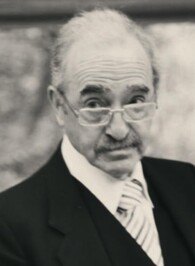
Walter Perrie
Born
in Quarter, Lanarkshire, Scotland
June 05, 1949
Genre
Influences


|
A Lamentation for the Children
—
published
1977
—
3 editions
|
|

|
By Moon and Sun
—
published
1980
—
2 editions
|
|

|
Roads That Move: A Journey through Eastern Europe
by
—
published
1991
—
2 editions
|
|

|
The Ages of Water
—
published
2000
|
|

|
Lyrics & Tales in Twa Tongues
—
published
2010
|
|
|
|
From Milady's Wood
—
published
1990
|
|
|
|
Plainsong
|
|

|
Out of Conflict
—
published
1982
—
2 editions
|
|
|
|
Concerning the Dragon: Poems
—
published
1984
—
2 editions
|
|

|
Walter Perrie in Conversation with Scottish Writers: Donald Campbell, Duncan Glen, Tessa Ransford, Trevor Royle, William Hershaw, Alasdair Gray, Margaret Bennett and John Herdman
|
|
“As the nineteenth century progressed, Austria-Hungary took refuge in reaction at home and adventurism abroad in an effort to contain the centrifugal forces which eventually blew it, and much of Europe, apart. Austria, and Vienna in particular, was the real home of Central-European anti-semitism. Jews wew bottom of the pile. No matter how low you sank, the Jews were still below you, along with the gypsies. At the tail-end of the nineteenth century, the Viennese politician Karl Lueger founded his power base on an anti-semitic platform. Stories of ritual murder by Jewish cabals featured regularly in the Viennese gutter press. It is no accident that Schickelgruber, the faied artist who became Hitler, should have neen the son of a petty official and have spent his ambitions at the butt end of Viennese snobbery.”
― Roads That Move: A Journey through Eastern Europe
― Roads That Move: A Journey through Eastern Europe
“...the problem of Kosovo has simmered until Slobodan Milošević, Serbia's nationalistic prime minister, brought it back to the boil by his efforts to incorporate Kosovo into his fiefdom by depriving the great bulk of the population, the Albanians of Kosovo, of their political, civil and, in some instances, human rights. Serbia's communist party is the only one in Eastern Europe to have retained popular support; a trick pulled off by Milošević by his astute identification of the party with the most aggressive elements of Serbian chauvenism, encouraging the Serbs in Croatia to agitate for incorporation into a greater Serbia. Milošević seems to be reckoning that by pushing Serbian claims, even to the extent of breaking up Yugoslavia, he will be able to dominate a larger and more coherent Serbia, which can in turn pick off its less populous neighbours. However, since Croatia and Slovenia will not submit to Serbian hegenomy, and since Albanians hugely outnumber Serbs in Kosovo, he is setting the stage not just for the fragmentation of Yugoslavia, but for a civil war of potentially crippling savagery.”
― Roads That Move: A Journey through Eastern Europe
― Roads That Move: A Journey through Eastern Europe
“Springtime flatters this part of the Somme countryside, undramatic with its flat fields and scattered villages. The largest object for miles, dominating the shallow depression of the Ancre, is the Thriepval Memorial. You approach the park down a long avenue, past lawns carefully tended and set in a girdle of trees. The massive triple arch of dark-red brick, each leg of the arch four piers deep, each pier with its four high panels of dun-coloured marble on which the names of the dead are engraves, is, for all its height, a squat, graceless thing.
There is not another soul in sight, and no sound. From the plinth you look down long rows of white crosses and plain headstones on the far side of the memorial; some say inconnu, others 'A Sodier of the Great War'. Beyond them, beyond this enclosure, the lush countryside meanders to its low horizon.
The dead are listed by regiment, then by rank and then alphabetically - nothing disordered here. This dismal monumentalism, a confirmation rather than a denial of the mindset which led to such slaughter in the first place, though the architect intended no irony. The monument was raised by the power of the state as a piece of political theatre extravagant enough to be seen from miles and years away, as it was by my father when he passed on the Bapaume Road in the summer of 1944.”
― Roads That Move: A Journey through Eastern Europe
There is not another soul in sight, and no sound. From the plinth you look down long rows of white crosses and plain headstones on the far side of the memorial; some say inconnu, others 'A Sodier of the Great War'. Beyond them, beyond this enclosure, the lush countryside meanders to its low horizon.
The dead are listed by regiment, then by rank and then alphabetically - nothing disordered here. This dismal monumentalism, a confirmation rather than a denial of the mindset which led to such slaughter in the first place, though the architect intended no irony. The monument was raised by the power of the state as a piece of political theatre extravagant enough to be seen from miles and years away, as it was by my father when he passed on the Bapaume Road in the summer of 1944.”
― Roads That Move: A Journey through Eastern Europe
Is this you? Let us know. If not, help out and invite Walter to Goodreads.