
Find & Share Quotes with Friends
Vienna Quotes
Quotes tagged as "vienna"
Showing 1-30 of 31
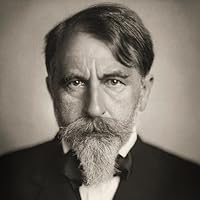

“For I have indeed been torn from all my roots, even from the earth that nourished them, more entirely than most in our times. I was born in 1881 in the great and mighty empire of the Habsburg Monarchy, but you would look for it in vain on the map today; it has vanished without trace. I grew up in Vienna, an international metropolis for two thousand years, and had to steal away from it like a thief in the night before it was demoted to the status of a provincial German town. My literary work, in the language in which I wrote it, has been burnt to ashes in the country where my books made millions of readers their friends. So I belong nowhere now, I am a stranger or at the most a guest everywhere. Even the true home of my heart’s desire, Europe, is lost to me after twice tearing itself suicidally to pieces in fratricidal wars. Against my will, I have witnessed the most terrible defeat of reason and the most savage triumph of brutality in the chronicles of time. Never—and I say so not with pride but with shame—has a generation fallen from such intellectual heights as ours to such moral depths.”
― The World of Yesterday
― The World of Yesterday

“Stop being afraid of what could go wrong and think of what could go right.”
― Till We Meet Again
― Till We Meet Again
“Sometimes I have a terrible suspicion that the whole tragedy, from first to last, has no meaning.”
― Private Worlds
― Private Worlds


“But you must remember that they are Viennese and nobody is good enough for the Viennese.”
― The Fortune Hunter
― The Fortune Hunter

“If you write you may be read and if you read you may understand,
but if you understand you will never write.
© 2018 Danny Kemp All rights reserved”
― What Happened in Vienna, Jack?
but if you understand you will never write.
© 2018 Danny Kemp All rights reserved”
― What Happened in Vienna, Jack?

“In Europe, happiness stops at Vienna. Beyond, misery upon misery, since the beginning.”
― The Trouble With Being Born
― The Trouble With Being Born

“The creator of Bambi was secretly writing pornographic novels on the side. This single fact tells you everything you need to know about turn-of-the-century Vienna, and why it was the perfect place for Sigmund Freud and his far-fetched theories about the human psyche.”
― The Geography of Genius: A Search for the World's Most Creative Places from Ancient Athens to Silicon Valley
― The Geography of Genius: A Search for the World's Most Creative Places from Ancient Athens to Silicon Valley

“An indescribable sadness emanated from the white splendour of the staircase and balustrade; the blood-red, now almost black splendour of the carpets. The huge palms in their huge pots looked like they had recently arrived from the cemetery. Their dark green leaves also looked blackish, like wizened, perished weapons from olden days.”
― The Tale of the 1002nd Night
― The Tale of the 1002nd Night
“No, no - you have to understand, Lysander, here in Vienna, in this ramshackle empire of ours, suicide is a perfectly reasonable course of action. Everyone will know your true feelings and why you had no choice but to do it - no one will condemn you or blame you.”
― Waiting for Sunrise
― Waiting for Sunrise
“Look at the snow, the woman was saying to the child. The snow absolves Vienna of its sins. The snow falls on Vienna while the missiles rain on Tel Aviv.”
― The Secret Servant
― The Secret Servant

“Aquella noche fue por primera vez a la ópera; con gran sorpresa descubrió que cantaban en italiano y, como no entendía una sola palabra, supuso que toda la representación era una especie de servicio religioso. Deambuló a altas horas de la noche hasta los iluminados chapiteles de San Esteban; la torre sur de la catedral, leyó en una placa, se había iniciado a mediados del siglo XIV y concluido en 1439. Viena, pensó Garp, era un cadáver; posiblemente toda Europa era un cadáver ataviado en un ataúd abierto.”
― The World According to Garp
― The World According to Garp

“Vienna was the city of statues. They were as numerous as the people who walked the streets. They stood on the tip of the highest towers, lay down on stone tombs, sat on horseback, kneeled, prayed, fought animals and wars, danced, drank wine and read books made of stone. They adorned cornices like the figureheads of ships. They stood in the heart of fountains glistening with water as if they had just been born. They sat under trees in the parks summer and winter. Some wore costumes of other periods, and some had no clothes at all. Men, women, children, kings, dwarfs, gargoyles, unicorns, lions, clowns, heroes, wise men, prophets, angels, saints and soldiers preserved for Vienna an illusion of eternity.”
―
―
“As the nineteenth century progressed, Austria-Hungary took refuge in reaction at home and adventurism abroad in an effort to contain the centrifugal forces which eventually blew it, and much of Europe, apart. Austria, and Vienna in particular, was the real home of Central-European anti-semitism. Jews wew bottom of the pile. No matter how low you sank, the Jews were still below you, along with the gypsies. At the tail-end of the nineteenth century, the Viennese politician Karl Lueger founded his power base on an anti-semitic platform. Stories of ritual murder by Jewish cabals featured regularly in the Viennese gutter press. It is no accident that Schickelgruber, the faied artist who became Hitler, should have neen the son of a petty official and have spent his ambitions at the butt end of Viennese snobbery.”
― Roads That Move: A Journey through Eastern Europe
― Roads That Move: A Journey through Eastern Europe

“This evening : Fischl and Mayreder debated on Secession, Fischl pro and Mayreder contra - primarily against Olbrich. It's all very well to dismiss him, to criticize - but just try doing better yourself dear Mayreder ! It was the fourth time that M. had called on us in the last few days, and we're heartily glad to be rid of him. Nobody misses him, myself least of all. - I wonder if he's still fond of me? He's very taken with the Secessionist painters, being particularly 'enamoured' - as he puts it - of Bacher, Engelhart and Klimt. Of the latter he says he can well understand young ladies falling for him "in a big way". Oh yes, that was fun : while Kuehl, Klimt, Mayreder, Jettel etc. were here, Klimt gave me the idea of shaping my bread into a heart. I did so, then he formed a toothpick into an arrow and plunged it into the heart. He took red wine and made it flow from the would. It looked really good. He gave it to Mayreder as 'my wounded heart'. On reflection, I can see that it was a very brutal joke and I regret it, for at the time Mayreder gave me a look that went straight through me.
Incidentally, Klimt knows that M. is fond of me. He noticed - and said as much as well. I didn't deny it.”
― Diaries 1898-1902
Incidentally, Klimt knows that M. is fond of me. He noticed - and said as much as well. I didn't deny it.”
― Diaries 1898-1902
“It's strange. When I put something incomprehensible into a picture, it's usually because the form and colour interest me and because it just happens to fit in. Thwn my friends come along : 'What is that suppose to mean _' And they rack their brains for an interpretation, finding so many ingenious explanations that I feel quite proud of all the unarticulated ideas concealed in my pictures." - Fernand Khnopff to Alma Mahler, while walking in the Prater in Vienna, from her diary July 1899”
―
―
“A good thriller should have a captivating beginning, an engrossing middle and a dynamic ending.
A great book would have all three but tell a story that sets the reader on edge as he or she listens to the heartbeat of the writer.
© 2018, Danny Kemp All rights reserved.”
―
A great book would have all three but tell a story that sets the reader on edge as he or she listens to the heartbeat of the writer.
© 2018, Danny Kemp All rights reserved.”
―

“You'll come with me to Vienna, of course," I said. It wasn't a question.
Käthe blinked, surprised by my sudden turn in conversation. "What?"
"You'll be coming with me to Vienna," I repeated. "Won't you?"
"Liesl," she said, eyes shining with tears. "Are you sure?"
"Of course I'm sure," I said. "It'll be just like the Ideal Imaginary."
She laughed again, and the sound was as pure as a spring morning. The what-if games my little sister and I had played as girls had been ways to pass the time, a space we created untouched by the grime and grief of ordinary drudgery. A world where we were princesses and queens, a world as beautiful and as magical as any my brother and I had made together.
"Just imagine, Käthe." I took her hand mine. "Bonbons and handsome swains waiting on us hand and foot."
She giggled. "And all the silks and velvets and brocades to dress ourselves in!"
"An invitation to a different ball every night!"
"Masques and operas and parties and dancing!"
"Schnitzel and Apfelstrudel and Turkish coffee!"
"Don't forget the chocolate torte," Käthe added. "It's your favorite."
I laughed, and for a moment, I allowed myself to pretend we were little girls again, when our wants and dreams were as closely entwined as our fingers. "What if," I said softly.
"Not a what-if," my sister said fiercely. "A when."
"When," I repeated. I could not stop smiling.”
― Shadowsong
Käthe blinked, surprised by my sudden turn in conversation. "What?"
"You'll be coming with me to Vienna," I repeated. "Won't you?"
"Liesl," she said, eyes shining with tears. "Are you sure?"
"Of course I'm sure," I said. "It'll be just like the Ideal Imaginary."
She laughed again, and the sound was as pure as a spring morning. The what-if games my little sister and I had played as girls had been ways to pass the time, a space we created untouched by the grime and grief of ordinary drudgery. A world where we were princesses and queens, a world as beautiful and as magical as any my brother and I had made together.
"Just imagine, Käthe." I took her hand mine. "Bonbons and handsome swains waiting on us hand and foot."
She giggled. "And all the silks and velvets and brocades to dress ourselves in!"
"An invitation to a different ball every night!"
"Masques and operas and parties and dancing!"
"Schnitzel and Apfelstrudel and Turkish coffee!"
"Don't forget the chocolate torte," Käthe added. "It's your favorite."
I laughed, and for a moment, I allowed myself to pretend we were little girls again, when our wants and dreams were as closely entwined as our fingers. "What if," I said softly.
"Not a what-if," my sister said fiercely. "A when."
"When," I repeated. I could not stop smiling.”
― Shadowsong

“For as I looked down to see what sort of people were about, I caught sight of a strange couple. A man of rather advanced years, judging by his back which was turned towards me, dressed in a thin, yellow swanskin jacket, pale blue trousers, heavy shoes and a little round hat, as he walked down the street. He was leading a girl, dressed no less oddly than himself in a brown cope which was draped about her shoulders almost like a toga. But the girl had so large a head, enough to startle anyone, that it kept causing people to stare at it. Both of them went their way at a moderate pace; but both were so clumsy and awkward that it was immediately evident they were not used to Vienna and that they were incapable of behaving like other folk.”
― Tales of Old Vienna and Other Prose
― Tales of Old Vienna and Other Prose

“Every time I got married I was told it was time to settle down, and every time I got divorced I was told it was time to settle up. My accountant says I can't afford to settle down anymore." - Carl Engel (A farewell to Paradise)”
― A Farewell to Paradise
― A Farewell to Paradise

“An attentive observer of the drama that repeated itself every night might have spotted among the poor the gaunt figure of a pale, earnest young man, who, despite the easy sociability of Vienna's outcasts, wore his embitterment as if it were a precious decoration.”
― The Little Drummer Boy
― The Little Drummer Boy

“The light of kindness and goodness in our heart is ultimately what we must tap into. We do not so much "fight the darkness (of hate and bigotry)" as we illuminate it when we unite our own inner light with the inner light shining in our fellow brothers and sisters”
―
―
“Nietzsche asked in 1882: 'What is the point of all the art of our works of art if we lose that higher art, the art of festivals?' The brief moment of intoxication lures us off the via dolorosa. Such spectacles also asserted the underlying continuity of European society since the Renaissance, despite steam engine, trainm and telegraph. Such was the confidence in the homology between the present day and a supposedly integrated and self-assured sixteenth century that people were still willing, in donning costumes, to turn themselves into living works of art. (This was the bourgeois response to the fantasy of the socialist Fourier, who thought people could become living artworks if they disrobed.) The contrast between the costumes and the black-and-white everyday garb of 1879, a way of dressing as if designed to be photographed, was sharp. Fourteen thousand citizens took part in Makart's extravaganza, 300,000 more looked on.”
― A History of Art History
― A History of Art History
“This prevalence of private armies, in Austria as in Germany, their marching and counter-marching, their street battles with whips, beer bottles, knuckle-dusters and occasionally even firearms, proved not their strength, but the weakness of the state.”
― Last Waltz in Vienna
― Last Waltz in Vienna

“One of my father’s purposes in going to Vienna was to see a journalist by the name of Karl Kraus. I do not know what they discussed, though they probably concerned themselves with Jewish matters and quite possibly with the problem of the translation into literary German of the Yiddish poems of Moritz Rosenfeld, the New York garment worker-poet, whom father had ‘‘discovered.’’ I remember being taken into Kraus’s apartment in an old-fashioned Vienna apartment house, and there I remember what seemed to me a confusion and disorder which I have never seen equaled elsewhere.”
― Ex-Prodigy: My Childhood And Youth
― Ex-Prodigy: My Childhood And Youth

“When they watched The Third Man, which was often, too often in Charlotte's opinion, her mother would pause on the two graveyard scenes, the first when the man who was not Harry Lime was disinterred, the second where the real Harry Lime took his place. "That's our grave," she would say. "Or pretty damn close to it.”
― Badlands
― Badlands
“Vienna is certainly the grandest city I have ever seen. All along the Ringstrasse colossal buildings proclaim an imperial past – the parliament, the Palace of Justice, the Natural History Museum, the Kunsthistorisches Museum, the opera house, the Burgtheater and above all the Hofburg, with its 2,600 rooms. They all look much the same – mighty piles of granite and sandstone with warlike statuary crowded along the roofs and pediments. A Martian coming to earth would unhesitatingly land at Vienna, thinking it the capital of the planet.”
― Neither Here nor There: Travels in Europe
― Neither Here nor There: Travels in Europe
“Hardly more than a decade later, when everything he knows will be gone forever—this life of his, the people in this room, Vienna itself really—he will look back on this moment and marvel at how randomly a life gets made. But then the rest of his memory of this day will come back to him, its queer weather, the walk with his pensive and distracted father through the Jewish district, his grandfather’s underlying despondency, and all at once his life will look in retrospect like the correct if troublesome path, among many false ones, to the top of a baffling mountain—as if all his choices were made according to a larger uneasy symmetry. His life will seem as if it could not have been any other way.”
― The Marriage Artist
― The Marriage Artist
All Quotes
|
My Quotes
|
Add A Quote
Browse By Tag
- Love Quotes 102.5k
- Life Quotes 81k
- Inspirational Quotes 77.5k
- Humor Quotes 45.5k
- Philosophy Quotes 32k
- Inspirational Quotes Quotes 28.5k
- God Quotes 27k
- Wisdom Quotes 25k
- Romance Quotes 25k
- Truth Quotes 25k
- Poetry Quotes 24.5k
- Life Lessons Quotes 23k
- Quotes Quotes 21.5k
- Death Quotes 21k
- Happiness Quotes 19k
- Hope Quotes 19k
- Faith Quotes 18.5k
- Inspiration Quotes 18k
- Relationships Quotes 16k
- Spirituality Quotes 16k
- Motivational Quotes 16k
- Religion Quotes 15.5k
- Life Quotes Quotes 15.5k
- Writing Quotes 15k
- Love Quotes Quotes 15k
- Success Quotes 14.5k
- Motivation Quotes 14k
- Time Quotes 13k
- Science Quotes 12.5k
- Motivational Quotes Quotes 12k