What Authors Need to Know About Website SEO
This guest blog comes from Gareth Simpson, start-up founder and SEO expert. If you want to make sure your books realise greater visibility, read on! ~ Diane
As discussed in our previous article, once you’ve written your book, the next important step as a self-publisher is to market yourself and make those all-important book sales. Setting up your own online store is a great way to gain autonomy over your sales, alongside those you make on Amazon. Your own website can also be a great hub for your brand, becoming a place for encounters, conversations, and a lively fan community. To get your website noticed and properly ranking in search engines, you need to work on your optimising your website for SEO. Here’s what authors should know about website SEO — and what you need to do to make a positive rankings difference yourself.
Content rules the roost
The verdict is in: content is the key to SEO success — good news for authors and writers who deal and trade in words!
Commit to frequent blogging on your site, and collate interesting resources that appeal to your readership and online audience, and you’ll be off to a great start. Just make sure that your content efforts are consistent — an editorial calendar can help keep you accountable (essential when you’re managing the site by yourself). CoSchedule do a good one.
Capitalise on your writing abilities in order to get featured on other websites — external backlinks to your website are an important SEO ranking factor. Start by exploring any existing relationships and networks — perhaps offering some free content or advice in exchange for a mention? Use your writerly skills of persuasion to do some DIY PR!
Keyword research is a great way to get to know your readers better, and help ensure that your web copy includes key phrases and words that they’ll want to see. This article has everything you need to know on how to get started with keyword research — it may even spark some content ideas!
Content organisation is also important – your site’s structure should be easy to navigate for people visiting your page, with an intuitive navigation bar for optimal usability. Try not to ‘hack’ around with custom themes and menus too much if you don’t know what you’re doing — or just ask for some technical help to ensure your site’s structure is optimal.
Make sure you focus on purpose and conversions
credit: mail munch
As a writer, it’s easy to get carried away with your creativity when producing web content. Always remember that your website has a distinct purpose: to promote and sell your books. Make this the strategic goal behind all the content, editorial, and online marketing decisions that you make, and stay clear of anything that’s going to detract from that goal.
It’s all well and good writing a brilliant synopsis of your novel, but if it doesn’t encourage people to buy it, then what is the point? That said, going overly salesy will not do you any favours either — good web content balances sales copywriting with useful information.
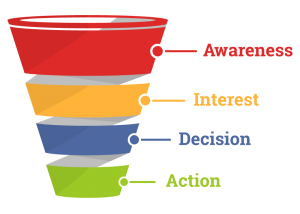
Be aware of the different stages of awareness a user will go through when they land on your website, and try to give them all the necessary information in digestible chunks. You need people to be able to quickly make decisions, so keep testing and refining your site from a commercial perspective in order to ensure people aren’t getting confused, or being turned off.
Free web analytics are a great way of measuring your site’s success with users and potential readers. Learn how to analyse key metrics like dwell time (time on page), bounce rate, and your overall conversion rates (look at both newsletter sign ups and book sales) to help you track SEO progress. These stats may seem daunting at first, but web analytics are easily learned and can help you take control of content upgrades and SEO campaigns.
Ecommerce SEO is different
Ecommerce SEO is more challenging than optimising a standard website, as you have to compete for online sales with many other businesses, and the technical demands placed on your site can be great. You need a website that’s fast, sophisticated, and works seamlessly across all devices — a bad mobile experience is bad for SEO.
When it comes to optimising your online bookstore for search queries, you need to toe the line between natural language and relevancy. Ideally, you want to optimise your book product pages and blog posts for one (or several) keywords, but all the while keeping the focus on fun and engaging content. Here are some strategic places you can place search terms:
The page title
Headers/subheaders
Paragraph copy
Product descriptions
Image file names
Image alt tags
Meta title and descriptions
URLs
The ease with which you will be able to alter and optimise these (and other) SEO elements depends on your content management system. For example, if your site runs on WordPress and you plan to use the WooCommerce plugin to transform your site into an ecommerce store, you can use the Yoast SEO plugin. This plugin lets you quickly alter the above components on any of your WordPress pages, and offers helpful SEO suggestions and tips. Alternatively, using a SaaS ecommerce solution can automatically offer you the same capabilities and the flexibility to change them at a moment’s notice, with less effort from you. You can even create an online store for free (with a two week trial) to see if it works for you before you commit — check out this third-party review site for an overview of the market-leading ecommerce providers and their pros and cons.
Focus on the user

credit: pexels
When writing online with the sole purpose of boosting your store’s SEO value, you can fall into the trap of writing your content in an unnatural and robotic way. In the same way, if you are just constantly pushing for book sales on social media, your online presence will fall flat on it’s face. The key thing to remember about modern SEO is that it’s supremely user-focused, with all decisions stemming from a desire to fulfil their needs.
To write great content for your users, you need to really think about who they are and what they’d like to read. Creating a set of buyer personas can be useful to this end – you can collect generalised information such as age brackets, reading habits, gender and education, and tailor your content to suit these people. This kind of information can be accessed in a number of ways: use the YouGov profiles in the UK, or scour question sites such as Quora to build up a more well-rounded image of your ideal reader/customer. Buyer personas aren’t just for writing content either — they can help you determine your web design decisions, and provide guidance on where else online to advertise.
Writing your books is one thing, but writing web content is a tricky balancing act! Ensure that the actions you take to improve your website’s SEO are in line with your overall commercial goals, and keep reviewing your progress and tweaking your strategy accordingly.
 Gareth Simpson – Technical SEO & Startup Founder
Gareth loves SEO and link building, and enjoys managing and briefing a team of online writers. As well as SEO, Gareth is a big fan of excellent content marketing and is always giving the creative team a run for their money…
The post What Authors Need to Know About Website SEO appeared first on The Writing Hall.