Writing about Veterans
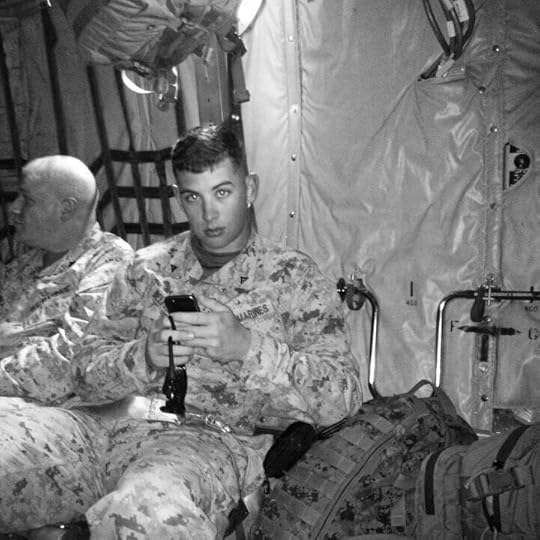
Photo of me in a C-130 on the way to visit Mt. Suribachi, the site of the famous photo of the Marines hosting the flag during WWII circa 2013.
As you’ve probably realized from the plethora of social media posts, the advertisements for businesses, and the scripted statements from politicians and figures in the public eye, today is a special day. It’s Veteran’s Day. I am not a veteran (at least not yet), I’m still active duty in the military, but I wanted to make a special blog post to talk about writing and about veterans in particular.
The American military has captured the imagination of the public with dramatized movies like Saving Private Ryan, Black Hawk Down, Lone Survivors, and more. The Special Operations personnel are the closest thing that we have to real-life superheroes. They have the ability to infiltrate secure locations without being detected, save prisoners or hostages, and defeat the bad guys. To us, it seems like it’s all in a day’s work. The dramatization of their work and the artistic liberty that creators take with the real stories means that the average person is wildly uninformed about the daily life of the average military member. This has real effects on society as a whole and how veterans are perceived.
There’s something to be said about the fact, the American public doesn’t really know how to treat their warriors. From being labeled “baby killers” and “murderers” in Vietnam, to the ever present “thank you for your service today.” Both have become a way of setting apart veterans from the normal population. In an interesting book Tribe by Sebastian Junger, dives into this subject and makes some startling revelations (at least startling to me) that perhaps the author didn’t intentionally make.
I learned that we don’t have a mechanism in the United States for returning veterans to the population at large. They become revered or denigrated depending upon the public opinion of their time. Most people forget that yes, while they’re veterans, they’re also fathers and husbands. They’re school teachers, mechanics, business professionals, and lawyers. Perhaps even more sadly, they’re also the homeless in the street, they’re the disabled and maimed, they’re the anxious and depressed men and women that can’t find the energy to go to work that day.
I humbly believe that the veterans that can’t acclimate back into society and talk about how much they miss the military are purely a product of that separation. They feel alone. There' isn’t anyone in their lives who know what its like to be in the military and when they’re told “thank you for your service” it’s just another reminder that they’re different. They’re set apart from the normal population. They sit on a shelf until every Veteran’s Day or Memorial Day and then they’re taken off the shelf and the dust is blown off by the American public.
Dear reader, I don’t tell you that to shame you. I just want to remind you that veterans are no different than anyone else. They volunteered for a life-altering occupation. Most of them didn’t go because they wanted to serve their country, that usually comes later. It’s hard to have such high ideals when you’re seventeen or eighteen and you’re fresh out of high school with an indeterminable desire to do something more with your life. No, the patriotism they feel comes somewhat later.
For the generation slightly before me, It came when they witnessed the falling of the twin towers. I was but a child when it happened, too young to understand the context of the attack. For my generation, it was something else. We had always been at war for as long as we could remember. For me, it was almost expected that I would join the military. I could feel its inevitability long before I stood upon the yellow footprints. It wasn’t until I hit the fleet and I met men and women from all different backgrounds, with different political beliefs, faiths, and dreams that I became a patriot. The military is just a sample of the American people at large. I was in a place where it didn’t matter what you looked like, what genitalia is between your legs, or what god you believed in. As long as you were willing to work and succeed, the military would give some back. I recognized that the military was just a small piece of America. I’m still waiting for American to realize that we’re just a small piece of them.
Now that I’ve become a writer, it has changed how I feel about the military. There’s a dark tendency to write military characters and veterans as caricatures of themselves. We’ve all read about the Navy SEAL-Ranger-Spaceship door gunner-Sniper from NASA that can kill the bad guys by flexing their perfectly chiseled and black belt trained chests. The reverse is present too. Veterans so damaged by the war and the conflict they’ve experienced that they become irredeemable villains or off-putting antiheroes. I know that veterans are neither of those things. They’re just people. They aren’t some monolithic category that can be placed neatly on a shelf. They’re individuals with unique wants and needs.
As a result, the military community can be a difficult one to write for. God forbid you forget that the bullet of a sniper round hits before the sound does (A fact that I learned in my new story). Also, the military community can be a harsh critic when a writer approaches any topic that even comes slightly within their purview. Many writers will hear the criticism, “I wish you would’ve talked to someone in the military before you published this.” I agree. Just like an author would do research on everything else they’re writing about (medieval siege warfare, anyone?), they should also do research on veterans before they try their to write their stories. Perhaps in the process, the veteran will feel like they’re part of society again. As for the writer, you will undoubtedly have a better product.
One final reminder, every veteran is just an alternate version of the person they would have otherwise become. If not for a set of choices and barring obvious externalities, they could’ve been just like you, and you could’ve been just like them. So on this Veteran’s Day, thank a veteran for making that choice, but remember that they’re a person and not a category. Treat this with the same respect and individual agency that you would grant to yourself.
-DWB