
The Narrative Fallacy and Alister McGrath on Christianity 'making sense' of things
Here are two sets of beliefs. Read each and decide which is set of beliefs is more likely to be true. Belief set one Mary lives in London Jill drove a sports car. Jill had a sun tan. Jill gave Mary a case of wine. Belief set two Mary, who lives in London, inherited a sports car, but didn't have a driving license at that time, so she lent it to her good friend Jill, who used it to drive down to the South of France for a week long vacation on which she developed an impressive sun tan. On her return, Jill gave Mary a case of good French wine she bought while there to show her gratitude. The first belief set involves just four disconnected claims. The second set includes those claims but weaves them together into a narrative that is coherent and makes sense. The story makes meaningful connections between the four claims. Many people will intuitively find the second set of beliefs much more plausible than the first. They will suppose it's more likely to be true. However, a moment's reflection reveals that the second belief set can't be more probable than the first, because it makes the same four claims plus several additional claims. If the story is true, then the four claims are true, but even if all four claims are true, the story could easily be false. Here's a quite different story involving the same four claims. Mary lives in a London, and suddenly fell ill. Jill, her closest friend, was skiing at the time, and wanted to be by her friend's side. So Jill persuaded someone staying at the same hotel, and who was driving their sports car back to London the next day, to give her a lift. Jill arrived in London tanned but exhausted, glad to see Mary was recovering. Jill was so grateful to the driver, she later sent them a case of wine. It too 'makes sense' of the same four claims. But both these stories are rather less probable than just the four claims being true. This tendency to find stories and narratives rather more probable than a series of otherwise disconnected claims contained within them is flagged by Daniel Kahneman in his Thinking Fast and Slow. He writes that the following two scenarios were presented to different groups with a request to calculate their probability: A massive flood somewhere in North America next year, in which more than 1,000 people drown An earthquake in California sometime next year, causing a flood in which more than 1,000 people drown The second scenario was judged more probable, though it's actually less probable as it involves more claims. However, it links events together causally, in a narrative fashion, and so is more coherent. Kahneman suggests our 'fast thinking' tends to confuse plausibility/coherence with probability, leading us astray. As a result, we commit what's sometimes called the narrative fallacy.
I think this tendency may partly explain the human propensity toward religious belief. Religions invariably tell a story about human beings and our place in the universe. When we take a step back and look at the 'big picture', a belief system like Christianity can seem to 'make sense' of things in a way that can lead us to judge it to be much more probable than it really is. I think exactly this is going on in these quotes from the theologian Alister McGrath, for example: it is the Christian vision of reality as a whole – rather than any of its individual components – that proves compelling. Individual observations of nature do not “prove” Christianity to be true; rather, Christianity validates itself by its ability to make sense of those observations. p4 of'The Rationality of Faith: How does Christianity make sense of things?'
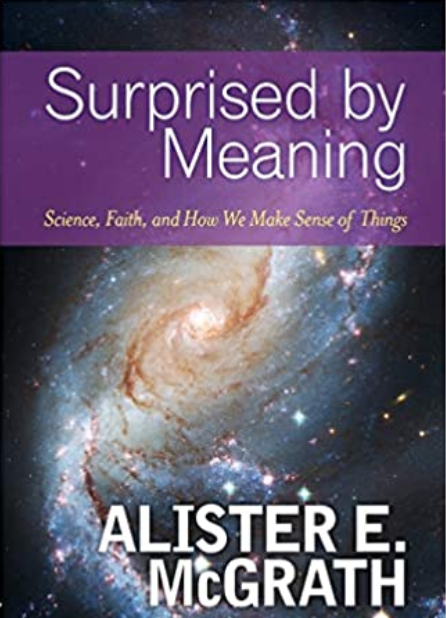
As a younger man, I found that the chief intellectual virtue of Christianity then seemed to be that it offered a coherent and rationally motivated account of the world, disclosing a hidden web of meaning and connectedness behind the ephemeral and seemingly incoherent world that we experience. No matter how fragmented our world of experience may seem, there is a half-glimpsed bigger picture that holds things together, its threads connecting together in a web of meaning what might otherwise seem incoherent and pointless. What once might have seemed to be a muddle and jumble comes to be seen as an interconnected and meaningful vision of reality (Ibid. pp5-6) And again, here's McGrath... Faith does not contradict reason, but transcends it through a joyous divine deliverance from the cold and austere limits of human reason and logic. We are surprised and delighted by a meaning to life that we couldn’t figure out for ourselves. But once we’ve seen it, everything makes sense and fits into place…Like Moses, we are led to climb Mount Nebo, and catch a glimpse of the promised land – a land that really is there, but which lies beyond our normal capacity to see, hidden by the horizon of human limitations. The framework of faith, once grasped, gives us a new way of seeing the world, and making sense of our place in the greater scheme of things.(McGrath, Surprised by Meaning, p6) Here is McGrath saying such the same thing early on here...
<!-- /* Font Definitions */ @font-face {font-family:"MS 明朝"; mso-font-charset:78; mso-generic-font-family:auto; mso-font-pitch:variable; mso-font-signature:-536870145 1791491579 18 0 131231 0;} @font-face {font-family:"MS 明朝"; mso-font-charset:78; mso-generic-font-family:auto; mso-font-pitch:variable; mso-font-signature:-536870145 1791491579 18 0 131231 0;} @font-face {font-family:Cambria; panose-1:2 4 5 3 5 4 6 3 2 4; mso-font-charset:0; mso-generic-font-family:auto; mso-font-pitch:variable; mso-font-signature:-536870145 1073743103 0 0 415 0;} /* Style Definitions */ p.MsoNormal, li.MsoNormal, div.MsoNormal {mso-style-unhide:no; mso-style-qformat:yes; mso-style-parent:""; margin:0cm; margin-bottom:.0001pt; mso-pagination:widow-orphan; font-size:12.0pt; font-family:Cambria; mso-ascii-font-family:Cambria; mso-ascii-theme-font:minor-latin; mso-fareast-font-family:"MS 明朝"; mso-fareast-theme-font:minor-fareast; mso-hansi-font-family:Cambria; mso-hansi-theme-font:minor-latin; mso-bidi-font-family:"Times New Roman"; mso-bidi-theme-font:minor-bidi;} h4 {mso-style-priority:9; mso-style-unhide:no; mso-style-qformat:yes; mso-style-link:"Heading 4 Char"; mso-margin-top-alt:auto; margin-right:0cm; mso-margin-bottom-alt:auto; margin-left:0cm; mso-pagination:widow-orphan; mso-outline-level:4; font-size:12.0pt; font-family:"Times New Roman"; font-weight:bold;} p {mso-style-noshow:yes; mso-style-priority:99; mso-margin-top-alt:auto; margin-right:0cm; mso-margin-bottom-alt:auto; margin-left:0cm; mso-pagination:widow-orphan; font-size:10.0pt; font-family:"Times New Roman"; mso-fareast-font-family:"MS 明朝"; mso-fareast-theme-font:minor-fareast;} span.Heading4Char {mso-style-name:"Heading 4 Char"; mso-style-priority:9; mso-style-unhide:no; mso-style-locked:yes; mso-style-link:"Heading 4"; font-family:"Times New Roman"; mso-ascii-font-family:"Times New Roman"; mso-hansi-font-family:"Times New Roman"; mso-bidi-font-family:"Times New Roman"; font-weight:bold;} span.a {mso-style-name:a; mso-style-unhide:no;} .MsoChpDefault {mso-style-type:export-only; mso-default-props:yes; font-family:Cambria; mso-ascii-font-family:Cambria; mso-ascii-theme-font:minor-latin; mso-fareast-font-family:"MS 明朝"; mso-fareast-theme-font:minor-fareast; mso-hansi-font-family:Cambria; mso-hansi-theme-font:minor-latin; mso-bidi-font-family:"Times New Roman"; mso-bidi-theme-font:minor-bidi;}size:595.0pt 842.0pt; margin:72.0pt 90.0pt 72.0pt 90.0pt; mso-header-margin:35.4pt; mso-footer-margin:35.4pt; mso-paper-source:0;} div.WordSection1 {page:WordSection1;}</style></span></span></div>


No comments have been added yet.
Stephen Law's Blog
- Stephen Law's profile
- 104 followers
Stephen Law isn't a Goodreads Author
(yet),
but they
do have a blog,
so here are some recent posts imported from
their feed.

