What Might Have Been the Hardest Year of Our Lives
 This year has been the hardest of my life.
I keep wanting to say this, and yet even as I think it, I hesitate. I can think of other seasons of life which felt impossibly hard and painful: in high school, when my existence was a revolving door of panic attacks and sleepless nights and a depression that felt inescapable; as a kid, when I lay in bed at night terrified because I thought there were demons in my room and I had to muster up enough faith to pray them away. Or in college when I dove into a charismatic Christian culture full of spiritual fervor and evangelical zeal, a zeal that made me feel I was never good enough and washed up all my old traumas and anxieties until I felt physically ill.
Yet I can’t quite compare these types of difficulty and pain, because is pain ever something that can be compared? I remind myself of this, too, because I feel guilty knowing that while this year has been hard for me, it has been hard for all of us—and so much harder for some, for those who have lost jobs and homes and loved ones. This year is painful in a particular sort of way, a way that we all share and yet is unique to our own situations, depending on where we were when the pandemic interrupted our story.
When the pandemic interrupted my story, I was in the spring of my senior year of college, the year when my belief system as I knew it fell apart. The previous semester I had realized that I might not be an evangelical anymore, but I wasn’t quite willing to admit it to myself yet; the costs were too high. I thought it meant losing my friends, my family, my church, my plan for my life, my identity, possibly even my salvation.
Yet it felt like something that was happening to me rather than something I was deciding: the beliefs I once held unraveled, all of them, and there was no putting them back together. I had unwittingly entered a metamorphosis I couldn’t return from.
I was right that the cost would be high. Suddenly I found that I couldn’t attend my charismatic church without being shaky or angry or deeply disturbed; I couldn’t share all of my thoughts and struggles with my friends without hurting their feelings; I didn’t quite know how to talk to my family anymore, and they didn’t quite know how to talk to me, either.
Suddenly I felt deeply alone in a way that I never had before: the community that I’d been promised was mine, the people who had held me together for years, the ones with whom it was us against the world—suddenly I didn’t belong. I knew it, and they knew it, and none of us quite knew what to do about it. There weren’t really big angry arguments or heart-stopping conflicts, just a lot of confusion, of talking around issues, of discomfort and uncertainty.
While my friends went to church together, I drove alone to an Episcopal church down the road, sat in the back by myself, read the liturgy and sang hymns I didn’t know and tried to find Jesus in a new place, far away from the pain and confusion. I was surprised, almost, to find him there—different than the Jesus I knew, but there, quiet and gentle and not at all afraid of the tiny faith I was holding in my hands, which to me looked like a completely shattered life.
This is where I was when the pandemic interrupted me almost exactly a year ago: Shattered. Just barely starting to put the pieces back together in a way that made sense. Holding on to the small but growing community of mentors I’d pieced together, mostly professors and clergy who listened to me as I tried to discern who I was now that everything had changed. And then, like every other college student in the United States, I got sent home, with about three days to pack up my belongings and say goodbye to my friends and my college and the life I had built for myself there.
At my parents’ house, I felt like I was walking around in a haze of grief. Our world had been upended in every way. None of us knew what was going to happen; we didn’t know if we should wear masks or not; grocery stores felt apocalyptic; we thought it might be better in a few weeks. We were wrong. Every week I drove twenty minutes over the border of New Hampshire, parked outside a Dunkin Donuts, and used their Wi-Fi to call my therapist who was only licensed to practice in Maine. And then I would drive home, teary and exhausted, often too afraid of contact with COVID and too anxious about human interaction to go through the drive-through and buy a donut.
I loved my parents, and my parents loved me, and yet living at home together was hard. Like any college senior, I had been living on my own for a while and it was strange to be a dependent again. I was still navigating the pain and confusion of my own journey, and I knew they were hurt, too, by the choices I made, choices that probably felt like a rejection of them as parents and of their foundational beliefs. I wanted to fix it, but everything was still too close, too tender. Our world had become so small and pressurized, limited to the four walls of our home, a cocoon in which we were all breaking down in new and uncomfortable ways.
My friends from my work in Jewish programming in Maine invited me to come live with them, so I packed my bags and drove back up I-95, two and a half hours north of home, and moved into a recently emptied room in my friend Sarah’s apartment. When I first arrived, all it contained was a handful of plants and a mattress on the floor: a makeshift, temporary home, but a space to make my own all the same.
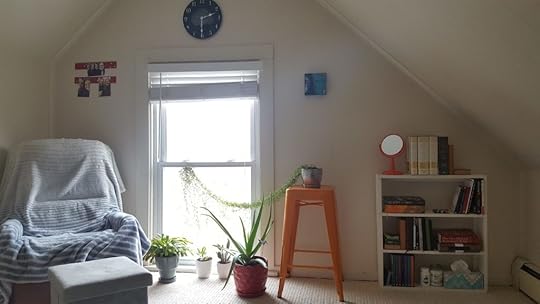
I will never, ever be able to express my gratitude for what Sarah and the local rabbi’s family did for me over the course of the four months I lived with them. Every evening Sarah and I walked just under a mile to the rabbi’s house, and the six of us—the rabbi and her wife, their two small daughters, Sarah, and I—sat around the table and ate together. Nearly every day for four months, I had a homecooked meal at that table, and there was never any expectation of me giving back anything in return.
When my car was declared “unsafe to drive” and far too expensive to fix, when I got the email from my graduate program at Princeton Theological Seminary that there would be no in-person classes and I should consider finding another place to live, they were the people I cried to. They were the people who helped me develop new plans. I was supported, too, by other clergy and professors I knew who were still in the area and who spent hours sitting with me outside, six feet apart, listening to me process a story about my life that I still didn’t fully understand.
Yet all of this support didn’t change the fact that I was grieving—and I was angry. I was furious, actually. I felt the kind of rage that I didn’t know could exist embedded under my skin, taking deep root in my body—a body that I had always thought was fully compassionate and tender and gentle. I was furious at the world, at the president, at the conspiracy theorists who’d coopted the Christianity I once loved, at the people I still loved who seemed to be ignoring the many ongoing injustices brought to light by the pandemic. I was furious, and I was terrified about the future, which made me more furious, and all I wanted to do was escape. I wanted to escape everything that was closing in around me: the narrow walls of the apartment, the confines of pandemic life, my own skin trapping me inside with all the rage and the deep sense of homelessness and all the things that felt shattered and not-yet-healing. So I ran.
When I think of this past summer, what I think of—aside from the kind of love and support that I can never pay back—is the running. I think of putting on my pink Adidas shorts and my old staff shirt from the Maine Conference for Jewish Life and running—out of the rickety apartment building, along the cracked pavement of low-income neighborhoods, past the Catholic graveyard, past the local ice cream joint and the mini golf course, and back down my own road. Well, Sarah’s road. And then I’d trod back up the narrow, grey carpeted steps, back up to the sweaty third floor.
As loved and supported as I was, it was really hard. I felt displaced; I felt like I couldn’t go home because I knew my family and community weren’t taking the kinds of COVID precautions I was comfortable with. As a person whose obsessive-compulsive disorder had trapped me for years in a spiral of fear that I might accidentally pass on a deadly disease to someone I loved—a fear that I had only overcome by telling myself it was completely unrealistic—the pandemic felt like one of my worst nightmares come to life. This time, the risks were very real, and protecting myself and others felt far too important for me to compromise on.
I decided to move to Princeton despite classes being fully online. It seemed like the best of the options I had. I drove nine hours alone with all of my belongings packed very tightly into my newly acquired (used) car; I arrived sweaty and shaky and carried my boxes into the student apartment where I would be living alone for the first time in my life. That first night, all I had energy to do was make my bed, eat a PB&J, and send texts to my family and mentors telling them I’d made it. I sent one extra to a couple of dear clergy friends that essentially said, I’ll probably feel better in the morning, but right now I feel like I’ve made a huge mistake. The space felt huge and empty, and I felt trapped in a new place where I knew virtually no one.
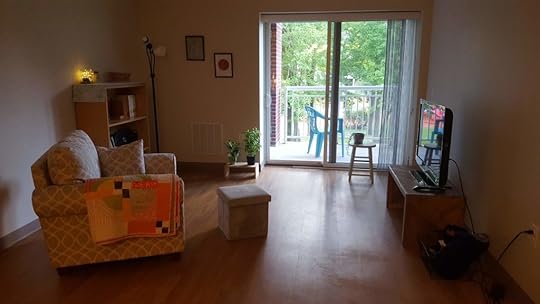
Yet I started to put together a life: I slowly acquired furniture and dishes and the basic necessities to make a place feel like one’s own; I made a few friends through group chats and picnics. It was hard at first to be in a Christian environment again, especially one where people prayed out loud at the start of classes and asked us to share our religious backgrounds. It was a story that still felt far too vulnerable to share in a sea of classmates I didn’t know and might not meet in person for months. But soon I realized that here, I was not the only one with my story, and I might just be able find a home in this place with these people.
Then I ended up, rather unexpectedly, in a relationship with someone who was really good to me. He was supportive, he listened, he held me when I cried. For a little brief snippet of 2020, I had a bit of relief, a part of my life that was solely happy and good; I had a space—a person—that felt like home. He traveled with me to my brother’s wedding because I was anxious about the drive and navigating family relationships in a pandemic context; he brought me home with him for the holidays when I still felt I couldn’t go home because of COVID. We got really close, and it turned out I loved him.
When it ended, I cried for weeks. And this is where I come up against that phrase: hardest months of my life. Because wasn’t it just a breakup, after all, and in fact a relatively brief relationship in the grand scheme of things? Haven’t I been through worse—including years of mental illness and religious baggage I’m still unpacking?
Yet it wasn’t just a breakup: it was yet another loss after a year of losses. Yet again I was faced with the terrifying feeling that I didn’t have a home in the world; yet again I lost my sense of stability and security and belonging. Yet again I was trapped in the four walls of my apartment with no escape from the overwhelming grief and a future that felt suddenly stark. I felt fragile and alone, so far from the places I used to belong and the things I used to hold certain, and so far from ever finding them again. Every day I am reliving these losses; alone in my apartment, they feel inescapable.
I think what I am really trying to say is this: the kind of hurt and pain I am feeling is so deep and pervasive that I can’t put it into words. Because how could we put the losses of this last year into words?
I know, even as I say this, that ahead of me in my life lie far deeper hurts and pains, things that I can’t yet imagine surviving. But this is the one I am surviving now.
Some days I am hopeful that things may be starting to get better, that I may be through the worst of it already. Some days I think things will never get better: that perhaps the pandemic will never completely end and our worlds will remain small and isolated, that my life will always feel this unstable and alone.
And yet I know that I am not the same person I was a year ago. This whole year I was becoming, holed up in the cocoon necessitated by pandemic life. I am still becoming, and I am not sure exactly who I will be on the other side of this, but I certainly know more about what that girl looks like than I did a year ago.
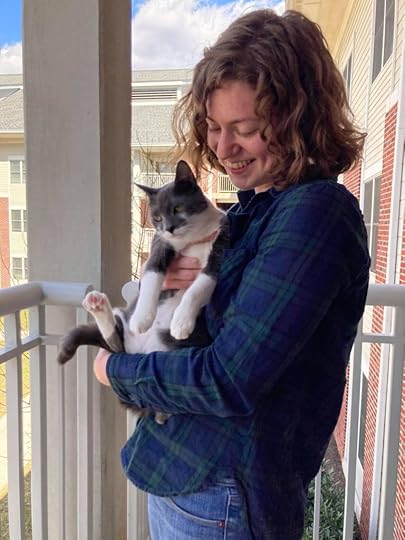
I know now that she can and will find a place in mainline Christianity, that she doesn’t have to leave her God behind to be herself. I know that she is vegetarian (mostly) and a cat mom (still not sure which one of these is more surprising), that she loves to run and to cook (also surprising). I know that she’s funnier than she thought she was, even if her humor is cynical and dark. I know she likes to wear button-ups tucked in and Birkenstocks with thick socks because they make her feel confident and quirky and a little like a Mainer.
I know that she has real and true friends in Princeton whose interests and eccentricities bring out the best in one another, and who will show up for her, not just right after the shit hits the fan, but for the days and weeks of painful processing afterwards. I know that when she loses a person she loves and it feels like her carefully constructed and still-fragile world has fallen apart for the hundredth time, she will witness the presence of God in the darkness every day, every moment, and it will be the most certain thing in her world, despite all that her faith has been through.
I know she is strong and resilient and capable of handling a lot more than she thought she could: moving alone and living alone, managing all the cooking and the cleaning and the paying of bills, buying and selling cars, coming up with handy solutions to practical problems, filing her taxes, handling a bad breakup with courage and dignity, consistently responding with mercy and care when she has been hurt, setting the firm boundaries necessary to protect and prioritize herself and to allow healthy relationships to thrive.
I know she will be okay. And I know that not because I feel like it most days, but because I know who she is. I know she will ask for help when she needs it. I know she is surrounded by people who love and support her. I know because she and her parents have figured out how to talk honestly again, and they have been a lifeline in her grief. I know because she has been creating her own bright future for years and she has so many good opportunities lined up in front of her: chaplaincy training this summer, a community organizing placement this fall, and her new church helping her through membership and then the Presbyterian ordination process.
I know she will be okay because she loves who she is and what she does, and so eventually she will start loving her life again, too. It might take antidepressants to get there and to remember that her life is worth living, but that’s okay. There’s no shame in that.
I am still becoming the person I want to be, and it is really hard, and it has cost me a lot. But eventually this cocoon will crack. Eventually the world will open up again and I will be able to breathe in deep and say: Oh. This is why it was worth sticking around.
I believe this for you too, wherever the pandemic interrupted your life a year ago, wherever you are now. Eventually our cocoons will crack and this painful, cramped place we’ve been in will expand and we will finally be able to breathe. We will finally be able to breathe.
And perhaps when we’ve emerged from these cocoons, we’ll find that we’ve become in ways we never imagined a year ago, that we have discovered we are far stronger and more capable and more resilient than we ever thought we could be.