January 2022
It’s been an eventful year. I write that with both absolute seriousness, and a hefty dose of sarcasm. I spent several months in a weird reading slump during which all I could do was listen to the audio versions of Louise Penny’s Gamache books over and over. I’ve now read the series four times. By December, when I was finishing up the last couple in the series, I started feeling a bit more like myself, and began reading other things, so I actually have something worthwhile to write about. Go me!
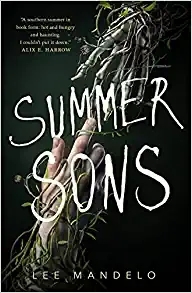 First up was Summer Sons by Lee Mandelo. This one is a queer Southern Gothic, and took me a while to get into. I’m not big on Southern Gothic, or young men flexing their macho instead of their brains. But once the protagonist started to understand what was going on, things picked up quickly and became really engaging. I can’t say I ever came to love any of the characters, but a few of them became likeable, their stories were interesting, and oddly the one I thought I’d like least was the one I cared about most in the end. The resolution of the tale did surprise me.; I guessed something of it but not until well into the story. Don’t want to say too much because there are a lot of potential spoilers in the way I related to the novel, and that wouldn’t do at all. I have my friend, Laurieann, to thank for this one. Very different from my usual fare, and a good way to dip back into the pool of TBR.
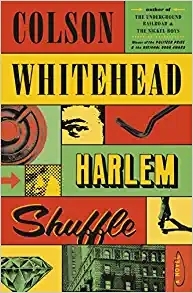 Next up, Harlem Shuffle by Colson Whitehead. I have to say that Whitehead never disappoints. Even Nickel Boys, which I wasn’t able to finish before it went back to the library was a great read and I hope to get back to it eventually. But Harlem Shuffle? Wildly engaging from the get-go, fun, serious… hitting all the right notes as it tells the story of Ray Carney, a slightly bent, (but not crooked!) furniture salesman as he navigates the murky waters of making it in Harlem in the late 50s and early 60s. There were times when I wanted to wring his neck, times when I wanted to hug him and tell him it’d be okay, times when I wanted to hold him back and say, “No, man, don’t do it! Please!” And even though Ray is the hero of the piece, Harlem itself is a character in this play, a vibrant city within a city where as much as things change, they stay pretty much the same in the important ways. It made the list as one of President Obama’s favorite books of 2021, and I understand why. It’s one of those books you recommend wholeheartedly to everyone you talk to; it’s just that good.
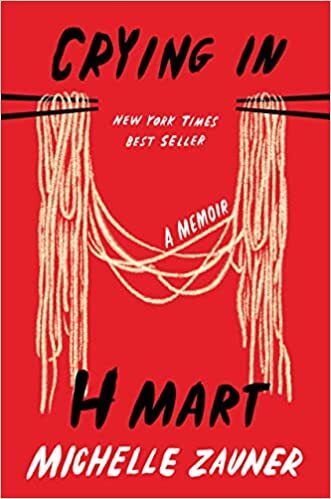 Another book from Obama’s reading list is Crying in H Mart by Michelle Zauner. I had thought this was fiction, but it turned out to be a touching memoir of Zauner’s relationship with her Korean mother. Her ambivalence about that relationship colors much of the book as she recounts her adolescence when she tried (In typically horrible adolescent fashion) to break free of both her mother’s influence and her Koreanness. But when her mother becomes desperately ill, Zauner comes full circle, not just accepting the depth and breadth of her mother’s love for her, but her own connection to Korea, and she does so mainly through the foods that nourished her as a child, foods that she shares with her dying mother. It’s a beautiful, painful book. I wept on and off as I read, but in the end I am so happy that I read it. Obama is right, it is an amazing book.
Those of you who know me well, know I’m a fan of Heather Cox Richardson, and I listen to her twice weekly Facebook talks on American history with a near religious fervor because she actually makes sense of current events by putting them into the context of our history. It’s comforting in a way that most political analysis is not because it makes one feel less like everything is coming at us out of left field. It isn’t We’ve been here before in some form or other, and if we pay attention and stand up for what we know is right, we can head off disaster.
However I’m not going to talk specifically about those Facebook live chats, but rather about a podcast called Now and Then that she does with Joanne Freeman about, well a lot of the same things she talks about in her chats, but in this case it’s a dialogue between two historical scholars discussing issues like Critical Race Theory, government investigations, separation of church and state and a lot of other topics important to the state of our democracy. If you’re political at all (and you should be!) these podcasts are so worth your time. I’m not even kidding here.
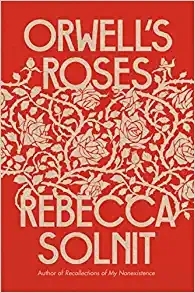 And while I’m on the subject of HCR, her chat with Rebecca Solnit about Solnit’s new book, Orwell’s Roses, provoked both The Housemate and I to start reading the book. I’m so glad I did (and so is Glinda, apparently) because not only is it a fascinating look at a side of Orwell that is wholly unexpected, but it’s a beautifully written book. Solnit’s prose is astonishingly good, engaging from the very first page. It’s a layered exploration of the forces that shaped Orwell, issues like the Spanish civil war, child labor, suffrage, the lives of coal miners. But Solnit’s touchstone here is the phrase “Bread and Roses” because the other side of Orwell was a man who loved the intense beauty of nature and life. For Solnit, for Orwell, as for so many others, bread is the meeting of basic needs of food, shelter, education and the like. But roses are symbols of the beauty of life which we must also have access to in order to be whole and human. Solnit’s description of Orwell’s 1984 led me to wonder how I’d missed so much of the truly human and humane parts of it. It’s my intention to reread it since I don’t think I’ve read it since I was in my teens or early 20s, and I look forward to seeing it with new eyes, seeing perhaps something hopeful and positive rather than uniformly gray and depressing.
The other podcast that I’ve started listening to, thanks to a recommendation from The Housemate and her sister is The History of English Podcast. I love the English language and will defend it’s weirdnesses, it’s swoops and swirls, its bizarre grammar and quirks of spelling as part of why it’s probably the most flexible, exciting language on the planet. It’s why I love the following quotes about English:
“The problem with defending the purity of the English language is that English is about as pure as a cribhouse whore. We don’t just borrow words; on occasion, English has pursued other languages down alleyways to beat them unconscious and rifle their pockets for new vocabulary.”— James D. Nicoll on Goodreads
“Basically, English is what happens when Vikings learn Latin and use it to shout at Germans.”– Ken MacLeod on Twitter
This podcast is so thorough that it starts with the proto Indo-European of English (and virtually every other European language) and moves forward, documenting the changes, small and large, in great detail. we don’t even get to the Norman conquest until episode 67! But I love it. I love everything about it and listen obsessively. If you love English even half as much as I do, you need to listen to this podcast.
After being so engaged with podcasts for the last couple of weeks, I finally went back to my reading, intending to close out 2021 with my traditional winter reading of A Gentleman in Moscow. I’ve discussed this so many times in my reviews that I’m sure a lot of my readers are saying, “oh lord, not again!” But honestly, this is a book that not only entertains me, but it helps me pull my shit together and accept that my idea of what my life was going to be like wasn’t going to fly. That the reality of my life is what I need to grab hold of, make the most of. And after the 2021 I’ve had, it’s exactly what I needed to read.
I’m heading into 2022 with Andy Weir’s Project Hail Mary which so far I am loving. I still have a lot of history of English podcasts to listen to, and just subscribed to Gastropod, also thanks to HCR and Joanne Freeman. Lots to think about. May 2022 be better to all of us than 2021 was. Good reading, kids!