
Music Discovery: Qobuz vs Spotify
I’m not going to get into a discussion about the relative merits of streaming services based on how much they pay artists or whether that is a fair or sustainable business model. Lots of other people have already done that and the consensus seems to be it’s not and it isn’t.
But while we still have them, I wanted to say something about these services as a way of discovering and experiencing music from the perspective of a (specific) listener and purchaser of music in physical form.
I pay for both Spotify and Qobuz and while they have extraordinarily similar catalogues (distributors being what they are), I use them very differently and they create a very different impact on my musical world.
Let me start by saying that Spotify has exceptional algorithms, and Qobuz has terrible ones. Spotify’s Discover Weekly routinely suggests music that I already own on vinyl and have never listened to digitally (is it psychic?) and Qobuz’s My Weekly Q is so often so wide of the mark it’s offensive (The Eagles?! Is this how little you think of me?).
But Qobuz is my preferred platform, and it’s not about ethics – or even the high resolution streaming audio (though that is a plus). It’s two things:
1) The album and not the track is the atomic unit of music on Qobuz. You can listen to mixed playlists, and I do, but the interface absolutely prioritises whole albums – and that is the vast majority of what I like to listen to in that environment. I am a huge fan of playlists and mixtapes, but (call me old-fashioned) I still very much like the idea that artists present a body of work made up of a group of songs and interludes intended to be experienced in a particular order.
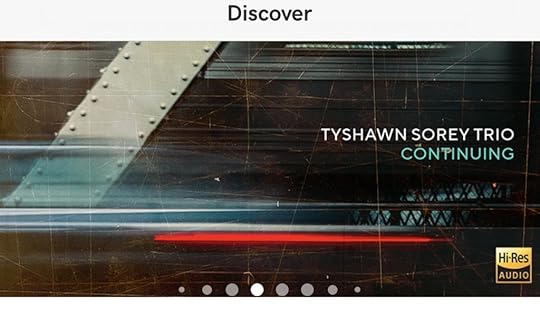
2) New album releases are highlighted on the front of the website and app every Friday. These are curated by people (actual human people) who, like knowledgeable record store proprietors, know what their customers might like and what might indulge their curiosities and broaden their horizons. I LOVE this. Qobuz assumes I’m interesting. Spotify assumes I am predictable.
Where Spotify will happily create endless playlists of stuff from the past 50 or more years that I might like (and usually do), these are for ‘having on’. Qobuz will suggest a list of new albums that came out TODAY and are worth my time to listen to.
Thanks to Qobuz, I would say a good 60-70% of all music I listen to was released in the last few months. I find things that surprise and challenge me, and I listen to music that does not merely replicate the music that I already like. My tastes are not merely indulged on Qobuz – they are expanded.
And so quite often, discovery on Qobuz leads me to my other regularly used music platform: Bandcamp. I will frequently listen to an album by an artist I have never heard of on the day it comes out, live with it over the weekend, and by Monday I have been to Bandcamp and bought the vinyl.
What Spotify is mostly for, these days, is playlists made by other people. Sometimes those playlists are souvenirs of places. Sometimes they are sent as gifts or to respond to self-imposed challenges (e.g.: imaginary Now That’s What I Call Music album from a year when those compilations were not being made). One of my favourites is a communally-created memorial for a musician friend who passed away a few years back, and friends and fans have added songs that remind them of him – both from his own catalogue and from his history as a champion of other people’s music.
And this too is what Twitter is for. There are people on Twitter who either create or re-post links to Spotify playlists curated by smart specialists. My most recent ‘favourite’ is a very good curated selection of ambient music by someone who has gone very deep and spent a lot of their time thinking and broadcasting about that particular musical universe. You don’t really get that on Qobuz.
Quite often I’ll listen to someone’s playlist on Spotify. That will throw up a track that sticks. I’ll research the artist and album on Qobuz and add it to my favourites there. And again, sometimes repeated play on Qobuz will result in a vinyl purchase on Bandcamp – or failing that, Discogs. Naturally, when possible, I also go to record stores, but I live in a relative vinyl wasteland and usually have to travel in order to treat myself to the physical browsing experience.
It’s also worth mentioning that the vast majority of listening is on decent Sonos speakers scattered throughout the home, on headphones as I walk the dogs (or, as I mentioned, travel), and in the car. I am very rarely not listening to something.
But do I wish all of this could happen in a single, equitable online environment that suitably recompenses artists and labels? Of course. I’m paying two full subscriptions for services that operate at varying levels of exploitation. Add in the price of vinyl, postage and often import duty too, and the whole arrangement suddenly seems unsatisfactory. But at the same time, I have never been happier with the experience of discovering, listening to and purchasing music.
So there’s that.
The post Music Discovery: Qobuz vs Spotify first appeared on Dubber.

Andrew Dubber's Blog

- Andrew Dubber's profile
- 2 followers

