
Masterclass: Emerging technologies in independent music
Last year, I was invited to speak at an event in Portugal about the (potential) impact of AI and other emerging technologies on the independent music sector. I delivered a whole-day masterclass divided into two parts and participated in an evening panel session. It was part of a two-week intensive course covering a wide range of industry issues for creative people in the independent sector, and musicians, producers, label owners and promoters from all around the world attended.
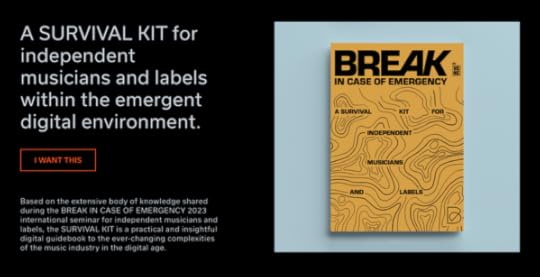
The whole series of masterclasses and workshops has now been turned into a free ebook called the Survival Kit – and it has a lot of brilliant advice and insight for people in independent music, wherever they are in their journey. A lot of good advice from a lot of smart and experienced people has been rather expertly distilled into this book.
What follows below is the Survival Kit’s summary of my own contribution. If any of this is of interest, I strongly recommend the whole thing, which you can download here. It also contains links to videos of the Masterclasses.
Emerging technologies in independent music
Notes on the Masterclass by Andrew Dubber
Technology has always played a crucial role in the evolving tapestry of the music industry. Drawing on his vast experience and diverse expertise, Andrew Dubber invites us into a rather philosophical discussion of some of the most pressing issues at the crossroads of music and emerging technologies.
Director of MTF Labs and a respected figure in the music tech sphere, Dubber has dedicated over four decades of his life to the industry. His journey began in the era of radio and record production, and he has since witnessed first-hand the seismic shifts brought about by technology. As an academic, Dubber has delved deeply into the social and cultural impact of media objects. His extensive body of work, which includes notable publications such as “Radio in the Digital Age” and “Music In The Digital Age”, reflects his thought leadership and depth of understanding.
Dubber’s age, by his own jovial admission, makes him a veteran in the field and grants him the privilege of perspective. He has seen the meteoric rise and sobering fall of various trends and technologies. But his core message remains unchanged: music as a medium has the power to transcend boundaries, heal divisions and drive social innovation.
In this masterclass, participants are invited to embark on an insightful journey through the contemporary technological landscape of the music industry. Starting with the concept of the ‘musical metaverse’, Dubber sets the context of our current technological environment. From there, he delves into the nuances of Distributed Ledger Technologies (DLTs) and Non-Fungible Tokens (NFTs), exploring both their potential and their pitfalls.
These new-age technologies promise unprecedented transparency and opportunity but also come with their own set of challenges. Artificial Intelligence (AI) will also be addressed, not only as a tool for automation but also as a collaborator, composer and even critic in the music world. The fields of virtual reality (VR) and gaming are explored, providing insights into their transformative impact on live performances and fan experiences.
Beyond theoretical knowledge, this masterclass is designed to equip participants with practical tools and best practices to ensure they can effectively navigate this dynamic landscape, gain a panoramic view of the current music-tech interface and discern the horizons of future possibilities. In a world where technology can often seem like a double-edged sword, Dubber’s masterclass aims to equip, enlighten and inspire individuals to harness its power for creative innovation, social change and, above all, the love of music.
The Intersection of music and technology
The music industry has always been at the forefront of technological evolution. From the early days of the phonograph to the modern era of digital streaming, technology has consistently transformed the way we produce, distribute and consume music. This dynamic interplay between music and technology has led to ground-breaking shifts in the industry, opening up new avenues for both artists and their audiences.
While technology offers a plethora of tools and platforms, Dubber emphasises that it’s the human spirit, our innate creativity, that truly drives innovation. Music is not simply a collection of notes and rhythms – it’s a profound form of expression, a universal language that resonates across borders and cultures. Technology, on the other hand, serves as a conduit to amplify, distribute and innovate this art form.
However, the rapid advancement of technology, especially in the field of Artificial Intelligence (AI), requires a comprehensive understanding and skilful navigation. With tools like ChatGPT, what began as a rudimentary browser tool has now evolved into a sophisticated mobile application.
With the introduction of platforms such as Google’s BARD, the AI landscape in music is becoming richer and more complex. Dubber draws parallels between the current wave of AI in music and the transformative impact of platforms like Napster in the late 1990s. Just as the industry adapted to the digital distribution era, it is now on the cusp of another transformative phase with AI. The challenge and opportunity lies in the understanding and harnessing of this potential.
To truly thrive in this new landscape, artists and industry professionals should remain strongly anchored to their core motivations. What drives you? Is it the applause of an audience, the tangible metrics of streams and revenue, the deep satisfaction of creative expression, or the profound impact music has on your listeners? Defining these metrics of success can help you approach the technological landscape with clarity and purpose. In this vast technological realm, not every technology tool or platform will resonate with everyone’s unique needs. Some may be perfectly aligned with individual objectives, while others may be mere distractions. The challenge is to sift through the noise, adopt the technologies that truly align with your vision, and set aside those that do not.
The evolution of AI and its impact on music
Artificial Intelligence, with its unrivalled capacity to process vast amounts of data and recognise patterns, has carved out a significant niche in the music industry. One of the most intriguing applications of AI in music is its ability to generate compositions.
Songs created by AI in the style of iconic artists may sound remarkably authentic, but they also spark a series of debates and discussions. Can a machine-generated composition evoke the same emotions as a song written by a human? What does this mean for copyright and artist recognition?
AI vocal replacements also quickly became a thing, with famous examples such as AI Rihanna singing a Beyoncé song, AI Kanye West doing “Hey There Delilah”, or AI Kurt Cobain singing Soundgarden’s “Black Hole Sun” in post-mortem ecstasy. Or the track “Heart on My Sleeve”, which used AI versions of Drake and The Weeknd’s voices to create a “passable mimicry” that racked up millions of plays on TikTok, Spotify, YouTube and more before being removed by Universal Music.
While impressive, this technological marvel comes with its own set of challenges. The potential dilution of original works and the ethical considerations of replacing human voices with AI-generated ones are topics of intense debate.
The rapid advances of AI in music also bring challenges. Dubber highlights the significance of communication in AI and reflects on the potential for computers to “feel” with the right sensors. He draws parallels with the human brain, suggesting the profound implications of advances in human-AI interactions. At its core, music is a form of expression, a universal language that resonates with audiences around the world. Does the essence of music remain deeply human despite rapid technological progress? While technology can enhance and amplify that expression, can it replace the human touch, emotion and story that artists bring to their creations? If a song sounds good and makes you feel something, does it really matter if it was created by a human or by AI alone?
But it’s not just the creation aspect of music that AI is impacting. AI tools are being integrated into existing workflows and software, optimising processes and offering new solutions. From mastering tracks to curating playlists and even predicting music trends, AI’s footprint in the music industry is growing exponentially, and its potential to help with boring or tedious day-to-day tasks in related fields is becoming more evident every day, with examples including voice cleaning and background noise removal, automatic subtitling, automated multi-camera automatic video editing or writing web copy, among many others.
On the other hand, the way in which these technological advances are managed and dealt with raises deep concerns and challenges. AI companies are rapidly releasing their work to the public, rather than safely testing it over time – for example, AI chatbots have been added to platforms used by children, such as Snapchat. Safety researchers are in short supply, while most research is driven by profit rather than academia. The media has also failed to report on AI advances in a way that allows us to truly understand what is at stake. Corporations are in an arms race to deploy their new technologies and gain market dominance as quickly as possible. In turn, the narratives they present are shaped to be more about innovation and less about potential threats.
The misalignment caused by broken business models derived from social media that encourage maximum engagement has yet to be fixed. Large Language Models (LLM) are humanity’s ‘second contact’ moment, and we are about to make the same mistakes. In fact, half of AI researchers believe there is a 10% or greater chance that humans will become extinct due to their inability to control AI.
Every time we create a new technology, we uncover a new class of responsibility, and if that technology confers power, it will eventually start a race. Either we coordinate this very carefully, or the race may very well end in tragedy.
Embracing new technologies: streaming, blockchain and NFTs
The digital age has ushered in a plethora of technologies that have had a significant impact on the music industry. Furthermore, these emerging technologies are not just tools but actual environments that we inhabit, shaping our perceptions, experiences and interactions in profound ways.
Dubber discusses the concept of ‘affordances’, suggesting that technologies offer possibilities that can be harnessed creatively. He draws parallels with the music industry, citing seminal albums such as “Sgt. Pepper’s” and “OK Computer”. These works are still celebrated not only for their musical genius, but also for their innovative use of technology, pushing the boundaries of what was thought possible at the time.
More recently, streaming platforms have democratised access to music, allowing artists to reach a global audience without the traditional gatekeepers. Platforms such as Spotify, Apple Music and SoundCloud have revolutionised music distribution, but they also pose challenges.
The debate over fair compensation for artists and the role of algorithms in curating music experiences are at the heart of the streaming discourse. Blockchain technology was a hot topic in 2016, promising transparency and decentralisation. Dubber recounts an enlightening event at MTF, where a diverse group of experts, from cryptographers to composers, gathered to dissect blockchain’s potential in the music field. The burning question was its ability to make music more equitable. Could blockchain actually ensure fairer remuneration for artists?
Non-fungible tokens (NFTs) have also recently gained significant attention in the art and music worlds. Although there are a myriad of challenges associated with music DLTs (distributed ledger technologies) – spanning ethical, technological, political and business domains – the potential benefits of these unique digital assets, verified using blockchain technology, are also immense, as NFTs can be structured to ensure artists receive a percentage of resale profits, while providing proof of authenticity and ownership. Dubber discusses the potential of NFTs in creating unique, limited edition digital assets, but also touches on the criticisms and environmental concerns associated with them.
Beyond the nuts and bolts of these technologies, part of their broader implications stem from the fact that they are not external entities but integral parts of our environment. They influence how we perceive the world, how we communicate and how we express ourselves. According to Dubber, the impact of these technologies – both positive and negative – depends more on the people who use them than on the technologies themselves. In the confluence of creativity and technology, it is important to understand both the potential of tools like blockchain and NFTs, as well as the challenges and ethical dilemmas they pose.
Rise of the metaverse: virtual reality and gaming in music
The metaverse, virtual reality and gaming have become integral parts of the modern music landscape, offering new ways for artists to engage with fans and create immersive experiences. These technologies are not just tools but environments that we inhabit, influencing how we perceive, experience and communicate within the world.
While VR’s roots go back decades, its intersection with music is particularly fascinating. While some predicted the metaverse would be the next big thing, recent narratives suggest its premature demise.
Nevertheless, the potential of the metaverse for live performances, fan engagement and immersive experiences remains huge. Gaming in particular offers a unique overlap with music. The emotional experiences that gamers have while playing, whether it be the thrill of solving a puzzle or the adrenaline rush of an action sequence, are often accompanied by music. This music becomes an integral part of the gaming experience, leading to a heightened emotional connection.
Players often want to own the music from their favourite games, leading to phenomena such as vinyl sales of indie game soundtracks. One notable example is the DJ Marshmello concert within the game Fortnite. This event was monumental, with millions of people attending a 20-minute virtual gig, making it one of the largest concerts in history. Such events highlight the potential of virtual concerts within gaming platforms.
Another interesting development was the acquisition of Bandcamp by Epic Games (the developers of Fortnite). Bandcamp, an online platform where artists can sell their music directly to fans, has been a favourite among independent artists. Its acquisition by Epic Games, a major player in the gaming industry, points to the potential synergies between music and gaming. This merger underscores the evolving landscape of the music industry, where platforms like Bandcamp can benefit from the vast user base and technological prowess of gaming giants like Epic Games.
Dubber’s mention of this acquisition underscores the importance of understanding these industry shifts and the opportunities they present.
The rise of the metaverse, virtual reality and gaming in music presents a plethora of opportunities and challenges. From creating immersive fan experiences to exploring new revenue streams, these technologies are reshaping the music industry. But while the idea of inhabiting virtual spaces – from VR goggles to potential contact lenses – is intriguing, the excessive excitement about the actual impact of such technologies – such as Facebook’s rebranding as “Meta” and Mark Zuckerberg’s vision of a virtual world where people socialise and play together – should also be met with a fair share of scepticism. As with all innovations, it is important to approach them with a balance of enthusiasm and critical analysis.
Strategies for independent musicians and labels
Defining value is a crucial debate and reflection, and artists should challenge the traditional notion that the value of music is tied solely to its price. Dubber emphasises the importance of artistic creation, expression and the intrinsic value of music beyond monetary terms. Changes in the industry, particularly with the advent of streaming and digital platforms, require a re-evaluation of how the value of music is perceived and monetised.
Integrating emerging technologies into existing workflows can be daunting. The key is to understand your goals and tailor the technology to meet them. For example, while VR concerts may be all the rage, they may not suit every artist or genre. Similarly, while NFTs have made headlines, they may not suit every artist’s ethos or brand. It’s about identifying which technologies and strategies resonate with your artistic vision and your audience. For independent musicians and labels, understanding and leveraging emerging technologies is crucial.
While the major record labels have traditionally wielded considerable influence, Dubber aptly points out that they are not the whole of the music industry. Using the analogy of lions in a zoo, he points out that while they may be the loudest and have the sharpest teeth, they’re not the only game in town. Independent musicians and labels have always been the lifeblood of the music industry, often at the forefront of innovation and experimentation.
In today’s landscape, they have the opportunity to redefine industry norms by embracing new technologies, understanding the nuances of different platforms and staying true to their artistic vision.
Another interesting perspective Dubber presents is the idea of spending less in the music industry. Rather than focusing solely on increasing revenues, artists and labels should also consider strategies to reduce costs. This could include re-evaluating deals with merchandisers, optimising distribution channels or using direct-to-fan platforms to maximise revenue.
The journey for independent musicians and labels in today’s music industry is full of challenges and opportunities. Redefining value and ensuring cost efficiency are not only strategic imperatives, but essential for survival and growth. By understanding their unique strengths, leveraging the right tools and platforms, and making informed decisions, independent artists and labels can better navigate the complexities of the industry.
Conclusion and future outlook
A recurring theme throughout the masterclass is the idea of agency. Dubber emphasises: “So it is still up to us. We are still the ones who decide. This notion underscores the importance of human agency in the face of rapid technological advances. While technology provides tools and platforms, it is the choices made by artists, industry stakeholders and audiences that will shape the future of music. He shares an anecdote from a keynote speech he attended in Dublin, where a self-styled futurist made bold predictions about the future of music. This reflection serves as a cautionary tale about the pitfalls of deterministic views. One should always question the idea that “in the future, we will all be…” and be mindful of the diversity and individuality inherent in human choices and actions.
More than ever, it is essential to connect with like-minded people — not just industry insiders, but technologists, fans and other stakeholders — to share insights and build community. These human connections are critical to navigating the complex landscape of music and technology.
Artists should embrace an open perspective, engage in discussion and remain curious. By fostering a mindset of continuous learning,exploration, adaptability, open dialogue and a balanced approach, we can better navigate the challenges and opportunities presented by new technologies.
From the rudimentary recording devices of the past to the sophisticated AI-driven tools of today, the pace of technological advancement is exponential, with each leap expanding the horizons of what’s possible.
The integration of blockchain, the rise of NFTs, the allure of the metaverse and the convergence of music and gaming are not just trends, but indicative of a broader shift. They signal a future where technology and music are inextricably intertwined, creating unprecedented opportunities for artists, labels and fans. But with these opportunities come challenges, and the industry must learn how to navigate this landscape wisely, ensuring that technology serves the art, not the other way around.
As we stand at the crossroads and look to the future of music, it’s clear that technology will continue to play a pivotal role. It may sound clichéd, but the fact that change is the only constant is particularly true in the music industry. The digital revolution, the rise of streaming, the democratisation of music production – each of these changes has been met with apprehension, scepticism and even resistance. Those who embrace these changes, who see them not as threats but as opportunities, are the ones who thrive. The future will undoubtedly bring more change, some predictable, some unforeseen. The key is to embrace these changes, understand their implications and harness their potential.
However, technology is not an end in itself, but a means to an end. The heart of music lies in its ability to evoke emotion, tell stories and connect people. As we integrate new technologies and explore the vast possibilities they offer, let’s not lose sight of that essence, while ensuring that technology amplifies art, enhances human connection and serves the greater good of the community.
You’ve read this far? You should check out the rest of the masterclasses with full videos, downloadable materials and workshop summaries from the free BREAK in Case of Emergency Survival Kit.
The post Masterclass: Emerging technologies in independent music first appeared on Dubber.

Andrew Dubber's Blog

- Andrew Dubber's profile
- 2 followers

