May Update About October
Here’s the rundown of May.
Writing UpdateI finished the draft of Chapter 6. Sort of. It’s around a thousand words shorter than most of my other chapters and it’s the only one that I’m not at least 90% happy with. This is probably due to there not being much in the way of plot going on, but it still needs to be there for character and other establishing reasons. Mostly, I’m declaring it done because I just need to get it off my desk so I can start Chapter 7 in June. I’ll be able to fix Chapter 6 in post.
In other news, I’m officially attending the Howler Arts and Literary Festival in Montgomery AL on October 5th. If you’re in the area, feel free to attend. It is my first, and probably last, public event. October is going to be a big month for me, but I’ll get into that later.
 What am I reading?
I had a family beach trip at the beginning of May, several kicking off Summer social events, a concert, and, as I’m typing this, I’m off work as I catch up on things around the house. The last one most revolves on working on one particular room, but I’ll get into that later.
The only thing I read worthy of note was “The Prince” by Machiavelli. I will say up front that this review is probably my longest in quiet a while. I had feelings.
The Prince Review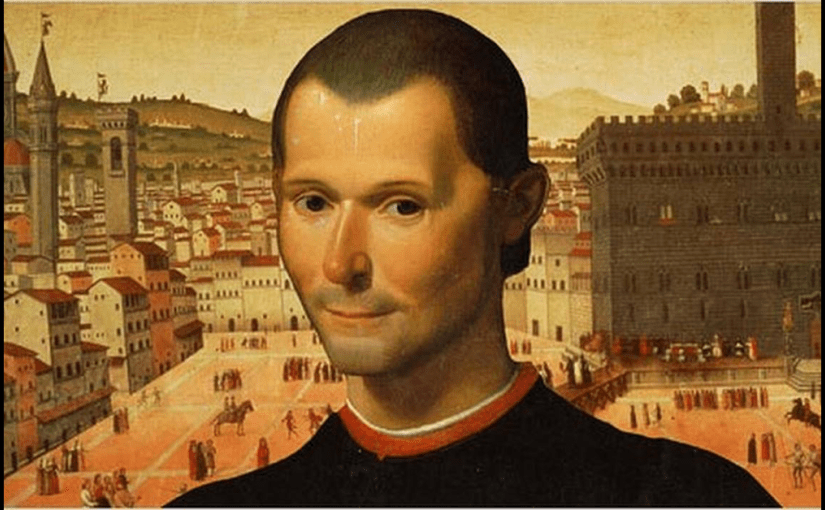
This work is often taken out of context, either from quotation and/or by its reputation. Most examiners view this book completely out of context so they can comment on any particular argument it presents. This works for and against it, as those who voice support view select passages as a work of pure logical philosophy meanwhile those against it feel it is a manual for apathetic dictators. However, viewing the book as a whole, and fully within its context, I find it to be neither. It is rather a work of historical armchair quarterbacking that, in its closing arguments, quickly becomes an Italian fascist manifesto. Honestly, a rather disappointing conclusion to a work so widely known and feared.
To go over each and every point, for and against, this book would take another book on its own. There has probably been more to say about Machiavelli than there has been work from the man himself. So, for the sake of all of us, I'll just stick to four main points.
First off, he states at the very beginning that there are only two forms of states: Republican or Authoritarian. There is some reasoning to this as various other thoughts on governance can fall into one of these two broad categories and would probably fit in both based on how they're implemented. Socialism, for example, can be authoritarian as it was in the USSR or can be a republic as it is in countries like Finland. The point, as it pertains to this book, is that 'The Prince' only contains half the argument. He's not strictly saying people have to live in a dictatorship, but rather if you did live in one, this is how you should run it. Skipping over this first argument can ruin the context for the rest.
Note to the note above: Machiavelli said he has written about republics in length in other works. I have not read them, or even sure if they still exist, so I don't know what his opinion on said republics even was. His lack of reference to republics probably stems from the idea that he never thought people would still be reading his shit 500 years later.
The vast majority of this text reads as a historical book with an opinion. Taking overly broad examples to apply the logic someone might face in the modern world. There are numerous problems with this logic. First is just a matter of perspective. Almost all, because he does involve the Germans somewhat, of the examples only look at Mediterranean history. Granted, Machiavelli couldn't just go to Wikipedia for more research, but such a narrow view could hardly make for good logic. This is further compounded by the idea that much of his advice is designed around the idea that it would fit anywhere at any time. Geopolitics throughout the centuries is more complicated than that.
Perhaps the most damning argument against this book is that much of it doesn't work if one assumption is proven incorrect: That people, particularly the unwashed masses, are trash. Which, to be honest, is fair. If they'll vote for a mentally retarded reality TV star for President, maybe this whole voting thing should be revised. Still, Machiavelli tries to make a loose argument that dictatorships can curb this behavior. Saying people are "ungrateful, fickle, false, cowardly, covetous" is almost word for word from Meditations by Marcus Aurelius. Several aspects of Machiavelli are slight branch-offs of Stoicism. However, Aurelius used the notion that people are garbage as motivation to improve oneself. To be better. While Machiavelli uses it as an excuse to oppress. So, while I can understand and support doing what is necessary, I also feel there is a better way.
My final argument comes from the ending of the book. Where everything is condensed into a manifesto in favor of Italian greatness. That the dictatorship Machiavelli has been voicing support for should be used against his own people under the idea that oppression and struggle will make them stronger. One, that's bullshit. Authoritarianism only favors the powerful. Anyone who tells you differently is either powerful, a leech to power, or an idiot. Two, fascist arguments like this have been made by every Italian politician for the past two thousand years, even those of today. All under the falsehood that they need to look to the glory days of the Romans to make themselves relevant again. And it has never worked. I wouldn't be surprised if Italian government officials, while writing a speech, just didn't copy the last chapter of this book while adding several racist remarks about migrants.
Honestly, I didn't expect this book to be as outright fascist as it is. I expected something cold, logical. A stoic who didn't mind being vaguely evil. And, if you remove the opening and closing arguments of this book, that sums up most of it. That, however, would take out much of the book's context. And context is more important than the information itself because, if you remove context, you can turn truth into a lie. Which is something you only see Machiavellian dictators do.
There were two big disappointments with two big surprises. The disappointments were “The Whale” and “Babylon 5: The Road Home”. I walked into these films assuming I wouldn’t like them very much, so I guess calling them disappoints makes them even worse than I first realized. Whale was just another “Iron Lady” situation where you have great acting with a terrible script and no sense of direction (from the director). For the other, I’ve always had a major hard-on for B5 and this movie was made especially for people like me. Making my lack-luster response all the more lacking. It just pains me to see the franchise limp along with such mediocre writing from a show that was known for its great writing.
The surprises were “The Autopsy of Jane Doe” and “The Accountant”. Both are smart films that aren’t what they seem like on the surface level. They are deliberately set up to be surprised, and they certainly did.
Real Life CornerMay was a pretty busy month for me in term of life events, but I’ll stick to only one as it will easy eclipse the others. It should answer the eariler remarks about how my October is going to be huge.

Thanks for reading! Subscribe for free to receive new posts and support my work.