Writing Tips and Insights from Author, Susan Harris Howell
Could you describe your writing process? What’s your favorite place to write? Do you have a specific time of day when you feel most creative? What’s your view while you write?
I always write from my desk in my office and, ideally, in the morning. That’s when I have the most energy to get started. On a productive day, my only view is my backyard from the window right behind my computer screen. On a less-than-productive day, it’s the kitchen, which is the next room over from my study. Unfortunately, that means I’ve gotten distracted and gone for a snack or to start dinner, unload a dishwasher, or literally anything else but write.
Are you a pantser, or do you outline? If you are a longtime writer, how has your process evolved? Share your journey and the lessons you’ve learned.
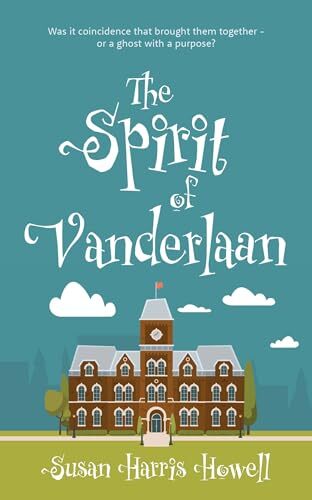
For my first novel, The Spirit of Vanderlaan, I was definitely a pantser. I had no idea what would happen next, how the story would unfold, or who the villain would be. I just meandered from chapter to chapter until a story emerged. That was purely because I didn’t know everything I needed to consider when writing fiction. And I’m glad I did it that way because it got words on the page and kept me from criticizing myself into writer’s block, which I definitely would have done otherwise. But while I worked on that first novel, I learned some things about plot structure that I applied while editing; this made the book much stronger. So, when I started the sequel, I decided to try planning it first and then writing from an outline. And I really like this better. I’ll definitely be an outliner from here on.
Where do your ideas come from, and does your original idea change as you get further into the writing process?
I definitely have written what I know. My novels feature a psychology professor and her students, with a lot of humor and banter in her office. That’s certainly the career I’ve known and some of the most rewarding relationships I’ve enjoyed all these years. But, yes, it certainly changed as the story progressed. For instance, my students and I have never been pulled into solving a murder mystery—on campus or otherwise! And to this day—knock on wood—I’ve never seen a ghost. At least not yet.
What is the most challenging part of writing?
The most challenging part of writing has always been finding the time. But as I’ll be retiring from teaching in just a few months, I look forward to more time opening up. I know that making myself sit down each day to work will still be challenging, but I’m so excited about being on my own schedule that I think it’ll be fun. Ask me again in six months, and we’ll see!
What do you recommend for writer’s block?
I don’t know if my problem is writer’s block or just trouble getting started each day. But the absolute best thing I’ve done is to create a To-Do list of the next few steps of whatever project I’m working on. I do this at the end of each workday to jumpstart my work the next day. For instance, before I finish my work today, I’ll write the first few things I need to do tomorrow—like editing the last chapter I wrote, coming up with a cool name for a villain, and writing a transition between chapters. Then, the next day, when I feel overwhelmed and tell myself I don’t know where to begin, I remind myself that Yes, I do know where to begin—I begin with the To-do list I created yesterday. That gets me over the hurdle of getting started; and by the time I’ve finished the few things on the list, I’m into the flow and don’t want to quit.
What do you want readers to take away from your writing?
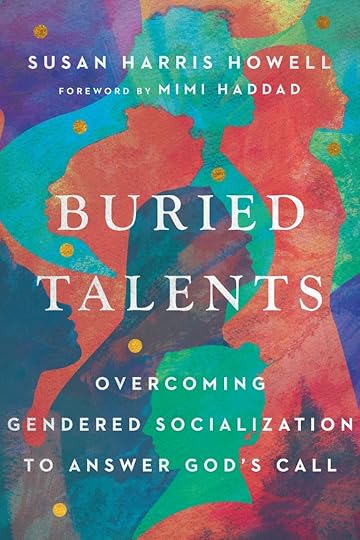
Entertainment. I want my novels to be refreshing and fun, something that makes you laugh or think about relationships or life in a slightly different way. I think Samantha and her entourage of students do that for readers because they do that for me. Before writing novels, however, I wrote a lot about gender stereotypes and ways to counter their harmful influence. So, I certainly want readers of my first book (Buried Talents) to walk away with tools to live their best lives without the hindrance of harmful gender messages.
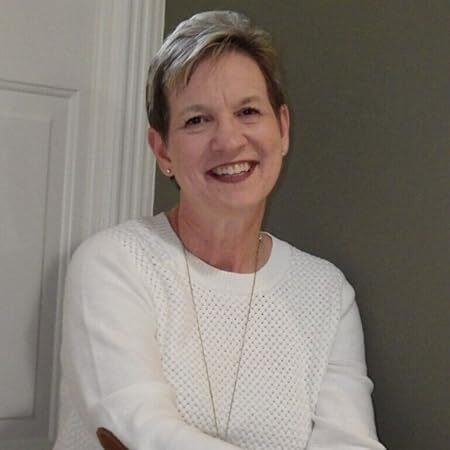
Susan Harris Howell is a psychologist on faculty at Campbellsville University in Kentucky. Her passion is teaching and mentoring young adults as they make decisions regarding their adult lives and careers.
Her first book, Buried Talents, https://www.amazon.com/Buried-Talents-Overcoming-Gendered-Socialization-ebook/dp/B09D2WHQF6/ comes from her specialization in gendered socialization and the intersection of psychology and faith.
Her most recent book, The Spirit of Vanderlaan, https://www.amazon.com/Spirit-Vanderlaan-Samantha-Hayes-Book-ebook/dp/B0DHV65RM4/is a novel set on a college campus. In this cozy, paranormal mystery, Dr. Samantha Hayes and her merry band of students must learn if they were brought together by coincidence or by a ghost with a purpose.