J. Schlenker's Blog
November 17, 2025
Lunch with The Water Spider
While working on writing, specifically a new cover for The Water Spider, I’m having lunch. This shrimp salad was actually inspired by airport food (Houston—specifically, a Tex-Mex eatery located in Terminal C, although I don’t recall the restaurant’s name). The drink is iced tea.

As I was updating The Water Spider, I discovered November is Native American Heritage Month, a time to celebrate the cultures, traditions, and contributions of Indigenous peoples in the United States.
Throughout the month of November, the Kindle is available for only $0.99. https://www.amazon.com/Water-Spider-J-Schlenker-ebook/dp/B0D2PPDLX7/
Carter Hudson’s mansion is a shrine of fame, but behind its Versailles trappings, the west wing holds a secret no press release could explain: a scarred, soft‑spoken twin sister who was presumed dead. Kimi—once Kimi Ahoka—has lived half a life in shadow, hidden from cameras while her sister became an international star. When Arthur Burke, a prominent L.A. attorney and the man they both love, receives a late-night phone call from a man in Cherokee, North Carolina, who claims to know Carter Hudson’s secret, he immediately hops on a plane. His search for answers leads him to a Cherokee gardener, an aging Hollywood idol, and a mother who has hidden more than she’s healed.
From Chapter 1:
In the dimly lit room, I hear my sister’s voice, “You know what our mother always said. If you drive down the paved road of the white man, you lose your way.”
Shrimp Salad
Mixed Greens
Shrimp (I saute in olive oil, garlic, and chilli powder.)
Cherry Tomatoes cut in half
Red Onion (rings)
Avocado chopped
Dressing—Olive oil and balsamic vinegar


October 27, 2025
My First Audio Book

I’m excited to announce that Birds of a Different Feather is now available in audio, read by Sarah Seltz. Available through Audible: https://www.amazon.com/Birds-of-a-Different-Feather/dp/B0FXN6HYNS/

May 14, 2025
Foodie Lit. J. Shlenker’s The Color of Cold and Ice
Please visit Expand The Table’s site for more book reviews and fabulous recipes.
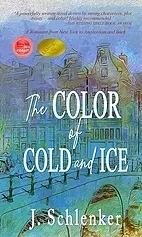
While taking a writing course, Jerri Schlenker’s assignment was to pick a color and write from the point of view of the color. So adds an important part of the novel with a personalized narration of colors between each section of the plot. The colors, with layers of meaning, are real and symbolic, apart yet characteristic, integrated with the persons and scenes that are to come. It is certainly a unique and interesting part of the novel’s narration.
Not only giving a voice to colors, Jerri gives a voice to each of the main characters in two families as they share in the telling of their stories, which are artfully braided together. Each has a dream and each has a heartache; each develops a resilience to confront the difficulties that life has presented. In doing so, the two families that we encounter come together in surprising ways.
Each chooses a new path that is individual and yet interwoven with another character. This makes the plot complex and continues to intrigue the reader.
Jerri told me that she writes what she knows or has encountered. One of the characters must deal with cancer, which Jerri had been diagnosed with and survived. One character’s husband was killed in a freak accident. Another is a doctor whose patients simply want pills and surgeries instead of working to develop healthy lives. Another cannot have children, and another is a failed songwriter and performer who has also failed at love.
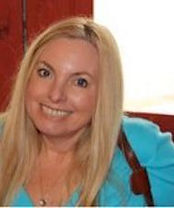
Many of the scenes occur in a coffee shop, the Java Bean Factory, an eccentric space that is also somewhat magical. Sibyl owns the coffee shop. As a child, “[h]er father held her hand as they entered an enchanted shop.” This was Sibyl’s first trip to a coffee shop as she was a child, filled with the aromas of coffee, bread, and chocolate pastries. She then fell in love with the dream of owning a coffee shop. She and her creative sister Em, recently widowed, run the café. As the author feels that her writing is derived ‘from something higher,” so Sibyl has visions and dreams which foreshadow aspects of the plot. The intuition of the characters helps lead them to new and healthier choices in their lives, away from the pain that has engulfed them.
I asked Jerri about the coffee shop. “Although I’m a tea drinker, I love quaint, quirky coffee shops. Something about either drink brings people together, in this case, the characters, thus the Java Bean Factory is born. Also, regarding quirkiness or uniqueness, I have used this coffee shop in a later book, Alice Black. There have been several instances where I’ve incorporated places and characters in cameo appearances throughout my different novels.”
As well as coffee shops, Art plays a role in the novel, in its discussion of color and its meanings. Van Gogh is the favorite artist of Em and the author. Em travels to Amsterdam and views his paintings in the Van Gogh Museum. Much of the plot comes together there in ways that have been envisioned and yet are spontaneous.
One of the characters, Mark, is also visiting Amsterdam on his way to a workshop in Poland about reinvigorating the spirit through healthy lifestyle choices, some less typical, such as cold plunges, cold showers, and bathing in winter waters. On the way, he visits a recently discovered relative who is a concentration camp survivor. Shown to him by his elderly relative, the pictures of relatives who were murdered by the Nazis is retold as a new pain, “as if he had just experienced the tortures, he and his loved ones had endured all over again.” The pain of the past is never erased. Resiliency and vision help forge a life worth living for all the characters, no matter the source of their pain.
An excellent plot structure is the network of chance encounters from which the characters’ decisions unfold and intertwine. As Jerri told me, “You might say that as the characters found their true purpose, they climbed the chakra ladder or became the right balance of all the chakras—a personal and collective evolution.”
Delicious food comes from the Java Bean Café. I tried to imagine new items on the menu and developed this recipe for Breakfast Pizza, which I know would add to the aroma and flavors of the cafe!
Available on Amazon: https://www.amazon.com/Color-Cold-Ice-J-Schlenker-ebook/dp/B01ITYEIJM/ref
https://www.expandthetable.net/
Breakfast Pizza
In this fabulous fusion of pizza and breakfast flavors, pizza becomes a breakfast food! Scrambled eggs with sautéed veggies and mozzarella are baked on top of the pizza crust to make a delicious morning meal, healthy, filling, and as fun to eat as any pizza slice. Sauté your favorite veggies and top with the cheese(s) you love. Not made with the traditional tomato sauce, this pizza is as mild or as spicy as you like. It’s the ultimate fun bite kickstart to your day! Guaranteed to tempt even picky eaters!!
Yield: 1 8″ pizza
Crust
1 thin crust pizza crust. (The recipe given here, but you can purchase pizza crust, use naan, or even French bread sliced lengthwise.)
1 1/2 cups high-gluten flour
1 1/2 teaspoons active yeast
1/2 teaspoon salt
1/2 cup warm water
1 teaspoon cornmeal.
1 tablespoon olive oil
1 teaspoon olive oil for spreading on the dough
Preheat the oven to 425°F.Mix flour, yeast and salt together in a bowl. Add warm water and olive oil.Mix together until the dough forms.Turn out onto a clean and lightly floured surface. Knead until smooth and elastic, about 5 minutes.Cover the dough and let rest for 10 minutes.Roll out to fit a 10-12” pizza pan. Sprinkle cornmeal on the pan and place the dough on top, stretching to fit the size. Crimp the edges of the dough.With a fork, prick the surface of the dough in several spots. With a brush or your fingers, spread olive oil lightly on the surface of the dough.Bake for 7-8 minutes or until the dough is lightly browned. Remove from oven.Toppings
1/2 red bell pepper
½ green bell pepper
Several slices of an onion
Chopped green onion tops
Tiny tomatoes
4 tablespoons frozen spinach or a handful of fresh spinach
4-5 fresh basil leaves
2-3 sprigs oregano
1 cup mozzarella cheese
4 tablespoons Parmesan cheese
In a skillet, sauté bell peppers, onions, spinach, chopped chives, or tops of green onions. Remove from the pan.Add eggs to the same and scramble.Evenly place the eggs on top of the crust. Add the vegetables over the eggs. Add torn fresh basil and remove oregano leaves from the stems.Spread mozzarella on top. Sprinkle Parmesan over all.Place the pizza back in the oven on a rack 2nd from the top until the cheese melts. Remove and serve.To freeze: Cut the Breakfast Pizza into desired slices. Wrap each slice in plastic wrap and then place each piece into a freezer bag or container. Freeze up to 3 months.Expandthetable suggestions
Add other veggies: mushrooms, jalapeños, roasted broccoli or cauliflower, greens such as kale, collards, etc.
Other cheeses: Use cheddar, Swiss, Bleu, or your favorite cheese!
Add heat: Add jalapeño or chili peppers to the topping.
For More Phenomenal Recipes:
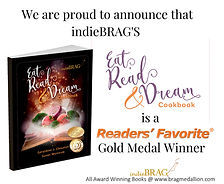
Eat, Read and Dream. Order for yourself or a favorite person!! Inspired by my Foodie Lit columns and available on Amazon. Now we have a Gold Medal from Reader’s Favorite and First Place for Chanticleer Non-Fiction.
February 2, 2025
A Walk in the Woods

Yesterday, I resolved to take daily walks in the woods. For almost the entire month of January, it was almost impossible, considering the ice and snow. My husband walked with me. This deer was one of the first things we saw.
I see almost everything as a sign. In spirituality, a deer is often seen as a symbol of regeneration, rebirth, longevity, and a connection to the natural world.
The small waterfalls were active, considering all the snow that had recently melted and a couple of days of rain.

January 31, 2025
February Equals Love

“Where fate’s brush paints in shades of frost, love thaws the chill in The Color of Cold and Ice.”
The Kindle version will be on sale for 99 cents for the entire month of February.
A frigid February morning in Manhattan sets the stage for a collision of fates. Mark, a struggling musician ousted from his home by his girlfriend, seeks solace in an eccentric coffee shop. Little does he know that his brother-in-law, John, a respected physician grappling with the cracks in his seemingly perfect life, is drawn to the same café by a twist of fate.
At the helm of the Java Bean Factory are two sisters: Sybil, gifted with glimpses of the future, and Emerald, an artist haunted by loss. Despite Sybil’s premonitions, she remains blind to the heartbreak looming over her. At the same time, Emerald, a grieving widow who hasn’t touched her paints since tragedy struck, struggles to find her way back to her art amidst the icy grip of sorrow.
As their worlds intertwine through a web of chance encounters—a prophetic dream, a journey to Amsterdam, and the unforgiving cold—a tapestry of decisions unfolds. With the specter of Van Gogh looming large, these disparate souls must navigate the frosty landscape of their intertwined destinies, confronting love, loss, and the chilling embrace of fate itself.
B.R.A.G. Medallion Honoree and The Wishing Shelf Book Awards 2018 Finalist
January 24, 2025
Inspiration for Writers: Finding Your Unique Voice
Author Interview with Chris Helvey
Writing Process, Environment, and Habits
I try but do not always succeed, to write every day. For the last thirty years, I have always written on my computer in my study, where, if I look off to my left, I can view my front yard and a short stretch of the cul-de-sac my wife Gina and I live beside. Off to my right are a pair of bookcases filled with books by several of my favorite authors: Hemingway, Raymond Carver, Kerouac, Bukowski, William Somerset Maugham, and Ross Macdonald. Glancing over the giant screen, I gaze up at the arrowhead collection my father and I put together while I was growing up in Crane, Missouri, and a reproduction of a bucolic countryside painted by Grant Wood, which my mother kept hanging in our family room for decades. When I turn and glance at the wall behind me, I see a large poster announcing a book signing event for Claw Hammer (an early collection of my short stories) and a large photo of a massive sky overlooking a small collection of gas stations, motels, and a handful of people, including a hitchhiker. The photo always makes me dream of traveling Route 66 back in its glory days. Maybe there’s a new novel there…
Pantser or Outliner? Your Writing Process and Evolution
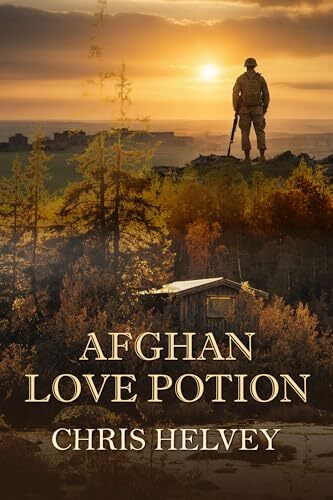
While I did outline Afghan Love Potion, one of my recent novels, I almost always begin my novels, novellas, short stories, and poems with a simple vision. Now, this vision may be of the novel’s beginning, the end, or perhaps a critical scene in the book. The key point is, and this, I believe, holds true for any writer to sit down and start writing.
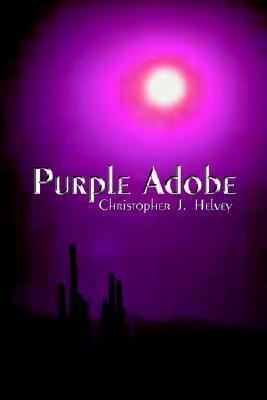
Here are a couple of examples. I wrote my first book, Purple Adobe, over twenty-five years ago. It began with a line that flashed across my mind one morning, appearing as a random thought wandering across the universe of my imagination: “The day died a purple death against the cracked adobe walls.” The novel went on to tell of a detective who was trying, yet never quite succeeding, to escape from the interruptions and demands of society. The detective becomes unhappily involved in a case that gradually draws him back into life and a taste of happiness.
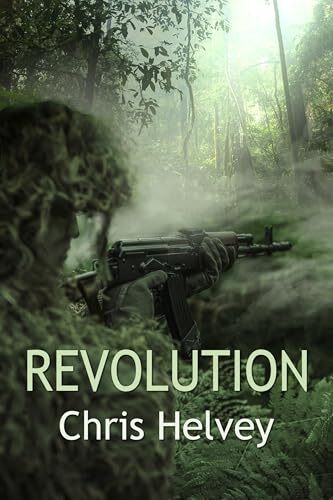
My latest novel, Revolution, began in my mind as I was driving along Old Frankfort Pike, enjoying the scenic Bluegrass countryside and listening to oldies on the radio, when the Beatles hit “Revolution” began playing. For some unknown reason, I suddenly started imagining a violent revolution in an imaginary Central/South American country, one written in the realistic prose I aspire to, filled with violence, death, love, honor, and characters who reflect life realistically and honestly. Years later, when Revolution was published, those summertime visions had grown to over 500 pages, filled with over 150,000 words. The key for me, of course, was to start writing, to shift those visions from my mind to the computer screen before me.
First Book Feeling
It’s funny, but holding my first published book, while pleasant, did not have a major impact on my life. By then, I was already writing book two, and writing is the literary aspect I most enjoy.
Inspiration and its Evolvement
As I noted earlier, most of my writing begins with a single vision or a line that starts me on the path I usually follow. Since those visions certainly don’t cover the entire storyline, that does evolve as I write. While I do make changes and edit every work multiple times, I usually stay pretty close to my original vision/concept.
Genre(s)
I strive to write realistic literary fiction. Why? Simply because that’s what I like to read, and that’s the way my literary thoughts flow.
Easy Versus Challenge
Without question, the easiest part of writing is the writing itself; the hardest is simply finding/making the time to write.
Why Write?
I grew up loving to read books (inspired by my mother reading to me and my siblings every night), and, in some shadowy, twisting passageway of my brain, I’ve always wanted to be a writer. I write because I want to write, want to write good, strong, accessible fiction that others will enjoy reading, fiction that I enjoy reading.
Recommendation for Writer’s Block
I recommend that any writer who believes they have writer’s block sit down and write. If no story or poem is on your mind, write anything: the names of your grade school friends, the states, counties, and towns you have visited, your most cherished Christmas/anniversary/birthday memories, the names of all the politicians you don’t like, a grocery list… When you’re afflicted with temporary writer’s block, what you write doesn’t matter so much (at least for a day or two); what matters is that you write, write something, write anything, but write, write, write.
Origin of Stories and Characters
My sense is that my story ideas and characters originate primarily in my mind, clearly tapping into the memory banks filled with people, places, and events I have seen, heard about, or read about, coated with my own unique, fertile imagination.
Take-Away
I hope all my readers finish my poems, stories, novellas, and novels believing that they have read something good—something impactful—something that will stay with them for a long, long time.
Advice for Beginners
First, write, then edit, then seek out others who write, whether individually or in writing groups. Feedback is always valuable. Also, read, read, then read some more. Reading reveals to you what style, characters, plots, etc., you like or don’t like, and you always want to write what you like to read. If you try to write what you don’t like but what you think might be a best-seller, you are setting yourself up for a challenge that very few ever accomplish.
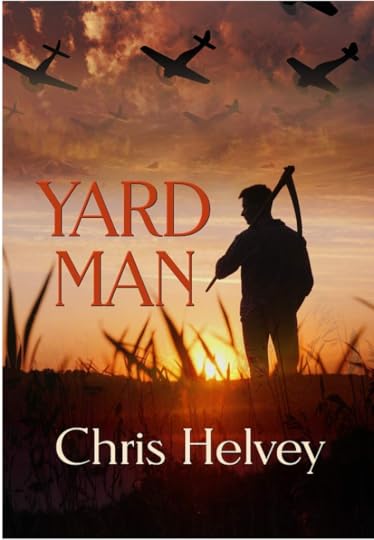
One quick tip (and I learned this hard way, the very hard way): don’t overuse certain words, expressions, or descriptions. For example, when Jeanne Smith, my wonderful editor at Wings ePress, was working with me on my first Wings book, Yard Man, she gently, yet clearly, pointed out that I had used the word “just” well over one hundred times in the first half of the book (talk about overuse!!). Going back and “fixing” dozens of those uses effectively taught me to be more careful about my word choices—an invaluable lesson, one now deeply engrained in my mind.
Favorite Books and Authors
While I could go on for pages, I’ll limit my list to the following six-pack:
Ernest Hemingway for showing us all a new, better way to write. His short, clear sentences make for smooth yet impactful reading. My favorite Hemingway book (which I am currently reading again for the umpteenth time, is The Sun Also Rises.
Jack Kerouac for his steadily flowing rivers of words which carry the reader across the American continent, and back. On the Road is a must-read for any writer, lover of literature, the Beats, the 50s…
Charles Bukowski for his dark, harsh, yet realistic and oh-so-impactful poems. I love so many Bukowski books of poetry that it’s hard to pick a favorite, but I’ll go with the night torn mad with footsteps.
Raymond Carver for his short stories that rank among the very best ever. If you don’t believe me or trust my judgment, then read “Cathedral,” which I think is about as good as a short story gets. For a wonderful taste of Carver, grab a copy of the Library of America’s Raymond Carver: Collected Stories.
Larry Brown for his novels and stories primarily set in the South and written in a gritty, realistic style and often filled with violence. While I would never claim to be as good a writer as Larry Brown, my stories and novels often flow in a similar vein. If you’re a short-story fan, Tiny Love, The Complete Stories is a great place to start.
Laura Ingalls Wilder for her books about her family and growing up in the big woods and prairies of an earlier America. They are some of the books my mother read to her family in the evenings, and the clear, smooth-flowing storylines and wonderful “captures” of characters helped inspire my love of reading, ultimately leading to my becoming a writer. I can’t pick a fave, so I suggest starting with Little House in the Big Woods and continuing through the collection in order.
Ross Macdonald for his unique and powerful Lew Archer detective series. In this series, Macdonald not only created a unique and memorable detective but revealed, very clearly, the subtle power and impact secondary characters have on the storyline and the reader. By the way, the same often holds true in movies—think of The Maltese Falcon. I like all Macdonald’s Lew Archer books, but if I had to pick one, I’d go with The Goodbye Look, with The Way Some People Die and The Chill close behind.
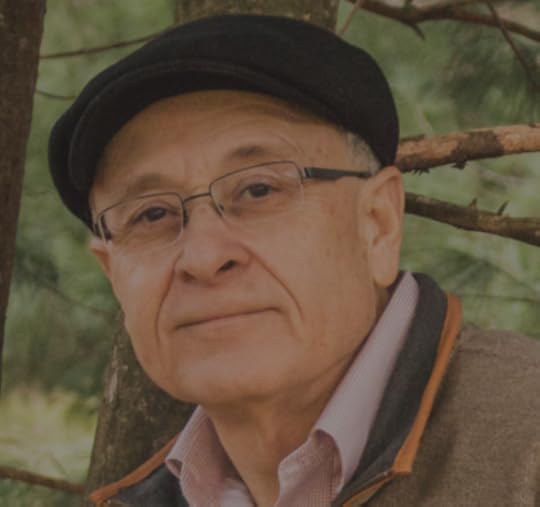
Chris Helvey is an award-winning short-story writer, poet, and novelist. The author of over a dozen novels and multiple short-story collections, Chris’ latest novel, Revolution, was recently released by Wings ePress and is available in both paperback and e-book formats on Amazon. A founding member of the Bluegrass Writers Coalition, he is also editor-in-chief and publisher of Trajectory Journal.
Visit Chris’s site: https://chrishelvey.com/
January 19, 2025
Kentucky Visions Short Story Contest
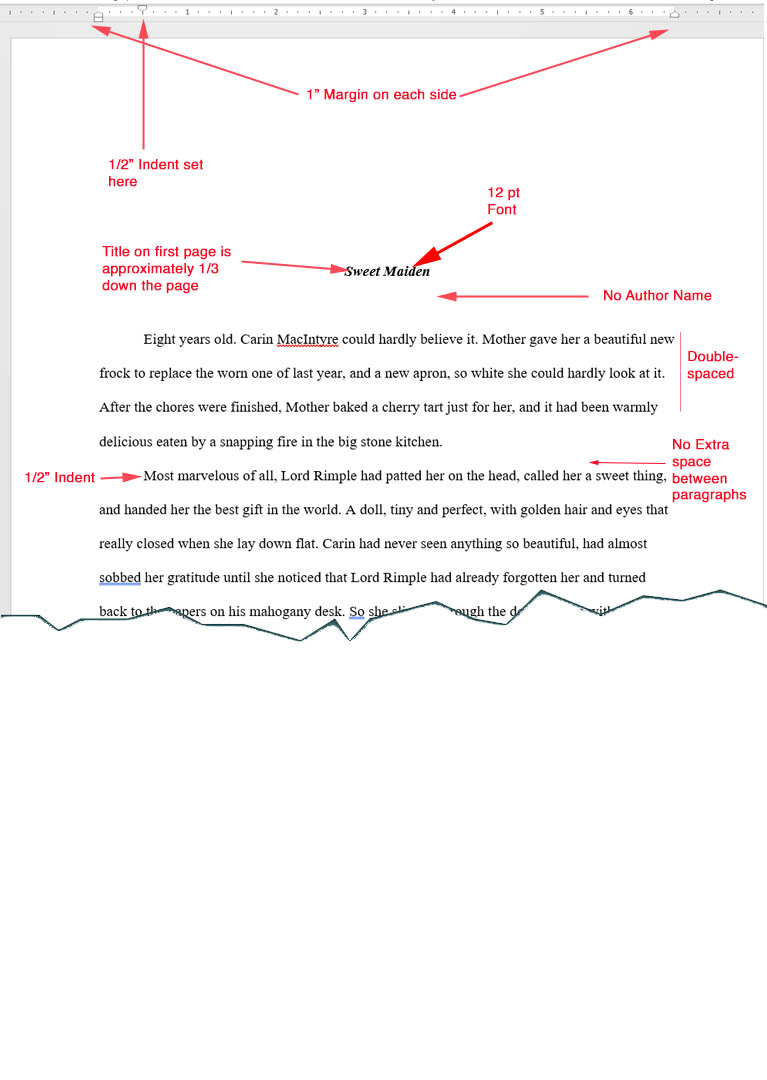
 Contest RulesAll submissions must have a Kentucky connection. This means the author must be a current or former resident of Kentucky, or have a family member who is currently a resident of Kentucky, or the story must be set in Kentucky.All submissions must be entirely the creative work of the submitting author.Only stories that have never been published elsewhere, in print or digital, are eligible.Stories written with the assistance of any Artificial Intelligence will not be accepted.Each submission must be written as fiction, even if the events described are true.The maximum word count (as calculated by Microsoft Word’s counter) is 7,500 words.There is no minimum word count. Well-written flash fiction is welcome.Multiple submissions (more than one entry per author) will be accepted, but the submission fee must be paid for each entry.Simultaneous submissions (stories sent simultaneously to other contests or for publication) will be accepted. Please notify us if the story is accepted for publication before the end of the contest.By entering the contest, the author grants Bluegrass Writers Coalition Inc. First Publication Rights if the story is selected as a winner or finalist.The author grants Bluegrass Writers Coalition Inc. the right to use their name and likeness on the corporation’s website, social media, and in publicity outlets.Each submission must adhere to standard manuscript formatting – 12 point font, double spaced, 1” margins, indent each paragraph, no blank lines between paragraphs. Please see
here
for an example of a properly formatted entry.Entries should be submitted in Word or compatible format, and emailed as a file attachment to contest@bluegrasswriterscoalition@gmail.com. Do not paste your story into the body of the email.The author’s name must not appear anywhere on the story.Entries that fail to adhere to these rules will be not be accepted.Each entry must be accompanied by a $20 entry fee.Entry fees are non-refundable.Entries must be received by January 31, 2025
Contest RulesAll submissions must have a Kentucky connection. This means the author must be a current or former resident of Kentucky, or have a family member who is currently a resident of Kentucky, or the story must be set in Kentucky.All submissions must be entirely the creative work of the submitting author.Only stories that have never been published elsewhere, in print or digital, are eligible.Stories written with the assistance of any Artificial Intelligence will not be accepted.Each submission must be written as fiction, even if the events described are true.The maximum word count (as calculated by Microsoft Word’s counter) is 7,500 words.There is no minimum word count. Well-written flash fiction is welcome.Multiple submissions (more than one entry per author) will be accepted, but the submission fee must be paid for each entry.Simultaneous submissions (stories sent simultaneously to other contests or for publication) will be accepted. Please notify us if the story is accepted for publication before the end of the contest.By entering the contest, the author grants Bluegrass Writers Coalition Inc. First Publication Rights if the story is selected as a winner or finalist.The author grants Bluegrass Writers Coalition Inc. the right to use their name and likeness on the corporation’s website, social media, and in publicity outlets.Each submission must adhere to standard manuscript formatting – 12 point font, double spaced, 1” margins, indent each paragraph, no blank lines between paragraphs. Please see
here
for an example of a properly formatted entry.Entries should be submitted in Word or compatible format, and emailed as a file attachment to contest@bluegrasswriterscoalition@gmail.com. Do not paste your story into the body of the email.The author’s name must not appear anywhere on the story.Entries that fail to adhere to these rules will be not be accepted.Each entry must be accompanied by a $20 entry fee.Entry fees are non-refundable.Entries must be received by January 31, 2025Website: https://bluegrasswriterscoalition.com/kentucky-visions-short-story-contest/
January 17, 2025
A Thirty-Three Year Journey Into a CIA Coverup of His Father’s Death in Vietnam
Interviewing James B. Wells
Writing Process
Many ideas for things I want to write about originate while I am engaged in some monotonous physical activity that allows me to think and try out in my head the different ways of starting and completing a story. Much of my published work originated during four-mile runs from our house down to the Kentucky River and back. Now that I’m starting to have knee issues, I’ve switched to coming up with ideas while hiking our farm property along its Kentucky River palisades or while mowing, bush hogging, weed eating, and working with our honey bees in our apiary.
My writing process goes from ideas, then quickly, to notes in my journal or my iPhone’s voice memo so I don’t forget. I’m more of a pantser than an outliner, and some of my most euphoric and productive experiences as a writer have been when I’m furiously writing on a topic I’m eager to get down on paper. The narrative arc of a story somehow unconsciously and naturally appears, rather than me planning it all out in a detailed outline. I suspect it’s because I’m writing about actual events that typically have their own arc from beginning, middle, to end if you look closely enough. I don’t worry about spelling and grammar in the first draft but will review and edit a draft countless times before I’m satisfied. I’ve learned through experience that it always pays to let a draft sit for a few days and pick it up again to further edit and polish. The same procedure applies to avoiding or treating writer’s block. Take a break, do something that will benefit and refresh your mind, body, and soul, then return to your writing.
I write best in the morning or late at night when the house is quiet and free of distractions. The peaceful atmosphere allows me to fully immerse myself in my work. Whether it’s a quiet morning with a few cups of coffee or a peaceful night with a beer and sometimes a bourbon, these moments of solitude are when I feel most productive with my writing. Our two dogs, a female Weimaraner and a Jackapoo, often keep me company, adding a touch of warmth to the quiet space, as well as my feet.
Writing Space
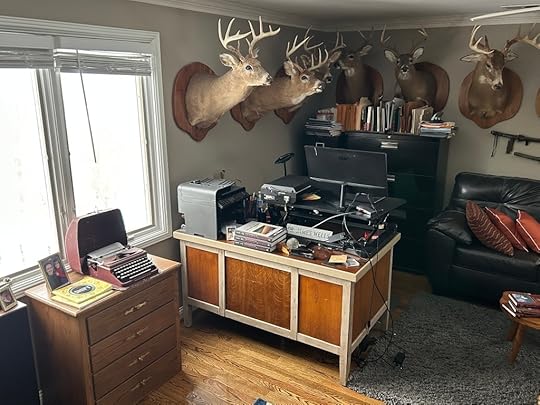
My writing space is in my home office and library, a bonus room above our garage that I’ve renovated to make me feel most comfortable reading and writing in. It contains several bookcases and furniture I built myself, several fire-proof safes containing archival documents, and my father’s oak desk, which my wife and I restored. My MacBook Pro, printer, and scanner sit atop it. I prefer to stand at my desk and have a converter on top of it that allows this. I have a window that overlooks our backyard down to the Kentucky River, providing a peaceful view that often inspires my writing.
Description of Feelings From Publications and Why I Write
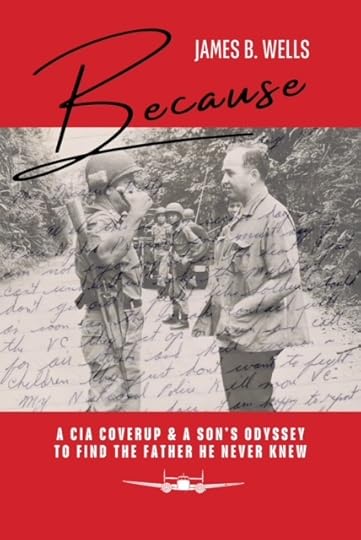
As someone holding a doctorate in Research, Measurement, and Statistics, I’ve spent decades of my professional life as a researcher, producing more than sixty books, chapters, articles, and 150 reports. The first publication was so long ago that I can’t recall my feelings and emotions with it, other than a deep sense of satisfaction and achievement. However, I will admit that an investigative memoir I’ve been working on for over 33 years, and to be released Fahter’s Day weekend 2025, titled Because: A CIA Coverup and a Son’s Odyssey to Find the Father He Never Knew, although conducted with the same degree of scrutiny and exactitude as any of my academic publications, is the most profoundly personal and the most detailed, most deeply rewarding research I’ve ever done. My interest in getting the truth out about my father’s still classified death almost 60 years ago In Vietnam is primarily responsible for my interest in creative writing and in completing my MFA with the Bluegrass Writers Studio in 2022.
Favorite Genre
My academic training and experiences are deeply research-focused, and this love for thorough investigation has naturally seeped into my writing. Although I love reading all genres, I’ve always been drawn primarily to nonfiction, creative nonfiction, and historical fiction. I believe in the power of truth in storytelling. I love using triangulated research to recreate and describe events and conversations that inform the reader not what might have occurred but what most likely occurred. This commitment to truth ensures that the closest proximity to reality is obtained, adding a layer of authenticity to my work. To further corroborate what I write the truth, I cite my sources and have lots of content notes.
Advice for First-Time Writers
I advise first-time writers to sign up for courses, workshops, conferences, and open mics and get involved in your local writing community. For those who want to make the leap, check out your area’s local MFA in Creative Writing programs. Many are now low residency programs that welcome part-time students and students of all ages and backgrounds.
As a result of doing all of the above, you’ll be in better shape to deal with the most challenging part of writing, which, to me, is finding a publication outlet. Once you identify your niche and get good at writing it, you’ll find several publication outlets, such as literary journals, magazines, and if you are lucky, a reputable publishing house interested in your writing.
Why You Think Readers Will Find Your Work Appealing
I believe my latest book will appeal to a wide and varied group of readers. My target audience will be adult readers who like stories about uncommon but possible challenges. Readers who enjoy military history, especially World War II and Vietnam, will appreciate how I use declassified archival and field research data. Military veterans and their family members who have been traumatized by war may learn how to seek comfort, conquer pain, and achieve peace from my story. Given the wealth of information I’ve uncovered through archival data, readers may become interested in researching their own family history. General readers who like stories about families trying to reconnect or understand each other should also enjoy it. Readers who like being armchair detectives and solving mysteries should enjoy watching various clues come together to solve a puzzle supporting a specific and unlikely theory. My book should also appeal to those who enjoy reading about government secrets, conspiracies, whistleblowing, the CIA, and its secretly owned airline, Air America. The spiritual nature of the book refers to its exploration of finding peace with unanswerable questions, a theme that may resonate with readers who have their own spiritual beliefs and questions. Writing programs, their writing instructors, and students can use the book’s resurrected events as an illustrative use of evidence-based “perhapsing,” a creative nonfiction technique authors use to write about events and conversations that might have happened. Scholars, academicians, and their students should enjoy witnessing how research findings from multiple sources can come together and support or refute possible theories. The book will also appeal to Vietnamese readers, both in the US and Vietnam, partly because it supports their spiritual beliefs and exposes little-known events about the war and some of its victims, heroes, and villains.
What Readers Should Take Away from My Writing
One of the biggest lessons readers can take from my investigative memoir is that living with a lie can be more painful than dying with the truth. Like my father, more of us need to speak truth to power: stand up for what’s right, confront those who condone wrongdoing, call out their injustices, and demand change. Coincidentally, seeking the truth is what I have also emphasized over my academic career to students in my research university classes. Given our world today, everyone needs to become a more critical inquirer. Don’t simply believe what you are told, but gather and evaluate information, ideas, and assumptions from multiple perspectives to produce a well-reasoned analysis and understanding of some event, action, or person.
Secondly, for those of us who, unfortunately, are also faced with unresolvable questions, they, too, can take something away from my writing. In my case, has my odyssey for the truth been worth it? For most of my life, I haven’t been able to move forward and leave the past behind me. It’s taken a huge toll on my family and me. But then again, look what I’ve learned and gained as a result? Had I not started my quest for the truth, my family and others would have never learned about the government lies and the coverup of my father’s death. They would not have learned about my father’s character, morality, and actions. Even more importantly, I would have never developed the relationship with my father that I have now.
So, I can’t recommend that others do as I have. In my case, it’s been, and still is, a balancing act between what I refer to as blessings and curses. But, I can recommend that anyone who has experienced trauma like my family has and is seeking answers to unresolvable questions to seek professional help, counseling, or, at a minimum, simply talk to others. I did, but only after returning from my archival and field research trip to Vietnam, where I found myself still unsatisfied with what I knew and may never know.
Favorite Authors and Books
Below is a list of a few of my favorite authors and books and why I am drawn to them:
John Steinbeck, in The Grapes of Wrath, was the first author whose work I truly fell in love with back in the eighth grade. His focus on the dreams and defeats of ordinary people, shaped by their environments, emphasizes themes of social justice and empathy for the marginalized.
Allan Eckart, in his many best-selling novels, wrote about Native American and frontier life in the very area where I live, starting with The Frontiersmen. His deeply researched, detailed narrative approach blends historical facts with the imagined dialogue and thoughts of real people.
F. Scott Fitzgerald explored the inner lives of his complex characters, delving into their desires, motivations, and disillusionments. He tells his stories through an objective narrator, like Nick Carraway in The Great Gatsby, which allows readers to experience the narrative through a uniquely personal lens.
Similarly, in my investigative memoir, Because, I become part of the story, like the narrator Nick Carraway. Like Jay Gatsby, my father serves as the plot’s focal point and tension. The reader and I chase Gatsby and my father throughout the narratives of our two books, uncovering that both men are intriguing, fated, and tragic. Throughout this journey, we also learn about the moral conflicts surrounding Jay and my father. In my view, what makes both stories effective is the impact the chase has on the pursuer—Nick in The Great Gatsby and me in Because.
Maxine Hong Kingston, in her National Critics Book Award winner, The Woman Warrior: Memoirs of a Girlhood Among Ghosts, legitimized for me the nonfiction craft technique of “perhapsing.” This technique fuels my passion for writing about real events and conversations whose details have faded over time, without veering into fiction.
Tim O’Brien, in The Things They Carried, blurs the lines between fact and fiction by rearranging the facts that come close to matching what really happened. His varied use of diction, such as employing a simple, conversational tone for the soldier’s dialogue, but a more elevated, stylistic tone for the narration, makes the story seem more real. That, combined with his vivid imagery of the landscape and frequent shifts in point of view, helps illustrate the trauma and psychological impact of war on young soldiers.
Tobias Wolff, in Pharaoh’s Army: Memories of the Lost War, uses imagery as a literary device to create vivid mental pictures, including sights, sounds, and smells that are often overlooked in war memoirs. And like our disjointed memories of some event, he uses a fragmented narrative structure containing different periods that switch back and forth. Unlike many war memoirs that focus on visceral images of violence and horror—often ending up adapted for the big screen—Wolff’s memoir highlights the irony, absurdity, despair, humanity, humor, and even beauty found in wartime experiences.
About the Author
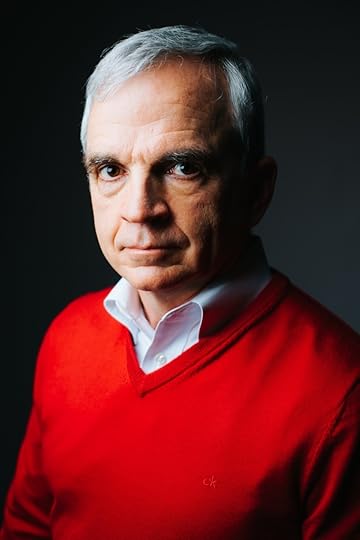
James B. Wells is a retired Criminology and Criminal Justice Professor in the School of Justice Studies in the College of Justice, Safety, and Military Science at Eastern Kentucky University. A former carpenter, soldier, and correctional officer in a super-maximum-security prison and later as a researcher/planner assisting architects in prison design, he has multiple degrees, including an M.S. in Criminal Justice, a Ph.D. in Research, and an MFA in Creative Writing. He’s authored or co-authored over sixty-five books, chapters, articles, and essays, as well as over a hundred and fifty research reports for various local, state, and federal agencies. Recent essays from his research and memoir work appear in Collateral Journal, About Place Journal, Wild Roof Journal, Military Experience and the Arts, The Wrath-Bearing Tree, Shift, Proud to be: Writing by American Warriors, Trajectory Journal, and From Pen to Page III: More Writings from the Bluegrass Writers Coalition.
His investigative memoir about his father’s still CIA-classified death in Vietnam in 1965, titled Because: A CIA Coverup and a Son’s Odyssey to Find the Father He Never Knew, will be released on Father’s Day weekend, 2025. Links to publications, presentations, trailers, social media, blog, and other information can be found at https://jamesbwells.com. James enjoys spending much of his leisure time with his spouse on their Lexington, Kentucky farm located on the palisades of the Kentucky River, where he is an organic gardener and beekeeper.
January 13, 2025
Mastering the Writing Process: Tips from Experienced Author Virginia Smith
Could you describe your writing process?
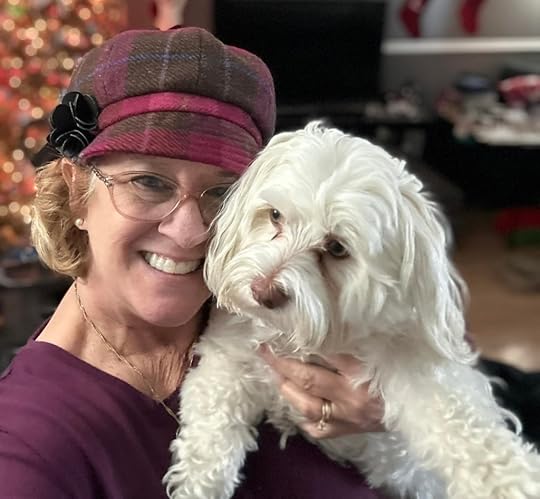
I write in multiple genres, so my process varies depending on the type of story I’m working on. More than half of my books have been mysteries, and I’m definitely a plotter when writing that genre. I spend a lot of time researching and planning a mystery—the setting, the clues, the connecting points between the main plot, and the subplots. Then, I outline the story scene by scene in a spreadsheet. (I love Excel!) My spreadsheets are works of art—lots of formulas, projections, character traits, and color-coded scenes based on viewpoint character. By the time I start writing, I have planned exactly what I want to reveal to my readers in each scene and which characters I want them to suspect. The spreadsheet changes as I write because, as all writers know, stories take on lives of their own. So, when a new development occurs, I just update my spreadsheet.
If I’m writing a character-driven story, I usually write the first few chapters free-form to get a feel for the characters, setting, and storyline. I make notes (in a spreadsheet, of course!) about ideas and story elements I don’t want to forget. Then, before I’m halfway through, I stop writing and plot out the rest of the scenes (the ones I know about) through the end of the book. From there, the writing begins to flow.
Why do I like working from an outline? Because when I sit down in the morning and turn on my computer, I know exactly what I will write next. There is no fumbling around, staring at a blank screen, and waiting for words to come. When you’re working under a contracted deadline, which I do, you don’t have time to fumble around. I can write a 65,000-word mystery in three weeks after it’s outlined. As I write, my creative process is set free because I’m not worried about how I’m going to fit that scene in and make it cohesive to the plot.
What’s your favorite place to write?
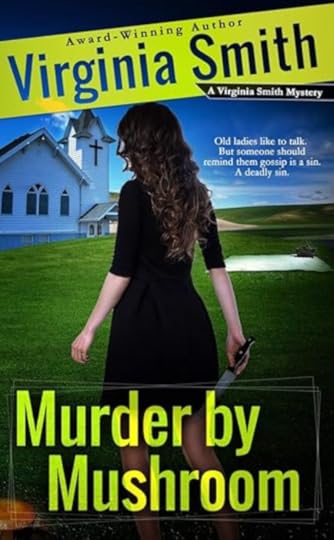
I have a dedicated office upstairs in my home, a 120-year-old farmhouse, and that’s where I closet myself when I’m working on a book. My desk is beside a window that looks out over a row of tall pine trees lining the driveway and leading back to the first barn on our farm. On one of the bookshelves beside my desk is a collection of dragons (I love dragons!), and one of them is holding a miniature copy of my first mystery, Murder by Mushroom https://www.amazon.com/Murder-Mushroom-Virginia-Smith/dp/1937671399/. That bookshelf holds research books and also some I’ve either read recently or want to read soon. Framed artwork—most of them depicting dragons—decorates my walls. I actually have a name for my office—I call it The Dragon’s Den. (And I tell everyone if they bother me while I’m writing, they’re in danger of being eaten by a dragon!)
Do you have a specific time of day when you feel most creative?
I’m definitely a daytime writer. Writing is my job, and I treat it like any job when I’m under contract. I grab a cup of coffee in the morning, take it up to my office, and start working. I’ll break for lunch, but then I go back to work and write until 5:00 or so. I admire people who can write in airports or coffee shops, but I’m too easily distracted for that. Even my dog knows not to bother me when I’m at my computer.
Do you have any particular habits like drinking or eating while you write? And do you have a furry friend who keeps you company?
I am addicted to coffee and Dr. Pepper Zero, so at any time of the day, I’ll sip on one of those while I’m working. My dog, Max, is my constant companion, but he has learned when I’m at my desk, he doesn’t interrupt. He lays on the carpet beside my chair and waits for me to finish.
Do you write whatever comes into your head with little regard to grammar, or do you edit as you go? If you are a longtime writer, how has your process evolved? Share your journey and the lessons you’ve learned.
When I first started writing, I was definitely an intuitive writer. My first five or six books were all written seat-of-the-pants. But then the contracts started coming. At one point, I had contracts for six books with deadlines over the following two years. I didn’t have time to meander through a story and let it come to me in a leisurely manner. Plus, I spent far too much time revising scenes I’d already written as new developments occurred, especially in mysteries. A plot twist would crop up, and then I’d have to go back and lay the trail, and so on. I discovered that if I spent the time up front really thinking about the bones of the story, the writing went so much faster. The intuitive stuff still happens, but it’s easier and quicker to mold the story to include those fun things that crop up.
My daily routine has also evolved over the years since my first few books. I begin every morning by reading and editing what I wrote the day before. That does two things. First, it puts me directly back in the story at exactly the place where I left off, so I’m ready to move ahead. Second, it shortens the editing time on the back end. In fact, I almost always turn in my first draft, and it’s super clean. The revisions my editors ask me to do are usually extremely minor and rarely take me more than a day or two.
Describe the feeling of holding your first published book in your hands.
I remember my hands trembling as I opened the box of author copies and picked up the first book. Ah, I’ll never forget the bone-deep feeling of accomplishment, of pride! Seeing that story in print was affirming in a way I’d never imagined. It took me twenty long years and a ton of rejections to get to that point, so holding that book validated my hopes that I could become a real writer.
Where do your ideas come from, and does your original idea change as you get further into the writing process?
My ideas come from everywhere. From life. From newspaper headlines. From internal brainstorming. And occasionally, from someone saying, “Hey, guess what happened to me the other day.”
Some of my best ideas have come from my desire to learn something or experience something. I’m a firm believer in research. An old adage says, “Write what you know.” I believe writers should research until they know a subject and then write what they know. My favorite research activities included learning pottery for The Amish Widower https://www.amazon.com/Amish-Widower-Lancaster-County-Book-ebook/dp/B01NA998XH/, working as a zookeeper’s assistant, The Zookeeper’s Daughter https://www.amazon.com/Zookeepers-Daughter-Virginia-Smith-ebook/dp/B07ZPH7B4T/, and scuba diving in Cozumel, Into the Deep https://www.amazon.com/Into-Deep-Virginia-Smith-ebook/dp/B083577JY5/. And travel, of course. Places like Las Vegas Dangerous Impostor https://www.amazon.com/Dangerous-Impostor-Falsely-Accused-Book-ebook/dp/B07JZHNT1S/, New Mexico, Bullseye https://www.amazon.com/Bullseye-Falsely-Accused-Book-2-ebook/dp/B07JYNCV6B/, and Seattle A Bride for Noah https://www.amazon.com/Bride-Noah-Seattle-Brides-Book-ebook/dp/B00FADT1MA/, and Rainy Day Dreams https://www.amazon.com/Rainy-Dreams-Seattle-Brides-Book-ebook/dp/B00I2YDBZ2/. One benefit of researching a book is the expenses are tax deductible!
Of course, a story becomes a living, breathing organism as it’s being written. Characters do something unexpected, and that impacts the story. So yes, ideas change as the writing proceeds.
What genre or genres do you write in? Why?
Far too many, according to my agent! I’ve written in many genres: chick lit, contemporary humor, women’s fiction, Christian fiction, historical, romance, mystery, romantic suspense, science fiction, and fantasy. I even have two illustrated children’s books. I love to read in many different genres, so naturally, I want to try my hand at writing them, too.
What is the easiest part of writing and the most challenging part?
For me, the easiest part of writing is actually typing the words that tell the story. That’s because the stories and characters are already alive in my mind, so it’s just a matter of describing the vivid scenes I see so clearly so they come alive to other people.
For me, the most challenging part of writing is research: making sure I know enough about the story—the setting, the characters, and the time period—to capture my readers and draw them into the fictional world. It’s challenging but also exhilarating! I love the research phase.
But if you ask me what the most challenging part of being a writer is, I’d have to say promoting my books. I dropped out of Girl Scouts as a kid because I hated selling cookies. Selling hasn’t gotten any easier! At the beginning of my publishing career, the publisher’s marketing department handled all the promotions. With technological advances and the flood of self-published literature available to book buyers, publishers’ business models have changed. These days, publishers expect the writer to do the bulk of the promotion. When a new writer approaches a publisher, they want to know all about the writer’s platform—how many newsletter subscribers they have, how many followers on social media, whether they have a speaking platform where they hand-sell books, and so on. The whole marketing thing is extremely challenging and the least enjoyable part of my career.
Now, I know publishers do spend money promoting the books they produce, but the budgets for most writers’ books are smaller than they were when my first few books came out. These days publishers spend most of their marketing money on the big names, the bestsellers. It makes perfect sense to do that—publishing is a business, after all. They’re in it to make money.
Why do you write?
Ah, now that’s the perfect question to follow up on what I just said about the challenging part of being a writer. I don’t write to make money. Yes, writing is my career and job, and I make money, but that’s not why I write. I write because I can’t not write. Writing is an integral part of who I am. When I finish a book and turn it in, I can usually take a break for a few weeks, but after that, I get itchy. I don’t know how else to describe it. I wander around the house, trying to find something to focus on, but nothing feels right. I get in a bad mood, and my temper gets short. I need to write in order to feel complete.
What do you recommend for writer’s block?
I used to say I didn’t believe in writers’ block—until it attacked me. I was a caregiver for an ailing relative, and there was a time when it became so emotionally consuming I couldn’t begin to put two fictional words together, much less a sentence.
My first advice to writers suffering from writers’ block is not to panic. Spend some time figuring out why you can’t write. Is it because you’re emotionally or physically drained? If so, that’s okay. Rest. Pray. Eat. Rejuvenate. The writing will return.
If it’s for any other reason, my advice is to write something. If you’re a fiction writer, write a paragraph describing one of your secondary characters. Then write another. And another. Keep writing, and eventually, the act of writing will generate ideas, and you’ll find yourself writing some really good stuff.
Often, writers’ block happens because the writer doesn’t know what to write next. The words just won’t come. I read a description of writers’ inspiration once that I have taken to heart. Picture a cabin on a prairie in the 1800s. The door opens, and a little girl comes out. She’s wearing a long dress, a white apron, and a bonnet and carrying a metal bucket. She crosses the yard to an old-fashioned water pump, puts the bucket beneath the spigot, and begins to pump the handle. At first, nothing happens. She pumps, and she pumps, and she pumps, and finally, viola! Water gushes forth.
Writing is like that. Sometimes, I sit at my computer, and the words won’t come. I start writing whatever comes into my head. I know it’s garbage, the worst words ever written, like I’m dredging them up from deep in my gut and throwing them onto the page, but I keep writing. I’m pumping that handle. Then suddenly, viola! Inspiration strikes! The scene comes alive. And then I’m typing as fast as my fingers can go, trying to keep up with the images that are dancing in my mind.
Writers don’t write when they’re inspired. They write until they’re inspired. And that’s when the magic happens.
What do you want readers to take away from your writing?
I want them to be entertained and feel like my characters are real people they’ll miss when the story is over. I want them to read the last paragraph of my book, close the cover, heave a sigh, and say, “Wow! That was a good book.” And, of course, I want them to tell others, “You’ve got to read this book. I couldn’t put it down.” The best emails I get from readers are the ones that say, “I stayed up all night to finish your book.” That lets me know I’ve succeeded in sharing a story that has gripped me by the heart with someone else and gripped them, too.
Do you have any advice for first-time writers?
My best advice is to keep writing even when it feels like you’re not getting anywhere. I received 147 rejection letters before my first professional publication. Did I want to give up? You bet I did. But something inside me kept saying, “You can do this! You have to do this!” So, just keep writing.
What are some of your favorite books and authors?
I read a lot and in a lot of genres, so I have a lot of books and authors I admire. I guess some that stand out in my mind are Fredrick Backman, especially his book A Man Called Ove. (Don’t see the movie—read the book.) Kristin Hannah’s The Nightingale. I think Jodi Picoult is an amazing author, and I love her books, especially Small Great Things. I recently read Verity by Colleen Hoover and am determined to read more by her. An author who was foundational in my desire to become a writer was a fantasy author named Anne McCaffrey and The Dragonriders of Pern series. Of course, going back to my cozy mystery roots, who couldn’t love Agatha Christie?
VIRGINIA SMITH is the bestselling author of over forty novels, two illustrated children’s books, and many shorter works. An avid reader with eclectic tastes in fiction, Ginny writes in various styles, from lighthearted relationship stories to breath-snatching suspense. She writes fantasy and science fiction under the pen name Ginny Patrick. Her books have been finalists in many prestigious awards, and two of her novels received the Holt Medallion Award of Merit. Learn more about Ginny and her books at www.VirginiaSmith.org.
January 10, 2025
Engaging Children: Tips from a New Author
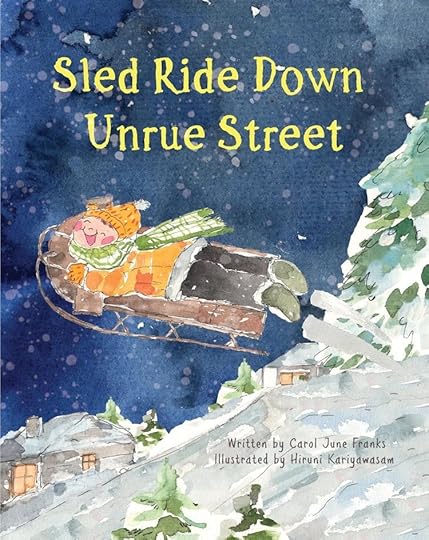
Carol June Franks is a new author of children’s books, having published her third book in November 2024. Her books reflect nostalgic scenes, colorful illustrations, and engaging rhythm that both children and adults enjoy. Additionally, each book provides tips for engaging children in the text in a way to strengthen their reading and writing abilities. https://www.amazon.com/Sled-Ride-Unrue-Street-Activity-ebook/dp/B0DL3KRXGK/
Genre: Children’s Books
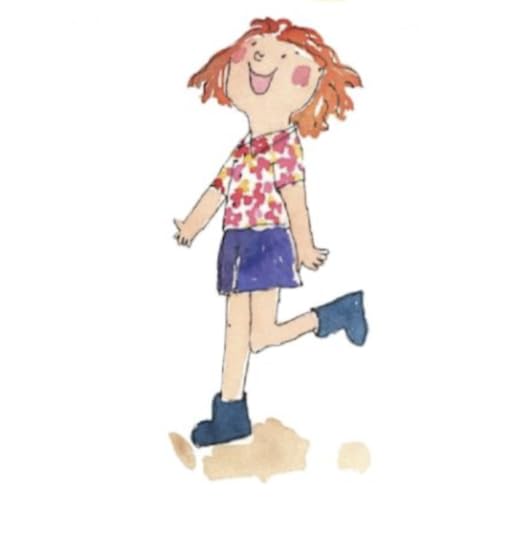
Carol writes children’s books. Her goal is to write books that not only children love but also that adults love reading to them. As a retired teacher, she knows how important it is for children to be engaged with reading, whether being read to or reading on their own. The final pages of her books provide guidance for parents and teachers to use the book to enhance reading skills and as a springboard for writing. She especially wants to help parents see how they can use hers and other picture books to strengthen children’s reading and writing abilities. Carol’s goal is straightforward—ideas that can easily be applied as the story is read.
A Dream Realized
“Holding my first book felt like such an accomplishment. For years, I thought about publishing a book, but I just couldn’t devote the time needed. So, once I retired, I decided it was time. It was a challenge to learn everything I needed to know, and I’m still learning. But I was, and still am, very proud of my first book. However, what was even better than holding that first book was the positive reviews and in-person feedback received. I love creating something that adults enjoy and want to share with their children.”
Idea Starts
Carol’s ideas often start with childhood memories. She likes to create a nostalgic experience for her readers—ones that take adults down memory lane as they read to children.
“I want story details that create an experience for children, and I work to produce that experience through imagery and word choice. Although I start with my memory, I keep in mind that I’m writing for an audience who wants to enjoy the story and make their own connections. So, the final text often stretches beyond my own personal memories.”
Writing Process
“My writing process involves a lot of thinking and meditating on my topic. I like to think while I walk or hike with my dogs on our farm. This is my idea time. I also like to think while I’m driving. Occasionally, an idea comes to mind, and I’m sure to jot it down wherever I happen to be and on whatever I happen to have handy—a journal if I’m lucky, but otherwise, a scrap sheet of paper, a sticky note, or even a napkin. Sometimes, that idea is simply a topic, but other times, it’s a line, a sentence, a whole scene, or even the structure for an upcoming book.
“When I get to put those ideas together, if it is warm weather, I’m on my porch or some cozy spot outside with my two dogs close by, distracting me from time to time. I’m lucky that I have lots of outside space. If it’s too cold to be outside, I work in my office, at my desk, which sits in front of a window that overlooks our pond, woods, and a birdfeeder. Whether inside or outside, mornings are when I feel most creative and when I like to think and write.
“I start with getting ideas down on paper. It’s messy. I write in margins to add details or play with word choice. As a children’s book author, I don’t outline but I do focus on getting a sequence that makes sense. However, at first, I don’t worry about the order. I bounce to different parts of the story as details bounce in my mind. My goal is to get as many of my thoughts down on paper before I forget them. Later, I’ll throw out what doesn’t fit or work and organize what does.
“After I have exhausted my idea stream, I start drafting on my laptop. That’s when I begin organizing and listening to what I’ve written. I read my words out loud over and over until I get the words and flow I am happy with. As I read out loud, I also work on the rhythm. I decide what I want in the text to create that rhythm – rhyme, meter, repetition, or some combination of the three. I imagine a parent reading to a child and the child repeating words and reading them as well. This helps me focus on my audience as I create.”
Challenges
“The easiest part of writing for me is getting my ideas down on paper and then moving to some organization digitally. The most challenging is in the revision process as I read and reread and revise to get the best rhythm, flow, and word choice I want. Writing is not easy. It is a process that takes effort and time. I work a while on my text, set it aside, and come back to it with fresh eyes and mind. I remind myself often that when I’m sharing with a group of students and my book is well received or an adult tells me how much she or her child enjoys my story, it is all worth the struggle and time.”
When I Get Stuck
“When I get writer’s block, I like to take a walk or go outside. I just do something different and think about something else for a while. Maybe after a break, I start thinking again about where I was stuck. I like to think (sometimes out loud) while I walk or work in my yard or in my garden. Since my walks on my farm are quite secluded, I don’t have to worry about what anyone thinks about me talking to myself. LOL. Walking and working outside always helps me clear my mind.”
Reader Take Aways
“I want the text in my books to take my adult readers down memory lane to a simpler time. I want to spark wonderful discussions between them and the children they love while sharing a glimpse into their childhood. I want children to experience a nostalgic scene through imagery and descriptive language. I want parents to use the ideas provided for engaging children in reading and writing to help them grow their reading and writing skills.”
Why Write
“I write for two reasons. One is because I truly love the feeling of creating something that others enjoy reading and sharing with children—something that takes adults down memory lane and sparks discussion with children or others about those special moments in their lives. I love hearing that a child loves my book and wants to hear it over and over.
“My second reason is because I’m a retired teacher. During my last six years, I worked with students in middle school who struggled as readers and writers. I want to create something that helps parents of young children know some techniques to help their children become good readers and writers.”
Advice for First-Time Writers
“If you are just getting started on your writing journey, my advice is to keep learning as much as you can about all aspects of being an author. Grow your craft by writing often and reading a lot in your genre. Keep a learner attitude, and don’t think you have to learn it all at once. Know that learning about marketing and production is a process, just like writing is a process. Enjoy the process of writing and learning, and know that your author journey is whatever you make of it. Never compare your journey to that of other authors. Just be proud of whatever you accomplish.”
Favorites
“I love to read, but I can’t really say I have a favorite author. I read often to learn. Throughout my career, I was always reading to learn new instructional practices and about whatever topic I was teaching at the time. Now, I’m still reading to learn about publishing children’s books and about marketing. I love to read and study the Bible. I read books by fellow Bluegrass Writers to get to know their writing style and support them along their author journey. I read historical fiction or a mystery here or there. And, of course, I read a variety of children’s books since that is my genre, often searching out the more nostalgic stories, such as Jane Yolen’s Owl Moon.”
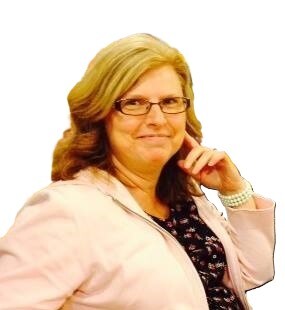
Carol June Franks retired from teaching after twenty-five years. She taught Language Arts, Science, and Reading Intervention and served as a Literacy Coach and Literacy Consultant during her teaching career. After retirement, Carol began a new adventure as a children’s book author. Carol’s books include rhythm and illustrations that engage children and content that adults enjoy reading to the children in their lives. Her books are unique in that they include guidance for parents for using the books to help children become good readers and writers.
Visit https://www.junebugtales.com to learn more about Carol and her books. Find her on Facebook at Junebug Tales Publishing. Or sign up to Carol’s email list for news, events, highlights on the next children’s book, and more.