Mastering the Writing Process: Tips from Experienced Author Virginia Smith
Could you describe your writing process?
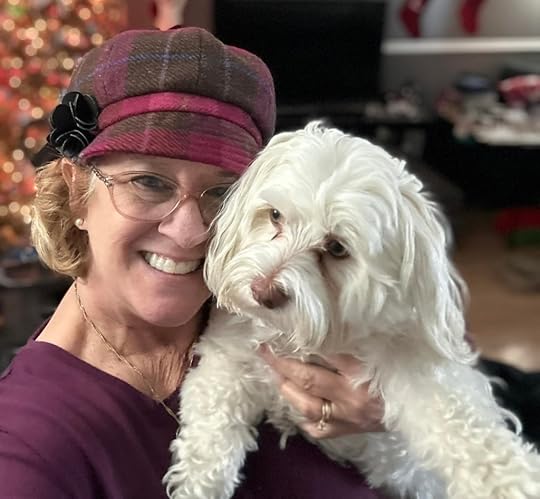
I write in multiple genres, so my process varies depending on the type of story I’m working on. More than half of my books have been mysteries, and I’m definitely a plotter when writing that genre. I spend a lot of time researching and planning a mystery—the setting, the clues, the connecting points between the main plot, and the subplots. Then, I outline the story scene by scene in a spreadsheet. (I love Excel!) My spreadsheets are works of art—lots of formulas, projections, character traits, and color-coded scenes based on viewpoint character. By the time I start writing, I have planned exactly what I want to reveal to my readers in each scene and which characters I want them to suspect. The spreadsheet changes as I write because, as all writers know, stories take on lives of their own. So, when a new development occurs, I just update my spreadsheet.
If I’m writing a character-driven story, I usually write the first few chapters free-form to get a feel for the characters, setting, and storyline. I make notes (in a spreadsheet, of course!) about ideas and story elements I don’t want to forget. Then, before I’m halfway through, I stop writing and plot out the rest of the scenes (the ones I know about) through the end of the book. From there, the writing begins to flow.
Why do I like working from an outline? Because when I sit down in the morning and turn on my computer, I know exactly what I will write next. There is no fumbling around, staring at a blank screen, and waiting for words to come. When you’re working under a contracted deadline, which I do, you don’t have time to fumble around. I can write a 65,000-word mystery in three weeks after it’s outlined. As I write, my creative process is set free because I’m not worried about how I’m going to fit that scene in and make it cohesive to the plot.
What’s your favorite place to write?
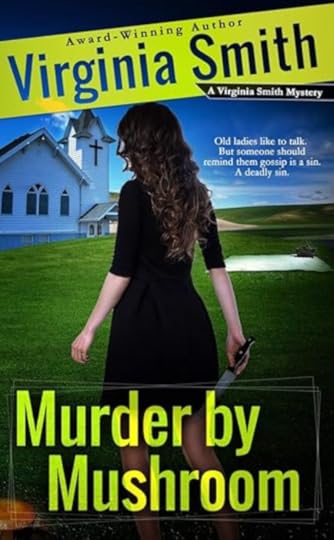
I have a dedicated office upstairs in my home, a 120-year-old farmhouse, and that’s where I closet myself when I’m working on a book. My desk is beside a window that looks out over a row of tall pine trees lining the driveway and leading back to the first barn on our farm. On one of the bookshelves beside my desk is a collection of dragons (I love dragons!), and one of them is holding a miniature copy of my first mystery, Murder by Mushroom https://www.amazon.com/Murder-Mushroom-Virginia-Smith/dp/1937671399/. That bookshelf holds research books and also some I’ve either read recently or want to read soon. Framed artwork—most of them depicting dragons—decorates my walls. I actually have a name for my office—I call it The Dragon’s Den. (And I tell everyone if they bother me while I’m writing, they’re in danger of being eaten by a dragon!)
Do you have a specific time of day when you feel most creative?
I’m definitely a daytime writer. Writing is my job, and I treat it like any job when I’m under contract. I grab a cup of coffee in the morning, take it up to my office, and start working. I’ll break for lunch, but then I go back to work and write until 5:00 or so. I admire people who can write in airports or coffee shops, but I’m too easily distracted for that. Even my dog knows not to bother me when I’m at my computer.
Do you have any particular habits like drinking or eating while you write? And do you have a furry friend who keeps you company?
I am addicted to coffee and Dr. Pepper Zero, so at any time of the day, I’ll sip on one of those while I’m working. My dog, Max, is my constant companion, but he has learned when I’m at my desk, he doesn’t interrupt. He lays on the carpet beside my chair and waits for me to finish.
Do you write whatever comes into your head with little regard to grammar, or do you edit as you go? If you are a longtime writer, how has your process evolved? Share your journey and the lessons you’ve learned.
When I first started writing, I was definitely an intuitive writer. My first five or six books were all written seat-of-the-pants. But then the contracts started coming. At one point, I had contracts for six books with deadlines over the following two years. I didn’t have time to meander through a story and let it come to me in a leisurely manner. Plus, I spent far too much time revising scenes I’d already written as new developments occurred, especially in mysteries. A plot twist would crop up, and then I’d have to go back and lay the trail, and so on. I discovered that if I spent the time up front really thinking about the bones of the story, the writing went so much faster. The intuitive stuff still happens, but it’s easier and quicker to mold the story to include those fun things that crop up.
My daily routine has also evolved over the years since my first few books. I begin every morning by reading and editing what I wrote the day before. That does two things. First, it puts me directly back in the story at exactly the place where I left off, so I’m ready to move ahead. Second, it shortens the editing time on the back end. In fact, I almost always turn in my first draft, and it’s super clean. The revisions my editors ask me to do are usually extremely minor and rarely take me more than a day or two.
Describe the feeling of holding your first published book in your hands.
I remember my hands trembling as I opened the box of author copies and picked up the first book. Ah, I’ll never forget the bone-deep feeling of accomplishment, of pride! Seeing that story in print was affirming in a way I’d never imagined. It took me twenty long years and a ton of rejections to get to that point, so holding that book validated my hopes that I could become a real writer.
Where do your ideas come from, and does your original idea change as you get further into the writing process?
My ideas come from everywhere. From life. From newspaper headlines. From internal brainstorming. And occasionally, from someone saying, “Hey, guess what happened to me the other day.”
Some of my best ideas have come from my desire to learn something or experience something. I’m a firm believer in research. An old adage says, “Write what you know.” I believe writers should research until they know a subject and then write what they know. My favorite research activities included learning pottery for The Amish Widower https://www.amazon.com/Amish-Widower-Lancaster-County-Book-ebook/dp/B01NA998XH/, working as a zookeeper’s assistant, The Zookeeper’s Daughter https://www.amazon.com/Zookeepers-Daughter-Virginia-Smith-ebook/dp/B07ZPH7B4T/, and scuba diving in Cozumel, Into the Deep https://www.amazon.com/Into-Deep-Virginia-Smith-ebook/dp/B083577JY5/. And travel, of course. Places like Las Vegas Dangerous Impostor https://www.amazon.com/Dangerous-Impostor-Falsely-Accused-Book-ebook/dp/B07JZHNT1S/, New Mexico, Bullseye https://www.amazon.com/Bullseye-Falsely-Accused-Book-2-ebook/dp/B07JYNCV6B/, and Seattle A Bride for Noah https://www.amazon.com/Bride-Noah-Seattle-Brides-Book-ebook/dp/B00FADT1MA/, and Rainy Day Dreams https://www.amazon.com/Rainy-Dreams-Seattle-Brides-Book-ebook/dp/B00I2YDBZ2/. One benefit of researching a book is the expenses are tax deductible!
Of course, a story becomes a living, breathing organism as it’s being written. Characters do something unexpected, and that impacts the story. So yes, ideas change as the writing proceeds.
What genre or genres do you write in? Why?
Far too many, according to my agent! I’ve written in many genres: chick lit, contemporary humor, women’s fiction, Christian fiction, historical, romance, mystery, romantic suspense, science fiction, and fantasy. I even have two illustrated children’s books. I love to read in many different genres, so naturally, I want to try my hand at writing them, too.
What is the easiest part of writing and the most challenging part?
For me, the easiest part of writing is actually typing the words that tell the story. That’s because the stories and characters are already alive in my mind, so it’s just a matter of describing the vivid scenes I see so clearly so they come alive to other people.
For me, the most challenging part of writing is research: making sure I know enough about the story—the setting, the characters, and the time period—to capture my readers and draw them into the fictional world. It’s challenging but also exhilarating! I love the research phase.
But if you ask me what the most challenging part of being a writer is, I’d have to say promoting my books. I dropped out of Girl Scouts as a kid because I hated selling cookies. Selling hasn’t gotten any easier! At the beginning of my publishing career, the publisher’s marketing department handled all the promotions. With technological advances and the flood of self-published literature available to book buyers, publishers’ business models have changed. These days, publishers expect the writer to do the bulk of the promotion. When a new writer approaches a publisher, they want to know all about the writer’s platform—how many newsletter subscribers they have, how many followers on social media, whether they have a speaking platform where they hand-sell books, and so on. The whole marketing thing is extremely challenging and the least enjoyable part of my career.
Now, I know publishers do spend money promoting the books they produce, but the budgets for most writers’ books are smaller than they were when my first few books came out. These days publishers spend most of their marketing money on the big names, the bestsellers. It makes perfect sense to do that—publishing is a business, after all. They’re in it to make money.
Why do you write?
Ah, now that’s the perfect question to follow up on what I just said about the challenging part of being a writer. I don’t write to make money. Yes, writing is my career and job, and I make money, but that’s not why I write. I write because I can’t not write. Writing is an integral part of who I am. When I finish a book and turn it in, I can usually take a break for a few weeks, but after that, I get itchy. I don’t know how else to describe it. I wander around the house, trying to find something to focus on, but nothing feels right. I get in a bad mood, and my temper gets short. I need to write in order to feel complete.
What do you recommend for writer’s block?
I used to say I didn’t believe in writers’ block—until it attacked me. I was a caregiver for an ailing relative, and there was a time when it became so emotionally consuming I couldn’t begin to put two fictional words together, much less a sentence.
My first advice to writers suffering from writers’ block is not to panic. Spend some time figuring out why you can’t write. Is it because you’re emotionally or physically drained? If so, that’s okay. Rest. Pray. Eat. Rejuvenate. The writing will return.
If it’s for any other reason, my advice is to write something. If you’re a fiction writer, write a paragraph describing one of your secondary characters. Then write another. And another. Keep writing, and eventually, the act of writing will generate ideas, and you’ll find yourself writing some really good stuff.
Often, writers’ block happens because the writer doesn’t know what to write next. The words just won’t come. I read a description of writers’ inspiration once that I have taken to heart. Picture a cabin on a prairie in the 1800s. The door opens, and a little girl comes out. She’s wearing a long dress, a white apron, and a bonnet and carrying a metal bucket. She crosses the yard to an old-fashioned water pump, puts the bucket beneath the spigot, and begins to pump the handle. At first, nothing happens. She pumps, and she pumps, and she pumps, and finally, viola! Water gushes forth.
Writing is like that. Sometimes, I sit at my computer, and the words won’t come. I start writing whatever comes into my head. I know it’s garbage, the worst words ever written, like I’m dredging them up from deep in my gut and throwing them onto the page, but I keep writing. I’m pumping that handle. Then suddenly, viola! Inspiration strikes! The scene comes alive. And then I’m typing as fast as my fingers can go, trying to keep up with the images that are dancing in my mind.
Writers don’t write when they’re inspired. They write until they’re inspired. And that’s when the magic happens.
What do you want readers to take away from your writing?
I want them to be entertained and feel like my characters are real people they’ll miss when the story is over. I want them to read the last paragraph of my book, close the cover, heave a sigh, and say, “Wow! That was a good book.” And, of course, I want them to tell others, “You’ve got to read this book. I couldn’t put it down.” The best emails I get from readers are the ones that say, “I stayed up all night to finish your book.” That lets me know I’ve succeeded in sharing a story that has gripped me by the heart with someone else and gripped them, too.
Do you have any advice for first-time writers?
My best advice is to keep writing even when it feels like you’re not getting anywhere. I received 147 rejection letters before my first professional publication. Did I want to give up? You bet I did. But something inside me kept saying, “You can do this! You have to do this!” So, just keep writing.
What are some of your favorite books and authors?
I read a lot and in a lot of genres, so I have a lot of books and authors I admire. I guess some that stand out in my mind are Fredrick Backman, especially his book A Man Called Ove. (Don’t see the movie—read the book.) Kristin Hannah’s The Nightingale. I think Jodi Picoult is an amazing author, and I love her books, especially Small Great Things. I recently read Verity by Colleen Hoover and am determined to read more by her. An author who was foundational in my desire to become a writer was a fantasy author named Anne McCaffrey and The Dragonriders of Pern series. Of course, going back to my cozy mystery roots, who couldn’t love Agatha Christie?
VIRGINIA SMITH is the bestselling author of over forty novels, two illustrated children’s books, and many shorter works. An avid reader with eclectic tastes in fiction, Ginny writes in various styles, from lighthearted relationship stories to breath-snatching suspense. She writes fantasy and science fiction under the pen name Ginny Patrick. Her books have been finalists in many prestigious awards, and two of her novels received the Holt Medallion Award of Merit. Learn more about Ginny and her books at www.VirginiaSmith.org.