Inspiration for Writers: Finding Your Unique Voice
Author Interview with Chris Helvey
Writing Process, Environment, and Habits
I try but do not always succeed, to write every day. For the last thirty years, I have always written on my computer in my study, where, if I look off to my left, I can view my front yard and a short stretch of the cul-de-sac my wife Gina and I live beside. Off to my right are a pair of bookcases filled with books by several of my favorite authors: Hemingway, Raymond Carver, Kerouac, Bukowski, William Somerset Maugham, and Ross Macdonald. Glancing over the giant screen, I gaze up at the arrowhead collection my father and I put together while I was growing up in Crane, Missouri, and a reproduction of a bucolic countryside painted by Grant Wood, which my mother kept hanging in our family room for decades. When I turn and glance at the wall behind me, I see a large poster announcing a book signing event for Claw Hammer (an early collection of my short stories) and a large photo of a massive sky overlooking a small collection of gas stations, motels, and a handful of people, including a hitchhiker. The photo always makes me dream of traveling Route 66 back in its glory days. Maybe there’s a new novel there…
Pantser or Outliner? Your Writing Process and Evolution
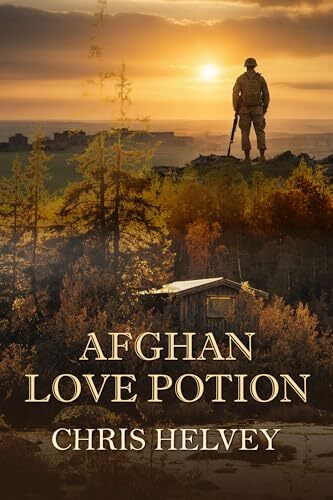
While I did outline Afghan Love Potion, one of my recent novels, I almost always begin my novels, novellas, short stories, and poems with a simple vision. Now, this vision may be of the novel’s beginning, the end, or perhaps a critical scene in the book. The key point is, and this, I believe, holds true for any writer to sit down and start writing.
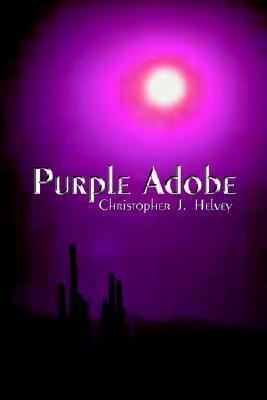
Here are a couple of examples. I wrote my first book, Purple Adobe, over twenty-five years ago. It began with a line that flashed across my mind one morning, appearing as a random thought wandering across the universe of my imagination: “The day died a purple death against the cracked adobe walls.” The novel went on to tell of a detective who was trying, yet never quite succeeding, to escape from the interruptions and demands of society. The detective becomes unhappily involved in a case that gradually draws him back into life and a taste of happiness.
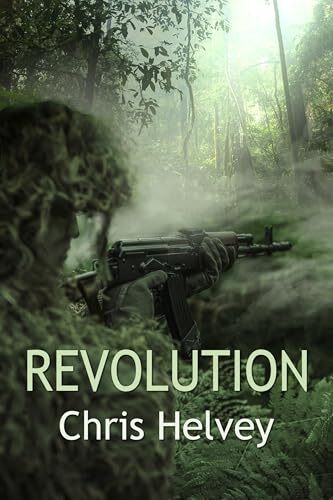
My latest novel, Revolution, began in my mind as I was driving along Old Frankfort Pike, enjoying the scenic Bluegrass countryside and listening to oldies on the radio, when the Beatles hit “Revolution” began playing. For some unknown reason, I suddenly started imagining a violent revolution in an imaginary Central/South American country, one written in the realistic prose I aspire to, filled with violence, death, love, honor, and characters who reflect life realistically and honestly. Years later, when Revolution was published, those summertime visions had grown to over 500 pages, filled with over 150,000 words. The key for me, of course, was to start writing, to shift those visions from my mind to the computer screen before me.
First Book Feeling
It’s funny, but holding my first published book, while pleasant, did not have a major impact on my life. By then, I was already writing book two, and writing is the literary aspect I most enjoy.
Inspiration and its Evolvement
As I noted earlier, most of my writing begins with a single vision or a line that starts me on the path I usually follow. Since those visions certainly don’t cover the entire storyline, that does evolve as I write. While I do make changes and edit every work multiple times, I usually stay pretty close to my original vision/concept.
Genre(s)
I strive to write realistic literary fiction. Why? Simply because that’s what I like to read, and that’s the way my literary thoughts flow.
Easy Versus Challenge
Without question, the easiest part of writing is the writing itself; the hardest is simply finding/making the time to write.
Why Write?
I grew up loving to read books (inspired by my mother reading to me and my siblings every night), and, in some shadowy, twisting passageway of my brain, I’ve always wanted to be a writer. I write because I want to write, want to write good, strong, accessible fiction that others will enjoy reading, fiction that I enjoy reading.
Recommendation for Writer’s Block
I recommend that any writer who believes they have writer’s block sit down and write. If no story or poem is on your mind, write anything: the names of your grade school friends, the states, counties, and towns you have visited, your most cherished Christmas/anniversary/birthday memories, the names of all the politicians you don’t like, a grocery list… When you’re afflicted with temporary writer’s block, what you write doesn’t matter so much (at least for a day or two); what matters is that you write, write something, write anything, but write, write, write.
Origin of Stories and Characters
My sense is that my story ideas and characters originate primarily in my mind, clearly tapping into the memory banks filled with people, places, and events I have seen, heard about, or read about, coated with my own unique, fertile imagination.
Take-Away
I hope all my readers finish my poems, stories, novellas, and novels believing that they have read something good—something impactful—something that will stay with them for a long, long time.
Advice for Beginners
First, write, then edit, then seek out others who write, whether individually or in writing groups. Feedback is always valuable. Also, read, read, then read some more. Reading reveals to you what style, characters, plots, etc., you like or don’t like, and you always want to write what you like to read. If you try to write what you don’t like but what you think might be a best-seller, you are setting yourself up for a challenge that very few ever accomplish.
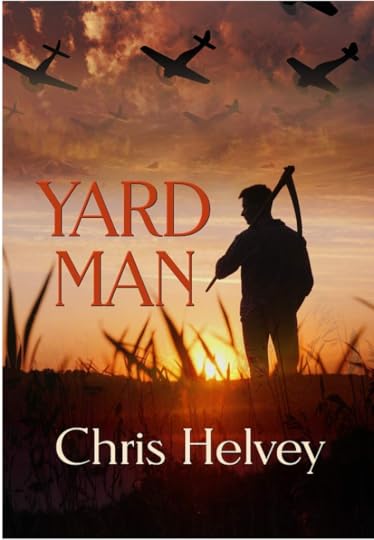
One quick tip (and I learned this hard way, the very hard way): don’t overuse certain words, expressions, or descriptions. For example, when Jeanne Smith, my wonderful editor at Wings ePress, was working with me on my first Wings book, Yard Man, she gently, yet clearly, pointed out that I had used the word “just” well over one hundred times in the first half of the book (talk about overuse!!). Going back and “fixing” dozens of those uses effectively taught me to be more careful about my word choices—an invaluable lesson, one now deeply engrained in my mind.
Favorite Books and Authors
While I could go on for pages, I’ll limit my list to the following six-pack:
Ernest Hemingway for showing us all a new, better way to write. His short, clear sentences make for smooth yet impactful reading. My favorite Hemingway book (which I am currently reading again for the umpteenth time, is The Sun Also Rises.
Jack Kerouac for his steadily flowing rivers of words which carry the reader across the American continent, and back. On the Road is a must-read for any writer, lover of literature, the Beats, the 50s…
Charles Bukowski for his dark, harsh, yet realistic and oh-so-impactful poems. I love so many Bukowski books of poetry that it’s hard to pick a favorite, but I’ll go with the night torn mad with footsteps.
Raymond Carver for his short stories that rank among the very best ever. If you don’t believe me or trust my judgment, then read “Cathedral,” which I think is about as good as a short story gets. For a wonderful taste of Carver, grab a copy of the Library of America’s Raymond Carver: Collected Stories.
Larry Brown for his novels and stories primarily set in the South and written in a gritty, realistic style and often filled with violence. While I would never claim to be as good a writer as Larry Brown, my stories and novels often flow in a similar vein. If you’re a short-story fan, Tiny Love, The Complete Stories is a great place to start.
Laura Ingalls Wilder for her books about her family and growing up in the big woods and prairies of an earlier America. They are some of the books my mother read to her family in the evenings, and the clear, smooth-flowing storylines and wonderful “captures” of characters helped inspire my love of reading, ultimately leading to my becoming a writer. I can’t pick a fave, so I suggest starting with Little House in the Big Woods and continuing through the collection in order.
Ross Macdonald for his unique and powerful Lew Archer detective series. In this series, Macdonald not only created a unique and memorable detective but revealed, very clearly, the subtle power and impact secondary characters have on the storyline and the reader. By the way, the same often holds true in movies—think of The Maltese Falcon. I like all Macdonald’s Lew Archer books, but if I had to pick one, I’d go with The Goodbye Look, with The Way Some People Die and The Chill close behind.
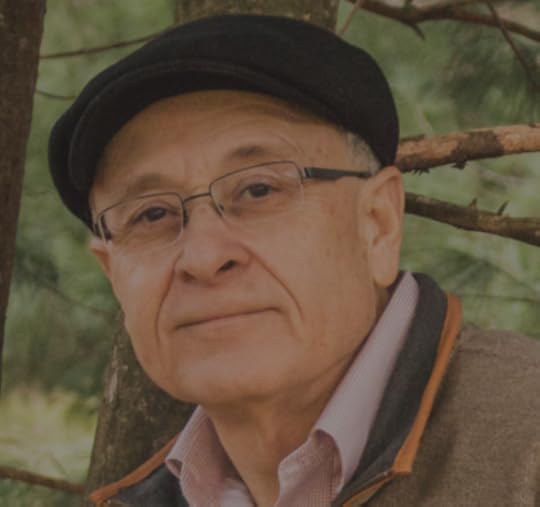
Chris Helvey is an award-winning short-story writer, poet, and novelist. The author of over a dozen novels and multiple short-story collections, Chris’ latest novel, Revolution, was recently released by Wings ePress and is available in both paperback and e-book formats on Amazon. A founding member of the Bluegrass Writers Coalition, he is also editor-in-chief and publisher of Trajectory Journal.
Visit Chris’s site: https://chrishelvey.com/