How can we learn when it’s time to let go?
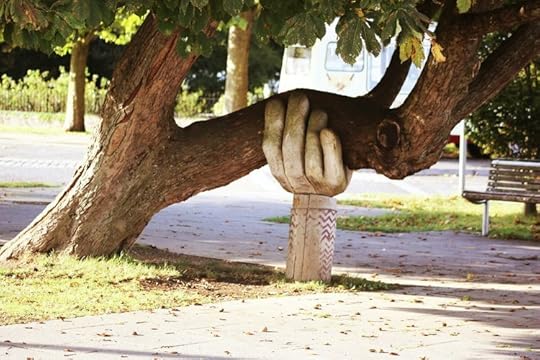
Src: Neil Thomas Unsplash
what are attachments?
We’re up on Lopez Island in the San Juans in Washington State, all dressed up in fancy wedding clothes, wearing tennis shoes and sandals. A dozen of us hiked a 1/4 mile through the forest. Some of us are wearing backpacks carrying champagne flutes and animal crackers, others holding fresh flowers to a lookout with the backdrop of neighboring islands peeking up through the sunshine-sparkling water. A slight breeze blew my daughter’s hair as she beams facing her almost-husband.
How does it feel when your youngest is getting married? For me, I feel conflicted. There’s part of me that isn’t ready for my last daughter to get married. I thought I had more time. But she’s ready. I need to learn to let her go.
It’s not like we talk every day on the phone, or that she runs everything by me. I suspect it has more to do with me than her. There’s this soft, quiet, sad part of me that’s not ready to let go. But why? What am I really afraid of letting go of?
What are attachments? How can we release our hold on attachments and learn when it’s time to let go?
trailer with Bob Rosen
According to Bob Rosen, psychologist, researcher, and author of Detach: Ditch Your Baggage to Live a More Fulfilling Life, our lives are full of attachments: like our attachment to stability (being uncomfortable with uncertainty) or to the past (not being able to accept and forgive) or the future (worrying and being unable to live in the moment). In his book, and on this month’s thought echoes podcast, Bob invites us to take stock of our relationship with our attachments and offers advice on how to replace them with healthy aspirations.
What fascinated me about Bob’s unique perspectve was the weaving together of Western and Eastern approaches to life; our Western get-it-done with an Eastern wabi-sabi, not-so-fast attitude.
During our conversation, I mentioned to Bob that we couldn’t cover all 10 attachments and offered my top 2: control and perfectionism (a bit of control on my part). He said, “The attachment to control and the attachment to perfection is very common, particularly around business people.”
He explained how from an early age, we’re taught to shape our ecosystem. We learn to influence and maneuver around people in our lives to control situations to feel safe. But then something happens. We “bump into reality because we can’t control a lot of what goes on in our lives, and we hide our vulnerability. So many people get hijacked by control. And the secret is learning how to get in touch with vulnerability. To allow yourself to recognize that you don't control everything. And you let it go.”
When I read his book, the attachment to control almost flashed red at me. Turns out there are 4 types: 1) controlling others, 2) controlling yourself, 3) passive-aggressive, and 4) people-pleaser. People-pleasing was a surprise to me. I saw that as something someone would do if they did not feel in control, either to protect themselves or out of a lack of self-confidence.
On reflection, when I’m people-pleasing, I think of it as a way to avoid conflict. I remember Mom sharing in her later years about life with five little girls and how she tried to present a sense of calm at home when Dad was around. She didn’t want him staying at work late because there was so much chaos at home. Her way of controlling the situation: trying to control her daughters and people-pleasing for Dad.
The concept of control hijacking our lives and learning how to embrace vulnerability as a way to let go really stuck with me. Simply understanding the different types of control provided a filter to reflect on my upbringing and what may have seeped into my parenting style.
“Western psychology is all about goals, aspirations, and problem-solving, and Eastern psychology is all about understanding the power of impermanence, change, and uncertainty. So I wrote the book to weave those two concepts together.”— Bob Rosen how can we learn when it’s time to let go?
When I finished my interview with Bob, I felt like I’d started a new exercise routine. A mental health exercise routine.
First, you need to learn the new routine. It has 10 exercises. Then you realize your mind (like your body) is different every time you exercise. Sometimes I can only do one full plank pushup; the rest are on my knees. Other times, a weight is too easy, so I increase it a bit. It feels that way going through the checkpoints of the 10 attachments where Bob asks probing questions in each chapter of his book.
Stability —> embrace agility
Past —> accept and forgive
Future —> live in the present
Control —> share our vulnerability
Perfection —> befriend our imperfections
Success —> celebrate our achievements
Pleasure —> find peace with life’s ups and downs
Youth —> embrace where we are
Self —> explore belonging and generosity
Life —> welcome gratitude
This may seem formulaic, but think of it as a DIY mental-health check-up. We all sometimes feel a bit stuck or that we’re giving up too much mental real-estate to something or someone. But maybe, by exploring Bob’s list of attachments and their anecdotes, we might find some insights and relief.
***
We walked back through the sunlit dappled forest from the family elopement on Lopez Island, all three daughters with their husbands. Still catches in my throat for me to say that with my youngest.
On the ride back to our rental that didn’t have hot water until 9:30pm the night before (imagine pots of water on the gas stove and in the microwave to heat up enough water so our two little granddaughters could have a somewhat warm bath), I glanced at my husband. “Our family balance has changed. For most of the girls’ lives, they’ve been the center of our universe and we theirs. We’re not the center of their universes anymore. They have their own universes and we can visit. We’re visiting stars.”
What are all the ways we can learn to let go? To have the self-awareness to know when to move the intensity dial up or down?
***
P.S. What I didn’t mention is that while journaling one morning about the challenges of choosing a universal theme for my memoir, I realized the overarching theme was about learning when to let go. Moments later, while catching up on emails, I received a request to interview Bob for his book, Detach, which was all about letting go.
Of course I received an email right after I settled into what our dance with chance in saving a 100-year-old mansion taught me — all the different ways to let go. How serendipity shows up when dreams change and life turns out differently than expected. How relationships, romantic or otherwise, are a balancing act and invite vulnerability into the mix. And how knowing when to let go and walk away leaves room for something new.
WOULD LOVE TO HEAR YOUR COMMENTS.
If you enjoyed learning more about the nature of our thoughts, I invite you to subscribe to thought echoes.