
The Museum of Future Inventions: A Journey Through the Technologies of Tomorrow
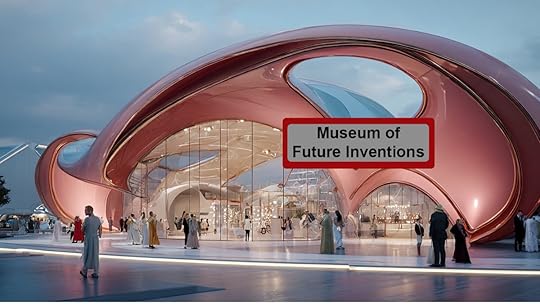
Step into the Museum of Future Inventions—where imagination meets innovation, and the technologies shaping tomorrow are brought vividly to life.
Imagine walking through the doors of a museum dedicated not to the past, but to the future—a place where the boundaries between science fiction and scientific possibility blur into something extraordinary. Welcome to the Museum of Future Inventions, where we don’t just predict tomorrow’s world; we actively envision the technologies that will reshape human civilization. As we stand at the precipice of 2025, our understanding of future inventions reflects a nuanced appreciation of both the transformative potential and the profound challenges that emerging technologies present. The Museum of Future Inventions showcases innovations that are not merely impressive but essential for navigating the complex realities of our rapidly changing world.
Honoring the Foundation: Standing on the Shoulders of GiantsBefore we peer into tomorrow, we must acknowledge that every future breakthrough stands on the foundation laid by history’s greatest inventors. The Museum’s Hall of Heroes reminds us that Thomas Edison’s 1,093 patents, Marie Curie’s groundbreaking work with radioactivity, and Nikola Tesla’s revolutionary contributions to electrical engineering didn’t just change their times—they created the technological scaffolding upon which today’s innovations are built. But our tribute extends beyond the well-known names. Ada Lovelace’s visionary understanding of computational possibility, the uncelebrated inventors working in laboratories across the globe, and the countless minds pushing the boundaries of human knowledge—all contribute to the momentum that carries us toward an extraordinary future. Their legacy teaches us that the most transformative inventions often emerge from audacious thinking combined with persistent effort. As we explore tomorrow’s possibilities, we carry forward their spirit of relentless curiosity and unwavering belief in human potential.
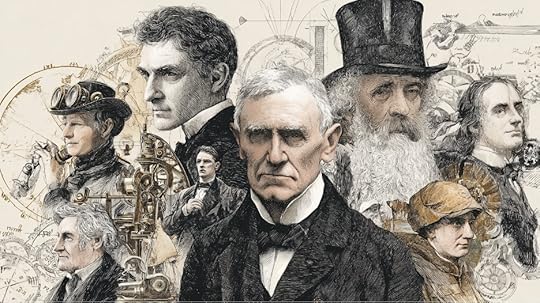
The Hall of Heroes honors visionary inventors like Edison, Curie, Tesla, and Lovelace—whose bold ideas and tireless efforts form the foundation for the breakthroughs shaping our future.
What to Expect at the Museum of Future InventionsStepping into the Museum of Future Inventions is like entering a living laboratory where imagination meets scientific possibility. The space itself defies conventional architecture—walls that shimmer with holographic displays, floors that respond to your presence with gentle pulses of light, and ceilings that open to reveal virtual star fields or molecular structures dancing in three-dimensional space. Each exhibit hall is designed as an immersive environment where visitors don’t just observe future technologies but interact with them. Touch a wall in the health pavilion and watch as nano-robots demonstrate cellular repair in real-time. Walk through the energy section and feel the warmth of a miniature fusion reaction safely contained in a magnetic field. In the consciousness expansion area, experience brief moments of enhanced cognition through non-invasive neural interfaces. The museum’s layout encourages fluid exploration, with pathways that adapt to visitor interests and knowledge levels. Interactive AI guides—some appearing as holograms, others as friendly robotic companions—provide personalized tours based on each visitor’s curiosity and background. The experience is designed to inspire wonder while grounding futuristic concepts in understandable science. Rather than static displays, the Museum features working prototypes, live demonstrations, and hands-on workshops where visitors can participate in creating tomorrow’s innovations. The goal is not merely to showcase what might be possible, but to inspire visitors to become active participants in building the future they want to see.
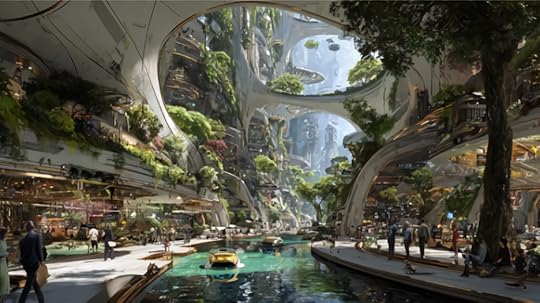
The cities of the future won’t just be smart—they’ll be regenerative, with living buildings, self-healing infrastructure, and AI-guided transportation networks that blur the line between biology and technology.
The Eight Pillars of TomorrowWhile the spectrum of human innovation spans countless domains, eight fundamental categories tend to capture the vast majority of breakthrough inventions that will define our future. These pillars represent the core areas where transformative technologies will emerge, each containing dozens of revolutionary possibilities that could reshape civilization as we know it.
1. Future Cities and Smart InfrastructureThe future of urban development extends far beyond smart city technology. We’re moving toward truly regenerative cities—urban environments that actively heal and improve both human and environmental health. These cities will feature living buildings constructed from engineered organisms that can self-repair, purify air, and even generate energy through biological processes.
Dynamic infrastructure will respond to real-time needs: roads that self-heal from wear, buildings that reshape themselves based on occupancy and weather, and transportation networks that flow like living organisms. Underground hypersonic transit systems will connect cities across continents, while aerial urban mobility creates three-dimensional traffic patterns guided by AI that thinks in terms of atmospheric flow rather than surface congestion.
Healthcare is evolving from treating disease to engineering optimal human performance. The future holds personalized medicine so precise that treatments are designed not just for individual genetic profiles, but for specific cellular conditions at particular moments in time. Bioengineered organs grown from a patient’s own cells will eliminate transplant rejection, while programmable immune systems will be trained to fight new threats before they emerge.
Neural interfaces will blur the line between human and machine intelligence, offering not just medical treatment but cognitive enhancement. Brain-computer interfaces will enable direct knowledge transfer, shared consciousness experiences, and the ability to process information at superhuman speeds. The question isn’t whether we’ll enhance human capability, but how we’ll ensure these enhancements serve humanity’s highest purposes.
Eight Revolutionary Examples:Nano-Medical Robots – Microscopic machines that patrol the bloodstream, repairing damage and preventing disease at the cellular levelGenetic Time Machines – Technology to reverse aging by resetting cellular clocks and restoring youthful genetic expressionConsciousness Backup Systems – Methods to upload, store, and restore human memories and personality patternsArtificial Organ Farms – Facilities that grow replacement organs from patients’ own stem cells in matter of daysNeural Skill Downloads – Direct brain interfaces that instantly transfer complex skills and knowledgeEmotion Regulation Implants – Biodevices that help manage mental health by balancing neurotransmitters in real-timeSensory Expansion Devices – Implants that add new senses like infrared vision, electromagnetic field detection, or ultrasonic hearingBiological Age Reversal – Treatments that don’t just stop aging but actually make the body younger at the molecular level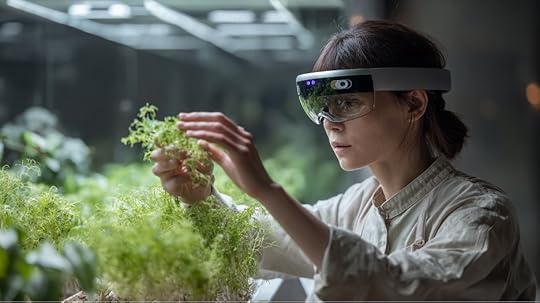
From edible packaging to AI-powered vertical farms and personal food fabricators, the future of food and agriculture is being reshaped by breakthrough technologies aimed at nutrition and global food security.
3. Molecular Food Systems and Atmospheric AgricultureFood production is undergoing a fundamental transformation that extends far beyond traditional agriculture. Molecular food fabrication will create nutritionally perfect meals tailored to individual biological needs, while atmospheric agriculture harvests nutrients directly from air and water using engineered photosynthetic systems.
Vertical ecosystems will integrate food production with urban environments, creating living walls that produce both sustenance and beauty. AI-guided agricultural systems will optimize not just crop yield but soil health, biodiversity, and carbon sequestration. The future of food is about creating abundance while healing the planet.
Eight Revolutionary Examples:Molecular Food Printers – Devices that construct meals atom by atom, creating perfect nutrition tailored to individual genetic profilesAtmospheric Protein Harvesters – Systems that capture nitrogen and carbon from air to synthesize proteins without traditional farmingDesert Terraforming Machines – Robots that transform arid land into fertile agricultural zones using engineered soil microbesOceanic Kelp Cities – Massive underwater farms that produce food while cleaning ocean water and storing carbonSynthetic Photosynthesis Arrays – Artificial leaf systems that convert sunlight and CO2 into food compounds more efficiently than plantsQuantum Crop Optimization – AI systems that predict and control plant growth at the quantum level for maximum yieldCellular Agriculture Factories – Facilities that grow meat, dairy, and plant products from individual cells without animals or traditional cropsMemory Flavor Technology – Food systems that can recreate any taste or nutritional profile from molecular memory banks4. Quantum Communication and Consciousness IntegrationThe next revolution in information technology moves beyond processing speed to fundamentally new ways of handling information. Quantum internet will provide not just unhackable communication but instantaneous information transfer across vast distances. More intriguingly, brain-computer interfaces will enable direct consciousness-to-consciousness communication, creating shared mental spaces where ideas can be exchanged as directly as thoughts.
AI systems will evolve beyond tools to become genuine collaborators, with artificial consciousness that complements rather than replaces human intelligence. These systems will help us solve problems too complex for any single human mind while preserving the uniquely human qualities of creativity, empathy, and moral reasoning.
Eight Revolutionary Examples:Telepathic Communication Networks – Brain-to-brain interfaces enabling direct thought transmission across any distanceQuantum Entanglement Internet – Communication systems using quantum entanglement for instantaneous, unhackable data transferCollective Intelligence Platforms – Networks where multiple minds merge temporarily to solve complex problems togetherHolographic Data Storage– Three-dimensional information storage systems with virtually unlimited capacityPredictive Reality Engines – AI systems that simulate future scenarios with perfect accuracy to guide decision-makingMemory Palace Architects – Technology that helps humans construct and navigate enhanced memory systemsConsciousness Translation Devices – Systems that convert thoughts between different types of minds (human, AI, alien)Time-Delay Communication – Methods to send messages through time itself, communicating with past and future
The future of energy lies in regeneration—where fusion, atmospheric harvesting, and weather engineering redefine power production and blur the lines between technology and nature.
5. Regenerative Energy and Atmospheric EngineeringEnergy production will shift from extraction to regeneration. Atmospheric energy harvesting will capture power from weather patterns, electromagnetic fields, and temperature differentials. Space-based solar arrays will beam clean energy to Earth, while fusion reactors provide virtually limitless power without environmental impact.
More revolutionary will be our ability to engineer atmospheric conditions themselves. Carbon capture won’t just remove greenhouse gases but convert them into useful materials. Weather modification systems will prevent natural disasters while maintaining ecological balance. The boundary between technology and nature will dissolve as we learn to work with natural systems rather than against them.
Eight Revolutionary Examples:Lightning Capture Networks – Global systems that harvest energy from natural lightning strikes and electrical stormsFusion Power Satellites – Space-based fusion reactors that beam unlimited clean energy to Earth via microwavesAtmospheric Carbon Miners – Machines that extract CO2 from air and convert it directly into building materials and fuelsTidal Moon Generators – Technology that harnesses the Moon’s gravitational energy for continuous power generationHurricane Control Systems – Weather modification technology that can steer, strengthen, or dissipate major stormsMagnetic Field Harvesters – Devices that generate power from Earth’s magnetic field and solar wind interactionsTemperature Differential Engines – Systems that generate massive power from small temperature differences in air or waterSolar System Power Grid– Interplanetary energy network connecting power sources from multiple planets and moons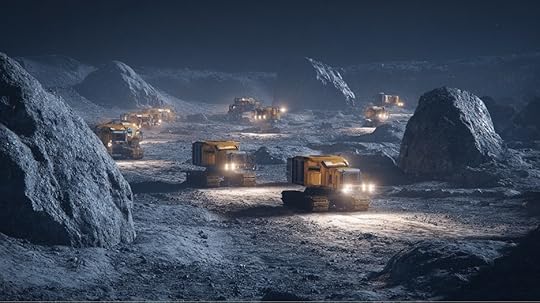
Asteroid Mining Armadas—autonomous robotic fleets poised to extract and process valuable resources from space rocks, unlocking a new era of off-world industry.
6. Deep Space Civilization and Planetary EngineeringSpace exploration will evolve from visits to permanent expansion. Self-sustaining space habitats will support millions of people, while asteroid mining provides the raw materials for space-based manufacturing. Advanced propulsion systems will make interstellar travel feasible, opening the possibility of truly interplanetary civilization.Terraforming technologies will transform dead worlds into living ones, but more importantly, we’ll develop the ability to create entirely new types of environments suited to human flourishing. The ultimate goal isn’t just to survive in space but to thrive there, creating new forms of human culture adapted to the cosmos.
Eight Revolutionary Examples:Interstellar Ark Ships– Generation ships capable of traveling to other star systems with complete ecosystems onboardPlanet Manufacturing Systems – Technology to construct artificial worlds from raw materials in spaceWormhole Generators – Devices that create stable passages through space-time for instant interstellar travelAsteroid Mining Armadas – Fleets of autonomous robots that harvest and process resources from space rocksGravity Well Engines – Propulsion systems that manipulate gravitational fields for faster-than-light travelAtmospheric Processors – Machines that can transform a planet’s atmosphere in decades rather than millenniaSolar System Enclosures – Megastructures like Dyson spheres that capture entire star’s energy outputDimensional Habitat Creation – Technology to create living spaces in alternate dimensions or pocket universes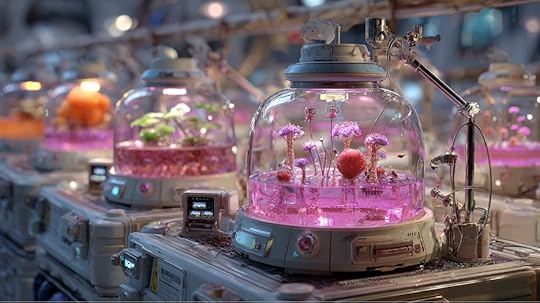
Future manufacturing will merge biology and technology–using programmable matter, molecular assemblers,
and self-replicating systems to eliminate waste and create on-demand, endlessly recyclable materials.
Manufacturing will become a process of programming matter itself. Molecular assemblers will construct products atom by atom, while programmable materials will change their properties on command. Self-replicating manufacturing systems will produce what we need, when we need it, where we need it. The distinction between growing and making will disappear as we develop biological manufacturing processes. Materials will be designed to be eternally recyclable, existing in continuous cycles of use and reuse. Waste will become an obsolete concept as every atom serves a purpose in the closed-loop systems of tomorrow.
Eight Revolutionary Examples:Universal Constructors – Machines that can build any product, including copies of themselves, from basic raw materialsShape-Shifting Smart Materials – Substances that can transform between liquid, solid, and gas states on commandMolecular Assembly Lines – Manufacturing systems that construct products by placing individual atoms precisely where neededSelf-Repairing Infrastructure – Buildings, roads, and machines that automatically fix themselves when damagedTransmutation Factories – Facilities that convert any element into any other element using controlled nuclear processesReality Editing Tools – Devices that can modify the physical properties of existing objects in real-timeBiological Manufacturers – Living systems that grow complex products like electronics or vehicles as they would grow tissuesMatter Compilers – Machines that can create any object from a digital blueprint and raw atoms8. Consciousness Expansion and Collective IntelligencePerhaps most profound will be our expanded understanding of consciousness itself. Brain-computer interfaces will enable not just individual enhancement but collective intelligence—shared consciousness experiences where multiple minds work together as a single, more powerful entity Virtual reality will become indistinguishable from reality, creating infinite possibilities for human experience. We’ll develop the ability to back up and transfer consciousness, raising fundamental questions about the nature of identity and mortality. The future of human consciousness is not just about individual minds but about the emergence of new forms of collective awareness.
Eight Revolutionary Examples:Mind Merging Networks – Technology allowing multiple consciousnesses to temporarily become one super-intelligent entityVirtual Reality Universes – Completely immersive alternate realities indistinguishable from physical existenceConsciousness Multiplication – Ability to run multiple copies of the same mind simultaneously in different scenariosEmpathy Amplification Devices – Technology that allows people to literally feel what others are experiencingMemory Palace Construction – Tools for building unlimited, perfectly organized memory systems within the mindDream Programming Systems – Technology to control and direct dreams for learning, problem-solving, and entertainmentAncestral Memory Access – Methods to tap into genetic memories and experiences of previous generationsAI-Human Consciousness Fusion – Integration of artificial and human intelligence into hybrid thinking systems
The Immortal Eight exhibit will showcase eight civilization-defining breakthroughs, technologies so profound they have the power to reshape the very course of human existence.
The Immortal Eight: The Ultimate Frontiers<
Some inventions transcend mere innovation to become truly civilization-defining breakthroughs. The Museum’s special exhibit features eight ultimate technologies that would fundamentally alter human existence:
These represent not just technological achievements but philosophical and spiritual thresholds that would redefine what it means to be human.
News-from-the-Future TheaterAt the heart of the Museum stands the spectacular News-from-the-Future Theater, a crystalline dome that serves as both centerpiece and culminating experience. Here, visitors don advanced neural interfaces that create fully immersive experiences of tomorrow’s world unfolding in real-time.
The theater presents breaking news broadcasts from decades in the future: “First Human Clone of Extinct Neanderthal Celebrates 10th Birthday,” “Mars Colony Declares Independence from Earth,” “Scientists Achieve Controlled Time Dilation in Laboratory Setting,” “Global Weather Control System Prevents Category 6 Hurricane.” Each story is presented with such vivid detail and emotional authenticity that visitors often forget they’re experiencing simulated futures rather than actual events.
The genius of the News-from-the-Future Theater lies not just in its technological wizardry, but in its ability to make abstract possibilities feel viscerally real. By experiencing these potential futures as lived reality, visitors develop a deeper emotional connection to the choices we make today. The theater serves as both inspiration and warning, showing us worlds we might create—and worlds we must work to avoid.
The Imperative for TomorrowOur understanding of future inventions must grapple with unprecedented ethical challenges. Every transformative technology raises questions about equity, safety, and the kind of future we want to create. The power to enhance human capability, manipulate matter at the molecular level, and even control consciousness itself demands wisdom that matches our technological capability.
The Museum of Future Inventions isn’t just a showcase of what’s possible—it’s a call to thoughtful action. As we develop these extraordinary capabilities, we must ensure they serve humanity’s highest aspirations rather than our lowest impulses.
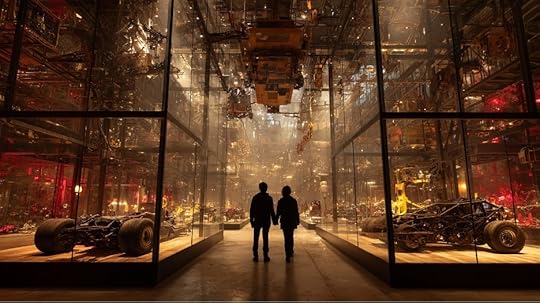
As you leave the Museum of Future Inventions, may your imagination be ignited and your belief in humanity’s power to shape tomorrow renewed—the future begins with you.
The Invitation to TomorrowThe future isn’t something that happens to us—it’s something we actively create through our choices, investments, and dreams. The Museum of Future Inventions exists to inspire not just wonder but action. Every visitor leaves with a simple challenge: How will you contribute to the future you want to see? Whether you’re a scientist pushing the boundaries of knowledge, an entrepreneur turning ideas into reality, an artist imagining new possibilities, or simply a citizen making daily choices that shape tomorrow, you have a role in building the future these inventions will serve. The technologies showcased here aren’t inevitable—they’re invitations. Invitations to think bigger, dream bolder, and work harder to create a future worthy of humanity’s extraordinary potential. The Museum of Future Inventions reminds us that the most important invention of all is the future itself, and that future is still very much in our hands. As you step out of the museum and back into the present, carry with you the knowledge that tomorrow’s breakthroughs are beginning today in laboratories, workshops, and minds around the world. The future is calling, and it’s time to answer.
Translate This PageSelect LanguageAfrikaansAlbanianAmharicArabicArmenianAzerbaijaniBasqueBelarusianBengaliBosnianBulgarianCatalanCebuanoChichewaChinese (Simplified)Chinese (Traditional)CorsicanCroatianCzechDanishDutchEnglishEsperantoEstonianFilipinoFinnishFrenchFrisianGalicianGeorgianGermanGreekGujaratiHaitian CreoleHausaHawaiianHebrewHindiHmongHungarianIcelandicIgboIndonesianIrishItalianJapaneseJavaneseKannadaKazakhKhmerKoreanKurdish (Kurmanji)KyrgyzLaoLatinLatvianLithuanianLuxembourgishMacedonianMalagasyMalayMalayalamMalteseMaoriMarathiMongolianMyanmar (Burmese)NepaliNorwegianPashtoPersianPolishPortuguesePunjabiRomanianRussianSamoanScottish GaelicSerbianSesothoShonaSindhiSinhalaSlovakSlovenianSomaliSpanishSudaneseSwahiliSwedishTajikTamilTeluguThaiTurkishUkrainianUrduUzbekVietnameseWelshXhosaYiddishYorubaZulu
#goog-gt-tt {display:none !important;}
.goog-te-banner-frame {display:none !important;}
.goog-te-menu-value:hover {text-decoration:none !important;}
.goog-text-highlight {background-color:transparent !important;box-shadow:none !important;}
body {top:0 !important;}
#google_translate_element2 {display:none!important;}
function googleTranslateElementInit2() {new google.translate.TranslateElement({pageLanguage: 'en',autoDisplay: false}, 'google_translate_element2');}
function GTranslateGetCurrentLang() {var keyValue = document['cookie'].match('(^|;) ?googtrans=([^;]*)(;|$)');return keyValue ? keyValue[2].split('/')[2] : null;}
function GTranslateFireEvent(element,event){try{if(document.createEventObject){var evt=document.createEventObject();element.fireEvent('on'+event,evt)}else{var evt=document.createEvent('HTMLEvents');evt.initEvent(event,true,true);element.dispatchEvent(evt)}}catch(e){}}
function doGTranslate(lang_pair){if(lang_pair.value)lang_pair=lang_pair.value;if(lang_pair=='')return;var lang=lang_pair.split('|')[1];if(GTranslateGetCurrentLang() == null && lang == lang_pair.split('|')[0])return;var teCombo;var sel=document.getElementsByTagName('select');for(var i=0;i<sel.length;i++)if(/goog-te-combo/.test(sel[i].className)){teCombo=sel[i];break;}if(document.getElementById('google_translate_element2')==null||document.getElementById('google_translate_element2').innerHTML.length==0||teCombo.length==0||teCombo.innerHTML.length==0){setTimeout(function(){doGTranslate(lang_pair)},500)}else{teCombo.value=lang;GTranslateFireEvent(teCombo,'change');GTranslateFireEvent(teCombo,'change')}}
Search for: Recent Posts The Museum of Future Inventions: A Journey Through the Technologies of Tomorrow The Stablecoin Revolution: 12 Predictions That Will Transform Money Forever The Neumann Engine: How Cities Can Thrive and Grow in the Age of AI Categories Artificial Intelligence Business Trends Future of Agriculture Future of Banking Future of Education Future of Healthcare Future of Transportation Future of Work Future Scenarios Future Trends Futurist Thomas Frey Insights Global Trends Predictions Social Trends Technology Trends Speaking TopicsFuture of Healthcare – “Is Death our only Option?Future of AIFuture of Industries ← Previous Post
The post The Museum of Future Inventions: A Journey Through the Technologies of Tomorrow appeared first on Futurist Speaker.


Thomas Frey's Blog

- Thomas Frey's profile
- 2 followers

