Kueh kosui
Welcome to Singapore Noodles, a celebration of Asian culinary traditions and food cultures. Every week, you’ll receive historical tidbits, personal stories, and recipes delivered straight to your inbox. Archived recipes and other content can be found on the index. My cookbooks, Wet Market to Table and Plantasia, are available for purchase here and here respectively.
Today’s deep dive into kueh kosui is inspired by a request from one of our paid subscribers, Brigette, whose 93-year-old father has been craving this nostalgic sweet—but hasn’t yet found a recipe that hits the mark.
If you’re a paid subscriber and have a topic you'd like me to explore, I’d love to hear from you. Thank you for being here, and enjoy this week’s post! ✨ — Pamelia
KUEH KOSUI / KUIH KASUI / KUEH KO SWEE
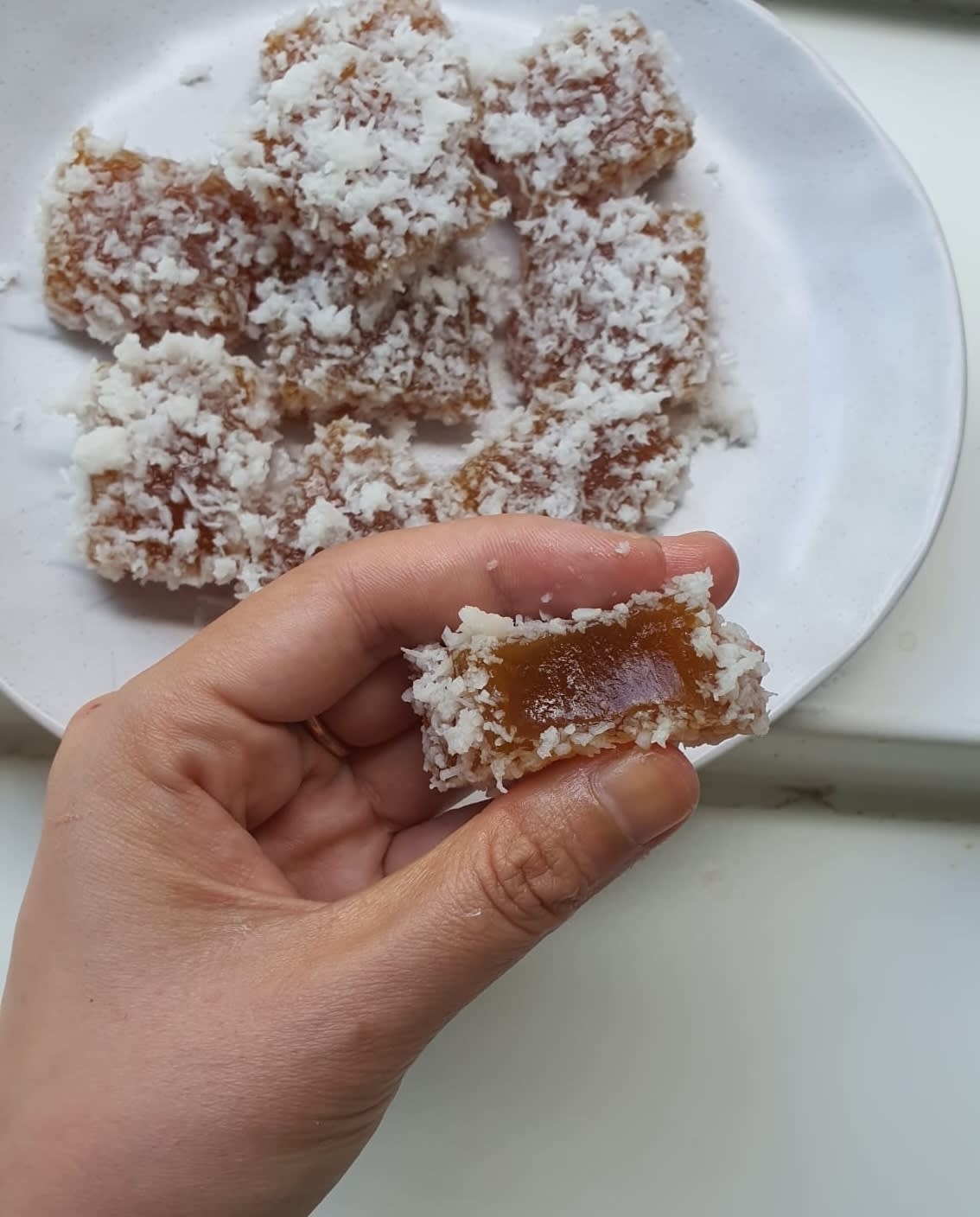
Kueh kosui, a sweet steamed cake (or kueh), is beloved in Singapore for how it conveys comfort with just a few humble ingredients. Typically made with a blend of tapioca flour and rice flour, palm sugar for deep, caramel-like sweetness, pandan leaves for fragrance, and a touch of alkaline water for bounce, the mixture is poured into thimble-sized Chinese tea cups and steamed until it sets into a glossy, translucent gel. Once cooled, it’s rolled in grated coconut. The result is a satisfyingly springy yet soft kueh that embodies the holy trinity of Singaporean sweets: palm sugar, pandan, and coconut.
Interestingly, kueh kosui has a cousin in Southeast Asia: kutsinta (also spelled cuchinta or kuchinta), a similarly soft and chewy steamed sweet treat from the Filipino kakanin tradition. Made with unrefined sugar and alkaline water, then topped with grated coconut, its resemblance to kueh kosui hints at a shared regional history shaped by migration and cultural exchange.
ALKALINE WATER
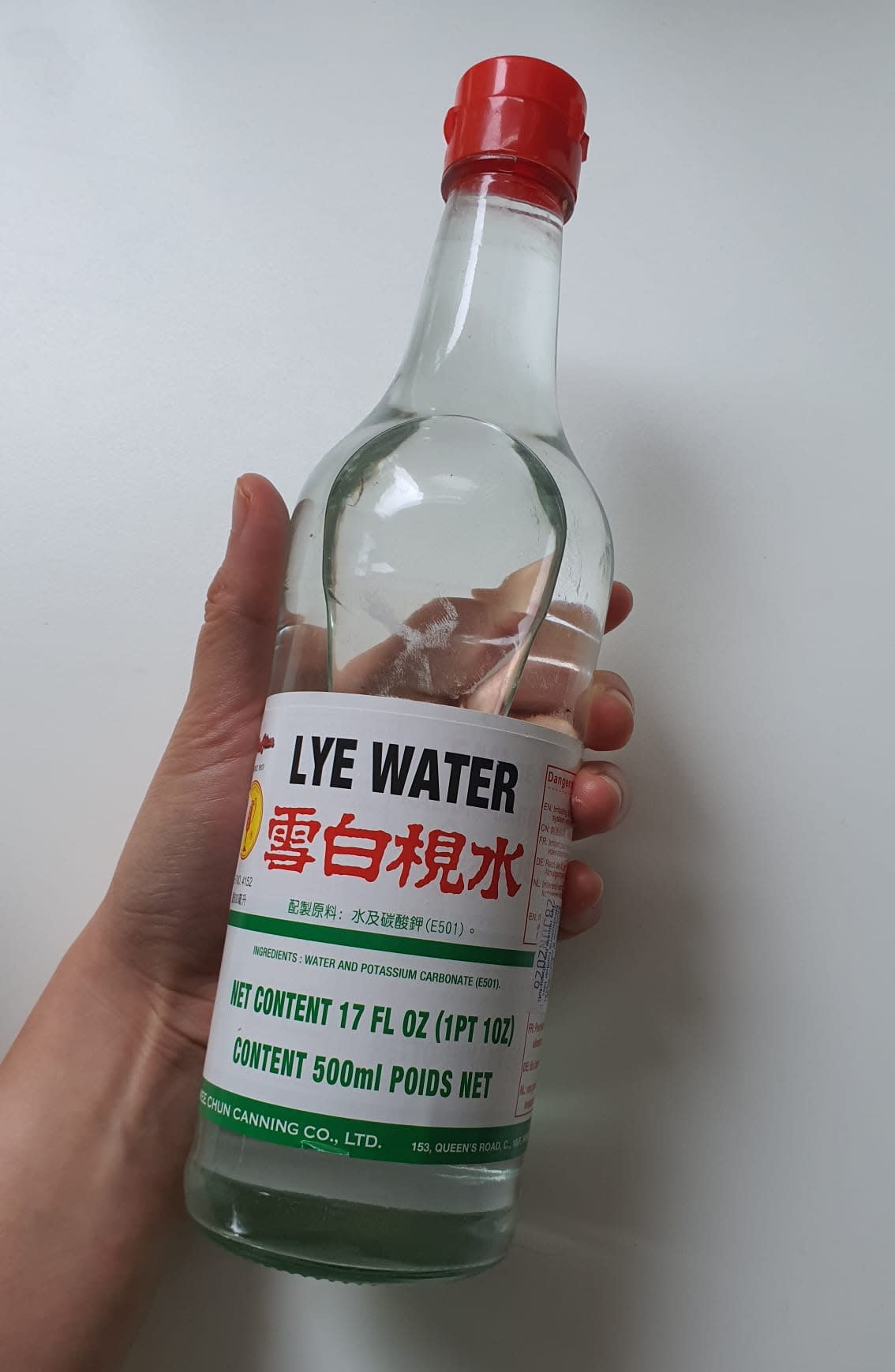
Alkaline water (also called lye water or kansui) has been used across Asia for centuries as a natural chemical agent in food preparation. It gives ramen its yellow tint and elasticity, lends mooncakes their golden-brown crust, and transform century eggs into their characteristic jelly-like texture.
Today, most cooks use commercial alkaline water, but in Southeast Asia, it was traditionally made by burning durian husks to ash, mixing the ash with water, and decanting the alkaline-rich liquid (known as air abu) for use in the kitchen.
When starches like tapioca and rice flour are heated in water, they absorb moisture, swell, and gelatinise, forming a cohesive gel. Raising the batter’s pH with alkaline water alters how the starches react—encouraging stronger bonding between starch chains. The result? A chewy, springy texture.
However, the downside of alkaline water is that it can leave behind a strong whiff that some (including me) find off-putting—and it often comes in large bottles that go unused. I wondered if I could develop a kueh kosui recipe without the use of alkaline water.
STARCHES IN KUEH KOSUI
Many traditional kueh kosui recipes rely on a blend of tapioca and rice flours:
Tapioca flour is high in amylopectin, a branched starch molecule that creates a elastic texture and glossy appearance when heated. It is what gives kueh kosui its signature bounce and translucent sheen.
Rice flour contains amylose in addition to amylopectin. Amylose forms firmer, less elastic gels, providing structure and sliceability while reducing stickiness. However, it also makes the kueh more opaque, so the balance between rice flour and tapioca flour is key.
I tested two versions: one with only tapioca flour, wanting to push its chewiness to the limit in the absence of alkaline water; and the other with a more traditional blend of tapioca flour, rice flour, and alkaline water. The all-tapioca version was translucent but resembled a translucent, gloopy gel at best. It was impossible to slice. The traditional version, on the other hand, steamed up opaque and lacked bounce.
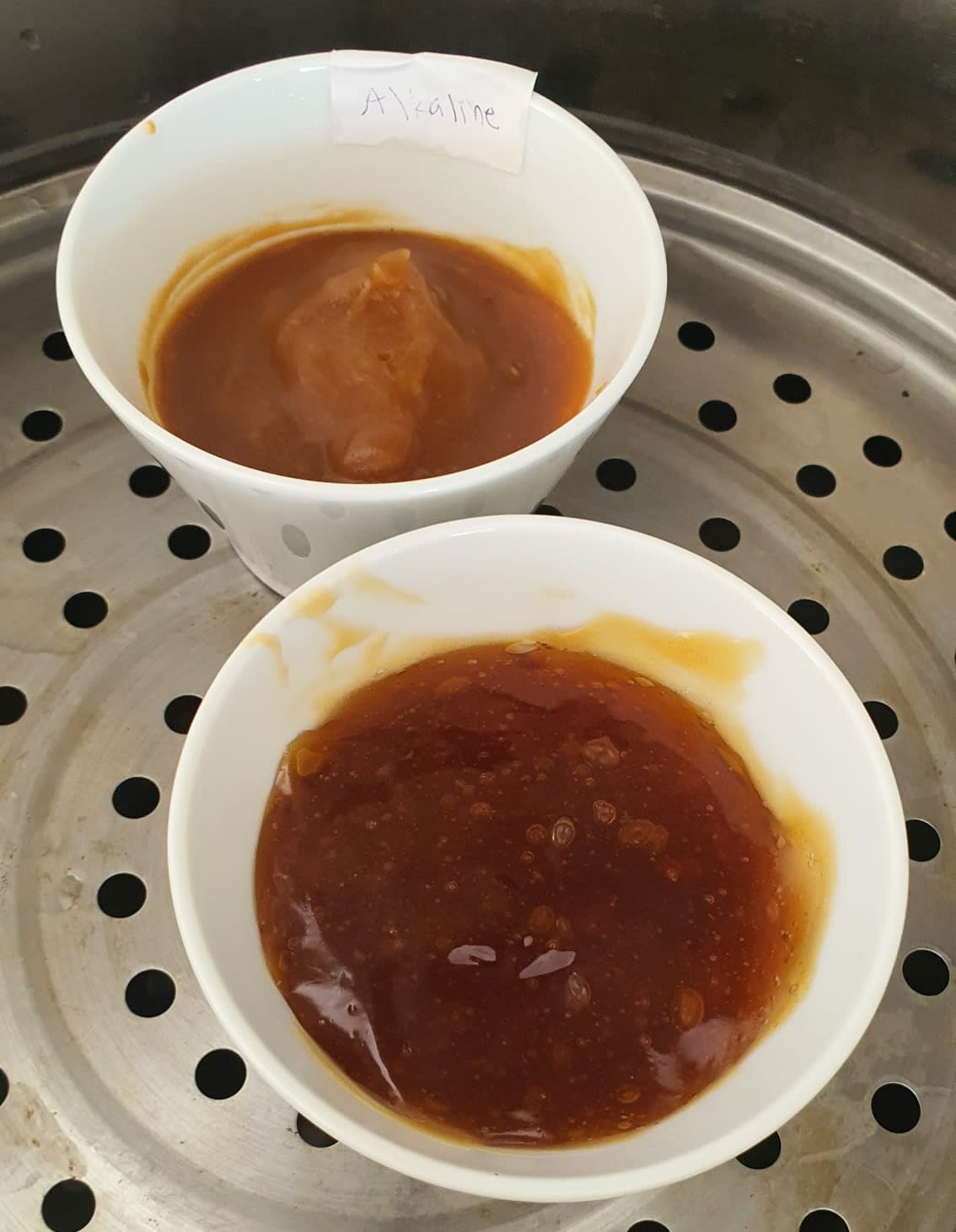
Suspecting the rice flour ratio was too high and the alkaline water too low, I experimented with a few different ratios based on recipes online. Still, the results were disappointing—either too opaque and lacked bounce, or overwhelmed by the alkaline flavour.
WHEAT NOODLES, THE UNEXPECTED INGREDIENT
Noting that some kueh kosui recipes include wheat flour, I began experimenting with it as a substitute for rice flour. Wheat flour contains gluten-forming proteins—gliadin and glutenin—which, when hydrated, form an elastic network that adds structure and chewiness. In kueh kosui, this helps balance the softness of tapioca starch with a bit of resilience. Crucially, because wheat flour contributes more structure than rice flour—thanks to its gluten content—you can use it in smaller amounts to achieve the same chew, which allows for more tapioca flour and hence a more translucent kueh.
It felt like I was finally getting closer to the right texture, but I was still facing issues. When steamed as-is, the batter tended to separate. But when I pre-cooked it, it often ended up over-thickened, making it difficult to level evenly in the moulds:
The breakthrough came from a comment on Dr. Leslie Tay’s ieatishootipost Facebook page, where someone mentioned that her grandmother used boiled mee sua—thin wheat noodles—blended into a paste and added to the batter:
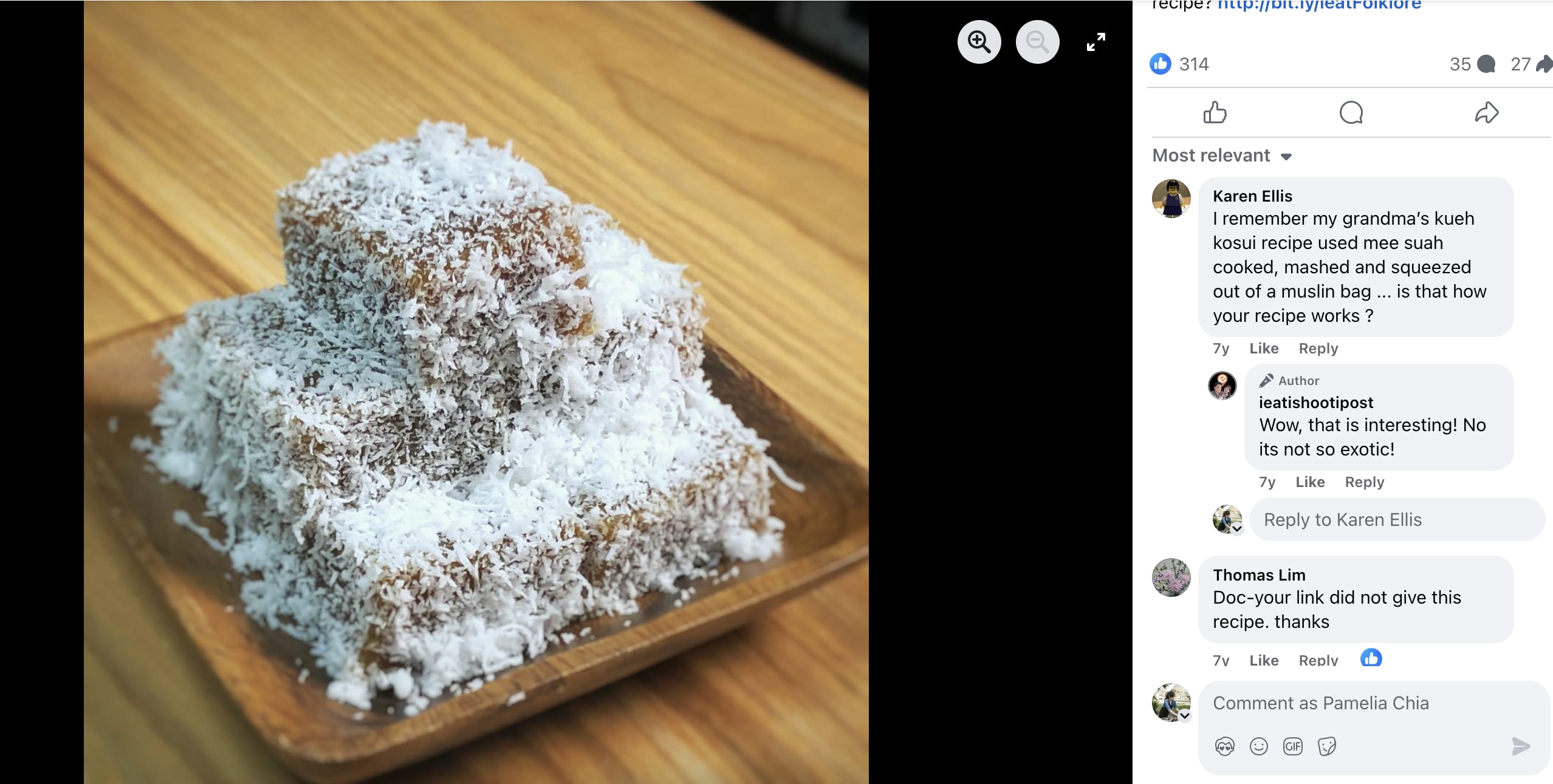
While not a traditional technique found in canonical cookbooks, this idea aligns with other Asian cooking techniques, like adding tangzhong (a pre-cooked flour paste) to bread doughs, or cooking a portion of kueh dough before incorporating this ibu dough (mother dough) into the rest. In kueh kosui, the pre-cooked starch gel:
Thickens the batter while helping to suspend starches evenly—thus reducing separation.
Mimics the effects of alkaline water by promoting enhanced starch swelling, creating bounce and chew.
Improves moisture retention, as in tangzhong breads, helping the kueh stay soft after cooling.
Without mee sua on hand, I used thin Korean wheat noodles which cook just as quickly:
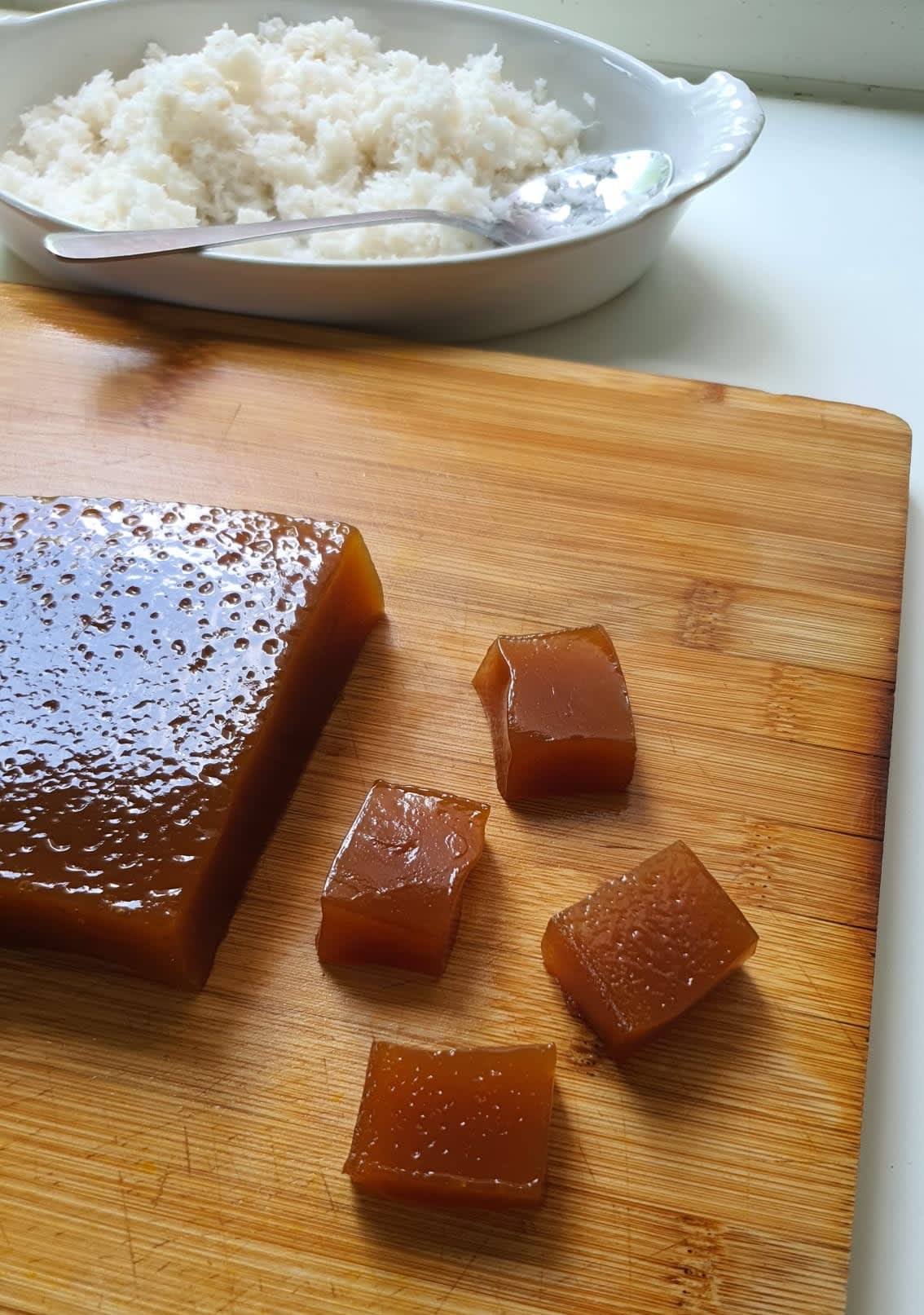
I was thrilled when I sliced into the kueh kosui. It had everything I’d been chasing: a glossy surface that caught the light, a gentle wobble as the knife went through, and a tender, springy bite. There was no harsh, alkaline edge, only the rich flavour of palm sugar.
All it needed was a toss in grated coconut. With so few ingredients in this kueh, I can’t emphasis how important it is to use the freshest grated coconut you can get your hands on. If you can, get it from the market. If opting for frozen, save the half-used bag from your freezer for another dish and go for an unopened one instead.
This kueh is best the day it’s steamed but holds up beautifully in the fridge, staying tender even after a day or two.
KUEH KOSUI
Serves 6 | Vegan