Did Women Just Not Exist?

.stk-5609c94-container{background-color:var(--stk-global-color-14950, #273891) !important;}.stk-5609c94-container:before{background-color:var(--stk-global-color-14950, #273891) !important;}.stk-910f2a1 .stk--svg-wrapper .stk--inner-svg svg:last-child, .stk-910f2a1 .stk--svg-wrapper .stk--inner-svg svg:last-child :is(g, path, rect, polygon, ellipse){fill:var(--stk-global-color-14743, #ffd700) !important;}.stk-c05c2ca .stk-block-text__text{font-size:22px !important;color:var(--stk-global-color-23574, #fcfcfc) !important;}@media screen and (max-width: 1023px){.stk-c05c2ca .stk-block-text__text{font-size:22px !important;}}“Our lives begin to end the day we become silent about things that matter.”Martin Luther King Jr.
I’m always concerned about the accuracy of the historical research I’ve done, and in particular, what I’m seeing in the quality of some of the articles I’m reading now.
I worry about not just quality but veracity, slant, personal prejudices, politics, and the absence of solid facts.
Over the past several years, I’ve discovered just how much a distortion or omission of fact can literally alter the perception of past events, in effect changing history and ultimately impacting our understanding of it.
The World War II codebreakers were widely credited with having helped to shorten the war by one to two years through their work. In October 1945, the US Congress lauded their work. Rep. Clarence Hancock said, “I believe our cryptographers … in the war with Japan did as much to bring the war to a successful and early conclusion as any other group of men.”
The more than 10,000 women codebreakers weren’t mentioned.
Yet those Army and Navy women who worked in Project Ultra built the Bombe machines that broke the codes and operated them at their classified locations in Washington. Their service was held prisoner behind the wall of silence that their oaths required.
Not one of them leaked the story of their contributions until the mid-1990s, when, at a reunion for the Navy WAVES who built the Bombe, they were told they could talk about their service.
.stk-0c10848 {margin-bottom:0px !important;}.stk-0449242 {background-color:var(u002du002dstk-global-color-14950, #273891) !important;}.stk-0449242:before{background-color:var(u002du002dstk-global-color-14950, #273891) !important;}.stk-2e540c3 {margin-bottom:0px !important;}.stk-2e540c3 .stk-img-wrapper{width:512px !important;}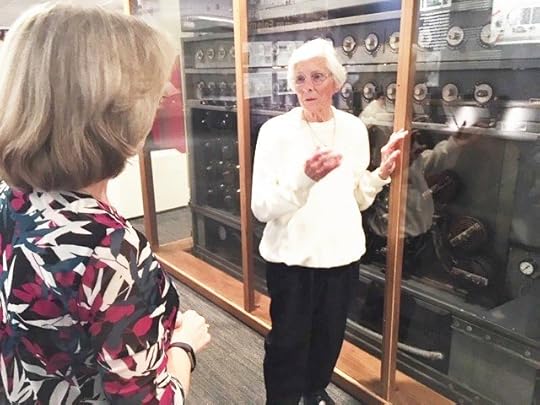
Betty Robarts at the Cryptologic Museum at Fort Meade, MD. It was the first time she had seen a completed Bombe machine.
Betty Robarts was twenty years old when she joined the WAVES, one of those women who helped build the massive machine that broke codes. She said to me, “I only wish I could have told my Mom and Dad.”
In 1976, the US Air Force announced that it would begin accepting women for pilot training, stating it was the first time the Air Force would permit women to fly. Just one problem—that wasn’t true.
While over 25,000 women volunteered to fly with the Women Air Service Pilots (WASP) during WWII, only 1,100 flew. Thirty years after the war, their contributions, their service, and their story were forgotten. The Air Force announcement about training women pilots was made without any concept of the WASP contributions.
The veterans rose up in protest over the Air Force announcement. The service backtracked. And suddenly, the veterans found themselves popular.
Several efforts were undertaken to correct the record. The WASP were formally made part of the Air Force in 1977. The veterans received honorable discharge certificates and their World War II Victory Medals. They were also awarded the Congressional Gold Medal for their service.
The Medal reads: “The first women in history to fly American military aircraft.”
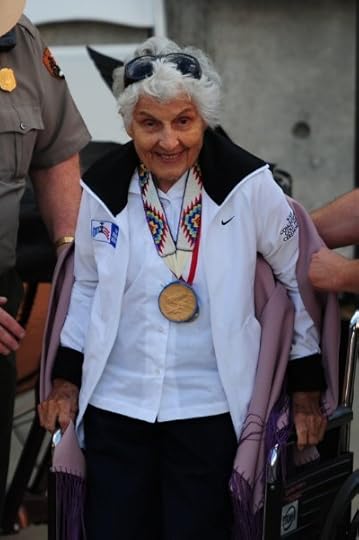
Millie Rexroat at an Independence Day celebration in 2010, wearing her Congressional Gold Medal
The WASP pilots were proud of their service.
Olga Mildred “Millie” Rexroat flew with the WASP, earning her wings in class 44-7. She was the only Native American woman to fly with the WASP. In her later years, she too was an advocate for supporting and preserving the legacy of the WASP pilots.
I’ve recently read several articles about then-Major Charity Adams and the 6888 Central Postal Directory Battalion. This is the only all-female, all-African American unit to deploy overseas in World War II.
Their story, too, has come surging to the forefront over the past several years— surprising, educating, and ultimately resulting in numerous celebrations of their service.
In 1995, retired Lt. Col. Charity Adams commented at a Black History Month event, “Well, it certainly has taken a long time for us to be remembered.” And now they have not only been remembered but also honored. The 6888th received the Congressional Gold Medal on April 29, 2025, at the US Capitol.
.stk-9bc4b57 {margin-bottom:0px !important;}.stk-c15aff0 {background-color:var(u002du002dstk-global-color-14950, #273891) !important;}.stk-c15aff0:before{background-color:var(u002du002dstk-global-color-14950, #273891) !important;}.stk-086de28 {margin-bottom:0px !important;}.stk-086de28 .stk-img-wrapper{width:56% !important;height:576px !important;}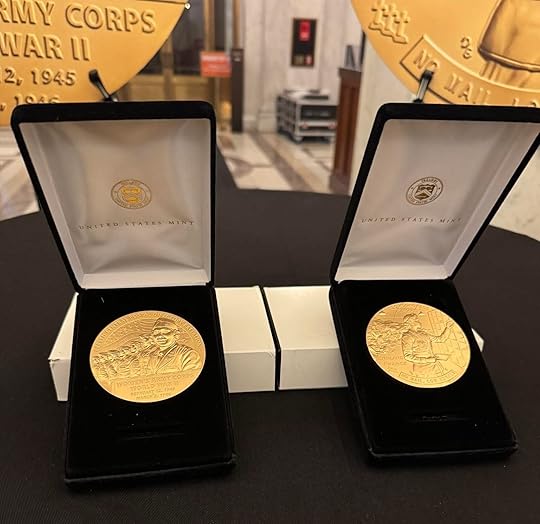
Photograph of the Congressional Gold Medals issued at the US Capitol
In 2021, accomplished British military historian Lyn Macdonald passed away. She was passionate about recording untold stories of the Great War, interviewing some 3,000 veterans, and reading the diaries and letters of many more.
Her books about WWI told the stories of ordinary soldiers, nurses, and others. She didn’t just write about politicians and statesmen, generals and battles. She told stories about ordinary people, ones that had been overlooked or forgotten. She once commented that their stories left “a great unhewn seam of memory and information on the war.”
.stk-a3aab2e {margin-bottom:0px !important;}.stk-9b31a3b {background-color:var(u002du002dstk-global-color-14950, #273891) !important;}.stk-9b31a3b:before{background-color:var(u002du002dstk-global-color-14950, #273891) !important;}.stk-f09237a {margin-bottom:0px !important;}.stk-f09237a .stk-img-wrapper{width:580px !important;}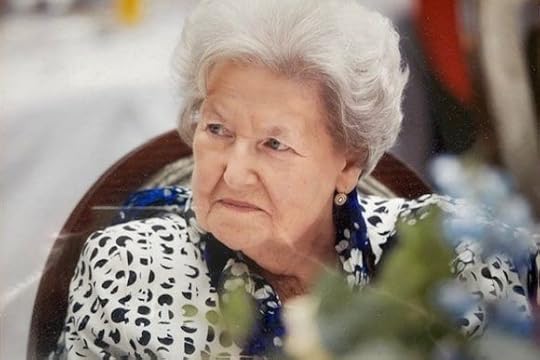
Photograph: Mica Murphy/Penguin Books
Renowned British military historian Antony Beevor agreed, noting that historians should be writing about “Everyone caught up in war, including of course women and children.”
A recent article I found about military women appeared in print without footnotes or acknowledging sources. It just seemed off. A little digging proved that to be true.
Misidentified photos, incorrect statistics, and careless errors permeated the piece, rendering its purpose, perhaps to provide more insight into a heretofore little-known story, null and void.
Another recent piece completely misrepresented the contributions of women war correspondents. It is concerning to see the attempts not just to denigrate women’s accomplishments but to erase them altogether.
If an essay only references other articles and books written in the past few years, it may be far removed from the truth of what happened. It is like the old saw about how a comment passed down the line word of mouth from the sergeant to the private is greatly changed by the time it reaches the final recipient. And if one of those sources is Wikipedia or a Wikimedia Commons site, an article has a greater chance of unintended errors.
That’s why it’s important to go back to the original documents whenever possible, to official reports, to autobiographies, and to newspapers. While they can be wildly inaccurate themselves, those ‘first drafts of history’ can often provide insights that other sources cannot. They can certainly provide an understanding of views at the time.
.stk-23a8d7b {margin-bottom:0px !important;}.stk-8a855da {background-color:var(u002du002dstk-global-color-14950, #273891) !important;}.stk-8a855da:before{background-color:var(u002du002dstk-global-color-14950, #273891) !important;}.stk-b32b731 {margin-bottom:0px !important;}.stk-b32b731 .stk-img-wrapper{width:580px !important;}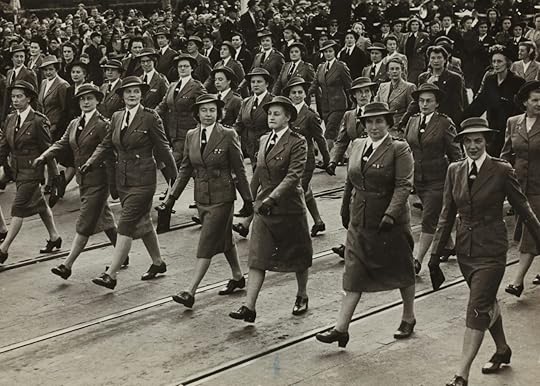
Nurses Marching, 7th Australian General Hospital, Sister Isabel Erskine Plante, World War II, circa 1942
Learning these veterans’ history is also important for a cultural reason—many of the women I’ve read about (and written about) were real trailblazers, role models, and significant for what they accomplished in each of their fields despite the time in which they lived, the societal norms and the barriers they faced. We need to have them in front of us, for their example, their strengths, and because they never gave up.
In January 2022 a high school senior wrote an opinion piece for The Washington Post asking the question, “So, did women just not exist?”
She was referring to the near absence of women in her American history textbook. In an admittedly unscientific survey, she asked a number of her classmates to name important women in American history.
Nearly half of those she interviewed couldn’t name even one.
One could argue that this is because culture and institutions long made it difficult for women to achieve success in public life or business (or in the military). But it simply isn’t true that they weren’t there.
.stk-21993ad {margin-bottom:0px !important;}.stk-2437fc4 {background-color:var(u002du002dstk-global-color-14950, #273891) !important;}.stk-2437fc4:before{background-color:var(u002du002dstk-global-color-14950, #273891) !important;}.stk-374953a {margin-bottom:0px !important;}.stk-374953a .stk-img-wrapper{width:580px !important;}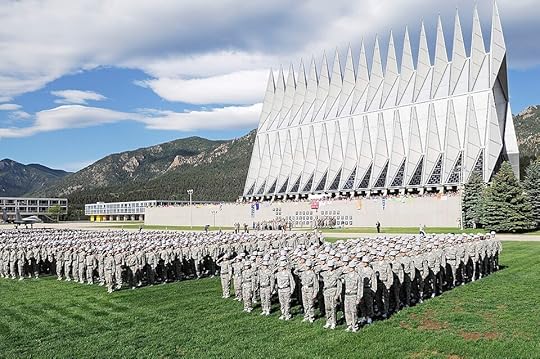
More than 1,300 basic cadets salute June 26 during their first reveille formation at the U.S. Air Force Academy in Colorado Springs, Colorado.
Last year, I spoke to an Air Force officer who served two tours at the US Air Force Academy, where she taught English. She said to me, “I never taught anything about women who served in the military or used any books by women. It simply didn’t occur to me to do so. I’m going to fix that.”
We cannot be silent about the contributions of half of the population in this country to the American ideals and values we hold dear. Next generations are counting on civics and history education to show them not only what has been hard fought and won, but also what is possible to achieve in life. They should not be discouraged by attempts to reinforce stereotypes through omission or downplaying the contributions of women and minorities.
That high school senior said, “Here in 2021, young women are told we can make history and achieve anything. But that’s difficult to believe when history curricula marginalizes or ignores women’s accomplishments. When these facts are omitted from compulsory education, it becomes more difficult for students to see how gender-based inequities remain entrenched, which in turn will make it harder for us to escape them.”
Getting the complete story right matters. Silence will not stand.
Enjoyed this post? Get my newsletter delivered to your inbox so you don’t miss the next one! I send out one mailing a month most months and promise zero spam.
The post Did Women Just Not Exist? appeared first on Benson's ReView.