Are you easily distracted?
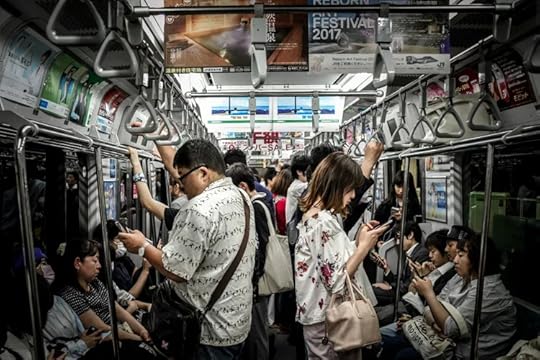
Src: Hugh Han Unsplash
As I lounge in an overstuffed chair, balancing my morning coffee mug in my lap and writing in my journal, my phone chimes with a text.
“Keep on gettin’ better!”
My Midwest cousin on a sister thread. I stare at the phone. Keep on gettin’ better? My cousin stepped in as point-person for updates on our aunt after our uncle died suddenly. My thumb swipes through the text thread for any clues to what I missed in the flurry of messages the last few days.
Some part of me wonders what I didn’t catch. Another part says, it’s nothing. With four sisters scattered across the country, we keep in touch with family updates on a sister thread (and periodically with a cousin or two). This latest thread added into the mix of texts in anticipation of family visiting from across the country in a few weeks.
I admit to skimming the latest ones lighting up my phone at a faster clip than normal. My stomach drops a bit in not knowing what my cousin meant.
I text my sister, “Better every day?” As in life is day by day or are you recovering from something I should have known about???”
What happens when we’re distracted? How can we better manage our distractions and regain traction for the people and the projects most important to us?
what happens when we are distracted?trailer with Maggie Jackson
We all experience distractions. We’re pulled away by some interruption or trigger. Our devices ding. Someone comes to talk to you. You have a question you want to research and reach out to Google or ChatGPT — sending you off in a different direction for longer than you expected, and probably checking email, the news, or social media along the way.
As Maggie Jackson, author of Distracted, invites us to — “imagine walking into a room where everything was bouncing and flashing and moving all around very quickly and lots of it. And we walk in and don’t remember why we are there. That’s what our world is made up of with all our digital devices.”
In this month’s thought echoes podcast, Maggie explains how there's more research now on what happens to our brains in this world with digital devices. How everything competes for our attention and where our intentions are compromised because of this “constant barrage of inputs.”
There’s a fragmented nature of time and space in our distractions, a constant context switching back-and-forth like walking around a buffet table tasting many things and not able to choose one.
Maggie cites scientists who are worried about young people who are on their devices all the time. Their imagination network, related to their inner life, is not getting practice. The worry is they won’t be able to utilize that kind of thinking or see the value of it in their futures.
One story she told stuck with me. In a journalism class where students agreed to turn off their devices, one student said there was this “little voice” in his head he hadn’t heard before. I cannot imagine what it must feel like to go through life so distracted by digital devices and disconnected from oneself.
Seems our brains are changing. Our habit of being so connected to devices is disconnecting us from our inner lives. Many say they are good at multitasking, which is a misnomer. What we’re really doing, as Maggie spells out, is “task switching.” And the cost of this steady drip of fragmenting time and space affects our ability to learn, causes memory issues, reduces our capacity to focus for chunks at a time, and overwhelms our adeptness to discern what’s important in the moment.
When I’m writing or reading in a quiet zone of silence and reflection, I don’t like to be interrupted, but I am guilty of wanting an answer and being impatient in the gap between wanting an answer and getting it.
I’ve started using the send-later option on my iPhone when sending texts. It’s my compromise — when I’m in squirrel-interruption mode, I try not to trigger it for someone else. If the girls are at work and I don’t need an answer right away, I schedule a text for after dinner, but not too late. And for birthday wishes I schedule a photo based on whether the receiver is an early riser or a late starter.
“People who multtask a lot have trouble discerning what’s important in their environment. There are huge impacts on our lives from living this constant diet of distraction.”— Maggie Jackson how can we better manage our distractions?
Not all distractions are bad or unhealthy. Sometimes when we’re stressed, we could use a break and get out of our swirling heads. Sometimes diversions, or refocusing energy, is healthy. With a caveat …
In Are We Pacifying Ourselves with Distractions? Leah Marone asks simple questions. Are these distractions truly helping us unwind, or are they merely pacifying us? Are we really staying busy by overcommitting and constantly working to keep us from thinking about our thoughts?
Leah notes, “Emotional regulation comes from facing discomfort and processing feelings—not escaping them. Otherwise, we become overwhelmed and increasingly dependent on distractions to keep the chaos at bay. Emotions are messages from within, and ignoring them prevents us from learning more about ourselves.”
What’s most disconcerting to me is that most of us are not prioritizing “down time” or “slow time” to reflect and allow our brains to integrate what we’ve learned and experienced. This impacts our potential to more creatively problem-solve because our perspectives are narrower. Add in sleep issues, and we handicap our ability to create long-term memories too.
Leah suggests taking small, intentional steps to break the cycle, very similar to what Maggie suggests too:
Daily check-ins: What’s on my mind? What am I feeling?
Limit distractions: Set boundaries
Create space for rest: A walk or quiet time
***
Within minutes, my sister responds with a long message about being in the ER testing positive for malaria. Malaria?!?!
As I stare at my sister’s text, “Sorry, thought the message was passed to all sisters.” I read the news slowly, letting the details sink in. Turns out, what she has is like malaria, she’s on meds, and should be okay. I search for malaria in my text threads. Sure enough — there it is. Three days before on a thread without my cousin.
Funny how a text thread shifts depending on where you start reading. I picked up with, “She is calling you later,” thinking the “you” was me. It wasn’t. Then a flurry of back-and-forth messages from various sisters, and I’m thinking it’s all about my sisters traveling.
I’ll acknowledge being conditioned to a habit of Whack-a-Mole throughout my day from decades of working in corporate and parenting. I'm still learning to slow down periodically without distractions. I’m pretty good at carving out quiet time for reflection in the morning while writing before the games begin in my daily routine. But I’m still working on taking pauses between various activities and resisting the urge to barrel through my todo list.
How are you distracted? Where is your energy being hijacked? How could you carve out more slow time for your own mental health and the relationships with the important people in your lives?
WOULD LOVE TO HEAR YOUR COMMENTS.
If you enjoyed learning more about the nature of our thoughts, I invite you to subscribe to thought echoes.