
Bob Kinnaman and a Once-Promising Career
In 1941, Bob Kinnaman won 22 games for the Spokane Indians. At age 24, his budding baseball career appeared full of promise. But like so many Americans, Kinnaman put his personal aspirations on hold to serve his country during World War II. Postwar, he attempted to pick up where he left off, returning to the minor-league Indians for the ’46 season. Tragically, the lives of Bob Kinnaman and eight of his teammates came to a tragic end that summer.
ChildhoodJosiah “Joe” and Mary (née Puhn) Kinnaman welcomed their first and only son, Robert Earl “Bob” Kinnaman, on March 21, 1917, in Elma, Washington. Bob had two older sisters—Hazel and Dorothy. Joe worked for the Saginaw Logging Company, one of the many lumber companies in western Washington state. In the 1920s and early ’30s, the Kinnamans lived in a logging camp, a rough and tumble community comprised mostly of single men who worked 10-hour days. According to the 1930 census, Mary worked at a general store.
Bob grew up hunting, fishing, and playing sports. He possessed a great sense of humor and loved to joke around. In the mid 1930s, the Kinnamans moved to Brooklyn, Washington, in rural Pacific County. Bob attended North River School in nearby Cosmopolis, where he excelled in football, basketball, and baseball. During summers, he played baseball for a local Grange Hall team coached by his father.
College CareerIn 1935, Kinnaman enrolled at Washington State College, where he joined Sigma Alpha Epsilon fraternity and played baseball for the Cougars. As a pitcher on the freshman team, the righty played with future Spokane Indians star Levi McCormack, one of six players who would survive the ’46 tragedy. As a sophomore, Kinnaman made the Pacific Coast Conference All-Star team. He finished his college career with a stellar 19-6 record.
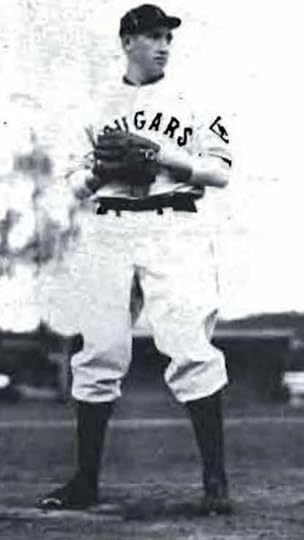 Bob Kinnaman with the Washington State Cougars.Turning Pro
In the summer of ’39, Kinnaman signed with the Twins Falls Cowboys in the Class-C Pioneer League. He pitched in seven games, registering a 3-3 record and 3.60 ERA. A year later, he moved up to Class-B Spokane, where accrued a 6-1 record and 3.89 ERA pitching mostly in relief. Kinnaman’s ’40 season included a seven-inning no-hitter against the Salem Senators and a horrific injury in which he lost eight teeth—the result of being struck by a line drive off the bat of future big leaguer Nanny Fernandez. Fernandez hit the ball so hard that the Spokane infielders turned a twin killing on the play.
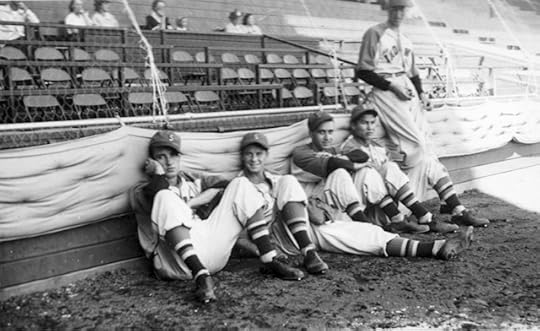 Bob Kinnaman (left) relaxes with some of his Spokane teammates.
 That offseason, Kinnaman stayed in Spokane and worked as a milkman at Inland Empire Dairy. He returned to the Indians in ’41 joined the starting rotation, logging 246 innings while compiling an outstanding 22-6 record and 134 strikeouts for the league-champion Indians. The Seattle Rainiers and Detroit Tigers expressed interest in Kinnaman that summer. “It’d be pretty nice to get peddled upstream to see if you’ve really got it on the ball to earn the kind of money they’ll pay up there,” Kinnaman told the Spokane Chronicle in August 1941.
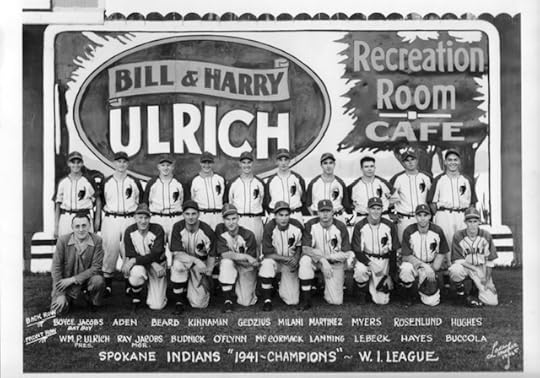 Bob Kinnaman is in the second row, fourth from left. Military Service
On December 20, just 13 days after the bombing of Pearl Harbor, Indians owner Bill Ulrich sold Kinnaman’s contract to Portland of the PCL for $5,000. He’d be pitching just a short drive from his hometown. But before Kinnaman ever got the chance to suit up for the Beavers, he joined the millions of Americans who enlisted in the war effort. He attempted to join the Navy with McCormack, but the Navy rejected him because of his missing teeth. Instead, Kinnaman joined the Army’s 333rd Engineer Special Service Regiment.
Over the next year, he bounced around to several Army bases across the country, working on various construction projects. According to Kinnaman’s great niece, Lisa Johnson, he wrote in family letters that he achieved expert status in shooting drills, likely the result of his time hunting growing up. In 1943, the Army sent him to Europe, where he served for 29 months.
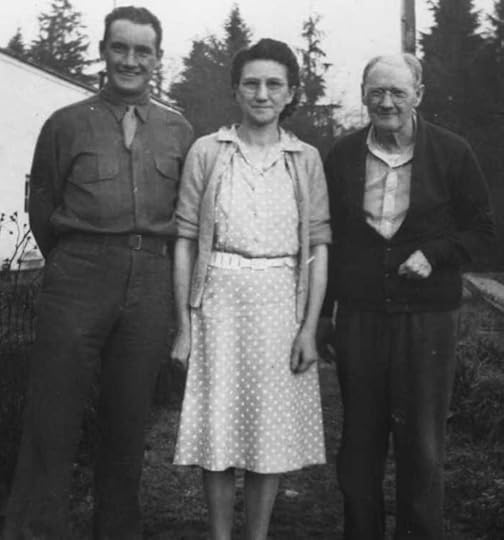 Bob Kinnaman with his mother and grandfather. ’46 Spokane Indians
In 1946, the soon-to-be 29-year-old Kinnaman joined the thousands of returning servicemen who resumed their baseball careers. Because he never pitched for Portland, his contract reverted back to the Spokane Indians. Kinnaman pitched under Casey Stengel with the Oakland Oaks that spring before being optioned back to Spokane. The 5-foot-11, 175-pound hurler joined the Indians starting rotation, going 6-4 with a 3.16 ERA through his first 14 outings.
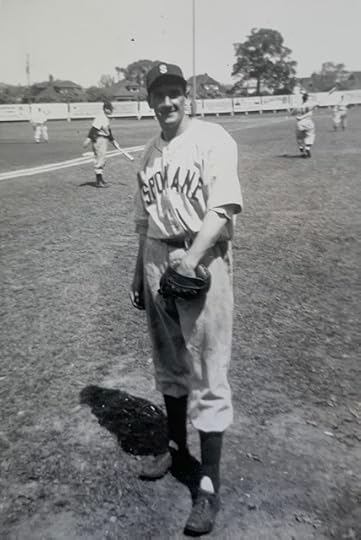 Bob Kinnaman with the ’46 Spokane Indians.
On June 24, the Indians team bus went off the road near Snoqualmie Pass in the Cascade mountains and tumbled down a 300-foot ravine. Kinnaman and eight of his teammates were killed. At the time of the accident, he was dating woman named Ruby Roberts. The couple had planned to announce their engagement later that summer. A week after the bus crash, Joe Kinnaman died suddenly. According to Johnson, the family believed he died of a broken heart after the devastation of his son’s untimely passing.
To read more about Bob Kinnaman and the 1946 Spokane Indians, check out my book Season of Shattered Dreams.
The post Bob Kinnaman and a Once-Promising Career appeared first on Eric Vickrey.


