
Unraveling the Whitechapel Murders: A Lasting Fascination
Friends,
Jack the Ripper. Whitechapel Murders. The Canonical Five.
Why do we return, time and again, to the fog-shrouded streets where those women met their brutal ends in 1888? What spell does Jack the Ripper cast that, even now, detectives and scholars pore over century-old evidence, desperate to put a name to the shadow that stalked Whitechapel?
No one can say. But yet, he remains- over a hundred years later- a topic of conversation that refuses to die.
BackgroundFive women met violent deaths in London’s Whitechapel district during the autumn of 1888. Each victim earned her living in the streets, and all but Elizabeth Stride were found with their bodies savagely disfigured.
 Daily newspaper front pages, 1888, Yale Centre for British Art
Jack the Ripper’s reign of terror began with Mary Ann Nicholls on August 31st, followed by Annie Chapman just over a week later. The night of September 30th saw two victims—Elizabeth Stride and Catherine Eddowes—while Mary Jane Kelly met her fate on November 9th.
Scholars of the case—self-styled “ripperologists”—debate whether Martha Tabram’s August 6th stabbing death marks the true beginning of the sequence, these five women have come to be known as the Ripper’s canonical victims.
The Case Log Begins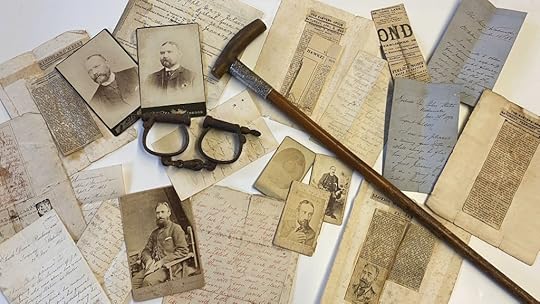 The file’s contents. Pic: Whitton&Laing/BNPS
Prior to the canonical five, the local police department had already started what would later become the ‘Whitechapel Murder file.’ Though these earlier killings shared certain grim hallmarks with the canonical five, forensic evidence remains insufficient to conclusively link them to the same hand that would later terrorize London’s East End.
However, the attacks on Annie Millwood, Ada Wilson, and Emma Smith—cast a harsh light on the squalor of London’s East End slums. Newspapers that had never bothered with the district’s daily tragedies now printed exposés of its crowded tenements and desperate inhabitants. This newfound scrutiny may have inadvertently set the stage for what would soon become history’s most infamous unsolved murders.
Newspapers Sell The StoryThough a picture may be worth a thousand words, the Whitechapel murders proved that London’s public hungered for both. Newspapers that paired lurid illustrations with graphic descriptions saw their circulation numbers soar. Readers devoured each new detail, each fresh horror—the more blood-soaked the account, the more eagerly they clamored for the next edition.
 “Latest Details of the Whitechapel Murders : Annie Chapman – before and after death”, The Illustrated Police News, Saturday, September 22, 1888.
At about 3 30 on Friday morning the police-constable on beat in Buck’s Row, a turning off Baker’s Row, Bethnal Green, found the body of a woman lying in the roadway. Upon examination he was horrified to find that the poor creature (who had the appearance of being an unfortunate) was lying in a pool of blood, and quite dead. She had her throat cut in two places, and most shocking to relate the victim’s entrails were protruding to such an extent that they had to be adjusted before the body could be removed.– 1 September 1888, Eastern Argus and Borough of Hackney Times reported on the ‘Murder of a Woman in Bethnal Green.
Few photographs exist of the crime scenes or victims’ conditions when discovered. The police, competent in their duties, prioritized swift removal of the bodies to prevent public distress over thorough documentation—a decision that would later complicate investigative efforts.
In other words, the public was left to their imagination on what did or did not occur.
Monetary Profit Eclipse the MurdersAs literacy rates climbed in the late Victorian era, newspaper reports evolved from mere information delivery to calculated entertainment. The Whitechapel Murders exemplified this shift, captivating readers not just in London but across continents—from Caribbean islands to Australian colonies to American cities—transforming local crimes into global sensations.
Unscrupulous reporters fabricated evidence, invented witnesses, and deliberately led investigators astray—all to sell papers with salacious headlines. Their actions only intensified the terror gripping London’s streets. In one tragic instance, on October 20, 1888, the discovery of Mrs. Mary Burridge’s lifeless body beside an open newspaper featuring graphic Ripper details suggested the ultimate cost of this media frenzy.
Of course- this story isn’t true- but it sold papers during the brief pauses in Jack the Rippers escapades.
While the exact profit margins of newspapers remain unclear, their ability to sell more advertising space suggests financial growth during this period.
Still Popular Today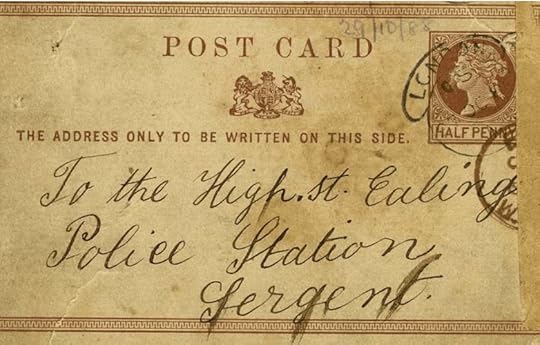
In 2018, an auction house sold for $49,000 a postcard purportedly penned by Jack the Ripper, which arrived at Ealing Police Station on October 29, 1888. The message, containing a warning of an impending murder, reached authorities just 11 days before Mary Jane Kelly—believed to be the Ripper’s final victim—was discovered.
“The great beauty of the card is that with its police provenance, it is a unique Ripper item for sale, and no-one can prove it is the Ripper himself, but equally no-one can prove it is not,” the auction listing said.
If you head The Royal London Hospital Museum, nestled in the center of Jack the Ripper territory, you can not only see information about the George Lusk “From Hell” letter but also one of the hospital’s most famous former residents, Joseph Merrick, the “Elephant Man.”
You may want to book a Jack the Ripper guided walking tour which winds through shadowy passages and cobblestone streets of London’s East End, where gaslit Victorian fog once shrouded the notorious killer’s 1888 reign of terror.
Final ThoughtsTheir names were:
Mary Nichols, murdered in Buck’s Row, Whitechapel- August 31, 1888
Annie Chapman, murdered in Hanbury Street, Spitalfields- September 8, 1888
Elizabeth Stride murdered in Berner Street, Whitechapel- September 30, 1888
Catherine Eddowes, murdered in Mitre Square, City of London- September 30, 1888
Mary Kelly, murdered in Dorset Street, Spitalfields- November 9, 1888
I get why Jack the Ripper captivates us, why his shadow stretches across generations into our modern lexicon. But what of the women whose blood he spilled? What of the Whitechapel residents who walked faster, glancing over their shoulders in the fog? Their stories deserve equal space in our collective memory, not just footnotes to his infamy.
I want to take one last moment and give a huge shout out to Richard Jones who’s collection on Jack the Ripper 1888 website is truly one of the most informative websites I have found in a long time. From newspaper clipping to what life was like in Whitechapel, Jones did his homework and created a interactive way to explore all aspects of life in 1888. I highly recommend you check it out!
Until next time, Keep Reading and Stay Caffeinated.
Subscribe below to stay up to date on myths, legends, mysteries, and the chaos of history.
FacebookThreadsInstagramAmazonIf you’re looking for your next favorite read, I invite you to check out my book, The Raven Society. This spellbinding historical fantasy series takes us on a heart-pounding journey through forgotten legends and distorted history. Uncover the chilling secrets of mythology and confront the horrifying truths that transformed myths into monstrous realities. How far will you go to learn the truth?
The Writer and The Librarian (Book 1):
Signed copies at:
https://rlgeerrobbins.com/product/the-writer-and-the-librarian-the-raven-society-book-1/
Explore more blogs here:
August 28, 2025Roosevelt Island’s Smallpox Hospital- A Bleak Reminder of a World Epidemic.Roosevelt Island's Smallpox Hospital—a crumbling Gothic fortress where the screams of the dying once echoed through quarantine wards, now stands as … August 17, 2025The Dark Legend of Bloody Mary UnveiledFrom Princess of Wales to disowned by the crown twice, to the first true Queen of England- the life of Queen … August 12, 2025The Dancing Plague of Medieval Europe. Did people really dance themselves to death?Plagues have always gripped humanity with an eerie fascination. But have you ever heard of the Dancing Plague that affected hundreds … July 3, 2025Dark Stories of the Paris CatacombsFrom human wax candles to murder- the Paris Catacombs hide the darker side of humanity.June 21, 2025The Secrets of Paris’ Underground: Catacombs ExplainedThe Paris Catacombs house over six million souls, reflecting burial practices born from overcrowding and infrastructure issues. But how did they …The post Unraveling the Whitechapel Murders: A Lasting Fascination appeared first on Chasing History.


